
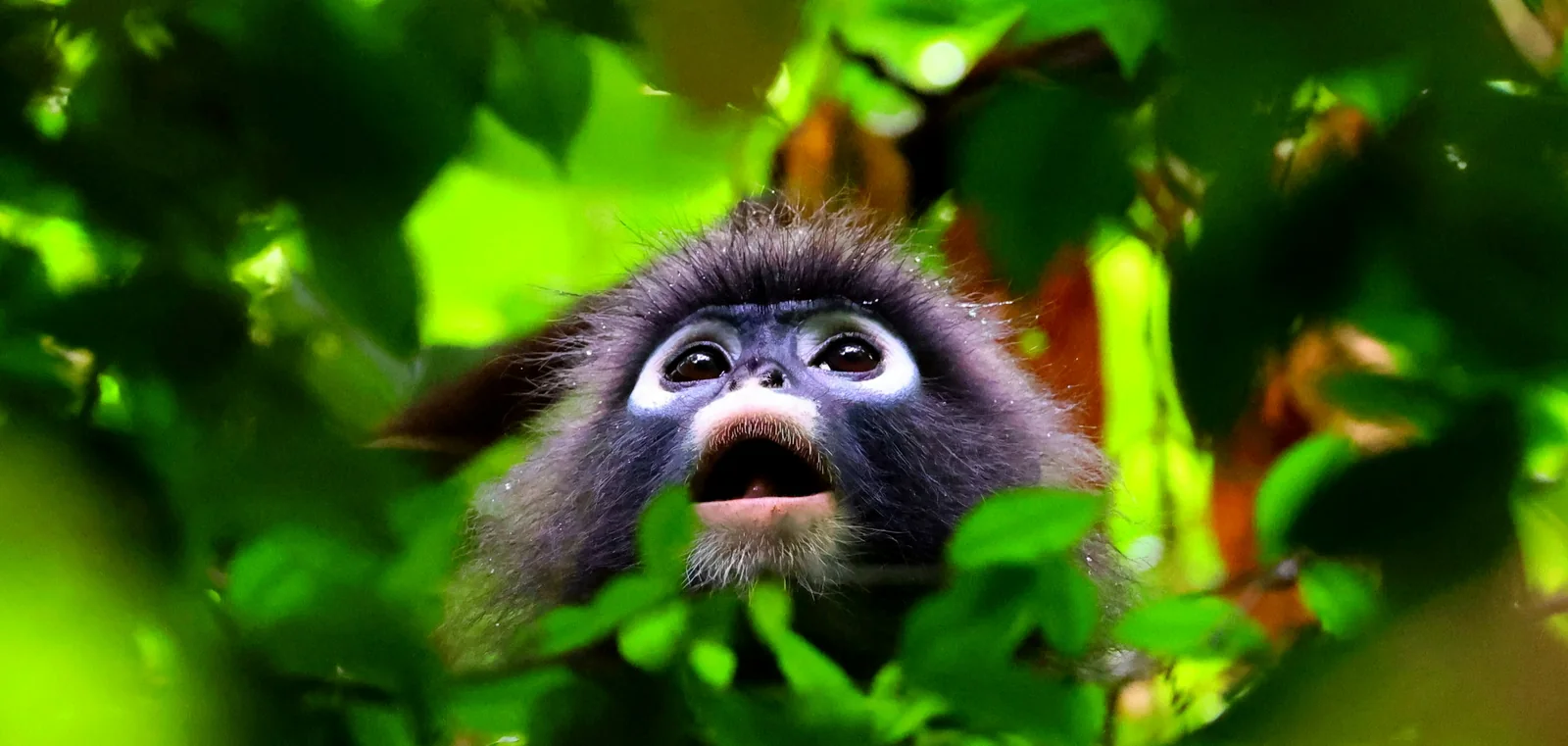
Thailand packs an improbable amount of wildlife into one country: rainforest that still hides tigers and tapirs, limestone hills full of hornbills, coral reefs off both coasts, and wetlands that draw some of the rarest waterbirds on earth. This guide records what actually lives here, where to look, and how likely you are to see it, so you can plan around real animals rather than a postcard.
Nearly 500 species are catalogued across the groups below, from the marquee mammals down to the reef invertebrates and forest insects most guides ignore. We flag the exciting and the genuinely rare, and we are honest about what Thailand has lost: a handful of species here, like the masked finfoot and the largetooth sawfish, are recorded as very likely gone from these waters, because a real guide should tell you what is no longer there as well as what is.
Highlights: five to build a trip around
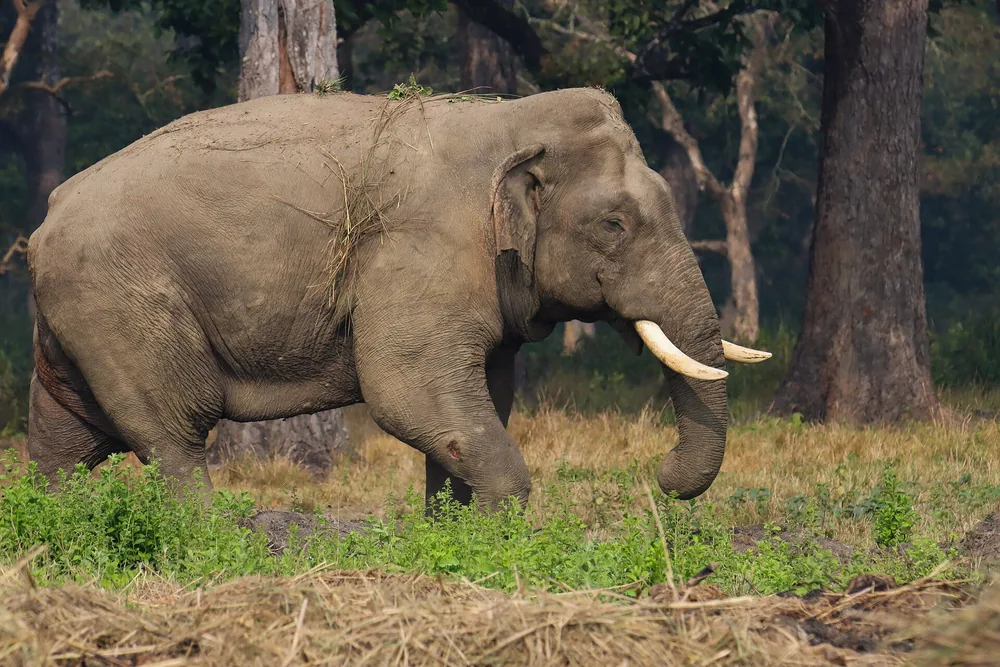
Asian Elephant
The largest land animal in Asia, and a herd crossing open grassland at dusk moves over the ground faster than its size suggests. Where: Khao Yai, Kui Buri, Kaeng Krachan. Best: Dry season (Nov-Apr), dawn and dusk.
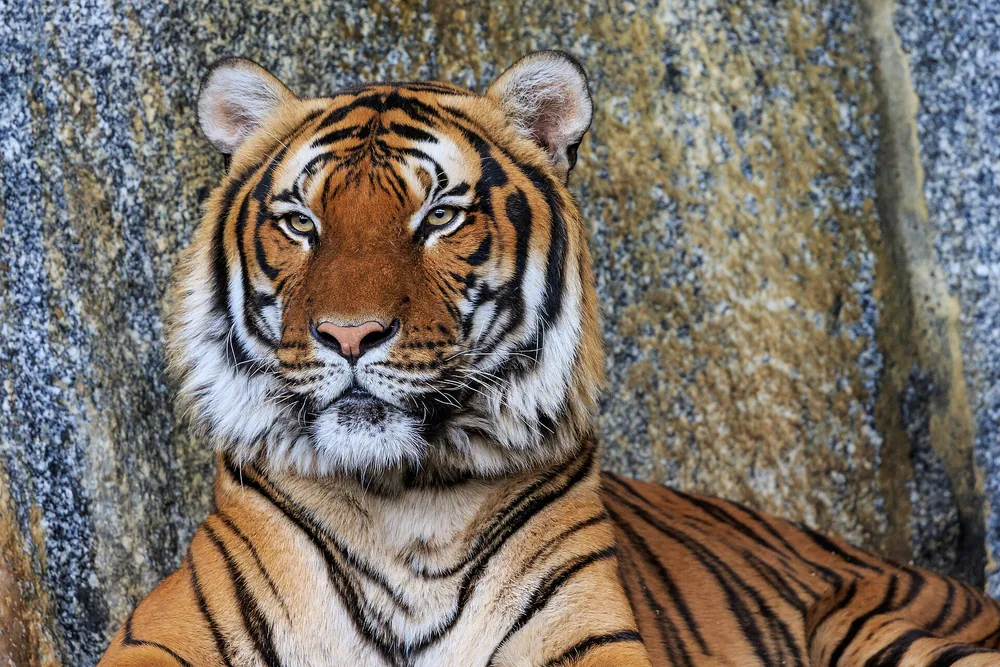
Indochinese Tiger
The largest cat in Asia and its top predator, a striped ghost most people only ever know from a paw print. Where: Huai Kha Khaeng, Thung Yai, Kaeng Krachan. Best: Dry season, dawn and dusk.
Great Hornbill
A three metre wingbeat you hear before you see, the flagship bird of Asian rainforest canopy. Where: Khao Yai, Khao Sok, Kaeng Krachan. Best: Year round, early morning at fruiting figs.
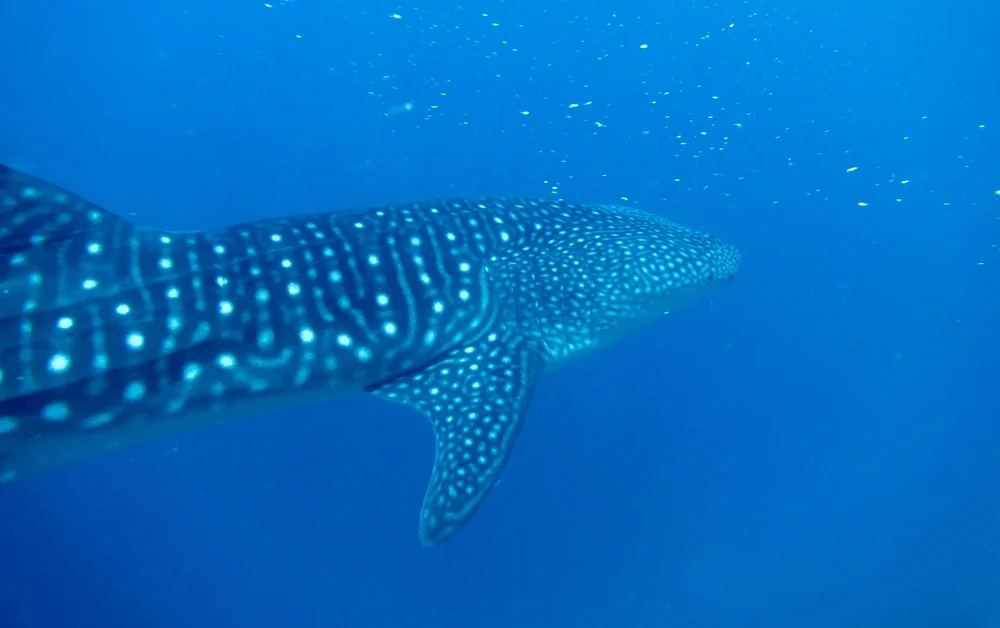
Whale Shark
The biggest fish in the ocean, a spotted, bus sized filter feeder and the undisputed holy grail of tropical diving. Where: Richelieu Rock, Koh Tachai, Hin Daeng, Phi Phi. Best: Feb-Apr, Andaman dive sites.
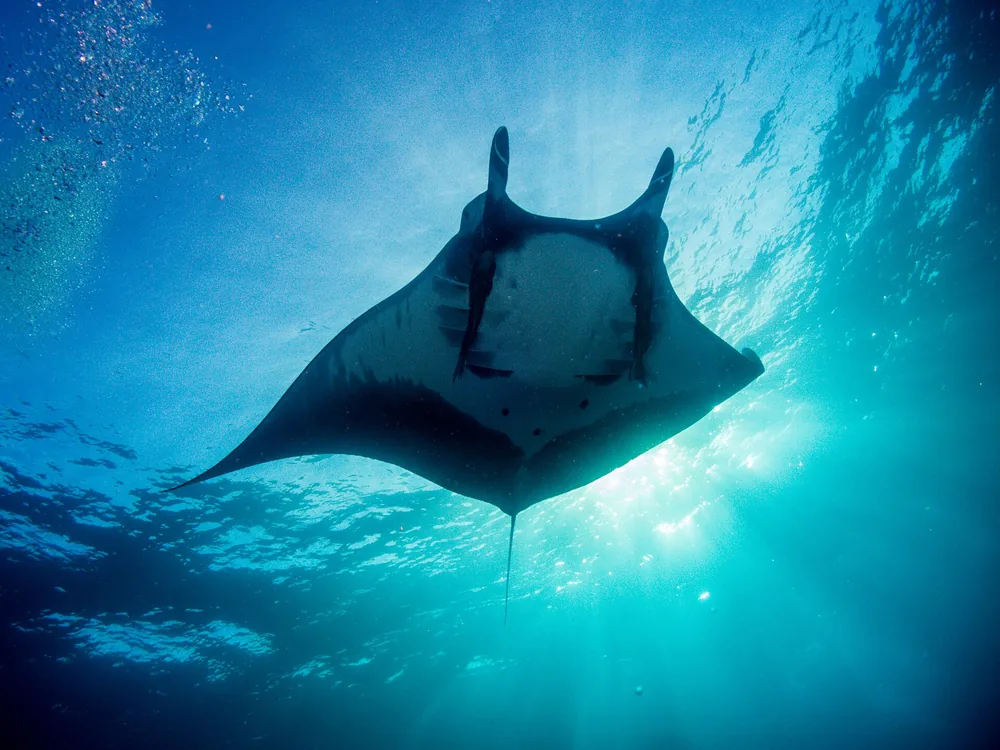
Giant Manta Ray
The largest ray on the planet, an ocean wanderer that can span seven metres and loops through plankton clouds in slow somersaults. Where: Hin Daeng and Hin Muang, Koh Bon and Koh Tachai area. Best: Peak Feb-Apr.
Find guided wildlife trips in Thailand
Explore by group
Mammals
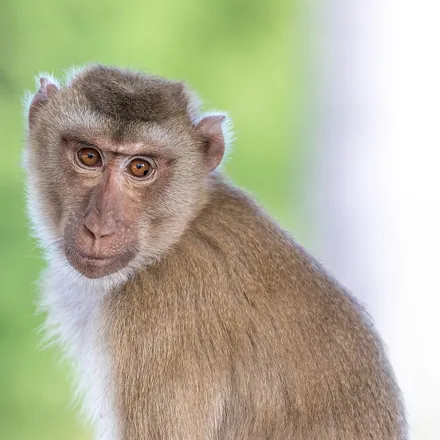
Long-tailed Macaque Common Endangered
Macaca fascicularis
The bold, water-loving monkey of temples and mangroves, and the commonest primate in Southeast Asia.
Where: Coastal forest, mangroves and temples nationwide, Khao Sam Roi Yot. Best: Year round, day.
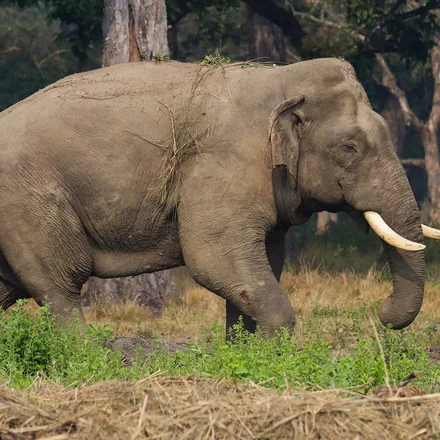
Asian Elephant Regular Endangered
Elephas maximus
The largest land animal in Asia, and a herd crossing open grassland at dusk moves over the ground faster than its size suggests.
Where: Khao Yai, Kui Buri, Kaeng Krachan. Best: Dry season (Nov-Apr), dawn and dusk.
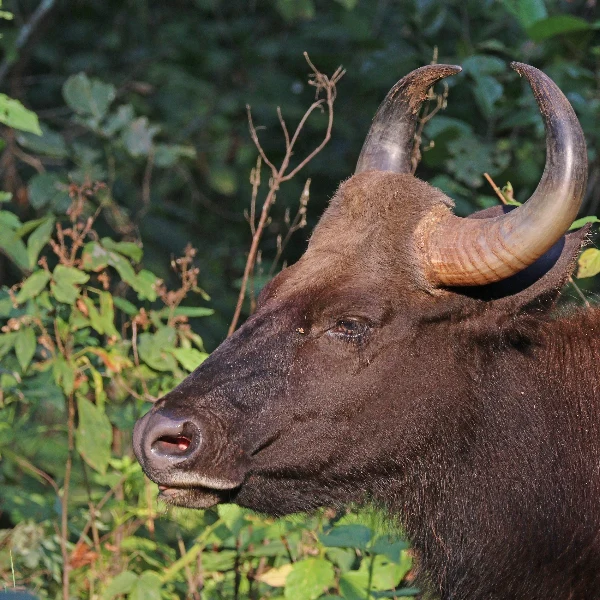
Gaur Regular Vulnerable
Bos gaurus
The largest wild cattle on Earth, a muscle bound giant that dwarfs any farm cow.
Where: Kui Buri, Khao Yai, Kaeng Krachan. Best: Late afternoon, dry season.
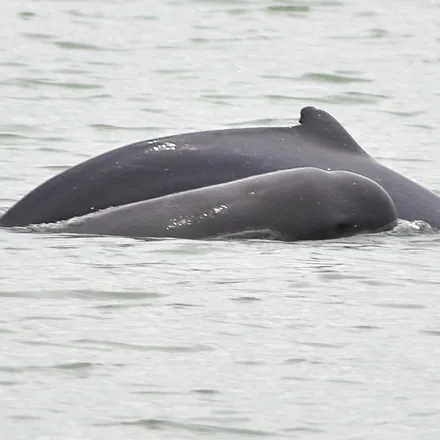
Irrawaddy Dolphin Regular Endangered
Orcaella brevirostris
A snub nosed, almost smiling dolphin with no beak, including tiny populations that live in brackish lakes and rivers.
Where: Hua Hin, Songkhla Lake, Trat coast. Best: Early morning, coastal boat trips.
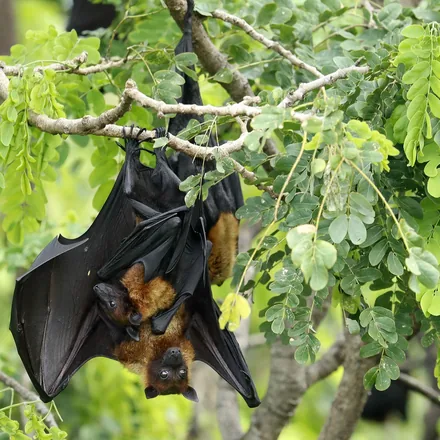
Lyle's Flying Fox Regular Vulnerable
Pteropus lylei
A large fruit bat that gathers in noisy thousands over temple grounds, hanging like dark fruit in the daytime trees.
Where: Temple and village colonies of the central plains. Best: Day roost, dusk flyout.
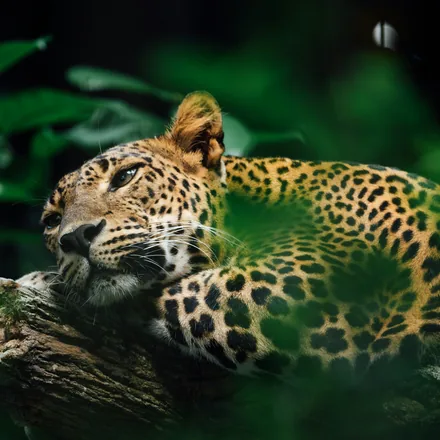
Leopard (incl. Black Panther) Occasional Vulnerable
Panthera pardus
A big cat that is unusually often born jet black, prowling as the fabled black panther.
Where: Kaeng Krachan (Ban Krang road), Khao Yai. Best: Dry season (Dec-Apr), early morning.
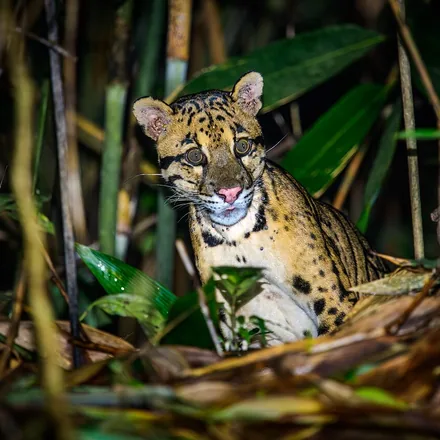
Clouded Leopard Rare Vulnerable
Neofelis nebulosa
Perhaps the most beautiful cat you will almost certainly never see, cloud blotched, tree climbing and maddeningly elusive.
Where: Huai Kha Khaeng, Kaeng Krachan, southern forests. Best: Night, deep forest.
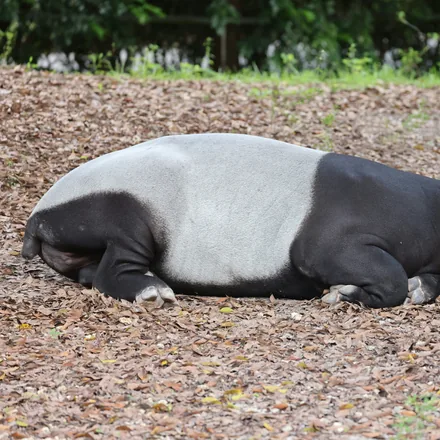
Malayan Tapir Rare Endangered
Tapirus indicus
A living oddity, half jet black and half stark white, that looks assembled from spare parts.
Where: Kaeng Krachan, Hala Bala, Khao Luang (Krung Ching). Best: Night, near forest streams.
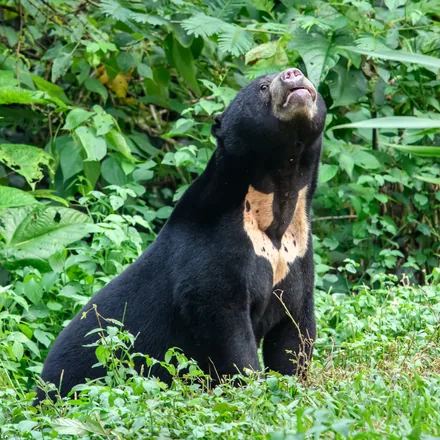
Sun Bear Rare Vulnerable
Helarctos malayanus
The world's smallest bear, with a golden chest crescent and a tongue long enough to raid a bee's nest.
Where: Kaeng Krachan (Ban Krang), Khao Yai, Kui Buri. Best: Dawn and dusk, near campsites.
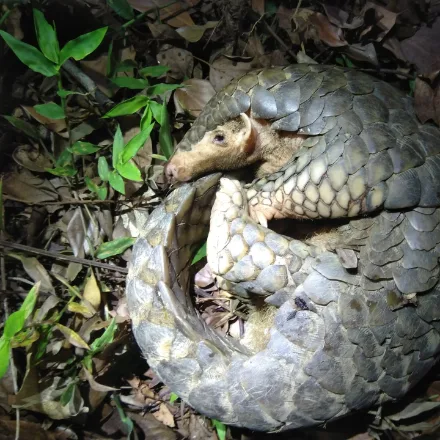
Chinese Pangolin Very rare Critically Endangered
Manis pentadactyla
The northern cousin of the Sunda pangolin, more of a burrower, and just as devastated by the illegal trade.
Where: Hill forest of the north. Best: Night.
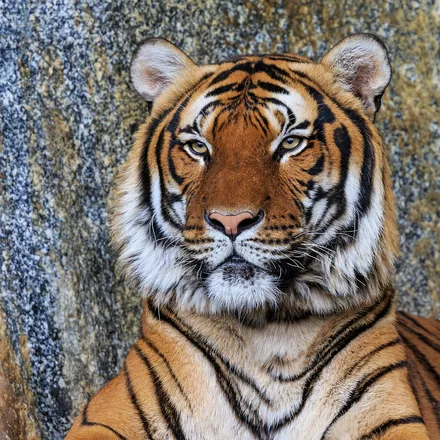
Indochinese Tiger Very rare Endangered
Panthera tigris
The largest cat in Asia and its top predator, a striped ghost most people only ever know from a paw print.
Where: Huai Kha Khaeng, Thung Yai, Kaeng Krachan. Best: Dry season, dawn and dusk.
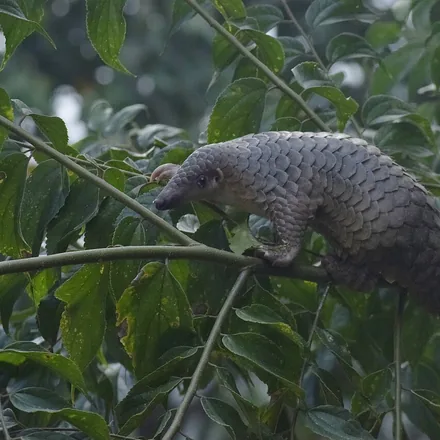
Sunda Pangolin Very rare Critically Endangered
Manis javanica
A living pine cone of a mammal, armoured in scales and, tragically, the most trafficked wild animal on the planet.
Where: Lowland and hill forest nationwide. Best: Night.
See all 75 mammals of Thailand
Birds
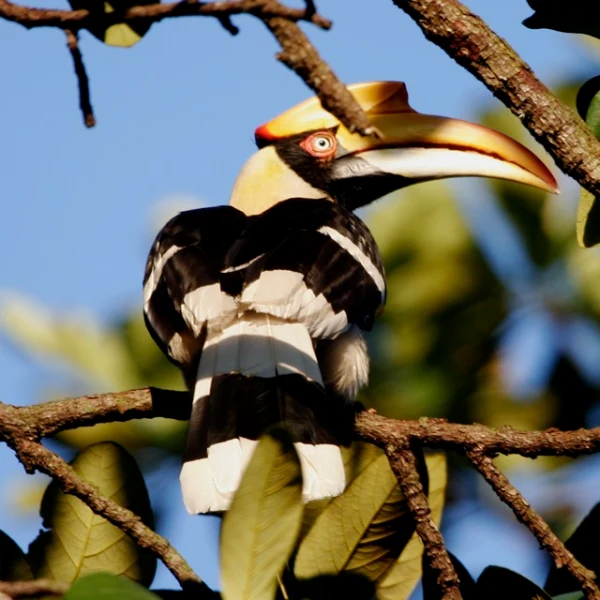
Great Hornbill Regular Vulnerable
Buceros bicornis
A three metre wingbeat you hear before you see, the flagship bird of Asian rainforest canopy.
Where: Khao Yai, Khao Sok, Kaeng Krachan. Best: Year round, early morning at fruiting figs.
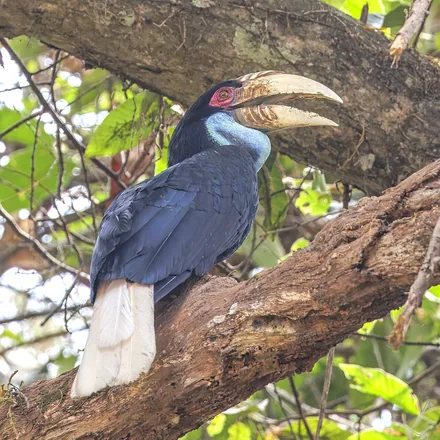
Wreathed Hornbill Regular Vulnerable
Rhyticeros undulatus
A big forest hornbill that travels in noisy flocks, its throat pouch pleated like folded cloth.
Where: Khao Yai, Kaeng Krachan, Khao Sok. Best: Year round, at fruiting trees.
Green Peafowl Occasional Endangered
Pavo muticus
The wild, and far rarer, cousin of the familiar peacock, with metallic green plumage and a towering train.
Where: Huai Kha Khaeng, Mae Wong, Mae Ping. Best: Dry season, dawn (listen for calls).
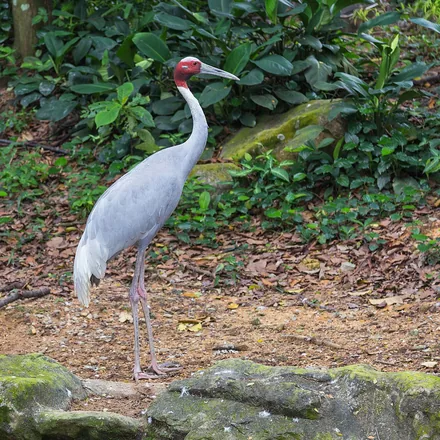
Sarus Crane Occasional Vulnerable
Antigone antigone
The tallest flying bird in the world, a grey giant with a bare red head, recently brought back to Thai wetlands.
Where: Buriram province wetlands. Best: Year round, rice fields and marshes.
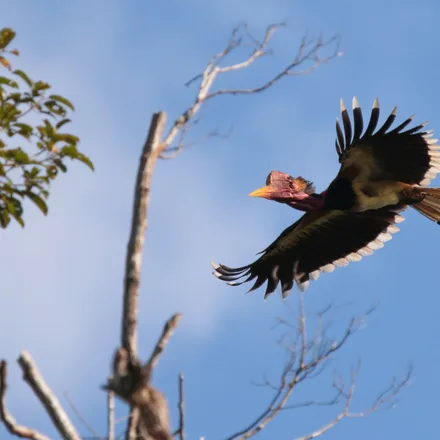
Helmeted Hornbill Rare Critically Endangered
Rhinoplax vigil
A hornbill with a solid ivory casque, hunted to the brink for carving, whose call sounds like maniacal laughter.
Where: Hala Bala, Budo-Sungai Padi (deep south). Best: Year round, tall rainforest.
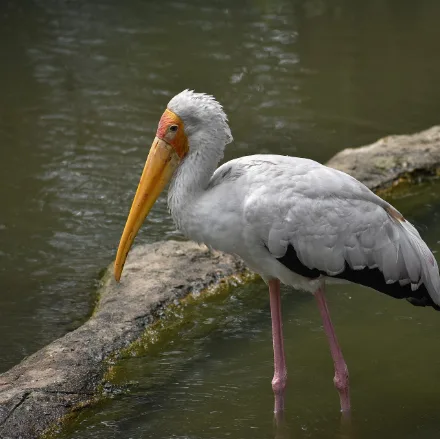
Milky Stork Rare Endangered
Mycteria cinerea
A rare, ghostly white stork of the mangroves, its bare face flushing from yellow to red in the breeding season.
Where: Coastal mangroves and estuaries of the Gulf and south. Best: Year round.
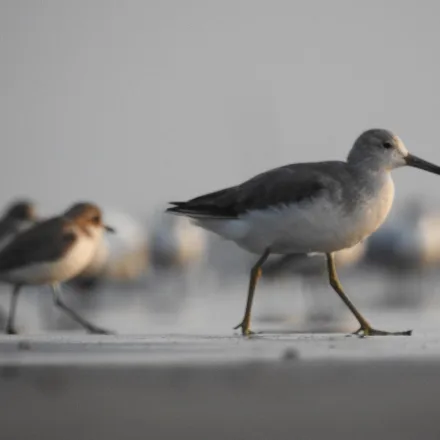
Nordmann's Greenshank Rare Endangered
Tringa guttifer
One of the world's rarest waders, a stocky greenshank that winters on Thai mudflats among thousands of commoner shorebirds.
Where: Inner Gulf mudflats and southern coasts. Best: Winter visitor, Nov-Mar.
Rhinoceros Hornbill Rare Vulnerable
Buceros rhinoceros
A southern giant crowned with a spectacular upturned orange casque like a rhino horn.
Where: Hala Bala and the Bala forest (deep south). Best: Year round.
Spoon-billed Sandpiper Rare Critically Endangered
Calidris pygmaea
One of the world's rarest and most charismatic shorebirds, tiny and armed with an unmistakable spatula bill.
Where: Pak Thale, Laem Pak Bia (Inner Gulf). Best: Nov-Mar (winter).
Straw-headed Bulbul Rare Critically Endangered
Pycnonotus zeylanicus
A large riverside bulbul with a glorious bubbling song that has, tragically, made it one of the most trapped birds in Asia.
Where: Dense riverside thickets of the south, protected wetlands. Best: Year round.
Gurney's Pitta Very rare Critically Endangered
Hydrornis gurneyi
A gorgeous blue-crowned pitta once thought extinct, rediscovered in Thailand and now teetering on the very edge.
Where: Khao Nor Chuchi (Krabi), historically. Best: Rains, at dawn.
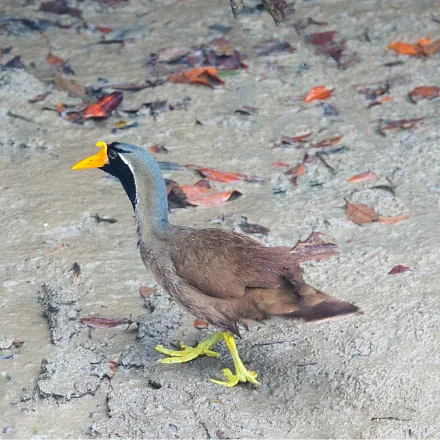
Masked Finfoot Ultra rare Critically Endangered
Heliopais personatus
One of the rarest birds in Asia, perhaps a hundred left, and Thailand may already have lost it.
Where: Historically quiet forested waterways and mangrove creeks; no reliable recent records. Best: No current season.
Reptiles and amphibians
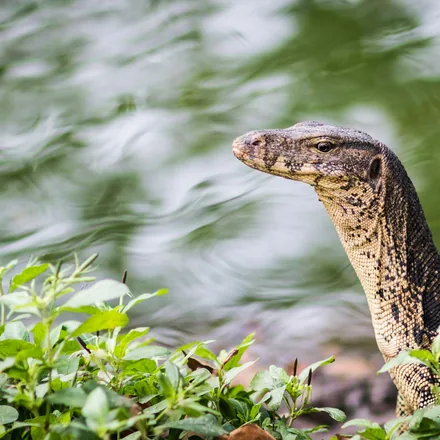
Asian Water Monitor Common
Varanus salvator
A dragon sized lizard that swims canals and city parks, second only to the Komodo dragon in length.
Where: Rivers, canals and parks countrywide, including Bangkok. Best: Year round, day.
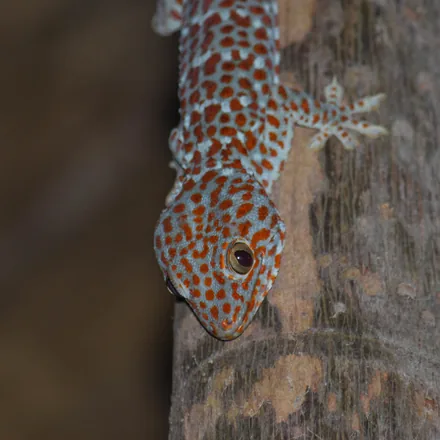
Tokay Gecko Common
Gekko gecko
A big, boldly spotted gecko whose loud TOH-kay call echoes through Thai nights and, by legend, brings luck if it calls seven times.
Where: Buildings, temples and forest countrywide. Best: Year round, night.
Banded Sea Krait Regular
Laticauda colubrina
A sea snake that hunts eels underwater but must come ashore to rest, drink fresh water and lay its eggs.
Where: Similan, Hin Daeng and Hin Muang, southern reefs. Best: Dive season, Nov-Apr.
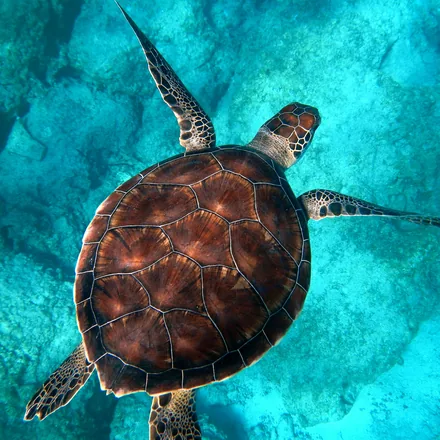
Green Sea Turtle Regular
Chelonia mydas
The great grazing turtle of the tropics, the only sea turtle that turns vegetarian as an adult.
Where: Similan, Trang and Koh Libong, southern reefs and seagrass. Best: Dive season, Nov-Apr.
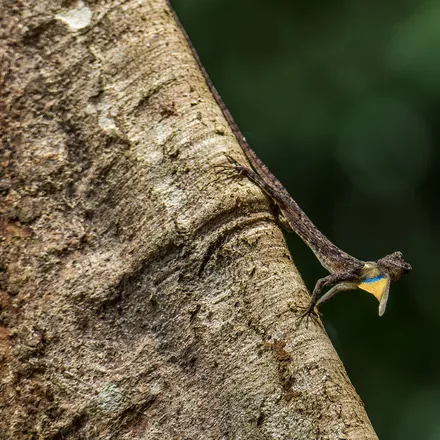
Common Flying Dragon Occasional
Draco maculatus
A tiny lizard that unfurls bright wings from its ribs and glides between tree trunks like a paper dart.
Where: Khao Yai, Kaeng Krachan, Khao Sok, forest with tall trees. Best: Warm season, day.
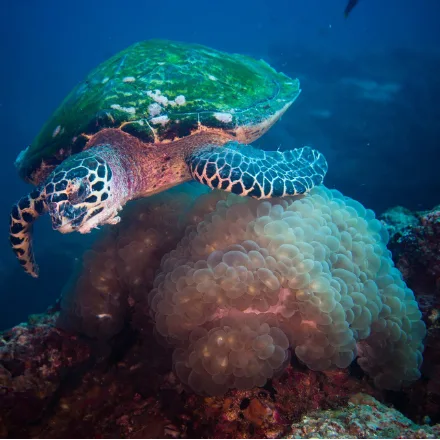
Hawksbill Turtle Occasional Critically Endangered
Eretmochelys imbricata
The reef's sponge specialist, its beautiful shell also the reason it was hunted to the edge.
Where: Similan, Hin Daeng and Hin Muang, coral reefs. Best: Dive season, Nov-Apr.
Reticulated Python Occasional
Malayopython reticulatus
The longest snake in the world, a jewelled, net patterned constrictor that turns up from rainforest to city canals.
Where: Khao Yai, Khao Sok, wetlands and even cities. Best: Night, near water.
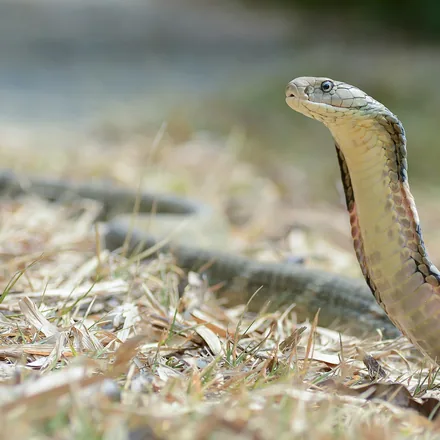
King Cobra Rare Vulnerable
Ophiophagus hannah
The world's longest venomous snake, and one of the shyest, so a sighting is a genuine holy grail.
Where: Khao Sok, Kaeng Krachan. Best: Warm season, daytime near forest streams.
Malayan Horned Frog Rare
Pelobatrachus nasutus
A frog that looks exactly like a dead leaf, complete with horned eyelids and a pointed snout for a leaf tip.
Where: Southern rainforest near streams, Khao Sok. Best: Rainy season, night.
Paradise Flying Snake Rare
Chrysopelea paradisi
A snake that launches from the treetops and glides between trees by flattening its body into a living ribbon.
Where: Southern forests and the peninsula. Best: Warm season, day.
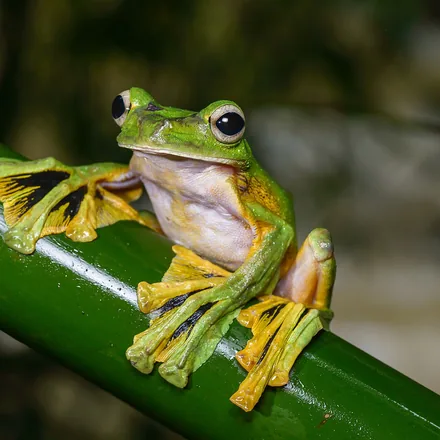
Wallace's Flying Frog Rare
Rhacophorus nigropalmatus
A big green tree frog that parachutes between trees on huge webbed feet spread like four little sails.
Where: Far southern rainforest and the peninsula. Best: Rainy season, night.
Asian Giant Softshell Turtle Very rare Critically Endangered
Pelochelys cantorii
A huge, frog faced softshell that buries itself in river mud and surfaces to breathe only twice a day.
Where: A few remote lowland rivers and protected wetlands. Best: Rare, any time.
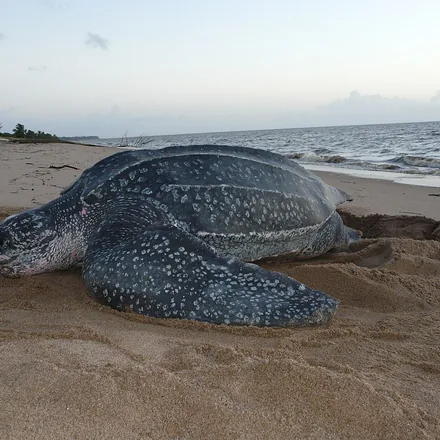
Leatherback Turtle Very rare Vulnerable
Dermochelys coriacea
The largest turtle on Earth, a jellyfish hunter that dives deeper than most whales and crosses whole oceans.
Where: Andaman waters and rare nesting beaches. Best: Nesting Nov-Feb.
Siamese Crocodile Very rare Critically Endangered
Crocodylus siamensis
A freshwater crocodile once thought nearly extinct in the wild, now clinging on in a few remote Thai wetlands.
Where: A few remote protected wetlands, Kaeng Krachan area rivers. Best: Rare, any time.
See all 79 reptiles and amphibians of Thailand
Fish
False Clownfish (Clown Anemonefish) Common
Amphiprion ocellaris
The famous orange and white anemonefish, immune to the stinging tentacles that shelter it and every group ruled by a single dominant female.
Where: Similan, Trang and Koh Libong, anemones on shallow reefs. Best: Dive and snorkel season, Nov-Apr.
Bumphead Parrotfish Occasional Vulnerable
Bolbometopon muricatum
A hulking, bull-headed parrotfish that rams and bites living coral, turning reef rock into the white sand of tropical beaches.
Where: Similan and outer Andaman reefs. Best: Dive season, Nov-Apr.
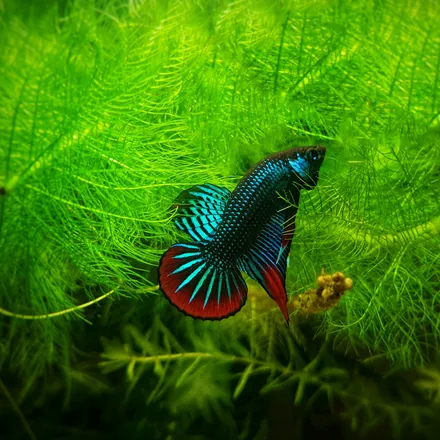
Siamese Fighting Fish Occasional Vulnerable
Betta splendens
Thailand's national aquatic animal is a wild rice-paddy fish, and the wild one looks nothing like the trailing-finned pet.
Where: Rice paddies, ditches and marshes of the central plain around Ayutthaya and Bueng Boraphet. Best: Jun-Oct wet season, when paddies flood.
Humphead Wrasse (Napoleon Wrasse) Rare Endangered
Cheilinus undulatus
A giant, curious reef fish with thick lips and a bulging forehead, able to crunch prey that few other animals can eat.
Where: Similan, Hin Daeng and Hin Muang, outer reefs. Best: Dive season, Nov-Apr.
Thorny Seahorse Rare Vulnerable
Hippocampus histrix
Covered in long sharp spines and able to shift colour to match whatever it has wrapped its tail around.
Where: Seagrass margins and sponge rubble; Koh Tao, Trang and Koh Lipe. Best: Year round.
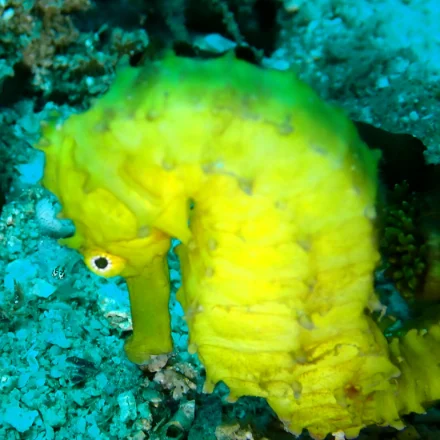
Tiger Tail Seahorse Rare Endangered
Hippocampus comes
A slender seahorse banded down the tail like a tiger, the male carrying and giving birth to the young.
Where: Andaman seagrass and reef margins, Trang and Koh Libong. Best: Year round.
Asian Arowana Ultra rare Endangered
Scleropages formosus
A living dragon that hunts at the surface and can launch clear of the water to take insects off overhanging branches.
Where: Blackwater swamps and slow rivers of the far south, notably around Toh Daeng peat swamp. Best: Year round.
Giant Barb Ultra rare Critically Endangered
Catlocarpio siamensis
The world's largest carp, a bronze slab of a fish with a head so big it looks borrowed from something else.
Where: Deep pools of the Mekong and Chao Phraya; Bueng Boraphet and large reservoirs. Best: Year round.
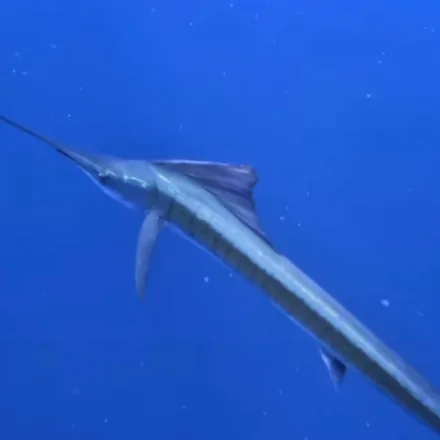
Indo-Pacific Sailfish Ultra rare
Istiophorus platypterus
The fastest fish in the sea, and it lights up electric blue across the sail when it is herding a bait ball.
Where: Offshore blue water; liveaboard crossings to the Similans, Surin and Hin Daeng. Best: Nov-Apr.
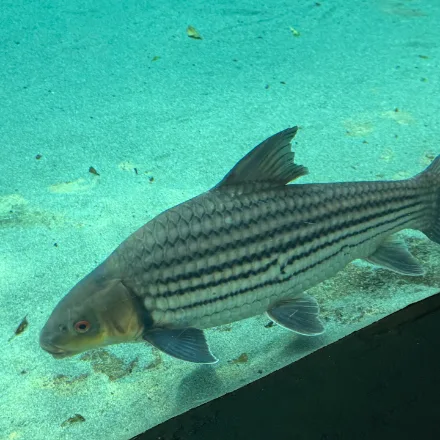
Jullien's Golden Carp Ultra rare Critically Endangered
Probarbus jullieni
A gold and black striped river carp that gathers at the same gravel bars each cold season to spawn, which is exactly why it is nearly gone.
Where: Deep runs of the Mekong in Nong Khai and Ubon Ratchathani provinces. Best: Dec-Jan spawning run.
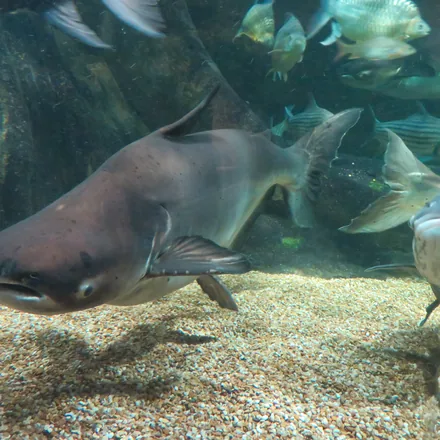
Mekong Giant Catfish Ultra rare Critically Endangered
Pangasianodon gigas
The largest scaleless freshwater fish on earth, a three metre catfish that has all but vanished from the river it is named after.
Where: The wild Mekong along the Chiang Rai and Nong Khai stretches; realistically, stocked fish at Bung Sam Ran and temple ponds. Best: Apr-Jun for the historic Mekong run.
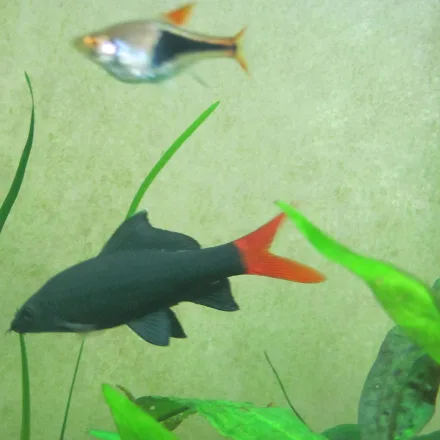
Redtail Sharkminnow Ultra rare Critically Endangered
Epalzeorhynchos bicolor
A jet black fish with a blood-red tail, found nowhere on earth but one Thai river system, and thought extinct for twenty five years.
Where: A few remaining clear streams of the Chao Phraya basin. Best: Year round.
Sharks and rays
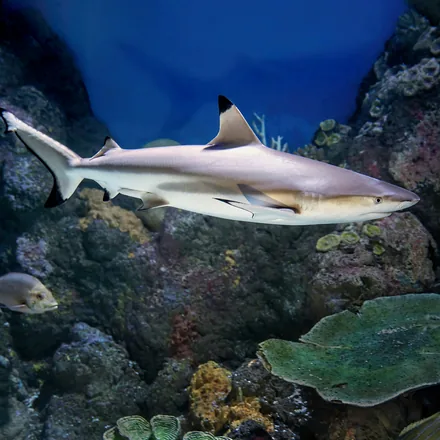
Blacktip Reef Shark Common Vulnerable
Carcharhinus melanopterus
The neat little reef shark of the shallows, its black-tipped fins often cutting the surface over sun-lit sand flats.
Where: Similar shallow reefs, Similan, Trang and Koh Libong. Best: Dive and snorkel season, Nov-Apr.
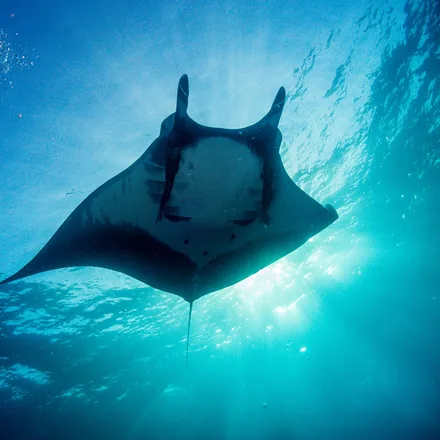
Giant Manta Ray Occasional Endangered
Mobula birostris
The largest ray on the planet, an ocean wanderer that can span seven metres and loops through plankton clouds in slow somersaults.
Where: Hin Daeng and Hin Muang, Koh Bon and Koh Tachai area. Best: Peak Feb-Apr.
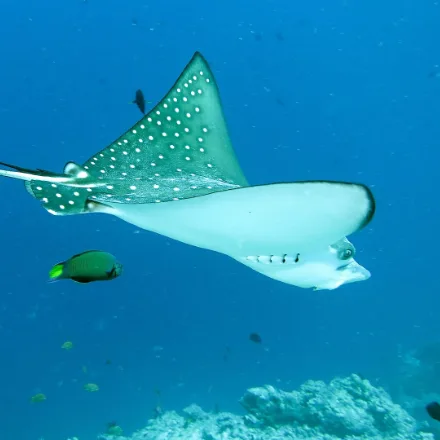
Ocellated Eagle Ray Occasional Endangered
Aetobatus ocellatus
A dramatic ray that flies through open water on wings spangled with white spots, trailing a whip-like venomous tail.
Where: Hin Daeng and Hin Muang, Similan drop-offs. Best: Dive season, Nov-Apr.
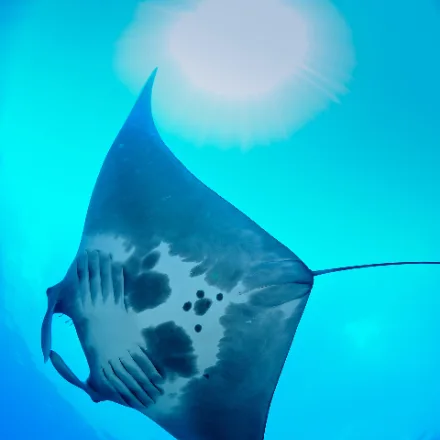
Reef Manta Ray Occasional Vulnerable
Mobula alfredi
A four metre wingspan gliding overhead in slow, hypnotic loops that leave divers grinning for days.
Where: Koh Bon, Koh Tachai, Richelieu Rock, Hin Daeng. Best: Nov-Apr, Similan and Hin Daeng pinnacles.
Zebra Shark (Leopard Shark) Occasional Endangered
Stegostoma tigrinum
A gentle, spotted shark that lies on the sand like a giant lazy cat, striped as a pup and spotted as an adult.
Where: Similan, Hin Daeng and Hin Muang, sandy patches. Best: Dive season, Nov-Apr.
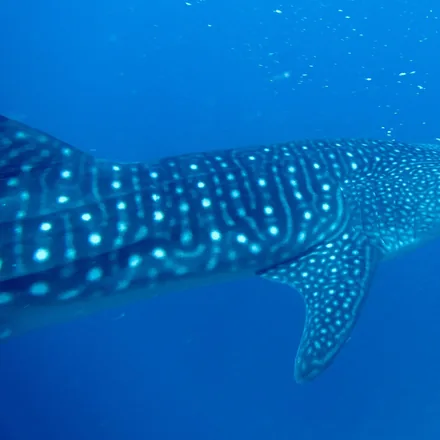
Whale Shark Rare Endangered
Rhincodon typus
The biggest fish in the ocean, a spotted, bus sized filter feeder and the undisputed holy grail of tropical diving.
Where: Richelieu Rock, Koh Tachai, Hin Daeng, Phi Phi. Best: Feb-Apr, Andaman dive sites.
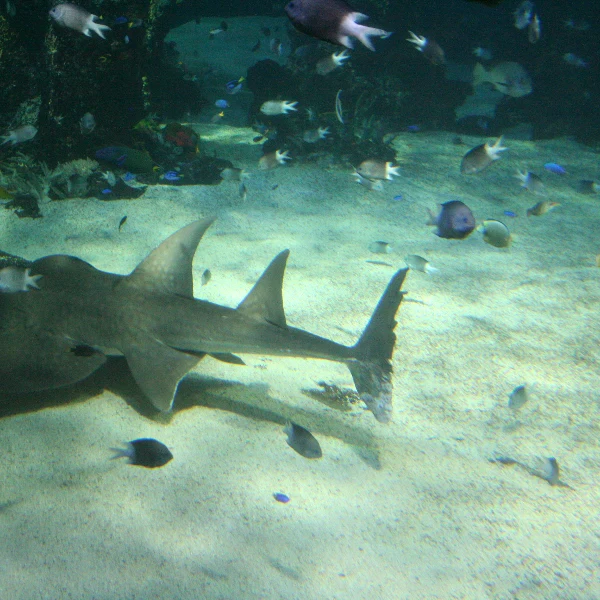
Bowmouth Guitarfish Ultra rare Critically Endangered
Rhina ancylostomus
Half shark, half ray, with ridges of thorns above the eyes that look like a set of eyebrows.
Where: Sand adjacent to reef in the outer Andaman; Similans and the Burma Banks. Best: Nov-Apr.
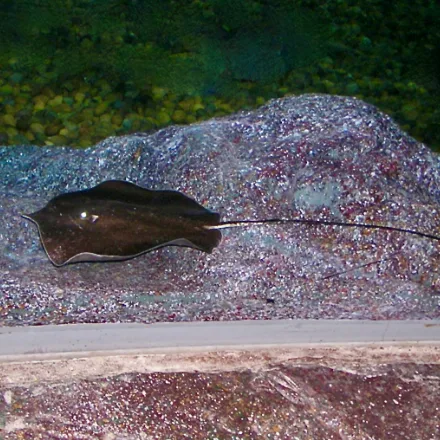
Giant Freshwater Stingray Ultra rare Endangered
Urogymnus polylepis
The largest freshwater fish on earth by some measures, a two metre disc carrying a 38 cm barb.
Where: Deep channels of the Maeklong, Bang Pakong and Mekong rivers. Best: Nov-Feb, clearer low water.
Great Hammerhead Ultra rare Critically Endangered
Sphyrna mokarran
Uses the flat of its head to pin a stingray to the seabed, then bites chunks out of the wing.
Where: Deep outer Andaman pinnacles; Hin Daeng, Hin Muang and the Burma Banks. Best: Feb-Apr.
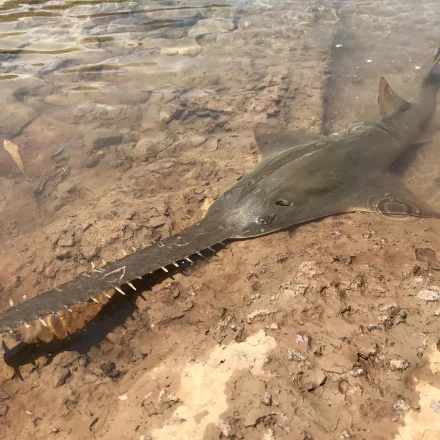
Largetooth Sawfish Ultra rare Critically Endangered
Pristis pristis
A seven metre ray with a chainsaw for a nose, and almost certainly gone from Thai waters.
Where: Historically the Gulf, the Andaman coast and the lower Chao Phraya. Best: No current season; no reliable records for decades.
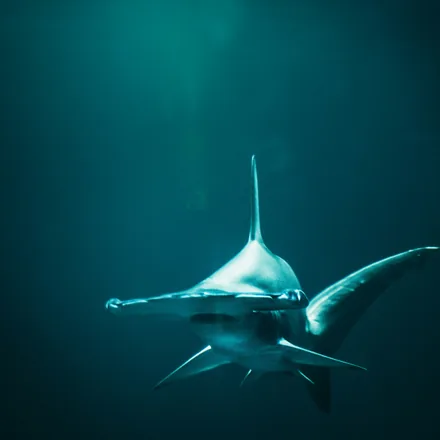
Scalloped Hammerhead Ultra rare Critically Endangered
Sphyrna lewini
The head is a sensory antenna, packed with electroreceptors that can find a ray buried under sand.
Where: Deep Andaman pinnacles and the Burma Banks; occasionally Hin Daeng and Richelieu Rock. Best: Feb-Apr.
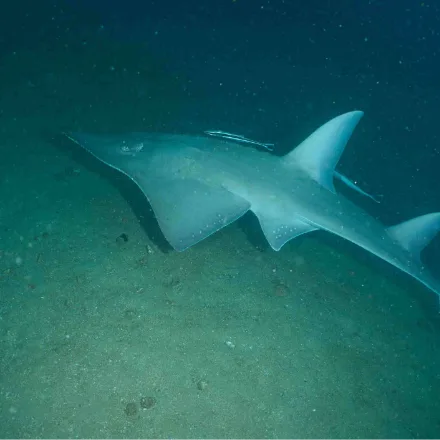
Whitespotted Wedgefish Ultra rare Critically Endangered
Rhynchobatus australiae
Its fins are the single most valuable in the global shark fin trade, which is why it has all but disappeared.
Where: Sand beside reef on both coasts; historically the Gulf and Andaman shelf. Best: Year round.
See all 32 sharks and rays of Thailand
Reef invertebrates
Magnificent Sea Anemone Common
Heteractis magnifica
A great carpet of stinging tentacles that is home and fortress to the anemonefish, a partnership at the heart of the reef.
Where: Similan, Trang and Koh Libong, shallow reefs. Best: Dive and snorkel season, Nov-Apr.
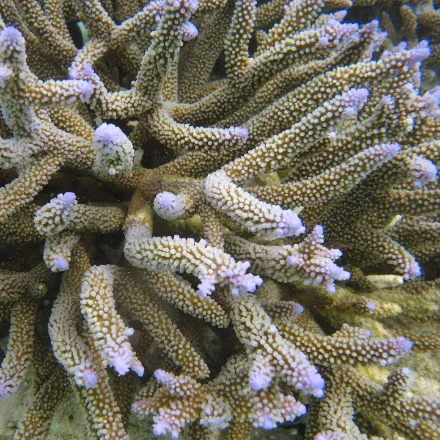
Staghorn Coral Common
Acropora species
The fast-growing branching coral that builds the living thickets of the reef, nursery and shelter for a whole community.
Where: Similan, Trang and Koh Libong, shallow reefs. Best: Dive and snorkel season, Nov-Apr.
Carnation Soft Coral Regular
Dendronephthya species
An explosion of pink, red and orange bloom that inflates with water to feed, turning shaded walls into hanging gardens.
Where: Hin Daeng and Hin Muang, Similan shaded walls and overhangs. Best: Dive season, Nov-Apr.
Chromodoris Nudibranch Regular
Chromodoris species
A tiny sea slug in outrageous colours that borrows toxins from the sponges it eats and flaunts them as a warning.
Where: Similan and Andaman reefs, on sponges. Best: Dive season, Nov-Apr.
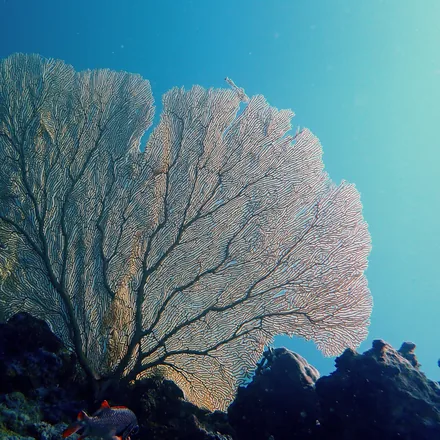
Giant Sea Fan (Gorgonian) Regular
Annella species
A great lattice fan spread across the current, a soft coral that farms the flow for plankton and shelters seahorses and hawkfish.
Where: Hin Daeng and Hin Muang, Similan current-swept walls. Best: Dive season, Nov-Apr.
Anchor Coral Occasional Vulnerable
Euphyllia ancora
Every tentacle ends in a fat hammer-shaped tip, so the whole colony looks like a field of tiny anchors.
Where: Sheltered reef slopes and lagoons; Koh Tao, Phi Phi and Koh Chang. Best: Year round.
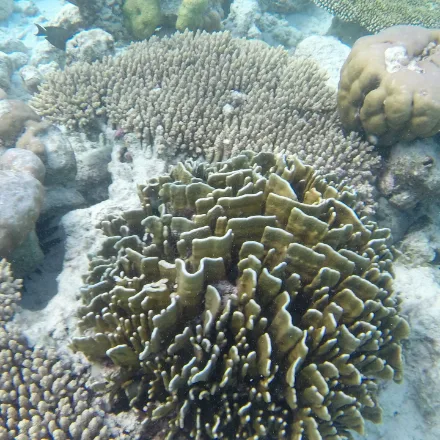
Blue Coral Occasional Vulnerable
Heliopora coerulea
The only coral on earth with a blue skeleton, hidden under brown tissue until the animal dies.
Where: Shallow high-energy reef; Surin, Similans and parts of the Gulf. Best: Nov-Apr.
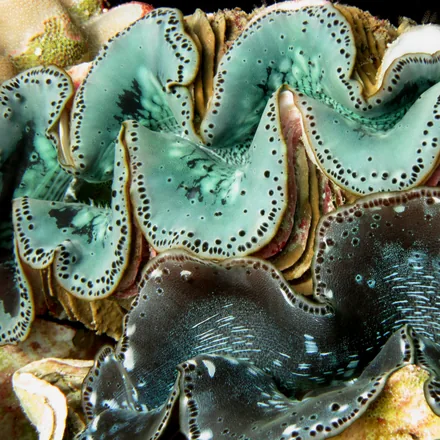
Giant Clam Occasional Critically Endangered
Tridacna gigas
The largest shellfish on Earth, a metre-wide clam that farms algae in its own rippling, jewel-coloured flesh.
Where: Similan, Hin Daeng and Hin Muang, shallow reefs. Best: Dive and snorkel season, Nov-Apr.
Indo-Pacific Horseshoe Crab Rare Endangered
Tachypleus gigas
Not a crab at all, closer to a spider, and its blue blood is used worldwide to test every injectable drug for contamination.
Where: Quiet sandy and muddy shores; the inner Gulf, Ranong and Trang. Best: Spawning on spring tides around the full and new moon.
Pineapple Sea Cucumber Rare Endangered
Thelenota ananas
A metre-long sea cucumber covered in star-shaped spikes, and one of the most valuable animals per kilo in Asian seafood.
Where: Reef slopes in the Andaman; Similans, Surin and Koh Lipe. Best: Nov-Apr.
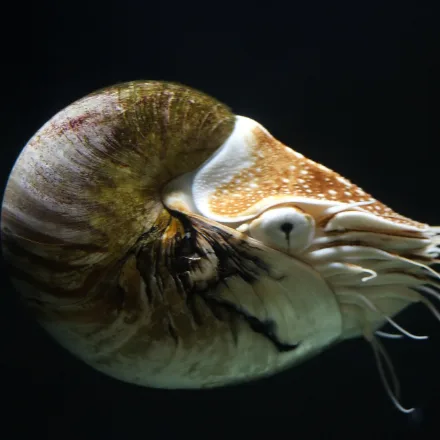
Chambered Nautilus Ultra rare Endangered
Nautilus pompilius
A living fossil that has kept the same shell design for 500 million years and steers by pumping gas between chambers.
Where: Deep Andaman drop-offs beyond recreational depth; occasionally on very deep night dives. Best: Nov-Apr.
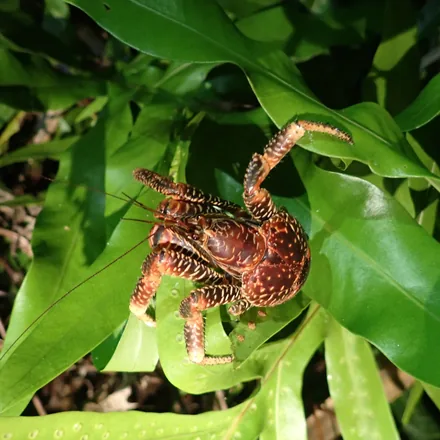
Coconut Crab Ultra rare Vulnerable
Birgus latro
The largest land invertebrate on earth, with a grip strong enough to crack a coconut and hold ninety times its own body weight.
Where: Remote uninhabited islands; parts of the Surin and Similan groups and outer Andaman islets. Best: Year round, at night.
See all 90 reef invertebrates of Thailand
Insects and spiders
Leopard Lacewing Common
Cethosia cyane
A fiery orange butterfly edged in intricate black and white lace, common along sunlit trails.
Where: Gardens, scrub and forest edge nationwide. Best: Year round.
Common Birdwing Regular
Troides helena
A hand-sized black and gold butterfly that cruises the canopy like a small bird.
Where: Lowland forest and gardens nationwide. Best: Year round.
Golden Birdwing Regular
Troides aeacus
A huge butterfly with black forewings and blazing golden hindwings, sailing high along the forest edge.
Where: Forest edges and gardens, Khao Yai, Kaeng Krachan. Best: Year round, sunny mornings.
Paper Kite (Tree Nymph) Regular
Idea leuconoe
A large white butterfly, veined and spotted in black, that drifts through shade like a scrap of tissue paper.
Where: Coastal and lowland forest, southern Thailand. Best: Year round.
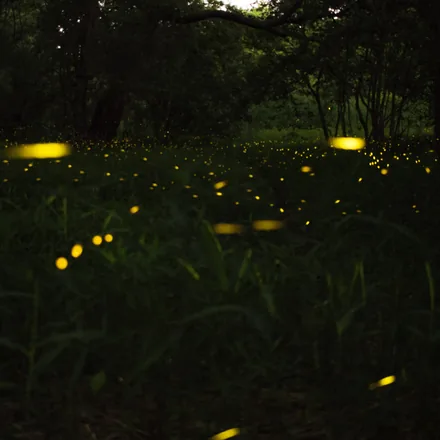
Synchronous Firefly Regular
Pteroptyx malaccae
Mangrove trees hung with thousands of fireflies, all flashing in perfect unison like living fairy lights.
Where: Riverside mangroves, Amphawa and the Gulf/Andaman coasts. Best: Year round, best in the rains, after dark.
Atlas Beetle Occasional
Chalcosoma atlas
A giant three-horned beetle built like a piece of living armour.
Where: Forest nationwide. Best: Rainy season, at lights.
Atlas Moth Occasional
Attacus atlas
One of the largest moths on Earth, its wingtips shaped and coloured like a cobra's head.
Where: Forest and forest edge nationwide. Best: Rains, at rest by day.
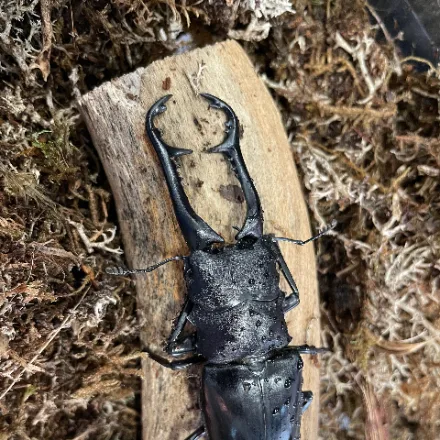
Giraffe Stag Beetle Occasional
Prosopocoilus giraffa
The longest stag beetle in the world, with jaws nearly as long as the rest of it, used to lever rivals off a tree.
Where: Sap runs and lit buildings at forest edges; Khao Yai, Kaeng Krachan and the north. Best: Apr-Aug.
Jewel Beetle Occasional
Sternocera aequisignata
A living gemstone, its wing cases a metallic emerald green so brilliant they were sewn into royal cloth.
Where: Open forest and edges nationwide. Best: Rainy season.
Lantern Bug Occasional
Pyrops candelaria
A gaudy planthopper with an upturned red snout once believed, wrongly, to glow in the dark.
Where: Lowland and hill forest, on certain trees. Best: Rainy season.
Rhinoceros Beetle Occasional
Xylotrupes gideon
A glossy tank of a beetle, the male armed with a forked horn for wrestling rivals.
Where: Forest and plantations nationwide. Best: Rainy season, at lights.
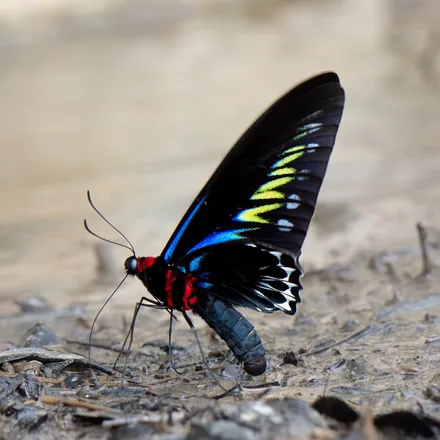
Rajah Brooke's Birdwing Rare
Trogonoptera brookiana
Jet black with seven electric green flames along each wing, and the males gather in dozens at hot springs to drink minerals.
Where: Lowland rainforest and hot springs in the far south; Hala-Bala and Bang Lang. Best: Feb-May.
See all 52 insects and spiders of Thailand
Where to go
A city of twelve million with monitor lizards in its central park, otters in its canals and, two hours down the coast, the single most important shorebird site in Southeast Asia.
Mountains, not beaches. Chiang Mai puts a 2,565 m peak, a limestone massif and dry dipterocarp forest within two hours of the old city, which gives northern Thailand a cast of animals the south never sees.
Huai Kha Khaeng Wildlife Sanctuary
A UNESCO listed wilderness at the heart of the Western Forest Complex, Thailand's tiger stronghold.
Thailand's largest park and its best big-cat destination; the Ban Krang road is famed for leopards and black panthers.
Khao Sam Roi Yot National Park
Limestone peaks, marshes and mangroves on the Gulf, with dusky langurs, fishing cats and waterbirds.
Ancient rainforest and a jade lake, home to gibbons, hornbills and, if you are lucky, the elusive binturong.
Thailand's oldest and most accessible park, with elephants, gaur, gibbons, hornbills and, on lucky nights, dhole and clouded leopard.
Koh Samui and the Gulf islands
Warm, sheltered Gulf water with fringing reefs, granite boulders and seagrass, easy snorkelling straight off the boat and a genuinely different cast from the Andaman.
Limestone towers, mangrove estuary and island reef within a few kilometres of each other, which is why a single day here can produce langurs on a cliff, mudskippers on a mudflat and a reef shark over sand.
The most reliable place in Thailand to see wild elephants and gaur grazing grasslands at dusk.
Limestone islands ringed by shallow reef, with blacktip reef sharks in the shallows, turtles on the seagrass and the occasional whale shark passing the outer walls.
Thailand's largest island is mostly resort, but the parts that are not hold rainforest with wild gibbons, mangrove creeks full of mudskippers, a turtle nesting beach and reef close enough to snorkel from the sand.
The Andaman's premier dive destination, with manta rays, whale sharks and pristine reefs.
Planning
[‘Best time to visit. The cool dry season, roughly November to February, is the easiest window for land wildlife: comfortable temperatures, animals gathering at water, and the best forest access. March to May is hot but excellent for reptiles and for reef trips as visibility peaks. The southwest monsoon (June to October) closes some Andaman dive sites but brings amphibians and insects to life and thins the crowds. Every conservation status on this page is the current assessment from the IUCN Red List.’, ‘Where to base yourself. For big mammals and forest birds, the national parks of the interior and the southwest (Khao Yai, Kaeng Krachan, Kui Buri, Khao Sok) are the anchors. For reefs and pelagics, the Andaman coast and its island groups outrank the Gulf for sheer diversity, though both are covered here.’, ‘Watching responsibly. The rarer an animal, the more your behaviour matters.’, ‘Most of these sightings are easier with someone who knows the sites and the season.’]
Wildlife in Thailand in December
Find guided wildlife trips in Thailand
Some links on this page are affiliate links. If you book through them, Wildseer may earn a small commission at no extra cost to you.
Frequently asked questions
What is the best wildlife you can see in Thailand?
The headline sightings are wild Asian elephants (most reliably at Kui Buri), hornbills in the southern forests, whale sharks and manta rays on the Andaman reefs, and, for the very lucky and patient, tigers, tapirs and clouded leopards in the deep interior parks.
When is the best time to see wildlife in Thailand?
November to February for land mammals and birds, March to May for reptiles and peak reef visibility, and the green season for amphibians and insects. Each species page gives the specific window.
Can you still see tigers in Thailand?
Yes, but they are genuinely rare. A small wild Indochinese tiger population survives in the western forest complex; sightings are a matter of luck and time, and the guide is honest about the odds rather than overselling them.
Explore Thailand wildlife by group
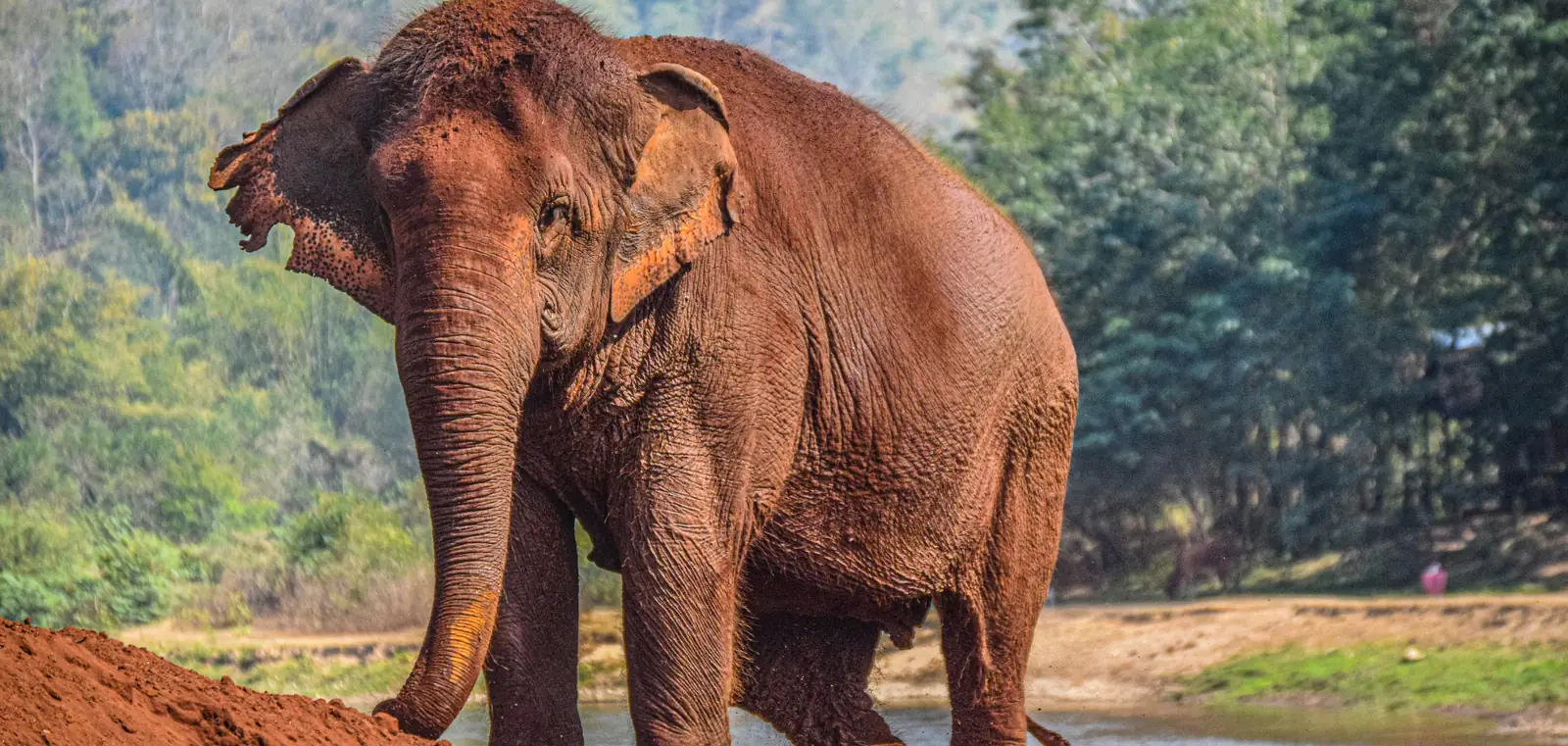 Mammals of Thailand
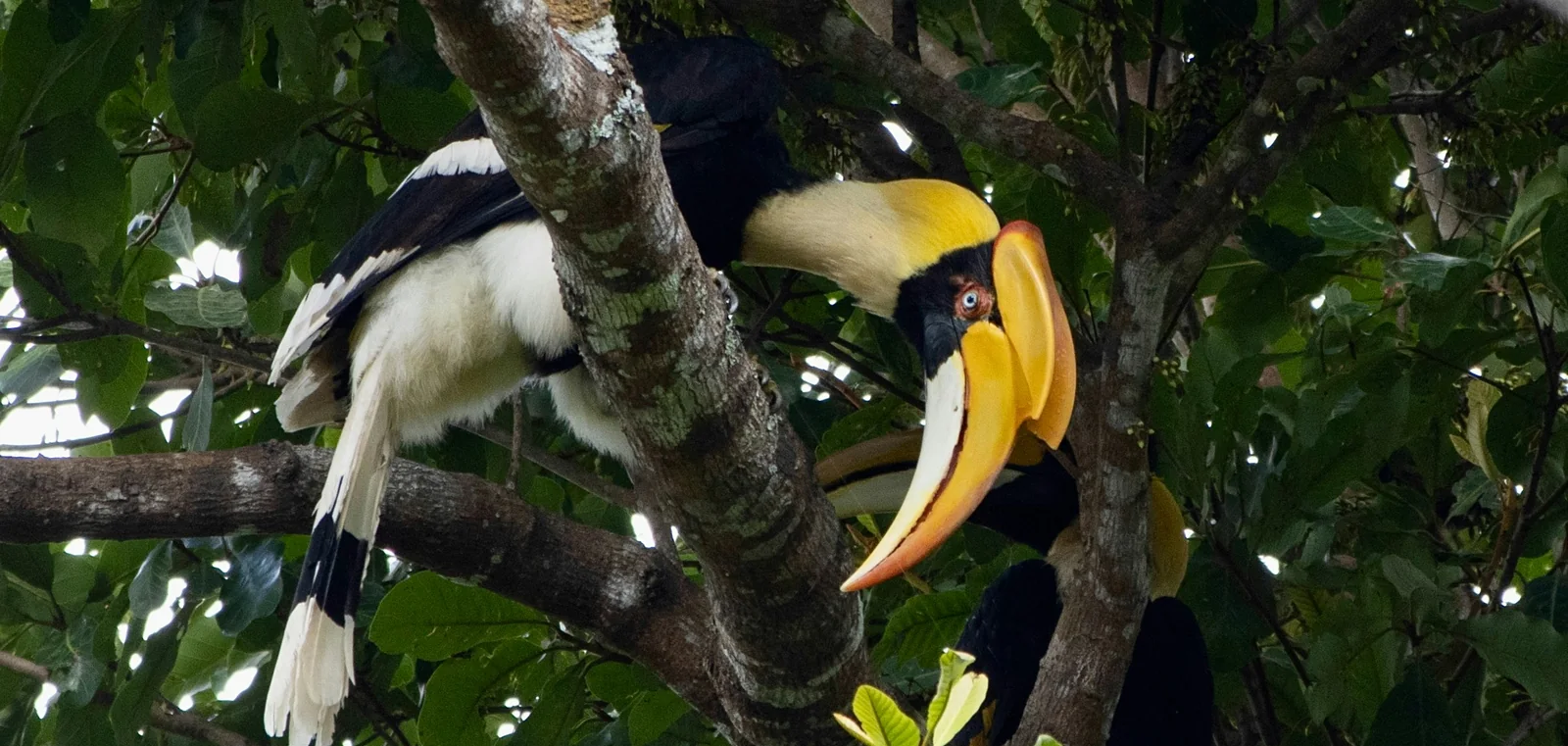 Birds of Thailand
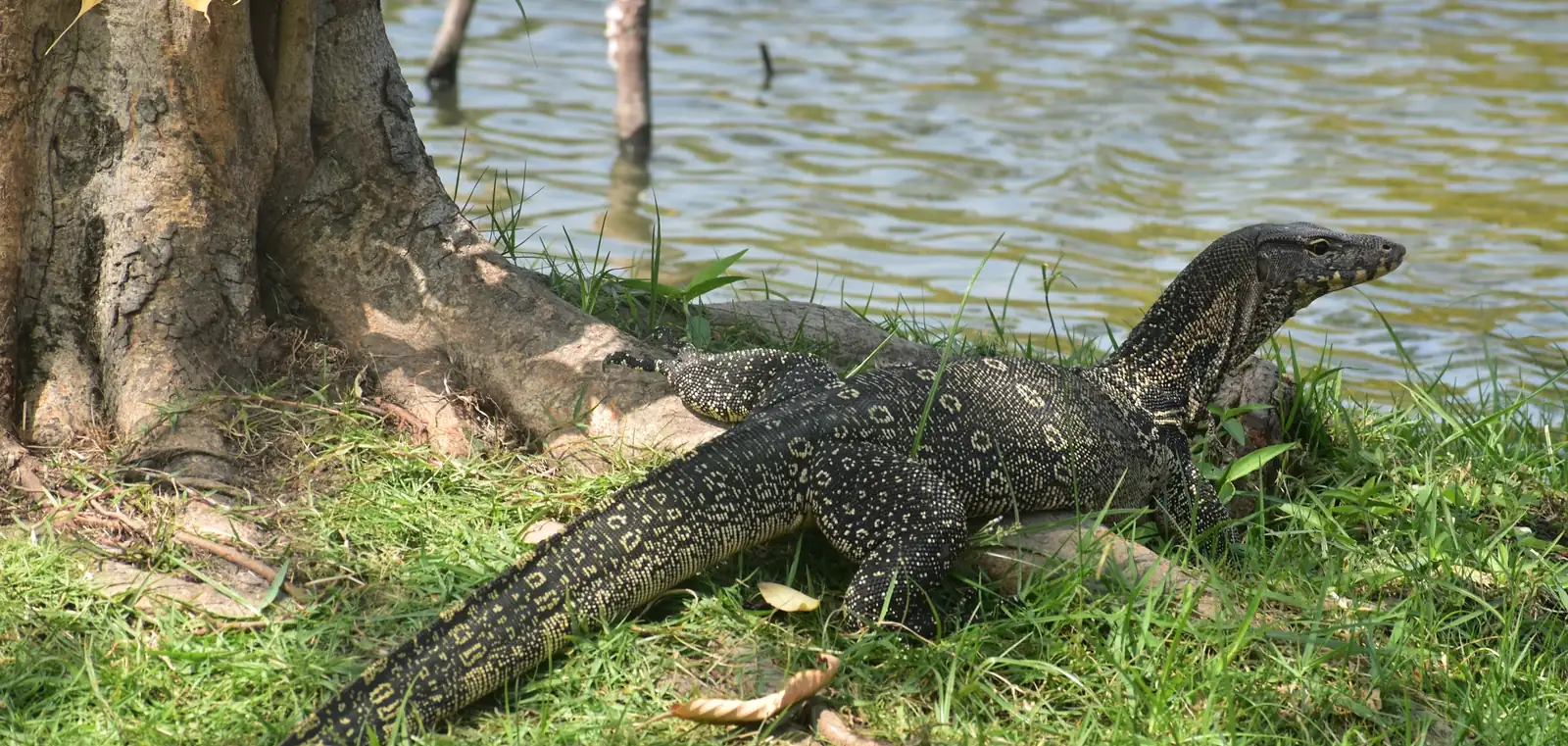 Reptiles and amphibians of Thailand
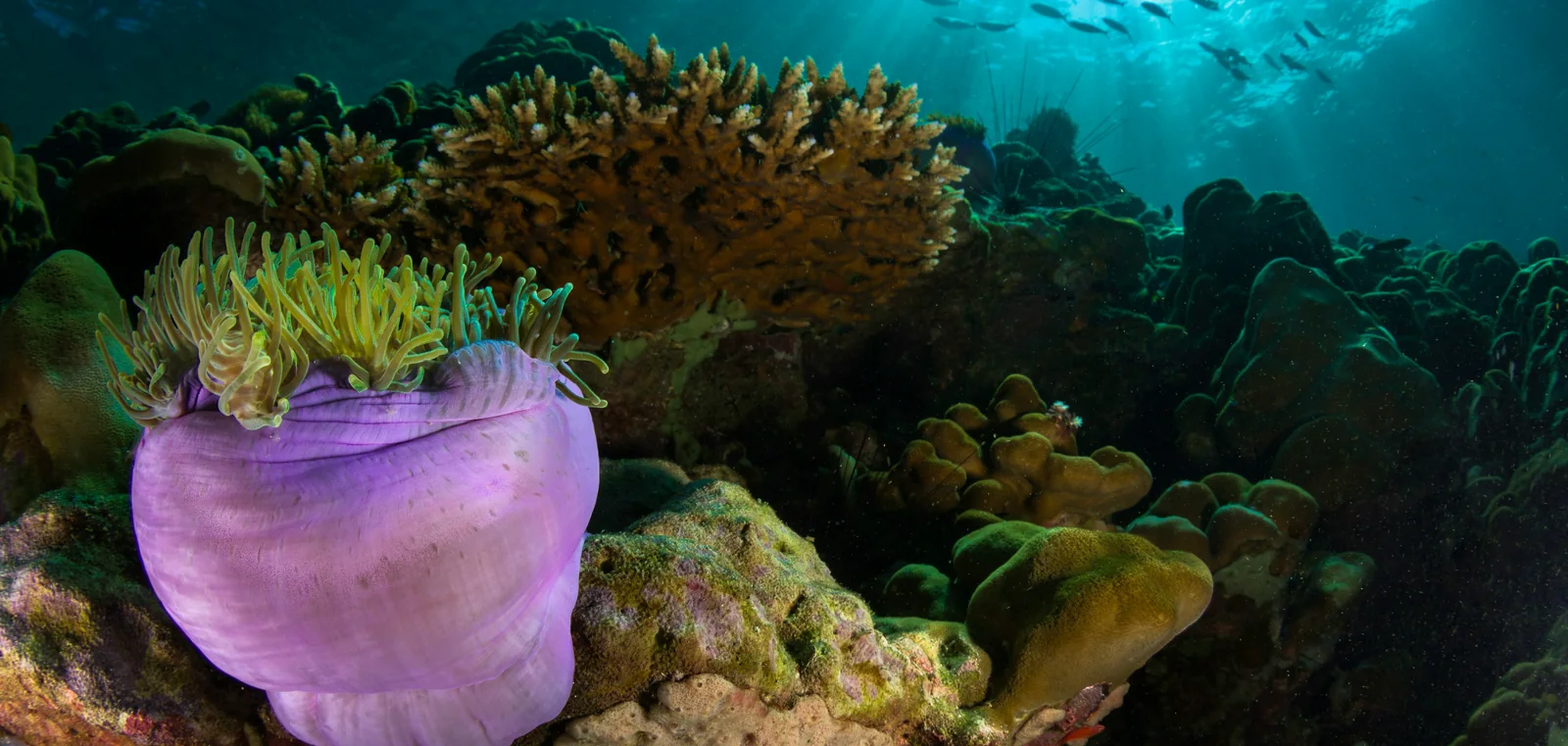 Fish of Thailand
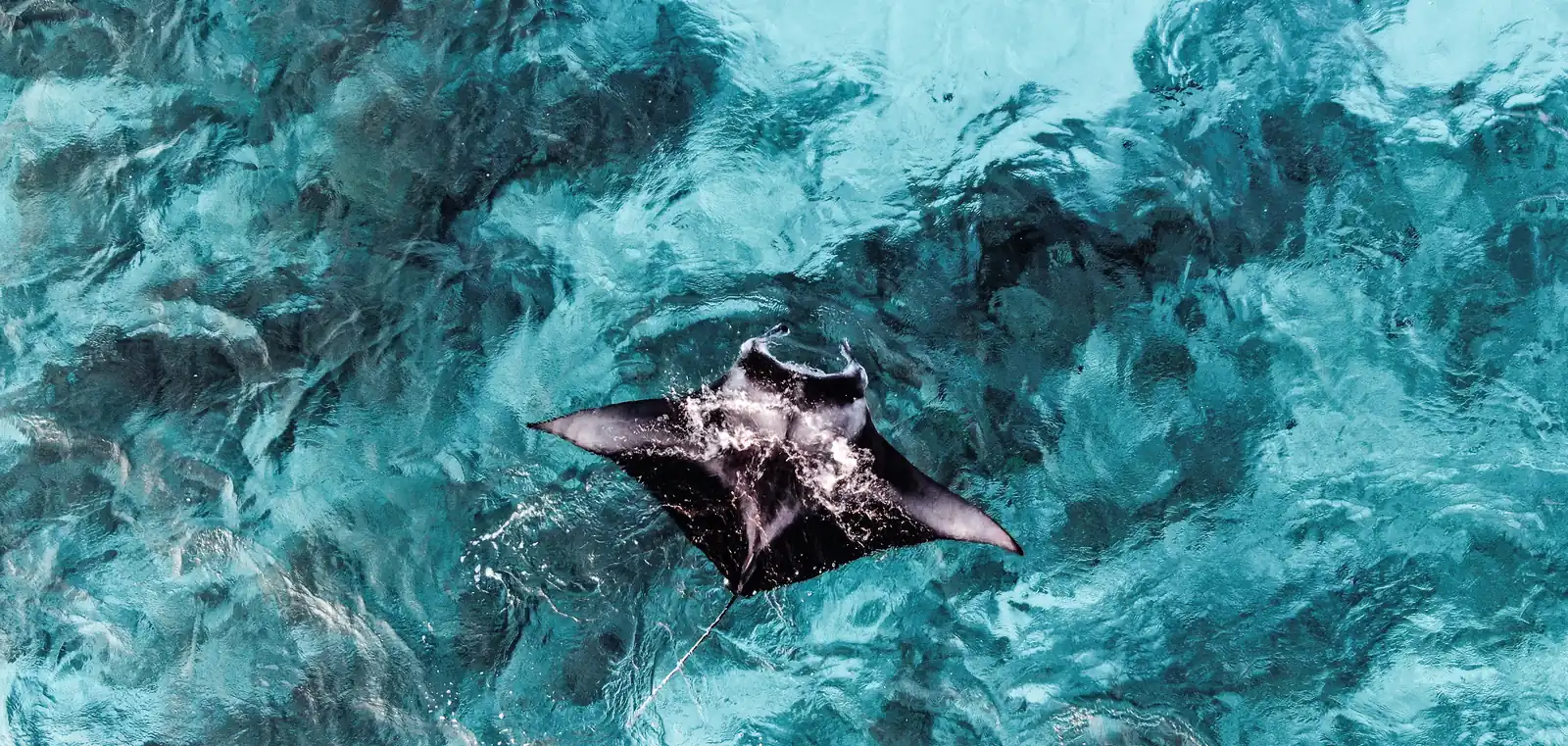 Sharks and rays of Thailand
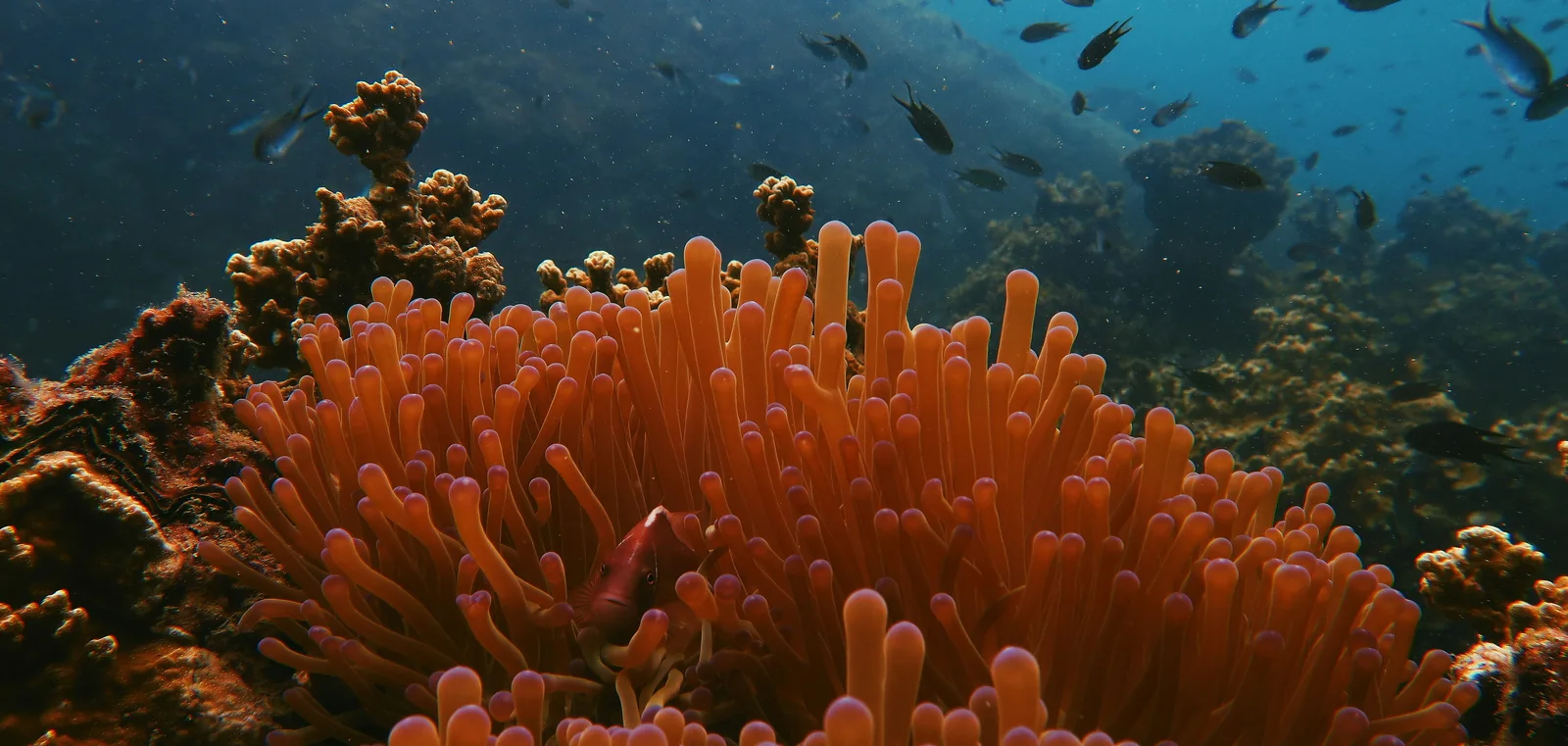 Reef invertebrates of Thailand
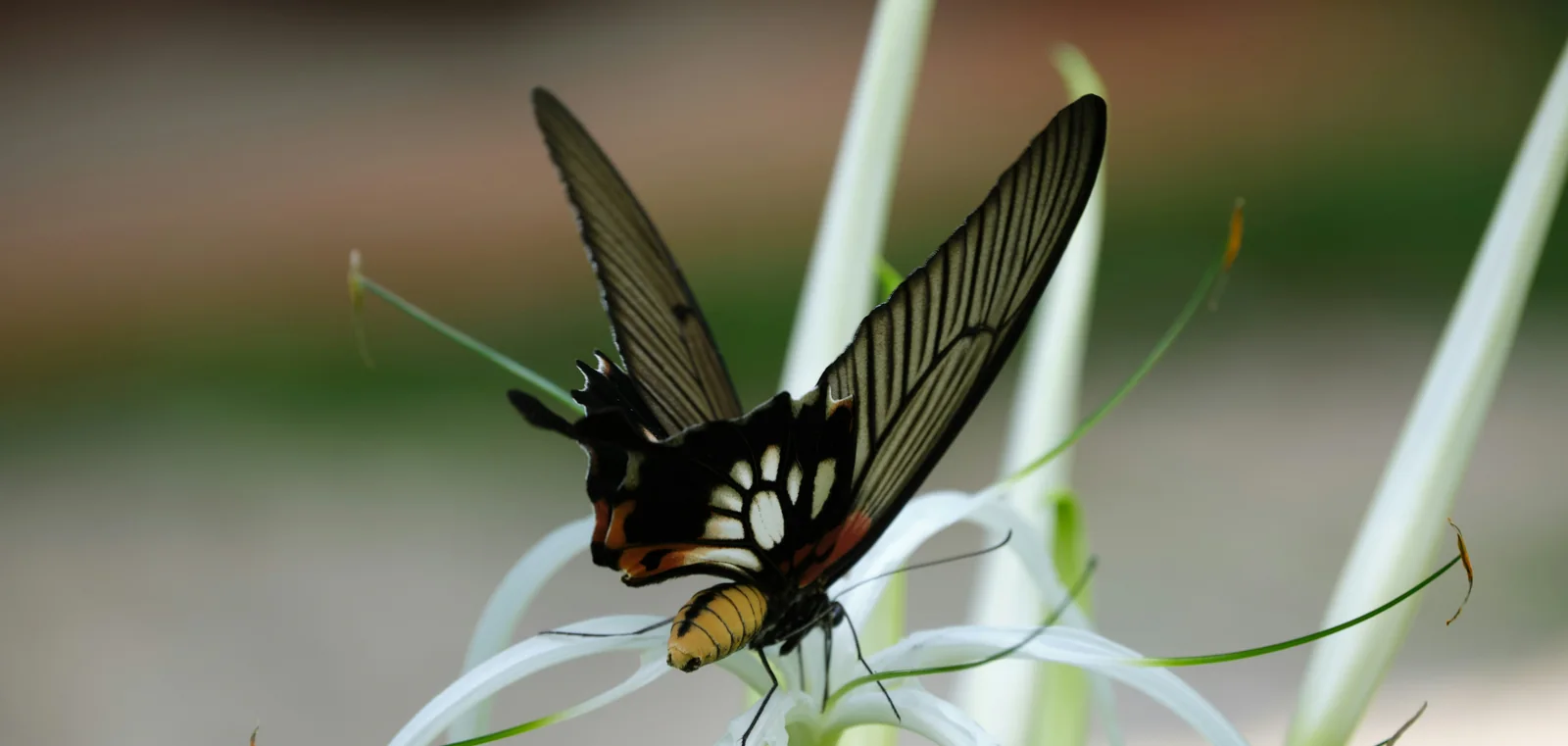 Insects and spiders of Thailand
Part of the Wildlife in Thailand guide.
Image credits
Square thumbnails are cropped from the original. Wide banner images are cropped to a band. Other images are resized only. No other changes have been made.
- Dusky leaf monkey: Lukas Scheuter | Unsplash License
- Asian elephant (resized): Shadow Ayush | CC BY-SA 4.0, cropped
- indochinese tiger (resized): A.Savin | Free Art License 1.3, cropped
- Whale Shark (resized): Jerome Paillet (IFREMER) | CC BY 4.0, cropped
- Giant manta ray (resized): Stevelaycock21 | CC BY-SA 4.0, cropped
- Long-tailed Macaque (cropped to square): Basile Morin | CC BY-SA 4.0, cropped
- Asian Elephant (cropped to square): Shadow Ayush | CC BY-SA 4.0, cropped
- gaur 1 (re-crop): Charles J. Sharp | CC BY-SA 4.0, cropped
- Irrawaddy Dolphin (cropped to square): Dibyendu Ash | CC BY 4.0, cropped
- Lyle’s Flying Fox (cropped to square): lonelyshrimp | CC0, cropped
- Leopard: chuttersnap | Unsplash License, cropped
- Clouded Leopard (cropped to square): Rushenb | CC BY-SA 4.0, cropped
- Malayan Tapir: David Valentine | Unsplash License, cropped
- Sun Bear (cropped to square): Rushenb | CC BY-SA 4.0, cropped
- Chinese Pangolin (cropped to square): Licheng Shih | CC BY 4.0, cropped
- Indochinese Tiger (cropped to square): A.Savin | Free Art License 1.3, cropped
- Sunda Pangolin (cropped to square): Frendi Apen Irawan | CC BY-SA 4.0, cropped
- great hornbill 1 (re-crop): Lip Kee from Singapore, Republic of Singapore | CC BY-SA 2.0, cropped
- Wreathed Hornbill (resized): Charles J. Sharp | CC BY-SA 4.0, cropped
- Sarus Crane (cropped to square): Marcin Konsek | CC BY-SA 4.0, cropped
- Helmeted Hornbill (cropped to square): Ian Dugdale | CC BY 4.0, cropped
- Milky Stork (cropped to square): GerifalteDelSabana | CC BY-SA 4.0, cropped
- Nordmann’s Greenshank (cropped to square): Dr. Raju Kasambe | CC BY-SA 4.0, cropped
- Masked Finfoot (cropped to square): Touhid biplob | CC BY-SA 4.0, cropped
- Asian Water Monitor: John Thomas | Unsplash License, cropped
- Tokay Gecko (resized): Gerard Chartier | CC BY 4.0, cropped
- Green Sea Turtle: Randall Ruiz | Unsplash License, cropped
- Common Flying Dragon (cropped to square): Wich'yanan L | CC BY 4.0, cropped
- Hawksbill Turtle (cropped to square): Daniel Sasse | CC BY-SA 4.0, cropped
- King Cobra (cropped to square): Rushenb | CC BY-SA 4.0, cropped
- Wallace’s Flying Frog (cropped to square): Rushenb | CC BY-SA 4.0, cropped
- Leatherback Turtle (cropped to square): Julien Renoult | CC BY 4.0, cropped
- Siamese Fighting Fish: Navin Rai | Unsplash License, cropped
- Tigertail Seahorse (cropped to square): Jakkarin Burananit | CC BY 4.0, cropped
- Indo-Pacific Sailfish (cropped to square): Vsevolod | CC BY 4.0, cropped
- Jullien’s Golden Carp (cropped to square): Cool critter channel | CC BY 4.0, cropped
- Mekong Giant Catfish (cropped to square): KKPCW | CC BY-SA 4.0, cropped
- Redtail Sharkminnow (cropped to square): Astellar87 | CC BY-SA 4.0, cropped
- Blacktip Reef Shark: David Clode | Unsplash License, cropped
- Giant Manta Ray (cropped to square): Stevelaycock21 | CC BY-SA 4.0, cropped
- Ocellated Eagle Ray (cropped to square): Jerome Paillet (IFREMER) | CC BY 4.0, cropped
- Reef Manta Ray (cropped to square): National Marine Sanctuaries | Public domain, cropped
- Whale Shark (cropped to square): Jerome Paillet (IFREMER) | CC BY 4.0, cropped
- bowmouth guitarfish (re-crop): Kim Navarre from Brooklyn, NY | CC BY-SA 2.0, cropped
- Giant Freshwater Stingray (cropped to square): NasserHalaweh | CC BY-SA 4.0, cropped
- Largetooth Sawfish: Peter Kyne, Charles Darwin University | CC BY 3.0, cropped
- Scalloped Hammerhead: Jonas Allert | Unsplash License, cropped
- Whitespotted Wedgefish (cropped to square): (c) apteryx54, some rights reserved (CC BY) | CC BY 4.0, cropped
- Staghorn Coral (cropped to square): MDC Seamarc Maldives | CC BY-SA 4.0, cropped
- Giant Sea Fan (cropped to square): Frederic Ducarme | CC BY-SA 4.0, cropped
- Blue Coral (cropped to square): Frédéric Ducarme | CC BY-SA 4.0, cropped
- Giant Clam: NOAA | Unsplash License, cropped
- Chambered Nautilus (cropped to square): Hans Hillewaert | CC BY-SA 4.0, cropped
- Coconut Crab (cropped to square): Mike Burnett | CC BY 4.0, cropped
- Synchronous Firefly: Tony Phan | Unsplash License, cropped
- Giraffe Stag Beetle (cropped to square): Fungus Guy | CC BY-SA 4.0, cropped
- Rajah Brooke’s Birdwing (cropped to square): Yi-Kai Tea | CC BY-SA 4.0, cropped
- Mammals of Thailand: Joshua Steinberg | Unsplash License
- Birds of Thailand: Hongbin | Unsplash License
- Reptiles and Amphibians of Thailand: John Thomas | Unsplash License, cropped
- Fish of Thailand: Milos Prelevic | Unsplash License
- Sharks and Rays of Thailand: Adam Juman | Unsplash License
- Reef Invertebrates of Thailand: James Thornton | Unsplash License, cropped
- Insects and Spiders of Thailand: Joe Green | Unsplash License, cropped
Square thumbnails are cropped from the original. Wide banner images are cropped to a band. Other images are resized only. No other changes have been made.
- Dusky leaf monkey: Lukas Scheuter | Unsplash License
- Asian elephant (resized): Shadow Ayush | CC BY-SA 4.0, cropped
- indochinese tiger (resized): A.Savin | Free Art License 1.3, cropped
- Whale Shark (resized): Jerome Paillet (IFREMER) | CC BY 4.0, cropped
- Giant manta ray (resized): Stevelaycock21 | CC BY-SA 4.0, cropped
- Long-tailed Macaque (cropped to square): Basile Morin | CC BY-SA 4.0, cropped
- Asian Elephant (cropped to square): Shadow Ayush | CC BY-SA 4.0, cropped
- gaur 1 (re-crop): Charles J. Sharp | CC BY-SA 4.0, cropped
- Irrawaddy Dolphin (cropped to square): Dibyendu Ash | CC BY 4.0, cropped
- Lyle’s Flying Fox (cropped to square): lonelyshrimp | CC0, cropped
- Leopard: chuttersnap | Unsplash License, cropped
- Clouded Leopard (cropped to square): Rushenb | CC BY-SA 4.0, cropped
- Malayan Tapir: David Valentine | Unsplash License, cropped
- Sun Bear (cropped to square): Rushenb | CC BY-SA 4.0, cropped
- Chinese Pangolin (cropped to square): Licheng Shih | CC BY 4.0, cropped
- Indochinese Tiger (cropped to square): A.Savin | Free Art License 1.3, cropped
- Sunda Pangolin (cropped to square): Frendi Apen Irawan | CC BY-SA 4.0, cropped
- great hornbill 1 (re-crop): Lip Kee from Singapore, Republic of Singapore | CC BY-SA 2.0, cropped
- Wreathed Hornbill (resized): Charles J. Sharp | CC BY-SA 4.0, cropped
- Sarus Crane (cropped to square): Marcin Konsek | CC BY-SA 4.0, cropped
- Helmeted Hornbill (cropped to square): Ian Dugdale | CC BY 4.0, cropped
- Milky Stork (cropped to square): GerifalteDelSabana | CC BY-SA 4.0, cropped
- Nordmann’s Greenshank (cropped to square): Dr. Raju Kasambe | CC BY-SA 4.0, cropped
- Masked Finfoot (cropped to square): Touhid biplob | CC BY-SA 4.0, cropped
- Asian Water Monitor: John Thomas | Unsplash License, cropped
- Tokay Gecko (resized): Gerard Chartier | CC BY 4.0, cropped
- Green Sea Turtle: Randall Ruiz | Unsplash License, cropped
- Common Flying Dragon (cropped to square): Wich'yanan L | CC BY 4.0, cropped
- Hawksbill Turtle (cropped to square): Daniel Sasse | CC BY-SA 4.0, cropped
- King Cobra (cropped to square): Rushenb | CC BY-SA 4.0, cropped
- Wallace’s Flying Frog (cropped to square): Rushenb | CC BY-SA 4.0, cropped
- Leatherback Turtle (cropped to square): Julien Renoult | CC BY 4.0, cropped
- Siamese Fighting Fish: Navin Rai | Unsplash License, cropped
- Tigertail Seahorse (cropped to square): Jakkarin Burananit | CC BY 4.0, cropped
- Indo-Pacific Sailfish (cropped to square): Vsevolod | CC BY 4.0, cropped
- Jullien’s Golden Carp (cropped to square): Cool critter channel | CC BY 4.0, cropped
- Mekong Giant Catfish (cropped to square): KKPCW | CC BY-SA 4.0, cropped
- Redtail Sharkminnow (cropped to square): Astellar87 | CC BY-SA 4.0, cropped
- Blacktip Reef Shark: David Clode | Unsplash License, cropped
- Giant Manta Ray (cropped to square): Stevelaycock21 | CC BY-SA 4.0, cropped
- Ocellated Eagle Ray (cropped to square): Jerome Paillet (IFREMER) | CC BY 4.0, cropped
- Reef Manta Ray (cropped to square): National Marine Sanctuaries | Public domain, cropped
- Whale Shark (cropped to square): Jerome Paillet (IFREMER) | CC BY 4.0, cropped
- bowmouth guitarfish (re-crop): Kim Navarre from Brooklyn, NY | CC BY-SA 2.0, cropped
- Giant Freshwater Stingray (cropped to square): NasserHalaweh | CC BY-SA 4.0, cropped
- Largetooth Sawfish: Peter Kyne, Charles Darwin University | CC BY 3.0, cropped
- Scalloped Hammerhead: Jonas Allert | Unsplash License, cropped
- Whitespotted Wedgefish (cropped to square): (c) apteryx54, some rights reserved (CC BY) | CC BY 4.0, cropped
- Staghorn Coral (cropped to square): MDC Seamarc Maldives | CC BY-SA 4.0, cropped
- Giant Sea Fan (cropped to square): Frederic Ducarme | CC BY-SA 4.0, cropped
- Blue Coral (cropped to square): Frédéric Ducarme | CC BY-SA 4.0, cropped
- Giant Clam: NOAA | Unsplash License, cropped
- Chambered Nautilus (cropped to square): Hans Hillewaert | CC BY-SA 4.0, cropped
- Coconut Crab (cropped to square): Mike Burnett | CC BY 4.0, cropped
- Synchronous Firefly: Tony Phan | Unsplash License, cropped
- Giraffe Stag Beetle (cropped to square): Fungus Guy | CC BY-SA 4.0, cropped
- Rajah Brooke’s Birdwing (cropped to square): Yi-Kai Tea | CC BY-SA 4.0, cropped
- Mammals of Thailand: Joshua Steinberg | Unsplash License
- Birds of Thailand: Hongbin | Unsplash License
- Reptiles and Amphibians of Thailand: John Thomas | Unsplash License, cropped
- Fish of Thailand: Milos Prelevic | Unsplash License
- Sharks and Rays of Thailand: Adam Juman | Unsplash License
- Reef Invertebrates of Thailand: James Thornton | Unsplash License, cropped
- Insects and Spiders of Thailand: Joe Green | Unsplash License, cropped