
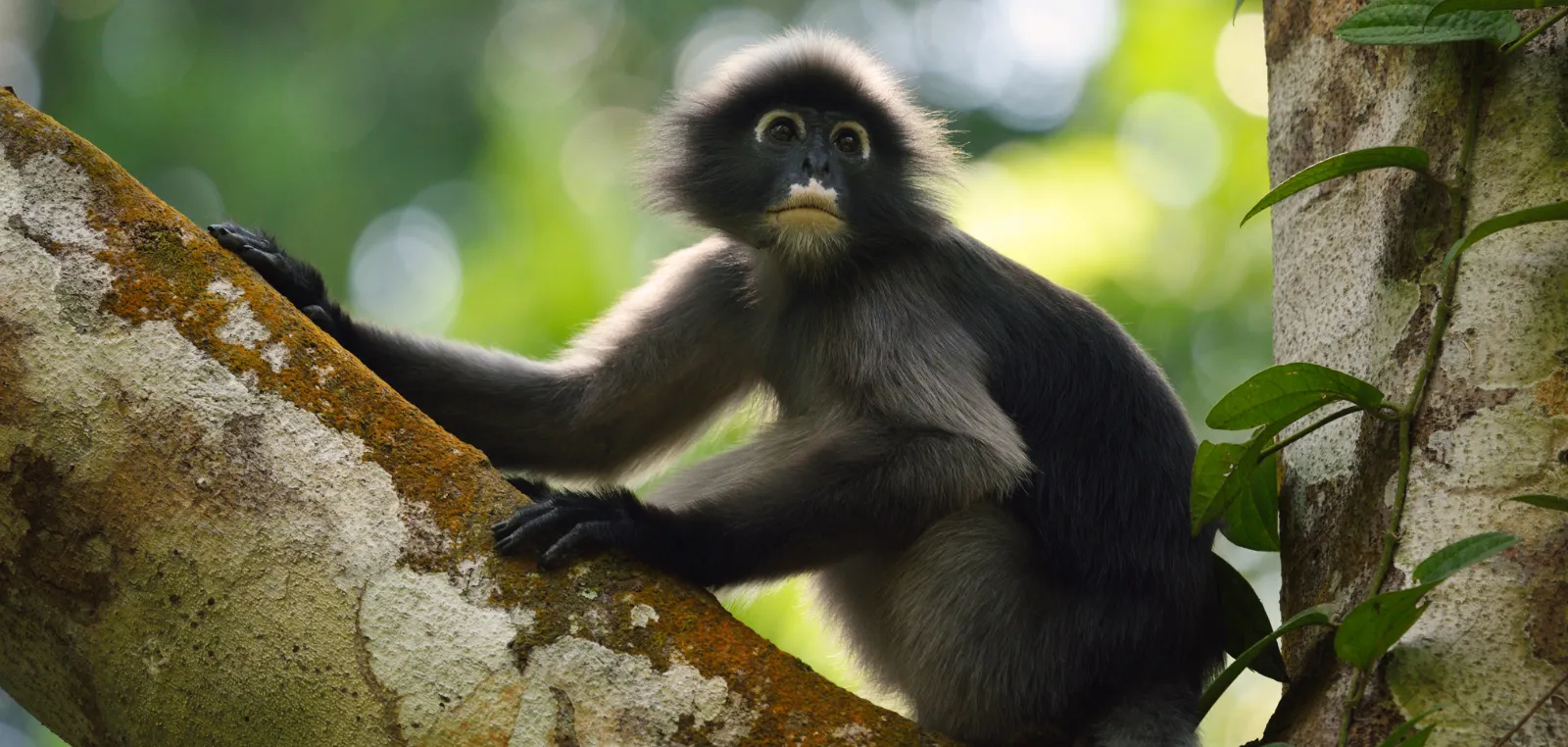
Phuket wildlife survives in the gaps between the resorts, and there are more of them than the island’s reputation suggests. Khao Phra Thaeo in the northeast is the last substantial rainforest on Phuket, twenty-three square kilometres holding wild gibbons that were hunted out and put back, dusky langurs that will watch you from a roadside tree, and hornbills over the Bang Pae waterfall. On the east coast the mangroves at Bang Rong and Ao Por run out over mudflats thick with mudskippers and fiddler crabs, and on the northwest shore the turtles still come up at Mai Khao.
The water does the rest. Racha Yai and Koh Bon are close enough for a morning boat and hold blacktip reef sharks, zebra sharks on the sand and turtles over the coral. This page is written for someone staying on Phuket and taking day trips, not for a liveaboard diver: the outer Andaman pinnacles are covered on their own pages. One thing you will not find below is a wild elephant. Phuket has none, and every elephant on the island is a captive one.
Highlights
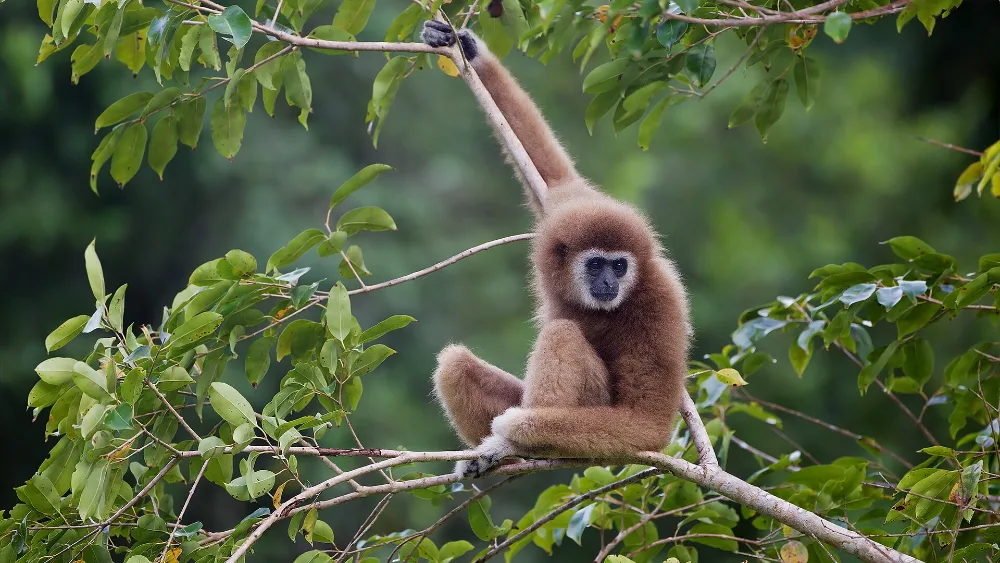
White-handed (Lar) Gibbon
You hear them before dawn even breaks, the whooping duet of gibbons that is the definitive soundtrack of Asian rainforest. Where: Khao Phra Thaeo forest above the Bang Pae waterfall trail. Best: Year round, the first two hours after dawn.
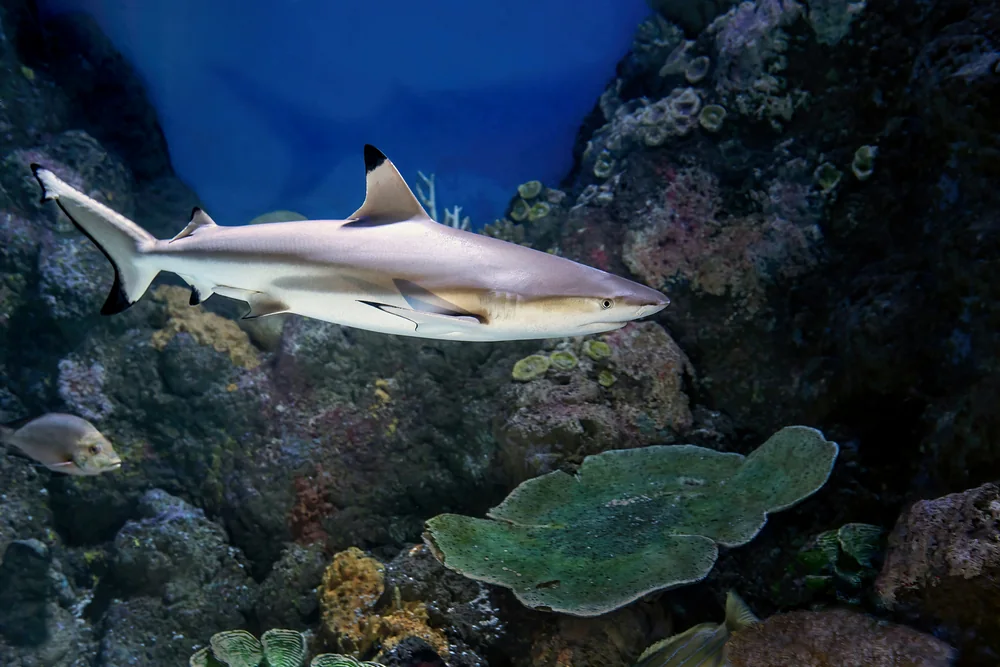
Blacktip Reef Shark
The neat little reef shark of the shallows, its black-tipped fins often cutting the surface over sun-lit sand flats. Where: Shallow reef flats at Racha Yai, Koh Bon and the Kata headland. Best: Nov-Apr, early morning.
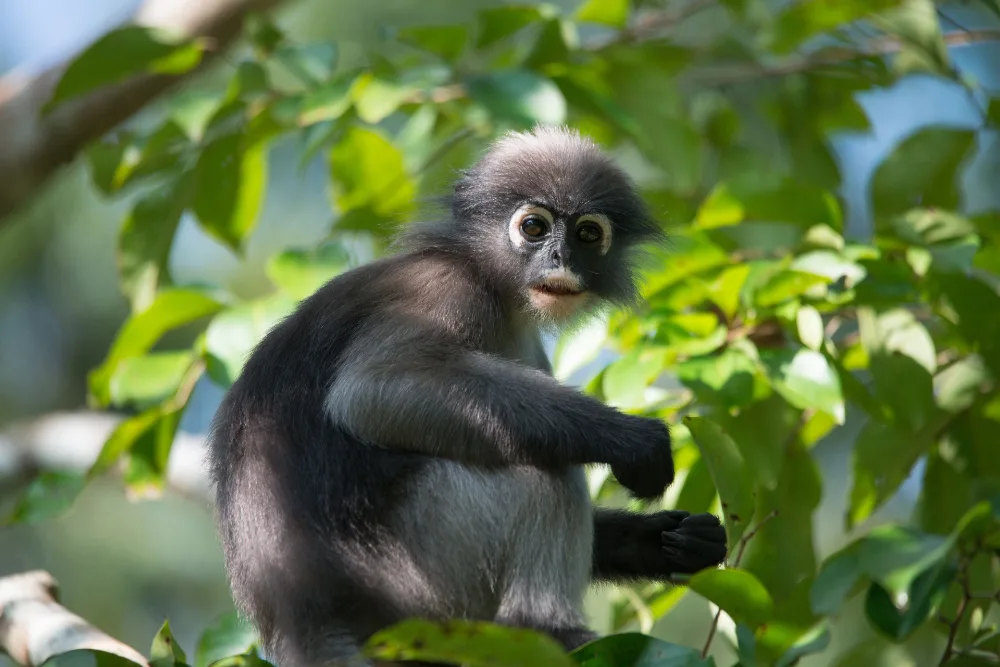
Dusky Langur (Spectacled Leaf Monkey)
White spectacles make the adults look permanently startled, and the bright orange babies are pure crowd pleasers. Where: Khao Phra Thaeo, the Bang Pae road and wooded hillsides above Kathu and Kamala. Best: Year round, early morning and late afternoon.
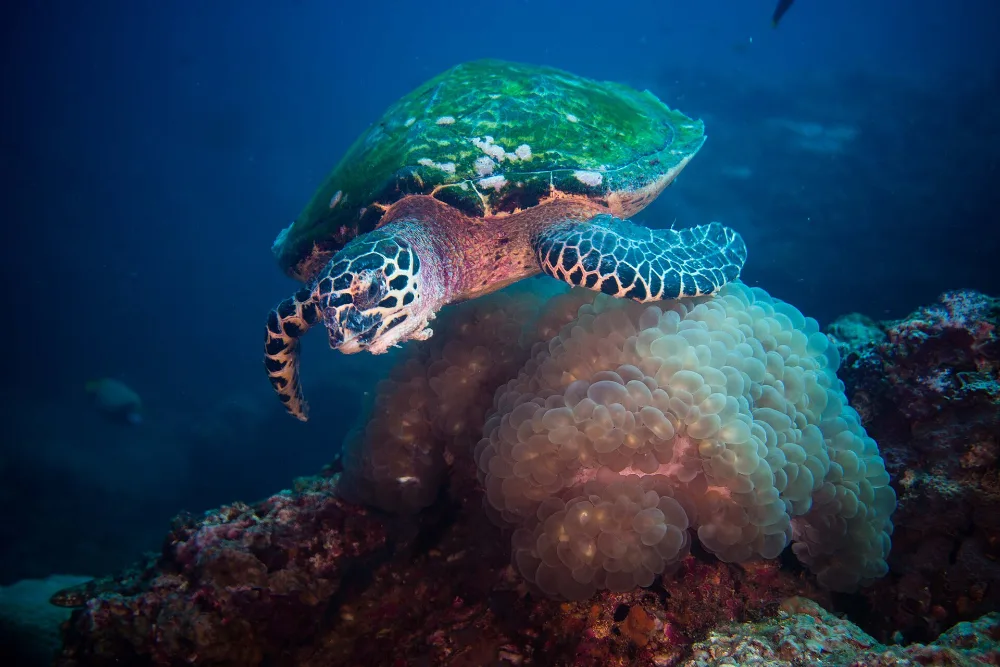
Hawksbill Turtle
The reef's sponge specialist, its beautiful shell also the reason it was hunted to the edge. Where: Coral at Racha Yai and the Kata and Karon reef edges. Best: Nov-Apr.
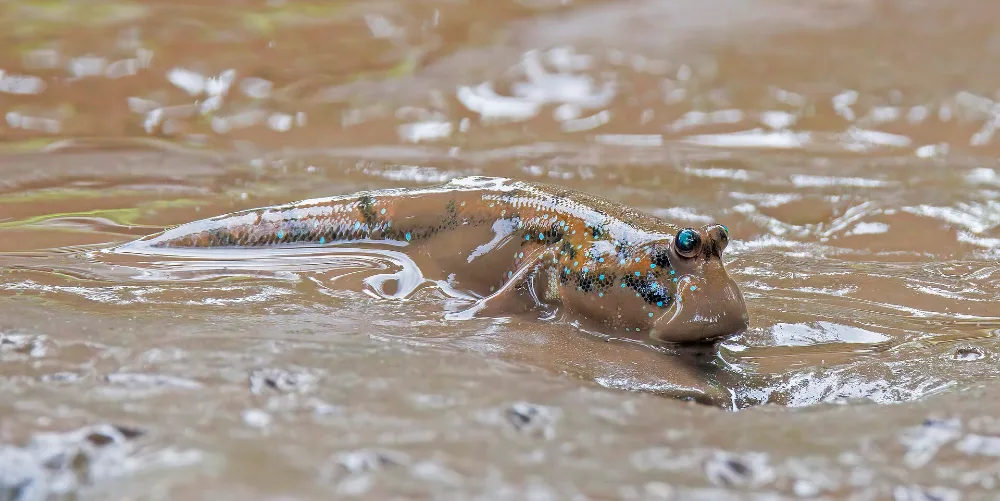
Giant Mudskipper
A fish that spends most of its life out of water, defending a mud territory with a raised sail of a dorsal fin. Where: Mudflats at Bang Rong and the Ao Por boardwalks. Best: Year round, low tide.
Mammals
16 species
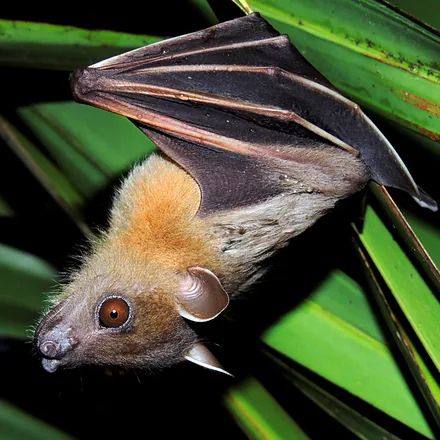
Greater Short-nosed Fruit Bat Common
Cynopterus sphinx
A small fruit bat that builds itself a shelter by chewing palm and fig leaves into a cosy roosting tent.
Where: Flowering and fruiting trees in gardens and plantations. Best: Year round, after dark.
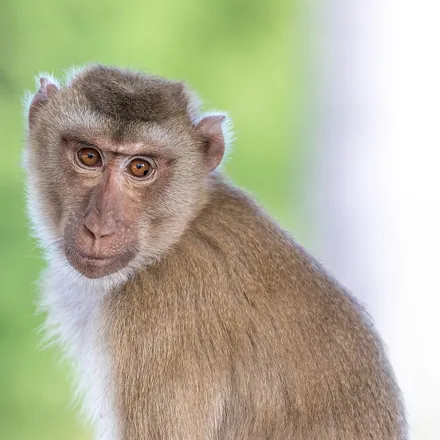
Long-tailed Macaque Common Endangered
Macaca fascicularis
The bold, water-loving monkey of temples and mangroves, and despite its ubiquity now one of the most heavily exploited primates on Earth.
Where: Monkey Hill (Khao To Sae) in Phuket Town, Cape Panwa and the coastal headlands. Best: Year round, day. Monkey Hill troops are heavily fed by visitors and are correspondingly bold. Do not feed them and keep bags closed.
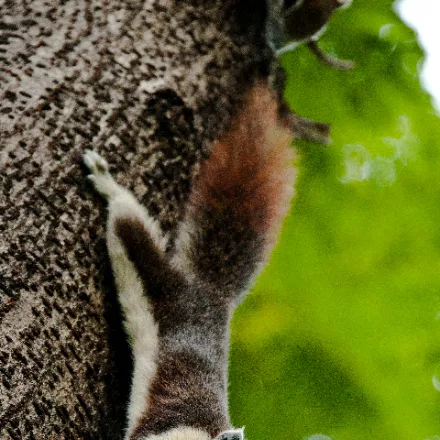
Variable Squirrel Common
Callosciurus finlaysonii
A tree squirrel of astonishing colour variety, some populations pure creamy white, others red, grey or two-toned.
Where: Gardens, plantations and forest edge island-wide. Best: Year round, day.
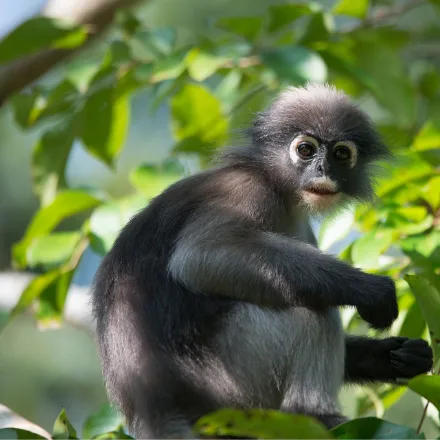
Dusky Langur (Spectacled Leaf Monkey) Regular Endangered
Trachypithecus obscurus
White spectacles make the adults look permanently startled, and the bright orange babies are pure crowd pleasers.
Where: Khao Phra Thaeo, the Bang Pae road and wooded hillsides above Kathu and Kamala. Best: Year round, early morning and late afternoon. The easiest primate on the island, often at eye level from a roadside, sometimes with bright orange infants.
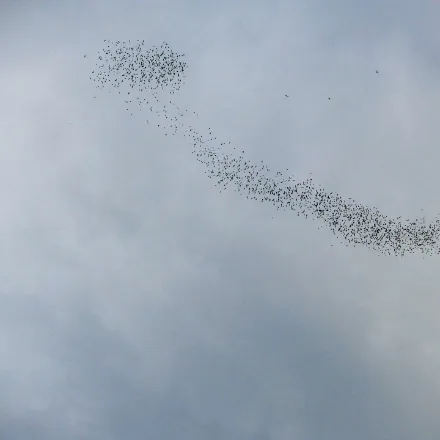
Wrinkle-lipped Free-tailed Bat Regular
Chaerephon plicatus
The bat behind Thailand's great cave exodus, when millions stream out at dusk in a river of wings.
Where: Limestone caves on the Phang Nga Bay islands, reached on day trips. Best: Year round, dusk.
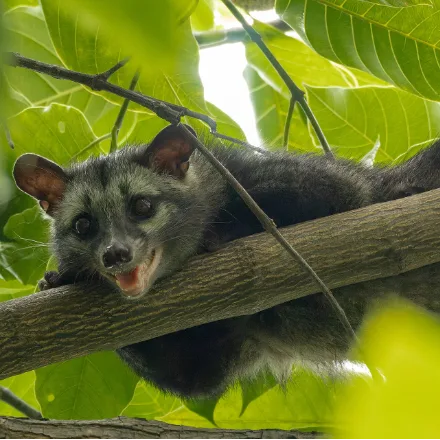
Common Palm Civet Occasional
Paradoxurus hermaphroditus
The nocturnal fruit-lover behind civet coffee, at home in forests, plantations and even city roofs.
Where: Fruiting trees, plantation edges and resort roofs across the island. Best: Year round, after dark.
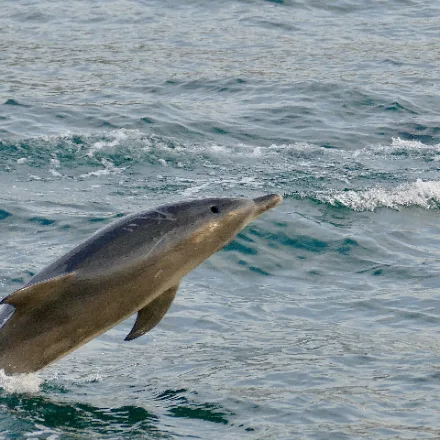
Indo-Pacific Bottlenose Dolphin Occasional Near Threatened
Tursiops aduncus
The classic bottlenose of warm coasts, sociable, clever and quick to ride a bow wave.
Where: Open water on the crossings to Racha and the Phi Phi group. Best: Nov-Apr, calm mornings. Keen to bow-ride the day boats.
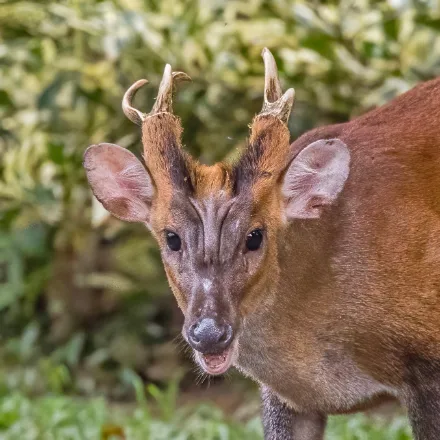
Northern Red Muntjac Occasional
Muntiacus vaginalis
The barking deer of Thai forests, a small russet deer whose sharp, dog-like alarm call rings through the trees.
Where: Forest edge and clearings in Khao Phra Thaeo. Best: Year round, dawn and dusk. Usually heard barking before it is seen.
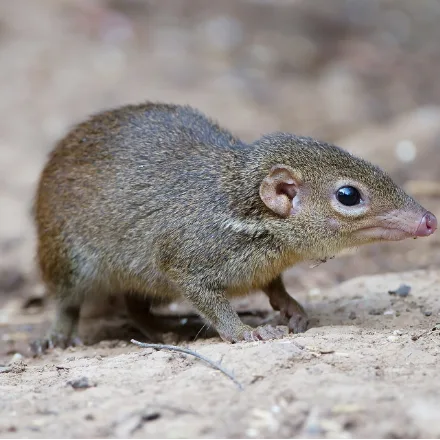
Northern Treeshrew Occasional
Tupaia belangeri
A squirrel-lookalike that is not a rodent at all, but a close relative of primates with a famously fast metabolism.
Where: Forest floor and low trunks on the Khao Phra Thaeo trails. Best: Year round, day. Squirrel-shaped but pointed-snouted, and not a squirrel at all.
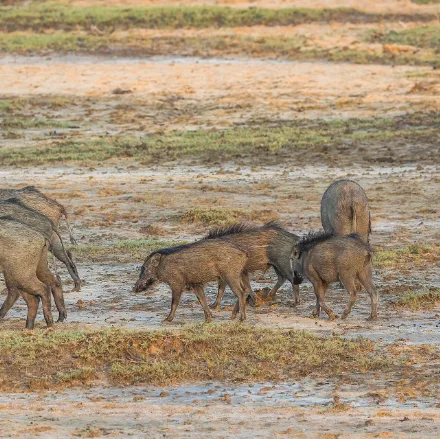
Wild Boar Occasional
Sus scrofa
The rugged wild pig at the base of the food chain, rooting up the forest and feeding the region's great predators.
Where: Forest edge and plantation margins around Khao Phra Thaeo. Best: Year round, dawn and dusk.
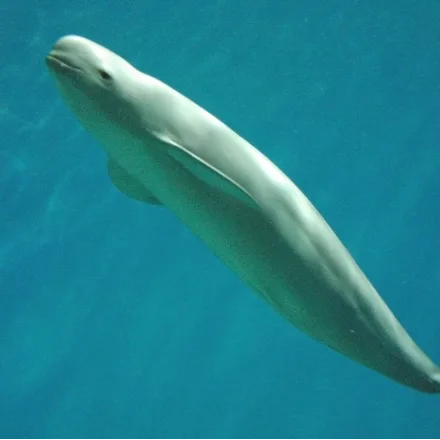
Indo-Pacific Finless Porpoise Rare Vulnerable
Neophocaena phocaenoides
A shy, finless little porpoise with a smiling face that surfaces without a splash.
Where: Shallow inshore water off the east coast and Cape Panwa. Best: Year round, flat calm. Shy, finless and splashless, so easy to miss even where present.
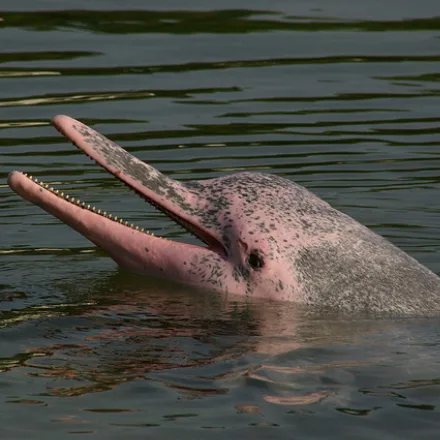
Indo-Pacific Humpback Dolphin Rare Vulnerable
Sousa chinensis
Born dark grey and turning pink with age, the colour coming from blood vessels under unpigmented skin.
Where: Shallow turbid water off the east coast and the Phang Nga Bay mouth. Best: Nov-Apr, calm mornings. Pink adults in muddy water. Choose operators that keep their distance.
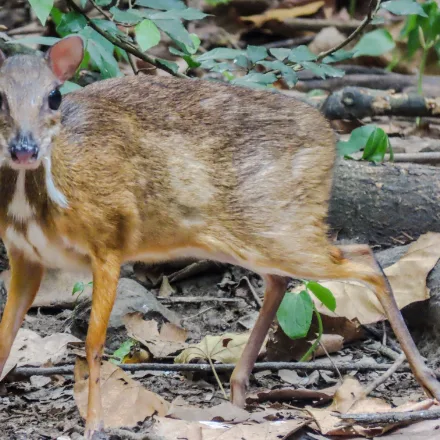
Lesser Mouse-deer Rare
Tragulus kanchil
One of the smallest hoofed animals in the world, a delicate, rabbit-sized deer relative that tiptoes on pencil-thin legs.
Where: Dense understorey along the Ton Sai and Bang Pae trails at Khao Phra Thaeo. Best: Year round, dusk and night. Tiny and shy. A delicate spotlight find in thick cover.
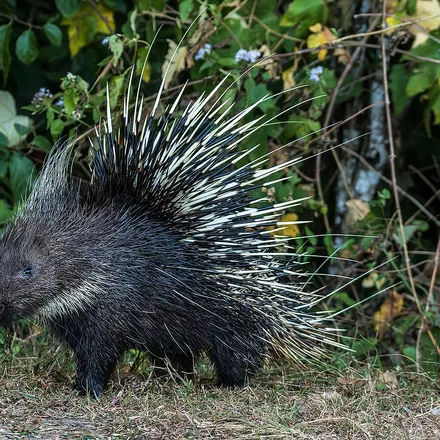
Malayan Porcupine Rare
Hystrix brachyura
A large, ground-dwelling porcupine that rattles a crown of black-and-white quills when threatened.
Where: Forest tracks at Khao Phra Thaeo. Best: Year round, after dark.
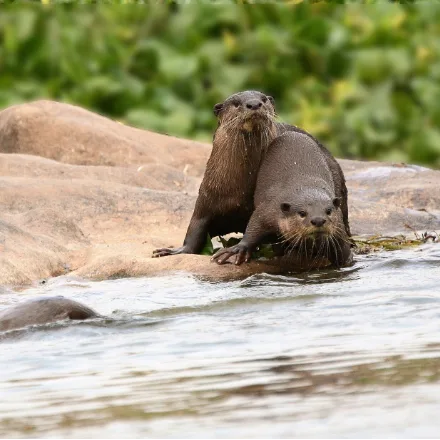
Smooth-coated Otter Rare Vulnerable
Lutrogale perspicillata
Family flotillas of sleek otters fishing, wrestling and chirruping through rivers and pools, endlessly watchable.
Where: Mangrove creeks at Bang Rong and Ao Por, and the Phang Nga Bay channels. Best: Year round, early morning. Family groups fishing the creeks on a rising tide.
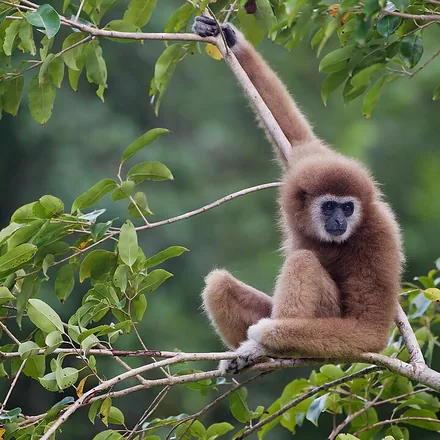
White-handed (Lar) Gibbon Rare Endangered
Hylobates lar
You hear them before dawn even breaks, the whooping duet of gibbons that is the definitive soundtrack of Asian rainforest.
Where: Khao Phra Thaeo forest above the Bang Pae waterfall trail. Best: Year round, the first two hours after dawn. Phuket's gibbons were hunted out and have been reintroduced from the Gibbon Rehabilitation Project at Bang Pae. Hearing the duet is far more likely than seeing one, and it is a genuine conservation success worth understanding before you visit.
Birds
38 species
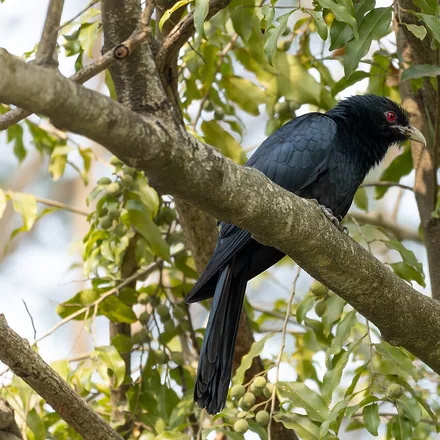
Asian Koel Common
Eudynamys scolopaceus
A glossy black cuckoo with blood-red eyes whose rising ko-el call is one of the defining sounds of tropical mornings.
Where: Gardens and open woodland across the island. Best: Mar-Jul, morning.
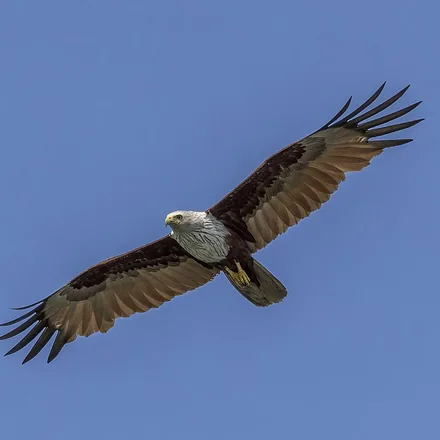
Brahminy Kite Common
Haliastur indus
A handsome chestnut-and-white kite of coasts and harbours, forever quartering the shoreline for scraps and stranded fish.
Where: Over the harbours, the mangroves and the east coast. Best: Year round, day. Common around Rassada pier and the fishing boats.
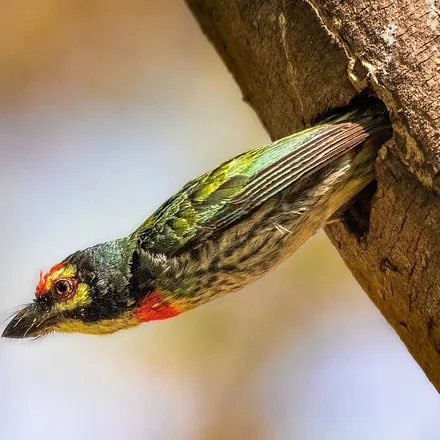
Coppersmith Barbet Common
Psilopogon haemacephalus
A tiny green barbet with a red-and-yellow face whose metronomic tuk tuk tuk call rings like a coppersmith at work.
Where: Bare treetops in gardens and open country island-wide. Best: Year round, day.
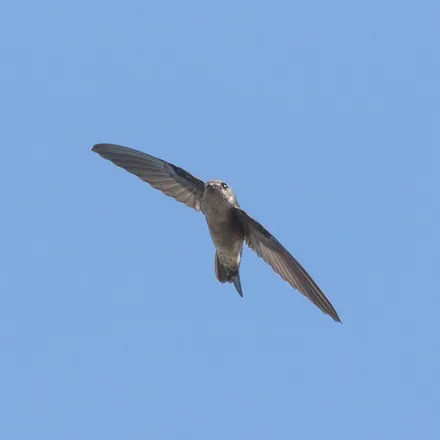
Germain's Swiftlet Common
Aerodramus germani
The little cave swift whose nest of pure saliva is harvested from sheer sea caves for bird's nest soup.
Where: Sea caves on the Phang Nga Bay islands and over the coast. Best: Year round, day. Nests in dark sea caves; its saliva nests are harvested for bird's nest soup.
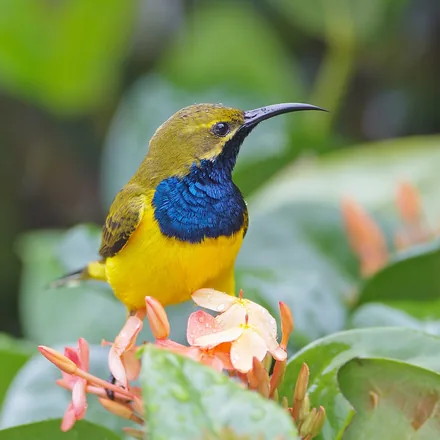
Olive-backed Sunbird Common
Cinnyris jugularis
The cheerful garden sunbird of Thailand, the male flashing an iridescent blue-black throat as he sings from a wire.
Where: Gardens, balconies and mangrove edge island-wide. Best: Year round, day. Will nest on a hotel balcony.
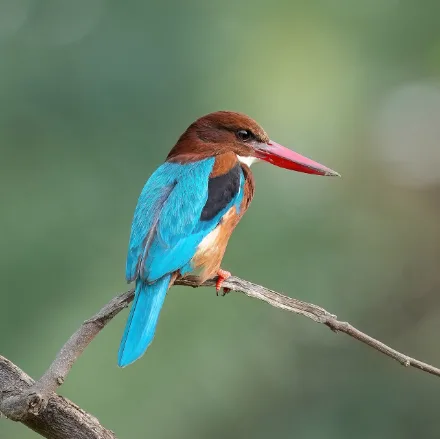
White-throated Kingfisher Common
Halcyon smyrnensis
A big turquoise-and-chocolate kingfisher that hunts far from water, taking lizards and insects across open country.
Where: Wires, gardens and open ground island-wide. Best: Year round, day.
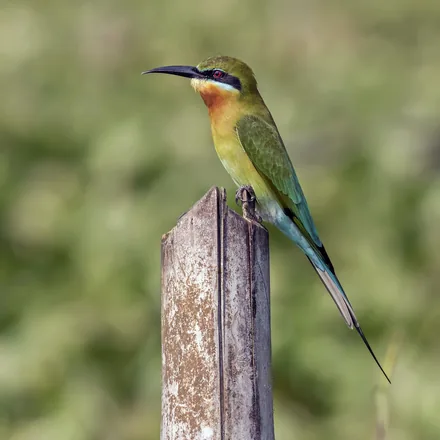
Blue-tailed Bee-eater Regular
Merops philippinus
A streamlined jewel of green, chestnut and blue that hawks bees and dragonflies in graceful, swooping sallies.
Where: Open ground, plantation edge and the coastal strip. Best: Nov-Apr, day.
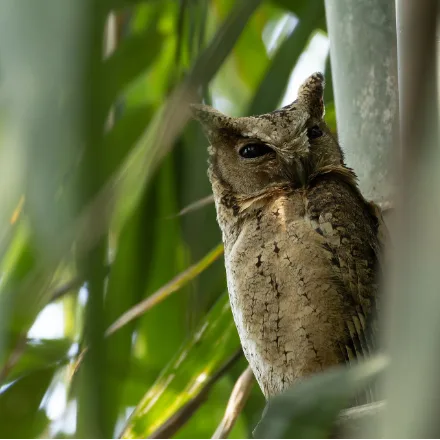
Collared Scops Owl Regular
Otus lettia
A small, ear-tufted owl whose soft, questioning hoot is one of the commonest voices of the Thai night.
Where: Gardens, plantation edge and the Khao Phra Thaeo car park at dusk. Best: Year round, after dark. A soft single questioning note, repeated.
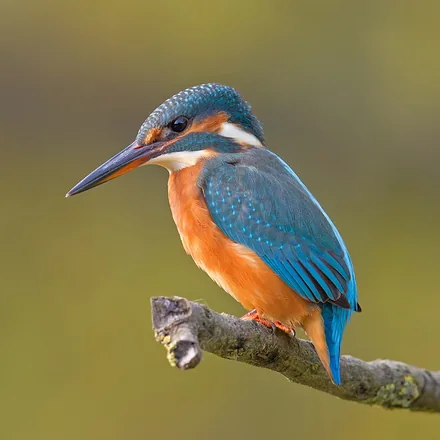
Common Kingfisher Regular
Alcedo atthis
A dazzling blue dart along the stream, small enough to sit in a palm yet impossible to miss when it flies.
Where: Mangrove creeks and the ponds behind Sirinat. Best: Nov-Mar, morning.
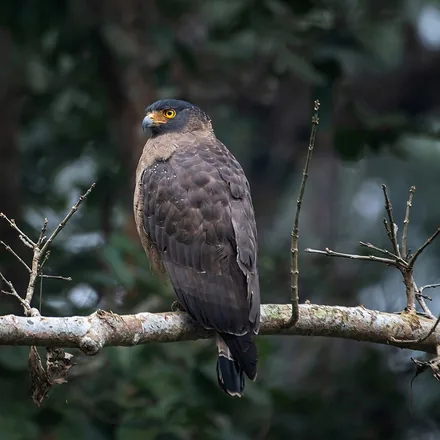
Crested Serpent Eagle Regular
Spilornis cheela
A snake-hunting eagle that circles the forest on broad wings, calling with a far-carrying, wailing whistle.
Where: Soaring over Khao Phra Thaeo and the interior hills. Best: Year round, late morning. The wailing whistle overhead is usually the first sign.
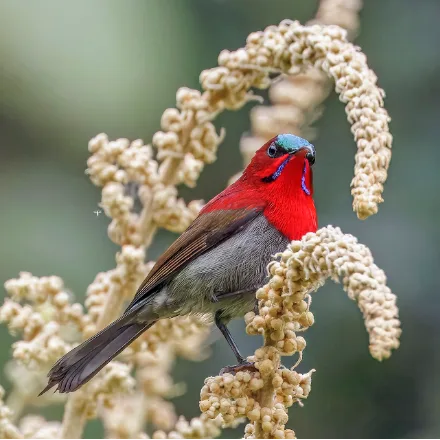
Crimson Sunbird Regular
Aethopyga siparaja
A living ember of a bird, the male ablaze in scarlet and metallic green as it hovers at forest blossoms.
Where: Flowering trees at forest edge and in resort gardens. Best: Year round, morning.
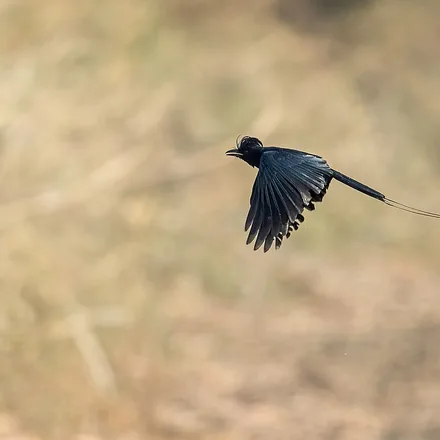
Greater Racket-tailed Drongo Regular
Dicrurus paradiseus
A glossy black forest bird trailing two long wire tails tipped with twirling rackets, and a gifted mimic.
Where: Forest and edges at Khao Phra Thaeo. Best: Year round, day. Usually the noisy core of a mixed feeding flock.
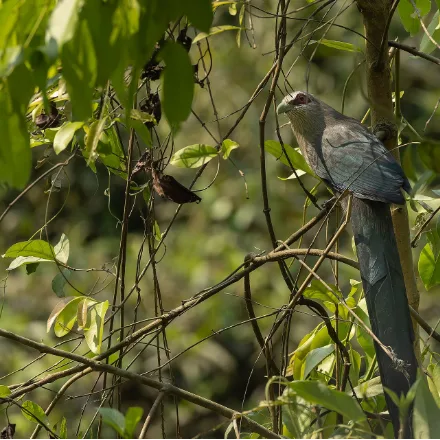
Green-billed Malkoha Regular
Phaenicophaeus tristis
A long, slinking grey cuckoo with a bright green bill and a crimson eye-patch, creeping through thickets like a feathered lizard.
Where: Thickets and forest edge at Khao Phra Thaeo. Best: Year round, day. Creeps and clambers through cover; watch for the long tail and green bill.
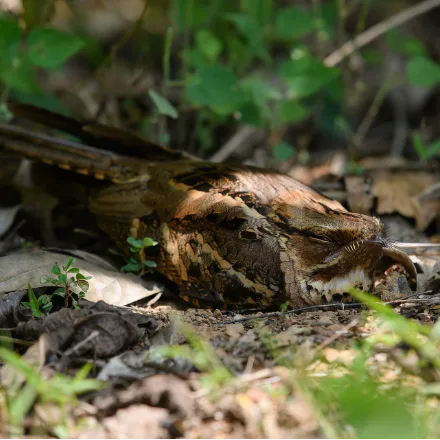
Large-tailed Nightjar Regular
Caprimulgus macrurus
A cryptic dusk-hunter whose loud, repeated chonk chonk call sounds like an axe striking wood across the clearing.
Where: Forest tracks and clearings at Khao Phra Thaeo and Sirinat. Best: Year round, dusk. Listen for the wooden chonk chonk at nightfall.
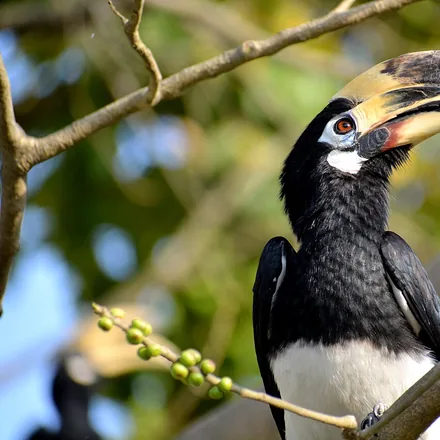
Oriental Pied Hornbill Regular
Anthracoceros albirostris
The most approachable hornbill in Asia, a black and white charmer that even visits gardens and forest edges.
Where: Fruiting trees at Khao Phra Thaeo and along the Bang Pae road. Best: Year round, early morning. The easiest hornbill on the island, and often around the park edge.
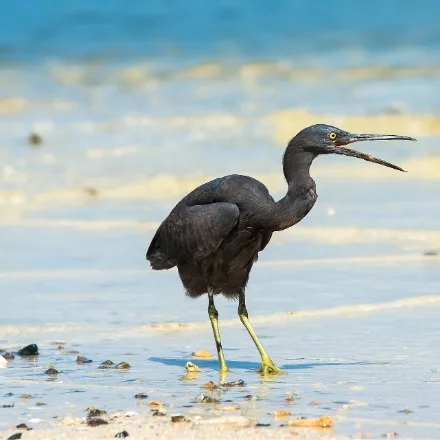
Pacific Reef Heron Regular
Egretta sacra
Comes in two entirely different colours, charcoal grey and pure white, and both can hatch in the same nest.
Where: Rocky shores at Laem Panwa, Kata Noi and the offshore islets. Best: Year round, falling tide. Works the same stretch of shore daily. Dark morph dominates here.
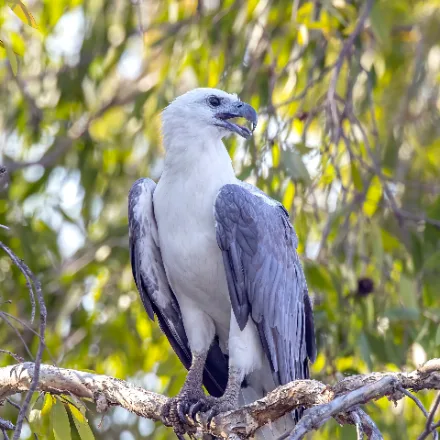
White-bellied Sea Eagle Regular
Haliaeetus leucogaster
A huge coastal eagle in grey and white that snatches sea snakes and fish from the surface in a spectacular swoop.
Where: Headlands, Cape Panwa and the Phang Nga Bay karst. Best: Year round, day. Often perched on a tall dead tree above the water.
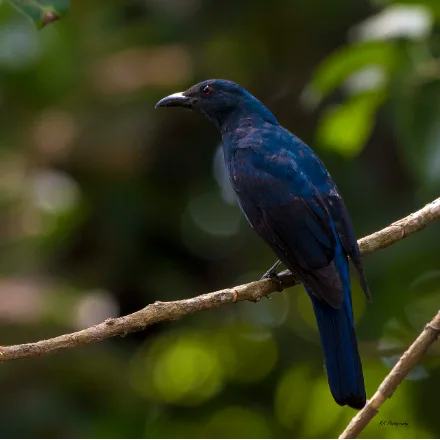
Asian Fairy-bluebird Occasional
Irena puella
A fig-loving forest bird where the male glows brilliant ultramarine and jet black in the canopy shade.
Where: Fruiting figs at Khao Phra Thaeo. Best: Year round, morning.
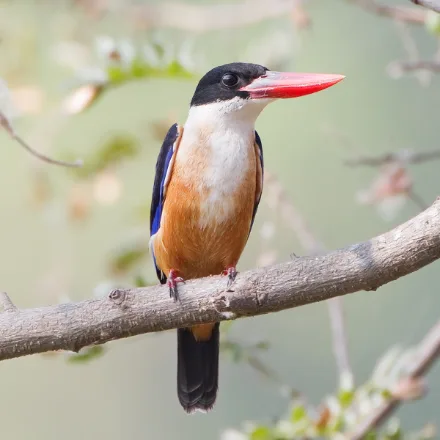
Black-capped Kingfisher Occasional
Halcyon pileata
A striking mangrove kingfisher in black, white and deep purple-blue, a winter visitor to Thailand's coasts.
Where: Mangrove edges at Bang Rong and Ao Por. Best: Nov-Mar. A non-breeding visitor to the coastal mangroves.
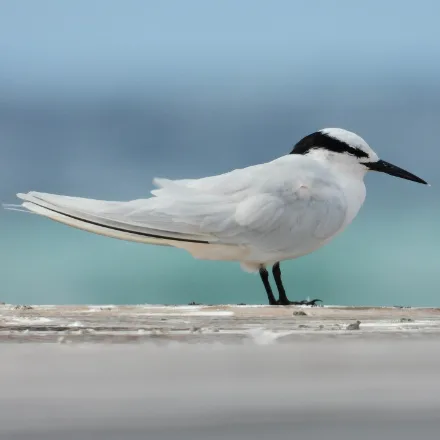
Black-naped Tern Occasional
Sterna sumatrana
Almost pure white apart from a narrow black band across the back of the head, like a headphone cable.
Where: Rocky islets off the east coast and on the Racha crossing. Best: Year round, day.
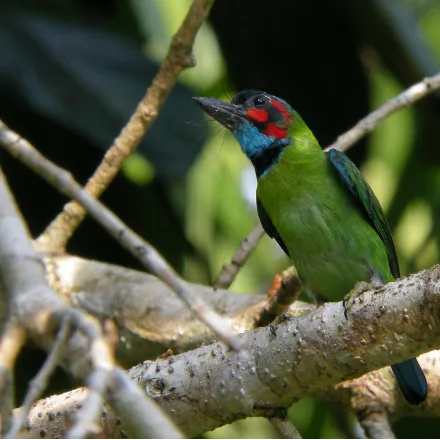
Blue-eared Barbet Occasional
Psilopogon duvaucelii
A jewel-faced little barbet of the forest canopy, green-bodied with a patchwork of blue, black and red on the head.
Where: Evergreen canopy at Khao Phra Thaeo. Best: Year round, morning. Heard far more than seen.
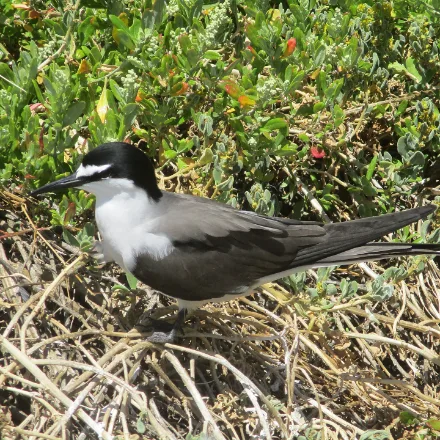
Bridled Tern Occasional
Onychoprion anaethetus
Spends most of the year entirely at sea, feeding on fish driven to the surface by tuna hunting below.
Where: Offshore water on the Racha and Phi Phi crossings. Best: Nov-Apr, day.
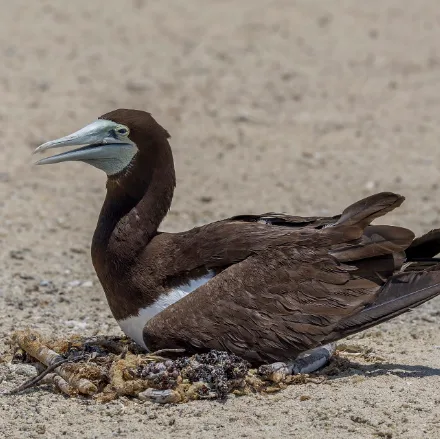
Brown Booby Occasional
Sula leucogaster
Dives from twenty metres and hits the water at over sixty kilometres an hour, with air sacs in the skull absorbing the shock.
Where: Offshore water on the Racha and outer island crossings. Best: Nov-Apr, day. Often following fishing boats.
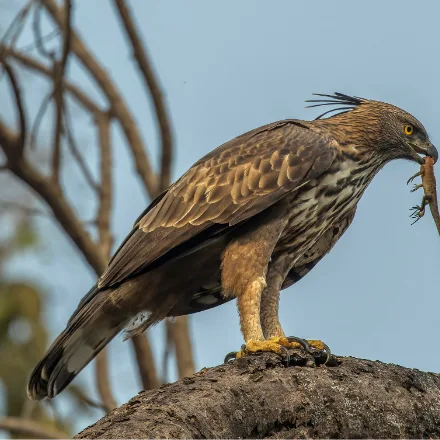
Changeable Hawk-eagle Occasional
Nisaetus cirrhatus
A powerful forest eagle that comes in pale and dark forms, ambushing prey with a fast strike from the canopy.
Where: Forest edges and plantation clearings across the interior. Best: Year round, day.
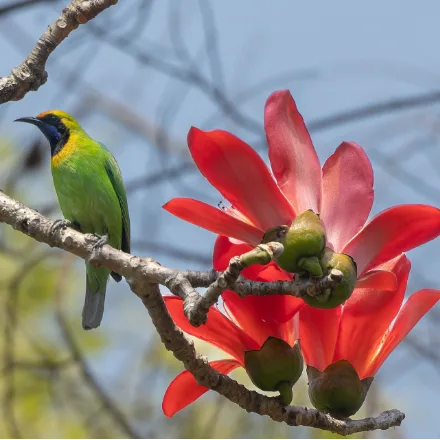
Golden-fronted Leafbird Occasional
Chloropsis aurifrons
A leaf-green bird that all but vanishes in the canopy until it turns to reveal a golden forehead and blue-black mask.
Where: Flowering canopy at Khao Phra Thaeo and in larger gardens. Best: Year round, morning.
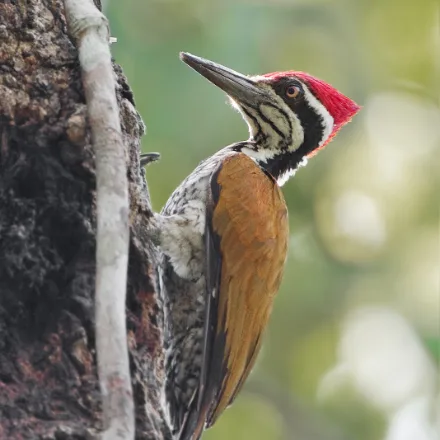
Greater Flameback Occasional
Chrysocolaptes guttacristatus
A big, golden-backed woodpecker that blazes across the trunk, the males topped with a flaming scarlet crest.
Where: Large trunks in the forest and older plantations. Best: Year round, morning.
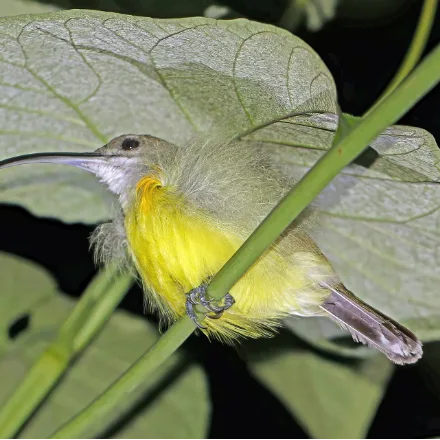
Little Spiderhunter Occasional
Arachnothera longirostra
A drab bird with an outrageously long, curved bill, built for plundering nectar deep inside wild banana flowers.
Where: Wild banana stands in the understorey at Khao Phra Thaeo. Best: Year round, morning.
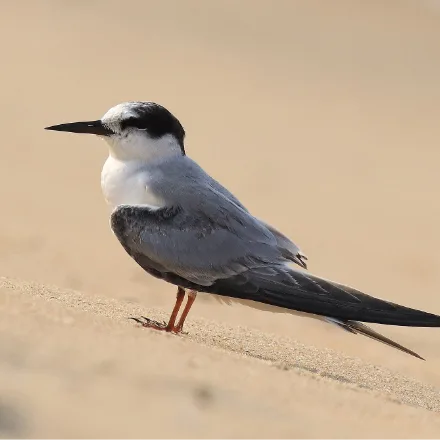
Little Tern Occasional
Sternula albifrons
Hovers on fast flickering wings like an oversized hummingbird before dropping onto a fish.
Where: Sandy beaches and river mouths at Mai Khao and Nai Yang. Best: Year round, breeding Mar-Jun. Nests in scrapes on open sand. Keep off marked nesting beaches.
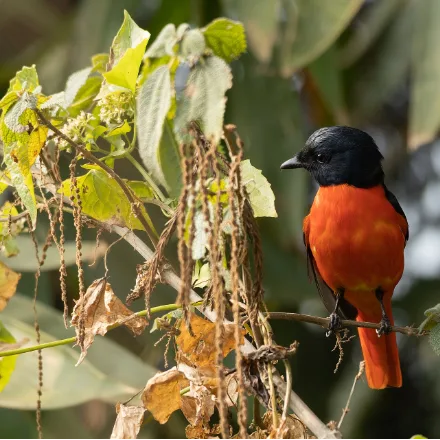
Scarlet Minivet Occasional
Pericrocotus speciosus
A drift of flame through the treetops, the males scarlet and black, the females gold and grey, moving in restless flocks.
Where: Canopy flocks at Khao Phra Thaeo. Best: Year round, morning.
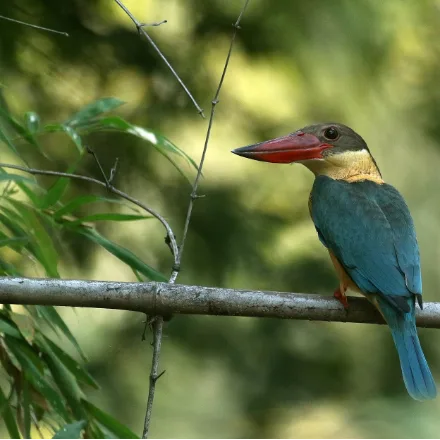
Stork-billed Kingfisher Occasional
Pelargopsis capensis
A hefty waterside kingfisher with a huge blood-red bill and a loud, ringing laugh.
Where: The larger mangrove channels at Ao Por and Phang Nga Bay. Best: Year round, morning. The huge red bill is unmistakable.
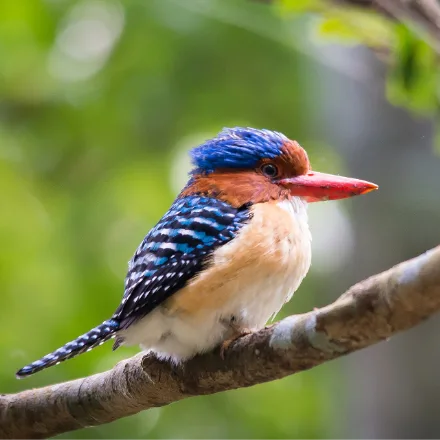
Banded Kingfisher Rare
Lacedo pulchella
A forest kingfisher that shuns water, the male banded blue and black, the female in rich rufous bars.
Where: Forest interior at Khao Phra Thaeo, heard far more often than seen. Best: Year round, dawn.
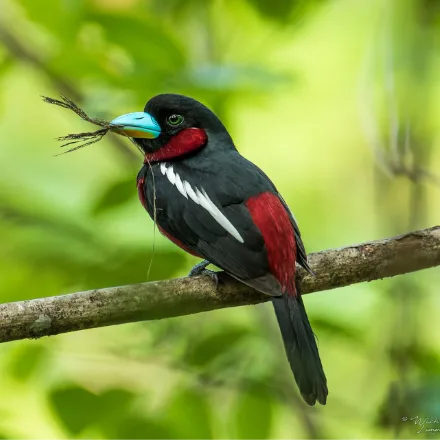
Black-and-red Broadbill Rare
Cymbirhynchus macrorhynchos
A striking riverside broadbill in black and crimson with a two-tone turquoise and yellow bill.
Where: Wooded creek edges and mangrove margins at Ao Por. Best: Year round, morning. The nest hangs over the water.
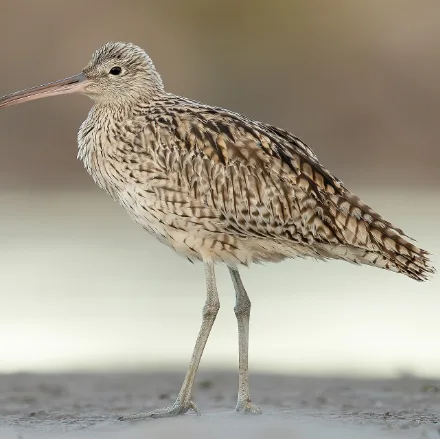
Far Eastern Curlew Rare Endangered
Numenius madagascariensis
The longest bill of any wader in the world, curved like a sickle and used to reach crabs deep in the mud.
Where: Tidal flats on the east coast and the Phang Nga Bay margins. Best: Nov-Mar, falling tide.
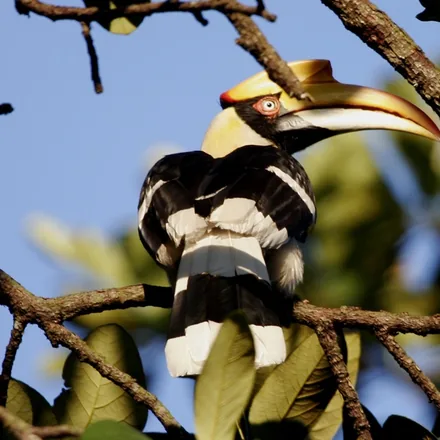
Great Hornbill Rare Vulnerable
Buceros bicornis
A three metre wingbeat you hear before you see, the flagship bird of Asian rainforest canopy.
Where: Tall forest at Khao Phra Thaeo. Best: Year round, early morning. Scarce on an island this small. The wingbeats carry before the bird appears.
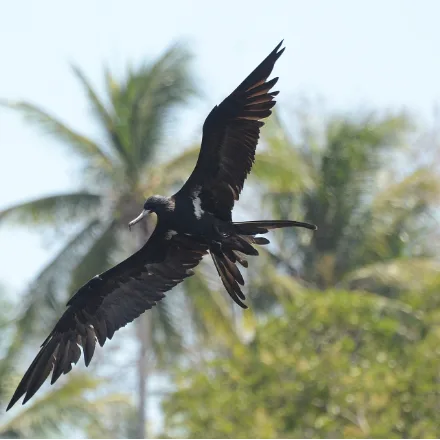
Lesser Frigatebird Rare
Fregata ariel
Cannot land on water despite living over it, and stays airborne for weeks at a time by riding thermals in its sleep.
Where: Offshore water seen from the outer crossings. Best: Nov-Apr, day. Look up. They rarely come down to anything.
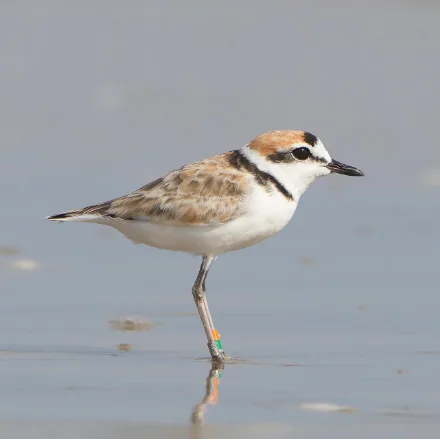
Malaysian Plover Rare Near Threatened
Anarhynchus peronii
Nests in a scrape on open beach so well camouflaged that the greatest danger is being stepped on.
Where: Quiet sand at Mai Khao and the Sirinat shoreline. Best: Year round, low tide. Nests on open sand. Keep dogs and vehicles off the nesting beaches.
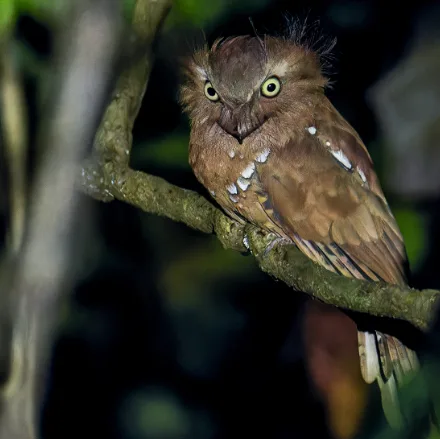
Blyth's Frogmouth Very rare
Batrachostomus affinis
A bizarre nocturnal bird with a huge frog-like gape, so like a broken branch by day that it is almost impossible to find.
Where: Evergreen forest at Khao Phra Thaeo. Best: Year round, night. A superbly camouflaged prize, usually found only with local knowledge of a perch.
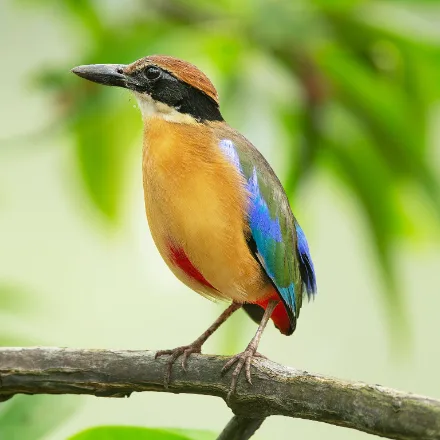
Mangrove Pitta Very rare Near Threatened
Pitta megarhyncha
A jewel of a bird restricted almost entirely to mangrove, hopping across bare mud to hammer crabs against a root.
Where: Mangrove boardwalks at Bang Rong and the Ao Por creeks. Best: Feb-Jun, at dawn while calling. Phuket is at the edge of its range and the calling season is short. Krabi and Ranong are far better bets.
Reptiles
22 species
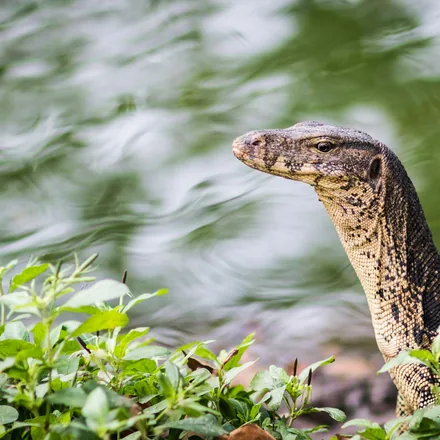
Asian Water Monitor Common
Varanus salvator
A dragon sized lizard that swims canals and city parks, second only to the Komodo dragon in length.
Where: Mangrove creeks at Bang Rong, canals in Phuket Town and the Khao Phra Thaeo streams. Best: Year round, day.
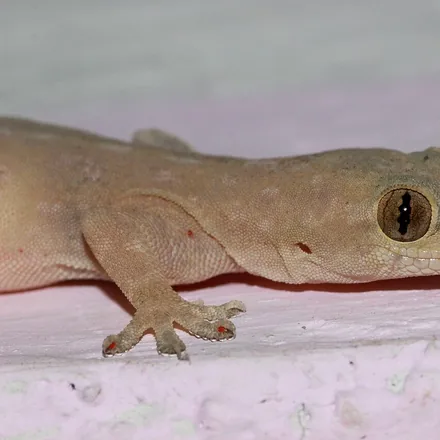
Common House Gecko Common
Hemidactylus frenatus
Sticks to glass using van der Waals forces across billions of microscopic hairs, not glue and not suction.
Where: Every lit wall on the island. Best: Year round, after dark.
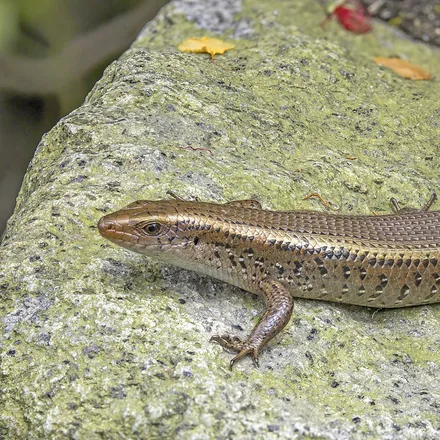
Common Sun Skink Common
Eutropis multifasciata
A glossy bronze skink that basks on logs and forest paths and gives birth to live young.
Where: Leaf litter and sunny trail edges at Khao Phra Thaeo. Best: Year round, day.
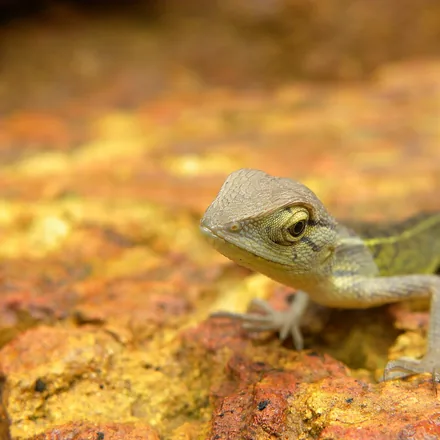
Oriental Garden Lizard Common
Calotes versicolor
The everyday garden lizard whose breeding males flush blood red about the head, earning the name bloodsucker.
Where: Gardens, scrub and roadsides island-wide. Best: Year round, day.
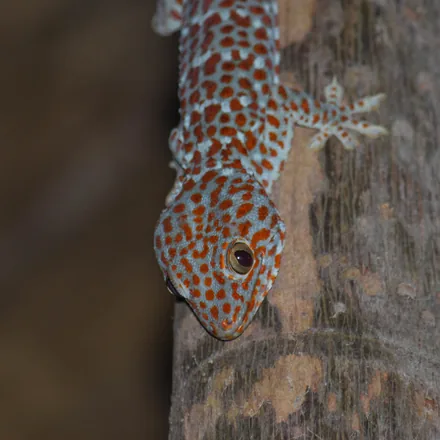
Tokay Gecko Common
Gekko gecko
A big, boldly spotted gecko whose loud TOH-kay call echoes through Thai nights and, by legend, brings luck if it calls seven times.
Where: Buildings, temples and forest edge across the island. Best: Year round, after dark. Heard before seen.
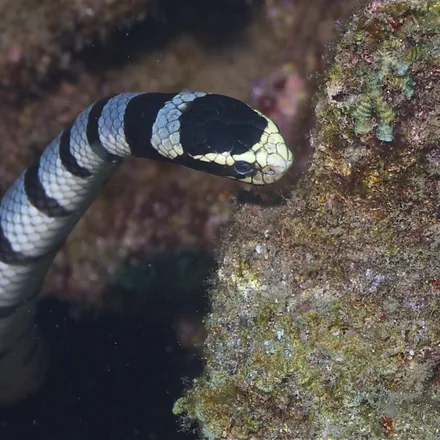
Banded Sea Krait Regular
Laticauda colubrina
A sea snake that hunts eels underwater but must come ashore to rest, drink fresh water and lay its eggs.
Where: Reef and rocky shore at Racha, Koh Bon and Laem Panwa. Best: Nov-Apr, day. Frequently seen weaving over reef and resting on rocks. Placid, and not a threat to swimmers.
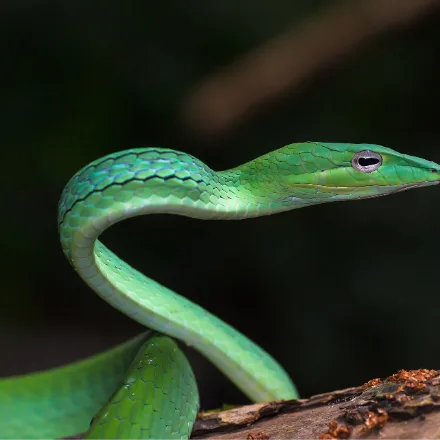
Oriental Whip Snake (Asian Vine Snake) Regular
Ahaetulla prasina
A snake so slender and green it looks like a hanging vine, with strange keyhole shaped pupils.
Where: Low foliage in gardens, plantations and forest edge. Best: Year round, day. Scan low foliage for what looks like a green vine that moves.
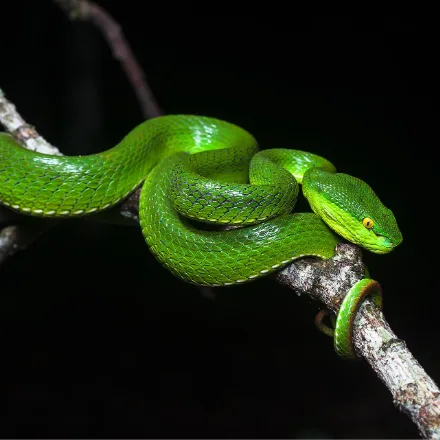
White-lipped Pit Viper Regular
Trimeresurus albolabris
A vivid green viper that drapes over branches at night, one of the most encountered venomous snakes in the tropics.
Where: Low vegetation beside streams at Khao Phra Thaeo. Best: May-Oct, night. One of the commonest night-walk snakes here.
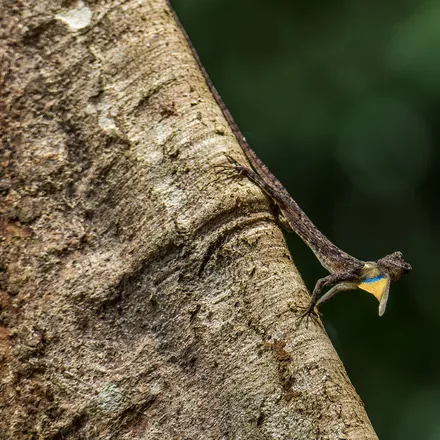
Common Flying Dragon Occasional
Draco maculatus
A tiny lizard that unfurls bright wings from its ribs and glides between tree trunks like a paper dart.
Where: Trunks in sunny clearings at Khao Phra Thaeo and in rubber plantations. Best: Year round, midday. Watch a trunk in sunlight for a sudden colourful glide.
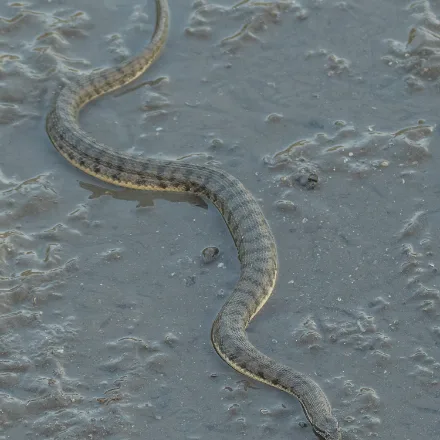
Dog-faced Water Snake Occasional
Cerberus schneiderii
Sidewinds across bare mudflats at low tide, one of very few snakes anywhere that moves that way.
Where: Mudflats and creek edges at Bang Rong on a falling tide. Best: Year round, night.
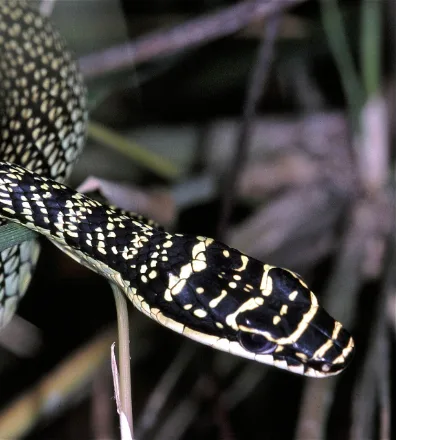
Golden Tree Snake Occasional
Chrysopelea ornata
A fast, elegant climber that can also glide, and one of the most common snakes seen in Thai gardens and temples.
Where: Walls, roofs and garden trees island-wide. Best: Year round, day.
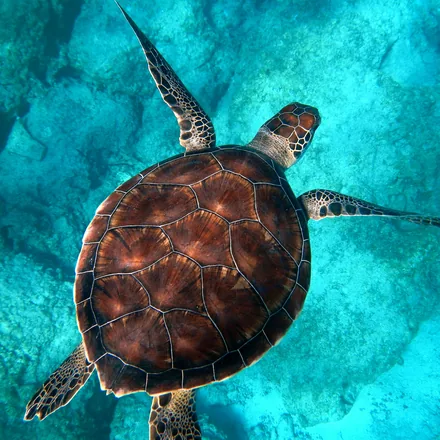
Green Sea Turtle Occasional Endangered
Chelonia mydas
The great grazing turtle of the tropics, the only sea turtle that turns vegetarian as an adult.
Where: Seagrass and shallow reef at Racha Yai and around Koh Bon. Best: Nov-Apr, best Dec-Mar.
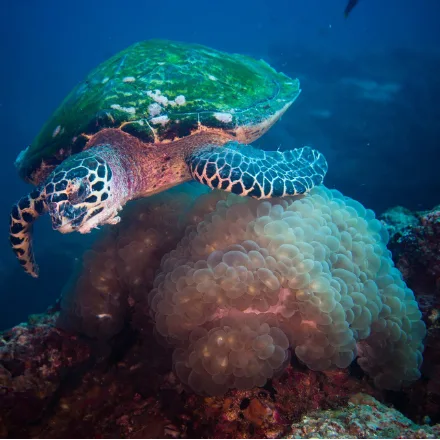
Hawksbill Turtle Occasional Critically Endangered
Eretmochelys imbricata
The reef's sponge specialist, its beautiful shell also the reason it was hunted to the edge.
Where: Coral at Racha Yai and the Kata and Karon reef edges. Best: Nov-Apr. Watch for it threading coral crevices for sponges.
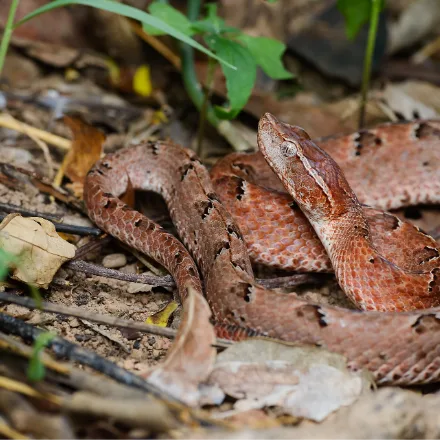
Malayan Pit Viper Occasional
Calloselasma rhodostoma
A short, bad tempered viper that lies still on the forest floor and bites more people in the region than almost any other snake.
Where: Leaf litter on plantation ground and forest trails. Best: Year round, night. Well camouflaged in leaf litter. Watch your step on rubber plantation ground.
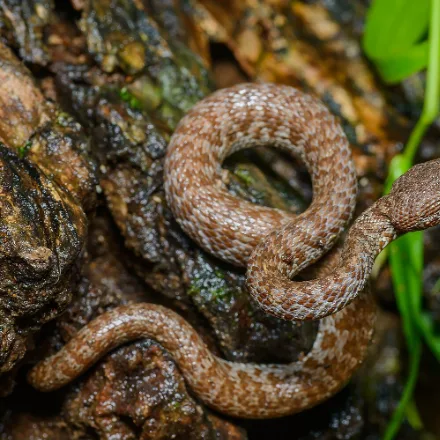
Mangrove Pit Viper Occasional
Trimeresurus purpureomaculatus
Hangs at head height in mangrove branches and is one of the few Thai snakes that will strike without much provocation.
Where: Branches over the creeks at Bang Rong and Ao Por. Best: May-Oct, night. On the boardwalks, watch branches at head height and not just the path.
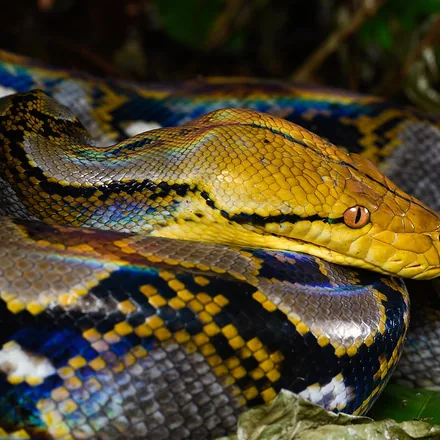
Reticulated Python Occasional
Malayopython reticulatus
The longest snake in the world, a jewelled, net patterned constrictor that turns up from rainforest to city canals.
Where: Canals, plantation edge and the Khao Phra Thaeo streams. Best: Year round, night.
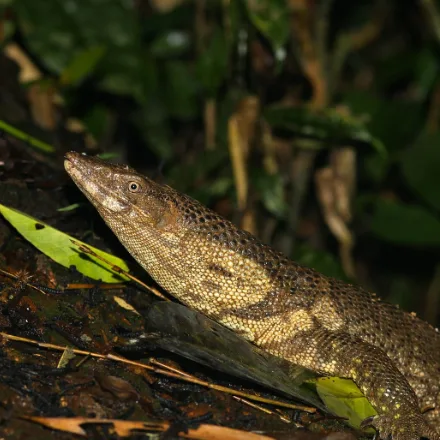
Dumeril's Monitor Rare
Varanus dumerilii
Hatches out with a brilliant orange head, and specialises almost entirely in eating crabs.
Where: Mangrove and swamp forest at Ao Por and Bang Rong. Best: Year round, day. Shy and largely arboreal. Look up as well as along the ground.
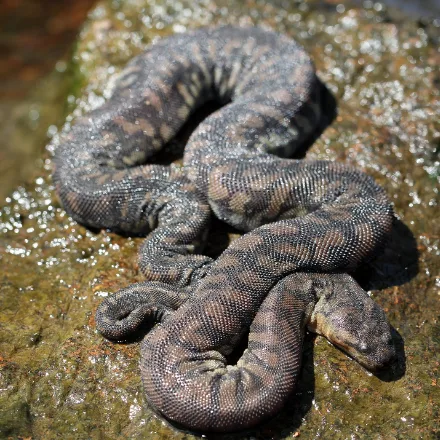
Little File Snake Rare
Acrochordus granulatus
Loose baggy skin covered in rasping granular scales, used to grip slippery fish that no smooth snake could hold.
Where: Turbid water in the mangrove channels and off the east coast. Best: Year round, night.
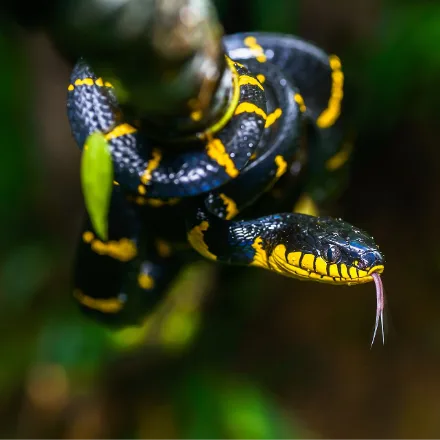
Mangrove Snake (Gold-ringed Cat Snake) Rare
Boiga dendrophila
A glossy black tree snake laced with gold rings, prowling the mangroves after dark.
Where: Waterside trees in the Ao Por and Bang Rong mangroves. Best: Year round, night. Look up into waterside trees on night boat trips.
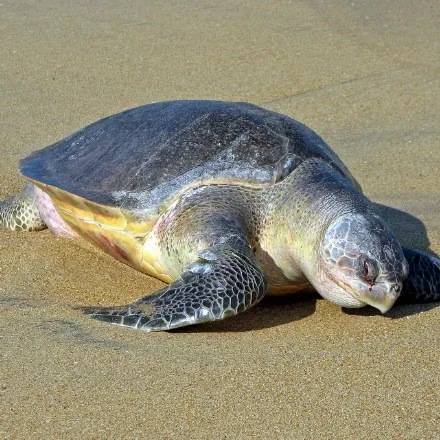
Olive Ridley Turtle Rare Vulnerable
Lepidochelys olivacea
The smallest and most numerous sea turtle, famous elsewhere for mass nestings of thousands at once.
Where: The nesting beach at Mai Khao within Sirinat National Park. Best: Nov-Feb, at night on a rising tide. Mai Khao is one of the last Thai nesting beaches. Never use lights or flash on a nesting turtle, and keep well back.
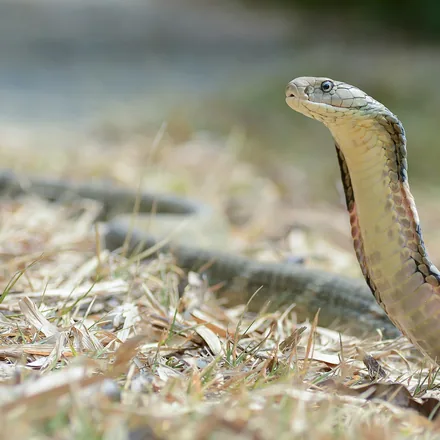
King Cobra Very rare Vulnerable
Ophiophagus hannah
The world's longest venomous snake, and one of the shyest, so a sighting is a genuine holy grail.
Where: Forest and plantation edge at Khao Phra Thaeo. Best: Year round, day. Uncommon and shy. Most sightings are brief and near water.
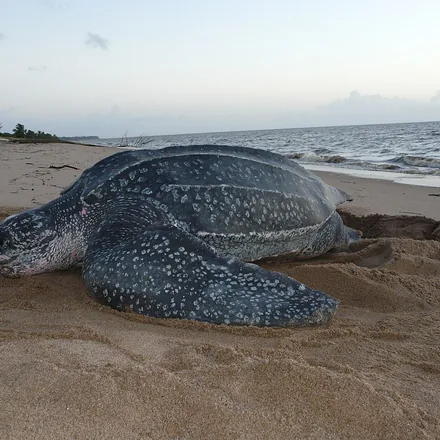
Leatherback Turtle Ultra rare Vulnerable
Dermochelys coriacea
The largest turtle on Earth, a jellyfish hunter that dives deeper than most whales and crosses whole oceans.
Where: Historically the Mai Khao nesting beach. Best: Nov-Feb. Nesting has all but stopped here. Included as an honest record of what the beach has lost.
Amphibians
4 species
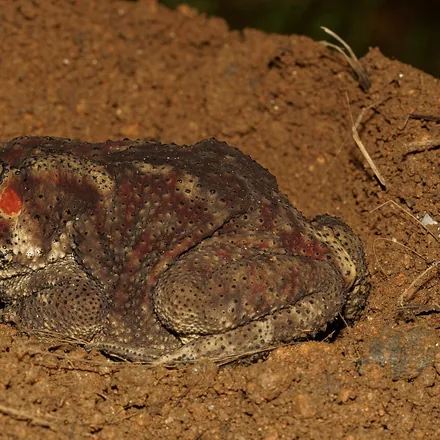
Asian Common Toad Common
Duttaphrynus melanostictus
The ubiquitous warty toad of doorsteps and gardens, hoovering up insects under every night light.
Where: Under lights at resorts, in gardens and at the park headquarters. Best: Year round, night.
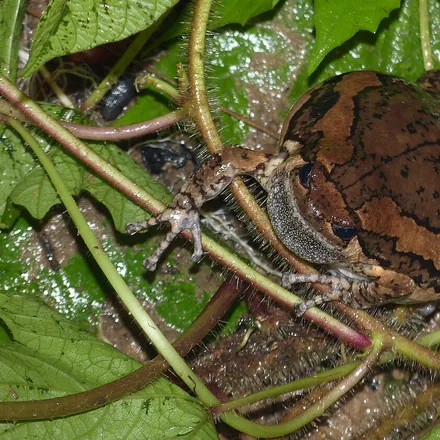
Banded Bullfrog (Chubby Frog) Common
Kaloula pulchra
A round, rubbery frog that inflates like a balloon when threatened and bellows like a cow after rain.
Where: Gardens and forest edge after downpours. Best: May-Oct, night.
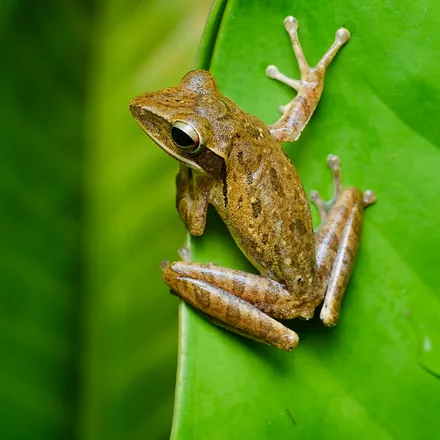
Common Tree Frog (Four-lined Tree Frog) Common
Polypedates leucomystax
The tan tree frog of porch lights and bathrooms, which whips up foam nests that hang above the water.
Where: Gardens, buildings and forest edge. Best: May-Oct, night. Look for foam nests on leaves above standing water.
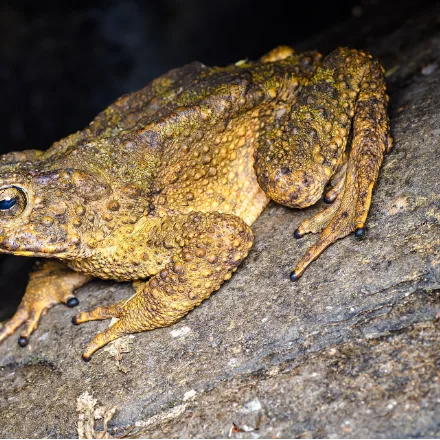
Malayan Giant Toad Occasional
Phrynoidis asper
The biggest toad in Southeast Asia, and it sits in the spray zone of waterfalls where nothing can hear it call.
Where: Wet rock in the splash zone at the Bang Pae and Ton Sai waterfalls. Best: May-Oct, night. On the wet rock in the spray, not on the bank.
Fish
17 species
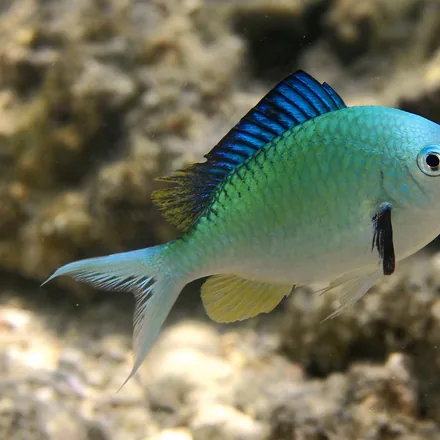
Blue-green Chromis Common
Chromis viridis
A shimmer of living jewels above the coral, hundreds of tiny blue-green fish that vanish into the branches in a blink.
Where: Over branching coral at Racha Yai. Best: Nov-Apr, day. Shimmering shoals that dive into the coral when threatened.
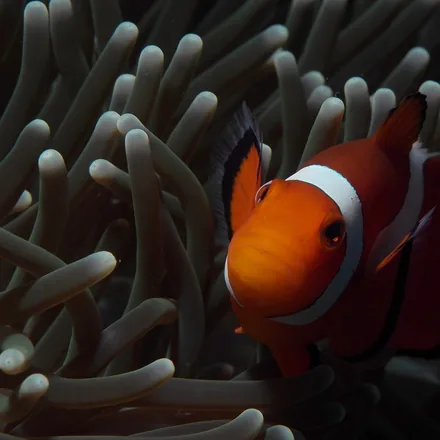
False Clownfish (Clown Anemonefish) Common
Amphiprion ocellaris
The famous orange and white anemonefish, immune to the stinging tentacles that shelter it and every group ruled by a single dominant female.
Where: Anemones on the shallow reef at Racha Yai and Koh Bon. Best: Nov-Apr, day. In almost any large anemone, and bold in defending it.
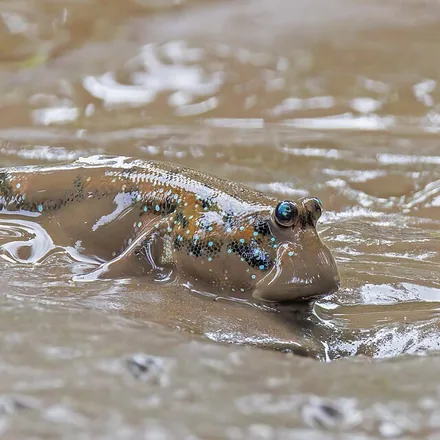
Giant Mudskipper Common
Periophthalmodon schlosseri
A fish that spends most of its life out of water, defending a mud territory with a raised sail of a dorsal fin.
Where: Mudflats at Bang Rong and the Ao Por boardwalks. Best: Year round, low tide. Low tide is essential. The boardwalks put you within a few metres.
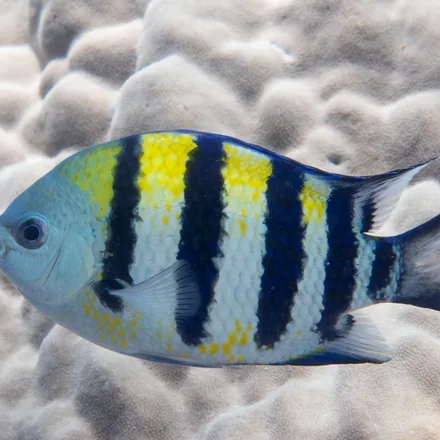
Sergeant Major Common
Abudefduf vaigiensis
The busy, black-striped damselfish that snorkellers meet everywhere, mobbing the shallows in restless silver shoals.
Where: Reef, jetties and boat moorings island-wide. Best: Year round, day. One of the first fish a snorkeller meets.
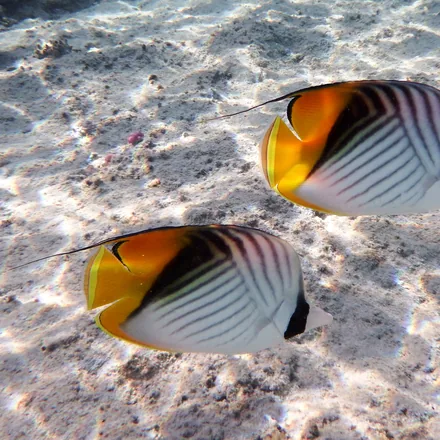
Threadfin Butterflyfish Common
Chaetodon auriga
The trailing white thread off its dorsal fin is a decoy, and so is the black eyespot beneath it.
Where: Shallow reef and rubble at Racha and Karon. Best: Nov-Apr, day.
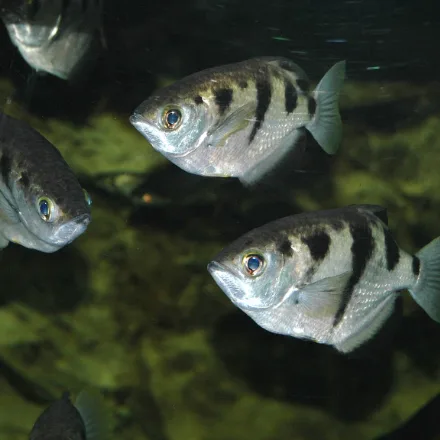
Banded Archerfish Regular
Toxotes jaculatrix
It shoots insects off overhanging leaves with a jet of water, correcting for refraction as it aims.
Where: Mangrove creeks at Bang Rong and Ao Por. Best: Year round, day. Sit quietly by an overhanging branch and wait for the shot.
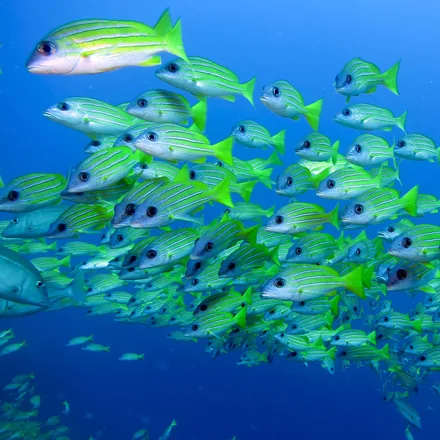
Bluestripe Snapper Regular
Lutjanus kasmira
A bright yellow snapper ruled with electric-blue lines, massing in dense, glowing schools around coral heads and wrecks.
Where: Bommies and the King Cruiser wreck. Best: Nov-Apr. Dense golden day-schools around structure.
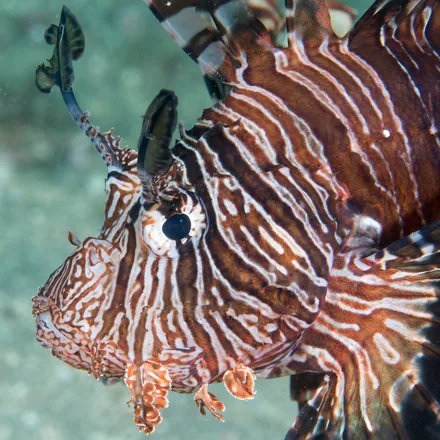
Common Lionfish Regular
Pterois volitans
A flamboyant reef hunter fanned out in maroon and white plumes, every graceful spine tipped with venom.
Where: Reef and wreckage at Koh Doc Mai and the King Cruiser wreck. Best: Nov-Apr. Drifts openly. Admire the venomous spines from a distance.
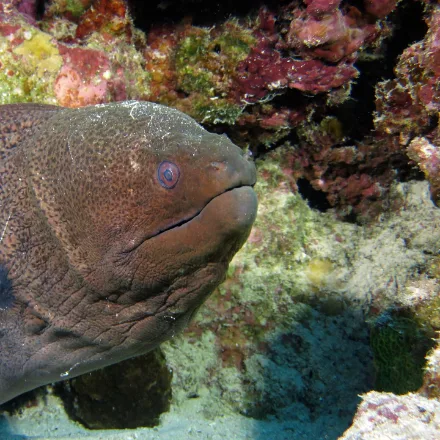
Giant Moray Regular
Gymnothorax javanicus
The largest moray on the reef, its gaping, fanged mouth a fearsome look that is really just how it breathes.
Where: Crevices on the reef at Racha Yai and Koh Doc Mai. Best: Nov-Apr. The gaping jaws are just breathing.
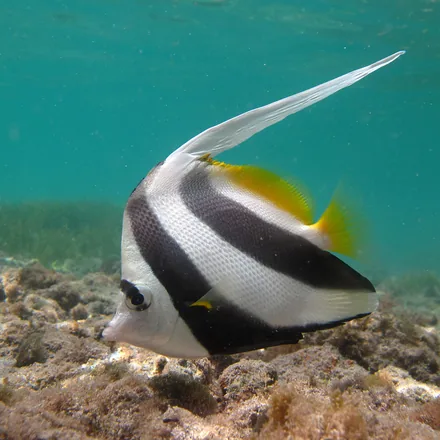
Longfin Bannerfish Regular
Heniochus acuminatus
A black-and-white pennant fish trailing a long white banner over the reef.
Where: Reef slopes at Racha Yai and Koh Bon. Best: Nov-Apr, day.
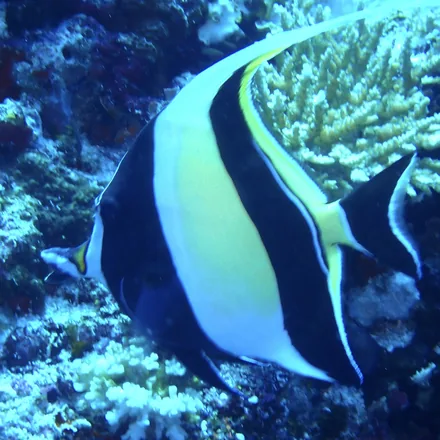
Moorish Idol Regular
Zanclus cornutus
An unmistakable disc of black, white and gold trailing a long ribbon fin, one of the most elegant fish on any reef.
Where: Coral at Racha Yai, Koh Bon and the Kata reef edge. Best: Nov-Apr, day.
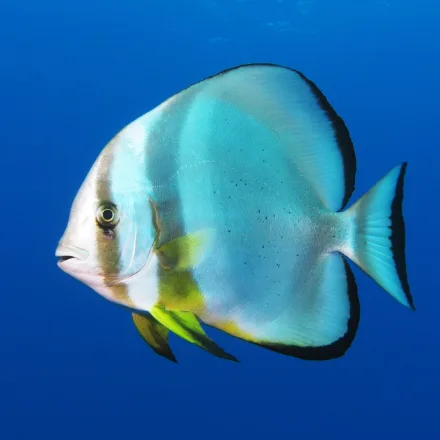
Orbicular Batfish Regular
Platax orbicularis
A tall silver disc of a fish that drifts up curiously to inspect its own reflection in your mask.
Where: The King Cruiser wreck and the Racha jetty pilings. Best: Nov-Apr. Curious and tame around structures; often approaches divers.
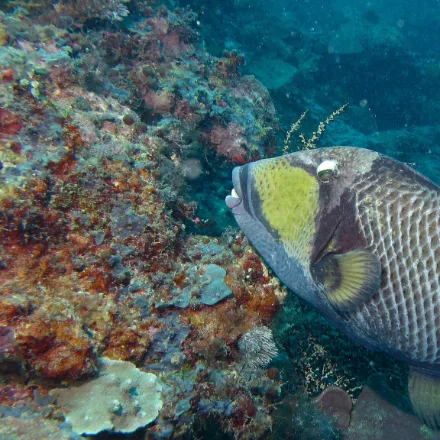
Titan Triggerfish Regular
Balistoides viridescens
The reef's bad tempered bulldozer, a big triggerfish that will charge divers who stray over its nest.
Where: Coral reef at Racha Yai and Koh Doc Mai. Best: Nov-Apr, day. Give nesting adults a wide berth in the breeding season; they will charge.
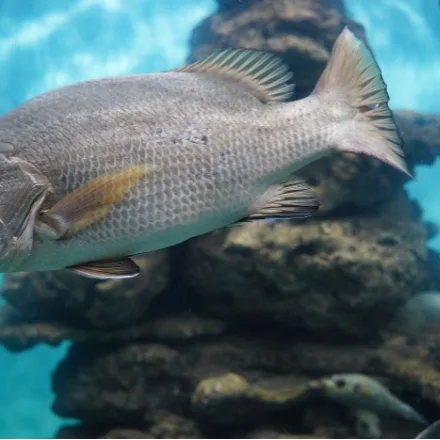
Barramundi Occasional
Lates calcarifer
Every barramundi starts life as a male and turns female at around four years old.
Where: Mangrove creeks and river mouths on the east coast. Best: Year round.
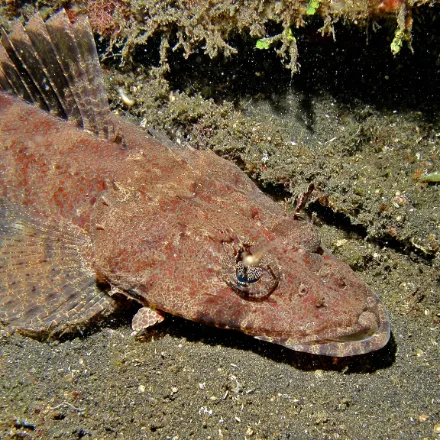
Crocodile Flathead Occasional
Cymbacephalus beauforti
Flattened into the sand with only two lacework eyes showing, waiting for something to swim within a body length.
Where: Sand and rubble beside the reef at Racha Yai. Best: Nov-Apr. Scan the sand for two lacework eyes rather than a fish shape.
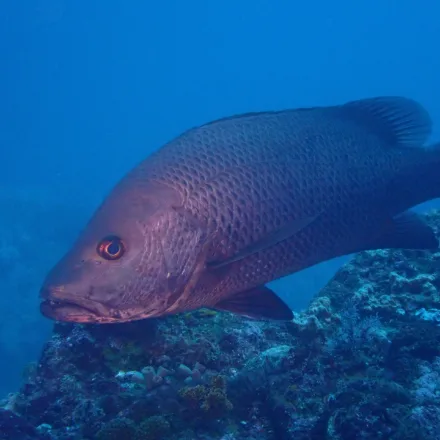
Mangrove Jack Occasional
Lutjanus argentimaculatus
Spends its youth in mangrove roots, then swims offshore to spend adulthood on a reef, a fish with two entirely separate lives.
Where: Mangrove roots at Bang Rong as juveniles, inshore reef as adults. Best: Year round.
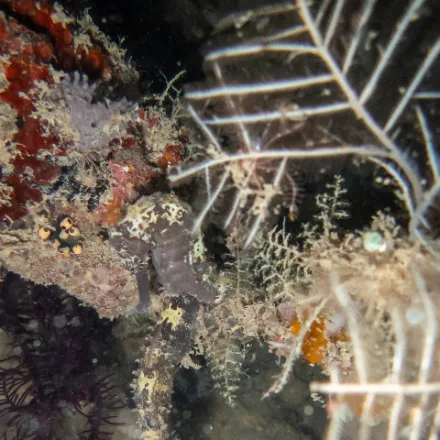
Tiger Tail Seahorse Rare Vulnerable
Hippocampus comes
A slender seahorse banded down the tail like a tiger, the male carrying and giving birth to the young.
Where: Seagrass and sponge holdfasts off Cape Panwa and the east coast. Best: Year round. Colour matches its holdfast, so scan slowly and look for the outline.
Sharks and rays
5 species
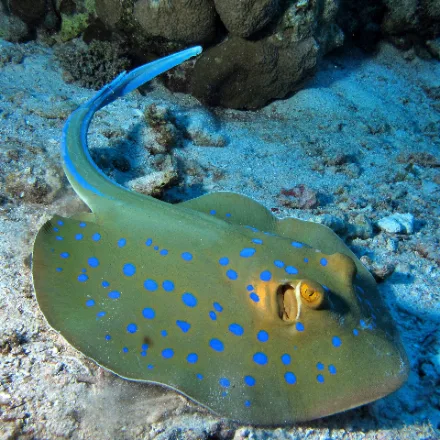
Bluespotted Ribbontail Ray Regular
Taeniura lymma
A small, brilliantly marked ray, olive gold studded with electric blue spots, tucked under coral ledges.
Where: Under coral ledges on the shallow reef at Racha and Koh Bon. Best: Nov-Apr, day. Peek under ledges, and keep clear of the venomous tail.
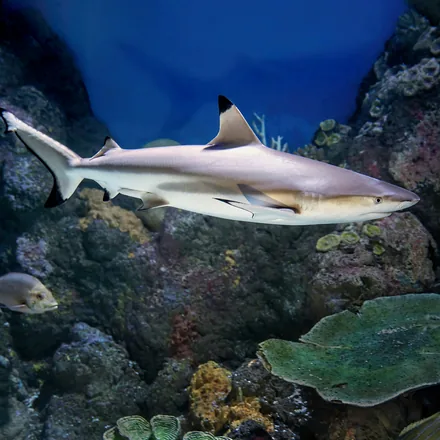
Blacktip Reef Shark Occasional Vulnerable
Carcharhinus melanopterus
The neat little reef shark of the shallows, its black-tipped fins often cutting the surface over sun-lit sand flats.
Where: Shallow reef flats at Racha Yai, Koh Bon and the Kata headland. Best: Nov-Apr, early morning. Nervous in shallow water. Snorkel quietly and hold still rather than swimming after them.
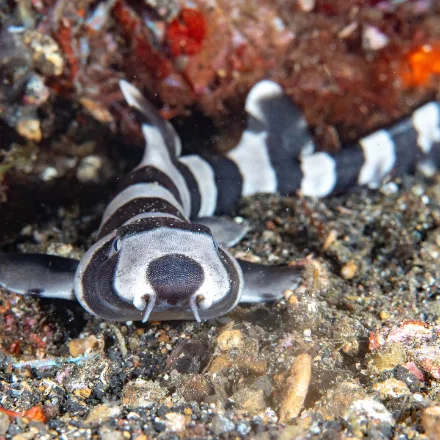
Brownbanded Bamboo Shark Occasional Near Threatened
Chiloscyllium punctatum
A small, slender carpet shark that walks across the reef on its fins and can survive hours out of water in a tide pool.
Where: Under ledges and in rubble at Racha Yai and Koh Bon. Best: Nov-Apr, night dives.
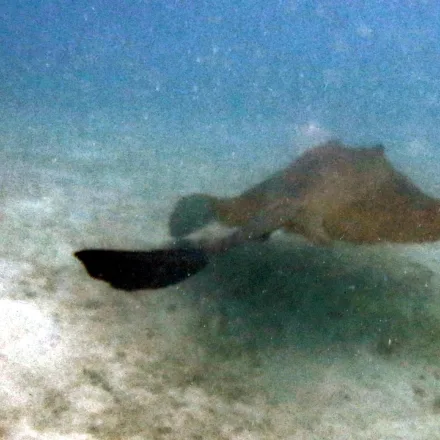
Cowtail Stingray Occasional Vulnerable
Pastinachus sephen
Named for the broad flap of skin hanging under its tail like a cow's tail, unique among rays.
Where: Silty bays and mangrove margins on the east coast. Best: Year round. Circular feeding pits in the mud are the giveaway.
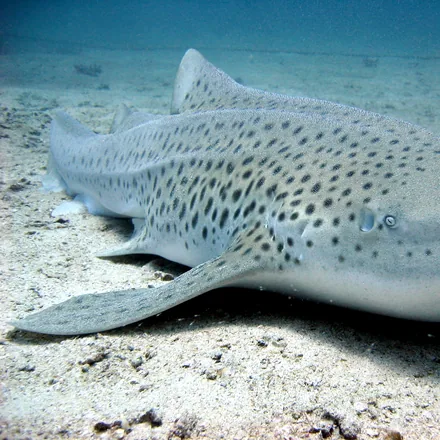
Zebra Shark (Leopard Shark) Occasional Endangered
Stegostoma tigrinum
A gentle, spotted shark that lies on the sand like a giant lazy cat, striped as a pup and spotted as an adult.
Where: Sand between coral heads at Racha Yai and Koh Doc Mai. Best: Nov-Apr, morning dives. Racha Yai is the reliable Phuket site. Rests on sand in the open; approach slowly from the side.
Insects
7 species
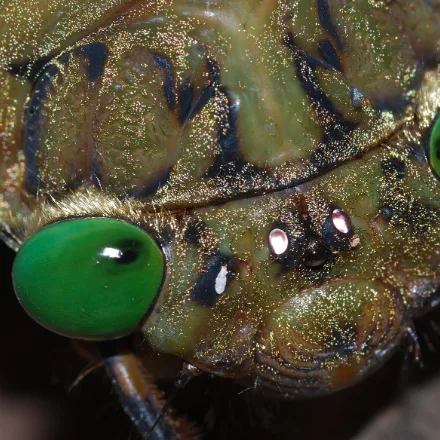
Giant Cicada Common
Pomponia imperatoria
A huge cicada whose piercing, ringing call is the loudest sound in the midday forest.
Where: Forest canopy at Khao Phra Thaeo. Best: May-Oct, midday. The loudest voice of the midday forest.
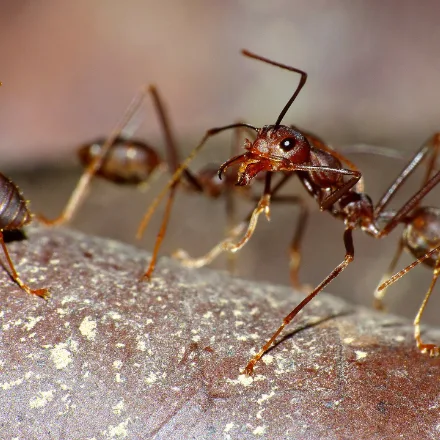
Weaver Ant Common
Oecophylla smaragdina
A rust-red ant that sews living leaves into nests using its own larvae as glue guns.
Where: Mango and rubber trees in plantations and gardens. Best: Year round, day.
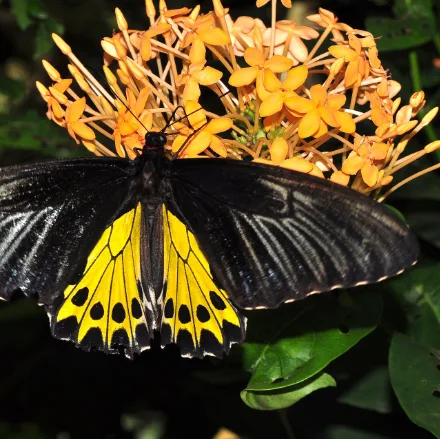
Common Birdwing Regular
Troides helena
A hand-sized black and gold butterfly that cruises the canopy like a small bird.
Where: Gardens and forest edge across the island. Best: Year round, day.
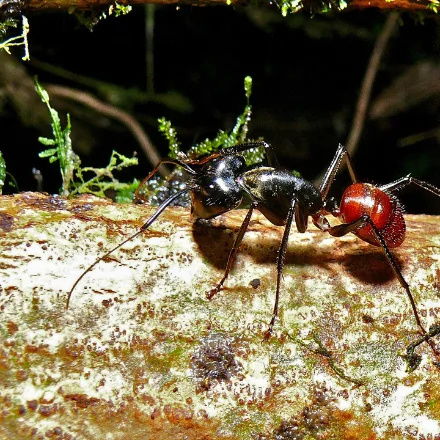
Giant Forest Ant Regular
Camponotus gigas
One of the largest ants on earth, and colonies keep a standing army of soldiers whose only job is to fight border wars with the neighbours.
Where: Trunks and trails at Khao Phra Thaeo. Best: Year round, night. Night walks only. Follow a trunk trail with a torch.
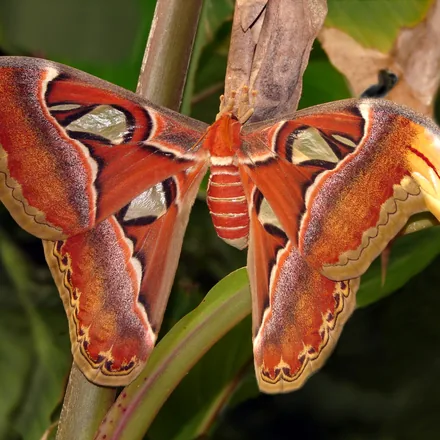
Atlas Moth Occasional
Attacus atlas
One of the largest moths on Earth, its wingtips shaped and coloured like a cobra's head.
Where: Lit walls and toilet blocks at Khao Phra Thaeo. Best: May-Oct, after warm wet nights. Adults live only days and never feed.
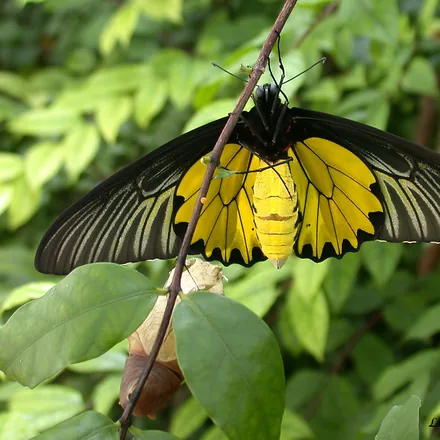
Golden Birdwing Occasional
Troides aeacus
A huge butterfly with black forewings and blazing golden hindwings, sailing high along the forest edge.
Where: Flowering trees and forest clearings at Khao Phra Thaeo. Best: May-Oct, midday.
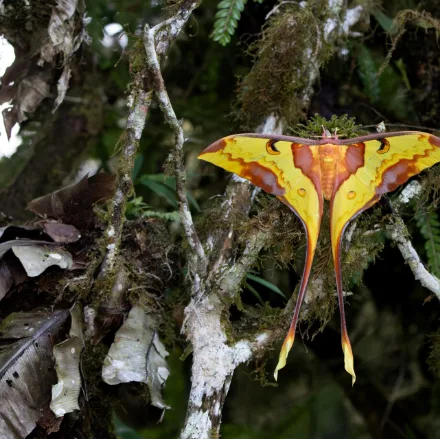
Malayan Moon Moth Rare
Actias maenas
The adult has no mouth at all, lives about a week, and spends every hour of it looking for a mate.
Where: Lit buildings at the forest edge around Khao Phra Thaeo. Best: May-Oct, after dark.
Spiders and scorpions
2 species
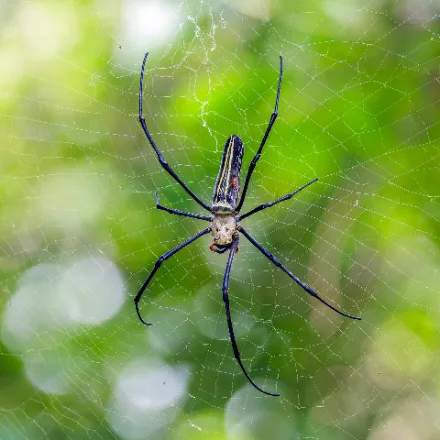
Golden Orb-weaver Common
Nephila pilipes
A giant black-and-yellow spider spinning webs of golden silk strong enough to snare small birds.
Where: Forest-edge paths at Khao Phra Thaeo and Sirinat. Best: May-Oct, day.
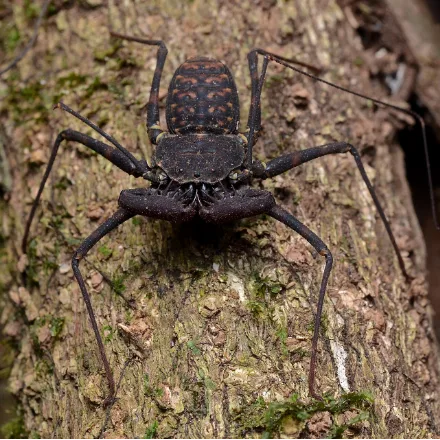
Tailless Whip Scorpion Occasional
Phrynichus orientalis
Looks genuinely alarming and is completely harmless: no venom, no sting, and a pair of legs converted into three foot feelers.
Where: Cave mouths, rock faces and buttress roots at Khao Phra Thaeo. Best: Year round, night. Alarming to look at and completely harmless: no venom and no sting.
Molluscs
1 species
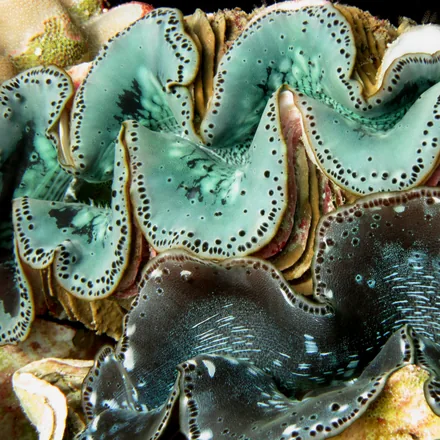
Giant Clam Rare Critically Endangered
Tridacna gigas
The largest shellfish on Earth, a metre-wide clam that farms algae in its own rippling, jewel-coloured flesh.
Where: Embedded in shallow reef at Racha Yai. Best: Nov-Apr.
Corals and anemones
2 species
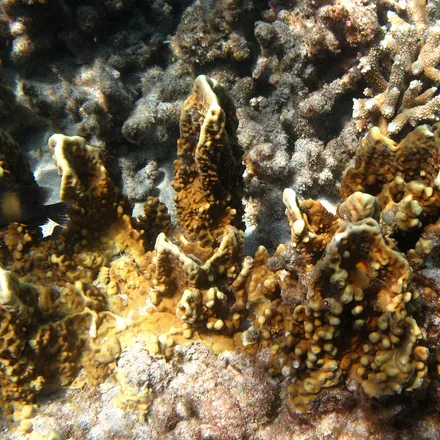
Fire Coral Regular
Millepora platyphylla
Not a coral at all but a colonial jellyfish relative, and the sting feels exactly like the name suggests.
Where: Shallow reef and wreckage island-wide. Best: Year round. The commonest cause of snorkelling injury in Thailand. Learn the smooth mustard blades.
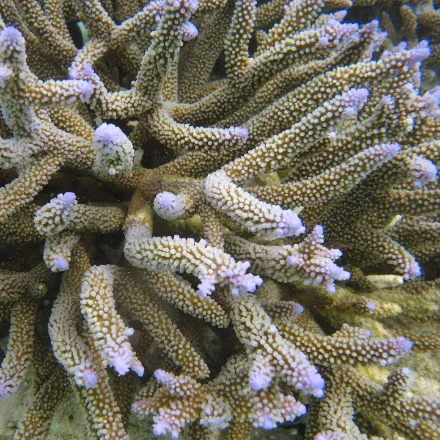
Staghorn Coral Regular
Acropora species
The fast-growing branching coral that builds the living thickets of the reef, nursery and shelter for a whole community.
Where: Shallow reef at Racha Yai and Koh Bon. Best: Nov-Apr. Builds the thickets that shelter the reef fish; very vulnerable to bleaching.
Echinoderms
2 species
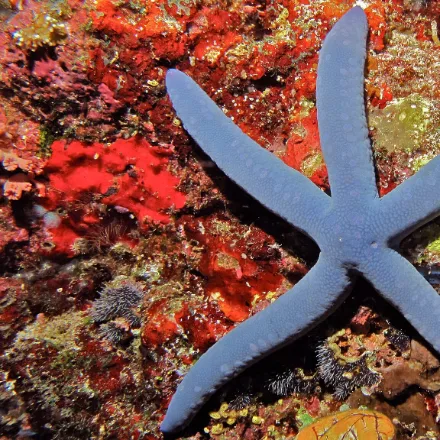
Blue Sea Star Common
Linckia laevigata
An almost unreal cobalt blue starfish scattered across the shallows, able to regrow a whole body from a single lost arm.
Where: Shallow reef flats at Racha Yai and Koh Bon. Best: Nov-Apr, day.
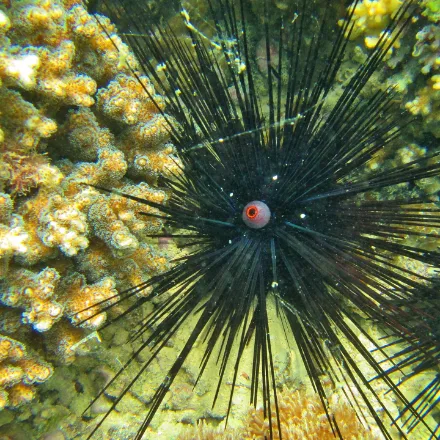
Long-spined Sea Urchin Common
Diadema setosum
A pincushion of needle-sharp black spines with a glowing orange ring, grazing algae and quietly shaping the reef.
Where: Crevices on the shallow reef island-wide. Best: Year round. Needle-sharp venomous spines. Reef shoes on any shallow entry.
Crustaceans
4 species
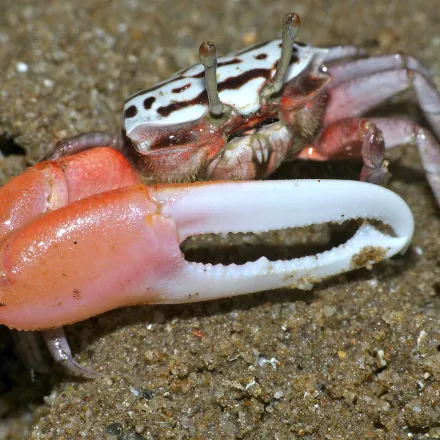
Fiddler Crab Common
Austruca annulipes
The male's oversized claw is useless for feeding, so he has to do everything with the small one while waving the big one at females.
Where: Mangrove mudflats at Bang Rong and Ao Por. Best: Year round, falling tide. Sit still for five minutes and the whole flat emerges and starts waving.
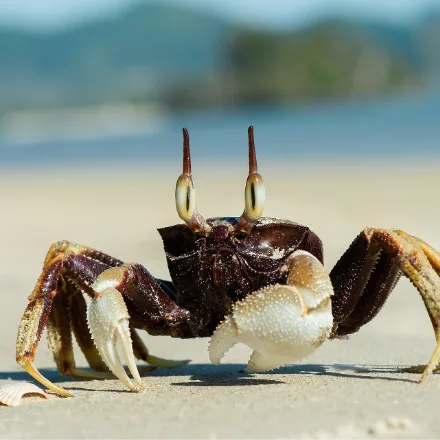
Horn-eyed Ghost Crab Common
Ocypode ceratophthalmus
The fastest crab on earth, clocked at over two metres a second, and it growls at intruders from inside its burrow.
Where: Mai Khao, Nai Yang and any quiet beach after dark. Best: Year round, night. The easiest wildlife walk on the island. Torch and a quiet beach.
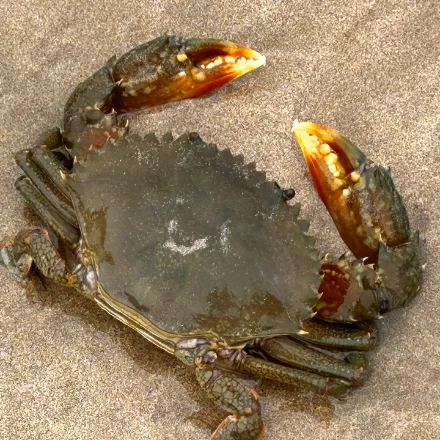
Giant Mud Crab Occasional
Scylla serrata
The claws can generate enough force to crush a large clam, and will take a finger off without much trouble.
Where: Mangrove creeks and root systems at Bang Rong. Best: Year round, night.
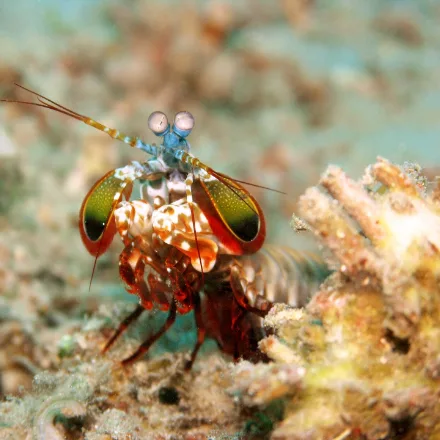
Peacock Mantis Shrimp Occasional
Odontodactylus scyllarus
A jewel-coloured reef brawler that punches with the speed of a bullet and sees the world in colours we cannot imagine.
Where: Rubble and sand at Racha Yai and Koh Bon. Best: Nov-Apr. Look for a burrow in rubble; the flash of colour gives it away.
Other invertebrates
2 species
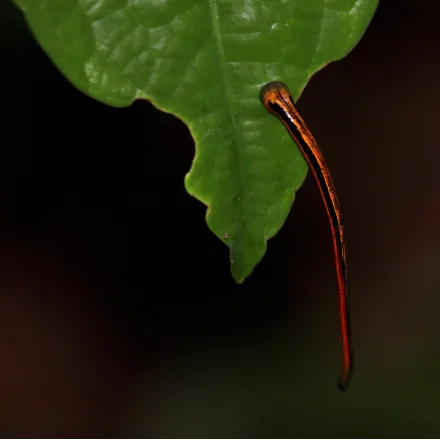
Tiger Leech Common
Haemadipsa picta
Waits on leaf tips with one end waving, detecting your breath and body heat from a metre away.
Where: Damp forest floor at Khao Phra Thaeo after rain. Best: May-Oct, day. Leech socks and a fingernail, not salt or a lighter.
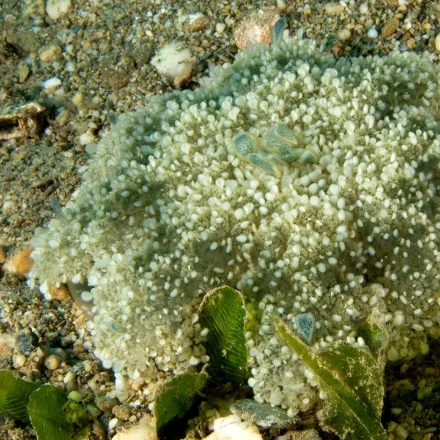
Upside-down Jellyfish Occasional
Cassiopea andromeda
Lies on the seabed with its tentacles pointing at the sky, farming algae inside its own tissue like a coral.
Where: Sheltered mangrove lagoons at Ao Por and in Phang Nga Bay. Best: Year round, day. If snorkellers report itching with nothing visible, this is usually why.
Planning and responsible watching
Phuket has two completely different seasons and they suit different animals. Nov-Apr is the dry northeast monsoon: flat Andaman water, the best visibility of the year, and the season for Racha, Koh Bon and the reef list on this page. It is also when turtles come ashore at Mai Khao, between November and February. May-Oct is the southwest monsoon, with surf on the west coast beaches, poor underwater visibility and red flags on Kata and Karon that are worth taking seriously. It is a much better half of the year for the forest: frogs, snakes, insects and waterfalls in full flow at Khao Phra Thaeo. Split the day the way the animals do. Dawn on the Bang Pae trail for gibbons, which are heard far more than seen. Low tide, whenever it falls, for the Bang Rong mangrove boardwalk, because the mudskippers and fiddler crabs are only out on the flats when the water is off them. Late afternoon on the roadside above Kathu and Kamala for langurs. And a first boat out to Racha for the reef, before the day trippers arrive. Two warnings. Monkey Hill in Phuket Town is heavily fed and the macaques there are bold enough to be a nuisance; do not add to it. And on any nesting beach, no lights and no flash.
Find Phuket wildlife tours, mangrove kayaking and Racha snorkelling trips
Some links on this page are affiliate links. If you book through them, Wildseer may earn a small commission at no extra cost to you.
Frequently asked questions
What wildlife can you see in Phuket?
Wild white-handed gibbons and dusky langurs in Khao Phra Thaeo forest, hornbills over the Bang Pae waterfall, mudskippers and fiddler crabs on the Bang Rong mangrove flats, blacktip reef sharks and zebra sharks off Racha Yai, hawksbill and green turtles over the coral, and olive ridley turtles nesting at Mai Khao between November and February.
Are there wild elephants in Phuket?
No. Phuket is a 543 square kilometre island with about 23 square kilometres of forest left, and it holds no wild elephants at all. Every elephant on the island is captive, which makes the question of which venue, if any, the only honest one. Our guide to telling a real sanctuary from a rebranded riding camp covers it, and wild herds live at Kui Buri, Khao Yai, Kaeng Krachan and Khao Sok, none of which are near here.
Where can you see gibbons in Phuket?
Khao Phra Thaeo National Park, in the forest above the Bang Pae waterfall. Phuket’s gibbons were hunted out of the island entirely and the population there today comes from the Gibbon Rehabilitation Project at Bang Pae, which is worth understanding before you go. Be on the trail in the first two hours after dawn. Hearing the duet is likely; seeing one is not.
When is the best time for wildlife in Phuket?
Nov-Apr for anything in the water and for turtle nesting at Mai Khao, because the Andaman is calm and clear. May-Oct is much better for the forest, with frogs, snakes and insects active and the waterfalls running, but the sea is rough and the west coast beaches carry red flags that should be obeyed.
Can you snorkel with reef sharks in Phuket?
Yes, at Racha Yai, Koh Bon and off the Kata headland, best on an early morning boat between November and April. Blacktip reef sharks work the shallow reef flats and are nervous rather than dangerous. Hold still and let them come past rather than swimming after them, which simply pushes them into deeper water.
Explore Thailand wildlife by group
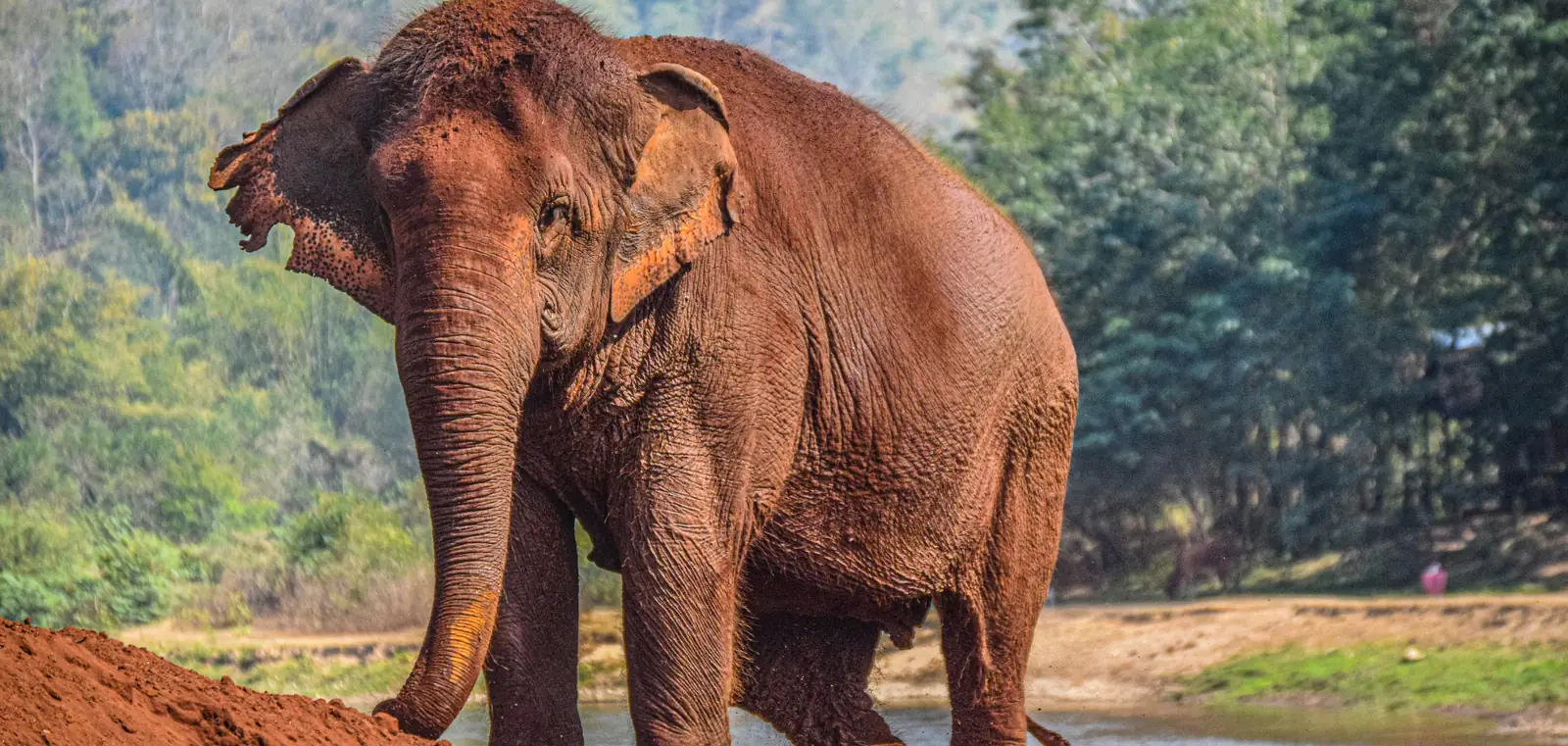 Mammals of Thailand
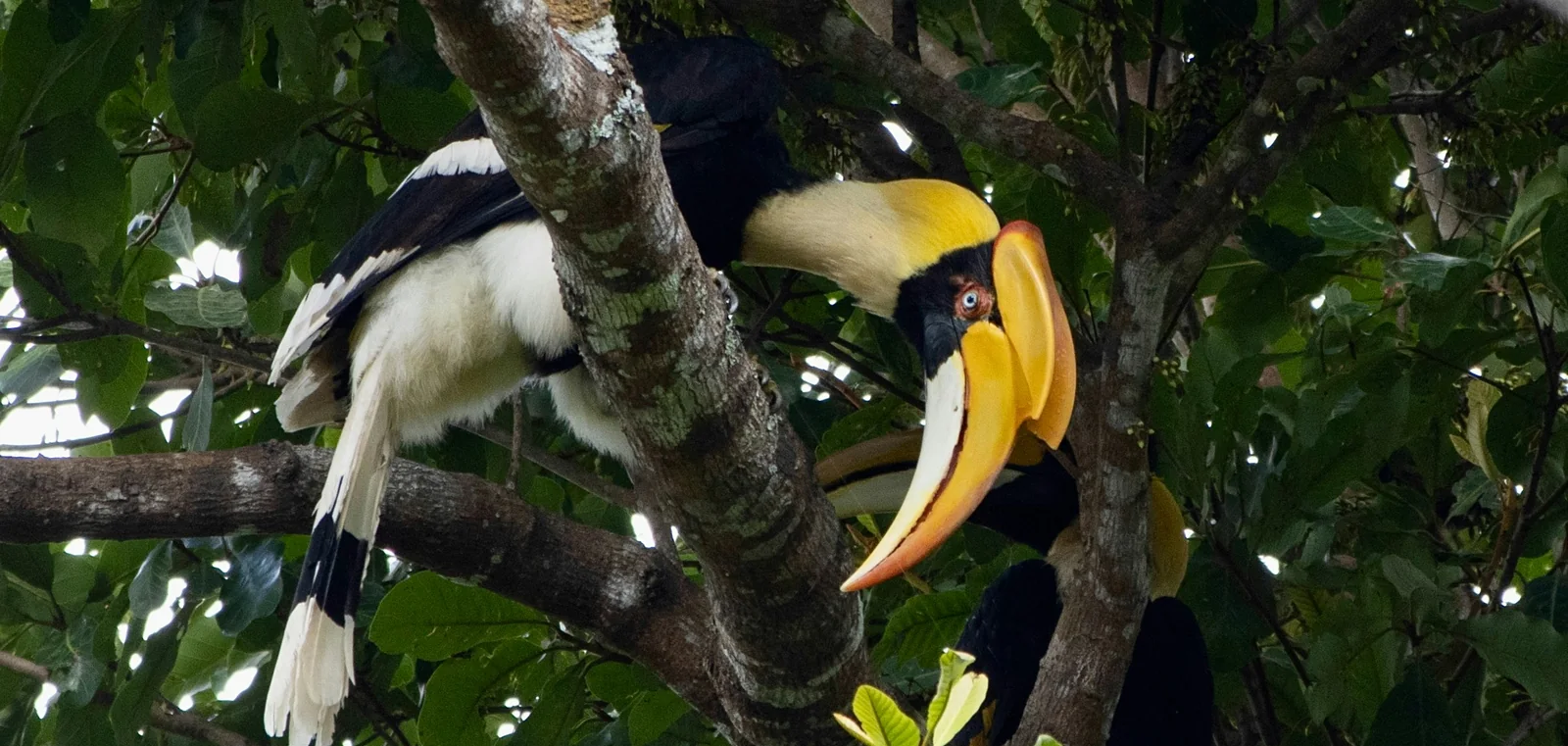 Birds of Thailand
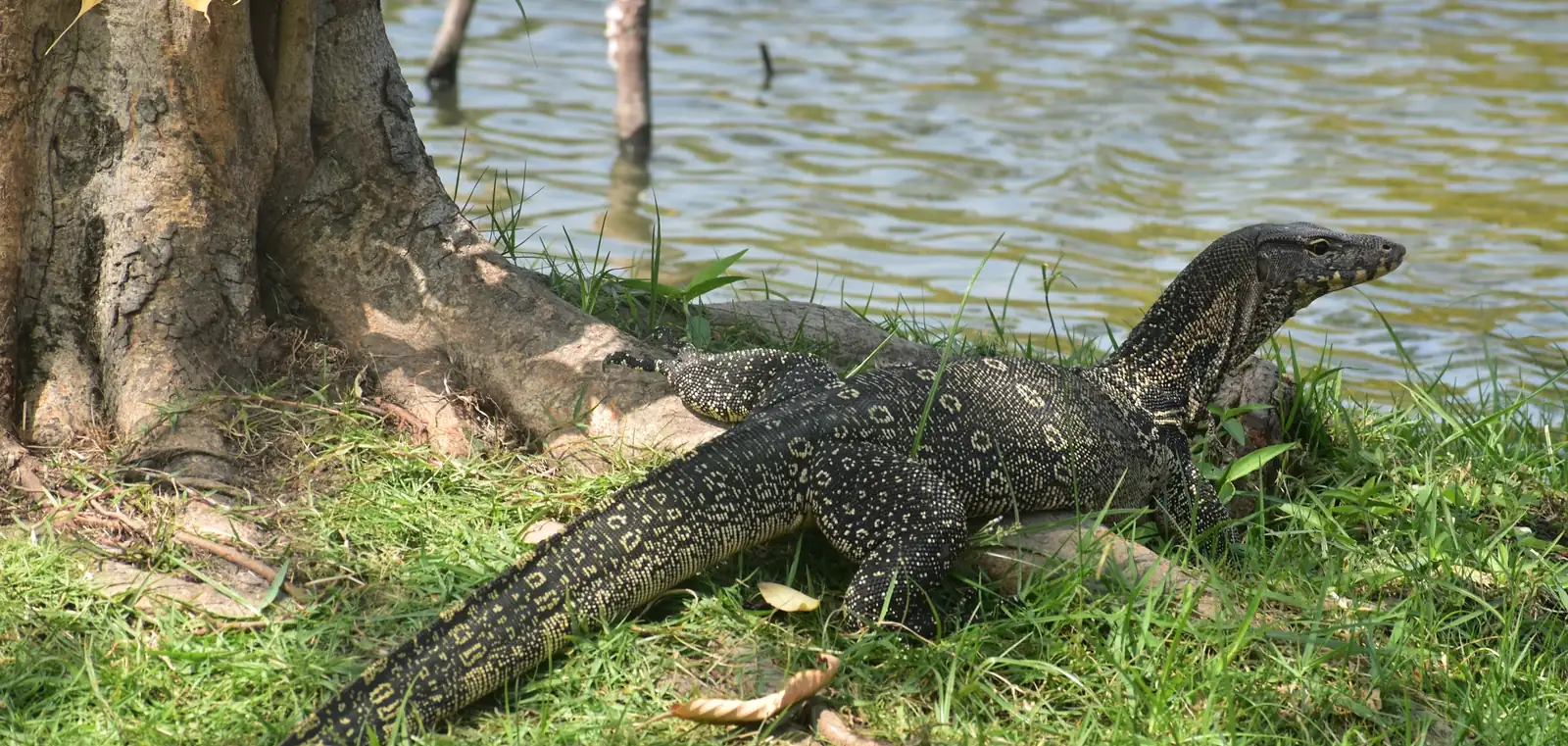 Reptiles and Amphibians of Thailand
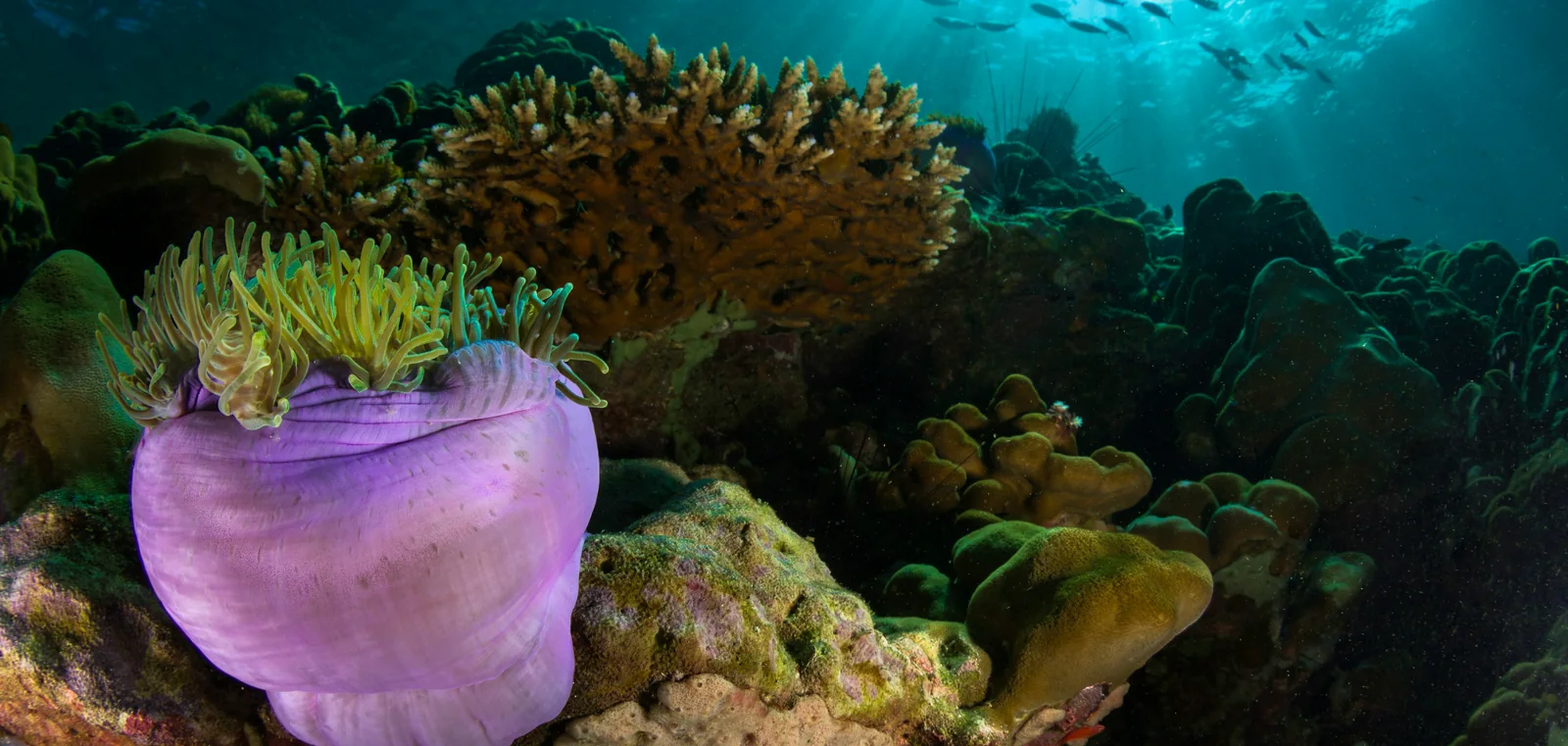 Fish of Thailand
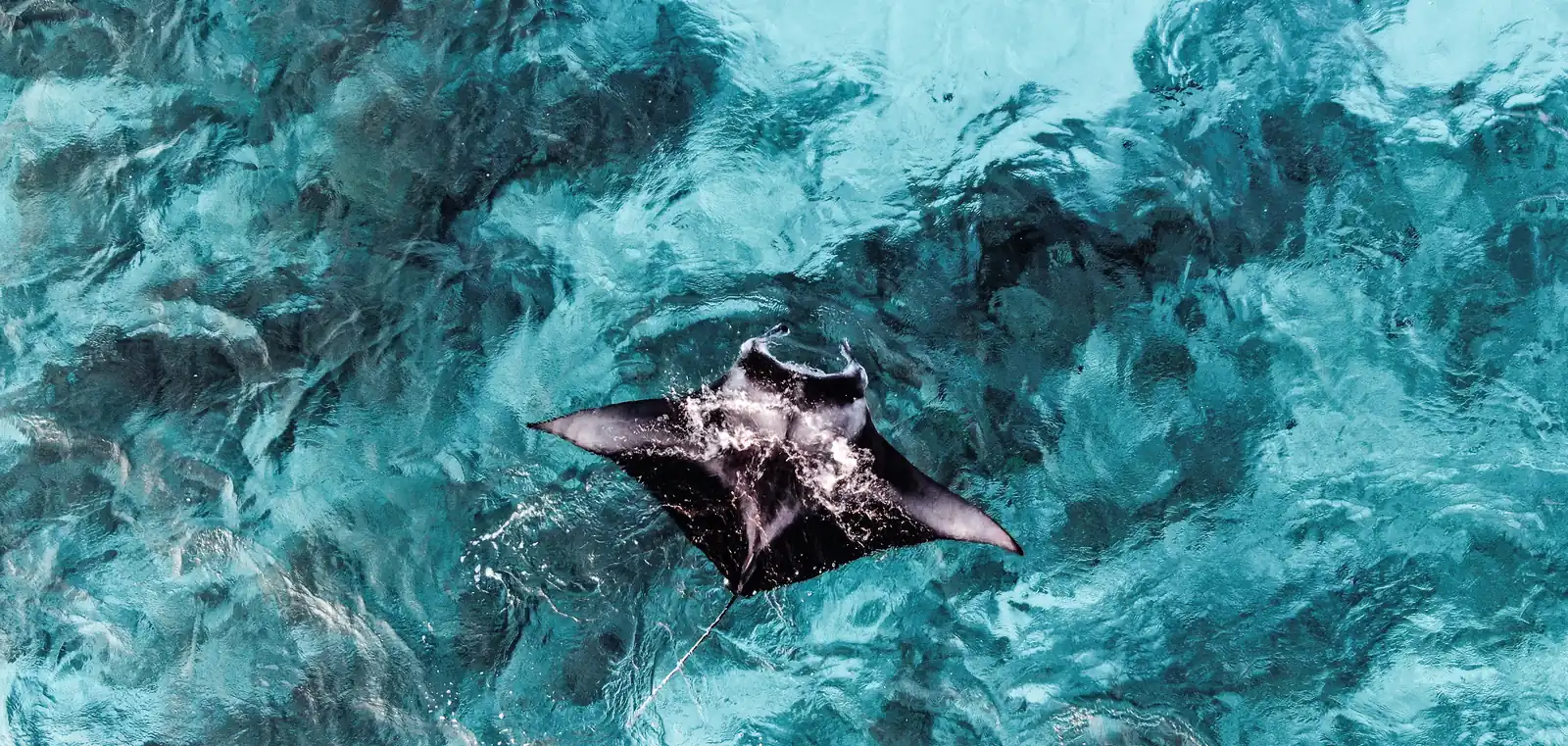 Sharks and Rays of Thailand
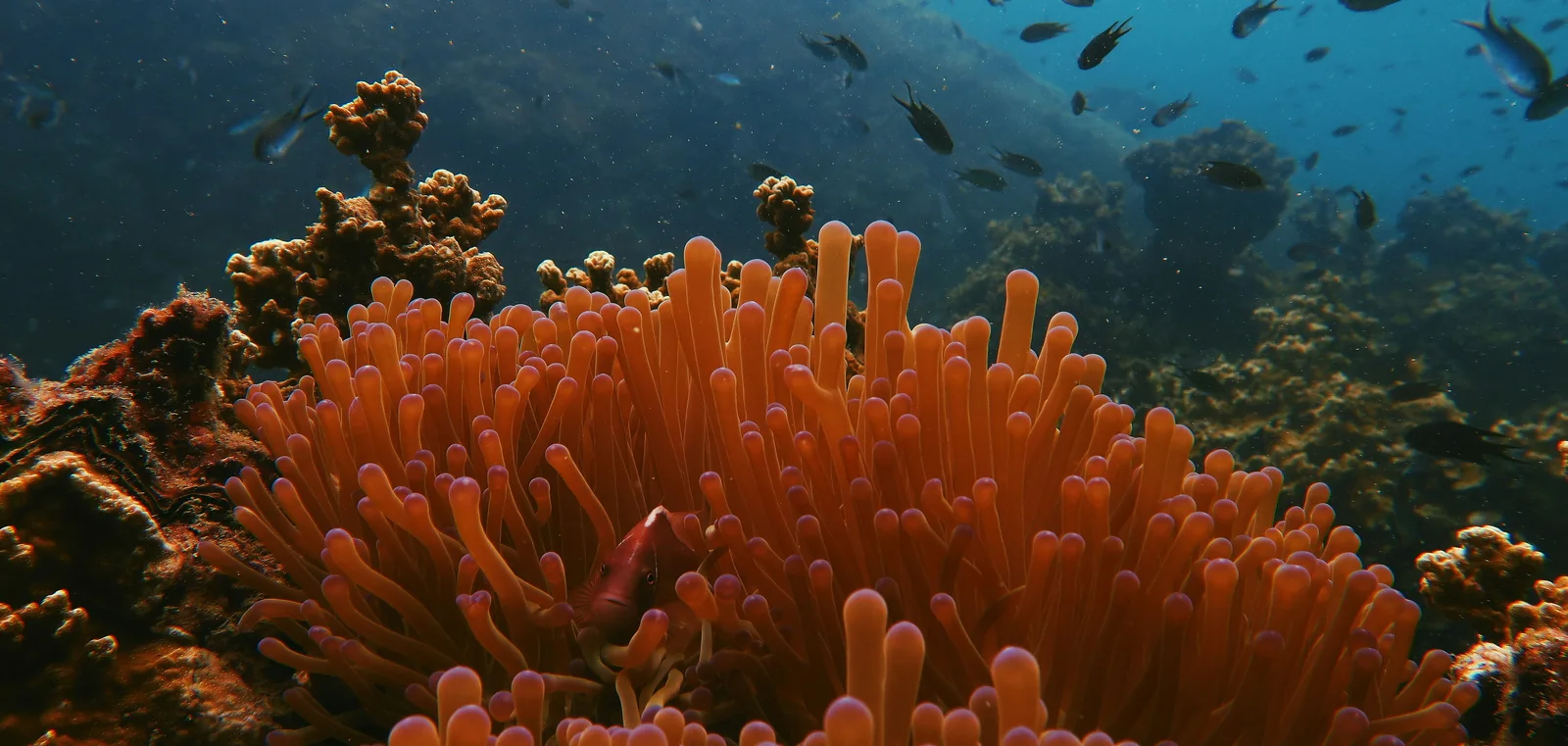 Reef Invertebrates of Thailand
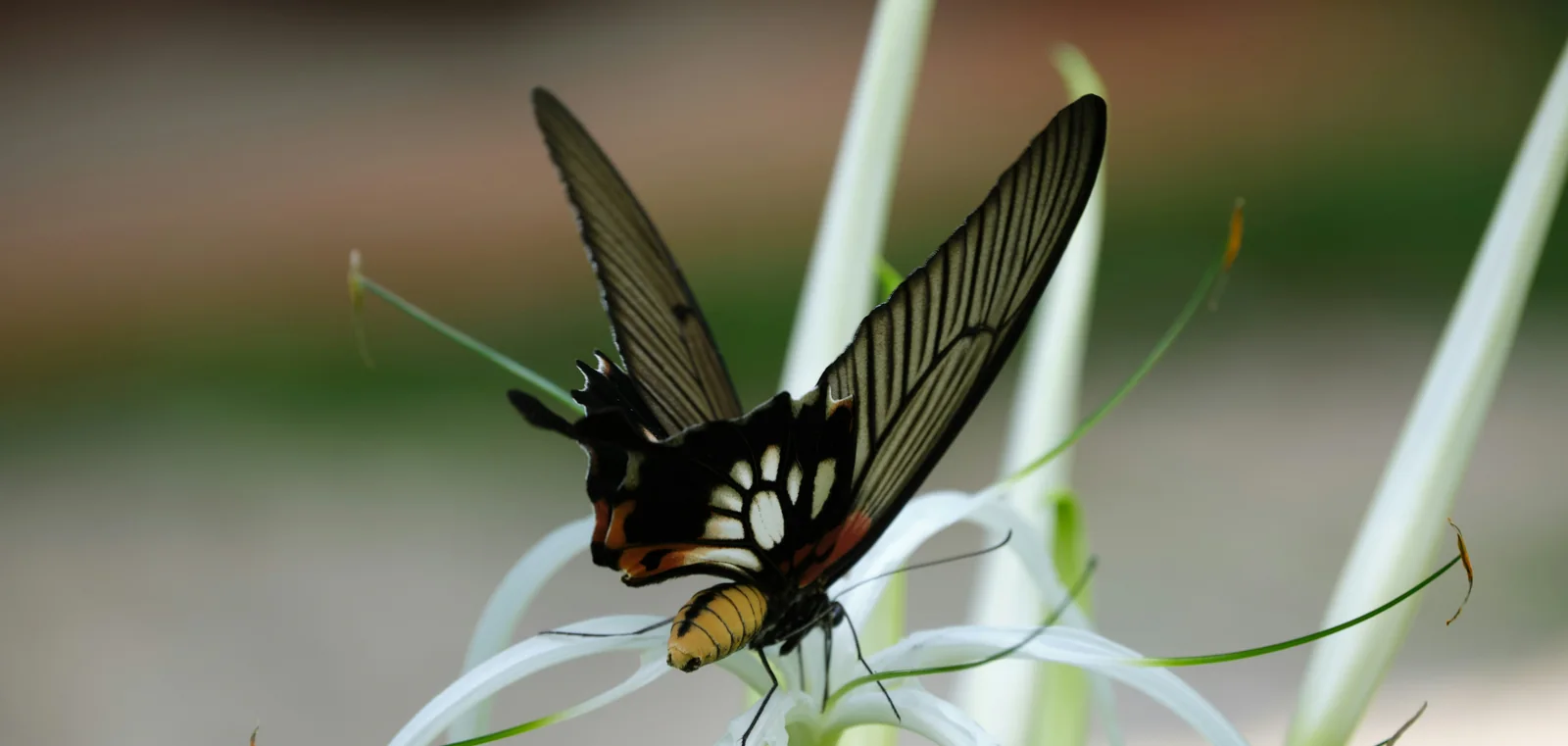 Insects and Spiders of Thailand
Part of the Wildlife in Thailand guide.
Explore Thailand wildlife by place
Image credits
image credits
- Dusky langur in lowland rainforest, Thailand: tontantravel | CC BY-SA 2.0
- white-handed-gibbon: JJ Harrison ( jjharrison89@facebook.com ) | CC BY 3.0
- Blacktip reef shark: David Clode | Unsplash License
- Dusky Langur: Rushenb | CC BY-SA 3.0
- hawksbill-turtle: Daniel Sasse | CC BY-SA 4.0
- Giant Mudskipper: Charles J. Sharp | CC BY-SA 4.0
- Greater Short-nosed Fruit Bat: Shantanu Kuveskar | CC BY-SA 3.0
- Long-tailed Macaque: Basile Morin | CC BY-SA 4.0
- Variable Squirrel: Rushenb | CC BY-SA 3.0
- Dusky Langur: Rushenb | CC BY-SA 3.0
- Wrinkle-lipped Free-tailed Bat: Bernard DUPONT from FRANCE | CC BY-SA 2.0
- Common Palm Civet: Tisha Mukherjee | CC BY-SA 4.0
- Indo-Pacific Bottlenose Dolphin: Bernard DUPONT from FRANCE | CC BY-SA 2.0
- Northern Red Muntjac: Dr. Raju Kasambe | CC BY-SA 4.0
- Northern Treeshrew: JJ Harrison ( ) | CC BY-SA 3.0
- Wild Boar: Charles J. Sharp | CC BY-SA 4.0
- Indo-Pacific Finless Porpoise: Cipher01 | CC BY-SA 3.0
- Indo-Pacific Humpback Dolphin: Chem7 | CC BY 2.0
- Lesser Mouse-deer: atheist | CC BY 4.0
- Malayan Porcupine: Wich'yanan L | CC BY 4.0
- Smooth-coated Otter: Rk20july | CC BY-SA 4.0
- White-handed Gibbon: JJ Harrison | CC BY 3.0
- Asian Koel: Tisha Mukherjee | CC BY-SA 4.0
- Brahminy Kite: Charles J. Sharp | CC BY-SA 4.0
- Coppersmith Barbet: Parth Kansara | CC BY 4.0
- Germain’s Swiftlet: Wich'yanan L | CC BY 4.0
- Olive-backed Sunbird: JJ Harrison | CC BY-SA 3.0
- White-throated Kingfisher: Giles Laurent | CC BY-SA 4.0
- Blue-tailed Bee-eater: Charles J. Sharp | CC BY-SA 4.0
- Collared Scops Owl: Tisha Mukherjee | CC BY-SA 4.0
- Common Kingfisher: Andreas Trepte | CC BY-SA 2.5
- Crested Serpent Eagle: Mildeep | CC BY-SA 4.0
- Crimson Sunbird: Charles J. Sharp | CC BY-SA 4.0
- Greater Racket-tailed Drongo: Mildeep | CC BY-SA 4.0
- Green-billed Malkoha: Tisha Mukherjee | CC BY-SA 4.0
- Large-tailed Nightjar: Rushen | CC BY-SA 2.0
- Oriental Pied Hornbill: Sipuwildlife | CC BY-SA 4.0
- Pacific Reef Heron: Rushen | CC BY-SA 2.0
- White-bellied Sea Eagle: Charles J. Sharp | CC BY-SA 4.0
- Asian Fairy-bluebird: Manoj Kunnambath | CC BY-SA 4.0
- Black-capped Kingfisher: JJ Harrison ( ) | CC BY-SA 3.0
- Black-naped Tern: panjigusti | CC BY 4.0
- Blue-eared Barbet: Ian Dugdale | CC BY 4.0
- Bridled Tern: Calistemon | CC BY-SA 4.0
- Brown Booby: Charles J. Sharp | CC BY-SA 4.0
- Changeable Hawk-eagle: Charles J. Sharp | CC BY-SA 4.0
- Golden-fronted Leafbird: Tisha Mukherjee | CC BY-SA 4.0
- Greater Flameback: JJ Harrison ( ) | CC BY-SA 3.0
- Little Spiderhunter: Charles J. Sharp | CC BY-SA 4.0
- Little Tern: Afsarnayakkan | CC BY-SA 4.0
- Scarlet Minivet: Tisha Mukherjee | CC BY-SA 4.0
- Stork-billed Kingfisher: Anagha devi | CC BY-SA 4.0
- Banded Kingfisher: Rushen | CC BY-SA 2.0
- Black-and-red Broadbill: Wich’yanan (Jay) Limparungpatthanakij | CC BY 4.0
- Far Eastern Curlew: Donald Hobern from Copenhagen, Denmark | CC BY 2.0
- Great Hornbill: Lip Kee | CC BY-SA 2.0
- Lesser Frigatebird: Ariefrahman | CC BY-SA 4.0
- Malaysian Plover: JJ Harrison ( ) | CC BY 3.0
- Blyth’s Frogmouth: Wich’yanan (Jay) Limparungpatthanakij | CC BY 4.0
- Mangrove Pitta: JJ Harrison ( ) | CC BY-SA 4.0
- Asian Water Monitor: John Thomas | Unsplash License
- Common House Gecko: Firos AK | CC BY-SA 4.0
- Common Sun Skink: Charles J. Sharp | CC BY-SA 4.0
- Oriental Garden Lizard: Ajay Kuyiloor | CC BY-SA 3.0
- Tokay Gecko: Gerard Chartier | CC BY 4.0
- Banded Sea Krait: Elias Levy | CC BY 2.0
- Oriental Whip Snake: Rushen / Thai National Parks | CC BY-SA 2.0
- White-lipped Pit Viper: Rushen | CC BY-SA 2.0
- Common Flying Dragon: Wich'yanan L | CC BY 4.0
- Dog-faced Water Snake: Wich’yanan L | CC BY 4.0
- Golden Tree Snake: Bernard DUPONT from FRANCE | CC BY-SA 2.0
- Green Sea Turtle: Randall Ruiz | Unsplash License
- Hawksbill Turtle: Daniel Sasse | CC BY-SA 4.0
- Malayan Pit Viper: Rushen | CC BY-SA 2.0
- Mangrove Pit Viper: Rushen | CC BY-SA 2.0
- Reticulated Python: Rushenb | CC BY-SA 2.0
- Dumeril’s Monitor: Bernard DUPONT from FRANCE | CC BY-SA 2.0
- Little File Snake: Matt from Melbourne, Australia | CC BY 2.0
- Mangrove Snake: Rushen | CC BY-SA 2.0
- Olive Ridley Turtle: Bernard Gagnon | CC BY-SA 3.0
- King Cobra: Rushenb | CC BY-SA 4.0
- Leatherback Turtle: Julien Renoult | CC BY 4.0
- Asian Common Toad: Jeevan Jose | CC BY-SA 4.0
- Banded Bullfrog: Bernard DUPONT | CC BY-SA 2.0
- Common Tree Frog: Rushen | CC BY-SA 2.0
- Malayan Giant Toad: Rushen | CC BY-SA 2.0
- Blue-green Chromis: Philippe Bourjon | CC BY-SA 4.0
- False Clownfish: Rickard Zerpe | CC BY-SA 2.0
- Giant Mudskipper: Charles J. Sharp | CC BY-SA 4.0
- Sergeant Major: Rickard Zerpe | CC BY 2.0
- Threadfin Butterflyfish: Kora27 | CC BY-SA 4.0
- Banded Archerfish: James St. John | CC BY 2.0
- Bluestripe Snapper: Jerome Paillet (IFREMER) | CC BY 4.0
- Common Lionfish: Rickard Zerpe | CC BY 2.0
- Giant Moray: Jerome Paillet (IFREMER) | CC BY 4.0
- Longfin Bannerfish: Philippe Bourjon | CC BY-SA 3.0
- Moorish Idol: Jean-Paul Boerekamps | CC0
- Orbicular Batfish: Alexander Vasenin | CC BY-SA 3.0
- Titan Triggerfish: Bernard DUPONT | CC BY-SA 2.0
- Barramundi: NGUYEN THANH NHON | Pexels Licence
- Crocodile Flathead: Bernard DUPONT from FRANCE | CC BY-SA 2.0
- Mangrove Jack: 呂一起(Lu i-chi) | CC BY 4.0
- Tiger Tail Seahorse: portioid | CC BY-SA 4.0
- Bluespotted Ribbontail Ray: Derek Keats from Johannesburg, South Africa | CC BY 2.0
- Blacktip Reef Shark: David Clode | Unsplash License
- Brownbanded Bamboo Shark: Rickard Zerpe | CC BY 2.0
- Cowtail Stingray: Frédéric Ducarme | CC BY-SA 4.0
- Zebra Shark: Sigmund | CC BY 2.0
- Giant Cicada: Bernard DUPONT from FRANCE | CC BY-SA 2.0
- Weaver Ant: Bernard DUPONT from FRANCE | CC BY-SA 2.0
- Common Birdwing: Pavel Kirillov from St.Petersburg, Russia | CC BY-SA 2.0
- Giant Forest Ant: Bernard DUPONT | CC BY-SA 2.0
- Atlas Moth: Nevit Dilmen | CC BY-SA 3.0
- Golden Birdwing: Len Worthington | CC BY-SA 2.0
- Malayan Moon Moth: Yi-Kai Tea | CC BY-SA 4.0
- Golden Orb-weaver: Charles J. Sharp | CC BY-SA 4.0
- Tailless Whip Scorpion: Geoff Gallice from Gainesville, FL, USA | CC BY 2.0
- Giant Clam: NOAA | Unsplash License
- Fire Coral: Philippe Bourjon | CC BY-SA 3.0
- Staghorn Coral: MDC Seamarc Maldives | CC BY-SA 4.0
- Blue Sea Star: Bernard DUPONT | CC BY-SA 2.0
- Long-spined Sea Urchin: Frédéric Ducarme | CC BY-SA 4.0
- Fiddler Crab: Bernard DUPONT from FRANCE | CC BY-SA 2.0
- Horn-eyed Ghost Crab: Rushenb | CC BY-SA 3.0
- Giant Mud Crab: Scott Edmunds | CC0
- Peacock Mantis Shrimp: Jerome Paillet (IFREMER, Laboratoire d'Océanographie Physique et Spatiale, Centre Bretagne - ZI de la Pointe du Diable - CS 10070 - 29280 Plouzané) | CC BY 4.0
- Tiger Leech: Charles J. Sharp | CC BY-SA 4.0
- Upside-down Jellyfish: Nhobgood Nick Hobgood | CC BY-SA 3.0
- Mammals of Thailand: Joshua Steinberg | Unsplash License
- Birds of Thailand: Hongbin | Unsplash License
- Reptiles and Amphibians of Thailand: Unsplash, photographer to confirm | Unsplash License
- Fish of Thailand: Milos Prelevic | Unsplash License
- Sharks and Rays of Thailand: Adam Juman | Unsplash License
- Reef Invertebrates of Thailand: James Thornton | Unsplash License
- Insects and Spiders of Thailand: Joe Green | Unsplash License