
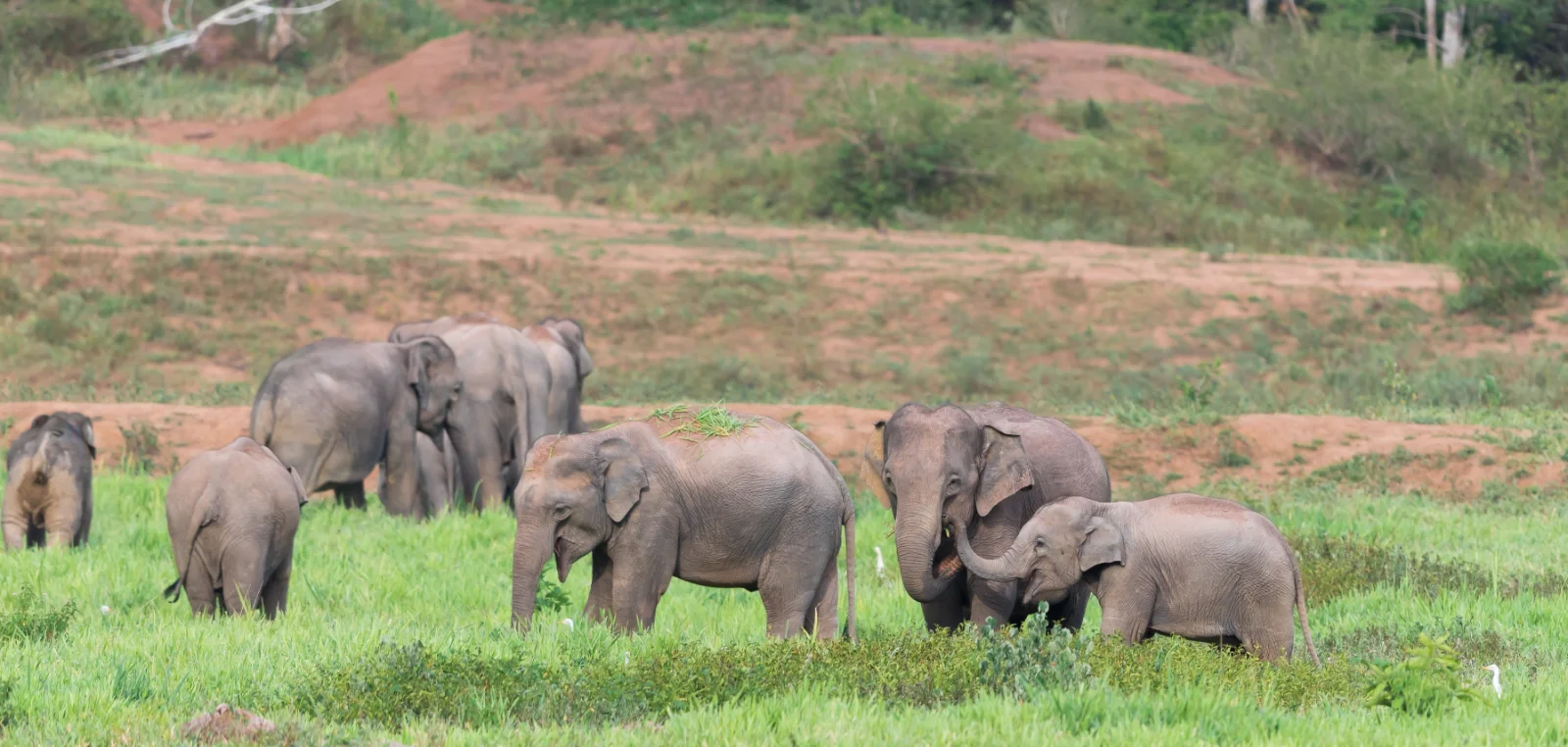
Thailand holds somewhere between 4,013 and 4,422 wild elephants, spread across 91 separate forest areas. That is a real population, growing in places fast enough to cause serious problems for the people who farm alongside it. It is also, for a visitor, almost entirely invisible. Most of those elephants live in forest you cannot walk into, move at night, and want nothing to do with you.
Four places are the exception. In each one the elephants come out of the trees onto open ground at a predictable hour, and the park has built a way for you to watch them without either of you getting hurt. This page is those four places, what each is actually good for, and what it takes to get a sighting at each. Every row below comes from the Wildseer database, so the timings are the ones the animals keep rather than the ones a brochure keeps.
The four places worth the journey
Ranked by how likely you are to succeed, not by how famous they are.
4 places
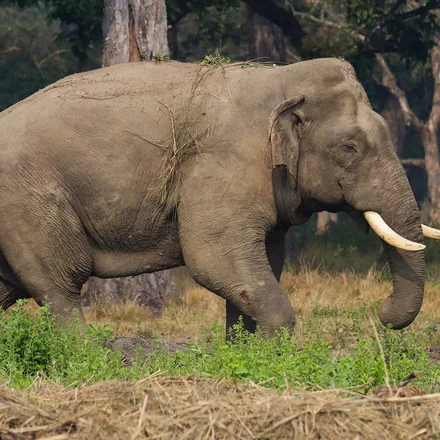
Asian Elephant Common Endangered
Elephas maximus
The largest land animal in Asia, and a genuinely wild one is worth seeking out over the camp elephants most tourists meet.
Where: The ranger-guided evening route through the pineapple and grassland zone. Best: Nov-Apr, 15:30 until dusk, best Mar-Apr as the waterholes shrink. The most reliable wild elephants in Thailand. Rangers know which herds are using which valley that week.
Asian Elephant Regular Endangered
Elephas maximus
The largest land animal in Asia, and a genuinely wild one is worth seeking out over the camp elephants most tourists meet.
Where: Km 30 grasslands, the Nong Pak Chi salt lick and roadside verges at dusk. Best: Nov-Feb, last hour of light, then Mar-Apr at the salt licks. Khao Yai's herds cross the park road at night; drive slowly and never get between animals.
Asian Elephant Regular Endangered
Elephas maximus
The largest land animal in Asia, and a genuinely wild one is worth seeking out over the camp elephants most tourists meet.
Where: The Ban Krang road, stream crossings and mineral seeps. Best: Dec-Apr, dusk and night, best Feb-Apr at the stream crossings. Herds use the road itself. If you meet one in a vehicle, reverse; never drive past.
Asian Elephant Rare Endangered
Elephas maximus
The largest land animal in Asia, and a genuinely wild one is worth seeking out over the camp elephants most tourists meet.
Where: The Klong Saeng arm of Cheow Lan Lake and remote valleys. Best: Dry season (Dec-Apr), dawn on the water. Wild herds use the lake shore; the elephants most visitors meet in Khao Sok town are captive.
Kui Buri, and why it comes first
Kui Buri is not the prettiest park in Thailand and it is not the one anyone has heard of. It is simply the one where the elephants are, reliably, in the late afternoon, in the open, at a distance you can watch from. About 320 elephants use the park, and a wide belt of former pineapple plantation on its eastern edge has been given back to grass and waterholes. That belt is the whole reason it works: the herds come down to it as the heat goes out of the day, and you sit above them on a track and watch.
The viewing area is at the Huai Luek ranger station, about 16 km north of park headquarters, and it opens from 14:00 to 18:00. You cannot drive your own vehicle in. You arrange a ranger truck at the visitor centre, currently 1,200 baht for a group of up to six, on top of park entry of 200 baht for adults and 100 baht for children. Things get interesting from about 15:30 onward and the last hour of light is the hour that matters.
The park quotes a 95 percent sighting rate for the afternoon session. That is the park’s own figure rather than an independent one, so treat it as a claim and not a promise. It is still, by a wide margin, the best odds in the country, and there is nowhere else in Thailand where a two-hour drive from a beach town gives you a realistic chance of a wild herd with calves in the open. The rangers also know which valley each herd has been using that week, which is worth more than any amount of planning.
The bonus is gaur. Kui Buri holds around a hundred of them, and a single herd of seventy has been seen together here. They use the same grassland at the same hour, and a wild gaur bull is arguably the more impressive animal of the two.
The other three, and what each is actually for
Khao Yai is the one most people can reach: three hours from Bangkok, open all year, and with a herd that treats the park road as a corridor. That is exactly the point and exactly the danger. Sightings here happen from a car, at dusk or after dark, often with the animal already on the tarmac in front of you. Nov-Feb in the last hour of light is the window, and Mar-Apr shifts the odds to the salt licks as the water goes. It is the least controlled of the four and the one where people get it most wrong.
Kaeng Krachan is for the traveller who wants the forest more than the guarantee. The Ban Krang road, the stream crossings and the mineral seeps hold elephants through Dec-Apr, best in Feb-Apr, and the encounters are at close range in thick cover. This is a park where you can meet a herd on foot or round a bend in a vehicle with no room to turn. It is also the best place in Asia for a wild black panther, so the elephants are rarely the only reason anyone is there.
Khao Sok is the one to be honest about. Wild herds do use the Klong Saeng arm of Cheow Lan Lake and the remote valleys behind it, and a dawn boat in Dec-Apr is a genuine chance. But it is a rare sighting, not a likely one, and the elephants most visitors meet in Khao Sok town are captive animals at venues on the approach road. Those are two completely different experiences and the marketing does not always make that clear.
Meeting a wild elephant: the six things that matter
Thailand records elephant-related deaths every year, and the visitors involved are almost always people who did something reasonable-sounding at the wrong moment. Human-elephant conflict now touches 257 villages across six eastern provinces, so these animals are not naive about people and some of them are not well disposed.
- Never get between animals. A herd on a road is usually a herd crossing a road. If you can see elephants on both sides, or one alone in the open, assume there are more you cannot see and stop where you are.
- In a vehicle, reverse. Do not try to squeeze past. Reversing slowly and steadily is the correct move at Kaeng Krachan and Khao Yai both, and it is what the rangers will tell you.
- Keep the engine running. A vehicle that will not restart is the worst position to be in. Leave it on, leave it in gear, and keep a clear line behind you.
- No flash, no horn, no drone. All three provoke. A drone over a herd is the fastest way to turn a calm afternoon into a charge, and it is banned in Thai national parks anyway.
- Read the animal, not the distance. Ears out, trunk up and a head shake is a warning. A quiet elephant that turns to face you square on has already decided something. Back off on the first sign rather than the second.
- Go with the rangers where rangers exist. At Kui Buri this is not optional and that is a good thing. The people who watch these herds every day know which ones have calves and which bull is in musth.
If you want to be closer than this
Wild elephant watching is watching from a distance, usually through binoculars, sometimes for twenty minutes and sometimes for two hours of nothing. Plenty of people want something nearer than that, and there is an honest version of it: a genuine sanctuary caring for animals that came out of logging or the trekking trade and cannot go back to the forest.
There is also a dishonest version, and it is much larger. Roughly 2,850 elephants live in Thai tourism venues, and the word sanctuary is not regulated. Our guide to telling them apart is here: it names the six tests that separate a real one from a rebranded riding camp, and it lists the venues that have passed an independent assessment. We do not name venues to avoid, and no venue pays to appear.
Find a ranger-guided wildlife safari at Kui Buri
Some links on this page are affiliate links. If you book through them, Wildseer may earn a small commission at no extra cost to you. No venue pays to appear here and none ever will.
Frequently asked questions
Where is the best place to see wild elephants in Thailand?
Kui Buri National Park, without much competition. The afternoon ranger session through its grassland belt gives the highest chance of a wild herd in the open of anywhere in the country, and the park quotes a 95 percent sighting rate for it. Khao Yai is the easiest to reach from Bangkok but the sightings are roadside and at dusk.
Can you see wild elephants in Thailand all year?
Yes, but the odds swing hard with the season. Nov-Apr is the dry season window at every one of the four parks, because the animals concentrate on shrinking water. Mar-Apr is often the single best month at Kui Buri and Kaeng Krachan for exactly that reason, and the wet months scatter the herds back into forest where you will not find them.
How many wild elephants are left in Thailand?
Between 4,013 and 4,422 across 91 forest areas on the most recent government figures. The population is growing in several regions, which sounds like good news and is also the source of a serious human-elephant conflict problem affecting hundreds of villages.
Is it safe to see wild elephants?
It is safe if you do it with rangers, from a vehicle or from a distance, and unsafe otherwise. Thailand records deaths every year. The rules that matter are simple: never get between animals, reverse rather than pass, no flash, no horn, no drone, and back off at the first warning rather than the second.
How much does the Kui Buri elephant safari cost?
Park entry is 200 baht for adult foreigners and 100 baht for children, plus 30 baht for a vehicle. The ranger truck into the viewing area is 1,200 baht per group of up to six. You cannot drive your own vehicle in, and the viewing area is open 14:00 to 18:00.
More on Thailand wildlife
- Ethical elephant sanctuaries in Thailand
- Kui Buri wildlife
- Khao Yai wildlife
- Kaeng Krachan wildlife
- Khao Sok wildlife
- Mammals of Thailand
Part of the Wildlife in Thailand guide.