
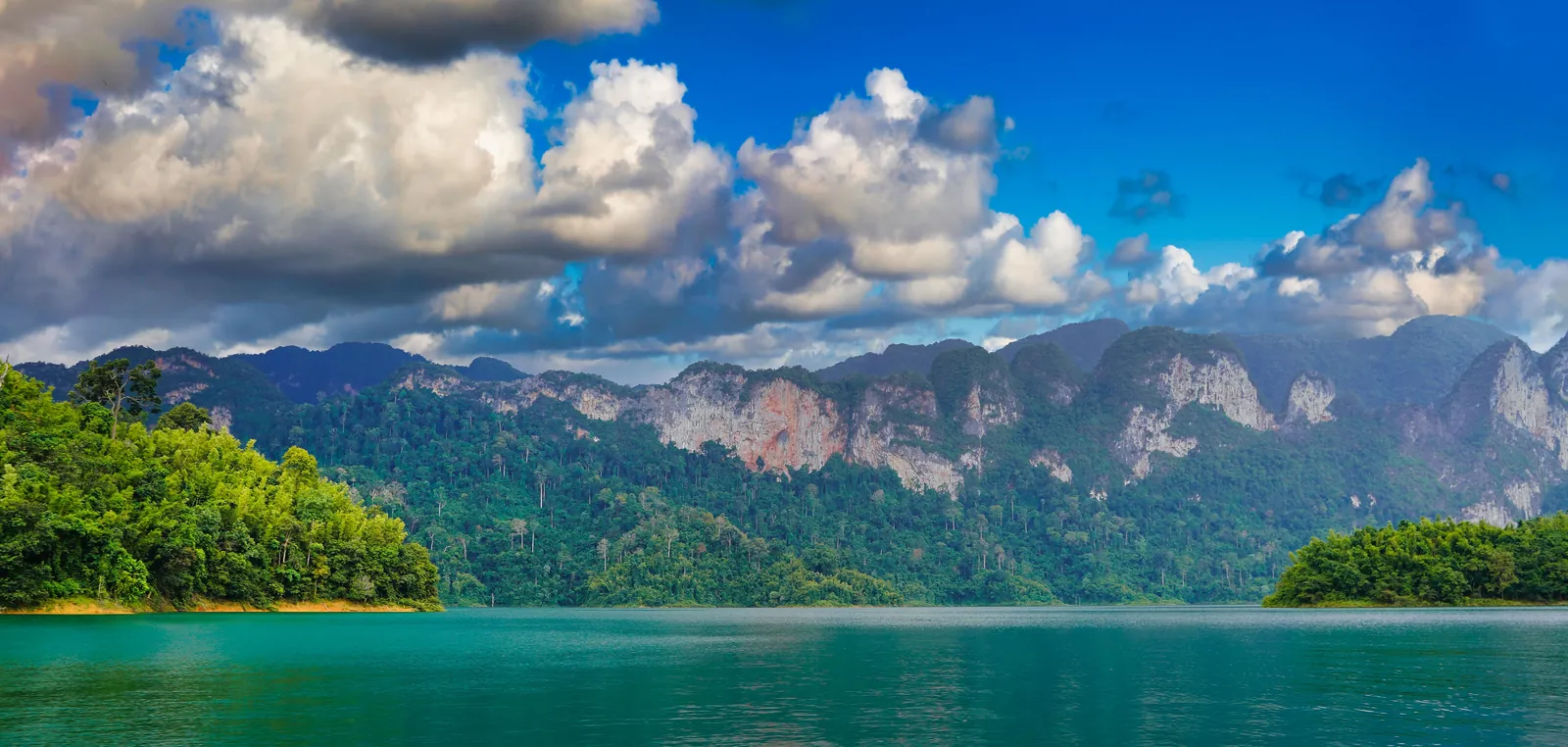
July is the middle of the southwest monsoon in Khao Sok, and most visitors avoid it. That is the opportunity. The forest is at its loudest and most alive, the night walks are the best of the year, and the lake is empty of boats. It is also genuinely wet, genuinely leechy, and some trails are hard going.
This page splits the park’s wildlife three ways: what is at its best in July, what is here all year regardless, and what you should not expect this month. It is built from the park’s own records rather than a generic seasonal guide.
Highlights
White-lipped Pit Viper
A vivid green viper that drapes over branches at night, one of the most encountered venomous snakes in the tropics. Where: Streamside vegetation at head height on night walks. Best: May-Oct, at night.
Copper-cheeked Frog
Its eyes throw back a brilliant copper shine in torchlight, which is usually how you find it before you see the frog. Where: Rocks and banks along the Sok River. Best: May-Oct, night.
Malayan Moon Moth
The adult has no mouth at all, lives about a week, and spends every hour of it looking for a mate. Where: Lights around headquarters and the raft houses. Best: Mar-Jun and Sep-Nov, at night.
White-handed (Lar) Gibbon
You hear them before dawn even breaks, the whooping duet of gibbons that is the definitive soundtrack of Asian rainforest. Where: Heard from the raft houses on Cheow Lan Lake and along the Sok River trails at first light. Best: Year round, 05:30-08:00.
Tiger Leech
Waits on leaf tips with one end waving, detecting your breath and body heat from a metre away. Where: Any damp trail in the wet season, especially off the main paths. Best: May-Oct.
At its best in July
17 species
These are the animals whose season is now. The green season is amphibian and invertebrate season, and the night walks in July are the most productive of the year.
Asian Tree Toad Rare
Rentapia hosii
A toad that lives in the canopy, and the females are bright yellow and purple while the males stay plain brown.
Where: Trunks and buttress roots on wet nights. Best: May-Oct, night. Climbs surprisingly high; look at trunk level, not the ground.
Blue Coral Snake Rare
Calliophis bivirgatus
A jaw dropping snake in electric blue and neon red, armed with venom glands that run a third of the length of its body.
Where: Leaf litter on the forest floor after rain. Best: May-Oct, night. Spectacular and highly venomous. Never handle.
Mangrove Snake (Gold-ringed Cat Snake) Rare
Boiga dendrophila
A glossy black tree snake laced with gold rings, prowling the mangroves after dark.
Where: Waterside vegetation on the lake arms. Best: May-Oct, night. More often seen on the coast, but occurs along the lake edges.
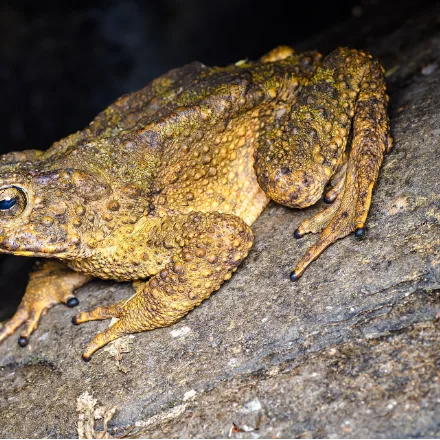
Malayan Giant Toad Occasional
Phrynoidis asper
The biggest toad in Southeast Asia, and it sits in the spray zone of waterfalls where nothing can hear it call.
Where: Stream margins and wet trails. Best: May-Oct, night. The biggest toad you will meet in Thailand.
Malayan Horned Frog Occasional
Pelobatrachus nasutus
A frog that looks exactly like a dead leaf, complete with horned eyelids and a pointed snout for a leaf tip.
Where: Leaf litter beside streams. Best: May-Oct, night. Perfectly leaf-shaped; found by call, then by torch.
Malayan Giant Frog (Blyth's River Frog) Regular
Limnonectes blythii
A hefty stream frog the size of a dinner plate, with a mouth big enough to take crabs and other frogs.
Where: Boulders in the Sok River and side streams. Best: May-Oct, night. Large, powerful and quick to leap into the current.
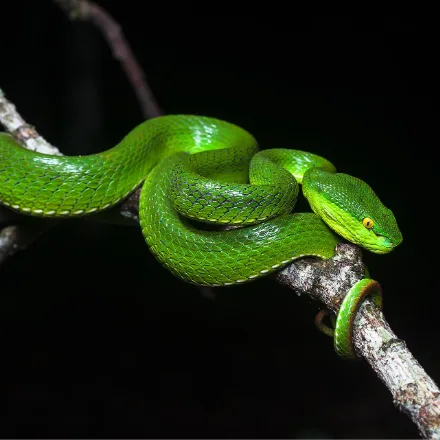
White-lipped Pit Viper Regular
Trimeresurus albolabris
A vivid green viper that drapes over branches at night, one of the most encountered venomous snakes in the tropics.
Where: Streamside vegetation at head height on night walks. Best: May-Oct, at night. The commonest venomous snake found on guided night walks here. Look, do not touch.
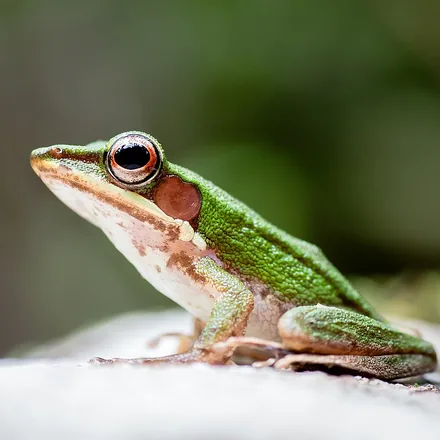
Copper-cheeked Frog Common
Chalcorana eschatia
Its eyes throw back a brilliant copper shine in torchlight, which is usually how you find it before you see the frog.
Where: Rocks and banks along the Sok River. Best: May-Oct, night. Sits on wet rock in the spray zone below waterfalls.
White-lipped Frog Common
Chalcorana labialis
A clean white stripe along the upper lip, and a call like two stones being tapped together.
Where: Vegetation beside streams and the lake edge. Best: May-Oct, night. The default green tree frog of Khao Sok night walks.
Leaf Insect Rare
Phyllium siccifolium
Mimicry so complete that the abdomen carries fake leaf veins, brown edge damage, and even bite marks it never received.
Where: Understorey foliage on night walks. Best: May-Oct, night. Guides find these; almost nobody spots one alone.
Net-casting Spider Rare
Deinopis sp.
Holds a stretchy web between its front legs and throws it over prey like a gladiator with a net.
Where: Low vegetation beside trails on night walks. Best: May-Oct, night. Holds its net in four legs and throws it; worth staying still to watch.
Violin Beetle Rare
Mormolyce phyllodes
Flattened to the thickness of paper so it can hunt inside the gills of bracket fungi, and shaped exactly like a violin.
Where: Bracket fungi on fallen trunks. Best: May-Oct. Flattened to fit between fungus and bark; check every large bracket.
Dead Leaf Mantis Occasional
Deroplatys desiccata
Indistinguishable from a curled brown leaf right down to the fungal blotches and torn edges, and it sways as if in a breeze.
Where: Leaf litter and low vegetation on night walks. Best: May-Oct, night. Only obvious when it moves.
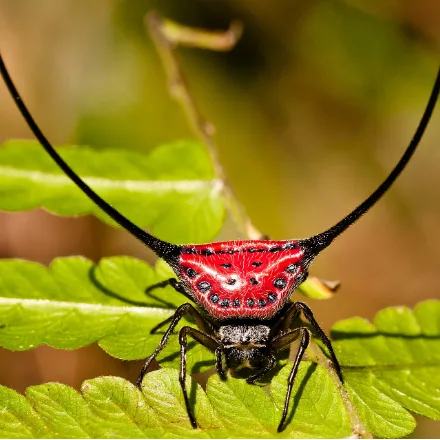
Long-horned Orb-weaver Occasional
Macracantha arcuata
Two curved spines rise from its back several times longer than the spider itself, and nobody is entirely sure why.
Where: Webs across trail gaps. Best: May-Oct. The spined abdomen looks mechanical rather than animal.
Painted Tree Snail Occasional
Amphidromus atricallosus
A tree snail that comes in both left and right handed shells, sometimes within a single population, which is almost unheard of.
Where: Limestone outcrops and wet vegetation after rain. Best: May-Oct, after rain. Bright shells on karst; look at eye level on wet rock.
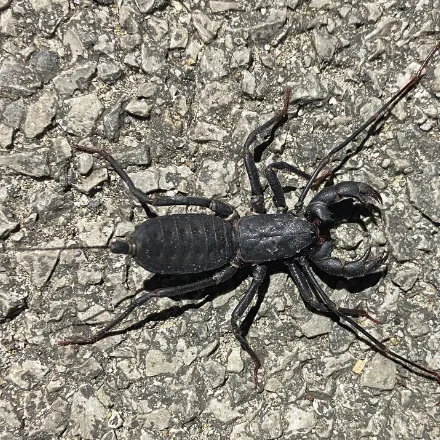
Whip Scorpion Occasional
Thelyphonus caudatus
Sprays a fine mist of concentrated acetic acid from the base of its tail, which is why it is also called the vinegaroon.
Where: Under logs and on trunks at night. Best: May-Oct, night. Alarming and completely harmless, with no sting.
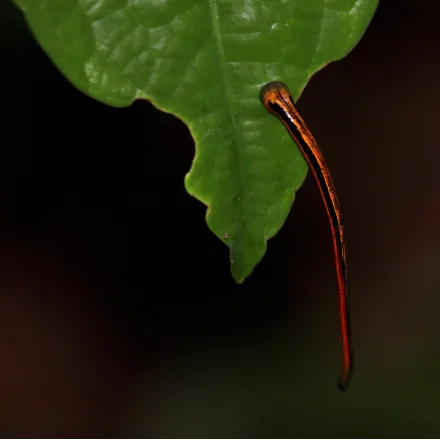
Tiger Leech Common
Haemadipsa picta
Waits on leaf tips with one end waving, detecting your breath and body heat from a metre away.
Where: Any damp trail in the wet season, especially off the main paths. Best: May-Oct. Leech socks are worth the money here. Harmless, but they will find you.
Possible all year, including July
35 species
Present and findable in any month, July included. The gibbons and hornbills do not care about the rain, and nor should you.
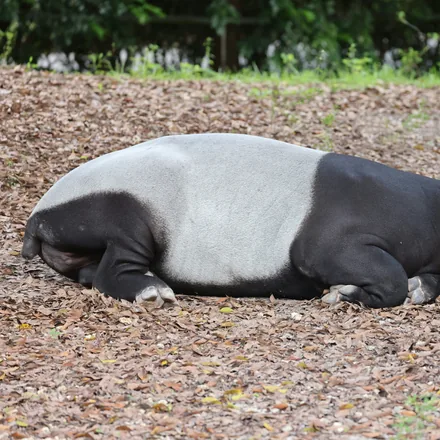
Malayan Tapir Very rare Endangered
Tapirus indicus
A living oddity, half jet black and half stark white, that looks assembled from spare parts.
Where: Salt licks and stream beds deep in the park, and the Klong Saeng sanctuary. Best: Year round, night. Tracks in mud are the realistic reward rather than the animal.
Sunda Slow Loris Rare Endangered
Nycticebus coucang
A wide-eyed nocturnal primate of the far south with a rare and startling trick: it is one of the world's few venomous mammals.
Where: Forest edge and fruiting trees on night walks from headquarters. Best: Year round, after 20:00. Eyeshine is a steady orange pair high in the branches. Never handle; the bite is venomous.
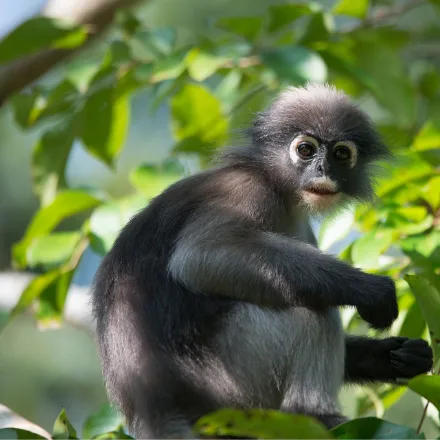
Dusky Langur (Spectacled Leaf Monkey) Regular Endangered
Trachypithecus obscurus
White spectacles make the adults look permanently startled, and the bright orange babies are pure crowd pleasers.
Where: Limestone edges near headquarters and the trail to Bang Hua Raet. Best: Year round, morning. Look for the white eye rings in mid-canopy; troops are used to walkers here.
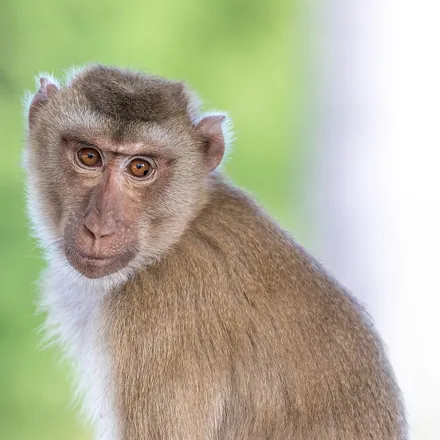
Long-tailed Macaque Regular Endangered
Macaca fascicularis
The bold, water-loving monkey of temples and mangroves, and despite its ubiquity now one of the most heavily exploited primates on Earth.
Where: Lake shores and the boat landings on Cheow Lan. Best: Year round, day. Common around the raft houses, where they are a nuisance rather than a highlight.
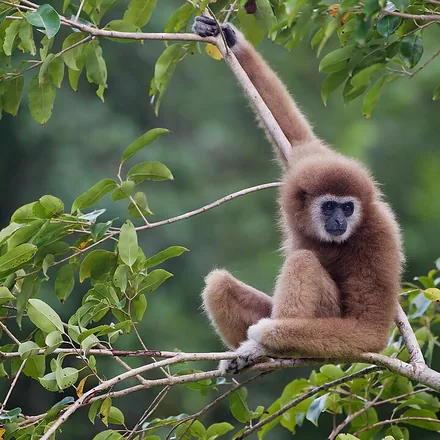
White-handed (Lar) Gibbon Common Endangered
Hylobates lar
You hear them before dawn even breaks, the whooping duet of gibbons that is the definitive soundtrack of Asian rainforest.
Where: Heard from the raft houses on Cheow Lan Lake and along the Sok River trails at first light. Best: Year round, 05:30-08:00. The dawn duet is close to guaranteed on the lake; seeing one takes patience and a canopy scan.
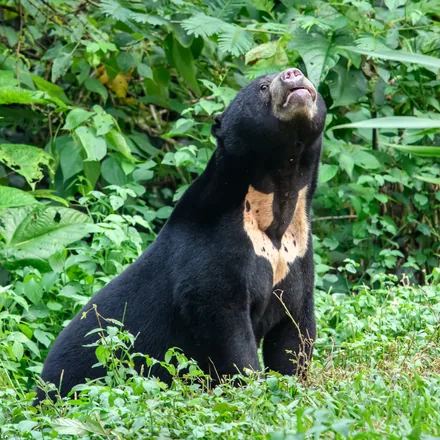
Sun Bear Very rare Vulnerable
Helarctos malayanus
The world's smallest bear, with a golden chest crescent and a tongue long enough to raid a bee's nest.
Where: Fruiting forest deep in the park and around the lake arms. Best: Year round, dawn and dusk. Claw marks on trunks are more often seen than the bear.
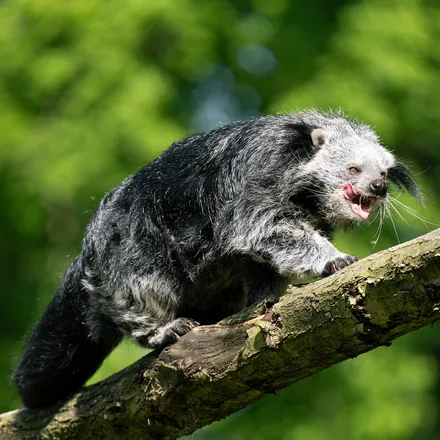
Binturong (Bearcat) Rare Vulnerable
Arctictis binturong
Neither bear nor cat, with a prehensile tail and a scent that smells uncannily of hot buttered popcorn.
Where: Fruiting figs above the Sok River trail and the lake margins. Best: Year round, night. Smells of popcorn before you see it. A genuine prize here.
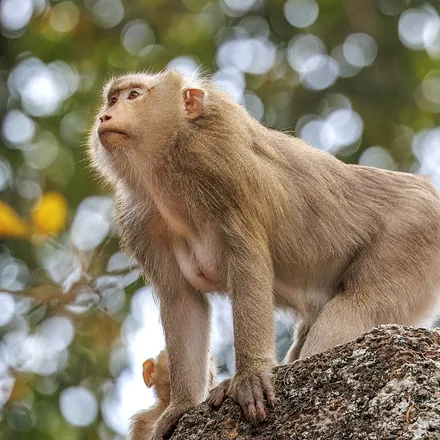
Northern Pig-tailed Macaque Regular Vulnerable
Macaca leonina
Named for the short, curled pig tail, a powerful, ground loving monkey often seen troop marching along forest roads.
Where: Roadside forest and the lower Sok River trail. Best: Year round, day. Do not feed or approach; macaques near the headquarters have learned to raid bags.
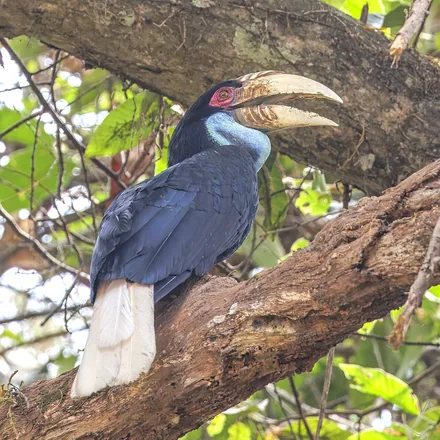
Wreathed Hornbill Regular Vulnerable
Rhyticeros undulatus
A big forest hornbill that travels in noisy flocks, its throat pouch pleated like folded cloth.
Where: Fruiting trees on the valley sides and over the lake. Best: Year round, morning. Travels in noisy flocks, often crossing the lake in the first hour of light.
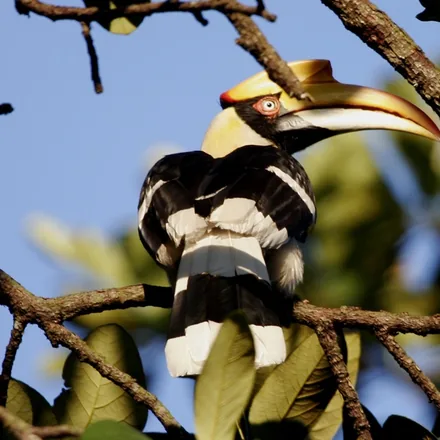
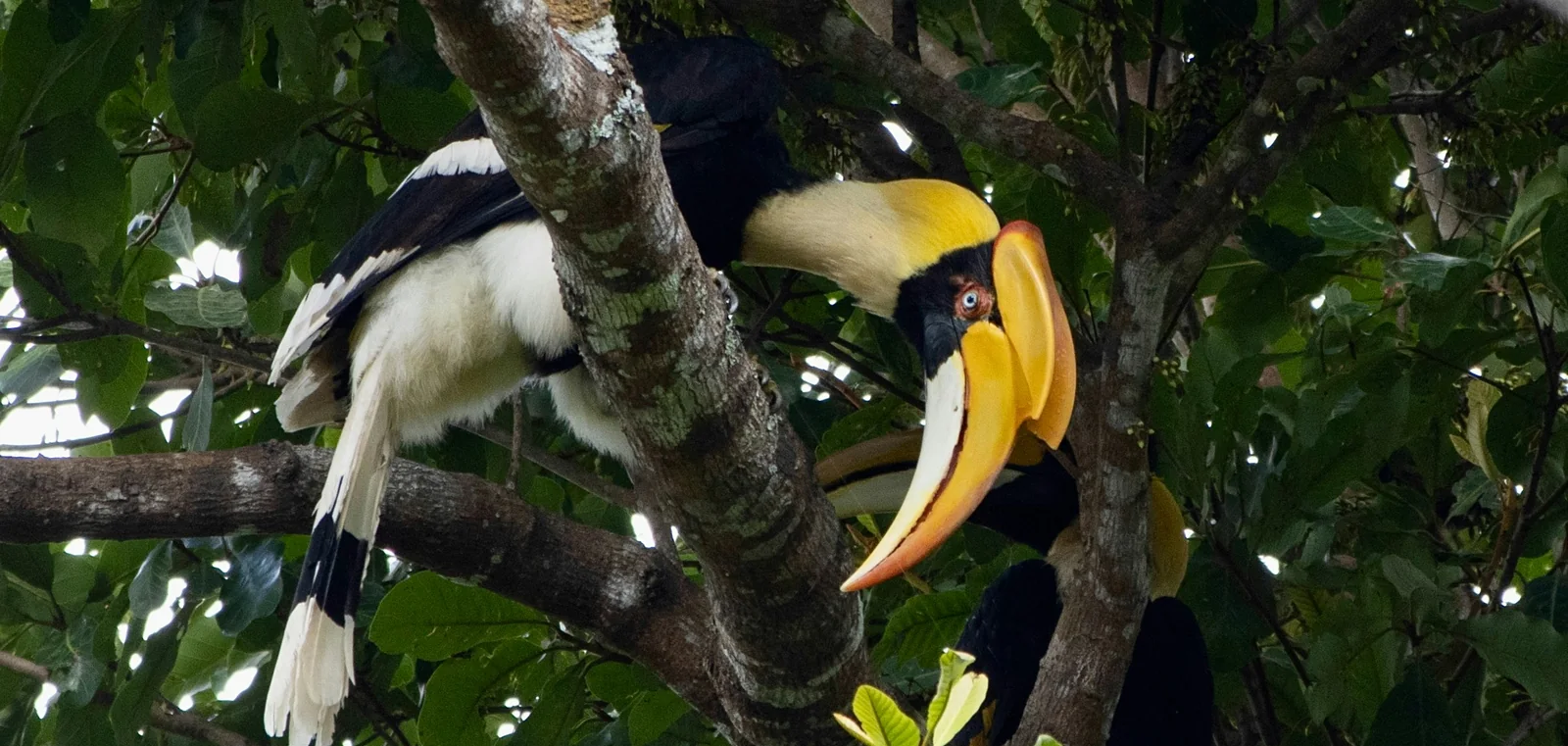
Great Hornbill Common Vulnerable
Buceros bicornis
A three metre wingbeat you hear before you see, the flagship bird of Asian rainforest canopy.
Where: Over the Sok River valley and across Cheow Lan Lake at dawn. Best: Year round, 06:00-09:00. The whoosh of the wingbeat carries hundreds of metres; the lake gives the best flight views in Thailand.
Marbled Cat Very rare
Pardofelis marmorata
A small, exquisitely marbled cat with an enormous tail, built for a life almost entirely in the trees.
Where: Deep forest above the Ton Kloi trail and the Klong Saeng side of the lake. Best: Year round, night. A handful of camera-trap records; treat any sighting as exceptional.
Banded Palm Civet Rare
Hemigalus derbyanus
A slender, pale civet crossed by bold dark bands, a specialist of the wet southern rainforest floor.
Where: Night walks along the headquarters trails. Best: Year round, after dark. Low, long-bodied and banded; usually a brief crossing of the path.
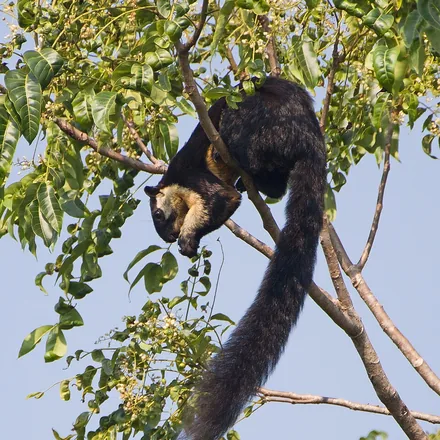
Black Giant Squirrel Common
Ratufa bicolor
A squirrel the length of your arm, jet black above and buttery below, crashing through the canopy with a metre long tail.
Where: Canopy along the main Sok River trail and around park headquarters. Best: Year round, first three hours after dawn. The commonest large mammal sighting in the park and often the first.
Blyth's Frogmouth Rare
Batrachostomus affinis
A bizarre nocturnal bird with a huge frog-like gape, so like a broken branch by day that it is almost impossible to find.
Where: Understorey on night walks from headquarters. Best: Year round, after dark. Found by call rather than sight; guides know the territories.
Giant Angle-headed Lizard Rare
Gonocephalus grandis
Males are electric blue and green with a sail of a crest, and they drop straight into the stream below when disturbed.
Where: Understorey saplings deep along the Ton Kloi trail. Best: Year round, day and night. Sits vertically on a thin stem and relies on stillness.
Kuhl's Flying Gecko Rare
Gekko kuhli
A gecko fringed with skin flaps that let it parachute between trees and vanish against bark.
Where: Trunks near headquarters and along the river trail. Best: Year round, night. Flattened against bark and near invisible until it moves.
Asiatic Brush-tailed Porcupine Occasional
Atherurus macrourus
A smaller, rat-like porcupine that trails a long tail tipped with a rattling brush of hollow bristles.
Where: Trail edges and stream banks at night. Best: Year round, after dark. Listen for quill rattle before the animal appears.
Blue-bearded Bee-eater Occasional
Nyctyornis athertoni
A big, shaggy bee-eater with a dangling blue throat-beard, more skulking and forest-loving than its dashing cousins.
Where: Forest edge and clearings on the lower trails. Best: Year round, morning. Perches low and still, unlike the flashier open-country bee-eaters.
Colugo (Sunda Flying Lemur) Occasional
Galeopterus variegatus
Not a lemur, and it cannot truly fly, but it glides over 100 metres between trees on a cloak of skin like a living kite.
Where: Tall trees near headquarters and along the Ton Kloi trail. Best: Year round, first hour after dark. Torch the trunks at head height; they glide between trees rather than climb.
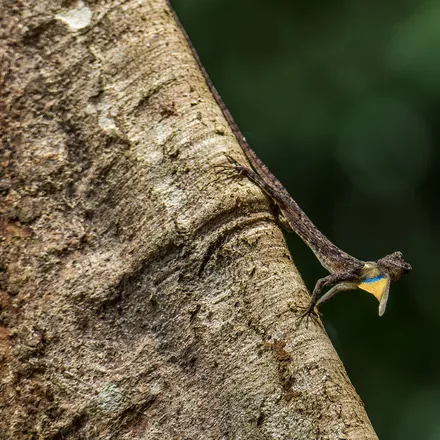
Common Flying Dragon Occasional
Draco maculatus
A tiny lizard that unfurls bright wings from its ribs and glides between tree trunks like a paper dart.
Where: Tree trunks in sunlit clearings and around headquarters. Best: Year round, mid-morning. Watch a trunk for five minutes; the glide is what gives it away.
Greater Mouse-deer Occasional
Tragulus napu
The larger of the region's mouse-deer, still no bigger than a small dog, haunting the wet forests of the south.
Where: Understorey along the lower trails and lake edges. Best: Year round, night. Slightly larger and greyer than the lesser; both occur here.
Green Cat Snake Occasional
Boiga cyanea
Hatches out brick red, turns olive as a juvenile and ends up emerald green, three colours in one lifetime.
Where: Low branches over trails and streams. Best: Year round, night. Slender and mildly venomous; harmless if left alone.
Lesser Mouse-deer Occasional
Tragulus kanchil
One of the smallest hoofed animals in the world, a delicate, rabbit-sized deer relative that tiptoes on pencil-thin legs.
Where: Dense understorey beside the Sok River trail. Best: Year round, night. Pencil-thin legs in a torch beam, gone in a second.
Red-tailed Green Racer Occasional
Gonyosoma oxycephalum
A big, muscular emerald snake with a rust red tail, a powerful climber of the rainforest canopy.
Where: Canopy and tall trailside trees. Best: Year round, day. Fast, arboreal and beautifully green with a rust-coloured tail.
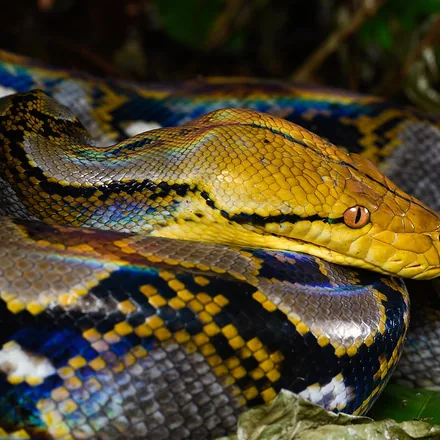
Reticulated Python Occasional
Malayopython reticulatus
The longest snake in the world, a jewelled, net patterned constrictor that turns up from rainforest to city canals.
Where: Near water, on trails and around the raft houses at night. Best: Year round, night. Large individuals swim the lake and are sometimes seen from boats.
Wagler's Pit Viper (Temple Viper) Occasional
Tropidolaemus wagleri
The famously placid temple viper, revered at the Snake Temple and so sluggish by day it can be gently handled, though nobody should.
Where: Coiled on branches beside trails and around headquarters. Best: Year round, night. Sits motionless for days in the same spot; guides often know individuals.
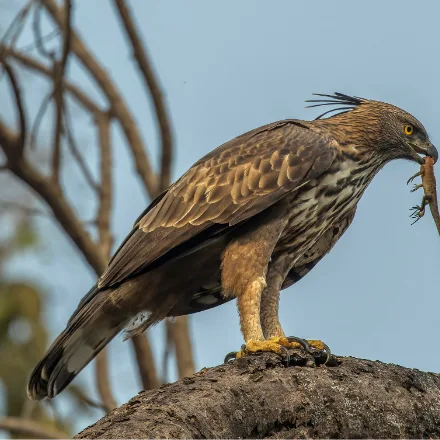
Changeable Hawk-eagle Regular
Nisaetus cirrhatus
A powerful forest eagle that comes in pale and dark forms, ambushing prey with a fast strike from the canopy.
Where: Perched on emergent trees along the river and lake. Best: Year round, mid-morning. The crested form is the one you will see here.
Green Crested Lizard Regular
Bronchocela cristatella
A slim emerald lizard with a whip tail that can flush from green to brown in moments.
Where: Trail edges and low branches near headquarters. Best: Year round, day. Turns from green to brown when stressed.
Green-billed Malkoha Regular
Phaenicophaeus tristis
A long, slinking grey cuckoo with a bright green bill and a crimson eye-patch, creeping through thickets like a feathered lizard.
Where: Thick roadside scrub and trail edges. Best: Year round, day. Skulks through tangles rather than flying across gaps.
Little Spiderhunter Regular
Arachnothera longirostra
A drab bird with an outrageously long, curved bill, built for plundering nectar deep inside wild banana flowers.
Where: Wild banana and ginger stands along the trails. Best: Year round, morning. Follow the flowering bananas and it will appear.
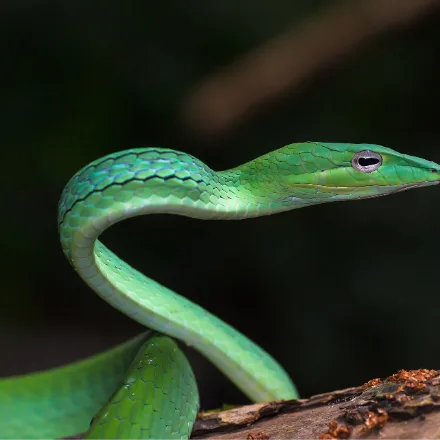
Oriental Whip Snake (Asian Vine Snake) Regular
Ahaetulla prasina
A snake so slender and green it looks like a hanging vine, with strange keyhole shaped pupils.
Where: Roadside scrub and trail edges. Best: Year round, day. The green whip that hangs at eye level; look for the horizontal pupil.
White-crowned Forktail Regular
Enicurus leschenaulti
A dapper black-and-white bird of rushing forest streams, forever flicking a long, deeply forked tail.
Where: Rocky sections of the Sok River and side streams. Best: Year round, morning. Works the wet boulders below the waterfalls.
Blue-eared Barbet Common
Psilopogon duvaucelii
A jewel-faced little barbet of the forest canopy, green-bodied with a patchwork of blue, black and red on the head.
Where: Fruiting trees near headquarters. Best: Year round, all day. Heard constantly, seen rarely; a monotonous two-note call from the canopy.
Clear-winged Forest Glory Regular
Vestalis gracilis
A damselfly of shaded forest streams whose body shifts from emerald to copper depending on where the light hits it.
Where: Shaded stretches of the Sok River and side streams. Best: Year round, best Mar-Jun. Hovers in sunbeams over the water like a scrap of glass.
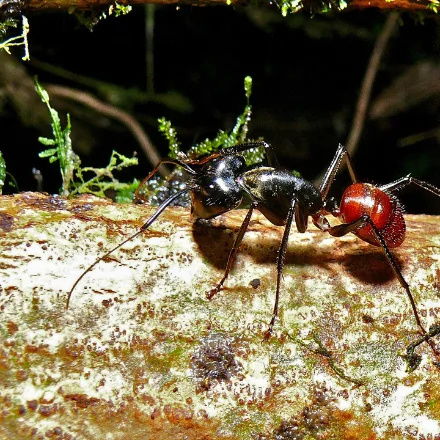
Giant Forest Ant Common
Camponotus gigas
One of the largest ants on earth, and colonies keep a standing army of soldiers whose only job is to fight border wars with the neighbours.
Where: Trunks and buttresses along all trails. Best: Year round, night. The largest ant you will ever see, and strictly nocturnal.
Out of season in July
4 species
Recorded here for honesty. These are out of their window in July, so plan around them or come in a different month.
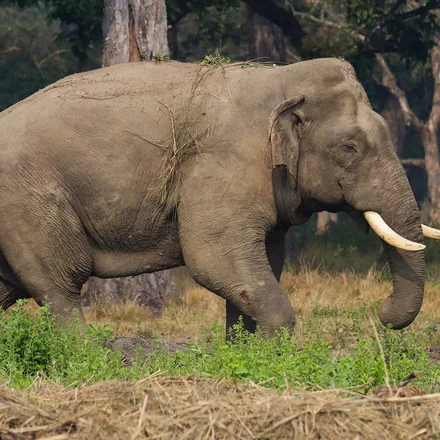
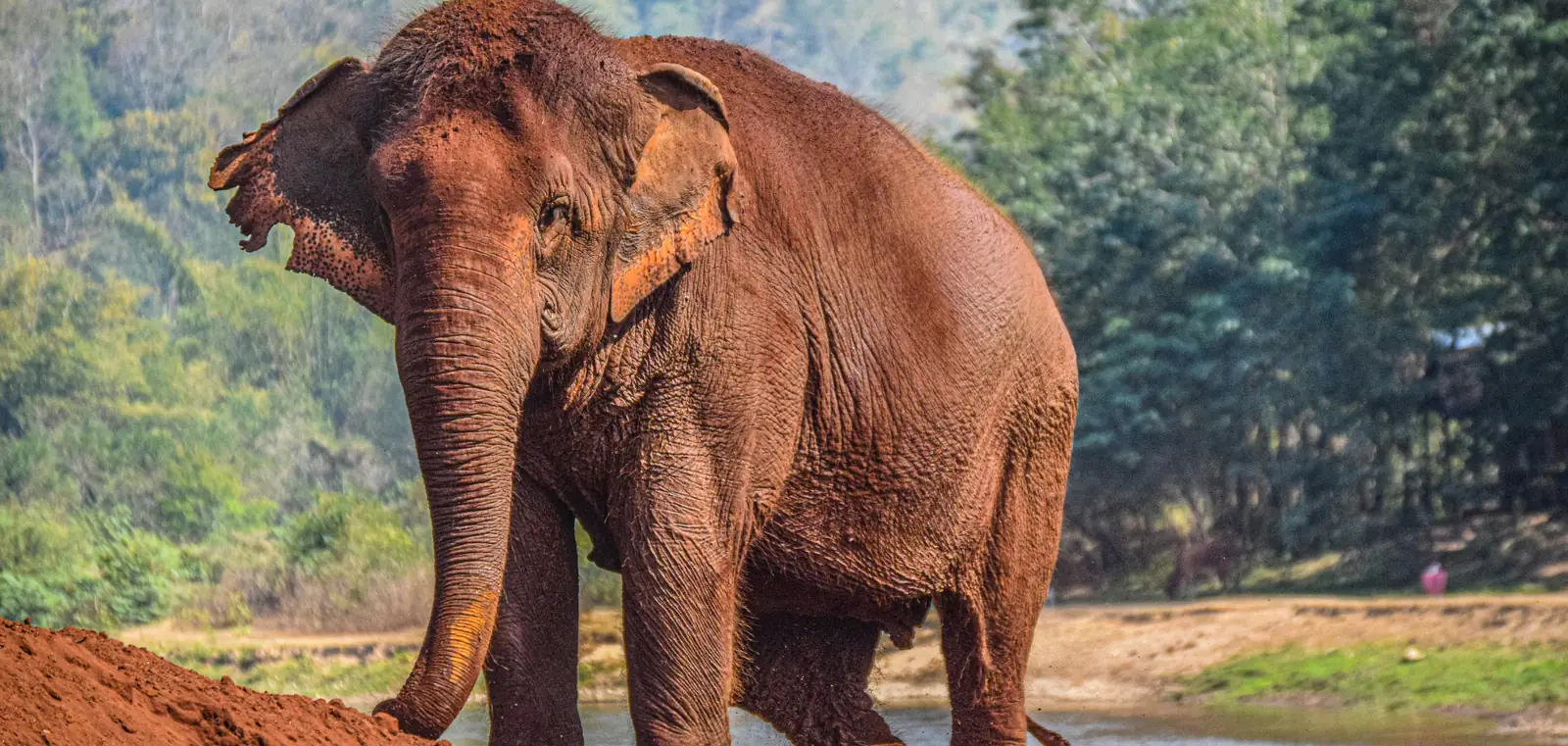
Asian Elephant Rare Endangered
Elephas maximus
The largest land animal in Asia, and a genuinely wild one is worth seeking out over the camp elephants most tourists meet.
Where: The Klong Saeng arm of Cheow Lan Lake and remote valleys. Best: Dry season (Dec-Apr), dawn on the water. Wild herds use the lake shore; the elephants most visitors meet in Khao Sok town are captive.
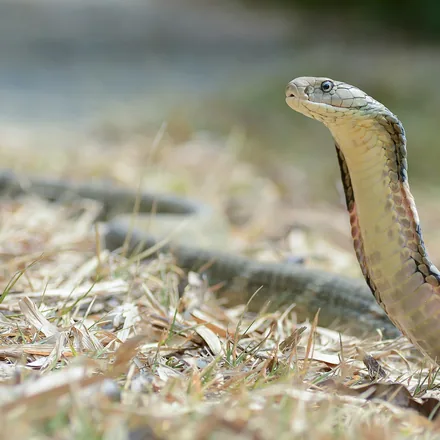
King Cobra Rare Vulnerable
Ophiophagus hannah
The world's longest venomous snake, and one of the shyest, so a sighting is a genuine holy grail.
Where: Stream valleys and trail edges in the warm months. Best: Mar-Jun, daytime. Khao Sok is one of the better places in Thailand for a sighting, which still means rare.
Orchid Mantis Rare
Hymenopus coronatus
It does not hide among flowers, it outperforms them: pollinators are more attracted to the mantis than to real blossom.
Where: Flowering shrubs on forest edges. Best: Mar-Jun, day. One of the hardest to find and the most rewarding; look at the flowers themselves.
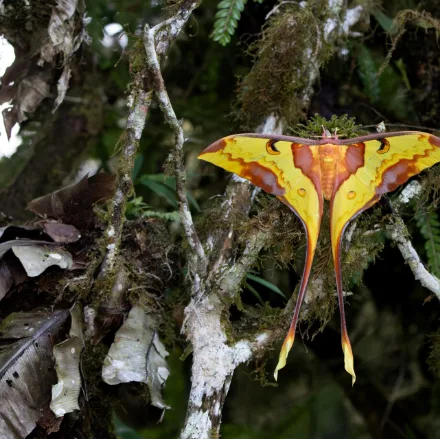
Malayan Moon Moth Occasional
Actias maenas
The adult has no mouth at all, lives about a week, and spends every hour of it looking for a mate.
Where: Lights around headquarters and the raft houses. Best: Mar-Jun and Sep-Nov, at night. Comes to lights; huge, pale and unmistakable.
Practical notes for July
Expect heavy afternoon rain rather than all-day drizzle, and plan walks for early morning and after dark. Leech socks are essential on every trail from May to October. The lake is calm and almost empty, but longtail schedules thin out, so book raft houses ahead rather than turning up. Waterproof your camera properly; humidity does more damage than rain. Park fees, opening seasons and closures are set by the Department of National Parks, and are worth checking before you travel rather than on arrival.
Find Khao Sok green season lake safaris and night walks
Some links on this page are affiliate links. If you book through them, Wildseer may earn a small commission at no extra cost to you.
Frequently asked questions
Is July a good time to visit Khao Sok?
For wildlife, yes, particularly for frogs, snakes, insects and night walks. For comfortable hiking and dry lake safaris, December to April is easier.
How wet is Khao Sok in July?
Wet. Expect rain most days, usually heavy and short in the afternoon, with high humidity throughout. Trails are muddy and leeches are active.
Are there leeches in Khao Sok in July?
Yes, and plenty. They are harmless and unavoidable. Leech socks and a relaxed attitude solve the problem.
More on Khao Sok and Thailand
- Khao Sok wildlife, all year
 Mammals of Thailand
 Birds of Thailand
 Reptiles and Amphibians of Thailand
 Insects and Spiders of Thailand
Part of the Wildlife in Thailand guide.