
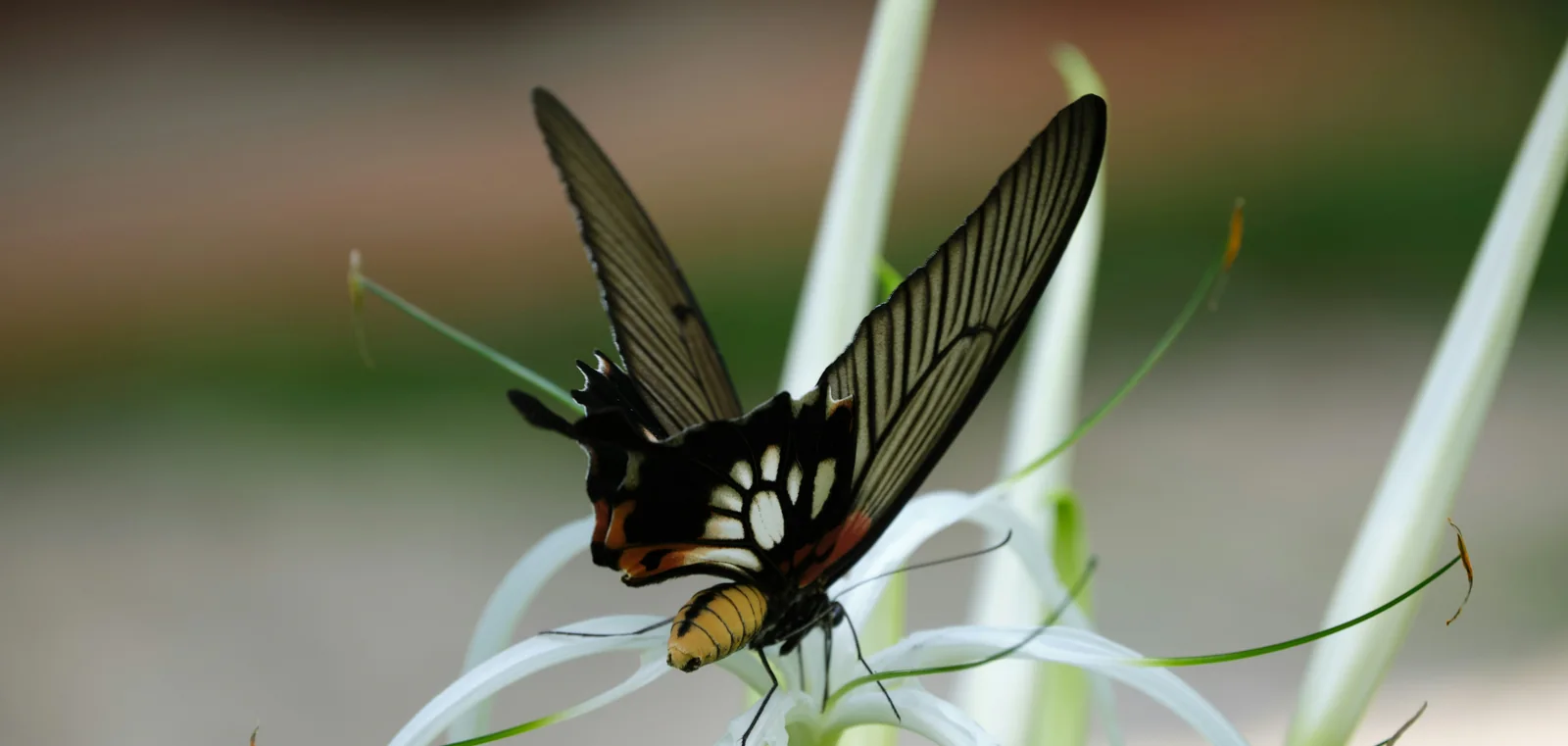
The insects and spiders of Thailand are the group most guides skip, and the group a rainforest is actually made of. Thailand offers birdwing butterflies the size of a hand, moths with cobra-head wingtips, mangrove trees hung with fireflies flashing in unison, and tarantulas that live in burrows you can learn to spot. This guide covers 52 species worth looking for.
Almost everything here is seen on foot and at close range, which makes it the cheapest wildlife watching in the country. A head torch, a slow walk and the willingness to look at a tree trunk properly will out-perform any vehicle.
Highlights
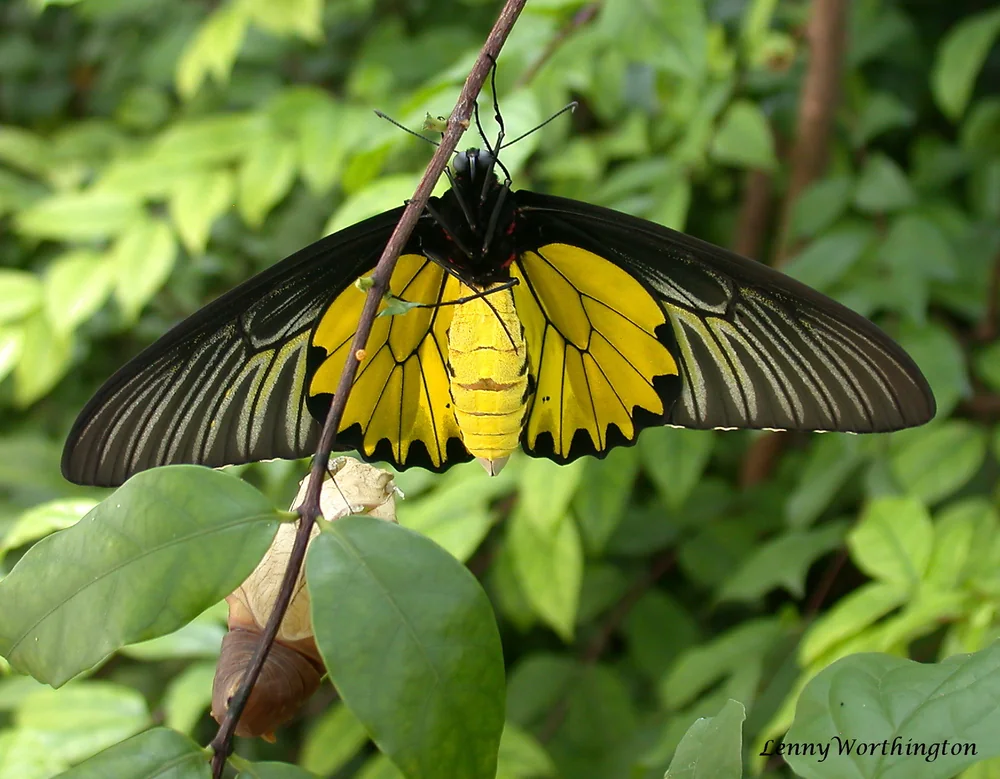
Golden Birdwing
A huge butterfly with black forewings and blazing golden hindwings, sailing high along the forest edge. Where: Forest edges and gardens, Khao Yai, Kaeng Krachan. Best: Year round, sunny mornings.
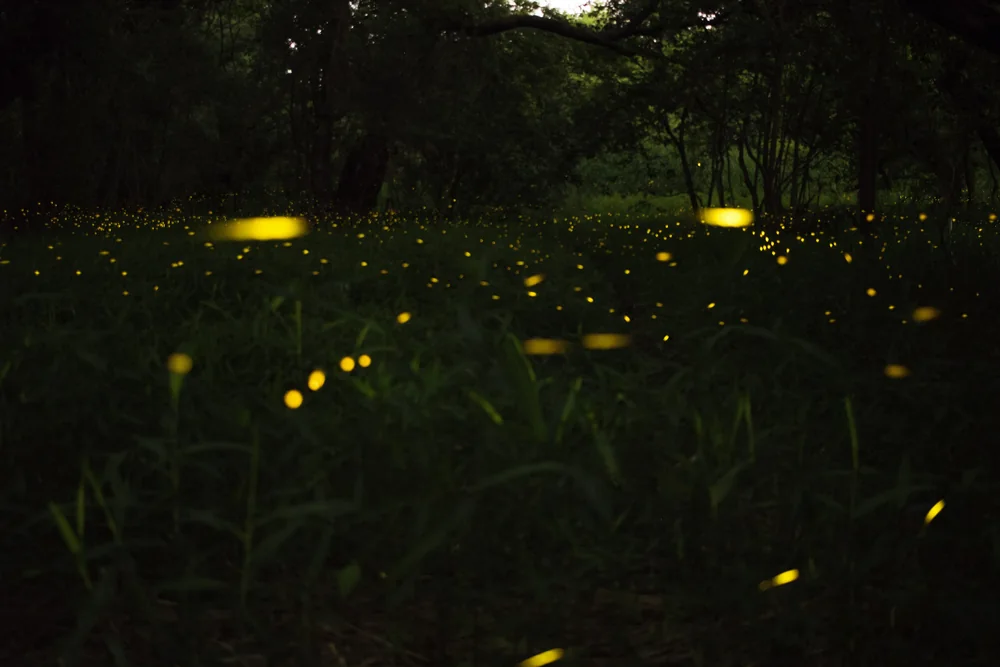
Synchronous Firefly
Mangrove trees hung with thousands of fireflies, all flashing in perfect unison like living fairy lights. Where: Riverside mangroves, Amphawa and the Gulf/Andaman coasts. Best: Year round, best in the rains, after dark.
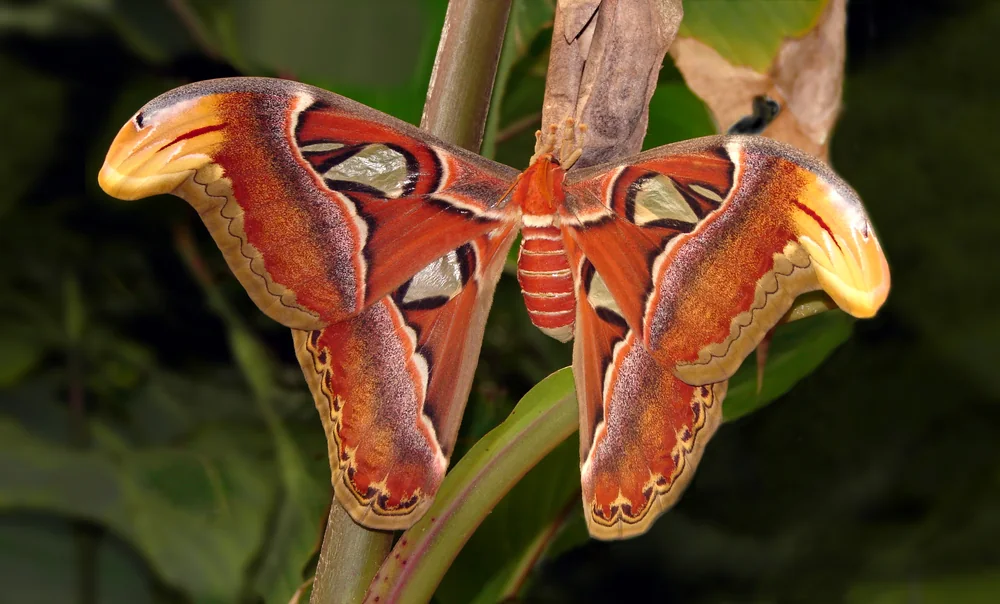
Atlas Moth
One of the largest moths on Earth, its wingtips shaped and coloured like a cobra's head. Where: Forest and forest edge nationwide. Best: Rains, at rest by day.
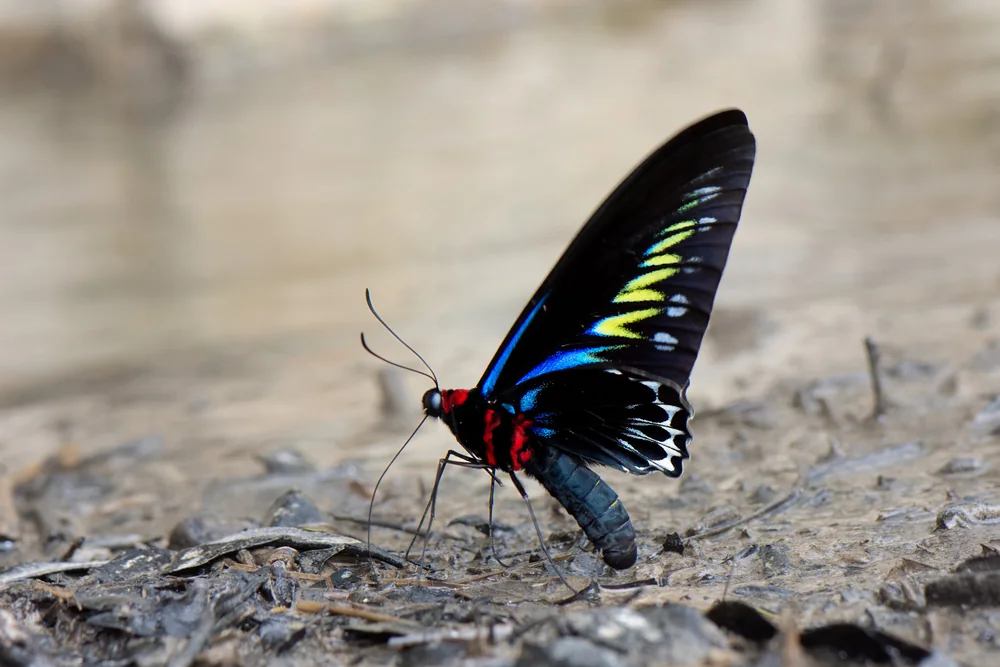
Rajah Brooke's Birdwing
Jet black with seven electric green flames along each wing, and the males gather in dozens at hot springs to drink minerals. Where: Lowland rainforest and hot springs in the far south; Hala-Bala and Bang Lang. Best: Feb-May.
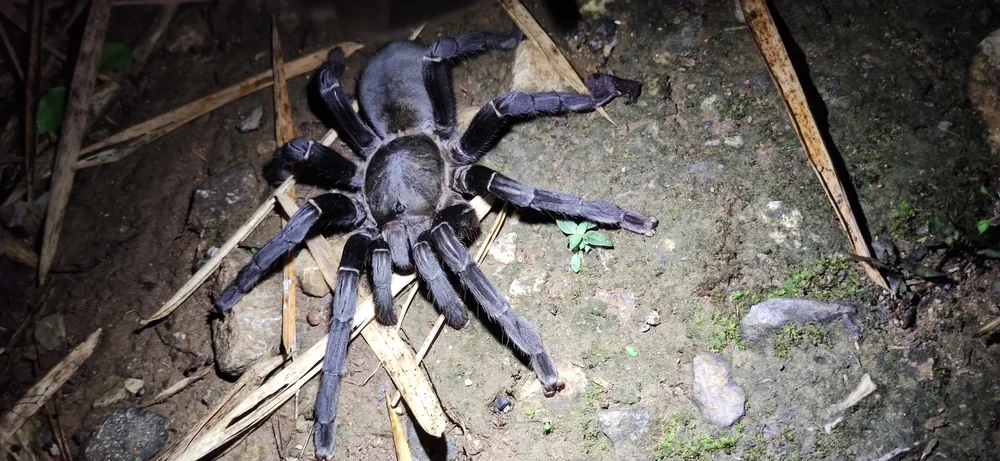
Thailand Black Tarantula
A jet-black burrowing tarantula, fast and feisty, that lines its tunnel with silk trip-lines. Where: Forest and banks nationwide. Best: Night, at burrow mouths.
Insects
39 species
Giant Stick Insect Rare
Phobaeticus serratipes
Among the longest insects on Earth, a twig come to life that sways to mimic a branch in the breeze.
Where: Rainforest, especially the south. Best: Night, in foliage.
Leaf Insect Rare
Phyllium siccifolium
Mimicry so complete that the abdomen carries fake leaf veins, brown edge damage, and even bite marks it never received.
Where: Understorey foliage in lowland rainforest; Khao Sok and the southern peninsula. Best: May-Oct.
Malayan Jungle Nymph Rare
Heteropteryx dilatata
The heaviest insect in Southeast Asia, and when cornered she hisses, rears up and slams spined hind legs together like a bear trap.
Where: Lowland rainforest of the far south; Hala-Bala and Bang Lang. Best: May-Oct.
Orchid Mantis Rare
Hymenopus coronatus
It does not hide among flowers, it outperforms them: pollinators are more attracted to the mantis than to real blossom.
Where: Flowering shrubs in lowland forest; Khao Sok, Kaeng Krachan and the south. Best: Mar-Jun.
Rajah Brooke's Birdwing Rare
Trogonoptera brookiana
Jet black with seven electric green flames along each wing, and the males gather in dozens at hot springs to drink minerals.
Where: Lowland rainforest and hot springs in the far south; Hala-Bala and Bang Lang. Best: Feb-May.
Violin Beetle Rare
Mormolyce phyllodes
Flattened to the thickness of paper so it can hunt inside the gills of bracket fungi, and shaped exactly like a violin.
Where: Bracket fungi on rotting logs in lowland rainforest; Khao Sok and the southern peninsula. Best: May-Oct.
Asian Giant Hornet Occasional
Vespa mandarinia
The world's largest hornet, a thumb-length predator that can raid a whole bee colony single-handed.
Where: Forest and forest edge, north and hills. Best: Year round.
Atlas Beetle Occasional
Chalcosoma atlas
A giant three-horned beetle built like a piece of living armour.
Where: Forest nationwide. Best: Rainy season, at lights.
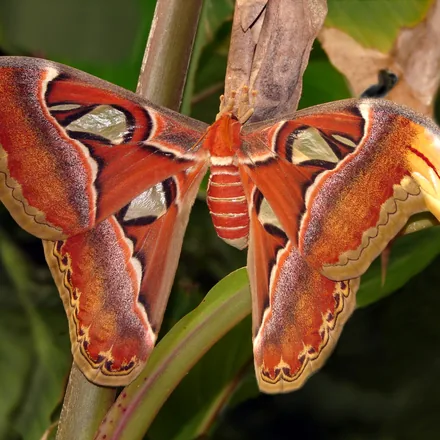
Atlas Moth Occasional
Attacus atlas
One of the largest moths on Earth, its wingtips shaped and coloured like a cobra's head.
Where: Forest and forest edge nationwide. Best: Rains, at rest by day.
Dead Leaf Mantis Occasional
Deroplatys desiccata
Indistinguishable from a curled brown leaf right down to the fungal blotches and torn edges, and it sways as if in a breeze.
Where: Leaf litter and low vegetation in lowland forest; Khao Sok and Khao Yai. Best: May-Oct.
Giant Asian Mantis Occasional
Hierodula membranacea
A big green ambush hunter that turns its head to watch you, forelegs folded as if in prayer.
Where: Gardens, scrub and forest nationwide. Best: Rainy season, night walks.
Giant Cicada Occasional
Pomponia imperatoria
A huge cicada whose piercing, ringing call is the loudest sound in the midday forest.
Where: Forest canopy nationwide. Best: Hot season, daytime.
Giant Dung Beetle Occasional
Heliocopris bucephalus
Arrives at fresh elephant dung within minutes, and buries a ball of it half a metre down before dawn.
Where: Dry forest with large herbivores; Huai Kha Khaeng, Kui Buri and Khao Yai. Best: May-Oct, at night.
Giraffe Stag Beetle Occasional
Prosopocoilus giraffa
The longest stag beetle in the world, with jaws nearly as long as the rest of it, used to lever rivals off a tree.
Where: Sap runs and lit buildings at forest edges; Khao Yai, Kaeng Krachan and the north. Best: Apr-Aug.
Jewel Beetle Occasional
Sternocera aequisignata
A living gemstone, its wing cases a metallic emerald green so brilliant they were sewn into royal cloth.
Where: Open forest and edges nationwide. Best: Rainy season.
Lantern Bug Occasional
Pyrops candelaria
A gaudy planthopper with an upturned red snout once believed, wrongly, to glow in the dark.
Where: Lowland and hill forest, on certain trees. Best: Rainy season.
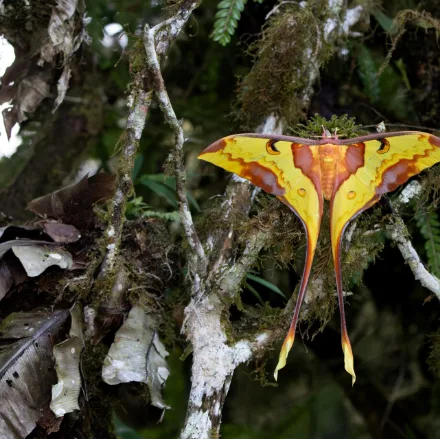
Malayan Moon Moth Occasional
Actias maenas
The adult has no mouth at all, lives about a week, and spends every hour of it looking for a mate.
Where: Lit buildings at forest edges; Khao Sok, Khao Yai and Kaeng Krachan. Best: Mar-Jun and Sep-Nov.
Mango Longhorn Beetle Occasional
Batocera rufomaculata
Antennae twice the length of its body, and it squeaks audibly when picked up by grinding its thorax.
Where: Forest edge, orchards and lodge lights countrywide. Best: Mar-Aug.
Orange Oakleaf Occasional
Kallima inachus
Electric blue and orange in flight, and the instant it lands it becomes a dry dead leaf, complete with a fake midrib.
Where: Fallen fruit on forest trails in the north and west; Doi Inthanon, Kaeng Krachan and Khao Yai. Best: Nov-Mar.
Rhinoceros Beetle Occasional
Xylotrupes gideon
A glossy tank of a beetle, the male armed with a forked horn for wrestling rivals.
Where: Forest and plantations nationwide. Best: Rainy season, at lights.
Blue Carpenter Bee Regular
Xylocopa caerulea
A big, fuzzy, powder-blue bee that drones loudly between flowers like a flying pom-pom.
Where: Gardens and forest edges nationwide. Best: Year round.
Blue Tiger Regular
Tirumala limniace
Migrates in drifting rivers of thousands, and roosts at night in trees hung solid with butterflies.
Where: River valleys and forest edges countrywide; Khao Yai and the western forest complex. Best: Mar-May migration, Oct-Nov return.
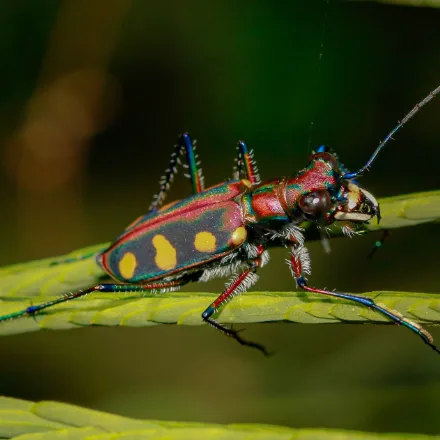
Blue-spotted Tiger Beetle Regular
Cicindela aurulenta
Runs so fast it goes temporarily blind, and has to stop to work out where its prey went.
Where: Sunny riverbanks and sandy forest tracks; Khao Yai, Kaeng Krachan and the north. Best: Nov-Apr.
Clear-winged Forest Glory Regular
Vestalis gracilis
A damselfly of shaded forest streams whose body shifts from emerald to copper depending on where the light hits it.
Where: Shaded forest streams countrywide; Khao Sok, Khao Yai and Doi Inthanon. Best: Year round, best Mar-Jun.
Common Birdwing Regular
Troides helena
A hand-sized black and gold butterfly that cruises the canopy like a small bird.
Where: Lowland forest and gardens nationwide. Best: Year round.
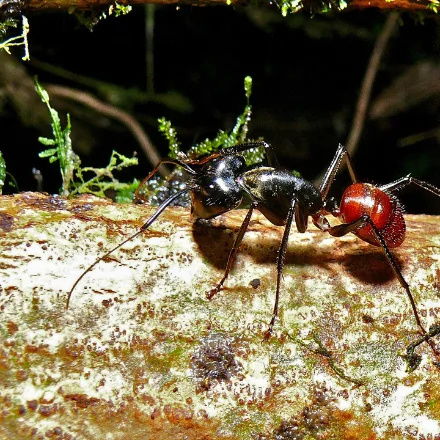
Giant Forest Ant Regular
Camponotus gigas
One of the largest ants on earth, and colonies keep a standing army of soldiers whose only job is to fight border wars with the neighbours.
Where: Trunks and trails in lowland rainforest; Khao Sok, Khao Yai and Kaeng Krachan. Best: Year round, strictly at night.
Giant Honey Bee Regular
Apis dorsata
A big, fierce wild bee that hangs single-comb nests the size of a door from high branches and cliffs.
Where: Tall trees and cliffs nationwide. Best: Year round.
Giant Water Bug Regular
Lethocerus indicus
Big enough to kill a frog or a small snake, and its bite is rated among the most painful an insect can inflict.
Where: Paddies, ponds and marshes countrywide; also at lights near water. Best: May-Oct.
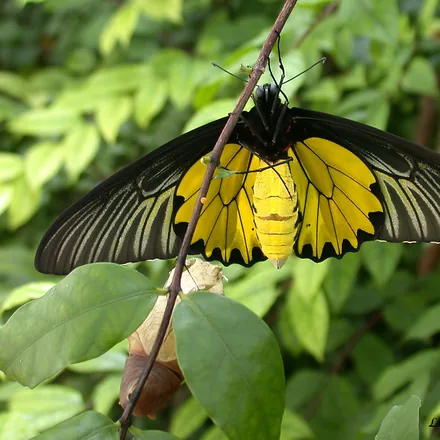
Golden Birdwing Regular
Troides aeacus
A huge butterfly with black forewings and blazing golden hindwings, sailing high along the forest edge.
Where: Forest edges and gardens, Khao Yai, Kaeng Krachan. Best: Year round, sunny mornings.
Oleander Hawkmoth Regular
Daphnis nerii
Camouflaged like military fatigues and fast enough to cross the Mediterranean, it hovers at flowers like a hummingbird.
Where: Gardens, scrub and forest edge countrywide. Best: Year round, peaks after rain.
Paper Kite (Tree Nymph) Regular
Idea leuconoe
A large white butterfly, veined and spotted in black, that drifts through shade like a scrap of tissue paper.
Where: Coastal and lowland forest, southern Thailand. Best: Year round.
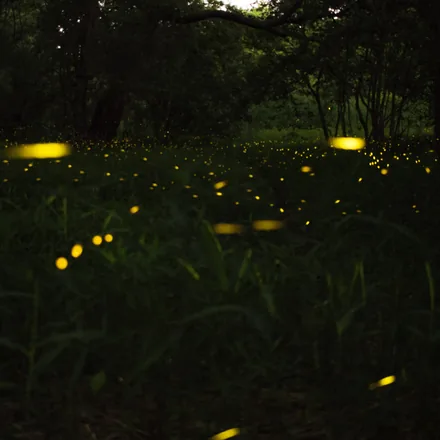
Synchronous Firefly Regular
Pteroptyx malaccae
Mangrove trees hung with thousands of fireflies, all flashing in perfect unison like living fairy lights.
Where: Riverside mangroves, Amphawa and the Gulf/Andaman coasts. Best: Year round, best in the rains, after dark.
Antlion Common
Myrmeleon sp.
The larva digs a conical pit in dry sand and flicks grains at anything trying to climb out, collapsing the walls under it.
Where: Dry sand under overhangs, eaves and cave mouths countrywide. Best: Year round.
Common Mormon Common
Papilio polytes
Females come in three different forms, two of which impersonate butterflies that are poisonous to eat.
Where: Gardens, scrub and forest edge countrywide. Best: Year round.
Common Parasol Dragonfly Common
Neurothemis fluctuans
A little red dragonfly with tinted wings, perched like a weather vane on every pond-side twig.
Where: Ponds, ditches and paddies nationwide. Best: Year round.
Common Rose Swallowtail Common
Pachliopta aristolochiae
A velvety black swallowtail with a crimson body and rose-pink spots, floating slowly to show it is poisonous.
Where: Gardens and forest edges nationwide. Best: Year round.
Leopard Lacewing Common
Cethosia cyane
A fiery orange butterfly edged in intricate black and white lace, common along sunlit trails.
Where: Gardens, scrub and forest edge nationwide. Best: Year round.
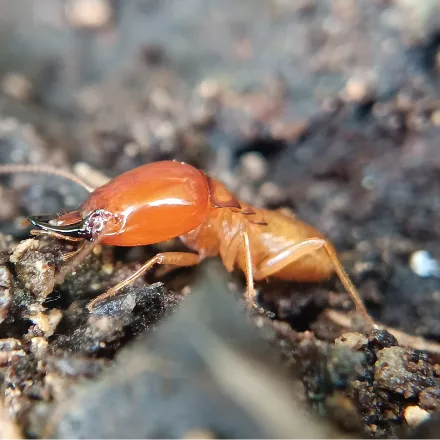
Mound-building Termite Common
Macrotermes gilvus
Farms fungus in underground gardens and air-conditions the whole mound passively, holding it within a degree of target year round.
Where: Dry forest and scrub countrywide; Huai Kha Khaeng, Kui Buri and the northeast. Best: Year round; swarms on the first heavy rains.
Weaver Ant Common
Oecophylla smaragdina
A rust-red ant that sews living leaves into nests using its own larvae as glue guns.
Where: Trees in gardens, forest and orchards nationwide. Best: Year round.
Spiders and scorpions
13 species
Cobalt Blue Tarantula Rare
Cyriopagopus lividus
An electric metallic blue that is not pigment at all but nanostructures in the hair, and it almost never leaves its burrow.
Where: Burrows on humid forest floor; western and southern forest, Kanchanaburi and the peninsula. Best: May-Oct.
David Bowie Huntsman Spider Rare
Heteropoda davidbowie
Named after David Bowie in 2008 for the flame-orange hair across its face, and it hunts without a web at all.
Where: Trunks and foliage in southern lowland rainforest; Hala-Bala and Bang Lang. Best: Year round, at night.
Net-casting Spider Rare
Deinopis sp.
Holds a stretchy web between its front legs and throws it over prey like a gladiator with a net.
Where: Understorey twigs in lowland rainforest; Khao Sok, Kaeng Krachan and the south. Best: May-Oct, strictly at night.
Segmented Trapdoor Spider Rare
Liphistius sp.
The most primitive spiders alive, with a visibly segmented abdomen, essentially unchanged for 300 million years.
Where: Shaded earth banks and cave-mouth walls on limestone; Krabi, Kanchanaburi and Khao Sam Roi Yot. Best: May-Oct, at night.
Asian Forest Scorpion Occasional
Heterometrus laoticus
A big, glossy black scorpion that glows an eerie blue-green under ultraviolet light.
Where: Forest floor nationwide. Best: Night.
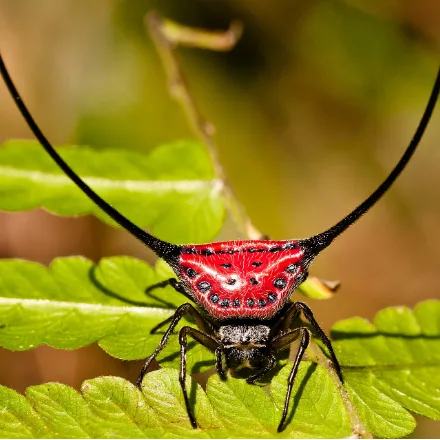
Long-horned Orb-weaver Occasional
Macracantha arcuata
Two curved spines rise from its back several times longer than the spider itself, and nobody is entirely sure why.
Where: Shaded understorey trails at head height; Khao Sok, Khao Yai and Kaeng Krachan. Best: May-Oct.
Thai Zebra Leg Tarantula Occasional
Cyriopagopus albostriatus
Thailand's most familiar tarantula, and in parts of the northeast it is dug up, skewered and deep fried as a street snack.
Where: Burrows in open woodland and scrub; the northeast, central plains and Kanchanaburi. Best: Year round, at dusk.
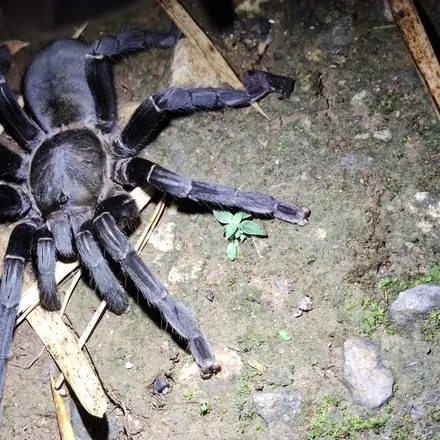
Thailand Black Tarantula Occasional
Cyriopagopus minax
A jet-black burrowing tarantula, fast and feisty, that lines its tunnel with silk trip-lines.
Where: Forest and banks nationwide. Best: Night, at burrow mouths.
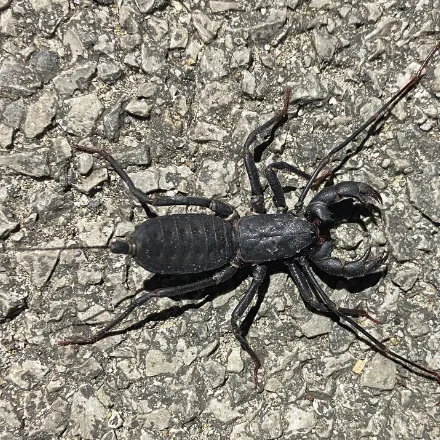
Whip Scorpion Occasional
Thelyphonus caudatus
Sprays a fine mist of concentrated acetic acid from the base of its tail, which is why it is also called the vinegaroon.
Where: Under logs and stones in lowland forest; Khao Sok, Khao Yai and the peninsula. Best: May-Oct, at night.
Golden Orb-weaver Regular
Nephila pilipes
A giant black-and-yellow spider spinning webs of golden silk strong enough to snare small birds.
Where: Forest and forest-edge paths nationwide. Best: Rainy season.
Heavy Jumping Spider Regular
Hyllus diardi
Judges distance with a telephoto lens in each main eye, then jumps up to six times its own body length onto prey.
Where: Sunlit leaves and walls in forest and gardens countrywide. Best: Year round.
Tailless Whip Scorpion Regular
Phrynichus orientalis
Looks genuinely alarming and is completely harmless: no venom, no sting, and a pair of legs converted into three foot feelers.
Where: Cave mouths, karst overhangs and tree buttresses; Khao Sam Roi Yot, Krabi and Kanchanaburi. Best: Year round, at night.
St Andrew's Cross Spider Common
Argiope versicolor
Weaves a bold white X into the middle of its web, and nobody has settled whether it attracts prey, warns birds or does both.
Where: Scrub and forest edge countrywide. Best: Year round.
Planning and responsible watching
The rainy season, roughly June to October, is when this group is at its best, and the hours after dark are when most of it appears. A torch held at eye level will pick up spider eyes across a whole clearing. Do not handle tarantulas, scorpions or anything with obvious warning colours, and leave the fireflies unlit: torches disrupt their display. Every conservation status on this page is the current assessment from the IUCN Red List.
Find guided night walks and nature trips in Thailand
Some links on this page are affiliate links. If you book through them, Wildseer may earn a small commission at no extra cost to you.
Frequently asked questions
Where can you see fireflies in Thailand?
Amphawa near Bangkok is the best known, with evening boat trips through riverside mangroves, and the same synchronous species occurs along both coasts. Go on a dark night and ask operators to keep lights off.
Are there dangerous spiders in Thailand?
Not seriously. Thailand’s tarantulas and huntsman spiders can bite if handled, and it hurts, but there is no species here whose bite is life-threatening. Scorpion stings are painful rather than dangerous.
When is the best time to see butterflies in Thailand?
February to May for the birdwings, especially where males gather at damp ground and hot springs in the south. The rainy season is better for moths, beetles and everything that comes to lights.
Explore more Thailand wildlife
 Mammals of Thailand
 Birds of Thailand
 Reptiles and Amphibians of Thailand
 Fish of Thailand
 Sharks and Rays of Thailand
 Reef Invertebrates of Thailand
Part of the Wildlife in Thailand guide.