
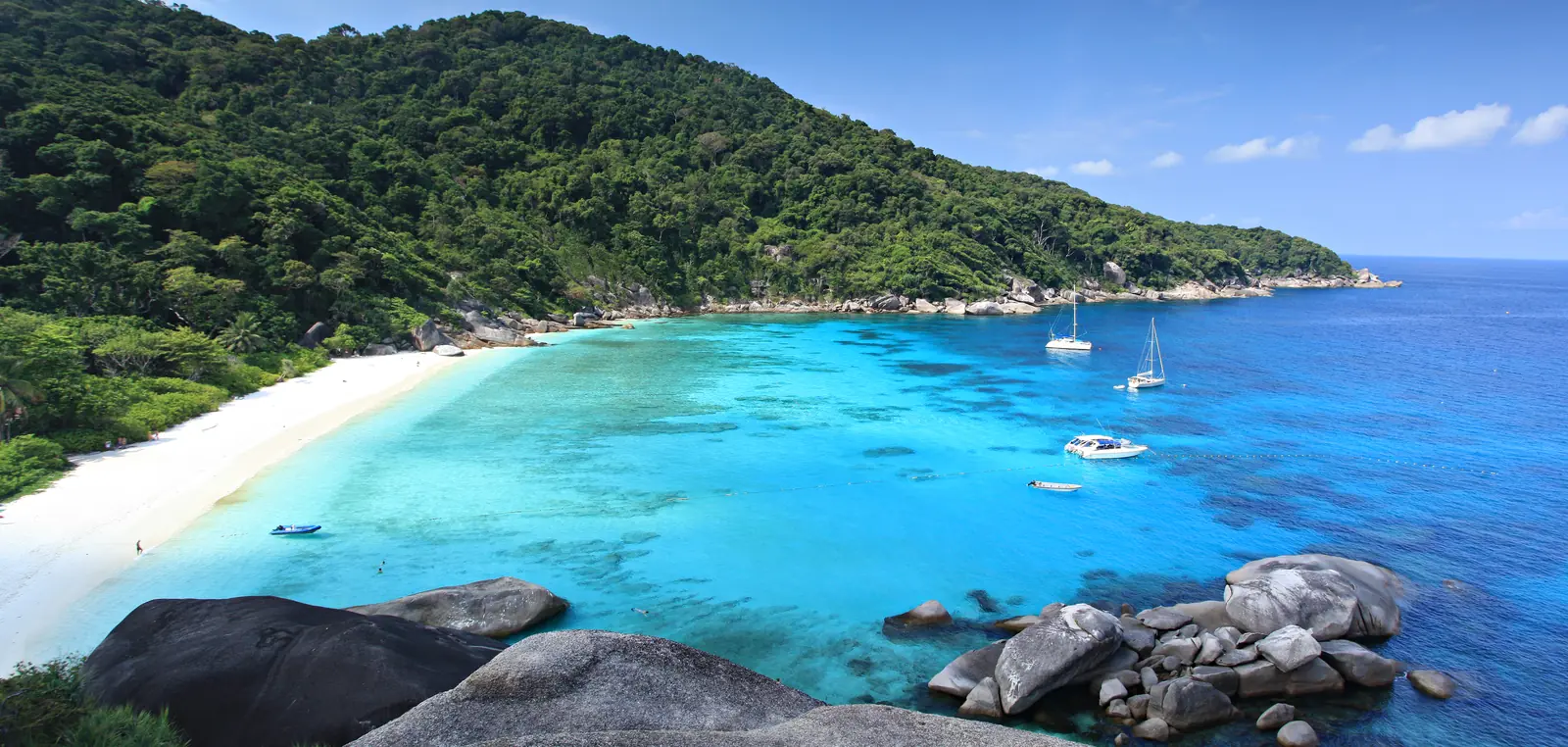
The Similan Islands close for the southwest monsoon, roughly from mid May to mid October, and July sits in the middle of it. There are no liveaboards, no park access and no dive boats. Any operator selling you a Similan trip in July is selling you something else.
That is worth a page rather than a footnote, because a lot of people plan Thailand trips around diving without knowing the Andaman has a closed season. The good news is that the Gulf runs on the opposite calendar, so July is a perfectly good month to dive in Thailand, just not here.
Highlights
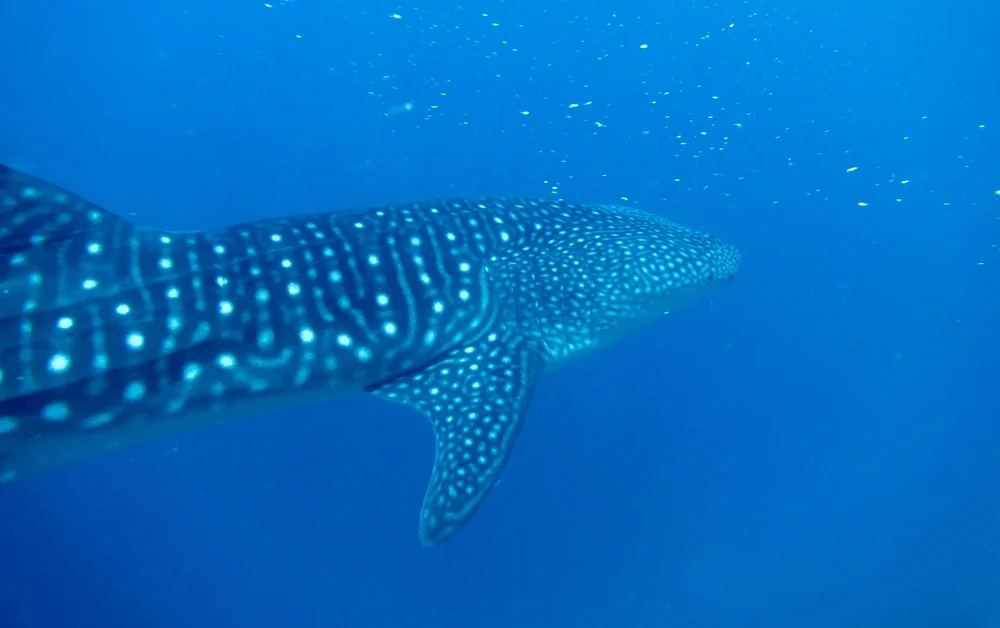
Whale Shark
The biggest fish in the ocean, a spotted, bus sized filter feeder and the undisputed holy grail of tropical diving. Where: Koh Bon, Koh Tachai and the outer pinnacles on liveaboard itineraries. Best: Feb-Apr.
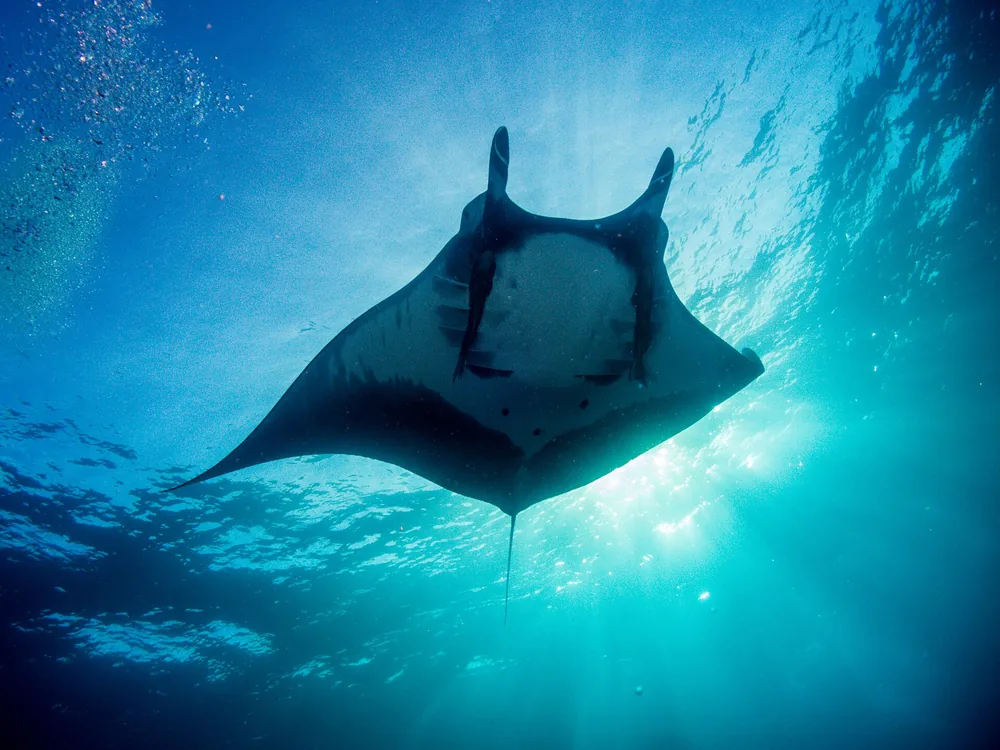
Giant Manta Ray
The largest ray on the planet, an ocean wanderer that can span seven metres and loops through plankton clouds in slow somersaults. Where: Koh Bon ridge and Koh Tachai pinnacle. Best: Feb-Apr.
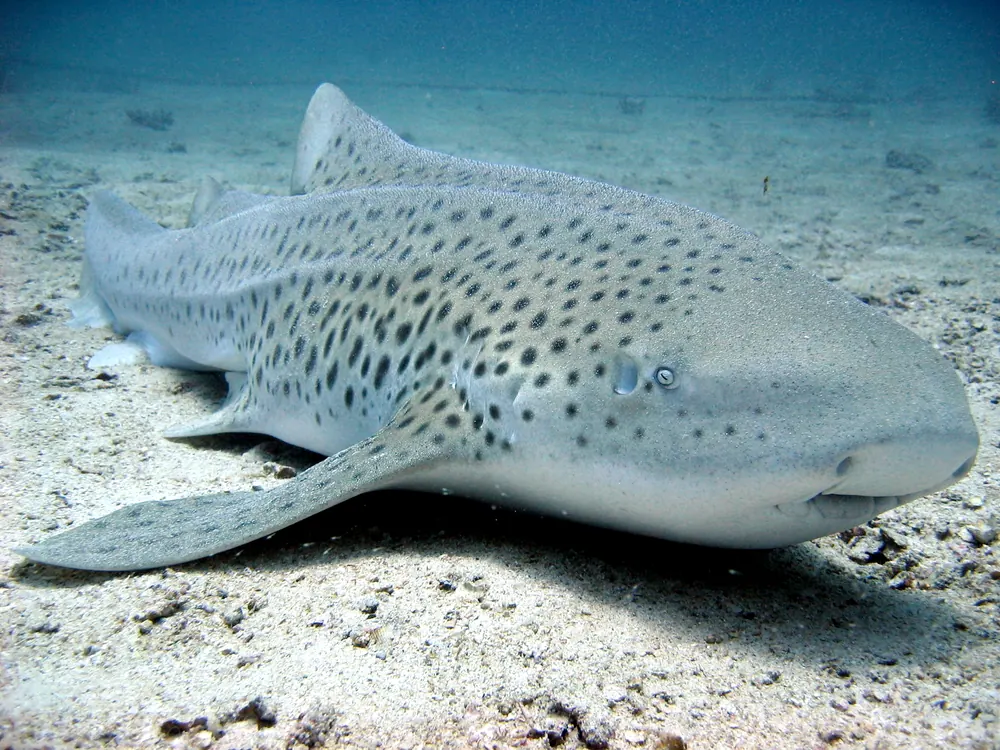
Zebra Shark (Leopard Shark)
A gentle, spotted shark that lies on the sand like a giant lazy cat, striped as a pup and spotted as an adult. Where: Sandy patches at East of Eden, Anita's Reef and Elephant Head Rock. Best: Nov-Apr, morning dives.
What you would see here in season, and cannot in July
40 species
Everything the Similans hold is inside the November to April season. This is the list you are missing, and the reason to come back in February.
Bowmouth Guitarfish Ultra rare Critically Endangered
Rhina ancylostomus
Half shark, half ray, with ridges of thorns above the eyes that look like a set of eyebrows.
Where: Sand beside reef on the outer islands and the Burma Banks crossings. Best: Nov-Apr. A once-in-a-career sighting for most divers in Thai waters.
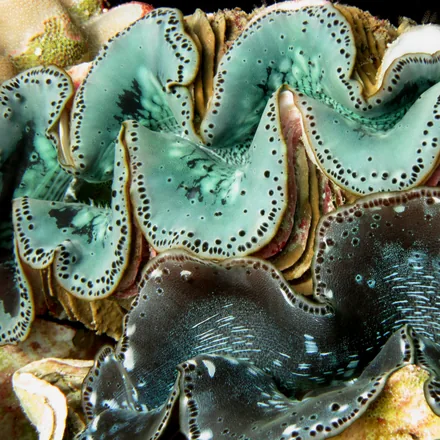
Giant Clam Occasional Critically Endangered
Tridacna gigas
The largest shellfish on Earth, a metre-wide clam that farms algae in its own rippling, jewel-coloured flesh.
Where: Shallow reef tops at Anita's Reef and Donald Duck Bay. Best: Nov-Apr.
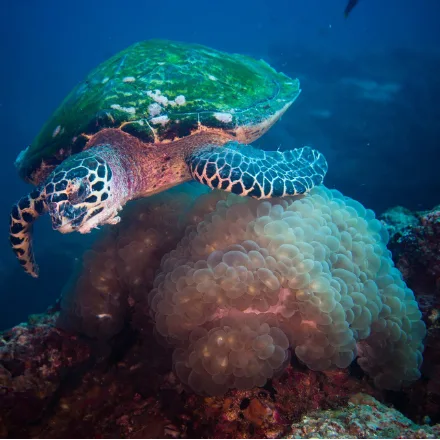
Hawksbill Turtle Occasional Critically Endangered
Eretmochelys imbricata
The reef's sponge specialist, its beautiful shell also the reason it was hunted to the edge.
Where: Coral bommies and sponge-covered walls throughout. Best: Nov-Apr.
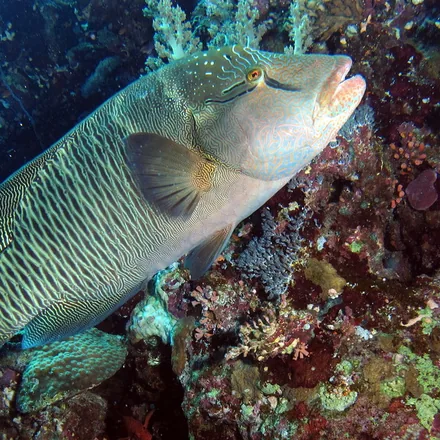
Humphead Wrasse (Napoleon Wrasse) Rare Endangered
Cheilinus undulatus
A giant, curious reef fish with thick lips and a bulging forehead, able to crunch prey that few other animals can eat.
Where: Outer reef slopes at Koh Bon and Christmas Point. Best: Nov-Apr. Large individuals are curious and will follow a diver.
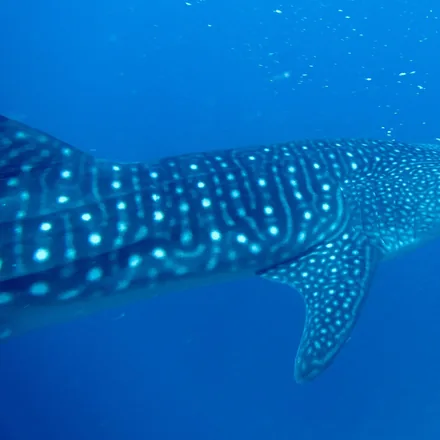
Whale Shark Rare Endangered
Rhincodon typus
The biggest fish in the ocean, a spotted, bus sized filter feeder and the undisputed holy grail of tropical diving.
Where: Koh Bon, Koh Tachai and the outer pinnacles on liveaboard itineraries. Best: Feb-Apr. The single most sought sighting on any Similan trip, and worth the liveaboard over a day boat.
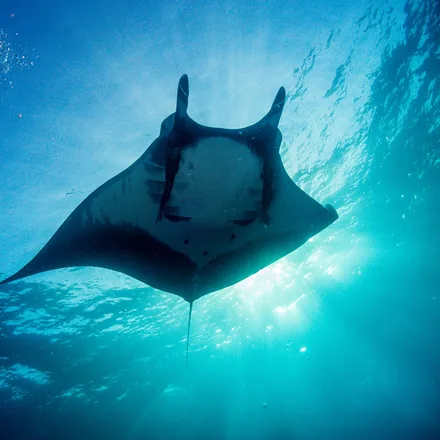
Giant Manta Ray Occasional Endangered
Mobula birostris
The largest ray on the planet, an ocean wanderer that can span seven metres and loops through plankton clouds in slow somersaults.
Where: Koh Bon ridge and Koh Tachai pinnacle. Best: Feb-Apr. Koh Bon is the classic manta station; hang off the ridge and wait rather than chase.
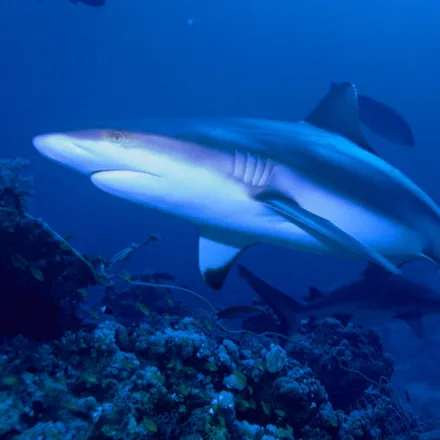
Grey Reef Shark Occasional Endangered
Carcharhinus amblyrhynchos
The classic requiem shark of the drop-off, bold and inquisitive where currents sweep the reef.
Where: Deeper walls and current-swept corners of the outer islands. Best: Nov-Apr.
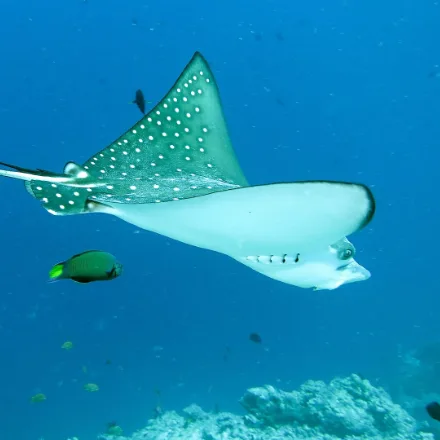
Ocellated Eagle Ray Occasional Endangered
Aetobatus ocellatus
A dramatic ray that flies through open water on wings spangled with white spots, trailing a whip-like venomous tail.
Where: Drop-offs at Koh Bon and Christmas Point. Best: Nov-Apr. Usually passing in open water; look out into the blue on every safety stop.
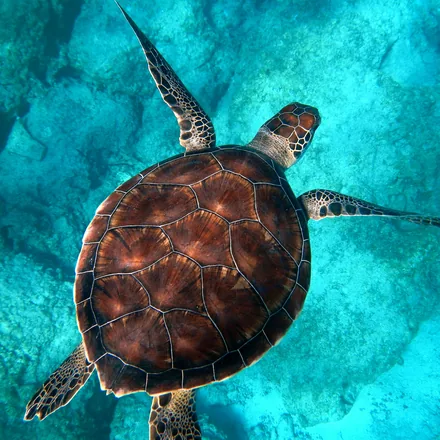
Green Sea Turtle Regular Endangered
Chelonia mydas
The great grazing turtle of the tropics, the only sea turtle that turns vegetarian as an adult.
Where: Seagrass and shallow reef at Donald Duck Bay and Anita's Reef. Best: Nov-Apr.
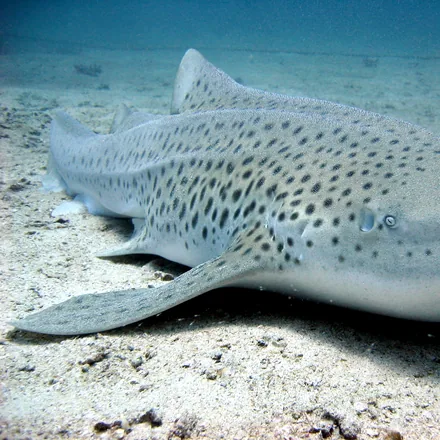
Zebra Shark (Leopard Shark) Regular Endangered
Stegostoma tigrinum
A gentle, spotted shark that lies on the sand like a giant lazy cat, striped as a pup and spotted as an adult.
Where: Sandy patches at East of Eden, Anita's Reef and Elephant Head Rock. Best: Nov-Apr, morning dives. Rests on sand in the open; approach slowly from the side and it will usually stay.
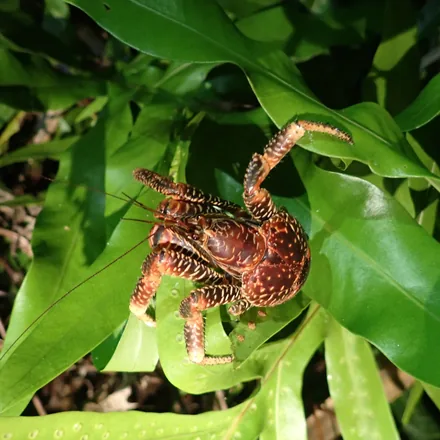
Coconut Crab Ultra rare Vulnerable
Birgus latro
The largest land invertebrate on earth, with a grip strong enough to crack a coconut and hold ninety times its own body weight.
Where: Forested interiors of the outer uninhabited islands. Best: Nov-Apr, at night. Access is restricted; this is a park ranger sighting rather than a visitor one.
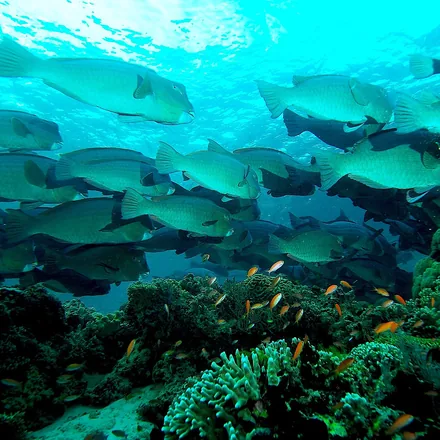
Bumphead Parrotfish Occasional Vulnerable
Bolbometopon muricatum
A hulking, bull-headed parrotfish that rams and bites living coral, turning reef rock into the white sand of tropical beaches.
Where: Reef tops at dawn on the outer islands. Best: Nov-Apr, first dive. Best on the first dive of the day, before the schools break up.
Jenkins Whipray Occasional Vulnerable
Pateobatis jenkinsii
A big sand-flat ray with a ridge of enlarged thorns down its spine and a tail twice the length of its body.
Where: Sand flats at Anita's Reef and Donald Duck Bay. Best: Nov-Apr.
Reef Manta Ray Occasional Vulnerable
Mobula alfredi
A four metre wingspan gliding overhead in slow, hypnotic loops that leave divers grinning for days.
Where: Koh Bon and Koh Tachai. Best: Nov-Apr, peak Feb-Apr.
Tawny Nurse Shark Occasional Vulnerable
Nebrius ferrugineus
A big, docile bottom shark that vacuums prey out of crevices with a powerful suck.
Where: Caves and overhangs at Elephant Head Rock. Best: Nov-Apr, day.
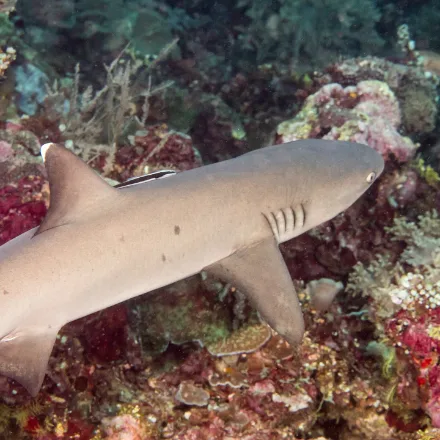
Whitetip Reef Shark Regular Vulnerable
Triaenodon obesus
A slender reef shark that rests motionless in caves by day and hunts the reef in packs by night.
Where: Under table corals and ledges at Christmas Point and Sharkfin Reef. Best: Nov-Apr, day. Sleeping under overhangs by day; look into the shade rather than the blue.
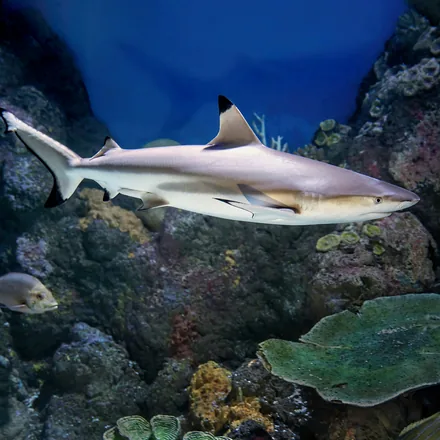
Blacktip Reef Shark Common Vulnerable
Carcharhinus melanopterus
The neat little reef shark of the shallows, its black-tipped fins often cutting the surface over sun-lit sand flats.
Where: Shallow reef flats and Donald Duck Bay. Best: Nov-Apr, all day.
Tiger Shark Ultra rare
Galeocerdo cuvier
The only shark with teeth built to shear turtle shell, and the least fussy eater in the ocean.
Where: Deep water off the outer pinnacles. Best: Nov-Apr.
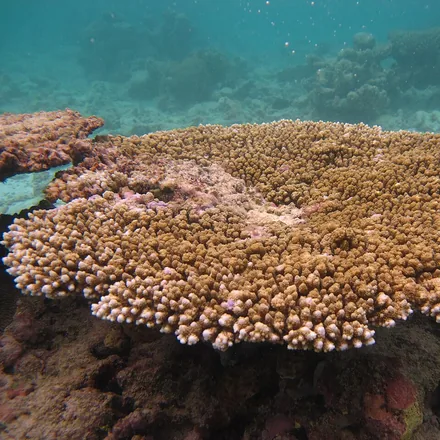
Table Coral Common
Acropora hyacinthus
Grows outward faster than it grows up, spreading a flat platform that shades out every competitor beneath it.
Where: Eastern slopes at East of Eden. Best: Nov-Apr.
Indo-Pacific Sailfish Ultra rare
Istiophorus platypterus
The fastest fish in the sea, and it lights up electric blue across the sail when it is herding a bait ball.
Where: Blue water on the Koh Tachai and Richelieu crossings. Best: Nov-Apr.
Clown Triggerfish Rare
Balistoides conspicillum
Perhaps the most flamboyant fish on the reef, a black triggerfish spotted with huge white polka-dots and a saddle of gold.
Where: Deeper walls on the west side. Best: Nov-Apr. A prize for photographers; usually deep and moving.
Painted Frogfish Rare
Antennarius pictus
A lumpy anglerfish that walks on hand-like fins and fishes for prey with a built-in rod and lure on its forehead.
Where: Sponges on the west-side walls. Best: Nov-Apr.
Black-naped Tern Occasional
Sterna sumatrana
Almost pure white apart from a narrow black band across the back of the head, like a headphone cable.
Where: Rocky islets and boat wakes around the islands. Best: Nov-Apr.
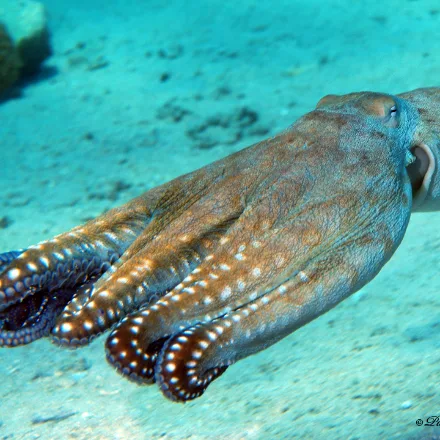
Day Octopus Occasional
Octopus cyanea
A shape-shifting reef genius that can change colour and texture in a blink and pour its boneless body through a coin-sized gap.
Where: Reef and rubble by day on the eastern sites. Best: Nov-Apr.
Longnose Hawkfish Occasional
Oxycirrhites typus
A dainty fish gridded in red like graph paper, perched among the branches of a giant sea fan waiting to ambush prey.
Where: Sea fans on current-swept walls. Best: Nov-Apr.
Pantropical Spotted Dolphin Occasional
Stenella attenuata
Calves are born unspotted and acquire their speckling through life, so you can read a dolphin's age off its skin.
Where: Open water on the outer crossings. Best: Nov-Apr.
Reef Stonefish Occasional
Synanceia verrucosa
The most venomous fish in the world, a living lump of encrusted rock that is almost impossible to see until it is too late.
Where: Rubble and reef base throughout. Best: Nov-Apr. Genuinely dangerous and near invisible. Never place a hand or knee on the bottom.
Regal Angelfish Occasional
Pygoplites diacanthus
One of the most beautiful fish on the reef, banded in orange and white with electric-blue edging like a living flag.
Where: Sheltered coral gardens. Best: Nov-Apr.
Ribbon Eel Occasional
Rhinomuraena quaesita
A ribbon of electric blue and yellow that sways from a hole in the sand, and remarkably changes sex and colour as it grows.
Where: Sand and rubble margins at Anita's Reef. Best: Nov-Apr. Blue adults and black juveniles occupy the same burrows for months.
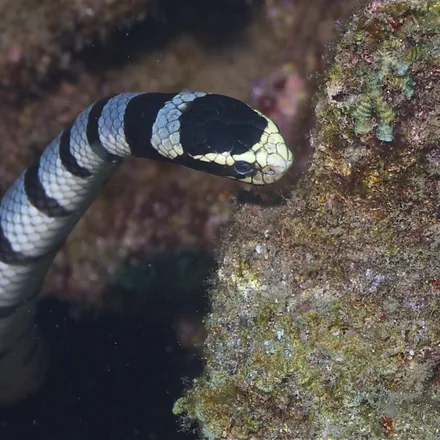
Banded Sea Krait Regular
Laticauda colubrina
A sea snake that hunts eels underwater but must come ashore to rest, drink fresh water and lay its eggs.
Where: Shallow reef and rubble at the island edges. Best: Nov-Apr, day. Highly venomous but placid; it is hunting eels, not you.
Bluespine Unicornfish Regular
Naso unicornis
A large grey surgeonfish that grows a blunt horn on its forehead and carries bright blue blades at the base of its tail.
Where: Reef edges in current. Best: Nov-Apr.
Bluespotted Ribbontail Ray Regular
Taeniura lymma
A small, brilliantly marked ray, olive gold studded with electric blue spots, tucked under coral ledges.
Where: Sand pockets and under table corals throughout. Best: Nov-Apr.
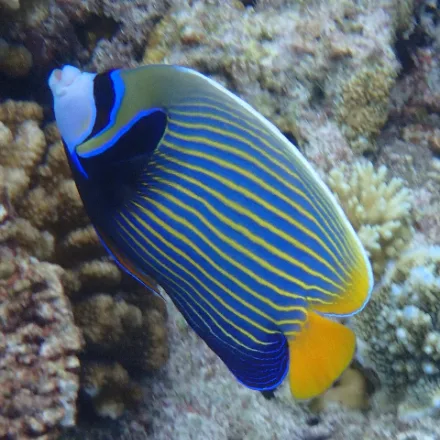
Emperor Angelfish Regular
Pomacanthus imperator
A living work of art in electric blue and yellow stripes, its young disguised in a maze of blue and white rings.
Where: Coral heads and overhangs on the east side reefs. Best: Nov-Apr.
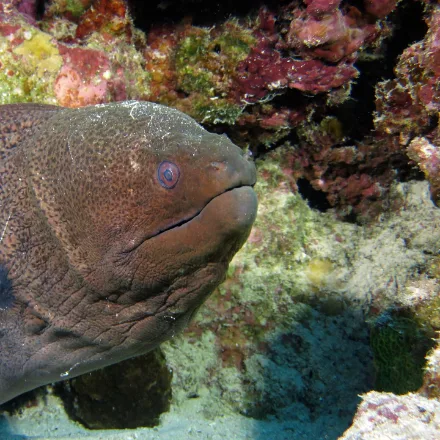
Giant Moray Regular
Gymnothorax javanicus
The largest moray on the reef, its gaping, fanged mouth a fearsome look that is really just how it breathes.
Where: Crevices at Elephant Head Rock and West Ridge. Best: Nov-Apr.
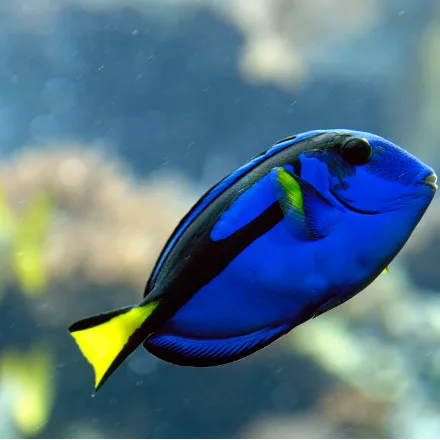
Palette Surgeonfish (Regal Blue Tang) Regular
Paracanthurus hepatus
The famous royal-blue tang of film fame, hovering over coral and diving into the branches when danger looms.
Where: Branching coral on the eastern reefs. Best: Nov-Apr.
Sixbar Angelfish Regular
Pomacanthus sexstriatus
A big, bold angelfish that grunts audibly when it is annoyed with you.
Where: Bommies and rubble slopes. Best: Nov-Apr.
Skunk Anemonefish Regular
Amphiprion akallopisos
A single white stripe down the spine, and a strict queue: when the female dies, the biggest male becomes her.
Where: Anemones on sheltered slopes. Best: Nov-Apr.
Spinner Dolphin Regular
Stenella longirostris
A small, slender dolphin that leaps clear of the sea and spins like a top in mid-air.
Where: Open water on the crossings between islands. Best: Nov-Apr, morning. Often bow-rides the dive boats on the run out to Koh Bon.
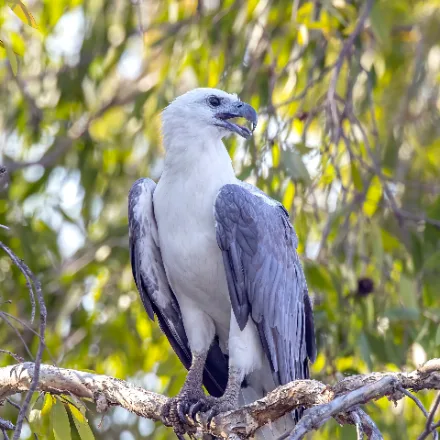
White-bellied Sea Eagle Regular
Haliaeetus leucogaster
A huge coastal eagle in grey and white that snatches sea snakes and fish from the surface in a spectacular swoop.
Where: Over the island cliffs and Donald Duck Bay. Best: Nov-Apr, morning.
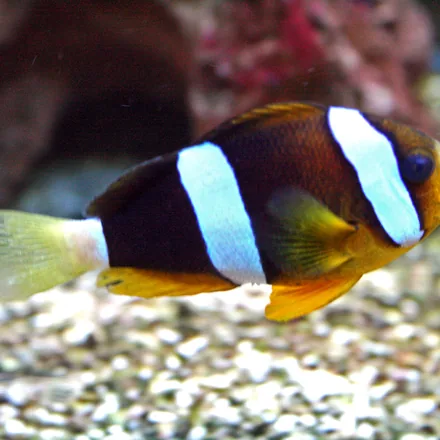
Clark's Anemonefish Common
Amphiprion clarkii
A hardy, boldly banded anemonefish that will share its stinging anemone with a confidence bordering on cheek.
Where: Anemones on the shallow reef throughout. Best: Nov-Apr.
Practical notes for July
If you are in Thailand in July and want to dive, go to the Gulf. Koh Tao, Koh Samui and Koh Phangan sit inside their good season from roughly February to September, with Sail Rock as the standout site and a genuine whale shark record of its own. On the Andaman side, some sheltered sites around Phuket and Krabi run in reasonable weather, but conditions are unreliable and visibility is poor. Park fees, opening seasons and closures are set by the Department of National Parks, and are worth checking before you travel rather than on arrival.
Find Gulf diving and Sail Rock trips in July
Some links on this page are affiliate links. If you book through them, Wildseer may earn a small commission at no extra cost to you.
Frequently asked questions
Are the Similan Islands open in July?
No. The park closes for the southwest monsoon, roughly mid May to mid October, and reopens in the winter season.
Where can you dive in Thailand in July?
The Gulf side: Koh Tao, Koh Samui, Koh Phangan and Sail Rock, all of which are inside their good season in July.
When do the Similans reopen?
Around mid October, with the season running through to roughly mid May. February to April is the peak.
Dive Thailand in season
- The Similans in February, peak season
- Snorkelling and diving Koh Samui
- Fish of Thailand
- Sharks and Rays of Thailand
- Reef Invertebrates of Thailand
Part of the Wildlife in Thailand guide.