
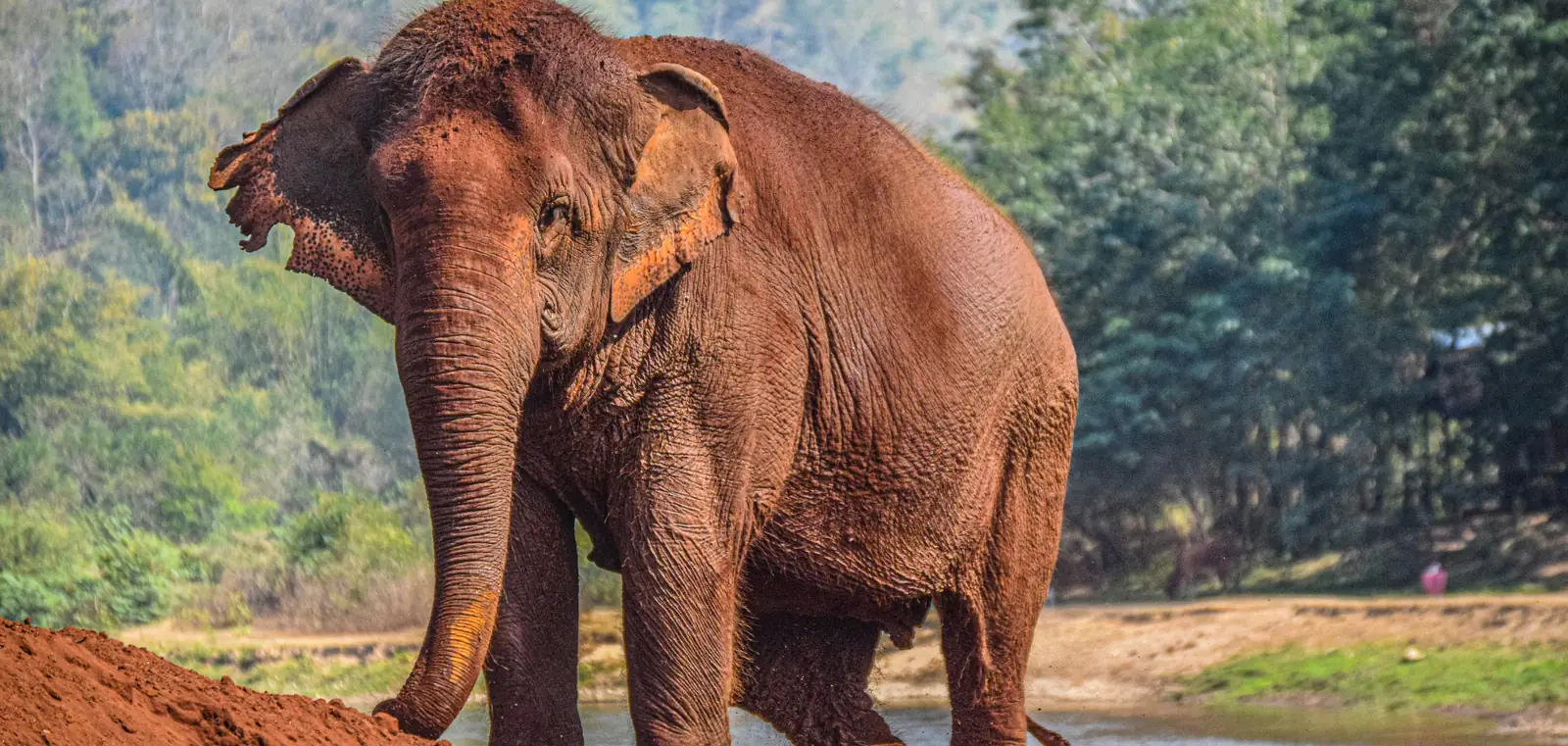
Thailand’s mammals run from the obvious to the almost mythical. Wild elephants and gaur still move through the western forests, tigers and clouded leopards persist in numbers small enough to make a sighting the story of a trip, and offshore there are dolphins that live in brackish lakes. This guide covers 74 mammals worth planning around, grouped by the habitat you will be standing in.
We are honest about the odds. A gibbon call at dawn in Khao Yai is close to guaranteed; a tapir on a night drive at Kaeng Krachan is a matter of luck and patience. Each entry carries the sites, the season and a plain assessment of how likely you are to see it.
Highlights
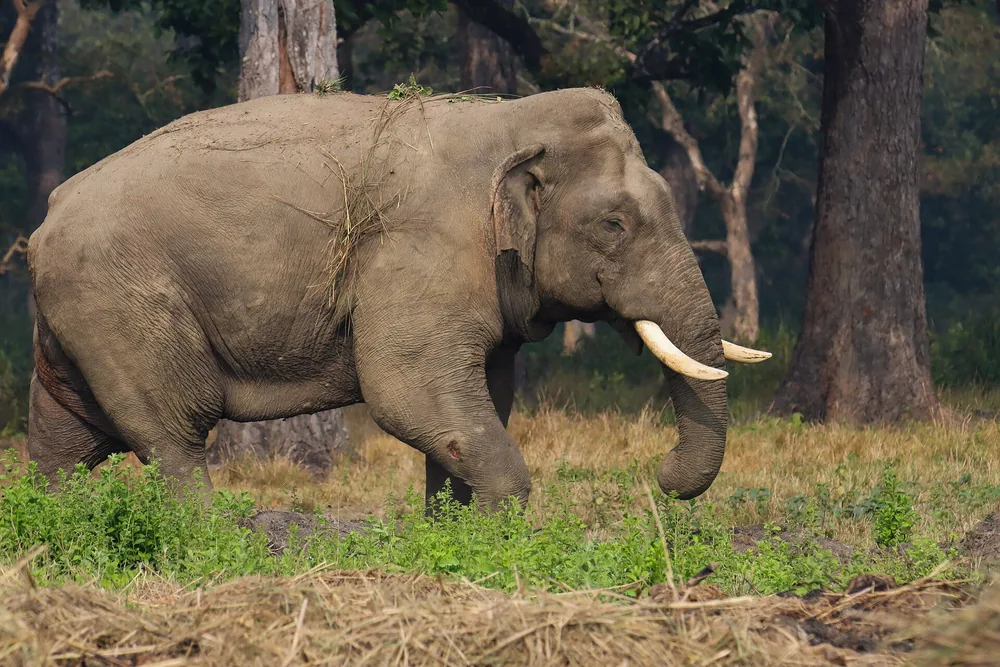
Asian Elephant
The largest land animal in Asia, and a genuinely wild one is worth seeking out over the camp elephants most tourists meet. Where: Khao Yai, Kui Buri, Kaeng Krachan. Best: Dry season (Nov-Apr), dawn and dusk.
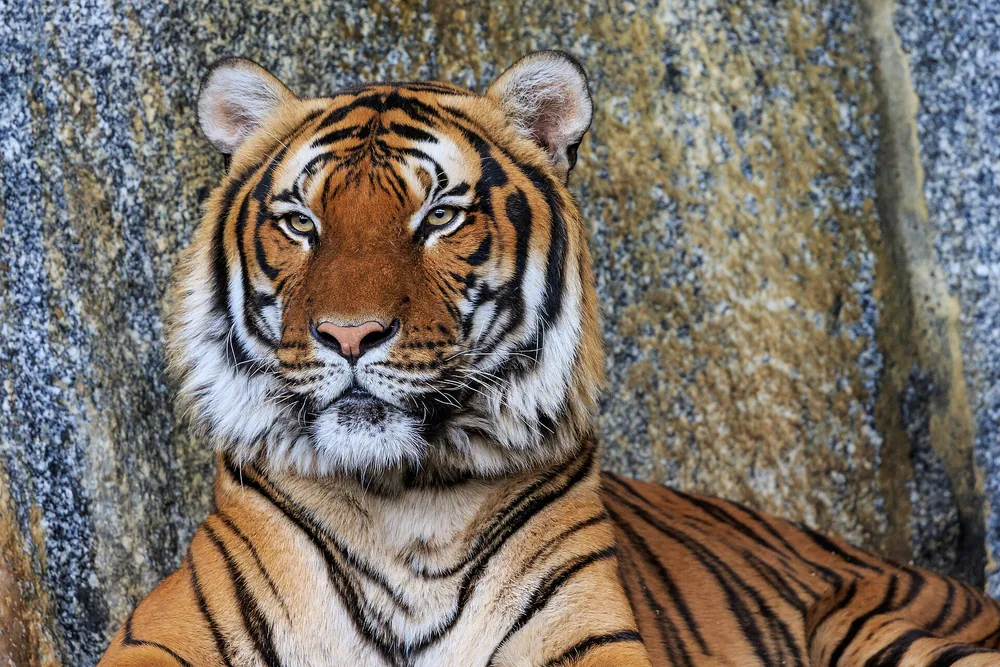
Indochinese Tiger
The largest cat in Asia and its top predator, a striped ghost most people only ever know from a paw print. Where: Huai Kha Khaeng, Thung Yai, Kaeng Krachan. Best: Dry season, dawn and dusk.
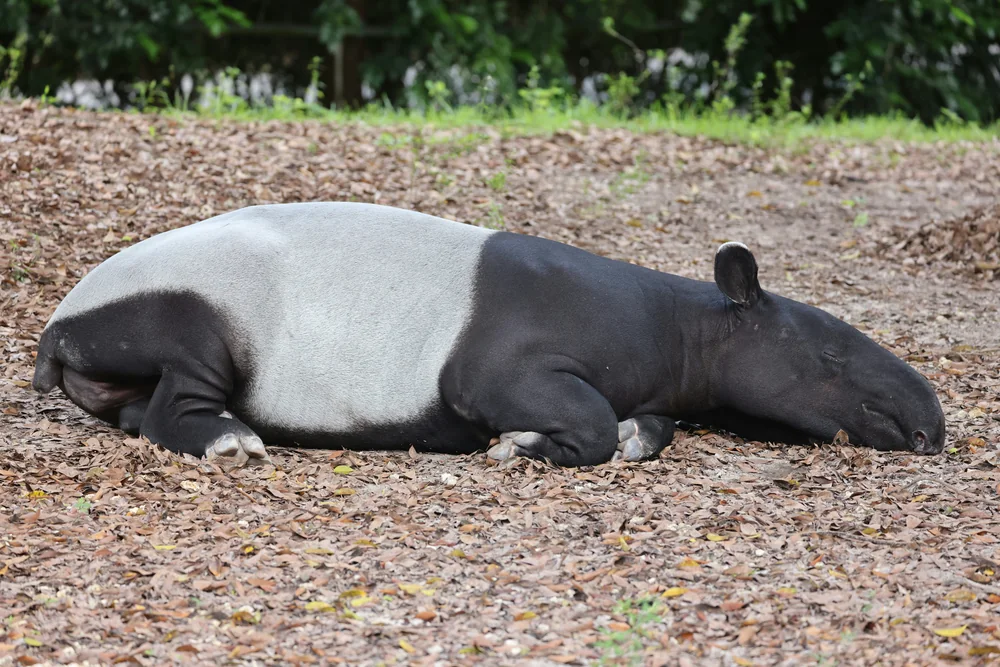
Malayan Tapir
A living oddity, half jet black and half stark white, that looks assembled from spare parts. Where: Kaeng Krachan, Hala Bala, Khao Luang (Krung Ching). Best: Night, near forest streams.
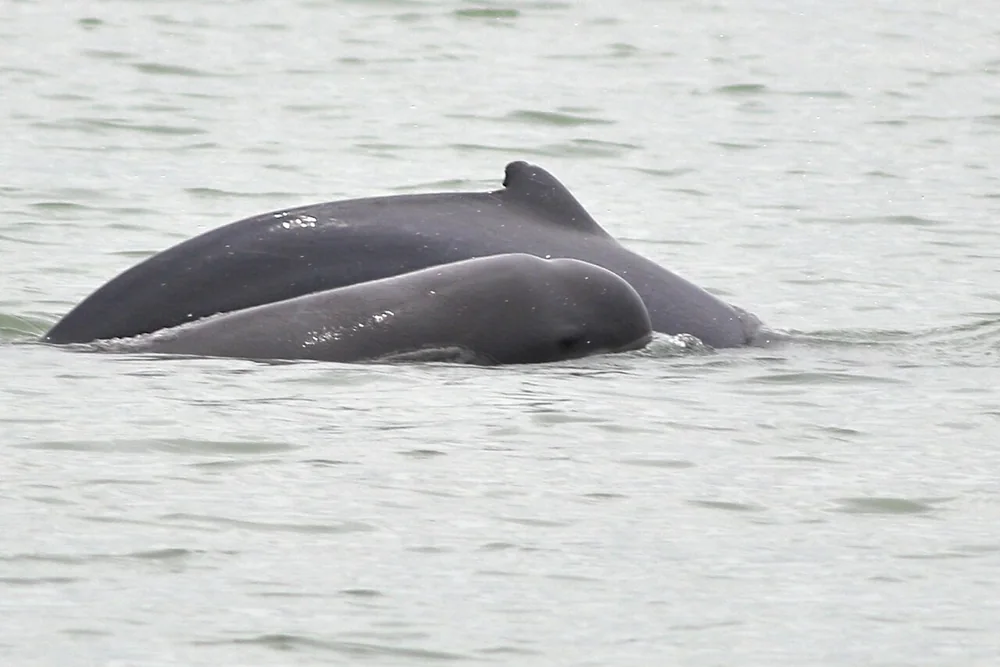
Irrawaddy Dolphin
A snub nosed, almost smiling dolphin with no beak, including tiny populations that live in brackish lakes and rivers. Where: Hua Hin, Songkhla Lake, Trat coast. Best: Early morning, coastal boat trips.
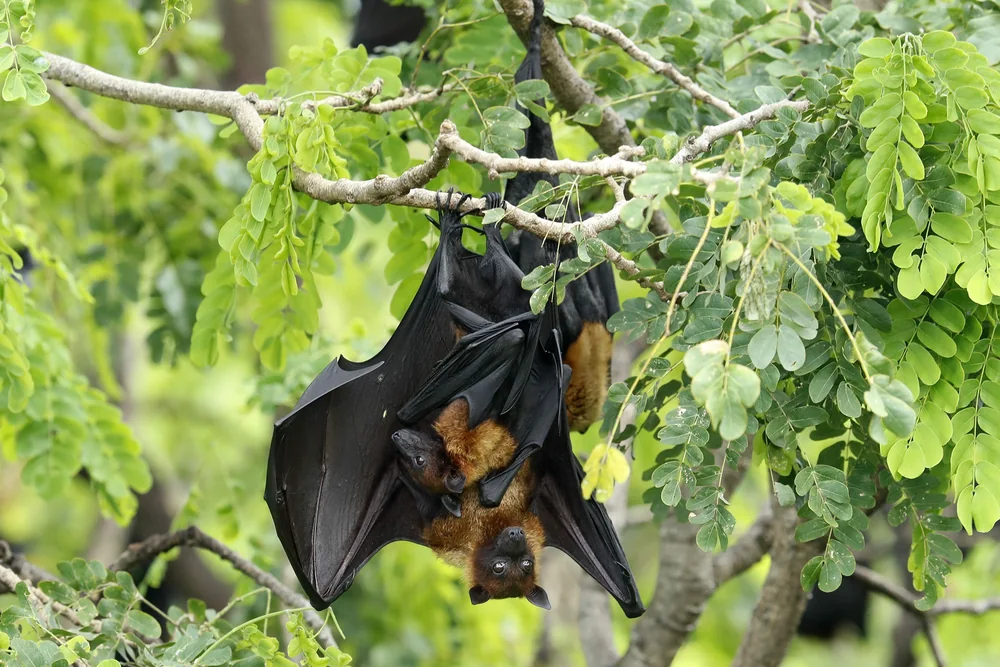
Lyle's Flying Fox
A large fruit bat that gathers in noisy thousands over temple grounds, hanging like dark fruit in the daytime trees. Where: Temple and village colonies of the central plains. Best: Day roost, dusk flyout.
Rainforest mammals
40 species
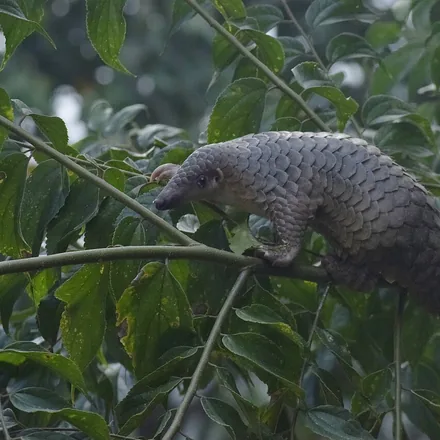
Sunda Pangolin Very rare Critically Endangered
Manis javanica
A living pine cone of a mammal, armoured in scales and, tragically, the most trafficked wild animal on the planet.
Where: Lowland and hill forest nationwide. Best: Night.
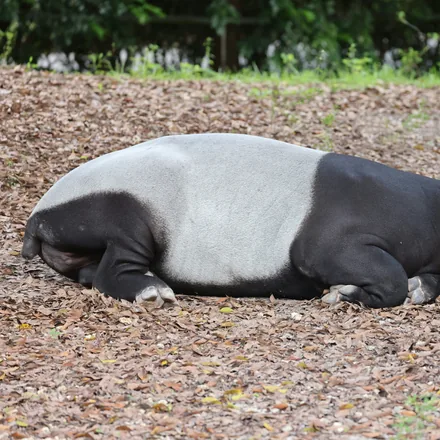
Malayan Tapir Rare Endangered
Tapirus indicus
A living oddity, half jet black and half stark white, that looks assembled from spare parts.
Where: Kaeng Krachan, Hala Bala, Khao Luang (Krung Ching). Best: Night, near forest streams.
Phayre's Leaf Monkey Rare Endangered
Trachypithecus phayrei
A grey langur with bold white spectacles around its eyes, a leaf specialist of the northern and western forests.
Where: Hill and evergreen forest of the north and west. Best: Year round, day.
Sunda Slow Loris Rare Endangered
Nycticebus coucang
A wide-eyed nocturnal primate of the far south with a rare and startling trick: it is one of the world's few venomous mammals.
Where: Southern rainforest, Khao Sok and the peninsula. Best: Night.
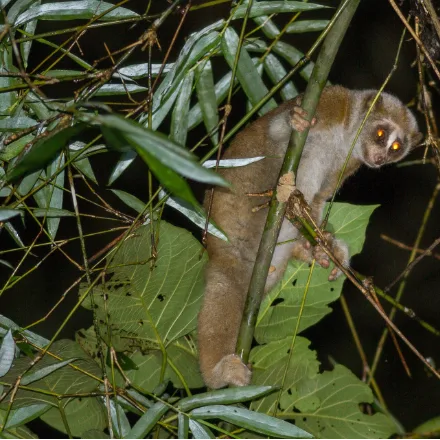
Bengal Slow Loris Occasional Endangered
Nycticebus bengalensis
The only venomous primate on Earth, huge eyed and slow motion, with a toxic bite armed from glands on its arms.
Where: Khao Yai, Kaeng Krachan, southern forests. Best: Night, spotlighting in canopy.
Pileated Gibbon Occasional Endangered
Hylobates pileatus
A canopy singer where males are inky black and females silver blonde, both crowned with a dark cap.
Where: Khao Yai, Khao Ang Rue Nai. Best: First light.
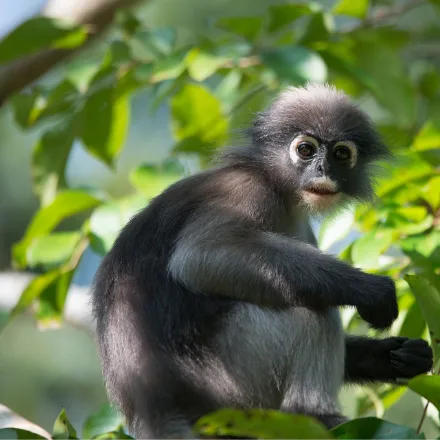
Dusky Langur (Spectacled Leaf Monkey) Regular Endangered
Trachypithecus obscurus
White spectacles make the adults look permanently startled, and the bright orange babies are pure crowd pleasers.
Where: Khao Sam Roi Yot, Krabi, Railay. Best: Morning and late afternoon.
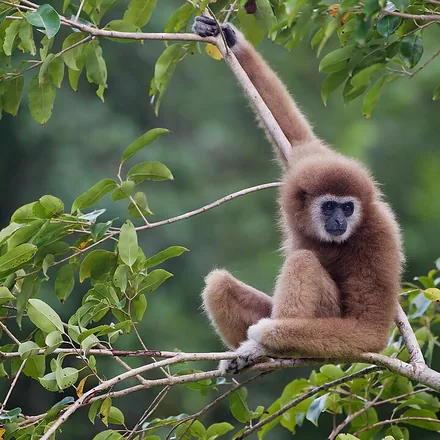
White-handed (Lar) Gibbon Regular Endangered
Hylobates lar
You hear them before dawn even breaks, the whooping duet of gibbons that is the definitive soundtrack of Asian rainforest.
Where: Khao Yai, Kaeng Krachan, Khao Sok. Best: First light (05:30-08:00).
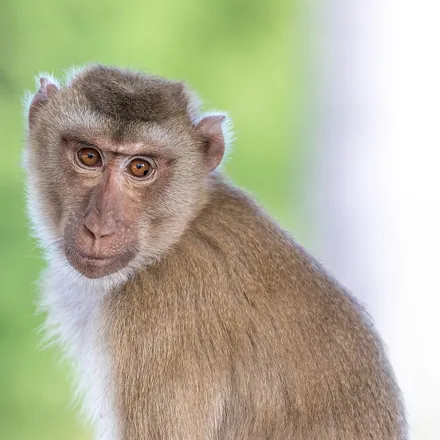
Long-tailed Macaque Common Endangered
Macaca fascicularis
The bold, water-loving monkey of temples and mangroves, and despite its ubiquity now one of the most heavily exploited primates on Earth.
Where: Coastal forest, mangroves and temples nationwide, Khao Sam Roi Yot. Best: Year round, day.
Asiatic Black Bear Rare Vulnerable
Ursus thibetanus
The moon bear, bigger and shaggier than the sun bear, with a bold cream crescent across its chest.
Where: Khao Yai, Kaeng Krachan. Best: Dawn and dusk, fruiting season.
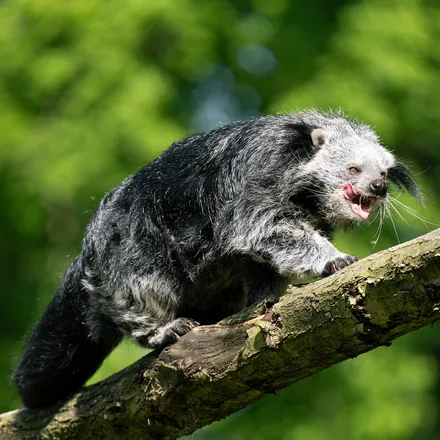
Binturong (Bearcat) Rare Vulnerable
Arctictis binturong
Neither bear nor cat, with a prehensile tail and a scent that smells uncannily of hot buttered popcorn.
Where: Khao Yai, Khao Sok. Best: Night, fruiting fig trees.
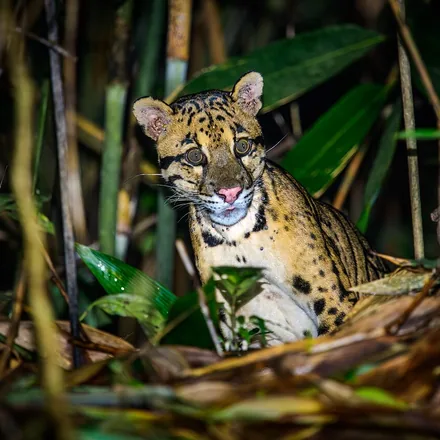
Clouded Leopard Rare Vulnerable
Neofelis nebulosa
Perhaps the most beautiful cat you will almost certainly never see, cloud blotched, tree climbing and maddeningly elusive.
Where: Huai Kha Khaeng, Kaeng Krachan, southern forests. Best: Night, deep forest.
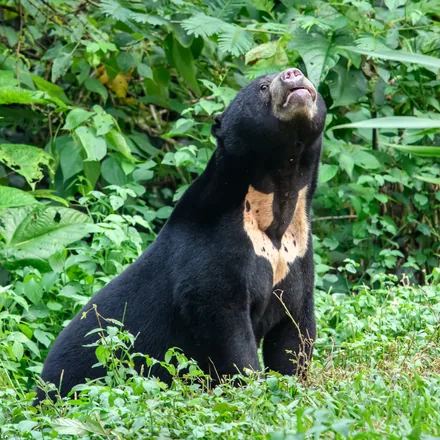
Sun Bear Rare Vulnerable
Helarctos malayanus
The world's smallest bear, with a golden chest crescent and a tongue long enough to raid a bee's nest.
Where: Kaeng Krachan (Ban Krang), Khao Yai, Kui Buri. Best: Dawn and dusk, near campsites.
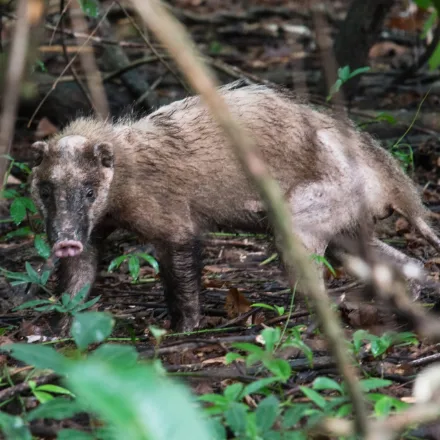
Hog Badger Occasional Vulnerable
Arctonyx collaris
A stocky, pig-snouted badger that roots through the forest floor with a mobile, rubbery nose.
Where: Hill and evergreen forest, Kaeng Krachan, Khao Yai. Best: Night.
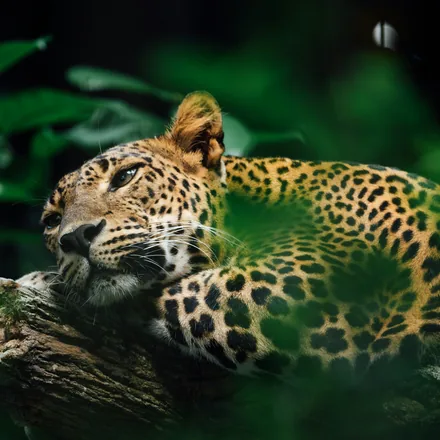
Leopard (incl. Black Panther) Occasional Vulnerable
Panthera pardus
A big cat that is unusually often born jet black, prowling as the fabled black panther.
Where: Kaeng Krachan (Ban Krang road), Khao Yai. Best: Dry season (Dec-Apr), early morning.
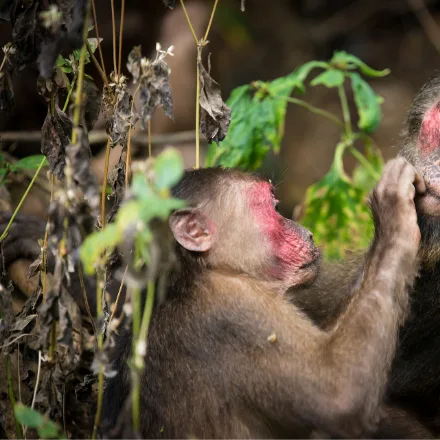
Stump-tailed Macaque Occasional Vulnerable
Macaca arctoides
A shaggy, red-faced forest macaque with a stub of a tail and a habit of staying deep in the hills.
Where: Evergreen hill forest, Kaeng Krachan, Khao Yai. Best: Year round, day.
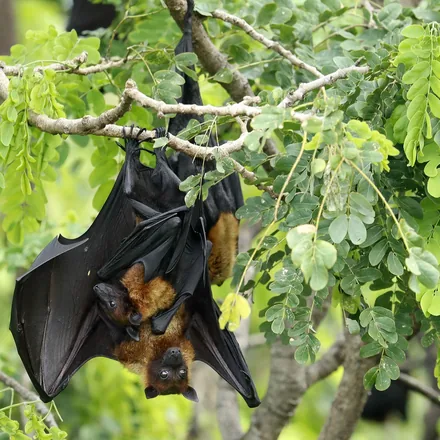
Lyle's Flying Fox Regular Vulnerable
Pteropus lylei
A large fruit bat that gathers in noisy thousands over temple grounds, hanging like dark fruit in the daytime trees.
Where: Temple and village colonies of the central plains. Best: Day roost, dusk flyout.
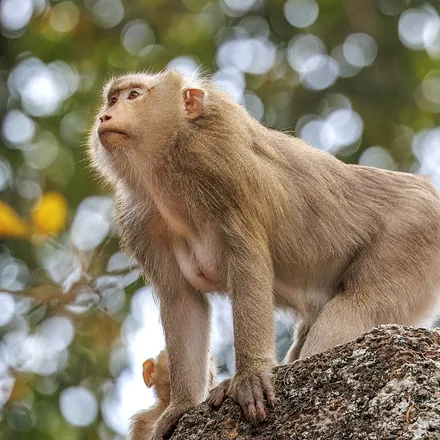
Northern Pig-tailed Macaque Common Vulnerable
Macaca leonina
Named for the short, curled pig tail, a powerful, ground loving monkey often seen troop marching along forest roads.
Where: Khao Yai and widespread. Best: Daytime, roadsides and forest edge.
Asian Golden Cat Rare
Catopuma temminckii
A powerful, foxy-red forest cat of medium size, secretive enough that much of its life remains a mystery.
Where: Undisturbed forest, Kaeng Krachan, Huai Kha Khaeng. Best: Year round.
Banded Palm Civet Rare
Hemigalus derbyanus
A slender, pale civet crossed by bold dark bands, a specialist of the wet southern rainforest floor.
Where: Lowland rainforest of the south, Khao Sok. Best: Night.
Marbled Cat Rare
Pardofelis marmorata
A small, exquisitely marbled cat with an enormous tail, built for a life almost entirely in the trees.
Where: Dense evergreen forest, Kaeng Krachan, Khao Sok. Best: Year round.
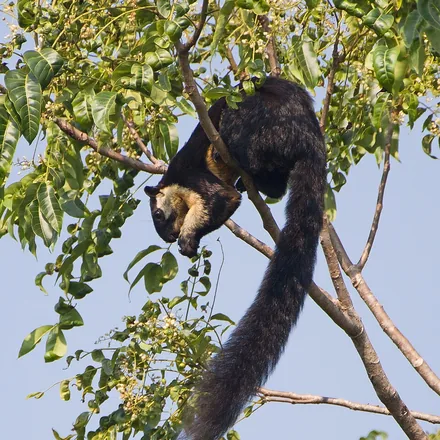
Black Giant Squirrel Regular
Ratufa bicolor
A squirrel the length of your arm, jet black above and buttery below, crashing through the canopy with a metre long tail.
Where: Khao Yai, Khao Sok, Kaeng Krachan. Best: Morning, forest canopy.
Spotted Linsang Rare
Prionodon pardicolor
A slinky, exquisitely spotted little hunter, so slender and marked it looks like a living piece of jewellery.
Where: Hill and evergreen forest, Kaeng Krachan, Khao Yai. Best: Night.
Asiatic Brush-tailed Porcupine Occasional
Atherurus macrourus
A smaller, rat-like porcupine that trails a long tail tipped with a rattling brush of hollow bristles.
Where: Forest near streams, Kaeng Krachan, Khao Sok. Best: Night.
Colugo (Sunda Flying Lemur) Occasional
Galeopterus variegatus
Not a lemur, and it cannot truly fly, but it glides over 100 metres between trees on a cloak of skin like a living kite.
Where: Khao Sok, Hala Bala, deep south. Best: Night, tall rainforest.
Crab-eating Mongoose Occasional
Herpestes urva
A large grizzled mongoose with a bold white neck stripe, usually found busily working a forest stream.
Where: Forest streams and wet ground, Kaeng Krachan, Khao Yai. Best: Day.
Greater Mouse-deer Occasional
Tragulus napu
The larger of the region's mouse-deer, still no bigger than a small dog, haunting the wet forests of the south.
Where: Southern rainforest understorey, Khao Sok. Best: Night.
Large Indian Civet Occasional
Viverra zibetha
A big, ground-dwelling civet with a dramatic black-and-white banded tail and a crest along its spine.
Where: Forest floor and edges nationwide, Khao Yai. Best: Night.
Leopard Cat Occasional
Prionailurus bengalensis
A house-cat-sized hunter dressed like a miniature leopard, the most widespread small cat in Asia.
Where: Forest, scrub and farmland edges nationwide, Khao Yai. Best: Night.
Lesser Mouse-deer Occasional
Tragulus kanchil
One of the smallest hoofed animals in the world, a delicate, rabbit-sized deer relative that tiptoes on pencil-thin legs.
Where: Dense forest understorey, Kaeng Krachan, Khao Sok. Best: Night.
Masked Palm Civet Occasional
Paguma larvata
A plain-bodied civet with a bold white blaze running down its masked face, a nimble night climber after fruit.
Where: Hill and montane forest, Khao Yai, Kaeng Krachan. Best: Night.
Red Giant Flying Squirrel Occasional
Petaurista petaurista
A cat-sized, deep-red squirrel that glides between trees on a membrane, sailing over a hundred metres in a single launch.
Where: Tall forest, Khao Yai, Kaeng Krachan. Best: Dusk and night.
Common Palm Civet Regular
Paradoxurus hermaphroditus
The nocturnal fruit-lover behind civet coffee, at home in forests, plantations and even city roofs.
Where: Forest, plantations and town roofs nationwide, Khao Yai. Best: Night.
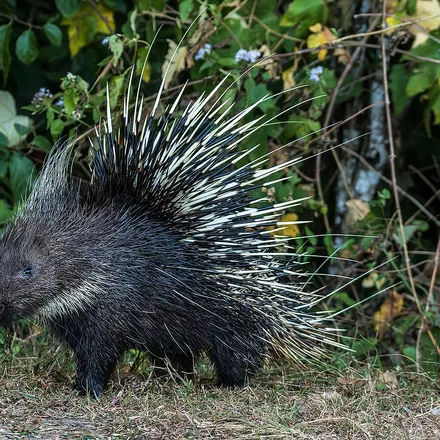
Malayan Porcupine Regular
Hystrix brachyura
A large, ground-dwelling porcupine that rattles a crown of black-and-white quills when threatened.
Where: Forest and edges nationwide, Khao Yai, Kaeng Krachan. Best: Night.
Northern Red Muntjac Regular
Muntiacus vaginalis
The barking deer of Thai forests, a small russet deer whose sharp, dog-like alarm call rings through the trees.
Where: Forest edges and clearings nationwide, Khao Yai, Kui Buri. Best: Dawn, dusk and night.
Northern Treeshrew Regular
Tupaia belangeri
A squirrel-lookalike that is not a rodent at all, but a close relative of primates with a famously fast metabolism.
Where: Forest floor and low trees nationwide, Khao Yai. Best: Day.
Yellow-throated Marten Regular
Martes flavigula
A big, bounding, golden-throated marten that hunts boldly by day and fears almost nothing its own size.
Where: Forest nationwide, Khao Yai, Kaeng Krachan. Best: Day.
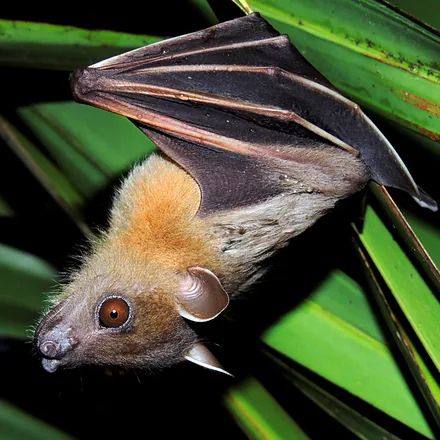
Greater Short-nosed Fruit Bat Common
Cynopterus sphinx
A small fruit bat that builds itself a shelter by chewing palm and fig leaves into a cosy roosting tent.
Where: Gardens, plantations and forest edges nationwide. Best: Night.
Variable Squirrel Common
Callosciurus finlaysonii
A tree squirrel of astonishing colour variety, some populations pure creamy white, others red, grey or two-toned.
Where: Gardens, parks and forest nationwide, Khao Yai. Best: Day.
Wild Boar Common
Sus scrofa
The rugged wild pig at the base of the food chain, rooting up the forest and feeding the region's great predators.
Where: Forest, clearings and salt licks nationwide, Khao Yai, Kui Buri. Best: Day and night.
Dry forest and grassland mammals
10 species
Chinese Pangolin Very rare Critically Endangered
Manis pentadactyla
The northern cousin of the Sunda pangolin, more of a burrower, and just as devastated by the illegal trade.
Where: Hill forest of the north. Best: Night.
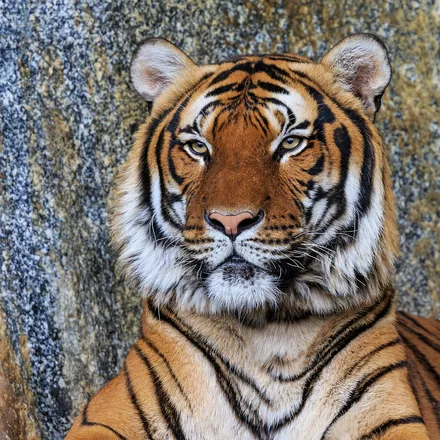
Indochinese Tiger Very rare Endangered
Panthera tigris
The largest cat in Asia and its top predator, a striped ghost most people only ever know from a paw print.
Where: Huai Kha Khaeng, Thung Yai, Kaeng Krachan. Best: Dry season, dawn and dusk.
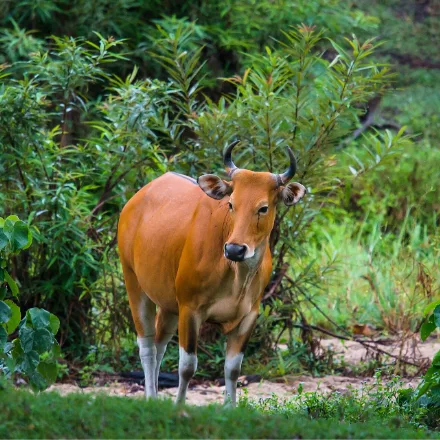
Banteng Rare Endangered
Bos javanicus
A sleek wild ox with a white rump patch and white stockings, far rarer and more elegant than the domestic cattle it resembles.
Where: Dry forest and clearings, Huai Kha Khaeng, Kui Buri. Best: Dawn and dusk.
Eld's Deer (Brow-antlered Deer) Rare Endangered
Rucervus eldii
An elegant deer whose antlers sweep forward in a great bow, a grassland specialist now clinging on in a few reserves.
Where: Dry forest and grassland, Huai Kha Khaeng and reserves. Best: Dawn and dusk.
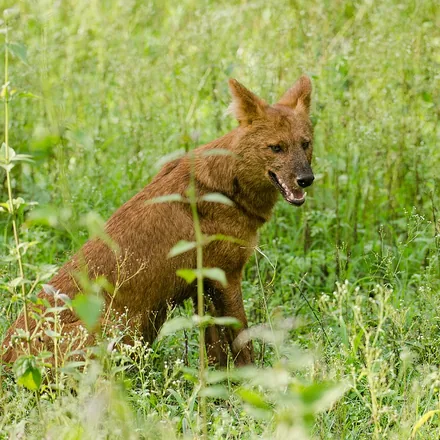
Dhole (Asiatic Wild Dog) Occasional Endangered
Cuon alpinus
A russet red pack hunter that whistles to coordinate the chase, one of Asia's most endangered predators.
Where: Khao Yai, Kaeng Krachan, Huai Kha Khaeng. Best: Early morning, grasslands and trails.
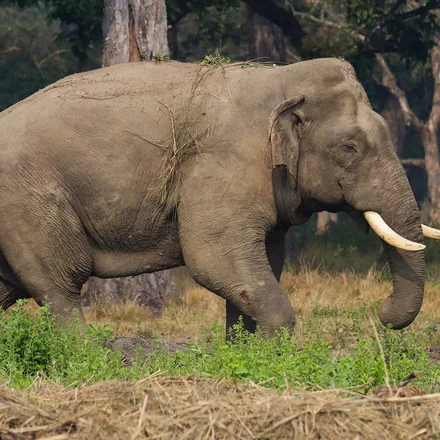
Asian Elephant Regular Endangered
Elephas maximus
The largest land animal in Asia, and a genuinely wild one is worth seeking out over the camp elephants most tourists meet.
Where: Khao Yai, Kui Buri, Kaeng Krachan. Best: Dry season (Nov-Apr), dawn and dusk.
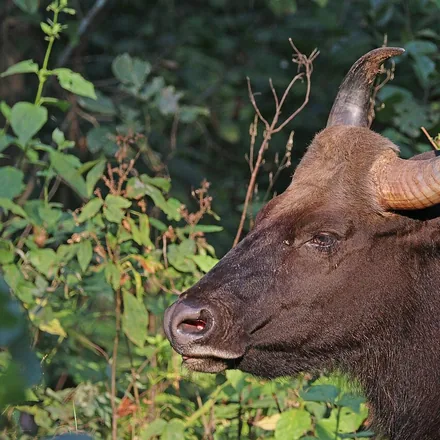
Gaur Regular Vulnerable
Bos gaurus
The largest wild cattle on Earth, a muscle bound giant that dwarfs any farm cow.
Where: Kui Buri, Khao Yai, Kaeng Krachan. Best: Late afternoon, dry season.
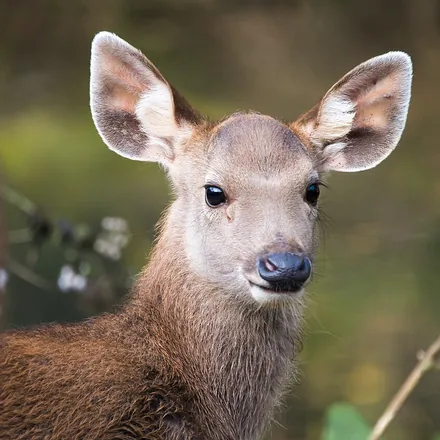
Sambar Deer Common Vulnerable
Rusa unicolor
Asia's largest deer, and often a park's most dependable big animal, with stags carrying rugged three tined antlers.
Where: Khao Yai, Kaeng Krachan. Best: Late afternoon to night, grasslands and salt licks.
Jungle Cat Rare
Felis chaus
A tall, long-legged, plain-coated cat of reedbeds and grassland, more at home in the open than the deep forest.
Where: Grassland, marsh edges and scrub, Khao Sam Roi Yot. Best: Day and dusk.
Indochinese Ground Squirrel Regular
Menetes berdmorei
A ground-loving squirrel of open forest and field edges, striped along the flanks and rarely up a tree.
Where: Dry forest, scrub and farmland, Huai Kha Khaeng area. Best: Day.
Mountain and karst mammals
6 species
Chinese Goral Rare Vulnerable
Naemorhedus griseus
A small, nimble goat-antelope of northern mountain crags, blending grey against the rock it lives on.
Where: Steep northern mountain slopes and crags. Best: Dawn and dusk.
Mainland Serow Rare Vulnerable
Capricornis sumatraensis
A shaggy, goat-like antelope of steep limestone cliffs, sure-footed on ground almost nothing else can climb.
Where: Limestone cliffs and steep forest, Khao Sam Roi Yot, Kaeng Krachan. Best: Dawn and dusk.
Kitti's Hog-nosed Bat (Bumblebee Bat) Rare
Craseonycteris thonglongyai
The smallest mammal on Earth, a bat the size of a bumblebee that weighs less than a two-gram coin.
Where: Limestone caves of the west, Sai Yok and Kanchanaburi. Best: Dusk.
Assamese Macaque Occasional
Macaca assamensis
A stocky highland macaque of limestone hills and northern forests, easily missed among its commoner relatives.
Where: Limestone hills and northern forests, Kaeng Krachan area. Best: Year round, day.
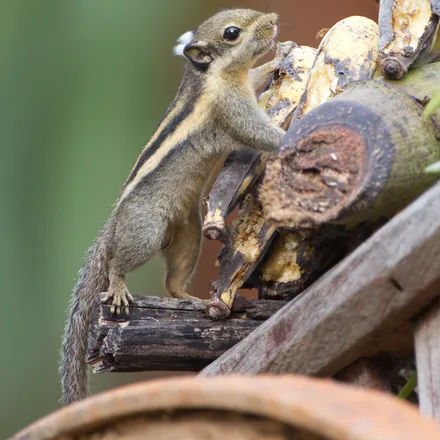
Himalayan Striped Squirrel Common
Tamiops mcclellandii
A tiny, chipmunk-like squirrel streaked with pale racing stripes, forever flickering over the bark.
Where: Hill forest nationwide, Khao Yai, Kaeng Krachan. Best: Day.
Wrinkle-lipped Free-tailed Bat Common
Chaerephon plicatus
The bat behind Thailand's great cave exodus, when millions stream out at dusk in a river of wings.
Where: Large limestone caves nationwide, Khao Yai bat cave. Best: Dusk exodus.
Freshwater and wetland mammals
6 species
Hairy-nosed Otter Very rare Endangered
Lutra sumatrana
One of the rarest otters on Earth, so seldom seen it was once feared extinct across its range.
Where: Peat swamps and coastal wetlands of the south. Best: Day and dusk.
Otter Civet Very rare Endangered
Cynogale bennettii
A bizarre, otter-like civet built for water, with closable nostrils and a face full of whiskers.
Where: Lowland swamps and stream forest of the south. Best: Night.
Hog Deer Rare Endangered
Axis porcinus
A stocky grassland deer that runs head-down like a hog through tall grass rather than leaping like other deer.
Where: Floodplain grassland and wetland reserves. Best: Dawn and dusk.
Fishing Cat Rare Vulnerable
Prionailurus viverrinus
A wild cat that dives for fish, with partially webbed toes and a genuine love of swimming.
Where: Khao Sam Roi Yot, Gulf coast wetlands. Best: Night, mangroves and marshes.
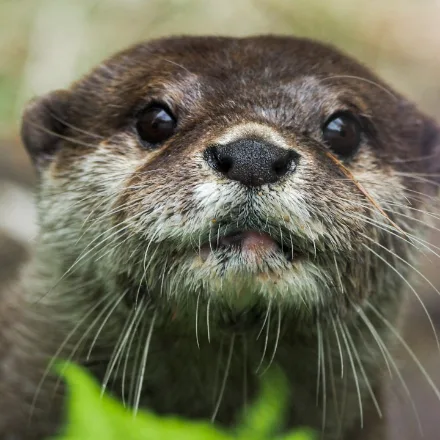
Asian Small-clawed Otter Occasional Vulnerable
Aonyx cinereus
The smallest otter in the world, a sociable, hand-using charmer that feels for prey with nimble fingers.
Where: Streams, marshes and mangroves, Khao Sam Roi Yot, Trang and Koh Libong. Best: Day.
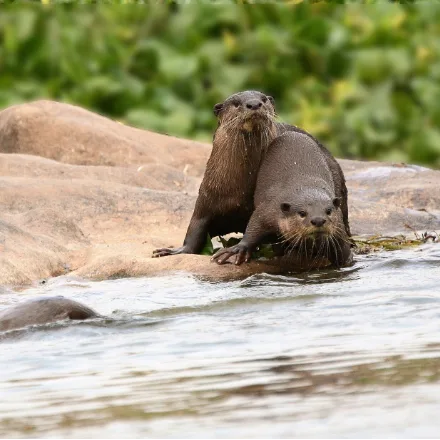
Smooth-coated Otter Occasional Vulnerable
Lutrogale perspicillata
Family flotillas of sleek otters fishing, wrestling and chirruping through rivers and pools, endlessly watchable.
Where: Kaeng Krachan (Ban Krang), Khao Sam Roi Yot. Best: Morning, rivers, pools and mangroves.
Mangrove and coastal mammals
4 species
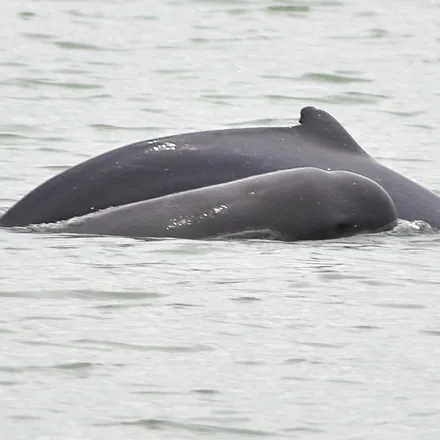
Irrawaddy Dolphin Regular Endangered
Orcaella brevirostris
A snub nosed, almost smiling dolphin with no beak, including tiny populations that live in brackish lakes and rivers.
Where: Hua Hin, Songkhla Lake, Trat coast. Best: Early morning, coastal boat trips.
Indo-Pacific Finless Porpoise Rare Vulnerable
Neophocaena phocaenoides
A shy, finless little porpoise with a smiling face that surfaces without a splash.
Where: Shallow coastal Gulf and Andaman waters. Best: Year round.
Dugong Occasional Vulnerable
Dugong dugon
The gentle sea cow said to have inspired mermaid legends, grazing seagrass meadows in warm shallow seas.
Where: Koh Libong (Trang), Andaman seagrass meadows. Best: Calm season, seagrass shallows.
Indo-Pacific Humpback Dolphin Occasional Vulnerable
Sousa chinensis
Born dark grey and turning pink with age, the colour coming from blood vessels under unpigmented skin.
Where: Shallow coastal water and estuaries; Khanom, the upper Gulf and Ao Phang Nga. Best: Year round, calmest seas Mar-May.
Whales and dolphins
8 species
False Killer Whale Rare
Pseudorca crassidens
Has been recorded offering captured fish to divers and to other dolphins, apparently as a gift.
Where: Offshore Andaman waters; liveaboard crossings. Best: Nov-Apr.
Indo-Pacific Bottlenose Dolphin Regular
Tursiops aduncus
The classic bottlenose of warm coasts, sociable, clever and quick to ride a bow wave.
Where: Coastal Andaman and Gulf waters. Best: Year round.
Risso's Dolphin Rare
Grampus griseus
Old males are almost white, scarred head to tail by the teeth of other Risso's and the beaks of the squid they eat.
Where: Deep water off the Andaman shelf edge; longer liveaboard crossings. Best: Nov-Apr.
Short-finned Pilot Whale Rare
Globicephala macrorhynchus
Females go through menopause and live decades beyond breeding, one of only a handful of species on earth that do.
Where: Deep water beyond the Andaman shelf edge; liveaboard crossings to the Burma Banks. Best: Nov-Apr.
Bryde's Whale Occasional
Balaenoptera edeni
A warm-water baleen whale that lunges up through bait balls with its mouth wide open.
Where: Upper Gulf of Thailand, off Bang Taboon and Phetchaburi. Best: Aug-Nov.
Pantropical Spotted Dolphin Occasional
Stenella attenuata
Calves are born unspotted and acquire their speckling through life, so you can read a dolphin's age off its skin.
Where: Deep water off the Andaman coast; Similan and Surin crossings. Best: Nov-Apr.
Spinner Dolphin Regular
Stenella longirostris
A small, slender dolphin that leaps clear of the sea and spins like a top in mid-air.
Where: Offshore Andaman, around the Similans and Surin. Best: Nov-Apr.
Omura's Whale Ultra rare
Balaenoptera omurai
Only described as a species in 2003, and not seen alive and confirmed in the wild until 2015.
Where: Offshore Andaman shelf waters; liveaboard crossings. Best: Nov-Apr.
Planning and responsible watching
Most of the mammals above are seen at dawn, at dusk or after dark, which means staying inside or beside a park rather than day-tripping in. Book a park-approved guide for night drives, keep your distance, never feed anything, and choose wild-sighting operators over elephant camps and captive attractions. The rarer the animal, the more your behaviour matters. Every conservation status on this page is the current assessment from the IUCN Red List.
Find guided wildlife trips in Thailand
Some links on this page are affiliate links. If you book through them, Wildseer may earn a small commission at no extra cost to you.
Frequently asked questions
What is the best place to see wild elephants in Thailand?
Kui Buri National Park is the most reliable, with late afternoon viewing at the grassland areas. Khao Yai and Kaeng Krachan also hold wild herds, but sightings there are less predictable.
Can you see tigers in Thailand?
Yes, but genuinely rarely. A small wild population survives in the western forest complex, mainly Huai Kha Khaeng and Thung Yai, where access is restricted. Treat a sighting as extraordinary luck rather than an itinerary item.
When is the best time to see mammals in Thailand?
November to April, the dry season, when animals concentrate around water and forest tracks are passable. Dawn and dusk are the productive hours in every month.
Explore more Thailand wildlife
 Birds of Thailand
 Reptiles and Amphibians of Thailand
 Fish of Thailand
 Sharks and Rays of Thailand
 Reef Invertebrates of Thailand
 Insects and Spiders of Thailand
Part of the Wildlife in Thailand guide.