
[HERO IMAGE: replace this block with an Image block, class ws-hero, alignment None]
Khao Sam Roi Yot packs an unusual amount into a small park: limestone peaks straight out of the sea, Thailand’s largest freshwater marsh behind them, mangrove creeks, sandy beaches and a cave system that empties bats into the sky at dusk. The mix is why a morning here can produce dusky langurs on a karst slope, otters in a canal and a jacana walking on lily pads inside two hours.
The marsh and the tidal flats north of the park are the real draw, and they run on a migratory calendar. From November to March the shorebirds arrive, including two of the rarest waders on earth. This page lists what the guide records for Khao Sam Roi Yot specifically: the marsh boardwalk, the caves, the shore, the month, and how likely each animal really is.
Highlights
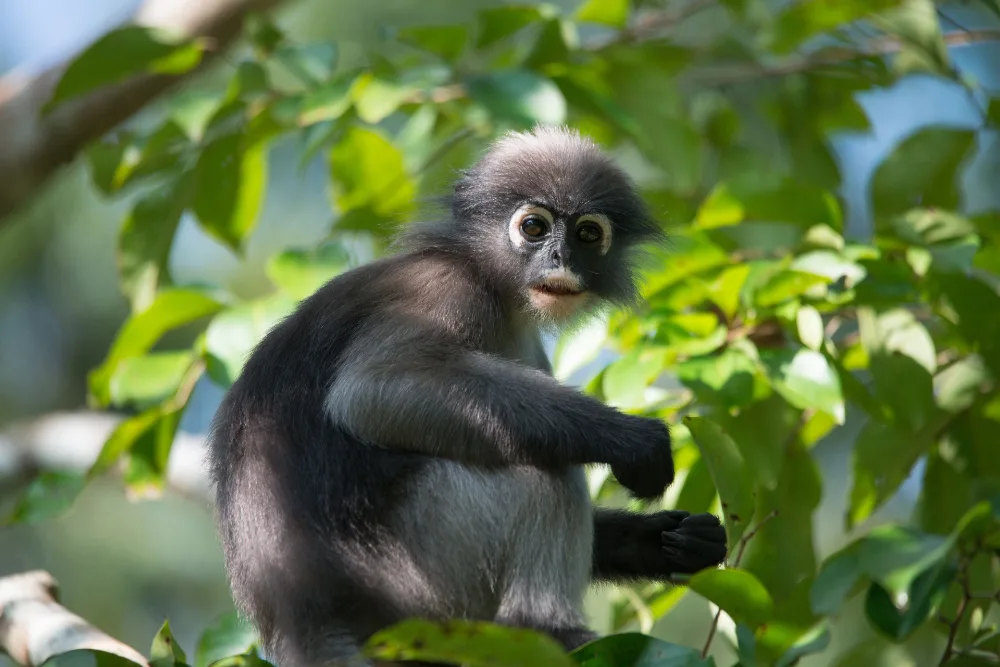
Dusky Langur (Spectacled Leaf Monkey)
White spectacles make the adults look permanently startled, and the bright orange babies are pure crowd pleasers. Where: Limestone slopes above the visitor areas and around Phraya Nakhon. Best: Year round, morning.
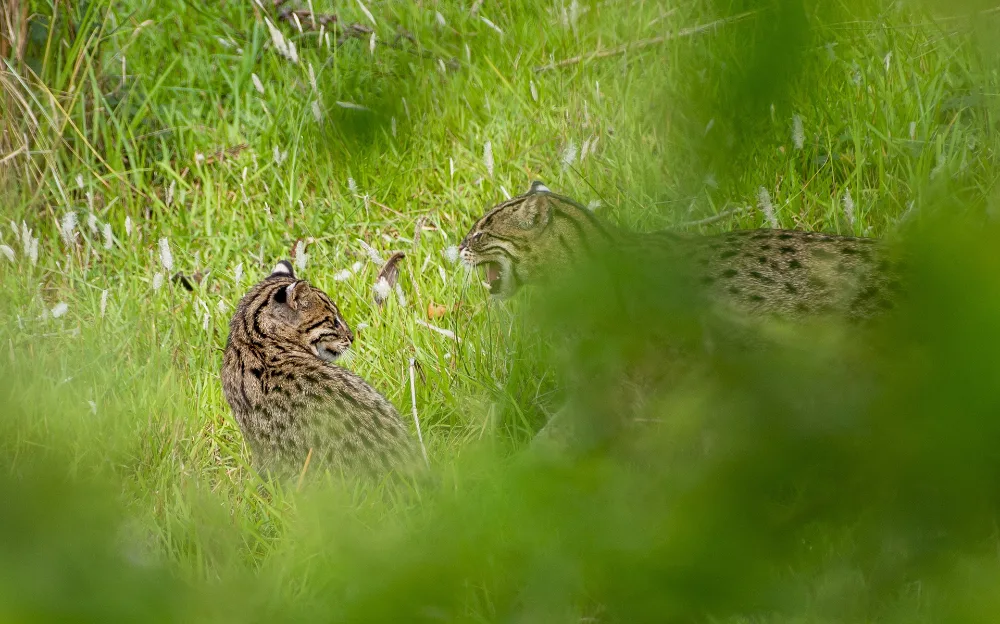
Fishing Cat
A wild cat that dives for fish, with partially webbed toes and a genuine love of swimming. Where: Reedbeds and canals in the freshwater marsh. Best: Year round, night.
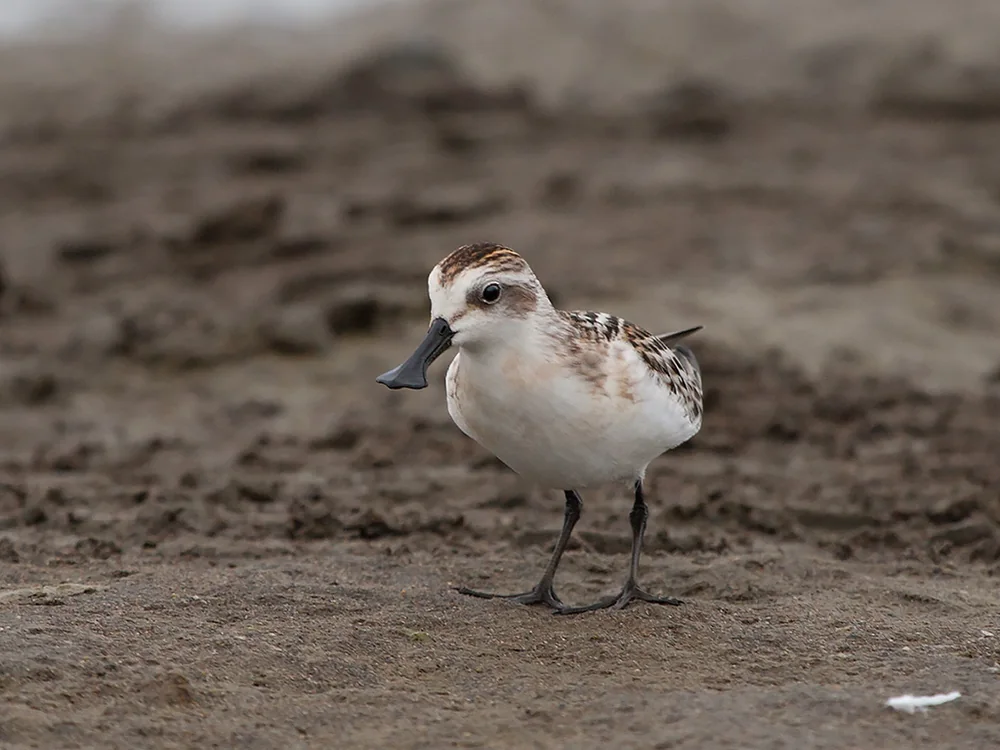
Spoon-billed Sandpiper
One of the world's rarest and most charismatic shorebirds, tiny and armed with an unmistakable spatula bill. Where: Salt pans and mudflats along the Gulf shore nearby. Best: Nov-Mar.
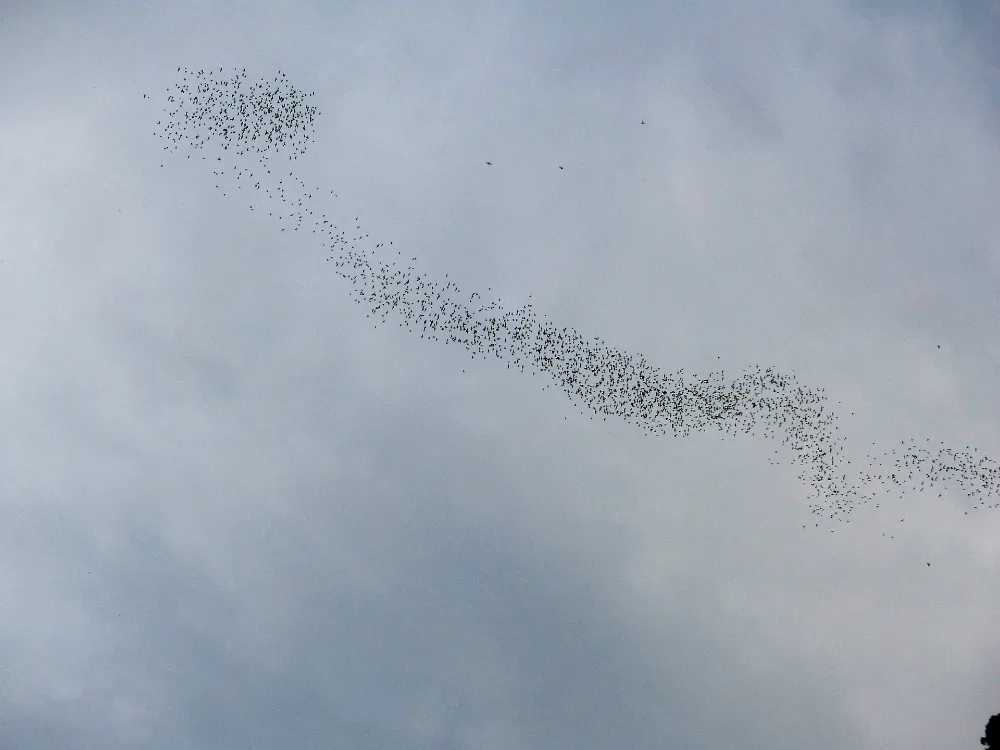
Wrinkle-lipped Free-tailed Bat
The bat behind Thailand's great cave exodus, when millions stream out at dusk in a river of wings. Where: Cave systems in the limestone hills. Best: Year round, dusk.
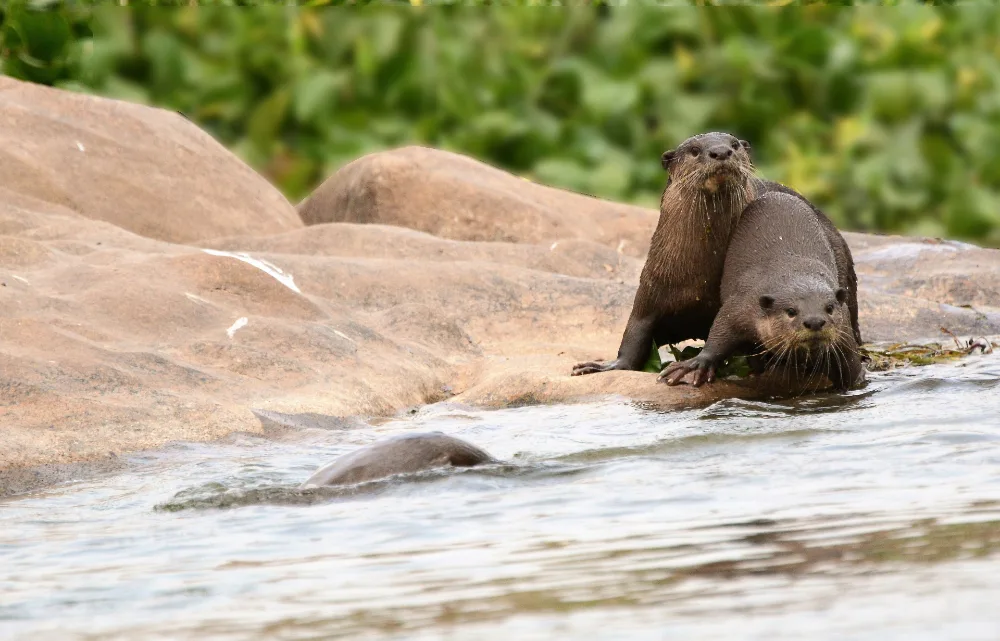
Smooth-coated Otter
Family flotillas of sleek otters fishing, wrestling and chirruping through rivers and pools, endlessly watchable. Where: Canals and the marsh channels. Best: Year round, early morning.
Mammals
8 species
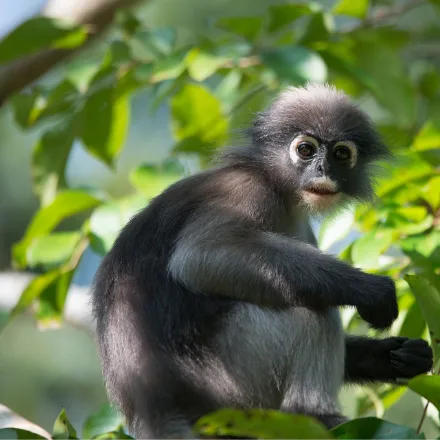
Dusky Langur (Spectacled Leaf Monkey) Common Endangered
Trachypithecus obscurus
White spectacles make the adults look permanently startled, and the bright orange babies are pure crowd pleasers.
Where: Limestone slopes above the visitor areas and around Phraya Nakhon. Best: Year round, morning. The park's signature primate and easy to find on the karst edges.
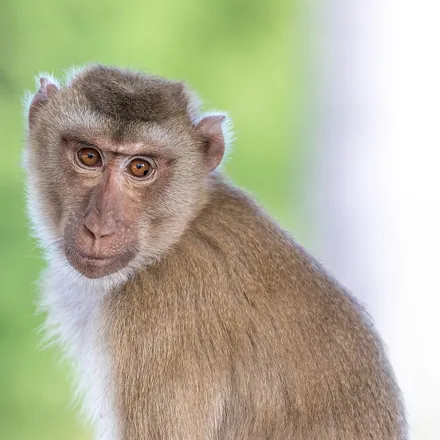
Long-tailed Macaque Common Endangered
Macaca fascicularis
The bold, water-loving monkey of temples and mangroves, and despite its ubiquity now one of the most heavily exploited primates on Earth.
Where: Coastal forest, mangroves and the cave trails. Best: Year round, day. Bold around the Phraya Nakhon trail. Keep bags closed.
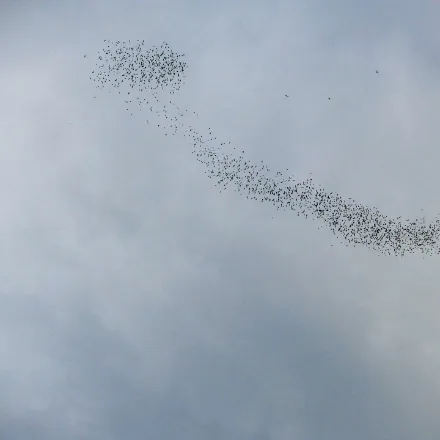
Wrinkle-lipped Free-tailed Bat Common
Chaerephon plicatus
The bat behind Thailand's great cave exodus, when millions stream out at dusk in a river of wings.
Where: Cave systems in the limestone hills. Best: Year round, dusk.
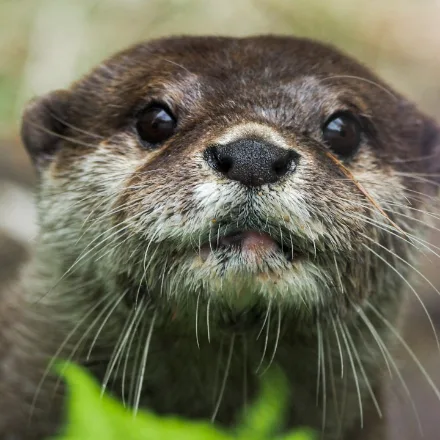
Asian Small-clawed Otter Occasional Vulnerable
Aonyx cinereus
The smallest otter in the world, a sociable, hand-using charmer that feels for prey with nimble fingers.
Where: Mangrove creeks and quiet canals. Best: Year round, early morning.
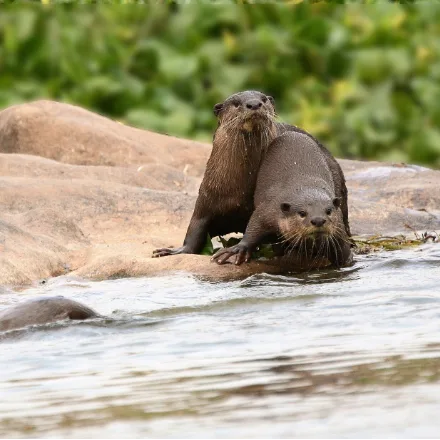
Smooth-coated Otter Occasional Vulnerable
Lutrogale perspicillata
Family flotillas of sleek otters fishing, wrestling and chirruping through rivers and pools, endlessly watchable.
Where: Canals and the marsh channels. Best: Year round, early morning.
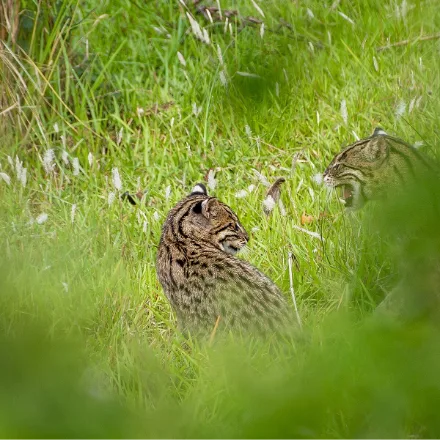
Fishing Cat Rare Vulnerable
Prionailurus viverrinus
A wild cat that dives for fish, with partially webbed toes and a genuine love of swimming.
Where: Reedbeds and canals in the freshwater marsh. Best: Year round, night. The marsh here is one of the better Thai sites, but sightings are still exceptional.
Jungle Cat Rare
Felis chaus
A tall, long-legged, plain-coated cat of reedbeds and grassland, more at home in the open than the deep forest.
Where: Marsh edges and scrub. Best: Year round, dusk.
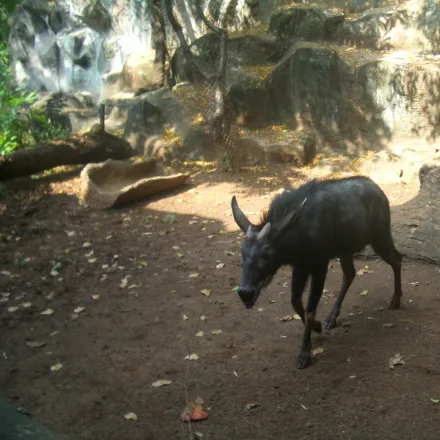
Mainland Serow Rare Vulnerable
Capricornis sumatraensis
A shaggy, goat-like antelope of steep limestone cliffs, sure-footed on ground almost nothing else can climb.
Where: Limestone cliffs and karst peaks. Best: Year round, dawn. Look up at the cliff faces rather than along the trails.
Birds
12 species
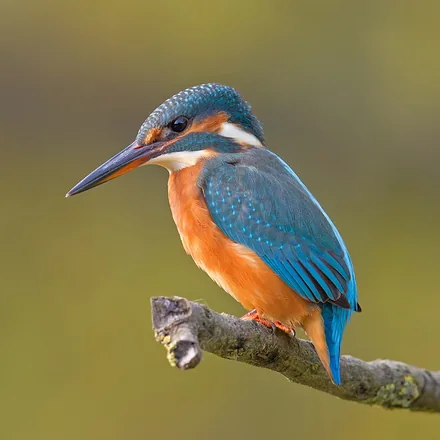
Common Kingfisher Common
Alcedo atthis
A dazzling blue dart along the stream, small enough to sit in a palm yet impossible to miss when it flies.
Where: Canals and marsh channels. Best: Nov-Mar, morning.
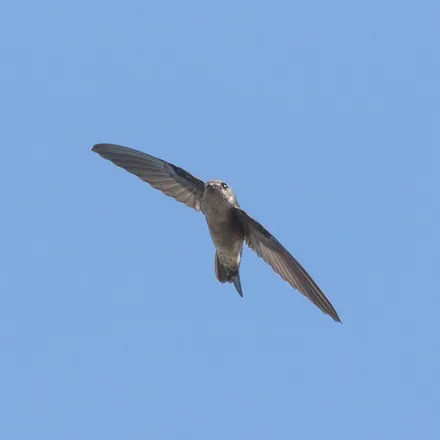
Germain's Swiftlet Common
Aerodramus germani
The little cave swift whose nest of pure saliva is harvested from sheer sea caves for bird's nest soup.
Where: Caves and over the marsh. Best: Year round, day.
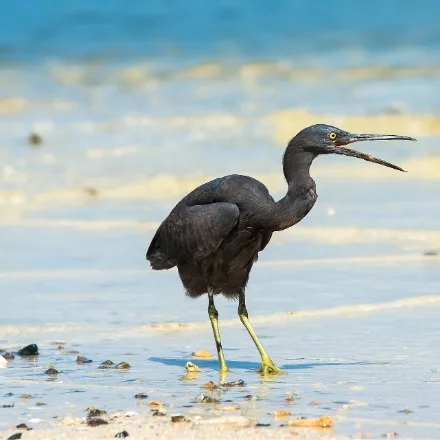
Pacific Reef Heron Regular
Egretta sacra
Comes in two entirely different colours, charcoal grey and pure white, and both can hatch in the same nest.
Where: Rocky shore and the beach at Laem Sala. Best: Year round, on a falling tide.
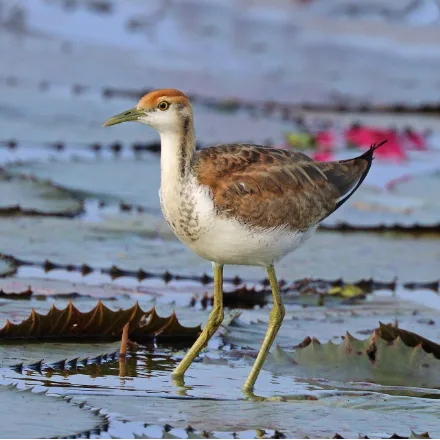
Pheasant-tailed Jacana Regular
Hydrophasianus chirurgus
A lily-trotting waterbird that walks on floating leaves on enormous toes, growing a long curved tail when it breeds.
Where: Floating vegetation in the marsh. Best: Year round, breeding plumage Jun-Sep. In breeding plumage this is one of the most striking birds in Thailand.
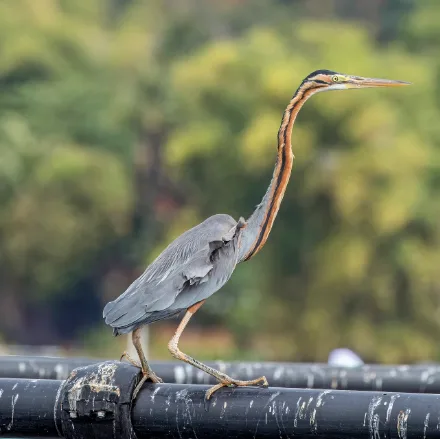
Purple Heron Regular
Ardea purpurea
A slender, snake-necked heron in rich chestnut and slate that melts into the reeds it hunts among.
Where: Reedbeds in the freshwater marsh. Best: Nov-Apr, morning.
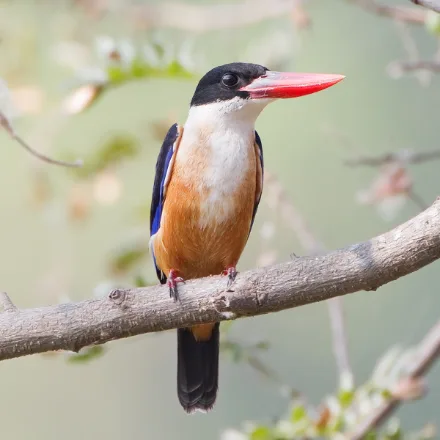
Black-capped Kingfisher Occasional
Halcyon pileata
A striking mangrove kingfisher in black, white and deep purple-blue, a winter visitor to Thailand's coasts.
Where: Mangrove edges and coastal canals. Best: Nov-Mar.
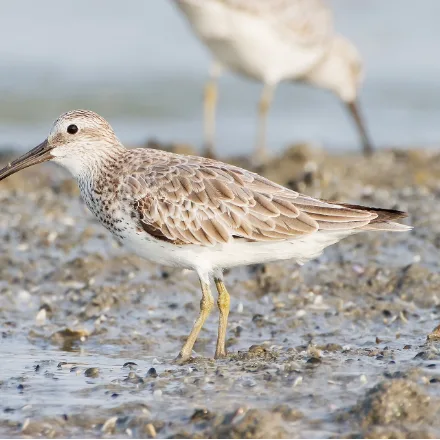
Great Knot Occasional Endangered
Calidris tenuirostris
Flies from Siberia to Australia with a single refuelling stop, and losing that one mudflat has nearly finished the species.
Where: Tidal mudflats north of the park. Best: Nov-Mar.
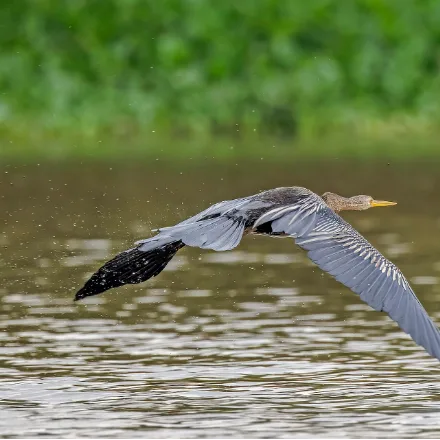
Oriental Darter Occasional Near Threatened
Anhinga melanogaster
The snakebird, swimming with only its slim neck above water before it spears a fish on a dagger bill.
Where: Open water in the marsh. Best: Nov-Apr.
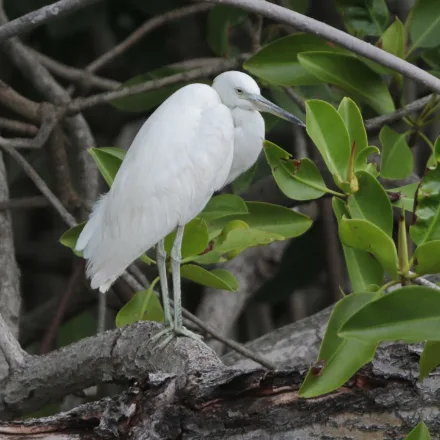
Chinese Egret Rare Vulnerable
Egretta eulophotes
Hunts by sprinting across the mudflat with wings half open, a running dash that no other egret uses.
Where: Tidal flats and salt pans. Best: Nov-Mar.
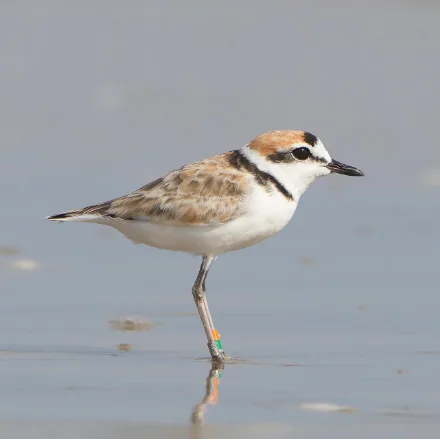
Malaysian Plover Rare Near Threatened
Anarhynchus peronii
Nests in a scrape on open beach so well camouflaged that the greatest danger is being stepped on.
Where: Quiet sandy beaches. Best: Year round, early morning at low tide.
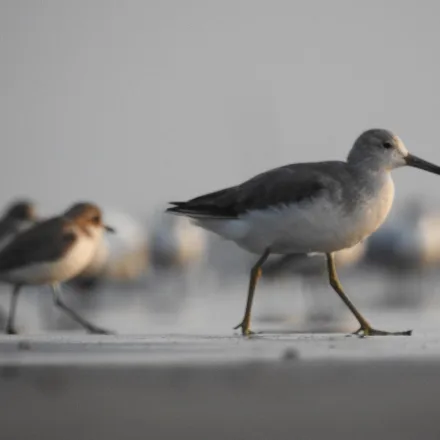
Nordmann's Greenshank Rare Endangered
Tringa guttifer
One of the world's rarest waders, a stocky greenshank that winters on Thai mudflats among thousands of commoner shorebirds.
Where: Tidal mudflats. Best: Nov-Mar.
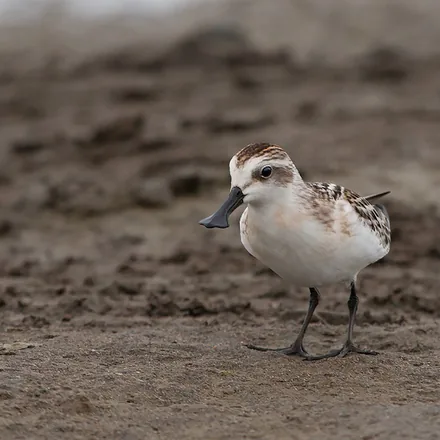
Spoon-billed Sandpiper Rare Critically Endangered
Calidris pygmaea
One of the world's rarest and most charismatic shorebirds, tiny and armed with an unmistakable spatula bill.
Where: Salt pans and mudflats along the Gulf shore nearby. Best: Nov-Mar. The Inner Gulf sites north of here are the reliable ones; treat a bird here as a bonus.
Reptiles
1 species
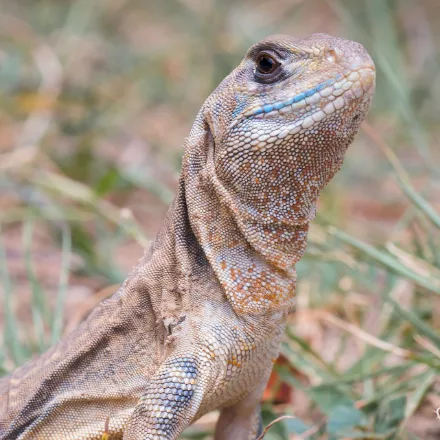
Common Butterfly Lizard Occasional
Leiolepis belliana
A ground lizard that flares brilliant orange and black bars on its flanks like opening butterfly wings.
Where: Sandy ground and dune scrub. Best: Year round, warm hours.
Spiders and scorpions
2 species
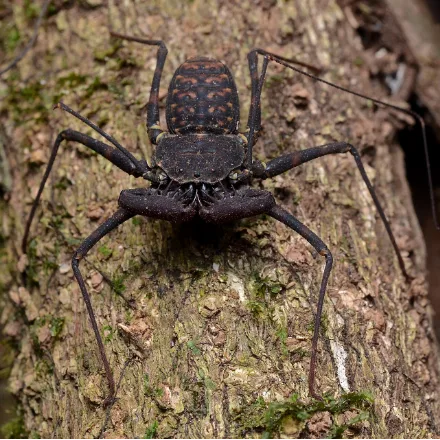
Tailless Whip Scorpion Regular
Phrynichus orientalis
Looks genuinely alarming and is completely harmless: no venom, no sting, and a pair of legs converted into three foot feelers.
Where: Cave walls and karst overhangs. Best: Year round, night. Harmless, and the caves here are the easiest place in Thailand to see one.
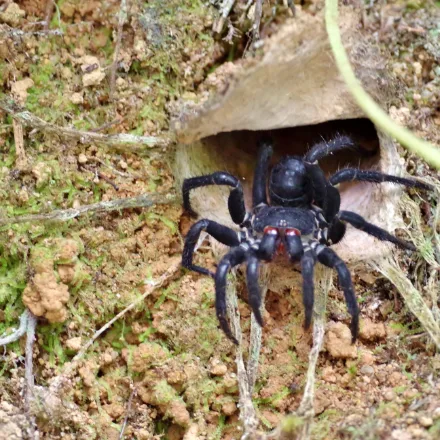
Segmented Trapdoor Spider Rare
Liphistius sp.
The most primitive spiders alive, with a visibly segmented abdomen, essentially unchanged for 300 million years.
Where: Earth banks on the cave trails. Best: May-Oct, night.
Planning and responsible watching
Two routines cover the park. Dawn at the freshwater marsh boardwalk for herons, jacanas, kingfishers and otters, then the limestone for langurs and the cave trails, with Phraya Nakhon best in mid-morning when the light shaft hits the pavilion. Serious shorebirding happens on the tidal flats and salt pans just north of the park boundary rather than inside it, and needs a falling tide and a telescope. November to March is the season for everything migratory. Stay on the boardwalks in the marsh, keep clear of the macaques at the cave car parks, and never feed them.
Find guided birding and cave trips for Khao Sam Roi Yot
Some links on this page are affiliate links. If you book through them, Wildseer may earn a small commission at no extra cost to you.
Frequently asked questions
What wildlife can you see at Khao Sam Roi Yot?
Dusky langurs, long-tailed macaques and a large bat exodus are close to dependable. The marsh gives herons, jacanas, kingfishers and otters. The shore adds migratory waders from November to March.
Can you see the spoon-billed sandpiper here?
On the salt pans and flats along the Gulf shore near the park, in winter, with a telescope and patience. It is one of the rarest birds in the world, so treat any sighting as a serious piece of luck.
When is the best time to visit?
November to March for the birds and comfortable weather. The langurs, otters and bats are there year round.
Is it worth a day trip from Bangkok or Hua Hin?
From Hua Hin comfortably, from Bangkok at a push. Arrive at dawn for the marsh, because the middle of the day is the quietest time here.
Explore Thailand wildlife by group
- Mammals of Thailand
- Birds of Thailand
- Reptiles and Amphibians of Thailand
- Fish of Thailand
- Sharks and Rays of Thailand
- Reef Invertebrates of Thailand
- Insects and Spiders of Thailand
Part of the Wildlife in Thailand guide.
Explore Thailand wildlife by place
Image credits
image credits
- Dusky Langur: Rushenb | CC BY-SA 3.0
- Fishing Cat: Sanjay Tha Shrestha | CC BY-SA 4.0
- Spoon-billed sandpiper: Gin tonic | CC BY-SA 3.0
- wrinkle-lipped-free-tailed-bat: Bernard DUPONT from FRANCE | CC BY-SA 2.0
- Smooth-coated Otter: Rk20july | CC BY-SA 4.0
- Dusky Langur: Rushenb | CC BY-SA 3.0
- Long-tailed Macaque: Basile Morin | CC BY-SA 4.0
- Wrinkle-lipped Free-tailed Bat: Bernard DUPONT from FRANCE | CC BY-SA 2.0
- Asian Small-clawed Otter: Mike Prince | CC BY 2.0
- Smooth-coated Otter: Rk20july | CC BY-SA 4.0
- Fishing Cat: Sanjay Tha Shrestha | CC BY-SA 4.0
- Mainland Serow: No machine-readable author provided. LigerCommon assumed (based on copyright claims). | Public domain
- Common Kingfisher: Andreas Trepte | CC BY-SA 2.5
- Germain’s Swiftlet: Wich'yanan L | CC BY 4.0
- Pacific Reef Heron: Rushen | CC BY-SA 2.0
- Pheasant-tailed Jacana: Charles J. Sharp | CC BY-SA 4.0
- Purple Heron: Charles J. Sharp | CC BY-SA 4.0
- Black-capped Kingfisher: JJ Harrison ( ) | CC BY-SA 3.0
- Great Knot: JJ Harrison | CC BY-SA 3.0
- Oriental Darter: Charles J. Sharp | CC BY-SA 4.0
- Chinese Egret: Ian Dugdale | CC BY 4.0
- Malaysian Plover: JJ Harrison ( ) | CC BY 3.0
- Nordmann’s Greenshank: Dr. Raju Kasambe | CC BY-SA 4.0
- Spoon-billed Sandpiper: Gin tonic | CC BY-SA 3.0
- Common Butterfly Lizard: Rushenb | CC BY-SA 4.0
- Tailless Whip Scorpion: Geoff Gallice from Gainesville, FL, USA | CC BY 2.0
- Segmented Trapdoor Spider: thibaudaronson | CC BY-SA 4.0