
[HERO IMAGE: replace this block with an Image block, class ws-hero, alignment None]
Khao Yai wildlife is the easiest serious wildlife watching in Thailand. The park is three hours from Bangkok, the main road runs through grassland, salt licks and closed forest in the same afternoon, and the animals have long since stopped caring about vehicles. Gibbons sing over the visitor centre. Sambar graze the lawns. Elephants walk the verges at dusk and traffic simply stops.
Easy does not mean thin. This is a UNESCO World Heritage forest with gaur, dhole, four hornbill species and a bat cave that empties several million bats into the sky every evening. This page lists what the guide records for Khao Yai specifically: the trail, tower or roadside, the month, and how likely each animal really is.
Highlights
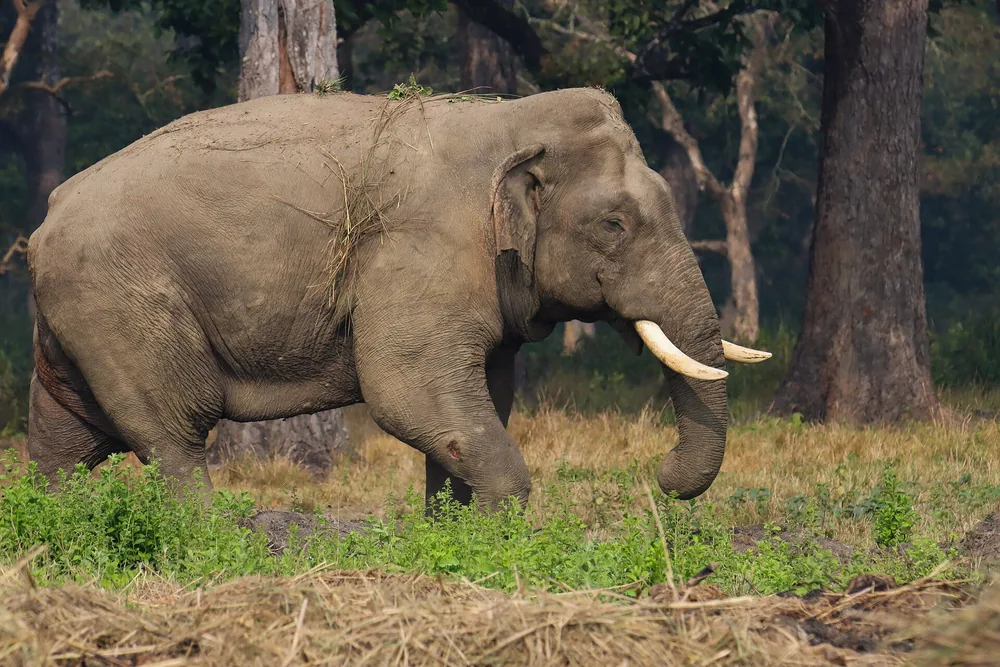
Asian Elephant
The largest land animal in Asia, and a genuinely wild one is worth seeking out over the camp elephants most tourists meet. Where: Km 30 grasslands, the Nong Pak Chi salt lick and roadside verges at dusk. Best: Nov-Feb, last hour of light, then Mar-Apr at the salt licks.
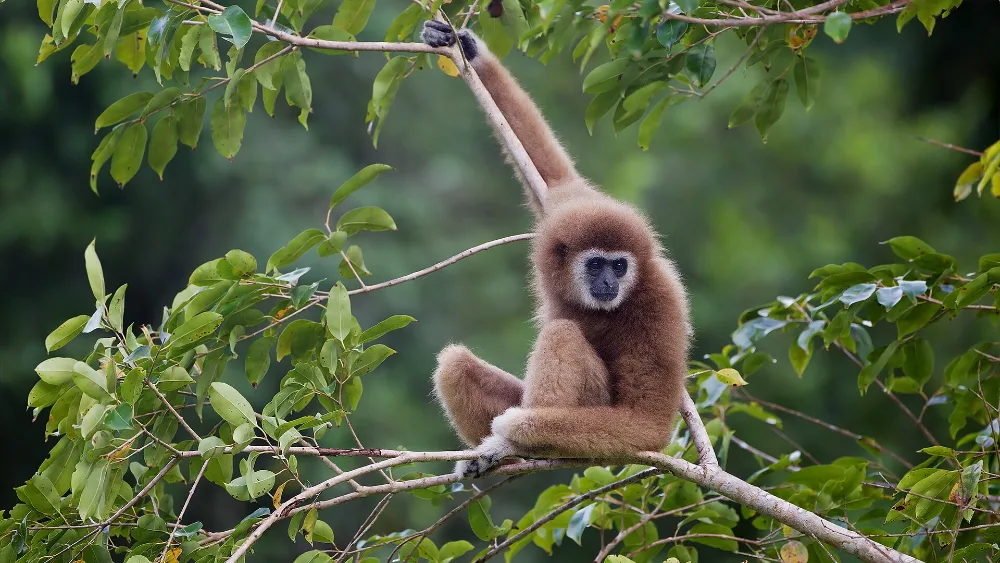
White-handed (Lar) Gibbon
You hear them before dawn even breaks, the whooping duet of gibbons that is the definitive soundtrack of Asian rainforest. Where: Trail 6 and the forest around Haew Suwat. Best: Year round, 06:00-08:30.
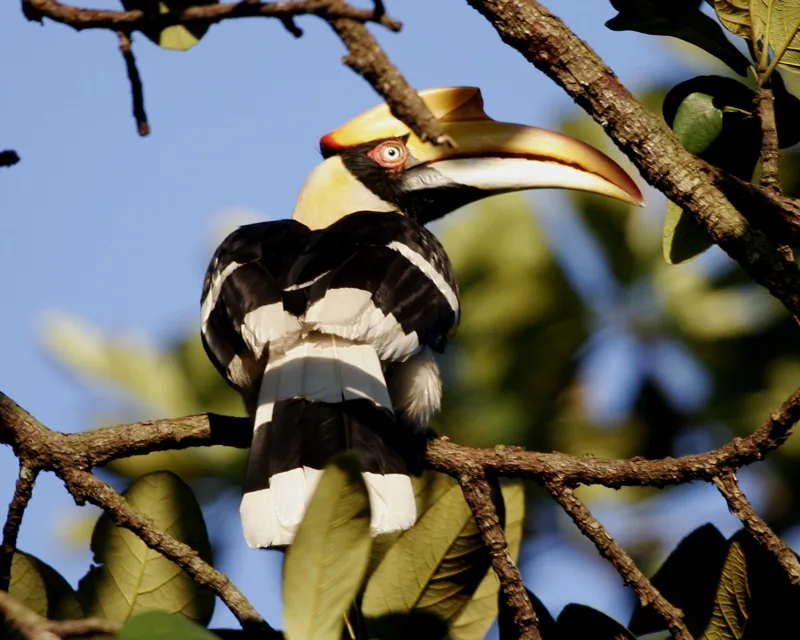
Great Hornbill
A three metre wingbeat you hear before you see, the flagship bird of Asian rainforest canopy. Where: Fruiting figs along Trail 6 and over the Haew Suwat valley. Best: Year round, 06:30-09:00.
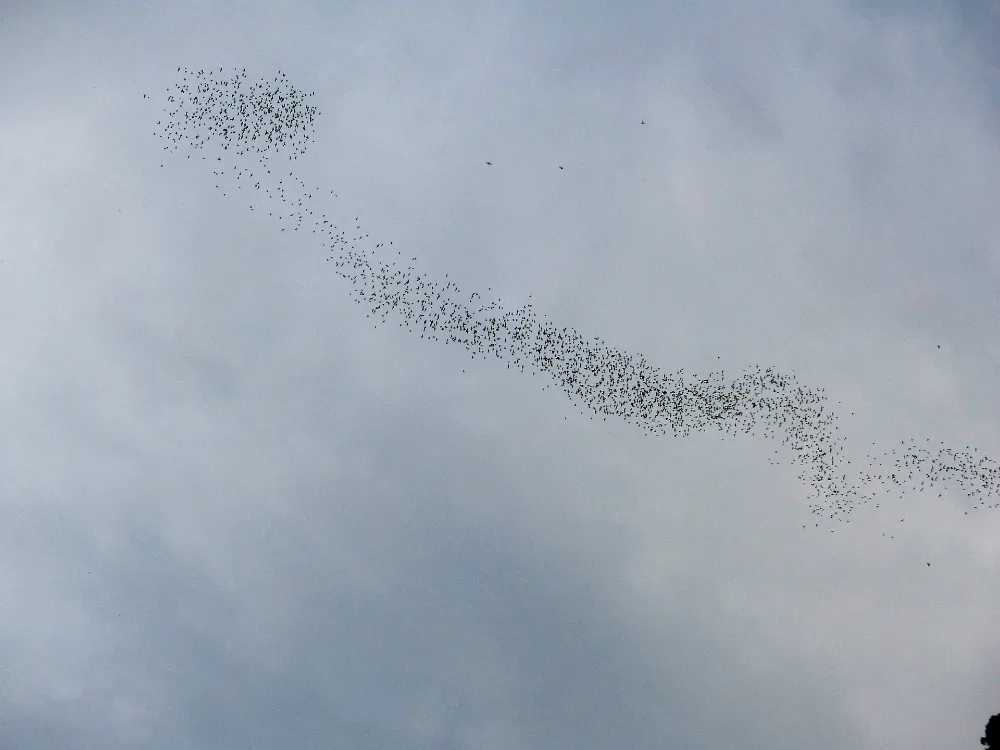
Wrinkle-lipped Free-tailed Bat
The bat behind Thailand's great cave exodus, when millions stream out at dusk in a river of wings. Where: The bat cave exodus near the park's northern boundary. Best: Year round, 18:00-18:45.
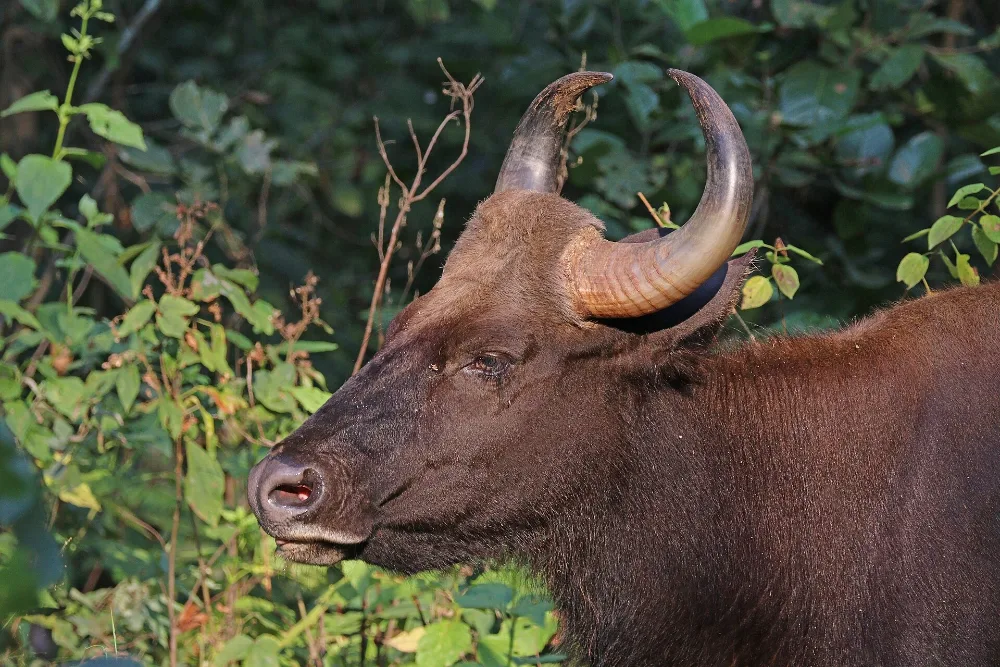
Gaur
The largest wild cattle on Earth, a muscle bound giant that dwarfs any farm cow. Where: Nong Pak Chi watchtower and the grassland edges. Best: Nov-Apr, dawn and dusk, best Feb-Apr when the grass is short.
Mammals
30 species
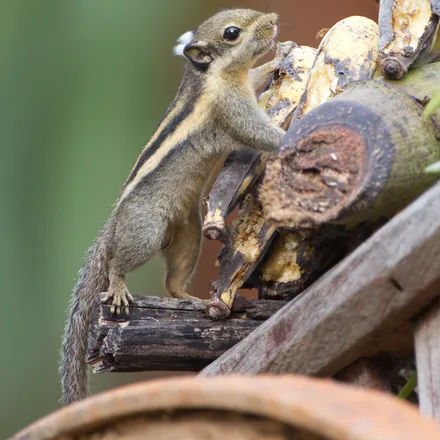
Himalayan Striped Squirrel Common
Tamiops mcclellandii
A tiny, chipmunk-like squirrel streaked with pale racing stripes, forever flickering over the bark.
Where: Forest edge and trail sides. Best: Year round, day.
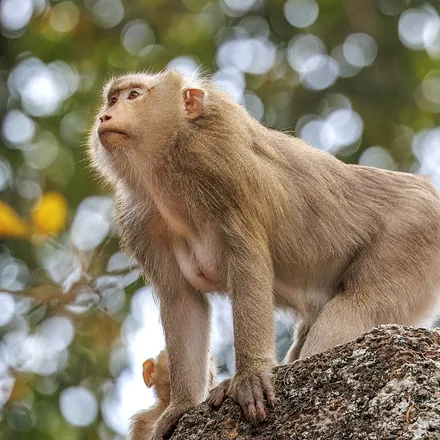
Northern Pig-tailed Macaque Common Vulnerable
Macaca leonina
Named for the short, curled pig tail, a powerful, ground loving monkey often seen troop marching along forest roads.
Where: Roadsides and the visitor centre area. Best: Year round, day. Do not feed. Roadside feeding is why these animals now raid cars.
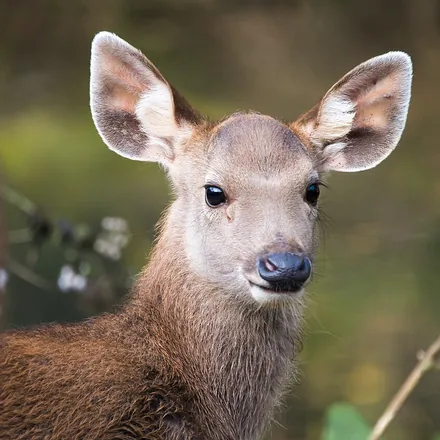
Sambar Deer Common Vulnerable
Rusa unicolor
Asia's largest deer, and often a park's most dependable big animal, with stags carrying rugged three tined antlers.
Where: Lawns around the visitor centre and Pha Kluai Mai campsite. Best: Year round, dusk and after dark. Almost guaranteed around the campsites, where they have become semi-tame.
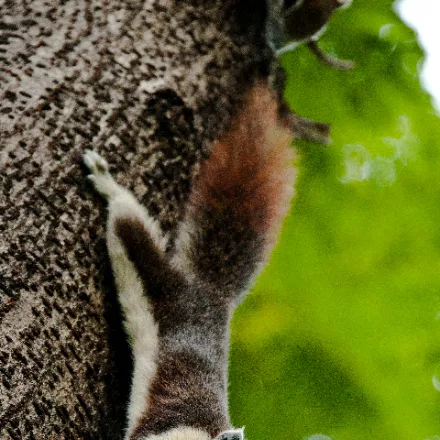
Variable Squirrel Common
Callosciurus finlaysonii
A tree squirrel of astonishing colour variety, some populations pure creamy white, others red, grey or two-toned.
Where: Everywhere along roadsides and campsites. Best: Year round, day.
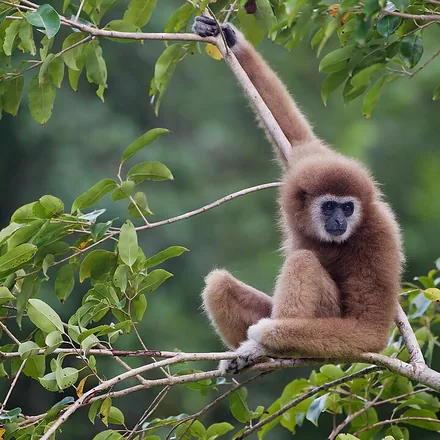
White-handed (Lar) Gibbon Common Endangered
Hylobates lar
You hear them before dawn even breaks, the whooping duet of gibbons that is the definitive soundtrack of Asian rainforest.
Where: Trail 6 and the forest around Haew Suwat. Best: Year round, 06:00-08:30. The dawn chorus carries across the whole valley; Khao Yai is the easiest place in Thailand to hear it.
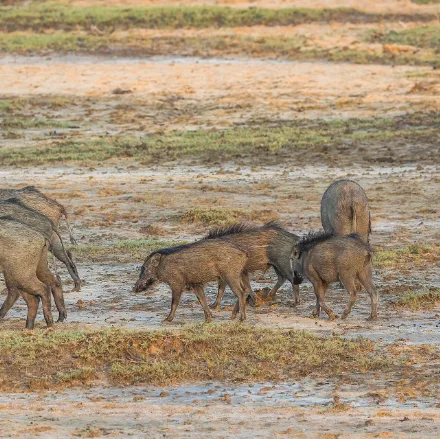
Wild Boar Common
Sus scrofa
The rugged wild pig at the base of the food chain, rooting up the forest and feeding the region's great predators.
Where: Grasslands and campsite margins. Best: Year round, dusk.
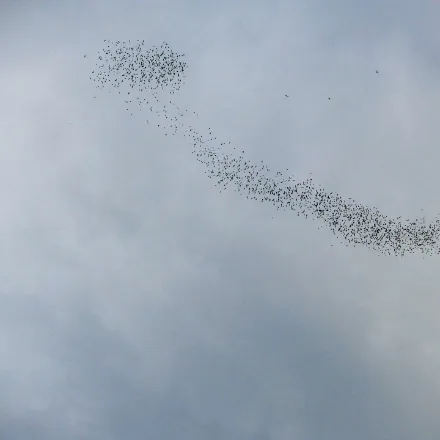
Wrinkle-lipped Free-tailed Bat Common
Chaerephon plicatus
The bat behind Thailand's great cave exodus, when millions stream out at dusk in a river of wings.
Where: The bat cave exodus near the park's northern boundary. Best: Year round, 18:00-18:45. A million-strong ribbon of bats leaving at dusk, and one of the great wildlife spectacles in Thailand.
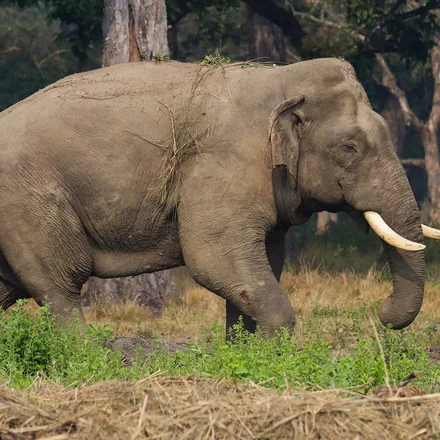
Asian Elephant Regular Endangered
Elephas maximus
The largest land animal in Asia, and a genuinely wild one is worth seeking out over the camp elephants most tourists meet.
Where: Km 30 grasslands, the Nong Pak Chi salt lick and roadside verges at dusk. Best: Nov-Feb, last hour of light, then Mar-Apr at the salt licks. Khao Yai's herds cross the park road at night; drive slowly and never get between animals.
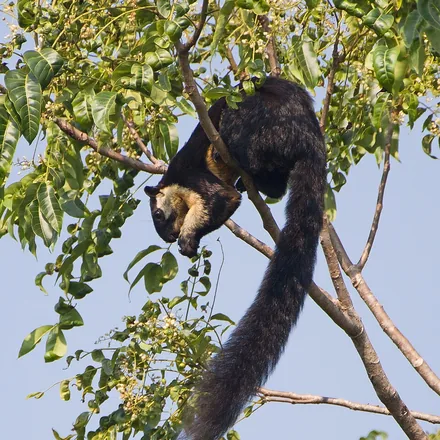
Black Giant Squirrel Regular Near Threatened
Ratufa bicolor
A squirrel the length of your arm, jet black above and buttery below, crashing through the canopy with a metre long tail.
Where: Canopy along Trail 6 and the park road. Best: Year round, morning.
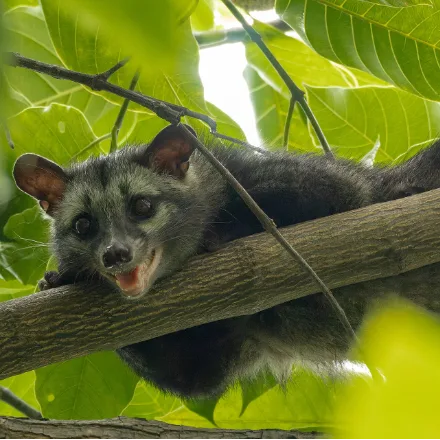
Common Palm Civet Regular
Paradoxurus hermaphroditus
The nocturnal fruit-lover behind civet coffee, at home in forests, plantations and even city roofs.
Where: Around campsites and the visitor centre at night. Best: Year round, after dark. The commonest civet on Khao Yai night drives.
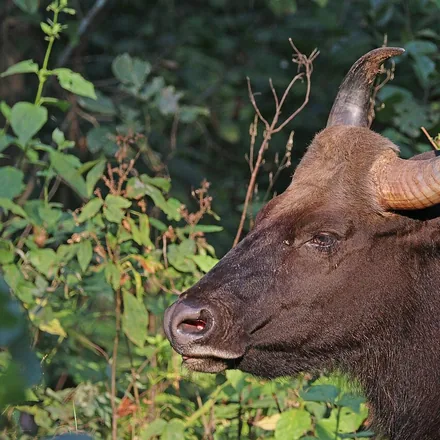
Gaur Regular Vulnerable
Bos gaurus
The largest wild cattle on Earth, a muscle bound giant that dwarfs any farm cow.
Where: Nong Pak Chi watchtower and the grassland edges. Best: Nov-Apr, dawn and dusk, best Feb-Apr when the grass is short. The watchtower is the reliable spot; go at first light and wait.
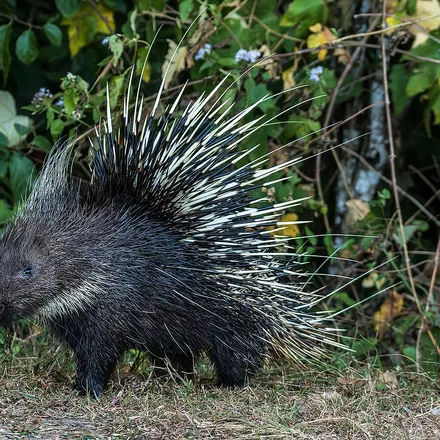
Malayan Porcupine Regular
Hystrix brachyura
A large, ground-dwelling porcupine that rattles a crown of black-and-white quills when threatened.
Where: Campsite margins and roadsides after dark. Best: Year round, night.
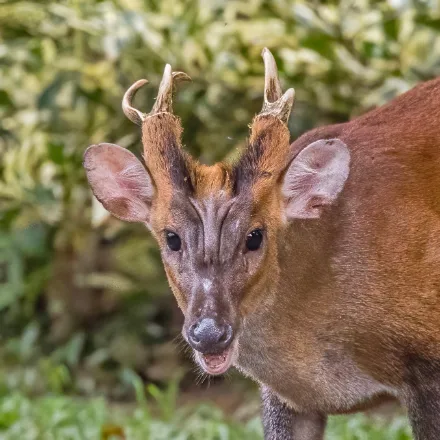
Northern Red Muntjac Regular
Muntiacus vaginalis
The barking deer of Thai forests, a small russet deer whose sharp, dog-like alarm call rings through the trees.
Where: Forest edges along the park road. Best: Year round, dawn and dusk.
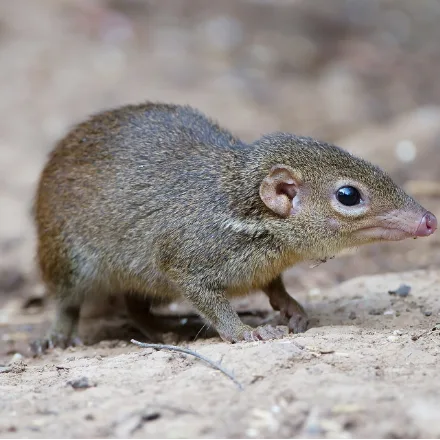
Northern Treeshrew Regular
Tupaia belangeri
A squirrel-lookalike that is not a rodent at all, but a close relative of primates with a famously fast metabolism.
Where: Trail edges and leaf litter. Best: Year round, day.
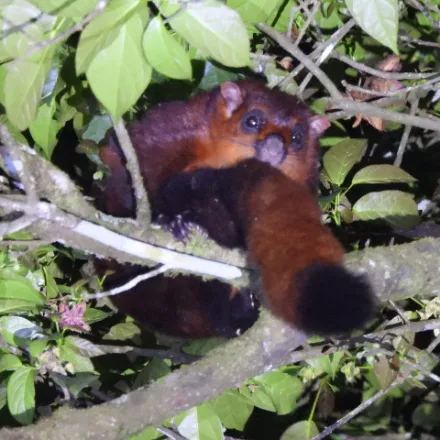
Red Giant Flying Squirrel Regular
Petaurista petaurista
A cat-sized, deep-red squirrel that glides between trees on a membrane, sailing over a hundred metres in a single launch.
Where: Tall trees around the visitor centre at dusk. Best: Year round, first 30 minutes after sunset. Wait beneath a known roost tree at dusk and watch for the launch.
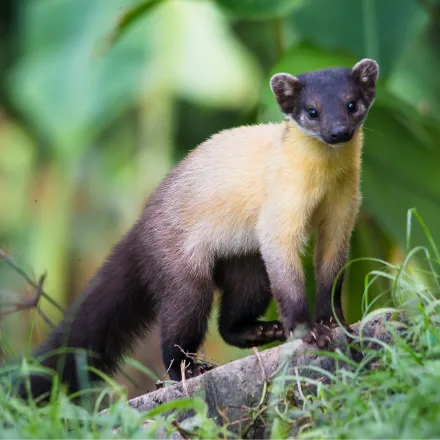
Yellow-throated Marten Regular
Martes flavigula
A big, bounding, golden-throated marten that hunts boldly by day and fears almost nothing its own size.
Where: Forest roads and canopy edges by day. Best: Year round, morning. Unusually bold and active in daylight, often crossing the road in pairs.
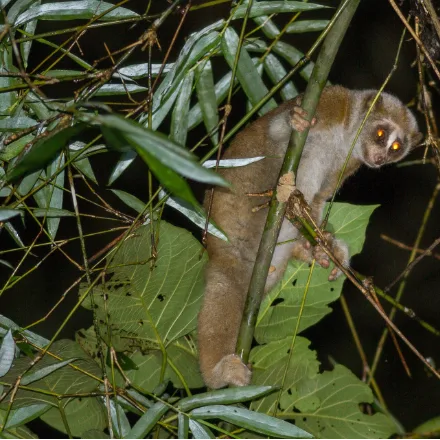
Bengal Slow Loris Occasional Endangered
Nycticebus bengalensis
The only venomous primate on Earth, huge eyed and slow motion, with a toxic bite armed from glands on its arms.
Where: Night drives along the main road. Best: Year round, after 20:00. Spotlight the mid-canopy for a steady orange eyeshine.
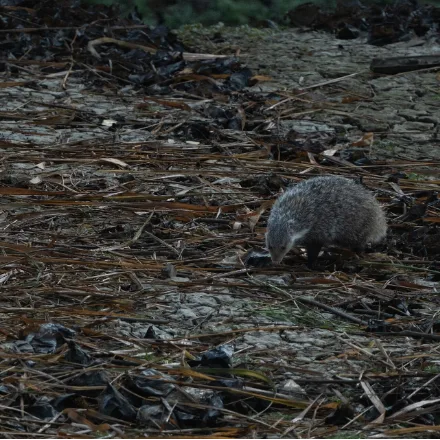
Crab-eating Mongoose Occasional
Herpestes urva
A large grizzled mongoose with a bold white neck stripe, usually found busily working a forest stream.
Where: Streams and wet ditches beside the road. Best: Year round, day.
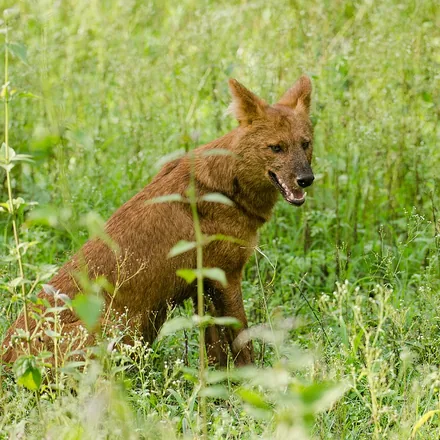
Dhole (Asiatic Wild Dog) Occasional Endangered
Cuon alpinus
A russet red pack hunter that whistles to coordinate the chase, one of Asia's most endangered predators.
Where: Grassland edges and forest roads. Best: Nov-Apr, early morning, best Feb-Apr. Travels in packs and is more often heard whistling than seen.
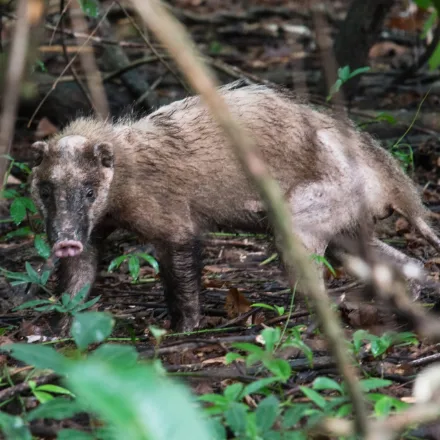
Hog Badger Occasional Vulnerable
Arctonyx collaris
A stocky, pig-snouted badger that roots through the forest floor with a mobile, rubbery nose.
Where: Roadsides at night. Best: Year round, night.
Large Indian Civet Occasional
Viverra zibetha
A big, ground-dwelling civet with a dramatic black-and-white banded tail and a crest along its spine.
Where: Grassland edges and roadsides at night. Best: Year round, night.
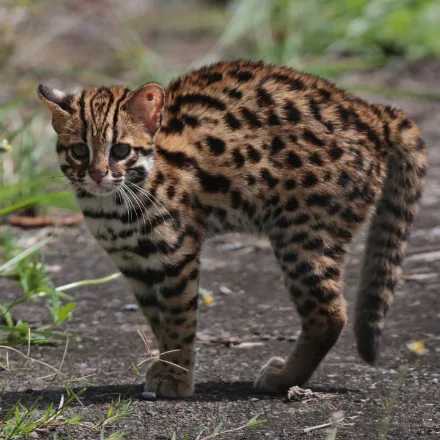
Leopard Cat Occasional
Prionailurus bengalensis
A house-cat-sized hunter dressed like a miniature leopard, the most widespread small cat in Asia.
Where: Grassland margins and forest roads at night. Best: Year round, night. The most likely wild cat on a Khao Yai night safari.
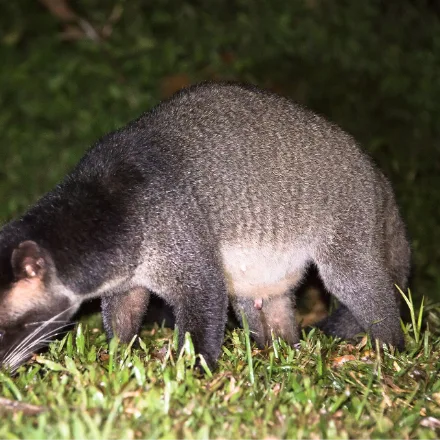
Masked Palm Civet Occasional
Paguma larvata
A plain-bodied civet with a bold white blaze running down its masked face, a nimble night climber after fruit.
Where: Forest edge on night drives. Best: Year round, night.
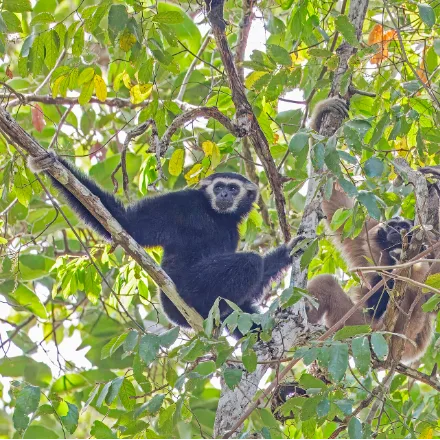
Pileated Gibbon Occasional Endangered
Hylobates pileatus
A canopy singer where males are inky black and females silver blonde, both crowned with a dark cap.
Where: Eastern forest blocks away from the main road. Best: Year round, first light. Khao Yai is one of the few parks where both gibbon species overlap.
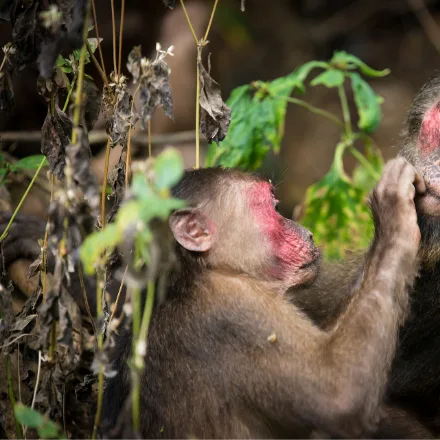
Stump-tailed Macaque Occasional Vulnerable
Macaca arctoides
A shaggy, red-faced forest macaque with a stub of a tail and a habit of staying deep in the hills.
Where: Quieter forest roads in the east of the park. Best: Year round, day.
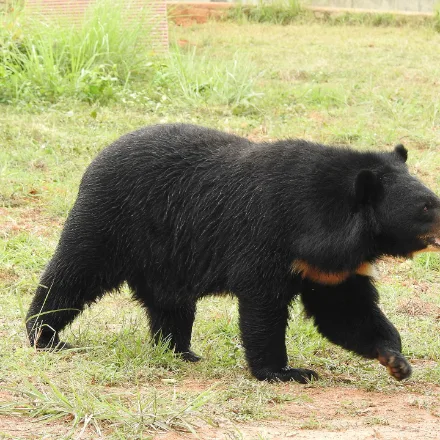
Asiatic Black Bear Rare Vulnerable
Ursus thibetanus
The moon bear, bigger and shaggier than the sun bear, with a bold cream crescent across its chest.
Where: Fruiting forest on the higher trails. Best: Year round, dawn and morning.
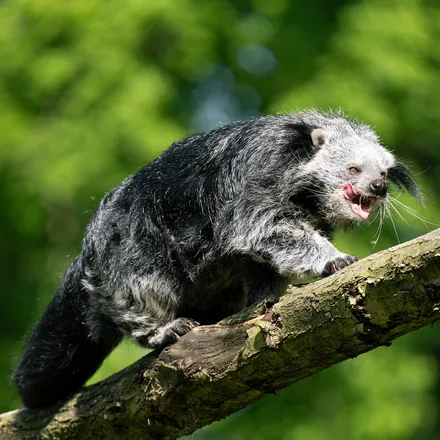
Binturong (Bearcat) Rare Vulnerable
Arctictis binturong
Neither bear nor cat, with a prehensile tail and a scent that smells uncannily of hot buttered popcorn.
Where: Fruiting figs on night drives. Best: Year round, after dark.
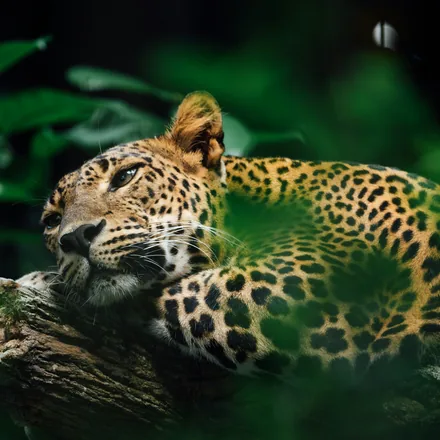
Leopard (incl. Black Panther) Rare Vulnerable
Panthera pardus
A big cat that is unusually often born jet black, prowling as the fabled black panther.
Where: Forest roads at night and the Khao Khiao road. Best: Nov-Apr, night, best Feb-Apr when the undergrowth is thin. Khao Yai holds one of the last Thai populations; camera-trap country rather than roadside viewing.
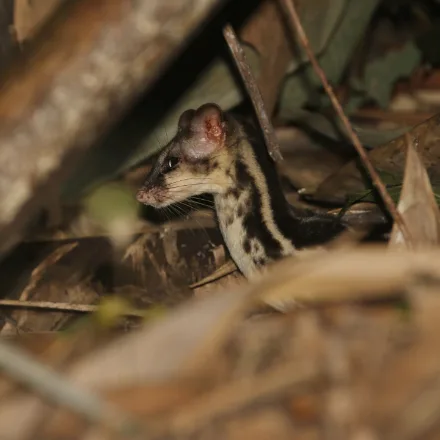
Spotted Linsang Rare
Prionodon pardicolor
A slinky, exquisitely spotted little hunter, so slender and marked it looks like a living piece of jewellery.
Where: Deep forest at night. Best: Year round, night.
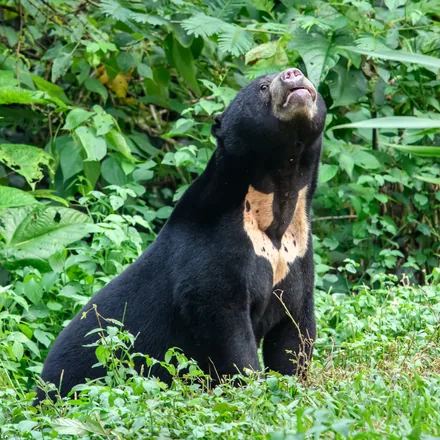
Sun Bear Very rare Vulnerable
Helarctos malayanus
The world's smallest bear, with a golden chest crescent and a tongue long enough to raid a bee's nest.
Where: Deep forest away from the road. Best: Year round, dawn and dusk.
Birds
25 species
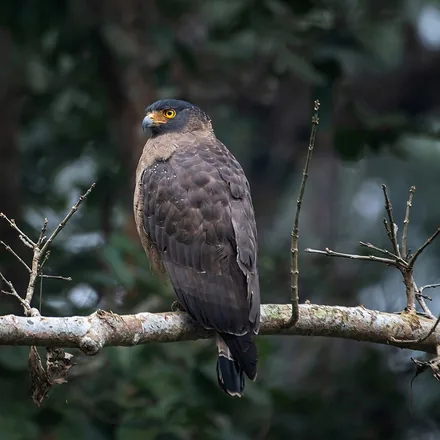
Crested Serpent Eagle Common
Spilornis cheela
A snake-hunting eagle that circles the forest on broad wings, calling with a far-carrying, wailing whistle.
Where: Perched over the road and grasslands. Best: Year round, day.
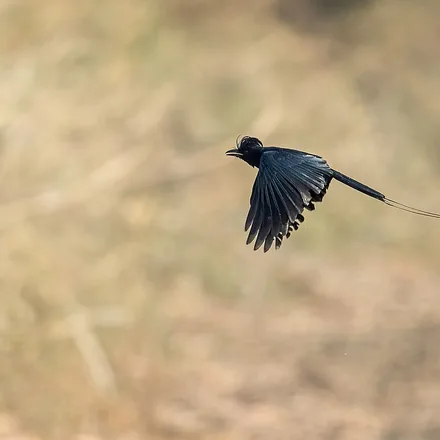
Greater Racket-tailed Drongo Common
Dicrurus paradiseus
A glossy black forest bird trailing two long wire tails tipped with twirling rackets, and a gifted mimic.
Where: Everywhere along the road and trails. Best: Year round, day. Mimics other birds, including alarm calls, so treat what you hear with suspicion.
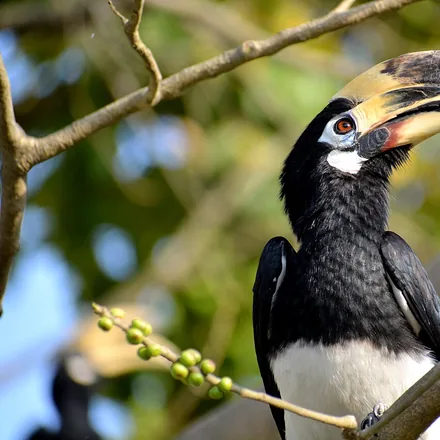
Oriental Pied Hornbill Common
Anthracoceros albirostris
The most approachable hornbill in Asia, a black and white charmer that even visits gardens and forest edges.
Where: Visitor centre trees and roadsides. Best: Year round, all day. The easiest hornbill in Thailand and often the first anyone sees.
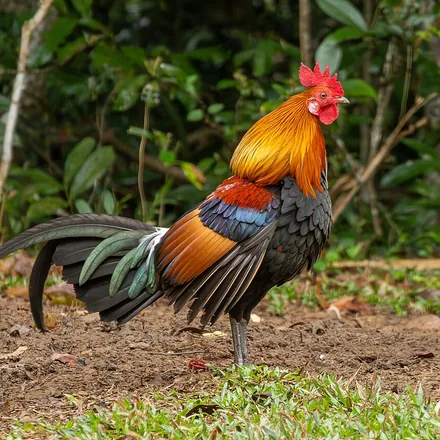
Red Junglefowl Common
Gallus gallus
The wild ancestor of every chicken on Earth, a wary, glossy rooster of the forest edge.
Where: Forest edges and campsite margins. Best: Year round, day.
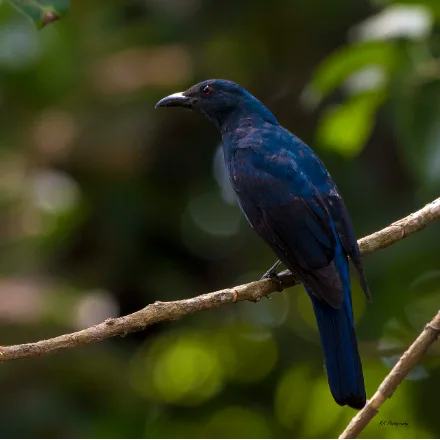
Asian Fairy-bluebird Regular
Irena puella
A fig-loving forest bird where the male glows brilliant ultramarine and jet black in the canopy shade.
Where: Fruiting trees along the main road. Best: Year round, morning.
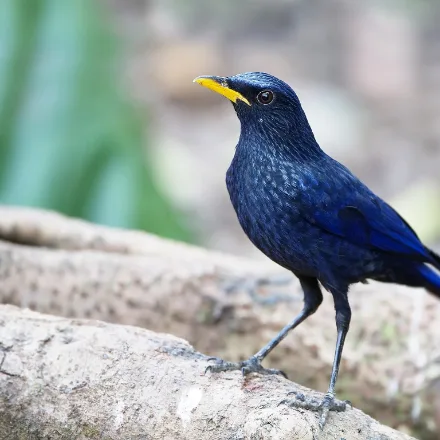
Blue Whistling Thrush Regular
Myophonus caeruleus
A big, spangled blue-black thrush of shady streams whose loud human-like whistle rings through the ravines at dawn.
Where: Wet rocks at the waterfalls. Best: Year round, morning.
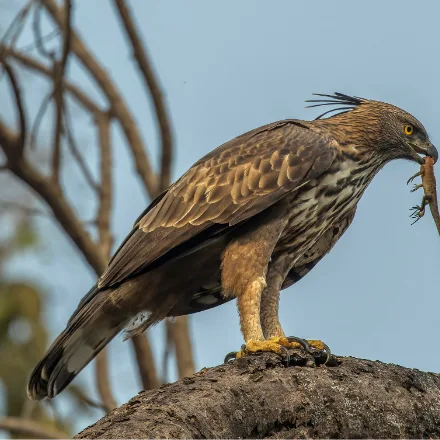
Changeable Hawk-eagle Regular
Nisaetus cirrhatus
A powerful forest eagle that comes in pale and dark forms, ambushing prey with a fast strike from the canopy.
Where: Emergent trees along the road. Best: Year round, mid-morning.
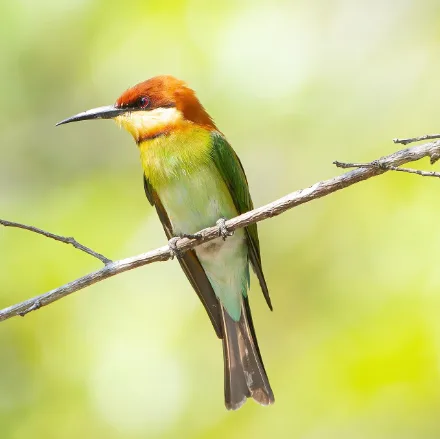
Chestnut-headed Bee-eater Regular
Merops leschenaulti
A compact green bee-eater crowned in warm chestnut, sallying for bees along forest edges and clearings.
Where: Open edges and clearings. Best: Year round, day.
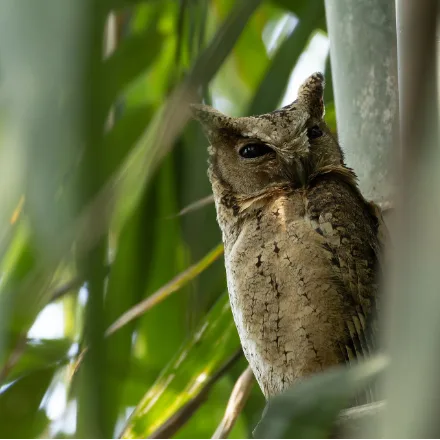
Collared Scops Owl Regular
Otus lettia
A small, ear-tufted owl whose soft, questioning hoot is one of the commonest voices of the Thai night.
Where: Campsite trees at night. Best: Year round, night.
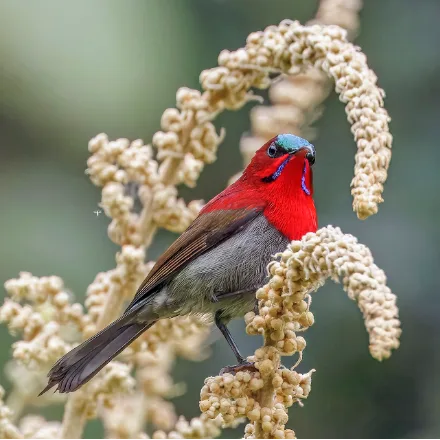
Crimson Sunbird Regular
Aethopyga siparaja
A living ember of a bird, the male ablaze in scarlet and metallic green as it hovers at forest blossoms.
Where: Flowering shrubs at the visitor centre. Best: Year round, morning.
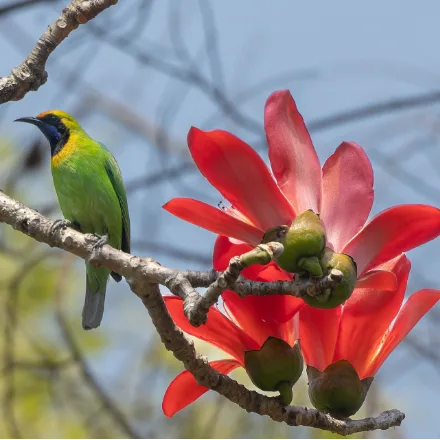
Golden-fronted Leafbird Regular
Chloropsis aurifrons
A leaf-green bird that all but vanishes in the canopy until it turns to reveal a golden forehead and blue-black mask.
Where: Fruiting and flowering trees. Best: Year round, day.
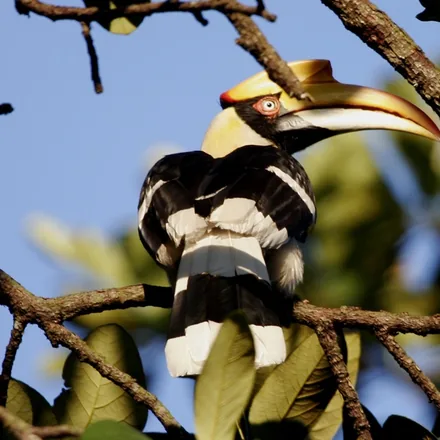
Great Hornbill Regular Vulnerable
Buceros bicornis
A three metre wingbeat you hear before you see, the flagship bird of Asian rainforest canopy.
Where: Fruiting figs along Trail 6 and over the Haew Suwat valley. Best: Year round, 06:30-09:00.
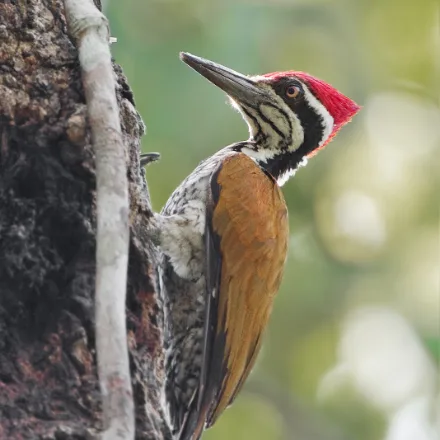
Greater Flameback Regular
Chrysocolaptes guttacristatus
A big, golden-backed woodpecker that blazes across the trunk, the males topped with a flaming scarlet crest.
Where: Large trunks along the trails. Best: Year round, day.
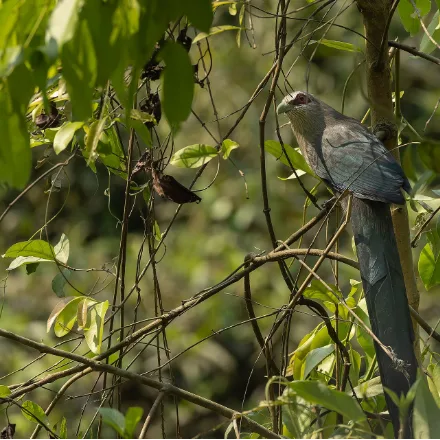
Green-billed Malkoha Regular
Phaenicophaeus tristis
A long, slinking grey cuckoo with a bright green bill and a crimson eye-patch, creeping through thickets like a feathered lizard.
Where: Roadside tangles. Best: Year round, day.
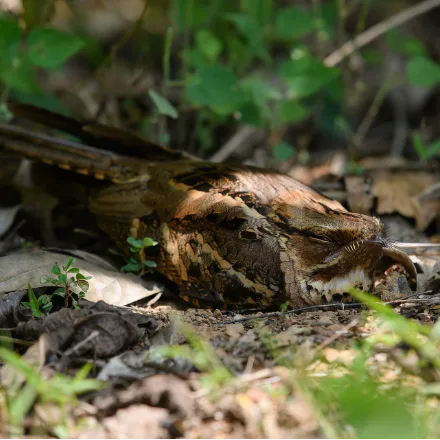
Large-tailed Nightjar Regular
Caprimulgus macrurus
A cryptic dusk-hunter whose loud, repeated chonk chonk call sounds like an axe striking wood across the clearing.
Where: Road surfaces and clearings after dark. Best: Year round, dusk onward. Sits on the warm road at night; the eyeshine is what you see first.
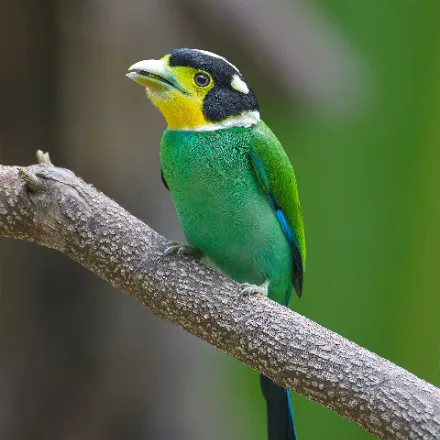
Long-tailed Broadbill Regular
Psarisomus dalhousiae
A cartoonish beauty in parrot green with a black cap, blue crown patch and a long blue tail.
Where: Mid-storey along the main road and Trail 6. Best: Year round, morning.
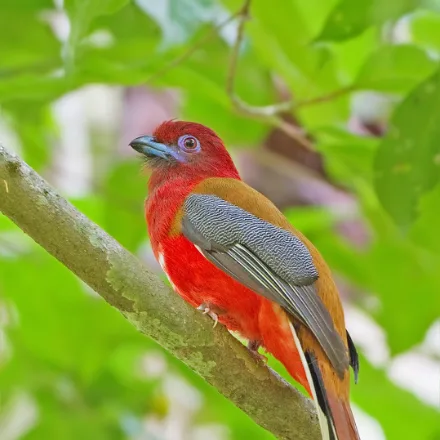
Red-headed Trogon Regular
Harpactes erythrocephalus
A quietly stunning forest bird, the male crimson headed and rose breasted, that sits motionless and is easy to miss.
Where: Shaded mid-storey on the forest trails. Best: Year round, morning.
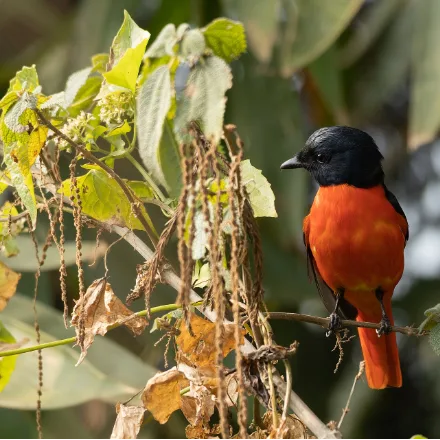
Scarlet Minivet Regular
Pericrocotus speciosus
A drift of flame through the treetops, the males scarlet and black, the females gold and grey, moving in restless flocks.
Where: Canopy flocks along the road. Best: Year round, day.
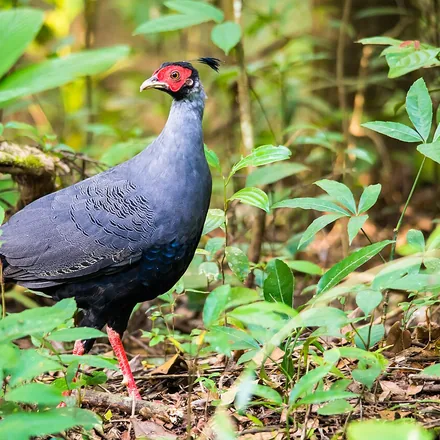
Siamese Fireback Regular
Lophura diardi
Thailand's national bird, a stately grey pheasant with a golden back patch and a bare crimson face.
Where: Trail edges and forest tracks in the early morning. Best: Year round, 06:00-08:00. Khao Yai is the most reliable park in Thailand for this pheasant.
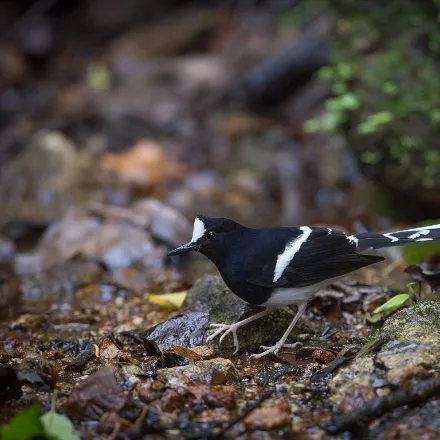
White-crowned Forktail Regular
Enicurus leschenaulti
A dapper black-and-white bird of rushing forest streams, forever flicking a long, deeply forked tail.
Where: Streams below Haew Suwat and Haew Narok. Best: Year round, morning.
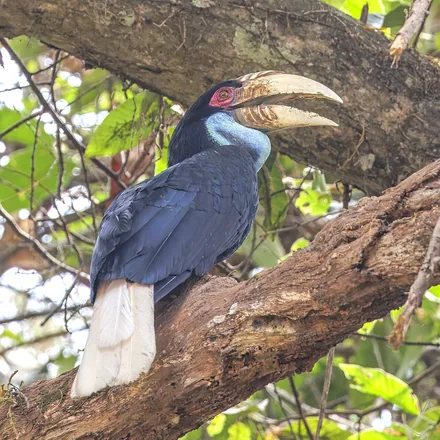
Wreathed Hornbill Regular Vulnerable
Rhyticeros undulatus
A big forest hornbill that travels in noisy flocks, its throat pouch pleated like folded cloth.
Where: Fruiting trees along the main road. Best: Year round, morning.
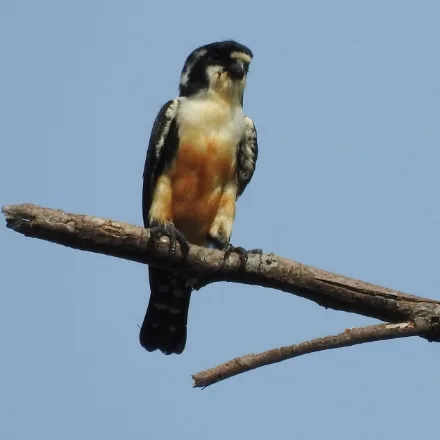
Black-thighed Falconet Occasional
Microhierax fringillarius
One of the smallest birds of prey on Earth, a sparrow-sized falcon that hunts dragonflies and small birds from a bare twig.
Where: Dead snags at the grassland edges. Best: Year round, day. The smallest raptor in the world, and easy to overlook as a large insect.
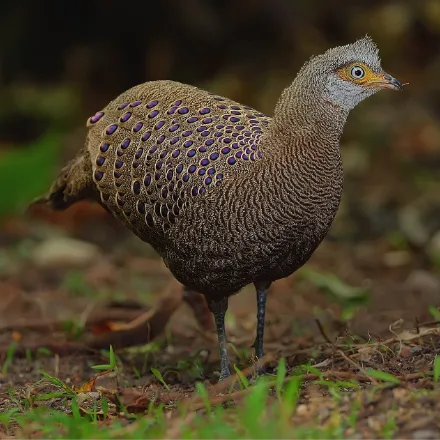
Grey Peacock-Pheasant Occasional
Polyplectron bicalcaratum
A shy forest pheasant spangled with iridescent eyespots that flash blue-green when it displays.
Where: Quiet forest trails at first light. Best: Year round, dawn.
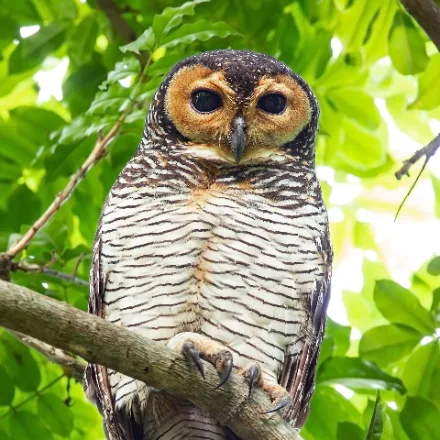
Spotted Wood Owl Occasional
Strix seloputo
A large, orange-faced owl of open woodland and plantations, its deep hooting a signature of the tropical night.
Where: Around the visitor centre and campsites at night. Best: Year round, after dark.
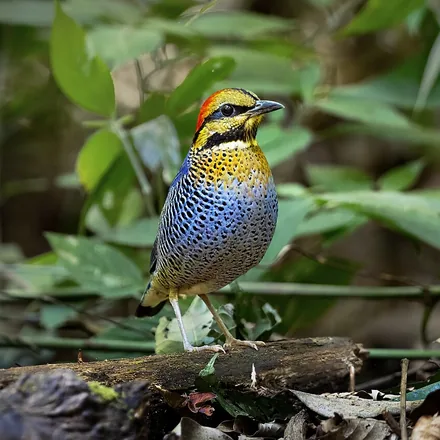
Blue Pitta Rare
Hydrornis cyaneus
A jewel of the forest floor, blue and buff and maddeningly hard to see, the holy grail of many a birding trip.
Where: Damp forest floor on Trail 6 in the breeding season. Best: Apr-Jul, at dawn. Found by call. Sit still on a trail edge rather than walking.
Reptiles
11 species
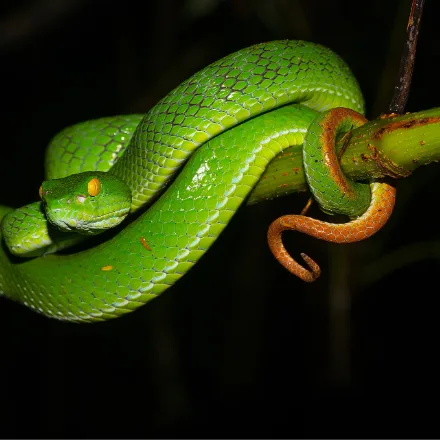
Large-eyed Pit Viper Regular
Trimeresurus macrops
Vivid green with enormous copper eyes, and it hunts entirely by heat, so darkness makes no difference to it.
Where: Low branches beside trails. Best: May-Oct, night.
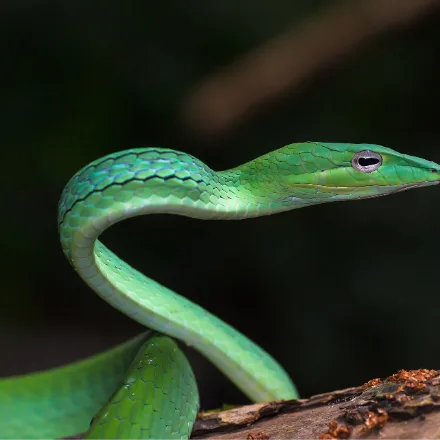
Oriental Whip Snake (Asian Vine Snake) Regular
Ahaetulla prasina
A snake so slender and green it looks like a hanging vine, with strange keyhole shaped pupils.
Where: Roadside scrub. Best: Year round, day.
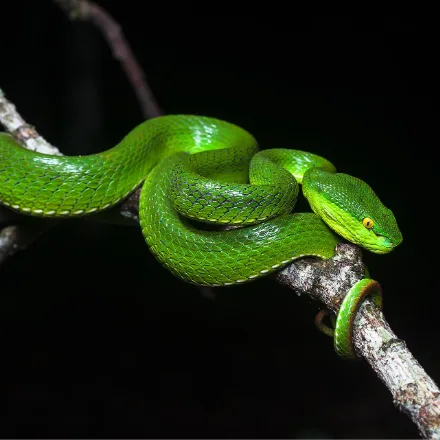
White-lipped Pit Viper Regular
Trimeresurus albolabris
A vivid green viper that drapes over branches at night, one of the most encountered venomous snakes in the tropics.
Where: Streamside vegetation on night walks. Best: May-Oct, night.
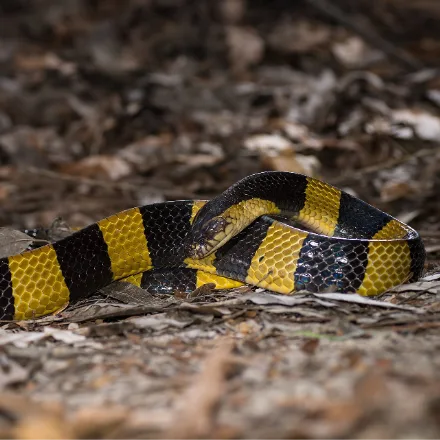
Banded Krait Occasional
Bungarus fasciatus
Unmistakable in bold black and yellow bands, a powerfully venomous snake that is oddly timid after dark.
Where: Roads and trail edges after rain. Best: May-Oct, night. Highly venomous and slow moving. Leave well alone.
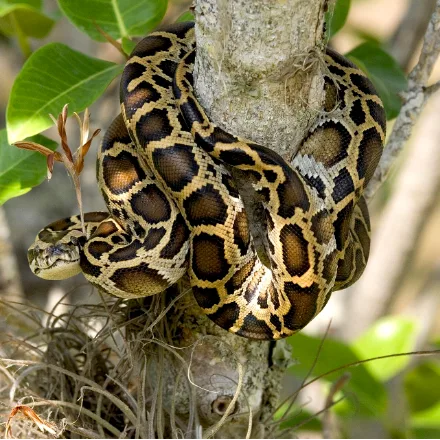
Burmese Python Occasional Vulnerable
Python bivittatus
One of the largest snakes on Earth, a giant constrictor that can swallow prey the size of a deer.
Where: Grassland margins and ditches. Best: Nov-Apr, day.
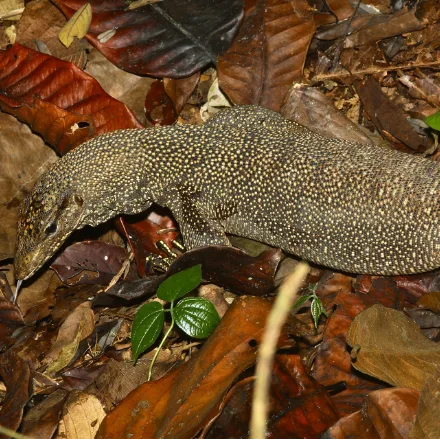
Clouded Monitor Occasional
Varanus nebulosus
A more terrestrial, forest loving cousin of the water monitor, often seen digging for beetles and crabs.
Where: Forest floor and trail edges. Best: Year round, warm hours.
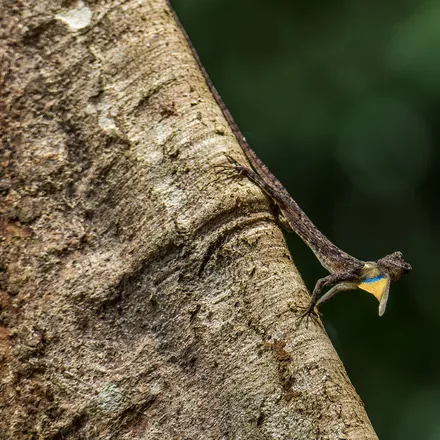
Common Flying Dragon Occasional
Draco maculatus
A tiny lizard that unfurls bright wings from its ribs and glides between tree trunks like a paper dart.
Where: Trunks in sunlit clearings. Best: Year round, mid-morning.
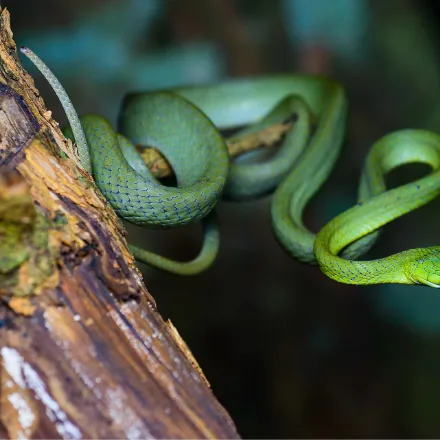
Green Cat Snake Occasional
Boiga cyanea
Hatches out brick red, turns olive as a juvenile and ends up emerald green, three colours in one lifetime.
Where: Overhanging branches on night walks. Best: Year round, night.
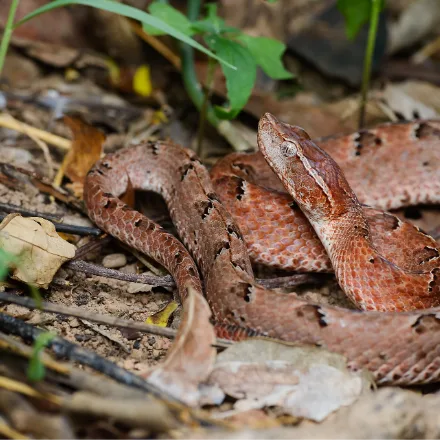
Malayan Pit Viper Occasional
Calloselasma rhodostoma
A short, bad tempered viper that lies still on the forest floor and bites more people in the region than almost any other snake.
Where: Leaf litter on forest floors. Best: May-Oct, night. Responsible for more bites than any other Thai snake; watch your feet after dark.
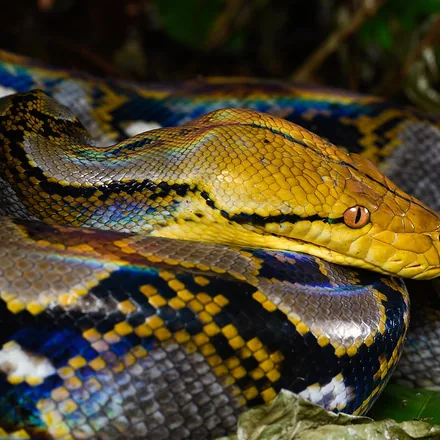
Reticulated Python Occasional
Malayopython reticulatus
The longest snake in the world, a jewelled, net patterned constrictor that turns up from rainforest to city canals.
Where: Near water and on roads at night. Best: Year round, night.
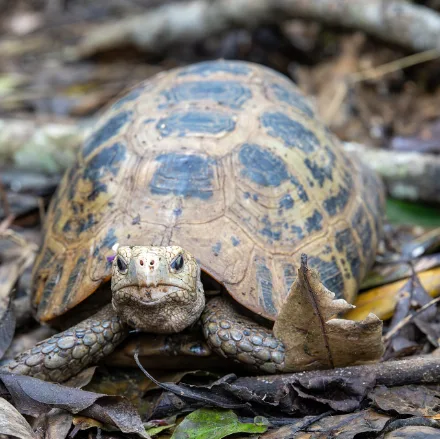
Elongated Tortoise Rare Critically Endangered
Indotestudo elongata
A forest tortoise whose pale head flushes pink around the eyes and nose in the breeding season.
Where: Forest floor after rain. Best: May-Oct, day.
Insects
10 species
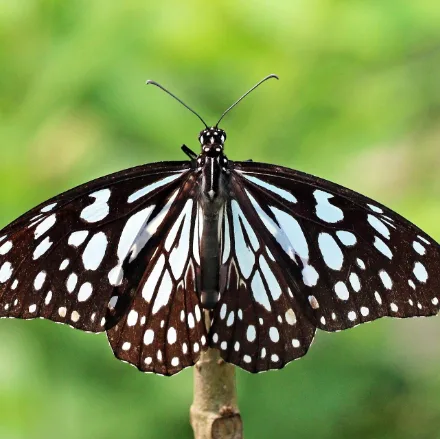
Blue Tiger Regular
Tirumala limniace
Migrates in drifting rivers of thousands, and roosts at night in trees hung solid with butterflies.
Where: Roadside flowers and damp ground. Best: Nov-Feb. Gathers in drifts along the road in the cool season.
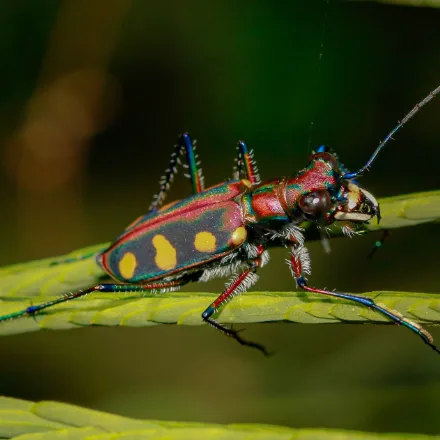
Blue-spotted Tiger Beetle Regular
Cicindela aurulenta
Runs so fast it goes temporarily blind, and has to stop to work out where its prey went.
Where: Bare trail surfaces in sunlight. Best: Year round, day.
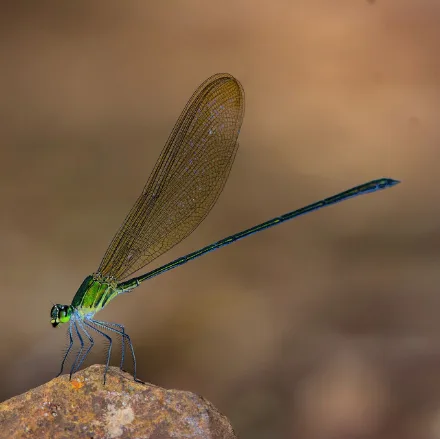
Clear-winged Forest Glory Regular
Vestalis gracilis
A damselfly of shaded forest streams whose body shifts from emerald to copper depending on where the light hits it.
Where: Shaded streams below the waterfalls. Best: Mar-Jun.
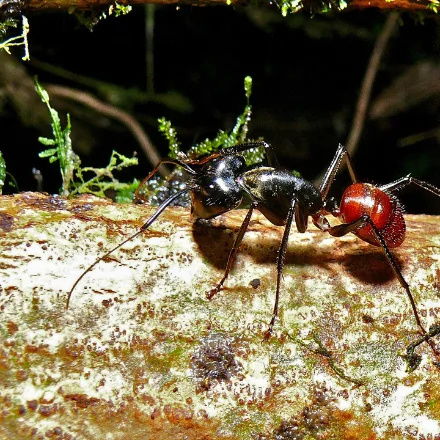
Giant Forest Ant Regular
Camponotus gigas
One of the largest ants on earth, and colonies keep a standing army of soldiers whose only job is to fight border wars with the neighbours.
Where: Trunks along all trails. Best: Year round, night.
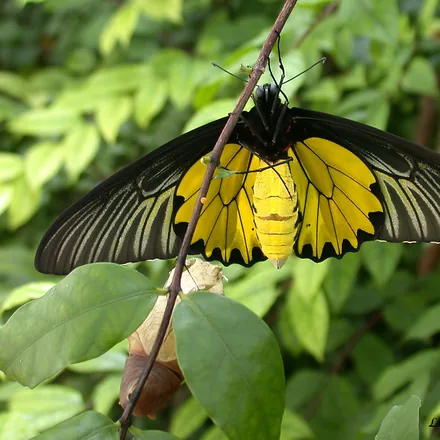
Golden Birdwing Regular
Troides aeacus
A huge butterfly with black forewings and blazing golden hindwings, sailing high along the forest edge.
Where: Forest edges and the waterfall clearings. Best: Year round, sunny mornings.
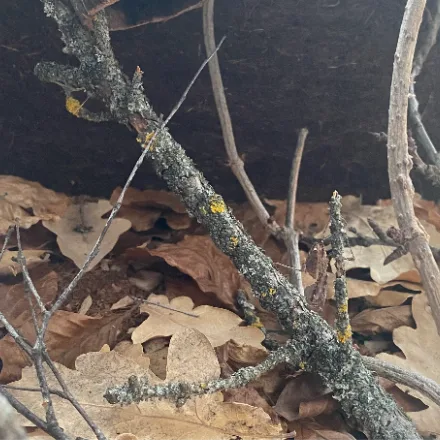
Dead Leaf Mantis Occasional
Deroplatys desiccata
Indistinguishable from a curled brown leaf right down to the fungal blotches and torn edges, and it sways as if in a breeze.
Where: Leaf litter on night walks. Best: May-Oct, night.
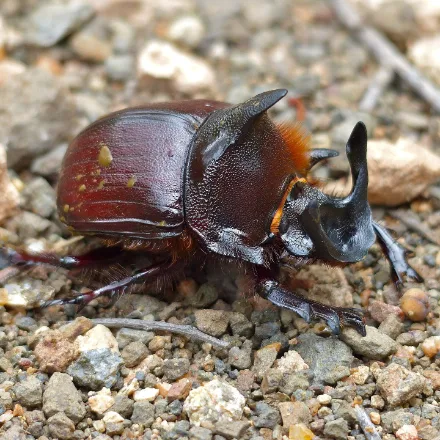
Giant Dung Beetle Occasional
Heliocopris bucephalus
Arrives at fresh elephant dung within minutes, and buries a ball of it half a metre down before dawn.
Where: Elephant dung on the road and grasslands. Best: May-Oct.
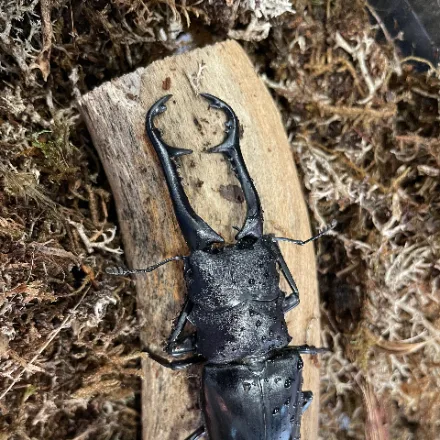
Giraffe Stag Beetle Occasional
Prosopocoilus giraffa
The longest stag beetle in the world, with jaws nearly as long as the rest of it, used to lever rivals off a tree.
Where: Lights at the campsites and visitor centre. Best: Apr-Aug, night.
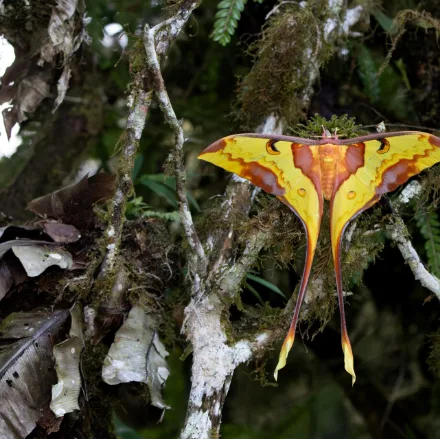
Malayan Moon Moth Occasional
Actias maenas
The adult has no mouth at all, lives about a week, and spends every hour of it looking for a mate.
Where: Campsite lights. Best: Mar-Jun and Sep-Nov, night.
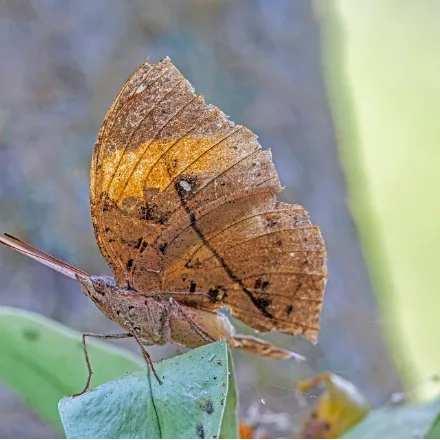
Orange Oakleaf Occasional
Kallima inachus
Electric blue and orange in flight, and the instant it lands it becomes a dry dead leaf, complete with a fake midrib.
Where: Shaded trail edges. Best: Year round, sunny mornings.
Spiders and scorpions
2 species
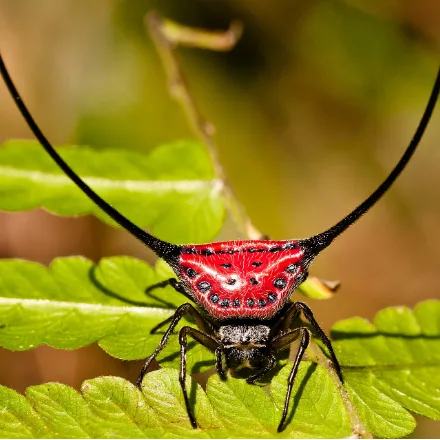
Long-horned Orb-weaver Occasional
Macracantha arcuata
Two curved spines rise from its back several times longer than the spider itself, and nobody is entirely sure why.
Where: Webs across trail gaps. Best: May-Oct.
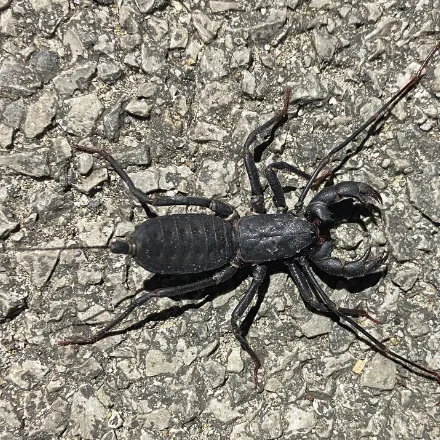
Whip Scorpion Occasional
Thelyphonida species
Sprays a fine mist of concentrated acetic acid from the base of its tail, which is why it is also called the vinegaroon.
Where: Under logs and on trunks at night. Best: May-Oct, night.
Molluscs
1 species
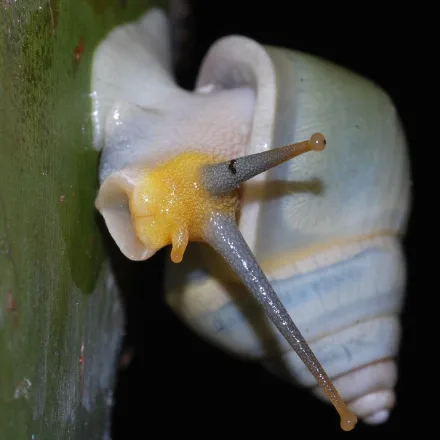
Painted Tree Snail Occasional
Amphidromus atricallosus
A tree snail that comes in both left and right handed shells, sometimes within a single population, which is almost unheard of.
Where: Wet vegetation and limestone after rain. Best: May-Oct.
Other invertebrates
1 species
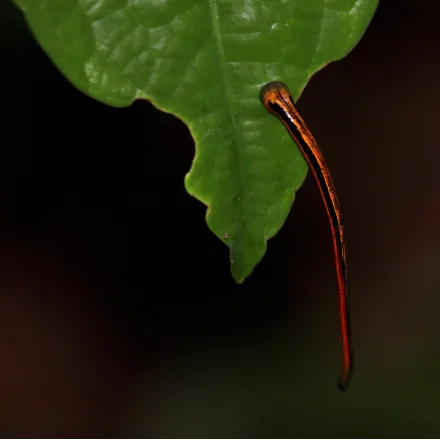
Tiger Leech Common
Haemadipsa picta
Waits on leaf tips with one end waving, detecting your breath and body heat from a metre away.
Where: Any wet trail, especially Trail 6. Best: May-Oct.
Planning and responsible watching
Khao Yai rewards a routine rather than a hike. Be at the Nong Pak Chi watchtower or the Km 30 grasslands for first light, walk a forest trail through the middle of the morning, then drive the main road slowly for the last hour of daylight, which is when elephants and gaur come out to the verges. The bat cave exodus runs like clockwork just before six. A night drive with a park spotlight is the only legal way to be in the park after dark and is worth doing once. Wet season, roughly June to October, is leech season on the trails and much better for frogs, snakes and insects. Never approach an elephant on the road, do not switch off and get out, and give any animal on the verge room to leave.
Find guided day trips, night safaris and transfers for Khao Yai
Some links on this page are affiliate links. If you book through them, Wildseer may earn a small commission at no extra cost to you.
Frequently asked questions
What wildlife can you see in Khao Yai?
Gibbons, sambar, muntjac, wild boar, macaques, hornbills and giant squirrels are close to dependable. Elephant and gaur are regular at dusk. Dhole, leopard, sun bear and clouded leopard are present and rarely seen.
When is the best time to visit Khao Yai for wildlife?
November to April for comfortable trails and open grassland. Elephants are at their best on the roadside verges from November to February, and the salt licks take over from March to April as the water dries back.
Can you see elephants in Khao Yai?
Yes, and they are wild. The main road, the Km 30 grasslands and the Nong Pak Chi salt lick are the places, and the last hour of light is the time. Stay in the vehicle and keep a long gap.
Is Khao Yai worth it as a day trip from Bangkok?
It works, but you lose both of the best hours. Staying at or near the park lets you be in position for dawn and for the last hour of light, which is when almost everything happens.
Explore Thailand wildlife by group
- Mammals of Thailand
- Birds of Thailand
- Reptiles and Amphibians of Thailand
- Fish of Thailand
- Sharks and Rays of Thailand
- Reef Invertebrates of Thailand
- Insects and Spiders of Thailand
Part of the Wildlife in Thailand guide.
Explore Thailand wildlife by place
Image credits
image credits
- Asian elephant: Shadow Ayush | CC BY-SA 4.0
- white-handed-gibbon: JJ Harrison ( jjharrison89@facebook.com ) | CC BY 3.0
- Great hornbill: Lip Kee | CC BY-SA 2.0
- wrinkle-lipped-free-tailed-bat: Bernard DUPONT from FRANCE | CC BY-SA 2.0
- gaur: Charles J. Sharp | CC BY-SA 4.0
- Himalayan Striped Squirrel: JJ Harrison | CC BY-SA 3.0
- Northern Pig-tailed Macaque: Charles J. Sharp | CC BY-SA 4.0
- Sambar Deer: Rushen | CC BY-SA 2.0
- Variable Squirrel: Rushenb | CC BY-SA 3.0
- White-handed Gibbon: JJ Harrison | CC BY 3.0
- Wild Boar: Charles J. Sharp | CC BY-SA 4.0
- Wrinkle-lipped Free-tailed Bat: Bernard DUPONT from FRANCE | CC BY-SA 2.0
- Asian Elephant: Shadow Ayush | CC BY-SA 4.0
- Black Giant Squirrel: JJ Harrison | CC BY-SA 3.0
- Common Palm Civet: Tisha Mukherjee | CC BY-SA 4.0
- Gaur: Charles J. Sharp | CC BY-SA 4.0
- Malayan Porcupine: Wich'yanan L | CC BY 4.0
- Northern Red Muntjac: Dr. Raju Kasambe | CC BY-SA 4.0
- Northern Treeshrew: JJ Harrison ( ) | CC BY-SA 3.0
- Red Giant Flying Squirrel: Muhammad Al Fatih | CC BY 4.0
- Yellow-throated Marten: Rushenb | CC BY 3.0
- Bengal Slow Loris: Wich'yanan L | CC BY 4.0
- Crab-eating Mongoose: Zitu.madcap0901125 | CC BY-SA 4.0
- Dhole: Srikaanth Sekar | CC BY-SA 2.0
- Hog Badger: Rushenb | CC BY-SA 4.0
- Leopard Cat: Ian Dugdale | CC BY 4.0
- Masked Palm Civet: Rushenb | CC BY-SA 4.0
- Pileated Gibbon: Charles J. Sharp | CC BY-SA 4.0
- Stump-tailed Macaque: Rushen | CC BY-SA 2.0
- Asiatic Black Bear: Dr. Raju Kasambe | CC BY-SA 4.0
- Binturong: RubenVanKuik | CC BY 4.0
- Leopard: chuttersnap | Unsplash License
- Spotted Linsang: Ian Dugdale | CC BY 4.0
- Sun Bear: Rushenb | CC BY-SA 4.0
- Crested Serpent Eagle: Mildeep | CC BY-SA 4.0
- Greater Racket-tailed Drongo: Mildeep | CC BY-SA 4.0
- Oriental Pied Hornbill: Sipuwildlife | CC BY-SA 4.0
- Red Junglefowl: dhfischer | CC BY 4.0
- Asian Fairy-bluebird: Manoj Kunnambath | CC BY-SA 4.0
- Blue Whistling Thrush: JJ Harrison ( jjharrison89@facebook.com ) | CC BY-SA 3.0
- Changeable Hawk-eagle: Charles J. Sharp | CC BY-SA 4.0
- Chestnut-headed Bee-eater: JJ Harrison ( ) | CC BY-SA 3.0
- Collared Scops Owl: Tisha Mukherjee | CC BY-SA 4.0
- Crimson Sunbird: Charles J. Sharp | CC BY-SA 4.0
- Golden-fronted Leafbird: Tisha Mukherjee | CC BY-SA 4.0
- Great Hornbill: Lip Kee | CC BY-SA 2.0
- Greater Flameback: JJ Harrison ( ) | CC BY-SA 3.0
- Green-billed Malkoha: Tisha Mukherjee | CC BY-SA 4.0
- Large-tailed Nightjar: Rushen | CC BY-SA 2.0
- Long-tailed Broadbill: JJ Harrison ( ) | CC BY-SA 3.0
- Red-headed Trogon: JJ Harrison ( jjharrison89@facebook.com ) | CC BY-SA 3.0
- Scarlet Minivet: Tisha Mukherjee | CC BY-SA 4.0
- Siamese Fireback: Rushenb | CC BY-SA 4.0
- White-crowned Forktail: Wikimedia Commons contributor, see file page | CC BY 2.0
- Wreathed Hornbill: Charles J. Sharp | CC BY-SA 4.0
- Black-thighed Falconet: anukma | CC BY 4.0
- Grey Peacock-Pheasant: วิศักดิ์ | CC BY-SA 4.0
- Spotted Wood Owl: JJ Harrison ( ) | CC BY-SA 4.0
- Blue Pitta: JJ Harrison | CC BY-SA 4.0
- Large-eyed Pit Viper: Rushenb | CC BY-SA 4.0
- Oriental Whip Snake: Rushen / Thai National Parks | CC BY-SA 2.0
- White-lipped Pit Viper: Rushen | CC BY-SA 2.0
- Banded Krait: Rushen | CC BY-SA 2.0
- Burmese Python: Everglades National Park, R. Cammauf | Public domain
- Clouded Monitor: Bernard DUPONT from FRANCE | CC BY-SA 2.0
- Common Flying Dragon: Wich'yanan L | CC BY 4.0
- Green Cat Snake: Rushen | CC BY-SA 2.0
- Malayan Pit Viper: Rushen | CC BY-SA 2.0
- Reticulated Python: Rushenb | CC BY-SA 2.0
- Elongated Tortoise: Superbass | CC BY-SA 4.0
- Blue Tiger: Charles J. Sharp | CC BY-SA 4.0
- Blue-spotted Tiger Beetle: Noah Kirkland | CC BY 4.0
- Clear-winged Forest Glory: Vedant Raju Kasambe | CC BY 4.0
- Giant Forest Ant: Bernard DUPONT | CC BY-SA 2.0
- Golden Birdwing: Len Worthington | CC BY-SA 2.0
- Dead Leaf Mantis: M10376554 | CC BY-SA 4.0
- Giant Dung Beetle: Holger Krisp | CC BY 4.0
- Giraffe Stag Beetle: Fungus Guy | CC BY-SA 4.0
- Malayan Moon Moth: Yi-Kai Tea | CC BY-SA 4.0
- Orange Oakleaf: Charles J. Sharp | CC BY-SA 4.0
- Long-horned Orb-weaver: Rushen | CC BY-SA 2.0
- Whip Scorpion: Btibbets | CC BY-SA 4.0
- Painted Tree Snail: Bernard DUPONT from FRANCE | CC BY-SA 2.0
- Tiger Leech: Charles J. Sharp | CC BY-SA 4.0