
[HERO IMAGE: replace this block with an Image block, class ws-hero, alignment None]
Thailand has two dive seasons on two coasts, and most guides tell you where the boats go without telling you what is actually in the water. This page does it the other way round. Every animal below is recorded at that site in the guide, with the month it is most likely and an honest read on your chances, because the difference between a good trip and a disappointing one is usually timing rather than luck.
The Andaman side, from the Similans down to Hin Daeng, is the big-animal coast: whale sharks, mantas and the deep cold water that occasionally brings hammerheads up. The Gulf runs on the opposite calendar and is quieter, shallower and better for the small things. Both are listed here so you can match the trip to what you actually want to see.
Highlights
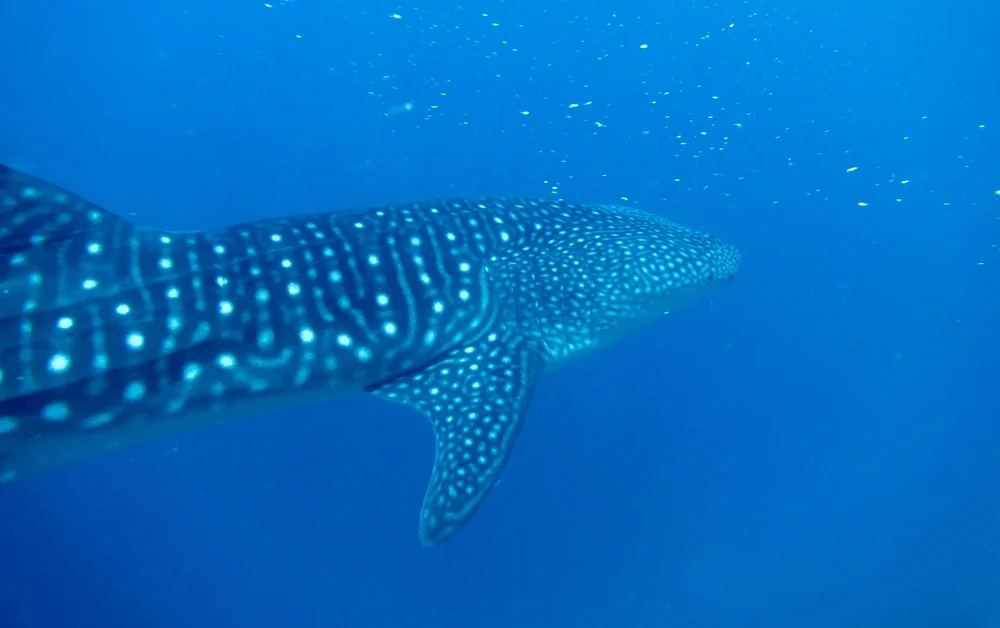
Whale Shark
The biggest fish in the ocean, a spotted, bus sized filter feeder and the undisputed holy grail of tropical diving. Where: Koh Bon, Koh Tachai and the outer pinnacles on liveaboard itineraries. Best: Feb-Apr.
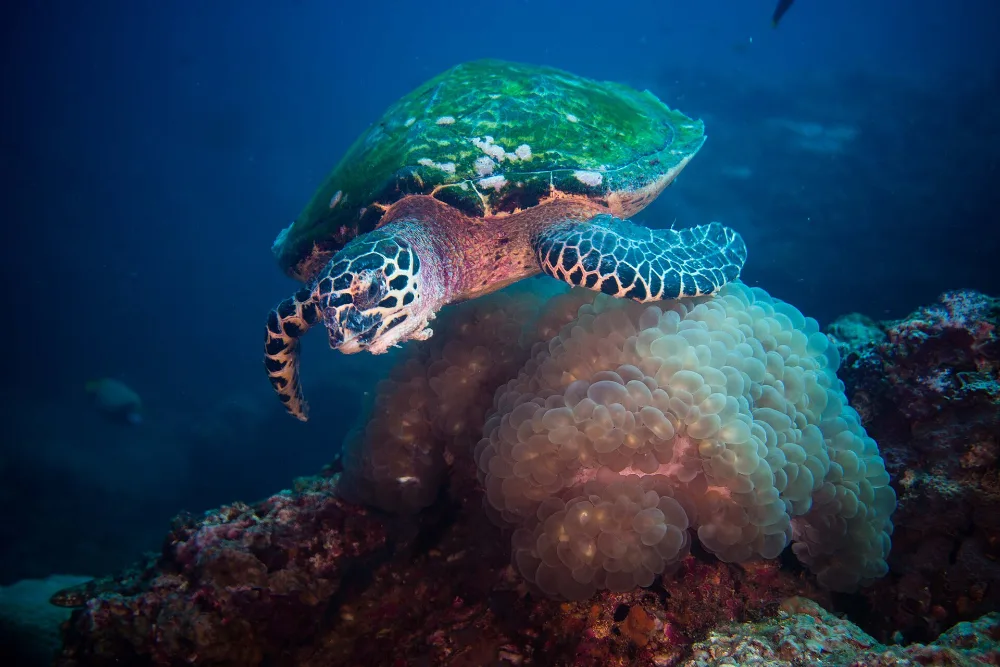
Hawksbill Turtle
The reef's sponge specialist, its beautiful shell also the reason it was hunted to the edge. Where: Coral bommies and sponge-covered walls throughout. Best: Nov-Apr.
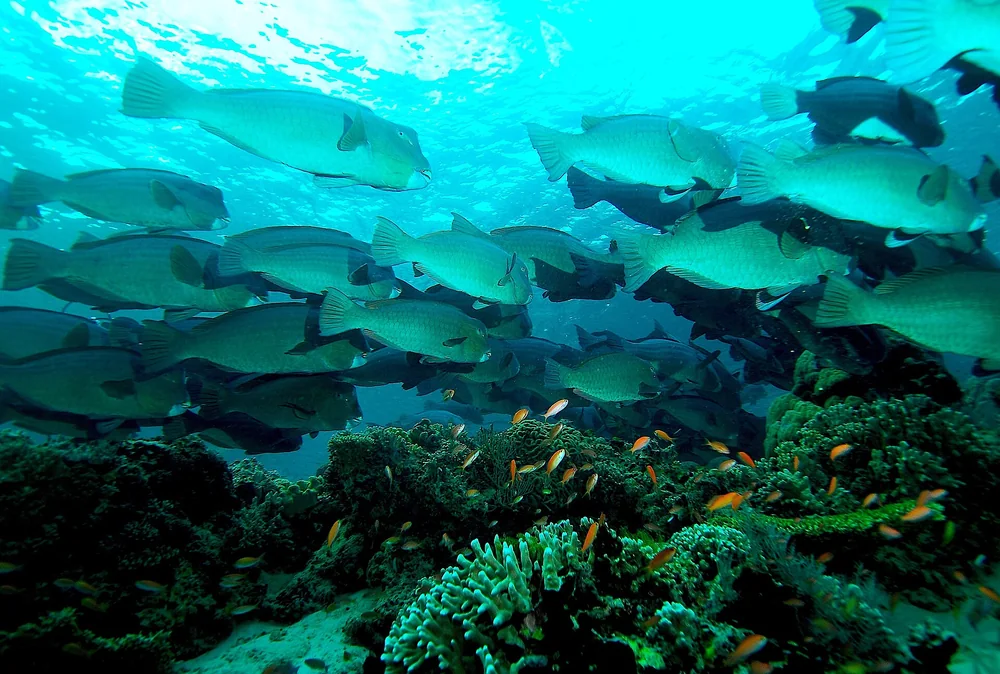
Bumphead Parrotfish
A hulking, bull-headed parrotfish that rams and bites living coral, turning reef rock into the white sand of tropical beaches. Where: Reef tops at dawn on the outer islands. Best: Nov-Apr, first dive of the day.
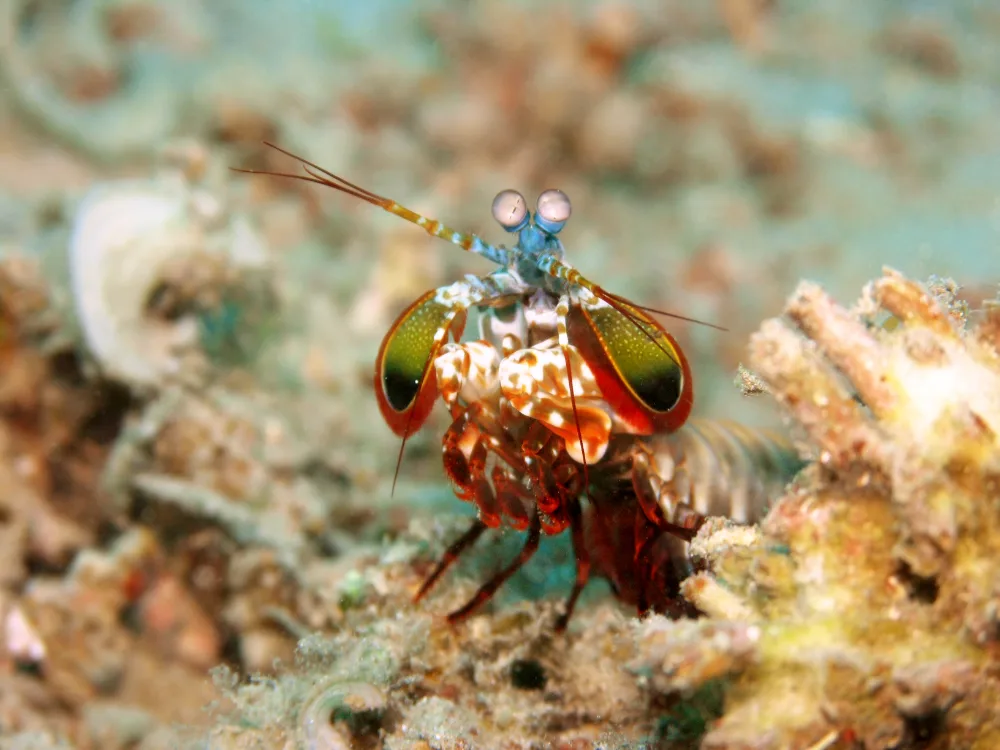
Peacock Mantis Shrimp
A jewel-coloured reef brawler that punches with the speed of a bullet and sees the world in colours we cannot imagine. Where: Sand and rubble burrows at Anita's Reef. Best: Nov-Apr.
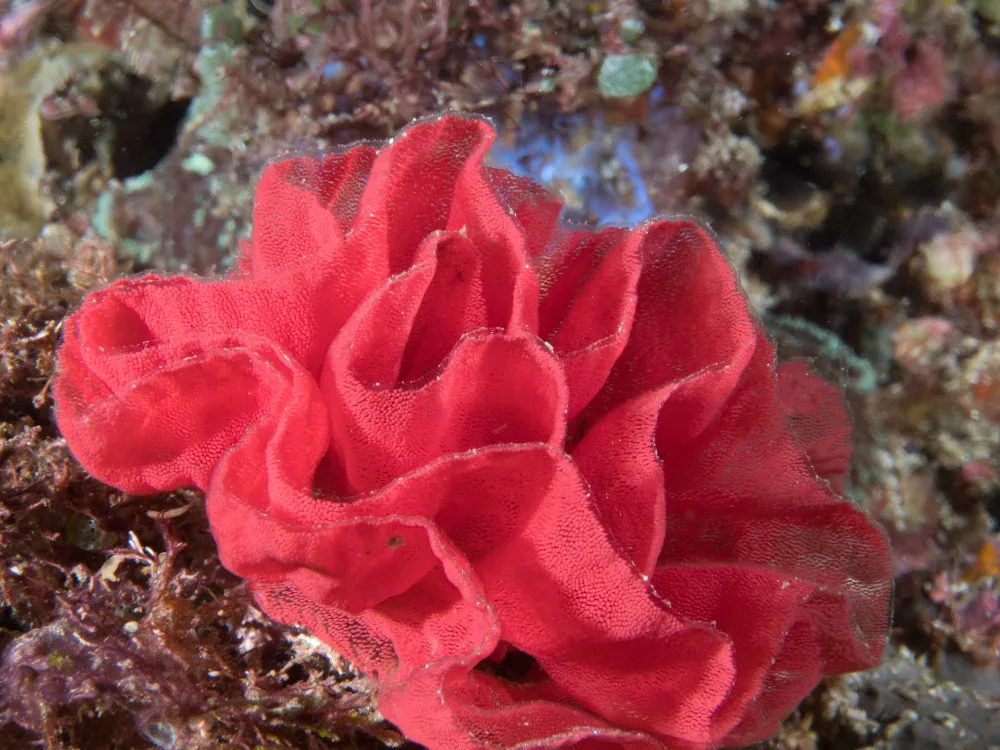
Spanish Dancer
A giant crimson sea slug that unfurls its frilled body and swims through open water like a flamenco dancer's skirt. Where: Night dives on rubble and reef base. Best: Nov-Apr, night.
Similan Islands and Richelieu Rock
The headline destination, and the one with the biggest animals. Granite boulders and hard coral on the islands themselves, then Richelieu Rock further north, which is the single best chance of a whale shark in Thai water. Liveaboard country, and closed for part of the year.
10 of 59 recorded species
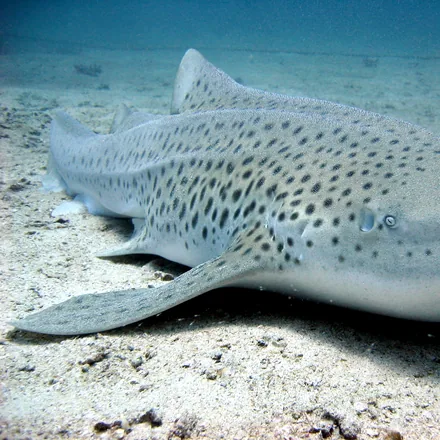
Zebra Shark (Leopard Shark) Regular Endangered
Stegostoma tigrinum
A gentle, spotted shark that lies on the sand like a giant lazy cat, striped as a pup and spotted as an adult.
Where: Sandy patches at East of Eden, Anita's Reef and Elephant Head Rock. Best: Nov-Apr, morning dives, best Dec-Mar. Rests on sand in the open; approach slowly from the side and it will usually stay.
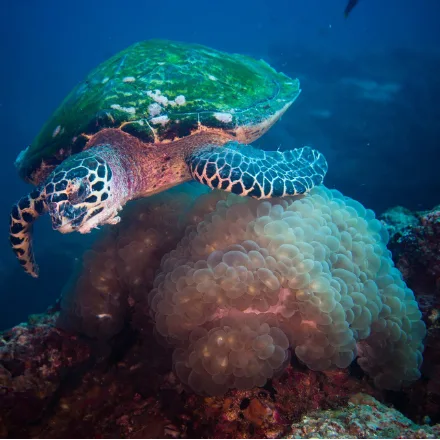
Hawksbill Turtle Occasional Critically Endangered
Eretmochelys imbricata
The reef's sponge specialist, its beautiful shell also the reason it was hunted to the edge.
Where: Coral bommies and sponge-covered walls throughout. Best: Nov-Apr.
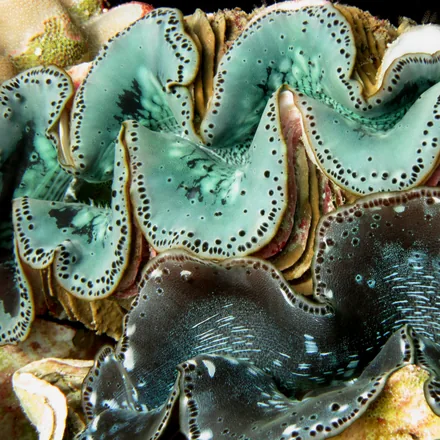
Giant Clam Occasional Critically Endangered
Tridacna gigas
The largest shellfish on Earth, a metre-wide clam that farms algae in its own rippling, jewel-coloured flesh.
Where: Shallow reef tops at Anita's Reef and Donald Duck Bay. Best: Nov-Apr.
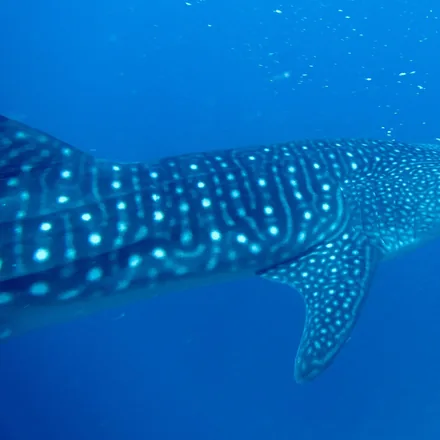
Whale Shark Rare Endangered
Rhincodon typus
The biggest fish in the ocean, a spotted, bus sized filter feeder and the undisputed holy grail of tropical diving.
Where: Koh Bon, Koh Tachai and the outer pinnacles on liveaboard itineraries. Best: Feb-Apr. The single most sought sighting on any Similan trip, and worth the liveaboard over a day boat.
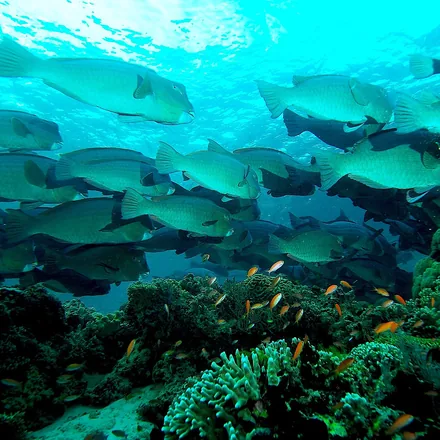
Bumphead Parrotfish Occasional Vulnerable
Bolbometopon muricatum
A hulking, bull-headed parrotfish that rams and bites living coral, turning reef rock into the white sand of tropical beaches.
Where: Reef tops at dawn on the outer islands. Best: Nov-Apr, first dive of the day. Best on the first dive of the day, before the schools break up.
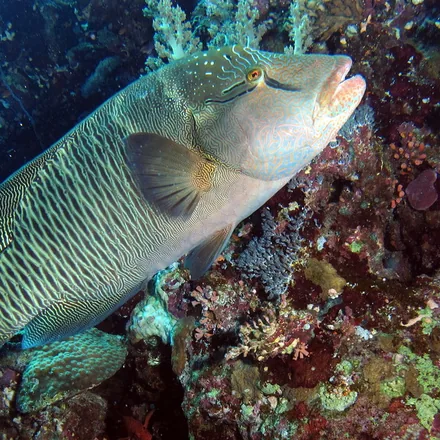
Humphead Wrasse (Napoleon Wrasse) Rare Endangered
Cheilinus undulatus
A giant, curious reef fish with thick lips and a bulging forehead, able to crunch prey that few other animals can eat.
Where: Outer reef slopes at Koh Bon and Christmas Point. Best: Nov-Apr, best in calm Feb-Apr water. Large individuals are curious and will follow a diver.
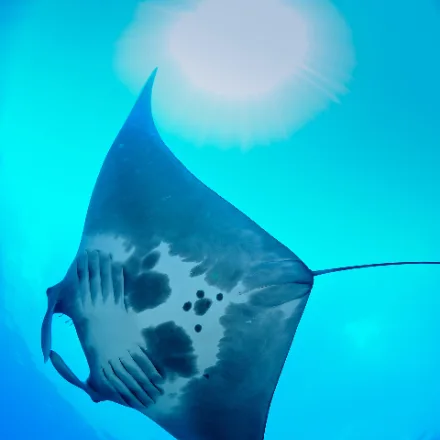
Reef Manta Ray Occasional Vulnerable
Mobula alfredi
A four metre wingspan gliding overhead in slow, hypnotic loops that leave divers grinning for days.
Where: Koh Bon and Koh Tachai. Best: Feb-Apr, occasional from Jan.
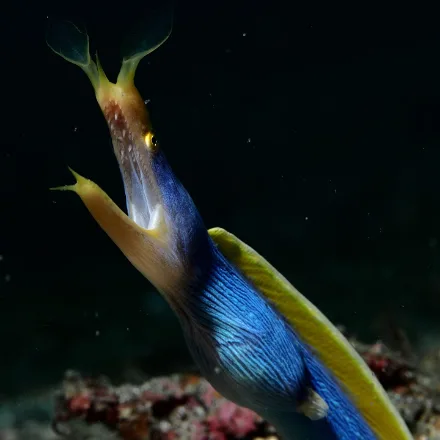
Ribbon Eel Occasional
Rhinomuraena quaesita
A ribbon of electric blue and yellow that sways from a hole in the sand, and remarkably changes sex and colour as it grows.
Where: Sand and rubble margins at Anita's Reef. Best: Nov-Apr. Blue adults and black juveniles occupy the same burrows for months.
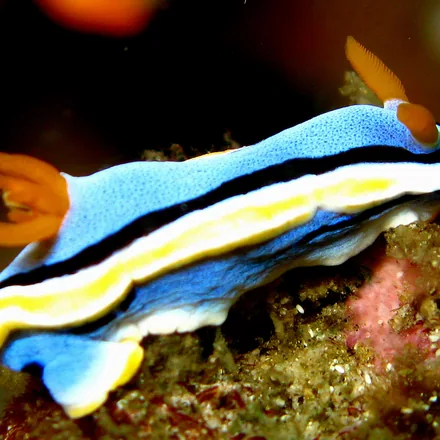
Chromodoris Nudibranch Regular
Chromodoris species
A tiny sea slug in outrageous colours that borrows toxins from the sponges it eats and flaunts them as a warning.
Where: Sponges on the west-side walls. Best: Nov-Apr.
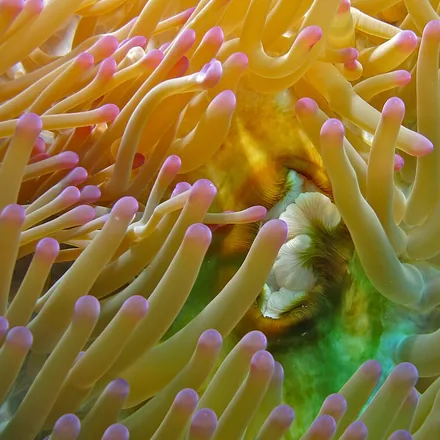
Magnificent Sea Anemone Common
Heteractis magnifica
A great carpet of stinging tentacles that is home and fortress to the anemonefish, a partnership at the heart of the reef.
Where: Shallow reef tops throughout. Best: Nov-Apr.
See all 59 species recorded at Similan Islands and Richelieu Rock
Hin Daeng and Hin Muang
Two open-water pinnacles with the deepest, coldest water in Thai diving, and the reason people come is what that water occasionally brings up. Big reef fish are dependable. The hammerheads are not, and anyone who tells you otherwise is selling something.
9 of 60 recorded species
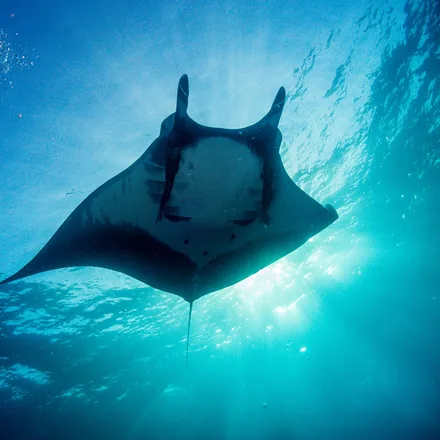
Giant Manta Ray Occasional Endangered
Mobula birostris
The largest ray on the planet, an ocean wanderer that can span seven metres and loops through plankton clouds in slow somersaults.
Where: Cleaning stations on the Hin Daeng plateau. Best: Nov-Apr, peak Feb-Apr. The classic Thai manta site. Kneel on the sand well clear of the station and let them come.
Hawksbill Turtle Occasional Critically Endangered
Eretmochelys imbricata
The reef's sponge specialist, its beautiful shell also the reason it was hunted to the edge.
Where: Soft coral walls of Hin Muang. Best: Nov-Apr.
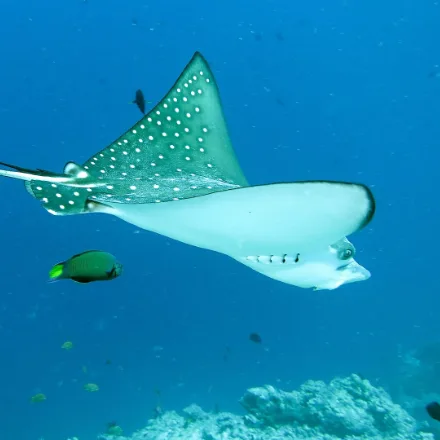
Ocellated Eagle Ray Occasional Endangered
Aetobatus ocellatus
A dramatic ray that flies through open water on wings spangled with white spots, trailing a whip-like venomous tail.
Where: The drop-off into blue water. Best: Nov-Apr, more frequent Feb-Apr.
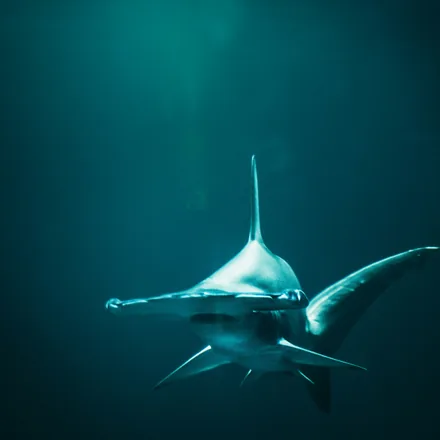
Scalloped Hammerhead Ultra rare Critically Endangered
Sphyrna lewini
The head is a sensory antenna, packed with electroreceptors that can find a ray buried under sand.
Where: Deep water off the Hin Muang wall. Best: Feb-Apr, dawn dives.
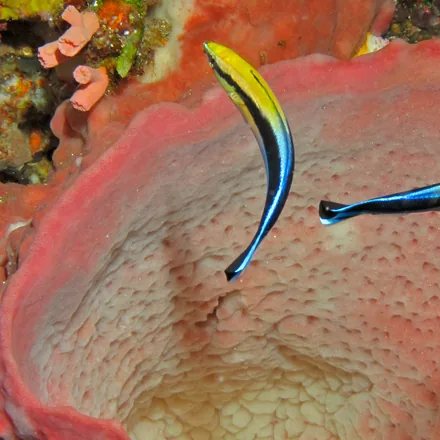
Bluestreak Cleaner Wrasse Common
Labroides dimidiatus
A tiny striped wrasse that runs the reef's health clinic, picking parasites from fish that queue up and even open their mouths for it.
Where: Cleaning stations across the plateau. Best: Nov-Apr. The stations are why the mantas come. Do not hover over them.
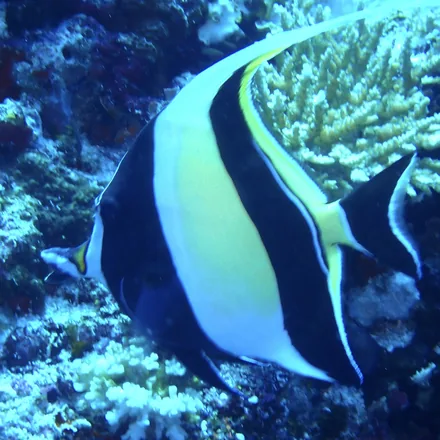
Moorish Idol Common
Zanclus cornutus
An unmistakable disc of black, white and gold trailing a long ribbon fin, one of the most elegant fish on any reef.
Where: Throughout the shallow reef. Best: Nov-Apr.
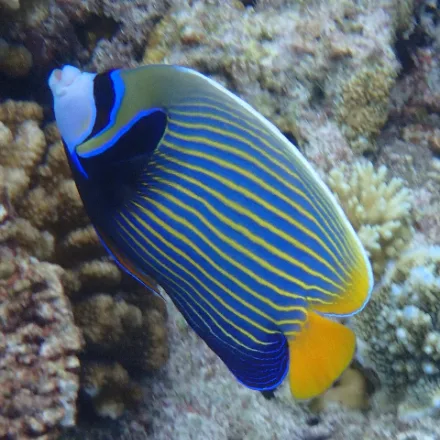
Emperor Angelfish Regular
Pomacanthus imperator
A living work of art in electric blue and yellow stripes, its young disguised in a maze of blue and white rings.
Where: Wall crevices. Best: Nov-Apr.
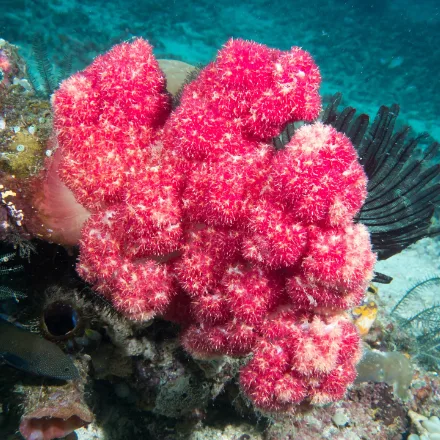
Carnation Soft Coral Regular
Dendronephthya species
An explosion of pink, red and orange bloom that inflates with water to feed, turning shaded walls into hanging gardens.
Where: Shaded sections of the Hin Muang wall. Best: Nov-Apr.
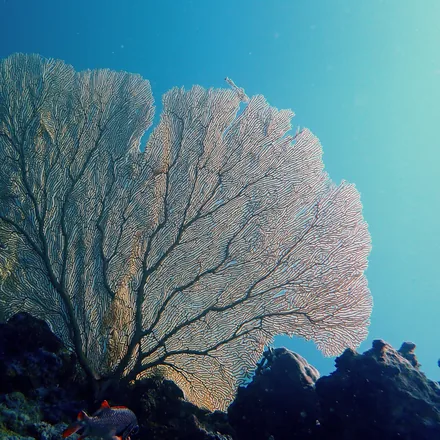
Giant Sea Fan (Gorgonian) Regular
Annella species
A great lattice fan spread across the current, a soft coral that farms the flow for plankton and shelters seahorses and hawkfish.
Where: The Hin Muang wall in current. Best: Nov-Apr. Hin Muang is a wall of purple soft coral, and the fans are its structure.
Koh Phi Phi
Shallow, sheltered and busy, which makes it the place most people log their first Thai dives. The reef life is genuinely good if you look small, and the leopard sharks on the sand are the sighting people remember.
8 of 42 recorded species
Hawksbill Turtle Occasional Critically Endangered
Eretmochelys imbricata
The reef's sponge specialist, its beautiful shell also the reason it was hunted to the edge.
Where: Coral bommies at Bida Nok. Best: Nov-Apr.
Giant Clam Occasional Critically Endangered
Tridacna gigas
The largest shellfish on Earth, a metre-wide clam that farms algae in its own rippling, jewel-coloured flesh.
Where: Shallow reef tops. Best: Nov-Apr.
Whale Shark Rare Endangered
Rhincodon typus
The biggest fish in the ocean, a spotted, bus sized filter feeder and the undisputed holy grail of tropical diving.
Where: Bida Nok and Bida Nai, and the outer walls. Best: Feb-Apr.
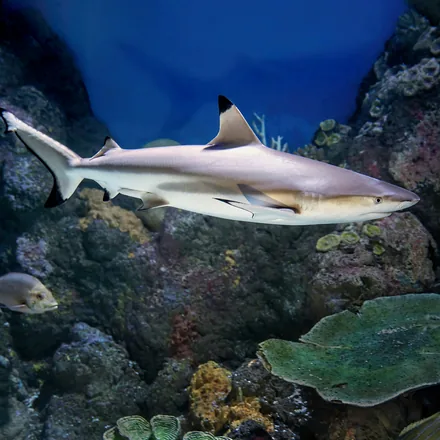
Blacktip Reef Shark Common Vulnerable
Carcharhinus melanopterus
The neat little reef shark of the shallows, its black-tipped fins often cutting the surface over sun-lit sand flats.
Where: Shallow reef flats at Maya Bay and around Koh Phi Phi Ley. Best: Nov-Apr, early morning, best Dec-Mar. Maya Bay's shark nursery is the most reliable shark snorkel in Thailand. Go at opening time.
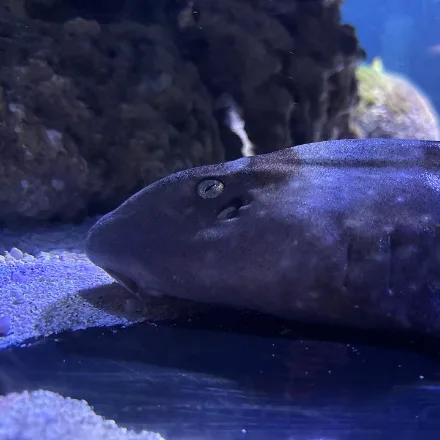
Whitespotted Bamboo Shark Occasional Endangered
Chiloscyllium plagiosum
A small, slow shark that walks along the bottom on its fins and can survive hours in a tide pool with almost no oxygen.
Where: Under ledges at night. Best: Nov-Apr, night dives.
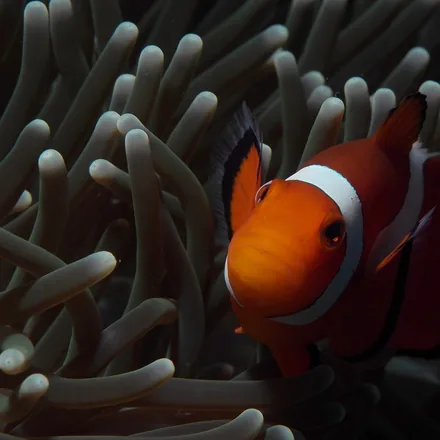
False Clownfish (Clown Anemonefish) Common
Amphiprion ocellaris
The famous orange and white anemonefish, immune to the stinging tentacles that shelter it and every group ruled by a single dominant female.
Where: Anemones on the shallow reef. Best: Nov-Apr.
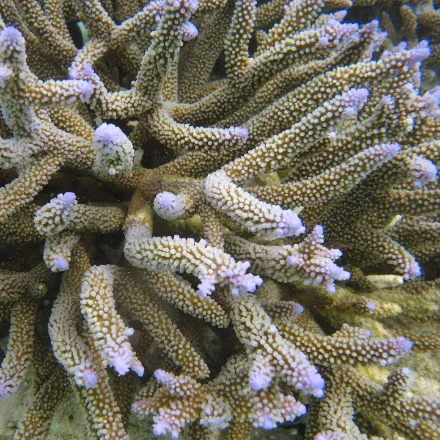
Staghorn Coral Common
Acropora species
The fast-growing branching coral that builds the living thickets of the reef, nursery and shelter for a whole community.
Where: Shallow reef flats. Best: Nov-Apr.
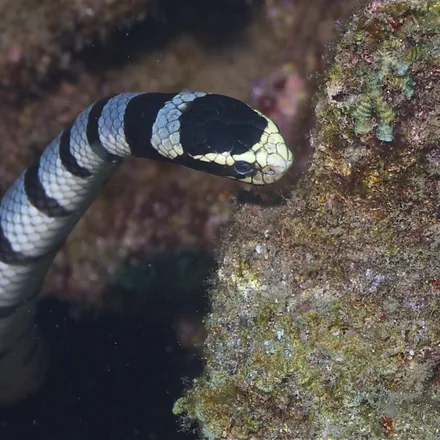
Banded Sea Krait Regular
Laticauda colubrina
A sea snake that hunts eels underwater but must come ashore to rest, drink fresh water and lay its eggs.
Where: Shallow reef and rubble. Best: Nov-Apr.
See all 42 species recorded at Koh Phi Phi
Koh Samui, Sail Rock and the Gulf
The Gulf dives on the opposite calendar to the Andaman, which makes it the answer when the west coast is shut. Sail Rock is the site that matters, and whale sharks turn up there more often than the Gulf’s reputation suggests.
8 of 38 recorded species
Whale Shark Rare Endangered
Rhincodon typus
The biggest fish in the ocean, a spotted, bus sized filter feeder and the undisputed holy grail of tropical diving.
Where: Sail Rock and the pinnacles between Samui and Koh Tao. Best: Mar-May peak, possible Feb-Sep. Sail Rock is the Gulf's whale shark site. Day boats run from Samui, Phangan and Koh Tao.
Blacktip Reef Shark Common Vulnerable
Carcharhinus melanopterus
The neat little reef shark of the shallows, its black-tipped fins often cutting the surface over sun-lit sand flats.
Where: Shark Bay on Koh Tao and shallow reef flats. Best: Year round, best Feb-Sep. Shark Bay is a snorkel, not a dive, and the sharks are there most mornings.
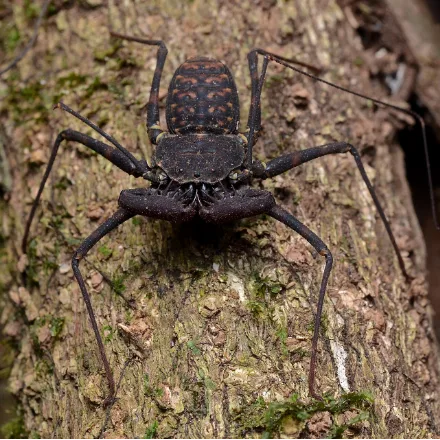
Bryde's Whale Occasional
Balaenoptera edeni
A warm-water baleen whale that lunges up through bait balls with its mouth wide open.
Where: Open Gulf water on the crossings, and the upper Gulf feeding grounds. Best: Sep-Nov, upper Gulf feeding season. Lunge-feeding at the surface in the upper Gulf is one of the great Thai wildlife sights.
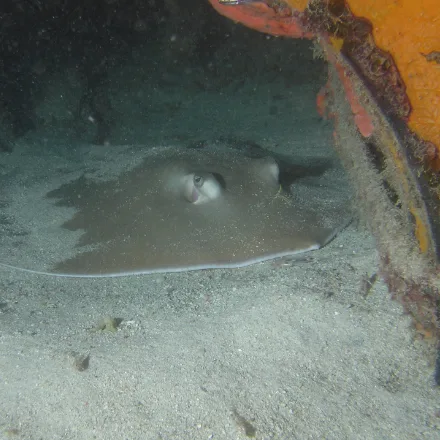
Jenkins Whipray Occasional Vulnerable
Pateobatis jenkinsii
A big sand-flat ray with a ridge of enlarged thorns down its spine and a tail twice the length of its body.
Where: Sand flats between coral heads. Best: Year round, best Feb-Sep.
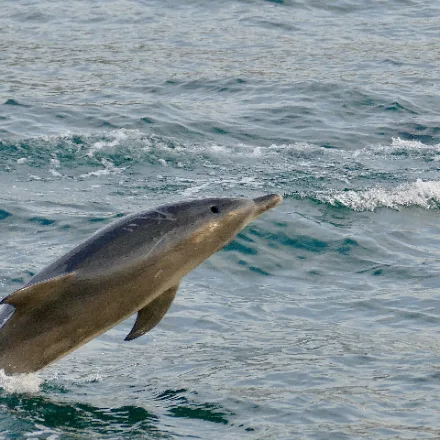
Indo-Pacific Bottlenose Dolphin Regular Near Threatened
Tursiops aduncus
The classic bottlenose of warm coasts, sociable, clever and quick to ride a bow wave.
Where: Open water between the islands. Best: Feb-Sep, calm mornings.
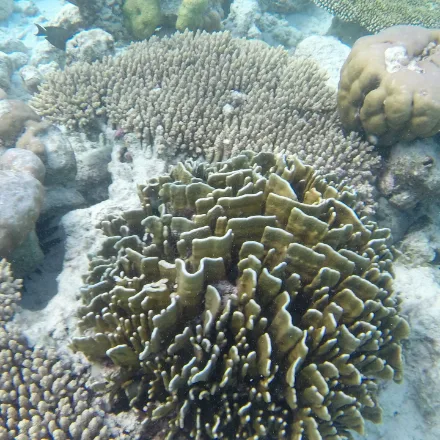
Blue Coral Occasional Vulnerable
Heliopora coerulea
The only coral on earth with a blue skeleton, hidden under brown tissue until the animal dies.
Where: Shallow high-energy reef. Best: Year round, best Feb-Sep.
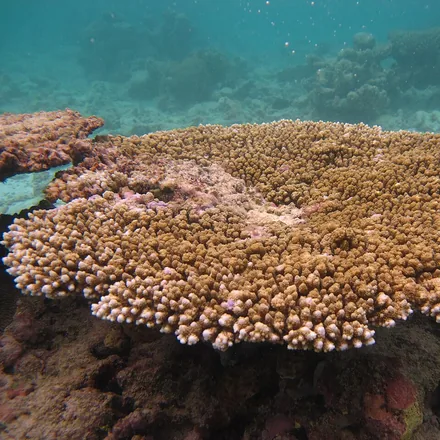
Table Coral Common Near Threatened
Acropora hyacinthus
Grows outward faster than it grows up, spreading a flat platform that shades out every competitor beneath it.
Where: Shallow reef around Koh Tao. Best: Year round, best Feb-Sep.
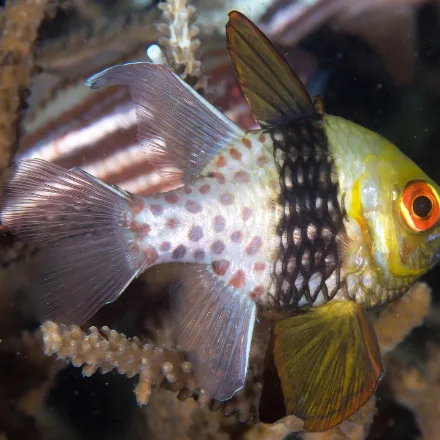
Pyjama Cardinalfish Regular
Sphaeramia nematoptera
Looks like three different fish stitched together, and the male holds the whole clutch of eggs in his mouth for a week.
Where: Branching coral in the shallows. Best: Year round, best Feb-Sep.
See all 38 species recorded at Koh Samui, Sail Rock and the Gulf
Trang and Koh Haa
Quieter water south of Krabi, worth it for the caverns and for a coast that still holds dugongs in the seagrass nearby. Fewer divers, and a different feel from the Similan circuit.
6 of 12 recorded species
Blacktip Reef Shark Common Vulnerable
Carcharhinus melanopterus
The neat little reef shark of the shallows, its black-tipped fins often cutting the surface over sun-lit sand flats.
Where: Shallow reef flats around the islands. Best: Nov-Apr. Often visible from the surface on a snorkel in knee-deep water.
False Clownfish (Clown Anemonefish) Common
Amphiprion ocellaris
The famous orange and white anemonefish, immune to the stinging tentacles that shelter it and every group ruled by a single dominant female.
Where: Anemones on the shallow reefs. Best: Nov-Apr.
Magnificent Sea Anemone Common
Heteractis magnifica
A great carpet of stinging tentacles that is home and fortress to the anemonefish, a partnership at the heart of the reef.
Where: Shallow reef. Best: Nov-Apr.
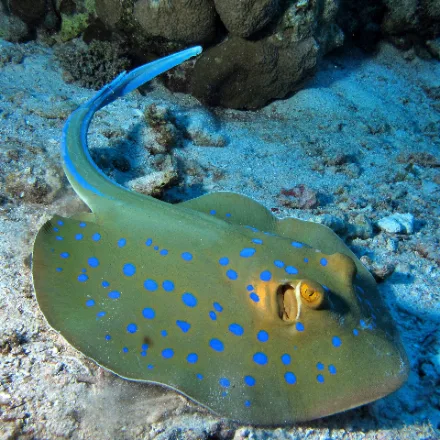
Bluespotted Ribbontail Ray Regular
Taeniura lymma
A small, brilliantly marked ray, olive gold studded with electric blue spots, tucked under coral ledges.
Where: Sand pockets on the reef flats. Best: Nov-Apr.
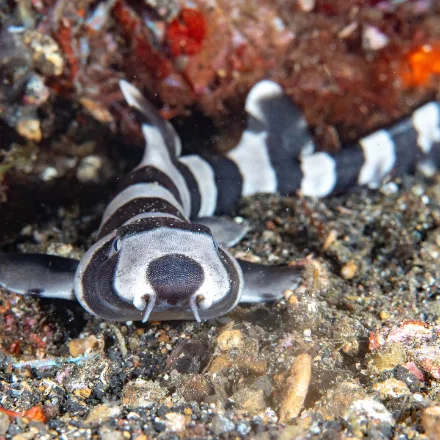
Brownbanded Bamboo Shark Occasional Near Threatened
Chiloscyllium punctatum
A small, slender carpet shark that walks across the reef on its fins and can survive hours out of water in a tide pool.
Where: Under coral ledges at night. Best: Nov-Apr, night.
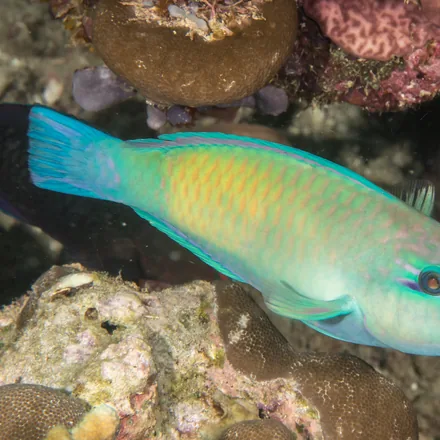
Bullethead Parrotfish Common
Chlorurus sordidus
A blunt-headed reef grazer that scrapes algae from coral with a beak of fused teeth and sleeps in a bubble of its own mucus.
Where: Reef flats. Best: Nov-Apr.
Planning and responsible watching
Season decides everything here. The Andaman runs roughly November to April, with February to April the peak for whale sharks and mantas, and the Similan national park closes to visitors for part of the wet season, so check the current dates before booking anything. The Gulf runs the opposite way and is best from May to September. On the water, the rules that matter are simple: never touch or chase anything, never ride or hold a turtle or a manta, keep your fins off the coral, and choose an operator that briefs distance properly and does not feed sharks to guarantee a sighting. Feeding changes behaviour and it is the fastest way to ruin a site for everyone who comes after you.
Find dive trips, liveaboards and courses in Thailand
Some links on this page are affiliate links. If you book through them, Wildseer may earn a small commission at no extra cost to you.
Frequently asked questions
Where is the best diving in Thailand for wildlife?
The Similan Islands and Richelieu Rock for big animals, Hin Daeng and Hin Muang for depth and the chance of something pelagic, Koh Phi Phi for accessible reef life, and Sail Rock in the Gulf when the Andaman is closed.
When can you see whale sharks in Thailand?
February to April is the peak on the Andaman side, with Richelieu Rock the single most likely spot. The Gulf has its own window from May to September, and Sail Rock produces more whale shark encounters than most people expect.
Do you need to dive to see the good stuff?
No. Turtles, blacktip reef sharks, clownfish and most of the reef fish on this page are visible from the surface in the right places. The animals that genuinely need depth are the hammerheads, the deeper pelagics and most of the macro life.
Are the hammerheads at Hin Daeng reliable?
No, and it is worth being clear about that. They are recorded there and they are the reason the site has its reputation, but a sighting is a rare piece of luck rather than something to plan a trip around.
Is diving in Thailand ethical?
It can be, and the operator is the deciding factor. Choose one that keeps its distance, never feeds animals to produce a sighting, briefs buoyancy properly before putting people over coral, and does not offer contact with any animal.
Explore Thailand wildlife by group
Explore Thailand wildlife by place
Part of the Wildlife in Thailand guide.