
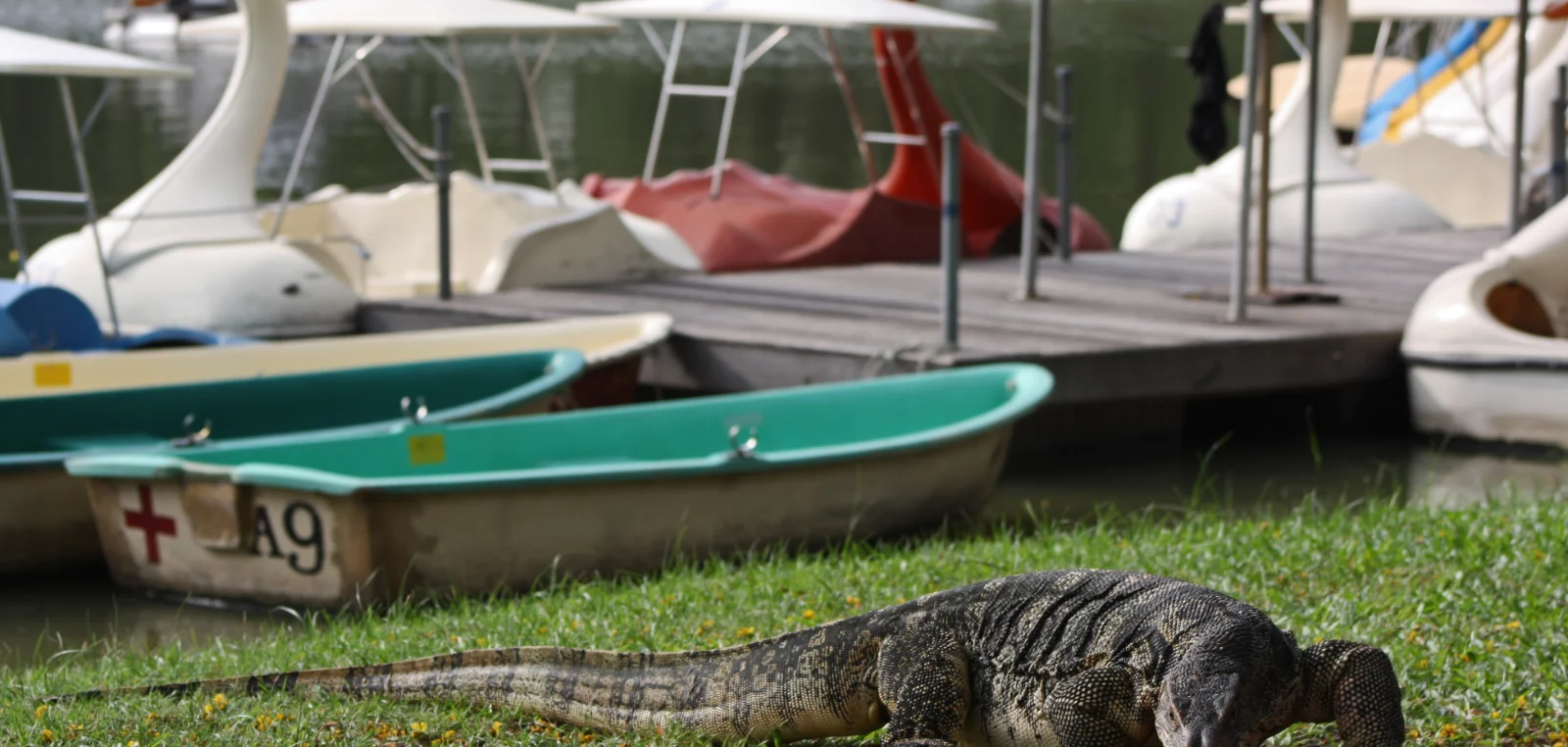
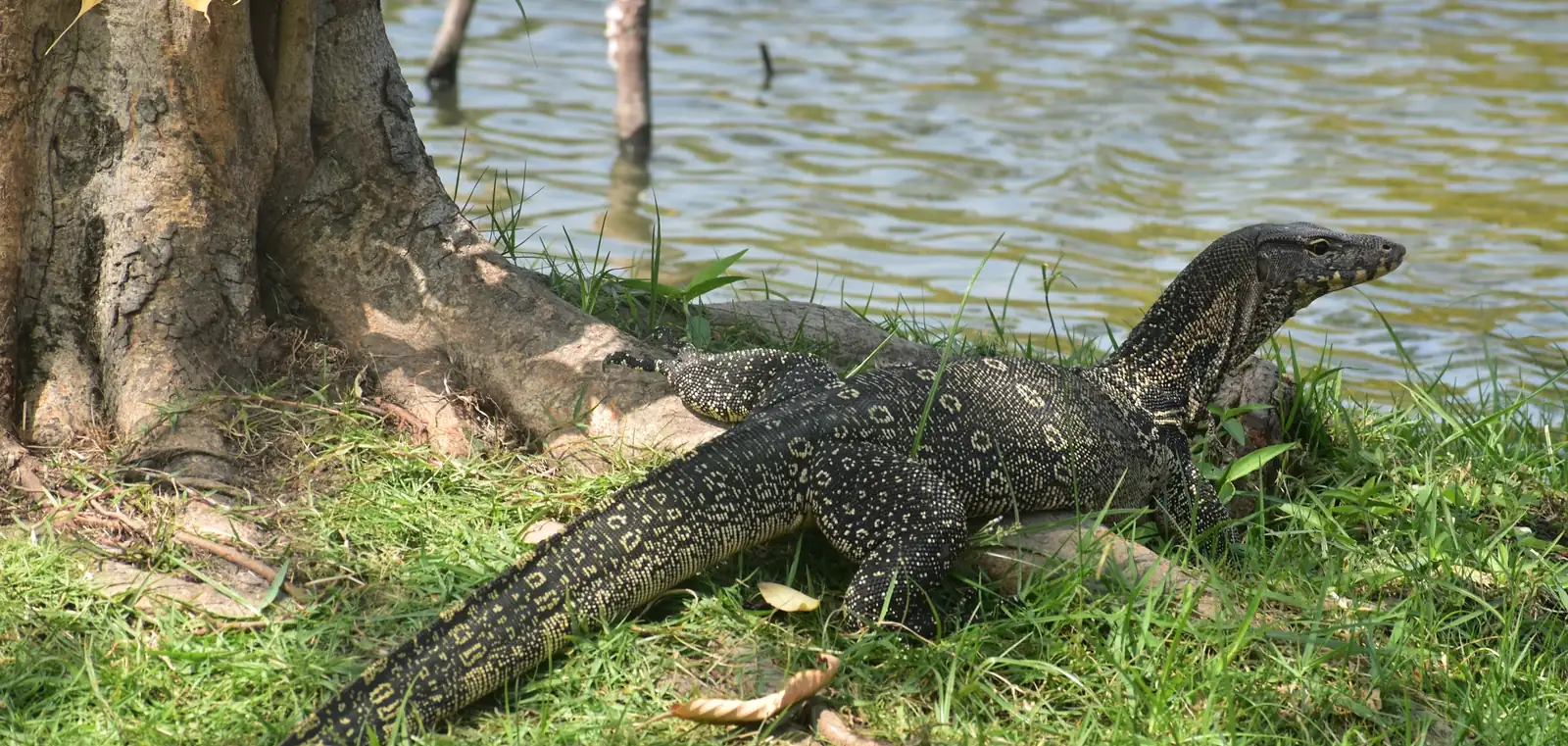
Bangkok wildlife sounds like a contradiction until you walk into Lumphini Park and find a two-metre monitor lizard hauled out on the grass, ten minutes from a skytrain station. The city is built on a delta, and the water never really left: klongs run behind the shophouses, the Chao Phraya carries stingrays and featherbacks, and Bang Krachao, the loop of jungle inside the river bend, is close enough to cycle to.
The real prize is south of the city. Two hours down the coast, the saltpans and mudflats at Pak Thale and Laem Phak Bia hold the spoon-billed sandpiper, of which a few hundred remain anywhere on earth, and Nordmann’s greenshank alongside it. Birders fly to Bangkok for that stretch of mud. This page lists every animal the city and its day trips record, with the site, the season and an honest assessment of your chances.
Highlights
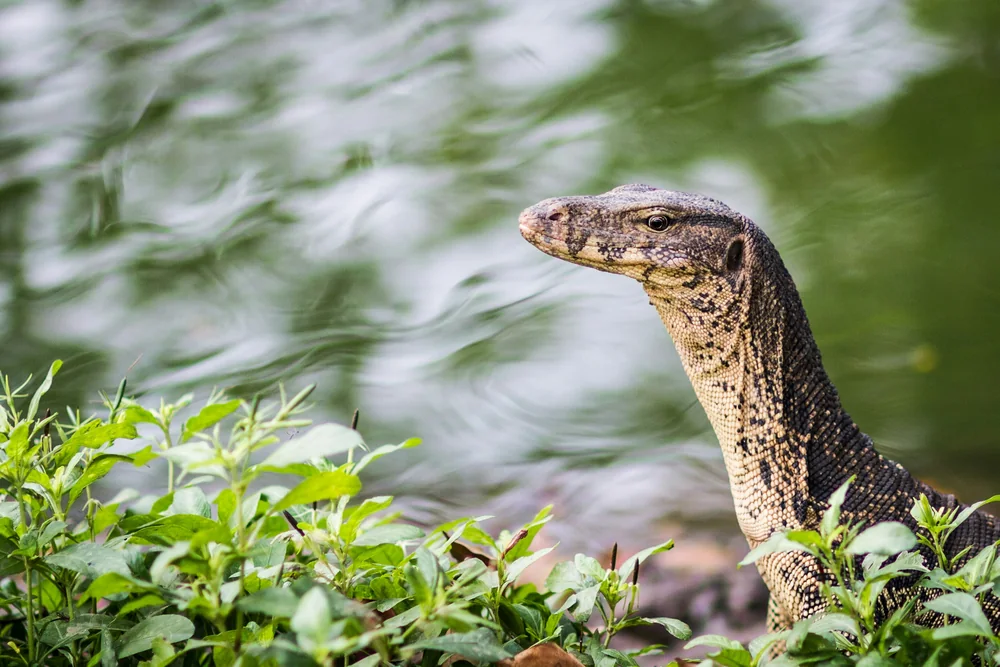
Asian Water Monitor
A dragon sized lizard that swims canals and city parks, second only to the Komodo dragon in length. Where: Lumphini Park, the Benjakitti wetland and any klong bank in the city. Best: Year round, mid-morning when they haul out to bask.
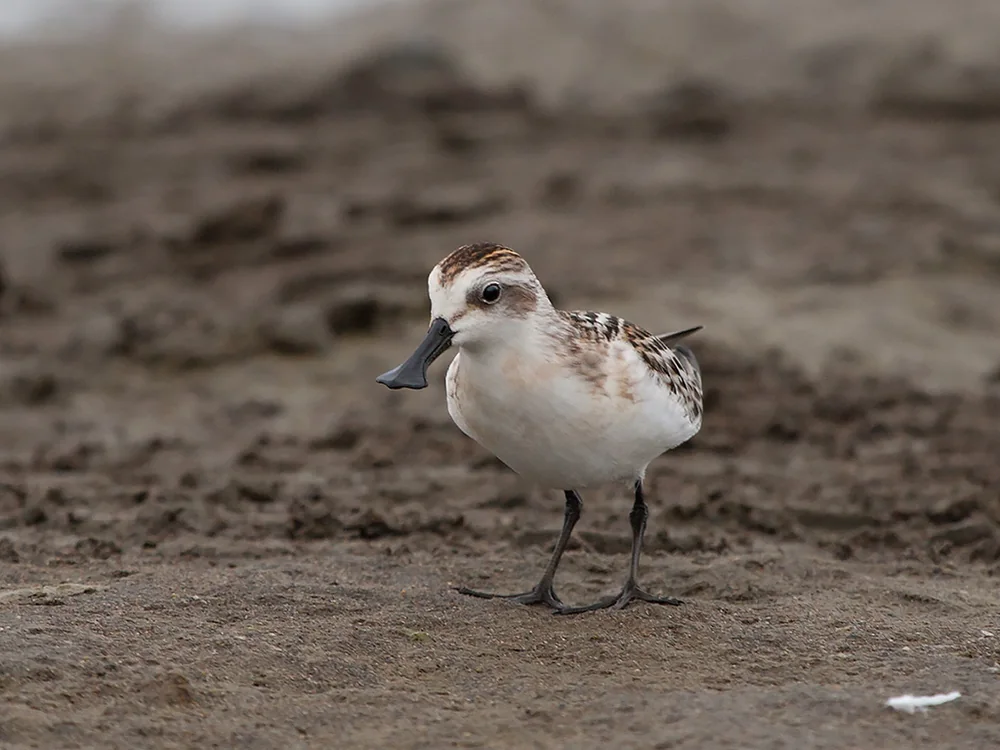
Spoon-billed Sandpiper
One of the world's rarest and most charismatic shorebirds, tiny and armed with an unmistakable spatula bill. Where: The saltpans and mudflats at Pak Thale and Laem Phak Bia. Best: Nov-Mar, on a rising tide as the flats shrink.
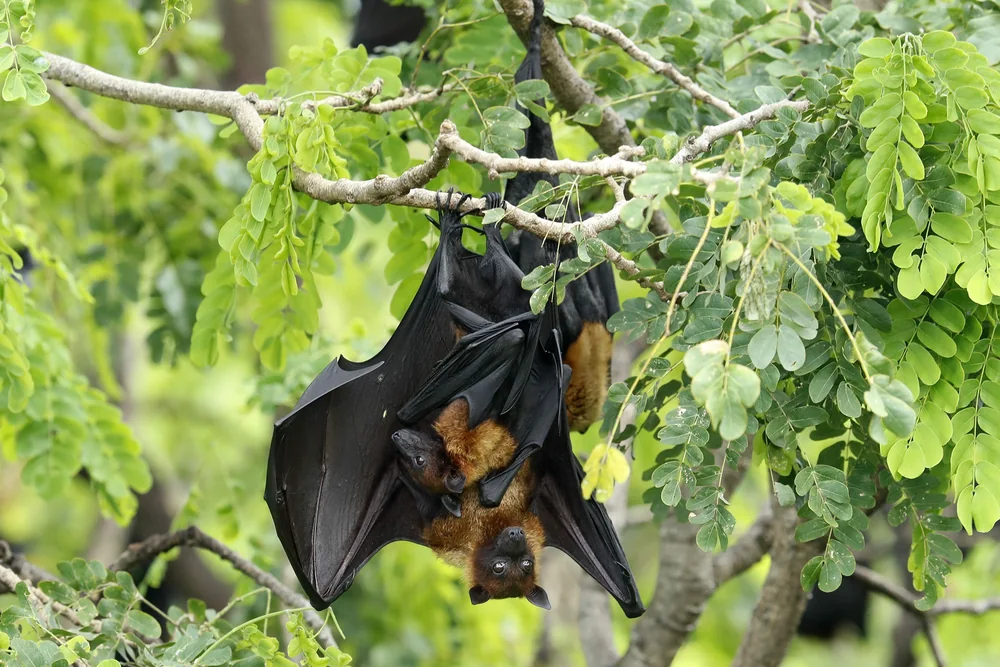
Lyle's Flying Fox
A large fruit bat that gathers in noisy thousands over temple grounds, hanging like dark fruit in the daytime trees. Where: Temple colonies of the central plain, most famously Wat Pho Bang Khla in Chachoengsao. Best: Year round, best at the dusk flyout.
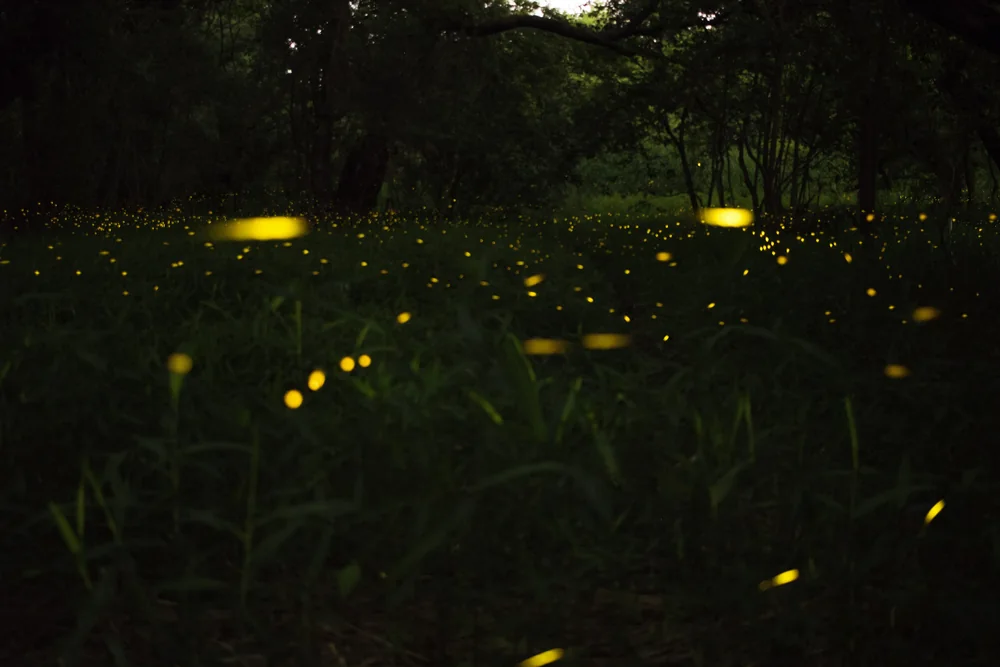
Synchronous Firefly
Mangrove trees hung with thousands of fireflies, all flashing in perfect unison like living fairy lights. Where: Riverside mangroves along the Mae Klong at Amphawa. Best: May-Oct, after dark on a moonless night.
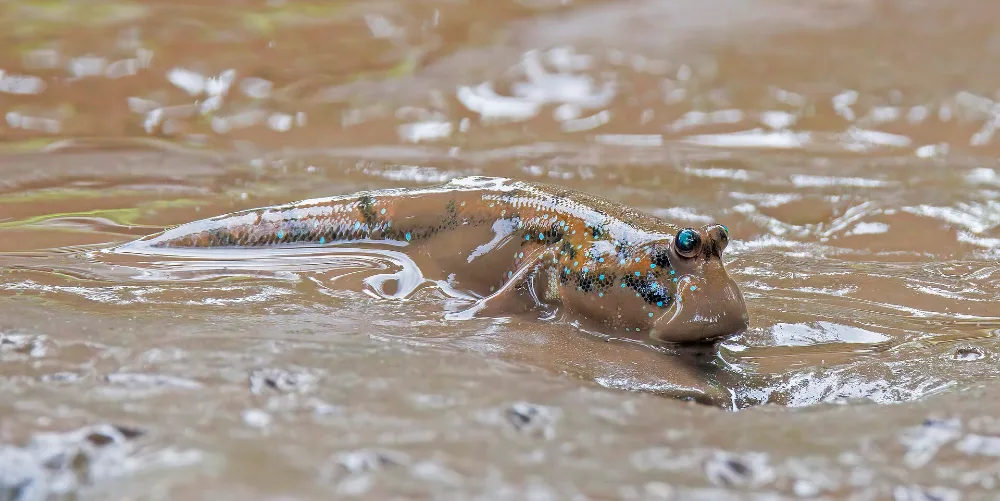
Giant Mudskipper
A fish that spends most of its life out of water, defending a mud territory with a raised sail of a dorsal fin. Where: Mudflats at Bang Pu and along the Khok Kham shoreline. Best: Year round, low tide.
Mammals
5 species
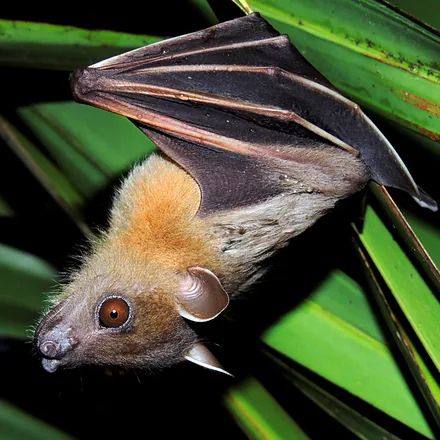
Greater Short-nosed Fruit Bat Common
Cynopterus sphinx
A small fruit bat that builds itself a shelter by chewing palm and fig leaves into a cosy roosting tent.
Where: Flowering and fruiting trees in Lumphini, Benjakitti and Bang Krachao. Best: Year round, the first hour after dark.
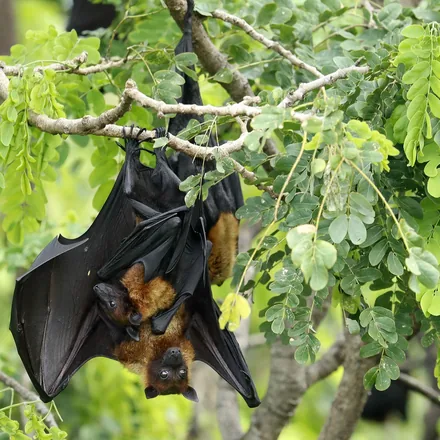
Lyle's Flying Fox Regular Vulnerable
Pteropus lylei
A large fruit bat that gathers in noisy thousands over temple grounds, hanging like dark fruit in the daytime trees.
Where: Temple colonies of the central plain, most famously Wat Pho Bang Khla in Chachoengsao. Best: Year round, best at the dusk flyout. A protected temple colony, roosting in the open in daylight. The evening departure is the thing to stay for.
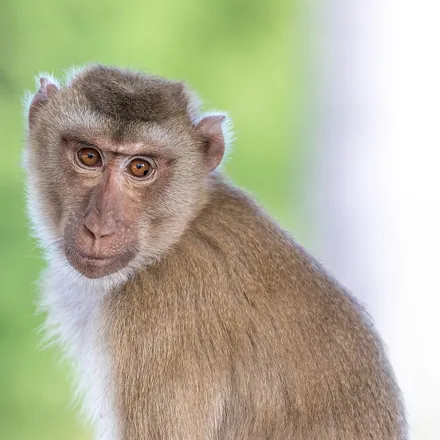
Long-tailed Macaque Occasional Endangered
Macaca fascicularis
The bold, water-loving monkey of temples and mangroves, and despite its ubiquity now one of the most heavily exploited primates on Earth.
Where: Riverside temple grounds on the city fringe and the wooded edges of Bang Krachao. Best: Year round, day. Never feed them. Bangkok's troops are far bolder than forest animals.
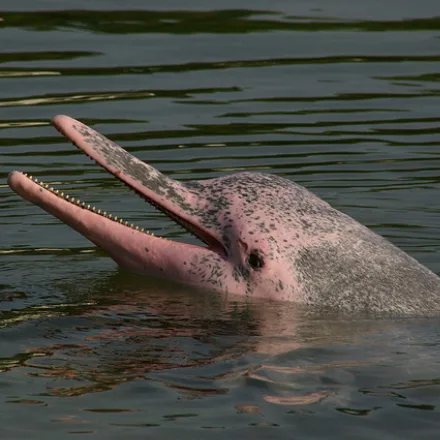
Indo-Pacific Humpback Dolphin Rare Vulnerable
Sousa chinensis
Born dark grey and turning pink with age, the colour coming from blood vessels under unpigmented skin.
Where: Shallow upper Gulf water off Bang Pu and the Mahachai river mouth. Best: Nov-Apr, calm mornings. Pink adults in muddy brown water. Choose operators that keep their distance and cut the engine.
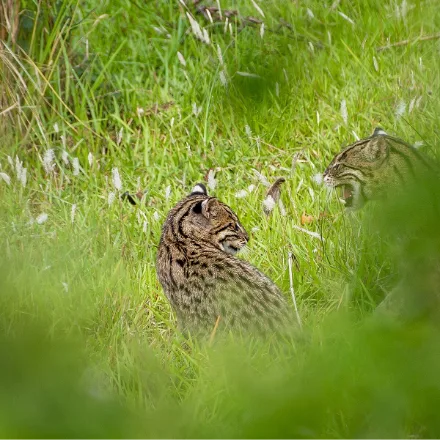
Fishing Cat Very rare Vulnerable
Prionailurus viverrinus
A wild cat that dives for fish, with partially webbed toes and a genuine love of swimming.
Where: Reedbeds, shrimp ponds and abandoned saltpans around Khok Kham and the Petchaburi coast. Best: Nov-Feb, night. The inner Gulf wetlands are one of its last strongholds. Camera-trap country rather than a sighting you can plan.
Birds
23 species
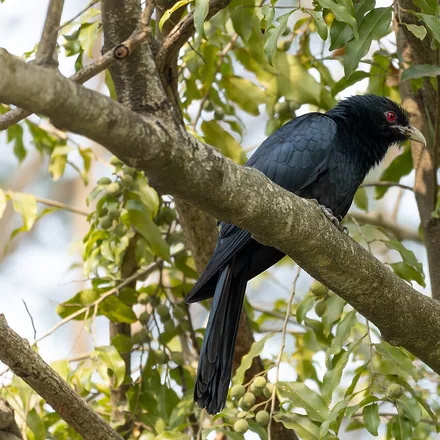
Asian Koel Common
Eudynamys scolopaceus
A glossy black cuckoo with blood-red eyes whose rising ko-el call is one of the defining sounds of tropical mornings.
Where: Parks and leafy streets across the city. Best: Mar-Jul, from first light. Famous for the loud rising ko-el call, and far more often heard than seen.
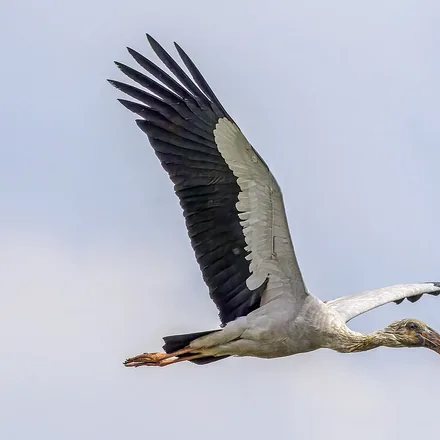
Asian Openbill Common
Anastomus oscitans
A stork with a permanent gap in its bill, a purpose-built tool for prising snails from their shells.
Where: Rice fields and marshes anywhere on the drive out to the coast. Best: Year round, day. Now abundant in the central plains. Huge soaring flocks and noisy colonial nests.
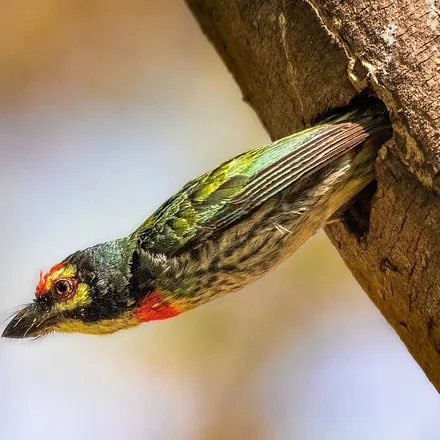
Coppersmith Barbet Common
Psilopogon haemacephalus
A tiny green barbet with a red-and-yellow face whose metronomic tuk tuk tuk call rings like a coppersmith at work.
Where: Bare treetops in Lumphini, Chatuchak and Rot Fai parks. Best: Year round, day. The metronomic tuk call is the background sound of a Bangkok park.
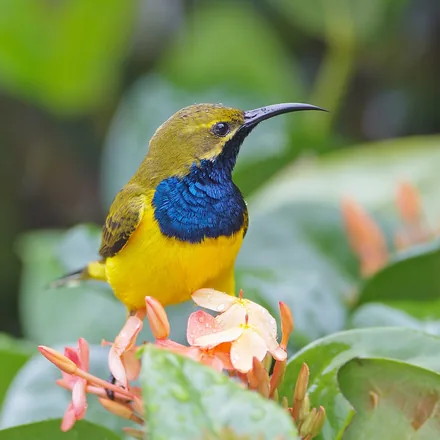
Olive-backed Sunbird Common
Cinnyris jugularis
The cheerful garden sunbird of Thailand, the male flashing an iridescent blue-black throat as he sings from a wire.
Where: Gardens, hotel balconies and every park in the city. Best: Year round, day. The garden sunbird of Thailand, and it will nest on a balcony.
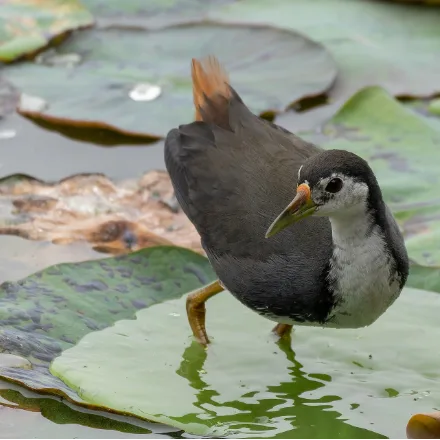
White-breasted Waterhen Common
Amaurornis phoenicurus
A bold, clean-cut marsh bird in slate and white that trots along ditch edges flicking a rusty-bottomed tail.
Where: Ditches and park ponds throughout the city. Best: Year round, day. The bold rail of the city; noisy through the rains.
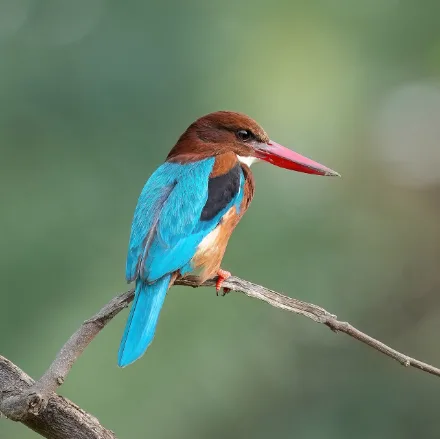
White-throated Kingfisher Common
Halcyon smyrnensis
A big turquoise-and-chocolate kingfisher that hunts far from water, taking lizards and insects across open country.
Where: Wires, park edges and canal banks across the city. Best: Year round, day. Often far from water. Loud laughing call and white wing flashes.
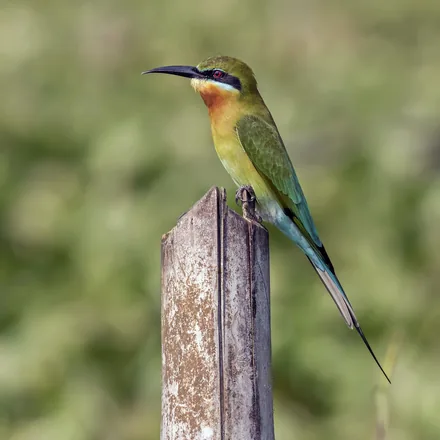
Blue-tailed Bee-eater Regular
Merops philippinus
A streamlined jewel of green, chestnut and blue that hawks bees and dragonflies in graceful, swooping sallies.
Where: Open ground and canal banks at Bang Krachao and on the coastal drive. Best: Nov-Apr, day.
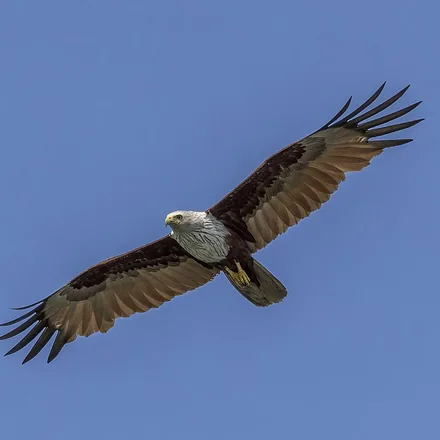
Brahminy Kite Regular
Haliastur indus
A handsome chestnut-and-white kite of coasts and harbours, forever quartering the shoreline for scraps and stranded fish.
Where: Over the river, the port and the coastal ponds at Bang Pu. Best: Year round, day.
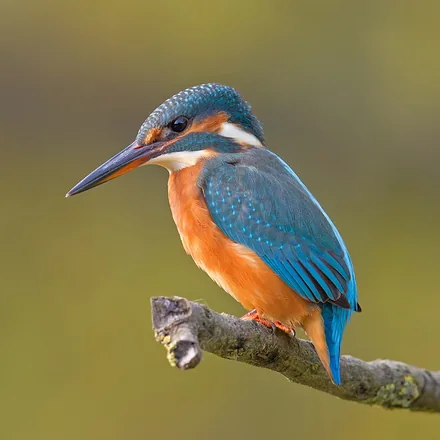
Common Kingfisher Regular
Alcedo atthis
A dazzling blue dart along the stream, small enough to sit in a palm yet impossible to miss when it flies.
Where: Klongs, park lakes and the Bang Krachao channels. Best: Nov-Mar, morning. A flash of electric blue along almost any city waterway in winter.
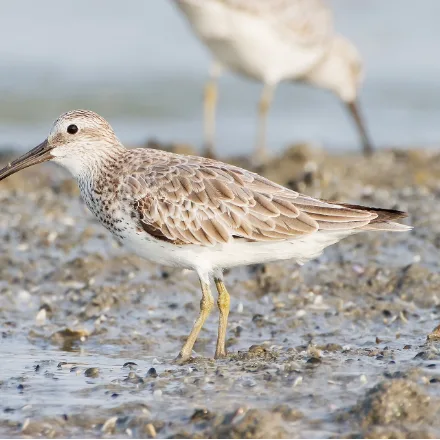
Great Knot Regular Endangered
Calidris tenuirostris
Flies from Siberia to Australia with a single refuelling stop, and losing that one mudflat has nearly finished the species.
Where: Mudflats at Pak Thale, Laem Phak Bia and Bang Pu. Best: Nov-Mar, falling tide. Scan the flocks carefully. This is where the two rarities hide.
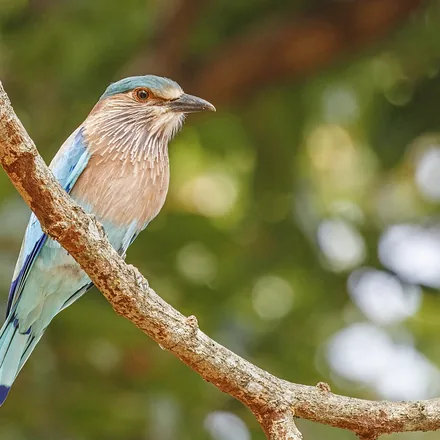
Indian Roller Regular
Coracias benghalensis
A dull-looking perched bird that explodes into brilliant bands of blue when it flies, tumbling through spectacular courtship rolls.
Where: Wires and posts over open ground on the drive to the coast. Best: Nov-Apr, day. Dull brown at rest and electric blue the instant it flies.
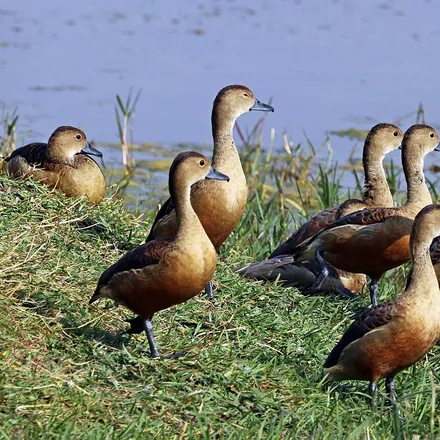
Lesser Whistling Duck Regular
Dendrocygna javanica
A warm-brown, long-necked duck that whistles rather than quacks and wheels over the marshes in twittering flocks.
Where: Benjakitti, Bang Krachao ponds and flooded fields on the coastal drive. Best: Year round, dawn and dusk.
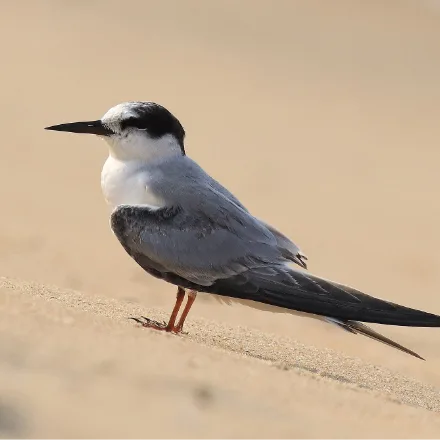
Little Tern Regular
Sternula albifrons
Hovers on fast flickering wings like an oversized hummingbird before dropping onto a fish.
Where: Saltpans and river mouths at Khok Kham, Bang Pu and Laem Phak Bia. Best: Year round, breeding Mar-Jun.
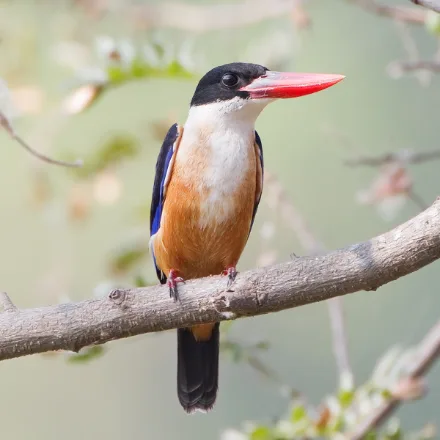
Black-capped Kingfisher Occasional
Halcyon pileata
A striking mangrove kingfisher in black, white and deep purple-blue, a winter visitor to Thailand's coasts.
Where: Mangrove edges at Bang Pu and along the inner Gulf. Best: Nov-Mar. A non-breeding visitor, and Bang Pu is the easiest place to find one.
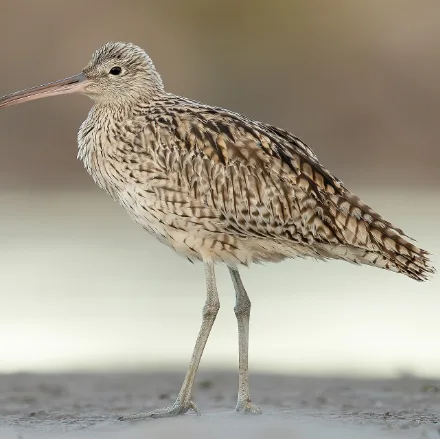
Far Eastern Curlew Occasional Endangered
Numenius madagascariensis
The longest bill of any wader in the world, curved like a sickle and used to reach crabs deep in the mud.
Where: Open mudflats at Pak Thale and Khok Kham. Best: Nov-Mar, falling tide. Check for the very long bill and no white rump.
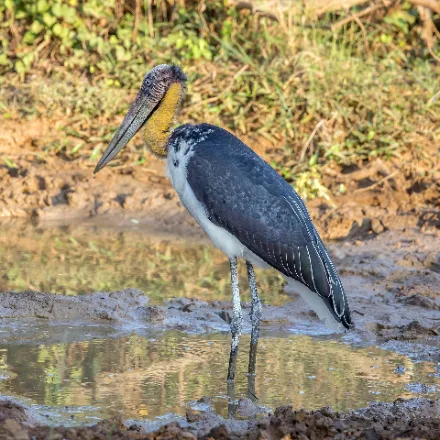
Lesser Adjutant Occasional Vulnerable
Leptoptilos javanicus
A towering, bare-headed stork that stalks the wetlands with a soldier's stiff gait, part hunter and part undertaker.
Where: Shrimp ponds and mangrove edges along the inner Gulf coast. Best: Nov-Mar.
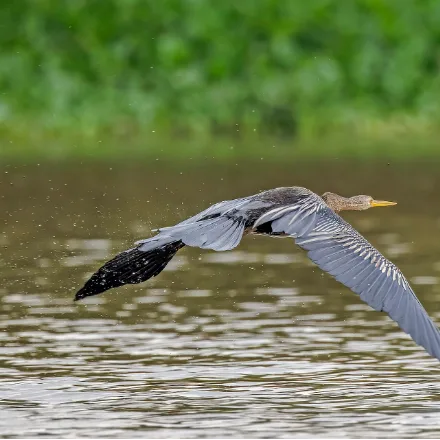
Oriental Darter Occasional Near Threatened
Anhinga melanogaster
The snakebird, swimming with only its slim neck above water before it spears a fish on a dagger bill.
Where: Benjakitti lake, Bang Krachao ponds and the larger central wetlands. Best: Year round, day. Swims low with only the neck showing, then perches with wings spread to dry.
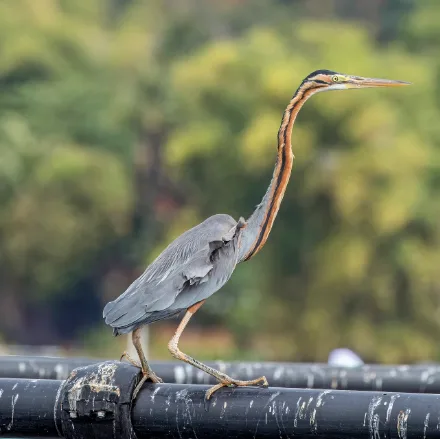
Purple Heron Occasional
Ardea purpurea
A slender, snake-necked heron in rich chestnut and slate that melts into the reeds it hunts among.
Where: Reedbeds at Bang Pu and the Khok Kham pond margins. Best: Nov-Feb, dawn. Skulks in the reeds rather than standing in the open.
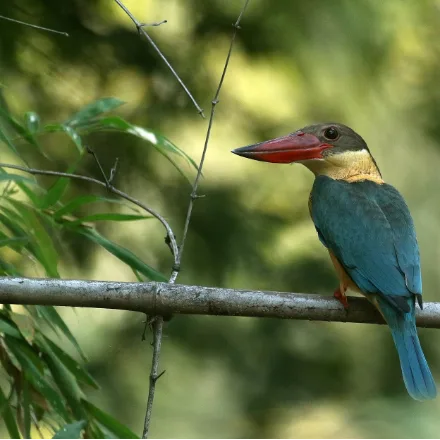
Stork-billed Kingfisher Occasional
Pelargopsis capensis
A hefty waterside kingfisher with a huge blood-red bill and a loud, ringing laugh.
Where: The Chao Phraya, the larger klongs and the Bang Krachao waterways. Best: Year round, morning. The huge red bill is unmistakable.
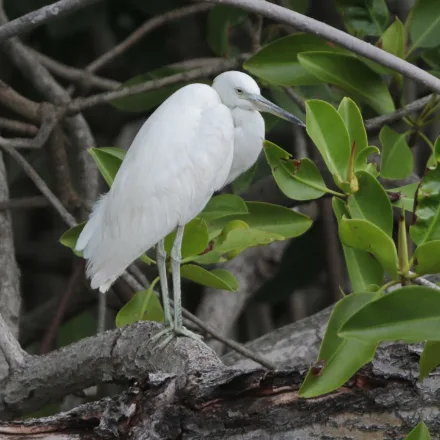
Chinese Egret Rare Vulnerable
Egretta eulophotes
Hunts by sprinting across the mudflat with wings half open, a running dash that no other egret uses.
Where: Shrimp ponds and tidal flats around Khok Kham and Pak Thale. Best: Nov-Mar. Watch the feeding action. The open-winged run is the giveaway.
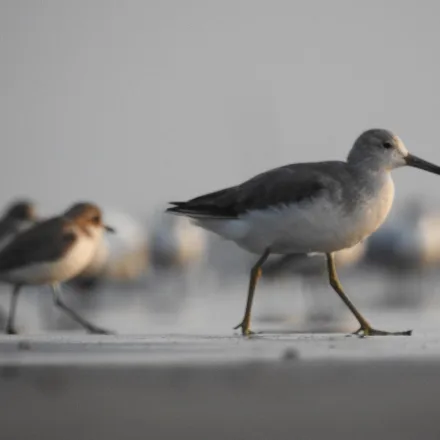
Nordmann's Greenshank Rare Endangered
Tringa guttifer
One of the world's rarest waders, a stocky greenshank that winters on Thai mudflats among thousands of commoner shorebirds.
Where: Tidal mudflats at Pak Thale and Laem Phak Bia. Best: Nov-Mar, falling tide. One of the rarest waders in the world, on the same flats as the spoon-billed sandpiper.
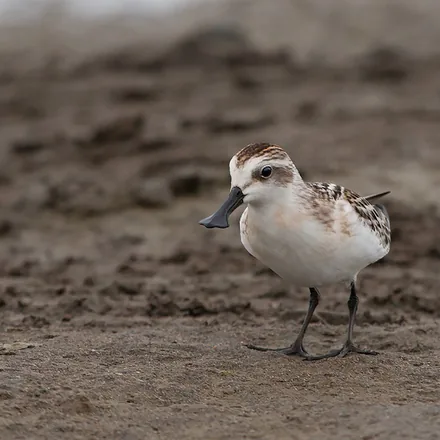
Spoon-billed Sandpiper Rare Critically Endangered
Calidris pygmaea
One of the world's rarest and most charismatic shorebirds, tiny and armed with an unmistakable spatula bill.
Where: The saltpans and mudflats at Pak Thale and Laem Phak Bia. Best: Nov-Mar, on a rising tide as the flats shrink. Pak Thale is arguably the best place on earth to see one, and there are only a few hundred left in the world. Scan the small waders methodically; the bill only shows head-on.
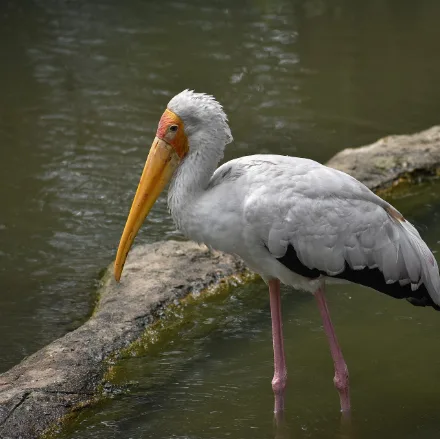
Milky Stork Very rare Endangered
Mycteria cinerea
A rare, ghostly white stork of the mangroves, its bare face flushing from yellow to red in the breeding season.
Where: Coastal mangroves and abandoned ponds of the upper Gulf. Best: Nov-Mar. Separate it carefully from painted stork, which is common on the same ground.
Reptiles
25 species
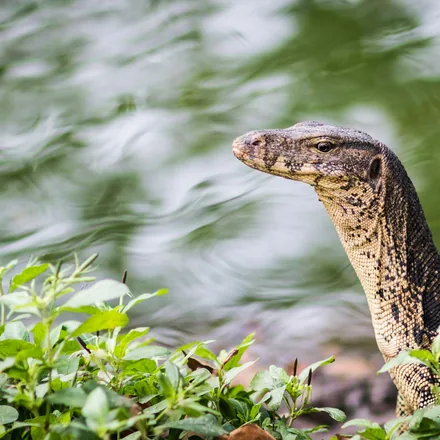
Asian Water Monitor Common
Varanus salvator
A dragon sized lizard that swims canals and city parks, second only to the Komodo dragon in length.
Where: Lumphini Park, the Benjakitti wetland and any klong bank in the city. Best: Year round, mid-morning when they haul out to bask. Lumphini is the easiest big-reptile watching on earth: metre-plus monitors on the lawns, ten minutes from a skytrain station.
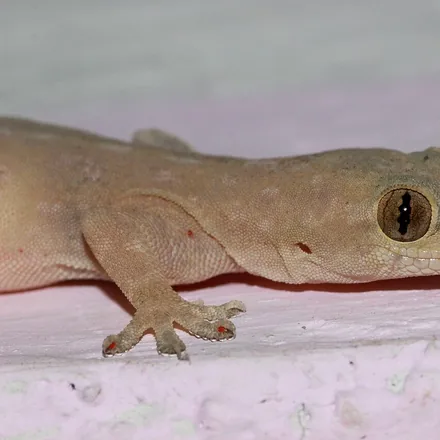
Common House Gecko Common
Hemidactylus frenatus
Sticks to glass using van der Waals forces across billions of microscopic hairs, not glue and not suction.
Where: Every lit wall in the city. Best: Year round, after dark. The chirping is territorial.
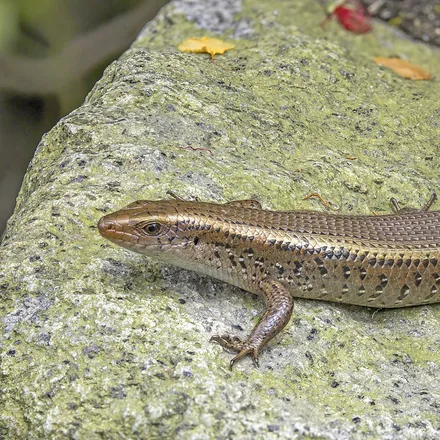
Common Sun Skink Common
Eutropis multifasciata
A glossy bronze skink that basks on logs and forest paths and gives birth to live young.
Where: Leaf litter and sunny path edges at Bang Krachao and Rot Fai park. Best: Year round, day.
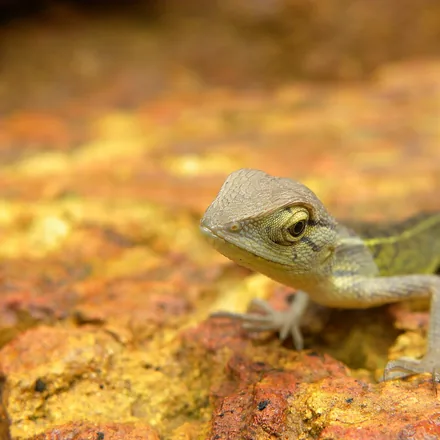
Oriental Garden Lizard Common
Calotes versicolor
The everyday garden lizard whose breeding males flush blood red about the head, earning the name bloodsucker.
Where: Park hedges, temple grounds and roadside scrub. Best: Year round, day. Breeding males flush bright red about the head.
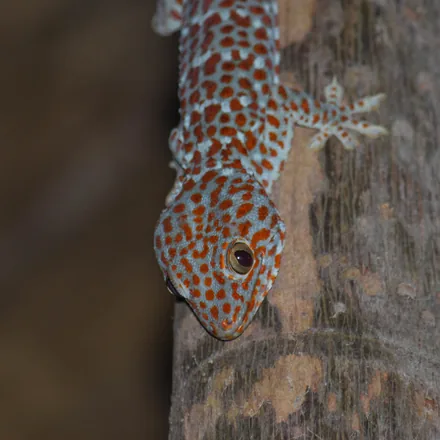
Tokay Gecko Common
Gekko gecko
A big, boldly spotted gecko whose loud TOH-kay call echoes through Thai nights and, by legend, brings luck if it calls seven times.
Where: Temple walls, shophouses and older buildings across the city. Best: Year round, after dark. Heard far more than seen. The call is the loudest thing in a Bangkok night.
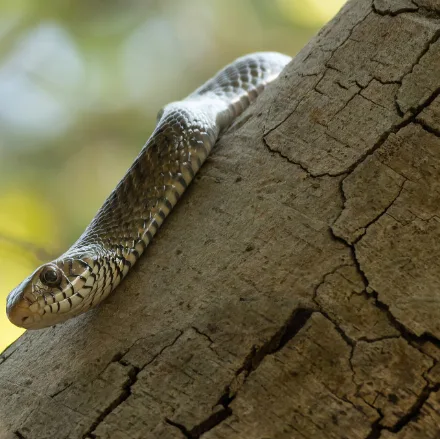
Oriental Rat Snake Regular
Ptyas mucosa
A long, fast, wide eyed snake that races across open ground and is one of the region's great rodent controllers.
Where: Paddies, park edges and open ground across the city fringe. Best: Year round, day. Fast, harmless and usually seen crossing open ground.
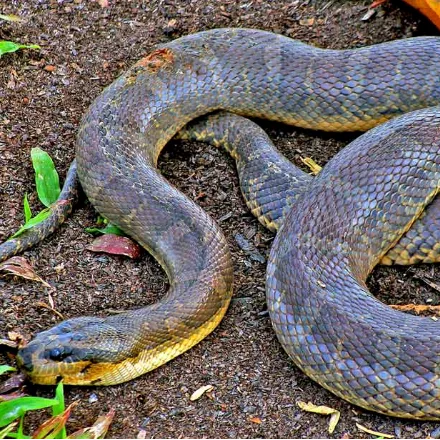
Puff-faced Water Snake Regular
Homalopsis buccata
Harvested from Tonle Sap and Thai wetlands by the million each year, which may make it the most heavily exploited snake on earth.
Where: Klongs, ponds and flooded ground across the central plain. Best: Year round, night. Harmless, and common in any lowland canal after dark.
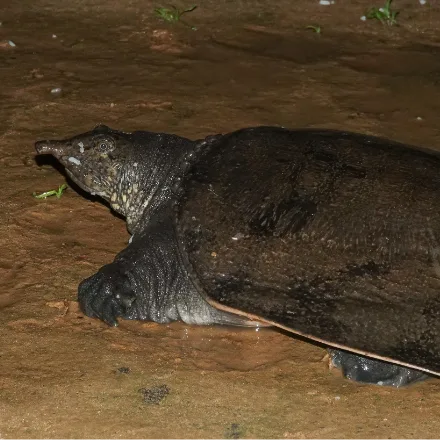
Asiatic Softshell Turtle Occasional Vulnerable
Amyda cartilaginea
Buries itself in riverbed mud with only a snorkel-like nose showing, and strikes at anything that passes.
Where: The Chao Phraya, the larger klongs and temple ponds. Best: Year round, day. Only the snout shows. Look for a small periscope in still water.
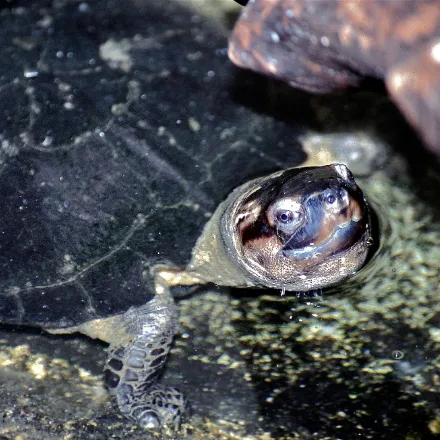
Black Marsh Turtle Occasional Endangered
Siebenrockiella crassicollis
Two pale patches above the eyes give it a permanently startled expression, which is why Thais call it the smiling terrapin.
Where: Muddy ponds and canals at Bang Krachao and the city parks. Best: Year round, day. Also seen at temple ponds, but those are released animals rather than wild ones.
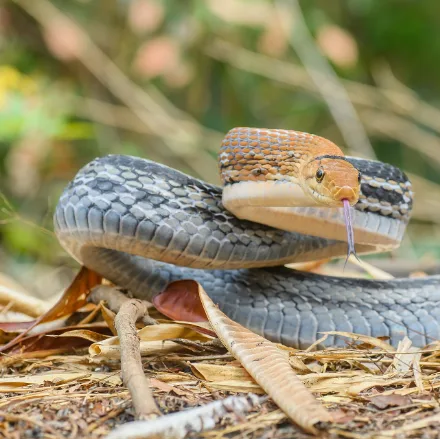
Copperhead Racer Occasional
Coelognathus radiatus
Rears into a vertical S and inflates its neck into a striped shield when cornered, all bluff and no venom.
Where: Farmland and canal banks on the outskirts. Best: Year round, day. All bluff. The vertical S and flared neck are a display, not a threat.
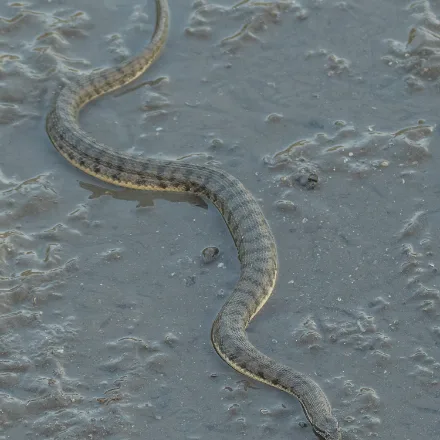
Dog-faced Water Snake Occasional
Cerberus schneiderii
Sidewinds across bare mudflats at low tide, one of very few snakes anywhere that moves that way.
Where: Mudflats and creek edges at Bang Pu and Khok Kham. Best: Year round, night on a falling tide. Watch for the sidewinding gait across open mud.
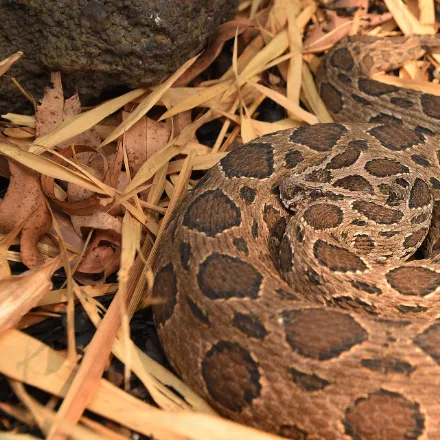
Eastern Russell's Viper Occasional
Daboia siamensis
Responsible for more serious snakebite in Asia than almost any other species, and it hisses louder than any snake in the region.
Where: Dry farmland and scrub of the central plain. Best: Nov-Apr, dusk. Commonest in the central plain, which is exactly here. Watch your feet on paddy bunds at dusk.
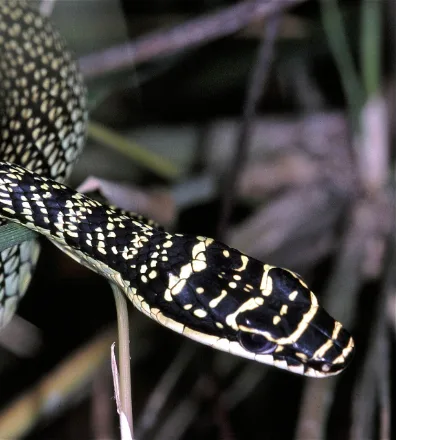
Golden Tree Snake Occasional
Chrysopelea ornata
A fast, elegant climber that can also glide, and one of the most common snakes seen in Thai gardens and temples.
Where: Walls, roofs and garden trees throughout the city. Best: Year round, day. Often the first snake a visitor sees, racing up a wall in full sun.
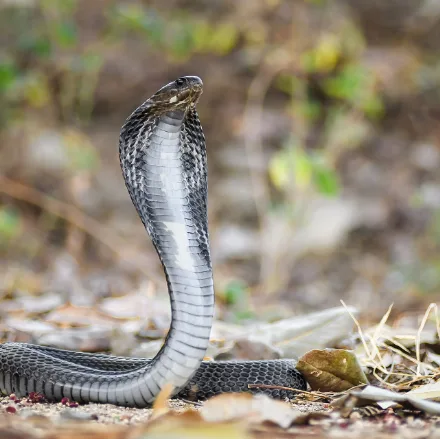
Indochinese Spitting Cobra Occasional Vulnerable
Naja siamensis
Sprays venom at the eyes from up to three metres, aiming with enough accuracy to hit a moving face.
Where: Farmland and village edges on the outskirts. Best: Year round, dusk. If sprayed, flush the eyes with clean fluid for fifteen minutes and get to hospital.
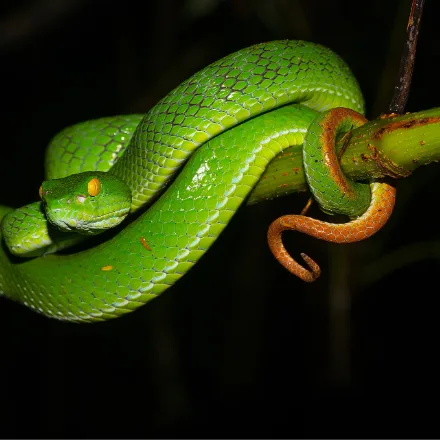
Large-eyed Pit Viper Occasional
Trimeresurus macrops
Vivid green with enormous copper eyes, and it hunts entirely by heat, so darkness makes no difference to it.
Where: Low vegetation beside water in Lumphini and Bang Krachao. Best: May-Oct, night. Green and easily missed at head height. Bangkok's city parks really do hold pit vipers.
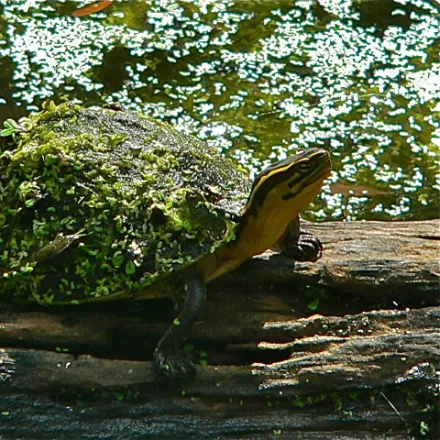
Malayan Box Turtle Occasional Endangered
Cuora amboinensis
A domed marsh turtle that seals itself completely inside a hinged shell like a living box.
Where: Marshes, ponds and flooded ground of the central plain. Best: May-Oct, after rain.
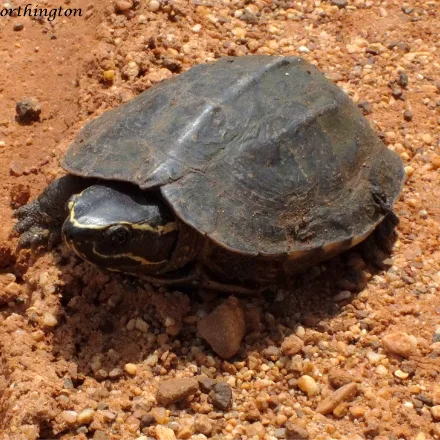
Malayan Snail-eating Turtle Occasional Near Threatened
Malayemys macrocephala
Eats almost nothing but snails, crushing them with broad flat jaw surfaces, and wears white racing stripes on its face.
Where: Paddies, canals and marshes on the outskirts. Best: Year round, day. Wild animals are hard to separate from temple releases. Be careful with claims.
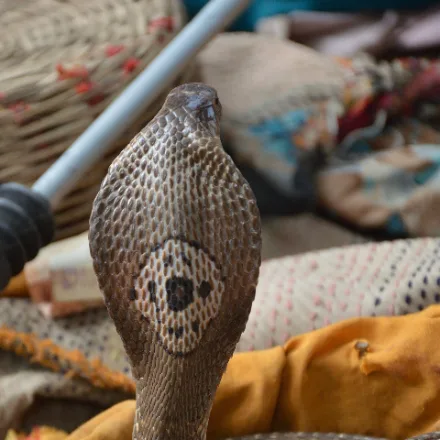
Monocled Cobra Occasional
Naja kaouthia
The classic hooded cobra of the rice fields, marked with a single O shaped eyespot on its spread hood.
Where: Paddies, canal banks and rough ground on the city fringe. Best: Year round, dusk. The cobra most often met near people in the central plain.
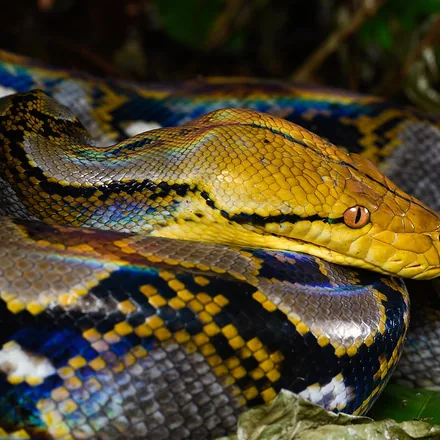
Reticulated Python Occasional
Malayopython reticulatus
The longest snake in the world, a jewelled, net patterned constrictor that turns up from rainforest to city canals.
Where: Klongs, drains and park margins across the city. Best: Year round, night. Bangkok holds a genuine urban python population. Most are found by the fire brigade rather than by naturalists.
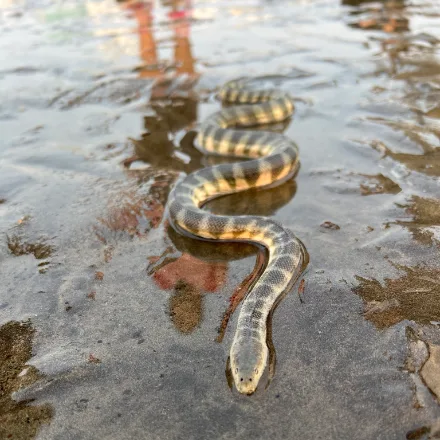
Beaked Sea Snake Rare
Hydrophis schistosus
Drop for drop, one of the most venomous snakes in the sea, and it is responsible for most sea snake bites in Asia.
Where: Turbid coastal water off Bang Pu and the river mouths. Best: Year round. Almost all bites happen to fishermen sorting nets. Swimmers are not at risk.
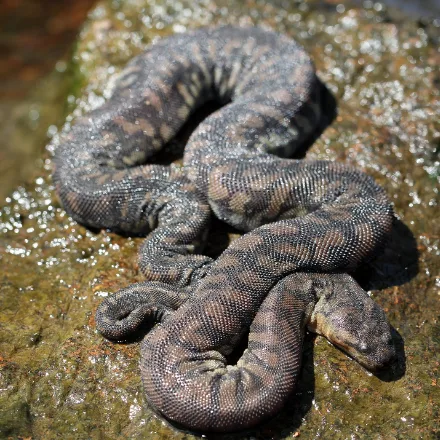
Little File Snake Rare
Acrochordus granulatus
Loose baggy skin covered in rasping granular scales, used to grip slippery fish that no smooth snake could hold.
Where: Turbid estuary water at the Mahachai and Bang Pakong river mouths. Best: Year round, night. Harmless, and almost never seen out of water.
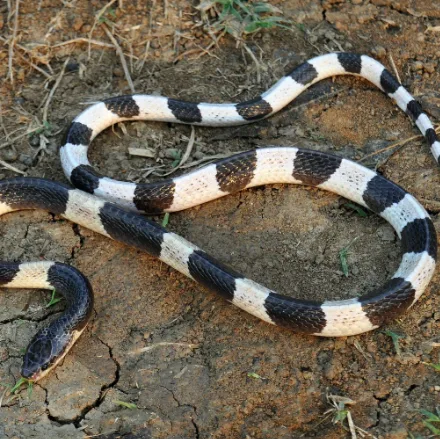
Malayan Krait (Blue Krait) Rare
Bungarus candidus
A quiet killer in crisp black and white bands, with venom many times stronger than a cobra's.
Where: Damp lowland ground and farmland edges outside the city. Best: May-Oct, night. Placid, easily overlooked and seriously venomous.
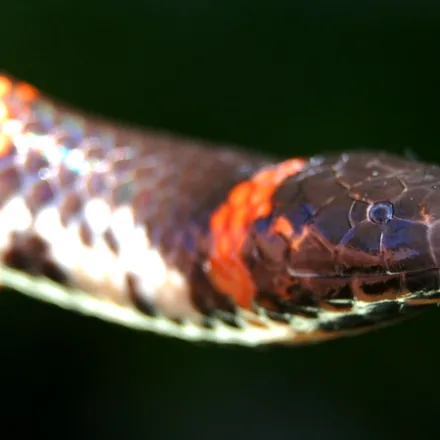
Red-tailed Pipe Snake Rare
Cylindrophis ruffus
When threatened it hides its head and raises its blunt tail instead, flashing bright red underneath as a decoy.
Where: Damp lowland ground and paddy bunds on the city fringe. Best: May-Oct, night. Harmless. If it raises its tail, that is the false head display.
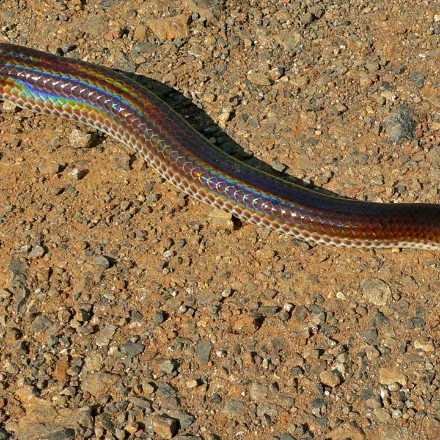
Sunbeam Snake Rare
Xenopeltis unicolor
Looks plain brown until light hits it, when the scales split the light into a full oil-slick rainbow.
Where: Damp soil in gardens, parks and paddies after rain. Best: May-Oct, night. The iridescence needs direct light. Worth a torch beam from the side.
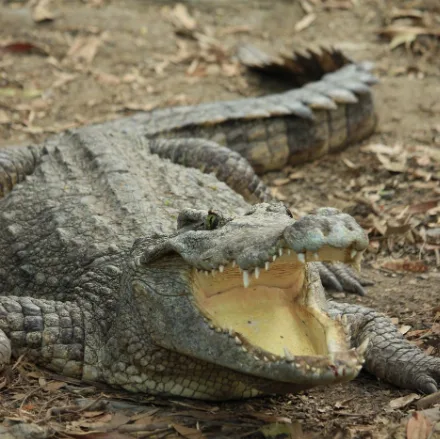
Saltwater Crocodile Ultra rare
Crocodylus porosus
The largest living reptile and the ocean going giant of crocodiles, now virtually gone from Thai waters.
Where: Historically the Chao Phraya delta and the inner Gulf mangroves. Best: Not seeable. Effectively gone from the wild in Thailand. Included as an honest record of what the delta has lost, not as something to look for.
Amphibians
7 species
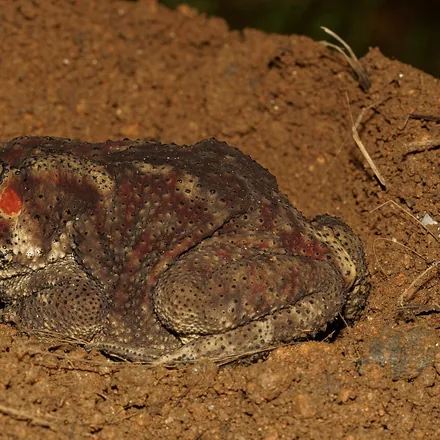
Asian Common Toad Common
Duttaphrynus melanostictus
The ubiquitous warty toad of doorsteps and gardens, hoovering up insects under every night light.
Where: Under every street light and in every park in the city. Best: Year round, night. Abundant wherever there are lights and damp ground.
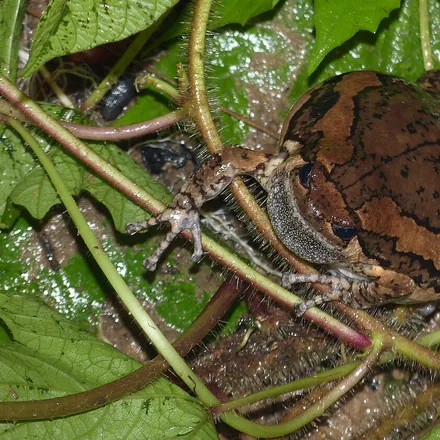
Banded Bullfrog (Chubby Frog) Common
Kaloula pulchra
A round, rubbery frog that inflates like a balloon when threatened and bellows like a cow after rain.
Where: Gardens, drains and park edges after downpours. Best: May-Oct, night. Emerges in numbers after the first heavy rain. The lowing call fills wet nights.
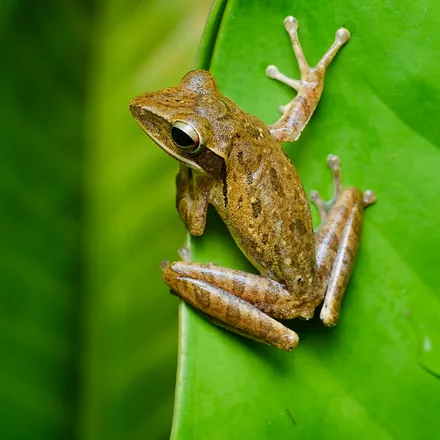
Common Tree Frog (Four-lined Tree Frog) Common
Polypedates leucomystax
The tan tree frog of porch lights and bathrooms, which whips up foam nests that hang above the water.
Where: Gardens, walls and park vegetation across the city. Best: May-Oct, night. Look for foam nests on leaves above standing water.
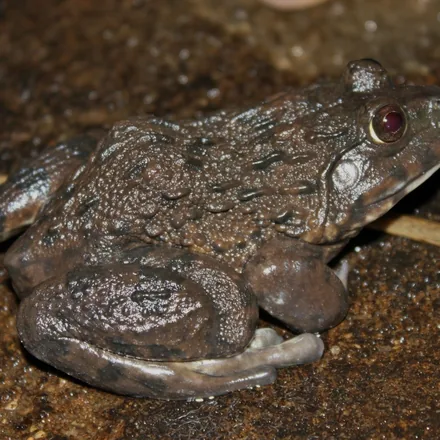
East Asian Bullfrog Common
Hoplobatrachus rugulosus
The big ridge backed frog of the rice paddies, whose deep quacking chorus is the sound of a Thai wet season.
Where: Paddies and ponds on the city fringe. Best: May-Oct, night. Its deep quacking chorus is the signature sound of a wet central plain night.
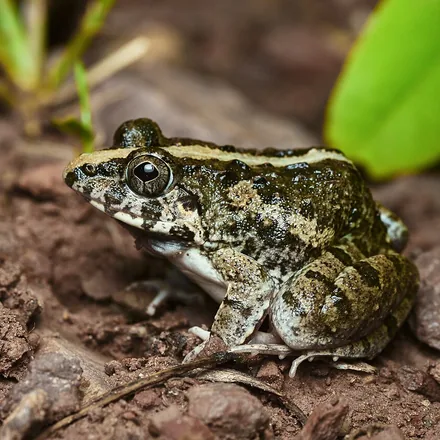
Rice Paddy Frog Common
Fejervarya limnocharis
The single most abundant frog in Thailand, and its numbers are now used as a live monitor for pesticide contamination.
Where: Paddies, ditches and puddles throughout. Best: May-Oct, night.
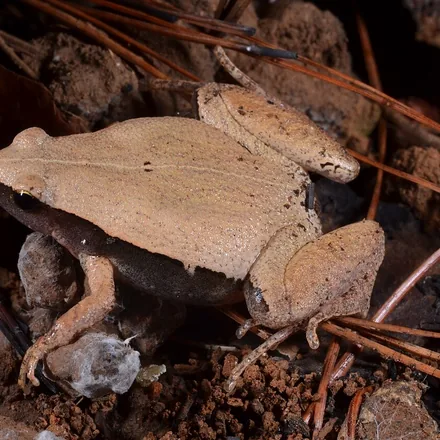
Dark-sided Chorus Frog Regular
Microhyla heymonsi
A pale hairline stripe runs the full length of its back, and a pair of dark spots on it mimic eyes at the wrong end.
Where: Shallow standing water in paddies and park puddles. Best: May-Oct, night.
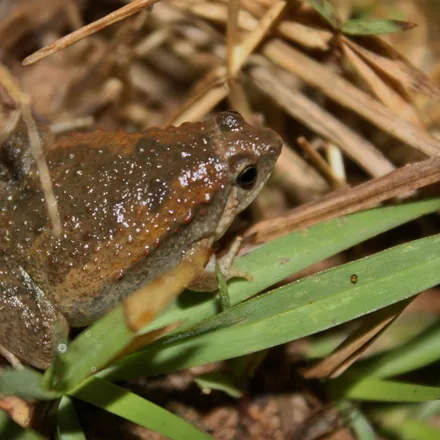
Ornate Narrow-mouthed Frog Regular
Microhyla fissipes
Smaller than a thumbnail, and after rain a paddy full of them produces a rasping chorus you can hear a kilometre away.
Where: Ditches, gardens and park lawns after rain. Best: May-Oct, night.
Fish
11 species
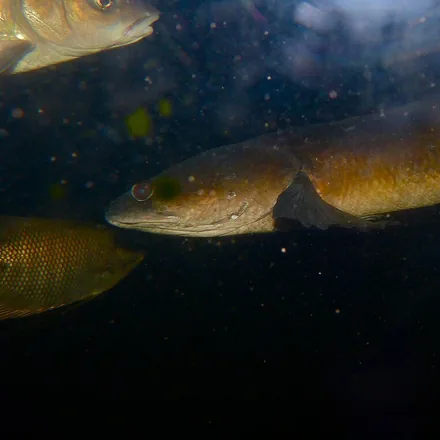
Striped Snakehead Common
Channa striata
The fish that walks: it breathes air, crosses wet ground on its fins, and turns up in puddles miles from any river.
Where: Klongs, paddies and marshes throughout. Best: Year round, dusk. Surface gulps in a still canal at dusk are almost always this fish.
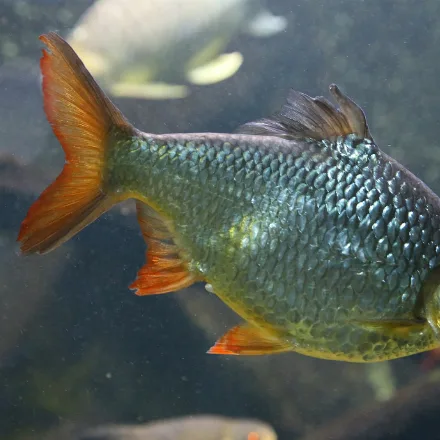
Tinfoil Barb Common
Barbonymus schwanenfeldii
A shoal of these turning together is a sheet of mirror, which is exactly how they got the name.
Where: Temple ponds and the Chao Phraya, especially at riverside wats. Best: Year round, day. Temple fish sanctuaries give the closest and most reliable views in the country.
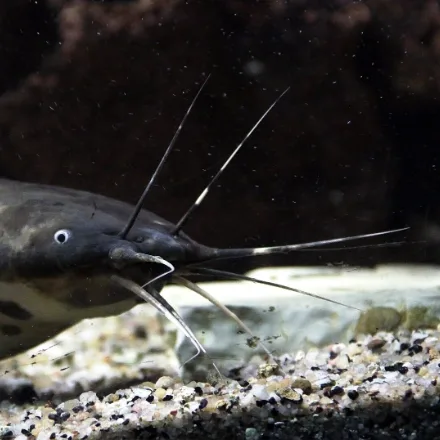
Walking Catfish Common
Clarias batrachus
On wet nights whole fields of these wriggle overland between pools, snaking along on their pectoral spines.
Where: Canals, drains and flooded ground across the city. Best: May-Oct, wet nights. The overland walk happens after dark following rain.
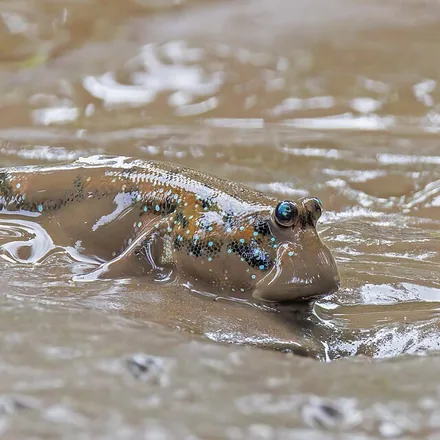
Giant Mudskipper Regular
Periophthalmodon schlosseri
A fish that spends most of its life out of water, defending a mud territory with a raised sail of a dorsal fin.
Where: Mudflats at Bang Pu and along the Khok Kham shoreline. Best: Year round, low tide. Low tide is essential. The Bang Pu boardwalk puts you within a few metres.
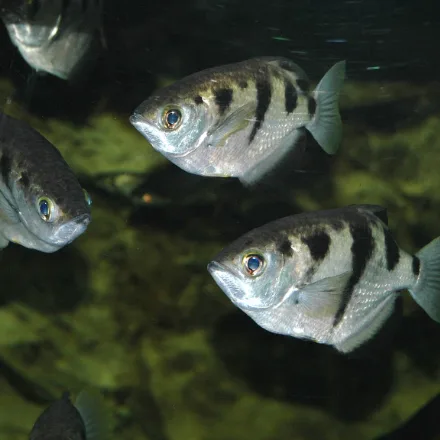
Banded Archerfish Occasional
Toxotes jaculatrix
It shoots insects off overhanging leaves with a jet of water, correcting for refraction as it aims.
Where: Mangrove creeks and estuary channels at Bang Pu and the Mahachai river mouth. Best: Year round, day. Sit quietly by an overhanging branch and wait for the shot.
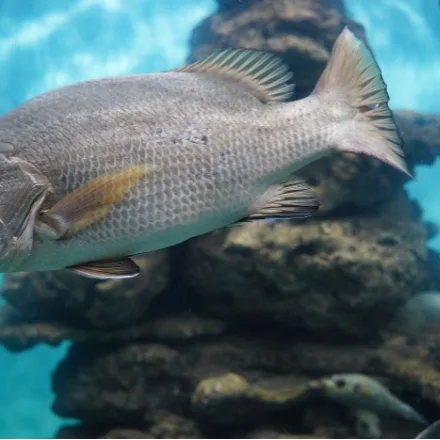
Barramundi Occasional
Lates calcarifer
Every barramundi starts life as a male and turns female at around four years old.
Where: Estuaries and mangrove creeks of the upper Gulf. Best: Year round. Hunts hardest where current meets structure.
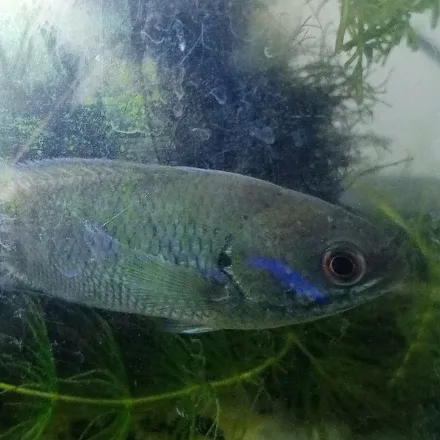
Climbing Perch Occasional
Anabas testudineus
A fish that walks out of the water and hauls itself overland on its gill covers, sometimes for hours.
Where: Paddies, roadside ditches and marshes on the outskirts. Best: May-Oct, after rain.
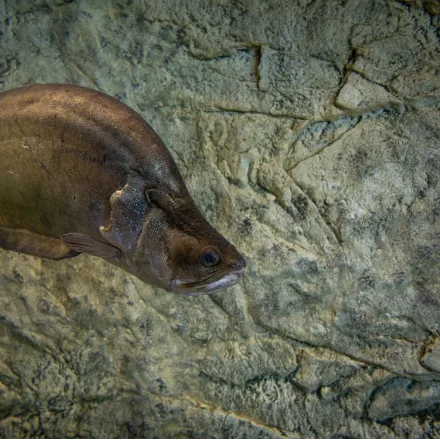
Clown Featherback Occasional
Chitala ornata
A knife-shaped fish with a row of black eyespots down its flank that swims backwards as easily as forwards.
Where: The Chao Phraya and the larger klongs. Best: Year round, night. Best seen at night with a torch from a bankside or a boat.
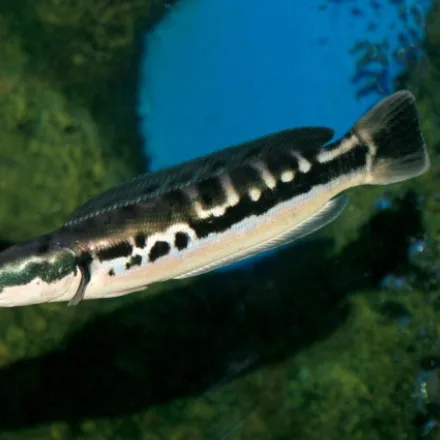
Giant Snakehead Occasional
Channa micropeltes
A metre-long ambush predator that guards its young in a red cloud of fry, and will charge anything that comes near them.
Where: Large canals and reservoirs on the city fringe. Best: Year round, morning. Watch for a dense orange cloud of fry at the surface with two adults beneath.
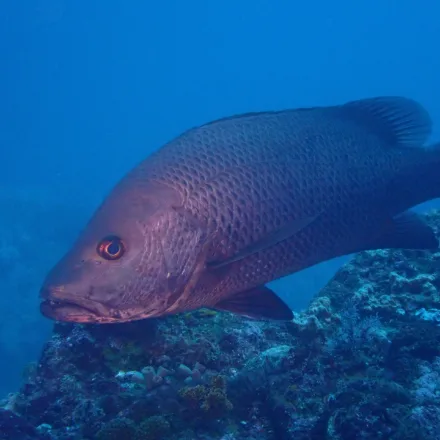
Mangrove Jack Occasional
Lutjanus argentimaculatus
Spends its youth in mangrove roots, then swims offshore to spend adulthood on a reef, a fish with two entirely separate lives.
Where: Mangrove roots and snags in the inner Gulf creeks. Best: Year round. Juveniles in the roots, adults out on the reef. Two different fish to find.
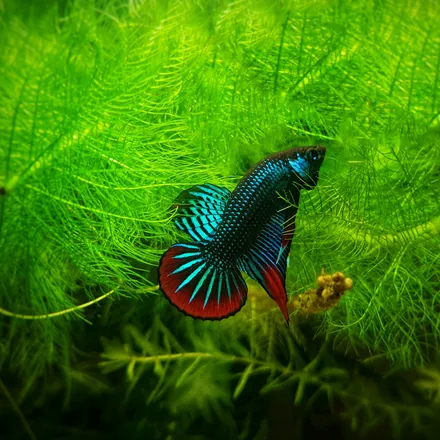
Siamese Fighting Fish Rare Vulnerable
Betta splendens
Thailand's national aquatic animal is a wild rice-paddy fish, and the wild one looks nothing like the trailing-finned pet.
Where: Shallow paddies, ditches and marshes of the central plain around Ayutthaya and the city fringe. Best: May-Oct, day. Wild fish are drab and short-finned, not the pet-shop version. Look in shallow warm water with heavy plant cover.
Sharks and rays
1 species
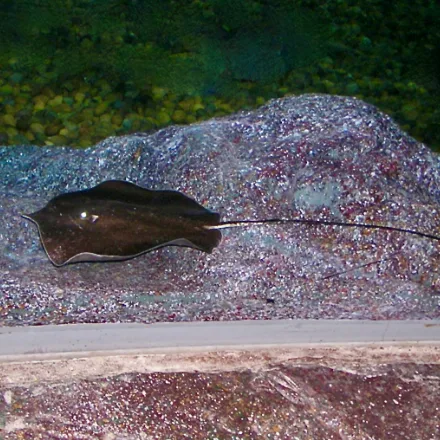
Giant Freshwater Stingray Very rare Endangered
Urogymnus polylepis
The largest freshwater fish on earth by some measures, a two metre disc carrying a 38 cm barb.
Where: Deep channels of the Maeklong river. Best: Year round. Handled only by research teams. The Maeklong die-off in 2016 was a major setback for the species.
Insects
17 species
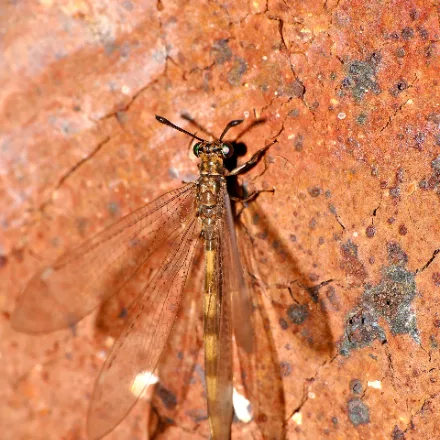
Antlion Common
Myrmeleon sp.
The larva digs a conical pit in dry sand and flicks grains at anything trying to climb out, collapsing the walls under it.
Where: Dry sand under temple eaves and building overhangs. Best: Year round, day. The pits are everywhere once you start looking. Drop a grain of sand into one.
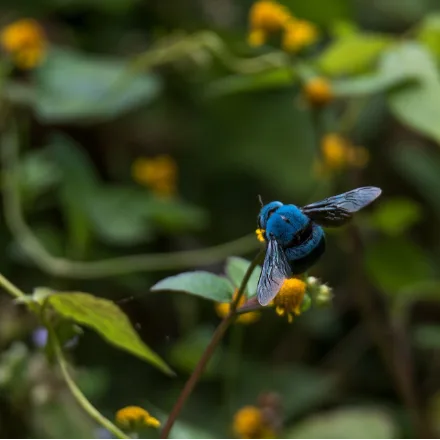
Blue Carpenter Bee Common
Xylocopa caerulea
A big, fuzzy, powder-blue bee that drones loudly between flowers like a flying pom-pom.
Where: Large flowers in parks and gardens. Best: Year round, day. A loud, powder-blue bee at large flowers, and harmless.
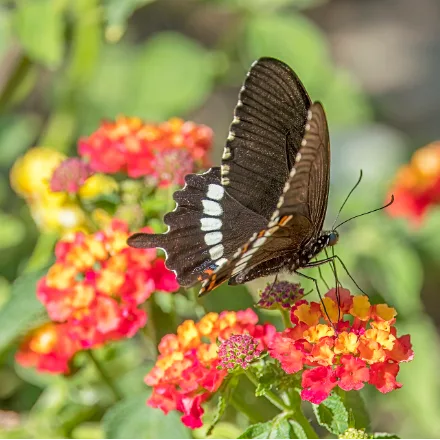
Common Mormon Common
Papilio polytes
Females come in three different forms, two of which impersonate butterflies that are poisonous to eat.
Where: Gardens, parks and roadside scrub. Best: Year round, day. Compare the female forms with the rose swallowtails they mimic.
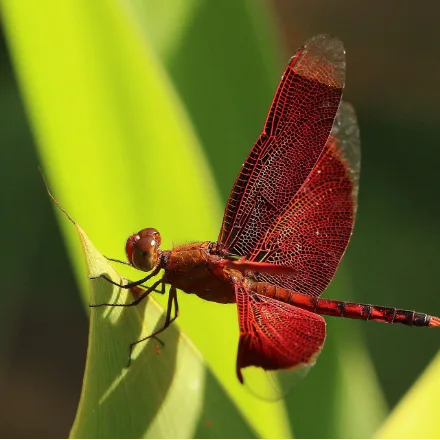
Common Parasol Dragonfly Common
Neurothemis fluctuans
A little red dragonfly with tinted wings, perched like a weather vane on every pond-side twig.
Where: Park ponds, klongs and paddies throughout. Best: Year round, day. Perches openly on twigs by still water; the red male is easy to watch.
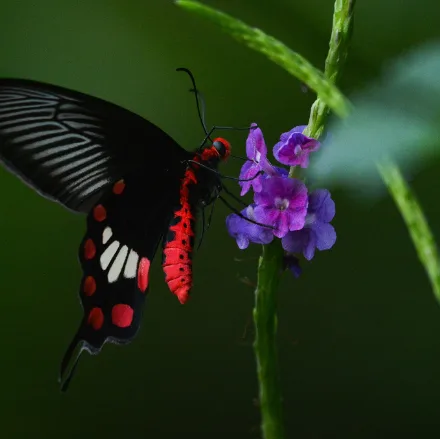
Common Rose Swallowtail Common
Pachliopta aristolochiae
A velvety black swallowtail with a crimson body and rose-pink spots, floating slowly to show it is poisonous.
Where: Gardens and park flower beds throughout. Best: Year round, day. Flies slowly and openly, advertising that it is toxic.
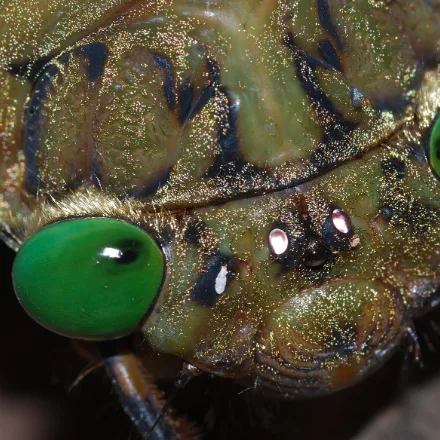
Giant Cicada Common
Pomponia imperatoria
A huge cicada whose piercing, ringing call is the loudest sound in the midday forest.
Where: Large park trees at Lumphini, Chatuchak and Bang Krachao. Best: May-Oct, midday. Heard far more than seen, and the loudest voice of a Bangkok afternoon.
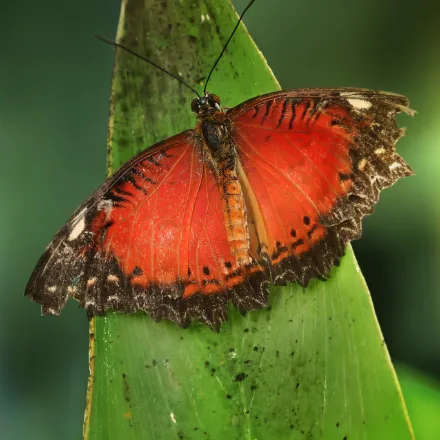
Leopard Lacewing Common
Cethosia cyane
A fiery orange butterfly edged in intricate black and white lace, common along sunlit trails.
Where: Scrub and park edges across the city. Best: Year round, day.
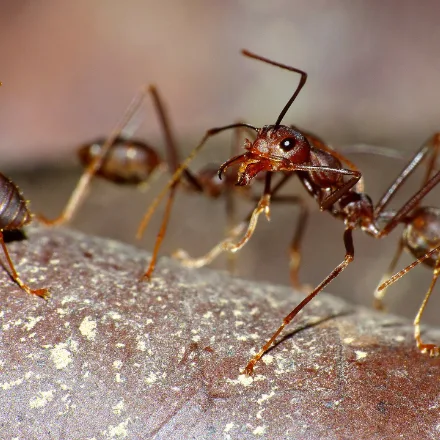
Weaver Ant Common
Oecophylla smaragdina
A rust-red ant that sews living leaves into nests using its own larvae as glue guns.
Where: Mango and other garden trees across the city. Best: Year round, day. Look for leaf nests bound with white silk. The larvae are a local delicacy.
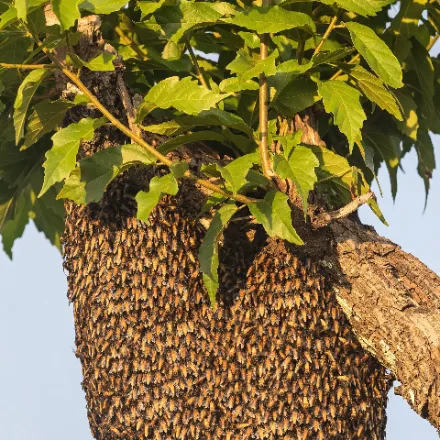
Giant Honey Bee Regular
Apis dorsata
A big, fierce wild bee that hangs single-comb nests the size of a door from high branches and cliffs.
Where: Tall trees and tower blocks; combs hang from ledges and branches. Best: Year round, day. Single huge open combs, sometimes on buildings. Keep well clear.
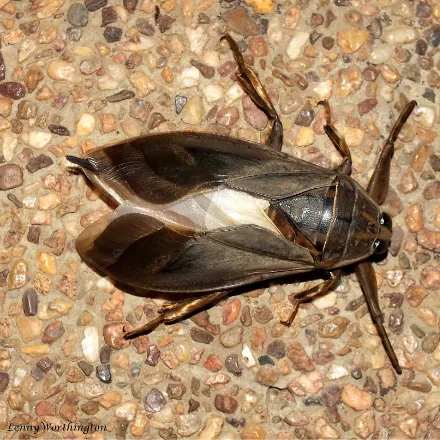
Giant Water Bug Regular
Lethocerus indicus
Big enough to kill a frog or a small snake, and its bite is rated among the most painful an insect can inflict.
Where: Paddies and ponds on the outskirts, and at lights near water. Best: May-Oct, night. Sold live in every market. A painful bite if handled.
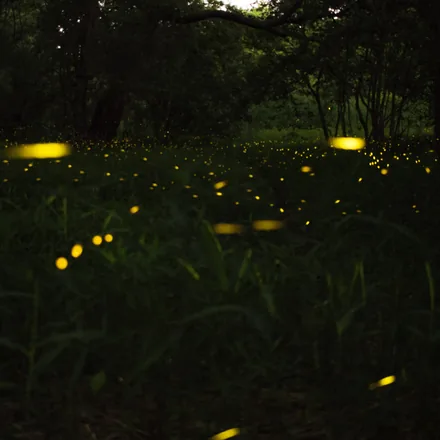
Synchronous Firefly Regular
Pteroptyx malaccae
Mangrove trees hung with thousands of fireflies, all flashing in perfect unison like living fairy lights.
Where: Riverside mangroves along the Mae Klong at Amphawa. Best: May-Oct, after dark on a moonless night. Take a quiet boat trip and whole trees pulse in unison. Avoid bright lights and never let a boat touch the trees.
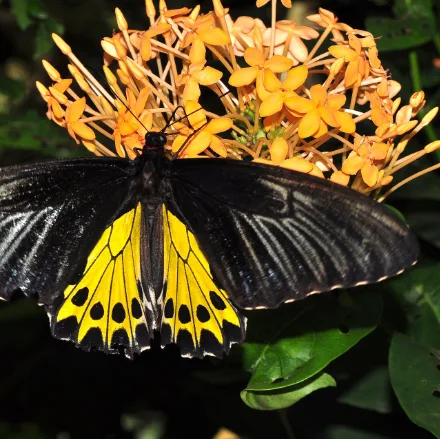
Common Birdwing Occasional
Troides helena
A hand-sized black and gold butterfly that cruises the canopy like a small bird.
Where: Flowering trees in the larger parks and at Bang Krachao. Best: Year round, day.
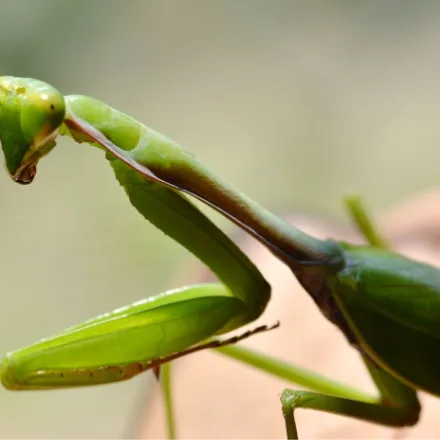
Giant Asian Mantis Occasional
Hierodula membranacea
A big green ambush hunter that turns its head to watch you, forelegs folded as if in prayer.
Where: Garden shrubs and park vegetation, and at lights. Best: May-Oct, night. Turns its head to watch you, which almost nothing else does.
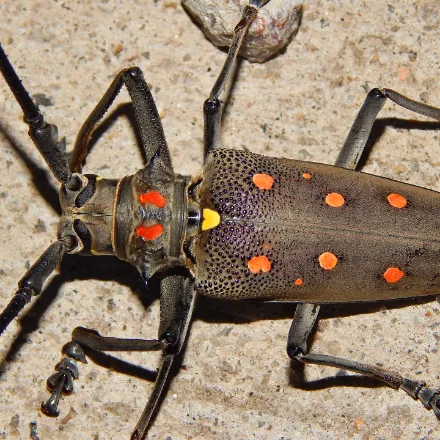
Mango Longhorn Beetle Occasional
Batocera rufomaculata
Antennae twice the length of its body, and it squeaks audibly when picked up by grinding its thorax.
Where: Garden and orchard trees, and at lights. Best: May-Oct, after dark. Squeaks loudly if picked up.
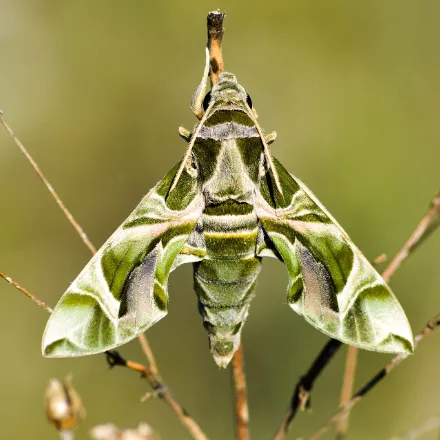
Oleander Hawkmoth Occasional
Daphnis nerii
Camouflaged like military fatigues and fast enough to cross the Mediterranean, it hovers at flowers like a hummingbird.
Where: Lit walls and night-scented flowers in the suburbs. Best: May-Oct, dusk.
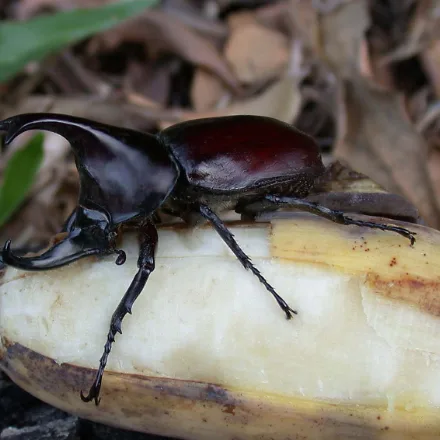
Rhinoceros Beetle Occasional
Xylotrupes gideon
A glossy tank of a beetle, the male armed with a forked horn for wrestling rivals.
Where: Lights and sap runs on the leafy fringe. Best: May-Oct, after dark.
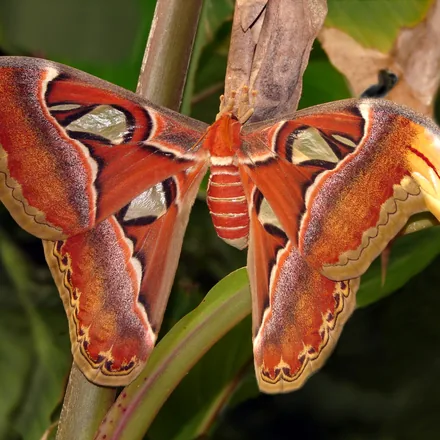
Atlas Moth Rare
Attacus atlas
One of the largest moths on Earth, its wingtips shaped and coloured like a cobra's head.
Where: Lit walls at Bang Krachao and the leafier outskirts. Best: May-Oct, after warm wet nights. Adults live only days and never feed.
Spiders and scorpions
4 species
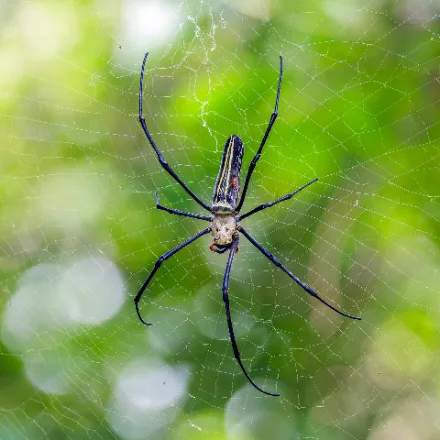
Golden Orb-weaver Common
Nephila pilipes
A giant black-and-yellow spider spinning webs of golden silk strong enough to snare small birds.
Where: Path edges at Bang Krachao and Rot Fai park. Best: May-Oct, day. Large females hang in shimmering golden webs. Harmless.
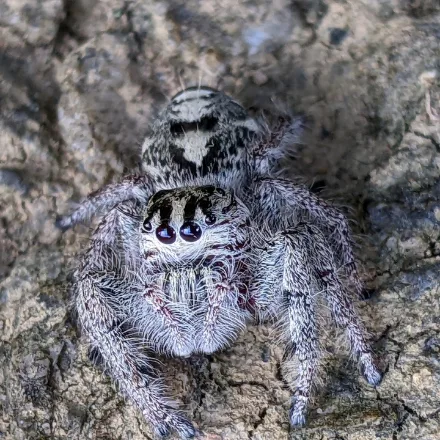
Heavy Jumping Spider Common
Hyllus diardi
Judges distance with a telephoto lens in each main eye, then jumps up to six times its own body length onto prey.
Where: Sunlit leaves and walls in parks and gardens. Best: Year round, day. Diurnal and curious. It will turn and look at your camera.
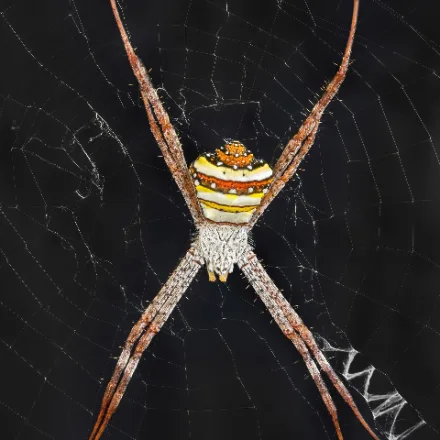
St Andrew's Cross Spider Common
Argiope versicolor
Weaves a bold white X into the middle of its web, and nobody has settled whether it attracts prey, warns birds or does both.
Where: Park scrub and garden hedges throughout. Best: May-Oct, day. The white silk cross in the web is the giveaway.
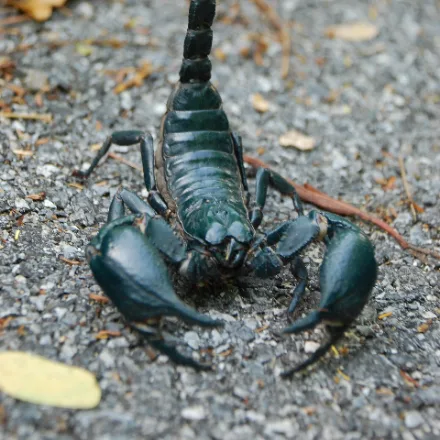
Asian Forest Scorpion Occasional
Heterometrus laoticus
A big, glossy black scorpion that glows an eerie blue-green under ultraviolet light.
Where: Under logs and leaf litter at Bang Krachao. Best: May-Oct, night. Glows blue-green under a UV torch. The sting is mild.
Crustaceans
2 species
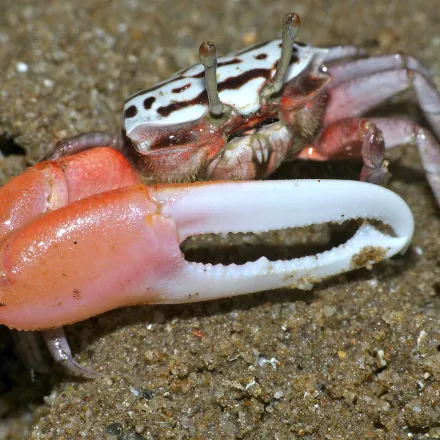
Fiddler Crab Common
Austruca annulipes
The male's oversized claw is useless for feeding, so he has to do everything with the small one while waving the big one at females.
Where: Mudflats at Bang Pu, Khok Kham and the Mahachai shoreline. Best: Year round, falling tide. Sit still for five minutes and the whole flat emerges and starts waving.
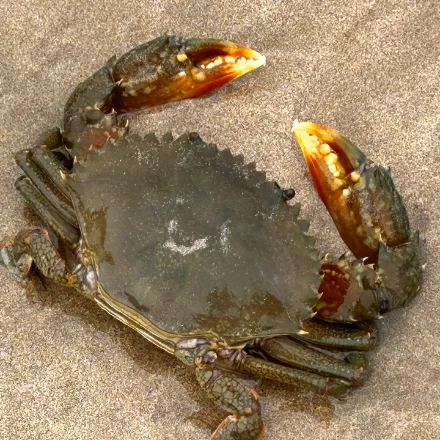
Giant Mud Crab Occasional
Scylla serrata
The claws can generate enough force to crush a large clam, and will take a finger off without much trouble.
Where: Mangrove creeks and root systems of the inner Gulf. Best: Year round, night. In burrows among the roots. Powerful claws, so no hand-catching.
Other invertebrates
1 species
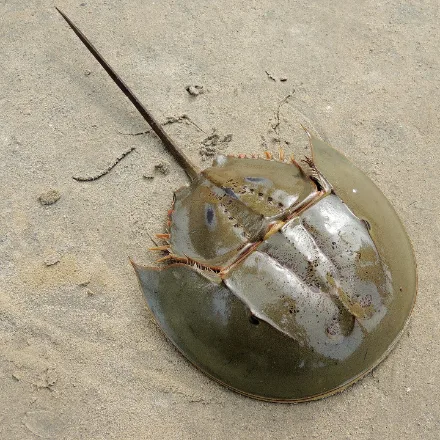
Indo-Pacific Horseshoe Crab Rare Endangered
Tachypleus gigas
Not a crab at all, closer to a spider, and its blue blood is used worldwide to test every injectable drug for contamination.
Where: Quiet muddy shores of the inner Gulf around Bang Pu and Khok Kham. Best: Year round, high tide at night. Completely harmless. Right an upended animal by the shell, never the tail.
Planning and responsible watching
Nov-Feb does two jobs at once here, which is unusual: it is the cool dry season and it is the wader season, so the most comfortable months to be in the city are also the only months the inner Gulf rarities are present. If you are coming for the spoon-billed sandpiper, come between November and March, go with a guide who knows which pans are holding birds that week, and time it for a rising tide when the flats shrink and the waders concentrate. May-Oct is hot and wet, much better for snakes, frogs and insects, and it is when the Amphawa fireflies peak on moonless nights. Inside the city, Lumphini and Benjakitti are best in the first two hours after opening, before the heat and the crowds; Bang Krachao rewards a bicycle and a whole morning. Bang Pu is an hour out and gives mudskippers, fiddler crabs and wintering kingfishers from a boardwalk, with dolphins offshore on a calm day. A note on temple ponds: the turtles and fish in them are released animals, not wild ones, and it is worth knowing the difference before counting them.
Find Bangkok wildlife tours, birding day trips and Amphawa firefly boats
Some links on this page are affiliate links. If you book through them, Wildseer may earn a small commission at no extra cost to you.
Frequently asked questions
What wildlife can you see in Bangkok?
Asian water monitors in Lumphini and Benjakitti parks, reticulated pythons in the klongs, Lyle’s flying foxes at temple colonies, mudskippers and fiddler crabs on the Bang Pu mudflats, and, two hours south at Pak Thale and Laem Phak Bia, some of the rarest shorebirds in the world including the spoon-billed sandpiper.
Where can you see the spoon-billed sandpiper near Bangkok?
Pak Thale and Laem Phak Bia on the inner Gulf, about two hours south of the city. It is arguably the best site on earth for the species and only a few hundred birds remain anywhere. They are present Nov-Mar. Go with a guide who knows which saltpans are holding birds that week, and aim for a rising tide.
Are there really monitor lizards in Lumphini Park?
Yes, and a lot of them. Asian water monitors over two metres long live in and around the lake and haul out to bask through the middle of the morning. They are wild, they are not dangerous if left alone, and they are the easiest big-reptile watching anywhere in the world.
When is the best time for wildlife in Bangkok?
Nov-Feb, which is both the cool dry season and the shorebird season on the inner Gulf. May-Oct is hot and wet and considerably better for frogs, snakes and insects, and it is the peak of the Amphawa firefly season.
Where can you see fireflies near Bangkok?
Amphawa, about ninety minutes southwest, where synchronous fireflies gather in riverside mangroves along the Mae Klong and whole trees pulse in unison. Go on a moonless night between May and October, take a quiet boat, and choose an operator that keeps lights off and never lets the boat touch the trees.
Explore Thailand wildlife by group
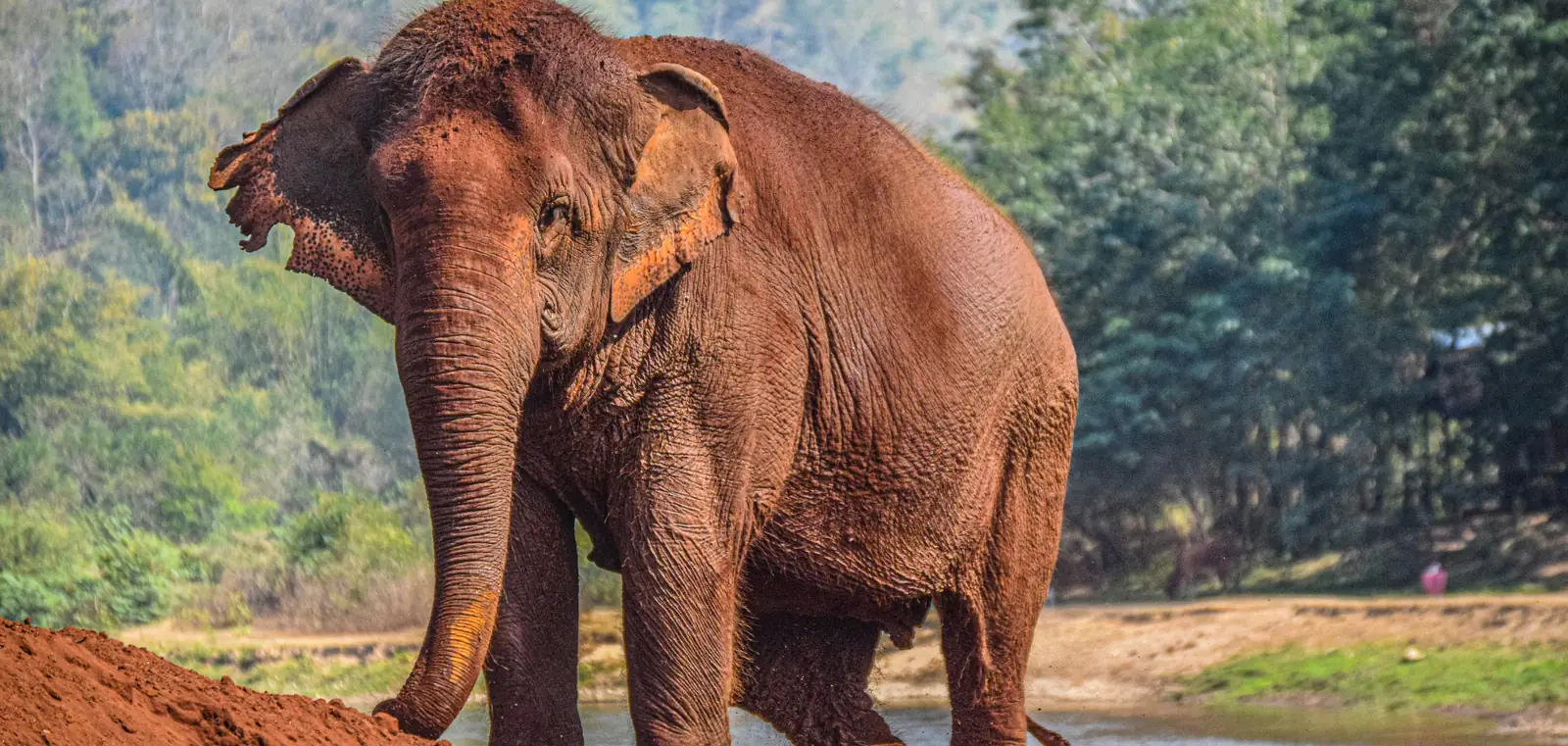 Mammals of Thailand
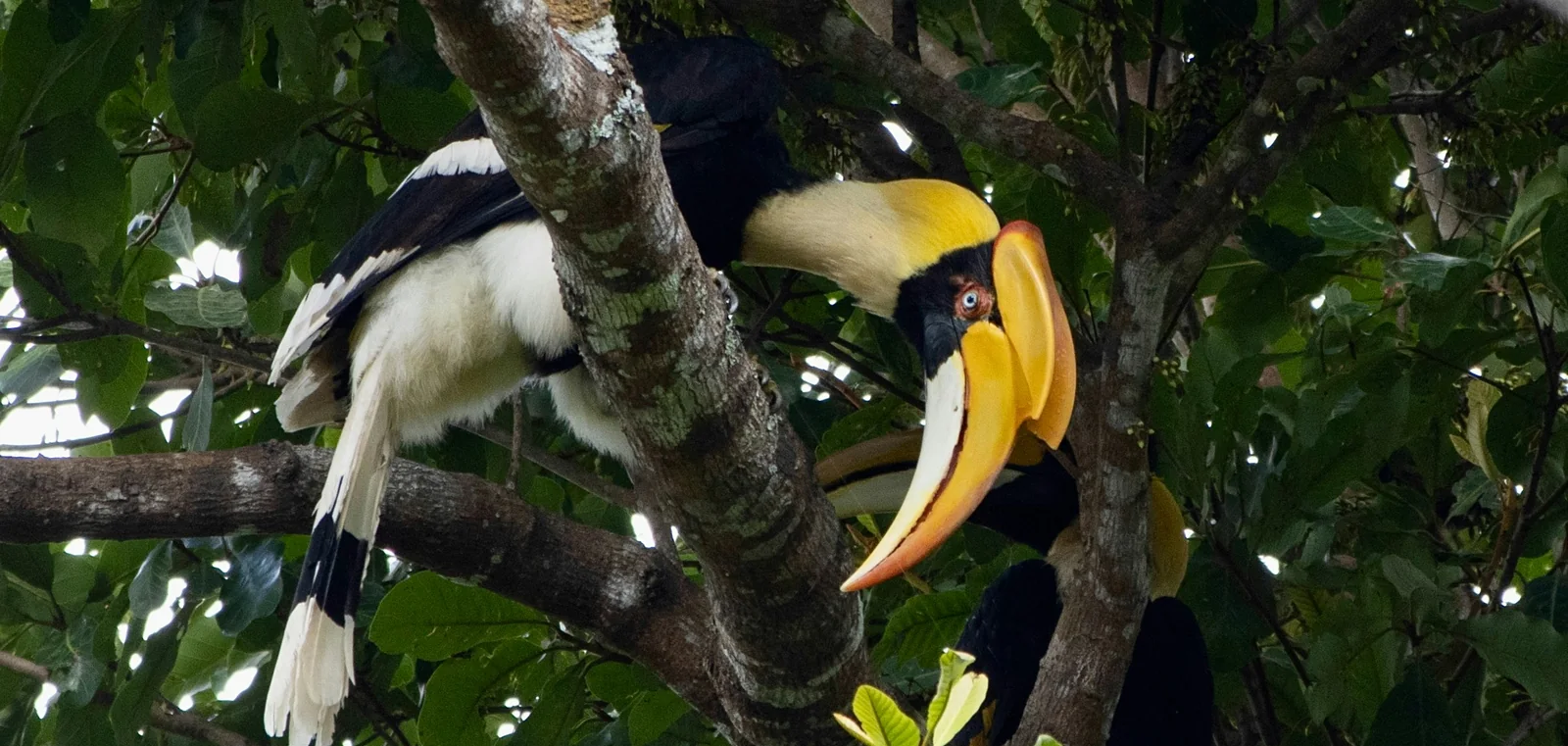 Birds of Thailand
 Reptiles and Amphibians of Thailand
 Fish of Thailand
 Sharks and Rays of Thailand
 Reef Invertebrates of Thailand
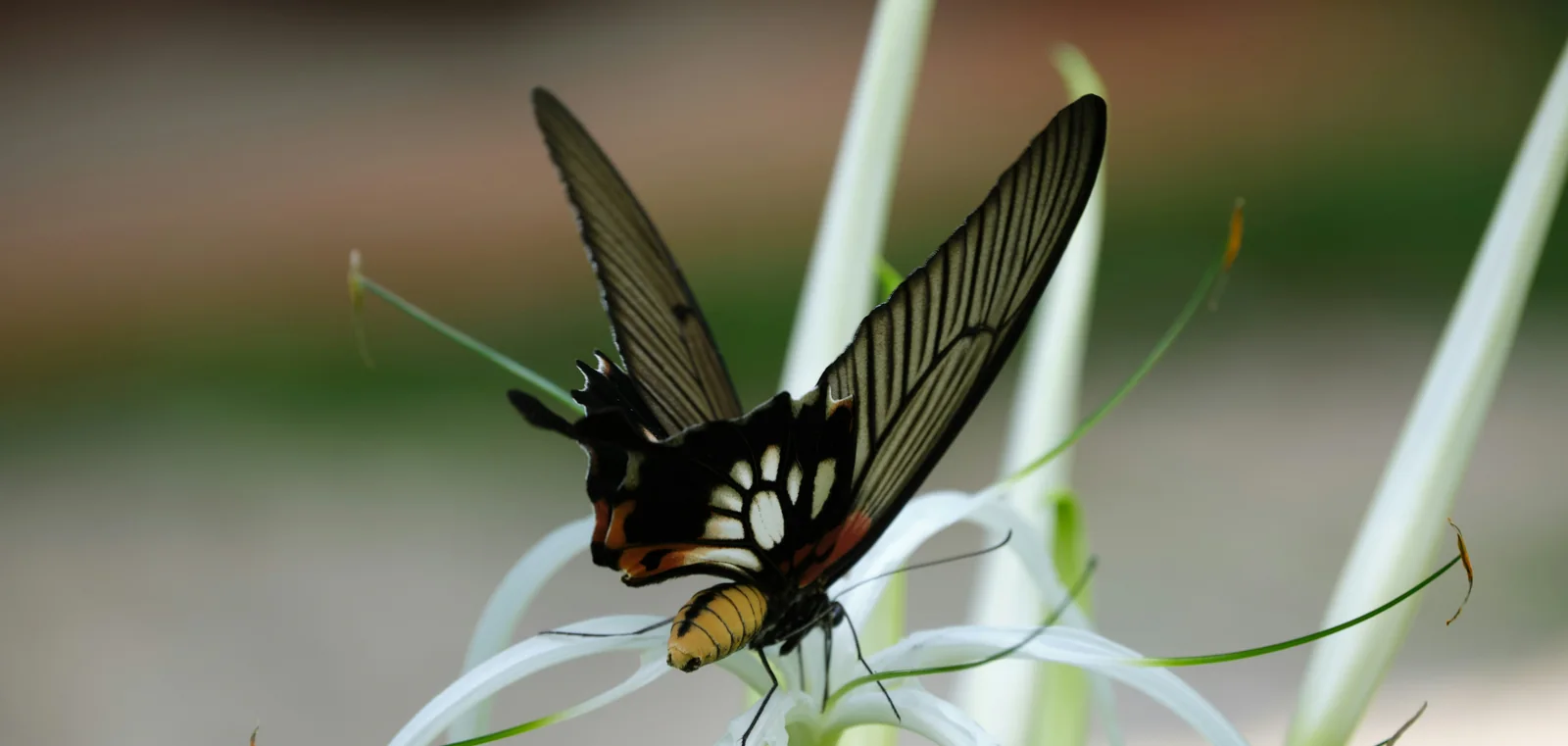 Insects and Spiders of Thailand
Part of the Wildlife in Thailand guide.
Explore Thailand wildlife by place