
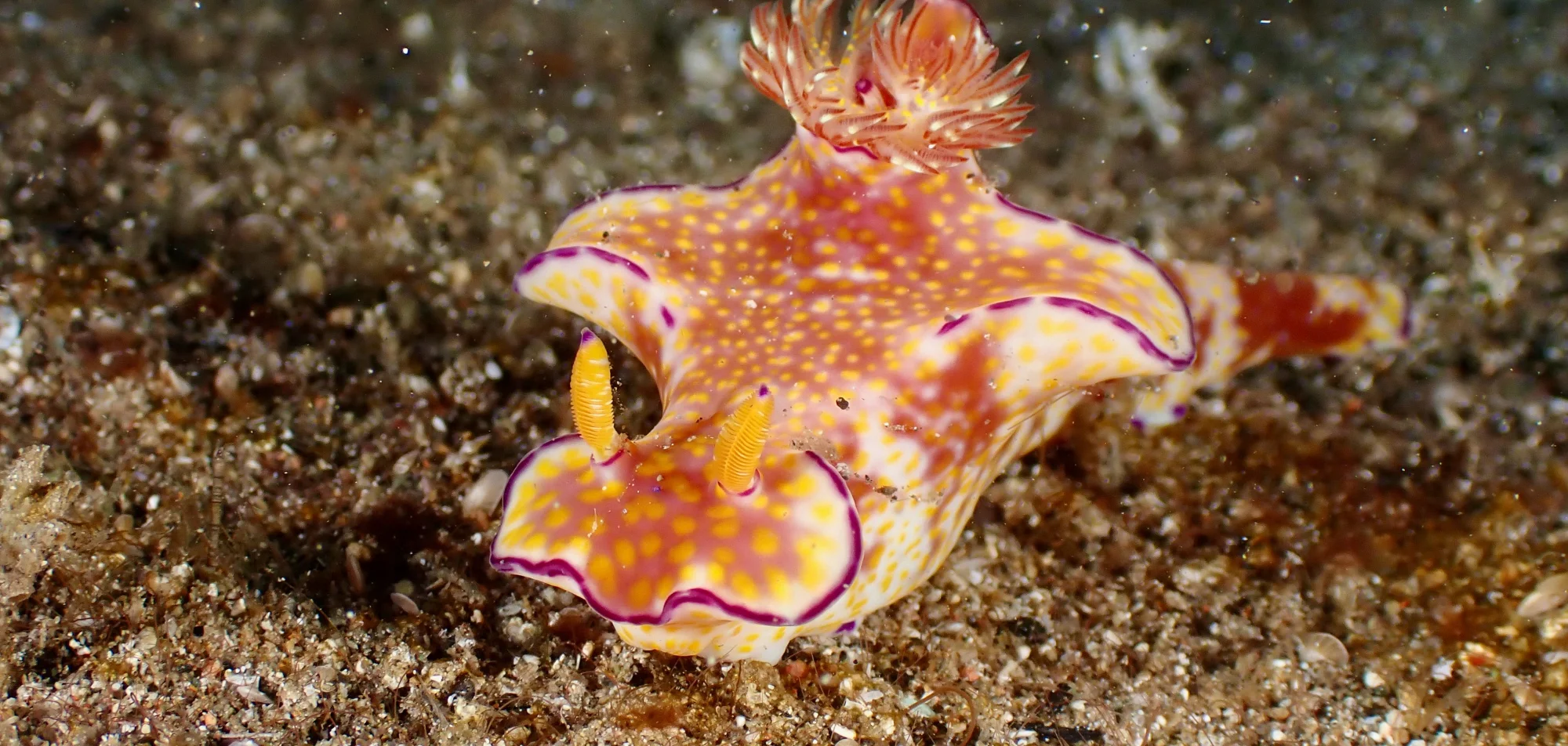
The reef invertebrates of Sri Lanka are the part of a snorkelling trip that most people swim straight over, and they are where the reef actually happens. Pigeon Island and the Bar Reef carry the full Indo-Pacific cast: staghorn and brain corals, giant sea fans, nudibranchs, cleaner shrimp, mantis shrimp and a good range of sea stars and cucumbers.
Two of the entries on this page are not on a reef at all. Sri Lanka has a freshwater crab that lives in rainwater pooled inside hollow forest trees, and a large banded tree snail from a family that has been on the island since it separated from Gondwana. Neither gets written about for travellers, and both are more interesting than most of what does.
This page lists all 79 reef invertebrates recorded for Sri Lanka in the Wildseer database. Use the contents to jump to a group.
Highlights
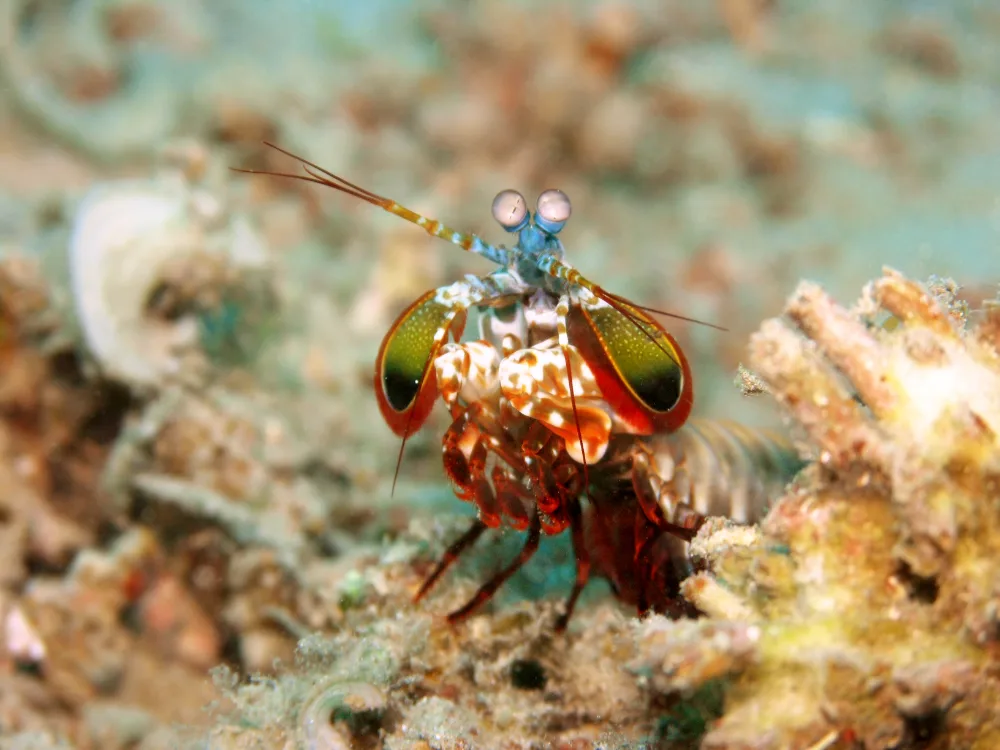
Peacock Mantis Shrimp
A jewel-coloured reef brawler that punches with the speed of a bullet and sees the world in colours we cannot imagine. Where: Sand and rubble patches between coral heads. Best: November to April on the west and south, May to September on the east.
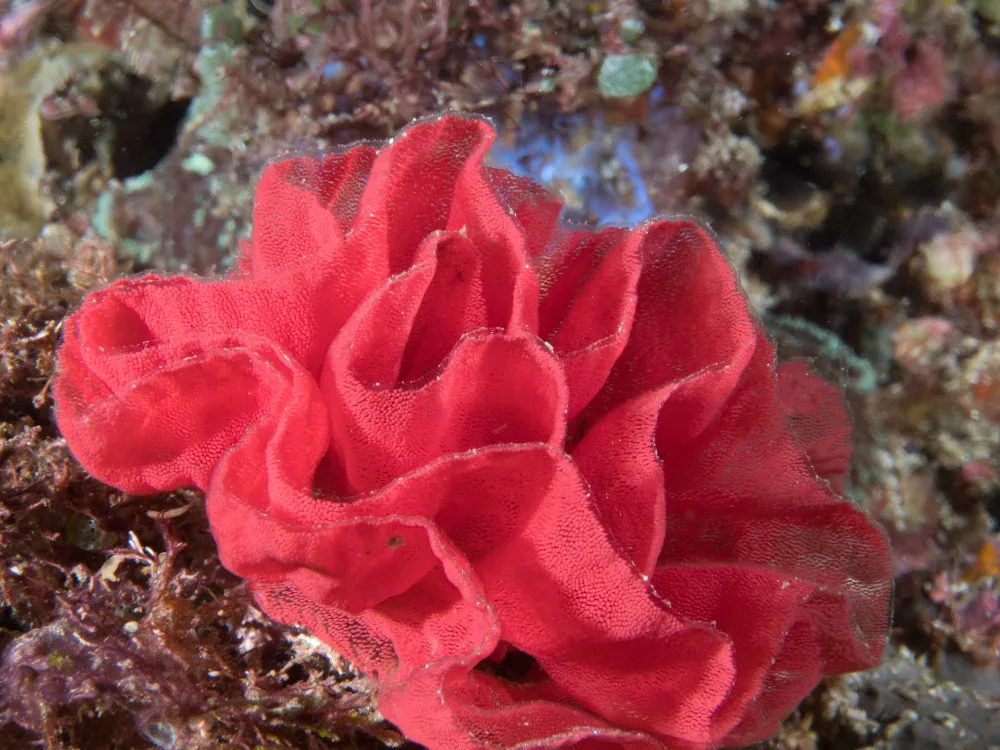
Spanish Dancer
A giant crimson sea slug that unfurls its frilled body and swims through open water like a flamenco dancer's skirt. Where: Reef and rubble after dark, on a night dive. Best: November to April on the west and south, May to September on the east.
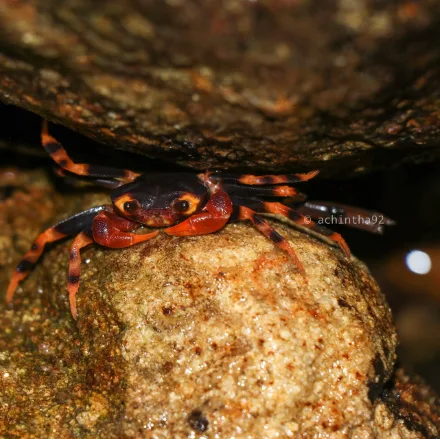
Sri Lanka Tree Crab
A freshwater crab that lives up a tree, in rainwater trapped in a hollow trunk, and only comes down to breed. Where: Rainwater held in hollows and rot holes of large wet zone forest trees. Best: Year round; females at ground level February and March.
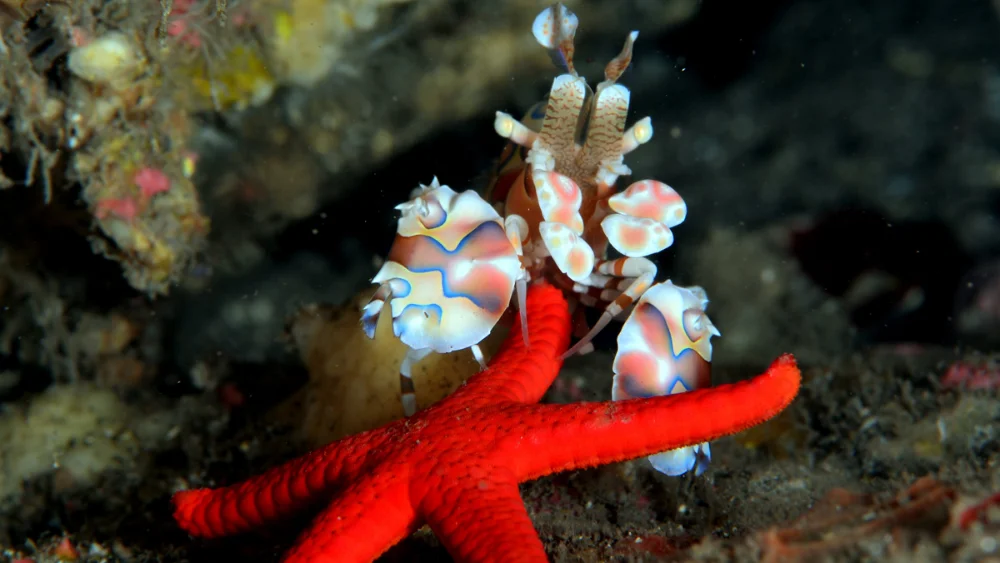
Harlequin Shrimp
A shrimp painted like fine porcelain that hunts as a devoted pair and eats nothing but living starfish. Where: Coral reef and boulder slopes on both coasts. Best: November to April on the west and south, May to September on the east.
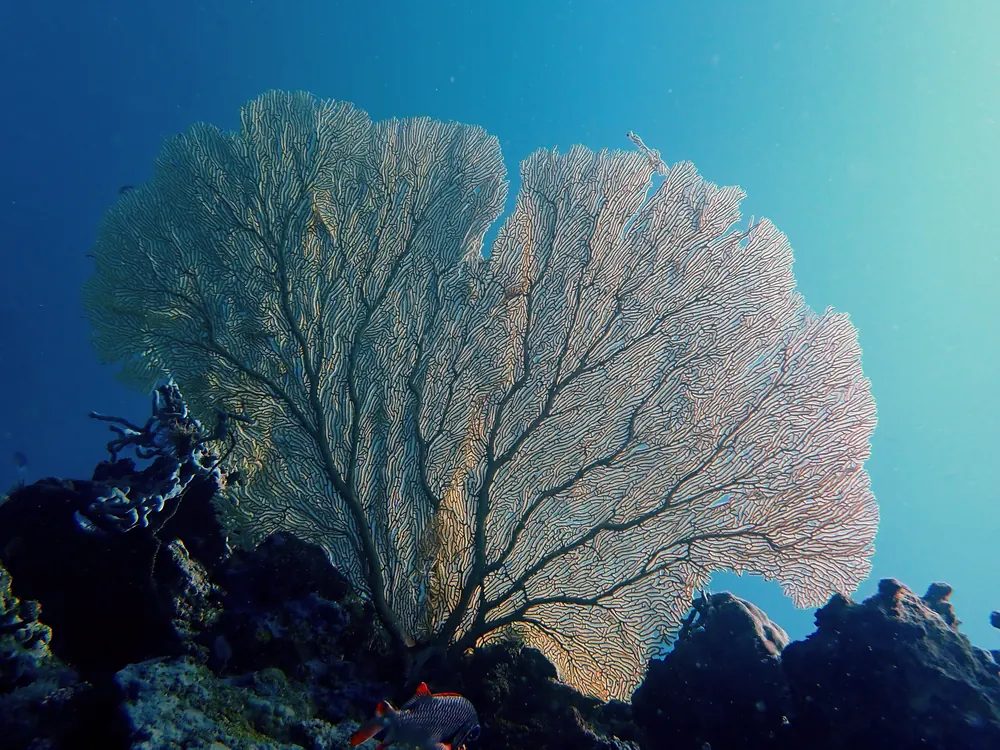
Giant Sea Fan (Gorgonian)
A great lattice fan spread across the current, a soft coral that farms the flow for plankton and shelters seahorses and hawkfish. Where: Reef edges and drop-offs, including the Trincomalee canyon rim. Best: November to April on the west and south, May to September on the east.
Molluscs
18 species
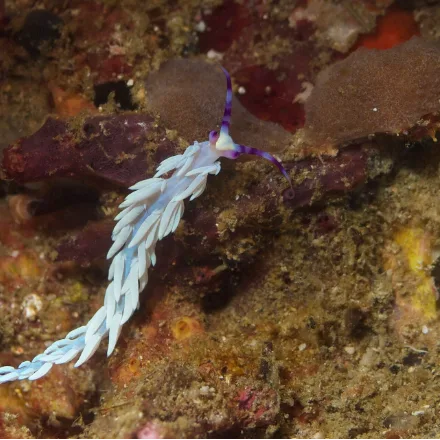
Blue Dragon Nudibranch Regular
Pteraeolidia semperi
Blue dragons feed on hydroids and pass the undischarged stinging cells through the gut to the tips of their cerata, where they are stored and used defensively. They also farm captured algae in their tissues and gain energy from sunlight.
Where: Coral reef and boulder slopes on both coasts. Best: November to April on the west and south, May to September on the east.
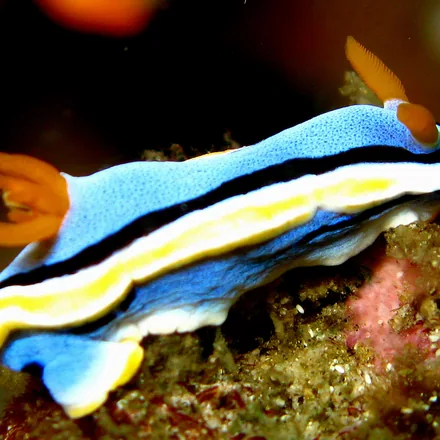
Chromodoris Nudibranch Regular
Chromodoris species
A small, soft-bodied sea slug patterned in vivid whites, blues, purples and yellows, with a pair of head tentacles and a feathery gill tuft on its back. It grazes sponges and stores their chemical defences.
Where: Coral reef and boulder slopes on both coasts. Best: November to April on the west and south, May to September on the east.
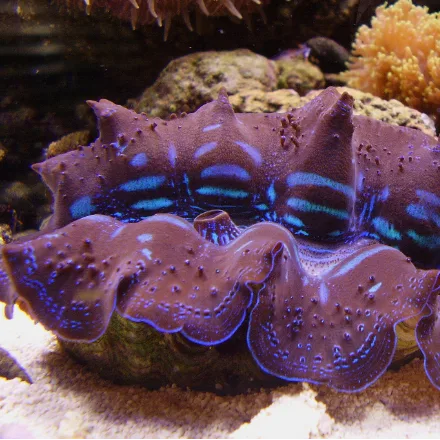
Small Giant Clam Regular
Tridacna maxima
A ribbed clam wedged into coral or rock with only its mantle showing, in iridescent blue, green, gold or brown, closing with a visible flinch when a shadow crosses it.
Where: Wedged into shallow coral and rock on reef flats. Best: November to April on the west, May to September on the east. The true giant clam does not reach Sri Lanka. This is the one you will actually see. Also on: Kalpitiya, Trincomalee and Pigeon Island, Hikkaduwa and Unawatuna.
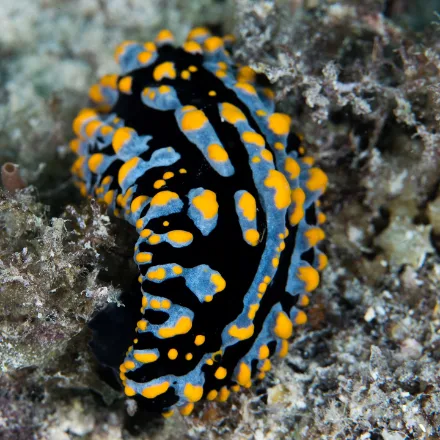
Varicose Phyllidia Regular
Phyllidia varicosa
Phyllidia have no exposed gills, breathing through folds under the mantle rim, and are hard and rubbery to the touch. They feed on sponges and concentrate the sponge's chemistry into a potent defensive secretion.
Where: Coral reef and boulder slopes on both coasts. Best: November to April on the west and south, May to September on the east.
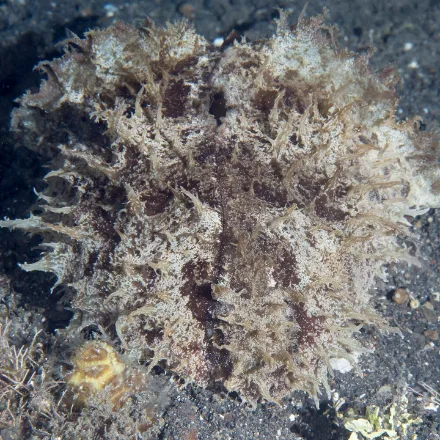
Wedge Sea Hare Regular
Dolabella auricularia
Wedge sea hares graze algae on shallow sand and seagrass, looking like a lump of rock until they move. The purple secretion works as a chemical decoy, overloading a predator's smell and taste receptors rather than acting as a smokescreen.
Where: Coral reef and boulder slopes on both coasts. Best: November to April on the west and south, May to September on the east.
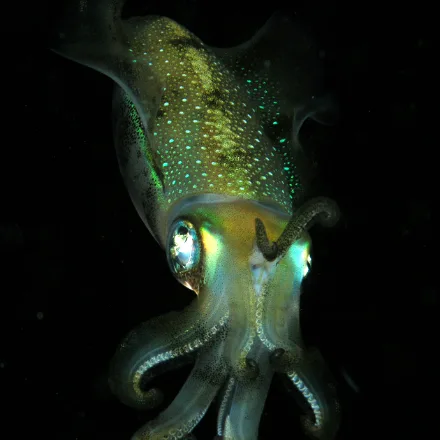
Bigfin Reef Squid Occasional
Sepioteuthis lessoniana
Bigfin reef squid hover in small groups just off the reef, hunting fish and crustaceans with a lightning strike of two long tentacles. Their skin carries chromatophores they use for hunting, courtship and threat, sometimes signalling to a mate and a rival simultaneously.
Where: Shallow reef flats and coral heads at Bar Reef and around Pigeon Island. Best: November to April on the west and south, May to September on the east.
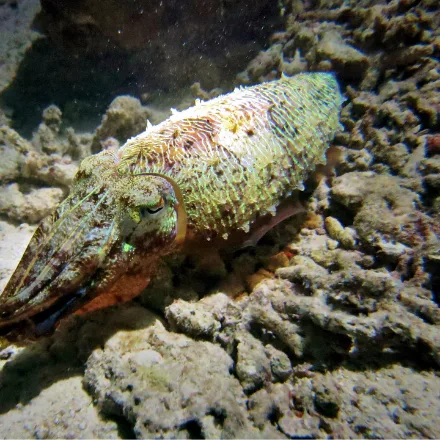
Broadclub Cuttlefish Occasional
Ascarosepion latimanus
A large cuttlefish that hovers over coral and mesmerises crabs with rippling colour before striking with two long tentacles. Males put on shimmering displays to court females.
Where: Coral reef and boulder slopes on both coasts. Best: November to April on the west and south, May to September on the east. Watch the skin. Colour and texture change faster than you can follow.
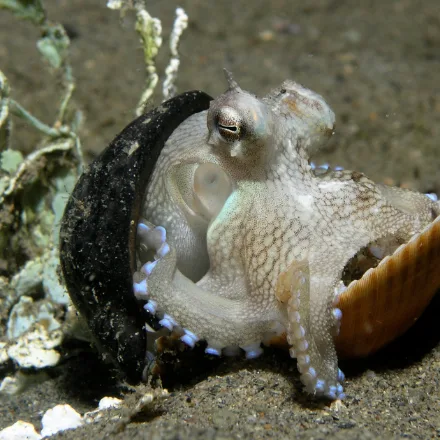
Coconut Octopus Occasional
Amphioctopus marginatus
Coconut octopuses collect discarded shells and coconut halves, stack them and stilt-walk across the sand on two arms while carrying the load. When threatened they pull the halves closed around themselves like a suit of armour.
Where: Coral reef and boulder slopes on both coasts. Best: November to April on the west and south, May to September on the east.
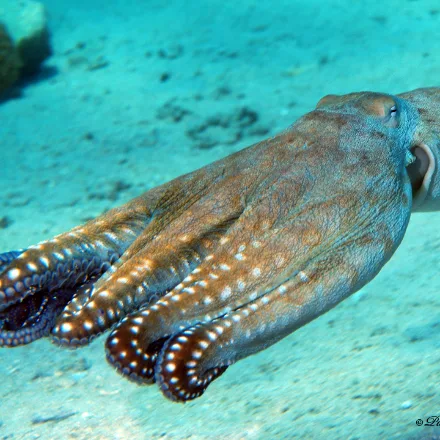
Day Octopus Occasional
Octopus cyanea
A large reef octopus that hunts by day, flowing over coral and probing holes with its arms for crabs and shellfish. It changes colour and skin texture instantly for camouflage and communication.
Where: Coral reef and boulder slopes on both coasts. Best: November to April on the west and south, May to September on the east. Also on: Hikkaduwa and Unawatuna.
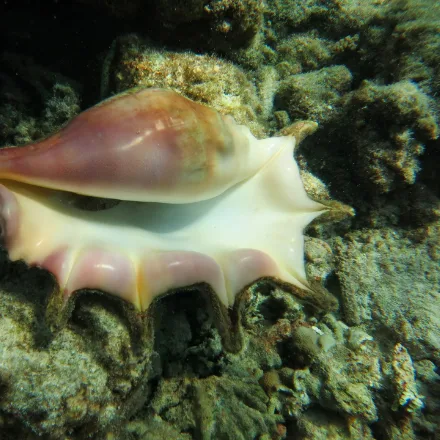
Giant Spider Conch Occasional
Lambis truncata
Spider conchs grow seven long finger-like projections from the shell lip as they mature, which prop the shell up and deter predators. Movement is a series of lurching hops powered by a sickle-shaped operculum jabbed into the seabed.
Where: Coral reef and boulder slopes on both coasts. Best: November to April on the west and south, May to September on the east.
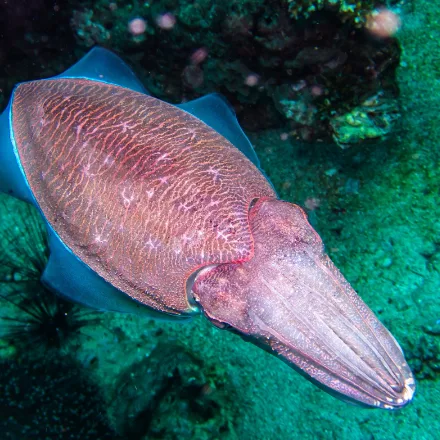
Pharaoh Cuttlefish Occasional
Sepia pharaonis
A large cuttlefish with a broad fin skirt and a buoyancy shell inside its body, able to flush shifting patterns across its skin. It stalks shrimp and fish, mesmerising them with pulsing displays before shooting out two long tentacles.
Where: Coral reef and boulder slopes on both coasts. Best: November to April on the west and south, May to September on the east. Watch the skin. Colour and texture change faster than you can follow.
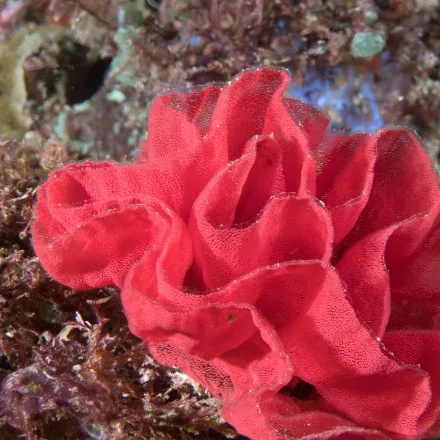
Spanish Dancer Occasional
Hexabranchus sanguineus
One of the largest nudibranchs, deep red and often edged in white, it usually crawls the reef but can swim by flexing its whole body in flowing waves. It feeds on sponges and stores their toxins for its own defence.
Where: Reef and rubble after dark, on a night dive. Best: November to April on the west and south, May to September on the east. Swims by unrolling its mantle and undulating, usually only after dark.
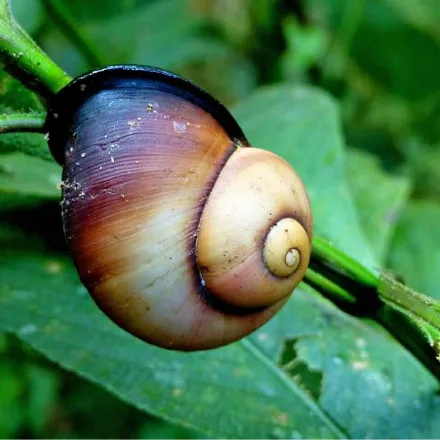
Sri Lanka Tree Snail Occasional
Acavus phoenix
A large, glossy land snail with a heavy globose shell banded in chestnut, cream and orange, carried by a dark grey body up tree trunks and branches.
Where: On trunks and branches in wet zone forest, moving at night and after rain. Best: Year round, best just after heavy rain. A canopy animal. Scan trunks at head height and above, not the leaf litter. Also on: Sinharaja Forest Reserve, Kanneliya Forest Reserve, Kitulgala and the Makandawa Rainforest.
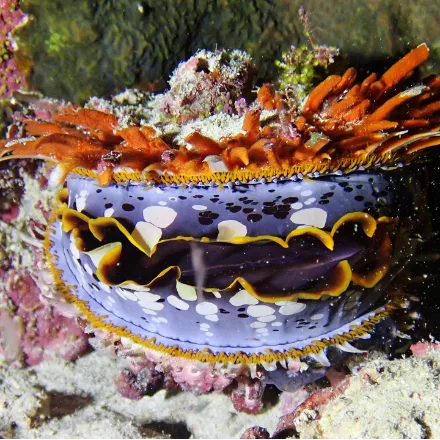
Thorny Oyster Occasional
Spondylus varius
Thorny oysters live glued to rock and coral, filtering plankton and snapping shut at any shadow. The mantle rim carries a row of simple eyes that detect movement, which is what triggers the closing reflex.
Where: Coral reef and boulder slopes on both coasts. Best: November to April on the west and south, May to September on the east.
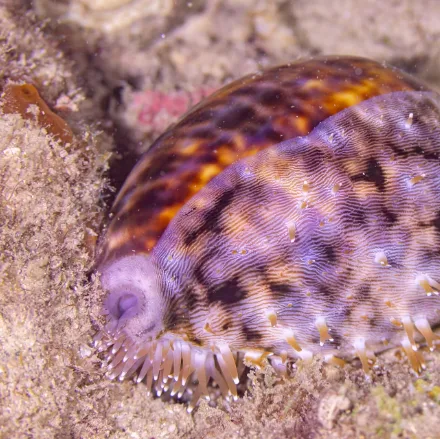
Tiger Cowrie Occasional
Cypraea tigris
Tiger cowries hide in crevices by day and graze algae and sponge at night. The living animal extends two lobes of speckled mantle over the outside of the shell, which is what keeps it free of the wear and encrustation other shells accumulate.
Where: Coral reef and boulder slopes on both coasts. Best: November to April on the west and south, May to September on the east.
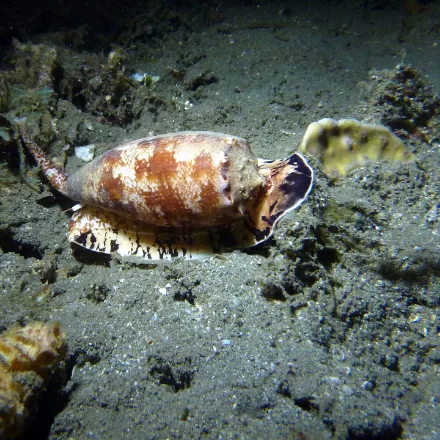
Geographic Cone Snail Rare
Conus geographus
Geographic cones hunt fish at night, either engulfing them in a distended mouth or harpooning them with a venom-loaded modified tooth. The venom is a cocktail of hundreds of peptides, and human deaths, while very rare, have occurred.
Where: Sand and rubble patches between coral heads. Best: November to April on the west and south, May to September on the east. The sting can kill. Never pick up a live cone shell, however good it looks.
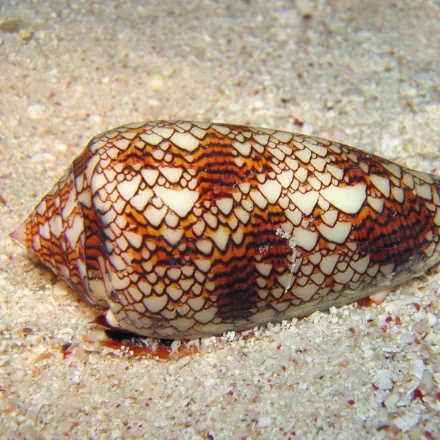
Textile Cone Snail Rare
Conus textile
Textile cones hunt other snails at night, firing a harpoon-like radular tooth loaded with paralysing venom. The pattern of overlapping cream tents on a brown ground is produced by a wave-like chemical process along the growing shell edge.
Where: Sand and rubble patches between coral heads. Best: November to April on the west and south, May to September on the east. The sting can kill. Never pick up a live cone shell, however good it looks.
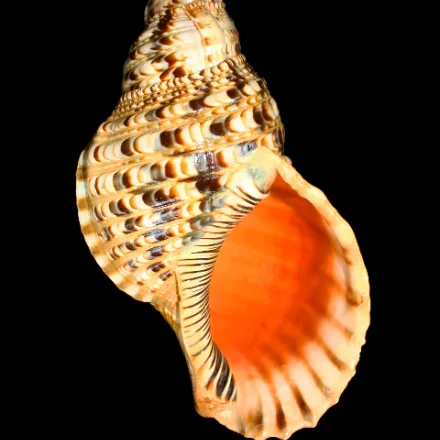
Triton's Trumpet Rare
Charonia tritonis
A large marine snail with a heavy, elegantly patterned conical shell up to half a metre long. A predator, it tracks down and devours sea stars, including the destructive crown-of-thorns starfish.
Where: Coral reef and boulder slopes on both coasts. Best: November to April on the west and south, May to September on the east. One of very few predators of the crown-of-thorns starfish, and collected for its shell, which is the problem.
Corals and anemones
22 species
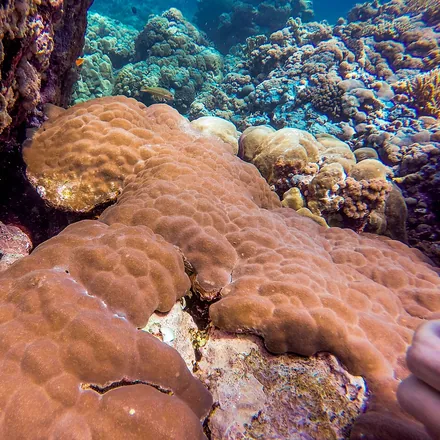
Boulder Porites Common
Porites lutea
Boulder Porites form massive rounded domes that can exceed five metres and live for hundreds of years. Cores drilled from them show annual density bands that scientists read like tree rings to reconstruct past sea temperature and rainfall.
Where: Coral reef and boulder slopes on both coasts. Best: November to April on the west and south, May to September on the east.
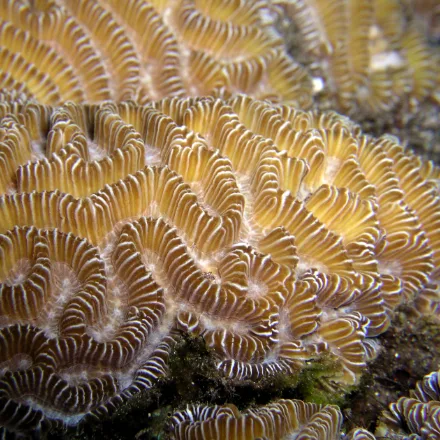
Brain Coral Common
Platygyra species
A massive, dome-shaped coral whose surface is covered in meandering ridges and valleys housing rows of polyps. Slow-growing and long-lived, it feeds via symbiotic algae and by capturing plankton at night.
Where: Coral reef and boulder slopes on both coasts. Best: November to April on the west and south, May to September on the east.
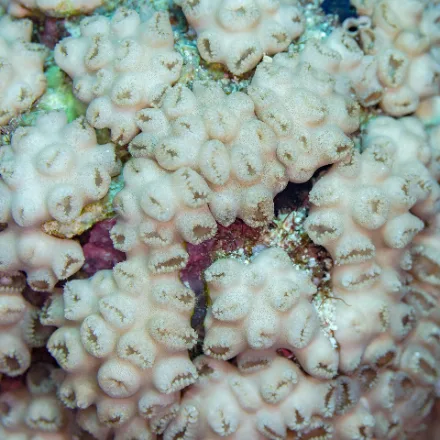
Encrusting Zoanthid Common
Palythoa tuberculosa
Zoanthids form low, leathery mats of button-like polyps over rock in shallow, wave-washed water. Some Palythoa carry palytoxin at concentrations that cause serious poisoning through cuts or, in confined spaces, through vapour.
Where: Shallow reef flats and coral heads at Bar Reef and around Pigeon Island. Best: November to April on the west and south, May to September on the east.
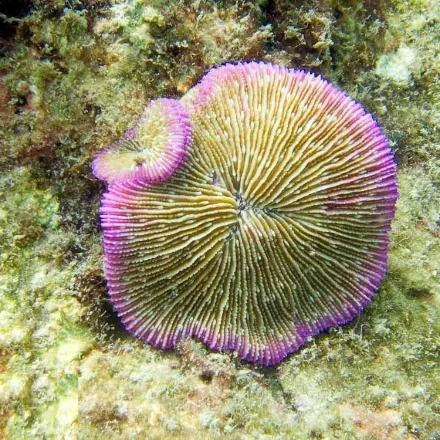
Mushroom Coral Common
Fungia species
A disc-shaped coral resembling the underside of a mushroom, radiating fine ridges from the centre. Unusually it is a single large polyp living free on the bottom rather than a fixed colony.
Where: Coral reef and boulder slopes on both coasts. Best: November to April on the west and south, May to September on the east.
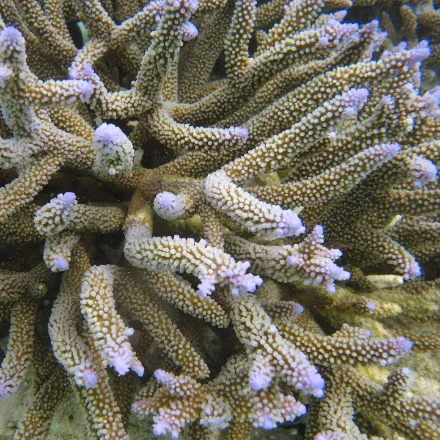
Staghorn Coral Common
Acropora species
A branching, antler-like coral formed by colonies of tiny polyps, growing in dense stands in shallow, sunlit water. It gains most of its energy from symbiotic algae and captures plankton with its polyps at night.
Where: Shallow reef flats and coral heads at Bar Reef and around Pigeon Island. Best: November to April on the west and south, May to September on the east. Both suffered severe bleaching mortality on Sri Lankan reefs in 1998 and again in 2016. Also on: Trincomalee and Pigeon Island, Kalpitiya, Hikkaduwa and Unawatuna.
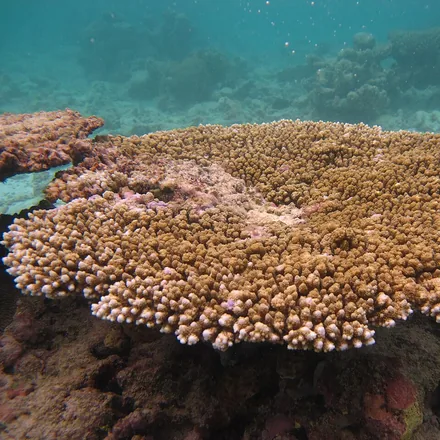
Table Coral Common Near Threatened
Acropora hyacinthus
Table corals form broad horizontal plates up to two metres across on a single narrow stem, maximising light capture. That shape makes them the fastest growing reef builders and also the most easily smashed by storms, anchors and fins.
Where: Shallow reef flats and coral heads at Bar Reef and around Pigeon Island. Best: November to April on the west and south, May to September on the east. Both suffered severe bleaching mortality on Sri Lankan reefs in 1998 and again in 2016. Also on: Kalpitiya, Hikkaduwa and Unawatuna.
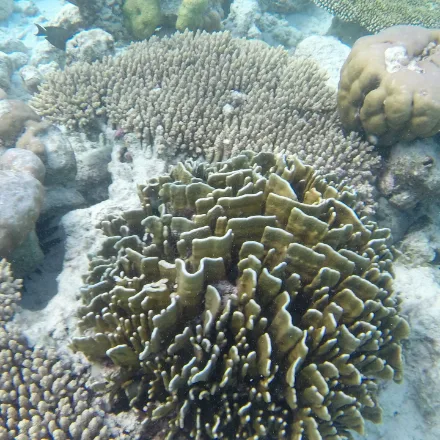
Blue Coral Regular Vulnerable
Heliopora coerulea
Blue coral builds a hard skeleton coloured deep blue by iron salts, unique among reef-building corals. The living colony looks unremarkable brown-grey, and the colour is only revealed when the tissue is stripped away.
Where: Shallow reef flats and coral heads at Bar Reef and around Pigeon Island. Best: November to April on the west and south, May to September on the east. The skeleton is genuinely blue. Break a piece and you can see it, so do not.
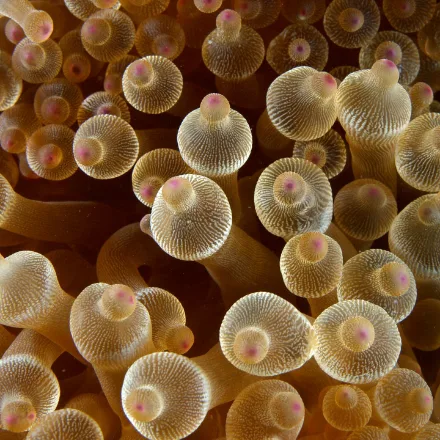
Bulb-tentacle Anemone Regular
Entacmaea quadricolor
Bulb-tentacle anemones wedge their base deep into reef crevices and spread tentacles that develop a distinctive swelling below the tip. The bulbs form reliably in the presence of resident anemonefish and are usually absent without them.
Where: Shallow reef flats and coral heads at Bar Reef and around Pigeon Island. Best: November to April on the west and south, May to September on the east.
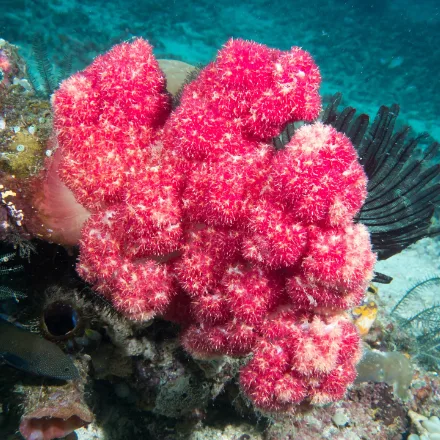
Carnation Soft Coral Regular
Dendronephthya species
A soft, treelike coral without a hard skeleton, supported by water pressure and tiny mineral spikes, blooming in vivid pinks, reds and oranges. It filters plankton and has no symbiotic algae, so it thrives in shade and current.
Where: Deeper reef, wrecks and the Great and Little Basses reefs. Best: November to April on the west and south, May to September on the east.
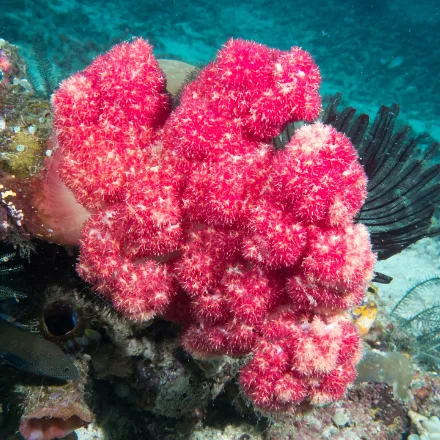
Carnation Tree Coral Regular
Dendronephthya klunzingeri
These soft corals inflate with water to unfold into pink, red or purple trees, then collapse into a limp bag when the current stops. They feed entirely on drifting plankton, which is why they only thrive where water moves.
Where: Deeper reef, wrecks and the Great and Little Basses reefs. Best: November to April on the west and south, May to September on the east.
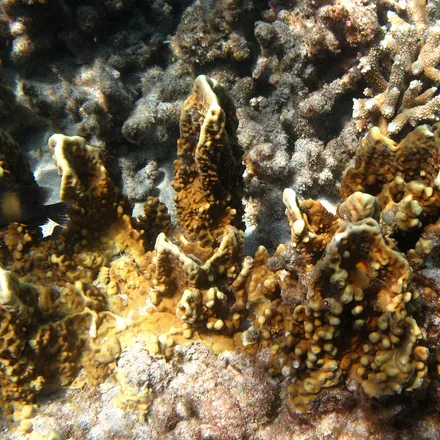
Fire Coral Regular
Millepora platyphylla
Fire coral forms smooth mustard-yellow blades and encrustations with white tips, covered in fine hair-like stinging polyps. Brushing against it causes an immediate burning welt that can last for days.
Where: Shallow reef flats and coral heads at Bar Reef and around Pigeon Island. Best: November to April on the west and south, May to September on the east. Not a coral and it stings. Brush past it in a wetsuit gap and you will remember.
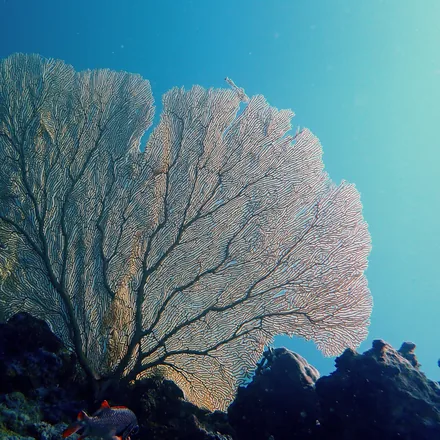
Giant Sea Fan (Gorgonian) Regular
Annella species
A large, fan-shaped soft coral with a fine branching mesh, oriented across prevailing currents to maximise feeding. Its polyps filter plankton from the passing water.
Where: Reef edges and drop-offs, including the Trincomalee canyon rim. Best: November to April on the west and south, May to September on the east. Also on: The Great and Little Basses Reefs.
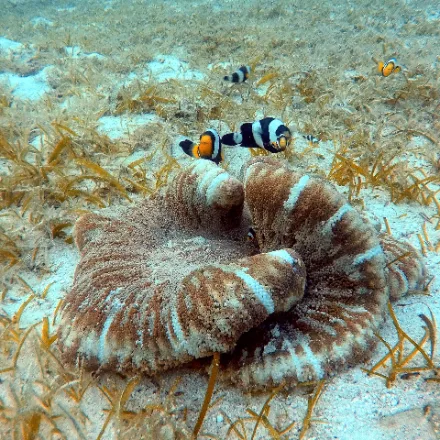
Haddon's Carpet Anemone Regular
Stichodactyla haddoni
Haddon's carpet anemone spreads a broad, densely tentacled oral disc across silty sand and seagrass, retracting entirely into the substrate when threatened. The sting is strong enough to adhere firmly to human skin.
Where: Shallow reef flats and coral heads at Bar Reef and around Pigeon Island. Best: November to April on the west and south, May to September on the east.
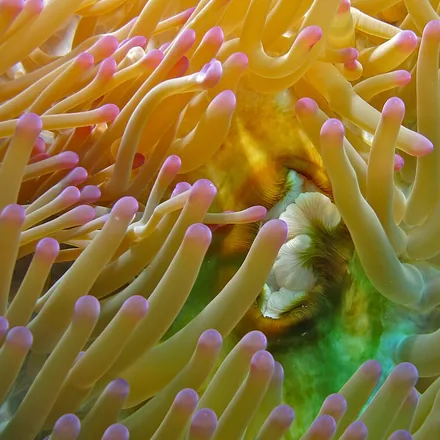
Magnificent Sea Anemone Regular
Heteractis magnifica
A large sea anemone with a broad column and hundreds of thick, often bulb-tipped tentacles, coming in shades of green, blue, purple and red. It stings and captures prey but also hosts anemonefish and shrimp immune to its venom.
Where: Shallow reef flats and coral heads at Bar Reef and around Pigeon Island. Best: November to April on the west and south, May to September on the east. Also on: Hikkaduwa and Unawatuna.
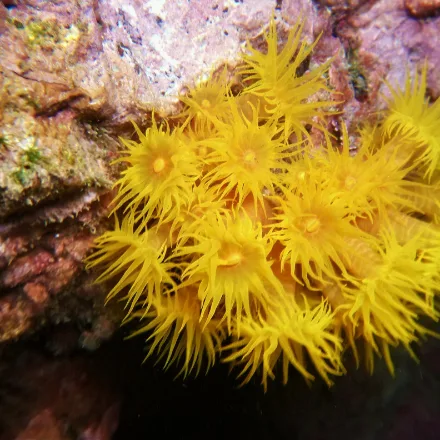
Orange Sun Coral Regular
Tubastraea coccinea
Sun corals lack the symbiotic algae almost all reef corals depend on, and instead catch zooplankton with long translucent tentacles at night. By day the colony closes to a cluster of hard orange knobs.
Where: The Trincomalee and Passikudah wrecks and deeper rocky reef. Best: November to April on the west and south, May to September on the east. Opens at night and on shaded wreck overhangs by day.
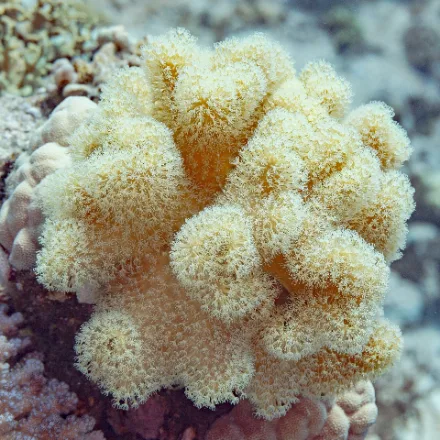
Toadstool Leather Coral Regular
Sarcophyton trocheliophorum
Leather corals form thick mushroom-shaped stalks and caps with retractile polyps over the upper surface. Periodically they withdraw all polyps, secrete a waxy film and slough it off, taking accumulated algae and sediment with it.
Where: Deeper reef, wrecks and the Great and Little Basses reefs. Best: November to April on the west and south, May to September on the east.
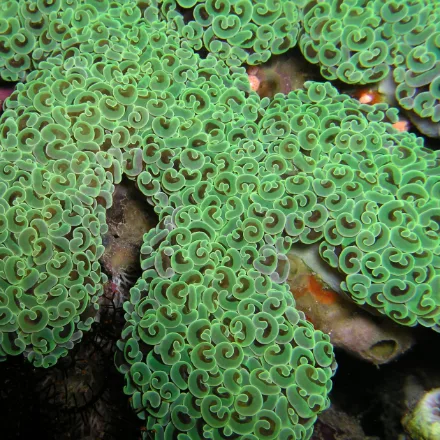
Anchor Coral Occasional Vulnerable
Euphyllia ancora
Anchor coral extends thick fleshy tentacles day and night, each tipped with a T or anchor-shaped swelling. It deploys long sweeper tentacles after dark to sting and clear space around the colony.
Where: Coral reef and boulder slopes on both coasts. Best: November to April on the west and south, May to September on the east.
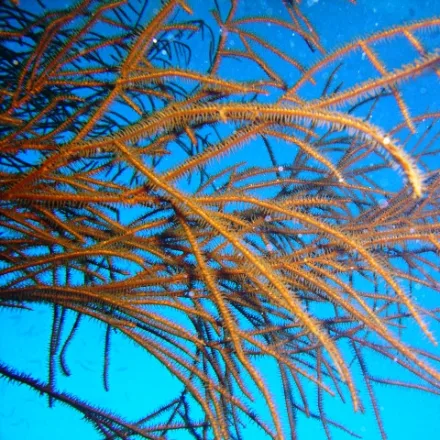
Black Coral Occasional
Antipathes dichotoma
Black corals grow as feathery bushes and whips on deep walls and in caves, their tissue white, brown or grey over a jet black skeleton. They grow extraordinarily slowly, which is why a modest bush may predate written history.
Where: Reef edges and drop-offs, including the Trincomalee canyon rim. Best: November to April on the west and south, May to September on the east. Also on: The Great and Little Basses Reefs.
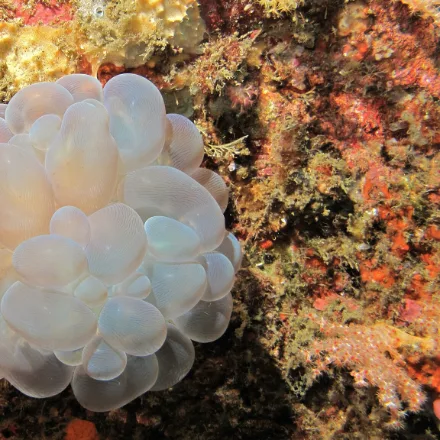
Bubble Coral Occasional Near Threatened
Plerogyra sinuosa
Bubble coral expands water-filled vesicles during daylight to maximise the surface exposed to sunlight for its symbiotic algae. After dark the bubbles shrink and long sweeper tentacles emerge to catch plankton and to sting neighbouring corals.
Where: Coral reef and boulder slopes on both coasts. Best: November to April on the west and south, May to September on the east.
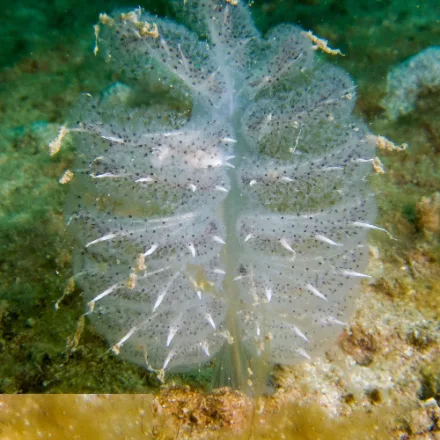
Sea Pen Occasional
Pteroeides sp.
Sea pens anchor a muscular bulb in soft sediment and unfurl a feathered rachis of polyps to feed on plankton at night. Disturbance triggers waves of blue-green bioluminescence, and a serious threat makes the whole colony deflate and withdraw into the seabed.
Where: Sand and rubble patches between coral heads. Best: November to April on the west and south, May to September on the east.
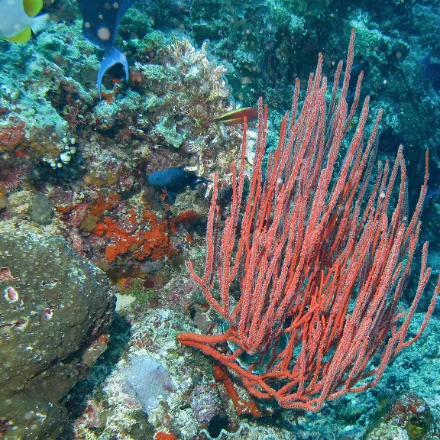
Sea Whip Coral Occasional
Junceella fragilis
Sea whips grow as long, flexible, unbranched cords anchored to rock, oriented across the prevailing current to intercept plankton. They propagate clonally by shedding fragments that root where they land.
Where: Reef edges and drop-offs, including the Trincomalee canyon rim. Best: November to April on the west and south, May to September on the east.
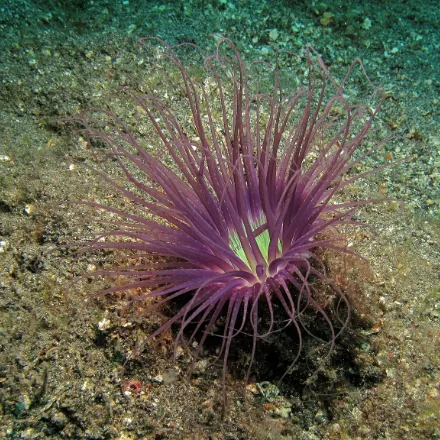
Tube Anemone Occasional
Cerianthus filiformis
Tube anemones live buried in soft sediment inside a tube woven from mucus and spent nematocyst threads. Two rings of tentacles emerge at night, long outer ones for capture and short inner ones for handling prey.
Where: Sand and rubble patches between coral heads. Best: November to April on the west and south, May to September on the east.
Echinoderms
14 species
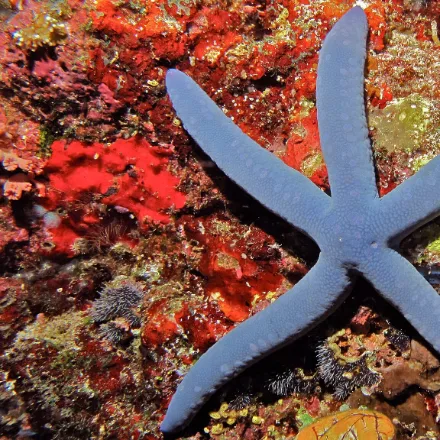
Blue Sea Star Common
Linckia laevigata
A five armed sea star of a striking deep blue, sometimes purple or orange, resting on sand, rubble and reef flats. It grazes films of algae and detritus, and can regenerate from a single severed arm.
Where: Shallow reef flats and coral heads at Bar Reef and around Pigeon Island. Best: November to April on the west and south, May to September on the east. Also on: Trincomalee and Pigeon Island, Hikkaduwa and Unawatuna.
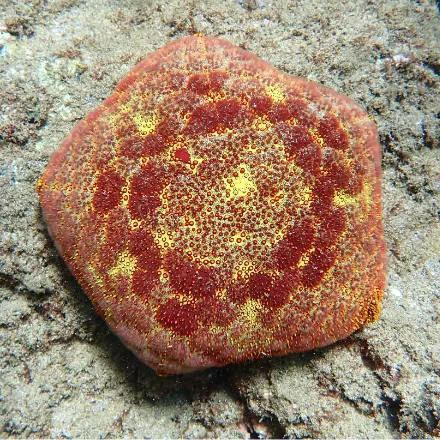
Cushion Star Common
Culcita novaeguineae
Cushion stars start life as recognisable five-armed juveniles and inflate as they grow until the arms are absorbed into a domed pentagon. They feed by everting the stomach onto coral and algae and digesting it externally.
Where: Shallow reef flats and coral heads at Bar Reef and around Pigeon Island. Best: November to April on the west and south, May to September on the east.
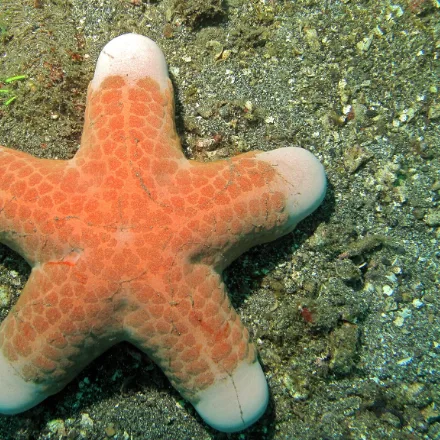
Granulated Sea Star Common
Choriaster granulatus
Granulated sea stars have short, very thick blunt arms and a smooth pale pink to cream surface with a darker centre. They graze detritus, algal film and dead coral, everting the stomach over the substrate.
Where: Shallow reef flats and coral heads at Bar Reef and around Pigeon Island. Best: November to April on the west and south, May to September on the east.
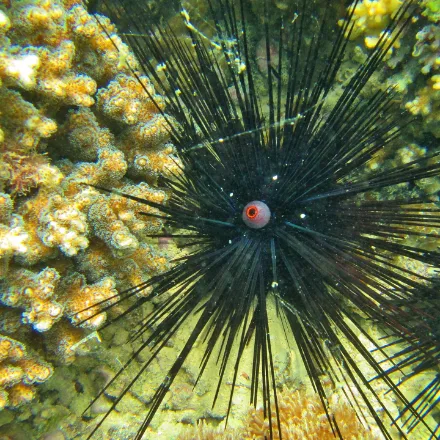
Long-spined Sea Urchin Common
Diadema setosum
A black sea urchin with very long, fine, venom-tipped spines and a distinctive orange ring on the body. It shelters by day and grazes algae from the reef at night, its spines swivelling toward any shadow.
Where: Shallow reef flats and coral heads at Bar Reef and around Pigeon Island. Best: November to April on the west and south, May to September on the east. Also on: Hikkaduwa and Unawatuna.
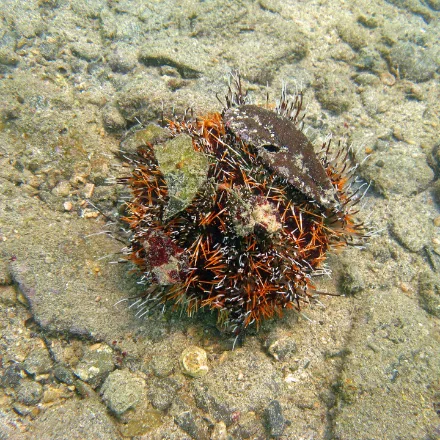
Pincushion Urchin Common
Tripneustes gratilla
Pincushion urchins graze seagrass and algae in shallow water, often in dense aggregations. They pick up debris and hold it over the upper surface, which is thought to reduce ultraviolet exposure and to break up their outline.
Where: Shallow reef flats and coral heads at Bar Reef and around Pigeon Island. Best: November to April on the west and south, May to September on the east.
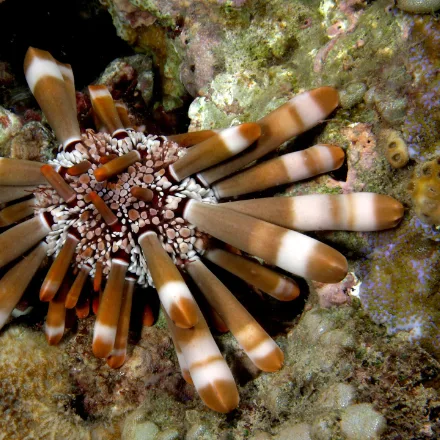
Slate Pencil Urchin Common
Heterocentrotus mamillatus
Slate pencil urchins wedge themselves into crevices during the day using their heavy triangular-sectioned spines, and graze algae at night. The spines are solid enough to be collected for wind chimes and jewellery.
Where: Shallow reef flats and coral heads at Bar Reef and around Pigeon Island. Best: November to April on the west and south, May to September on the east.
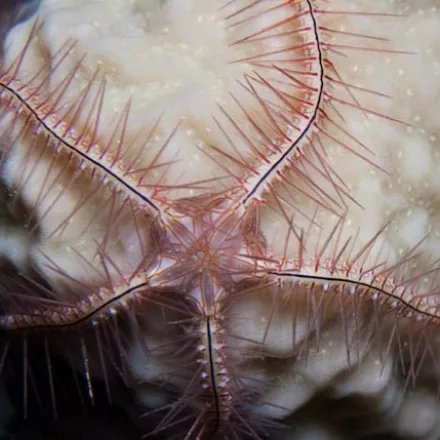
Blue Brittle Star Regular
Ophiothrix purpurea
Brittle stars have a small central disc and five long, flexible, spiny arms used for walking rather than tube feet. They shelter inside sponges and under rubble by day and extend arms into the current to filter feed at night.
Where: Coral reef and boulder slopes on both coasts. Best: November to April on the west and south, May to September on the east.
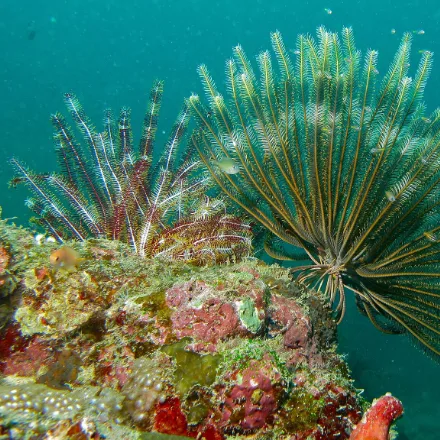
Feather Star (Crinoid) Regular
Comatulida species
An ancient relative of starfish with many feathery, branching arms radiating from a central body, gripping the reef with clawed appendages. It spreads its arms into the current to filter plankton.
Where: Reef edges and drop-offs, including the Trincomalee canyon rim. Best: November to April on the west and south, May to September on the east. Also on: Trincomalee and Pigeon Island, Hikkaduwa and Unawatuna, The Great and Little Basses Reefs.
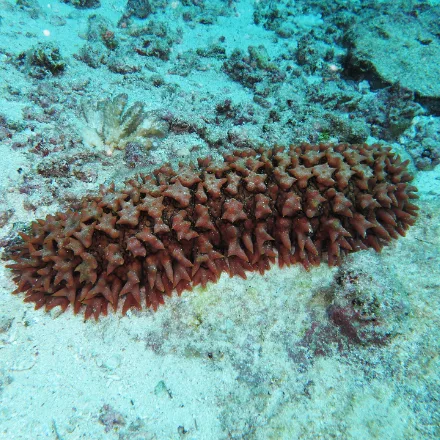
Pineapple Sea Cucumber Regular Endangered
Thelenota ananas
Pineapple sea cucumbers process enormous volumes of sand, extracting organic matter and excreting clean sediment, which keeps reef substrate turned over and oxygenated. The high value of dried teatfish has driven serial depletion across the Indo-Pacific.
Where: Sand and rubble patches between coral heads. Best: November to April on the west and south, May to September on the east. Sea cucumbers are fished hard in the Gulf of Mannar for the export trade.
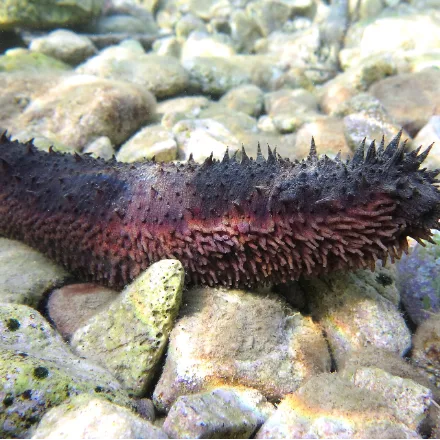
Sea Cucumber Regular
Holothuria species
A soft, elongated relative of starfish and urchins, lying on sand and reef floor, feeding by passing sediment through its gut to extract organic matter. Some defend themselves by expelling sticky or toxic threads.
Where: Sand and rubble patches between coral heads. Best: November to April on the west and south, May to September on the east. Sea cucumbers are fished hard in the Gulf of Mannar for the export trade.
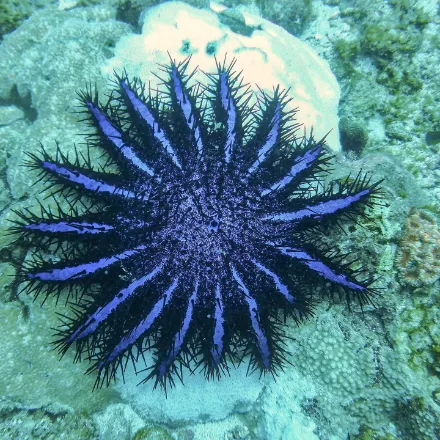
Crown-of-thorns Starfish Occasional
Acanthaster planci
A large starfish with up to twenty arms bristling with sharp venomous spines, coloured red, grey or purple. It feeds by everting its stomach over coral and digesting the polyps in place.
Where: Shallow reef flats and coral heads at Bar Reef and around Pigeon Island. Best: November to April on the west and south, May to September on the east. Outbreaks have done real damage to Sri Lankan reefs. Spines are venomous.
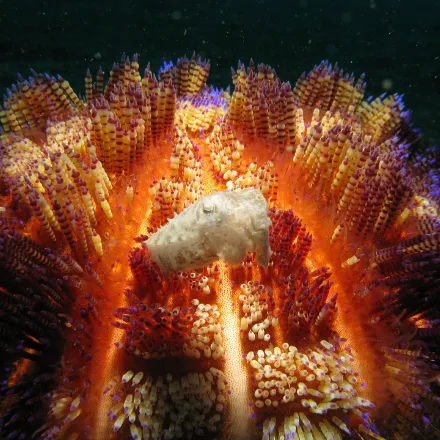
Fire Urchin Occasional
Asthenosoma varium
Fire urchins have a soft, flexible leathery test rather than a rigid shell, and short venomous spines tipped with bulbous orange sacs. Coleman shrimp and zebra crabs live on the upper surface, clearing a bare patch to sit in.
Where: Sand and rubble patches between coral heads. Best: November to April on the west and south, May to September on the east. Both are venomous. The flower urchin is genuinely dangerous.
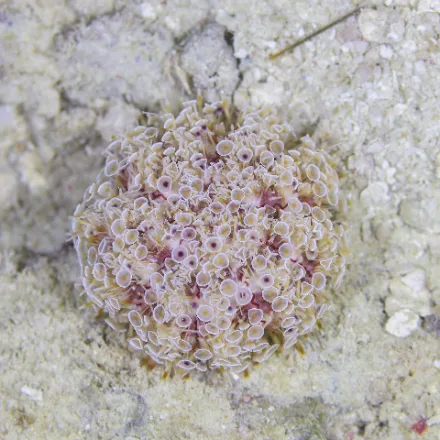
Flower Urchin Occasional
Toxopneustes pileolus
Flower urchins are covered not in long spines but in hundreds of flower-like pedicellariae, tiny three-jawed pincers loaded with venom. Envenomation causes severe pain, and paralysis and respiratory difficulty have been recorded.
Where: Sand and rubble patches between coral heads. Best: November to April on the west and south, May to September on the east. Both are venomous. The flower urchin is genuinely dangerous.
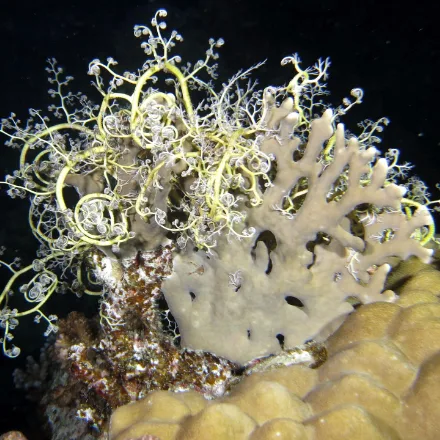
Basket Star Rare
Astroboa nuda
Basket stars are brittle stars whose five arms divide repeatedly into thousands of fine tendrils. At night they climb sea fans and whips and open into a large parabolic net facing the current, curling captured plankton back to the mouth.
Where: Reef edges and drop-offs, including the Trincomalee canyon rim. Best: November to April on the west and south, May to September on the east. Unfurls only at night.
Crustaceans
18 species
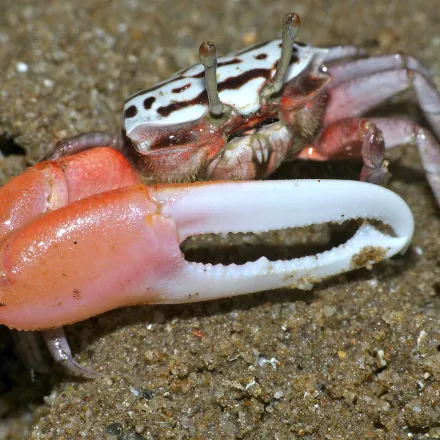
Fiddler Crab Common
Austruca annulipes
Fiddler crabs emerge in thousands on mangrove mudflats at low tide, sifting sediment for organic matter and rolling the cleaned sand into pellets. Males wave a single hugely enlarged claw in a species-specific rhythm to attract mates and warn rivals.
Where: Lagoons, estuaries and mangrove creeks at Puttalam, Negombo and Kalametiya. Best: Year round.
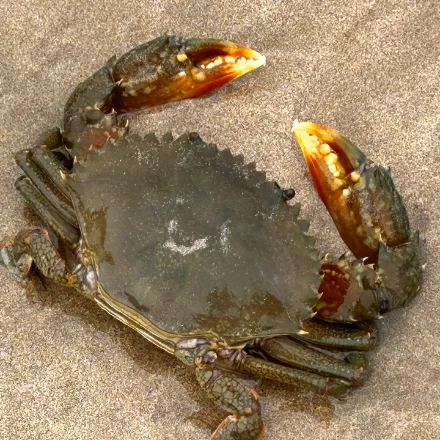
Giant Mud Crab Common
Scylla serrata
Mud crabs live in burrows among mangrove roots, emerging on the tide to hunt molluscs, crustaceans and carrion. Large males reach 3 kg with claws powerful enough to break heavy shell.
Where: Lagoons, estuaries and mangrove creeks at Puttalam, Negombo and Kalametiya. Best: Year round.
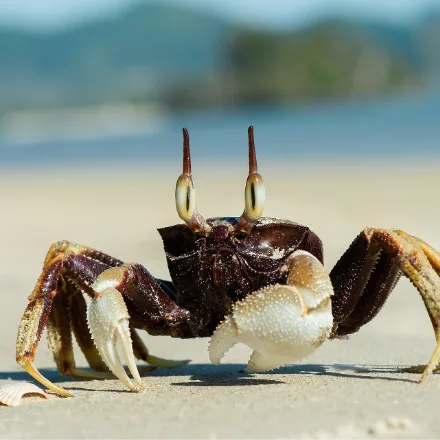
Horn-eyed Ghost Crab Common
Ocypode ceratophthalmus
Ghost crabs dig spiral burrows above the tideline and emerge at dusk to scavenge, sprinting sideways across open sand. Males produce a rasping stridulation from inside the burrow to warn off rivals.
Where: Rocky shores, tide pools and the intertidal on both coasts. Best: Year round. The crab that sprints across the sand at Rekawa while you are waiting for a turtle. Also on: Tangalle and Kalametiya, Hikkaduwa and Unawatuna, Rekawa and Kosgoda.
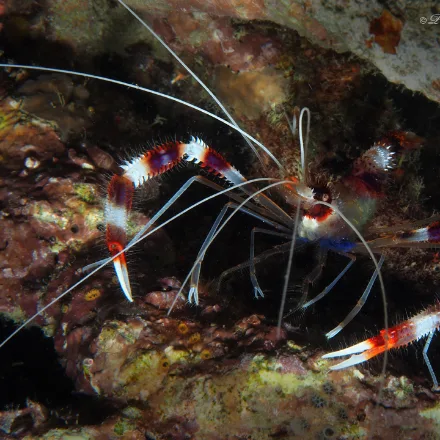
Banded Coral Shrimp Regular
Stenopus hispidus
A striking red-and-white banded shrimp with long white antennae and slender pincers, living in reef crevices, usually in pairs. It picks parasites and dead tissue from fish that visit its cleaning station.
Where: Coral reef and boulder slopes on both coasts. Best: November to April on the west and south, May to September on the east.
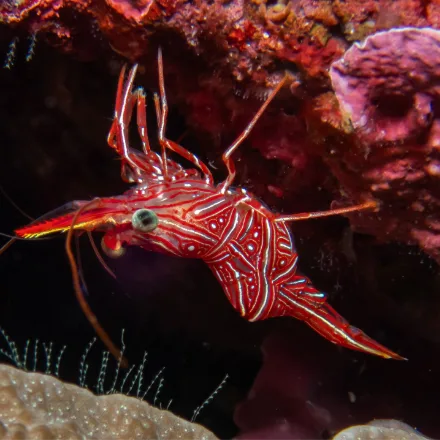
Durban Dancing Shrimp Regular
Rhynchocinetes durbanensis
Durban dancing shrimp aggregate in dark overhangs and caves by day, emerging at night to scavenge. The hinged rostrum tips upward, which is unusual among shrimp and gives the group its name of hingebeak shrimp.
Where: Coral reef and boulder slopes on both coasts. Best: November to April on the west and south, May to September on the east.
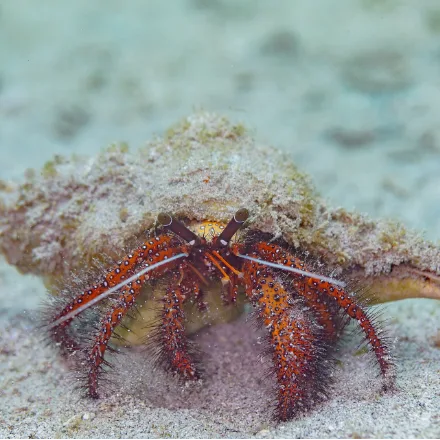
White-spotted Hermit Crab Regular
Dardanus megistos
White-spotted hermit crabs are large, hairy and vivid scarlet with black-ringed white spots, occupying big gastropod shells. They scavenge, hunt and occasionally attack live snails to acquire a better home.
Where: Shallow reef flats and coral heads at Bar Reef and around Pigeon Island. Best: November to April on the west and south, May to September on the east.
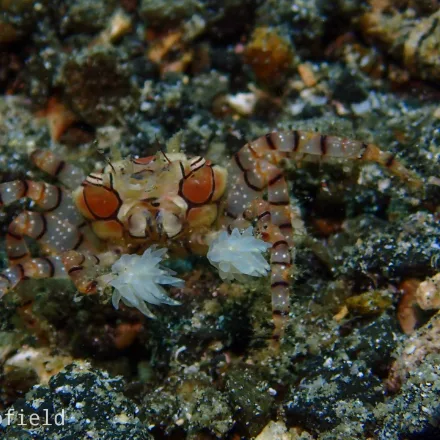
Boxer Crab Occasional
Lybia tessellata
Boxer crabs hold a small anemone permanently in each pincer, using the stinging tentacles as both weapon and mop for collecting food. Experiments show a crab deprived of one anemone will split the remaining one, and both halves regenerate.
Where: Coral reef and boulder slopes on both coasts. Best: November to April on the west and south, May to September on the east.
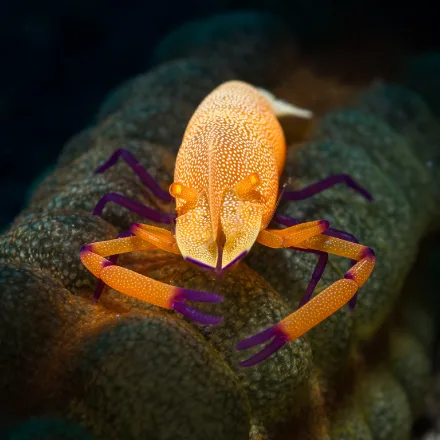
Emperor Shrimp Occasional
Zenopontonia rex
Emperor shrimp live commensally on large sea cucumbers, Spanish dancers and other slow-moving invertebrates. The host provides transport and protection while the shrimp picks food from the sediment it disturbs.
Where: Coral reef and boulder slopes on both coasts. Best: November to April on the west and south, May to September on the east.
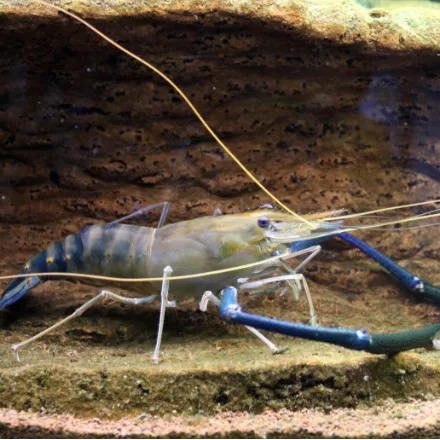
Giant Freshwater Prawn Occasional
Macrobrachium rosenbergii
A very large, translucent blue-grey prawn, the males carrying a pair of enormously elongated blue claws that can exceed the length of the body.
Where: Shallow river and lagoon margins after dark, by torchlight. Best: Year round, after dark. Torchlight picks up the eyes first. The claws are what you remember. Also on: Gal Oya National Park, Arugam Bay and the East Coast Lagoons, Kitulgala and the Makandawa Rainforest.
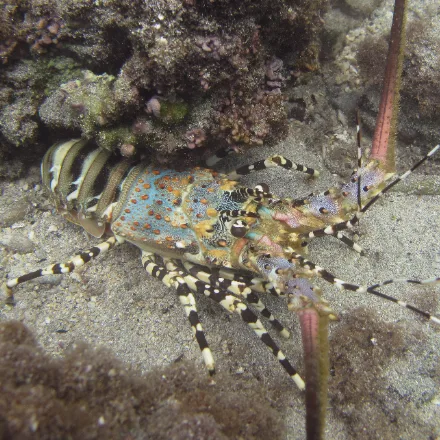
Ornate Spiny Lobster Occasional
Panulirus ornatus
Ornate spiny lobsters are the largest in the region, reaching 60 cm and 8 kg. Adults undertake mass breeding migrations, forming queues in which each animal keeps antennal contact with the one in front.
Where: Reef and rubble after dark, on a night dive. Best: November to April on the west and south, May to September on the east. Heavily fished. Numbers on accessible reef are a fraction of what older divers describe. Also on: The Great and Little Basses Reefs.
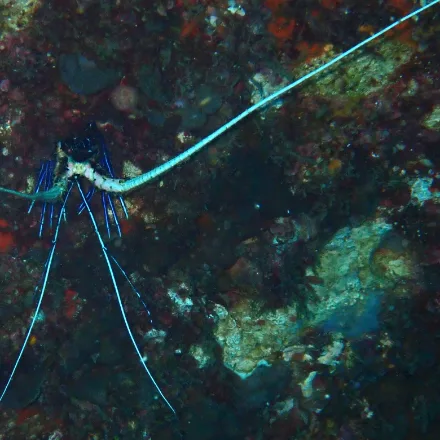
Painted Spiny Lobster Occasional
Panulirus versicolor
Painted spiny lobsters shelter under coral heads by day with only their long white antennae protruding, and hunt molluscs and worms at night. Rubbing the base of the antenna against a file on the shell produces a loud stick-slip rasp that works even underwater against a wet predator.
Where: Reef and rubble after dark, on a night dive. Best: November to April on the west and south, May to September on the east. Heavily fished. Numbers on accessible reef are a fraction of what older divers describe.
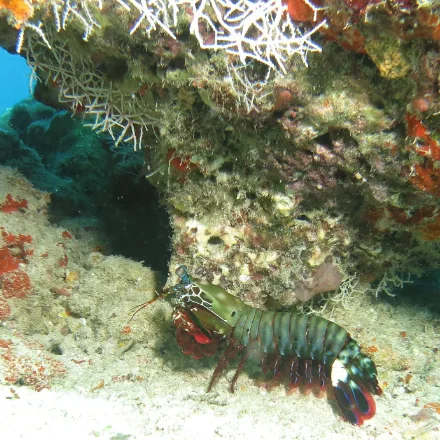
Peacock Mantis Shrimp Occasional
Odontodactylus scyllarus
A stocky, brilliantly coloured crustacean in green, red and blue with club shaped forelimbs. It strikes prey with a blow so fast it boils the water, and its eyes carry more colour receptors than any known animal.
Where: Sand and rubble patches between coral heads. Best: November to April on the west and south, May to September on the east. The strike is one of the fastest movements in the animal kingdom and can crack a finger.
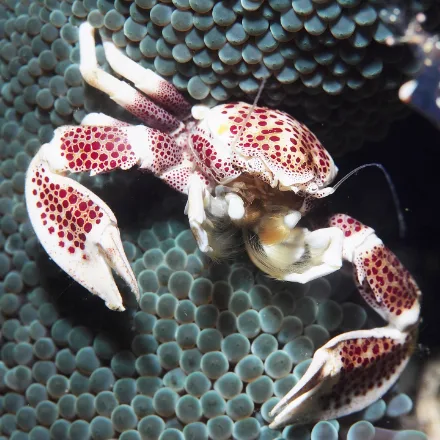
Porcelain Anemone Crab Occasional
Neopetrolisthes maculatus
A small, smooth crab, cream spotted with red or brown, living among the tentacles of large sea anemones. It sweeps the water with feathery mouth appendages to catch plankton.
Where: Coral reef and boulder slopes on both coasts. Best: November to April on the west and south, May to September on the east.
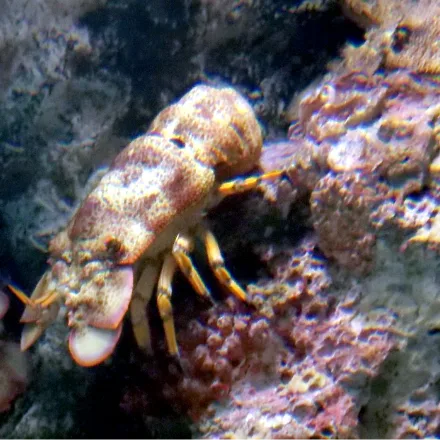
Slipper Lobster Occasional
Scyllarides squammosus
Slipper lobsters have no long antennae at all; the second pair is modified into wide flat plates used for digging and defence. They hide under ledges and in sand by day and feed on molluscs at night, prising bivalves open with the edge of the carapace.
Where: Reef and rubble after dark, on a night dive. Best: November to April on the west and south, May to September on the east. Heavily fished. Numbers on accessible reef are a fraction of what older divers describe.
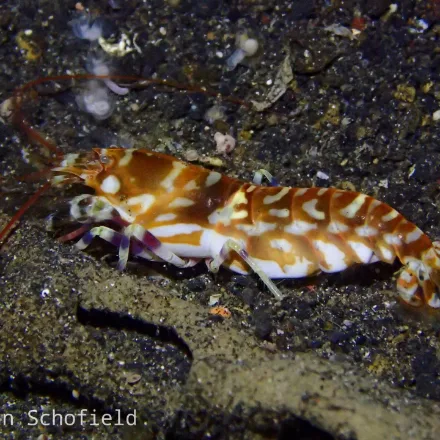
Tiger Pistol Shrimp Occasional
Alpheus bellulus
Pistol shrimp close a specialised claw so fast that the water jet cavitates, collapsing with a bang loud enough to stun small prey. The collapsing bubble produces a flash of light and momentary temperatures of thousands of degrees.
Where: Coral reef and boulder slopes on both coasts. Best: November to April on the west and south, May to September on the east.
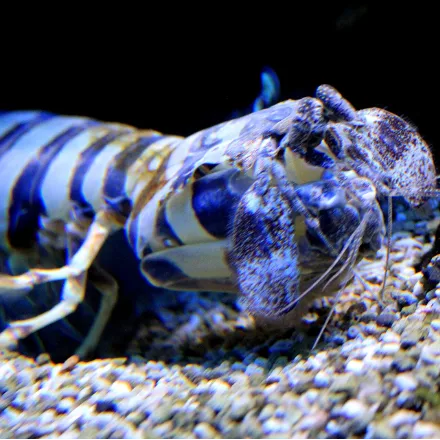
Zebra Mantis Shrimp Occasional
Lysiosquillina maculata
Zebra mantis shrimp are spearers rather than smashers, firing barbed raptorial claws to impale passing fish from a burrow mouth. Pairs are monogamous, sharing and defending the same burrow for decades.
Where: Sand and rubble patches between coral heads. Best: November to April on the west and south, May to September on the east. The strike is one of the fastest movements in the animal kingdom and can crack a finger.
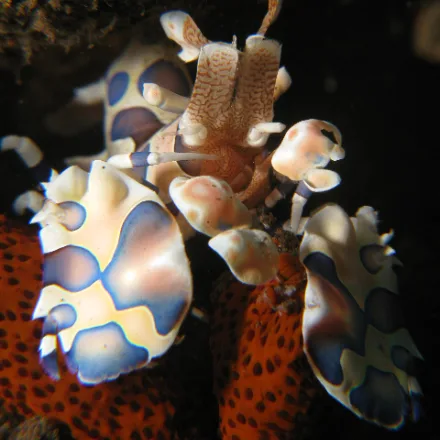
Harlequin Shrimp Rare
Hymenocera picta
A small, flattened shrimp, cream splashed with blue-edged pink or purple blotches, with broad petal-like claws and paddle antennae. It lives in pairs and preys exclusively on sea stars.
Where: Coral reef and boulder slopes on both coasts. Best: November to April on the west and south, May to September on the east. Eats starfish and nothing else. Sri Lanka's animal is Hymenocera elegans, the Indian Ocean form.
Sri Lanka Tree Crab Very rare
Perbrinckia scansor
A small, dark, long-legged freshwater crab with an unusually high-domed carapace, found in water-filled cavities well above the forest floor.
Where: Rainwater held in hollows and rot holes of large wet zone forest trees. Best: Year round; females at ground level February and March. Do not go pulling apart tree hollows to look. The best chance is a guide who already knows a tree, or a female on the ground in the breeding months. Also on: Sinharaja Forest Reserve, Kanneliya Forest Reserve.
Other invertebrates
7 species
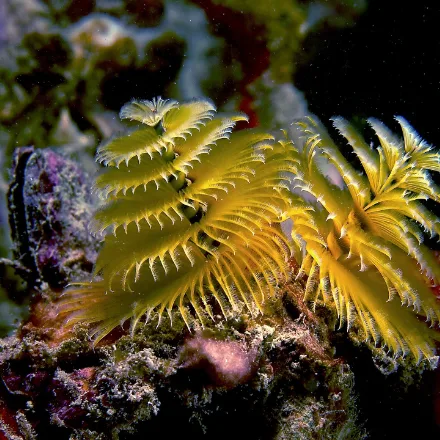
Christmas Tree Worm Common
Spirobranchus giganteus
A small tube-dwelling worm that extends two brightly coloured, spiral crowns from a burrow bored into living coral. The crowns filter plankton and also serve as gills, and snap out of sight instantly when disturbed.
Where: Shallow reef flats and coral heads at Bar Reef and around Pigeon Island. Best: November to April on the west and south, May to September on the east. Wave a hand near one and the whole colony vanishes at once. Also on: Trincomalee and Pigeon Island, Hikkaduwa and Unawatuna.
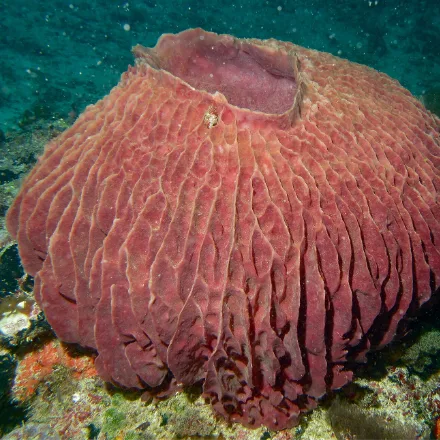
Giant Barrel Sponge Regular
Xestospongia testudinaria
Giant barrel sponges pump water through a network of chambers, straining out bacteria and organic particles and expelling clean water from the central opening. A large individual processes many times its own volume every minute.
Where: Deeper reef, wrecks and the Great and Little Basses reefs. Best: November to April on the west and south, May to September on the east.
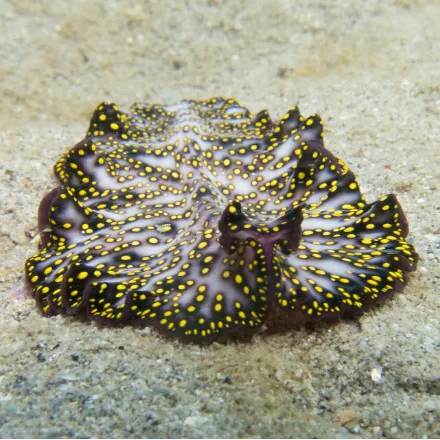
Persian Carpet Flatworm Occasional
Pseudobiceros bedfordi
Persian carpet flatworms glide over the reef on a film of cilia, engulfing tunicates and small invertebrates. Mating takes the form of penis fencing, in which each animal tries to inseminate the other and avoid being inseminated, since bearing the eggs is the costlier role.
Where: Coral reef and boulder slopes on both coasts. Best: November to April on the west and south, May to September on the east.
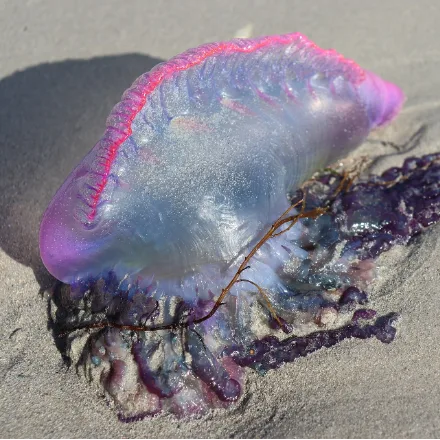
Portuguese Man o' War Occasional
Physalia physalis
The man o' war is a siphonophore, a floating colony in which separate zooids handle flotation, feeding, defence and reproduction. A gas-filled blue float catches the wind while tentacles up to thirty metres long trail below.
Where: Rocky shores, tide pools and the intertidal on both coasts. Best: November to April on the west and south coasts. Strandings come in on the monsoon wind. The sting works on the beach too.
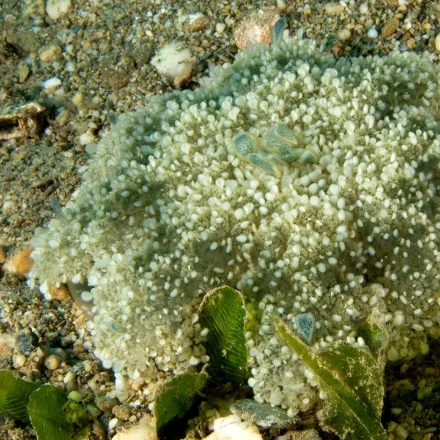
Upside-down Jellyfish Occasional
Cassiopea andromeda
Upside-down jellyfish rest bell-down on shallow mud and seagrass, exposing frilled oral arms packed with symbiotic algae to the sun. They also release clouds of stinging mucus into the water, which causes the itching that swimmers call stinging water.
Where: Lagoons, estuaries and mangrove creeks at Puttalam, Negombo and Kalametiya. Best: Year round.
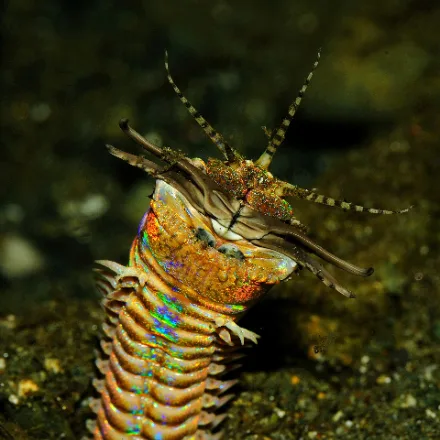
Bobbit Worm Rare
Eunice aphroditois
Bobbit worms line a burrow in sand or rubble and wait with only five antennae exposed, seizing passing fish with scissor-like jaws. The strike is fast enough to sever prey outright, and the worm drags what it catches underground.
Where: Reef and rubble after dark, on a night dive. Best: November to April on the west and south, May to September on the east.
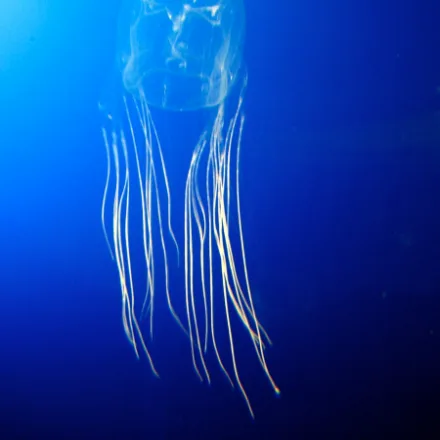
Box Jellyfish Rare
Chironex indrasaksajiae
Box jellyfish have a cube-shaped bell with tentacles trailing from each corner, and swim actively rather than drifting. The venom attacks skin, nerves and heart simultaneously, and severe stings can be fatal within minutes.
Where: Rocky shores, tide pools and the intertidal on both coasts. Best: Year round. Medically serious. Stings are reported from Sri Lankan beaches, mostly in the wet months.
Planning
Reef invertebrates reward slow swimming in shallow water more than depth. Spend a whole session on twenty metres of reef edge rather than covering ground, and look into crevices and under overhangs rather than out into open water. Many of the best animals here are nocturnal, so a guided night dive doubles the list. Coral takes decades to replace what a single fin kick removes, and several of the corals on this page are already listed as threatened. On land, the crab lives in tree hollows, and the hollows are the whole of its habitat.
Find snorkelling, diving and rainforest trips in Sri Lanka
Some links on this page are affiliate links. If you book through them, Wildseer may earn a small commission at no extra cost to you.
Frequently asked questions
What invertebrates can you see on Sri Lankan reefs?
Hard and soft corals, sea fans, nudibranchs including the Spanish dancer, cleaner and mantis shrimp, cuttlefish and squid, sea stars, brittle stars and sea cucumbers. Pigeon Island and the Bar Reef carry the fullest range.
Where is the best reef in Sri Lanka?
Pigeon Island off Trincomalee is the most intact and works from May to September. The Bar Reef off Kalpitiya is the largest reef system in the country and works from November to April. Both are national marine protected areas.
Are Sri Lanka’s coral reefs damaged?
Parts of them badly. The 1998 and 2016 bleaching events killed large areas of shallow coral, and damage from anchoring, trampling and destructive fishing continues in places. Recovery is visible at the protected sites, which is a strong argument for visiting those rather than the accessible but degraded ones.
Is there a crab that climbs trees in Sri Lanka?
Yes. It is a freshwater crab that lives in rainwater held inside hollow forest trees, completing almost its whole life cycle above ground, and it is the only known tree-climbing freshwater crab on the island. Females carrying young come down to ground level around February and March.
Explore Sri Lanka wildlife by group
 Mammals of Sri Lanka
 Birds of Sri Lanka
 Reptiles and amphibians of Sri Lanka
 Fish of Sri Lanka
 Sharks and rays of Sri Lanka
 Insects and spiders of Sri Lanka
Part of the Wildlife in Sri Lanka guide.
Explore Sri Lanka wildlife by place
- Adams Peak wildlife
- Arugam Bay marine life
- Bundala wildlife
- Colombo wildlife
- Ella wildlife
- Gal Oya wildlife
- Great Basses marine life
- Hikkaduwa marine life
- Horton Plains wildlife
- Jaffna wildlife
- Kalpitiya marine life
- Kandy wildlife
- Kanneliya wildlife
- Kitulgala wildlife
- Knuckles wildlife
- Kumana wildlife
- Mannar marine life
- Minneriya wildlife
- Mirissa marine life
- Rekawa marine life
- Sigiriya wildlife
- Sinharaja wildlife
- Tangalle marine life
- Trincomalee marine life
- Udawalawe wildlife
- Wasgamuwa wildlife
- Wilpattu wildlife
- Yala wildlife
Image credits
Square thumbnails are cropped from the original. Wide banner images are cropped to a band. Other images are resized only. No other changes have been made.
- Nudibranch crossing the sea floor: Chris Spain | Pexels Licence, cropped
- Peacock Mantis Shrimp (resized): Jens Petersen | CC BY 2.5, cropped
- Spanish Dancer (resized): Rickard Zerpe | CC BY 2.0, cropped
- Sri Lanka Tree Crab: (c) achintha92, some rights reserved (CC BY) | CC BY 4.0, cropped
- Harlequin Shrimp (cropped): Nathalie Rodrigues | CC BY-SA 4.0
- Giant sea fan (resized): Frederic Ducarme | CC BY-SA 4.0, cropped
- Blue Dragon Nudibranch (cropped to square): Elias Levy | CC BY 2.0, cropped
- Chromodoris Nudibranch (cropped to square): Steve Childs | CC BY 2.0, cropped
- Small Giant Clam: RevolverOcelot | CC BY-SA 3.0, cropped
- Varicose Phyllidia (cropped to square): Rickard Zerpe | CC BY 2.0, cropped
- Wedge Sea Hare (cropped to square): Rickard Zerpe | CC BY 2.0, cropped
- Bigfin Reef Squid (cropped to square): Nhobgood | CC BY-SA 3.0, cropped
- Broadclub Cuttlefish (cropped to square): MDC Seamarc Maldives | CC BY-SA 4.0, cropped
- Coconut Octopus (cropped to square): Nhobgood Nick Hobgood | CC BY-SA 3.0, cropped
- Day Octopus (cropped to square): Pauline Walsh Jacobson | CC BY 4.0, cropped
- Giant Spider Conch (cropped to square): Ahmed Abdul Rahman | CC BY-SA 4.0, cropped
- Pharaoh Cuttlefish (cropped to square): portioid | CC BY-SA 4.0, cropped
- Spanish Dancer (cropped to square): Rickard Zerpe | CC BY 2.0, cropped
- Sri Lanka Tree Snail: Moni Ostermaier | CC BY-SA 4.0, cropped
- Thorny Oyster (cropped to square): Quality image This image has been assessed using the Quality image guidelines and is considered a Quality image . | CC BY-SA 4.0, cropped
- Tiger Cowrie (cropped to square): Poco a poco | CC BY-SA 4.0, cropped
- Geographic Cone Snail (cropped to square): Kai Squires | CC BY 4.0, cropped
- Textile Cone Snail (cropped to square): Richard Ling | CC BY-SA 3.0, cropped
- Triton’s Trumpet (cropped to square): AntanO | CC BY-SA 4.0, cropped
- Boulder Porites (cropped to square): Ryan McMinds | CC BY 2.0, cropped
- Brain Coral (cropped to square): Nhobgood Nick Hobgood | CC BY-SA 3.0, cropped
- Encrusting Zoanthid (resized): Diego Delso | CC BY-SA 4.0, cropped
- Mushroom Coral (cropped to square): Chaloklum Diving | CC BY 3.0, cropped
- Staghorn Coral (cropped to square): MDC Seamarc Maldives | CC BY-SA 4.0, cropped
- Table Coral (cropped to square): MDC Seamarc Maldives | CC BY-SA 4.0, cropped
- Blue Coral (cropped to square): Frédéric Ducarme | CC BY-SA 4.0, cropped
- Bulb-tentacle Anemone (cropped to square): Nhobgood Nick Hobgood | CC BY-SA 3.0, cropped
- Carnation Soft Coral (cropped to square): Rickard Zerpe | CC BY 2.0, cropped
- Carnation Tree Coral (cropped to square): Rickard Zerpe | CC BY 2.0, cropped
- Fire Coral (cropped to square): Philippe Bourjon | CC BY-SA 3.0, cropped
- Giant Sea Fan (cropped to square): Frederic Ducarme | CC BY-SA 4.0, cropped
- Haddon’s Carpet Anemone (resized): Singgih Afifa Putra | CC BY-SA 4.0, cropped
- Magnificent Sea Anemone (cropped to square): Bernard DUPONT | CC BY-SA 2.0, cropped
- Orange Sun Coral (cropped to square): Alberto Alcalá | CC BY 4.0, cropped
- Toadstool Leather Coral (resized): Diego Delso | CC BY-SA 4.0, cropped
- Anchor Coral (cropped to square): Nick Hobgood | CC BY-SA 3.0, cropped
- Black Coral (cropped to square): Fernándo Herranz Martín | GPL, cropped
- Bubble Coral (cropped to square): Bernard DUPONT from FRANCE | CC BY-SA 2.0, cropped
- Sea Pen (cropped to square): Chaloklum Diving | CC BY 3.0, cropped
- Sea Whip Coral (cropped to square): Bernard DUPONT from FRANCE | CC BY-SA 2.0, cropped
- Tube Anemone (cropped to square): Bernard DUPONT from FRANCE | CC BY-SA 2.0, cropped
- Blue Sea Star (cropped to square): Bernard DUPONT | CC BY-SA 2.0, cropped
- Cushion Star (cropped to square): Cricket Raspet | CC BY 4.0, cropped
- Granulated Sea Star (cropped to square): Bernard DUPONT from FRANCE | CC BY-SA 2.0, cropped
- Long-spined Sea Urchin (cropped to square): Frédéric Ducarme | CC BY-SA 4.0, cropped
- Pincushion Urchin (cropped to square): 紫堂 | CC BY-SA 2.0, cropped
- Slate Pencil Urchin (cropped to square): Nhobgood Nick Hobgood | CC BY-SA 3.0, cropped
- Blue Brittle Star (cropped to square): Georgina Jones | CC BY-SA 4.0, cropped
- Feather Star (cropped to square): Bernard DUPONT | CC BY-SA 2.0, cropped
- Pineapple Sea Cucumber (cropped to square): Aexander Vasenin | CC BY-SA 3.0, cropped
- Sea Cucumber (cropped to square): Rpillon | CC BY 4.0, cropped
- Crown-of-thorns Starfish (cropped to square): The Cosmonaut | CC BY-SA 2.5 ca, cropped
- Fire Urchin (cropped to square): prilfish | CC BY 2.0, cropped
- Flower Urchin (resized): Diego Delso | CC BY-SA 4.0, cropped
- Basket Star (cropped to square): Jerome Paillet (IFREMER, Laboratoire d'Océanographie Physique et Spatiale, Centre Bretagne - ZI de la Pointe du Diable - CS 10070 - 29280 Plouzané) | CC BY 4.0, cropped
- Fiddler Crab (cropped to square): Bernard DUPONT from FRANCE | CC BY-SA 2.0, cropped
- Giant Mud Crab (cropped to square): Scott Edmunds | CC0, cropped
- Horn-eyed Ghost Crab (cropped to square): Rushenb | CC BY-SA 3.0, cropped
- Banded Coral Shrimp (cropped to square): Pauline Walsh Jacobson | CC BY 4.0, cropped
- Durban Dancing Shrimp (cropped to square): portioid | CC BY-SA 4.0, cropped
- White-spotted Hermit Crab (cropped to square): Diego Delso | CC BY-SA 4.0, cropped
- Boxer Crab (cropped to square): Dan Schofield | CC BY 4.0, cropped
- Emperor Shrimp (cropped to square): Christian Gloor from Wakatobi Dive Resort, Indonesia | CC BY 2.0, cropped
- Giant Freshwater Prawn: This illustration was made by Citron You must credit this : Citron / CC-BY-SA-3.0 | CC BY-SA 3.0, cropped
- Ornate Spiny Lobster: Elisabeth Morcel | CC BY-SA 4.0, cropped
- Painted Spiny Lobster (cropped to square): Jean-Paul Boerekamps | CC0, cropped
- Peacock Mantis Shrimp (cropped to square): Jerome Paillet (IFREMER, Laboratoire d'Océanographie Physique et Spatiale, Centre Bretagne - ZI de la Pointe du Diable - CS 10070 - 29280 Plouzané) | CC BY 4.0, cropped
- Porcelain Anemone Crab (cropped to square): Rickard Zerpe | CC BY-SA 2.0, cropped
- Slipper Lobster (cropped to square): George Berninger Jr. | CC BY-SA 3.0, cropped
- Tiger Pistol Shrimp (cropped to square): Dan Schofield | CC BY 4.0, cropped
- Zebra Mantis Shrimp (cropped to square): Karelj | CC0, cropped
- Harlequin Shrimp (cropped to square): prilfish | CC BY 2.0, cropped
- Christmas Tree Worm (cropped to square): Nhobgood Nick Hobgood | CC BY-SA 3.0, cropped
- Giant Barrel Sponge (cropped to square): Bernard DUPONT from FRANCE | CC BY-SA 2.0, cropped
- Persian Carpet Flatworm (cropped to square): Matthias Liffers | CC BY 2.0, cropped
- Portuguese Man o’ War (cropped to square): Fernando Losada Rodríguez | CC BY-SA 4.0, cropped
- Upside-down Jellyfish (cropped to square): Nhobgood Nick Hobgood | CC BY-SA 3.0, cropped
- Bobbit Worm (cropped to square): Jenny | CC BY 2.0, cropped
- Box Jellyfish (cropped to square): Guido Gautsch , Melbourne, Australia | CC BY-SA 2.0, cropped
- Purple-faced langur in the canopy: kanchana Amilani | Unsplash License, cropped
- White-throated kingfisher on a branch: kanchana Amilani | Unsplash License, cropped
- Green forest lizard in breeding colour: Anas Mohamed Nuski | Pexels Licence, cropped
- Bluestripe snapper over a reef: Jeffry Surianto | Pexels Licence, cropped
- Reef manta rays near the surface: Emma Li | Pexels Licence, cropped
- Clipper butterfly on a leaf: Pixabay | Pexels Licence, cropped
Square thumbnails are cropped from the original. Wide banner images are cropped to a band. Other images are resized only. No other changes have been made.
- Nudibranch crossing the sea floor: Chris Spain | Pexels Licence, cropped
- Peacock Mantis Shrimp (resized): Jens Petersen | CC BY 2.5, cropped
- Spanish Dancer (resized): Rickard Zerpe | CC BY 2.0, cropped
- Sri Lanka Tree Crab: (c) achintha92, some rights reserved (CC BY) | CC BY 4.0, cropped
- Harlequin Shrimp (cropped): Nathalie Rodrigues | CC BY-SA 4.0
- Giant sea fan (resized): Frederic Ducarme | CC BY-SA 4.0, cropped
- Blue Dragon Nudibranch (cropped to square): Elias Levy | CC BY 2.0, cropped
- Chromodoris Nudibranch (cropped to square): Steve Childs | CC BY 2.0, cropped
- Small Giant Clam: RevolverOcelot | CC BY-SA 3.0, cropped
- Varicose Phyllidia (cropped to square): Rickard Zerpe | CC BY 2.0, cropped
- Wedge Sea Hare (cropped to square): Rickard Zerpe | CC BY 2.0, cropped
- Bigfin Reef Squid (cropped to square): Nhobgood | CC BY-SA 3.0, cropped
- Broadclub Cuttlefish (cropped to square): MDC Seamarc Maldives | CC BY-SA 4.0, cropped
- Coconut Octopus (cropped to square): Nhobgood Nick Hobgood | CC BY-SA 3.0, cropped
- Day Octopus (cropped to square): Pauline Walsh Jacobson | CC BY 4.0, cropped
- Giant Spider Conch (cropped to square): Ahmed Abdul Rahman | CC BY-SA 4.0, cropped
- Pharaoh Cuttlefish (cropped to square): portioid | CC BY-SA 4.0, cropped
- Spanish Dancer (cropped to square): Rickard Zerpe | CC BY 2.0, cropped
- Sri Lanka Tree Snail: Moni Ostermaier | CC BY-SA 4.0, cropped
- Thorny Oyster (cropped to square): Quality image This image has been assessed using the Quality image guidelines and is considered a Quality image . | CC BY-SA 4.0, cropped
- Tiger Cowrie (cropped to square): Poco a poco | CC BY-SA 4.0, cropped
- Geographic Cone Snail (cropped to square): Kai Squires | CC BY 4.0, cropped
- Textile Cone Snail (cropped to square): Richard Ling | CC BY-SA 3.0, cropped
- Triton’s Trumpet (cropped to square): AntanO | CC BY-SA 4.0, cropped
- Boulder Porites (cropped to square): Ryan McMinds | CC BY 2.0, cropped
- Brain Coral (cropped to square): Nhobgood Nick Hobgood | CC BY-SA 3.0, cropped
- Encrusting Zoanthid (resized): Diego Delso | CC BY-SA 4.0, cropped
- Mushroom Coral (cropped to square): Chaloklum Diving | CC BY 3.0, cropped
- Staghorn Coral (cropped to square): MDC Seamarc Maldives | CC BY-SA 4.0, cropped
- Table Coral (cropped to square): MDC Seamarc Maldives | CC BY-SA 4.0, cropped
- Blue Coral (cropped to square): Frédéric Ducarme | CC BY-SA 4.0, cropped
- Bulb-tentacle Anemone (cropped to square): Nhobgood Nick Hobgood | CC BY-SA 3.0, cropped
- Carnation Soft Coral (cropped to square): Rickard Zerpe | CC BY 2.0, cropped
- Carnation Tree Coral (cropped to square): Rickard Zerpe | CC BY 2.0, cropped
- Fire Coral (cropped to square): Philippe Bourjon | CC BY-SA 3.0, cropped
- Giant Sea Fan (cropped to square): Frederic Ducarme | CC BY-SA 4.0, cropped
- Haddon’s Carpet Anemone (resized): Singgih Afifa Putra | CC BY-SA 4.0, cropped
- Magnificent Sea Anemone (cropped to square): Bernard DUPONT | CC BY-SA 2.0, cropped
- Orange Sun Coral (cropped to square): Alberto Alcalá | CC BY 4.0, cropped
- Toadstool Leather Coral (resized): Diego Delso | CC BY-SA 4.0, cropped
- Anchor Coral (cropped to square): Nick Hobgood | CC BY-SA 3.0, cropped
- Black Coral (cropped to square): Fernándo Herranz Martín | GPL, cropped
- Bubble Coral (cropped to square): Bernard DUPONT from FRANCE | CC BY-SA 2.0, cropped
- Sea Pen (cropped to square): Chaloklum Diving | CC BY 3.0, cropped
- Sea Whip Coral (cropped to square): Bernard DUPONT from FRANCE | CC BY-SA 2.0, cropped
- Tube Anemone (cropped to square): Bernard DUPONT from FRANCE | CC BY-SA 2.0, cropped
- Blue Sea Star (cropped to square): Bernard DUPONT | CC BY-SA 2.0, cropped
- Cushion Star (cropped to square): Cricket Raspet | CC BY 4.0, cropped
- Granulated Sea Star (cropped to square): Bernard DUPONT from FRANCE | CC BY-SA 2.0, cropped
- Long-spined Sea Urchin (cropped to square): Frédéric Ducarme | CC BY-SA 4.0, cropped
- Pincushion Urchin (cropped to square): 紫堂 | CC BY-SA 2.0, cropped
- Slate Pencil Urchin (cropped to square): Nhobgood Nick Hobgood | CC BY-SA 3.0, cropped
- Blue Brittle Star (cropped to square): Georgina Jones | CC BY-SA 4.0, cropped
- Feather Star (cropped to square): Bernard DUPONT | CC BY-SA 2.0, cropped
- Pineapple Sea Cucumber (cropped to square): Aexander Vasenin | CC BY-SA 3.0, cropped
- Sea Cucumber (cropped to square): Rpillon | CC BY 4.0, cropped
- Crown-of-thorns Starfish (cropped to square): The Cosmonaut | CC BY-SA 2.5 ca, cropped
- Fire Urchin (cropped to square): prilfish | CC BY 2.0, cropped
- Flower Urchin (resized): Diego Delso | CC BY-SA 4.0, cropped
- Basket Star (cropped to square): Jerome Paillet (IFREMER, Laboratoire d'Océanographie Physique et Spatiale, Centre Bretagne - ZI de la Pointe du Diable - CS 10070 - 29280 Plouzané) | CC BY 4.0, cropped
- Fiddler Crab (cropped to square): Bernard DUPONT from FRANCE | CC BY-SA 2.0, cropped
- Giant Mud Crab (cropped to square): Scott Edmunds | CC0, cropped
- Horn-eyed Ghost Crab (cropped to square): Rushenb | CC BY-SA 3.0, cropped
- Banded Coral Shrimp (cropped to square): Pauline Walsh Jacobson | CC BY 4.0, cropped
- Durban Dancing Shrimp (cropped to square): portioid | CC BY-SA 4.0, cropped
- White-spotted Hermit Crab (cropped to square): Diego Delso | CC BY-SA 4.0, cropped
- Boxer Crab (cropped to square): Dan Schofield | CC BY 4.0, cropped
- Emperor Shrimp (cropped to square): Christian Gloor from Wakatobi Dive Resort, Indonesia | CC BY 2.0, cropped
- Giant Freshwater Prawn: This illustration was made by Citron You must credit this : Citron / CC-BY-SA-3.0 | CC BY-SA 3.0, cropped
- Ornate Spiny Lobster: Elisabeth Morcel | CC BY-SA 4.0, cropped
- Painted Spiny Lobster (cropped to square): Jean-Paul Boerekamps | CC0, cropped
- Peacock Mantis Shrimp (cropped to square): Jerome Paillet (IFREMER, Laboratoire d'Océanographie Physique et Spatiale, Centre Bretagne - ZI de la Pointe du Diable - CS 10070 - 29280 Plouzané) | CC BY 4.0, cropped
- Porcelain Anemone Crab (cropped to square): Rickard Zerpe | CC BY-SA 2.0, cropped
- Slipper Lobster (cropped to square): George Berninger Jr. | CC BY-SA 3.0, cropped
- Tiger Pistol Shrimp (cropped to square): Dan Schofield | CC BY 4.0, cropped
- Zebra Mantis Shrimp (cropped to square): Karelj | CC0, cropped
- Harlequin Shrimp (cropped to square): prilfish | CC BY 2.0, cropped
- Christmas Tree Worm (cropped to square): Nhobgood Nick Hobgood | CC BY-SA 3.0, cropped
- Giant Barrel Sponge (cropped to square): Bernard DUPONT from FRANCE | CC BY-SA 2.0, cropped
- Persian Carpet Flatworm (cropped to square): Matthias Liffers | CC BY 2.0, cropped
- Portuguese Man o’ War (cropped to square): Fernando Losada Rodríguez | CC BY-SA 4.0, cropped
- Upside-down Jellyfish (cropped to square): Nhobgood Nick Hobgood | CC BY-SA 3.0, cropped
- Bobbit Worm (cropped to square): Jenny | CC BY 2.0, cropped
- Box Jellyfish (cropped to square): Guido Gautsch , Melbourne, Australia | CC BY-SA 2.0, cropped
- Purple-faced langur in the canopy: kanchana Amilani | Unsplash License, cropped
- White-throated kingfisher on a branch: kanchana Amilani | Unsplash License, cropped
- Green forest lizard in breeding colour: Anas Mohamed Nuski | Pexels Licence, cropped
- Bluestripe snapper over a reef: Jeffry Surianto | Pexels Licence, cropped
- Reef manta rays near the surface: Emma Li | Pexels Licence, cropped
- Clipper butterfly on a leaf: Pixabay | Pexels Licence, cropped