
Above two thousand metres Sri Lanka turns into a different island. Horton Plains is wet grassland and stunted cloud forest, cold enough at dawn for frost, and the animals up here live nowhere lower. This is a place to walk slowly rather than drive, and almost everything worth seeing is within a few metres of the circular trail.
The bird to want is the Sri Lanka whistling thrush, an endangered endemic that works the stream crossings on the first stretch of the Baker’s Falls trail in the earliest light and is gone by mid morning. The dull-blue flycatcher sits on low mossy branches inside the forest, purple-faced langurs come out into the early sun along the trail edge, and the wood pigeon is a fast shape between canopy patches.
The reptiles are the real speciality and almost nobody looks for them. The rhino-horned lizard, the pygmy lizard and the black-lipped lizard are all highland endemics, and the black-lipped basks openly on gorse and rhododendron along the World’s End circuit. The amphibian list belongs mostly to the roadsides, gardens and cloud forest edge around Nuwara Eliya and Hakgala after dark, because the park itself is day only.
Highlights
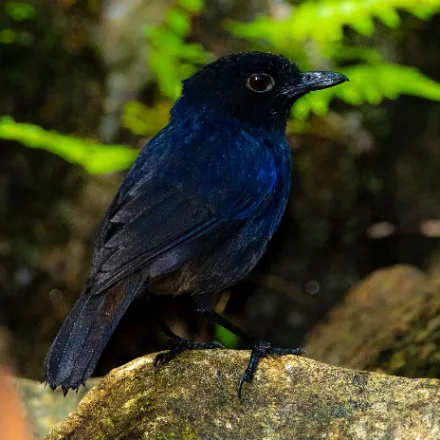
Sri Lanka Whistling Thrush
A dark highland thrush that sings from wet rock at first light and is gone by the time the mist lifts. Where: Stream crossings on the first stretch of the Baker's Falls trail. Best: Year round, the first hour after the gate opens.
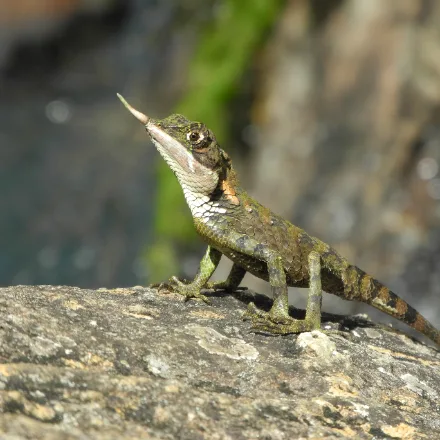
Rhino-horned Lizard
A cloud forest lizard with a curved horn on its nose, and when it is cornered it opens a bright orange mouth at you. Where: Low on mossy trunks and saplings along the Baker's Falls loop and the forest before the plateau. Best: January to March, early morning before the mist.
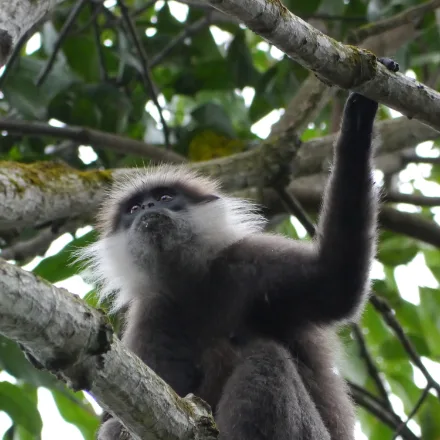
Purple-faced Langur
A shaggy black leaf monkey with white side whiskers, and the highland form is so hairy it is known as the bear monkey. Where: Forest edge along the circular trail, often sitting out in early sun. Best: Year round, morning.
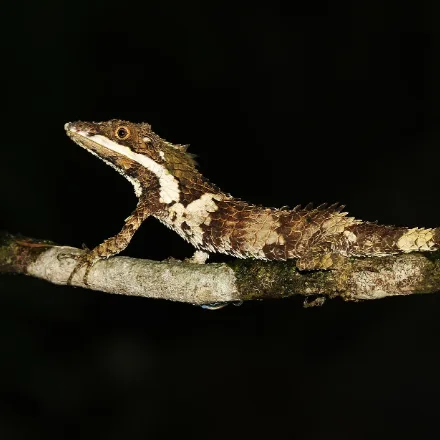
Pygmy Lizard
A moss mimic with a prehensile tail that grips like a chameleon's, and it gives birth to live young, which agamids are not supposed to do. Where: Mossy trunks in the forest sections, and in the Nuwara Eliya and Hakgala forest. Best: January to March, damp misty mornings.
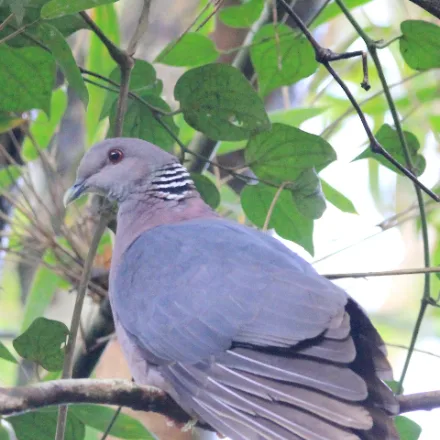
Sri Lanka Wood Pigeon
A big grey highland pigeon with a chequerboard collar, scarce and shrinking with the forest it needs. Where: Fast flight views between canopy patches along the circular trail. Best: Year round, morning.
Mammals
2 species
Purple-faced Langur Regular Endangered
Semnopithecus vetulus
A shaggy black leaf monkey with white side whiskers, and the highland form is so hairy it is known as the bear monkey.
Where: Forest edge along the circular trail, often sitting out in early sun. Best: Year round, morning. The bear monkey: the thick-coated highland form, and the one worth travelling for.
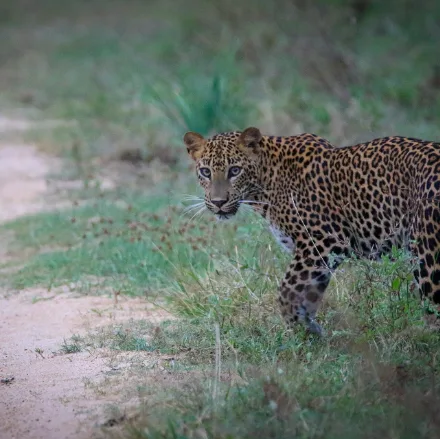
Sri Lankan Leopard Very rare Endangered
Panthera pardus kotiya
The largest leopard subspecies in the world, and on this island it is the top predator, which changes how it behaves.
Where: Montane forest and grassland edge. Best: Year round, dawn. A genuinely different habitat for the animal, and a genuinely rare sighting.
Birds
5 species
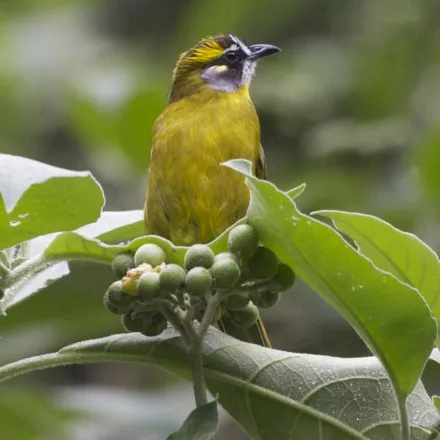
Yellow-eared Bulbul Common
Kelaartia penicillata
The bird of the highland garden, olive and yellow with an absurd yellow ear tuft sticking out sideways.
Where: Scrub and forest edge around the entrance and the plains margin. Best: Year round, morning. Often within a few metres. Unusually cooperative for a highland endemic.
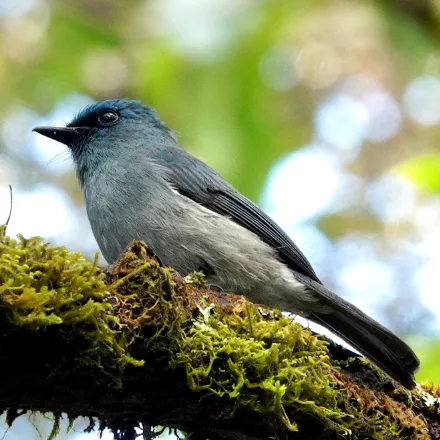
Dull-blue Flycatcher Regular Near Threatened
Eumyias sordidus
Ash-blue and quietly beautiful, sitting motionless on a mossy branch in the highland cloud forest.
Where: Low mossy branches inside the forest along the circular trail. Best: Year round, morning. Perches upright and still, then sallies and returns. Scan slowly; the difficulty is all in the looking.
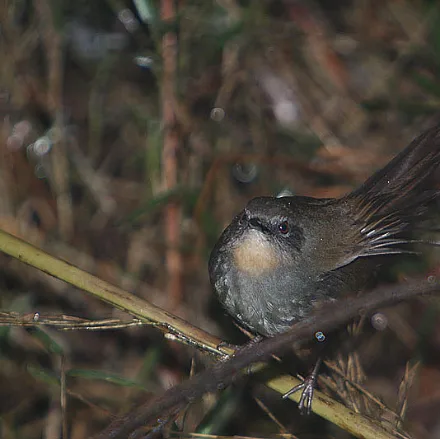
Sri Lanka Bush Warbler Occasional Near Threatened
Elaphrornis palliseri
A dull brown skulker of the highland thickets that most birders hear a dozen times and see once.
Where: Thicket edges along the circular trail and around the entrance. Best: Year round, morning. Wait at the edge of a thicket. The red eye is the confirming mark and needs a decent view.
Sri Lanka Whistling Thrush Rare Endangered
Myophonus blighi
A dark highland thrush that sings from wet rock at first light and is gone by the time the mist lifts.
Where: Stream crossings on the first stretch of the Baker's Falls trail. Best: Year round, the first hour after the gate opens. Arrive for opening or do not bother. Once visitor traffic starts it is finished for the day.
Sri Lanka Wood Pigeon Rare Vulnerable
Columba torringtoniae
A big grey highland pigeon with a chequerboard collar, scarce and shrinking with the forest it needs.
Where: Fast flight views between canopy patches along the circular trail. Best: Year round, morning. Usually a bird crossing a gap. The chequered neck patch needs a clear view to see at all.
Reptiles
5 species
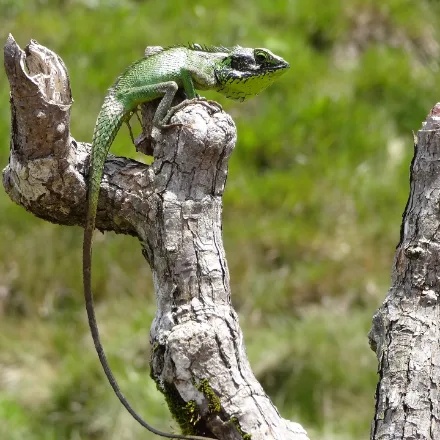
Black-lipped Lizard Common Endangered
Calotes nigrilabris
An Endangered endemic that you will see without trying, because it basks on the hedges at Horton Plains.
Where: Basking on gorse and rhododendron along the World's End circuit. Best: January to March, sunny mornings. Seen without trying, which is worth saying about an Endangered species.
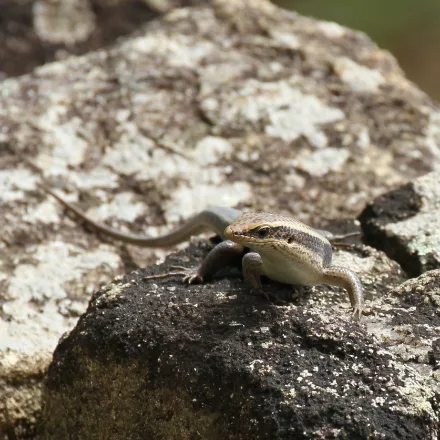
Common Lanka Skink Regular
Lankascincus fallax
The little bronze skink that shoots out from under every leaf you turn at Sinharaja belongs to a genus found nowhere but this island.
Where: Montane litter, where the animal is more likely the highland species Lankascincus taprobanensis. Best: Year round. Nine species in the genus and all of them endemic. Field identification is not straightforward.
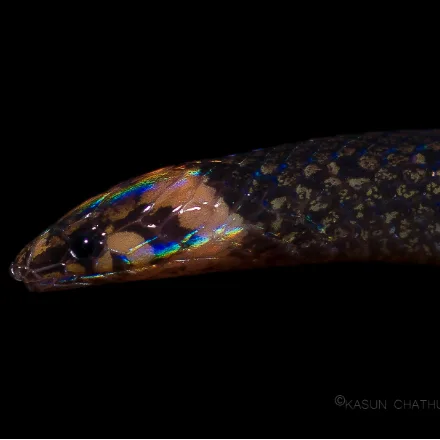
Common Rough-sided Snake Occasional Endangered
Aspidura trachyprocta
A small earthworm hunter from an entire snake genus found nowhere but Sri Lanka, and it lives under the logs at Horton Plains.
Where: Under logs and in leaf litter at the forest edge, and in Nuwara Eliya gardens. Best: Year round. Common where it occurs, despite the Endangered listing.
Rhino-horned Lizard Occasional Endangered
Ceratophora stoddartii
A cloud forest lizard with a curved horn on its nose, and when it is cornered it opens a bright orange mouth at you.
Where: Low on mossy trunks and saplings along the Baker's Falls loop and the forest before the plateau. Best: January to March, early morning before the mist. The one place where a horned lizard is a morning's target rather than an expedition.
Pygmy Lizard Rare Endangered
Cophotis ceylanica
A moss mimic with a prehensile tail that grips like a chameleon's, and it gives birth to live young, which agamids are not supposed to do.
Where: Mossy trunks in the forest sections, and in the Nuwara Eliya and Hakgala forest. Best: January to March, damp misty mornings.
Amphibians
8 species
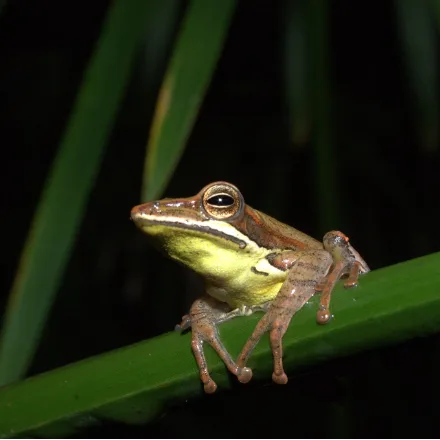
Montane Hourglass Tree Frog Regular Endangered
Taruga eques
The female kicks her own foam nest into shape with her hind legs while hanging over a highland pond, and she is nearly twice the length of the male clinging to her.
Where: Pond and marsh margins around Hakgala and Nuwara Eliya after dark. Best: December to March, night, after rain. Females are nearly twice the length of the males clinging to them.
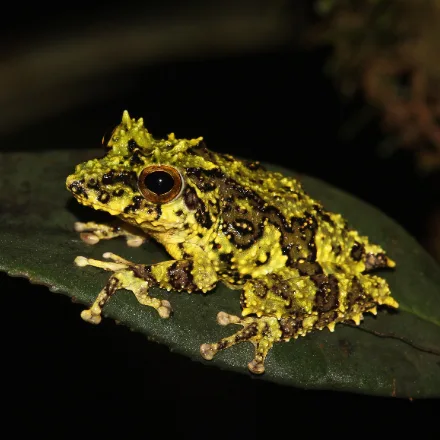
Schmarda's Shrub Frog Regular Endangered
Pseudophilautus schmarda
Horned brows and lichen-mottled skin, so perfectly matched to a mossy branch that guides find it by call and only then by eye.
Where: Roadside cloud forest edge, Hakgala and the Nuwara Eliya gardens after dark. Best: December to February and the inter-monsoon months, night. Horton Plains itself is day only, gates 06:00 to 18:00, so night frogging happens at Pattipola, Hakgala and the park margins.
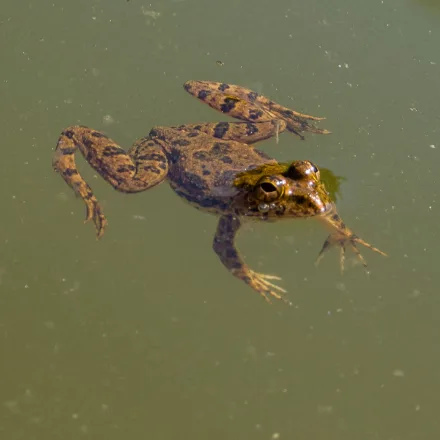
Skittering Frog Regular
Euphlyctis cyanophlyctis
Disturbed, it does not dive. It skips across the surface like a flat stone, and it can launch from open water with nothing to push against.
Where: High altitude streams and pools, at the top of its range. Best: Year round, daytime.
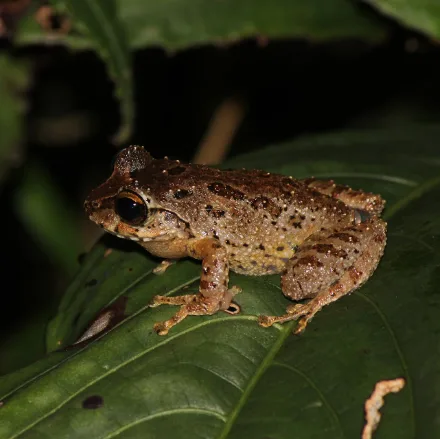
Small-eared Shrub Frog Regular Endangered
Pseudophilautus microtympanum
The small ones in the tea and the grassland are not a different species. They are teenagers, and they move into the forest when they grow up.
Where: Hakgala and the Nuwara Eliya area after dark; park margins rather than inside the park. Best: December to March, night.
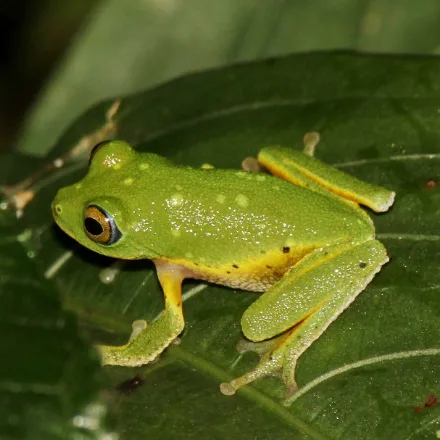
Leaf-nesting Shrub Frog Occasional Endangered
Pseudophilautus femoralis
Every other shrub frog on the island buries its eggs in soil. This one glues them to the underside of a leaf, and finding that green clutch is easier than finding the frog.
Where: Hakgala, Nuwara Eliya gardens and roadside cloud forest after dark. Best: December to March, night. Turn leaves over. Seven to twenty two green eggs stuck underneath is a positive record.
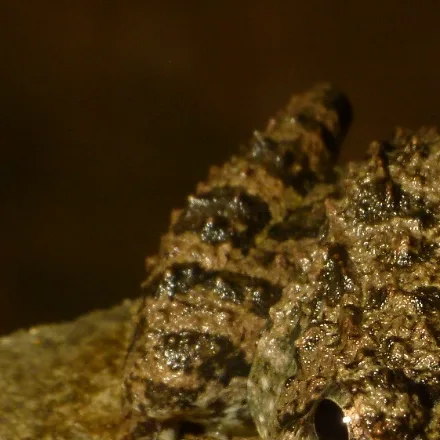
Montane Paddy Frog Occasional Endangered
Minervarya greenii
Its lowland relatives are among the commonest frogs in Sri Lankan paddy. This one made the same living at fifteen hundred metres and got stranded there.
Where: Ditches, marsh margins and field edges around Nuwara Eliya after dark. Best: December to March, night.
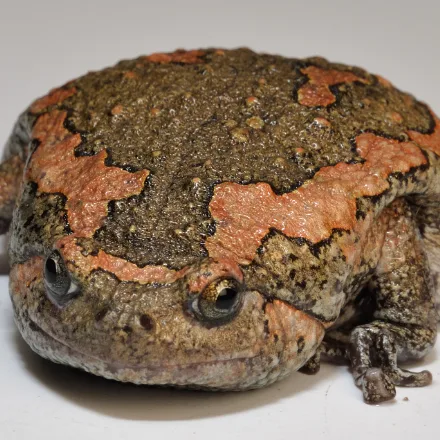
Sri Lanka Narrow-mouthed Frog Occasional Endangered
Microhyla zeylanica
While the shrub frogs on the same hilltops abandoned water entirely, this one kept its tadpoles, and the pools it needs are drying out.
Where: Pool and bog margins on the plateau, in daylight; the park is day only. Best: December to March, daytime. Night access is not permitted, so this is a daytime search at pool edges.
Pattipola Caecilian Very rare Endangered
Ichthyophis orthoplicatus
The only Sri Lankan caecilian with no warning stripe, and the one that lives highest.
Where: Damp soil and leaf litter around Pattipola and the plateau margins. Best: December to March, after rain.
Fish
1 species
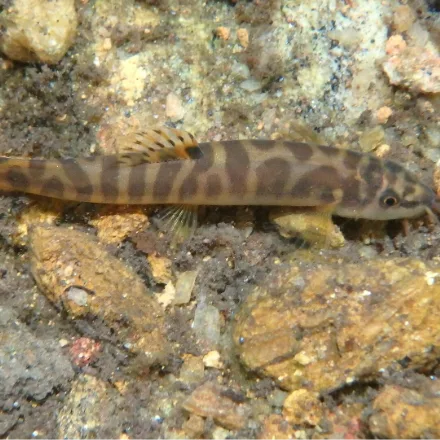
Banded Mountain Loach Regular
Schistura notostigma
A hill stream loach that spends its life under stones in current fast enough to sound like rain.
Where: Cold stony streams on the plateau and its margins. Best: December to March.
Insects
1 species
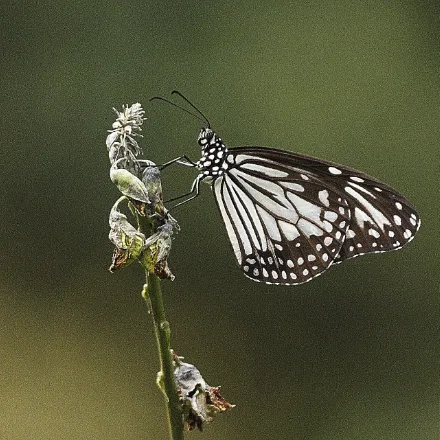
Ceylon Tiger Occasional
Parantica taprobana
A high country butterfly found only on this island, and only above about a thousand metres.
Where: Plateau grassland, the Nuwara Eliya roadsides and Victoria Park. Best: December to March.
No free photograph of the Ceylon tiger exists. The image shows the glassy tiger, Parantica aglea, a close relative photographed in southern India.
Planning
Be at the gate for opening. World’s End clouds over by about nine or ten most mornings and the whistling thrush is a first light bird, so a late start costs you both. January to March gives the clearest mornings. It is genuinely cold before sunrise and most visitors arrive underdressed. The park is day use only, which matters because much of the frog and lizard list on this page is nocturnal and is found on the roadsides, in the Nuwara Eliya gardens and around Hakgala rather than inside the boundary. The plateau grassland and the cushion bog recover slowly, and the endemic frogs breed in the pool margins beside the trail.
Compare guided walks, birding mornings and transfers for Horton Plains
Some links on this page are affiliate links. If you book through them, Wildseer may earn a small commission at no extra cost to you.
Frequently asked questions
What wildlife can you see at Horton Plains?
Highland endemics you cannot see anywhere lower: Sri Lanka whistling thrush, dull-blue flycatcher, Sri Lanka bush warbler and wood pigeon among the birds, purple-faced langur, and an endemic lizard set including the rhino-horned, pygmy and black-lipped lizards.
What time should you arrive at Horton Plains?
At opening, before first light if you can. World’s End is usually covered in cloud by mid morning and the best bird, the whistling thrush, is active only in the first hour.
When is the best time to visit Horton Plains?
January to March for the clearest mornings. Expect cold at dawn in any month, which surprises people arriving from the coast.
Can you see leopards at Horton Plains?
They are present in the montane forest and grassland edge and are very rarely seen. Nobody should plan a trip here for leopard; plan it for the endemics and treat anything else as a bonus.
Explore Sri Lanka wildlife by group
 Mammals of Sri Lanka
 Birds of Sri Lanka
 Reptiles and amphibians of Sri Lanka
 Fish of Sri Lanka
 Sharks and rays of Sri Lanka
 Reef invertebrates of Sri Lanka
 Insects and spiders of Sri Lanka
Part of the Wildlife in Sri Lanka guide.
Explore Sri Lanka wildlife by place
- Adams Peak wildlife
- Arugam Bay marine life
- Bundala wildlife
- Colombo wildlife
- Ella wildlife
- Gal Oya wildlife
- Great Basses marine life
- Hikkaduwa marine life
- Jaffna wildlife
- Kalpitiya marine life
- Kandy wildlife
- Kanneliya wildlife
- Kitulgala wildlife
- Knuckles wildlife
- Kumana wildlife
- Mannar marine life
- Minneriya wildlife
- Mirissa marine life
- Rekawa marine life
- Sigiriya wildlife
- Sinharaja wildlife
- Tangalle marine life
- Trincomalee marine life
- Udawalawe wildlife
- Wasgamuwa wildlife
- Wilpattu wildlife
- Yala wildlife
Image credits
Square thumbnails are cropped from the original. Wide banner images are cropped to a band. Other images are resized only. No other changes have been made.
- Sri Lanka Whistling Thrush: Kasun withanage | CC BY-SA 4.0, cropped
- Rhino-horned Lizard: Calynn | CC BY-SA 4.0, cropped
- Purple-faced Langur: Jeroen84 | CC BY-SA 3.0, cropped
- Pygmy Lizard: Buddhika.jm(Buddhika Mawella) | CC BY-SA 4.0, cropped
- Sri Lanka Wood Pigeon: Anuradha Amarakoon | CC BY-SA 4.0, cropped
- Sri Lankan Leopard: Vasuki Jayaweera | CC BY-SA 4.0, cropped
- Yellow-eared Bulbul: Lip Kee from Singapore, Republic of Singapore | CC BY-SA 2.0, cropped
- Dull-blue Flycatcher: desertnaturalist | CC BY 4.0, cropped
- Sri Lanka Bush Warbler: Steve Garvie from Dunfermline, Fife, Scotland | CC BY-SA 2.0, cropped
- Black-lipped Lizard: Cherubino | CC BY-SA 3.0, cropped
- Common Lanka Skink: Peyman Zehtab Fard | CC BY 2.0, cropped
- Common Rough-sided Snake: Kasun withanage | CC BY-SA 4.0, cropped
- Montane Hourglass Tree Frog: Gihan Jayaweera | CC BY-SA 3.0, cropped
- Schmarda’s Shrub Frog: Buddhika.jm(Buddhika Mawella) | CC BY-SA 4.0, cropped
- Skittering Frog: Mike Prince from Bangalore, India | CC BY 2.0, cropped
- Small-eared Shrub Frog: Buddhika.jm | CC BY 3.0, cropped
- Leaf-nesting Shrub Frog: Buddhika.jm | CC BY 3.0, cropped
- Montane Paddy Frog: Shyamal | CC BY-SA 4.0, cropped
- Sri Lanka Narrow-mouthed Frog: Biswarup Ganguly | CC BY 3.0, cropped
- Banded Mountain Loach: (c) Pieter Prins, some rights reserved (CC BY-SA) | CC BY-SA 4.0, cropped
- Ceylon Tiger: Girish Mohan | CC BY-SA 4.0, cropped
- Purple-faced langur in the canopy: kanchana Amilani | Unsplash License, cropped
- White-throated kingfisher on a branch: kanchana Amilani | Unsplash License, cropped
- Green forest lizard in breeding colour: Anas Mohamed Nuski | Pexels Licence, cropped
- Bluestripe snapper over a reef: Jeffry Surianto | Pexels Licence, cropped
- Reef manta rays near the surface: Emma Li | Pexels Licence, cropped
- Nudibranch crossing the sea floor: Chris Spain | Pexels Licence, cropped
- Clipper butterfly on a leaf: Pixabay | Pexels Licence, cropped
Square thumbnails are cropped from the original. Wide banner images are cropped to a band. Other images are resized only. No other changes have been made.
- Sri Lanka Whistling Thrush: Kasun withanage | CC BY-SA 4.0, cropped
- Rhino-horned Lizard: Calynn | CC BY-SA 4.0, cropped
- Purple-faced Langur: Jeroen84 | CC BY-SA 3.0, cropped
- Pygmy Lizard: Buddhika.jm(Buddhika Mawella) | CC BY-SA 4.0, cropped
- Sri Lanka Wood Pigeon: Anuradha Amarakoon | CC BY-SA 4.0, cropped
- Sri Lankan Leopard: Vasuki Jayaweera | CC BY-SA 4.0, cropped
- Yellow-eared Bulbul: Lip Kee from Singapore, Republic of Singapore | CC BY-SA 2.0, cropped
- Dull-blue Flycatcher: desertnaturalist | CC BY 4.0, cropped
- Sri Lanka Bush Warbler: Steve Garvie from Dunfermline, Fife, Scotland | CC BY-SA 2.0, cropped
- Black-lipped Lizard: Cherubino | CC BY-SA 3.0, cropped
- Common Lanka Skink: Peyman Zehtab Fard | CC BY 2.0, cropped
- Common Rough-sided Snake: Kasun withanage | CC BY-SA 4.0, cropped
- Montane Hourglass Tree Frog: Gihan Jayaweera | CC BY-SA 3.0, cropped
- Schmarda’s Shrub Frog: Buddhika.jm(Buddhika Mawella) | CC BY-SA 4.0, cropped
- Skittering Frog: Mike Prince from Bangalore, India | CC BY 2.0, cropped
- Small-eared Shrub Frog: Buddhika.jm | CC BY 3.0, cropped
- Leaf-nesting Shrub Frog: Buddhika.jm | CC BY 3.0, cropped
- Montane Paddy Frog: Shyamal | CC BY-SA 4.0, cropped
- Sri Lanka Narrow-mouthed Frog: Biswarup Ganguly | CC BY 3.0, cropped
- Banded Mountain Loach: (c) Pieter Prins, some rights reserved (CC BY-SA) | CC BY-SA 4.0, cropped
- Ceylon Tiger: Girish Mohan | CC BY-SA 4.0, cropped
- Purple-faced langur in the canopy: kanchana Amilani | Unsplash License, cropped
- White-throated kingfisher on a branch: kanchana Amilani | Unsplash License, cropped
- Green forest lizard in breeding colour: Anas Mohamed Nuski | Pexels Licence, cropped
- Bluestripe snapper over a reef: Jeffry Surianto | Pexels Licence, cropped
- Reef manta rays near the surface: Emma Li | Pexels Licence, cropped
- Nudibranch crossing the sea floor: Chris Spain | Pexels Licence, cropped
- Clipper butterfly on a leaf: Pixabay | Pexels Licence, cropped