
Two million people climb Adam’s Peak every season and almost none of them look sideways. The mountain sits inside the Peak Wilderness Sanctuary, one of the least explored cloud forests in South Asia, and the forest either side of the pilgrim path is more interesting than the summit.
Two animals here make the point. The starry shrub frog and the Kandyan dwarf toad were both written off as extinct for more than a century, and both were rediscovered on this massif. Neither is findable on a casual visit, and both are on this page because a page that only lists what is easy is not telling you what the place is.
What you can realistically see is the highland set. Yellow-eared bulbul and dull-blue flycatcher at the forest edge, purple-faced langurs in the lower canopy, the Sri Lanka whistling thrush at the stream crossings if you are down there before light, and green and hump-nosed pit vipers in the forest at night. The streams carry the stone sucker and the banded mountain loach, and there are giant honey bee combs on the rock faces.
Highlights
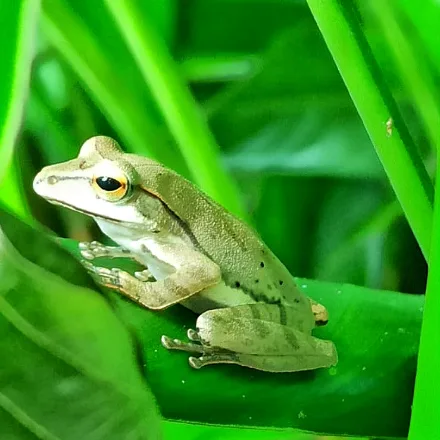
Starry Shrub Frog
Described in 1853, declared extinct, then found alive after a hundred and fifty six years, in the canopy where nobody had thought to look. Where: Cloud forest canopy in the sanctuary between 1,540 m and 1,679 m. Best: Year round, and effectively unfindable.
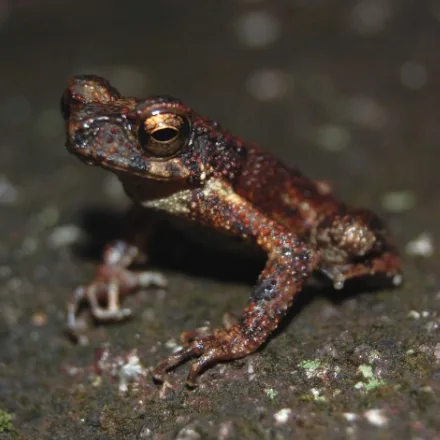
Kandyan Dwarf Toad
Described in 1872, unseen for a hundred and thirty three years, declared extinct, and then found again in 2009. It is the reason the extinction count fell from twenty one to eighteen. Where: Montane cloud forest streams in the sanctuary. Best: Year round.
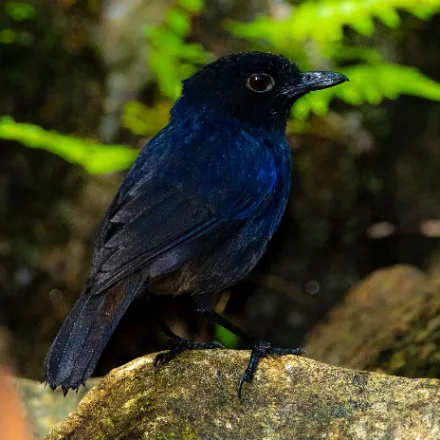
Sri Lanka Whistling Thrush
A dark highland thrush that sings from wet rock at first light and is gone by the time the mist lifts. Where: Shaded streams and gullies in the sanctuary at dawn. Best: Year round, first light.
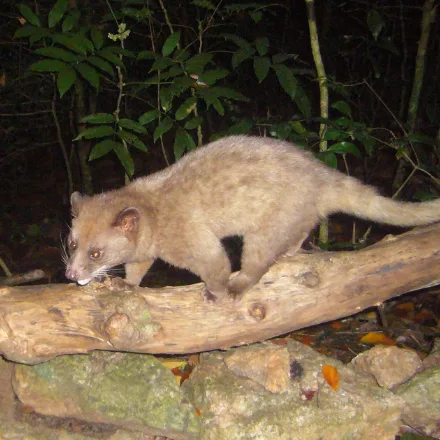
Golden Palm Civet
An endemic civet the colour of wet honey, moving through the canopy at night and almost unknown to visitors. Where: Fruiting canopy in the Peak Wilderness forest, on a spotlight walk from the lower approaches. Best: Year round.
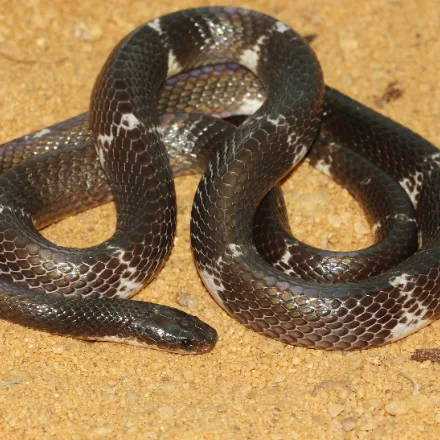
Sri Lankan Krait
An endemic krait of the wet zone hills that has bitten perhaps six people in recorded history. Where: Shaded plantation and forest edge on the lower slopes. Best: Year round, night.
Mammals
2 species
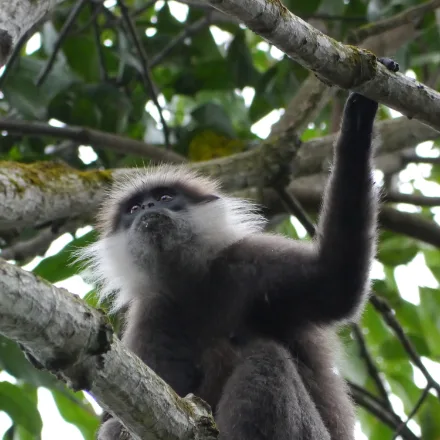
Purple-faced Langur Occasional Endangered
Semnopithecus vetulus
A shaggy black leaf monkey with white side whiskers, and the highland form is so hairy it is known as the bear monkey.
Where: Montane forest canopy on the approach trails. Best: Year round. The highland subspecies is shaggier than the lowland one, which is a real field difference.
Golden Palm Civet Rare Vulnerable
Paradoxurus zeylonensis
An endemic civet the colour of wet honey, moving through the canopy at night and almost unknown to visitors.
Where: Fruiting canopy in the Peak Wilderness forest, on a spotlight walk from the lower approaches. Best: Year round. Endemic and nocturnal. The pilgrim path at night is the wrong place to look; the forest either side of the lower approaches is the right one.
Birds
6 species
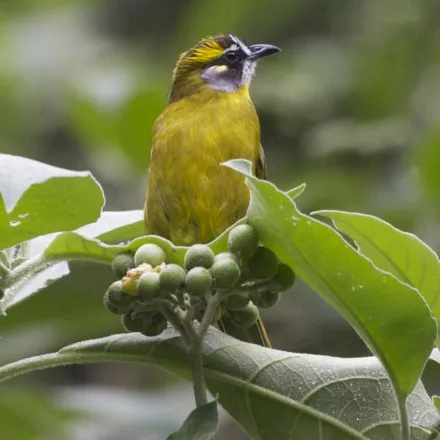
Yellow-eared Bulbul Regular
Kelaartia penicillata
The bird of the highland garden, olive and yellow with an absurd yellow ear tuft sticking out sideways.
Where: Scrub and forest edge along the lower stretches of the pilgrim path. Best: Year round.
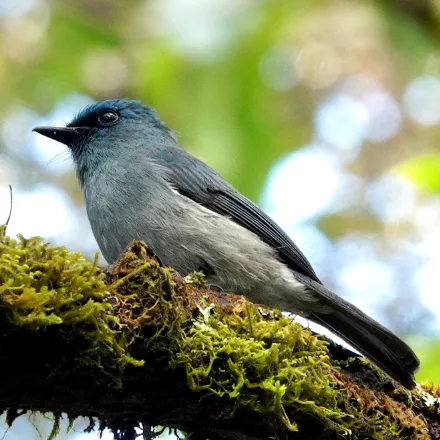
Dull-blue Flycatcher Occasional Near Threatened
Eumyias sordidus
Ash-blue and quietly beautiful, sitting motionless on a mossy branch in the highland cloud forest.
Where: Low mossy branches inside the cloud forest beside the path. Best: Year round.
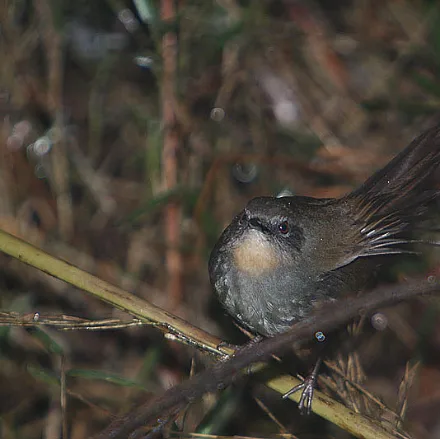
Sri Lanka Bush Warbler Occasional Near Threatened
Elaphrornis palliseri
A dull brown skulker of the highland thickets that most birders hear a dozen times and see once.
Where: Thicket edges where the forest breaks along the path. Best: Year round.
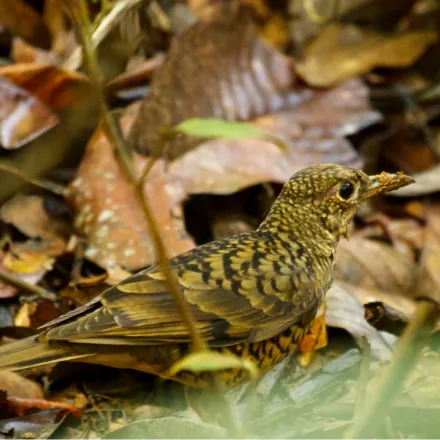
Sri Lanka Scaly Thrush Rare Near Threatened
Zoothera imbricata
A big scaly-patterned thrush that works the forest floor in deep shade and vanishes the moment it knows you are there.
Where: Shaded forest floor away from the pilgrim path. Best: Year round.
Sri Lanka Whistling Thrush Rare Endangered
Myophonus blighi
A dark highland thrush that sings from wet rock at first light and is gone by the time the mist lifts.
Where: Shaded streams and gullies in the sanctuary at dawn. Best: Year round, first light. One of the hardest endemic birds in the country and this is one of the places to try.
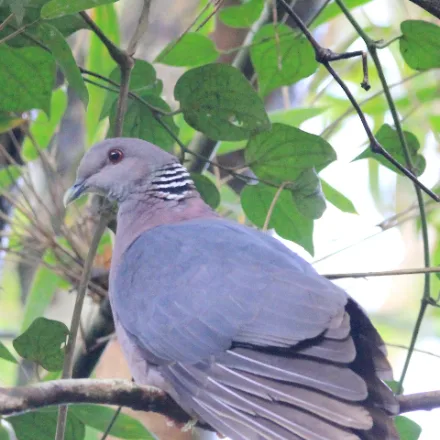
Sri Lanka Wood Pigeon Rare Vulnerable
Columba torringtoniae
A big grey highland pigeon with a chequerboard collar, scarce and shrinking with the forest it needs.
Where: Fast flight between canopy patches over the forest below the summit ridge. Best: Year round.
Reptiles
10 species
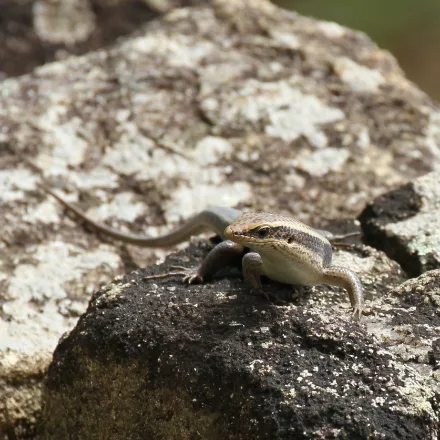
Common Lanka Skink Regular
Lankascincus fallax
The little bronze skink that shoots out from under every leaf you turn at Sinharaja belongs to a genus found nowhere but this island.
Where: Leaf litter and path margins in the montane forest. Best: Year round.
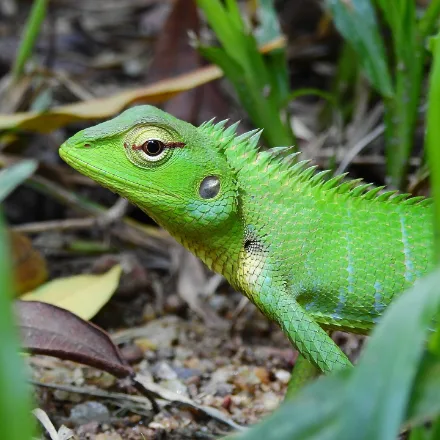
Green Forest Lizard Regular
Calotes calotes
The biggest lizard in the trees here, and in the breeding season the male's head and throat turn crimson.
Where: Trunks and low branches along the forest sections of the path. Best: Year round.
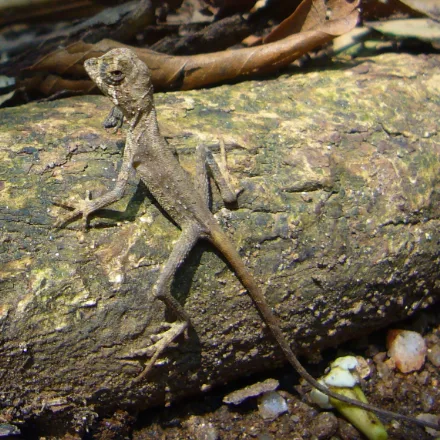
Kangaroo Lizard Regular
Otocryptis wiegmanni
An endemic lizard that runs away on its back legs like a tiny dinosaur, then freezes halfway up a sapling and dares you to find it again.
Where: Path edges and stream banks in the lower forest. Best: Year round.
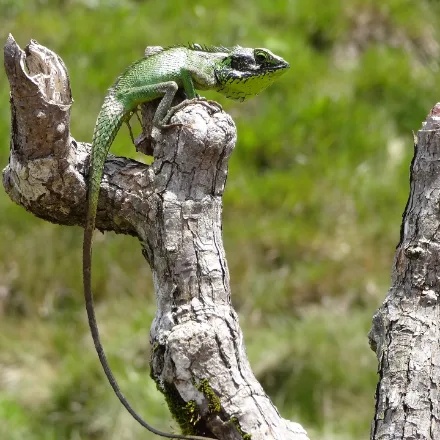
Black-lipped Lizard Occasional Endangered
Calotes nigrilabris
An Endangered endemic that you will see without trying, because it basks on the hedges at Horton Plains.
Where: Basking on scrub and low vegetation at the forest edge above the tea. Best: Year round, warm mornings.
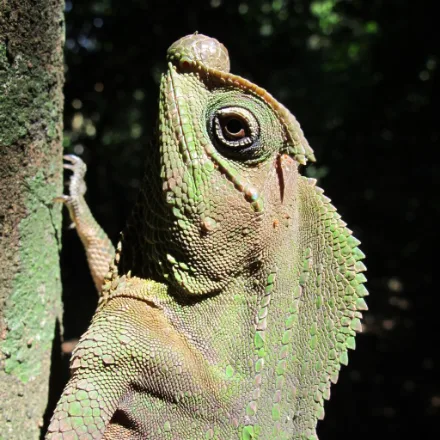
Hump-nosed Lizard Occasional Vulnerable
Lyriocephalus scutatus
The only member of its genus anywhere on earth, with a bulbous knob on its nose and a bony lyre across its skull, and it is slow enough to photograph properly.
Where: Thin twigs and understorey saplings beside the forest path. Best: Year round.
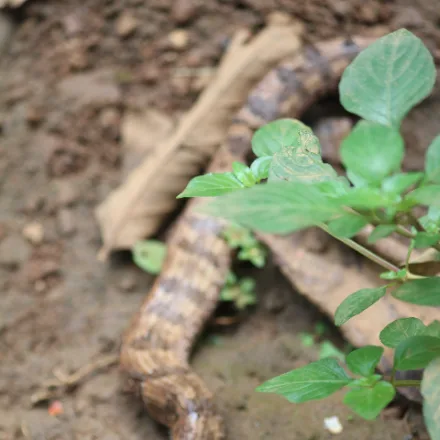
Hump-nosed Pit Viper Occasional
Hypnale hypnale
The commonest cause of snakebite in Sri Lanka, and small enough to sit unnoticed in leaf litter.
Where: Litter and path edges in the lower forest, at night. Best: Year round.
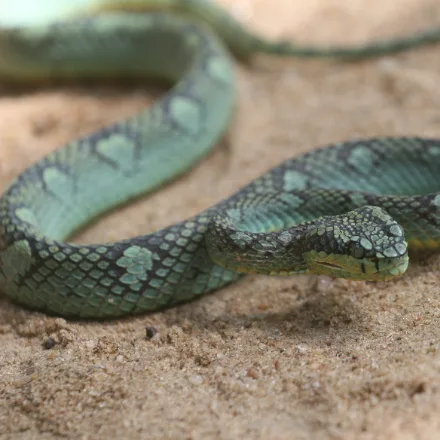
Sri Lankan Green Pit Viper Occasional
Trimeresurus trigonocephalus
An endemic green viper that hangs at eye level in the rainforest at night, and the one snake most visiting naturalists actually come away with.
Where: Branches over the path in the lower forest, at night. Best: Year round.
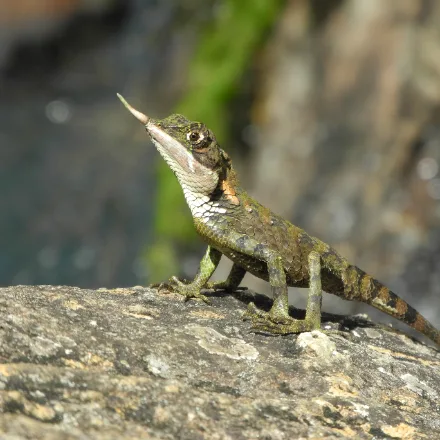
Rhino-horned Lizard Rare Endangered
Ceratophora stoddartii
A cloud forest lizard with a curved horn on its nose, and when it is cornered it opens a bright orange mouth at you.
Where: Mossy trunks and saplings in the montane forest. Best: January to March.
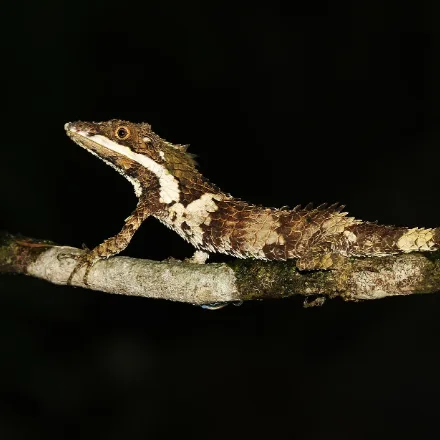
Pygmy Lizard Very rare Endangered
Cophotis ceylanica
A moss mimic with a prehensile tail that grips like a chameleon's, and it gives birth to live young, which agamids are not supposed to do.
Where: Moss covered trunks in the cloud forest. Best: January to March.
Sri Lankan Krait Very rare Near Threatened
Bungarus ceylonicus
An endemic krait of the wet zone hills that has bitten perhaps six people in recorded history.
Where: Shaded plantation and forest edge on the lower slopes. Best: Year round, night. Endemic, and about six confirmed bites exist in over a century of medical literature.
Amphibians
6 species
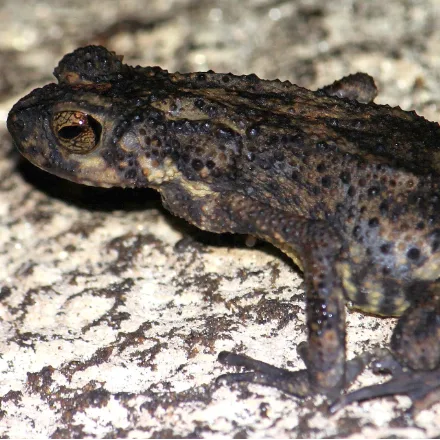
Kelaart's Dwarf Toad Regular Vulnerable
Adenomus kelaartii
An endemic toad in an endemic genus that is active by day, which makes it the one you can find on an afternoon walk rather than a night one.
Where: Stream margins and midstream boulders on the lower approaches. Best: Year round.
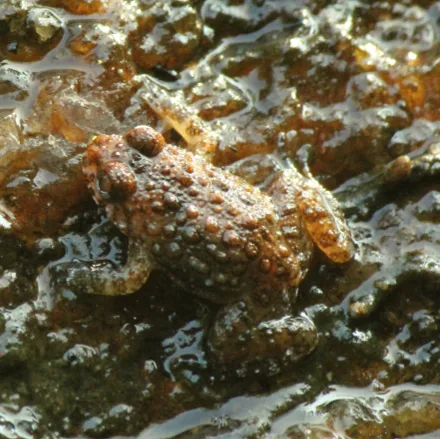
Sri Lanka Rock Frog Regular Vulnerable
Nannophrys ceylonensis
Its tadpoles do not swim. They crawl about on wet rock beside the torrent, grazing in a film of water a few millimetres deep, and the male guards the eggs.
Where: Wet rock beside the waterfalls and fast stream sections on the approach. Best: Year round.
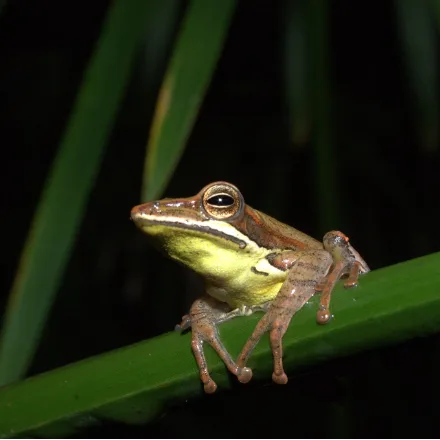
Montane Hourglass Tree Frog Occasional Endangered
Taruga eques
The female kicks her own foam nest into shape with her hind legs while hanging over a highland pond, and she is nearly twice the length of the male clinging to her.
Where: Pond and marsh margins in the tea country below the forest, after dark. Best: Year round, best in the wetter months.
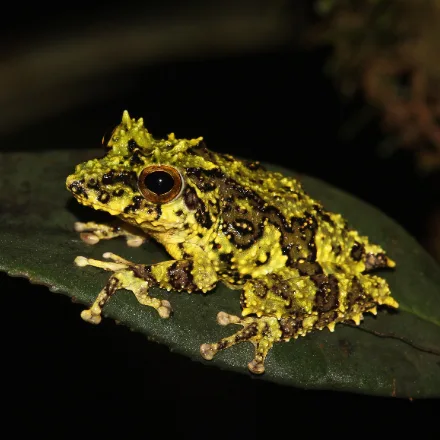
Schmarda's Shrub Frog Occasional Endangered
Pseudophilautus schmarda
Horned brows and lichen-mottled skin, so perfectly matched to a mossy branch that guides find it by call and only then by eye.
Where: Montane forest and scrub along the approach. Best: Year round, night.
Kandyan Dwarf Toad Ultra rare Endangered
Adenomus kandianus
Described in 1872, unseen for a hundred and thirty three years, declared extinct, and then found again in 2009. It is the reason the extinction count fell from twenty one to eighteen.
Where: Montane cloud forest streams in the sanctuary. Best: Year round. Declared Extinct in 2004 and rediscovered here in October 2009. Reaching it means a serious permitted trek.
Starry Shrub Frog Ultra rare Critically Endangered
Pseudophilautus stellatus
Described in 1853, declared extinct, then found alive after a hundred and fifty six years, in the canopy where nobody had thought to look.
Where: Cloud forest canopy in the sanctuary between 1,540 m and 1,679 m. Best: Year round, and effectively unfindable. Lost for 156 years and rediscovered here in 2009, ten metres up in the canopy. Its entire world range is about two square kilometres.
Fish
2 species
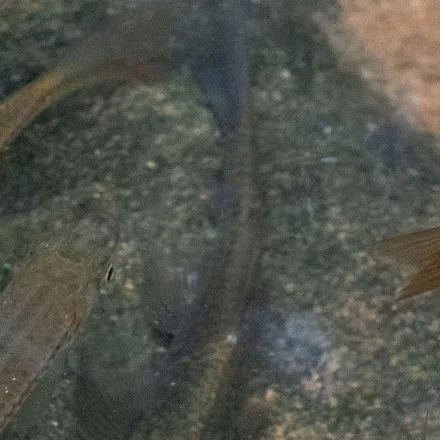
Stone Sucker Common
Garra ceylonensis
A fish built to hold station in white water, using a disc on its underside to grip bare rock.
Where: Fast rock-bedded streams in the Peak Wilderness. Best: December to April.
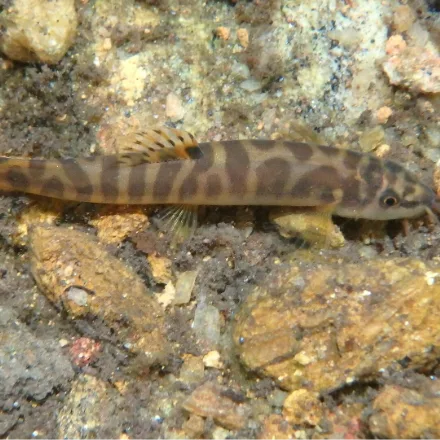
Banded Mountain Loach Regular
Schistura notostigma
A hill stream loach that spends its life under stones in current fast enough to sound like rain.
Where: Cold stony streams draining the massif. Best: Year round.
Insects
3 species
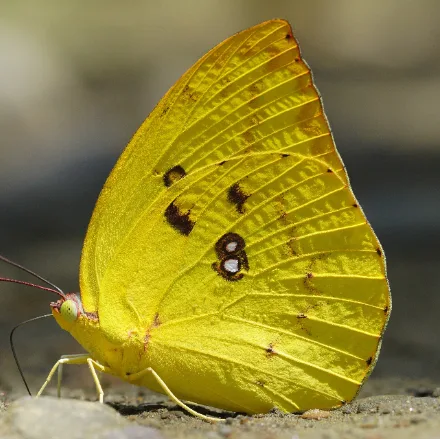
Common Emigrant Common
Catopsilia pomona
The butterfly behind the name Samanala Kanda, Butterfly Mountain, and the mass movement that heads for it every year.
Where: The pilgrim trails and the surrounding hills, sometimes in large numbers. Best: February to April. The mass movement towards the peak is the origin of the mountain's name and it is still visible in a good year.
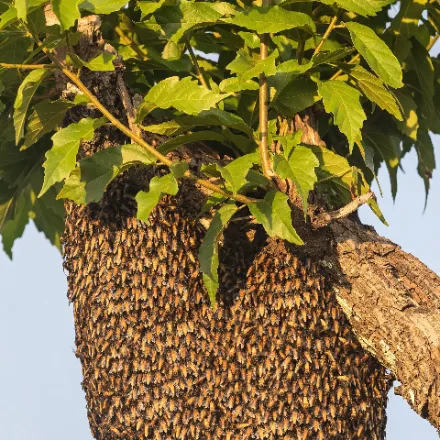
Giant Honey Bee Regular
Apis dorsata
A big, fierce wild bee that hangs single-comb nests the size of a door from high branches and cliffs.
Where: Combs on cliff faces and overhangs along the pilgrim routes. Best: Year round.
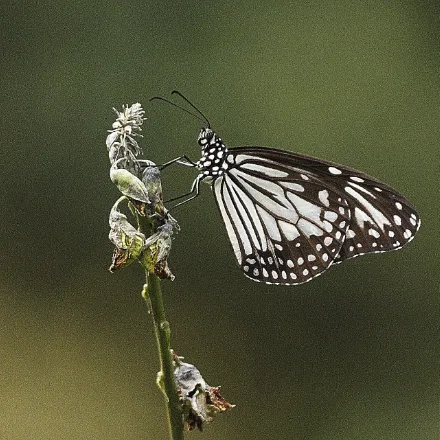
Ceylon Tiger Occasional
Parantica taprobana
A high country butterfly found only on this island, and only above about a thousand metres.
Where: Forest edge and clearings on the lower path. Best: Year round.
No free photograph of the Ceylon tiger exists. The image shows the glassy tiger, Parantica aglea, a close relative photographed in southern India.
Planning
The pilgrimage season runs December to May and the path is lit and busy, often overnight. For wildlife that is the wrong time to be on the steps, so the lower approaches and the forest either side are the productive ground, at first light rather than on the night ascent. Outside the season the path is unlit, the weather is worse and the forest is much better. It is genuinely cold and wet at altitude. The mountain is a working pilgrimage site, and the litter problem on the popular route is severe.
Compare guided walks, birding and transfers for Adam’s Peak and the Peak Wilderness
Some links on this page are affiliate links. If you book through them, Wildseer may earn a small commission at no extra cost to you.
Frequently asked questions
Is there wildlife on Adam’s Peak?
Yes, in the surrounding Peak Wilderness cloud forest rather than on the steps. Highland endemic birds, purple-faced langur, endemic lizards and pit vipers, montane frogs, and endemic stream fish. Two amphibians rediscovered here after a century presumed extinct are the forest’s real claim.
When is the best time for wildlife at Adam’s Peak?
Outside the December to May pilgrimage season the forest is far quieter and better, though the weather is worse and the path unlit. In season, work the lower forest at first light rather than climbing at night.
What is the starry shrub frog?
An endemic frog described in the nineteenth century and then not recorded for over a hundred years, until it was found again on this massif. It is one of a small group of Sri Lankan amphibians that came back from the extinct list.
Can you see leopards at Adam’s Peak?
They are present in the wider Peak Wilderness and are effectively never seen. Nobody should plan a visit for them.
Explore Sri Lanka wildlife by group
 Mammals of Sri Lanka
 Birds of Sri Lanka
 Reptiles and amphibians of Sri Lanka
 Fish of Sri Lanka
 Sharks and rays of Sri Lanka
 Reef invertebrates of Sri Lanka
 Insects and spiders of Sri Lanka
Part of the Wildlife in Sri Lanka guide.
Explore Sri Lanka wildlife by place
- Arugam Bay marine life
- Bundala wildlife
- Colombo wildlife
- Ella wildlife
- Gal Oya wildlife
- Great Basses marine life
- Hikkaduwa marine life
- Horton Plains wildlife
- Jaffna wildlife
- Kalpitiya marine life
- Kandy wildlife
- Kanneliya wildlife
- Kitulgala wildlife
- Knuckles wildlife
- Kumana wildlife
- Mannar marine life
- Minneriya wildlife
- Mirissa marine life
- Rekawa marine life
- Sigiriya wildlife
- Sinharaja wildlife
- Tangalle marine life
- Trincomalee marine life
- Udawalawe wildlife
- Wasgamuwa wildlife
- Wilpattu wildlife
- Yala wildlife
Image credits
Square thumbnails are cropped from the original. Wide banner images are cropped to a band. Other images are resized only. No other changes have been made.
- Starry Shrub Frog: Rekhakottoor | CC BY-SA 4.0, cropped
- Kandyan Dwarf Toad: Milivoje Krvavac | CC BY-SA 4.0, cropped
- Sri Lanka Whistling Thrush: Kasun withanage | CC BY-SA 4.0, cropped
- Golden Palm Civet: Pieter Prins | CC BY-SA 4.0, cropped
- Sri Lankan Krait: Buddhika.jm(Buddhika Mawella) | CC BY-SA 4.0, cropped
- Purple-faced Langur: Jeroen84 | CC BY-SA 3.0, cropped
- Yellow-eared Bulbul: Lip Kee from Singapore, Republic of Singapore | CC BY-SA 2.0, cropped
- Dull-blue Flycatcher: desertnaturalist | CC BY 4.0, cropped
- Sri Lanka Bush Warbler: Steve Garvie from Dunfermline, Fife, Scotland | CC BY-SA 2.0, cropped
- Sri Lanka Scaly Thrush: Thimindu Goonatillake from Denver, USA | CC BY-SA 2.0, cropped
- Sri Lanka Wood Pigeon: Anuradha Amarakoon | CC BY-SA 4.0, cropped
- Common Lanka Skink: Peyman Zehtab Fard | CC BY 2.0, cropped
- Green Forest Lizard: Rehman Abubakr | CC BY-SA 4.0, cropped
- Kangaroo Lizard: Nyanatusita | CC BY-SA 3.0, cropped
- Black-lipped Lizard: Cherubino | CC BY-SA 3.0, cropped
- Hump-nosed Lizard: Nyanatusita | CC BY-SA 3.0, cropped
- Hump-nosed Pit Viper: Praveenp | CC BY-SA 4.0, cropped
- Sri Lankan Green Pit Viper: Gihan Jayaweera | CC BY-SA 3.0, cropped
- Rhino-horned Lizard: Calynn | CC BY-SA 4.0, cropped
- Pygmy Lizard: Buddhika.jm(Buddhika Mawella) | CC BY-SA 4.0, cropped
- Kelaart’s Dwarf Toad: Buddhika Mawella ( Buddhika.jm at English Wikipedia ) | CC BY 3.0, cropped
- Sri Lanka Rock Frog: Buddhika.jm | CC BY-SA 3.0, cropped
- Montane Hourglass Tree Frog: Gihan Jayaweera | CC BY-SA 3.0, cropped
- Schmarda’s Shrub Frog: Buddhika.jm(Buddhika Mawella) | CC BY-SA 4.0, cropped
- Stone Sucker: iNaturalist contributor, no rights reserved | CC0, cropped
- Banded Mountain Loach: (c) Pieter Prins, some rights reserved (CC BY-SA) | CC BY-SA 4.0, cropped
- Common Emigrant: Peellden | CC BY-SA 4.0, cropped
- Giant Honey Bee (cropped to square): Basile Morin | CC BY-SA 4.0, cropped
- Ceylon Tiger: Girish Mohan | CC BY-SA 4.0, cropped
- Purple-faced langur in the canopy: kanchana Amilani | Unsplash License, cropped
- White-throated kingfisher on a branch: kanchana Amilani | Unsplash License, cropped
- Green forest lizard in breeding colour: Anas Mohamed Nuski | Pexels Licence, cropped
- Bluestripe snapper over a reef: Jeffry Surianto | Pexels Licence, cropped
- Reef manta rays near the surface: Emma Li | Pexels Licence, cropped
- Nudibranch crossing the sea floor: Chris Spain | Pexels Licence, cropped
- Clipper butterfly on a leaf: Pixabay | Pexels Licence, cropped
Square thumbnails are cropped from the original. Wide banner images are cropped to a band. Other images are resized only. No other changes have been made.
- Starry Shrub Frog: Rekhakottoor | CC BY-SA 4.0, cropped
- Kandyan Dwarf Toad: Milivoje Krvavac | CC BY-SA 4.0, cropped
- Sri Lanka Whistling Thrush: Kasun withanage | CC BY-SA 4.0, cropped
- Golden Palm Civet: Pieter Prins | CC BY-SA 4.0, cropped
- Sri Lankan Krait: Buddhika.jm(Buddhika Mawella) | CC BY-SA 4.0, cropped
- Purple-faced Langur: Jeroen84 | CC BY-SA 3.0, cropped
- Yellow-eared Bulbul: Lip Kee from Singapore, Republic of Singapore | CC BY-SA 2.0, cropped
- Dull-blue Flycatcher: desertnaturalist | CC BY 4.0, cropped
- Sri Lanka Bush Warbler: Steve Garvie from Dunfermline, Fife, Scotland | CC BY-SA 2.0, cropped
- Sri Lanka Scaly Thrush: Thimindu Goonatillake from Denver, USA | CC BY-SA 2.0, cropped
- Sri Lanka Wood Pigeon: Anuradha Amarakoon | CC BY-SA 4.0, cropped
- Common Lanka Skink: Peyman Zehtab Fard | CC BY 2.0, cropped
- Green Forest Lizard: Rehman Abubakr | CC BY-SA 4.0, cropped
- Kangaroo Lizard: Nyanatusita | CC BY-SA 3.0, cropped
- Black-lipped Lizard: Cherubino | CC BY-SA 3.0, cropped
- Hump-nosed Lizard: Nyanatusita | CC BY-SA 3.0, cropped
- Hump-nosed Pit Viper: Praveenp | CC BY-SA 4.0, cropped
- Sri Lankan Green Pit Viper: Gihan Jayaweera | CC BY-SA 3.0, cropped
- Rhino-horned Lizard: Calynn | CC BY-SA 4.0, cropped
- Pygmy Lizard: Buddhika.jm(Buddhika Mawella) | CC BY-SA 4.0, cropped
- Kelaart’s Dwarf Toad: Buddhika Mawella ( Buddhika.jm at English Wikipedia ) | CC BY 3.0, cropped
- Sri Lanka Rock Frog: Buddhika.jm | CC BY-SA 3.0, cropped
- Montane Hourglass Tree Frog: Gihan Jayaweera | CC BY-SA 3.0, cropped
- Schmarda’s Shrub Frog: Buddhika.jm(Buddhika Mawella) | CC BY-SA 4.0, cropped
- Stone Sucker: iNaturalist contributor, no rights reserved | CC0, cropped
- Banded Mountain Loach: (c) Pieter Prins, some rights reserved (CC BY-SA) | CC BY-SA 4.0, cropped
- Common Emigrant: Peellden | CC BY-SA 4.0, cropped
- Giant Honey Bee (cropped to square): Basile Morin | CC BY-SA 4.0, cropped
- Ceylon Tiger: Girish Mohan | CC BY-SA 4.0, cropped
- Purple-faced langur in the canopy: kanchana Amilani | Unsplash License, cropped
- White-throated kingfisher on a branch: kanchana Amilani | Unsplash License, cropped
- Green forest lizard in breeding colour: Anas Mohamed Nuski | Pexels Licence, cropped
- Bluestripe snapper over a reef: Jeffry Surianto | Pexels Licence, cropped
- Reef manta rays near the surface: Emma Li | Pexels Licence, cropped
- Nudibranch crossing the sea floor: Chris Spain | Pexels Licence, cropped
- Clipper butterfly on a leaf: Pixabay | Pexels Licence, cropped