
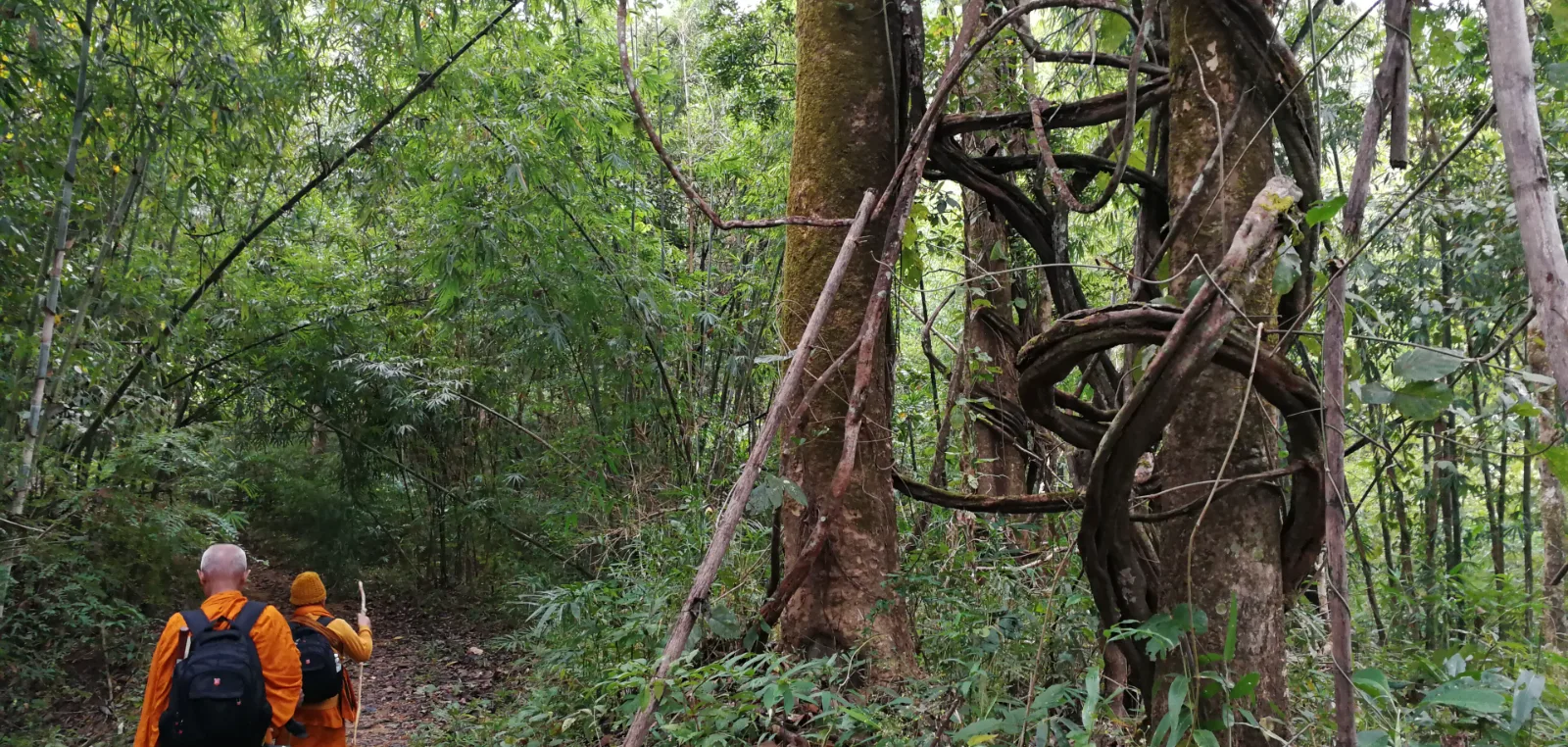
Yes. Thailand has wild tigers, and it is the only country in mainland Southeast Asia where the population is going up rather than down. Cambodia, Laos and Vietnam have all lost theirs. That makes the Thai forests genuinely important, and it makes the honest answer to the next question worth reading before you plan anything.
You will almost certainly not see one. The place where they live is closed to visitors, and it is closed for the reason the tigers are still there. This page tells you where they are, what the counts actually show, what your realistic odds are, and which big cats you can realistically see instead.
Where the wild tigers are
Almost every wild tiger in Thailand lives in the Western Forest Complex, a block of seventeen protected areas along the Myanmar border, and the heart of it is Huai Kha Khaeng Wildlife Sanctuary and its neighbour Thung Yai Naresuan. Together they are a UNESCO World Heritage site, and together they hold the densest tiger population left anywhere in Southeast Asia.
These are the guide’s own records, with the odds stated plainly rather than softened. Read the likelihood column before you read anything else.
3 places
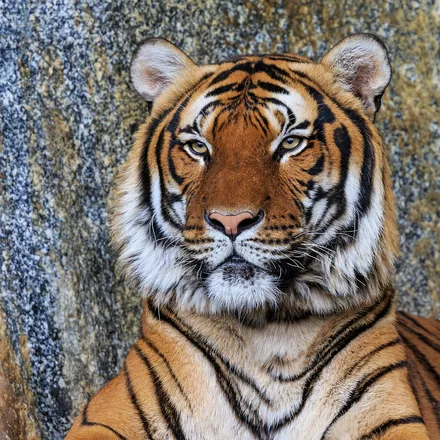
Indochinese Tiger Very rare Endangered
Panthera tigris
The largest cat in Asia and its top predator, a striped ghost most people only ever know from a paw print.
Where: The core zone, closed to general visitors. Best: Nov-Apr, dawn and dusk. The most important tiger population in Southeast Asia, and deliberately unreachable. Access is by permit and research programme only.
Where: The deep forest west of Panoen Thung, well beyond visitor access. Best: Nov-Apr, night and first light. Present but effectively unseeable. Camera traps confirm it; visitors do not.
Where: Huai Kha Khaeng, Thung Yai, Kaeng Krachan. Best: Dry season, dawn and dusk. Realistically camera-trap territory; the Western Forest Complex is the last stronghold.
What the counts actually show
Camera trap surveys in the Huai Kha Khaeng and Thung Yai complex identified 94 individual tigers in the survey concluding in November 2023, up from 75 in 2022 and fewer than 40 in 2007. Density inside Huai Kha Khaeng itself rose from 1.3 tigers per 100 square kilometres to 2.9 over the study period. Across the whole country the total is still under 200.
Those are small numbers and they are a genuine success. The recovery was not built on tiger protection alone but on prey: sambar, banteng and gaur populations were allowed to stabilise first, because a forest without large deer cannot hold large cats however well it is patrolled. Models suggest the landscape could eventually support around 140 tigers, and roughly 350 across the wider Western Forest Complex if densities keep climbing.
It is worth being clear about what that means for a visitor. A recovering population of under 200 animals, spread across thousands of square kilometres of closed forest, is a conservation story rather than a wildlife watching opportunity. The right response to it is interest, not a booking.
Can you actually see one
Realistically, no. The core zone of Huai Kha Khaeng is closed to general visitors, and that closure is a large part of why the tigers are still there. What you can do is visit the sanctuary’s accessible edge and its education centre, walk the open trails, and see the forest and the prey animals that made the recovery possible, which is a genuinely good day out on its own terms.
If you want a big cat sighting in Thailand, the realistic targets are the smaller ones. Leopards are seen on the Kaeng Krachan road, including the black form that Thailand is known for. Leopard cats turn up on night drives at Khao Yai. Neither is common, but both are possible, which is more than can be said for a tiger.
Find guided wildlife trips to Huai Kha Khaeng and the western forests
Some links on this page are affiliate links. If you book through them, Wildseer may earn a small commission at no extra cost to you. No venue pays to appear here and none ever will.
Frequently asked questions
Are there wild tigers in Thailand?
Yes. Fewer than 200 remain nationally, almost all in the Western Forest Complex along the Myanmar border. The Huai Kha Khaeng and Thung Yai survey concluding in November 2023 identified 94 individuals, up from 75 in 2022 and under 40 in 2007. Thailand is the only country in mainland Southeast Asia where the wild population is recovering.
Where can I see a tiger in Thailand?
In practice, nowhere. The core zone of Huai Kha Khaeng is closed to general visitors and that closure is part of why the tigers survive. Kaeng Krachan records them in deep forest far beyond visitor access. A wild tiger sighting cannot honestly be promised anywhere in Thailand.
What big cats can you realistically see in Thailand?
Leopard is the realistic one, on the Kaeng Krachan road, including the black form. Leopard cat turns up on night drives at Khao Yai, and clouded leopard, marbled cat, golden cat and jungle cat are all present but very rarely seen. None is common, but all are possible in a way a tiger is not.
Why are Thailand’s tigers recovering when the rest of Southeast Asia has lost theirs?
Prey came first. Sambar, banteng and gaur populations were allowed to stabilise before tiger numbers could climb, alongside sustained patrolling in a very large, connected block of protected forest. Cambodia, Laos and Vietnam lost both the prey base and the connectivity.
More on Thailand wildlife
- Mammals of Thailand
- Huai Kha Khaeng wildlife
- Kaeng Krachan wildlife
- Khao Yai wildlife
- Where to see wild elephants in Thailand
Part of the Wildlife in Thailand guide.
Image credits
Square thumbnails are cropped from the original. Wide banner images are cropped to a band. Other images are resized only. No other changes have been made.
- Dry evergreen forest of the Western Forest Complex, the last stronghold of Thailand tigers (cropped to a banner): Ya thonawanik | CC0, cropped
- Indochinese Tiger (cropped to square): A.Savin | Free Art License 1.3, cropped
Square thumbnails are cropped from the original. Wide banner images are cropped to a band. Other images are resized only. No other changes have been made.
- Dry evergreen forest of the Western Forest Complex, the last stronghold of Thailand tigers (cropped to a banner): Ya thonawanik | CC0, cropped
- Indochinese Tiger (cropped to square): A.Savin | Free Art License 1.3, cropped