
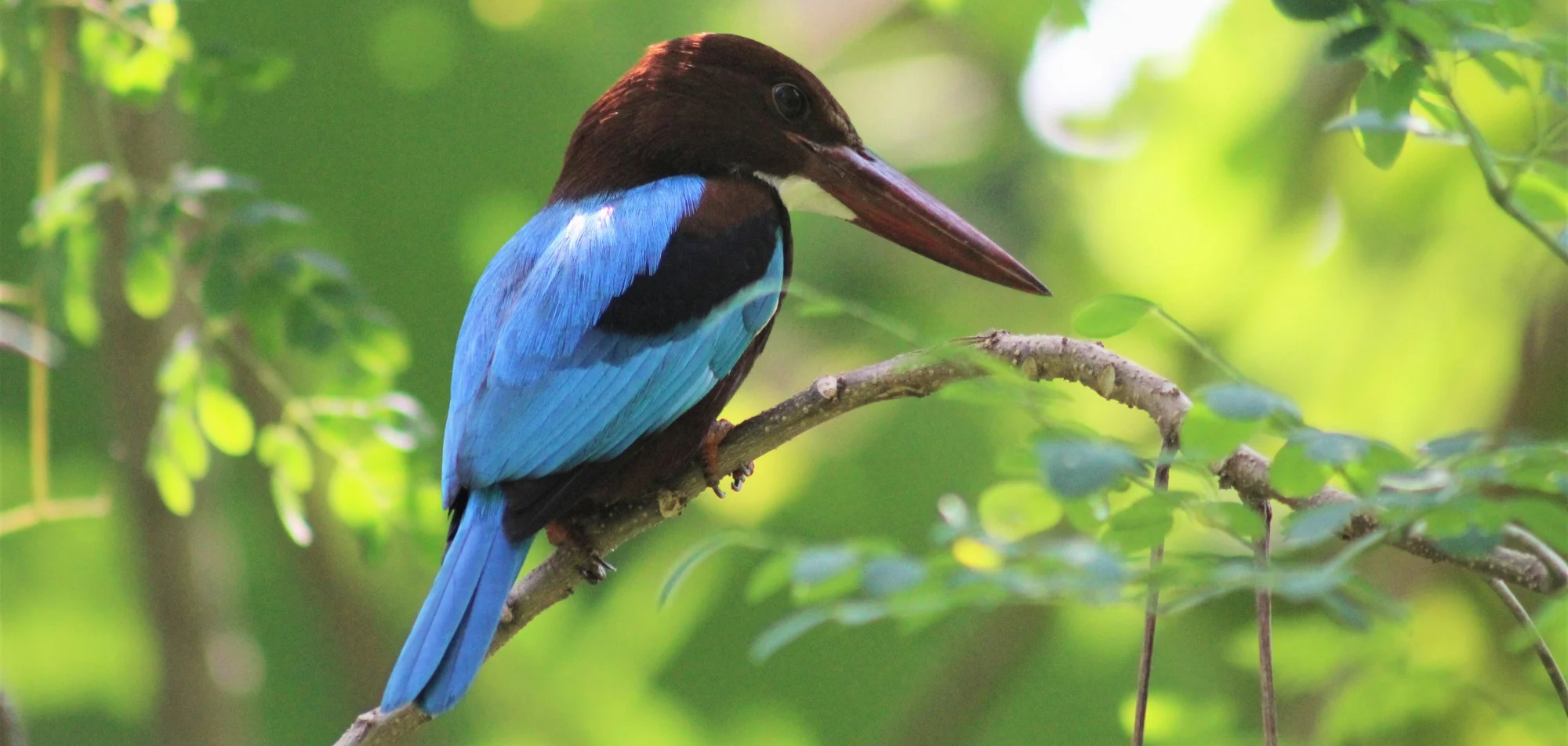
The birds of Sri Lanka are the strongest argument for the island as a wildlife destination. Thirty-four species live here and nowhere else on earth, and unlike most endemic-rich islands they are concentrated in a handful of accessible forests, so a determined week can find nearly all of them. The blue magpie, the junglefowl, the red-faced malkoha and the Serendib scops owl are the ones people travel for.
This page lists every bird the Wildseer database records for Sri Lanka, from the endemic rainforest set through the raptors and hornbills to the flamingos and wintering shorebirds of the southern lagoons. The endemics cluster in the wet zone and the hills; the waterbirds cluster in the dry zone. A route that does not visit both misses half the list.
This page lists all 62 birds recorded for Sri Lanka in the Wildseer database. Use the contents to jump to a group.
Highlights
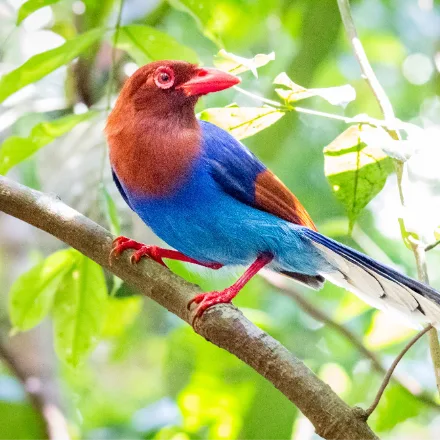
Sri Lanka Blue Magpie
Cobalt and chestnut with a blood-red bill, and it comes to look at you rather than the other way round. Where: Wet zone rainforest of the southwest; Sinharaja and Kitulgala. Best: Year round, best Jan-Apr.
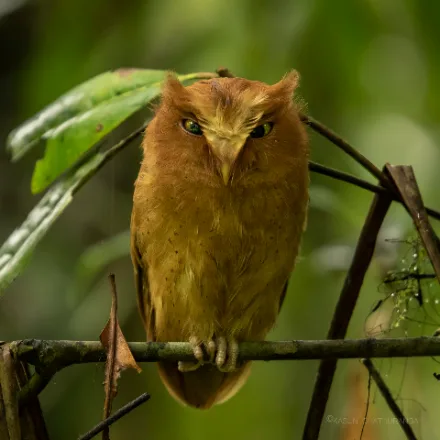
Serendib Scops Owl
Found by its call in 2001 and described in 2004, the first new bird species discovered in Sri Lanka for over a century. Where: A handful of wet zone forest fragments. Best: Year round, calls at dusk.
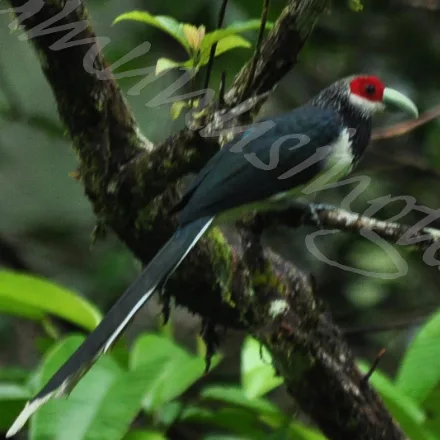
Red-faced Malkoha
A long-tailed cuckoo with a bare crimson face that slips through the canopy in silence, and the bird most Sinharaja trips fail on. Where: Undisturbed wet zone forest with closed canopy. Best: Year round.
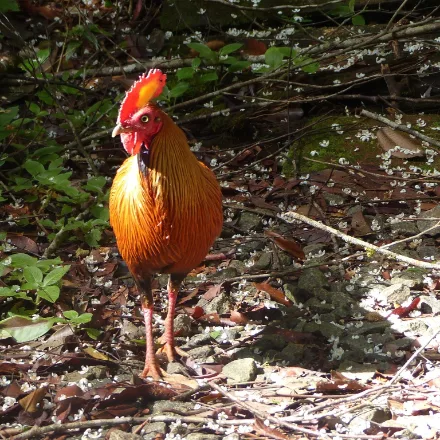
Sri Lanka Junglefowl
The national bird, and the wild ancestor's cousin: a jungle cockerel with a yellow-centred red comb found nowhere else on earth. Where: Forest tracks and edges across the island, wet zone to dry zone. Best: Year round, dawn and dusk.
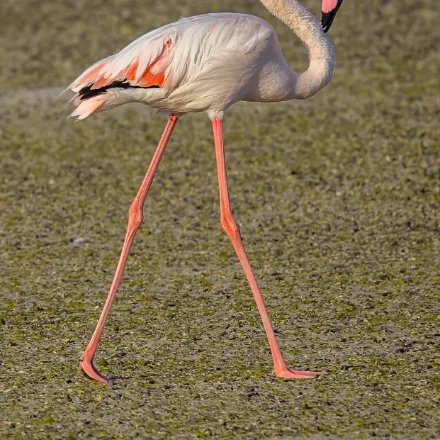
Greater Flamingo
Several thousand birds on the Bundala salt pans in a good winter, filtering brine shrimp upside down. Where: Coastal salt pans and shallow saline lagoons. Best: Aug-Apr.
Birds
62 species
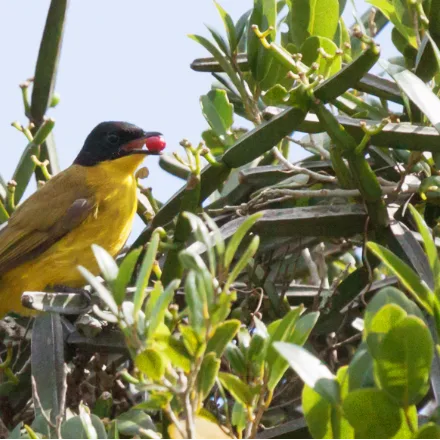
Black-capped Bulbul Common
Rubigula melanicterus
Yellow-olive with a glossy black cap and throat and a white iris. It feeds on small fruit in the mid storey and understorey, in pairs and small parties.
Where: Wet zone and hill forest and forest edge. Best: Year round. Often the first endemic a visitor properly sees. Also on: Sinharaja Forest Reserve, Kandy.
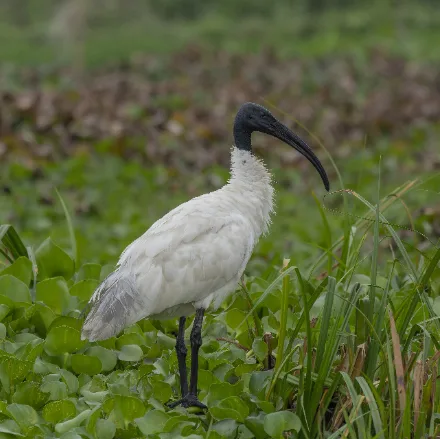
Black-headed Ibis Common Near Threatened
Threskiornis melanocephalus
Clean white with a naked black head and neck and a long down-curved black bill. In breeding plumage it grows slate grey ornamental plumes on the inner wing that show as a smudge across the back.
Where: Tanks, paddy, marsh and lagoon margins across the lowlands. Best: Year round. Near Threatened globally, and still a reliable bird here, which says something about the tank system. Also on: Bundala National Park, Colombo and the wetlands, Kumana National Park, Udawalawe National Park, Tangalle and Kalametiya, Minneriya and Kaudulla National Parks.
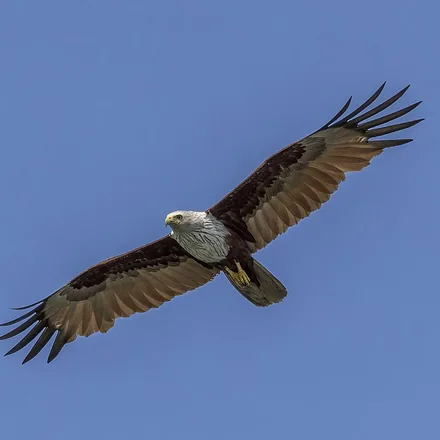
Brahminy Kite Common
Haliastur indus
A medium raptor with a white head and breast and rich chestnut body and wings, common around coasts, rivers and fishing ports. It scavenges and hunts fish, crabs and small animals along the water's edge.
Where: Coasts, lagoons, tanks and harbours island wide, and over Colombo itself. Best: Year round. The default raptor over Sri Lankan water. Learn it first so the rarer ones stand out.
Greater Flamingo Common
Phoenicopterus roseus
Tall, pale pink, with black flight feathers that only show when the flock lifts. The bill is the interesting part: bent sharply downward and held inverted in the water, sieving brine shrimp and algae with a tongue that pumps like a piston.
Where: Coastal salt pans and shallow saline lagoons. Best: Aug-Apr. A non breeding visitor from western India. Numbers swing hard between years with rainfall and salinity. Also on: Bundala National Park, Kalpitiya, Kumana National Park, Mannar and the Gulf of Mannar, Jaffna and the Northern Peninsula.
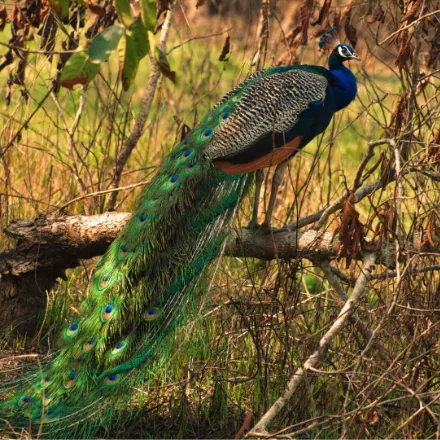
Indian Peafowl Common
Pavo cristatus
The male needs no description, but the wild bird is worth seeing properly. The train is not the tail, it is the upper tail coverts, raised and fanned by the real tail behind it. Females are brown, crested, and far easier to overlook than you would expect.
Where: Dry zone scrub, forest edge, tank bunds and village margins. Best: Year round, display from Mar-May. Wild here rather than ornamental, and the alarm call is part of how guides find leopards. Also on: Yala National Park, Wilpattu National Park, Udawalawe National Park, Bundala National Park, Sigiriya, Dambulla and the Cultural Triangle, Arugam Bay and the East Coast Lagoons.
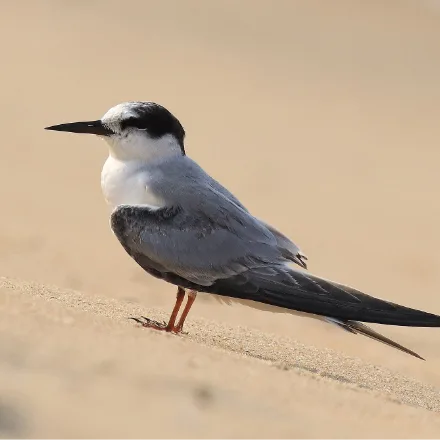
Little Tern Common
Sternula albifrons
Little terns are the smallest terns in the region, feeding along shorelines, estuaries and saltpans with rapid hovering flight. They nest in shallow scrapes directly on open sand and shell, which makes eggs almost invisible and highly vulnerable.
Where: Lagoons, salt pans and estuary mouths, hovering and plunging in shallow water. Best: Year round, breeding March to June. Also on: Jaffna and the Northern Peninsula, Mannar and the Gulf of Mannar.
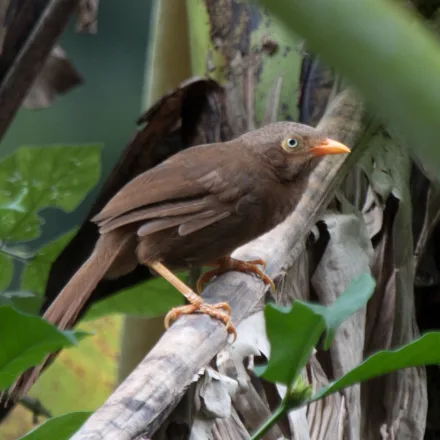
Orange-billed Babbler Common
Argya rufescens
A rufous-brown babbler with a bright orange bill and a grey crown, travelling in noisy parties of ten to twenty that chatter constantly as they work the leaf litter and low branches.
Where: Wet zone forest of the southwest. Best: Year round. One of the two nucleus species of the Sinharaja mixed feeding flock. Also on: Sinharaja Forest Reserve, Kanneliya Forest Reserve.
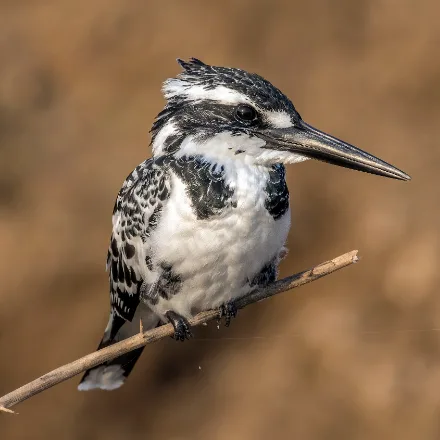
Pied Kingfisher Common
Ceryle rudis
Pure black and white, crested, with a heavy black dagger bill. Males have two black breast bands, females one broken band. Hovers on fast shallow wingbeats with the bill angled down, then folds and drops.
Where: Open fresh and brackish water: tanks, lagoons, canals and estuaries. Best: Year round. The largest bird in the world able to hover in still air, which is how it fishes water no perch reaches. Also on: Bundala National Park, Udawalawe National Park, Colombo and the wetlands, Yala National Park, Kalpitiya, Minneriya and Kaudulla National Parks.
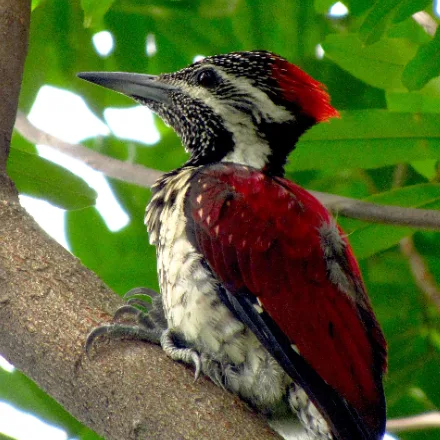
Red-backed Flameback Common
Dinopium psarodes
Medium-sized with a crimson back, a black throat and a dark-streaked white breast, with three toes rather than four. Males have a red crown.
Where: Gardens, plantations and forest edge across the island. Best: Year round. Two endemic crimson woodpeckers on one island and nowhere else. Also on: Kandy, Udawalawe National Park.
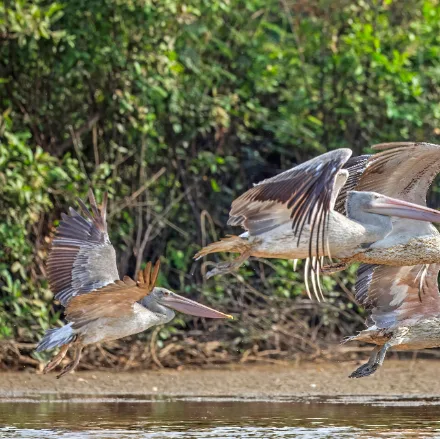
Spot-billed Pelican Common Near Threatened
Pelecanus philippensis
Greyish white rather than clean white, with a pale pink pouch and a row of dark blue-grey spots along the upper mandible that give it its name. Fishes by swimming and scooping rather than plunge diving.
Where: Ancient irrigation tanks, lagoons and larger reservoirs. Best: Year round. Near Threatened, and dependent on a two thousand year old tank system, which is an unusual thing for a threatened bird. Also on: Bundala National Park, Udawalawe National Park, Wilpattu National Park, Colombo and the wetlands, Mannar and the Gulf of Mannar, Tangalle and Kalametiya.
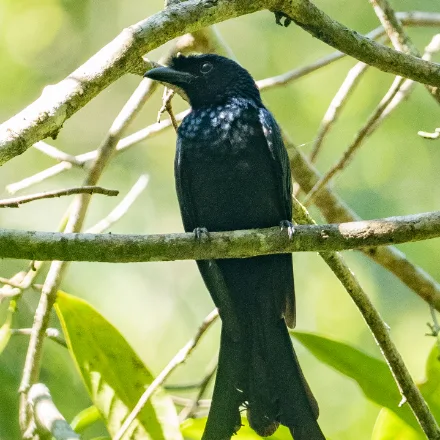
Sri Lanka Drongo Common
Dicrurus lophorinus
Glossy black with a deeply forked tail whose outer feathers curl outward, and a tuft of feathers over the bill. It sallies after insects flushed by other birds and calls constantly.
Where: Wet zone and hill forest, usually with mixed flocks. Best: Year round. A full member of the Sinharaja feeding flock and one of its noisiest parts. Also on: Sinharaja Forest Reserve.
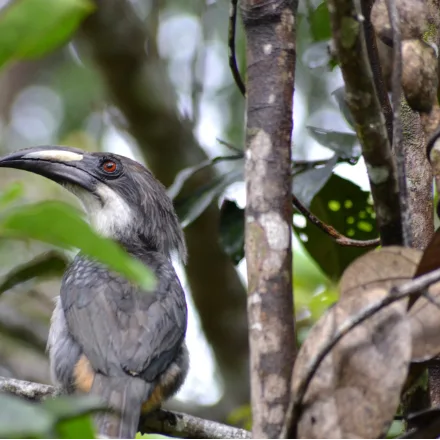
Sri Lanka Grey Hornbill Common
Ocyceros gingalensis
Grey-brown above and pale below with a long creamy bill and no casque, unlike the big Asian hornbills. Pairs move through the canopy after figs and call a loud repeated cackle.
Where: Forest, plantation and wooded gardens across the island. Best: Year round. An endemic hornbill you can see from a breakfast table, which visitors routinely dismiss. Also on: Sinharaja Forest Reserve, Kandy, Sigiriya, Dambulla and the Cultural Triangle, Minneriya and Kaudulla National Parks.
Sri Lanka Junglefowl Common
Gallus lafayettii
Males are orange-red with a purple-black tail and a red comb marked with a distinctive yellow centre, which no other junglefowl has. Females are small, brown and cryptic. They scratch along forest tracks and roadsides at dawn and dusk and run rather than fly when disturbed.
Where: Forest tracks and edges across the island, wet zone to dry zone. Best: Year round, dawn and dusk. The national bird, and the endemic almost everyone sees without trying. Also on: Sinharaja Forest Reserve, Yala National Park, Minneriya and Kaudulla National Parks, Udawalawe National Park, Kumana National Park, Wasgamuwa National Park.
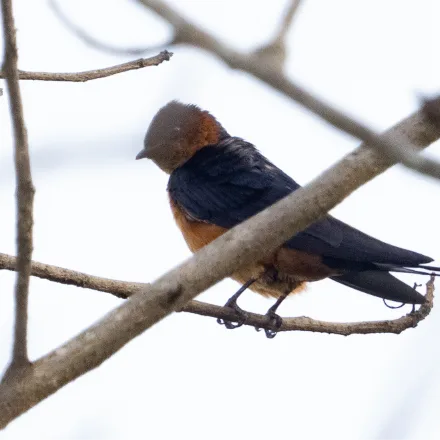
Sri Lanka Swallow Common
Cecropis hyperythra
Rich chestnut below and on the rump with glossy blue-black upperparts and long tail streamers. It hawks insects low over open ground, water and roads.
Where: Open country, paddy and roadsides the length of the island. Best: Year round. An endemic most visitors see from a vehicle without knowing it. Also on: Udawalawe National Park, Colombo and the wetlands.
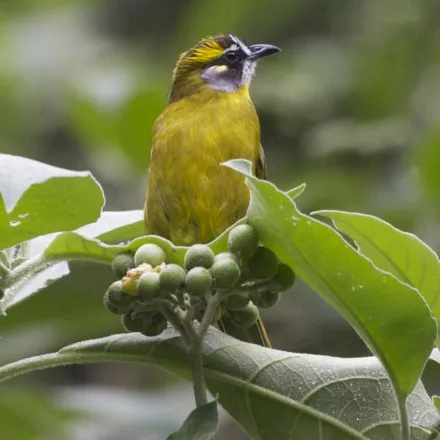
Yellow-eared Bulbul Common
Kelaartia penicillata
Olive-green above, yellow below, with a black crown, a white spot in front of the eye and a tufted yellow ear patch. Pairs and small parties feed on berries in montane forest and hill station gardens.
Where: Hill forest and hill station gardens above about 1,000 m. Best: Year round. Confined to the hills, and common once you are up there. Also on: Horton Plains and Nuwara Eliya, Knuckles Range, Ella and the Uva Highlands, Adam's Peak and Peak Wilderness.
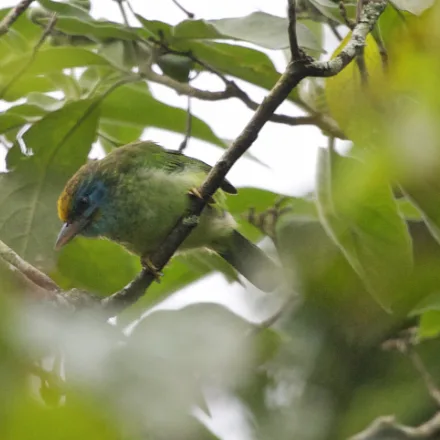
Yellow-fronted Barbet Common
Psilopogon flavifrons
Grass-green with a bright yellow forehead, blue cheeks and throat and a heavy pale bill. It sits still in the canopy while calling, which is why the sound is everywhere and the bird is nowhere.
Where: Wet zone and hill forest. Best: Year round. The monotonous call is one of the defining sounds of Sri Lankan forest. Also on: Sinharaja Forest Reserve, Kandy.
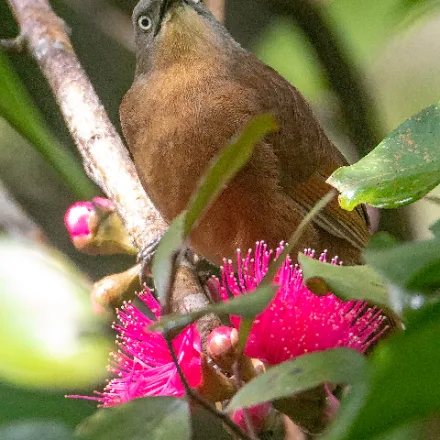
Ashy-headed Laughingthrush Regular Near Threatened
Argya cinereifrons
Warm rufous-brown with a contrasting ash-grey head and throat, moving in parties through the undergrowth and leaf litter, usually below knee height and usually behind a screen of vegetation.
Where: Good wet zone forest with dense understorey. Best: Year round. Near Threatened, and restricted to the better forest. Also on: Sinharaja Forest Reserve.
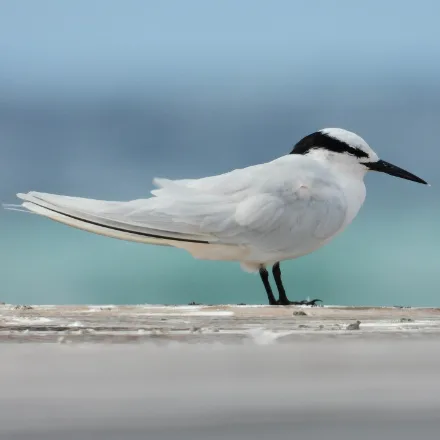
Black-naped Tern Regular
Sterna sumatrana
Black-naped terns feed in shallow inshore water, dipping to take small fish from the surface rather than plunge-diving deeply. They nest in small colonies on coral rubble and bare rock on offshore islets.
Where: Offshore islets and reef edges, including around Pigeon Island. Best: May to September on the east. Also on: Trincomalee and Pigeon Island.
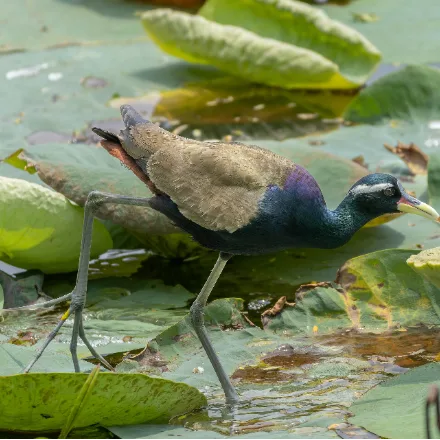
Bronze-winged Jacana Regular
Metopidius indicus
Glossy black head and breast, bronze-green back, deep chestnut tail and a broad white stripe over the eye. The feet are the giveaway: absurdly long toes spread across lily pads.
Where: Tanks and marshes with floating vegetation. Best: Year round. Polyandrous: the female holds the territory and the males incubate and raise the young alone. Also on: Colombo and the wetlands, Kumana National Park, Bundala National Park, Wasgamuwa National Park, Tangalle and Kalametiya, Minneriya and Kaudulla National Parks.
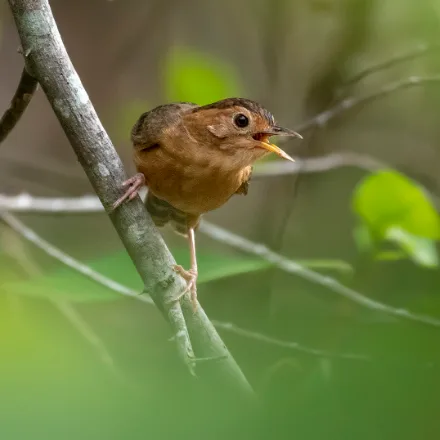
Brown-capped Babbler Regular
Pellorneum fuscocapillus
Warm brown above with a dark chocolate cap and buff underparts, creeping through leaf litter and the base of thickets, usually alone or in pairs.
Where: Leaf litter and thicket bases in forest across the island. Best: Year round. The clear rising three-note whistle is the easiest endemic call to learn. Also on: Sinharaja Forest Reserve, Wilpattu National Park.
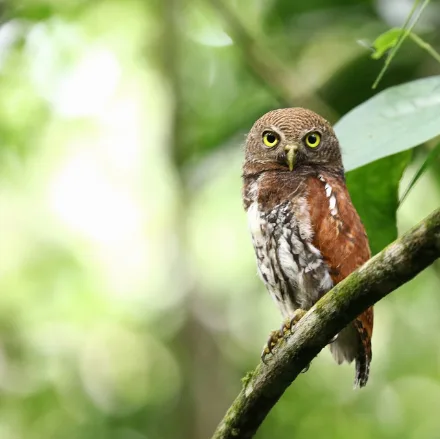
Chestnut-backed Owlet Regular
Glaucidium castanotum
Small and compact with a rich chestnut back, a barred grey head and bright yellow eyes. Unusually for an owl it is often active by day, perching in the open on a bare branch and calling a rolling series of notes.
Where: Wet zone and hill forest. Best: Year round, often active by day. The endemic owl a normal trip actually connects with. Also on: Sinharaja Forest Reserve, Kitulgala and the Makandawa Rainforest.
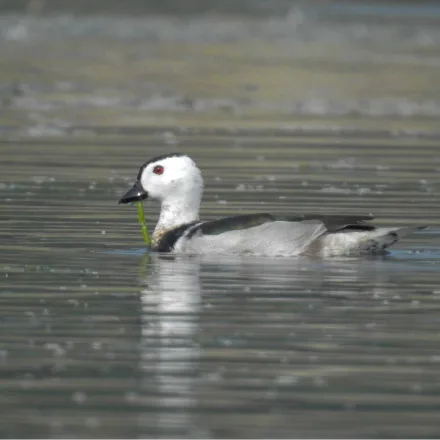
Cotton Pygmy Goose Regular
Nettapus coromandelianus
Tiny and neat, white headed with a dark cap and a dark breast band on the male, and a bold white wing bar that flashes in flight. Females are duller with a dark line through the eye.
Where: Vegetated tanks and marshes covered in lotus and water lily. Best: Year round. A perching duck that nests in tree cavities, which is not what anyone expects of a duck. Also on: Colombo and the wetlands, Bundala National Park, Kumana National Park, Minneriya and Kaudulla National Parks, Gal Oya National Park, Tangalle and Kalametiya.
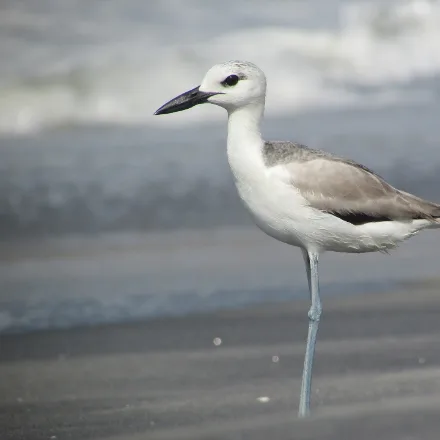
Crab-plover Regular
Dromas ardeola
Boldly pied, black and white, long grey legs and a heavy dagger of a black bill built to shear through crab shell. Flocks stand together on open sand and fly in tight lines low over the water.
Where: Tidal mudflats, sand spits and shallow lagoon shores on the northwest coast. Best: Aug-Apr. The only member of its family on earth, and the only wader that nests underground. Also on: Kalpitiya, Bundala National Park, Mannar and the Gulf of Mannar, Jaffna and the Northern Peninsula.
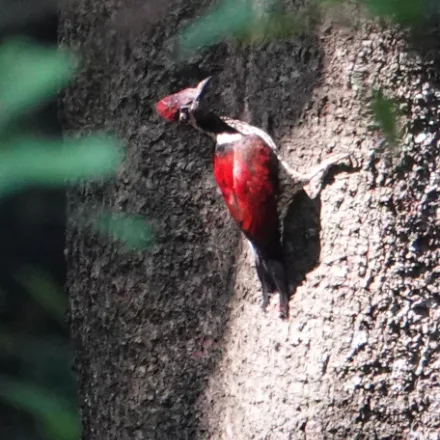
Crimson-backed Flameback Regular
Chrysocolaptes stricklandi
Large, with a deep crimson back and wings, a black and white striped face and neck and a pale bill. Males have a red crown, females a black crown spotted white.
Where: Forest and well-wooded country across the island. Best: Year round. One of the easier endemics, and loud enough to find by ear. Also on: Sinharaja Forest Reserve, Yala National Park.
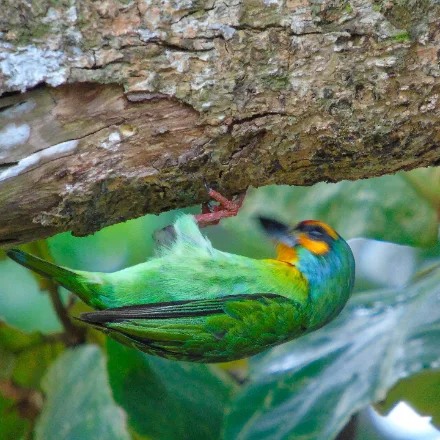
Crimson-fronted Barbet Regular
Psilopogon rubricapillus
A small green barbet with a crimson forehead and throat patch, blue cheeks and a black eye stripe. It feeds on figs and other small fruit in the canopy.
Where: Lowland forest, plantation and garden, including the dry zone. Best: Year round. Crimson forehead separates it from the yellow-fronted barbet of the wet zone and hills. Also on: Yala National Park, Kandy.
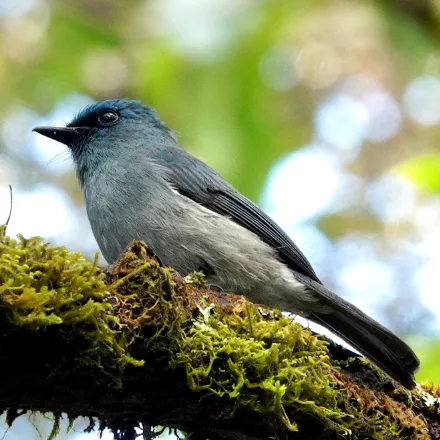
Dull-blue Flycatcher Regular Near Threatened
Eumyias sordidus
Uniform ashy blue with a darker face and a paler belly, perching upright and still on a low branch before sallying out after an insect and returning to the same spot.
Where: Montane forest above about 600 m. Best: Year round. Near Threatened and tied to the highland forest that remains. Also on: Horton Plains and Nuwara Eliya, Knuckles Range, Ella and the Uva Highlands, Adam's Peak and Peak Wilderness.
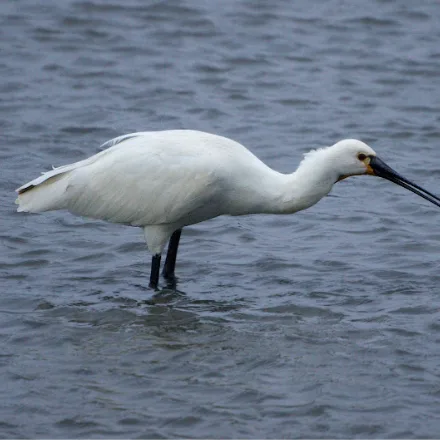
Eurasian Spoonbill Regular
Platalea leucorodia
All white and heron-like until you see the bill: long, flattened and spatulate at the tip, black with a yellow end. Flies with the neck extended, which separates it instantly from any egret.
Where: Shallow lagoons, salt pans and tank margins. Best: Oct-Apr, some birds year round. Feeds by touch, sweeping the bill in arcs, so it can keep going after dark. Also on: Bundala National Park, Kumana National Park, Kalpitiya, Mannar and the Gulf of Mannar, Tangalle and Kalametiya, Jaffna and the Northern Peninsula.
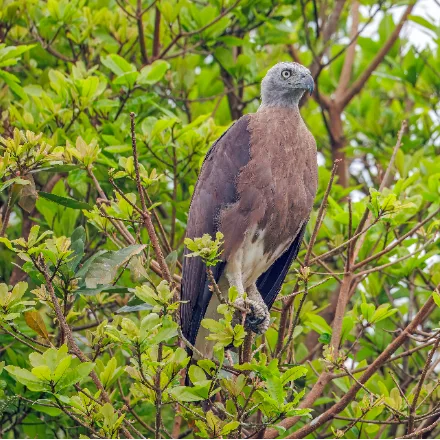
Grey-headed Fish Eagle Regular Near Threatened
Icthyophaga ichthyaetus
Grey head and neck, brown wings and back, and a clean white belly with a white tail ending in a broad black band. That tail pattern is diagnostic and visible at distance.
Where: Slow fresh water: tanks, oxbows and forested rivers. Best: Year round. Near Threatened, and a sit and wait hunter, so scan bare branches over water rather than the sky. Also on: Wilpattu National Park, Yala National Park, Wasgamuwa National Park, Tangalle and Kalametiya, Gal Oya National Park, Minneriya and Kaudulla National Parks.
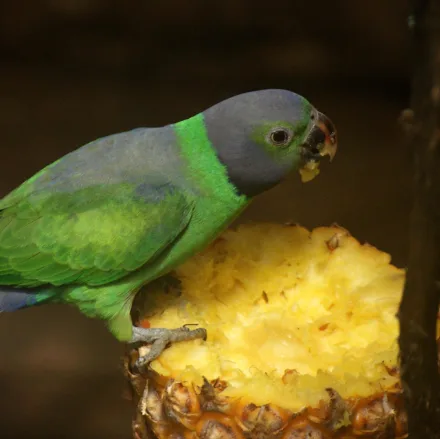
Layard's Parakeet Regular
Psittacula calthrapae
Bluish-grey head and body with a distinct green collar and rump, a long blue tail and a bright red upper mandible. Small noisy flocks move between fruiting trees in forest and plantation.
Where: Wet zone and hill forest, thinning into the dry zone. Best: Year round. Grey-blue where the rose-ringed parakeet is green all through. Also on: Sinharaja Forest Reserve, Kandy.
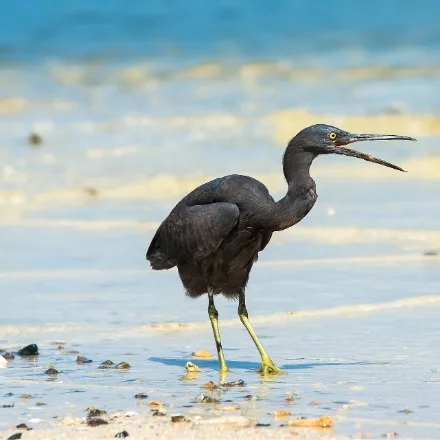
Pacific Reef Heron Regular
Egretta sacra
Pacific reef herons hunt on rocky shores and coral reef flats at low tide, stalking fish in a crouched, horizontal posture. The species has a persistent colour dimorphism, with dark and white morphs interbreeding freely.
Where: Rocky shores and reef flats at low tide on both coasts. Best: Year round. Two colour morphs, charcoal grey and pure white, and both can come from the same nest. Also on: Jaffna and the Northern Peninsula, Mannar and the Gulf of Mannar.
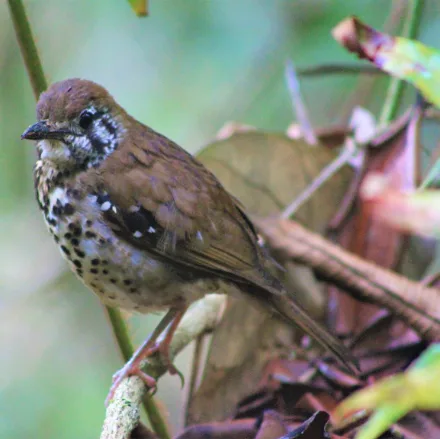
Spot-winged Thrush Regular Near Threatened
Geokichla spiloptera
Olive-brown above with two bold white wing spots and heavily black-spotted white underparts, plus a striped face pattern. It feeds on the ground and in low branches and sings a rich fluting song at dawn and dusk.
Where: Understorey and forest floor in wet zone and hill forest. Best: Year round, sings at dawn and dusk. The best singer in Sri Lankan forest. Also on: Sinharaja Forest Reserve, Kandy.
Sri Lanka Blue Magpie Regular Vulnerable
Urocissa ornata
The blue magpie is the bird people mean when they say they want to see Sinharaja. Deep cobalt body, chestnut head and wings, a long white-tipped tail and a scarlet bill and eye ring. Family parties move through the mid storey calling to each other in a strange ringing chatter, and they are bold enough to work a trail edge a few metres from a stationary group of people.
Where: Wet zone rainforest of the southwest; Sinharaja and Kitulgala. Best: Year round, best Jan-Apr. Confined to a small and shrinking band of the island, and unmistakable when you find it. Also on: Sinharaja Forest Reserve, Kanneliya Forest Reserve.
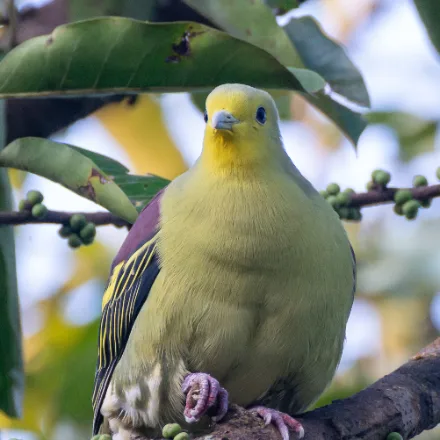
Sri Lanka Green Pigeon Regular
Treron pompadora
Bright yellow-green with a grey crown, a maroon back on the male and a pale bill. Flocks gather quietly in fruiting trees and are extremely hard to pick out until one shifts.
Where: Fruiting trees in forest and wooded country across the island. Best: Year round. A fruiting fig will often hold a dozen birds nobody has noticed. Also on: Sinharaja Forest Reserve, Wilpattu National Park.
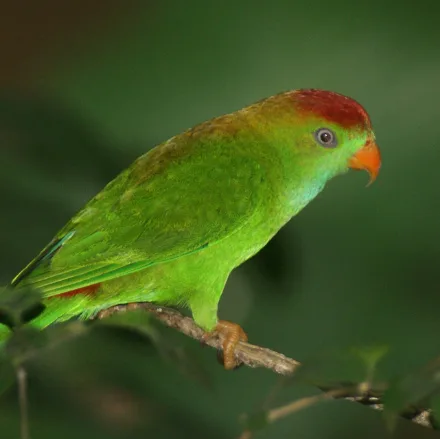
Sri Lanka Hanging Parrot Regular
Loriculus beryllinus
Tiny, bright green, with a red crown and rump and an orange wash on the back. Flocks fly over fast and high with a thin whistling call, and they feed at flowering and fruiting trees, often hanging inverted.
Where: Wet zone and hill forest and plantation. Best: Year round. Small, fast and usually overhead, so it is easily missed. Also on: Sinharaja Forest Reserve, Kandy.
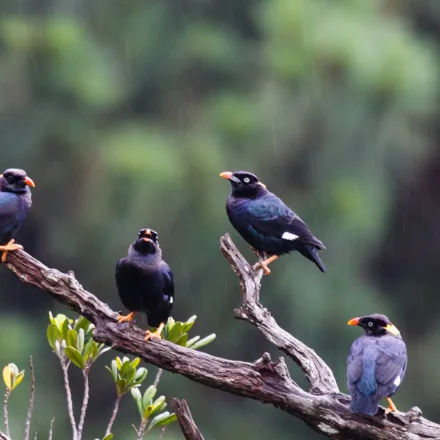
Sri Lanka Hill Myna Regular Near Threatened
Gracula ptilogenys
Heavy glossy black myna with an orange-red bill and a single pair of wattles at the back of the head. It calls a loud ringing whistle from an exposed canopy perch, often in pairs.
Where: Canopy and dead snags in wet zone forest. Best: Year round. Check the wattles: one pair on the nape, not running under the eye. Also on: Sinharaja Forest Reserve.
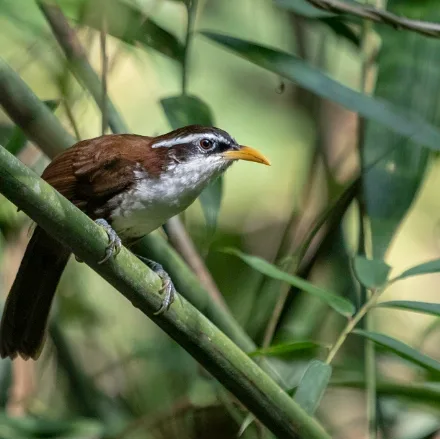
Sri Lanka Scimitar Babbler Regular
Pomatorhinus melanurus
Brown above and white below with a bold white eyebrow and a long decurved yellow bill. Pairs work through tangled undergrowth and low branches, calling to each other in an antiphonal duet.
Where: Tangled undergrowth in wet zone and hill forest. Best: Year round. Learn the duet: one bird hoots and the partner answers instantly. Also on: Sinharaja Forest Reserve, Kandy.
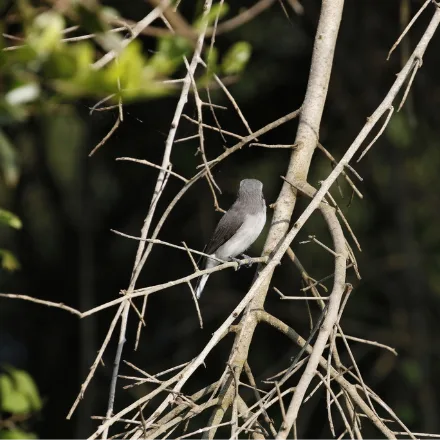
Sri Lanka Woodshrike Regular
Tephrodornis affinis
Grey-brown above with a dark mask through the eye and pale underparts, perching upright on an exposed branch and dropping onto insects.
Where: Dry zone scrub and lowland wooded country. Best: Year round. Plain looking, endemic, and on every dry zone drive if anyone is watching the branches. Also on: Yala National Park, Wilpattu National Park, Minneriya and Kaudulla National Parks.
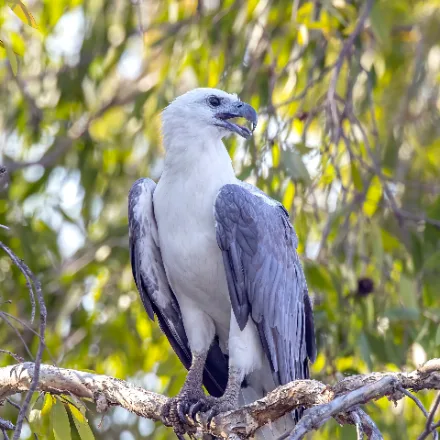
White-bellied Sea Eagle Regular
Haliaeetus leucogaster
A very large raptor with a white head and underparts, grey back and wedge-shaped tail, soaring over coasts, islands and estuaries. It plucks fish and sea snakes from the water and takes carrion.
Where: Coastal cliffs, lagoons, estuaries and the larger dry zone tanks. Best: Year round. Pairs hold the same stretch of coast for years and both birds usually hunt within sight of each other.
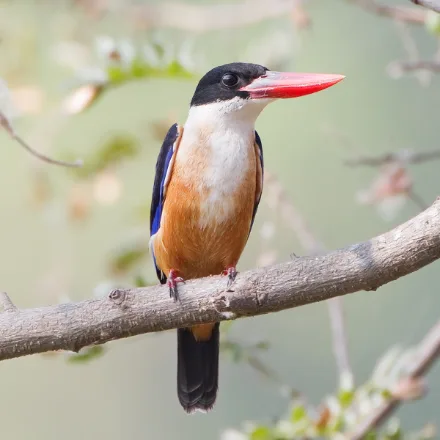
Black-capped Kingfisher Occasional
Halcyon pileata
A large kingfisher with a black cap, white collar, purple-blue wings and back, and a big red bill. It favours mangroves, estuaries and coastal creeks, diving for fish and crabs.
Where: Mangrove creeks, lagoon margins and shaded coastal channels. Best: October to April, on the northeast monsoon migration. A winter migrant here, and now assessed Vulnerable after a status change most guides have not caught up with.
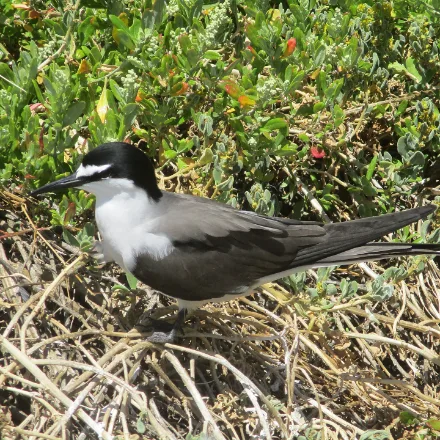
Bridled Tern Occasional
Onychoprion anaethetus
Bridled terns are pelagic outside the breeding season, hovering over bait balls pushed up by predatory fish. A narrow white forehead band extends behind the eye, which is what gives the bridled name.
Where: Offshore water and rocky islets, well away from the beach. Best: May to September. Also on: Trincomalee and Pigeon Island.
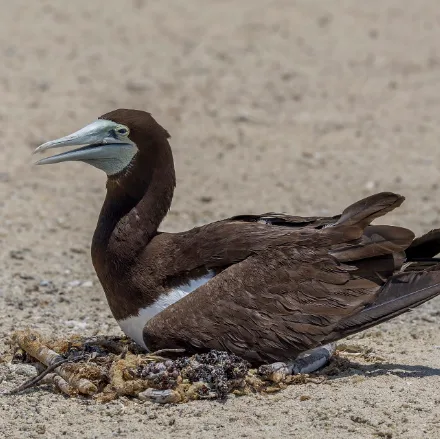
Brown Booby Occasional
Sula leucogaster
Brown boobies plunge-dive vertically for fish and squid, folding the wings back at the last moment to become an arrow. Reinforced skulls and subcutaneous air sacs cushion the impact.
Where: Blue water beyond the shelf edge, often following boats. Best: December to April off the south and west. Usually seen from a whale watching boat rather than from land.
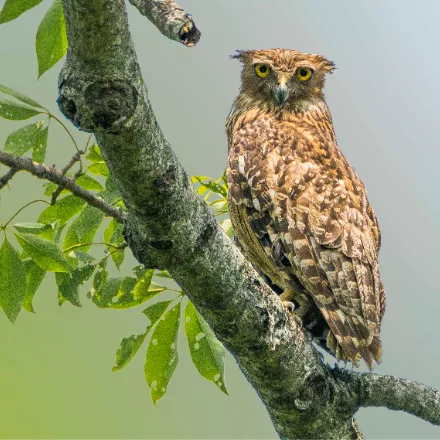
Brown Fish Owl Occasional
Ketupa zeylonensis
Heavy, warm brown and streaked, with shaggy sideways-splayed ear tufts and startling yellow eyes. The legs and toes are unfeathered and the soles are rough and spiny, which is how it holds a wet fish.
Where: Wooded rivers, tanks and irrigation channels in the lowlands. Best: Year round. Bare unfeathered legs, because feathers would be a liability when you fish with your feet. Also on: Yala National Park, Wilpattu National Park, Udawalawe National Park, Kandy, Sigiriya, Dambulla and the Cultural Triangle, Minneriya and Kaudulla National Parks.
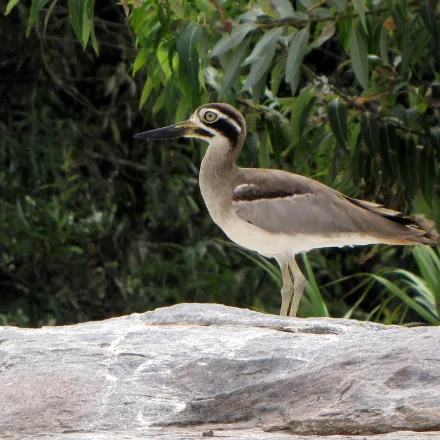
Great Thick-knee Occasional Near Threatened
Esacus recurvirostris
Sandy grey-brown, thickset, with an enormous yellow eye and a heavy black bill upturned at the tip. Stands still for long periods, which is the main reason people walk past it.
Where: Open shingle, sandbars, dry lagoon shores and riverbeds. Best: Year round. Near Threatened, largely crepuscular, and found by scanning bare ground rather than water. Also on: Bundala National Park, Kalpitiya, Kumana National Park, Yala National Park, Mannar and the Gulf of Mannar, Arugam Bay and the East Coast Lagoons.
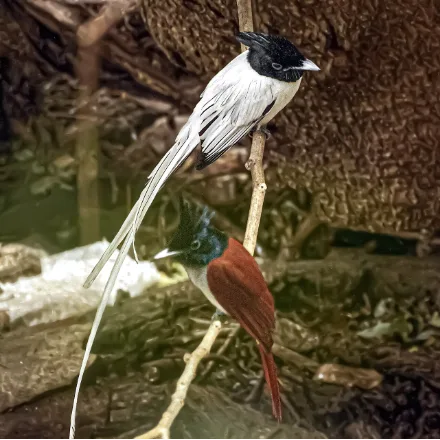
Indian Paradise Flycatcher Occasional
Terpsiphone paradisi
Glossy black crested head with a blue eye ring, and a body that is either bright rufous or pure white depending on the bird's age and morph. Adult males carry two central tail feathers to 30 cm or more.
Where: Forest, forest edge, plantations and wooded gardens. Best: Year round, more birds Oct-Apr. Both resident and migrant here, which is why it can turn up in most months. Also on: Sinharaja Forest Reserve, Kandy, Knuckles Range, Wilpattu National Park.
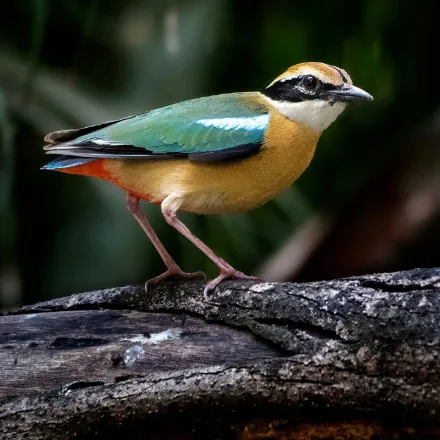
Indian Pitta Occasional
Pitta brachyura
Green above, buff below, with a scarlet vent, a bright blue shoulder patch and a bold black and white striped head. Short tailed, long legged, and almost always on the ground.
Where: Shaded leaf litter in forest, scrub, plantations and large gardens. Best: Oct-Apr only. A winter visitor from India, and absent entirely from May to September. Also on: Sinharaja Forest Reserve, Kandy, Knuckles Range, Colombo and the wetlands, Ella and the Uva Highlands.
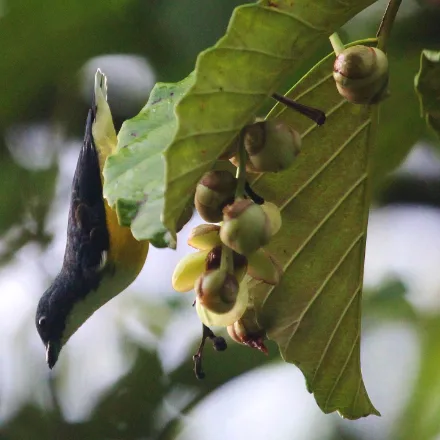
Legge's Flowerpecker Occasional Near Threatened
Dicaeum vincens
Very small, blue-black above with a white throat and belly and a yellow wash on the flanks. It feeds on small fruit and nectar high in the canopy, moving constantly.
Where: Canopy of wet zone forest. Best: Year round. Near Threatened. Size and speed are the obstacles rather than rarity. Also on: Sinharaja Forest Reserve.
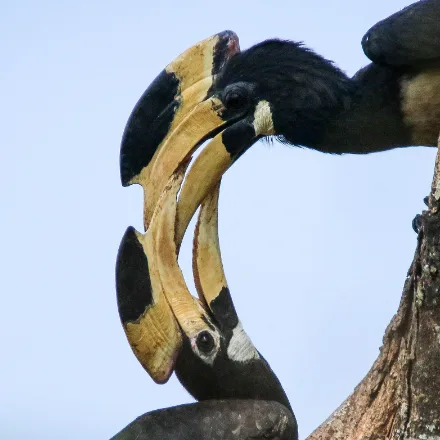
Malabar Pied Hornbill Occasional Near Threatened
Anthracoceros coronatus
Black and white with a huge yellow bill topped by a heavy casque, black at the front. Flies with deep noisy wingbeats that you hear before the bird appears, and the call is a raucous cackling laugh.
Where: Dry zone woodland, riverine forest and large fruiting trees. Best: Year round. The island's larger hornbill, sharing the dry zone with the endemic grey hornbill. Also on: Wilpattu National Park, Yala National Park, Kumana National Park, Wasgamuwa National Park, Sigiriya, Dambulla and the Cultural Triangle, Minneriya and Kaudulla National Parks.
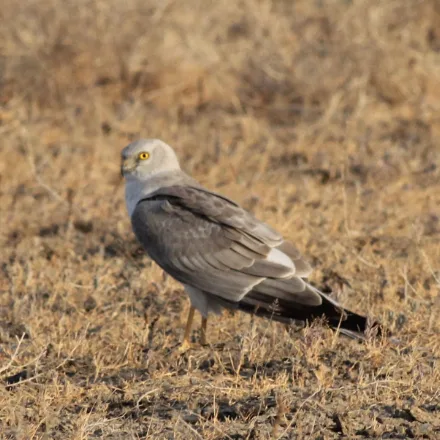
Pallid Harrier Occasional Near Threatened
Circus macrourus
Males are almost ghostly: very pale grey above, white below, with a narrow black wedge at the wingtip. Females and young are brown with a banded tail and a pale collar. Wings held in a shallow V.
Where: Open grassland, salt pan margins, scrub and paddy. Best: Oct-Apr. Near Threatened, and a bird that has crossed from the Central Asian steppe to get here. Also on: Bundala National Park, Udawalawe National Park, Kumana National Park, Yala National Park, Jaffna and the Northern Peninsula.
Red-faced Malkoha Occasional Vulnerable
Phaenicophaeus pyrrhocephalus
Green-black above, white below, with a very long white-tipped tail and a startling patch of bare scarlet skin around the eye. It moves through the upper canopy slowly and quietly, clambering rather than flying, which is exactly why it is missed.
Where: Undisturbed wet zone forest with closed canopy. Best: Year round. Vulnerable, uncommon, and the bird most Sinharaja trips fail on. Also on: Sinharaja Forest Reserve.
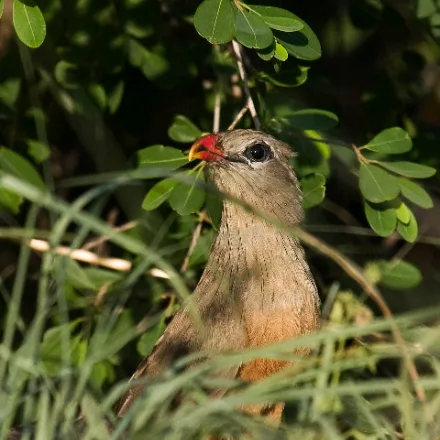
Sirkeer Malkoha Occasional
Taccocua leschenaultii
Sandy olive-brown with a long graduated tail tipped white, and a striking cherry red bill with a yellow tip. Skulks low in thorn scrub and is more often glimpsed running than seen in flight.
Where: Dry zone thorn scrub and open woodland. Best: Year round. A cuckoo that builds its own nest and raises its own young, which surprises people. Also on: Yala National Park, Bundala National Park, Wilpattu National Park, Jaffna and the Northern Peninsula, Kumana National Park, Mannar and the Gulf of Mannar.
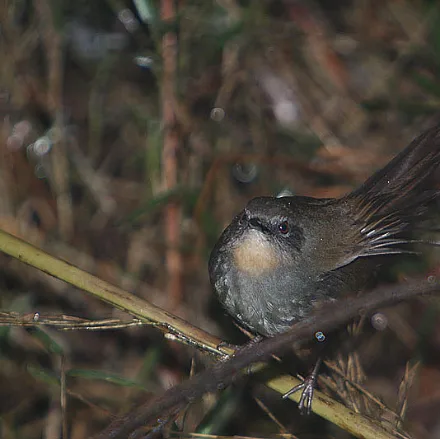
Sri Lanka Bush Warbler Occasional Near Threatened
Elaphrornis palliseri
Plain olive-brown with a long graduated tail and a red eye, creeping through dense montane scrub and bamboo. It is far more often located by its sharp call than by sight.
Where: Dense montane scrub and bamboo above about 1,000 m. Best: Year round. Near Threatened, and heard far more than seen. Also on: Horton Plains and Nuwara Eliya, Knuckles Range, Adam's Peak and Peak Wilderness.
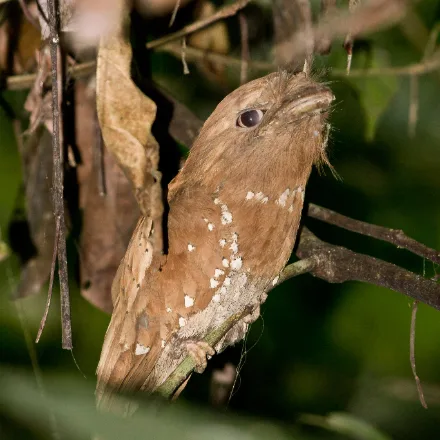
Sri Lanka Frogmouth Occasional
Batrachostomus moniliger
A squat nocturnal bird with an enormous flat gape, huge dark eyes and cryptic plumage. Males are grey, females warm rufous. Pairs roost pressed together on a low horizontal branch and rely entirely on not being noticed.
Where: Low horizontal branches in wet zone forest understorey. Best: Year round. Roost sites are traditional and known to local guides. Without one your chances are near zero. Also on: Sinharaja Forest Reserve, Kitulgala and the Makandawa Rainforest.
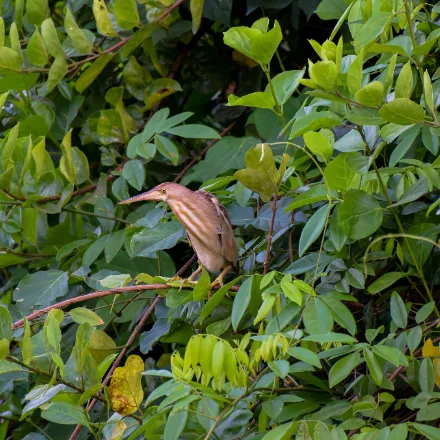
Yellow Bittern Occasional
Ixobrychus sinensis
Small, buff and yellowish, with contrasting blackish flight feathers that only show when it flushes. Climbs about reed stems on long toes rather than wading.
Where: Reedbeds, paddy and marsh across the lowlands. Best: Year round. Common but almost never seen well, because the freeze posture genuinely works. Also on: Colombo and the wetlands, Bundala National Park, Kumana National Park, Tangalle and Kalametiya, Minneriya and Kaudulla National Parks, Rekawa and Kosgoda.
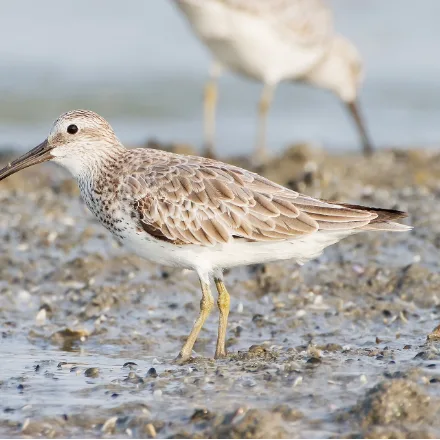
Great Knot Rare Endangered
Calidris tenuirostris
Great knots breed in northeast Siberia and winter in Australasia, staging on Yellow Sea mudflats to double their body weight. Reclamation of those staging grounds caused a population crash of more than twenty percent in a single decade.
Where: Tidal mudflats and salt pans, especially around Mannar and the Puttalam lagoon. Best: October to April. An Endangered long distance migrant and a scarce visitor here. Also on: Mannar and the Gulf of Mannar.
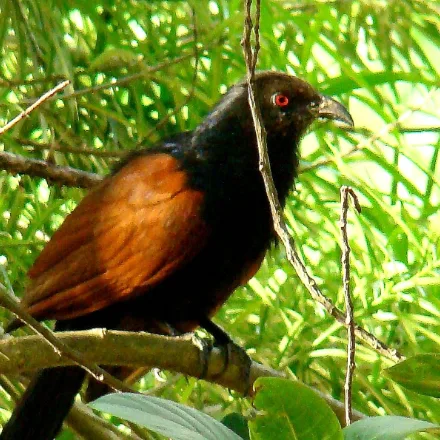
Green-billed Coucal Rare Vulnerable
Centropus chlororhynchos
Black-headed with a chestnut back and a thick pale green bill, larger and darker than the common greater coucal. It creeps through dense bamboo and rattan thickets in wet zone forest and calls a deep hollow booming note.
Where: Dense bamboo and rattan thickets in wet zone forest. Best: Year round. Vulnerable and thinly spread. Most claimed sightings are the common greater coucal. Also on: Sinharaja Forest Reserve, Kitulgala and the Makandawa Rainforest.
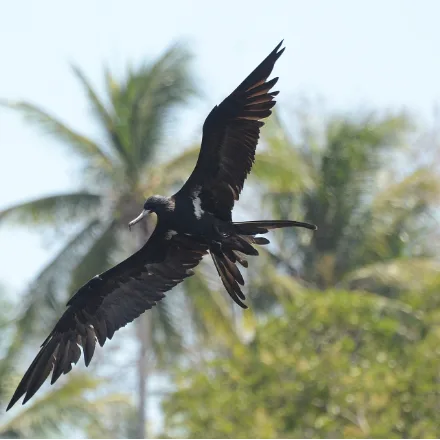
Lesser Frigatebird Rare
Fregata ariel
Frigatebirds have the largest wing area to body weight ratio of any bird and almost no waterproofing, so they snatch prey from the surface without landing. They also pirate food by harassing other seabirds until they disgorge their catch.
Where: High over offshore water, harassing terns and boobies for their catch. Best: December to April off the south and west. It does not fish. It robs, which is what the long angular wings are for.
Serendib Scops Owl Rare Endangered
Otus thilohoffmanni
A small rufous owl with no ear tufts to speak of, black-spotted upperparts and pale orange-yellow eyes. It calls a soft, low, downward whistle at dusk from dense understorey, which is how it was found and how it is still located.
Where: A handful of wet zone forest fragments. Best: Year round, calls at dusk. Endangered, tiny population, and only described in 2004. Also on: Sinharaja Forest Reserve.
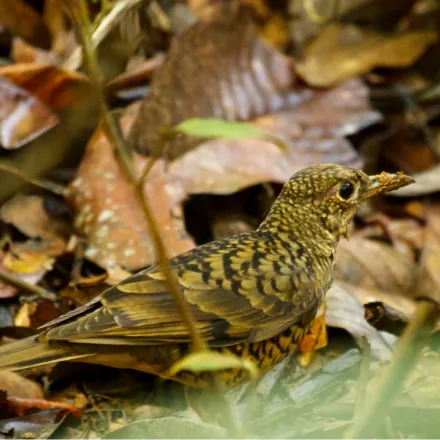
Sri Lanka Scaly Thrush Rare Near Threatened
Zoothera imbricata
Heavy-bodied and olive-brown, the whole plumage marked with dark crescents that give a scaled effect. It feeds quietly in leaf litter in the darkest parts of the forest interior.
Where: Deep leaf litter in the interior of wet zone and hill forest. Best: Year round. Near Threatened and a bird of very low light. Also on: Sinharaja Forest Reserve, Knuckles Range, Adam's Peak and Peak Wilderness.
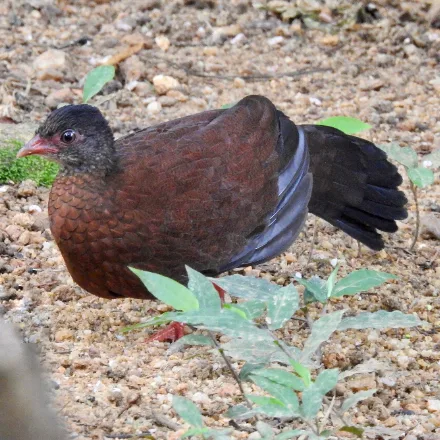
Sri Lanka Spurfowl Rare
Galloperdix bicalcarata
Males are dark with bold white spotting and a red face; females are chestnut. Both keep to dense undergrowth and thick bamboo, walking away from disturbance rather than flushing.
Where: Dense undergrowth and bamboo in wet zone forest. Best: Year round, calls at dawn. Not rare, simply almost impossible to see. The call is standard; the bird is not. Also on: Sinharaja Forest Reserve, Kitulgala and the Makandawa Rainforest.
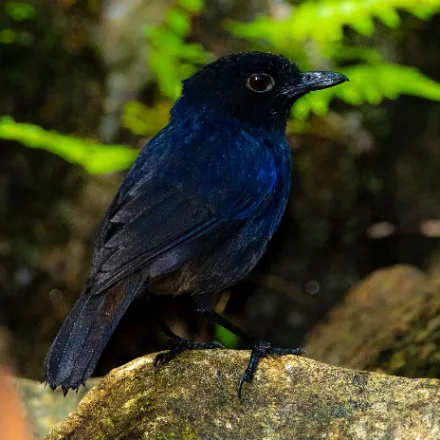
Sri Lanka Whistling Thrush Rare Endangered
Myophonus blighi
Males are blackish with a shining blue shoulder patch and forehead; females are browner. It keeps to shaded, fast-running streams in montane forest, feeding on the wet rocks and margins, and it is far more often heard than seen.
Where: Shaded fast-running streams in montane forest above 900 m. Best: Year round, first light. Endangered, with a population thought to be under a thousand mature birds. Also on: Horton Plains and Nuwara Eliya, Adam's Peak and Peak Wilderness.
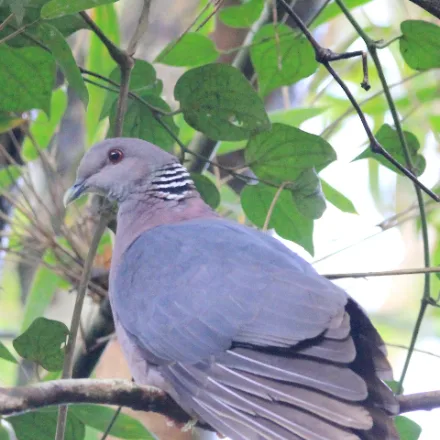
Sri Lanka Wood Pigeon Rare Vulnerable
Columba torringtoniae
Large and dark grey with a distinctive black and white chequered patch on the hind neck and a purple-grey wash to the breast. Usually seen singly, flying fast between patches of montane canopy.
Where: Montane and submontane forest, heavily fragmented by tea. Best: Year round. Vulnerable, and going the way of the forest it needs. Also on: Horton Plains and Nuwara Eliya, Knuckles Range, Ella and the Uva Highlands, Adam's Peak and Peak Wilderness.
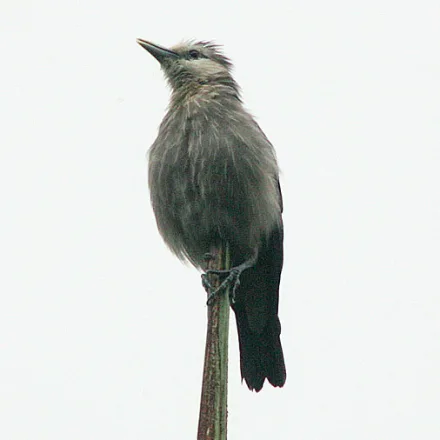
White-faced Starling Rare Endangered
Sturnornis albofrontatus
Dark glossy grey-green above with a white forehead and face and pale streaked underparts. It feeds high in the canopy on fruit, usually in small parties, and rarely comes low.
Where: Canopy of undisturbed wet zone rainforest. Best: Year round. Endangered and one of the scarcest endemics. Also on: Sinharaja Forest Reserve.
Planning
The endemics are wet zone birds, so Sinharaja, Kitulgala and Kanneliya carry most of the list, with the hill country adding the montane specialists. Go early: the mixed species feeding flock at Sinharaja is the single most productive hour of birding in the country and it moves through in the first half of the morning. For waterbirds and wintering migrants, Bundala and the southern lagoons peak from December to March. The owls and the spurfowl are the hardest of the endemics to see, and dawn on a forest trail is worth more for them than any other tactic.
Find guided birding trips and rainforest walks in Sri Lanka
Some links on this page are affiliate links. If you book through them, Wildseer may earn a small commission at no extra cost to you.
Frequently asked questions
How many endemic birds does Sri Lanka have?
Thirty-four species are endemic to the island. Almost all of them can be found in the wet zone rainforest and the hill country, which is why a birding itinerary here looks nothing like a safari itinerary.
Where is the best birdwatching in Sri Lanka?
Sinharaja for the rainforest endemics and the mixed feeding flock, the Horton Plains and Nuwara Eliya area for the montane species, and Bundala for waterbirds and wintering migrants. Kitulgala and Kanneliya are quieter alternatives to Sinharaja with much of the same list.
When is the best time for birdwatching in Sri Lanka?
December to March, when the northern migrants are in and the wet zone forests are in a drier spell. The endemics are resident and findable year round, so the migrant season is what makes the difference to a trip list.
What is the Sri Lanka blue magpie?
An endemic corvid of the wet zone rainforest, chestnut and cobalt with a red bill and eye ring, and one of the most striking birds in South Asia. It moves in noisy family parties and is close to a guaranteed sighting at Sinharaja.
Explore Sri Lanka wildlife by group
 Mammals of Sri Lanka
 Reptiles and amphibians of Sri Lanka
 Fish of Sri Lanka
 Sharks and rays of Sri Lanka
 Reef invertebrates of Sri Lanka
 Insects and spiders of Sri Lanka
Part of the Wildlife in Sri Lanka guide.
Explore Sri Lanka wildlife by place
- Adams Peak wildlife
- Arugam Bay marine life
- Bundala wildlife
- Colombo wildlife
- Ella wildlife
- Gal Oya wildlife
- Great Basses marine life
- Hikkaduwa marine life
- Horton Plains wildlife
- Jaffna wildlife
- Kalpitiya marine life
- Kandy wildlife
- Kanneliya wildlife
- Kitulgala wildlife
- Knuckles wildlife
- Kumana wildlife
- Mannar marine life
- Minneriya wildlife
- Mirissa marine life
- Rekawa marine life
- Sigiriya wildlife
- Sinharaja wildlife
- Tangalle marine life
- Trincomalee marine life
- Udawalawe wildlife
- Wasgamuwa wildlife
- Wilpattu wildlife
- Yala wildlife
Image credits
Square thumbnails are cropped from the original. Wide banner images are cropped to a band. Other images are resized only. No other changes have been made.
- White-throated kingfisher on a branch: kanchana Amilani | Unsplash License, cropped
- Sri Lanka Blue Magpie: Gerry Zambonini | CC BY-SA 2.0, cropped
- Serendib Scops Owl: Kasun withanage | CC BY-SA 4.0, cropped
- Red-faced Malkoha: Dineth Bamunusingha | CC BY-SA 4.0, cropped
- Sri Lanka Junglefowl: eamonccorbett | CC BY 4.0, cropped
- Greater Flamingo: Charles J. Sharp | CC BY-SA 4.0, cropped
- Black-capped Bulbul: Thimindu Goonatillake from Denver, USA | CC BY-SA 2.0, cropped
- Black-headed Ibis: Tisha Mukherjee | CC BY-SA 4.0, cropped
- Brahminy Kite (cropped to square): Charles J. Sharp | CC BY-SA 4.0, cropped
- Indian Peafowl: Joshianuj | CC BY-SA 4.0, cropped
- Little Tern (cropped to square): Afsarnayakkan | CC BY-SA 4.0, cropped
- Orange-billed Babbler: Iain Robson from UK | CC BY 2.0, cropped
- Pied Kingfisher: Charles J. Sharp | CC BY-SA 4.0, cropped
- Red-backed Flameback: Rehman Abubakr | CC BY-SA 4.0, cropped
- Spot-billed Pelican: Charles J. Sharp | CC BY-SA 4.0, cropped
- Sri Lanka Drongo: William Stephens | CC BY 4.0, cropped
- Sri Lanka Grey Hornbill: Pinkstg | CC BY 3.0, cropped
- Sri Lanka Swallow: William Stephens | CC BY 4.0, cropped
- Yellow-eared Bulbul: Lip Kee from Singapore, Republic of Singapore | CC BY-SA 2.0, cropped
- Yellow-fronted Barbet: Lip Kee Yap from Singapore, Republic of Singapore | CC BY-SA 2.0, cropped
- Ashy-headed Laughingthrush: Punitha Satharasinnghe | CC BY-SA 4.0, cropped
- Black-naped Tern (cropped to square): panjigusti | CC BY 4.0, cropped
- Bronze-winged Jacana: Tisha Mukherjee | CC BY-SA 4.0, cropped
- Brown-capped Babbler: Griha Hasanov | CC BY 4.0, cropped
- Chestnut-backed Owlet: Rangana Abeyrathne | CC BY-SA 4.0, cropped
- Cotton Pygmy Goose: Tisha Mukherjee | CC BY-SA 4.0, cropped
- Crab-plover: AL BADUSH | CC BY-SA 4.0, cropped
- Crimson-backed Flameback: Matthew Blissett | CC BY 4.0, cropped
- Crimson-fronted Barbet: R.M.S. Ratnayake | CC BY-SA 4.0, cropped
- Dull-blue Flycatcher: desertnaturalist | CC BY 4.0, cropped
- Eurasian Spoonbill: Ian Kirk from Broadstone, Dorset, UK | CC BY 2.0, cropped
- Grey-headed Fish Eagle: Charles J. Sharp | CC BY-SA 4.0, cropped
- Layard’s Parakeet: Hafiz Issadeen | CC BY 2.0, cropped
- Pacific Reef Heron (cropped to square): Rushen | CC BY-SA 2.0, cropped
- Spot-winged Thrush: Imasha De Saram | CC BY-SA 4.0, cropped
- Sri Lanka Green Pigeon: Satdeep Gill | CC BY 4.0, cropped
- Sri Lanka Hanging Parrot: Hafiz Issadeen | CC BY 2.0, cropped
- Sri Lanka Hill Myna: Thimindu Goonatillake from Colombo, Sri Lanka | CC BY-SA 2.0, cropped
- Sri Lanka Scimitar Babbler: Punitha Satharasinnghe | CC BY-SA 4.0, cropped
- Sri Lanka Woodshrike: Mickey Wu | CC BY 4.0, cropped
- White-bellied Sea Eagle (cropped to square): Charles J. Sharp | CC BY-SA 4.0, cropped
- Black-capped Kingfisher (cropped to square): JJ Harrison ( https://www.jjharrison.com.au/ ) | CC BY-SA 3.0, cropped
- Bridled Tern (cropped to square): Calistemon | CC BY-SA 4.0, cropped
- Brown Booby (cropped to square): Charles J. Sharp | CC BY-SA 4.0, cropped
- Brown Fish Owl: Hedayeat Ullah | CC BY-SA 4.0, cropped
- Great Thick-knee: Cyndy Sims Parr | CC BY-SA 2.0, cropped
- Indian Paradise Flycatcher: Drsssuresh1961 | CC0, cropped
- Indian Pitta: Navonil Dutta | CC BY-SA 4.0, cropped
- Legge’s Flowerpecker: Sandhillcrane | CC BY-SA 4.0, cropped
- Malabar Pied Hornbill: @Vikas patil photography | CC BY-SA 4.0, cropped
- Pallid Harrier: Chinmayisk | CC BY-SA 3.0, cropped
- Sirkeer Malkoha: N.A.Nazeer | CC BY-SA 2.5 in, cropped
- Sri Lanka Bush Warbler: Steve Garvie from Dunfermline, Fife, Scotland | CC BY-SA 2.0, cropped
- Sri Lanka Frogmouth: Mike Prince from Bangalore, India | CC BY 2.0, cropped
- Yellow Bittern: Vinay bhat | CC BY-SA 4.0, cropped
- Great Knot (cropped to square): JJ Harrison ( https://www.jjharrison.com.au/ ) | CC BY-SA 3.0, cropped
- Green-billed Coucal: Amila Tennakoon | CC BY 2.0, cropped
- Lesser Frigatebird (cropped to square): Ariefrahman | CC BY-SA 4.0, cropped
- Sri Lanka Scaly Thrush: Thimindu Goonatillake from Denver, USA | CC BY-SA 2.0, cropped
- Sri Lanka Spurfowl: Michael Hurben | CC BY-SA 4.0, cropped
- Sri Lanka Whistling Thrush: Kasun withanage | CC BY-SA 4.0, cropped
- Sri Lanka Wood Pigeon: Anuradha Amarakoon | CC BY-SA 4.0, cropped
- White-faced Starling: Steve Garvie from Dunfermline, Fife, Scotland | CC BY-SA 2.0, cropped
- Purple-faced langur in the canopy: kanchana Amilani | Unsplash License, cropped
- Green forest lizard in breeding colour: Anas Mohamed Nuski | Pexels Licence, cropped
- Bluestripe snapper over a reef: Jeffry Surianto | Pexels Licence, cropped
- Reef manta rays near the surface: Emma Li | Pexels Licence, cropped
- Nudibranch crossing the sea floor: Chris Spain | Pexels Licence, cropped
- Clipper butterfly on a leaf: Pixabay | Pexels Licence, cropped
Square thumbnails are cropped from the original. Wide banner images are cropped to a band. Other images are resized only. No other changes have been made.
- White-throated kingfisher on a branch: kanchana Amilani | Unsplash License, cropped
- Sri Lanka Blue Magpie: Gerry Zambonini | CC BY-SA 2.0, cropped
- Serendib Scops Owl: Kasun withanage | CC BY-SA 4.0, cropped
- Red-faced Malkoha: Dineth Bamunusingha | CC BY-SA 4.0, cropped
- Sri Lanka Junglefowl: eamonccorbett | CC BY 4.0, cropped
- Greater Flamingo: Charles J. Sharp | CC BY-SA 4.0, cropped
- Black-capped Bulbul: Thimindu Goonatillake from Denver, USA | CC BY-SA 2.0, cropped
- Black-headed Ibis: Tisha Mukherjee | CC BY-SA 4.0, cropped
- Brahminy Kite (cropped to square): Charles J. Sharp | CC BY-SA 4.0, cropped
- Indian Peafowl: Joshianuj | CC BY-SA 4.0, cropped
- Little Tern (cropped to square): Afsarnayakkan | CC BY-SA 4.0, cropped
- Orange-billed Babbler: Iain Robson from UK | CC BY 2.0, cropped
- Pied Kingfisher: Charles J. Sharp | CC BY-SA 4.0, cropped
- Red-backed Flameback: Rehman Abubakr | CC BY-SA 4.0, cropped
- Spot-billed Pelican: Charles J. Sharp | CC BY-SA 4.0, cropped
- Sri Lanka Drongo: William Stephens | CC BY 4.0, cropped
- Sri Lanka Grey Hornbill: Pinkstg | CC BY 3.0, cropped
- Sri Lanka Swallow: William Stephens | CC BY 4.0, cropped
- Yellow-eared Bulbul: Lip Kee from Singapore, Republic of Singapore | CC BY-SA 2.0, cropped
- Yellow-fronted Barbet: Lip Kee Yap from Singapore, Republic of Singapore | CC BY-SA 2.0, cropped
- Ashy-headed Laughingthrush: Punitha Satharasinnghe | CC BY-SA 4.0, cropped
- Black-naped Tern (cropped to square): panjigusti | CC BY 4.0, cropped
- Bronze-winged Jacana: Tisha Mukherjee | CC BY-SA 4.0, cropped
- Brown-capped Babbler: Griha Hasanov | CC BY 4.0, cropped
- Chestnut-backed Owlet: Rangana Abeyrathne | CC BY-SA 4.0, cropped
- Cotton Pygmy Goose: Tisha Mukherjee | CC BY-SA 4.0, cropped
- Crab-plover: AL BADUSH | CC BY-SA 4.0, cropped
- Crimson-backed Flameback: Matthew Blissett | CC BY 4.0, cropped
- Crimson-fronted Barbet: R.M.S. Ratnayake | CC BY-SA 4.0, cropped
- Dull-blue Flycatcher: desertnaturalist | CC BY 4.0, cropped
- Eurasian Spoonbill: Ian Kirk from Broadstone, Dorset, UK | CC BY 2.0, cropped
- Grey-headed Fish Eagle: Charles J. Sharp | CC BY-SA 4.0, cropped
- Layard’s Parakeet: Hafiz Issadeen | CC BY 2.0, cropped
- Pacific Reef Heron (cropped to square): Rushen | CC BY-SA 2.0, cropped
- Spot-winged Thrush: Imasha De Saram | CC BY-SA 4.0, cropped
- Sri Lanka Green Pigeon: Satdeep Gill | CC BY 4.0, cropped
- Sri Lanka Hanging Parrot: Hafiz Issadeen | CC BY 2.0, cropped
- Sri Lanka Hill Myna: Thimindu Goonatillake from Colombo, Sri Lanka | CC BY-SA 2.0, cropped
- Sri Lanka Scimitar Babbler: Punitha Satharasinnghe | CC BY-SA 4.0, cropped
- Sri Lanka Woodshrike: Mickey Wu | CC BY 4.0, cropped
- White-bellied Sea Eagle (cropped to square): Charles J. Sharp | CC BY-SA 4.0, cropped
- Black-capped Kingfisher (cropped to square): JJ Harrison ( https://www.jjharrison.com.au/ ) | CC BY-SA 3.0, cropped
- Bridled Tern (cropped to square): Calistemon | CC BY-SA 4.0, cropped
- Brown Booby (cropped to square): Charles J. Sharp | CC BY-SA 4.0, cropped
- Brown Fish Owl: Hedayeat Ullah | CC BY-SA 4.0, cropped
- Great Thick-knee: Cyndy Sims Parr | CC BY-SA 2.0, cropped
- Indian Paradise Flycatcher: Drsssuresh1961 | CC0, cropped
- Indian Pitta: Navonil Dutta | CC BY-SA 4.0, cropped
- Legge’s Flowerpecker: Sandhillcrane | CC BY-SA 4.0, cropped
- Malabar Pied Hornbill: @Vikas patil photography | CC BY-SA 4.0, cropped
- Pallid Harrier: Chinmayisk | CC BY-SA 3.0, cropped
- Sirkeer Malkoha: N.A.Nazeer | CC BY-SA 2.5 in, cropped
- Sri Lanka Bush Warbler: Steve Garvie from Dunfermline, Fife, Scotland | CC BY-SA 2.0, cropped
- Sri Lanka Frogmouth: Mike Prince from Bangalore, India | CC BY 2.0, cropped
- Yellow Bittern: Vinay bhat | CC BY-SA 4.0, cropped
- Great Knot (cropped to square): JJ Harrison ( https://www.jjharrison.com.au/ ) | CC BY-SA 3.0, cropped
- Green-billed Coucal: Amila Tennakoon | CC BY 2.0, cropped
- Lesser Frigatebird (cropped to square): Ariefrahman | CC BY-SA 4.0, cropped
- Sri Lanka Scaly Thrush: Thimindu Goonatillake from Denver, USA | CC BY-SA 2.0, cropped
- Sri Lanka Spurfowl: Michael Hurben | CC BY-SA 4.0, cropped
- Sri Lanka Whistling Thrush: Kasun withanage | CC BY-SA 4.0, cropped
- Sri Lanka Wood Pigeon: Anuradha Amarakoon | CC BY-SA 4.0, cropped
- White-faced Starling: Steve Garvie from Dunfermline, Fife, Scotland | CC BY-SA 2.0, cropped
- Purple-faced langur in the canopy: kanchana Amilani | Unsplash License, cropped
- Green forest lizard in breeding colour: Anas Mohamed Nuski | Pexels Licence, cropped
- Bluestripe snapper over a reef: Jeffry Surianto | Pexels Licence, cropped
- Reef manta rays near the surface: Emma Li | Pexels Licence, cropped
- Nudibranch crossing the sea floor: Chris Spain | Pexels Licence, cropped
- Clipper butterfly on a leaf: Pixabay | Pexels Licence, cropped