
Ella is a hill town in a gap between two ranges, surrounded by tea, remnant cloud forest and steep wooded gullies. Nobody comes here for wildlife, which is exactly why the list is interesting: almost everything on this page is an endemic living in the leftovers, in forest patches around Ella Rock and Little Adam’s Peak, in abandoned tea and in roadside scrub.
The purple-faced langur is the animal you are most likely to meet, and it is endangered and endemic. Yellow-eared bulbul works the garden edges, the dull-blue flycatcher sits in the shaded gullies, and the Sri Lanka wood pigeon crosses the cloud forest canopy above.
The real speciality is small and nocturnal. The black-lipped lizard basks openly in the hedges and tea along the Ella gap, and after dark the highland frogs come out at pond and marsh margins in the tea country: Schmarda’s shrub frog, the montane hourglass tree frog and the montane paddy frog, all of them endemic and all of them endangered. In the streams below the falls, look for the stone sucker holding station on the rocks.
Highlights
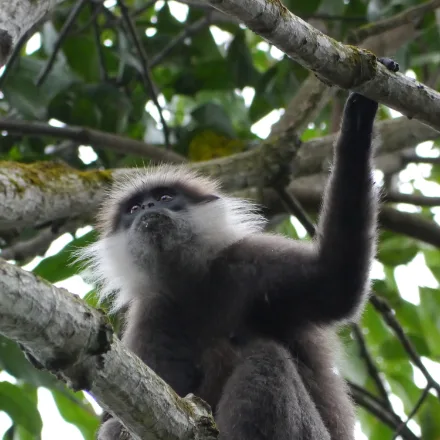
Purple-faced Langur
A shaggy black leaf monkey with white side whiskers, and the highland form is so hairy it is known as the bear monkey. Where: Forest patches around Ella Rock and Little Adam's Peak. Best: Year round.
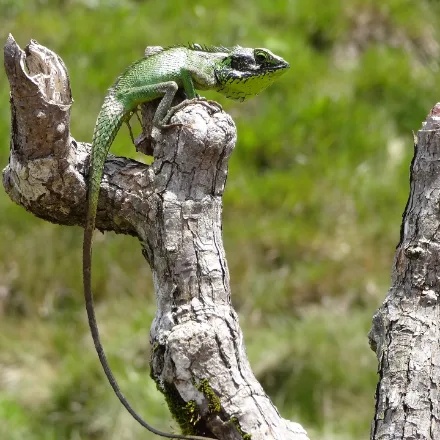
Black-lipped Lizard
An Endangered endemic that you will see without trying, because it basks on the hedges at Horton Plains. Where: Hedges, tea and scrub along the Ella gap and the Namunukula road. Best: Year round, sunny mornings.
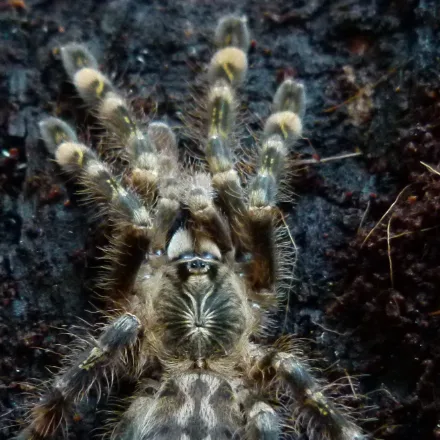
Ivory Ornamental Tarantula
The high country ornamental, living in tree cavities in cool hill forest where no other tarantula of its size can. Where: Old trees in the Uva forest patches and estate remnants. Best: Year round, night.
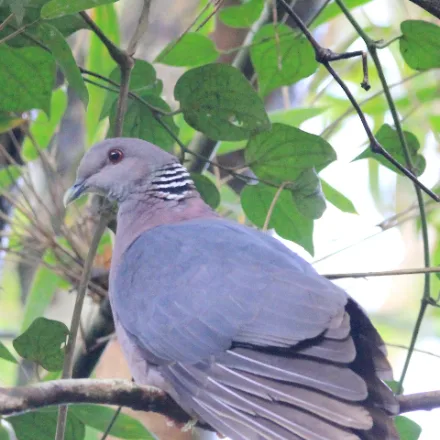
Sri Lanka Wood Pigeon
A big grey highland pigeon with a chequerboard collar, scarce and shrinking with the forest it needs. Where: Cloud forest canopy. Best: Year round.
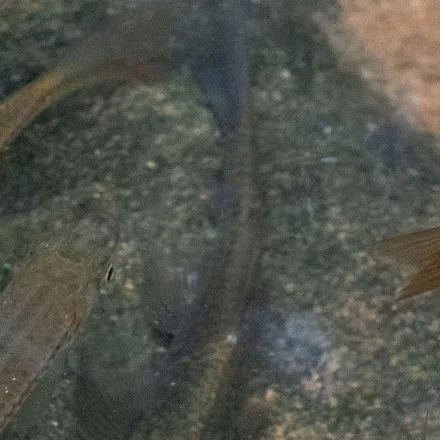
Stone Sucker
A fish built to hold station in white water, using a disc on its underside to grip bare rock. Where: Stony stretches of the Uva streams, including below the falls. Best: Year round.
Mammals
1 species
Purple-faced Langur Regular Endangered
Semnopithecus vetulus
A shaggy black leaf monkey with white side whiskers, and the highland form is so hairy it is known as the bear monkey.
Where: Forest patches around Ella Rock and Little Adam's Peak. Best: Year round.
Birds
4 species
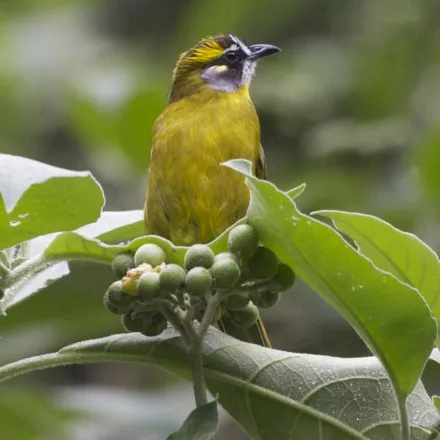
Yellow-eared Bulbul Regular
Kelaartia penicillata
The bird of the highland garden, olive and yellow with an absurd yellow ear tuft sticking out sideways.
Where: Forest edge and gardens in the hill country. Best: Year round. A hill country endemic that comes to garden edges, so it is one of the easy ones.
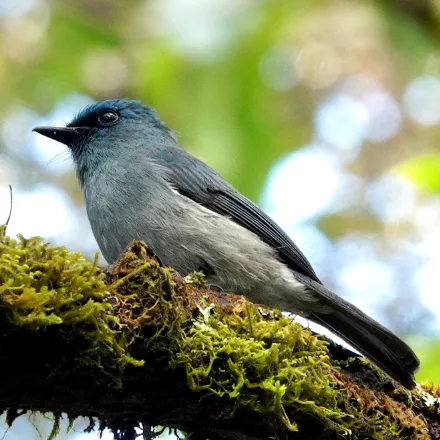
Dull-blue Flycatcher Occasional Near Threatened
Eumyias sordidus
Ash-blue and quietly beautiful, sitting motionless on a mossy branch in the highland cloud forest.
Where: Montane forest patches and shaded gullies. Best: Year round.
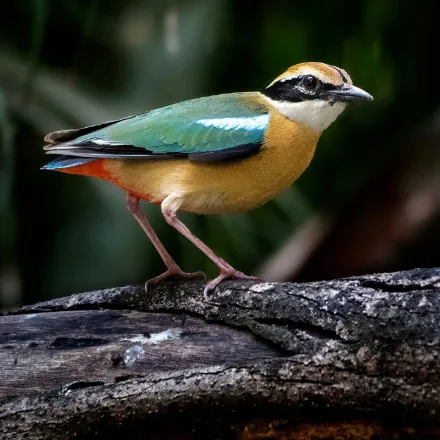
Indian Pitta Occasional
Pitta brachyura
Nine colours on a ground bird the size of a thrush, and it arrives every October to spend the winter hopping about in leaf litter.
Where: Shaded garden and forest floor. Best: October to April. A winter visitor that turns up in gardens, and unmistakable when it does.
Sri Lanka Wood Pigeon Rare Vulnerable
Columba torringtoniae
A big grey highland pigeon with a chequerboard collar, scarce and shrinking with the forest it needs.
Where: Cloud forest canopy. Best: Year round.
Reptiles
2 species
Black-lipped Lizard Regular Endangered
Calotes nigrilabris
An Endangered endemic that you will see without trying, because it basks on the hedges at Horton Plains.
Where: Hedges, tea and scrub along the Ella gap and the Namunukula road. Best: Year round, sunny mornings. Endangered, and yet easy to find on a garden hedge, which is worth saying plainly.
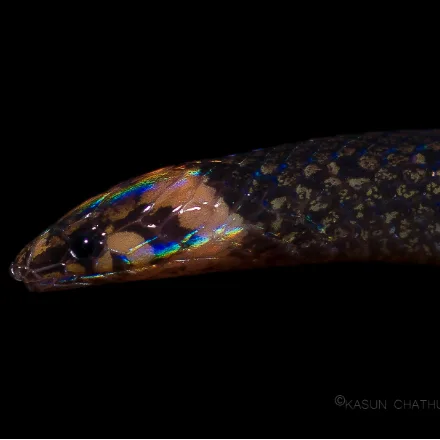
Common Rough-sided Snake Occasional Endangered
Aspidura trachyprocta
A small earthworm hunter from an entire snake genus found nowhere but Sri Lanka, and it lives under the logs at Horton Plains.
Where: Humus, log piles and compost in the tea country. Best: Year round. An endemic genus, and abundant where it occurs despite the Endangered listing.
Amphibians
3 species
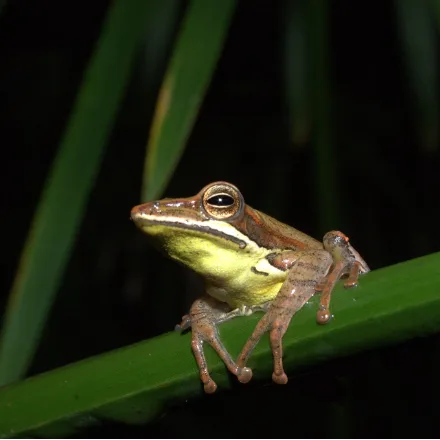
Montane Hourglass Tree Frog Occasional Endangered
Taruga eques
The female kicks her own foam nest into shape with her hind legs while hanging over a highland pond, and she is nearly twice the length of the male clinging to her.
Where: Pond and marsh margins in the tea country after dark. Best: Year round, night, after rain.
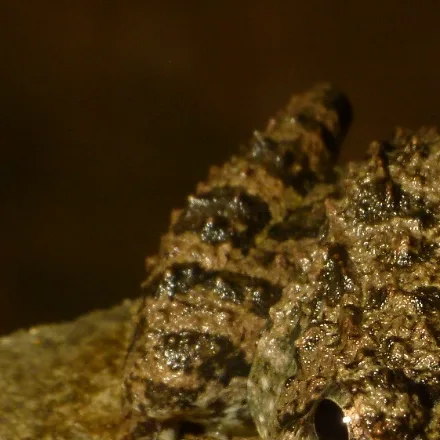
Montane Paddy Frog Occasional Endangered
Minervarya greenii
Its lowland relatives are among the commonest frogs in Sri Lankan paddy. This one made the same living at fifteen hundred metres and got stranded there.
Where: Highland ditches and marsh edges. Best: Year round, night.
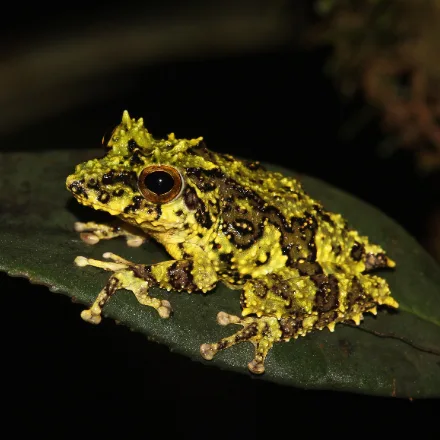
Schmarda's Shrub Frog Occasional Endangered
Pseudophilautus schmarda
Horned brows and lichen-mottled skin, so perfectly matched to a mossy branch that guides find it by call and only then by eye.
Where: Cloud forest patches and abandoned tea. Best: Year round, night.
Fish
2 species
Stone Sucker Common
Garra ceylonensis
A fish built to hold station in white water, using a disc on its underside to grip bare rock.
Where: Stony stretches of the Uva streams, including below the falls. Best: Year round.
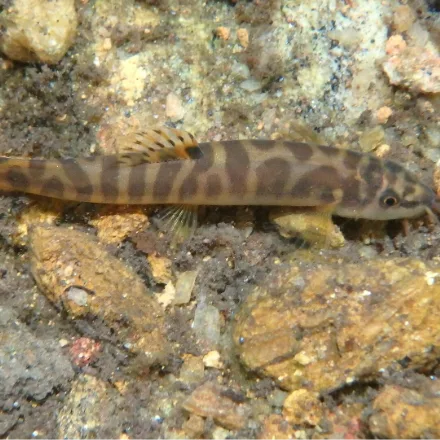
Banded Mountain Loach Regular
Schistura notostigma
A hill stream loach that spends its life under stones in current fast enough to sound like rain.
Where: Stony hill streams in the Uva highlands. Best: Year round.
Insects
1 species
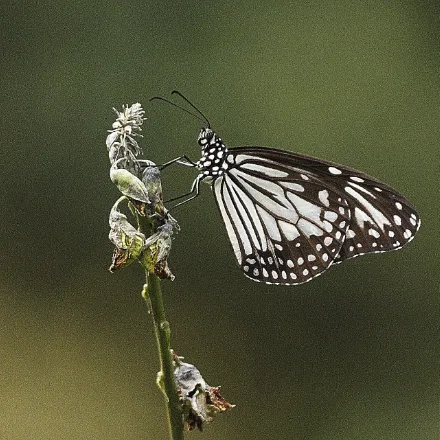
Ceylon Tiger Occasional
Parantica taprobana
A high country butterfly found only on this island, and only above about a thousand metres.
Where: Hill roadsides and forest edge in the Uva highlands. Best: Year round.
No free photograph of the Ceylon tiger exists. The image shows the glassy tiger, Parantica aglea, a close relative photographed in southern India.
Spiders and scorpions
1 species
Ivory Ornamental Tarantula Rare
Poecilotheria subfusca
The high country ornamental, living in tree cavities in cool hill forest where no other tarantula of its size can.
Where: Old trees in the Uva forest patches and estate remnants. Best: Year round, night.
Planning
The wildlife here is walkable, which is unusual in Sri Lanka. The Ella Rock and Little Adam’s Peak paths, the Namunukula road and the lanes through the tea are the productive lines, and early morning is worth more than anything later. The frogs need a torch and a damp night at a pond or ditch margin, and they are found on the edges of cultivation rather than deep in forest. It is highland weather: cold and wet arrive without warning.
Compare guided walks, birding mornings and transfers for Ella and the Uva highlands
Some links on this page are affiliate links. If you book through them, Wildseer may earn a small commission at no extra cost to you.
Frequently asked questions
What wildlife can you see in Ella?
Purple-faced langur around Ella Rock and Little Adam’s Peak, yellow-eared bulbul and dull-blue flycatcher in the forest edge and gardens, black-lipped lizard in the hedges and tea, and after dark a set of endemic highland frogs at pond and ditch margins.
Is Ella worth it for wildlife?
As a dedicated wildlife destination, no. As a place where you are already staying, yes: the endemic list in the surrounding tea and forest patches is better than the reputation, and most of it is reachable on foot.
Where can you see monkeys in Ella?
Purple-faced langurs are common along the Ella Rock and Little Adam’s Peak paths and through the tea lanes. They are endangered and endemic to Sri Lanka.
When is the best time for wildlife around Ella?
Early morning for the birds and the langurs, and a damp evening for the frogs. The highlands are workable year round, with January to March generally the driest and clearest.
Explore Sri Lanka wildlife by group
 Mammals of Sri Lanka
 Birds of Sri Lanka
 Reptiles and amphibians of Sri Lanka
 Fish of Sri Lanka
 Sharks and rays of Sri Lanka
 Reef invertebrates of Sri Lanka
 Insects and spiders of Sri Lanka
Part of the Wildlife in Sri Lanka guide.
Explore Sri Lanka wildlife by place
- Adams Peak wildlife
- Arugam Bay marine life
- Bundala wildlife
- Colombo wildlife
- Gal Oya wildlife
- Great Basses marine life
- Hikkaduwa marine life
- Horton Plains wildlife
- Jaffna wildlife
- Kalpitiya marine life
- Kandy wildlife
- Kanneliya wildlife
- Kitulgala wildlife
- Knuckles wildlife
- Kumana wildlife
- Mannar marine life
- Minneriya wildlife
- Mirissa marine life
- Rekawa marine life
- Sigiriya wildlife
- Sinharaja wildlife
- Tangalle marine life
- Trincomalee marine life
- Udawalawe wildlife
- Wasgamuwa wildlife
- Wilpattu wildlife
- Yala wildlife
Image credits
Square thumbnails are cropped from the original. Wide banner images are cropped to a band. Other images are resized only. No other changes have been made.
- Purple-faced Langur: Jeroen84 | CC BY-SA 3.0, cropped
- Black-lipped Lizard: Cherubino | CC BY-SA 3.0, cropped
- Ivory Ornamental Tarantula: Pawel W. | CC BY-SA 3.0, cropped
- Sri Lanka Wood Pigeon: Anuradha Amarakoon | CC BY-SA 4.0, cropped
- Stone Sucker: iNaturalist contributor, no rights reserved | CC0, cropped
- Yellow-eared Bulbul: Lip Kee from Singapore, Republic of Singapore | CC BY-SA 2.0, cropped
- Dull-blue Flycatcher: desertnaturalist | CC BY 4.0, cropped
- Indian Pitta: Navonil Dutta | CC BY-SA 4.0, cropped
- Common Rough-sided Snake: Kasun withanage | CC BY-SA 4.0, cropped
- Montane Hourglass Tree Frog: Gihan Jayaweera | CC BY-SA 3.0, cropped
- Montane Paddy Frog: Shyamal | CC BY-SA 4.0, cropped
- Schmarda’s Shrub Frog: Buddhika.jm(Buddhika Mawella) | CC BY-SA 4.0, cropped
- Banded Mountain Loach: (c) Pieter Prins, some rights reserved (CC BY-SA) | CC BY-SA 4.0, cropped
- Ceylon Tiger: Girish Mohan | CC BY-SA 4.0, cropped
- Purple-faced langur in the canopy: kanchana Amilani | Unsplash License, cropped
- White-throated kingfisher on a branch: kanchana Amilani | Unsplash License, cropped
- Green forest lizard in breeding colour: Anas Mohamed Nuski | Pexels Licence, cropped
- Bluestripe snapper over a reef: Jeffry Surianto | Pexels Licence, cropped
- Reef manta rays near the surface: Emma Li | Pexels Licence, cropped
- Nudibranch crossing the sea floor: Chris Spain | Pexels Licence, cropped
- Clipper butterfly on a leaf: Pixabay | Pexels Licence, cropped
Square thumbnails are cropped from the original. Wide banner images are cropped to a band. Other images are resized only. No other changes have been made.
- Purple-faced Langur: Jeroen84 | CC BY-SA 3.0, cropped
- Black-lipped Lizard: Cherubino | CC BY-SA 3.0, cropped
- Ivory Ornamental Tarantula: Pawel W. | CC BY-SA 3.0, cropped
- Sri Lanka Wood Pigeon: Anuradha Amarakoon | CC BY-SA 4.0, cropped
- Stone Sucker: iNaturalist contributor, no rights reserved | CC0, cropped
- Yellow-eared Bulbul: Lip Kee from Singapore, Republic of Singapore | CC BY-SA 2.0, cropped
- Dull-blue Flycatcher: desertnaturalist | CC BY 4.0, cropped
- Indian Pitta: Navonil Dutta | CC BY-SA 4.0, cropped
- Common Rough-sided Snake: Kasun withanage | CC BY-SA 4.0, cropped
- Montane Hourglass Tree Frog: Gihan Jayaweera | CC BY-SA 3.0, cropped
- Montane Paddy Frog: Shyamal | CC BY-SA 4.0, cropped
- Schmarda’s Shrub Frog: Buddhika.jm(Buddhika Mawella) | CC BY-SA 4.0, cropped
- Banded Mountain Loach: (c) Pieter Prins, some rights reserved (CC BY-SA) | CC BY-SA 4.0, cropped
- Ceylon Tiger: Girish Mohan | CC BY-SA 4.0, cropped
- Purple-faced langur in the canopy: kanchana Amilani | Unsplash License, cropped
- White-throated kingfisher on a branch: kanchana Amilani | Unsplash License, cropped
- Green forest lizard in breeding colour: Anas Mohamed Nuski | Pexels Licence, cropped
- Bluestripe snapper over a reef: Jeffry Surianto | Pexels Licence, cropped
- Reef manta rays near the surface: Emma Li | Pexels Licence, cropped
- Nudibranch crossing the sea floor: Chris Spain | Pexels Licence, cropped
- Clipper butterfly on a leaf: Pixabay | Pexels Licence, cropped