
The Great and Little Basses are sandstone reefs several kilometres off the southeast coast, marked by two lighthouses and diveable for roughly four weeks a year. Outside March and April the swell makes them unreachable. That narrow window is exactly why the fish here are the size they are.
This is big fish diving rather than reef pottering. Giant grouper, humphead wrasse, dogtooth tuna, giant and bigeye trevally in shoals, great barracuda hanging in the current, and grey reef and whitetip reef sharks working the structure. Whale sharks pass through. The current is the reason it all works and the reason it is not a beginner site.
The reefs also carry one of the more famous shipwrecks in the Indian Ocean, a Mughal-era silver wreck found on the Great Basses in the 1960s, which is part of why anyone dived here in the first place. What holds the reef together now is black coral and huge gorgonian sea fans in the deeper water, with ornate spiny lobsters back in the cracks.
Highlights
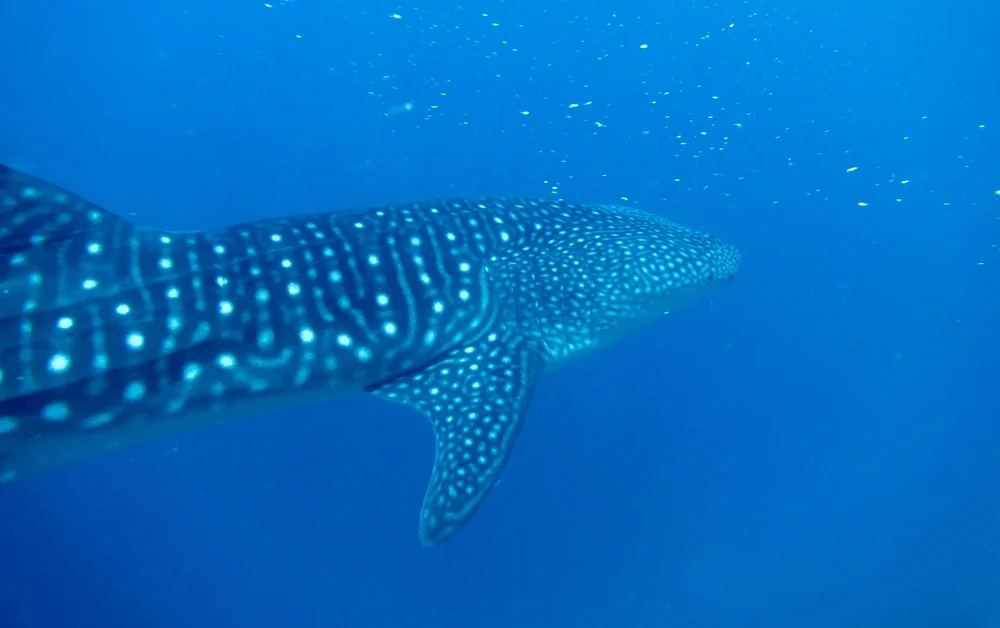
Whale Shark
The biggest fish in the ocean, a spotted, bus sized filter feeder and the undisputed holy grail of tropical diving. Where: Open water at the reef. Best: March to April.
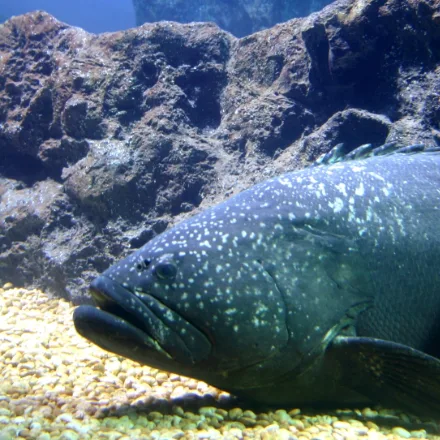
Giant Grouper
The giant of the reef, a grouper that can grow larger than a diver and swallow prey the size of a small shark. Where: Ledges and gullies on the Great Basses reef. Best: March to April.
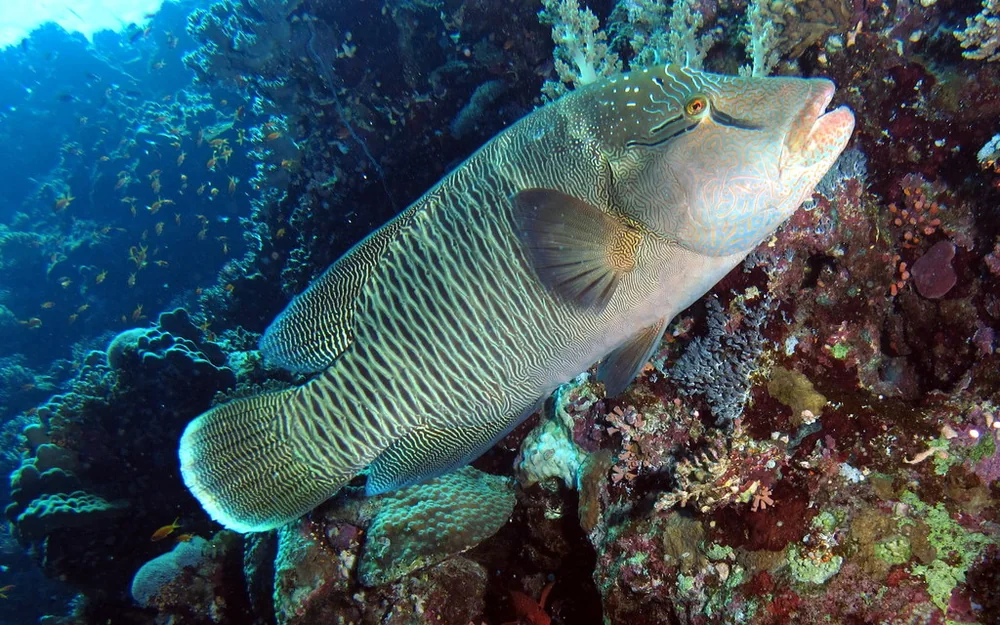
Humphead Wrasse (Napoleon Wrasse)
A giant, curious reef fish with thick lips and a bulging forehead, able to crunch prey that few other animals can eat. Where: Deeper reef and gullies. Best: March to April.
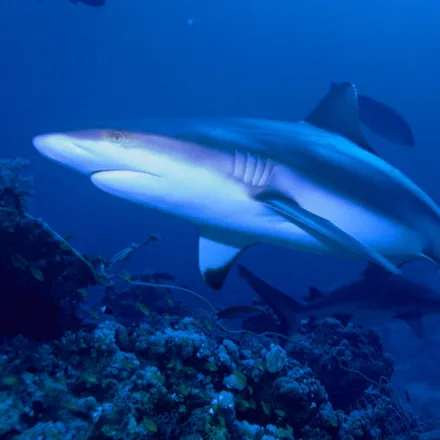
Grey Reef Shark
The classic requiem shark of the drop-off, bold and inquisitive where currents sweep the reef. Where: The reef edge and drop-offs. Best: March to April.
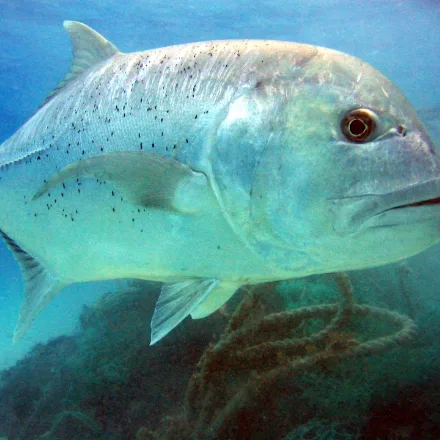
Giant Trevally
A silver battering ram that hunts by simply outrunning everything, and has been filmed taking birds off the surface. Where: Hunting in the current over the reef. Best: March to April.
Reptiles
2 species
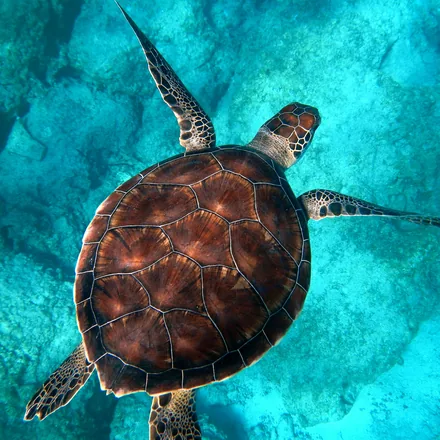
Green Sea Turtle Occasional
Chelonia mydas
The great grazing turtle of the tropics, the only sea turtle that turns vegetarian as an adult.
Where: Resting on ledges and feeding on the reef. Best: March to April.
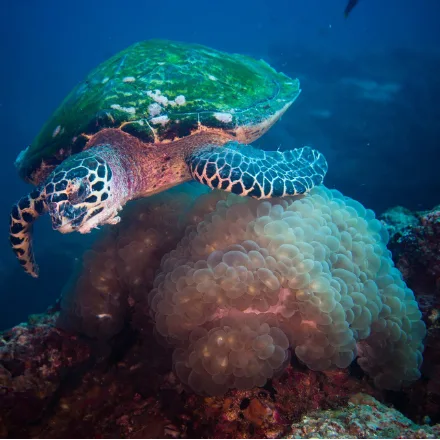
Hawksbill Turtle Occasional Critically Endangered
Eretmochelys imbricata
The reef's sponge specialist, its beautiful shell also the reason it was hunted to the edge.
Where: The reef structure and its overhangs. Best: March to April.
Fish
16 species
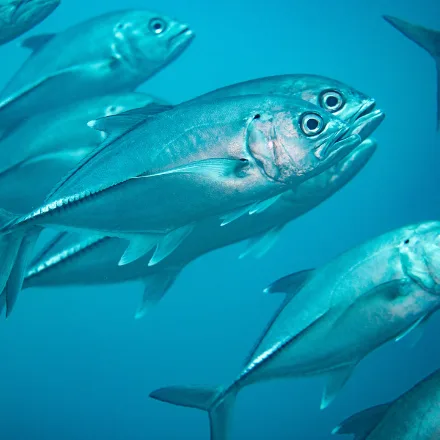
Bigeye Trevally Regular
Caranx sexfasciatus
A silver predator that gathers by day in vast, slow-turning tornadoes of fish, one of diving's great spectacles.
Where: Schooling in the current. Best: March to April.
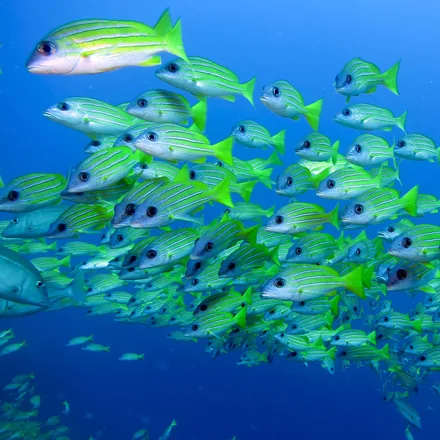
Bluestripe Snapper Regular
Lutjanus kasmira
A bright yellow snapper ruled with electric-blue lines, massing in dense, glowing schools around coral heads and wrecks.
Where: Dense shoals holding station in the lee of the reef structure. Best: March to April.
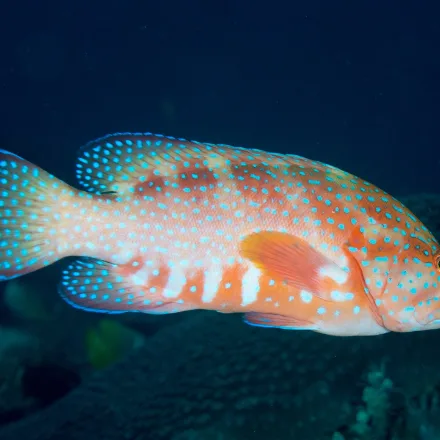
Coral Grouper (Coral Hind) Regular
Cephalopholis miniata
A vivid orange-red grouper freckled all over with electric-blue spots, lurking at the mouth of a coral cave.
Where: Reef gullies and overhangs. Best: March to April.
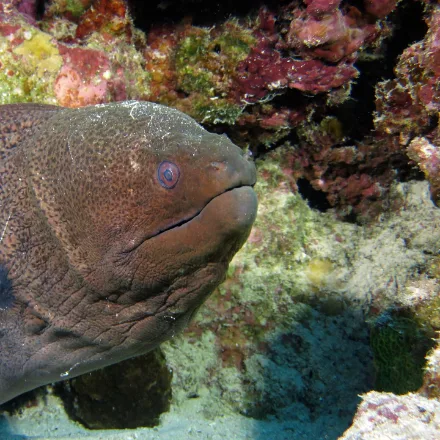
Giant Moray Regular
Gymnothorax javanicus
The largest moray on the reef, its gaping, fanged mouth a fearsome look that is really just how it breathes.
Where: Holes and cracks in the sandstone reef. Best: March to April.
Giant Trevally Regular
Caranx ignobilis
A silver battering ram that hunts by simply outrunning everything, and has been filmed taking birds off the surface.
Where: Hunting in the current over the reef. Best: March to April. Trevally hunt the reef edge here in numbers that do not happen on the sheltered coasts.
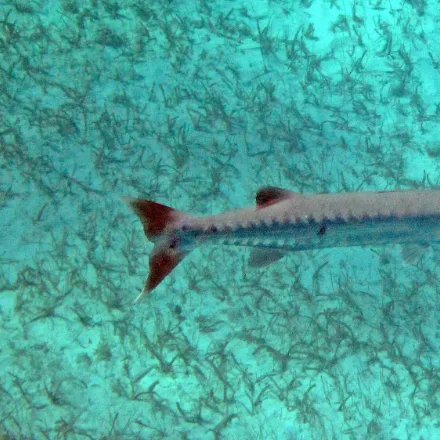
Great Barracuda Regular
Sphyraena barracuda
A silver torpedo with a fearsome underbite, sometimes gathering in slow, glittering spiral schools over the reef.
Where: Hanging in the current above the reef. Best: March to April.
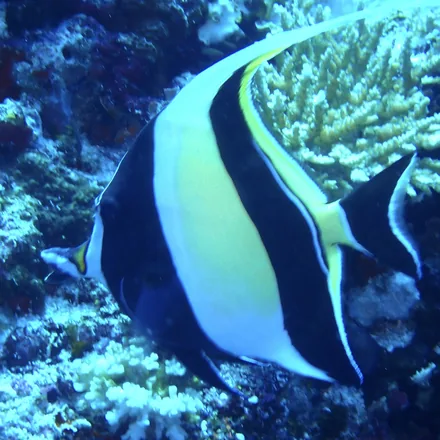
Moorish Idol Regular
Zanclus cornutus
An unmistakable disc of black, white and gold trailing a long ribbon fin, one of the most elegant fish on any reef.
Where: Reef top and the shallower ledges. Best: March to April.
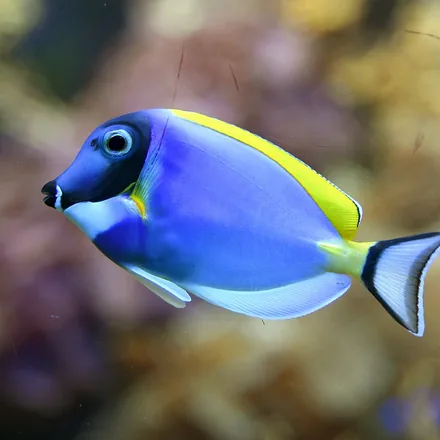
Powder Blue Surgeonfish Regular
Acanthurus leucosternon
A stunning Andaman signature fish, powder blue with a yellow sail and a scalpel-sharp blade at the base of its tail.
Where: Shoaling over the reef top in the surge. Best: March to April.
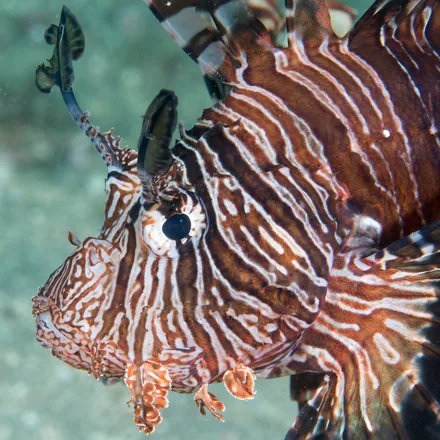
Common Lionfish Occasional
Pterois volitans
A flamboyant reef hunter fanned out in maroon and white plumes, every graceful spine tipped with venom.
Where: Hanging under the ledges out of the current. Best: March to April.
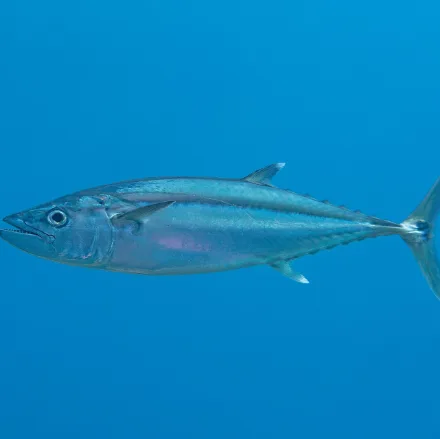
Dogtooth Tuna Occasional
Gymnosarda unicolor
A heavy-shouldered blue-water hunter that materialises out of the deep at reef pinnacles to smash into bait schools.
Where: Blue water at the reef edge. Best: March to April.
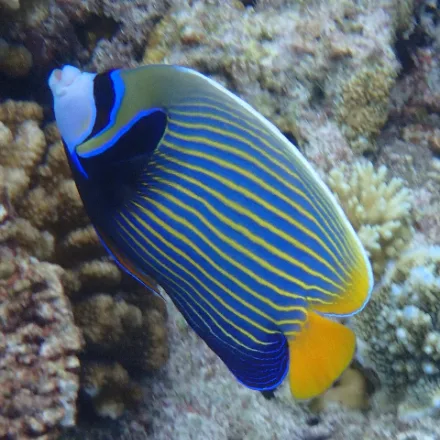
Emperor Angelfish Occasional
Pomacanthus imperator
A living work of art in electric blue and yellow stripes, its young disguised in a maze of blue and white rings.
Where: Ledges and swim-throughs in the reef structure. Best: March to April.
Giant Grouper Occasional
Epinephelus lanceolatus
The giant of the reef, a grouper that can grow larger than a diver and swallow prey the size of a small shark.
Where: Ledges and gullies on the Great Basses reef. Best: March to April. The Basses hold the biggest reef fish in Sri Lankan water, because the conditions keep the fishing pressure off.
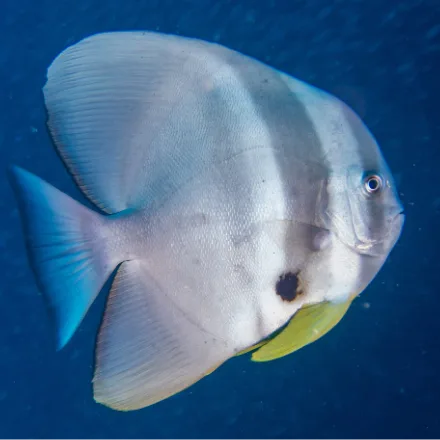
Longfin Batfish Occasional
Platax teira
A tall, disc shaped silver fish that drifts around wrecks and reefs with the calm curiosity of a friendly ghost.
Where: Mid water above the reef, often curious about divers. Best: March to April.
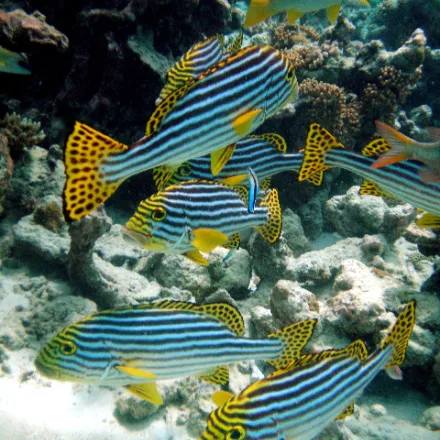
Oriental Sweetlips Occasional
Plectorhinchus vittatus
A handsome striped reef fish whose fussy juveniles wobble around in polka dots to mimic toxic flatworms.
Where: Under overhangs on the sheltered side. Best: March to April.
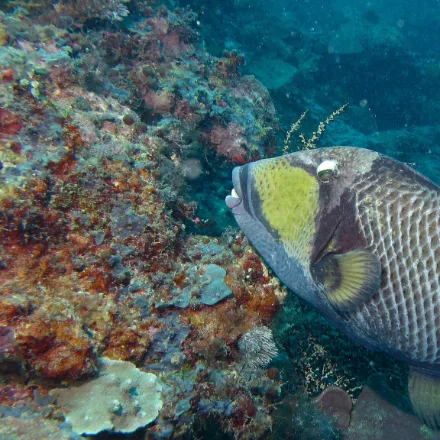
Titan Triggerfish Occasional
Balistoides viridescens
The reef's bad tempered bulldozer, a big triggerfish that will charge divers who stray over its nest.
Where: Reef top and sand patches. Best: March to April.
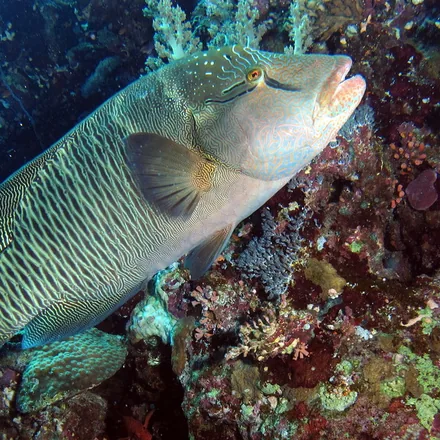
Humphead Wrasse (Napoleon Wrasse) Rare Endangered
Cheilinus undulatus
A giant, curious reef fish with thick lips and a bulging forehead, able to crunch prey that few other animals can eat.
Where: Deeper reef and gullies. Best: March to April.
Sharks and rays
5 species
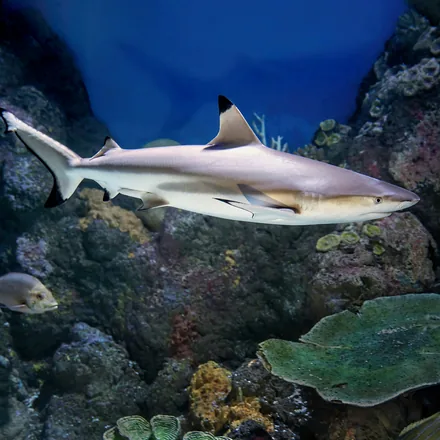
Blacktip Reef Shark Occasional Vulnerable
Carcharhinus melanopterus
The neat little reef shark of the shallows, its black-tipped fins often cutting the surface over sun-lit sand flats.
Where: The shallower reef margins. Best: March to April.
Grey Reef Shark Occasional Endangered
Carcharhinus amblyrhynchos
The classic requiem shark of the drop-off, bold and inquisitive where currents sweep the reef.
Where: The reef edge and drop-offs. Best: March to April.
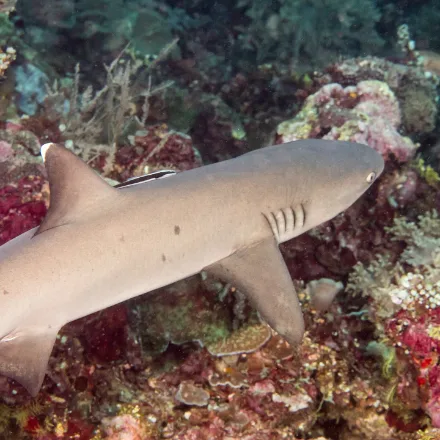
Whitetip Reef Shark Occasional Vulnerable
Triaenodon obesus
A slender reef shark that rests motionless in caves by day and hunts the reef in packs by night.
Where: Resting under ledges by day. Best: March to April.
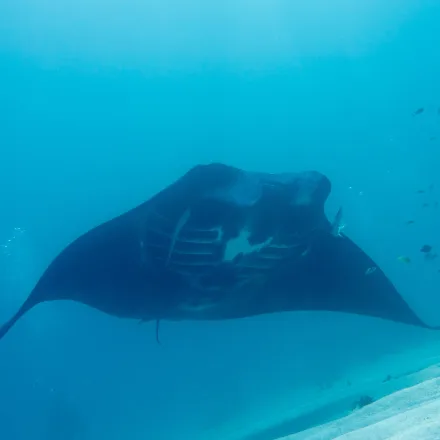
Reef Manta Ray Rare Vulnerable
Mobula alfredi
A four metre wingspan gliding overhead in slow, hypnotic loops that leave divers grinning for days.
Where: Passing in the current over the reef tops. Best: March to April.
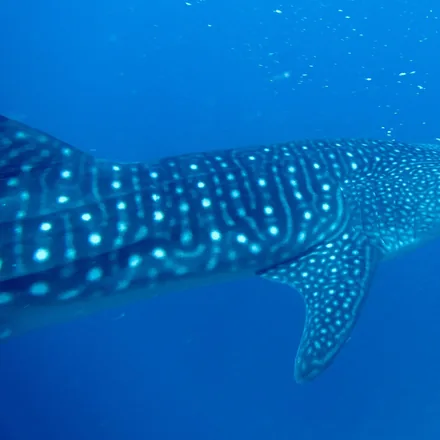
Whale Shark Rare Endangered
Rhincodon typus
The biggest fish in the ocean, a spotted, bus sized filter feeder and the undisputed holy grail of tropical diving.
Where: Open water at the reef. Best: March to April. Records cluster around the Basses in the short diving season.
Corals and anemones
2 species
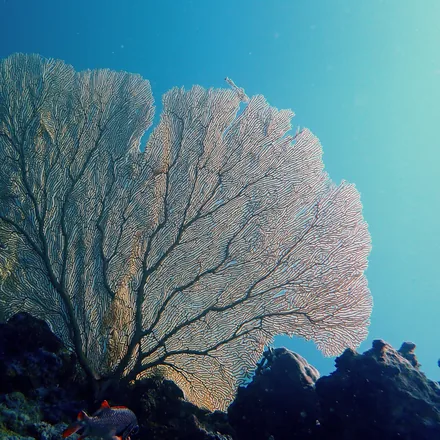
Giant Sea Fan (Gorgonian) Regular
Annella species
A great lattice fan spread across the current, a soft coral that farms the flow for plankton and shelters seahorses and hawkfish.
Where: Current swept reef faces. Best: March to April.
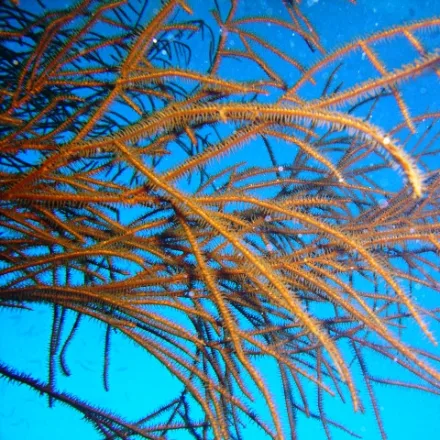
Black Coral Occasional
Antipathes dichotoma
Colonies have been aged at over four thousand years, making them among the oldest living animals on the planet.
Where: Deeper gullies and overhangs. Best: March to April.
Echinoderms
1 species
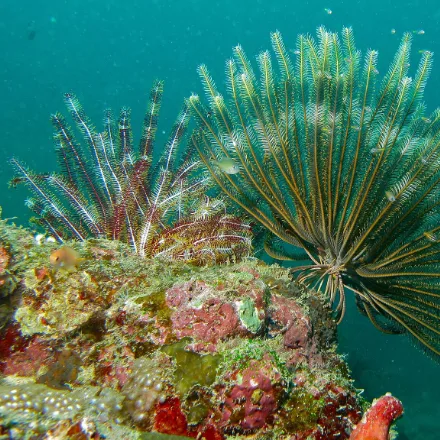
Feather Star (Crinoid) Regular
Comatulida species
A living bouquet of feathery arms that clings to high points on the reef by day and can crawl, or even swim, to a better spot.
Where: Clinging to the sea fans and reef edges in the current. Best: March to April.
Crustaceans
1 species
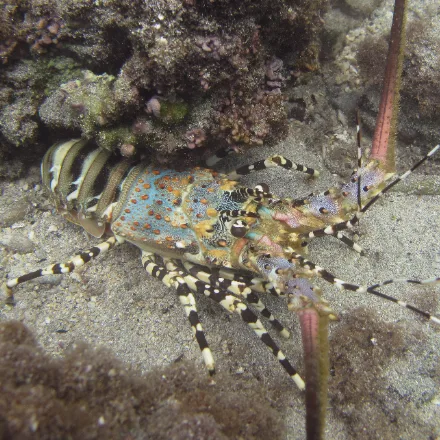
Ornate Spiny Lobster Occasional
Panulirus ornatus
Migrates in single file across open seabed, hundreds of lobsters nose to tail, sometimes for hundreds of kilometres.
Where: Crevices in the reef. Best: March to April, after dark.
Planning
March and April, and effectively nothing else. Boats run from Kirinda and the crossing is exposed, so this is a trip that gets cancelled and rescheduled rather than one you book to a date. The diving is current swept and there is no shelter, so it wants experience and good air consumption. If the window is missed, Pigeon Island in the east is the fallback, and it is a completely different kind of diving.
Compare liveaboard and day boat diving on the southeast coast
Some links on this page are affiliate links. If you book through them, Wildseer may earn a small commission at no extra cost to you.
Frequently asked questions
When can you dive the Great Basses?
March and April, roughly four weeks a year. Outside that window the swell on this coast makes the reefs unreachable, and trips are cancelled by weather even inside it.
Is the Great Basses suitable for beginners?
No. The sites are offshore, exposed and current swept with no shelter, and the boat ride is long. It wants experienced divers, and the reefs are current swept with no shelter.
What can you see at the Great Basses?
Big fish: giant grouper, humphead wrasse, dogtooth tuna, giant and bigeye trevally, great barracuda, grey reef and whitetip reef sharks, and whale sharks passing. Black coral and large gorgonian sea fans hold the deeper structure.
Is there a wreck at the Great Basses?
Yes. A Mughal-era silver wreck was found on the Great Basses reef in the 1960s and it is part of why the site became known. The reef itself is the reason to go now.
Explore Sri Lanka wildlife by group
 Mammals of Sri Lanka
 Birds of Sri Lanka
 Reptiles and amphibians of Sri Lanka
 Fish of Sri Lanka
 Sharks and rays of Sri Lanka
 Reef invertebrates of Sri Lanka
 Insects and spiders of Sri Lanka
Part of the Wildlife in Sri Lanka guide.
Explore Sri Lanka wildlife by place
- Adams Peak wildlife
- Arugam Bay marine life
- Bundala wildlife
- Colombo wildlife
- Ella wildlife
- Gal Oya wildlife
- Hikkaduwa marine life
- Horton Plains wildlife
- Jaffna wildlife
- Kalpitiya marine life
- Kandy wildlife
- Kanneliya wildlife
- Kitulgala wildlife
- Knuckles wildlife
- Kumana wildlife
- Mannar marine life
- Minneriya wildlife
- Mirissa marine life
- Rekawa marine life
- Sigiriya wildlife
- Sinharaja wildlife
- Tangalle marine life
- Trincomalee marine life
- Udawalawe wildlife
- Wasgamuwa wildlife
- Wilpattu wildlife
- Yala wildlife
Image credits
Square thumbnails are cropped from the original. Wide banner images are cropped to a band. Other images are resized only. No other changes have been made.
- Whale Shark (resized): Jerome Paillet (IFREMER) | CC BY 4.0, cropped
- Giant Grouper (cropped to square): Manuel Heinrich Emha | CC BY-SA 2.5, cropped
- Humphead wrasse (resized): Derek Keats | CC BY 2.0, cropped
- Grey Reef Shark (cropped to square): Albert kok | CC BY-SA 3.0, cropped
- Giant Trevally (cropped to square): Dr. Dwayne Meadows, NOAA/NMFS/OPR | Public domain, cropped
- Green Sea Turtle: Randall Ruiz | Unsplash License, cropped
- Hawksbill Turtle (cropped to square): Daniel Sasse | CC BY-SA 4.0, cropped
- Bigeye Trevally (cropped to square): Rickard Zerpe | CC BY 2.0, cropped
- Bluestripe Snapper (cropped to square): Jerome Paillet (IFREMER) | CC BY 4.0, cropped
- Coral Grouper (cropped to square): Rickard Zerpe | CC BY 2.0, cropped
- Giant Moray (cropped to square): Jerome Paillet (IFREMER) | CC BY 4.0, cropped
- Great Barracuda (cropped to square): James St. John | CC BY 2.0, cropped
- Moorish Idol (cropped to square): Jean-Paul Boerekamps | CC0, cropped
- Powder Blue Surgeonfish (cropped to square): Amada44 | CC BY-SA 3.0, cropped
- Common Lionfish (cropped to square): Rickard Zerpe | CC BY 2.0, cropped
- Dogtooth Tuna (cropped to square): Poco a poco | CC BY-SA 4.0, cropped
- Emperor Angelfish (cropped to square): Jean-Paul Boerekamps | CC0, cropped
- Longfin Batfish (cropped to square): portioid | CC BY-SA 4.0, cropped
- Oriental Sweetlips (cropped to square): Uxbona | CC BY-SA 3.0, cropped
- Titan Triggerfish (cropped to square): Bernard DUPONT | CC BY-SA 2.0, cropped
- Humphead Wrasse (cropped to square): Derek Keats | CC BY 2.0, cropped
- Blacktip Reef Shark: David Clode | Unsplash License, cropped
- Whitetip Reef Shark (cropped to square): Rickard Zerpe | CC BY 2.0, cropped
- Reef Manta Ray (cropped to square): Rickard Zerpe | CC BY 2.0, cropped
- Whale Shark (cropped to square): Jerome Paillet (IFREMER) | CC BY 4.0, cropped
- Giant Sea Fan (cropped to square): Frederic Ducarme | CC BY-SA 4.0, cropped
- Black Coral (cropped to square): Fernándo Herranz Martín | GPL, cropped
- Feather Star (cropped to square): Bernard DUPONT | CC BY-SA 2.0, cropped
- Ornate Spiny Lobster: Elisabeth Morcel | CC BY-SA 4.0, cropped
- Purple-faced langur in the canopy: kanchana Amilani | Unsplash License, cropped
- White-throated kingfisher on a branch: kanchana Amilani | Unsplash License, cropped
- Green forest lizard in breeding colour: Anas Mohamed Nuski | Pexels Licence, cropped
- Bluestripe snapper over a reef: Jeffry Surianto | Pexels Licence, cropped
- Reef manta rays near the surface: Emma Li | Pexels Licence, cropped
- Nudibranch crossing the sea floor: Chris Spain | Pexels Licence, cropped
- Clipper butterfly on a leaf: Pixabay | Pexels Licence, cropped
Square thumbnails are cropped from the original. Wide banner images are cropped to a band. Other images are resized only. No other changes have been made.
- Whale Shark (resized): Jerome Paillet (IFREMER) | CC BY 4.0, cropped
- Giant Grouper (cropped to square): Manuel Heinrich Emha | CC BY-SA 2.5, cropped
- Humphead wrasse (resized): Derek Keats | CC BY 2.0, cropped
- Grey Reef Shark (cropped to square): Albert kok | CC BY-SA 3.0, cropped
- Giant Trevally (cropped to square): Dr. Dwayne Meadows, NOAA/NMFS/OPR | Public domain, cropped
- Green Sea Turtle: Randall Ruiz | Unsplash License, cropped
- Hawksbill Turtle (cropped to square): Daniel Sasse | CC BY-SA 4.0, cropped
- Bigeye Trevally (cropped to square): Rickard Zerpe | CC BY 2.0, cropped
- Bluestripe Snapper (cropped to square): Jerome Paillet (IFREMER) | CC BY 4.0, cropped
- Coral Grouper (cropped to square): Rickard Zerpe | CC BY 2.0, cropped
- Giant Moray (cropped to square): Jerome Paillet (IFREMER) | CC BY 4.0, cropped
- Great Barracuda (cropped to square): James St. John | CC BY 2.0, cropped
- Moorish Idol (cropped to square): Jean-Paul Boerekamps | CC0, cropped
- Powder Blue Surgeonfish (cropped to square): Amada44 | CC BY-SA 3.0, cropped
- Common Lionfish (cropped to square): Rickard Zerpe | CC BY 2.0, cropped
- Dogtooth Tuna (cropped to square): Poco a poco | CC BY-SA 4.0, cropped
- Emperor Angelfish (cropped to square): Jean-Paul Boerekamps | CC0, cropped
- Longfin Batfish (cropped to square): portioid | CC BY-SA 4.0, cropped
- Oriental Sweetlips (cropped to square): Uxbona | CC BY-SA 3.0, cropped
- Titan Triggerfish (cropped to square): Bernard DUPONT | CC BY-SA 2.0, cropped
- Humphead Wrasse (cropped to square): Derek Keats | CC BY 2.0, cropped
- Blacktip Reef Shark: David Clode | Unsplash License, cropped
- Whitetip Reef Shark (cropped to square): Rickard Zerpe | CC BY 2.0, cropped
- Reef Manta Ray (cropped to square): Rickard Zerpe | CC BY 2.0, cropped
- Whale Shark (cropped to square): Jerome Paillet (IFREMER) | CC BY 4.0, cropped
- Giant Sea Fan (cropped to square): Frederic Ducarme | CC BY-SA 4.0, cropped
- Black Coral (cropped to square): Fernándo Herranz Martín | GPL, cropped
- Feather Star (cropped to square): Bernard DUPONT | CC BY-SA 2.0, cropped
- Ornate Spiny Lobster: Elisabeth Morcel | CC BY-SA 4.0, cropped
- Purple-faced langur in the canopy: kanchana Amilani | Unsplash License, cropped
- White-throated kingfisher on a branch: kanchana Amilani | Unsplash License, cropped
- Green forest lizard in breeding colour: Anas Mohamed Nuski | Pexels Licence, cropped
- Bluestripe snapper over a reef: Jeffry Surianto | Pexels Licence, cropped
- Reef manta rays near the surface: Emma Li | Pexels Licence, cropped
- Nudibranch crossing the sea floor: Chris Spain | Pexels Licence, cropped
- Clipper butterfly on a leaf: Pixabay | Pexels Licence, cropped