
Kanneliya is the second great lowland rainforest of the wet zone and it gets a fraction of the visitors Sinharaja does. That is the whole argument for coming: the same forest type, the same endemics, the same waterfalls, and trails you will often have to yourself.
It also holds animals that are barely findable anywhere else. Nagao’s pug-snout frog was described from this forest and breeds in water-filled holes in old trees. The Sri Lanka tree crab does the same thing, a freshwater crab that spends its life in a tree, which is about as unlikely as an animal gets. And the Sri Lanka relict ant, one of the rarest insects on earth, has one of its few known populations in this leaf litter.
For most visitors the day is birds, butterflies and frogs. Orange-billed babblers work the trails in noisy parties, the blue magpie comes through with the feeding flock, purple-faced langurs are regular in the canopy, and the streams carry cherry barb, black ruby barb and the ornate paradisefish. The butterfly list includes the Ceylon rose and the tree nymph, which drifts through canopy gaps like paper.
Highlights
Nagao's Pug-snout Frog
Its entire life cycle happens in a few hundred millilitres of rainwater trapped in a rotting trunk. Where: Water held in rotting tree holes in the old growth forest. Best: Year round, night.
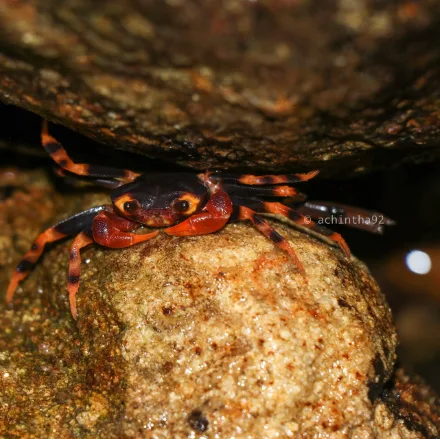
Sri Lanka Tree Crab
A freshwater crab that lives up a tree, in rainwater trapped in a hollow trunk, and only comes down to breed. Where: Rot holes and hollows in mature trees along the stream trails. Best: February and March.
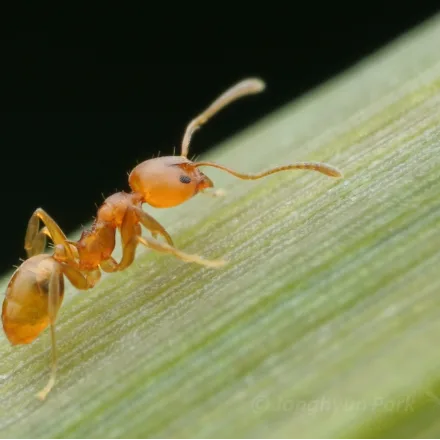
Sri Lanka Relict Ant
The only surviving species of an entire subfamily of ants, and it lives in the leaf litter of one island. Where: Forest floor litter in the least disturbed sections. Best: Year round.
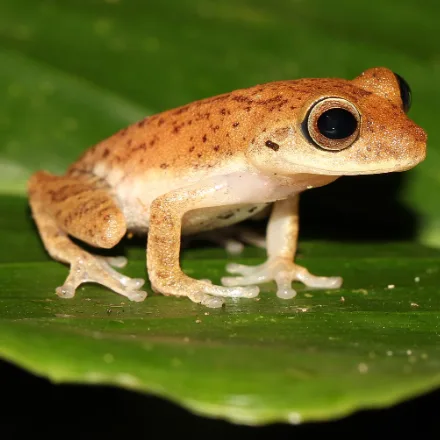
Golden Shrub Frog
Genuinely gold in torchlight, which in a genus of browns and greys is the whole point. Where: Foliage inside closed canopy forest, well beyond the trail head. Best: Year round, night.
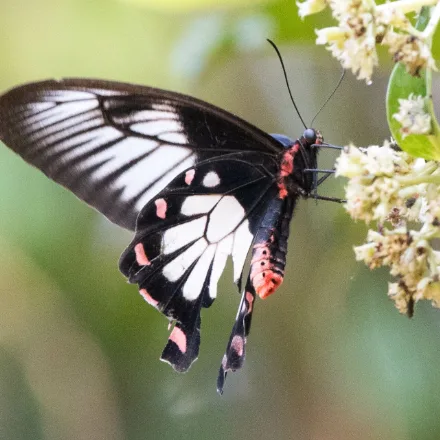
Ceylon Rose
Critically Endangered, endemic, and confined to the shrinking rainforest of one corner of the island. Where: Forest trails and clearings inside the reserve. Best: January to March.
Mammals
1 species
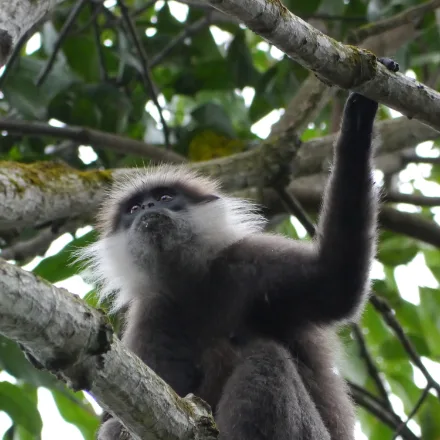
Purple-faced Langur Regular Endangered
Semnopithecus vetulus
A shaggy black leaf monkey with white side whiskers, and the highland form is so hairy it is known as the bear monkey.
Where: High canopy, usually heard before seen. Best: Year round.
Birds
2 species
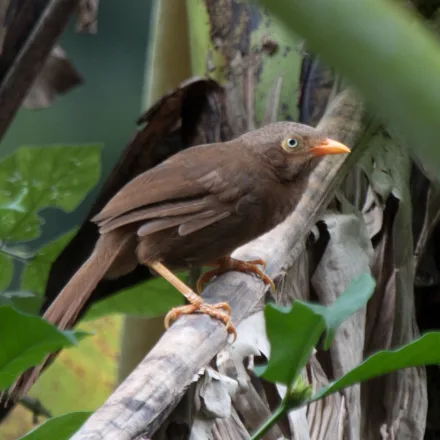
Orange-billed Babbler Regular
Argya rufescens
The engine of the Sinharaja feeding flock: hear this bird and everything else is about to arrive.
Where: Moving through the understorey in noisy flocks. Best: Year round.
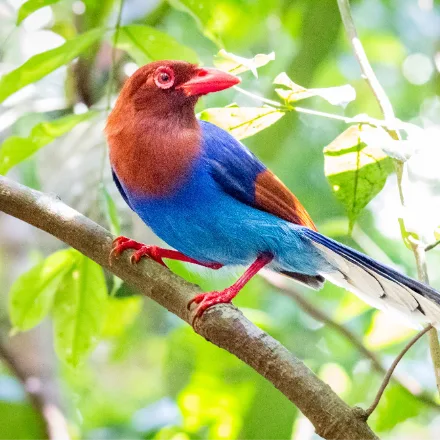
Sri Lanka Blue Magpie Occasional Vulnerable
Urocissa ornata
Cobalt and chestnut with a blood-red bill, and it comes to look at you rather than the other way round.
Where: Mid canopy in the wetter forest. Best: Year round.
Reptiles
5 species
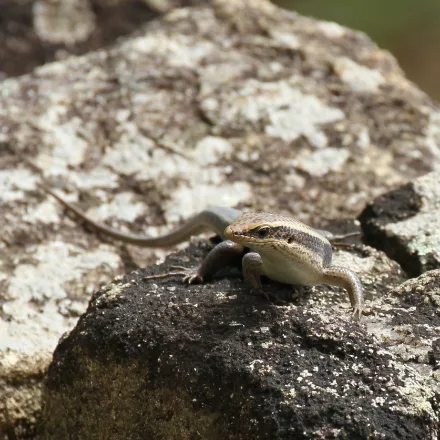
Common Lanka Skink Common
Lankascincus fallax
The little bronze skink that shoots out from under every leaf you turn at Sinharaja belongs to a genus found nowhere but this island.
Where: Leaf litter along the trails. Best: Year round.
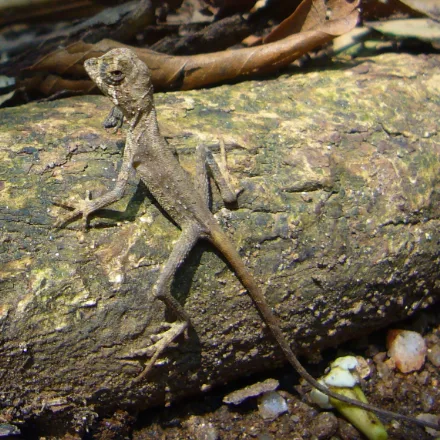
Kangaroo Lizard Common
Otocryptis wiegmanni
An endemic lizard that runs away on its back legs like a tiny dinosaur, then freezes halfway up a sapling and dares you to find it again.
Where: Shaded leaf litter near streams. Best: Year round.
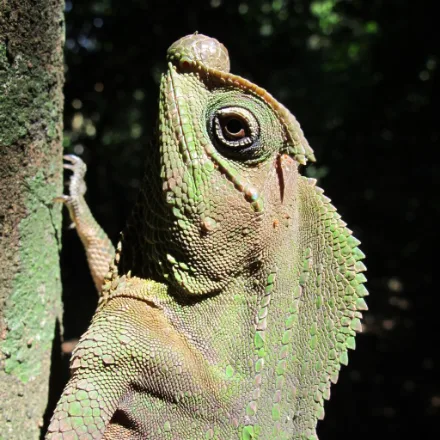
Hump-nosed Lizard Occasional Vulnerable
Lyriocephalus scutatus
The only member of its genus anywhere on earth, with a bulbous knob on its nose and a bony lyre across its skull, and it is slow enough to photograph properly.
Where: Understorey twigs and low branches. Best: January to April and July to September.
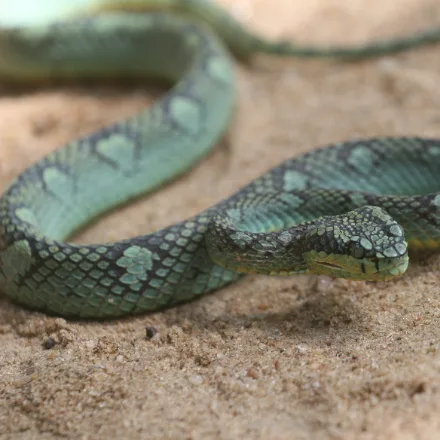
Sri Lankan Green Pit Viper Occasional
Trimeresurus trigonocephalus
An endemic green viper that hangs at eye level in the rainforest at night, and the one snake most visiting naturalists actually come away with.
Where: Low branches on the forest trails at night. Best: Year round, night.
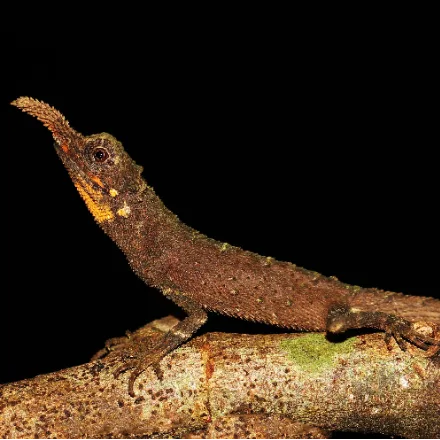
Rough-horned Lizard Rare Endangered
Ceratophora aspera
A horned lizard the length of a finger, living in the leaf litter of the lowland rainforest and shaped exactly like a dead leaf.
Where: Leaf litter on the lowland rainforest floor. Best: January to April.
Amphibians
5 species
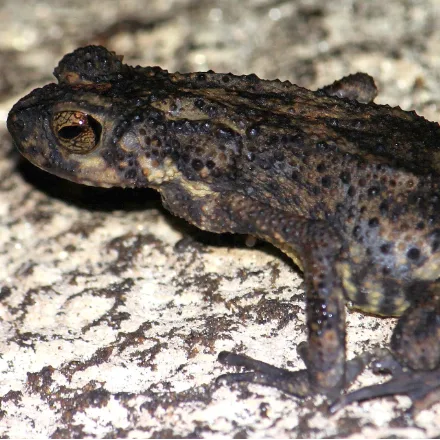
Kelaart's Dwarf Toad Regular Vulnerable
Adenomus kelaartii
An endemic toad in an endemic genus that is active by day, which makes it the one you can find on an afternoon walk rather than a night one.
Where: Stream margins and boulders. Best: Year round.
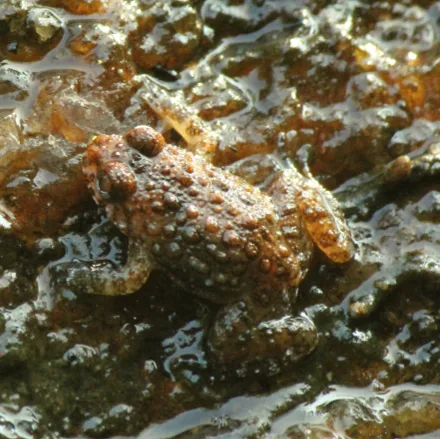
Sri Lanka Rock Frog Regular Vulnerable
Nannophrys ceylonensis
Its tadpoles do not swim. They crawl about on wet rock beside the torrent, grazing in a film of water a few millimetres deep, and the male guards the eggs.
Where: Wet rock beside the forest waterfalls. Best: Year round, night.
Golden Shrub Frog Rare Endangered
Pseudophilautus auratus
Genuinely gold in torchlight, which in a genus of browns and greys is the whole point.
Where: Foliage inside closed canopy forest, well beyond the trail head. Best: Year round, night.
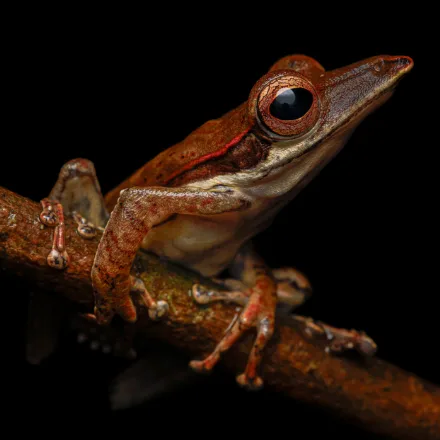
Southern Whipping Frog Rare Endangered
Taruga longinasus
A lowland outlier in a mountain genus, and its scattered range is the ghost of a wet forest belt that no longer joins up.
Where: Vegetation over lowland stream pools. Best: Year round, night.
Nagao's Pug-snout Frog Very rare Endangered
Uperodon nagaoi
Its entire life cycle happens in a few hundred millilitres of rainwater trapped in a rotting trunk.
Where: Water held in rotting tree holes in the old growth forest. Best: Year round, night. Kanneliya is the type locality. The whole life cycle happens inside a hollow trunk.
Fish
6 species
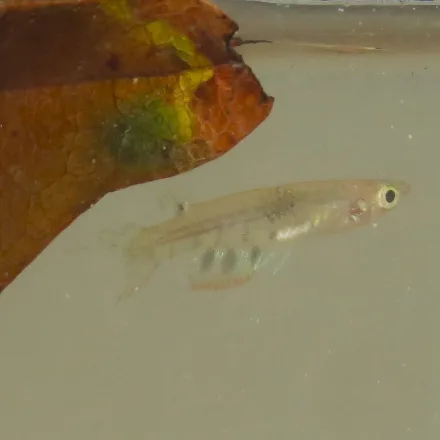
Ceylon Killifish Regular
Aplocheilus dayi
Hangs motionless at the surface with an iridescent green spot between its eyes, which is how you find it.
Where: Ditches and marshy margins around the reserve edge. Best: Year round.
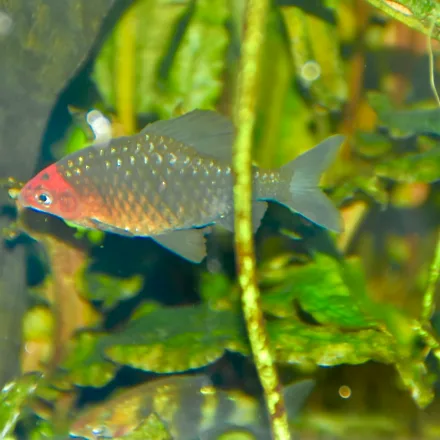
Black Ruby Barb Occasional
Pethia nigrofasciata
A grey fish for eleven months of the year that turns crimson and jet black to breed.
Where: Shallow gravel margins on the main forest stream. Best: May to September.
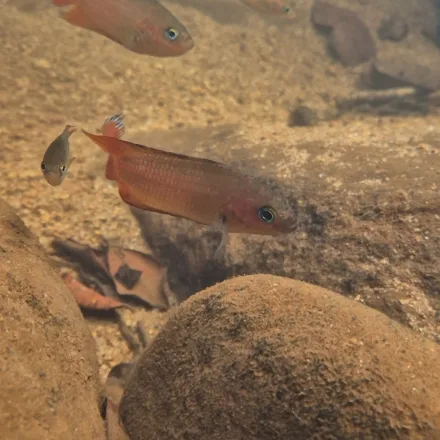
Ceylon Combtail Occasional
Belontia signata
A gourami that breathes air, guards a nest of bubbles and will see off a fish twice its size.
Where: Shaded stream pools along the forest trails. Best: January to March.
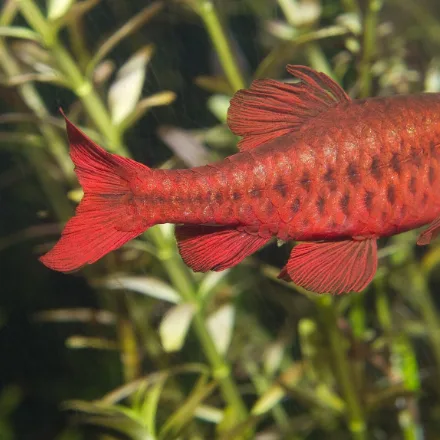
Cherry Barb Occasional Vulnerable
Rohanella titteya
One of the most widely kept aquarium fish on earth, and it lives wild in about a dozen shaded streams on one island.
Where: Leaf-littered pools along the forest stream trails. Best: January to March.
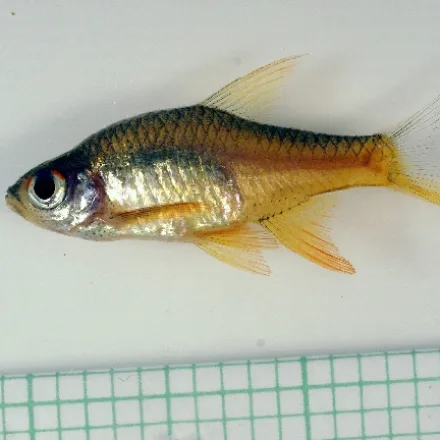
Fire Rasbora Occasional Endangered
Rasboroides vaterifloris
A shoal of these in a shaft of forest light is the reason the Victorians called it the pearly rasbora.
Where: Shaded pools along the stream trails. Best: January to March.
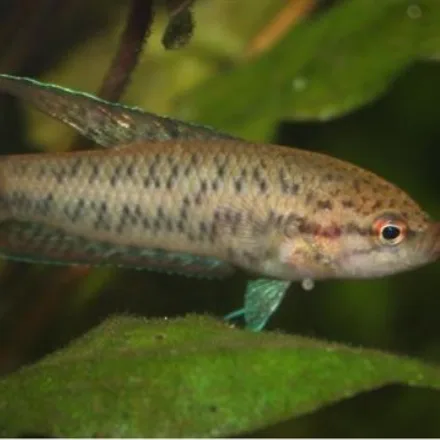
Ornate Paradisefish Rare Endangered
Malpulutta kretseri
The only species in its genus, anywhere, and it lives in shaded puddles of a stream in one corner of one island.
Where: Shallow leaf-filled pools and seepages off the main streams. Best: January to March.
Insects
8 species
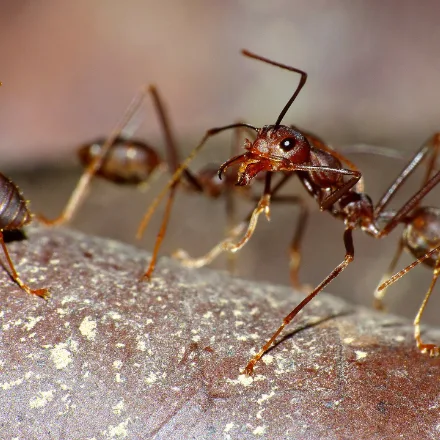
Weaver Ant Common
Oecophylla smaragdina
A rust-red ant that sews living leaves into nests using its own larvae as glue guns.
Where: Nests in the canopy and low branches along the trails. Best: Year round.
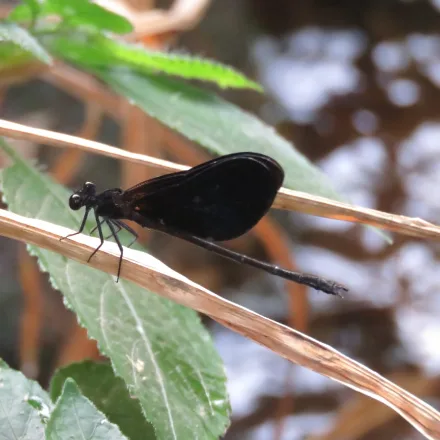
Shining Gossamerwing Regular
Euphaea splendens
Black wings that flash metallic blue-green as the male turns in a shaft of light over a forest stream.
Where: Sunlit rocky stretches of the forest streams. Best: January to March.
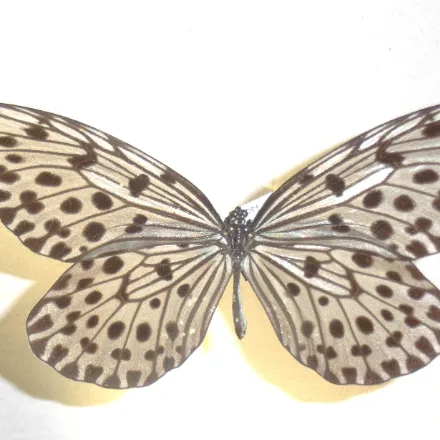
Ceylon Tree Nymph Occasional
Idea iasonia
Drifts through the forest like a sheet of paper caught in a current, and barely seems to fly at all.
Where: Clearings and stream openings inside the reserve. Best: January to March.
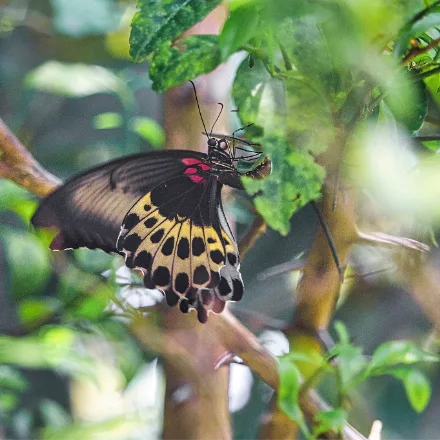
Sri Lanka Birdwing Occasional
Troides darsius
The largest butterfly on the island, the size of a small bird, and it lives nowhere else.
Where: Canopy gaps and clearings along the reserve trails. Best: January to March.
Ceylon Rose Rare Critically Endangered
Pachliopta jophon
Critically Endangered, endemic, and confined to the shrinking rainforest of one corner of the island.
Where: Forest trails and clearings inside the reserve. Best: January to March.
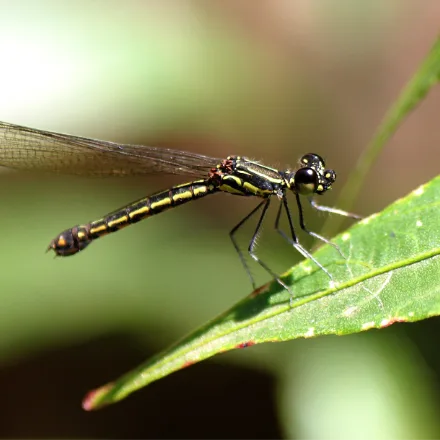
Green's Gem Rare
Libellago greeni
A damselfly the length of a fingernail, endemic to a handful of rainforest streams.
Where: Rocky stretches of the forest streams. Best: January to March.
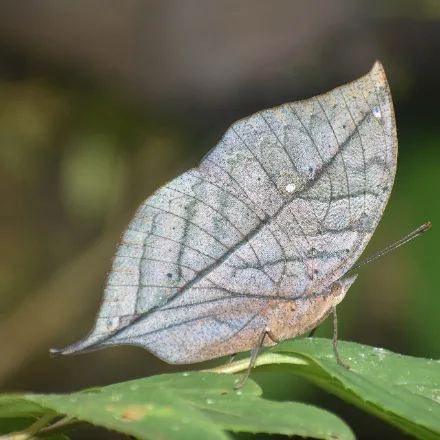
Sri Lanka Blue Oakleaf Rare
Kallima philarchus
Electric blue and orange in flight, and a dead leaf complete with midrib and fungal blotches the moment it lands.
Where: Trail edges and fallen fruit inside the reserve. Best: January to March.
No free photograph of the Sri Lanka blue oakleaf exists. The image shows the scarce blue oakleaf, Kallima knyvettii, a close relative photographed in southern India.
Sri Lanka Relict Ant Ultra rare Critically Endangered
Aneuretus simoni
The only surviving species of an entire subfamily of ants, and it lives in the leaf litter of one island.
Where: Forest floor litter in the least disturbed sections. Best: Year round.
Spiders and scorpions
2 species
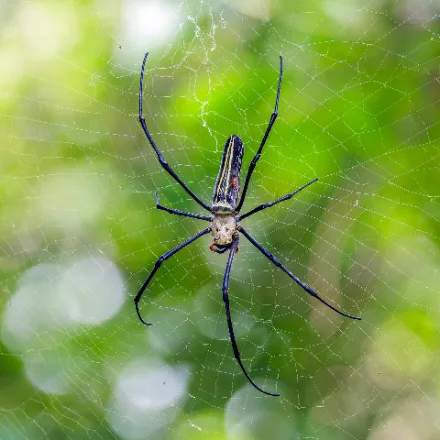
Golden Orb-weaver Common
Nephila pilipes
A giant black-and-yellow spider spinning webs of golden silk strong enough to snare small birds.
Where: Trail edges and clearings through the reserve. Best: August to December.
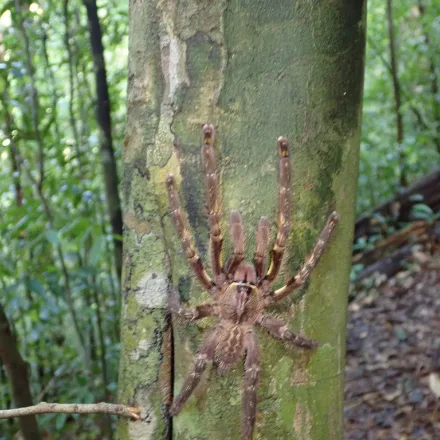
Fringed Ornamental Tarantula Rare
Poecilotheria ornata
A tarantula the size of a dinner plate that lives in tree holes and sometimes shares them with a frog.
Where: Hollows in the large trees near the stream trails, at night. Best: January to March, night.
Molluscs
1 species
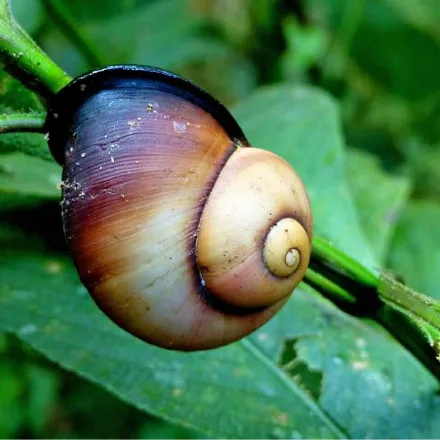
Sri Lanka Tree Snail Occasional
Acavus phoenix
A snail the size of a plum, banded like a boiled sweet, that lives its whole life in the canopy.
Where: Tree trunks along the stream trails after rain. Best: May to September and January to March.
Crustaceans
1 species
Sri Lanka Tree Crab Very rare
Perbrinckia scansor
A freshwater crab that lives up a tree, in rainwater trapped in a hollow trunk, and only comes down to breed.
Where: Rot holes and hollows in mature trees along the stream trails. Best: February and March.
Planning
January to April and July to September for the drier weather, though this is rainforest and rain is the normal condition. The main trails run to waterfalls and are straightforward; the interesting herpetology is off them and needs someone who knows the reserve. Leech socks in any month. Kanneliya is smaller and more fragmented than Sinharaja and the buffer is under real pressure from cultivation. If you want the endemic birds and one forest only, Sinharaja is the stronger choice. If you want the same forest without the guided queue, this is it.
Compare guided rainforest walks and birding days at Kanneliya
Some links on this page are affiliate links. If you book through them, Wildseer may earn a small commission at no extra cost to you.
Frequently asked questions
What wildlife can you see at Kanneliya?
Wet zone endemics: Sri Lanka blue magpie and orange-billed babbler among the birds, purple-faced langur, an endemic frog list including the golden shrub frog, endemic stream fish, the fringed ornamental tarantula, and the Sri Lanka tree crab and relict ant, both close to unfindable elsewhere.
Is Kanneliya better than Sinharaja?
Sinharaja is richer for birds and has the mixed feeding flock. Kanneliya is quieter, easier to walk and holds several species that are hard to find anywhere else. If you have time for one, take Sinharaja. If you have time for two, come here second.
When is the best time to visit Kanneliya?
January to April and July to September, the drier spells. Frogs are better on a wet night, so the two goals pull in opposite directions and most people take the dry option.
Do you need a guide at Kanneliya?
Not for the main waterfall trails. Yes, for anything on this page that is small, nocturnal or off the path, which is most of the reason to come.
Explore Sri Lanka wildlife by group
 Mammals of Sri Lanka
 Birds of Sri Lanka
 Reptiles and amphibians of Sri Lanka
 Fish of Sri Lanka
 Sharks and rays of Sri Lanka
 Reef invertebrates of Sri Lanka
 Insects and spiders of Sri Lanka
Part of the Wildlife in Sri Lanka guide.
Explore Sri Lanka wildlife by place
- Adams Peak wildlife
- Arugam Bay marine life
- Bundala wildlife
- Colombo wildlife
- Ella wildlife
- Gal Oya wildlife
- Great Basses marine life
- Hikkaduwa marine life
- Horton Plains wildlife
- Jaffna wildlife
- Kalpitiya marine life
- Kandy wildlife
- Kitulgala wildlife
- Knuckles wildlife
- Kumana wildlife
- Mannar marine life
- Minneriya wildlife
- Mirissa marine life
- Rekawa marine life
- Sigiriya wildlife
- Sinharaja wildlife
- Tangalle marine life
- Trincomalee marine life
- Udawalawe wildlife
- Wasgamuwa wildlife
- Wilpattu wildlife
- Yala wildlife
Image credits
Square thumbnails are cropped from the original. Wide banner images are cropped to a band. Other images are resized only. No other changes have been made.
- Sri Lanka Tree Crab: (c) achintha92, some rights reserved (CC BY) | CC BY 4.0, cropped
- Sri Lanka Relict Ant: Jonghyun Park | CC BY 4.0, cropped
- Golden Shrub Frog: Buddhika.jm(Buddhika Mawella) | CC BY-SA 4.0, cropped
- Ceylon Rose: 松井 淳 | CC0, cropped
- Purple-faced Langur: Jeroen84 | CC BY-SA 3.0, cropped
- Orange-billed Babbler: Iain Robson from UK | CC BY 2.0, cropped
- Sri Lanka Blue Magpie: Gerry Zambonini | CC BY-SA 2.0, cropped
- Common Lanka Skink: Peyman Zehtab Fard | CC BY 2.0, cropped
- Kangaroo Lizard: Nyanatusita | CC BY-SA 3.0, cropped
- Hump-nosed Lizard: Nyanatusita | CC BY-SA 3.0, cropped
- Sri Lankan Green Pit Viper: Gihan Jayaweera | CC BY-SA 3.0, cropped
- Rough-horned Lizard: Buddhika.jm(Buddhika Mawella) | CC BY-SA 4.0, cropped
- Kelaart’s Dwarf Toad: Buddhika Mawella ( Buddhika.jm at English Wikipedia ) | CC BY 3.0, cropped
- Sri Lanka Rock Frog: Buddhika.jm | CC BY-SA 3.0, cropped
- Southern Whipping Frog: Ioannis Magouras | CC BY 4.0, cropped
- Ceylon Killifish: Thuhiru S. Yapa | CC BY 4.0, cropped
- Black Ruby Barb: NasserHalaweh | CC BY-SA 4.0, cropped
- Ceylon Combtail: Jonghyun Park | CC BY 4.0, cropped
- Cherry Barb: Brian Gratwicke | CC BY 2.0, cropped
- Fire Rasbora: Rupert A. Collins | CC BY 3.0, cropped
- Ornate Paradisefish: Klaus de Leuw | CC BY-SA 3.0, cropped
- Weaver Ant (cropped to square): Bernard DUPONT from FRANCE | CC BY-SA 2.0, cropped
- Shining Gossamerwing: Gihan Jayaweera | CC BY-SA 4.0, cropped
- Ceylon Tree Nymph: Notafly | CC BY-SA 3.0, cropped
- Sri Lanka Birdwing: Janith Pramuditha | CC BY-SA 4.0, cropped
- Green’s Gem: Buddhika.jm | CC BY 3.0, cropped
- Sri Lanka Blue Oakleaf: MaheshBaruahwildlife | CC BY-SA 4.0, cropped
- Golden Orb-weaver (resized): Charles J. Sharp | CC BY-SA 4.0, cropped
- Fringed Ornamental Tarantula: Théalie Dhellemmes | CC BY-SA 4.0, cropped
- Sri Lanka Tree Snail: Moni Ostermaier | CC BY-SA 4.0, cropped
- Purple-faced langur in the canopy: kanchana Amilani | Unsplash License, cropped
- White-throated kingfisher on a branch: kanchana Amilani | Unsplash License, cropped
- Green forest lizard in breeding colour: Anas Mohamed Nuski | Pexels Licence, cropped
- Bluestripe snapper over a reef: Jeffry Surianto | Pexels Licence, cropped
- Reef manta rays near the surface: Emma Li | Pexels Licence, cropped
- Nudibranch crossing the sea floor: Chris Spain | Pexels Licence, cropped
- Clipper butterfly on a leaf: Pixabay | Pexels Licence, cropped
Square thumbnails are cropped from the original. Wide banner images are cropped to a band. Other images are resized only. No other changes have been made.
- Sri Lanka Tree Crab: (c) achintha92, some rights reserved (CC BY) | CC BY 4.0, cropped
- Sri Lanka Relict Ant: Jonghyun Park | CC BY 4.0, cropped
- Golden Shrub Frog: Buddhika.jm(Buddhika Mawella) | CC BY-SA 4.0, cropped
- Ceylon Rose: 松井 淳 | CC0, cropped
- Purple-faced Langur: Jeroen84 | CC BY-SA 3.0, cropped
- Orange-billed Babbler: Iain Robson from UK | CC BY 2.0, cropped
- Sri Lanka Blue Magpie: Gerry Zambonini | CC BY-SA 2.0, cropped
- Common Lanka Skink: Peyman Zehtab Fard | CC BY 2.0, cropped
- Kangaroo Lizard: Nyanatusita | CC BY-SA 3.0, cropped
- Hump-nosed Lizard: Nyanatusita | CC BY-SA 3.0, cropped
- Sri Lankan Green Pit Viper: Gihan Jayaweera | CC BY-SA 3.0, cropped
- Rough-horned Lizard: Buddhika.jm(Buddhika Mawella) | CC BY-SA 4.0, cropped
- Kelaart’s Dwarf Toad: Buddhika Mawella ( Buddhika.jm at English Wikipedia ) | CC BY 3.0, cropped
- Sri Lanka Rock Frog: Buddhika.jm | CC BY-SA 3.0, cropped
- Southern Whipping Frog: Ioannis Magouras | CC BY 4.0, cropped
- Ceylon Killifish: Thuhiru S. Yapa | CC BY 4.0, cropped
- Black Ruby Barb: NasserHalaweh | CC BY-SA 4.0, cropped
- Ceylon Combtail: Jonghyun Park | CC BY 4.0, cropped
- Cherry Barb: Brian Gratwicke | CC BY 2.0, cropped
- Fire Rasbora: Rupert A. Collins | CC BY 3.0, cropped
- Ornate Paradisefish: Klaus de Leuw | CC BY-SA 3.0, cropped
- Weaver Ant (cropped to square): Bernard DUPONT from FRANCE | CC BY-SA 2.0, cropped
- Shining Gossamerwing: Gihan Jayaweera | CC BY-SA 4.0, cropped
- Ceylon Tree Nymph: Notafly | CC BY-SA 3.0, cropped
- Sri Lanka Birdwing: Janith Pramuditha | CC BY-SA 4.0, cropped
- Green’s Gem: Buddhika.jm | CC BY 3.0, cropped
- Sri Lanka Blue Oakleaf: MaheshBaruahwildlife | CC BY-SA 4.0, cropped
- Golden Orb-weaver (resized): Charles J. Sharp | CC BY-SA 4.0, cropped
- Fringed Ornamental Tarantula: Théalie Dhellemmes | CC BY-SA 4.0, cropped
- Sri Lanka Tree Snail: Moni Ostermaier | CC BY-SA 4.0, cropped
- Purple-faced langur in the canopy: kanchana Amilani | Unsplash License, cropped
- White-throated kingfisher on a branch: kanchana Amilani | Unsplash License, cropped
- Green forest lizard in breeding colour: Anas Mohamed Nuski | Pexels Licence, cropped
- Bluestripe snapper over a reef: Jeffry Surianto | Pexels Licence, cropped
- Reef manta rays near the surface: Emma Li | Pexels Licence, cropped
- Nudibranch crossing the sea floor: Chris Spain | Pexels Licence, cropped
- Clipper butterfly on a leaf: Pixabay | Pexels Licence, cropped