
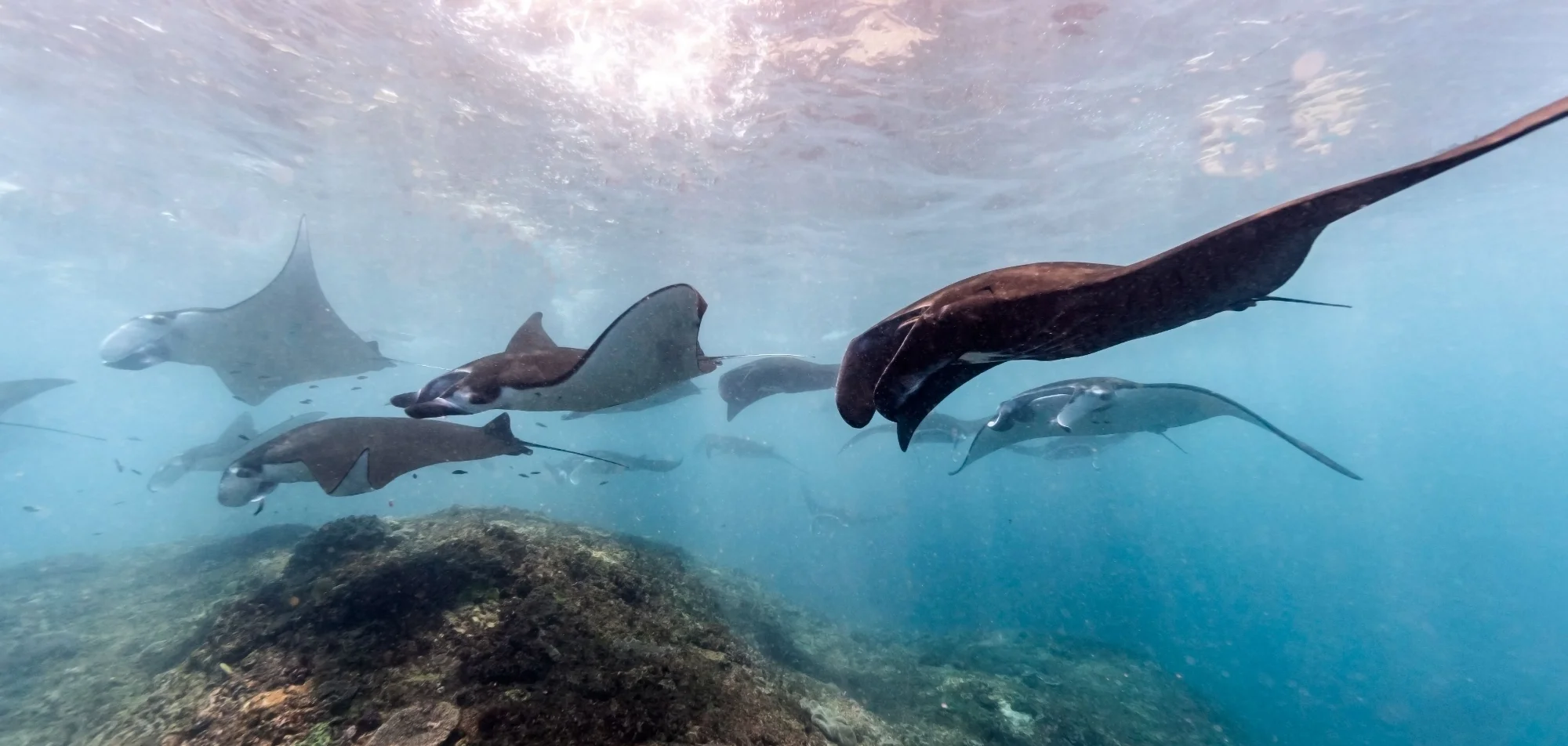
The sharks and rays of Sri Lanka are a longer and heavier list than the reefs alone would suggest, because the continental shelf drops away close inshore and puts deep water species within reach of a day boat. Reef sharks, nurse sharks and a good range of stingrays are the realistic targets. Whale shark and manta are genuine possibilities on the right reef in the right month.
It is also a list with losses on it, and we record them rather than quietly dropping them. Sri Lanka historically held sawfish and wedgefish, among the most threatened marine fish on earth, and they are now effectively gone from these waters through fishing pressure. A guide that only prints what you might see tells you half the story.
This page lists all 30 sharks and rays recorded for Sri Lanka in the Wildseer database. Use the contents to jump to a group.
Highlights
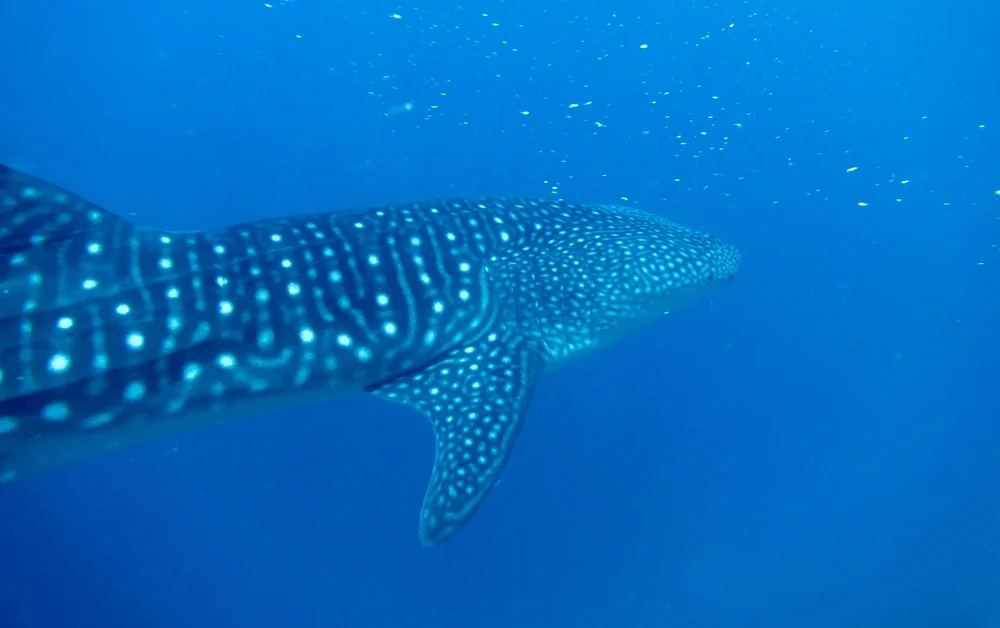
Whale Shark
The biggest fish in the ocean, a spotted, bus sized filter feeder and the undisputed holy grail of tropical diving. Where: Blue water beyond the continental shelf edge. Best: November to April on the west and south, May to September on the east.
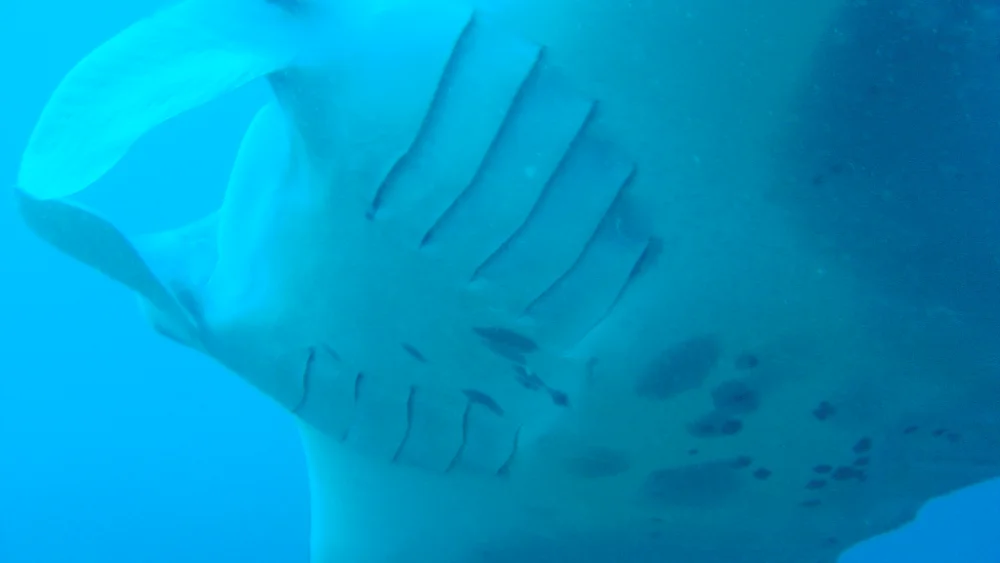
Reef Manta Ray
A four metre wingspan gliding overhead in slow, hypnotic loops that leave divers grinning for days. Where: Reef edges and drop-offs, including the Trincomalee canyon rim. Best: November to April on the west and south, May to September on the east.
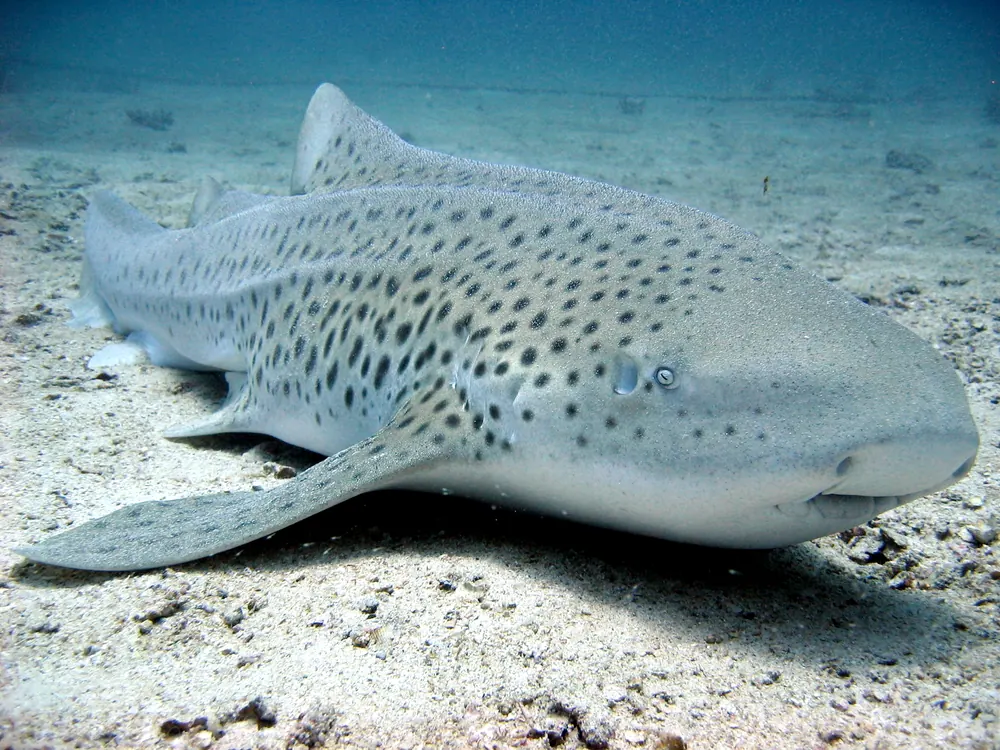
Zebra Shark (Leopard Shark)
A gentle, spotted shark that lies on the sand like a giant lazy cat, striped as a pup and spotted as an adult. Where: Sand and rubble patches between coral heads. Best: November to April on the west and south, May to September on the east.
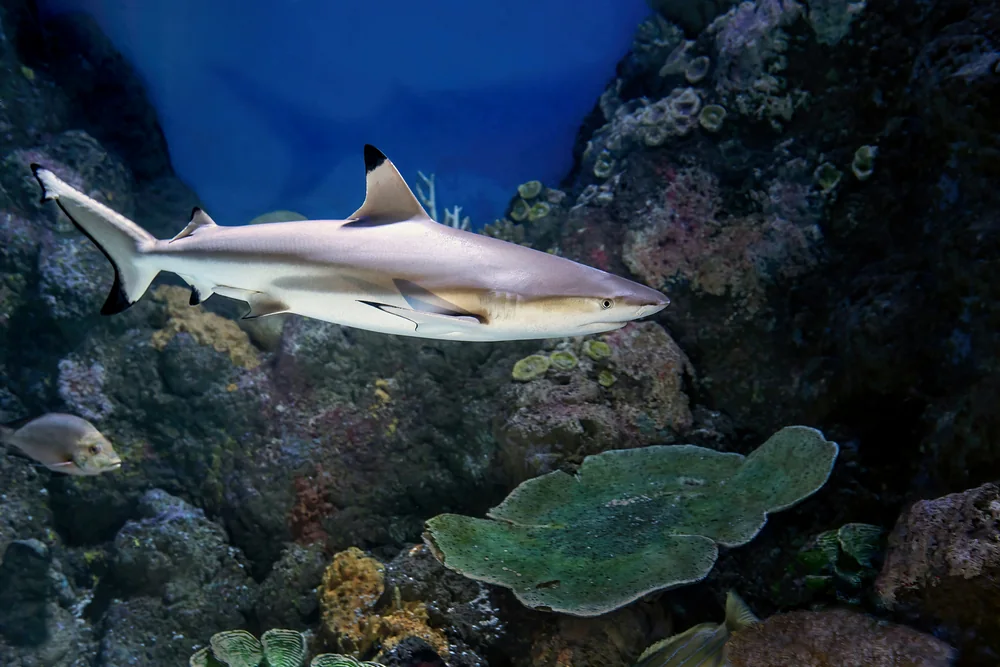
Blacktip Reef Shark
The neat little reef shark of the shallows, its black-tipped fins often cutting the surface over sun-lit sand flats. Where: Shallow reef flats and coral heads at Bar Reef and around Pigeon Island. Best: May to September on the east coast.
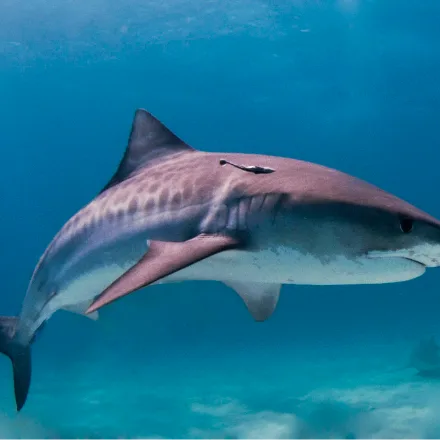
Tiger Shark
The only shark with teeth built to shear turtle shell, and the least fussy eater in the ocean. Where: Deeper reef, wrecks and the Great and Little Basses reefs. Best: November to April on the west and south, May to September on the east.
Sharks and rays
30 species
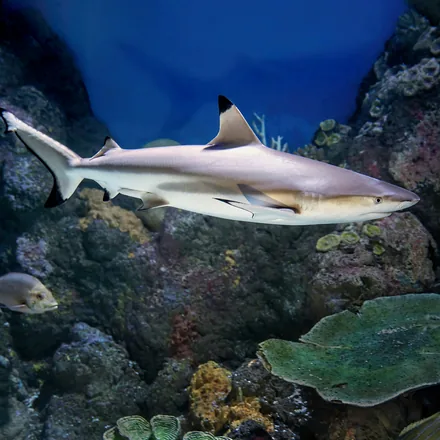
Blacktip Reef Shark Common Vulnerable
Carcharhinus melanopterus
A slim, active shark with jet black fin tips on a bronze body, it patrols reef edges, lagoons and shallow flats. Timid toward people, it rarely exceeds a metre and a half.
Where: Shallow reef flats and coral heads at Bar Reef and around Pigeon Island. Best: May to September on the east coast. Pigeon Island's shallow inner reef is the single most reliable place in Sri Lanka to see a shark, in snorkelling depth. Also on: Trincomalee and Pigeon Island, Kalpitiya, Hikkaduwa and Unawatuna, The Great and Little Basses Reefs.
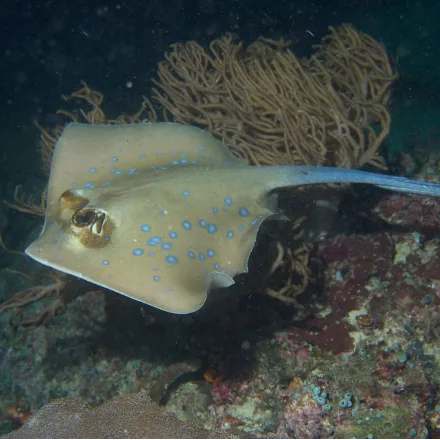
Bluespotted Maskray Regular
Neotrygon kuhlii
Bluespotted maskrays are small, angular rays of sand and rubble, marked with a dark bar across the eyes like a mask and scattered blue spots. Unlike the ribbontail ray they rarely shelter under coral, preferring open sand.
Where: Sand and rubble patches between coral heads. Best: November to April on the west and south, May to September on the east. Half buried in sand with only the eyes showing. Shuffle your feet in the shallows.
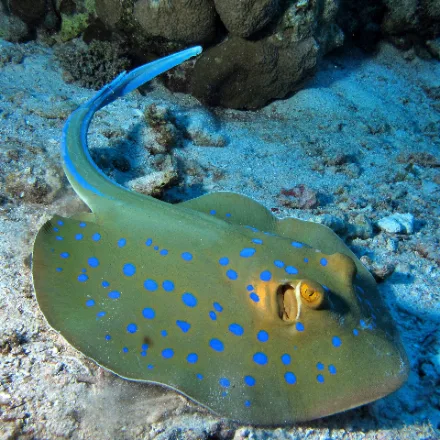
Bluespotted Ribbontail Ray Regular
Taeniura lymma
A rounded stingray with vivid blue spots and blue side stripes on the tail, which carries venomous spines. It shelters under coral by day and fans the sand for worms and shrimp as the tide rises.
Where: Sand and rubble patches between coral heads. Best: November to April on the west and south, May to September on the east. Half buried in sand with only the eyes showing. Shuffle your feet in the shallows. Also on: Hikkaduwa and Unawatuna.
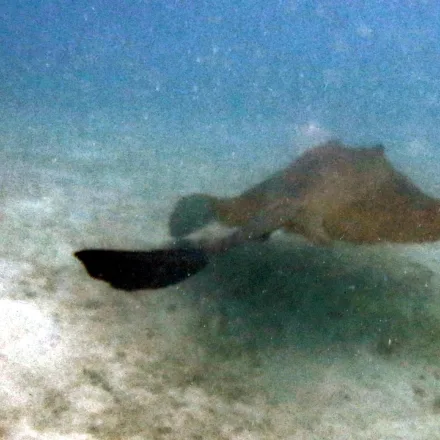
Cowtail Stingray Occasional Vulnerable
Pastinachus sephen
Cowtail stingrays favour shallow silty bays, estuaries and mangrove margins, tolerating brackish and even fresh water. The deep skin fold on the underside of the tail is diagnostic and unlike any other ray in the region.
Where: Sand and rubble patches between coral heads. Best: November to April on the west and south, May to September on the east.
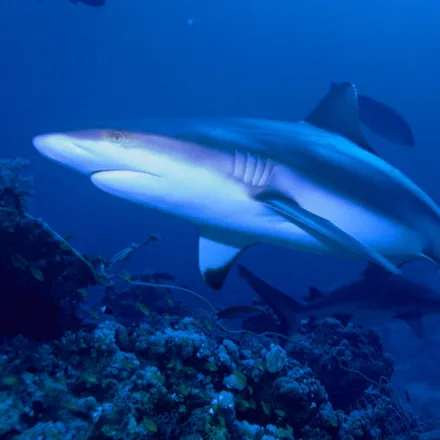
Grey Reef Shark Occasional Endangered
Carcharhinus amblyrhynchos
A robust grey shark with a broad black margin along the tail fin, it favours reef channels and outer walls washed by current. Curious and confident, it will approach divers before wheeling away.
Where: Deeper reef, wrecks and the Great and Little Basses reefs. Best: November to April on the west and south, May to September on the east. Also on: The Great and Little Basses Reefs.
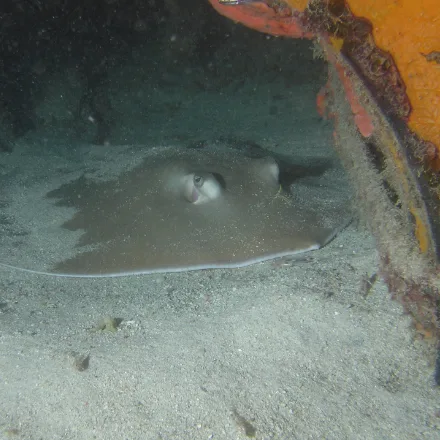
Jenkins Whipray Occasional Vulnerable
Pateobatis jenkinsii
Jenkins whiprays rest half-buried on sand beside reef, lifting off in a cloud of silt when disturbed. A row of heavy denticles runs along the midline of the disc, and the whip-like tail carries a venomous spine near its base.
Where: Sand and rubble patches between coral heads. Best: November to April on the west and south, May to September on the east.
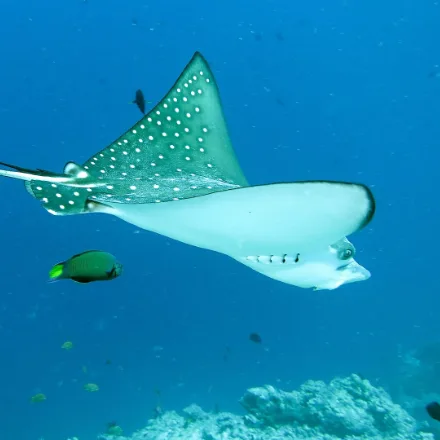
Ocellated Eagle Ray Occasional Endangered
Aetobatus ocellatus
Dark above and scattered with pale rings and spots, this eagle ray has broad pointed wings and a long tail bearing venomous spines. It uses a duck like snout to dig molluscs from the sand.
Where: Reef edges and drop-offs, including the Trincomalee canyon rim. Best: November to April on the west and south, May to September on the east.
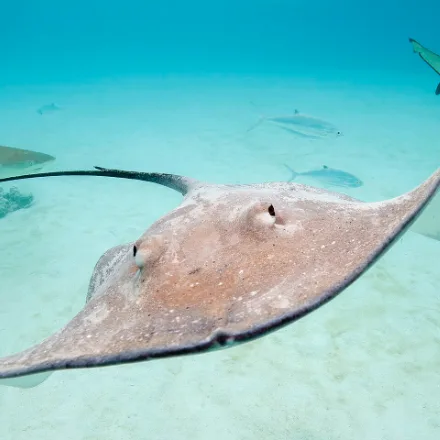
Pink Whipray Occasional Vulnerable
Pateobatis fai
Pink whiprays are broad, pinkish-grey rays of sand flats and lagoons, sometimes seen in aggregations of a dozen or more. The tail is extremely long and thin, carrying a venomous spine near the base.
Where: Sand and rubble patches between coral heads. Best: November to April on the west and south, May to September on the east.
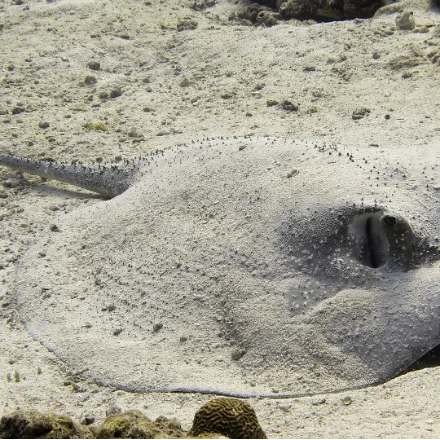
Porcupine Ray Occasional Vulnerable
Urogymnus asperrimus
Porcupine rays are covered in coarse, close-set denticles and large thorns, and have lost the venomous spine entirely. They root through seagrass and sand for molluscs and crustaceans, often in very shallow water.
Where: Sand and rubble patches between coral heads. Best: November to April on the west and south, May to September on the east.
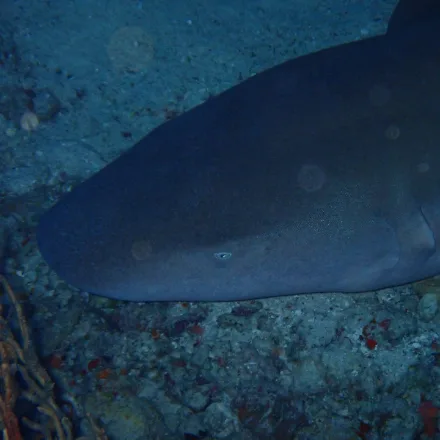
Tawny Nurse Shark Occasional Vulnerable
Nebrius ferrugineus
Heavy and cinnamon brown with small eyes and a pair of sensory barbels, this sluggish shark rests by day and forages at night. It sucks octopus, crustaceans and fish from reef holes with surprising force.
Where: Deeper reef, wrecks and the Great and Little Basses reefs. Best: November to April on the west and south, May to September on the east.
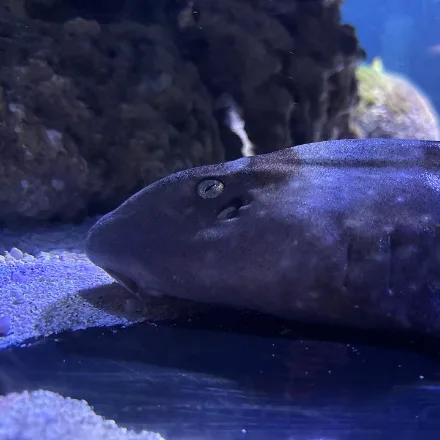
Whitespotted Bamboo Shark Occasional Endangered
Chiloscyllium plagiosum
Whitespotted bamboo sharks spend the day wedged into crevices and emerge at night to hunt invertebrates on the reef floor. They tolerate very low oxygen by shutting down non-essential brain function, an adaptation for stranded tide pools.
Where: Reef and rubble after dark, on a night dive. Best: November to April on the west and south, May to September on the east.
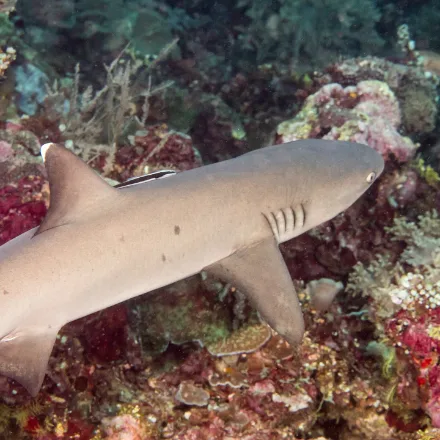
Whitetip Reef Shark Occasional Vulnerable
Triaenodon obesus
Grey and pencil thin with white-tipped dorsal and tail fins, this shark spends daylight piled up under ledges. After dark it squeezes into crevices to flush out sleeping fish.
Where: Deeper reef, wrecks and the Great and Little Basses reefs. Best: November to April on the west and south, May to September on the east. Also on: The Great and Little Basses Reefs.
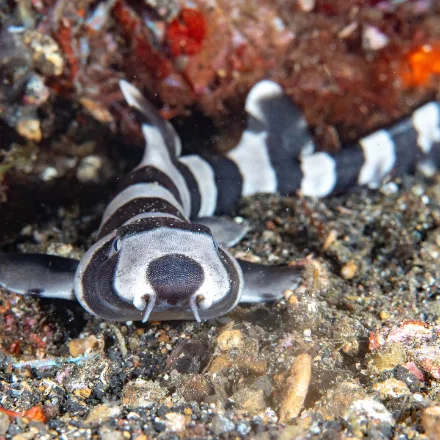
Brownbanded Bamboo Shark Rare Near Threatened
Chiloscyllium punctatum
Long and eel like with a rounded snout, juveniles are boldly banded while adults fade to plain brown. It hunts invertebrates in shallow reefs and tide pools, tolerating low oxygen with ease.
Where: Reef and rubble after dark, on a night dive. Best: May to September on the east coast.
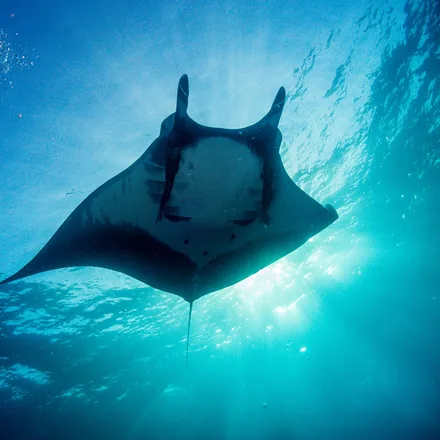
Giant Manta Ray Rare Endangered
Mobula birostris
Immense and diamond winged, black above and white below with a unique belly pattern, the giant manta filters plankton through gill plates as it swims. Far larger and more oceanic than the reef manta, it roams open water and visits cleaning stations.
Where: Reef edges and drop-offs, including the Trincomalee canyon rim. Best: November to April on the west and south, May to September on the east.
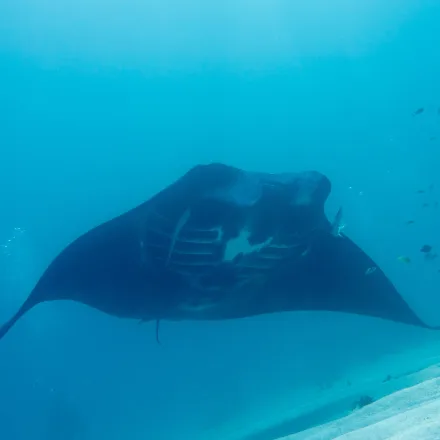
Reef Manta Ray Rare Vulnerable
Mobula alfredi
Reef mantas cruise cleaning stations and current swept pinnacles, banking in graceful barrel rolls to feed on plankton. Curious and harmless, they are a diving highlight.
Where: Reef edges and drop-offs, including the Trincomalee canyon rim. Best: November to April on the west and south, May to September on the east. Also on: Trincomalee and Pigeon Island, The Great and Little Basses Reefs.
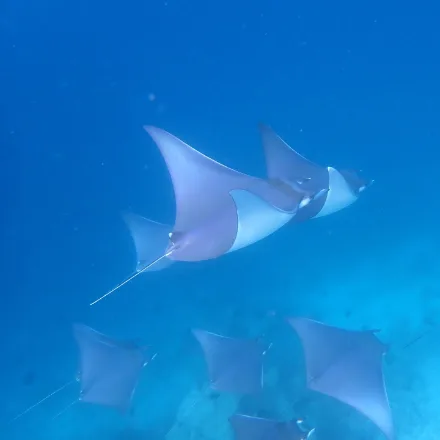
Shortfin Devil Ray Rare Endangered
Mobula kuhlii
Shortfin devil rays are small mobulids that feed on plankton and small fish, filtering water through modified gill plates. They are known for breaching repeatedly, hitting the surface with a crack audible from a long way off.
Where: Blue water beyond the continental shelf edge. Best: November to April on the west and south coasts.
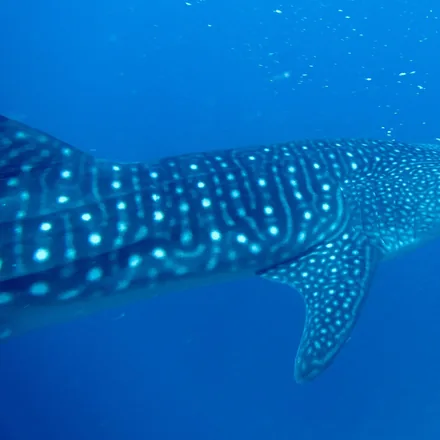
Whale Shark Rare Endangered
Rhincodon typus
Reaching well over ten metres, the whale shark is a harmless plankton feeder that cruises warm seas. Encounters are unpredictable but unforgettable.
Where: Blue water beyond the continental shelf edge. Best: November to April on the west and south, May to September on the east. Records cluster off the east and around the Great Basses. Also on: Trincomalee and Pigeon Island, Mirissa, The Great and Little Basses Reefs.
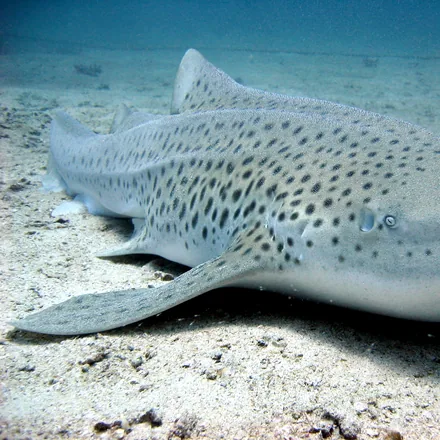
Zebra Shark (Leopard Shark) Rare Endangered
Stegostoma tigrinum
Long and supple with prominent ridges along the body and a tail nearly as long again, adults are cream coloured with dark leopard spots. Utterly harmless, it rests on sandy patches between reefs.
Where: Sand and rubble patches between coral heads. Best: November to April on the west and south, May to September on the east. Endangered. Resting on sand by day, which is when they are seen.
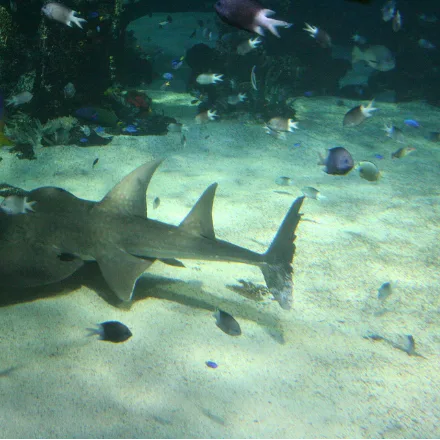
Bowmouth Guitarfish Very rare Critically Endangered
Rhina ancylostomus
Bowmouth guitarfish have the flattened head and pectoral fins of a ray on a heavy shark-like body and tail. Bony thorn ridges run above the eyes and along the back, and the mouth is a distinctive undulating bow used to crush shellfish.
Where: Sand and rubble patches between coral heads. Best: November to April on the west and south, May to September on the east. Critically Endangered. Sri Lanka's wedgefish is Rhynchobatus djiddensis, the Indian Ocean species.
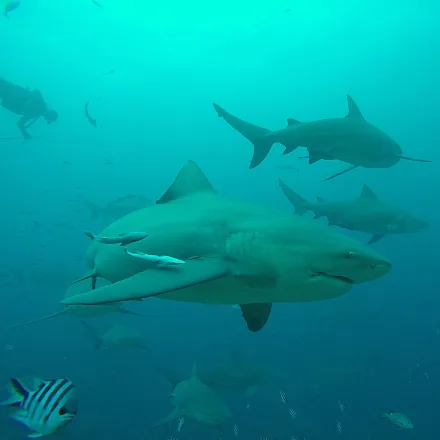
Bull Shark Very rare Vulnerable
Carcharhinus leucas
Stocky and grey with a short blunt snout, the bull shark thrives in murky coastal shallows, estuaries and even rivers. It is bold, opportunistic and one of the few sharks considered genuinely dangerous.
Where: Deeper reef, wrecks and the Great and Little Basses reefs. Best: November to April on the west and south, May to September on the east.
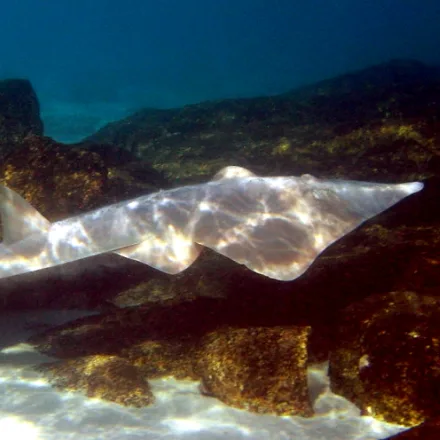
Giant Guitarfish Very rare Critically Endangered
Glaucostegus typus
A large ray relative with a pointed, wedge shaped head grading into a muscular shark like body and tail. It cruises sandy coastal shallows, crushing crabs and shellfish with flat plated jaws.
Where: Sand and rubble patches between coral heads. Best: November to April on the west and south, May to September on the east. Critically Endangered. Sri Lanka's wedgefish is Rhynchobatus djiddensis, the Indian Ocean species.
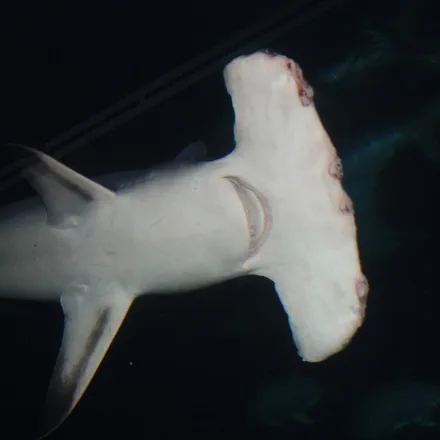
Great Hammerhead Very rare Critically Endangered
Sphyrna mokarran
Great hammerheads are the largest hammerhead at nearly six metres, with a distinctive very tall, sickle-shaped first dorsal fin. They specialise in rays, using the cephalofoil as a hammer to stun and hold prey against the bottom.
Where: Deeper reef, wrecks and the Great and Little Basses reefs. Best: May to September on the east coast. Both are Critically Endangered and Sri Lankan waters have been fished hard for them.
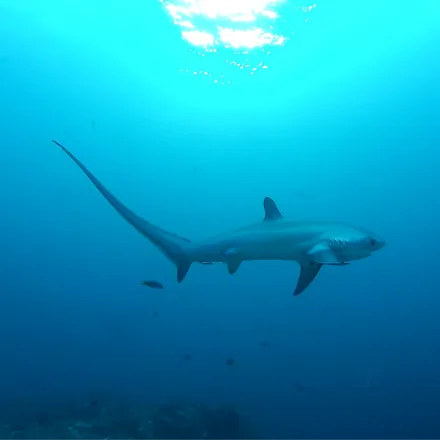
Pelagic Thresher Very rare Endangered
Alopias pelagicus
The upper lobe of a thresher's tail is as long as the rest of its body and is used as a weapon, snapped forward at speeds that generate a cavitation shockwave. Threshers visit shallow cleaning stations at dawn, which is the only time divers reliably see them.
Where: Blue water beyond the continental shelf edge. Best: May to September on the east coast.
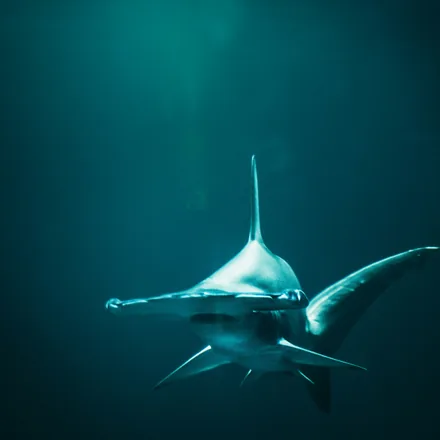
Scalloped Hammerhead Very rare Critically Endangered
Sphyrna lewini
Scalloped hammerheads school by day at offshore seamounts, sometimes in hundreds, and hunt alone at night. The broad cephalofoil spreads their electrical sensors across a wider sweep, giving them an unusually precise sense of buried prey.
Where: Deeper reef, wrecks and the Great and Little Basses reefs. Best: May to September on the east coast. Both are Critically Endangered and Sri Lankan waters have been fished hard for them.
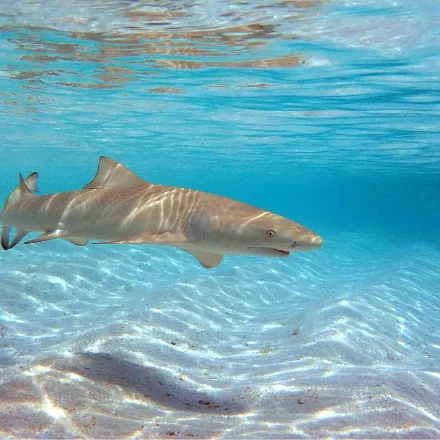
Sicklefin Lemon Shark Very rare Endangered
Negaprion acutidens
Sicklefin lemon sharks are slow-moving and thickset, hunting fish and rays in very shallow water over sand and around mangrove edges. Females return to the same nursery lagoons to pup, so a local population wiped out rarely recovers.
Where: Deeper reef, wrecks and the Great and Little Basses reefs. Best: November to April on the west and south, May to September on the east.
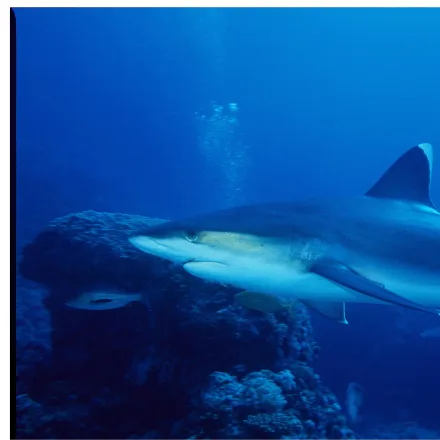
Silvertip Shark Very rare Vulnerable
Carcharhinus albimarginatus
Silvertips patrol the drop-offs of offshore pinnacles and islands, and are unusually confident around divers. They displace grey reef sharks from feeding opportunities and carry the scars of intraspecific fighting.
Where: Deeper reef, wrecks and the Great and Little Basses reefs. Best: November to April on the west and south, May to September on the east.
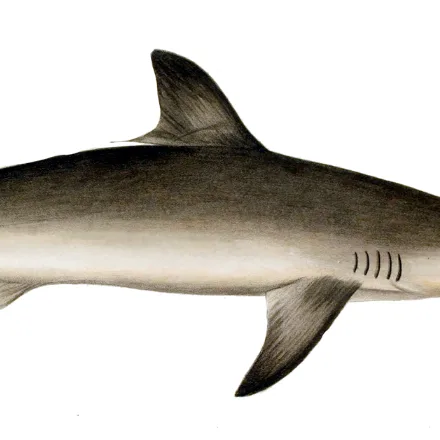
Spottail Shark Very rare Near Threatened
Carcharhinus sorrah
Spottail sharks work the sandy margins and shallow reef edges of both Thai coasts, hunting small fish and cephalopods. Black tips on the lower tail lobe, second dorsal and pectorals separate them from the blacktip reef shark.
Where: Deeper reef, wrecks and the Great and Little Basses reefs. Best: November to April on the west and south, May to September on the east.
Tiger Shark Very rare Near Threatened
Galeocerdo cuvier
Tiger sharks grow past five metres and eat almost anything, from turtles and sea snakes to seabirds and carrion. The serrated, cockscomb-shaped teeth are unique among sharks and can cut through a turtle carapace.
Where: Deeper reef, wrecks and the Great and Little Basses reefs. Best: November to April on the west and south, May to September on the east.
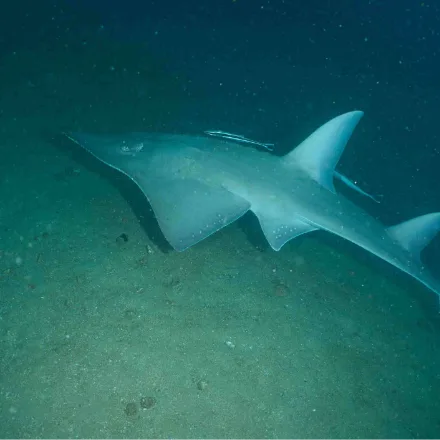
Whitespotted Wedgefish Very rare Critically Endangered
Rhynchobatus australiae
Whitespotted wedgefish are shark-shaped rays with a wedge-like snout, rows of white spots along the back and a pair of dark eye spots on the shoulders. They lie on sand near reef and feed on crabs, molluscs and small fish.
Where: Sand and rubble patches between coral heads. Best: November to April on the west and south, May to September on the east. Critically Endangered. Sri Lanka's wedgefish is Rhynchobatus djiddensis, the Indian Ocean species.
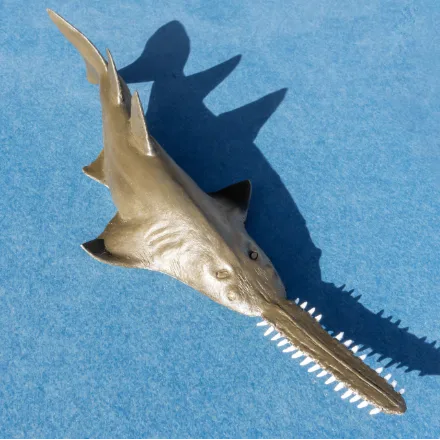
Largetooth Sawfish Ultra rare Critically Endangered
Pristis pristis
Sawfish use the toothed rostrum to detect and slash through schools of fish, and to rake prey from the mud. Largetooth sawfish move freely between the sea, estuaries and far up large rivers.
Where: Lagoons, estuaries and mangrove creeks at Puttalam, Negombo and Kalametiya. Best: Year round. Almost certainly gone from Sri Lankan waters. Recorded here historically and listed so that the loss is on the page rather than quietly omitted.
Planning
Season decides everything. The east coast reefs work from May to September; the west and south work from November to April. Whale shark records cluster around the shoulder months and around the offshore banks rather than the fringing reef, and are a matter of luck rather than planning. Manta and devil ray are most likely on the deeper sites off the east coast, where the cleaning stations are.
Find diving and snorkelling trips in Sri Lanka
Some links on this page are affiliate links. If you book through them, Wildseer may earn a small commission at no extra cost to you.
Frequently asked questions
Are there sharks in Sri Lanka?
Yes, around thirty species of shark and ray are recorded in Sri Lankan waters. Most are reef sharks, nurse sharks and rays that pose no threat. Larger species including tiger and bull sharks are present but very rarely encountered by divers.
Where can you see manta rays in Sri Lanka?
The deeper reefs and offshore sites off the east coast during the May to September season give the best odds, and the Great and Little Basses reefs off the southeast are the other possibility during the calm window. Neither is reliable enough to build a trip around.
Are there sawfish in Sri Lanka?
Historically yes, and the largetooth sawfish is still formally on the island’s list. In practice it has not been reliably recorded for many years and should be treated as effectively gone from Sri Lankan waters, lost to net fisheries. It is one of the most threatened marine fish on earth.
Explore Sri Lanka wildlife by group
 Mammals of Sri Lanka
 Birds of Sri Lanka
 Reptiles and amphibians of Sri Lanka
 Fish of Sri Lanka
 Reef invertebrates of Sri Lanka
 Insects and spiders of Sri Lanka
Part of the Wildlife in Sri Lanka guide.
Explore Sri Lanka wildlife by place
- Adams Peak wildlife
- Arugam Bay marine life
- Bundala wildlife
- Colombo wildlife
- Ella wildlife
- Gal Oya wildlife
- Great Basses marine life
- Hikkaduwa marine life
- Horton Plains wildlife
- Jaffna wildlife
- Kalpitiya marine life
- Kandy wildlife
- Kanneliya wildlife
- Kitulgala wildlife
- Knuckles wildlife
- Kumana wildlife
- Mannar marine life
- Minneriya wildlife
- Mirissa marine life
- Rekawa marine life
- Sigiriya wildlife
- Sinharaja wildlife
- Tangalle marine life
- Trincomalee marine life
- Udawalawe wildlife
- Wasgamuwa wildlife
- Wilpattu wildlife
- Yala wildlife
Image credits
Square thumbnails are cropped from the original. Wide banner images are cropped to a band. Other images are resized only. No other changes have been made.
- Reef manta rays near the surface: Emma Li | Pexels Licence, cropped
- Whale Shark (resized): Jerome Paillet (IFREMER) | CC BY 4.0, cropped
- Reef Manta Ray (cropped): Peter Southwood (Pbsouthwood) | CC BY-SA 3.0
- Zebra shark (resized): Sigmund | CC BY 2.0, cropped
- Blacktip reef shark: David Clode | Unsplash License, cropped
- Tiger Shark (cropped to square): Albert kok | CC BY-SA 3.0, cropped
- Blacktip Reef Shark: David Clode | Unsplash License, cropped
- Bluespotted Maskray (cropped to square): Elias Levy | CC BY 2.0, cropped
- Bluespotted Ribbontail Ray (resized): Derek Keats from Johannesburg, South Africa | CC BY 2.0, cropped
- Cowtail Stingray (cropped to square): Frédéric Ducarme | CC BY-SA 4.0, cropped
- Grey Reef Shark (cropped to square): Albert kok | CC BY-SA 3.0, cropped
- Jenkins Whipray (cropped to square): (c) Ditch Townsend, some rights reserved (CC BY-SA) | CC BY-SA 4.0, cropped
- Ocellated Eagle Ray (cropped to square): Jerome Paillet (IFREMER) | CC BY 4.0, cropped
- Pink Whipray (cropped to square): Charles J. Sharp | CC BY-SA 4.0, cropped
- Porcupine Ray (cropped to square): Rucha Karkarey edited by JJ Harrison | CC BY-SA 4.0, cropped
- Tawny Nurse Shark (cropped to square): Jean-Paul Boerekamps | CC0, cropped
- Whitespotted Bamboo Shark (cropped to square): Bloopityboop | CC BY-SA 4.0, cropped
- Whitetip Reef Shark (cropped to square): Rickard Zerpe | CC BY 2.0, cropped
- Brownbanded Bamboo Shark (cropped to square): Rickard Zerpe | CC BY 2.0, cropped
- Giant Manta Ray (cropped to square): Stevelaycock21 | CC BY-SA 4.0, cropped
- Reef Manta Ray (cropped to square): Rickard Zerpe | CC BY 2.0, cropped
- Shortfin Devil Ray (cropped to square): John Hepburn | CC BY 4.0, cropped
- Whale Shark (cropped to square): Jerome Paillet (IFREMER) | CC BY 4.0, cropped
- Zebra Shark (cropped to square): Sigmund | CC BY 2.0, cropped
- Bowmouth Guitarfish (cropped to square): Kim Navarre from Brooklyn, NY | CC BY-SA 2.0, cropped
- Bull Shark (cropped to square): amanderson2 | CC BY 2.0, cropped
- Giant Guitarfish (cropped to square): Anne Hoggett | CC BY 3.0, cropped
- Great Hammerhead (cropped to square): Jim Capaldi from Springfield, USA | CC BY 2.0, cropped
- Pelagic Thresher (cropped to square): Thomas Alexander | CC BY-SA 4.0, cropped
- Scalloped Hammerhead: Jonas Allert | Unsplash License, cropped
- Sicklefin Lemon Shark (cropped to square): Julien Bidet | CC BY-SA 4.0, cropped
- Silvertip Shark (cropped to square): albert kok | CC BY-SA 3.0, cropped
- Spottail Shark (cropped to square): Müller & Henle | Public domain, cropped
- Whitespotted Wedgefish (cropped to square): (c) apteryx54, some rights reserved (CC BY) | CC BY 4.0, cropped
- Largetooth Sawfish (cropped to square): Hiroya02 | CC0, cropped
- Purple-faced langur in the canopy: kanchana Amilani | Unsplash License, cropped
- White-throated kingfisher on a branch: kanchana Amilani | Unsplash License, cropped
- Green forest lizard in breeding colour: Anas Mohamed Nuski | Pexels Licence, cropped
- Bluestripe snapper over a reef: Jeffry Surianto | Pexels Licence, cropped
- Nudibranch crossing the sea floor: Chris Spain | Pexels Licence, cropped
- Clipper butterfly on a leaf: Pixabay | Pexels Licence, cropped
Square thumbnails are cropped from the original. Wide banner images are cropped to a band. Other images are resized only. No other changes have been made.
- Reef manta rays near the surface: Emma Li | Pexels Licence, cropped
- Whale Shark (resized): Jerome Paillet (IFREMER) | CC BY 4.0, cropped
- Reef Manta Ray (cropped): Peter Southwood (Pbsouthwood) | CC BY-SA 3.0
- Zebra shark (resized): Sigmund | CC BY 2.0, cropped
- Blacktip reef shark: David Clode | Unsplash License, cropped
- Tiger Shark (cropped to square): Albert kok | CC BY-SA 3.0, cropped
- Blacktip Reef Shark: David Clode | Unsplash License, cropped
- Bluespotted Maskray (cropped to square): Elias Levy | CC BY 2.0, cropped
- Bluespotted Ribbontail Ray (resized): Derek Keats from Johannesburg, South Africa | CC BY 2.0, cropped
- Cowtail Stingray (cropped to square): Frédéric Ducarme | CC BY-SA 4.0, cropped
- Grey Reef Shark (cropped to square): Albert kok | CC BY-SA 3.0, cropped
- Jenkins Whipray (cropped to square): (c) Ditch Townsend, some rights reserved (CC BY-SA) | CC BY-SA 4.0, cropped
- Ocellated Eagle Ray (cropped to square): Jerome Paillet (IFREMER) | CC BY 4.0, cropped
- Pink Whipray (cropped to square): Charles J. Sharp | CC BY-SA 4.0, cropped
- Porcupine Ray (cropped to square): Rucha Karkarey edited by JJ Harrison | CC BY-SA 4.0, cropped
- Tawny Nurse Shark (cropped to square): Jean-Paul Boerekamps | CC0, cropped
- Whitespotted Bamboo Shark (cropped to square): Bloopityboop | CC BY-SA 4.0, cropped
- Whitetip Reef Shark (cropped to square): Rickard Zerpe | CC BY 2.0, cropped
- Brownbanded Bamboo Shark (cropped to square): Rickard Zerpe | CC BY 2.0, cropped
- Giant Manta Ray (cropped to square): Stevelaycock21 | CC BY-SA 4.0, cropped
- Reef Manta Ray (cropped to square): Rickard Zerpe | CC BY 2.0, cropped
- Shortfin Devil Ray (cropped to square): John Hepburn | CC BY 4.0, cropped
- Whale Shark (cropped to square): Jerome Paillet (IFREMER) | CC BY 4.0, cropped
- Zebra Shark (cropped to square): Sigmund | CC BY 2.0, cropped
- Bowmouth Guitarfish (cropped to square): Kim Navarre from Brooklyn, NY | CC BY-SA 2.0, cropped
- Bull Shark (cropped to square): amanderson2 | CC BY 2.0, cropped
- Giant Guitarfish (cropped to square): Anne Hoggett | CC BY 3.0, cropped
- Great Hammerhead (cropped to square): Jim Capaldi from Springfield, USA | CC BY 2.0, cropped
- Pelagic Thresher (cropped to square): Thomas Alexander | CC BY-SA 4.0, cropped
- Scalloped Hammerhead: Jonas Allert | Unsplash License, cropped
- Sicklefin Lemon Shark (cropped to square): Julien Bidet | CC BY-SA 4.0, cropped
- Silvertip Shark (cropped to square): albert kok | CC BY-SA 3.0, cropped
- Spottail Shark (cropped to square): Müller & Henle | Public domain, cropped
- Whitespotted Wedgefish (cropped to square): (c) apteryx54, some rights reserved (CC BY) | CC BY 4.0, cropped
- Largetooth Sawfish (cropped to square): Hiroya02 | CC0, cropped
- Purple-faced langur in the canopy: kanchana Amilani | Unsplash License, cropped
- White-throated kingfisher on a branch: kanchana Amilani | Unsplash License, cropped
- Green forest lizard in breeding colour: Anas Mohamed Nuski | Pexels Licence, cropped
- Bluestripe snapper over a reef: Jeffry Surianto | Pexels Licence, cropped
- Nudibranch crossing the sea floor: Chris Spain | Pexels Licence, cropped
- Clipper butterfly on a leaf: Pixabay | Pexels Licence, cropped