
Udawalawe is the most reliable elephant viewing in Sri Lanka and it works all year, which is unusual here. The park is open grassland and scrub wrapped around a large reservoir, so there is very little cover, the herds are visible at distance, and nobody has to get close to anything. If you want one park where you will certainly see wild elephants, this is it.
The reservoir does the rest of the work. Spot-billed pelicans fish the open water and loaf on the bund, black-headed ibis work the shallows, pied kingfishers hover over the inflow channels and mugger crocodiles line the Walawe river banks. Brown fish owl and grey-headed fish eagle take the margin trees at either end of the day. On the ground, the golden jackal is the animal you are most likely to see after the elephants, because open grassland gives it nowhere to hide.
This page lists what the guide records for Udawalawe specifically: the grassland, the reservoir margin or the river, the month, and how likely each animal really is.
Highlights
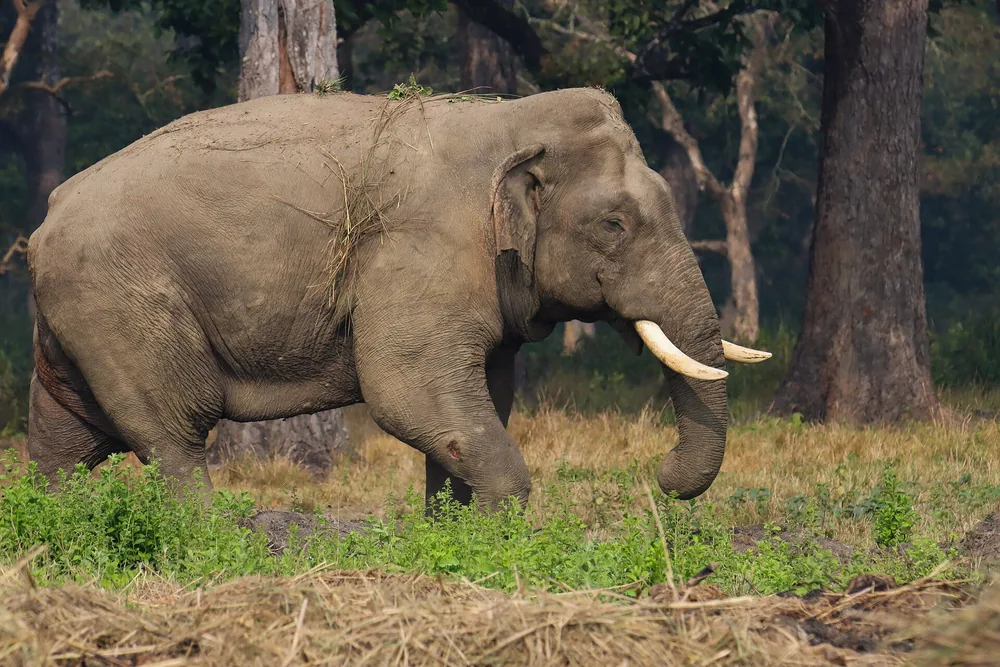
Asian Elephant
The largest land animal in Asia, and a genuinely wild one is worth seeking out over the camp elephants most tourists meet. Where: Grassland and the reservoir margins throughout the park. Best: Year round.
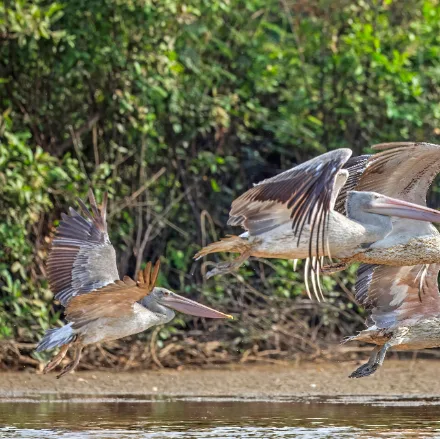
Spot-billed Pelican
A pelican that fishes the ancient irrigation tanks, and one of the few large waterbirds doing better now than it was. Where: The reservoir, fishing in the open water and loafing on the bund. Best: Year round.
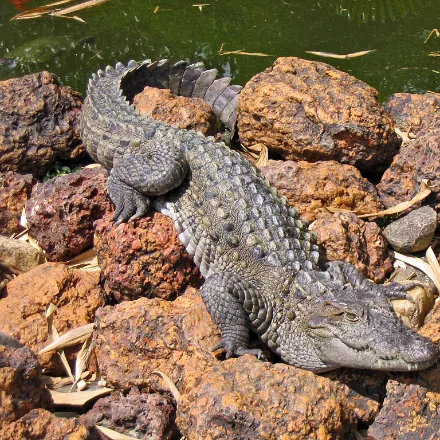
Mugger Crocodile
The broadest snout of any living crocodile, and in one Sri Lankan park block there are more of them per square kilometre than anywhere else on earth. Where: Reservoir edge and the Walawe river banks. Best: Year round.
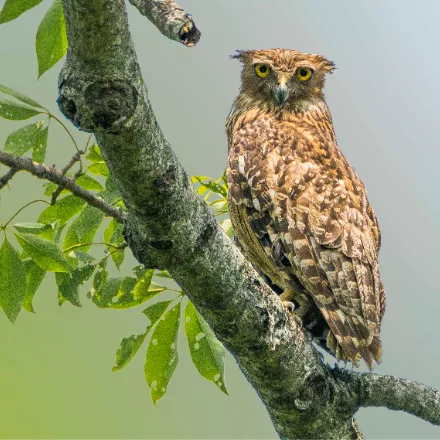
Brown Fish Owl
A big owl with bare unfeathered legs, because feathers are a liability when you fish with your feet. Where: Riverside and reservoir margin trees. Best: Year round.
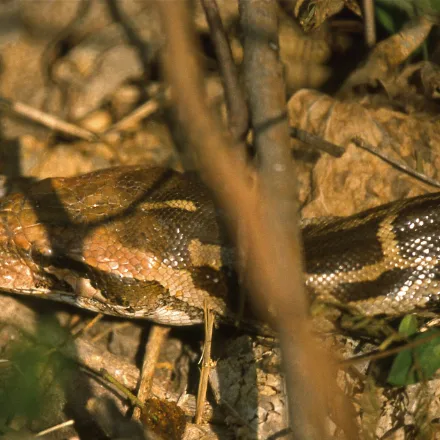
Indian Rock Python
Sri Lanka's largest snake, and in the dry season it lies out at the edge of a shrinking waterhole where every animal in the park has to come. Where: Reservoir margins and grassland. Best: Year round.
Mammals
6 species
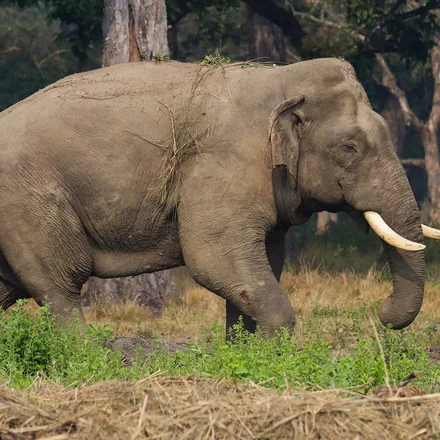
Asian Elephant Common Endangered
Elephas maximus
The largest land animal in Asia, and a genuinely wild one is worth seeking out over the camp elephants most tourists meet.
Where: Grassland and the reservoir margins throughout the park. Best: Year round. The most reliable elephants in Sri Lanka, seen on essentially every drive, and without the seasonal gamble the Gathering involves.
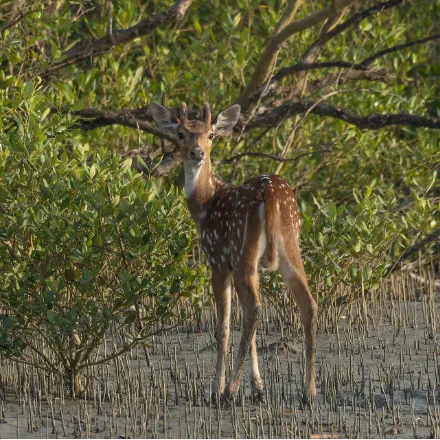
Chital (Spotted Deer) Common
Axis axis
The prey base the whole leopard story rests on, and the animal whose alarm call tells you where the cat is.
Where: Grassland across the park. Best: Year round.
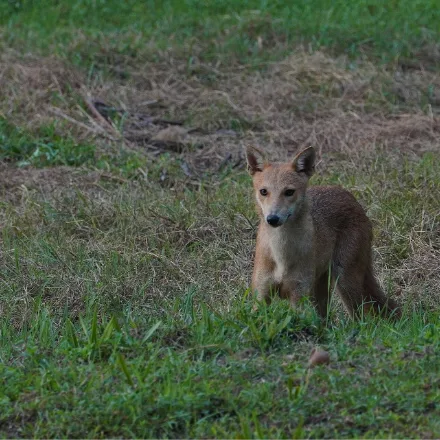
Golden Jackal Regular
Canis aureus
The dry zone's opportunist, trotting along a track at dawn and howling in chorus at dusk so the whole park knows where it is.
Where: Open grassland and the track margins, in the first and last hour of light. Best: Year round. One of the most reliable jackal parks in the country, helped by grassland with almost no cover to hide in.
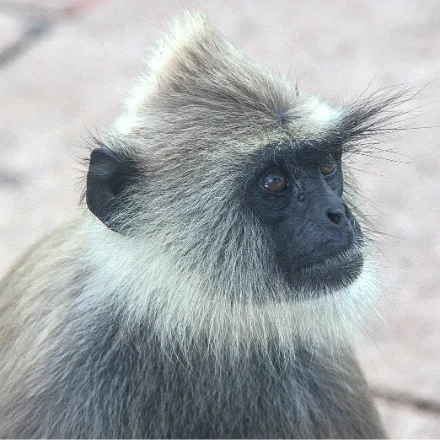
Tufted Grey Langur Regular Near Threatened
Semnopithecus priam
Long-limbed, silver-grey and black-faced, sitting in the open on a ruin or a track edge in every dry zone park.
Where: Scattered trees across the grassland. Best: Year round.
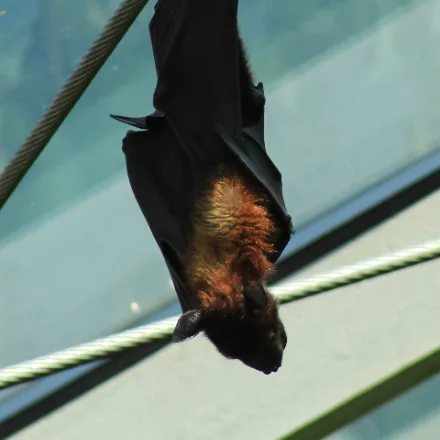
Indian Flying Fox Occasional
Pteropus giganteus
A fruit bat with a metre and a half of wingspan, hanging in noisy thousands from a tree in the middle of town.
Where: Roost trees near the reservoir and the surrounding villages, streaming out at dusk. Best: Year round.
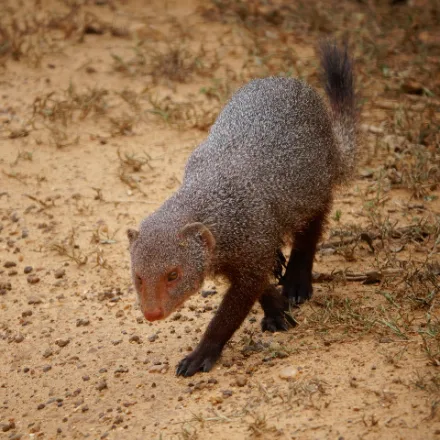
Ruddy Mongoose Occasional
Urva smithii
A big reddish mongoose that carries its black-tipped tail curled up over its back as it crosses a track.
Where: Grassland edges and scrub. Best: Year round.
Birds
11 species
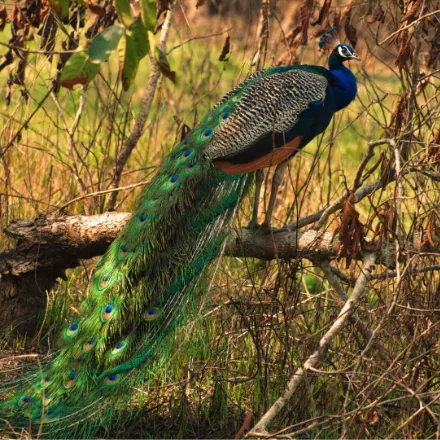
Indian Peafowl Common
Pavo cristatus
Wild, and behaving like a wild bird: displaying on a termite mound at dawn with leopards in the same scrub.
Where: Open grassland and reservoir margin. Best: Year round. Shares the open ground with the elephants, which makes for a good photograph.
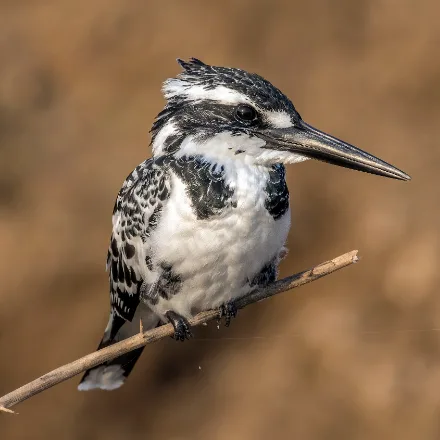
Pied Kingfisher Common
Ceryle rudis
The largest bird in the world that can hover in still air with no wind to help it, which is how it fishes open water no perch reaches.
Where: Over the reservoir and the inflow channels. Best: Year round.
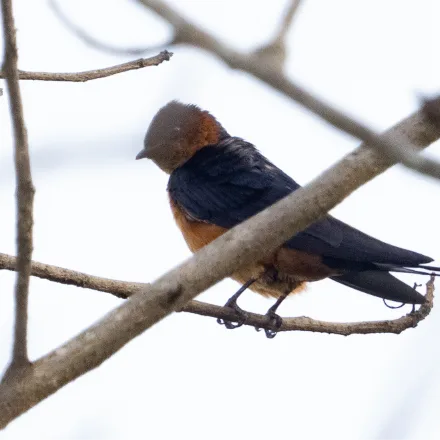
Sri Lanka Swallow Common
Cecropis hyperythra
A deep chestnut swallow with a long forked tail, hunting over paddy and open country the length of the island.
Where: Hawking low over the grassland and the reservoir margin. Best: Year round. Deep chestnut below, long tail streamers, unmistakable in good light.
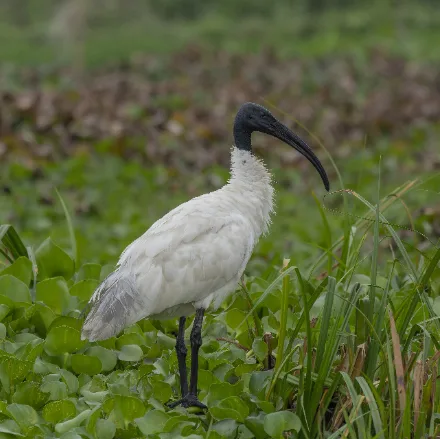
Black-headed Ibis Regular Near Threatened
Threskiornis melanocephalus
White body, bare black head and neck, and a bill built for finding what it cannot see.
Where: Reservoir shallows and wet grassland. Best: Year round.
Spot-billed Pelican Regular Near Threatened
Pelecanus philippensis
A pelican that fishes the ancient irrigation tanks, and one of the few large waterbirds doing better now than it was.
Where: The reservoir, fishing in the open water and loafing on the bund. Best: Year round. Easy to watch at length from the vehicle.
Brown Fish Owl Occasional
Ketupa zeylonensis
A big owl with bare unfeathered legs, because feathers are a liability when you fish with your feet.
Where: Riverside and reservoir margin trees. Best: Year round.
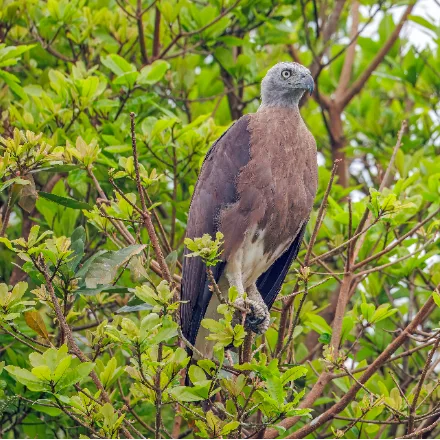
Grey-headed Fish Eagle Occasional Near Threatened
Icthyophaga ichthyaetus
Sits low over the water on a dead branch for hours, then drops feet first and comes up with a fish half its own weight.
Where: Dead branches over the reservoir and along the Walawe river. Best: Year round.
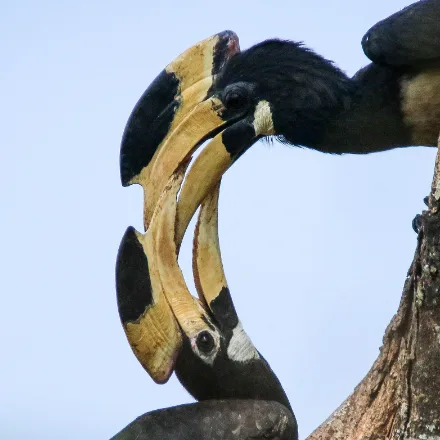
Malabar Pied Hornbill Occasional Near Threatened
Anthracoceros coronatus
The island's big hornbill, sealing the female into a tree hollow behind a wall of mud for the whole nesting period.
Where: Larger fruiting trees along the river and at the park margins. Best: Year round.
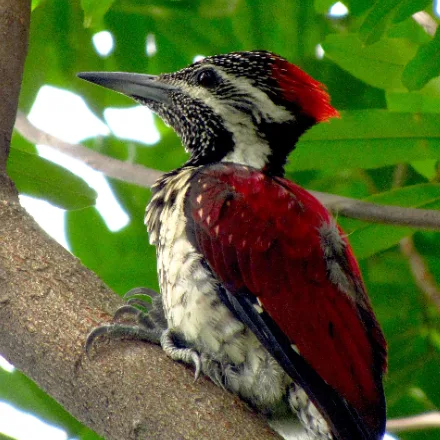
Red-backed Flameback Occasional
Dinopium psarodes
The smaller crimson woodpecker, and the one people misidentify because there are two of them on this island and nowhere else.
Where: Scattered trees and dead timber in open country. Best: Year round. Easy to see against open sky.
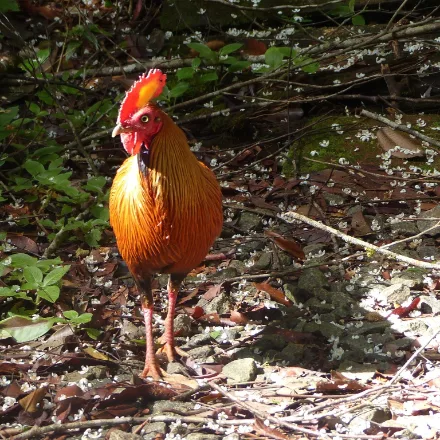
Sri Lanka Junglefowl Occasional
Gallus lafayettii
The national bird, and the wild ancestor's cousin: a jungle cockerel with a yellow-centred red comb found nowhere else on earth.
Where: Scrub and woodland edge away from the open grassland. Best: Year round, easiest at first light.
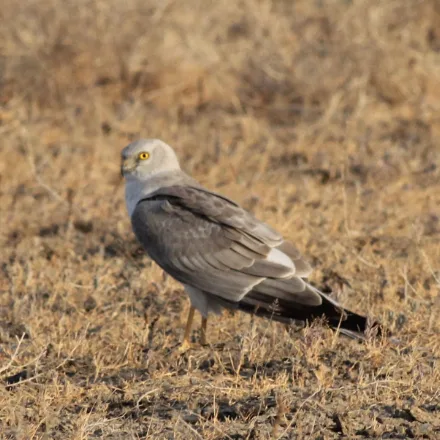
Pallid Harrier Rare Near Threatened
Circus macrourus
Quarters the grassland at head height on raised wings, tilting and rocking, hunting entirely by sound and surprise.
Where: Open grassland away from the reservoir. Best: Nov-Mar.
Reptiles
8 species
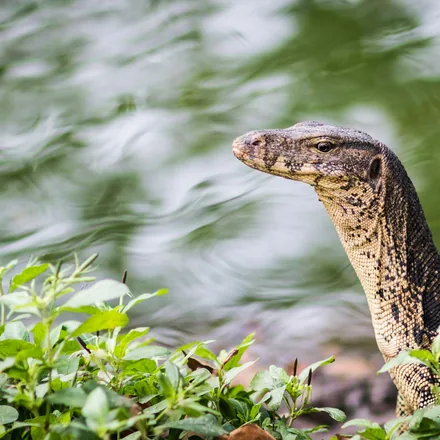
Asian Water Monitor Common
Varanus salvator
A dragon sized lizard that swims canals and city parks, second only to the Komodo dragon in length.
Where: Reservoir edge and river banks. Best: Year round.
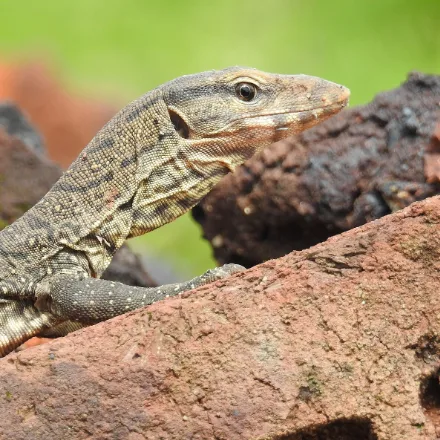
Bengal Monitor Regular
Varanus bengalensis
A dry-country monitor that climbs well, digs constantly and eats essentially anything smaller than itself.
Where: Grassland and scrub. Best: Year round.
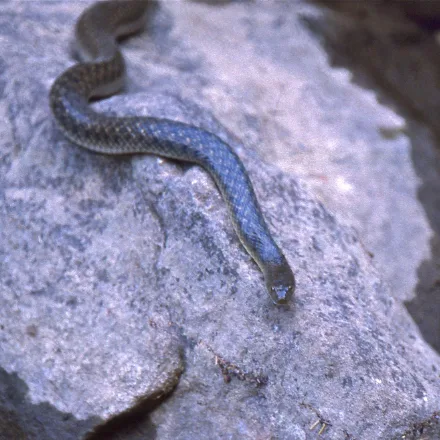
Checkered Keelback Regular
Fowlea piscator
The snake you will actually see in Sri Lanka, hunting fish in a paddy channel in broad daylight.
Where: Reservoir shallows and inflow channels. Best: Year round.
Mugger Crocodile Regular Vulnerable
Crocodylus palustris
The broadest snout of any living crocodile, and in one Sri Lankan park block there are more of them per square kilometre than anywhere else on earth.
Where: Reservoir edge and the Walawe river banks. Best: Year round.
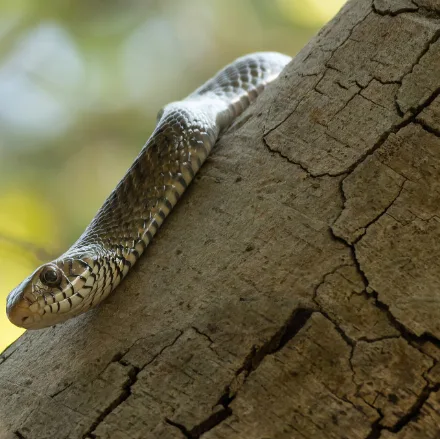
Oriental Rat Snake Regular
Ptyas mucosa
A long, fast, wide eyed snake that races across open ground and is one of the region's great rodent controllers.
Where: Grassland and reservoir margins. Best: Year round, daytime.
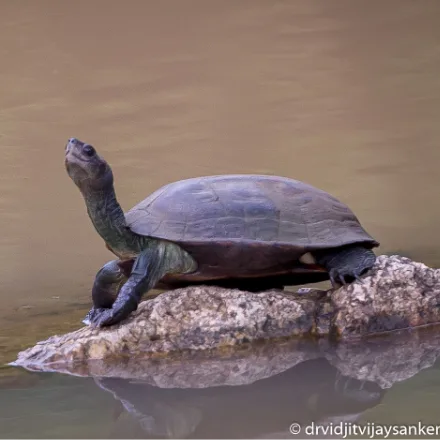
Indian Black Turtle Occasional Near Threatened
Melanochelys trijuga
The dark, three keeled turtle basking on every half sunk log in the dry zone, and the northern race is found nowhere else on earth.
Where: Reservoir shallows and inflow channels. Best: Year round.
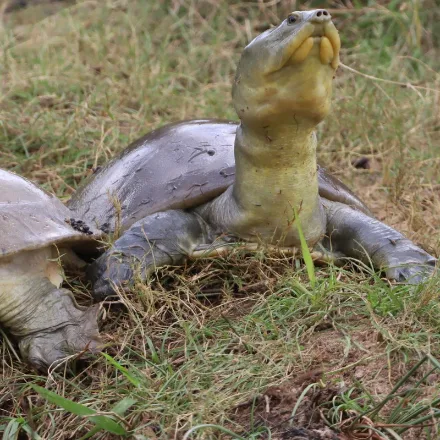
Sri Lankan Flapshell Turtle Occasional Vulnerable
Lissemys ceylonensis
The only chelonian species found solely in Sri Lanka, split off from its mainland cousin eight million years ago, and still without a conservation status of its own.
Where: Shallow muddy margins of the reservoir and its feeder channels. Best: May to September. Look for a smooth snout and two eyes at the surface, nothing else showing.
Indian Rock Python Rare Near Threatened
Python molurus
Sri Lanka's largest snake, and in the dry season it lies out at the edge of a shrinking waterhole where every animal in the park has to come.
Where: Reservoir margins and grassland. Best: Year round.
Amphibians
2 species
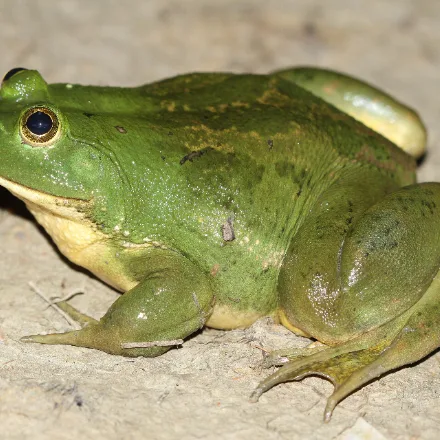
Indian Green Pond Frog Common
Euphlyctis hexadactylus
One of the very few frogs anywhere that deliberately eats plants, which for an order of committed carnivores is close to heresy.
Where: Reservoir shallows and lotus beds. Best: Year round.
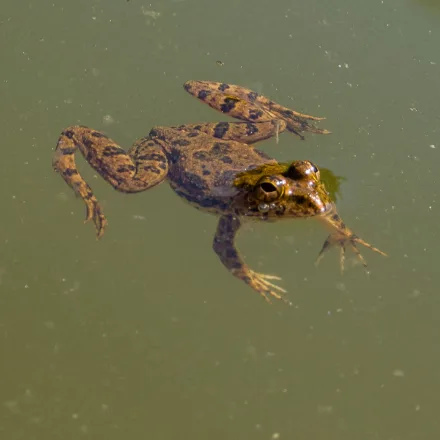
Skittering Frog Common
Euphlyctis cyanophlyctis
Disturbed, it does not dive. It skips across the surface like a flat stone, and it can launch from open water with nothing to push against.
Where: Reservoir shallows and inflow channels. Best: Year round.
Spiders and scorpions
2 species
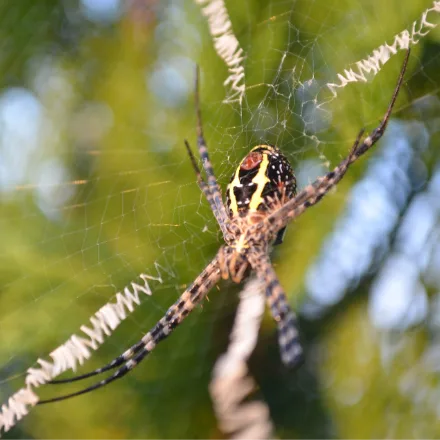
Signature Spider Common
Argiope anasuja
Writes a bold zigzag across the middle of its own web, and nobody is entirely sure why.
Where: Track edges and open scrub. Best: Year round.
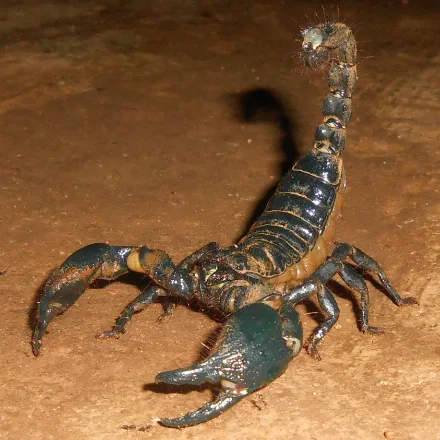
Giant Forest Scorpion Occasional
Heterometrus swammerdami
Among the largest scorpions on earth, and its sting is milder than a bee's.
Where: Track edges and open woodland after dark. Best: Year round, night.
Planning
Udawalawe is a morning and late afternoon park like any other, but its year round water means it does not have a bad season, only better and worse light. The grassland is open enough that binoculars matter more than a long lens for finding things. The elephants here are wild and habituated to vehicles, which is an unusual combination and the reason the park reads as easy. Along the main road outside the park, roadside feeding has produced animals that now block traffic for food.
Compare guided safaris and transfers for Udawalawe
Some links on this page are affiliate links. If you book through them, Wildseer may earn a small commission at no extra cost to you.
Frequently asked questions
Can you see elephants in Udawalawe?
Yes, and this is the most reliable place in the country for it. The herds use the open grassland and the reservoir margins throughout the park and are visible year round rather than seasonally.
When is the best time to visit Udawalawe?
Any month works, which is the park’s real advantage. Aim for the first two hours after opening or the last two before closing, when the animals are moving and the light is usable.
What else is there besides elephants?
The reservoir carries spot-billed pelican, black-headed ibis, pied kingfisher and mugger crocodile, and the open grassland holds spotted deer, tufted grey langur, ruddy mongoose and raptors including the scarce pallid harrier.
Is Udawalawe better than Yala?
For elephants, yes, and it is more dependable. For leopard, no: Yala is the park for that. The two do different jobs and a lot of trips take both.
Explore Sri Lanka wildlife by group
 Mammals of Sri Lanka
 Birds of Sri Lanka
 Reptiles and amphibians of Sri Lanka
 Fish of Sri Lanka
 Sharks and rays of Sri Lanka
 Reef invertebrates of Sri Lanka
 Insects and spiders of Sri Lanka
Part of the Wildlife in Sri Lanka guide.
Explore Sri Lanka wildlife by place
- Adams Peak wildlife
- Arugam Bay marine life
- Bundala wildlife
- Colombo wildlife
- Ella wildlife
- Gal Oya wildlife
- Great Basses marine life
- Hikkaduwa marine life
- Horton Plains wildlife
- Jaffna wildlife
- Kalpitiya marine life
- Kandy wildlife
- Kanneliya wildlife
- Kitulgala wildlife
- Knuckles wildlife
- Kumana wildlife
- Mannar marine life
- Minneriya wildlife
- Mirissa marine life
- Rekawa marine life
- Sigiriya wildlife
- Sinharaja wildlife
- Tangalle marine life
- Trincomalee marine life
- Wasgamuwa wildlife
- Wilpattu wildlife
- Yala wildlife
Image credits
Square thumbnails are cropped from the original. Wide banner images are cropped to a band. Other images are resized only. No other changes have been made.
- Asian elephant (resized): Shadow Ayush | CC BY-SA 4.0, cropped
- Spot-billed Pelican: Charles J. Sharp | CC BY-SA 4.0, cropped
- Mugger Crocodile: Karunakar Rayker from India | CC BY-SA 2.0, cropped
- Brown Fish Owl: Hedayeat Ullah | CC BY-SA 4.0, cropped
- Indian Rock Python: Bernard DUPONT from FRANCE | CC BY-SA 2.0, cropped
- Asian Elephant (cropped to square): Shadow Ayush | CC BY-SA 4.0, cropped
- Chital: Tisha Mukherjee | CC BY-SA 4.0, cropped
- Golden Jackal: Vengolis | CC BY-SA 4.0, cropped
- Tufted Grey Langur: Peter van der Sluijs | CC BY-SA 3.0, cropped
- Indian Flying Fox: Alois Staudacher | CC BY 2.0, cropped
- Ruddy Mongoose: desertnaturalist | CC BY 4.0, cropped
- Indian Peafowl: Joshianuj | CC BY-SA 4.0, cropped
- Pied Kingfisher: Charles J. Sharp | CC BY-SA 4.0, cropped
- Sri Lanka Swallow: William Stephens | CC BY 4.0, cropped
- Black-headed Ibis: Tisha Mukherjee | CC BY-SA 4.0, cropped
- Grey-headed Fish Eagle: Charles J. Sharp | CC BY-SA 4.0, cropped
- Malabar Pied Hornbill: @Vikas patil photography | CC BY-SA 4.0, cropped
- Red-backed Flameback: Rehman Abubakr | CC BY-SA 4.0, cropped
- Sri Lanka Junglefowl: eamonccorbett | CC BY 4.0, cropped
- Pallid Harrier: Chinmayisk | CC BY-SA 3.0, cropped
- Asian Water Monitor: John Thomas | Unsplash License, cropped
- Bengal Monitor (cropped to square): Dr. Raju Kasambe | CC BY-SA 4.0, cropped
- Checkered Keelback: Bernard DUPONT from FRANCE | CC BY-SA 2.0, cropped
- Oriental Rat Snake (cropped to square): Tisha Mukherjee | CC BY-SA 4.0, cropped
- Indian Black Turtle: Dr Vidjit Vijaysanker | CC BY-SA 4.0, cropped
- Sri Lankan Flapshell Turtle: spacegecko | CC BY 4.0, cropped
- Indian Green Pond Frog: David V. Raju | CC BY-SA 4.0, cropped
- Skittering Frog: Mike Prince from Bangalore, India | CC BY 2.0, cropped
- Signature Spider: Abkhanal | CC BY-SA 3.0, cropped
- Giant Forest Scorpion: Nireekshit | CC BY-SA 3.0, cropped
- Purple-faced langur in the canopy: kanchana Amilani | Unsplash License, cropped
- White-throated kingfisher on a branch: kanchana Amilani | Unsplash License, cropped
- Green forest lizard in breeding colour: Anas Mohamed Nuski | Pexels Licence, cropped
- Bluestripe snapper over a reef: Jeffry Surianto | Pexels Licence, cropped
- Reef manta rays near the surface: Emma Li | Pexels Licence, cropped
- Nudibranch crossing the sea floor: Chris Spain | Pexels Licence, cropped
- Clipper butterfly on a leaf: Pixabay | Pexels Licence, cropped
Square thumbnails are cropped from the original. Wide banner images are cropped to a band. Other images are resized only. No other changes have been made.
- Asian elephant (resized): Shadow Ayush | CC BY-SA 4.0, cropped
- Spot-billed Pelican: Charles J. Sharp | CC BY-SA 4.0, cropped
- Mugger Crocodile: Karunakar Rayker from India | CC BY-SA 2.0, cropped
- Brown Fish Owl: Hedayeat Ullah | CC BY-SA 4.0, cropped
- Indian Rock Python: Bernard DUPONT from FRANCE | CC BY-SA 2.0, cropped
- Asian Elephant (cropped to square): Shadow Ayush | CC BY-SA 4.0, cropped
- Chital: Tisha Mukherjee | CC BY-SA 4.0, cropped
- Golden Jackal: Vengolis | CC BY-SA 4.0, cropped
- Tufted Grey Langur: Peter van der Sluijs | CC BY-SA 3.0, cropped
- Indian Flying Fox: Alois Staudacher | CC BY 2.0, cropped
- Ruddy Mongoose: desertnaturalist | CC BY 4.0, cropped
- Indian Peafowl: Joshianuj | CC BY-SA 4.0, cropped
- Pied Kingfisher: Charles J. Sharp | CC BY-SA 4.0, cropped
- Sri Lanka Swallow: William Stephens | CC BY 4.0, cropped
- Black-headed Ibis: Tisha Mukherjee | CC BY-SA 4.0, cropped
- Grey-headed Fish Eagle: Charles J. Sharp | CC BY-SA 4.0, cropped
- Malabar Pied Hornbill: @Vikas patil photography | CC BY-SA 4.0, cropped
- Red-backed Flameback: Rehman Abubakr | CC BY-SA 4.0, cropped
- Sri Lanka Junglefowl: eamonccorbett | CC BY 4.0, cropped
- Pallid Harrier: Chinmayisk | CC BY-SA 3.0, cropped
- Asian Water Monitor: John Thomas | Unsplash License, cropped
- Bengal Monitor (cropped to square): Dr. Raju Kasambe | CC BY-SA 4.0, cropped
- Checkered Keelback: Bernard DUPONT from FRANCE | CC BY-SA 2.0, cropped
- Oriental Rat Snake (cropped to square): Tisha Mukherjee | CC BY-SA 4.0, cropped
- Indian Black Turtle: Dr Vidjit Vijaysanker | CC BY-SA 4.0, cropped
- Sri Lankan Flapshell Turtle: spacegecko | CC BY 4.0, cropped
- Indian Green Pond Frog: David V. Raju | CC BY-SA 4.0, cropped
- Skittering Frog: Mike Prince from Bangalore, India | CC BY 2.0, cropped
- Signature Spider: Abkhanal | CC BY-SA 3.0, cropped
- Giant Forest Scorpion: Nireekshit | CC BY-SA 3.0, cropped
- Purple-faced langur in the canopy: kanchana Amilani | Unsplash License, cropped
- White-throated kingfisher on a branch: kanchana Amilani | Unsplash License, cropped
- Green forest lizard in breeding colour: Anas Mohamed Nuski | Pexels Licence, cropped
- Bluestripe snapper over a reef: Jeffry Surianto | Pexels Licence, cropped
- Reef manta rays near the surface: Emma Li | Pexels Licence, cropped
- Nudibranch crossing the sea floor: Chris Spain | Pexels Licence, cropped
- Clipper butterfly on a leaf: Pixabay | Pexels Licence, cropped