
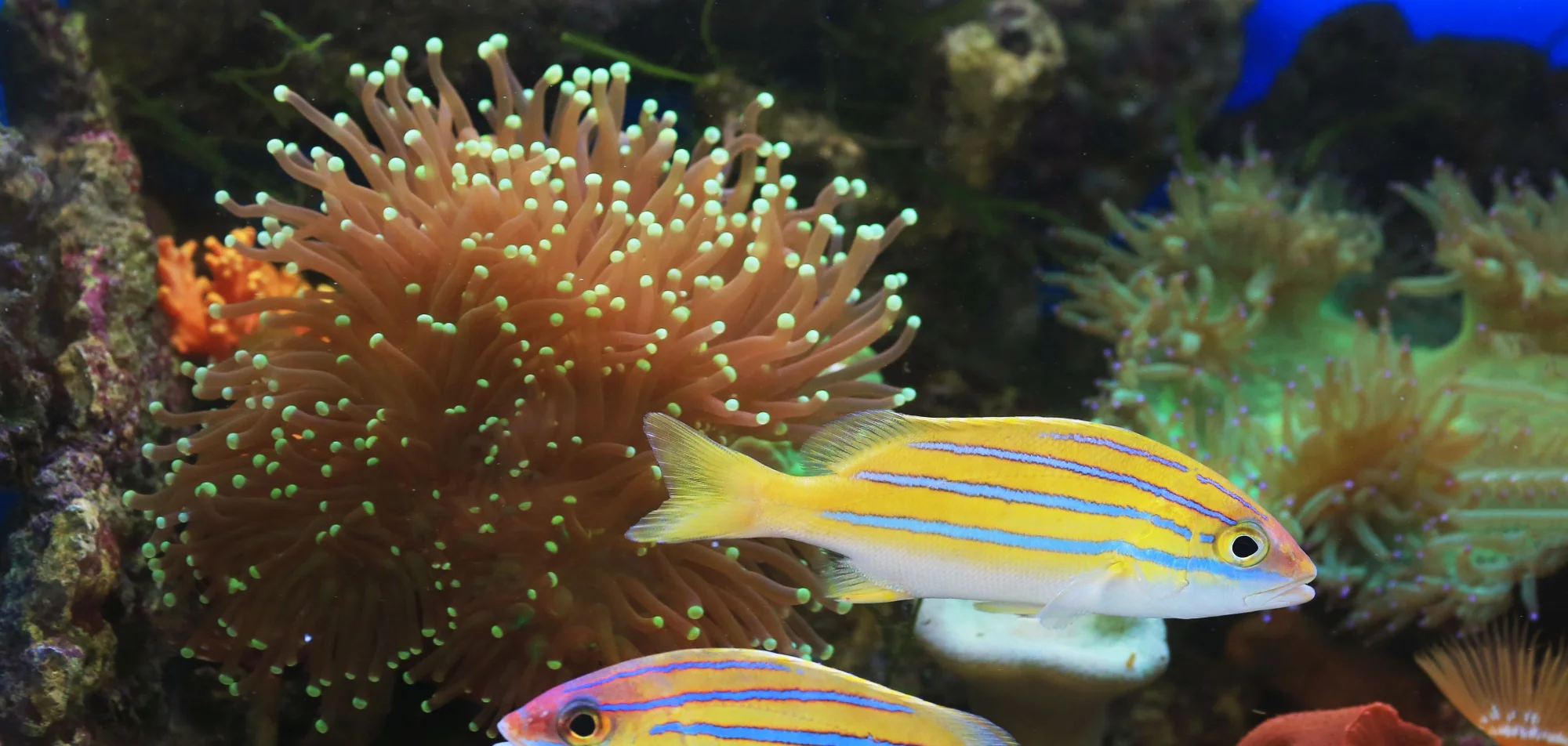
The fish of Sri Lanka come in two entirely separate faunas that share nothing but an island. Offshore, the reefs carry the standard Indo-Pacific cast, with a handful of Indian Ocean species that replace the Pacific forms most divers know, so a Sri Lankan reef is subtly but genuinely different from a Thai one. Inland, the rivers hold something far rarer: roughly half of the island’s freshwater fish live nowhere else.
That endemic freshwater fauna is the part nobody writes about, and it is the part worth knowing. The cherry barb sold in aquarium shops across Europe is a Sri Lankan endemic listed as Vulnerable in the wild. One barb survives in a single short stretch of one stream. This page lists every fish the database records for the island, reef and river together, with where to look and how likely each is.
This page lists all 84 fish recorded for Sri Lanka in the Wildseer database. Use the contents to jump to a group.
Highlights
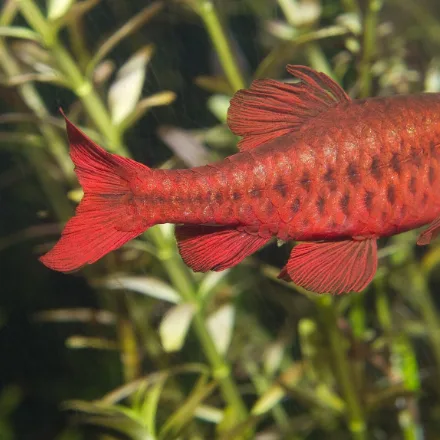
Cherry Barb
One of the most widely kept aquarium fish on earth, and it lives wild in about a dozen shaded streams on one island. Where: Shaded, slow, leaf-littered pools in wet zone lowland streams. Best: Year round, clearest December to March.
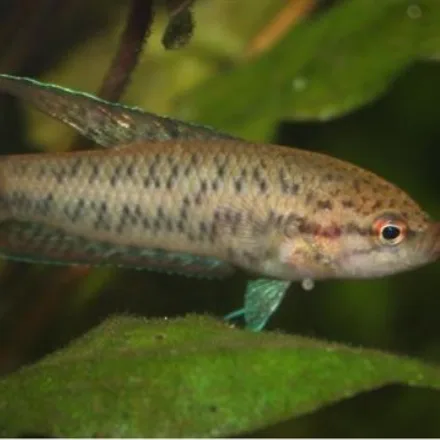
Ornate Paradisefish
The only species in its genus, anywhere, and it lives in shaded puddles of a stream in one corner of one island. Where: Very shallow, very slow, leaf-choked water in lowland wet zone forest. Best: Year round.
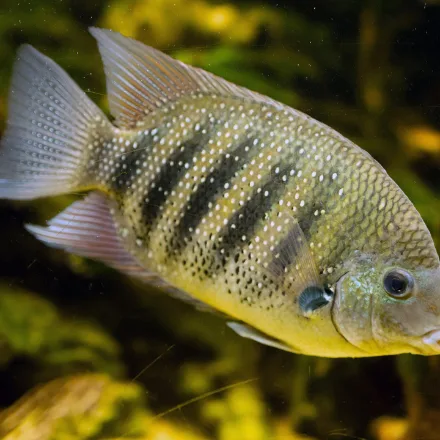
Green Chromide
One of only three cichlids in all of Asia, and the other two are its close relatives. Where: Brackish lagoons, estuaries and coastal tanks. Best: Year round.
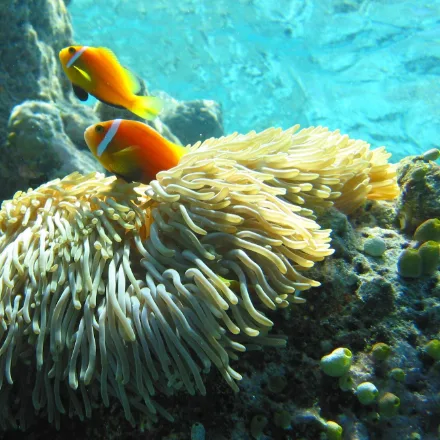
Maldives Anemonefish
A clownfish found only in Sri Lanka, the Maldives and the Lakshadweep, and nowhere else on earth. Where: Magnificent sea anemones on shallow reef at Bar Reef and around Pigeon Island. Best: November to April on the west, May to September on the east.
Stone Sucker
A fish built to hold station in white water, using a disc on its underside to grip bare rock. Where: Clamped to bare rock in fast, shallow hill stream rapids. Best: Year round, easiest in low water.
Fish
84 species
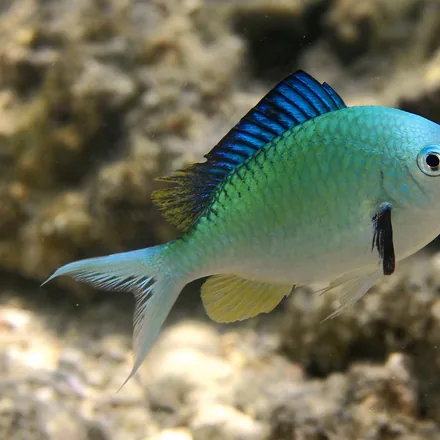
Blue-green Chromis Common
Chromis viridis
A tiny, iridescent blue-green damselfish that hovers in large shoals just above branching corals. It feeds on drifting plankton and dives into the coral for cover at any threat.
Where: Shallow reef flats and coral heads at Bar Reef and around Pigeon Island. Best: November to April on the west and south, May to September on the east. Also on: Hikkaduwa and Unawatuna.
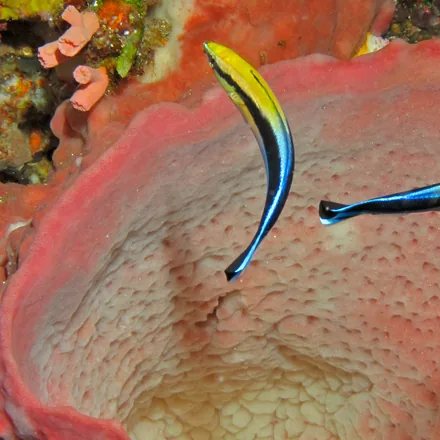
Bluestreak Cleaner Wrasse Common
Labroides dimidiatus
A small, slender fish, pale with a bold black stripe widening along a blue-tinged body. It sets up cleaning stations where larger fish gather to have parasites and dead skin removed.
Where: Coral reef and boulder slopes on both coasts. Best: November to April on the west and south, May to September on the east. Find a cleaning station and stay still. Everything on the reef queues at one eventually. Also on: Hikkaduwa and Unawatuna.
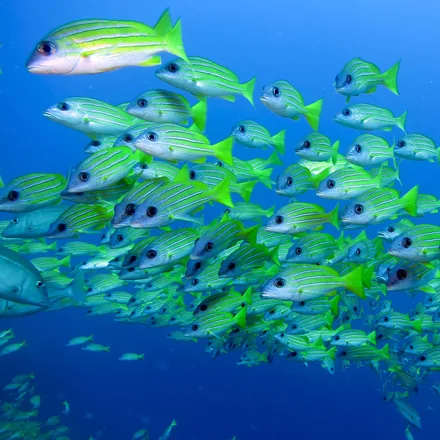
Bluestripe Snapper Common
Lutjanus kasmira
A small yellow snapper marked with four blue horizontal stripes, forming tight, stationary schools by day. It disperses at night to hunt small fish and invertebrates.
Where: Shallow reef flats and coral heads at Bar Reef and around Pigeon Island. Best: November to April on the west and south, May to September on the east. Also on: Trincomalee and Pigeon Island, Hikkaduwa and Unawatuna, The Great and Little Basses Reefs.
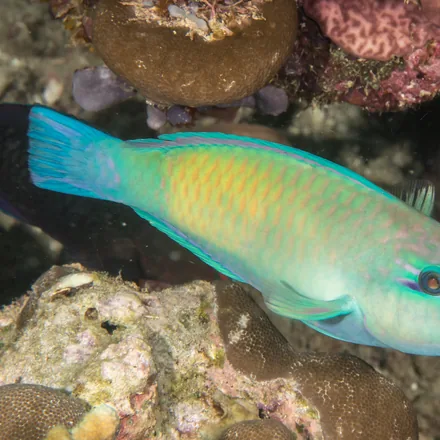
Bullethead Parrotfish Common
Chlorurus sordidus
A stout parrotfish with a rounded head and a parrot-like beak, drab as a juvenile and blue-green with pink accents as a male. It rasps algae and coral rock, grinding it to sand.
Where: Coral reef and boulder slopes on both coasts. Best: November to April on the west and south, May to September on the east. Also on: Hikkaduwa and Unawatuna.
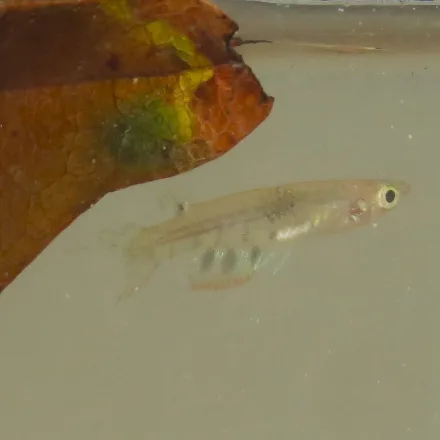
Ceylon Killifish Common
Aplocheilus dayi
A slim, flat-headed surface fish, olive-gold with rows of red spots on the flank and a bright reflective patch on the crown of the head.
Where: The top two centimetres of still ditches, marshes, paddy margins and stream backwaters. Best: Year round. Scan the surface of any still ditch for a green fleck that stays put. That is the head spot. Also on: Colombo and the wetlands, Sinharaja Forest Reserve, Kanneliya Forest Reserve.
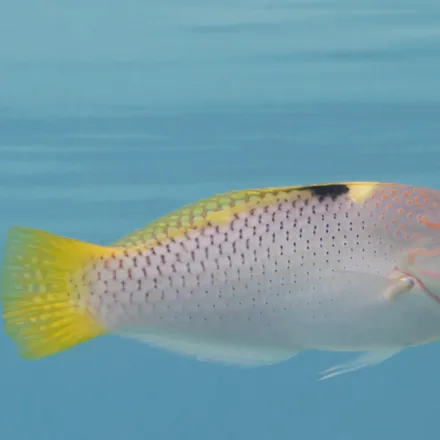
Checkerboard Wrasse Common
Halichoeres hortulanus
Checkerboard wrasse hunt hard-shelled prey across rubble and sand, flipping small rocks and cracking molluscs with strong throat teeth. At night they burrow into sand to sleep, which is also their escape response.
Where: Coral reef and boulder slopes on both coasts. Best: November to April on the west and south, May to September on the east.
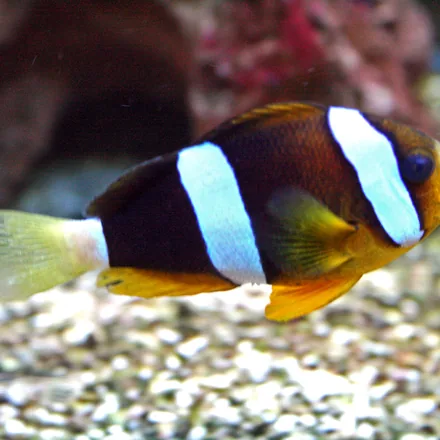
Clark's Anemonefish Common
Amphiprion clarkii
A robust anemonefish, blackish to orange with two or three broad white bars and yellow fins, living among host anemones. Like all anemonefish it is protected from the stings by a special mucus.
Where: Shallow reef flats and coral heads at Bar Reef and around Pigeon Island. Best: November to April on the west and south, May to September on the east. Shares reefs with the sebae anemonefish. The paler tail is the difference.
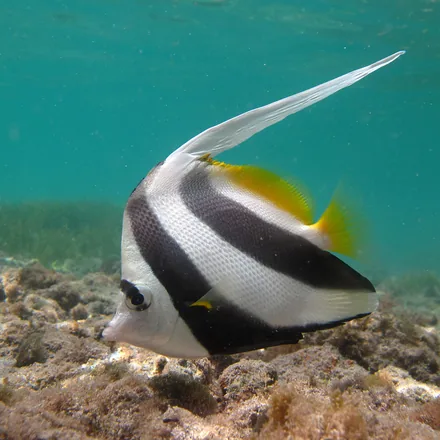
Longfin Bannerfish Common
Heniochus acuminatus
Often mistaken for the Moorish idol, this butterflyfish relative has two black bands and a long white dorsal streamer. Pairs drift together picking plankton and small invertebrates.
Where: Coral reef and boulder slopes on both coasts. Best: November to April on the west and south, May to September on the east.
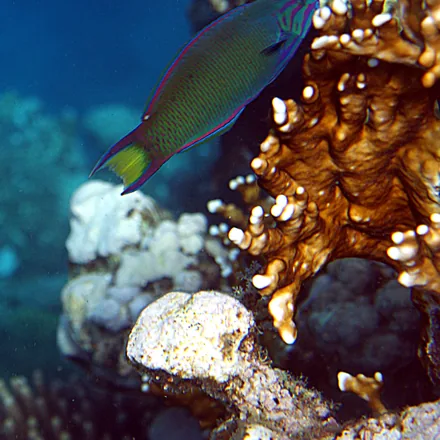
Moon Wrasse Common
Thalassoma lunare
A slim, blue-green wrasse with pink facial markings and a yellow, crescent-shaped tail patch. Fast and constantly on the move, it hunts small invertebrates and fish across the reef.
Where: Coral reef and boulder slopes on both coasts. Best: November to April on the west and south, May to September on the east.
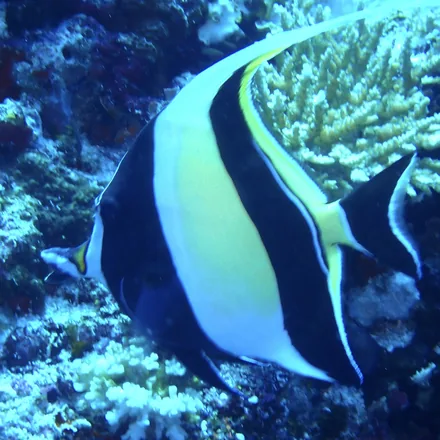
Moorish Idol Common
Zanclus cornutus
Deep bodied and boldly barred with a snout drawn out into a tube, the Moorish idol flies a long white filament from its dorsal fin. It picks sponges and small invertebrates from reef crevices.
Where: Coral reef and boulder slopes on both coasts. Best: November to April on the west and south, May to September on the east. Also on: Hikkaduwa and Unawatuna, The Great and Little Basses Reefs.
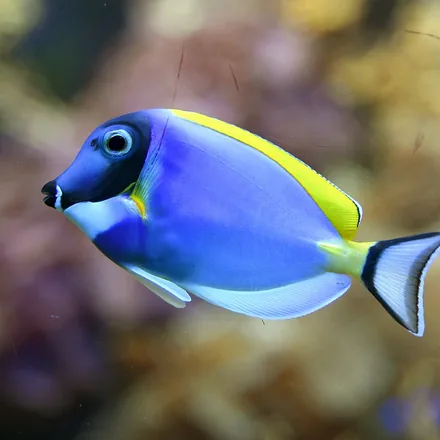
Powder Blue Surgeonfish Common
Acanthurus leucosternon
Vivid pastel blue with a black face, white throat and a bright yellow dorsal fin, this surgeonfish grazes algae over shallow reefs. A retractable spine on each side of the tail base gives the family its name.
Where: Shallow reef flats and coral heads at Bar Reef and around Pigeon Island. Best: November to April on the west and south, May to September on the east. An Indian Ocean speciality. Sri Lanka and the Maldives are where divers come to see it in numbers. Also on: Trincomalee and Pigeon Island, Kalpitiya, Hikkaduwa and Unawatuna, The Great and Little Basses Reefs.
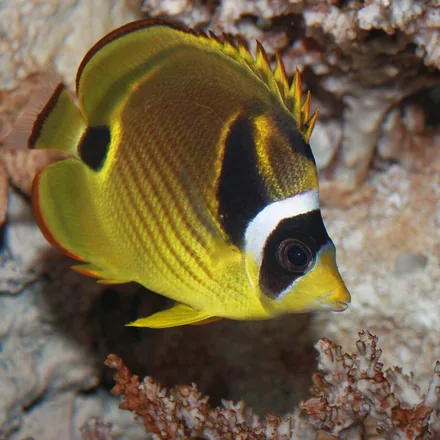
Raccoon Butterflyfish Common
Chaetodon lunula
A rounded yellow-brown butterflyfish with a black eye-mask edged in white and a dark bar behind the head. It feeds on coral polyps, small invertebrates and algae, often in pairs.
Where: Coral reef and boulder slopes on both coasts. Best: November to April on the west and south, May to September on the east. Also on: Hikkaduwa and Unawatuna.
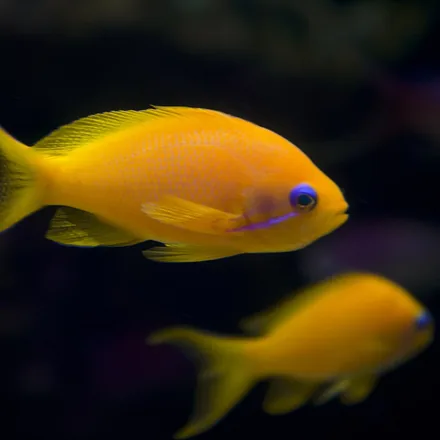
Sea Goldie Common
Pseudanthias squamipinnis
Sea goldies swarm in orange clouds above coral heads and pinnacles, feeding on plankton in the current. Each harem holds one purple-pink male among many orange females, and sex change is triggered by the loss of the male.
Where: Shallow reef flats and coral heads at Bar Reef and around Pigeon Island. Best: November to April on the west and south, May to September on the east.
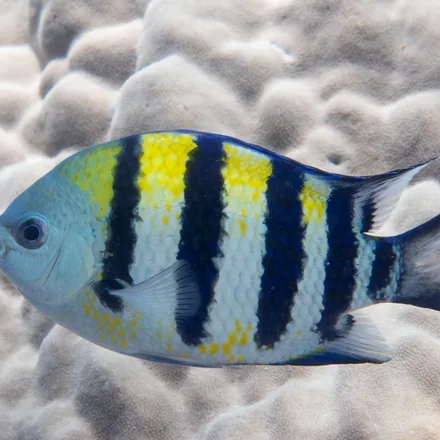
Sergeant Major Common
Abudefduf vaigiensis
A small, oval fish, silvery with a yellow wash on top and five bold black bars, forming large active shoals. It feeds on plankton, algae and small invertebrates over reef and rock.
Where: Shallow reef flats and coral heads at Bar Reef and around Pigeon Island. Best: November to April on the west and south, May to September on the east. Also on: Hikkaduwa and Unawatuna.
Stone Sucker Common
Garra ceylonensis
A torpedo-shaped, olive-brown fish with a flattened belly and a fleshy adhesive disc where its lower lip should be, which it uses to clamp onto rock in fast current.
Where: Clamped to bare rock in fast, shallow hill stream rapids. Best: Year round, easiest in low water. The commonest fish in the island's hill streams and the easiest to watch. Stand still over a shallow rapid and give it two minutes. Also on: Knuckles Range, Kitulgala and the Makandawa Rainforest, Ella and the Uva Highlands, Adam's Peak and Peak Wilderness.
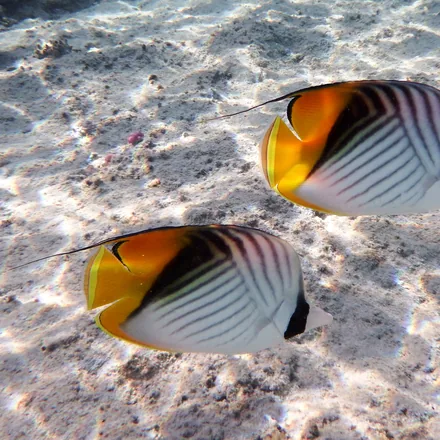
Threadfin Butterflyfish Common
Chaetodon auriga
Threadfin butterflyfish are common on Thai reefs, working the coral for polyps, worms and algae. Adults grow a long filament from the rear dorsal fin and carry a false eye there, drawing strikes away from the real head.
Where: Coral reef and boulder slopes on both coasts. Best: November to April on the west and south, May to September on the east.
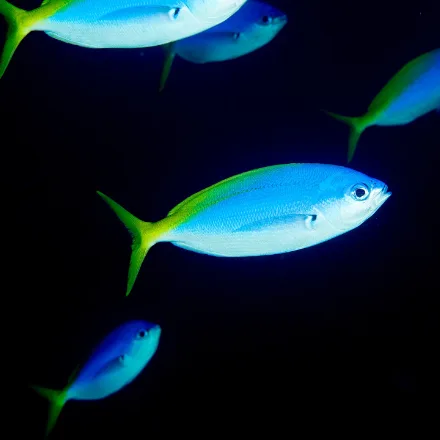
Yellowback Fusilier Common
Caesio teres
A streamlined, fast-swimming fish, blue below and bright yellow along the back and tail, travelling in large mobile schools. It feeds on zooplankton in open water above the reef.
Where: Shallow reef flats and coral heads at Bar Reef and around Pigeon Island. Best: November to April on the west and south, May to September on the east.
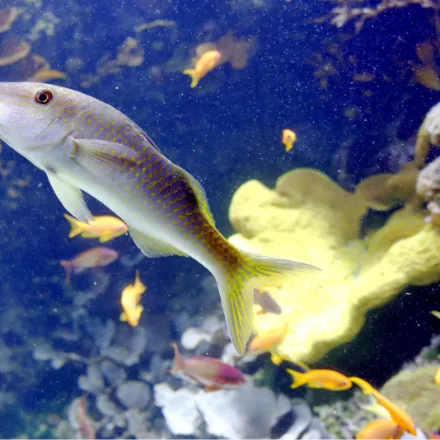
Yellowsaddle Goatfish Common
Parupeneus cyclostomus
An elongated goatfish, yellow or grey with a yellow saddle near the tail, and two long sensory barbels under the chin. It probes sand and crevices for small prey, often in active groups.
Where: Coral reef and boulder slopes on both coasts. Best: November to April on the west and south, May to September on the east.
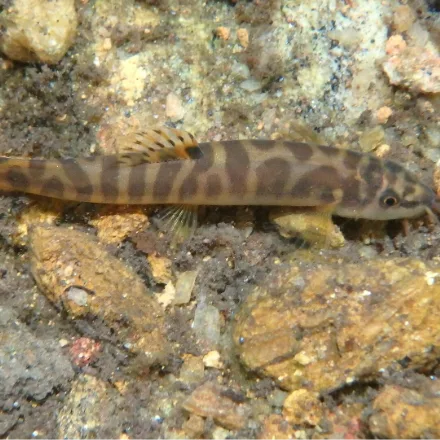
Banded Mountain Loach Regular
Schistura notostigma
A small, elongate, sandy loach barred with irregular dark saddles, with three pairs of barbels around a downturned mouth.
Where: Under and between stones in fast, clean hill and montane streams. Best: Year round. Turn a stone in a hill stream and the thing that shoots off is almost always this. Also on: Knuckles Range, Horton Plains and Nuwara Eliya, Ella and the Uva Highlands, Adam's Peak and Peak Wilderness.
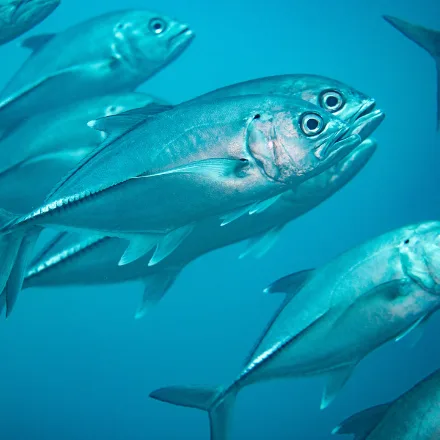
Bigeye Trevally Regular
Caranx sexfasciatus
A powerful, deep-bodied silver jack with large eyes, forming huge daytime schools that swirl in dense columns. By night the school scatters to hunt fish and crustaceans.
Where: Reef edges and drop-offs, including the Trincomalee canyon rim. Best: November to April on the west and south, May to September on the east. Hunting trevally on a reef edge at dawn is one of the better things to time a dive around. Also on: The Great and Little Basses Reefs.
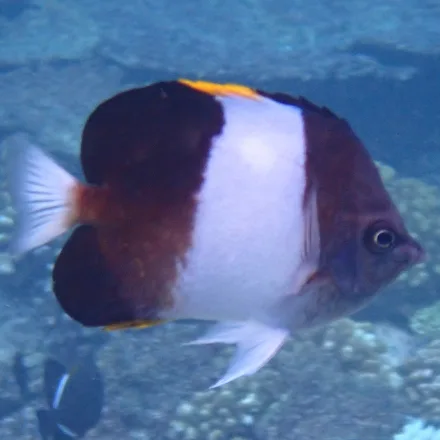
Black Pyramid Butterflyfish Regular
Hemitaurichthys zoster
A boldly two-toned butterflyfish, black at the head and tail with a broad white triangular wedge across the middle of the body. Almost always in a shoal, never alone.
Where: Midwater off reef edges and drop-offs where there is current. Best: November to April on the west and south, May to September on the east. Shoals of hundreds hanging in the current, and one of the few big-numbers spectacles a snorkeller can reach. Also on: Trincomalee and Pigeon Island, Kalpitiya, Hikkaduwa and Unawatuna.
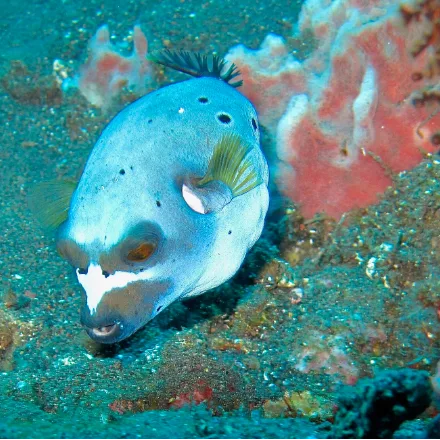
Blackspotted Puffer Regular
Arothron nigropunctatus
A rounded, dog-faced pufferfish scattered with small black spots, variable in colour from grey-blue to bright yellow. It crunches coral, sponges and invertebrates with a strong beak.
Where: Coral reef and boulder slopes on both coasts. Best: November to April on the west and south, May to September on the east. Also on: Hikkaduwa and Unawatuna.
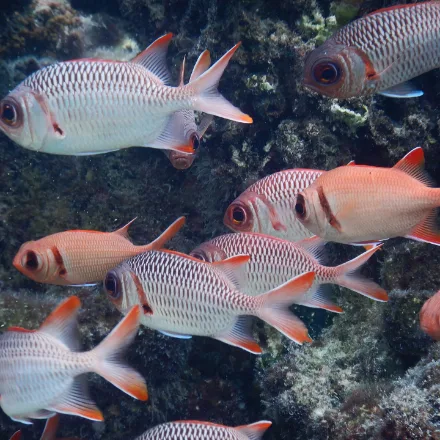
Blotcheye Soldierfish Regular
Myripristis berndti
Soldierfish shelter in caves, overhangs and wreck interiors by day in tight groups, drifting out at dusk to feed on large zooplankton. The huge eyes and red colouration are classic adaptations for low light, since red reads as black at depth.
Where: Reef and rubble after dark, on a night dive. Best: November to April on the west and south, May to September on the east.
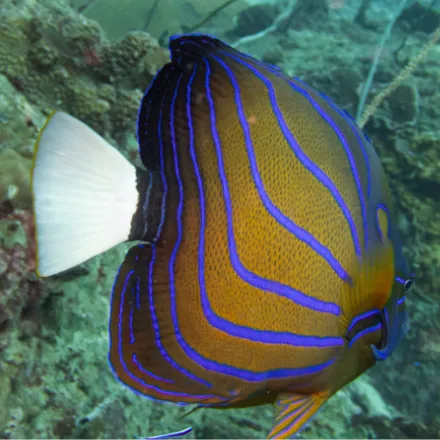
Blue-ringed Angelfish Regular
Pomacanthus annularis
Blue-ringed angelfish work sponge and coral-covered slopes in pairs, feeding on sponges and tunicates. Juveniles are black with vivid blue and white bars and live alone in shallow rubble, looking nothing like the adults.
Where: Coral reef and boulder slopes on both coasts. Best: November to April on the west and south, May to September on the east.
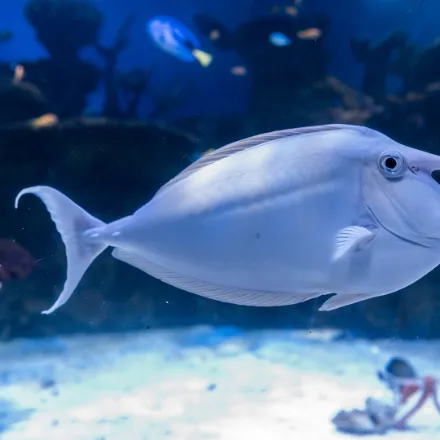
Bluespine Unicornfish Regular
Naso unicornis
A big, olive-grey unicornfish with a projecting horn between the eyes and two fixed blue spines on each side of the tail. It grazes leafy algae over reefs and drop-offs, often in loose groups.
Where: Coral reef and boulder slopes on both coasts. Best: November to April on the west and south, May to September on the east.
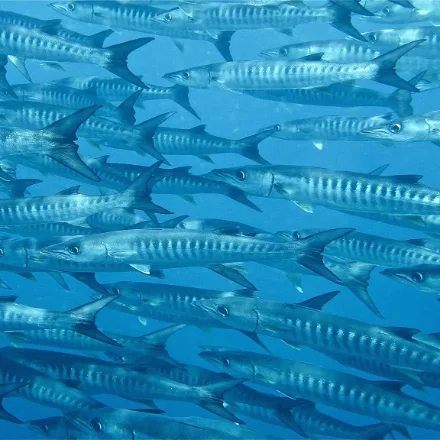
Chevron Barracuda Regular
Sphyraena qenie
Chevron barracuda form dense daytime schools around current-swept pinnacles and reef corners, breaking up at dusk to hunt alone. The dark chevron markings along the flank distinguish them from the solitary great barracuda.
Where: Reef edges and drop-offs, including the Trincomalee canyon rim. Best: November to April on the west and south, May to September on the east.
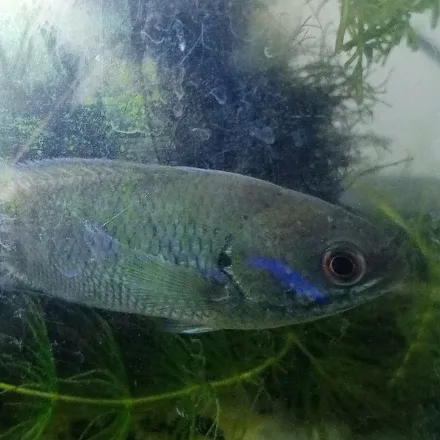
Climbing Perch Regular
Anabas testudineus
Climbing perch breathe air through a labyrinth organ and can survive out of water for a day or more in damp conditions. After rain they cross roads and paddy bunds in numbers, which is the only time most people ever see one moving.
Where: Paddy, seasonal tanks, ditches and drying pools across the dry zone. Best: May to September as the tanks drop, and after the first rains. Called kavaiya locally. It breathes air and will walk overland between drying pools on its gill covers and fins, which is worth knowing before you dismiss a fish crossing a wet road. Also on: Minneriya and Kaudulla National Parks, Bundala National Park, Colombo and the wetlands.
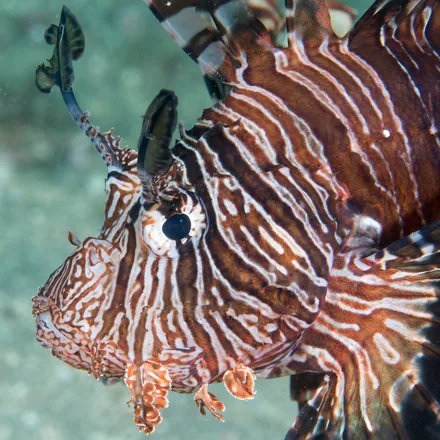
Common Lionfish Regular
Pterois volitans
Boldly barred in red, brown and white with long feathery pectoral fins and a crown of venomous dorsal spines, the lionfish drifts openly over the reef. It herds small fish with its fanned fins before a rapid engulfing strike.
Where: Coral reef and boulder slopes on both coasts. Best: November to April on the west and south, May to September on the east. Sri Lanka's lionfish is Pterois miles, the Indian Ocean species, not the Pterois volitans of the Pacific and Andaman Sea. Also on: Trincomalee and Pigeon Island, Hikkaduwa and Unawatuna, The Great and Little Basses Reefs.
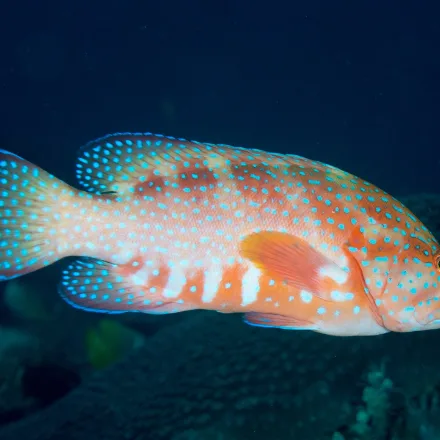
Coral Grouper (Coral Hind) Regular
Cephalopholis miniata
A medium grouper, brilliant orange to red and covered in small bright blue spots, favouring clear coral reefs. An ambush predator, it darts from cover to seize small fish and crustaceans.
Where: Deeper reef, wrecks and the Great and Little Basses reefs. Best: November to April on the west and south, May to September on the east. Also on: The Great and Little Basses Reefs.
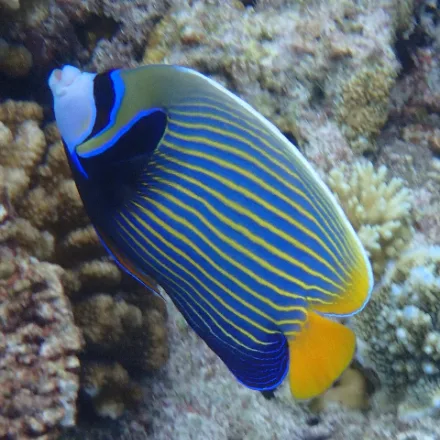
Emperor Angelfish Regular
Pomacanthus imperator
A large angelfish ruled by horizontal blue and yellow stripes, a black eye mask and a bright rear fin. Juveniles are wholly different, patterned in concentric blue and white circles.
Where: Coral reef and boulder slopes on both coasts. Best: November to April on the west and south, May to September on the east. Also on: The Great and Little Basses Reefs.
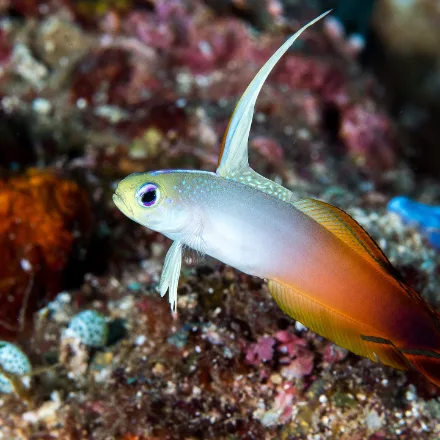
Fire Dartfish Regular
Nemateleotris magnifica
Fire dartfish hold station a few centimetres above a rubble burrow, facing into the current to take plankton. The elongated first dorsal spine twitches constantly, apparently as a signal to its partner and to rivals.
Where: Sand and rubble patches between coral heads. Best: November to April on the west and south, May to September on the east.
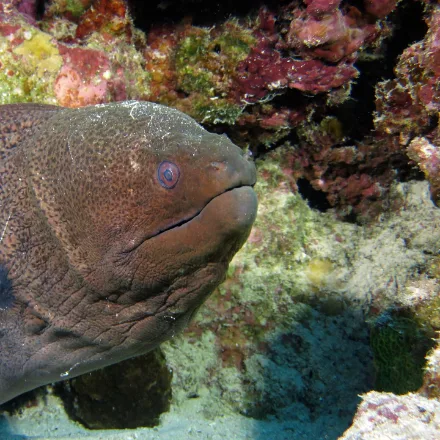
Giant Moray Regular
Gymnothorax javanicus
A massive eel, brown and mottled with a dark blotch behind the gill, that lodges its body in reef crevices with only the head showing. The constant open mouthed gape drives water over its gills rather than signalling threat.
Where: Coral reef and boulder slopes on both coasts. Best: November to April on the west and south, May to September on the east. Look into the holes rather than at the coral. Also on: Trincomalee and Pigeon Island, Hikkaduwa and Unawatuna, The Great and Little Basses Reefs.
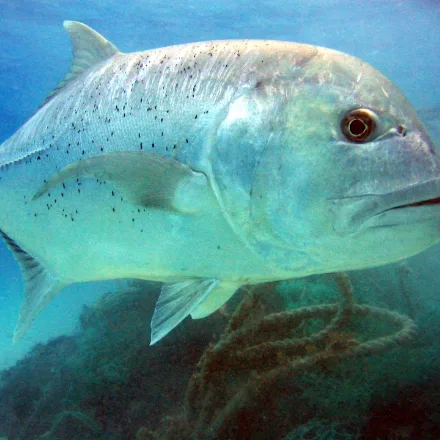
Giant Trevally Regular
Caranx ignobilis
Giant trevally reach 1.7 m and 80 kg, hunting reef fish in fast, coordinated charges, often in the turbulence of a current line. They will follow divers to use them as cover, then accelerate through a bait ball at close range.
Where: Reef edges and drop-offs, including the Trincomalee canyon rim. Best: November to April on the west and south, May to September on the east. Hunting trevally on a reef edge at dawn is one of the better things to time a dive around. Also on: The Great and Little Basses Reefs.
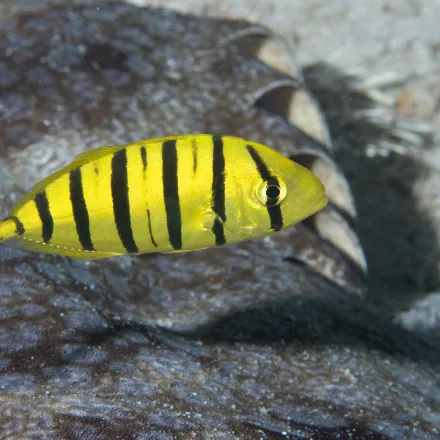
Golden Trevally Regular
Gnathanodon speciosus
Young golden trevally are vivid yellow with black bars and shadow large animals, including sharks, groupers and divers. Adults fade to silver, grow to a metre and use a protrusible, toothless mouth to suck prey out of the sand.
Where: Reef edges and drop-offs, including the Trincomalee canyon rim. Best: November to April on the west and south, May to September on the east. Hunting trevally on a reef edge at dawn is one of the better things to time a dive around.
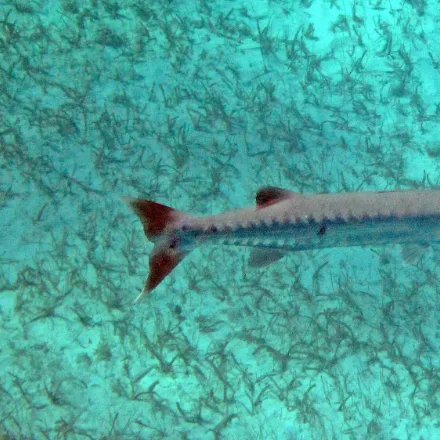
Great Barracuda Regular
Sphyraena barracuda
Long, streamlined and silver with a jutting jaw of dagger teeth, the great barracuda is a fast ambush hunter of the open reef. Adults are often solitary, while younger fish form dense swirling shoals.
Where: Reef edges and drop-offs, including the Trincomalee canyon rim. Best: November to April on the west and south, May to September on the east. Also on: The Great and Little Basses Reefs.
Green Chromide Regular
Etroplus suratensis
A tall, disc-shaped, silvery-green fish crossed by faint dark bars, with a scattering of pearl spots on the flank and reddish pelvic fins.
Where: Brackish lagoons, estuaries and coastal tanks. Best: Year round. One of only three cichlids native to the whole of Asia, and Sri Lanka has all three. Also on: Tangalle and Kalametiya, Arugam Bay and the East Coast Lagoons, Colombo and the wetlands, Minneriya and Kaudulla National Parks, Rekawa and Kosgoda.
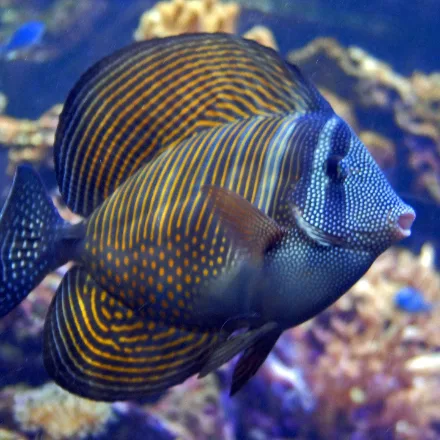
Indian Sailfin Tang Regular
Zebrasoma desjardinii
A deep bodied surgeonfish banded in pale and dark, spotted below and finely lined above, with enormous dorsal and anal fins that fold flat and then open like a sail.
Where: Algal turf on reef tops and boulder slopes. Best: November to April on the west and south, May to September on the east. Watch for the fins going up. A startled one appears to double in size. Also on: Trincomalee and Pigeon Island, Kalpitiya, Hikkaduwa and Unawatuna.
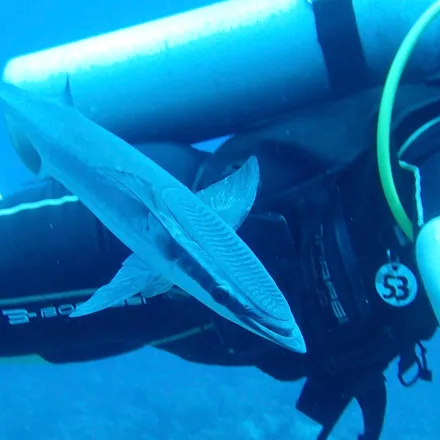
Live Sharksucker (Remora) Regular
Echeneis naucrates
A slim, grey fish with a dark side stripe and a flat, oval sucker on the crown of its head, formed from a modified dorsal fin. It attaches to large marine animals and boats, feeding on scraps and parasites.
Where: Blue water beyond the continental shelf edge. Best: November to April on the west and south, May to September on the east.
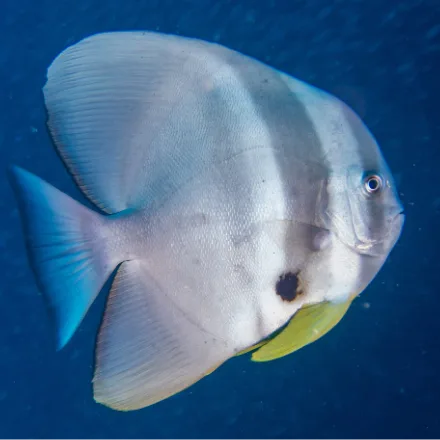
Longfin Batfish Regular
Platax teira
Very deep bodied and silvery with faint dark bars, juveniles have enormously tall fins that shorten with age. Batfish hang in loose schools around structures, feeding on plankton, algae and small invertebrates.
Where: Reef edges and drop-offs, including the Trincomalee canyon rim. Best: November to April on the west and south, May to September on the east. Also on: The Great and Little Basses Reefs.
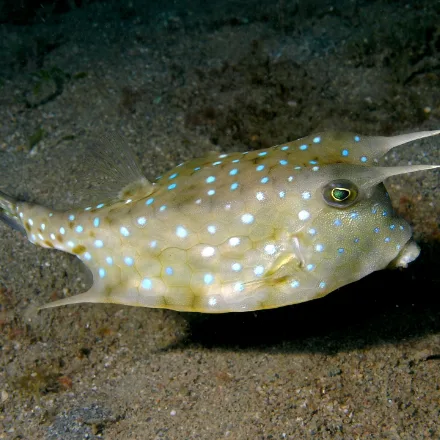
Longhorn Cowfish Regular
Lactoria cornuta
Longhorn cowfish are encased in a rigid bony carapace and swim by sculling with small fins, which makes them comically slow. They feed by squirting water into sand to expose worms and crustaceans, and release a potent toxin from the skin when stressed.
Where: Coral reef and boulder slopes on both coasts. Best: November to April on the west and south, May to September on the east.
Maldives Anemonefish Regular
Amphiprion nigripes
A warm orange anemonefish with a single white head bar and, unusually, black pelvic and anal fins that look as though it has been dipped in ink.
Where: Magnificent sea anemones on shallow reef at Bar Reef and around Pigeon Island. Best: November to April on the west, May to September on the east. Found only here, the Maldives and the Lakshadweep. The clownfish everyone knows from Thailand does not occur in Sri Lanka. Also on: Kalpitiya, Trincomalee and Pigeon Island, Hikkaduwa and Unawatuna.
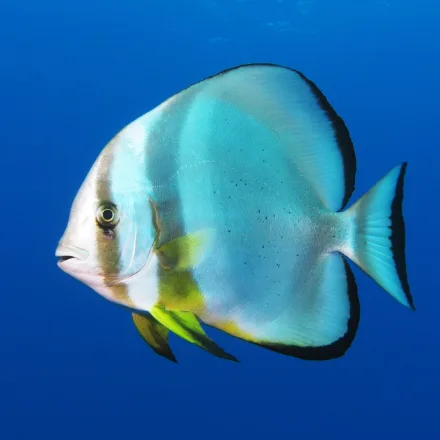
Orbicular Batfish Regular
Platax orbicularis
A round, flattened fish that hangs around wrecks and jetties, tame and inquisitive. Juveniles mimic drifting leaves to avoid predators.
Where: Reef edges and drop-offs, including the Trincomalee canyon rim. Best: November to April on the west and south, May to September on the east.
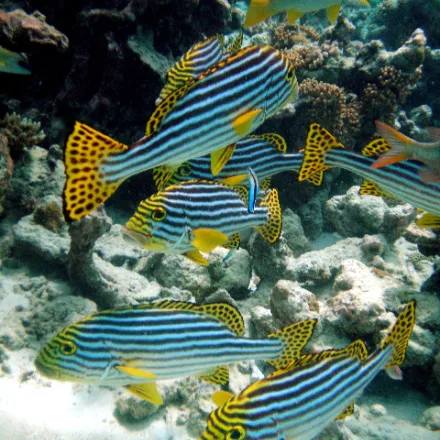
Oriental Sweetlips Regular
Plectorhinchus vittatus
Adults wear bold horizontal black and white stripes with yellow spotted fins, hovering under ledges by day. The very different juveniles are brown with white spots and swim with an odd fluttering motion.
Where: Coral reef and boulder slopes on both coasts. Best: November to April on the west and south, May to September on the east. Also on: Trincomalee and Pigeon Island, Hikkaduwa and Unawatuna, The Great and Little Basses Reefs.
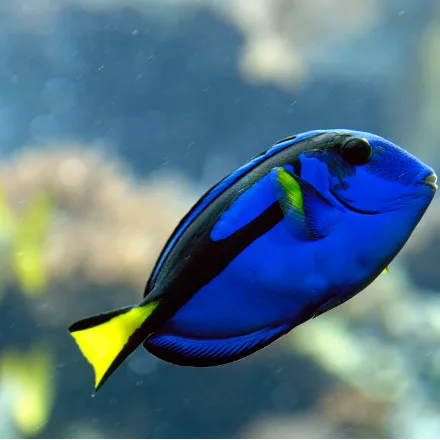
Palette Surgeonfish (Regal Blue Tang) Regular
Paracanthurus hepatus
A vivid royal-blue, disc-shaped surgeonfish with a bold black palette marking and a bright yellow tail. Like all surgeonfish it carries a sharp blade at the tail base.
Where: Coral reef and boulder slopes on both coasts. Best: November to April on the west and south, May to September on the east.
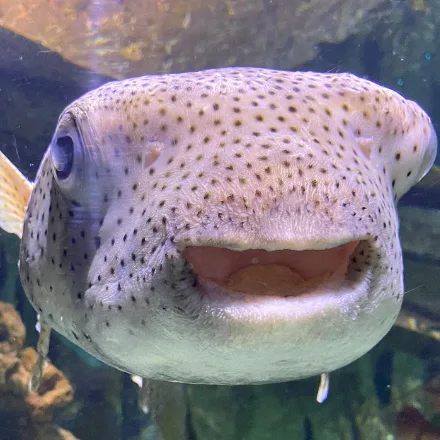
Porcupinefish Regular
Diodon hystrix
Tan and dark spotted with large soulful eyes, the porcupinefish is covered in spines that lie flat until danger. Threatened, it inflates with water into a rigid spiky globe and hides by day in caves and wrecks.
Where: Coral reef and boulder slopes on both coasts. Best: November to April on the west and south, May to September on the east.
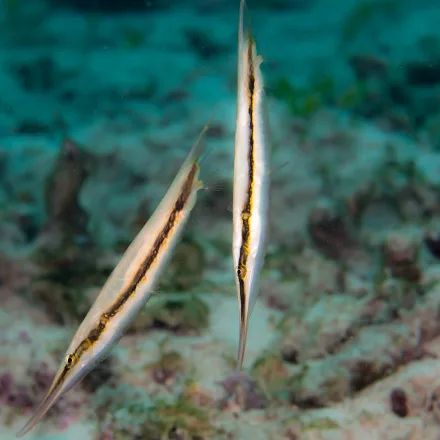
Razorfish (Coral Shrimpfish) Regular
Aeoliscus strigatus
A tiny, transparent, knife-shaped fish with a dark stripe down the side, swimming vertically with its head pointing at the bottom. It hangs in small groups near urchins, sea fans and staghorn coral, sipping tiny crustaceans.
Where: Sand and rubble patches between coral heads. Best: November to April on the west and south, May to September on the east.
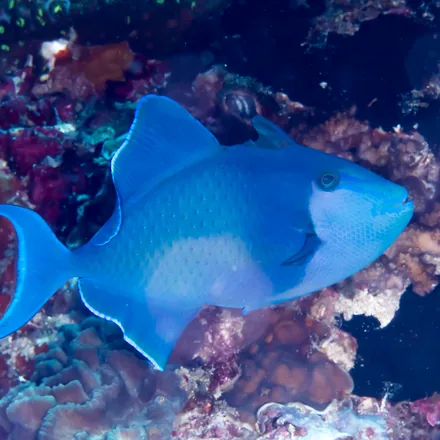
Redtooth Triggerfish Regular
Odonus niger
A slender triggerfish, dark blue to green with a lyre-shaped tail and, on close view, bright red teeth. It hangs in loose aggregations in the current, feeding largely on plankton.
Where: Coral reef and boulder slopes on both coasts. Best: November to April on the west and south, May to September on the east.
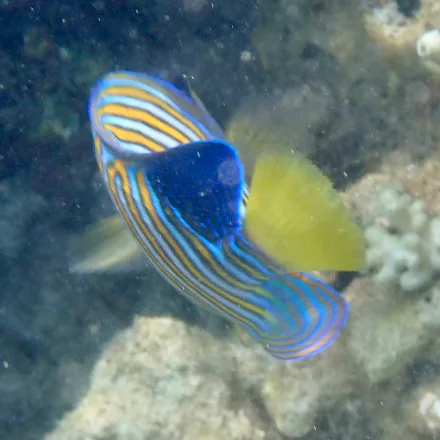
Regal Angelfish Regular
Pygoplites diacanthus
A striking angelfish with bold orange and white vertical bars outlined in blue-black, and a yellow tail. It keeps close to coral and caves, feeding on sponges and sea squirts.
Where: Coral reef and boulder slopes on both coasts. Best: November to April on the west and south, May to September on the east.
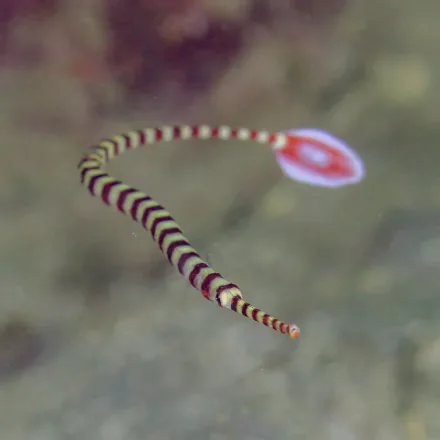
Ringed Pipefish Regular
Doryrhamphus dactyliophorus
Ringed pipefish hang in pairs beneath overhangs and inside small caves, usually oriented head-down. They pick tiny crustaceans off the rock with a fine tubular snout, and males brood the eggs on the underside of the tail.
Where: Sand and rubble patches between coral heads. Best: November to April on the west and south, May to September on the east.
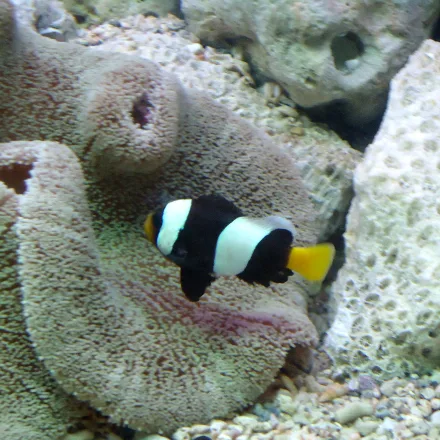
Sebae Anemonefish Regular
Amphiprion sebae
A stocky, dark brown to almost black anemonefish with two broad white or bluish bars and a distinctly yellow tail and snout. Larger and heavier than the other anemonefish here.
Where: Carpet anemones on sandy reef margins rather than in the coral itself. Best: November to April on the west, May to September on the east. The yellow tail separates it from Clark's anemonefish on the same reef. Also on: Kalpitiya, Trincomalee and Pigeon Island, Hikkaduwa and Unawatuna.
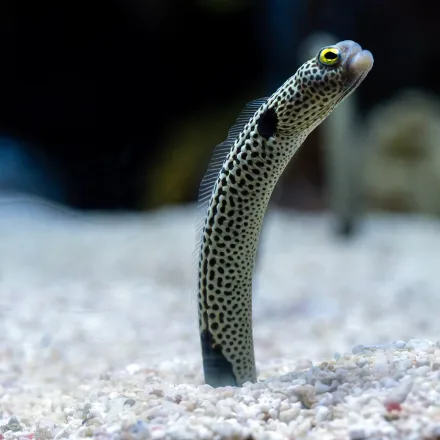
Spotted Garden Eel Regular
Heteroconger hassi
Garden eels live tail-down in permanent burrows on sand flats, extending the front third of the body to pick plankton from the current. Colonies can number hundreds, spaced just beyond striking distance of each other.
Where: Sand and rubble patches between coral heads. Best: November to April on the west and south, May to September on the east.
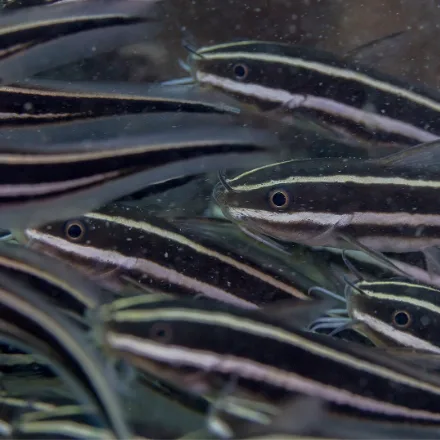
Striped Eel Catfish Regular
Plotosus lineatus
Young striped eel catfish form dense writhing shoals that roll across the seabed like one organism, sifting sand for invertebrates. The serrated dorsal and pectoral spines carry a venom that causes severe pain and, rarely, worse.
Where: Sand and rubble patches between coral heads. Best: November to April on the west and south, May to September on the east. Juveniles move as a single dense ball that behaves like one animal.
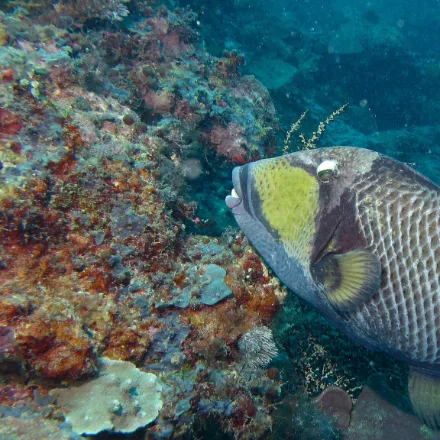
Titan Triggerfish Regular
Balistoides viridescens
A large, powerfully built triggerfish in mottled green and yellow with strong teeth for crushing coral and shellfish. Nesting adults defend a cone shaped territory above the sea bed with real aggression.
Where: Coral reef and boulder slopes on both coasts. Best: November to April on the west and south, May to September on the east. Nesting fish will charge. Swim away horizontally, not upward, because the territory is a cone above the nest. Also on: Trincomalee and Pigeon Island, Hikkaduwa and Unawatuna, The Great and Little Basses Reefs.
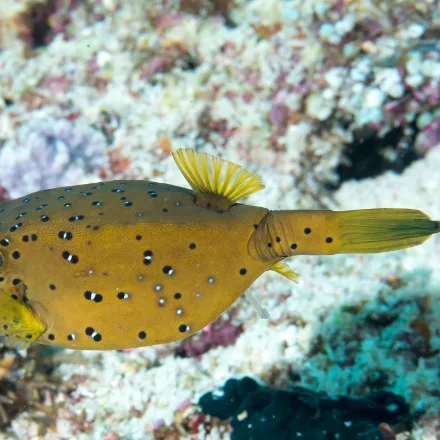
Yellow Boxfish Regular
Ostracion cubicus
Bright yellow with dark spots as a juvenile, fading and blueing with age, this rigid boxfish is encased in a bony shell and swims with fluttering fins. When alarmed it can release a poison into the surrounding water.
Where: Coral reef and boulder slopes on both coasts. Best: November to April on the west and south, May to September on the east.
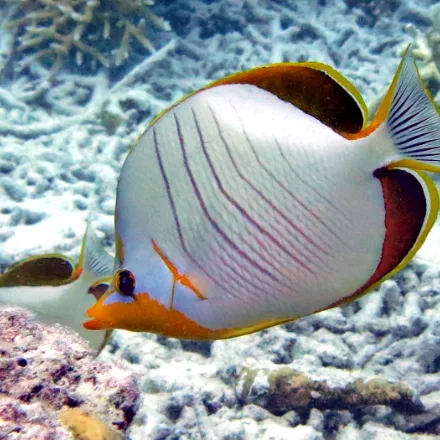
Yellowhead Butterflyfish Regular
Chaetodon xanthocephalus
A pale silvery butterflyfish with a bright yellow head and yellow rear body, separated by a clean white middle, and fine oblique lines across the flank.
Where: Coral and rubble on sheltered reef, usually in pairs. Best: November to April on the west and south, May to September on the east. If you find one, wait. The partner is usually a few metres away. Also on: Trincomalee and Pigeon Island, Kalpitiya, Hikkaduwa and Unawatuna.
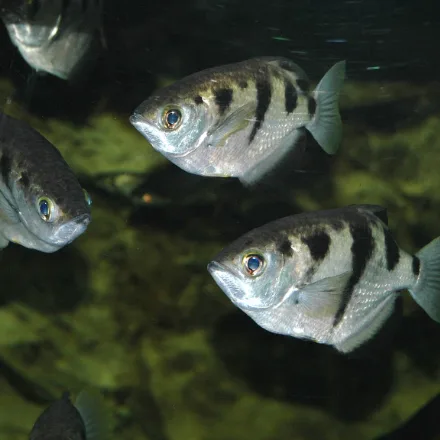
Banded Archerfish Occasional
Toxotes jaculatrix
Archerfish hang just under the surface in mangrove channels and estuaries, spitting a precise jet of water to knock prey into the water. They can hit a target well over a metre above the surface and will leap clear to take anything within reach.
Where: Lagoons, estuaries and mangrove creeks at Puttalam, Negombo and Kalametiya. Best: Year round. Spits a jet of water to knock insects off overhanging leaves.
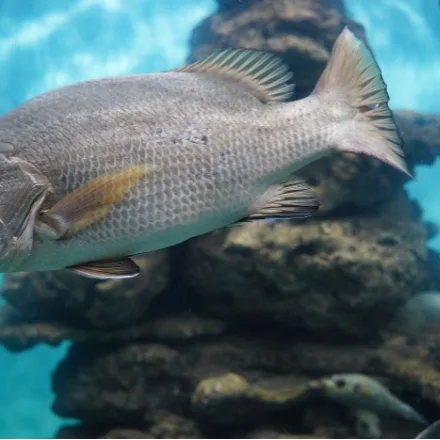
Barramundi Occasional
Lates calcarifer
Barramundi are powerful silver ambush predators of estuaries, mangrove creeks and the lower reaches of rivers, moving between fresh and salt water through their lives. They hunt at structure edges, engulfing fish and prawns with a huge bucket mouth.
Where: Lagoons, estuaries and mangrove creeks at Puttalam, Negombo and Kalametiya. Best: Year round.
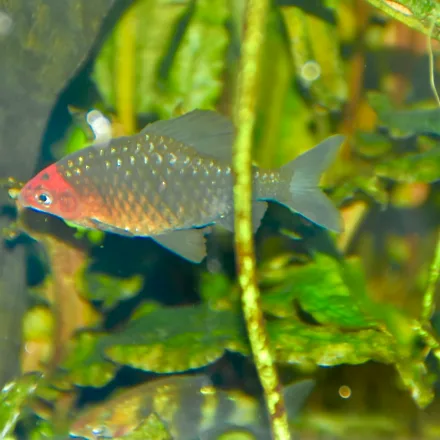
Black Ruby Barb Occasional
Pethia nigrofasciata
A deep-bodied little barb, drab olive-grey with three dark bars for most of the year. In breeding condition the male's head and forebody flood deep red and the rear half goes velvet black.
Where: Gently flowing sand and gravel margins of wet zone rivers. Best: Year round; males colour up with the rains. Drab most of the year. Time a visit to the start of a wet season if you want the red and black. Also on: Kitulgala and the Makandawa Rainforest, Sinharaja Forest Reserve, Kanneliya Forest Reserve.
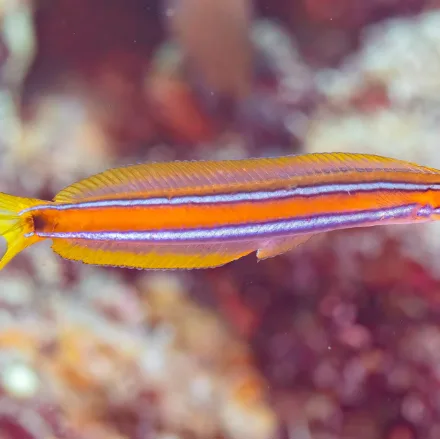
Bluestriped Fangblenny Occasional
Plagiotremus rhinorhynchos
Bluestriped fangblennies copy the colours and swimming motion of cleaner wrasse, approach a waiting fish and tear off a scrap of skin or scale. Their venom contains an opioid peptide that drops the victim's blood pressure rather than causing pain, so the bite is barely noticed.
Where: Coral reef and boulder slopes on both coasts. Best: November to April on the west and south, May to September on the east. Mimics the cleaner wrasse, then bites a mouthful out of whatever came for a clean.
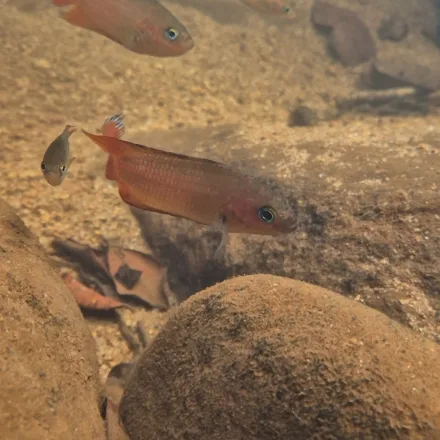
Ceylon Combtail Occasional
Belontia signata
A solid, rusty-orange fish with a comb of trailing rays at the back of the tail fin that give it its name, and a dark spot at the base of the pectoral.
Where: Shaded pools and slow backwaters in wet zone streams. Best: Year round, most obvious in the dry months. Holds pools that other fish abandon as the water drops, because it can breathe air. Also on: Sinharaja Forest Reserve, Kitulgala and the Makandawa Rainforest, Kanneliya Forest Reserve.
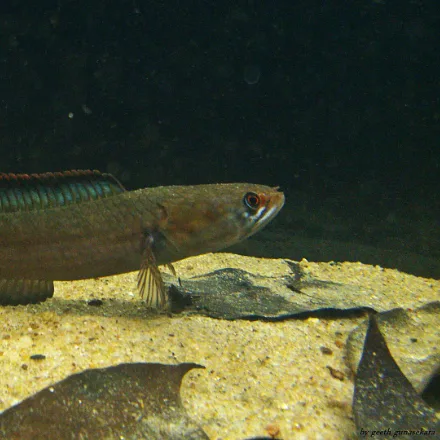
Ceylon Snakehead Occasional Vulnerable
Channa orientalis
A stout, cylindrical, dark olive fish with a broad flat head and, unusually for the family, no pelvic fins whatsoever. Fins are edged in orange and blue-white.
Where: Motionless in the shaded margins of wet zone forest streams. Best: Year round. Look for a shape that does not move rather than a fish that does. Also on: Sinharaja Forest Reserve, Kitulgala and the Makandawa Rainforest, Knuckles Range.
Cherry Barb Occasional Vulnerable
Rohanella titteya
A small, slender barb in which breeding males turn a deep translucent red, offset by a dark lateral stripe running nose to tail. Females and non-breeding males are a quieter fawn and olive.
Where: Shaded, slow, leaf-littered pools in wet zone lowland streams. Best: Year round, clearest December to March. The world's aquarium fish, at home. Look into still water under overhanging bank vegetation rather than into the current. Also on: Kitulgala and the Makandawa Rainforest, Sinharaja Forest Reserve, Kanneliya Forest Reserve.
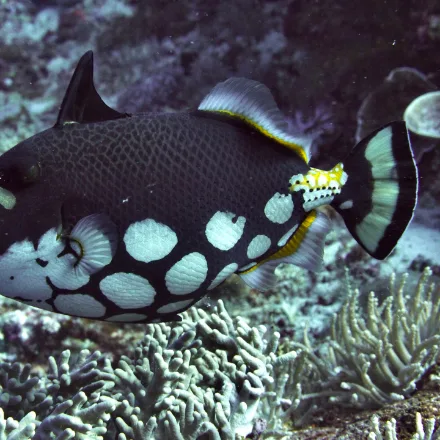
Clown Triggerfish Occasional
Balistoides conspicillum
A robust triggerfish, black with large white belly spots, a yellow-orange saddle, and boldly patterned lips. It crushes hard-shelled prey like urchins, molluscs and crustaceans.
Where: Reef edges and drop-offs, including the Trincomalee canyon rim. Best: November to April on the west and south, May to September on the east. One of the best looking fish in the ocean and worth the wait.
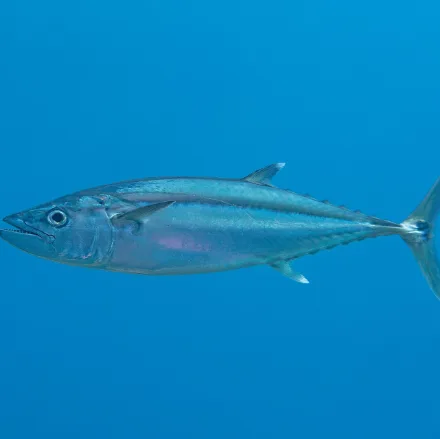
Dogtooth Tuna Occasional
Gymnosarda unicolor
A large, streamlined tuna, steely blue above and silver below, built for speed and power. It patrols current-swept reef edges and pinnacles, hunting fusiliers and other schooling fish.
Where: Blue water beyond the continental shelf edge. Best: May to September on the east coast. Also on: The Great and Little Basses Reefs.
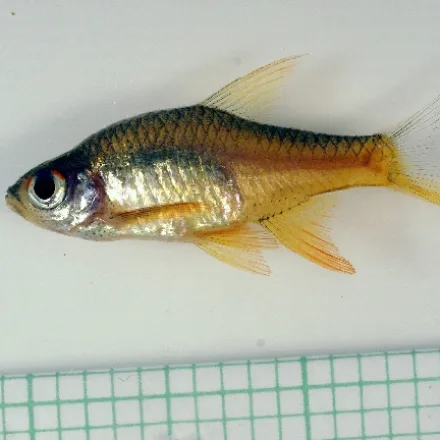
Fire Rasbora Occasional Endangered
Rasboroides vaterifloris
A tiny, deep-bodied rasbora with a pearly blue-green sheen along the flank and orange to blood-red fins, the colour shifting with the angle of the light.
Where: Small, shaded, tea-coloured forest streams in the lowland wet zone. Best: Year round. Look for the shoal, not the fish. Movement in a shaft of light through the canopy is what gives them away. Also on: Sinharaja Forest Reserve, Kanneliya Forest Reserve, Kitulgala and the Makandawa Rainforest.
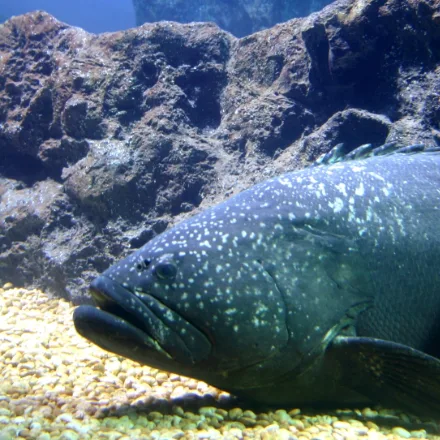
Giant Grouper Occasional
Epinephelus lanceolatus
A colossal grouper, mottled brown to grey and yellow when young, darkening and greying with age, capable of reaching well over two metres. It shelters in wrecks, caves and reef ledges and eats fish, crustaceans and even small rays and sharks.
Where: Deeper reef, wrecks and the Great and Little Basses reefs. Best: November to April on the west and south, May to September on the east. Also on: The Great and Little Basses Reefs.
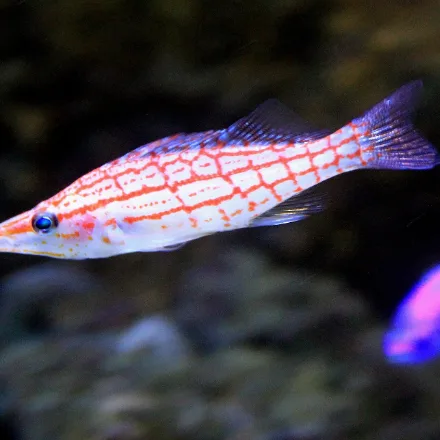
Longnose Hawkfish Occasional
Oxycirrhites typus
A small, elongated fish patterned with a red-and-white crosshatch and a pointed snout, typically living within large gorgonian sea fans and black corals. It darts out to snatch small crustaceans and larvae.
Where: Reef edges and drop-offs, including the Trincomalee canyon rim. Best: November to April on the west and south, May to September on the east. Sitting in a sea fan, and almost always in the same one.
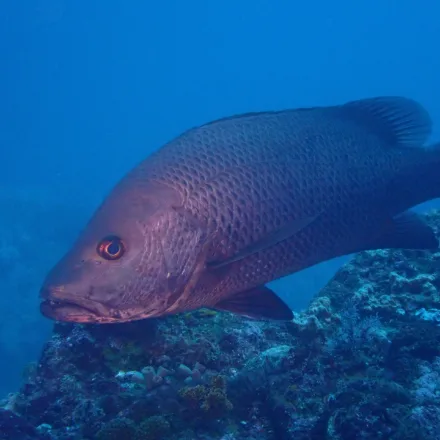
Mangrove Jack Occasional
Lutjanus argentimaculatus
Juvenile mangrove jack shelter among tidal roots and creek snags, hunting prawns and small fish from cover. Mature adults leave the estuary for offshore reef, where they grow to a metre and turn deep coppery red.
Where: Lagoons, estuaries and mangrove creeks at Puttalam, Negombo and Kalametiya. Best: Year round.
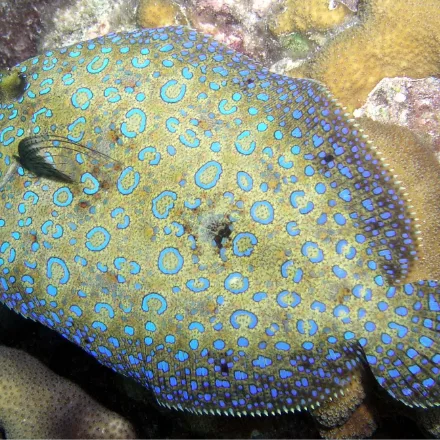
Peacock Flounder Occasional
Bothus mancus
Peacock flounders begin life as normal upright fish, then one eye migrates across the skull and they settle onto the left side. They change colour and pattern rapidly to match the seabed, and males have hugely elongated pectoral fin rays used in display.
Where: Sand and rubble patches between coral heads. Best: November to April on the west and south, May to September on the east.
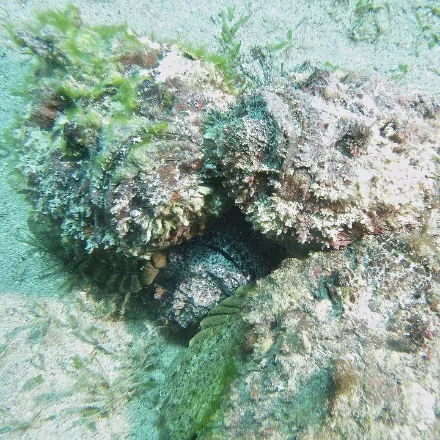
Reef Stonefish Occasional
Synanceia verrucosa
A squat, warty, superbly camouflaged fish that looks exactly like an algae-covered stone, with a row of venomous spines along its back. It lies motionless on the bottom and engulfs passing prey in a fraction of a second.
Where: Sand and rubble patches between coral heads. Best: November to April on the west and south, May to September on the east. Venomous and superbly camouflaged. Look before you put a hand or a fin down.
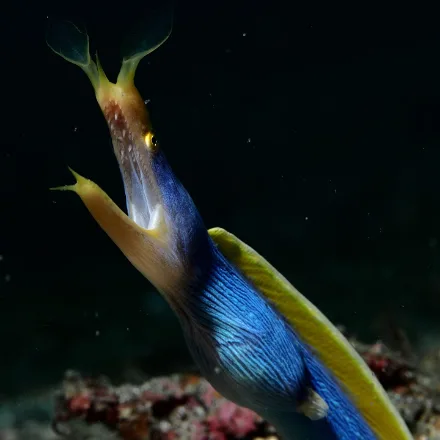
Ribbon Eel Occasional
Rhinomuraena quaesita
An extremely slender moray with flared, leaf-like nostrils, jet black as a juvenile, then blue and yellow as a male, and finally all yellow as a female. It anchors in reef rubble and sand, striking at passing fish.
Where: Sand and rubble patches between coral heads. Best: November to April on the west and south, May to September on the east.
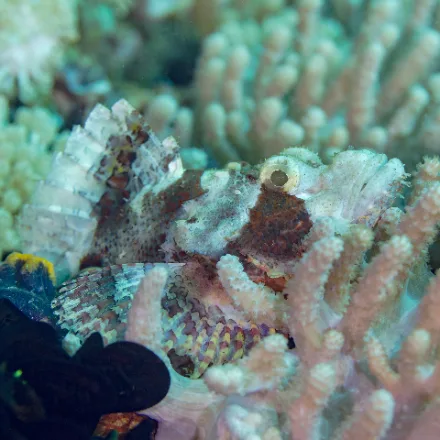
Tasselled Scorpionfish Occasional
Scorpaenopsis oxycephala
Tasselled scorpionfish sit motionless on coral and rock, fringed with skin flaps that break up their outline completely. The dorsal spines carry venom, painful rather than lethal, and are purely defensive.
Where: Sand and rubble patches between coral heads. Best: November to April on the west and south, May to September on the east. Venomous and superbly camouflaged. Look before you put a hand or a fin down.
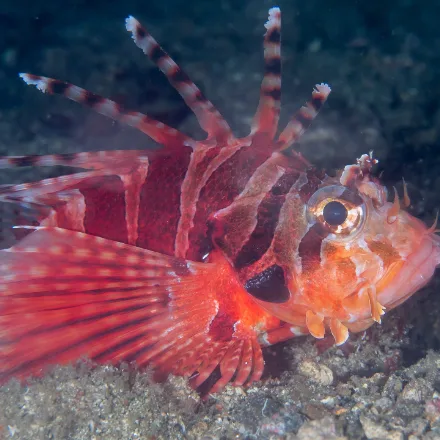
Zebra Lionfish Occasional
Dendrochirus zebra
Zebra lionfish are smaller and stockier than the common lionfish, with rounded, fan-like pectoral fins joined by membrane. They hunt at dusk and night, cornering crustaceans against the reef and taking them in a single suction strike.
Where: Sand and rubble patches between coral heads. Best: November to April on the west and south, May to September on the east. Venomous and superbly camouflaged. Look before you put a hand or a fin down.
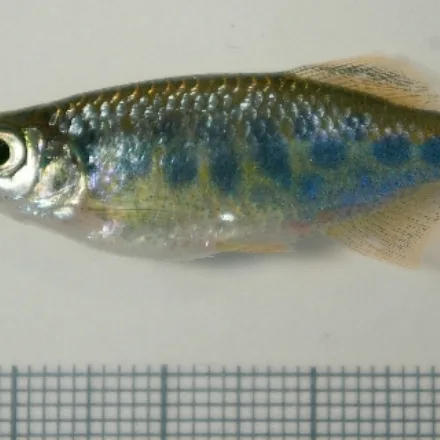
Barred Danio Rare Endangered
Devario pathirana
A bold, quick danio marked with vertical blue-black bars over a golden flank, the bars breaking into a dotted line towards the tail.
Where: Clear, fast, shaded runs in the upper Nilwala basin only. Best: Year round. Its entire world range is a few square kilometres of hill stream in the far south. Also on: Sinharaja Forest Reserve.
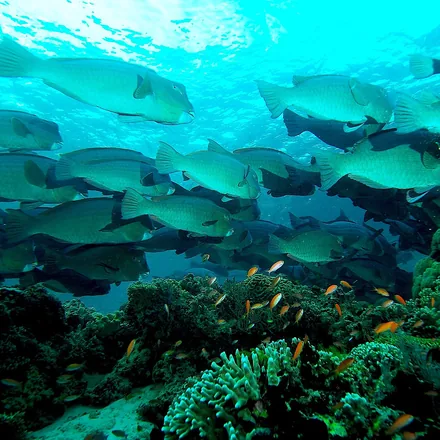
Bumphead Parrotfish Rare Vulnerable
Bolbometopon muricatum
The largest parrotfish, slate grey green with a steep bony forehead, it moves in herds grazing coral and algae. Its fused beak grinds coral to extract polyps and algae, excreting fine sand.
Where: Reef edges and drop-offs, including the Trincomalee canyon rim. Best: May to September on the east coast. Large aggregations are largely gone from South Asian reefs.
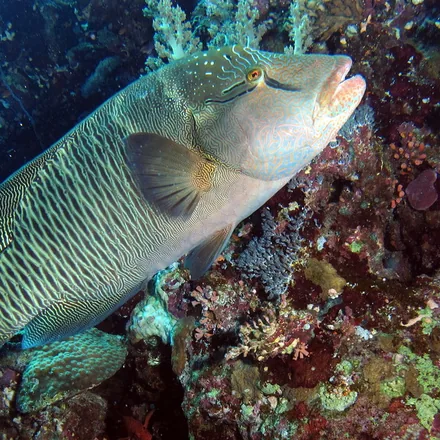
Humphead Wrasse (Napoleon Wrasse) Rare Endangered
Cheilinus undulatus
One of the largest reef fishes, teal green and finely patterned with a prominent hump on the forehead of big males. It preys on hard shelled animals including sea urchins, molluscs and even toxic creatures other fish avoid.
Where: Reef edges and drop-offs, including the Trincomalee canyon rim. Best: November to April on the west and south, May to September on the east. Endangered and heavily fished across its range. Also on: The Great and Little Basses Reefs.
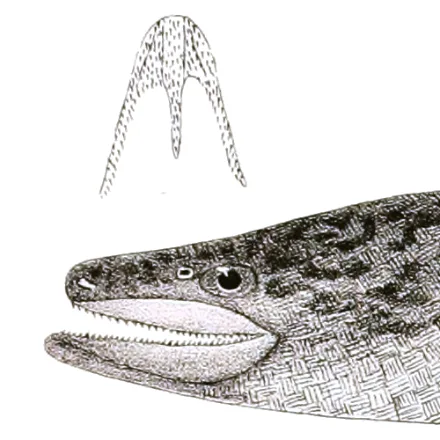
Indian Mottled Eel Rare Near Threatened
Anguilla bengalensis
A very long, heavy-bodied eel, olive to grey-brown and marbled with darker mottling, with a fin running the whole length of its back.
Where: Under banks, boulders and sunken timber in rivers and reservoirs, hunting after dark. Best: Year round, after dark. Daytime records are of resting eels under cover. Everything else happens at night. Also on: Kitulgala and the Makandawa Rainforest, Gal Oya National Park, Wasgamuwa National Park, Kandy.
No free photograph of a living Indian mottled eel exists. The image is a nineteenth century scientific plate from Francis Day's The Fishes of India, cropped to the head.
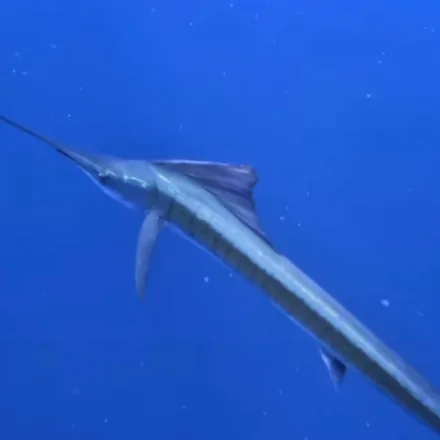
Indo-Pacific Sailfish Rare
Istiophorus platypterus
Sailfish hunt cooperatively, raising an enormous dorsal sail to corral sardines into a tight ball before slashing through with the bill. They can change colour in seconds, flashing bars and stripes that appear to coordinate the attack.
Where: Blue water beyond the continental shelf edge. Best: November to April on the west and south coasts. Now assessed Vulnerable. Sri Lanka's billfish are under heavy pressure.
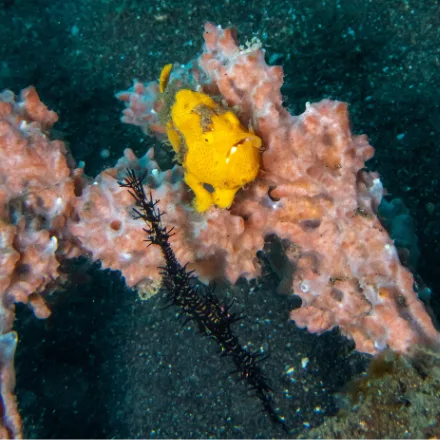
Ornate Ghost Pipefish Rare
Solenostomus paradoxus
A small, spectacularly ornamented fish covered in skin filaments and spots, coloured to match the crinoid or soft coral it shelters among. It hovers head down, sucking tiny shrimp through a long snout.
Where: Coral reef and boulder slopes on both coasts. Best: November to April on the west and south, May to September on the east. Hangs head down among crinoid arms and is close to invisible.
Ornate Paradisefish Rare Endangered
Malpulutta kretseri
A small, secretive fish, lilac to bronze with rows of dark spots, and in males a long lance-shaped extension to the middle of the tail fin.
Where: Very shallow, very slow, leaf-choked water in lowland wet zone forest. Best: Year round. Easily walked past. It lives in water you would call a puddle. Also on: Kanneliya Forest Reserve, Sinharaja Forest Reserve.
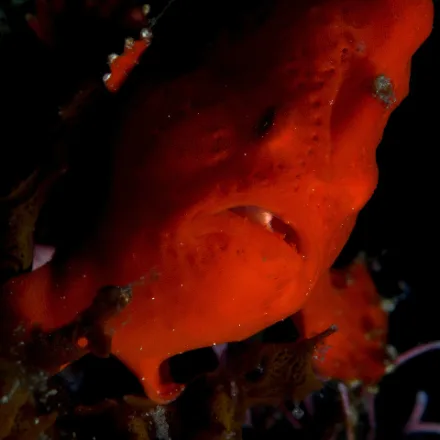
Painted Frogfish Rare
Antennarius pictus
A rounded, warty, sponge-like fish in almost any colour, using leg-like pectoral fins to clamber over the reef. A modified spine on its head bears a lure it waggles to draw prey within reach of a lightning gulp.
Where: Coral reef and boulder slopes on both coasts. Best: November to April on the west and south, May to September on the east. You will not find one. A guide who knows the individual fish will.
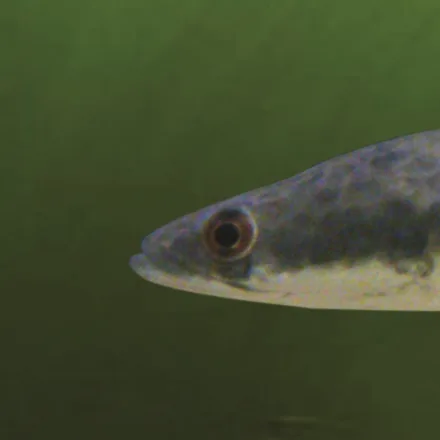
Sri Lanka Giant Snakehead Rare
Channa ara
A long, heavy, dark snakehead with a pattern of pale blotches down the flank and a head like a blunt wedge. Big fish are impressively bulky through the shoulders.
Where: Deep, slow pools in the larger wet zone rivers. Best: Year round, best in low clear water. Sri Lanka's largest native freshwater predator, and it spends the day in the deepest water it can find. Also on: Kitulgala and the Makandawa Rainforest, Kandy.
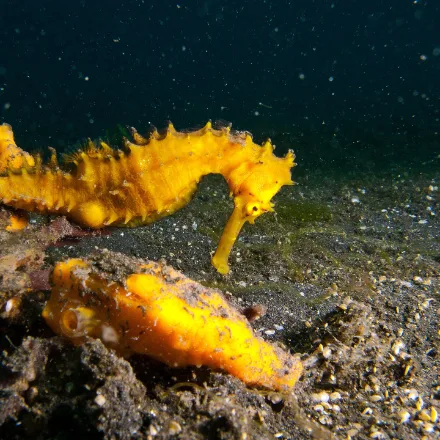
Thorny Seahorse Rare Vulnerable
Hippocampus histrix
Thorny seahorses anchor to soft corals, sponges and seagrass with a prehensile tail, sucking in tiny crustaceans through a tubular snout. Males carry the eggs in a belly pouch and give birth to fully formed young.
Where: Sand and rubble patches between coral heads. Best: November to April on the west and south, May to September on the east.
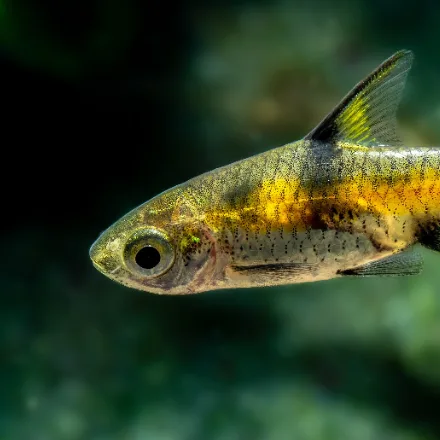
Bandula Barb Ultra rare Critically Endangered
Pethia bandula
A small, pale golden barb with a single bold black bar behind the gill and a second at the tail base, and a red flush on the fins of breeding males.
Where: One short stretch of a single stream in the Kegalle district and nowhere else on earth. Best: Not applicable. We deliberately do not publish the locality. The population has been counted in the hundreds, collection is a listed threat, and visitor pressure on a stream this small is itself a risk. This is a species to know about, not to go and see.
No free photograph of the Bandula barb exists. The image shows Pethia aurea, a close relative in the same genus.
Planning
For the reefs, the season is the whole answer: Pigeon Island and the east coast from May to September, the Bar Reef and the west and south from November to April. Get in early, before the wind builds. For the freshwater fish, the technique is different and much cheaper: a pair of polarised sunglasses, a shaded pool in a wet zone forest stream, and the patience to stand still for two minutes. Nothing here needs to be caught to be seen, and several of the most interesting species are threatened by collection for the aquarium trade.
Find snorkelling and diving trips in Sri Lanka
Some links on this page are affiliate links. If you book through them, Wildseer may earn a small commission at no extra cost to you.
Frequently asked questions
What fish can you see in Sri Lanka?
On the reefs, the full Indo-Pacific range of angelfish, butterflyfish, parrotfish, groupers and trevally, with a few Indian Ocean species that replace their Pacific equivalents. Inland, an endemic freshwater fauna of barbs, rasboras, snakeheads and labyrinth fish that occurs nowhere else.
Where is the best snorkelling in Sri Lanka?
Pigeon Island off Trincomalee for the east coast season from May to September, and the Bar Reef off Kalpitiya for the west coast season from November to April. Hikkaduwa and Unawatuna are the accessible south coast options in the same northeast monsoon window.
Are Sri Lanka’s aquarium fish caught in the wild?
Many are farmed, but wild collection continues and is a documented threat to several endemics, including the fire rasbora and the barred danio. The cherry barb is farmed in the millions worldwide and still listed as Vulnerable where it actually lives.
Does Sri Lanka have endemic freshwater fish?
Yes, and a remarkable number of them. Around half of the island’s native freshwater fish are found nowhere else, a rate higher than for its birds or its mammals, and much of that fauna is confined to the wet zone streams of the southwest.
Explore Sri Lanka wildlife by group
 Mammals of Sri Lanka
 Birds of Sri Lanka
 Reptiles and amphibians of Sri Lanka
 Sharks and rays of Sri Lanka
 Reef invertebrates of Sri Lanka
 Insects and spiders of Sri Lanka
Part of the Wildlife in Sri Lanka guide.
Explore Sri Lanka wildlife by place
- Adams Peak wildlife
- Arugam Bay marine life
- Bundala wildlife
- Colombo wildlife
- Ella wildlife
- Gal Oya wildlife
- Great Basses marine life
- Hikkaduwa marine life
- Horton Plains wildlife
- Jaffna wildlife
- Kalpitiya marine life
- Kandy wildlife
- Kanneliya wildlife
- Kitulgala wildlife
- Knuckles wildlife
- Kumana wildlife
- Mannar marine life
- Minneriya wildlife
- Mirissa marine life
- Rekawa marine life
- Sigiriya wildlife
- Sinharaja wildlife
- Tangalle marine life
- Trincomalee marine life
- Udawalawe wildlife
- Wasgamuwa wildlife
- Wilpattu wildlife
- Yala wildlife
Image credits
Square thumbnails are cropped from the original. Wide banner images are cropped to a band. Other images are resized only. No other changes have been made.
- Bluestripe snapper over a reef: Jeffry Surianto | Pexels Licence, cropped
- Cherry Barb: Brian Gratwicke | CC BY 2.0, cropped
- Ornate Paradisefish: Klaus de Leuw | CC BY-SA 3.0, cropped
- Green Chromide: Peter Corbett | CC BY 2.0, cropped
- Maldives Anemonefish: Jan Derk | Public domain, cropped
- Stone Sucker: iNaturalist contributor, no rights reserved | CC0, cropped
- Blue-green Chromis (cropped to square): Philippe Bourjon | CC BY-SA 4.0, cropped
- Bluestreak Cleaner Wrasse (cropped to square): Bernard DUPONT | CC BY-SA 2.0, cropped
- Bluestripe Snapper (cropped to square): Jerome Paillet (IFREMER) | CC BY 4.0, cropped
- Bullethead Parrotfish (cropped to square): Rickard Zerpe | CC BY 2.0, cropped
- Ceylon Killifish: Thuhiru S. Yapa | CC BY 4.0, cropped
- Checkerboard Wrasse (cropped to square): Charles J. Sharp | CC BY-SA 4.0, cropped
- Clark’s Anemonefish (cropped to square): Karelj | Public domain, cropped
- Longfin Bannerfish (cropped to square): Philippe Bourjon | CC BY-SA 3.0, cropped
- Moon Wrasse (cropped to square): Dariusz Białoń | CC BY-SA 4.0, cropped
- Moorish Idol (cropped to square): Jean-Paul Boerekamps | CC0, cropped
- Powder Blue Surgeonfish (cropped to square): Amada44 | CC BY-SA 3.0, cropped
- Raccoon Butterflyfish (cropped to square): Brian Gratwicke | CC BY 2.0, cropped
- Sea Goldie (cropped to square): Amada44 | CC BY-SA 3.0, cropped
- Sergeant Major (cropped to square): Rickard Zerpe | CC BY 2.0, cropped
- Threadfin Butterflyfish (cropped to square): Kora27 | CC BY-SA 4.0, cropped
- Yellowback Fusilier (cropped to square): Rickard Zerpe | CC BY 2.0, cropped
- Yellowsaddle Goatfish: patrice schoefolt | Pexels Licence, cropped
- Banded Mountain Loach: (c) Pieter Prins, some rights reserved (CC BY-SA) | CC BY-SA 4.0, cropped
- Bigeye Trevally (cropped to square): Rickard Zerpe | CC BY 2.0, cropped
- Black Pyramid Butterflyfish: Jean-Paul Boerekamps | CC0, cropped
- Blackspotted Puffer (cropped to square): Bernard DUPONT | CC BY-SA 4.0, cropped
- Blotcheye Soldierfish (cropped to square): Neil Strickland | CC0, cropped
- Blue-ringed Angelfish (cropped to square): portioid | CC BY-SA 4.0, cropped
- Bluespine Unicornfish (cropped to square): Rjcastillo | CC BY 4.0, cropped
- Chevron Barracuda (cropped to square): Bernard DUPONT from FRANCE | CC BY-SA 2.0, cropped
- Climbing Perch (cropped to square): Renno Sumarsono | CC0, cropped
- Common Lionfish (cropped to square): Rickard Zerpe | CC BY 2.0, cropped
- Coral Grouper (cropped to square): Rickard Zerpe | CC BY 2.0, cropped
- Emperor Angelfish (cropped to square): Jean-Paul Boerekamps | CC0, cropped
- Fire Dartfish (cropped to square): Rickard Zerpe | CC BY 2.0, cropped
- Giant Moray (cropped to square): Jerome Paillet (IFREMER) | CC BY 4.0, cropped
- Giant Trevally (cropped to square): Dr. Dwayne Meadows, NOAA/NMFS/OPR | Public domain, cropped
- Golden Trevally (cropped to square): Rickard Zerpe | CC BY 2.0, cropped
- Great Barracuda (cropped to square): James St. John | CC BY 2.0, cropped
- Indian Sailfin Tang: Hectonichus | CC BY-SA 3.0, cropped
- Live Sharksucker (cropped to square): Natalie Lemanski | CC BY-SA 4.0, cropped
- Longfin Batfish (cropped to square): portioid | CC BY-SA 4.0, cropped
- Longhorn Cowfish (cropped to square): Nick Hobgood | CC BY-SA 3.0, cropped
- Orbicular Batfish (cropped to square): Alexander Vasenin | CC BY-SA 3.0, cropped
- Oriental Sweetlips (cropped to square): Uxbona | CC BY-SA 3.0, cropped
- Palette Surgeonfish (cropped to square): Norbert Potensky | CC BY-SA 3.0, cropped
- Porcupinefish (cropped to square): Di (they-them) | CC0, cropped
- Razorfish (Coral Shrimpfish) (cropped to square): Rickard Zerpe | CC BY 2.0, cropped
- Redtooth Triggerfish (cropped to square): Rickard Zerpe | CC BY 2.0, cropped
- Regal Angelfish (cropped to square): Jean-Paul Boerekamps | CC0, cropped
- Ringed Pipefish (resized): Diego Delso | CC BY-SA 4.0, cropped
- Sebae Anemonefish: Ranjithsiji | CC BY-SA 3.0, cropped
- Spotted Garden Eel (cropped to square): Chepry 💬 ( Andrzej Barabasz ) 📷 🇵🇱 | CC BY-SA 4.0, cropped
- Striped Eel Catfish (cropped to square): Diego Delso | CC BY-SA 4.0, cropped
- Titan Triggerfish (cropped to square): Bernard DUPONT | CC BY-SA 2.0, cropped
- Yellow Boxfish (cropped to square): Rickard Zerpe | CC BY 2.0, cropped
- Yellowhead Butterflyfish: Ahmed Abdul Rahman for MDC Seamarc Maldives | CC BY-SA 4.0, cropped
- Banded Archerfish (cropped to square): James St. John | CC BY 2.0, cropped
- Barramundi: NGUYEN THANH NHON | Pexels Licence, cropped
- Black Ruby Barb: NasserHalaweh | CC BY-SA 4.0, cropped
- Bluestriped Fangblenny (cropped to square): Poco a poco | CC BY-SA 4.0, cropped
- Ceylon Combtail: Jonghyun Park | CC BY 4.0, cropped
- Ceylon Snakehead: Seriousgeeth | CC BY-SA 4.0, cropped
- Clown Triggerfish (cropped to square): Alexander Fordyce | CC BY 4.0, cropped
- Dogtooth Tuna (cropped to square): Poco a poco | CC BY-SA 4.0, cropped
- Fire Rasbora: Rupert A. Collins | CC BY 3.0, cropped
- Giant Grouper (cropped to square): Manuel Heinrich Emha | CC BY-SA 2.5, cropped
- Longnose Hawkfish (cropped to square): Karelj | CC BY-SA 3.0, cropped
- Mangrove Jack (cropped to square): 呂一起(Lu i-chi) | CC BY 4.0, cropped
- Peacock Flounder (cropped to square): YVC Biology Department | CC BY 2.0, cropped
- Reef Stonefish (cropped to square): Jerome Paillet (IFREMER, Laboratoire d'Océanographie Physique et Spatiale, Centre Bretagne - ZI de la Pointe du Diable - CS 10070 - 29280 Plouzané) | CC BY 4.0, cropped
- Ribbon Eel (cropped to square): Rickard Zerpe | CC BY-SA 2.0, cropped
- Tasselled Scorpionfish (resized): Diego Delso | CC BY-SA 4.0, cropped
- Zebra Lionfish (cropped to square): Rickard Zerpe | CC BY 2.0, cropped
- Barred Danio: Rupert A. Collins | CC BY 3.0, cropped
- Bumphead Parrotfish (cropped to square): Jenny from Taipei | CC BY 2.0, cropped
- Humphead Wrasse (cropped to square): Derek Keats | CC BY 2.0, cropped
- Indian Mottled Eel: Francis Day | Public domain, cropped
- Indo-Pacific Sailfish (cropped to square): Vsevolod | CC BY 4.0, cropped
- Ornate Ghost Pipefish (cropped to square): portioid | CC BY-SA 4.0, cropped
- Painted Frogfish (cropped to square): Rickard Zerpe | CC BY-SA 2.0, cropped
- Sri Lanka Giant Snakehead: Seriousgeeth | CC BY-SA 4.0, cropped
- Thorny Seahorse (cropped to square): prilfish | CC BY 2.0, cropped
- Bandula Barb: Beta Mahatvaraj | CC BY-SA 4.0, cropped
- Purple-faced langur in the canopy: kanchana Amilani | Unsplash License, cropped
- White-throated kingfisher on a branch: kanchana Amilani | Unsplash License, cropped
- Green forest lizard in breeding colour: Anas Mohamed Nuski | Pexels Licence, cropped
- Reef manta rays near the surface: Emma Li | Pexels Licence, cropped
- Nudibranch crossing the sea floor: Chris Spain | Pexels Licence, cropped
- Clipper butterfly on a leaf: Pixabay | Pexels Licence, cropped
Square thumbnails are cropped from the original. Wide banner images are cropped to a band. Other images are resized only. No other changes have been made.
- Bluestripe snapper over a reef: Jeffry Surianto | Pexels Licence, cropped
- Cherry Barb: Brian Gratwicke | CC BY 2.0, cropped
- Ornate Paradisefish: Klaus de Leuw | CC BY-SA 3.0, cropped
- Green Chromide: Peter Corbett | CC BY 2.0, cropped
- Maldives Anemonefish: Jan Derk | Public domain, cropped
- Stone Sucker: iNaturalist contributor, no rights reserved | CC0, cropped
- Blue-green Chromis (cropped to square): Philippe Bourjon | CC BY-SA 4.0, cropped
- Bluestreak Cleaner Wrasse (cropped to square): Bernard DUPONT | CC BY-SA 2.0, cropped
- Bluestripe Snapper (cropped to square): Jerome Paillet (IFREMER) | CC BY 4.0, cropped
- Bullethead Parrotfish (cropped to square): Rickard Zerpe | CC BY 2.0, cropped
- Ceylon Killifish: Thuhiru S. Yapa | CC BY 4.0, cropped
- Checkerboard Wrasse (cropped to square): Charles J. Sharp | CC BY-SA 4.0, cropped
- Clark’s Anemonefish (cropped to square): Karelj | Public domain, cropped
- Longfin Bannerfish (cropped to square): Philippe Bourjon | CC BY-SA 3.0, cropped
- Moon Wrasse (cropped to square): Dariusz Białoń | CC BY-SA 4.0, cropped
- Moorish Idol (cropped to square): Jean-Paul Boerekamps | CC0, cropped
- Powder Blue Surgeonfish (cropped to square): Amada44 | CC BY-SA 3.0, cropped
- Raccoon Butterflyfish (cropped to square): Brian Gratwicke | CC BY 2.0, cropped
- Sea Goldie (cropped to square): Amada44 | CC BY-SA 3.0, cropped
- Sergeant Major (cropped to square): Rickard Zerpe | CC BY 2.0, cropped
- Threadfin Butterflyfish (cropped to square): Kora27 | CC BY-SA 4.0, cropped
- Yellowback Fusilier (cropped to square): Rickard Zerpe | CC BY 2.0, cropped
- Yellowsaddle Goatfish: patrice schoefolt | Pexels Licence, cropped
- Banded Mountain Loach: (c) Pieter Prins, some rights reserved (CC BY-SA) | CC BY-SA 4.0, cropped
- Bigeye Trevally (cropped to square): Rickard Zerpe | CC BY 2.0, cropped
- Black Pyramid Butterflyfish: Jean-Paul Boerekamps | CC0, cropped
- Blackspotted Puffer (cropped to square): Bernard DUPONT | CC BY-SA 4.0, cropped
- Blotcheye Soldierfish (cropped to square): Neil Strickland | CC0, cropped
- Blue-ringed Angelfish (cropped to square): portioid | CC BY-SA 4.0, cropped
- Bluespine Unicornfish (cropped to square): Rjcastillo | CC BY 4.0, cropped
- Chevron Barracuda (cropped to square): Bernard DUPONT from FRANCE | CC BY-SA 2.0, cropped
- Climbing Perch (cropped to square): Renno Sumarsono | CC0, cropped
- Common Lionfish (cropped to square): Rickard Zerpe | CC BY 2.0, cropped
- Coral Grouper (cropped to square): Rickard Zerpe | CC BY 2.0, cropped
- Emperor Angelfish (cropped to square): Jean-Paul Boerekamps | CC0, cropped
- Fire Dartfish (cropped to square): Rickard Zerpe | CC BY 2.0, cropped
- Giant Moray (cropped to square): Jerome Paillet (IFREMER) | CC BY 4.0, cropped
- Giant Trevally (cropped to square): Dr. Dwayne Meadows, NOAA/NMFS/OPR | Public domain, cropped
- Golden Trevally (cropped to square): Rickard Zerpe | CC BY 2.0, cropped
- Great Barracuda (cropped to square): James St. John | CC BY 2.0, cropped
- Indian Sailfin Tang: Hectonichus | CC BY-SA 3.0, cropped
- Live Sharksucker (cropped to square): Natalie Lemanski | CC BY-SA 4.0, cropped
- Longfin Batfish (cropped to square): portioid | CC BY-SA 4.0, cropped
- Longhorn Cowfish (cropped to square): Nick Hobgood | CC BY-SA 3.0, cropped
- Orbicular Batfish (cropped to square): Alexander Vasenin | CC BY-SA 3.0, cropped
- Oriental Sweetlips (cropped to square): Uxbona | CC BY-SA 3.0, cropped
- Palette Surgeonfish (cropped to square): Norbert Potensky | CC BY-SA 3.0, cropped
- Porcupinefish (cropped to square): Di (they-them) | CC0, cropped
- Razorfish (Coral Shrimpfish) (cropped to square): Rickard Zerpe | CC BY 2.0, cropped
- Redtooth Triggerfish (cropped to square): Rickard Zerpe | CC BY 2.0, cropped
- Regal Angelfish (cropped to square): Jean-Paul Boerekamps | CC0, cropped
- Ringed Pipefish (resized): Diego Delso | CC BY-SA 4.0, cropped
- Sebae Anemonefish: Ranjithsiji | CC BY-SA 3.0, cropped
- Spotted Garden Eel (cropped to square): Chepry 💬 ( Andrzej Barabasz ) 📷 🇵🇱 | CC BY-SA 4.0, cropped
- Striped Eel Catfish (cropped to square): Diego Delso | CC BY-SA 4.0, cropped
- Titan Triggerfish (cropped to square): Bernard DUPONT | CC BY-SA 2.0, cropped
- Yellow Boxfish (cropped to square): Rickard Zerpe | CC BY 2.0, cropped
- Yellowhead Butterflyfish: Ahmed Abdul Rahman for MDC Seamarc Maldives | CC BY-SA 4.0, cropped
- Banded Archerfish (cropped to square): James St. John | CC BY 2.0, cropped
- Barramundi: NGUYEN THANH NHON | Pexels Licence, cropped
- Black Ruby Barb: NasserHalaweh | CC BY-SA 4.0, cropped
- Bluestriped Fangblenny (cropped to square): Poco a poco | CC BY-SA 4.0, cropped
- Ceylon Combtail: Jonghyun Park | CC BY 4.0, cropped
- Ceylon Snakehead: Seriousgeeth | CC BY-SA 4.0, cropped
- Clown Triggerfish (cropped to square): Alexander Fordyce | CC BY 4.0, cropped
- Dogtooth Tuna (cropped to square): Poco a poco | CC BY-SA 4.0, cropped
- Fire Rasbora: Rupert A. Collins | CC BY 3.0, cropped
- Giant Grouper (cropped to square): Manuel Heinrich Emha | CC BY-SA 2.5, cropped
- Longnose Hawkfish (cropped to square): Karelj | CC BY-SA 3.0, cropped
- Mangrove Jack (cropped to square): 呂一起(Lu i-chi) | CC BY 4.0, cropped
- Peacock Flounder (cropped to square): YVC Biology Department | CC BY 2.0, cropped
- Reef Stonefish (cropped to square): Jerome Paillet (IFREMER, Laboratoire d'Océanographie Physique et Spatiale, Centre Bretagne - ZI de la Pointe du Diable - CS 10070 - 29280 Plouzané) | CC BY 4.0, cropped
- Ribbon Eel (cropped to square): Rickard Zerpe | CC BY-SA 2.0, cropped
- Tasselled Scorpionfish (resized): Diego Delso | CC BY-SA 4.0, cropped
- Zebra Lionfish (cropped to square): Rickard Zerpe | CC BY 2.0, cropped
- Barred Danio: Rupert A. Collins | CC BY 3.0, cropped
- Bumphead Parrotfish (cropped to square): Jenny from Taipei | CC BY 2.0, cropped
- Humphead Wrasse (cropped to square): Derek Keats | CC BY 2.0, cropped
- Indian Mottled Eel: Francis Day | Public domain, cropped
- Indo-Pacific Sailfish (cropped to square): Vsevolod | CC BY 4.0, cropped
- Ornate Ghost Pipefish (cropped to square): portioid | CC BY-SA 4.0, cropped
- Painted Frogfish (cropped to square): Rickard Zerpe | CC BY-SA 2.0, cropped
- Sri Lanka Giant Snakehead: Seriousgeeth | CC BY-SA 4.0, cropped
- Thorny Seahorse (cropped to square): prilfish | CC BY 2.0, cropped
- Bandula Barb: Beta Mahatvaraj | CC BY-SA 4.0, cropped
- Purple-faced langur in the canopy: kanchana Amilani | Unsplash License, cropped
- White-throated kingfisher on a branch: kanchana Amilani | Unsplash License, cropped
- Green forest lizard in breeding colour: Anas Mohamed Nuski | Pexels Licence, cropped
- Reef manta rays near the surface: Emma Li | Pexels Licence, cropped
- Nudibranch crossing the sea floor: Chris Spain | Pexels Licence, cropped
- Clipper butterfly on a leaf: Pixabay | Pexels Licence, cropped