
Sinharaja is the last substantial primary lowland rainforest on the island and the engine room of Sri Lankan endemism. Almost every endemic bird a visitor wants is findable here in two or three days, and the reason is the mixed species feeding flock: a moving crowd of twenty or more species led by the orange-billed babbler and the Sri Lanka drongo, which sweeps through the understorey and takes the rarities with it.
The blue magpie is the bird people arrive for and it is regular along the research station trail. Behind it sit the genuinely difficult ones: the Serendib scops owl, described as recently as 2004 and known mainly from day roosts, the green-billed coucal, the white-faced starling and the red-faced malkoha high in the canopy with the flock.
Birds are only half of it. This is one of the richest amphibian sites in Asia, with an endemic radiation of shrub frogs that exists on no other landmass, and the night walks in the buffer zone are where the forest actually opens up: hump-nosed pit vipers on the trail edge, green vine snakes hanging at eye level, ornamental tarantulas in tree cavities, and the golden palm civet in the fruiting canopy. The streams carry endemic barbs and rasboras that are aquarium shop stock abroad and quietly threatened at home.
Highlights
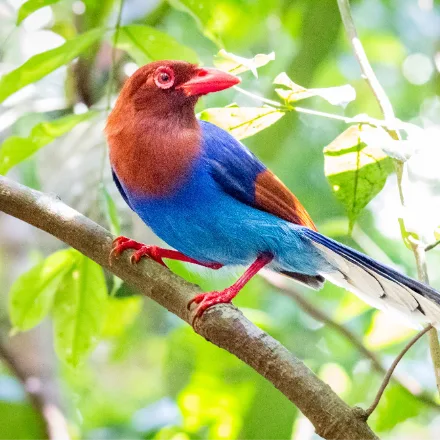
Sri Lanka Blue Magpie
Cobalt and chestnut with a blood-red bill, and it comes to look at you rather than the other way round. Where: The research station trail and the Kudawa entrance road, often with the mixed feeding flock. Best: Year round, first three hours after dawn.
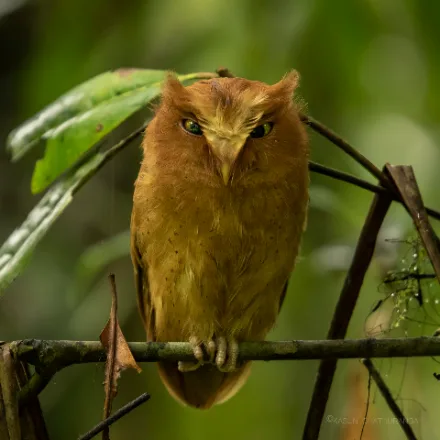
Serendib Scops Owl
Found by its call in 2001 and described in 2004, the first new bird species discovered in Sri Lanka for over a century. Where: Dense understorey thicket near known day roosts. Best: Year round, dusk for the call.
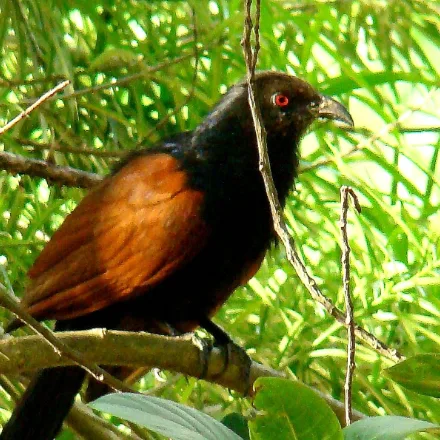
Green-billed Coucal
A heavy, skulking coucal with an apple-green bill, and one of the hardest endemics on the island to actually see. Where: Thickets beside the research station trail and the Kudawa road. Best: Year round, dawn for the call.
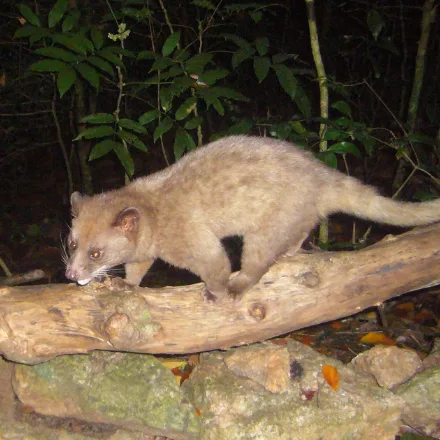
Golden Palm Civet
An endemic civet the colour of wet honey, moving through the canopy at night and almost unknown to visitors. Where: Fruiting canopy trees on a spotlight walk from the buffer villages. Best: Year round, after dark.
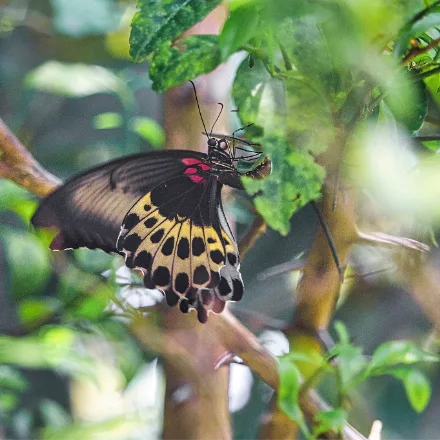
Sri Lanka Birdwing
The largest butterfly on the island, the size of a small bird, and it lives nowhere else. Where: Canopy gaps and the forest edge along the buffer zone road. Best: January to March and July to September.
Mammals
3 species
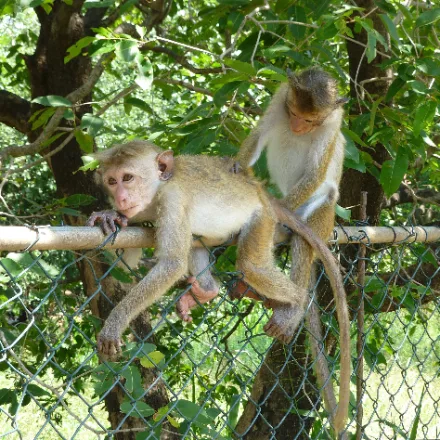
Toque Macaque Regular Endangered
Macaca sinica
A small endemic monkey with a swirl of hair on the crown arranged like a cap, and the most studied primate on the island.
Where: Troops in the mid canopy along the trails. Best: Year round. Watch the dominance order for five minutes and it is obvious who outranks whom.
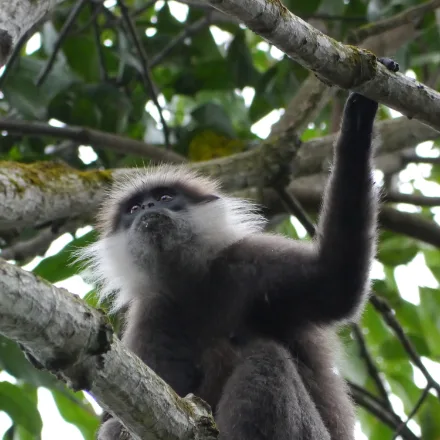
Purple-faced Langur Occasional Endangered
Semnopithecus vetulus
A shaggy black leaf monkey with white side whiskers, and the highland form is so hairy it is known as the bear monkey.
Where: Canopy along the research station trail. Best: Year round. A leaf eater, so it has no interest in you at all, which makes watching it better.
Golden Palm Civet Rare Vulnerable
Paradoxurus zeylonensis
An endemic civet the colour of wet honey, moving through the canopy at night and almost unknown to visitors.
Where: Fruiting canopy trees on a spotlight walk from the buffer villages. Best: Year round, after dark. Eye shine is the usual first sign. Look up rather than along the ground.
Birds
27 species
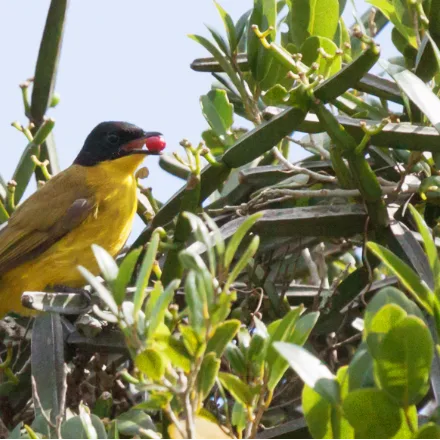
Black-capped Bulbul Common
Rubigula melanicterus
Olive and bright yellow with a neat black hood, and one of the first endemics a Sinharaja morning delivers.
Where: Mid storey and understorey along every trail. Best: Year round, morning. Joins mixed flocks. Black hood and white iris are unmistakable.
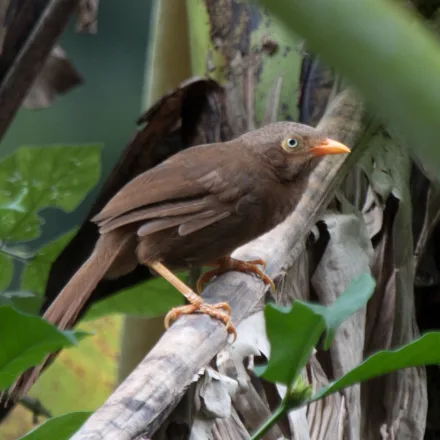
Orange-billed Babbler Common
Argya rufescens
The engine of the Sinharaja feeding flock: hear this bird and everything else is about to arrive.
Where: Noisy parties working the low branches and litter along every trail. Best: Year round, morning. Learn the chatter. When you hear it, stop walking: the whole flock is about to arrive.
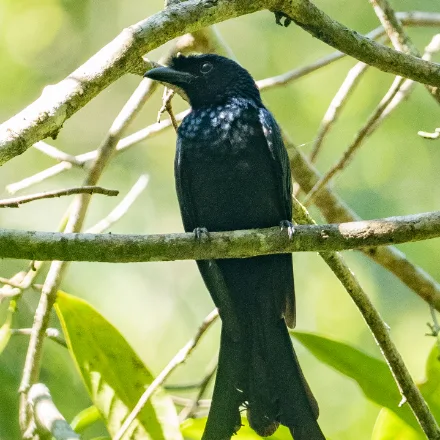
Sri Lanka Drongo Common
Dicrurus lophorinus
The flock's alarm system, and a shameless mimic that will imitate a hawk to clear a branch of competitors.
Where: Sallying after insects flushed by the rest of the flock. Best: Year round, morning. If the flock suddenly goes quiet, look for the drongo before assuming a raptor.
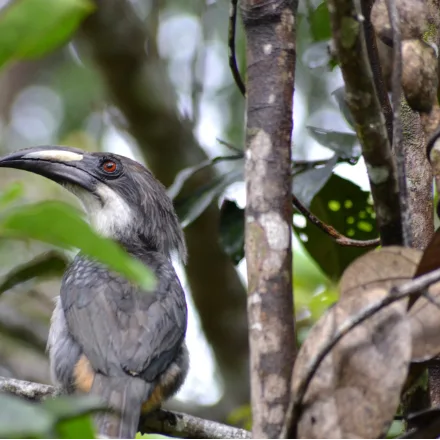
Sri Lanka Grey Hornbill Common
Ocyceros gingalensis
A slim, quiet hornbill with no casque, common enough to see from a hotel garden and endemic all the same.
Where: Fruiting figs along the entrance road. Best: Year round. Pairs, loud repeated cackle, no casque.
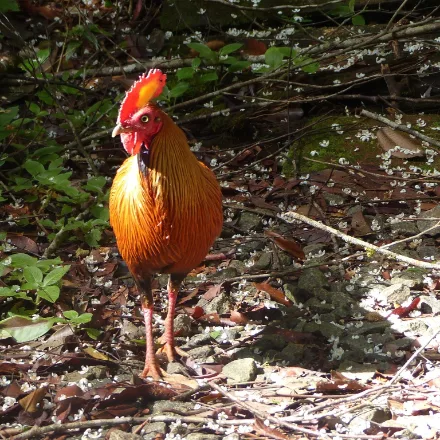
Sri Lanka Junglefowl Common
Gallus lafayettii
The national bird, and the wild ancestor's cousin: a jungle cockerel with a yellow-centred red comb found nowhere else on earth.
Where: Scratching along the entrance road and forest tracks. Best: Year round, early morning. Check the comb: the yellow centre is the field mark, and it is visible at any useful range.
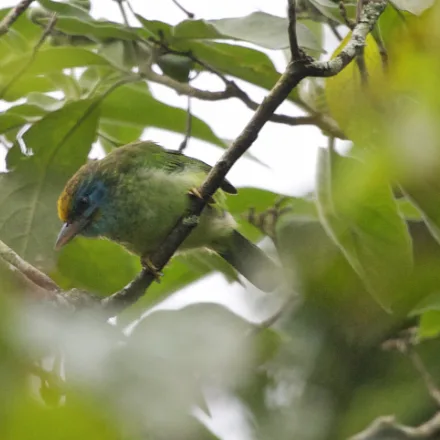
Yellow-fronted Barbet Common
Psilopogon flavifrons
A green barbet with a yellow forehead and blue face that calls all day from somewhere you cannot find it.
Where: Fruiting trees along the trails. Best: Year round. Look at fruit rather than tracking the call, which leads people in circles.
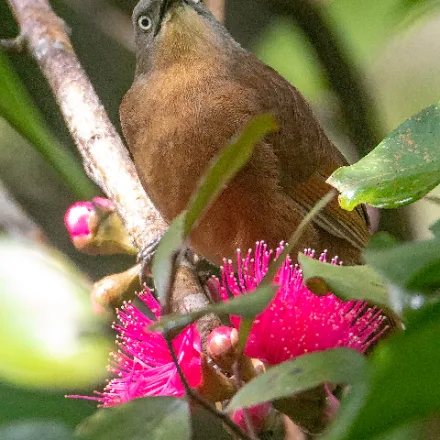
Ashy-headed Laughingthrush Regular Near Threatened
Argya cinereifrons
The other half of the Sinharaja flock's core, and the one that keeps to the ground where you cannot see it.
Where: Ground and low undergrowth with the feeding flock. Best: Year round, morning. Works the lowest layer while the babblers work higher, so it is the harder half of the flock core to see.
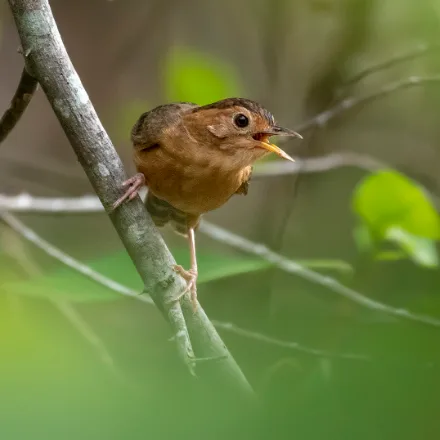
Brown-capped Babbler Regular
Pellorneum fuscocapillus
A ground babbler that sings a clear rising three-note whistle from inside a thicket and refuses to come out.
Where: Undergrowth beside the trails. Best: Year round, morning. Patience at a gap in the thicket is the only method.
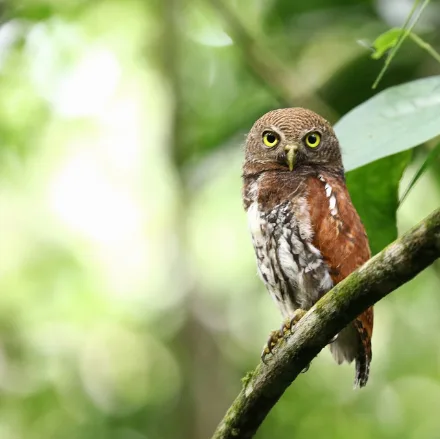
Chestnut-backed Owlet Regular
Glaucidium castanotum
A tiny chestnut owl that hunts in daylight, which makes it the one owl on the island you can reasonably expect to see.
Where: Exposed branches in the mid canopy, often being mobbed. Best: Year round, morning. A sudden commotion of babblers and bulbuls in one tree is worth investigating.
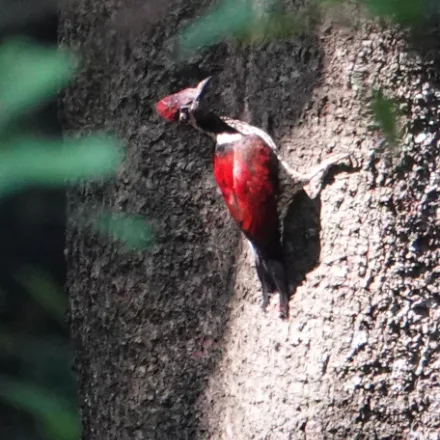
Crimson-backed Flameback Regular
Chrysocolaptes stricklandi
A big crimson woodpecker that hammers so hard you hear it before you see the tree move.
Where: Large trunks along the trails. Best: Year round. You hear the hammering before you see the tree move.
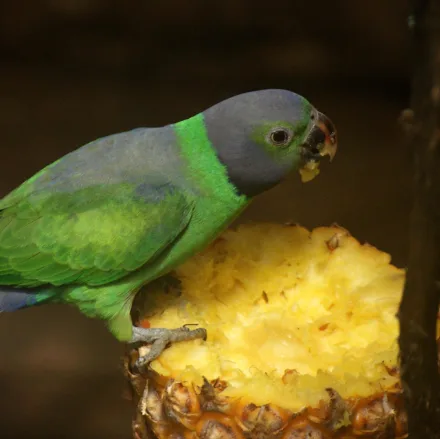
Layard's Parakeet Regular
Psittacula calthrapae
A bluish-grey parakeet with a green collar and a coral bill, and the only parakeet on the island you cannot see anywhere else.
Where: Small flocks between fruiting trees along the entrance road. Best: Year round. Noisy, and usually seen in flight before it is seen perched.
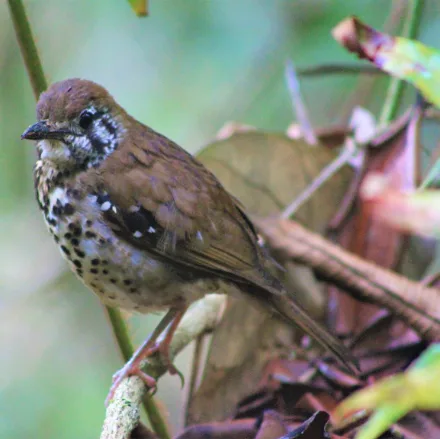
Spot-winged Thrush Regular Near Threatened
Geokichla spiloptera
The best singer in Sri Lankan forest, and it does it at first light from the understorey.
Where: Low branches and litter along the trails, singing before light. Best: Year round, dawn. Be on a trail before first light. The song carries and usually leads to the bird.
Sri Lanka Blue Magpie Regular Vulnerable
Urocissa ornata
Cobalt and chestnut with a blood-red bill, and it comes to look at you rather than the other way round.
Where: The research station trail and the Kudawa entrance road, often with the mixed feeding flock. Best: Year round, first three hours after dawn. Bold enough to work the trail edge a few metres away. Wait for the flock rather than chasing the bird.
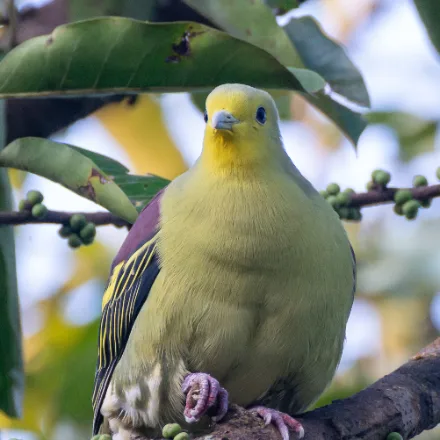
Sri Lanka Green Pigeon Regular
Treron pompadora
A pigeon the colour of a lime leaf, sitting motionless in a fig until it moves and gives itself away.
Where: Figs along the entrance road and the trails. Best: Year round. Look at fig trees for longer than feels reasonable. It is good advice for half this list.
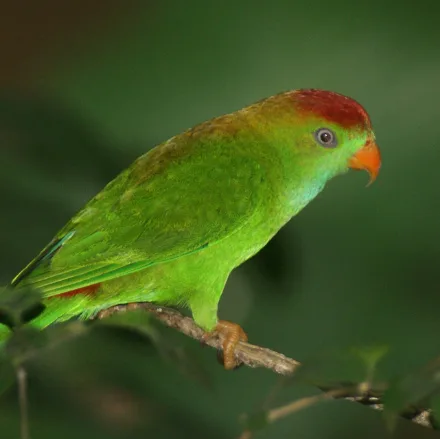
Sri Lanka Hanging Parrot Regular
Loriculus beryllinus
A sparrow-sized green parrot with a crimson crown that sleeps upside down like a bat.
Where: Flowering and fruiting trees, often overhead in fast flocks. Best: Year round. Find a feeding tree and wait. The upside down roosting is real and worth watching for.
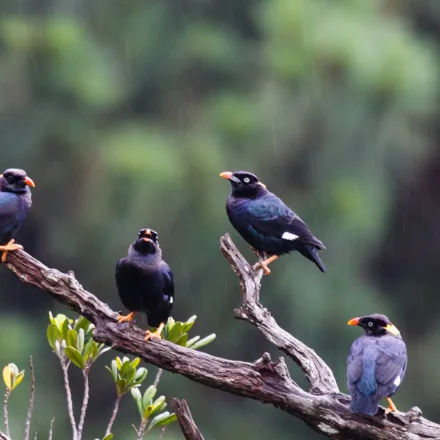
Sri Lanka Hill Myna Regular Near Threatened
Gracula ptilogenys
Glossy black with orange wattles on the nape only, and a voice that carries across a whole valley.
Where: Dead snags above the canopy along the entrance road. Best: Year round, morning. Loud ringing whistle, usually in pairs, usually on the highest bare branch.
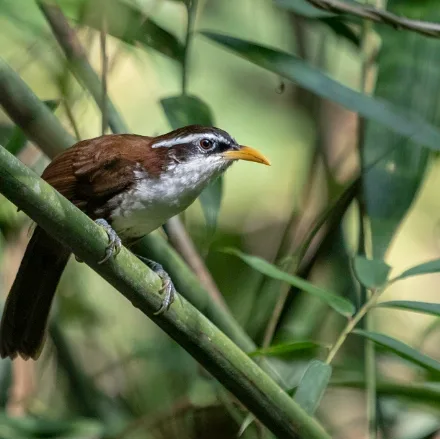
Sri Lanka Scimitar Babbler Regular
Pomatorhinus melanurus
A long curved yellow bill coming through the undergrowth, usually attached to a bird you only half see.
Where: Low layers of the mixed feeding flock. Best: Year round, morning. Pairs stay within a few metres of each other, so finding one finds both.
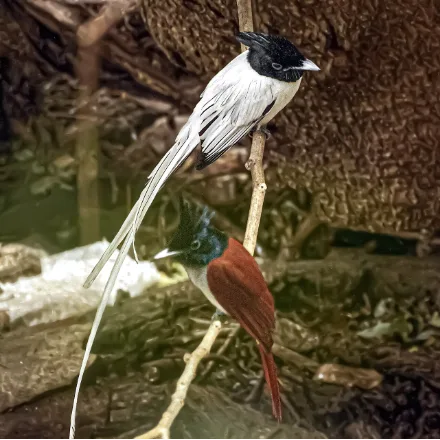
Indian Paradise Flycatcher Occasional
Terpsiphone paradisi
The adult male grows tail streamers three times the length of his own body and trails them through the canopy like ribbon.
Where: Mid canopy along the trails, often in the mixed species feeding flocks. Best: Year round. Being in the flock when a long-tailed male crosses the trail is one of the moments people remember.
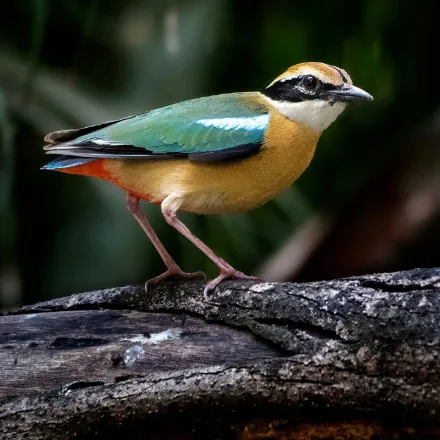
Indian Pitta Occasional
Pitta brachyura
Nine colours on a ground bird the size of a thrush, and it arrives every October to spend the winter hopping about in leaf litter.
Where: Leaf litter along the lower trails and forest edge. Best: Nov-Mar, early morning. Listen for the whistled two note call, which is how almost everyone finds it.
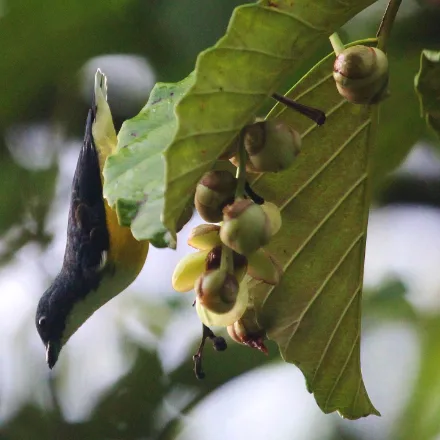
Legge's Flowerpecker Occasional Near Threatened
Dicaeum vincens
A thumb-sized endemic that spends its life in the canopy and is usually a white flash going the other way.
Where: Flowering and fruiting canopy trees. Best: Year round. Find a tree in fruit and watch it. Walking will not produce this bird.
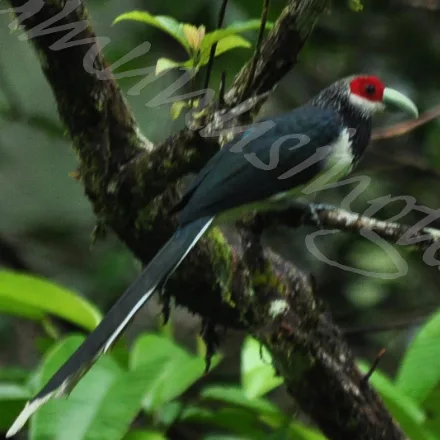
Red-faced Malkoha Occasional Vulnerable
Phaenicophaeus pyrrhocephalus
A long-tailed cuckoo with a bare crimson face that slips through the canopy in silence, and the bird most Sinharaja trips fail on.
Where: High in the canopy with the mixed feeding flock, research station area. Best: Year round, morning. Find the flock, then work upwards. It clambers slowly in the top layer and is missed by anyone scanning at eye level.
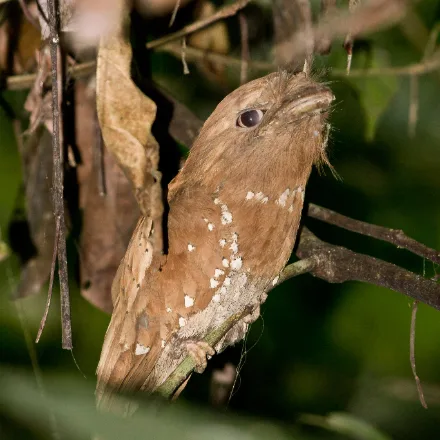
Sri Lanka Frogmouth Occasional
Batrachostomus moniliger
A bird that looks like a broken branch, sits still all day within arm's reach, and is invisible until someone points at it.
Where: Known day roosts in the buffer forest. Best: Year round. Pairs press together on a low branch and rely on not being noticed. Close views once found.
Green-billed Coucal Rare Vulnerable
Centropus chlororhynchos
A heavy, skulking coucal with an apple-green bill, and one of the hardest endemics on the island to actually see.
Where: Thickets beside the research station trail and the Kudawa road. Best: Year round, dawn for the call. Check the bill: apple green, not black. Usually a call rather than a bird.
Serendib Scops Owl Rare Endangered
Otus thilohoffmanni
Found by its call in 2001 and described in 2004, the first new bird species discovered in Sri Lanka for over a century.
Where: Dense understorey thicket near known day roosts. Best: Year round, dusk for the call. Entirely dependent on a guide who knows a current roost. Those roosts move and are closely held.
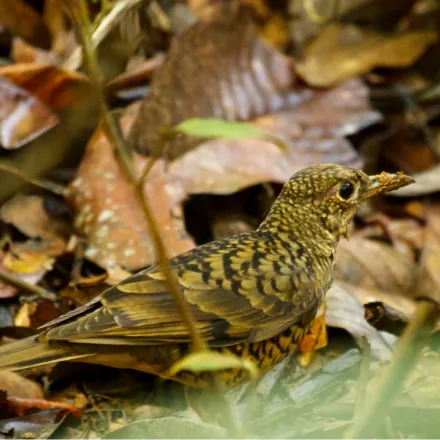
Sri Lanka Scaly Thrush Rare Near Threatened
Zoothera imbricata
A big scaly-patterned thrush that works the forest floor in deep shade and vanishes the moment it knows you are there.
Where: Shaded forest floor away from the main trails. Best: Year round, first hour of light. Encounters are brief. Quiet walking in the first hour is the only realistic window.
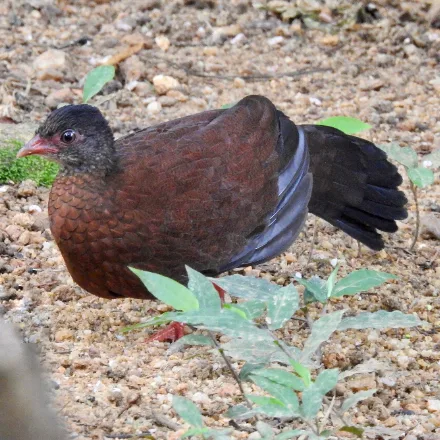
Sri Lanka Spurfowl Rare
Galloperdix bicalcarata
Heard on every Sinharaja morning and seen on almost none: a skulking forest gamebird that calls loudly and shows itself never.
Where: Thick undergrowth beside the trails, calling at first light. Best: Year round, dawn. Genuine sightings are usually a bird crossing a trail at distance in poor light. Expect to hear it and not see it.
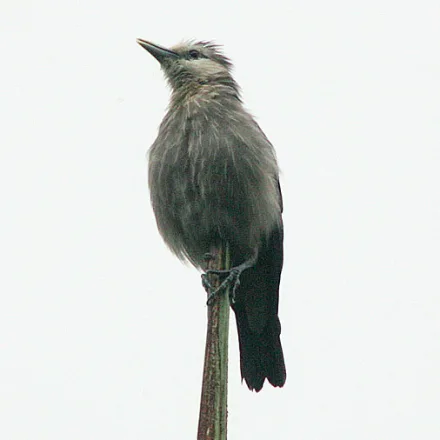
White-faced Starling Rare Endangered
Sturnornis albofrontatus
A canopy starling with a white face, confined to a shrinking scrap of rainforest and genuinely hard to catch up with.
Where: Fruiting canopy trees viewed from a vantage point rather than from beneath. Best: Year round. Most visitors leave without it. Watch into the crown, not up through it.
Reptiles
14 species
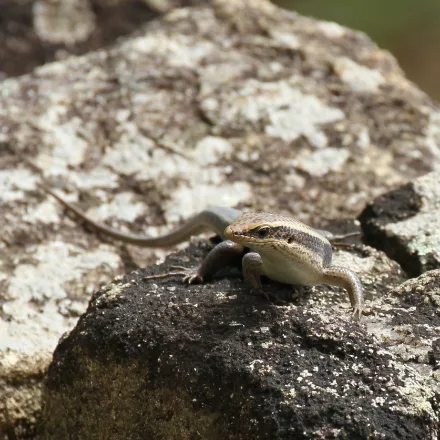
Common Lanka Skink Common
Lankascincus fallax
The little bronze skink that shoots out from under every leaf you turn at Sinharaja belongs to a genus found nowhere but this island.
Where: Litter along every trail at Kudawa and Pitadeniya. Best: Year round.
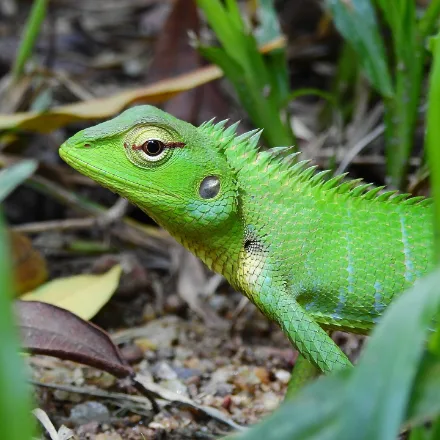
Green Forest Lizard Common
Calotes calotes
The biggest lizard in the trees here, and in the breeding season the male's head and throat turn crimson.
Where: Trunks and low branches along every trail. Best: Year round. Breeding males hold the crimson head for weeks, so it is a realistic target.
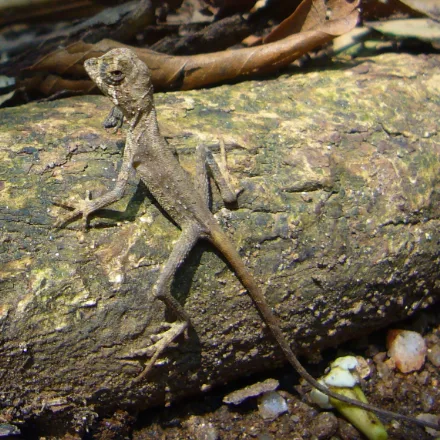
Kangaroo Lizard Common
Otocryptis wiegmanni
An endemic lizard that runs away on its back legs like a tiny dinosaur, then freezes halfway up a sapling and dares you to find it again.
Where: Trail edges and stream banks at Kudawa and Pitadeniya. Best: Year round. One of the most frequently encountered lizards on the trails. Watch for the bipedal sprint.
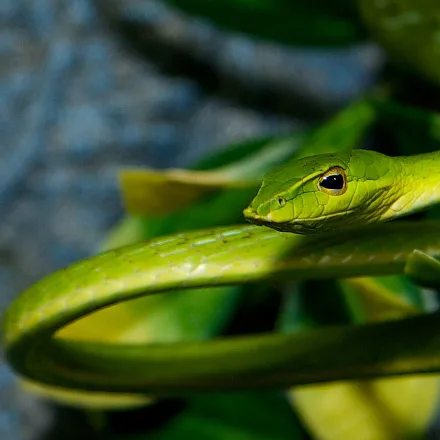
Green Vine Snake Regular
Ahaetulla nasuta
A snake shaped like a hanging creeper, with a horizontal keyhole pupil that lets it judge distance like a bird of prey.
Where: Hanging in bushes at eye level along the Kudawa and Pitadeniya trails. Best: Year round, daytime. Look for a green creeper that is swaying when nothing else is.
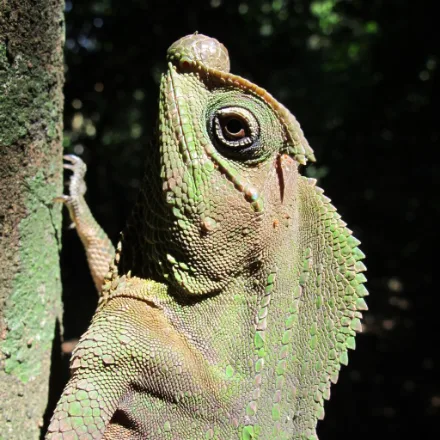
Hump-nosed Lizard Regular Vulnerable
Lyriocephalus scutatus
The only member of its genus anywhere on earth, with a bulbous knob on its nose and a bony lyre across its skull, and it is slow enough to photograph properly.
Where: Understorey and thin twigs along the Pitadeniya and Kudawa trails; sleeping animals on night walks. Best: January to March and July to August. Pitadeniya is the classic corner. It moves slowly enough to photograph properly.
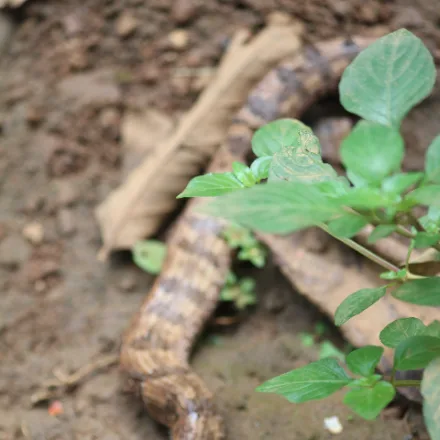
Hump-nosed Pit Viper Regular
Hypnale hypnale
The commonest cause of snakebite in Sri Lanka, and small enough to sit unnoticed in leaf litter.
Where: Trail edges and litter on guided night walks around Kudawa and Pitadeniya. Best: Year round, night.
Kandyan Day Gecko Regular Endangered
Cnemaspis kandiana
One of more than forty day geckos on this island, every single one of them found nowhere else, and they work rock faces in daylight instead of hunting at night.
Where: Boulders and tree buttress roots along the Kudawa trails. Best: Year round, morning. Seeing a Cnemaspis is easy. Naming it to species is not.
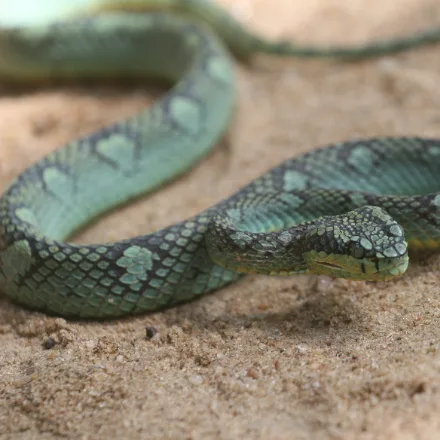
Sri Lankan Green Pit Viper Regular
Trimeresurus trigonocephalus
An endemic green viper that hangs at eye level in the rainforest at night, and the one snake most visiting naturalists actually come away with.
Where: Branches over the trails at Kudawa and Pitadeniya on a guided night walk. Best: Year round, night. Sits still at eye level, which is why it photographs so well.
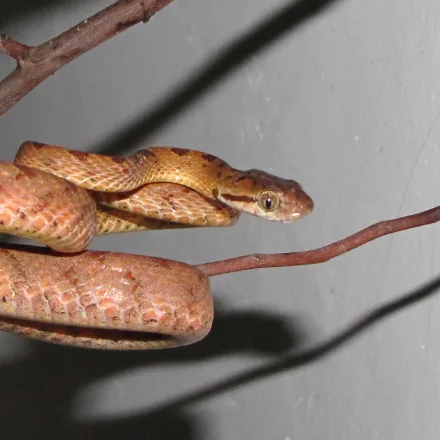
Sri Lankan Cat Snake Occasional
Boiga ceylonensis
An endemic night hunter with a broad flat head on a neck like a pencil, and it comes into guesthouses to hunt the geckos on your wall.
Where: Branches and buildings around the Kudawa research station on night walks. Best: Year round, night.
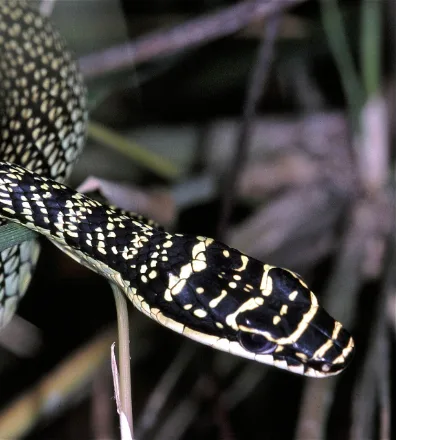
Golden Tree Snake Rare
Chrysopelea ornata
A fast, elegant climber that can also glide, and one of the most common snakes seen in Thai gardens and temples.
Where: Buffer zone gardens and forest edge. Best: Year round, daytime.
Large Shieldtail Rare Vulnerable
Rhinophis saffragamus
A burrowing snake that has turned its tail into a shield, and there are twenty species of them on this island and nowhere else.
Where: Soil banks and tea smallholdings on the buffer zone margins, after rain. Best: May to September and October to November, after heavy rain.
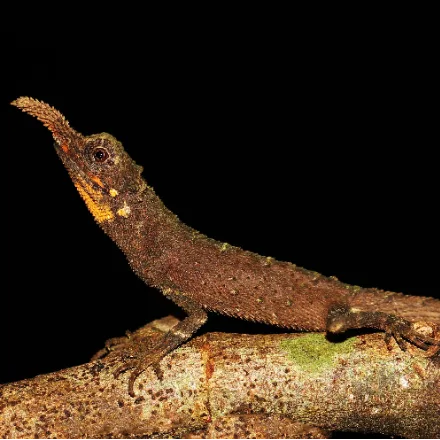
Rough-horned Lizard Rare Endangered
Ceratophora aspera
A horned lizard the length of a finger, living in the leaf litter of the lowland rainforest and shaped exactly like a dead leaf.
Where: Litter along the Kudawa research station trails and in the Pitadeniya sector. Best: January to early April. Days rather than hours, and only with a guide who works the litter.
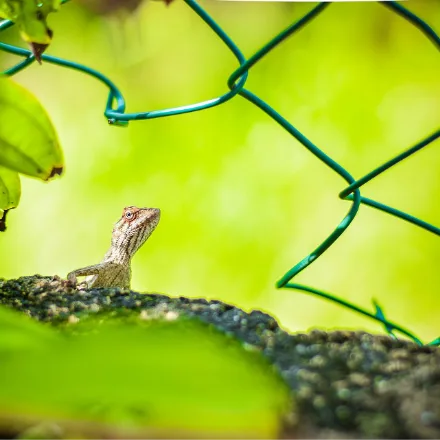
Whistling Lizard Rare
Calotes liolepis
The only lizard in Sri Lanka that whistles at you, which is just as well, because otherwise you would never find it.
Where: High on trunks in the forest around Kudawa. Best: January to March.
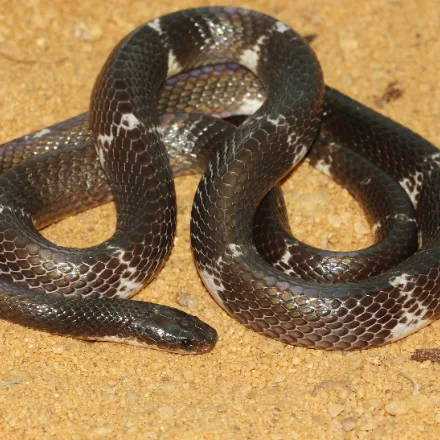
Sri Lankan Krait Very rare Near Threatened
Bungarus ceylonicus
An endemic krait of the wet zone hills that has bitten perhaps six people in recorded history.
Where: Forest edge and buffer zone gardens, on guided night walks. Best: Year round, night. A good year for a resident guide, not a target for a visitor.
Amphibians
15 species
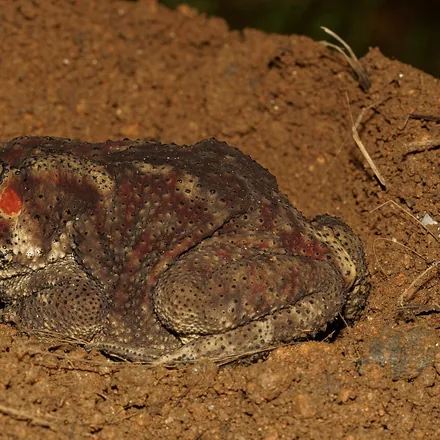
Asian Common Toad Common
Duttaphrynus melanostictus
The ubiquitous warty toad of doorsteps and gardens, hoovering up insects under every night light.
Where: Buffer zone gardens and the Kudawa approach, but not inside closed forest. Best: Year round, night. Its absence from primary forest is diagnostic in itself.
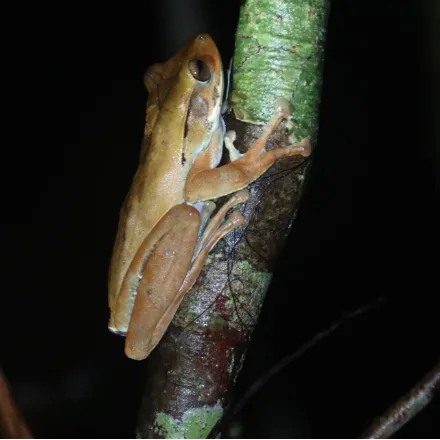
Common Hourglass Tree Frog Common
Polypedates cruciger
The endemic frog most visitors meet first, usually sitting on a bathroom wall rather than in a forest.
Where: Buffer zone lodges, outbuildings and forest edge vegetation. Best: Year round, night. The single most reliable endemic frog in the country.
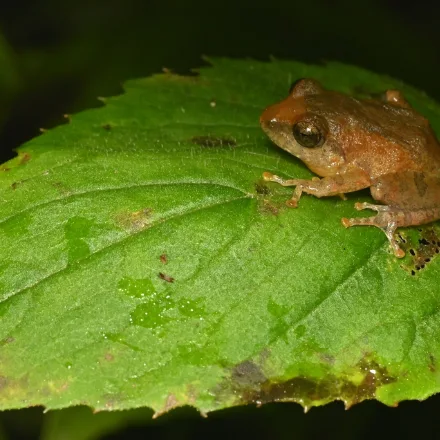
Common Shrub Frog Common Vulnerable
Pseudophilautus popularis
The thin high call you take for a cricket at dusk is usually this, and it is the first endemic frog most visitors meet without knowing it.
Where: Low vegetation along the Kudawa approach and buffer zone on a guided night walk. Best: May to September and October to November, after dark. Listen at knee height. The call is thin and high and sounds like an insect.
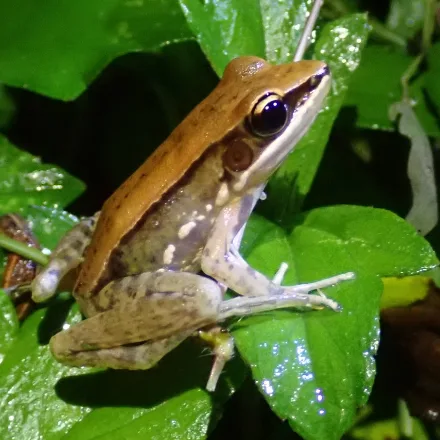
Sri Lanka Wood Frog Common
Hydrophylax gracilis
The most catchable endemic frog in Sri Lankan farmland, and it will climb a stem over water then drop straight in when you get close.
Where: Buffer zone paddy, ditches and stream margins. Best: Year round, night. It climbs a stem over water then drops straight in. Watch the water, not the plant.
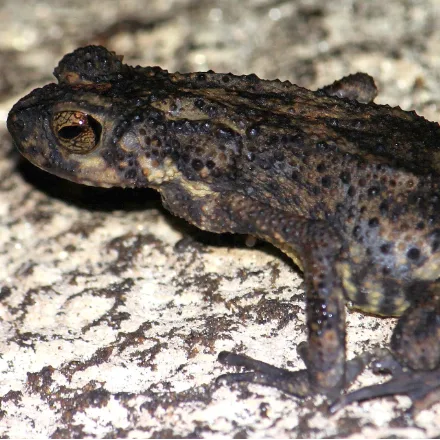
Kelaart's Dwarf Toad Regular Vulnerable
Adenomus kelaartii
An endemic toad in an endemic genus that is active by day, which makes it the one you can find on an afternoon walk rather than a night one.
Where: Stream margins and midstream boulders along the Kudawa and Pitadeniya trails. Best: May to September and October to November. Males call from boulders in midstream. Follow the sound to the rock.
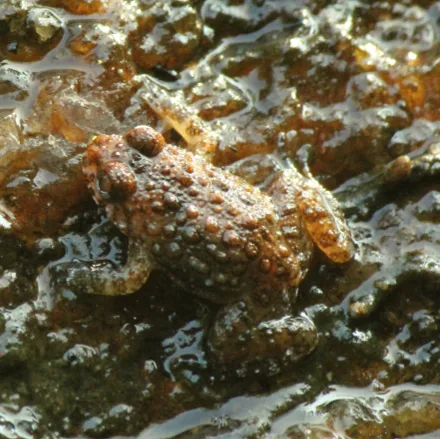
Sri Lanka Rock Frog Regular Vulnerable
Nannophrys ceylonensis
Its tadpoles do not swim. They crawl about on wet rock beside the torrent, grazing in a film of water a few millimetres deep, and the male guards the eggs.
Where: Wet rock beside the waterfalls and fast stream sections. Best: May to September and October to November, night. Work the wet stone beside the falls, not the water itself. The tadpoles are on the rock too.
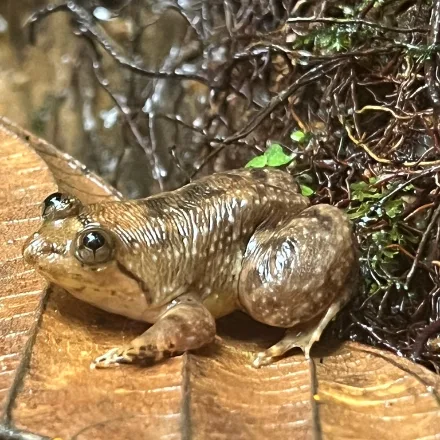
Corrugated Water Frog Occasional Near Threatened
Lankanectes corrugatus
An ancient relict in a lineage found nowhere else on earth, and it was the only member of its genus until a second one turned up in 2018.
Where: Marsh edges and slow water in the buffer zone at night. Best: May to September, night.
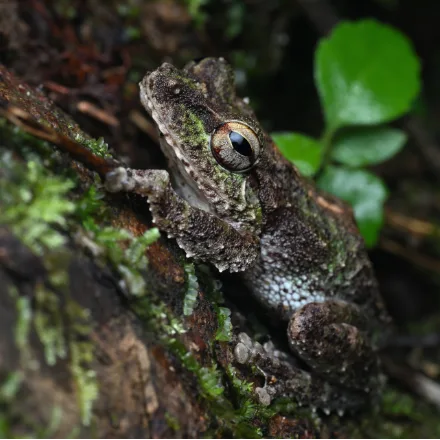
Hollow-snouted Shrub Frog Occasional Vulnerable
Pseudophilautus cavirostris
Look at it side on and the snout is visibly scooped out, as though someone had pressed a thumb into it.
Where: Understorey foliage on guided night walks in the buffer zone. Best: May to September, after dark. Check the snout in profile. The scoop is the whole identification.
Sri Lanka Pug-snout Frog Occasional Near Threatened
Uperodon obscurus
A frog that eats almost nothing but ants and termites, which is what the absurdly narrow mouth is actually for.
Where: Buffer zone forest floor and garden edges on night walks. Best: May to September, night.
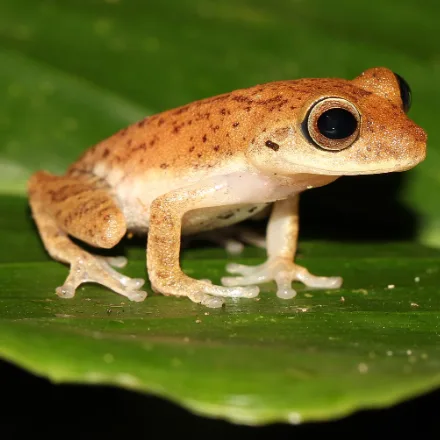
Golden Shrub Frog Rare Endangered
Pseudophilautus auratus
Genuinely gold in torchlight, which in a genus of browns and greys is the whole point.
Where: Deep forest foliage well beyond the trail head, with a guide who works the interior. Best: May to September, after dark. Gold in a torch beam among a genus of browns.
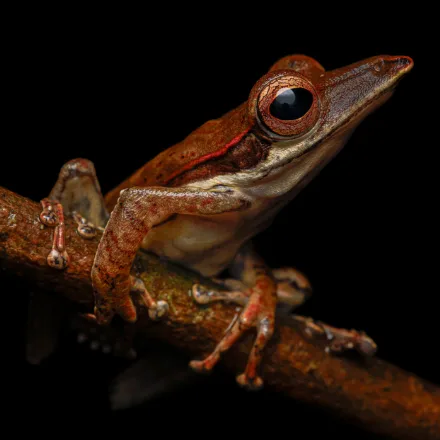
Southern Whipping Frog Rare Endangered
Taruga longinasus
A lowland outlier in a mountain genus, and its scattered range is the ghost of a wet forest belt that no longer joins up.
Where: Vegetation over lowland stream pools, with a specialist guide. Best: May to September, night.
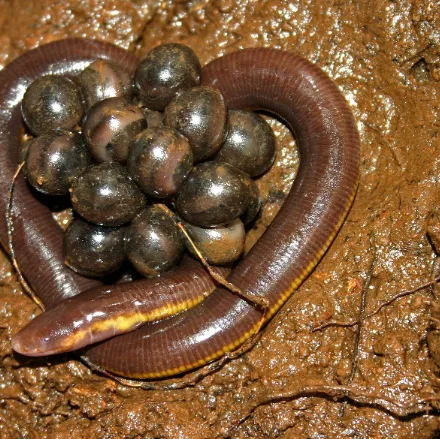
Ceylon Caecilian Very rare Vulnerable
Ichthyophis glutinosus
A limbless amphibian that looks like an earthworm, hunts by tentacle, and coils around its eggs underground until they hatch.
Where: Under rotting logs and in damp soil banks in the buffer zone. Best: May to September, after heavy rain.
Nagao's Pug-snout Frog Very rare Endangered
Uperodon nagaoi
Its entire life cycle happens in a few hundred millilitres of rainwater trapped in a rotting trunk.
Where: Old growth trees with water filled hollows, with a specialist. Best: May to September, night.
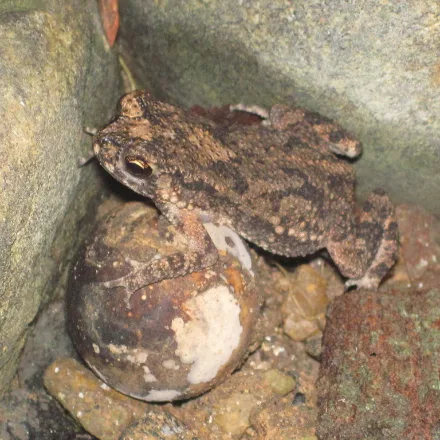
Noellert's Toad Very rare Critically Endangered
Duttaphrynus noellerti
It moved from Endangered to Critically Endangered between assessments, which makes it the clearest single marker of what is happening to the lowland wet zone.
Where: Lowland rainforest floor, with a specialist guide and considerable luck. Best: May to September, night.
Taylor's Caecilian Very rare Vulnerable
Ichthyophis pseudangularis
Sri Lanka's three caecilians are told apart mainly by counting the rings around the body, which is not a technique anyone would guess at.
Where: Damp soil banks near water in the buffer zone. Best: May to September, after heavy rain.
Fish
8 species
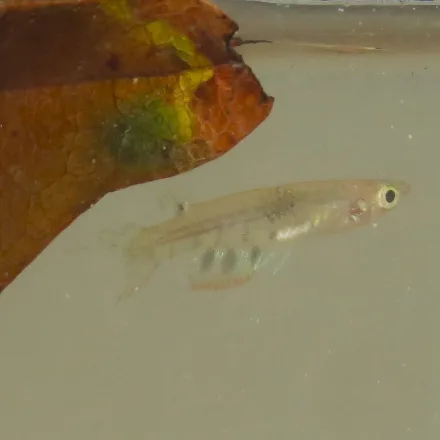
Ceylon Killifish Regular
Aplocheilus dayi
Hangs motionless at the surface with an iridescent green spot between its eyes, which is how you find it.
Where: Still backwaters and roadside ditches in the buffer zone. Best: Year round.
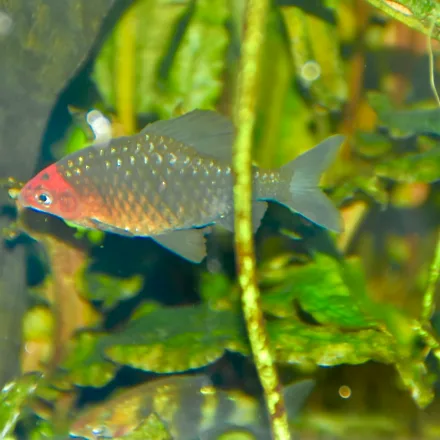
Black Ruby Barb Occasional
Pethia nigrofasciata
A grey fish for eleven months of the year that turns crimson and jet black to breed.
Where: Gravel-bedded runs in the buffer zone. Best: May to September.
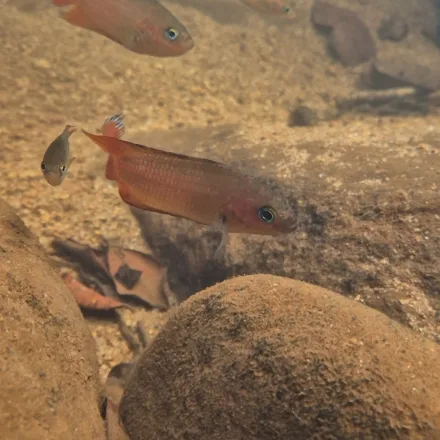
Ceylon Combtail Occasional
Belontia signata
A gourami that breathes air, guards a nest of bubbles and will see off a fish twice its size.
Where: Still pools and backwaters in the buffer zone streams. Best: January to March.
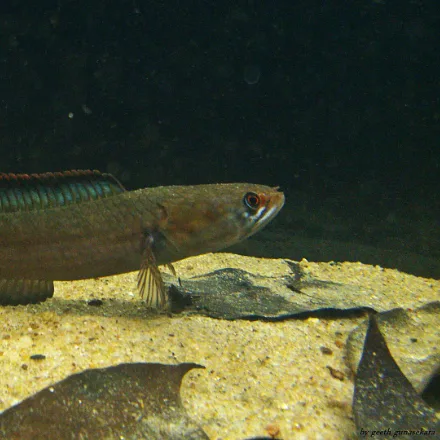
Ceylon Snakehead Occasional Vulnerable
Channa orientalis
A snakehead with no pelvic fins at all, found only in Sri Lanka's wet zone streams.
Where: Shaded stream margins and undercut banks in the buffer zone. Best: January to March and July to September.
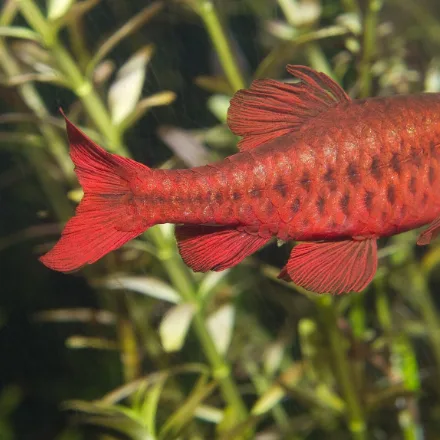
Cherry Barb Occasional Vulnerable
Rohanella titteya
One of the most widely kept aquarium fish on earth, and it lives wild in about a dozen shaded streams on one island.
Where: Slow shaded stretches of the buffer zone streams. Best: January to March and July to September.
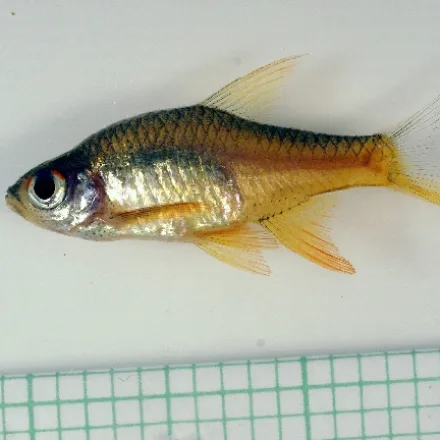
Fire Rasbora Occasional Endangered
Rasboroides vaterifloris
A shoal of these in a shaft of forest light is the reason the Victorians called it the pearly rasbora.
Where: Slow shaded streams and pools in the buffer zone. Best: May to September and January to March.
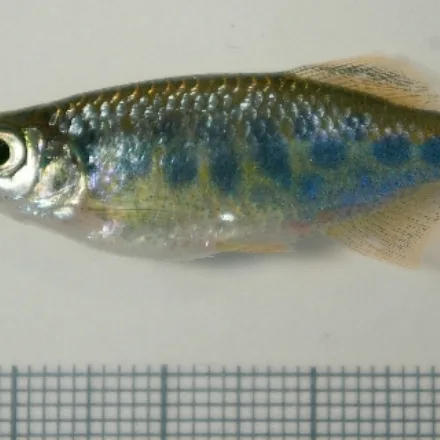
Barred Danio Rare Endangered
Devario pathirana
Described only in 1990, and known from a handful of streams in one river basin.
Where: Fast shaded runs on the southern side towards Deniyaya. Best: January to March and July to September. The Deniyaya approach sits at the edge of the only basin this fish occurs in.
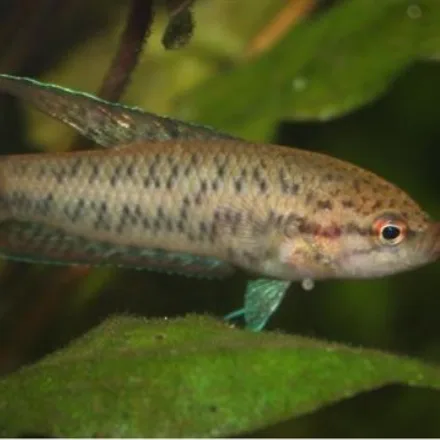
Ornate Paradisefish Rare Endangered
Malpulutta kretseri
The only species in its genus, anywhere, and it lives in shaded puddles of a stream in one corner of one island.
Where: Slow shaded seepages and leaf-littered shallows in the buffer zone. Best: January to March.
Insects
9 species
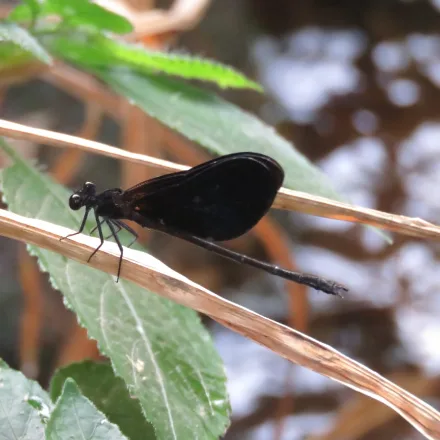
Shining Gossamerwing Regular
Euphaea splendens
Black wings that flash metallic blue-green as the male turns in a shaft of light over a forest stream.
Where: Rocky stream sections in the buffer zone, at sunlit breaks in the canopy. Best: January to March and July to September.
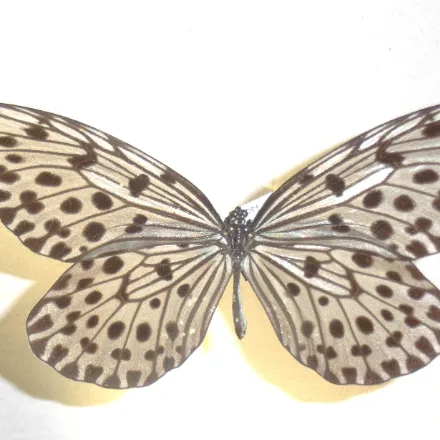
Ceylon Tree Nymph Occasional
Idea iasonia
Drifts through the forest like a sheet of paper caught in a current, and barely seems to fly at all.
Where: Canopy gaps along the buffer zone trails. Best: January to March and July to September.
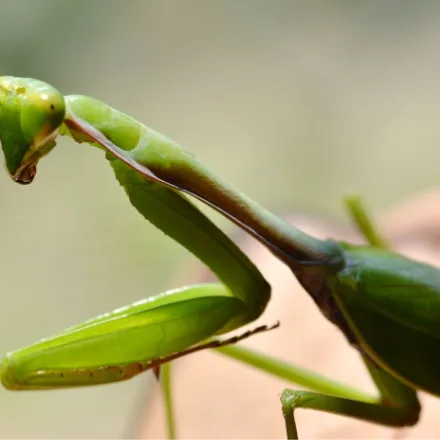
Giant Asian Mantis Occasional
Hierodula membranacea
A big green ambush hunter that turns its head to watch you, forelegs folded as if in prayer.
Where: Low vegetation and lit buildings in the buffer zone at night. Best: May to September, night.
Sri Lanka Birdwing Occasional
Troides darsius
The largest butterfly on the island, the size of a small bird, and it lives nowhere else.
Where: Canopy gaps and the forest edge along the buffer zone road. Best: January to March and July to September.
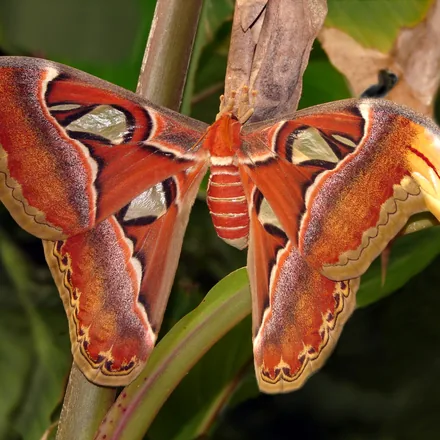
Atlas Moth Rare
Attacus atlas
One of the largest moths on Earth, its wingtips shaped and coloured like a cobra's head.
Where: Lit buildings and forest edge in the buffer zone. Best: October to December, night.
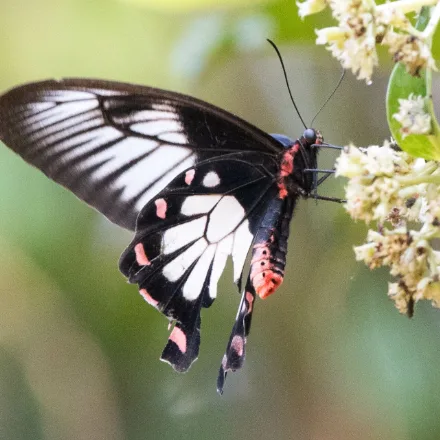
Ceylon Rose Rare Critically Endangered
Pachliopta jophon
Critically Endangered, endemic, and confined to the shrinking rainforest of one corner of the island.
Where: Slow flight along the buffer zone trails and canopy gaps. Best: January to March and July to September.
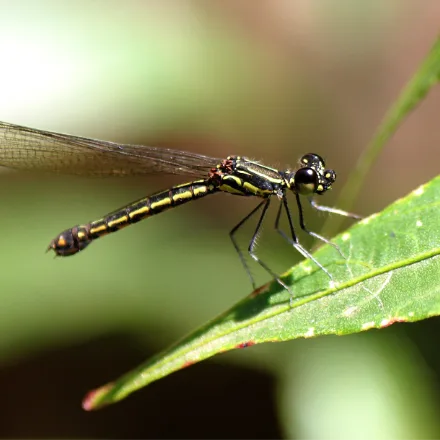
Green's Gem Rare
Libellago greeni
A damselfly the length of a fingernail, endemic to a handful of rainforest streams.
Where: Rocky stream sections in the buffer zone. Best: January to March and July to September.
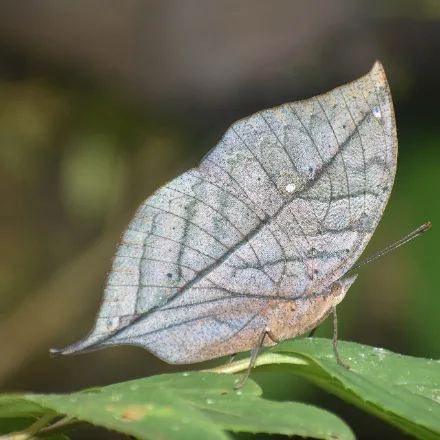
Sri Lanka Blue Oakleaf Rare
Kallima philarchus
Electric blue and orange in flight, and a dead leaf complete with midrib and fungal blotches the moment it lands.
Where: Leaf litter and fallen fruit along the buffer zone trails. Best: January to March and July to September.
No free photograph of the Sri Lanka blue oakleaf exists. The image shows the scarce blue oakleaf, Kallima knyvettii, a close relative photographed in southern India.
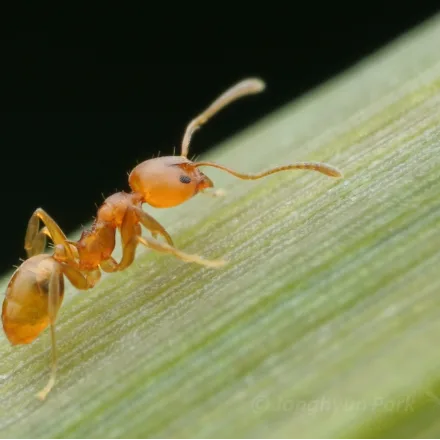
Sri Lanka Relict Ant Ultra rare Critically Endangered
Aneuretus simoni
The only surviving species of an entire subfamily of ants, and it lives in the leaf litter of one island.
Where: Leaf litter and rotting twigs inside the forest, in undisturbed patches. Best: Year round.
Spiders and scorpions
2 species
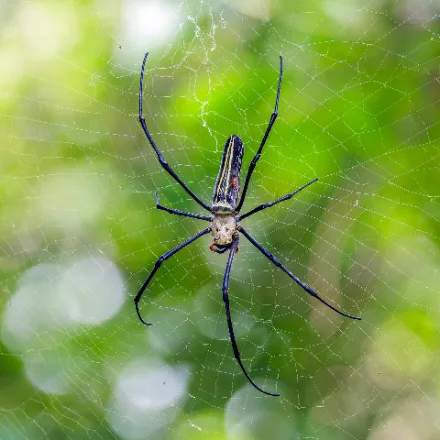
Golden Orb-weaver Common
Nephila pilipes
A giant black-and-yellow spider spinning webs of golden silk strong enough to snare small birds.
Where: Across the buffer zone trails and canopy gaps. Best: August to December for the largest females.
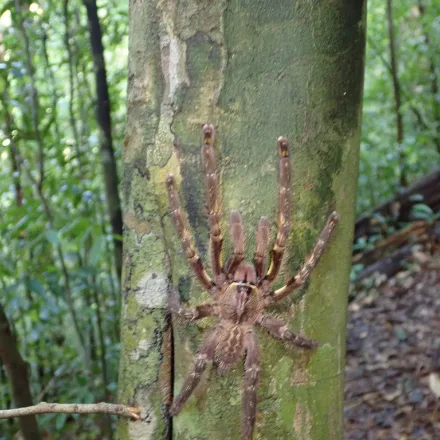
Fringed Ornamental Tarantula Rare
Poecilotheria ornata
A tarantula the size of a dinner plate that lives in tree holes and sometimes shares them with a frog.
Where: Tree cavities along the buffer zone trails, on a night walk. Best: January to March and July to September, night.
Molluscs
1 species
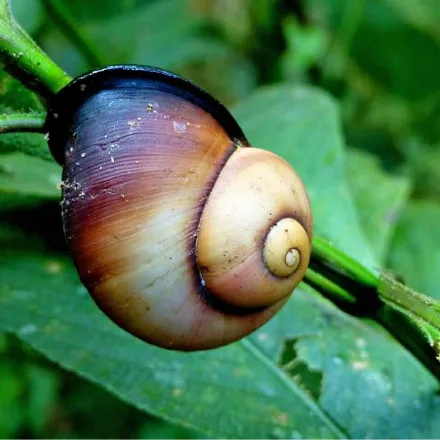
Sri Lanka Tree Snail Occasional
Acavus phoenix
A snail the size of a plum, banded like a boiled sweet, that lives its whole life in the canopy.
Where: Trunks and low branches along the buffer zone trails after rain. Best: May to September.
Crustaceans
1 species
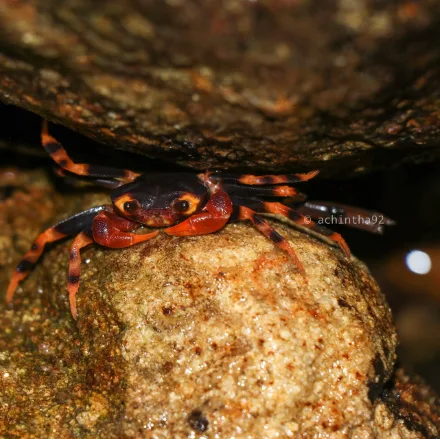
Sri Lanka Tree Crab Very rare
Perbrinckia scansor
A freshwater crab that lives up a tree, in rainwater trapped in a hollow trunk, and only comes down to breed.
Where: Water-filled hollows in large trees in the Kalu and Gin basins. Best: February and March for ground-level females.
Planning
January to April and August to September are the drier windows, and dry matters here because the leeches are relentless and the trails are steep clay. A local guide is compulsory at the entrances and is also the single biggest difference between seeing four endemics and seeing twenty, because the guides know where the roosts and the flock routes are on the day. Kudawa is the usual northern entrance and Pitadeniya the southern one, and the buffer zone outside the reserve is where night walking is permitted, which is where most of the herpetofauna on this page is actually found. Bring leech socks and expect rain in any month. This forest is small and the understorey is what everything lives in.
Compare guided rainforest walks, birding days and night walks for Sinharaja
Some links on this page are affiliate links. If you book through them, Wildseer may earn a small commission at no extra cost to you.
Frequently asked questions
What wildlife can you see in Sinharaja?
Twenty of Sri Lanka’s endemic birds are realistic here, led by the Sri Lanka blue magpie, orange-billed babbler, ashy-headed laughingthrush and Layard’s parakeet. Add purple-faced langur, an exceptional endemic frog and lizard list, hump-nosed and green pit vipers, ornamental tarantulas and, at night, the golden palm civet.
Do you need a guide for Sinharaja?
Yes, a local guide is required at the entrances, and it is not a formality. The endemics move with the mixed feeding flock and sit at known roosts, and finding either without someone who was in the forest yesterday is largely luck.
When is the best time to visit Sinharaja?
January to April and August to September, the two drier spells. It is rainforest, so plan for rain in any month and treat a dry morning as a bonus rather than an entitlement.
Can you see leopards in Sinharaja?
Effectively no. Leopards exist in the wet zone forests but are almost never seen in closed rainforest. Sinharaja is a birding and herpetology forest, and the mammal to look for at night is the golden palm civet, which lives nowhere else on earth.
Explore Sri Lanka wildlife by group
 Mammals of Sri Lanka
 Birds of Sri Lanka
 Reptiles and amphibians of Sri Lanka
 Fish of Sri Lanka
 Sharks and rays of Sri Lanka
 Reef invertebrates of Sri Lanka
 Insects and spiders of Sri Lanka
Part of the Wildlife in Sri Lanka guide.
Explore Sri Lanka wildlife by place
- Adams Peak wildlife
- Arugam Bay marine life
- Bundala wildlife
- Colombo wildlife
- Ella wildlife
- Gal Oya wildlife
- Great Basses marine life
- Hikkaduwa marine life
- Horton Plains wildlife
- Jaffna wildlife
- Kalpitiya marine life
- Kandy wildlife
- Kanneliya wildlife
- Kitulgala wildlife
- Knuckles wildlife
- Kumana wildlife
- Mannar marine life
- Minneriya wildlife
- Mirissa marine life
- Rekawa marine life
- Sigiriya wildlife
- Tangalle marine life
- Trincomalee marine life
- Udawalawe wildlife
- Wasgamuwa wildlife
- Wilpattu wildlife
- Yala wildlife
Image credits
Square thumbnails are cropped from the original. Wide banner images are cropped to a band. Other images are resized only. No other changes have been made.
- Sri Lanka Blue Magpie: Gerry Zambonini | CC BY-SA 2.0, cropped
- Serendib Scops Owl: Kasun withanage | CC BY-SA 4.0, cropped
- Green-billed Coucal: Amila Tennakoon | CC BY 2.0, cropped
- Golden Palm Civet: Pieter Prins | CC BY-SA 4.0, cropped
- Sri Lanka Birdwing: Janith Pramuditha | CC BY-SA 4.0, cropped
- Toque Macaque: Ji-Elle | CC BY-SA 3.0, cropped
- Purple-faced Langur: Jeroen84 | CC BY-SA 3.0, cropped
- Black-capped Bulbul: Thimindu Goonatillake from Denver, USA | CC BY-SA 2.0, cropped
- Orange-billed Babbler: Iain Robson from UK | CC BY 2.0, cropped
- Sri Lanka Drongo: William Stephens | CC BY 4.0, cropped
- Sri Lanka Grey Hornbill: Pinkstg | CC BY 3.0, cropped
- Sri Lanka Junglefowl: eamonccorbett | CC BY 4.0, cropped
- Yellow-fronted Barbet: Lip Kee Yap from Singapore, Republic of Singapore | CC BY-SA 2.0, cropped
- Ashy-headed Laughingthrush: Punitha Satharasinnghe | CC BY-SA 4.0, cropped
- Brown-capped Babbler: Griha Hasanov | CC BY 4.0, cropped
- Chestnut-backed Owlet: Rangana Abeyrathne | CC BY-SA 4.0, cropped
- Crimson-backed Flameback: Matthew Blissett | CC BY 4.0, cropped
- Layard’s Parakeet: Hafiz Issadeen | CC BY 2.0, cropped
- Spot-winged Thrush: Imasha De Saram | CC BY-SA 4.0, cropped
- Sri Lanka Green Pigeon: Satdeep Gill | CC BY 4.0, cropped
- Sri Lanka Hanging Parrot: Hafiz Issadeen | CC BY 2.0, cropped
- Sri Lanka Hill Myna: Thimindu Goonatillake from Colombo, Sri Lanka | CC BY-SA 2.0, cropped
- Sri Lanka Scimitar Babbler: Punitha Satharasinnghe | CC BY-SA 4.0, cropped
- Indian Paradise Flycatcher: Drsssuresh1961 | CC0, cropped
- Indian Pitta: Navonil Dutta | CC BY-SA 4.0, cropped
- Legge’s Flowerpecker: Sandhillcrane | CC BY-SA 4.0, cropped
- Red-faced Malkoha: Dineth Bamunusingha | CC BY-SA 4.0, cropped
- Sri Lanka Frogmouth: Mike Prince from Bangalore, India | CC BY 2.0, cropped
- Sri Lanka Scaly Thrush: Thimindu Goonatillake from Denver, USA | CC BY-SA 2.0, cropped
- Sri Lanka Spurfowl: Michael Hurben | CC BY-SA 4.0, cropped
- White-faced Starling: Steve Garvie from Dunfermline, Fife, Scotland | CC BY-SA 2.0, cropped
- Common Lanka Skink: Peyman Zehtab Fard | CC BY 2.0, cropped
- Green Forest Lizard: Rehman Abubakr | CC BY-SA 4.0, cropped
- Kangaroo Lizard: Nyanatusita | CC BY-SA 3.0, cropped
- Green Vine Snake: Stephane Lemieux - STEFBYSTEF | CC BY-SA 3.0, cropped
- Hump-nosed Lizard: Nyanatusita | CC BY-SA 3.0, cropped
- Hump-nosed Pit Viper: Praveenp | CC BY-SA 4.0, cropped
- Sri Lankan Green Pit Viper: Gihan Jayaweera | CC BY-SA 3.0, cropped
- Sri Lankan Cat Snake: Jayendra Chiplunkar | CC BY-SA 3.0, cropped
- Golden Tree Snake (cropped to square): Bernard DUPONT from FRANCE | CC BY-SA 2.0, cropped
- Rough-horned Lizard: Buddhika.jm(Buddhika Mawella) | CC BY-SA 4.0, cropped
- Whistling Lizard: Dilma Jayatissa | CC BY-SA 4.0, cropped
- Sri Lankan Krait: Buddhika.jm(Buddhika Mawella) | CC BY-SA 4.0, cropped
- Asian Common Toad (cropped to square): © 2016 Jee & Rani Nature Photography (License: CC BY-SA 4.0) | CC BY-SA 4.0, cropped
- Common Hourglass Tree Frog: Vsevolod Rudyi | CC BY 4.0, cropped
- Common Shrub Frog: Marius Burger | CC0, cropped
- Sri Lanka Wood Frog: Théalie Dhellemmes | CC BY-SA 4.0, cropped
- Kelaart’s Dwarf Toad: Buddhika Mawella ( Buddhika.jm at English Wikipedia ) | CC BY 3.0, cropped
- Sri Lanka Rock Frog: Buddhika.jm | CC BY-SA 3.0, cropped
- Corrugated Water Frog: Sharon Reid | CC BY 4.0, cropped
- Hollow-snouted Shrub Frog: Mvshreeram | CC BY-SA 4.0, cropped
- Golden Shrub Frog: Buddhika.jm(Buddhika Mawella) | CC BY-SA 4.0, cropped
- Southern Whipping Frog: Ioannis Magouras | CC BY 4.0, cropped
- Ceylon Caecilian: Davidvraju | CC BY-SA 4.0, cropped
- Noellert’s Toad: Vsevolod Rudyi | CC BY 4.0, cropped
- Ceylon Killifish: Thuhiru S. Yapa | CC BY 4.0, cropped
- Black Ruby Barb: NasserHalaweh | CC BY-SA 4.0, cropped
- Ceylon Combtail: Jonghyun Park | CC BY 4.0, cropped
- Ceylon Snakehead: Seriousgeeth | CC BY-SA 4.0, cropped
- Cherry Barb: Brian Gratwicke | CC BY 2.0, cropped
- Fire Rasbora: Rupert A. Collins | CC BY 3.0, cropped
- Barred Danio: Rupert A. Collins | CC BY 3.0, cropped
- Ornate Paradisefish: Klaus de Leuw | CC BY-SA 3.0, cropped
- Shining Gossamerwing: Gihan Jayaweera | CC BY-SA 4.0, cropped
- Ceylon Tree Nymph: Notafly | CC BY-SA 3.0, cropped
- Giant Asian Mantis: Sophy Chen | Pexels Licence, cropped
- Atlas Moth (cropped to square): Nevit Dilmen | CC BY-SA 3.0, cropped
- Ceylon Rose: 松井 淳 | CC0, cropped
- Green’s Gem: Buddhika.jm | CC BY 3.0, cropped
- Sri Lanka Blue Oakleaf: MaheshBaruahwildlife | CC BY-SA 4.0, cropped
- Sri Lanka Relict Ant: Jonghyun Park | CC BY 4.0, cropped
- Golden Orb-weaver (resized): Charles J. Sharp | CC BY-SA 4.0, cropped
- Fringed Ornamental Tarantula: Théalie Dhellemmes | CC BY-SA 4.0, cropped
- Sri Lanka Tree Snail: Moni Ostermaier | CC BY-SA 4.0, cropped
- Sri Lanka Tree Crab: (c) achintha92, some rights reserved (CC BY) | CC BY 4.0, cropped
- Purple-faced langur in the canopy: kanchana Amilani | Unsplash License, cropped
- White-throated kingfisher on a branch: kanchana Amilani | Unsplash License, cropped
- Green forest lizard in breeding colour: Anas Mohamed Nuski | Pexels Licence, cropped
- Bluestripe snapper over a reef: Jeffry Surianto | Pexels Licence, cropped
- Reef manta rays near the surface: Emma Li | Pexels Licence, cropped
- Nudibranch crossing the sea floor: Chris Spain | Pexels Licence, cropped
- Clipper butterfly on a leaf: Pixabay | Pexels Licence, cropped
Square thumbnails are cropped from the original. Wide banner images are cropped to a band. Other images are resized only. No other changes have been made.
- Sri Lanka Blue Magpie: Gerry Zambonini | CC BY-SA 2.0, cropped
- Serendib Scops Owl: Kasun withanage | CC BY-SA 4.0, cropped
- Green-billed Coucal: Amila Tennakoon | CC BY 2.0, cropped
- Golden Palm Civet: Pieter Prins | CC BY-SA 4.0, cropped
- Sri Lanka Birdwing: Janith Pramuditha | CC BY-SA 4.0, cropped
- Toque Macaque: Ji-Elle | CC BY-SA 3.0, cropped
- Purple-faced Langur: Jeroen84 | CC BY-SA 3.0, cropped
- Black-capped Bulbul: Thimindu Goonatillake from Denver, USA | CC BY-SA 2.0, cropped
- Orange-billed Babbler: Iain Robson from UK | CC BY 2.0, cropped
- Sri Lanka Drongo: William Stephens | CC BY 4.0, cropped
- Sri Lanka Grey Hornbill: Pinkstg | CC BY 3.0, cropped
- Sri Lanka Junglefowl: eamonccorbett | CC BY 4.0, cropped
- Yellow-fronted Barbet: Lip Kee Yap from Singapore, Republic of Singapore | CC BY-SA 2.0, cropped
- Ashy-headed Laughingthrush: Punitha Satharasinnghe | CC BY-SA 4.0, cropped
- Brown-capped Babbler: Griha Hasanov | CC BY 4.0, cropped
- Chestnut-backed Owlet: Rangana Abeyrathne | CC BY-SA 4.0, cropped
- Crimson-backed Flameback: Matthew Blissett | CC BY 4.0, cropped
- Layard’s Parakeet: Hafiz Issadeen | CC BY 2.0, cropped
- Spot-winged Thrush: Imasha De Saram | CC BY-SA 4.0, cropped
- Sri Lanka Green Pigeon: Satdeep Gill | CC BY 4.0, cropped
- Sri Lanka Hanging Parrot: Hafiz Issadeen | CC BY 2.0, cropped
- Sri Lanka Hill Myna: Thimindu Goonatillake from Colombo, Sri Lanka | CC BY-SA 2.0, cropped
- Sri Lanka Scimitar Babbler: Punitha Satharasinnghe | CC BY-SA 4.0, cropped
- Indian Paradise Flycatcher: Drsssuresh1961 | CC0, cropped
- Indian Pitta: Navonil Dutta | CC BY-SA 4.0, cropped
- Legge’s Flowerpecker: Sandhillcrane | CC BY-SA 4.0, cropped
- Red-faced Malkoha: Dineth Bamunusingha | CC BY-SA 4.0, cropped
- Sri Lanka Frogmouth: Mike Prince from Bangalore, India | CC BY 2.0, cropped
- Sri Lanka Scaly Thrush: Thimindu Goonatillake from Denver, USA | CC BY-SA 2.0, cropped
- Sri Lanka Spurfowl: Michael Hurben | CC BY-SA 4.0, cropped
- White-faced Starling: Steve Garvie from Dunfermline, Fife, Scotland | CC BY-SA 2.0, cropped
- Common Lanka Skink: Peyman Zehtab Fard | CC BY 2.0, cropped
- Green Forest Lizard: Rehman Abubakr | CC BY-SA 4.0, cropped
- Kangaroo Lizard: Nyanatusita | CC BY-SA 3.0, cropped
- Green Vine Snake: Stephane Lemieux - STEFBYSTEF | CC BY-SA 3.0, cropped
- Hump-nosed Lizard: Nyanatusita | CC BY-SA 3.0, cropped
- Hump-nosed Pit Viper: Praveenp | CC BY-SA 4.0, cropped
- Sri Lankan Green Pit Viper: Gihan Jayaweera | CC BY-SA 3.0, cropped
- Sri Lankan Cat Snake: Jayendra Chiplunkar | CC BY-SA 3.0, cropped
- Golden Tree Snake (cropped to square): Bernard DUPONT from FRANCE | CC BY-SA 2.0, cropped
- Rough-horned Lizard: Buddhika.jm(Buddhika Mawella) | CC BY-SA 4.0, cropped
- Whistling Lizard: Dilma Jayatissa | CC BY-SA 4.0, cropped
- Sri Lankan Krait: Buddhika.jm(Buddhika Mawella) | CC BY-SA 4.0, cropped
- Asian Common Toad (cropped to square): © 2016 Jee & Rani Nature Photography (License: CC BY-SA 4.0) | CC BY-SA 4.0, cropped
- Common Hourglass Tree Frog: Vsevolod Rudyi | CC BY 4.0, cropped
- Common Shrub Frog: Marius Burger | CC0, cropped
- Sri Lanka Wood Frog: Théalie Dhellemmes | CC BY-SA 4.0, cropped
- Kelaart’s Dwarf Toad: Buddhika Mawella ( Buddhika.jm at English Wikipedia ) | CC BY 3.0, cropped
- Sri Lanka Rock Frog: Buddhika.jm | CC BY-SA 3.0, cropped
- Corrugated Water Frog: Sharon Reid | CC BY 4.0, cropped
- Hollow-snouted Shrub Frog: Mvshreeram | CC BY-SA 4.0, cropped
- Golden Shrub Frog: Buddhika.jm(Buddhika Mawella) | CC BY-SA 4.0, cropped
- Southern Whipping Frog: Ioannis Magouras | CC BY 4.0, cropped
- Ceylon Caecilian: Davidvraju | CC BY-SA 4.0, cropped
- Noellert’s Toad: Vsevolod Rudyi | CC BY 4.0, cropped
- Ceylon Killifish: Thuhiru S. Yapa | CC BY 4.0, cropped
- Black Ruby Barb: NasserHalaweh | CC BY-SA 4.0, cropped
- Ceylon Combtail: Jonghyun Park | CC BY 4.0, cropped
- Ceylon Snakehead: Seriousgeeth | CC BY-SA 4.0, cropped
- Cherry Barb: Brian Gratwicke | CC BY 2.0, cropped
- Fire Rasbora: Rupert A. Collins | CC BY 3.0, cropped
- Barred Danio: Rupert A. Collins | CC BY 3.0, cropped
- Ornate Paradisefish: Klaus de Leuw | CC BY-SA 3.0, cropped
- Shining Gossamerwing: Gihan Jayaweera | CC BY-SA 4.0, cropped
- Ceylon Tree Nymph: Notafly | CC BY-SA 3.0, cropped
- Giant Asian Mantis: Sophy Chen | Pexels Licence, cropped
- Atlas Moth (cropped to square): Nevit Dilmen | CC BY-SA 3.0, cropped
- Ceylon Rose: 松井 淳 | CC0, cropped
- Green’s Gem: Buddhika.jm | CC BY 3.0, cropped
- Sri Lanka Blue Oakleaf: MaheshBaruahwildlife | CC BY-SA 4.0, cropped
- Sri Lanka Relict Ant: Jonghyun Park | CC BY 4.0, cropped
- Golden Orb-weaver (resized): Charles J. Sharp | CC BY-SA 4.0, cropped
- Fringed Ornamental Tarantula: Théalie Dhellemmes | CC BY-SA 4.0, cropped
- Sri Lanka Tree Snail: Moni Ostermaier | CC BY-SA 4.0, cropped
- Sri Lanka Tree Crab: (c) achintha92, some rights reserved (CC BY) | CC BY 4.0, cropped
- Purple-faced langur in the canopy: kanchana Amilani | Unsplash License, cropped
- White-throated kingfisher on a branch: kanchana Amilani | Unsplash License, cropped
- Green forest lizard in breeding colour: Anas Mohamed Nuski | Pexels Licence, cropped
- Bluestripe snapper over a reef: Jeffry Surianto | Pexels Licence, cropped
- Reef manta rays near the surface: Emma Li | Pexels Licence, cropped
- Nudibranch crossing the sea floor: Chris Spain | Pexels Licence, cropped
- Clipper butterfly on a leaf: Pixabay | Pexels Licence, cropped