
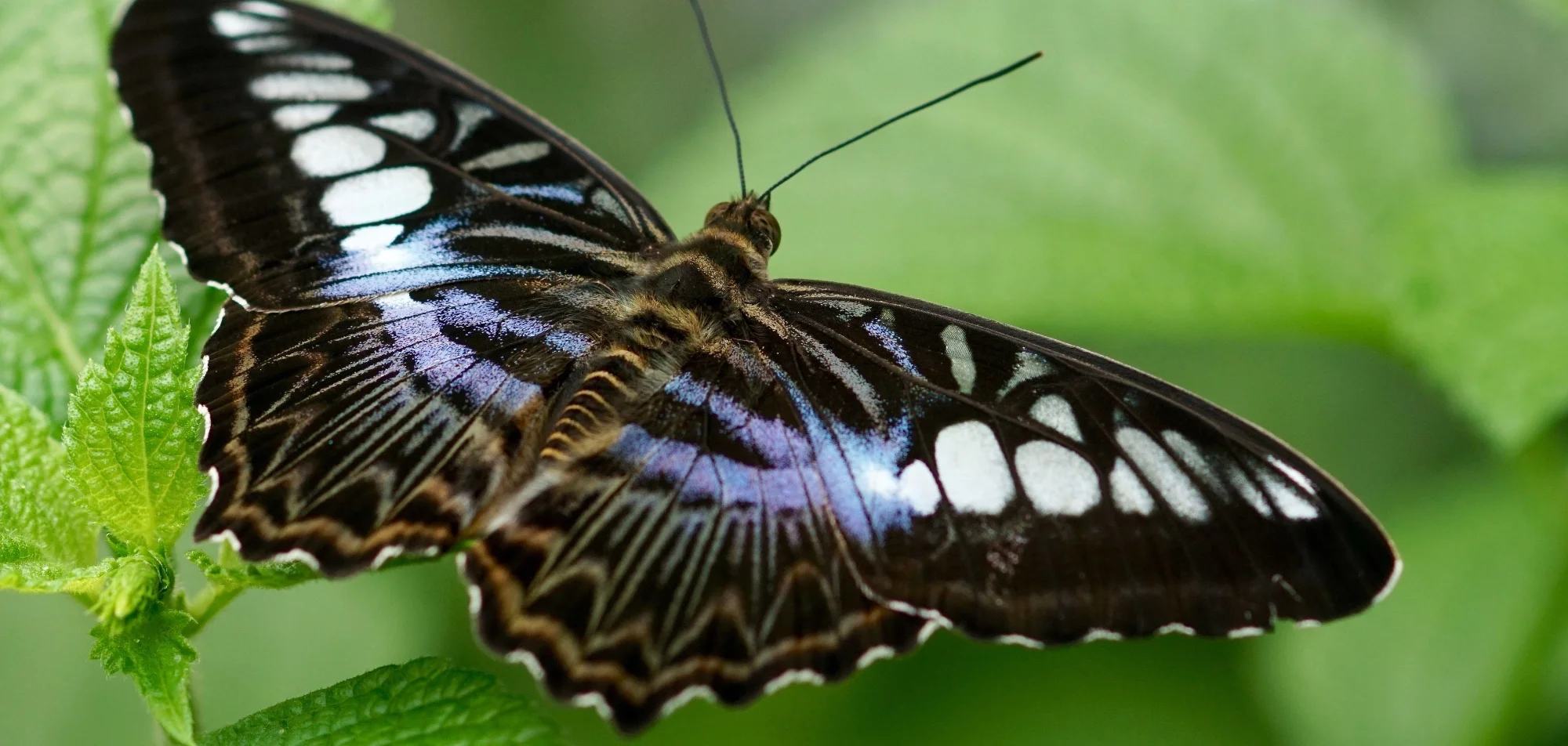
The insects and spiders of Sri Lanka are the group most visitors walk straight past and the group with the highest proportion of animals found nowhere else. The island has around 245 butterflies with 23 endemic to it, roughly 130 dragonflies and damselflies with about half endemic, and a set of arboreal ornamental tarantulas that are among the most sought after spiders in the world. Almost none of it is written about for travellers.
This page lists what the Wildseer database records so far, headed by the endemic birdwing that is the national butterfly, the Critically Endangered Ceylon rose, and an ant that is the last surviving species of an entire subfamily. It is not a complete fauna and we would not pretend otherwise. It is the part worth carrying in your head on a forest walk.
This page lists all 30 insects and spiders recorded for Sri Lanka in the Wildseer database. Use the contents to jump to a group.
Highlights
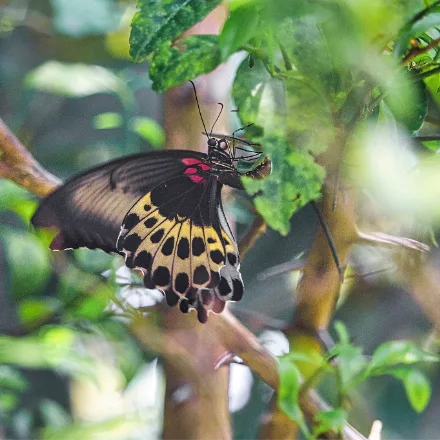
Sri Lanka Birdwing
The largest butterfly on the island, the size of a small bird, and it lives nowhere else. Where: Forest edge, gardens and flowering trees across the wet and intermediate zones. Best: Year round, strongest after the rains.
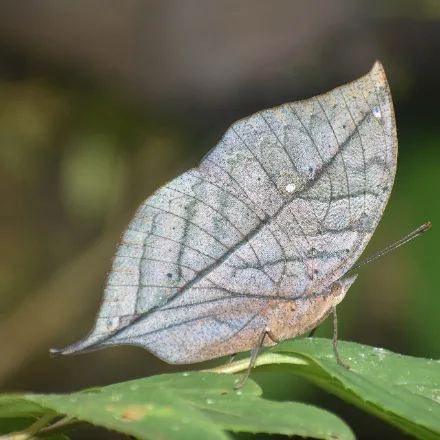
Sri Lanka Blue Oakleaf
Electric blue and orange in flight, and a dead leaf complete with midrib and fungal blotches the moment it lands. Where: Forest floor, fallen fruit and sap runs in wet zone forest. Best: Year round.
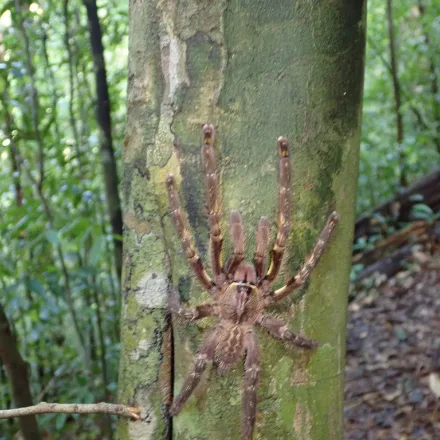
Fringed Ornamental Tarantula
A tarantula the size of a dinner plate that lives in tree holes and sometimes shares them with a frog. Where: Cavities in mature trees in lowland wet zone forest, at the web entrance after dark. Best: Year round, after dark.
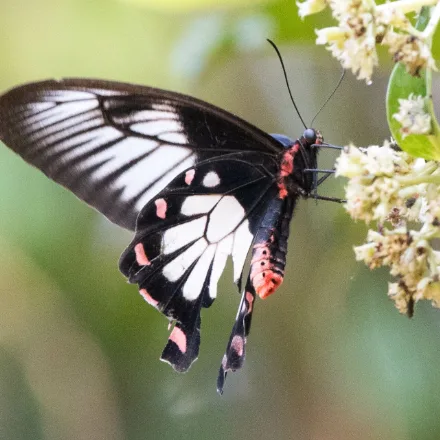
Ceylon Rose
Critically Endangered, endemic, and confined to the shrinking rainforest of one corner of the island. Where: Wet zone rainforest interior and its immediate edge, nowhere else. Best: Year round.
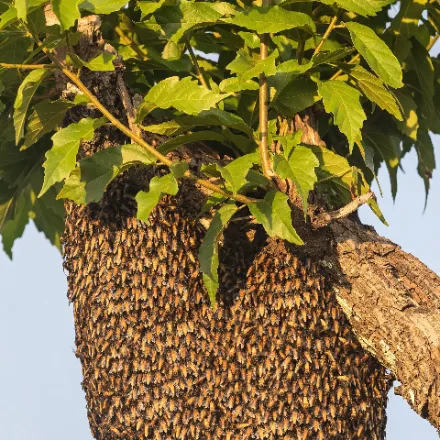
Giant Honey Bee
A big, fierce wild bee that hangs single-comb nests the size of a door from high branches and cliffs. Where: Enormous single combs hanging from cliff faces, overhangs and tall forest trees. Best: Year round; colonies migrate seasonally.
Insects
24 species
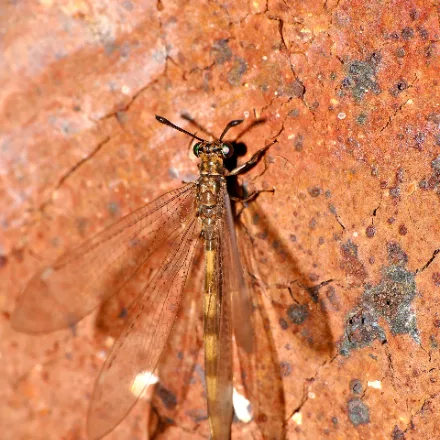
Antlion Common
Myrmeleon sp.
Antlion larvae excavate funnel-shaped pits in fine dry soil and bury themselves at the bottom with only the jaws exposed. Prey that slides in is bombarded with flicked sand until it falls within reach, then seized and drained.
Where: Conical pits in dry sheltered sand and dust, under overhangs and building eaves. Best: Year round. The pits are everywhere once you notice them. The adult is a slender lacewing-like insect that most people never connect to the larva. Also on: Yala National Park, Sigiriya, Dambulla and the Cultural Triangle.
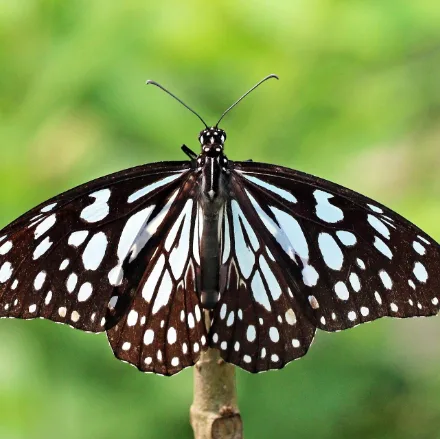
Blue Tiger Common
Tirumala limniace
Blue tigers are milkweed butterflies that sequester toxic alkaloids from their food plants, making them unpalatable and slow, confident fliers. Seasonal migrations move large numbers between breeding and dry-season roosting areas.
Where: Open forest, scrub and roadsides, sometimes in large aggregations. Best: February to April and October to December. Roosts communally in shaded gullies, sometimes hundreds together, which is worth stopping for if you find one. Also on: Sigiriya, Dambulla and the Cultural Triangle, Gal Oya National Park.
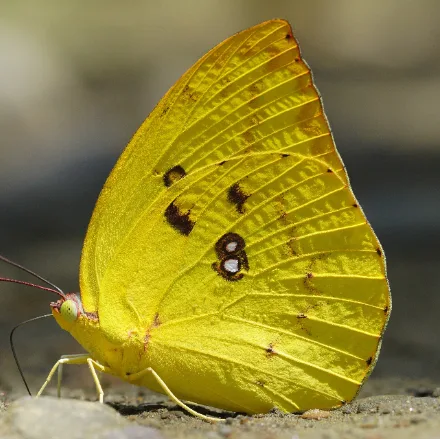
Common Emigrant Common
Catopsilia pomona
A medium sized, fast flying, lemon to greenish white butterfly, often with a small silver-ringed spot on the underside. Highly variable, and the same species turns up in several colour forms.
Where: Open country, scrub and roadsides countrywide, and in numbers on the move. Best: February to April for the migration. Samanala Kanda, Adam's Peak, means Butterfly Mountain, and this is the butterfly it is named for. Also on: Adam's Peak and Peak Wilderness, Sigiriya, Dambulla and the Cultural Triangle, Yala National Park, Jaffna and the Northern Peninsula, Mannar and the Gulf of Mannar.
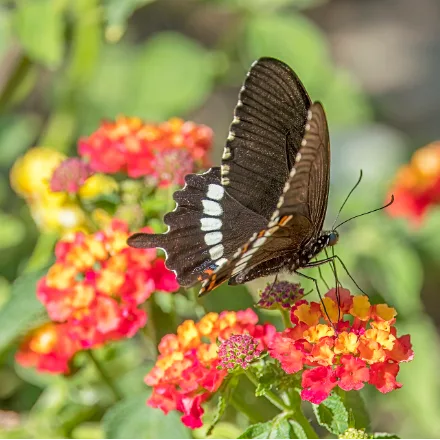
Common Mormon Common
Papilio polytes
Common mormon males are plain black with a band of white spots, while females occur in multiple forms, some mimicking toxic rose swallowtails complete with red body markings. The mimicry is controlled by a single supergene.
Where: Gardens, citrus and scrub countrywide, including in towns. Best: Year round. Females come in several forms, some mimicking the poisonous roses and some not, which is one of the classic worked examples in evolutionary biology. Also on: Kandy, Colombo and the wetlands.
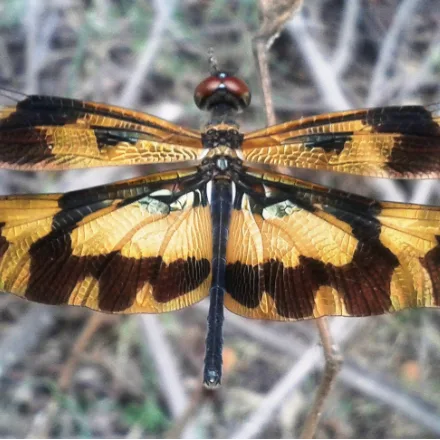
Common Picture Wing Common
Rhyothemis variegata
A small dragonfly whose wings are broadly patterned in amber-gold and black over most of their area, giving a fluttering, wavering flight quite unlike a normal dragonfly's.
Where: Over marsh, paddy and tank margins in the dry zone. Best: Year round, strongest after rain. Flutters like a butterfly. Most visitors do not realise they are looking at a dragonfly at all. Also on: Minneriya and Kaudulla National Parks, Bundala National Park, Colombo and the wetlands, Gal Oya National Park, Wasgamuwa National Park.
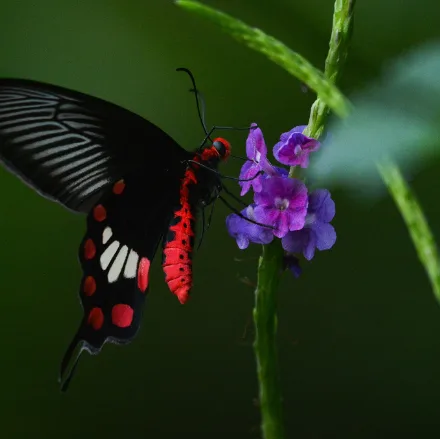
Common Rose Swallowtail Common
Pachliopta aristolochiae
A striking black butterfly with white hindwing patches, a ring of rose spots and a red body. Its leisurely flight warns predators of the toxins it carries from pipevines.
Where: Gardens, scrub and roadsides countrywide. Best: Year round. The commonest of the roses here and the model for a well known mimicry system: female common mormons imitate it closely enough to fool a bird. Also on: Yala National Park, Sigiriya, Dambulla and the Cultural Triangle.
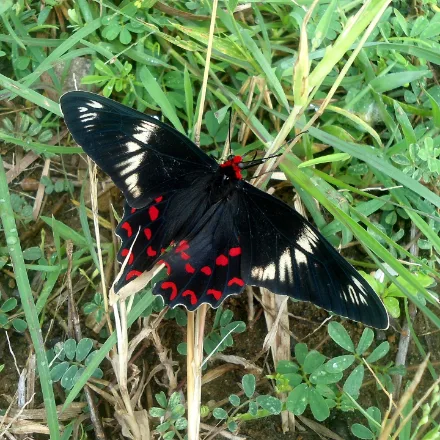
Crimson Rose Common Near Threatened
Pachliopta hector
A black swallowtail with two bold rows of white bars across the forewing, a line of crimson crescents on the hindwing, and a bright crimson body.
Where: Dry zone scrub, garden edges, roadsides and park tracks countrywide. Best: Year round. Slow and low along tracks. One of the easiest butterflies on the island to watch properly. Also on: Yala National Park, Wilpattu National Park, Bundala National Park, Sigiriya, Dambulla and the Cultural Triangle, Kumana National Park, Wasgamuwa National Park.
Giant Honey Bee Common
Apis dorsata
The largest honey bee in the region, building a single huge exposed comb high on a branch, cliff or building. Colonies are defensive and can mount mass stinging attacks.
Where: Enormous single combs hanging from cliff faces, overhangs and tall forest trees. Best: Year round; colonies migrate seasonally. The species involved in the mass stinging incidents on the Sigiriya rock stairways. Also on: Sigiriya, Dambulla and the Cultural Triangle, Adam's Peak and Peak Wilderness, Knuckles Range.
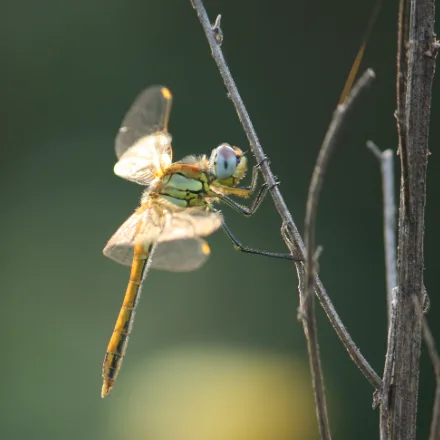
Wandering Glider Common
Pantala flavescens
A slender golden-yellow to amber dragonfly with unusually broad hindwings, almost always seen in the air rather than perched.
Where: Hawking over paddy, open ground and tank margins, often in swarms. Best: With the first rains of either monsoon. Time it to the rain, not the month. A swarm can appear in a day and be gone in three. Also on: Minneriya and Kaudulla National Parks, Bundala National Park, Colombo and the wetlands, Jaffna and the Northern Peninsula, Mannar and the Gulf of Mannar, Tangalle and Kalametiya.
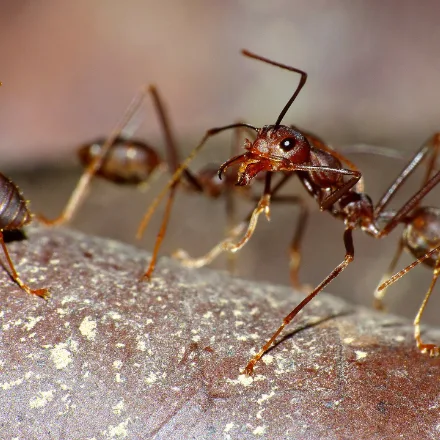
Weaver Ant Common
Oecophylla smaragdina
A highly social tree ant that builds nests by pulling leaves together and binding them with silk squeezed from its grubs. Colonies are aggressive and defend their trees fiercely.
Where: Leaf nests stitched into the canopy of garden and forest trees countrywide. Best: Year round. Builds its nest by pulling leaves together and gluing them with silk squeezed from its own larvae, which the workers use as living tubes of glue. Bites hard and sprays formic acid into the wound. Also on: Yala National Park, Kanneliya Forest Reserve.
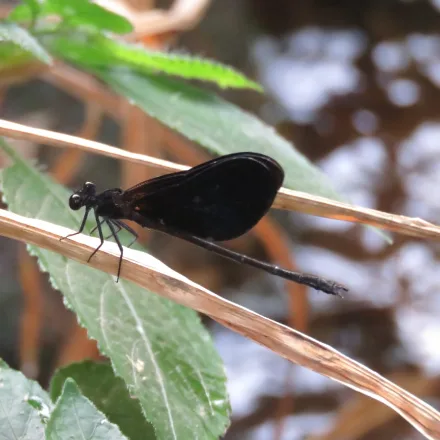
Shining Gossamerwing Regular
Euphaea splendens
A stocky damselfly, black with pale thoracic markings; the male's hindwings are black with a metallic blue-green sheen on the upper surface, the forewings tinted brown.
Where: Perched on rocks and twigs over shaded, fast, rocky wet zone streams. Best: Year round, sunniest hours. Wait at a sunlit gap over a rocky stream and let the males come to you. Also on: Sinharaja Forest Reserve, Kitulgala and the Makandawa Rainforest, Kanneliya Forest Reserve.
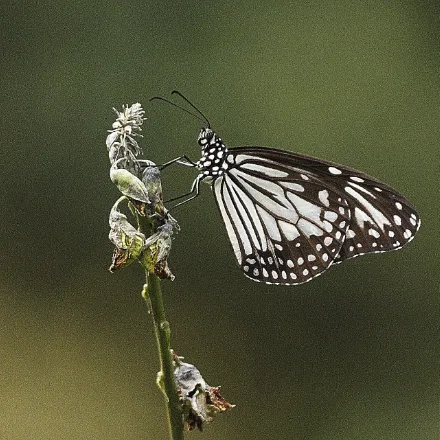
Ceylon Tiger Occasional
Parantica taprobana
A medium sized butterfly with pale blue-white streaks and blotches on a dark brown ground, the pattern broken into long finger-like markings that run out from the body.
Where: Montane grassland, forest edge and hill roadsides above about 1,000 m. Best: Year round, sunniest hours. Altitude is the identification. Below the hill country you are looking at one of its commoner relatives. Also on: Horton Plains and Nuwara Eliya, Ella and the Uva Highlands, Knuckles Range, Adam's Peak and Peak Wilderness.
No free photograph of the Ceylon tiger exists. The image shows the glassy tiger, Parantica aglea, a close relative photographed in southern India.
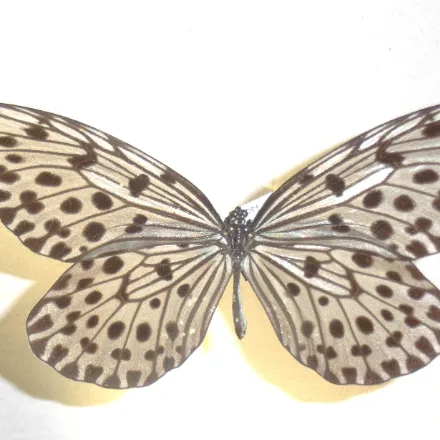
Ceylon Tree Nymph Occasional
Idea iasonia
A very large butterfly with semi-translucent chalk white wings marked by a scatter of black spots and heavy black veins, and an unusually weak, floating flight.
Where: Canopy gaps and clearings in lowland wet zone forest. Best: Year round. Identifiable at thirty metres from the flight alone. Nothing else on the island moves like it. Also on: Sinharaja Forest Reserve, Kanneliya Forest Reserve, Kitulgala and the Makandawa Rainforest.
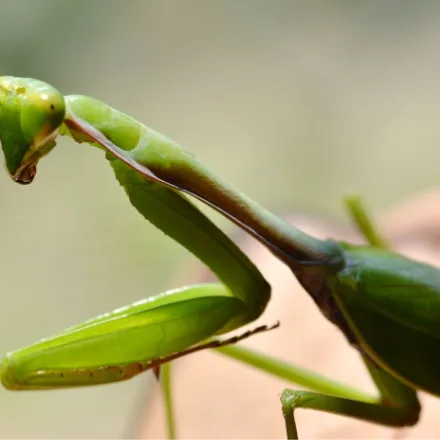
Giant Asian Mantis Occasional
Hierodula membranacea
A large praying mantis that sits motionless among leaves before seizing prey with spined forelegs. It can take insects, and occasionally small vertebrates.
Where: Shrubs, garden vegetation and at lights after dark. Best: Year round. Also on: Sinharaja Forest Reserve.
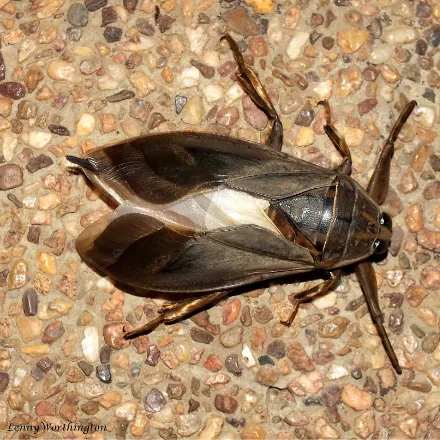
Giant Water Bug Occasional
Lethocerus indicus
Giant water bugs ambush prey in still water, seizing it with raptorial front legs and injecting digestive saliva through a stout beak. They fly strongly at night and are drawn to lights, which is when most people meet them.
Where: Still and slow fresh water: tanks, paddy, marsh and roadside ditches. Best: Year round, and at lights after rain. A genuinely formidable predator that takes fish, tadpoles and even small snakes. The bite is painful and among the most painful of any insect, so do not pick one up. Also on: Minneriya and Kaudulla National Parks, Bundala National Park.
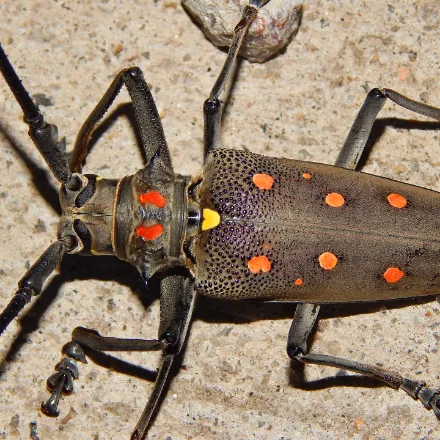
Mango Longhorn Beetle Occasional
Batocera rufomaculata
Mango longhorns are large grey-brown beetles marked with pink-red spots, with antennae far exceeding the body length in males. Larvae bore for years through living hardwood, and adults chew bark and shoots.
Where: On mango, fig and other broadleaf trees, and at lights. Best: April to July, night. Also on: Kandy.
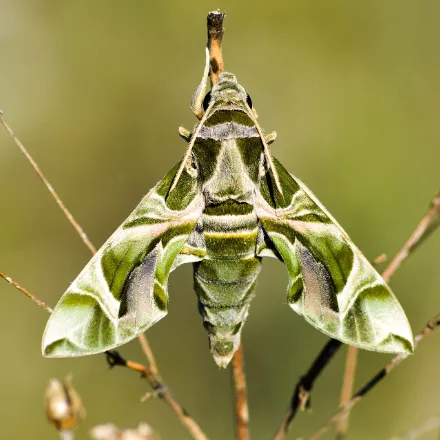
Oleander Hawkmoth Occasional
Daphnis nerii
Oleander hawkmoths feed on the wing, hovering at night-scented flowers and probing with a long proboscis without landing. The wings are marbled in olive, pink and cream in a pattern that reads as lichen when the moth is at rest.
Where: Gardens and scrub wherever oleander and periwinkle grow, at dusk and at lights. Best: Year round, at dusk. Hovers at flowers at dusk like a small hummingbird. The caterpillar is a startling green and blue thing with a false eyespot. Also on: Colombo and the wetlands, Tangalle and Kalametiya, Rekawa and Kosgoda.
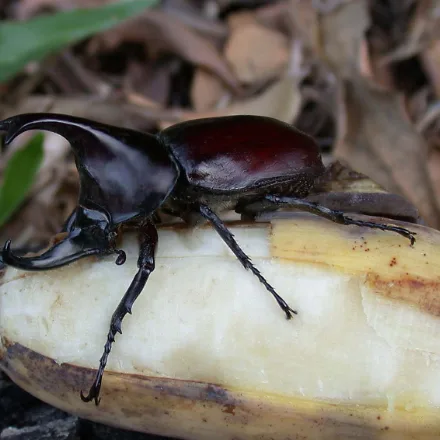
Rhinoceros Beetle Occasional
Xylotrupes gideon
A large, shining brown beetle in which males carry a curved thoracic horn used to lever rivals off branches. It feeds on sap and fruit and can squeak when handled.
Where: At lights after dark, and on palms and rotting wood. Best: October to December and April to June, night. Males wrestle with the horn for access to females and can lift many times their own weight. Also on: Kitulgala and the Makandawa Rainforest.
Sri Lanka Birdwing Occasional
Troides darsius
A very large swallowtail with black forewings and broad golden yellow hindwings veined in black, the body marked crimson at the head and thorax. Females are larger and duller than males.
Where: Forest edge, gardens and flowering trees across the wet and intermediate zones. Best: Year round, strongest after the rains. Sri Lanka's national butterfly. The gliding flight is the giveaway from a distance. Also on: Sinharaja Forest Reserve, Kitulgala and the Makandawa Rainforest, Kandy, Kanneliya Forest Reserve.
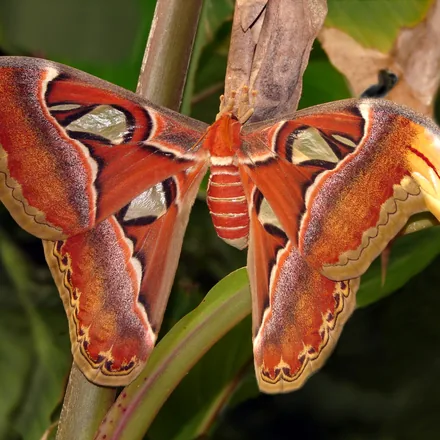
Atlas Moth Rare
Attacus atlas
A colossal moth with russet, patterned wings and curved tips said to mimic a snake. The adult has no working mouth and lives only a few days to breed.
Where: Forest edge and lit buildings near forest across the wet zone. Best: October to December and April to June, at night. One of the largest moths in the world. Adults have no working mouthparts and do not feed at all, so they live about a week on what the caterpillar stored. Also on: Sinharaja Forest Reserve, Kitulgala and the Makandawa Rainforest.
Ceylon Rose Rare Critically Endangered
Pachliopta jophon
A large black swallowtail streaked with white on both wings and edged with crimson crescents along the hindwing margin, with crimson on the head and the sides of the body.
Where: Wet zone rainforest interior and its immediate edge, nowhere else. Best: Year round. Critically Endangered. If you think you have one outside wet zone forest, it is almost certainly a crimson rose. Also on: Sinharaja Forest Reserve, Kanneliya Forest Reserve.
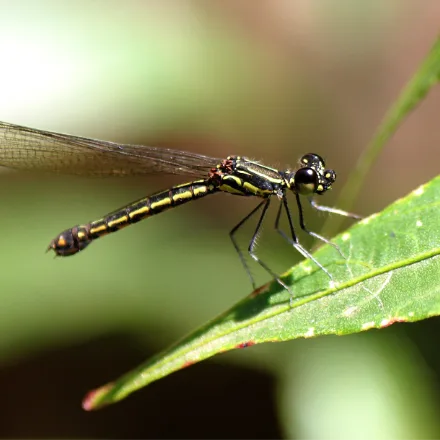
Green's Gem Rare
Libellago greeni
A very small, stocky damselfly, the male marked in black and brilliant orange-yellow with pale legs, perching on rocks and twigs right at the water surface.
Where: Rocks and twigs at the surface of shaded, fast, rocky wet zone streams. Best: Year round, sunniest hours. Look at water level, not above it. Almost everyone scanning for damselflies looks a metre too high. Also on: Sinharaja Forest Reserve, Kitulgala and the Makandawa Rainforest, Kanneliya Forest Reserve.
Sri Lanka Blue Oakleaf Rare
Kallima philarchus
Upperside deep blue-black with a broad orange band across the forewing. Underside a mottled brown dead leaf, with a false midrib, false veins and false rot spots, and a short tail that mimics the leaf stalk.
Where: Forest floor, fallen fruit and sap runs in wet zone forest. Best: Year round. Watch where the blue flash lands, then look for the dead leaf that is facing the wrong way. Also on: Sinharaja Forest Reserve, Kitulgala and the Makandawa Rainforest, Kanneliya Forest Reserve.
No free photograph of the Sri Lanka blue oakleaf exists. The image shows the scarce blue oakleaf, Kallima knyvettii, a close relative photographed in southern India.
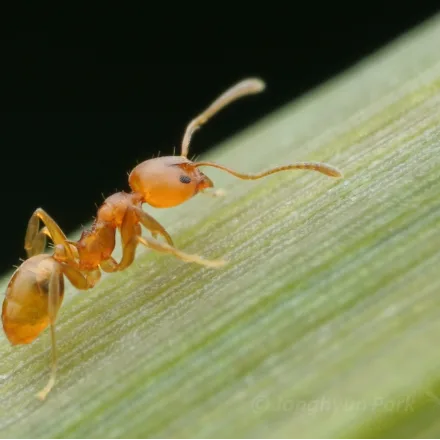
Sri Lanka Relict Ant Ultra rare Critically Endangered
Aneuretus simoni
A very small, pale yellowish ant with an unusually slender waist, nesting in rotting twigs and leaf litter on the rainforest floor. Nothing about it looks remarkable, which is rather the point.
Where: Rotting twigs and leaf litter on the floor of undisturbed wet zone forest. Best: Year round. You will not identify this in the field and that is not the point. It is the last species of an entire subfamily of ants and it is under the leaf litter you are standing on. Also on: Sinharaja Forest Reserve, Kanneliya Forest Reserve.
Spiders and scorpions
6 species
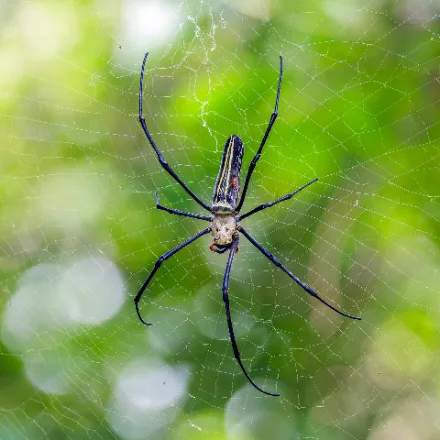
Golden Orb-weaver Common
Nephila pilipes
A large forest spider whose females hang in huge webs of shimmering golden silk, dwarfing the tiny males. The silk is remarkably tough and gleams in the sun.
Where: Huge golden webs slung across forest tracks and clearings countrywide. Best: Year round, largest females August to December. Known throughout Sri Lanka as the giant wood spider. The silk is strong enough that you feel the web before you see it. Also on: Sinharaja Forest Reserve, Kanneliya Forest Reserve, Yala National Park, Kitulgala and the Makandawa Rainforest, Kumana National Park, Gal Oya National Park.
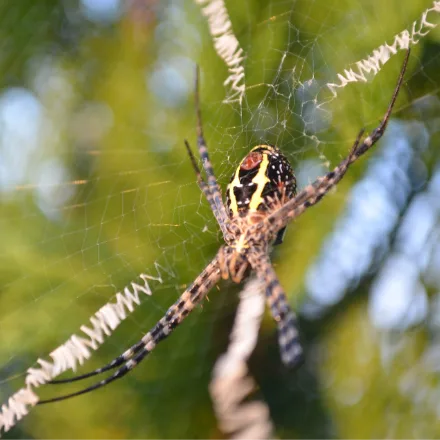
Signature Spider Common
Argiope anasuja
A medium sized orb weaver with a silver and yellow banded abdomen, sitting head-down at the centre of its web with the legs paired into an X and a conspicuous zigzag of dense white silk below it.
Where: Webs slung in scrub, gardens and dry zone forest edge countrywide. Best: Year round. The zigzag in the web is the identification, and its purpose is still argued about. Also on: Yala National Park, Bundala National Park, Sigiriya, Dambulla and the Cultural Triangle, Udawalawe National Park, Kumana National Park, Wasgamuwa National Park.
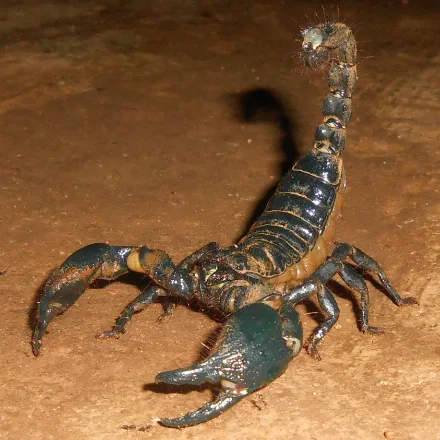
Giant Forest Scorpion Occasional
Heterometrus swammerdami
A very large, glossy blue-black scorpion with heavy pincers, a comparatively slender tail and a sting that looks far more alarming than it is.
Where: Under logs and stones by day, out hunting on the ground after dark. Best: Year round, after dark. A UV torch finds them from several metres. It is the single most rewarding five pounds of kit for a night walk. Also on: Yala National Park, Wilpattu National Park, Sigiriya, Dambulla and the Cultural Triangle, Udawalawe National Park, Kumana National Park, Wasgamuwa National Park.
Fringed Ornamental Tarantula Rare
Poecilotheria ornata
A very large arboreal tarantula, greenish yellow to purplish on the carapace, with paired yellow spots along the leg segments and a white mark on the hind femur.
Where: Cavities in mature trees in lowland wet zone forest, at the web entrance after dark. Best: Year round, after dark. Look for the funnel web at a tree hollow rather than for the spider. Never put a hand or a light-stick into the hole. Also on: Sinharaja Forest Reserve, Kanneliya Forest Reserve, Kitulgala and the Makandawa Rainforest.
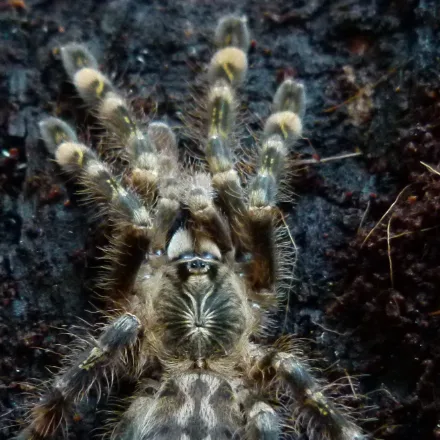
Ivory Ornamental Tarantula Rare
Poecilotheria subfusca
A large arboreal tarantula with a dark abdomen marked by three linked dark spots, a brown carapace with a pale starburst margin and creamy chelicerae.
Where: Cavities, bark fissures and old woodpecker holes in mature hill forest trees. Best: Year round, after dark. Needs old trees with existing holes, so it is found in remnant forest and old estate shade trees rather than young regrowth. Also on: Kandy, Knuckles Range, Ella and the Uva Highlands.
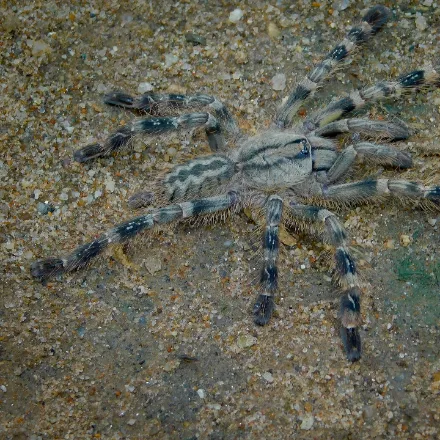
Sri Lankan Ornamental Tarantula Rare
Poecilotheria fasciata
A large arboreal tarantula patterned in grey, cream and black in a herringbone arrangement, with bold yellow and black banding on the undersides of the front legs that shows when it rears.
Where: Cavities and loose bark on mature trees in the drier zones, and occasionally old buildings. Best: Year round, after dark. The one Poecilotheria most likely to be found near people, because it tolerates drier and more disturbed forest than the others. Also on: Sigiriya, Dambulla and the Cultural Triangle, Wilpattu National Park, Kandy, Wasgamuwa National Park.
Planning
This is a group you find by changing your habits rather than your itinerary. Three of them work. A sunlit gap over a rocky forest stream in the middle of the morning gives you the damselflies. A slow walk along a track edge in the first two hours of light gives you the butterflies, which are at flowers early and at damp ground and fallen fruit later. And a torch after dark, ideally an ultraviolet one, gives you the scorpions, the moths at lit walls and the tarantulas at their tree holes. Three animals here are worth recognising on sight: the giant honey bee, whose colonies hang under the overhangs on the Sigiriya stairways; the ornamental tarantulas, which live in tree holes and bark crevices; and the giant water bug. Sri Lanka’s ornamental tarantulas are listed on CITES Appendix II because collection for the pet trade threatens them.
Find guided night walks and rainforest trips in Sri Lanka
Some links on this page are affiliate links. If you book through them, Wildseer may earn a small commission at no extra cost to you.
Frequently asked questions
What is the national butterfly of Sri Lanka?
The Sri Lanka birdwing, Troides darsius, an endemic swallowtail with a wingspan up to about 18 cm and the largest butterfly on the island. It is unmistakable in flight because it glides rather than flaps, more like a bird working a thermal than an insect.
Are there tarantulas in Sri Lanka?
Yes. Several endemic ornamental tarantulas in the genus Poecilotheria, large arboreal spiders living in cavities in mature trees. Their venom is medically significant and causes severe pain and prolonged muscle cramping, so they should never be handled, and they are protected under CITES because of the pet trade.
How many dragonflies does Sri Lanka have?
Around 130 species of dragonfly and damselfly, of which roughly half are found nowhere else on earth. That rate of endemism puts the island among the most important places in the world for the group.
Are the bees in Sigiriya dangerous?
The giant honey bee colonies under the rock overhangs are a real hazard and there have been serious incidents on the stairways. The wire mesh cages on the route are refuges, and they are there for that reason.
What is the largest scorpion in Sri Lanka?
The giant forest scorpion, Heterometrus swammerdami, which reaches over 20 cm and is regularly cited as the largest scorpion in the world. Its pincers do the work and its sting is comparable to a bee sting, so it is far less dangerous than it looks.
Explore Sri Lanka wildlife by group
 Mammals of Sri Lanka
 Birds of Sri Lanka
 Reptiles and amphibians of Sri Lanka
 Fish of Sri Lanka
 Sharks and rays of Sri Lanka
 Reef invertebrates of Sri Lanka
Part of the Wildlife in Sri Lanka guide.
Explore Sri Lanka wildlife by place
- Adams Peak wildlife
- Arugam Bay marine life
- Bundala wildlife
- Colombo wildlife
- Ella wildlife
- Gal Oya wildlife
- Great Basses marine life
- Hikkaduwa marine life
- Horton Plains wildlife
- Jaffna wildlife
- Kalpitiya marine life
- Kandy wildlife
- Kanneliya wildlife
- Kitulgala wildlife
- Knuckles wildlife
- Kumana wildlife
- Mannar marine life
- Minneriya wildlife
- Mirissa marine life
- Rekawa marine life
- Sigiriya wildlife
- Sinharaja wildlife
- Tangalle marine life
- Trincomalee marine life
- Udawalawe wildlife
- Wasgamuwa wildlife
- Wilpattu wildlife
- Yala wildlife
Image credits
Square thumbnails are cropped from the original. Wide banner images are cropped to a band. Other images are resized only. No other changes have been made.
- Clipper butterfly on a leaf: Pixabay | Pexels Licence, cropped
- Sri Lanka Birdwing: Janith Pramuditha | CC BY-SA 4.0, cropped
- Sri Lanka Blue Oakleaf: MaheshBaruahwildlife | CC BY-SA 4.0, cropped
- Fringed Ornamental Tarantula: Théalie Dhellemmes | CC BY-SA 4.0, cropped
- Ceylon Rose: 松井 淳 | CC0, cropped
- Giant Honey Bee (cropped to square): Basile Morin | CC BY-SA 4.0, cropped
- Antlion (cropped to square): Bernard DUPONT from FRANCE | CC BY-SA 2.0, cropped
- Blue Tiger (cropped to square): Charles J. Sharp | CC BY-SA 4.0, cropped
- Common Emigrant: Peellden | CC BY-SA 4.0, cropped
- Common Mormon (cropped to square): Charles J. Sharp | CC BY-SA 4.0, cropped
- Common Picture Wing: 42sneha | CC BY-SA 3.0, cropped
- Common Rose Swallowtail (cropped to square): Vedant Raju Kasambe | CC BY-SA 4.0, cropped
- Crimson Rose: Adityamadhav83 | CC BY-SA 3.0, cropped
- Wandering Glider: Vivekpuliyeri | CC BY-SA 3.0, cropped
- Weaver Ant (cropped to square): Bernard DUPONT from FRANCE | CC BY-SA 2.0, cropped
- Shining Gossamerwing: Gihan Jayaweera | CC BY-SA 4.0, cropped
- Ceylon Tiger: Girish Mohan | CC BY-SA 4.0, cropped
- Ceylon Tree Nymph: Notafly | CC BY-SA 3.0, cropped
- Giant Asian Mantis: Sophy Chen | Pexels Licence, cropped
- Giant Water Bug (cropped to square): Len Worthington | CC BY-SA 2.0, cropped
- Mango Longhorn Beetle (cropped to square): Gouthamching | CC BY-SA 4.0, cropped
- Oleander Hawkmoth (cropped to square): Chriskazil | CC BY-SA 4.0, cropped
- Rhinoceros Beetle (cropped to square): Len Worthington | CC BY-SA 2.0, cropped
- Atlas Moth (cropped to square): Nevit Dilmen | CC BY-SA 3.0, cropped
- Green’s Gem: Buddhika.jm | CC BY 3.0, cropped
- Sri Lanka Relict Ant: Jonghyun Park | CC BY 4.0, cropped
- Golden Orb-weaver (resized): Charles J. Sharp | CC BY-SA 4.0, cropped
- Signature Spider: Abkhanal | CC BY-SA 3.0, cropped
- Giant Forest Scorpion: Nireekshit | CC BY-SA 3.0, cropped
- Ivory Ornamental Tarantula: Pawel W. | CC BY-SA 3.0, cropped
- Sri Lankan Ornamental Tarantula: Gerard Mendis | CC BY-SA 4.0, cropped
- Purple-faced langur in the canopy: kanchana Amilani | Unsplash License, cropped
- White-throated kingfisher on a branch: kanchana Amilani | Unsplash License, cropped
- Green forest lizard in breeding colour: Anas Mohamed Nuski | Pexels Licence, cropped
- Bluestripe snapper over a reef: Jeffry Surianto | Pexels Licence, cropped
- Reef manta rays near the surface: Emma Li | Pexels Licence, cropped
- Nudibranch crossing the sea floor: Chris Spain | Pexels Licence, cropped
Square thumbnails are cropped from the original. Wide banner images are cropped to a band. Other images are resized only. No other changes have been made.
- Clipper butterfly on a leaf: Pixabay | Pexels Licence, cropped
- Sri Lanka Birdwing: Janith Pramuditha | CC BY-SA 4.0, cropped
- Sri Lanka Blue Oakleaf: MaheshBaruahwildlife | CC BY-SA 4.0, cropped
- Fringed Ornamental Tarantula: Théalie Dhellemmes | CC BY-SA 4.0, cropped
- Ceylon Rose: 松井 淳 | CC0, cropped
- Giant Honey Bee (cropped to square): Basile Morin | CC BY-SA 4.0, cropped
- Antlion (cropped to square): Bernard DUPONT from FRANCE | CC BY-SA 2.0, cropped
- Blue Tiger (cropped to square): Charles J. Sharp | CC BY-SA 4.0, cropped
- Common Emigrant: Peellden | CC BY-SA 4.0, cropped
- Common Mormon (cropped to square): Charles J. Sharp | CC BY-SA 4.0, cropped
- Common Picture Wing: 42sneha | CC BY-SA 3.0, cropped
- Common Rose Swallowtail (cropped to square): Vedant Raju Kasambe | CC BY-SA 4.0, cropped
- Crimson Rose: Adityamadhav83 | CC BY-SA 3.0, cropped
- Wandering Glider: Vivekpuliyeri | CC BY-SA 3.0, cropped
- Weaver Ant (cropped to square): Bernard DUPONT from FRANCE | CC BY-SA 2.0, cropped
- Shining Gossamerwing: Gihan Jayaweera | CC BY-SA 4.0, cropped
- Ceylon Tiger: Girish Mohan | CC BY-SA 4.0, cropped
- Ceylon Tree Nymph: Notafly | CC BY-SA 3.0, cropped
- Giant Asian Mantis: Sophy Chen | Pexels Licence, cropped
- Giant Water Bug (cropped to square): Len Worthington | CC BY-SA 2.0, cropped
- Mango Longhorn Beetle (cropped to square): Gouthamching | CC BY-SA 4.0, cropped
- Oleander Hawkmoth (cropped to square): Chriskazil | CC BY-SA 4.0, cropped
- Rhinoceros Beetle (cropped to square): Len Worthington | CC BY-SA 2.0, cropped
- Atlas Moth (cropped to square): Nevit Dilmen | CC BY-SA 3.0, cropped
- Green’s Gem: Buddhika.jm | CC BY 3.0, cropped
- Sri Lanka Relict Ant: Jonghyun Park | CC BY 4.0, cropped
- Golden Orb-weaver (resized): Charles J. Sharp | CC BY-SA 4.0, cropped
- Signature Spider: Abkhanal | CC BY-SA 3.0, cropped
- Giant Forest Scorpion: Nireekshit | CC BY-SA 3.0, cropped
- Ivory Ornamental Tarantula: Pawel W. | CC BY-SA 3.0, cropped
- Sri Lankan Ornamental Tarantula: Gerard Mendis | CC BY-SA 4.0, cropped
- Purple-faced langur in the canopy: kanchana Amilani | Unsplash License, cropped
- White-throated kingfisher on a branch: kanchana Amilani | Unsplash License, cropped
- Green forest lizard in breeding colour: Anas Mohamed Nuski | Pexels Licence, cropped
- Bluestripe snapper over a reef: Jeffry Surianto | Pexels Licence, cropped
- Reef manta rays near the surface: Emma Li | Pexels Licence, cropped
- Nudibranch crossing the sea floor: Chris Spain | Pexels Licence, cropped