
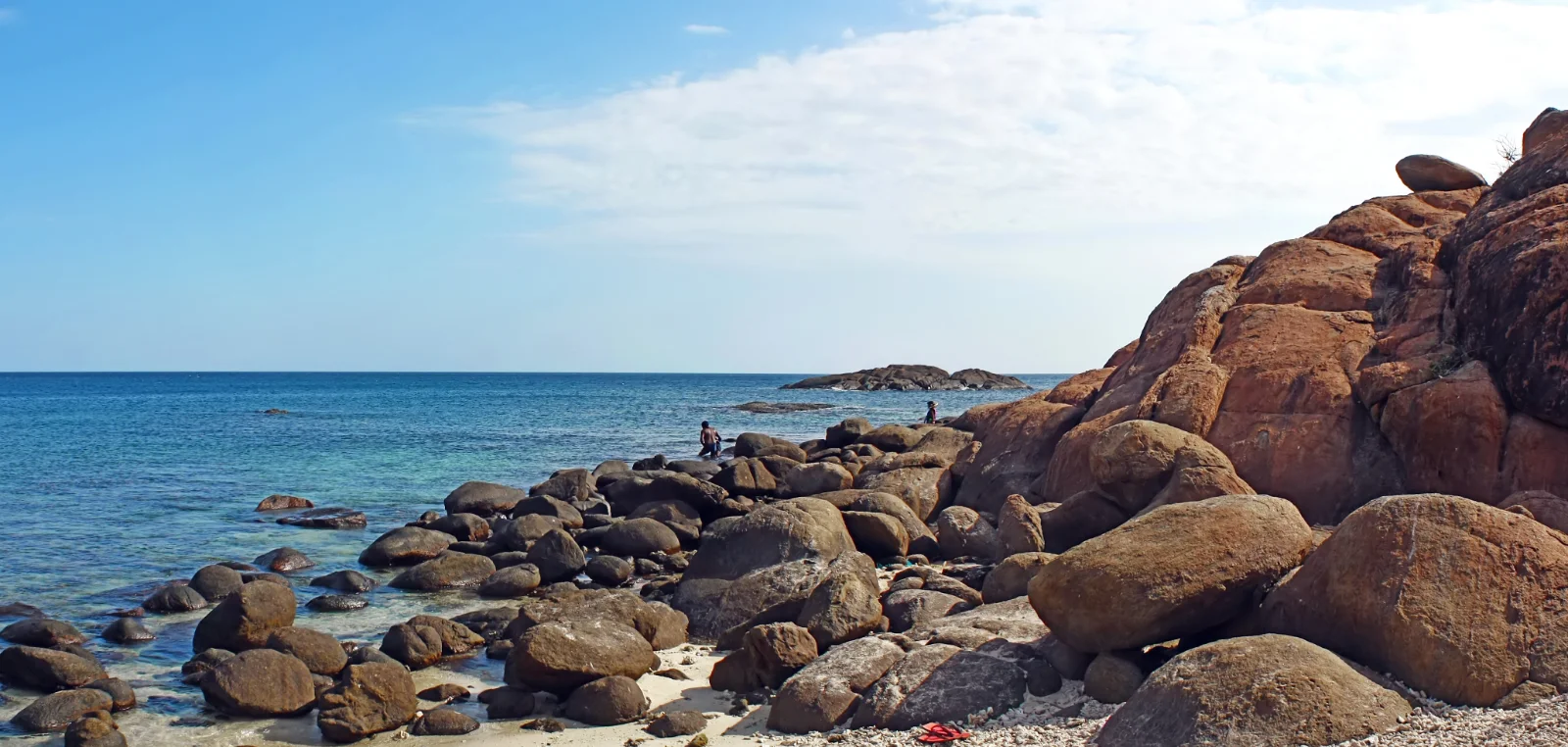
Sri Lanka’s diving is not one destination with a season, it is two destinations with opposite seasons, and almost every disappointing trip here comes from booking the wrong coast for the month. From November to April the west and south are open and the east is shut. From May to September it reverses exactly. Nothing about the marine life changes; the sea does.
What the island offers within those windows is more varied than its reputation suggests. There is genuinely good shallow snorkelling straight off the sand, a reef island with a shark nursery in a metre of water, seagrass holding the last dugong in the country, and, at the Great Basses, an offshore reef with a serious current and a serious reputation that is only workable for a few weeks a year. The whales are covered separately, because the south coast boats are not a diving proposition. Every species listed under a site below is recorded there in the Wildseer database.
Highlights
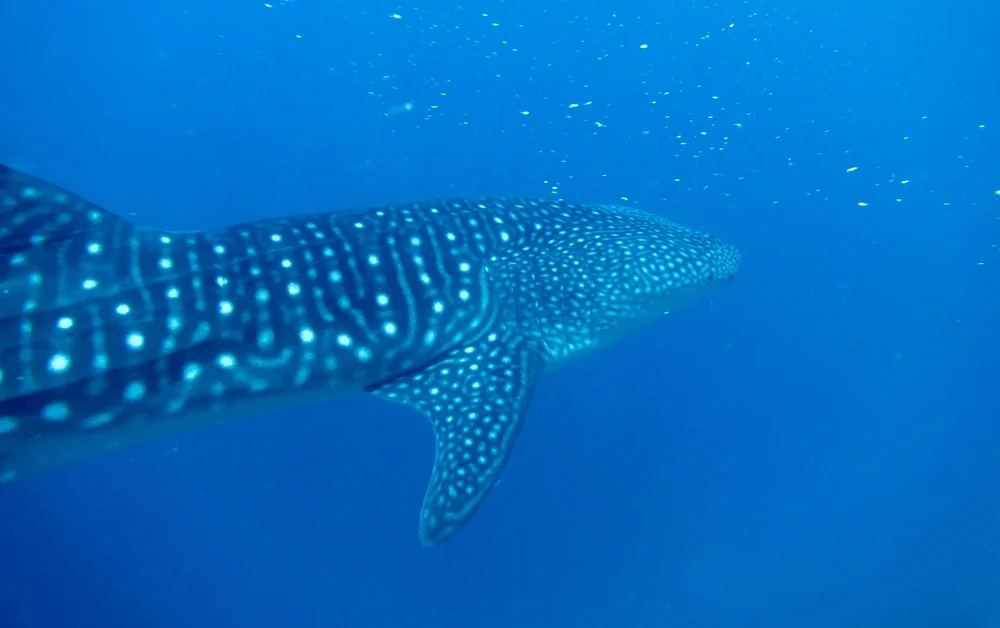
Whale Shark
The biggest fish in the ocean, a spotted, bus sized filter feeder and the undisputed holy grail of tropical diving. Where: Blue water beyond the reef. Best: May to September.
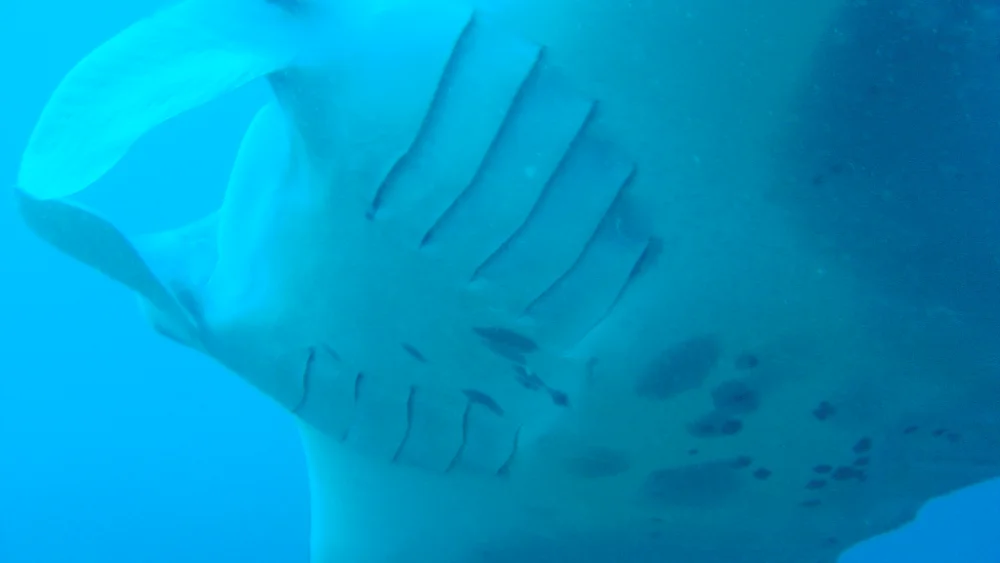
Reef Manta Ray
A four metre wingspan gliding overhead in slow, hypnotic loops that leave divers grinning for days. Where: Deeper reef edges and cleaning stations. Best: May to September.
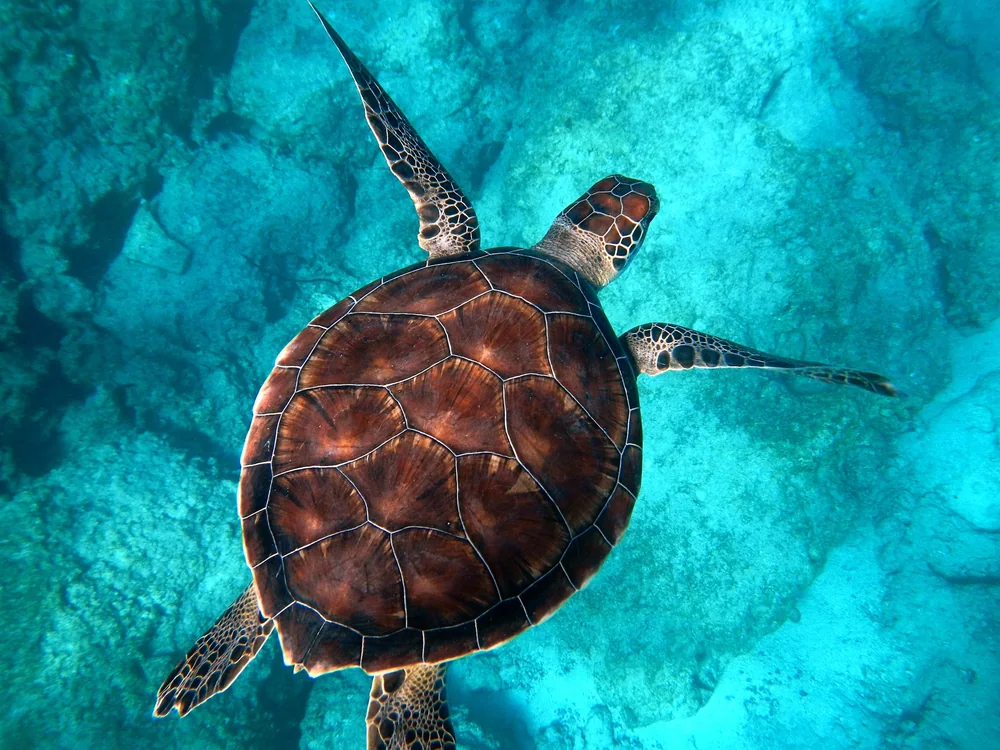
Green Sea Turtle
The great grazing turtle of the tropics, the only sea turtle that turns vegetarian as an adult. Where: Shallow reef and seagrass at Pigeon Island and Nilaveli. Best: May to September.
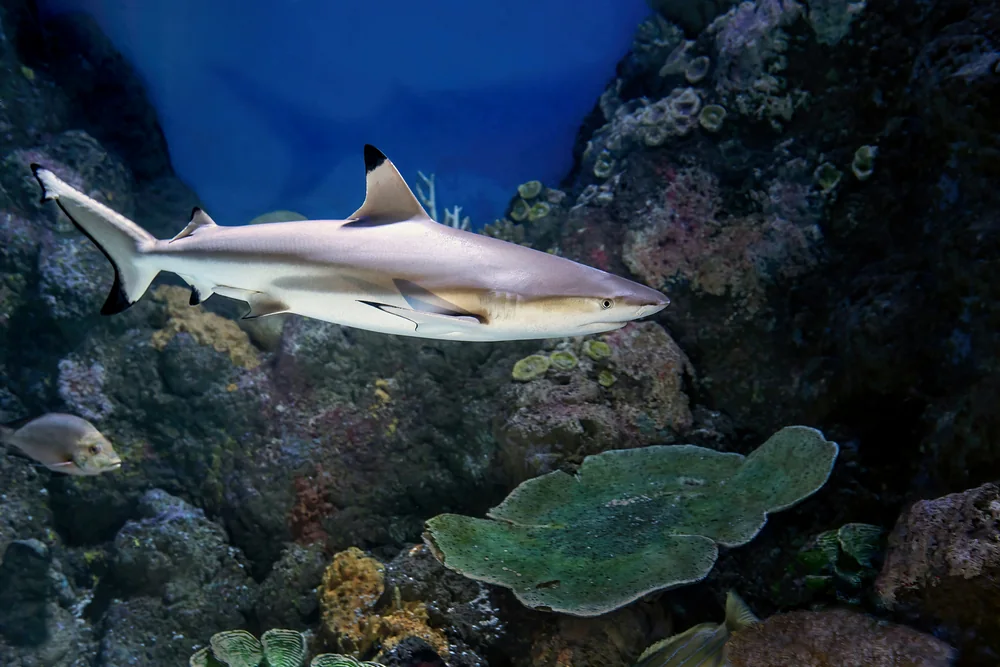
Blacktip Reef Shark
The neat little reef shark of the shallows, its black-tipped fins often cutting the surface over sun-lit sand flats. Where: The shallow inner reef at Pigeon Island, in snorkelling depth. Best: May to September.
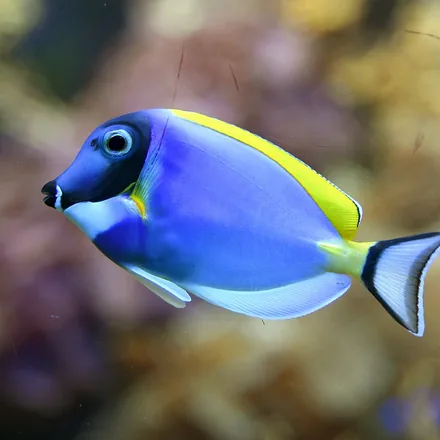
Powder Blue Surgeonfish
A stunning Andaman signature fish, powder blue with a yellow sail and a scalpel-sharp blade at the base of its tail. Where: Shoaling over the reef top at Pigeon Island. Best: May to September.
Trincomalee and Pigeon Island
The east coast’s headline site and the best shallow reef in the country. Pigeon Island sits a few hundred metres offshore with a reef flat you can snorkel from the beach, a blacktip reef shark nursery in water barely deeper than you are tall, and the full Indo-Pacific cast on the coral. May to September, and it is closed by the monsoon outside that.
14 of 22 recorded species
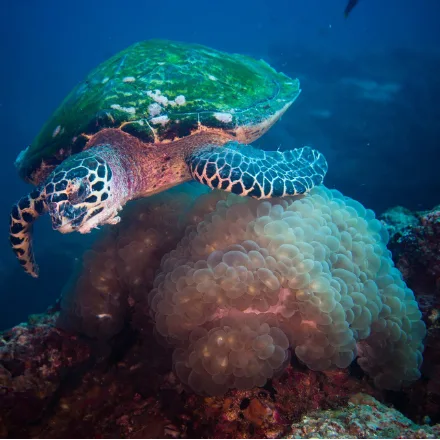
Hawksbill Turtle Regular Critically Endangered
Eretmochelys imbricata
The reef's sponge specialist, its beautiful shell also the reason it was hunted to the edge.
Where: Reef at Pigeon Island and off Nilaveli. Best: May to September. The single best place in Sri Lanka to see one.
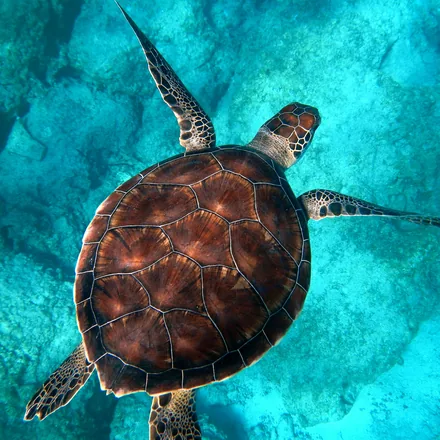
Green Sea Turtle Regular
Chelonia mydas
The great grazing turtle of the tropics, the only sea turtle that turns vegetarian as an adult.
Where: Shallow reef and seagrass at Pigeon Island and Nilaveli. Best: May to September.
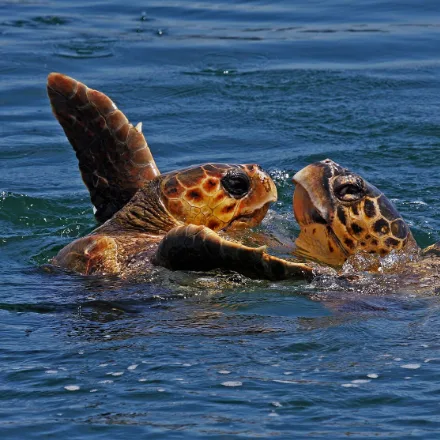
Loggerhead Turtle Rare Vulnerable
Caretta caretta
Jaws powerful enough to crush a queen conch, and it navigates ocean basins by reading the earth's magnetic field.
Where: Coastal water and reef edges, usually juveniles. Best: May to September.
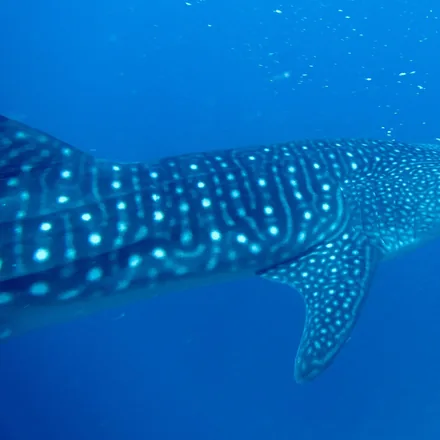
Whale Shark Rare Endangered
Rhincodon typus
The biggest fish in the ocean, a spotted, bus sized filter feeder and the undisputed holy grail of tropical diving.
Where: Blue water beyond the reef. Best: May to September.
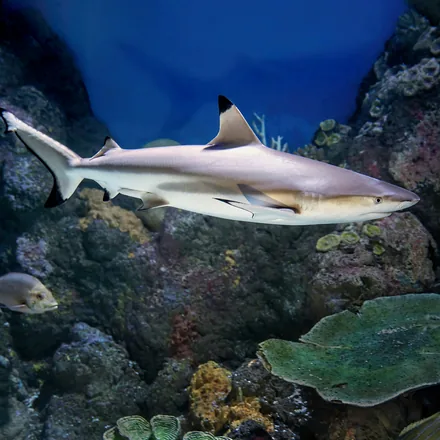
Blacktip Reef Shark Common Vulnerable
Carcharhinus melanopterus
The neat little reef shark of the shallows, its black-tipped fins often cutting the surface over sun-lit sand flats.
Where: The shallow inner reef at Pigeon Island, in snorkelling depth. Best: May to September. The single most reliable place in Sri Lanka to see a shark, and you do not need to dive. Dozens patrol water barely over head height.
Powder Blue Surgeonfish Common
Acanthurus leucosternon
A stunning Andaman signature fish, powder blue with a yellow sail and a scalpel-sharp blade at the base of its tail.
Where: Shoaling over the reef top at Pigeon Island. Best: May to September. They graze in loose shoals that pour over the coral like a blue tide.
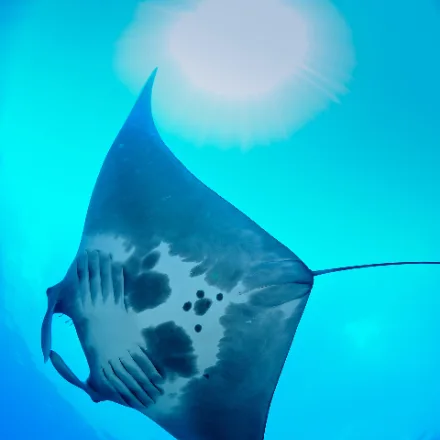
Reef Manta Ray Rare Vulnerable
Mobula alfredi
A four metre wingspan gliding overhead in slow, hypnotic loops that leave divers grinning for days.
Where: Deeper reef edges and cleaning stations. Best: May to September.
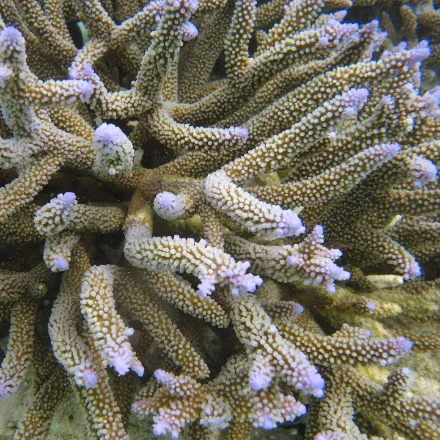
Staghorn Coral Common
Acropora species
The fast-growing branching coral that builds the living thickets of the reef, nursery and shelter for a whole community.
Where: The shallow reef flat inside the island. Best: May to September. Badly hit by bleaching in 2016 and recovering unevenly, and it breaks under a fin or a foot.
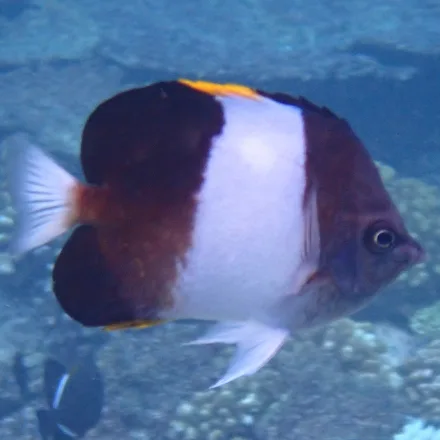
Black Pyramid Butterflyfish Regular
Hemitaurichthys zoster
They gather in the current in hundreds, and the white wedge on each flank turns the whole shoal into a drifting cloud of triangles.
Where: The drop-off edges off Pigeon Island and the Trincomalee canyon rim. Best: May to September.
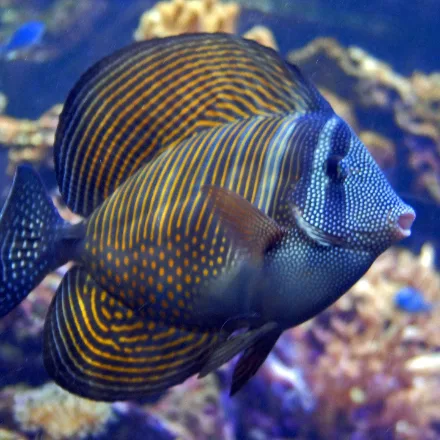
Indian Sailfin Tang Regular
Zebrasoma desjardinii
It raises a dorsal fin nearly as tall as its own body, and a startled one seems to double in size in front of you.
Where: Reef top and boulder slopes at Pigeon Island. Best: May to September.
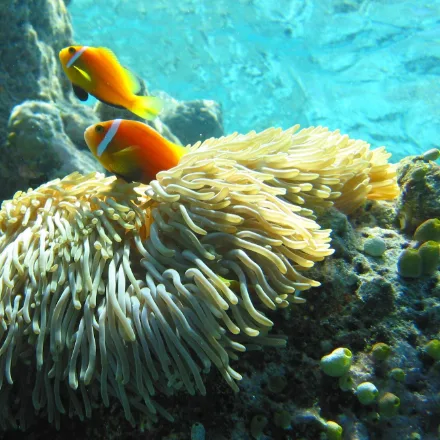
Maldives Anemonefish Regular
Amphiprion nigripes
A clownfish found only in Sri Lanka, the Maldives and the Lakshadweep, and nowhere else on earth.
Where: Anemones on the inner reef at Pigeon Island and off Nilaveli. Best: May to September.
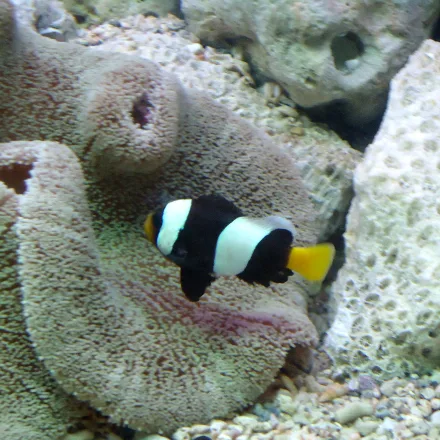
Sebae Anemonefish Regular
Amphiprion sebae
The big dark anemonefish of the northern Indian Ocean, with a yellow tail that gives it away from a distance.
Where: Sand and rubble margins off Nilaveli and Pigeon Island. Best: May to September.
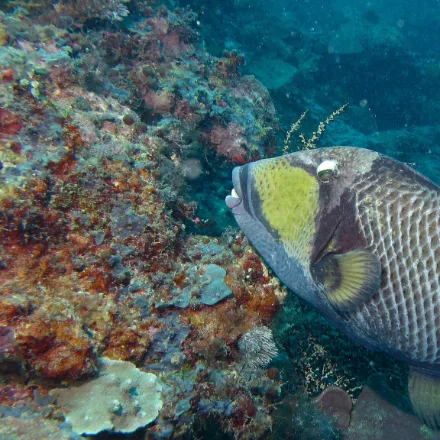
Titan Triggerfish Regular
Balistoides viridescens
The reef's bad tempered bulldozer, a heavy triggerfish that bites chunks out of coral to get at what is living underneath it.
Where: Reef flat and slope, nesting in the sand patches. Best: May to September. Nests on the sand between coral heads on the shallower sites.
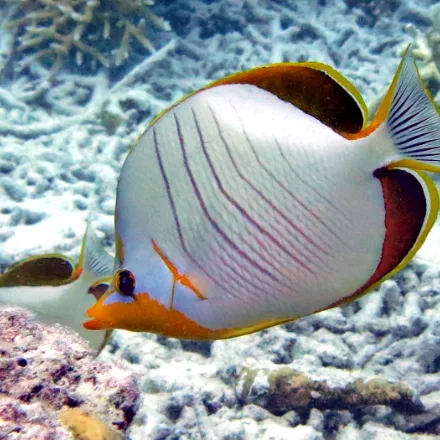
Yellowhead Butterflyfish Regular
Chaetodon xanthocephalus
An Indian Ocean butterflyfish that pairs for life, and you almost never see one without the other close by.
Where: Sheltered coral at Pigeon Island and Nilaveli. Best: May to September.
See all 22 species recorded at Trincomalee and Pigeon Island
Hikkaduwa
The easiest turtle encounter on the island and where a great many people meet a wild sea turtle for the first time. The reef is a few strokes from the sand and shallow enough to stand in, and green turtles are Common here from November to April. It is a recovering reef rather than a pristine one, hit repeatedly by bleaching and by decades of heavy use, and it is worth going in knowing that.
10 of 33 recorded species
Green Sea Turtle Common
Chelonia mydas
The great grazing turtle of the tropics, the only sea turtle that turns vegetarian as an adult.
Where: The shallow reef and the beach shallows, where turtles come in to be fed by hotels. Best: November to April. Turtles here are habituated and hand fed, which is why they are so easy to see. That is a fed animal, not a wild encounter, and it is worth knowing the difference.
Hawksbill Turtle Occasional Critically Endangered
Eretmochelys imbricata
The reef's sponge specialist, its beautiful shell also the reason it was hunted to the edge.
Where: Coral on the fringing reef. Best: November to April.
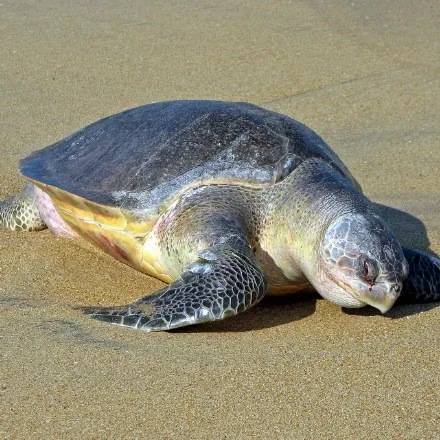
Olive Ridley Turtle Occasional Vulnerable
Lepidochelys olivacea
The smallest and most numerous sea turtle, famous elsewhere for mass nestings of thousands at once.
Where: Offshore water and occasionally over the reef. Best: Year round.
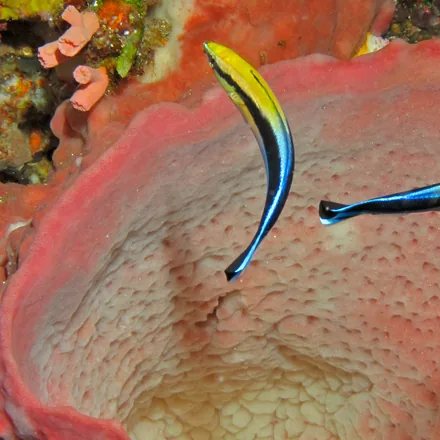
Bluestreak Cleaner Wrasse Regular
Labroides dimidiatus
A tiny striped wrasse that runs the reef's health clinic, picking parasites from fish that queue up and even open their mouths for it.
Where: Cleaning stations on the larger coral heads. Best: November to April.
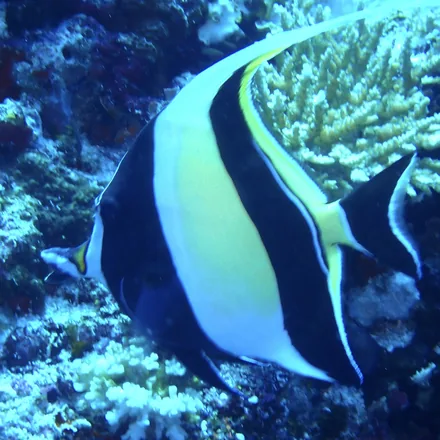
Moorish Idol Regular
Zanclus cornutus
An unmistakable disc of black, white and gold trailing a long ribbon fin, one of the most elegant fish on any reef.
Where: Fringing reef and rocky patches. Best: November to April.
Blacktip Reef Shark Rare Vulnerable
Carcharhinus melanopterus
The neat little reef shark of the shallows, its black-tipped fins often cutting the surface over sun-lit sand flats.
Where: The outer reef edge rather than the shallow flat. Best: November to April.
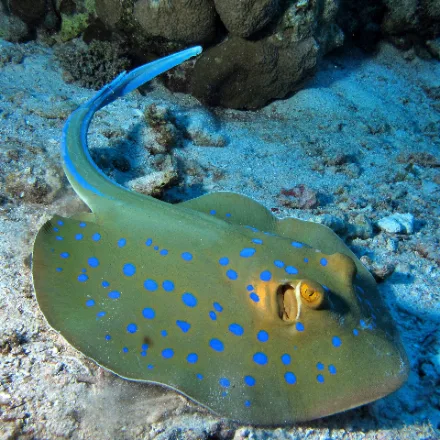
Bluespotted Ribbontail Ray Occasional
Taeniura lymma
A small, brilliantly marked ray, olive gold studded with electric blue spots, tucked under coral ledges.
Where: Sand patches and under ledges at the reef edge. Best: November to April.
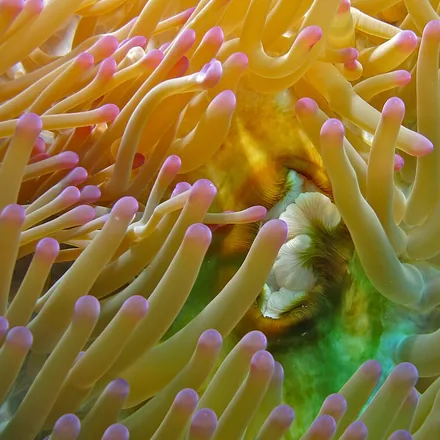
Magnificent Sea Anemone Occasional
Heteractis magnifica
A great carpet of stinging tentacles that is home and fortress to the anemonefish, a partnership at the heart of the reef.
Where: Coral heads on the reef flat, hosting the anemonefish. Best: Year round.
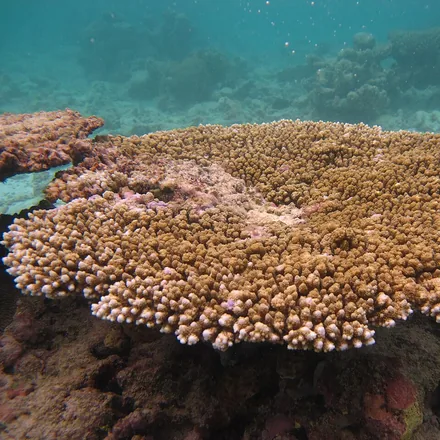
Table Coral Occasional Near Threatened
Acropora hyacinthus
Grows outward faster than it grows up, spreading a flat platform that shades out every competitor beneath it.
Where: The shallow reef flat inside the marine park. Best: Year round.
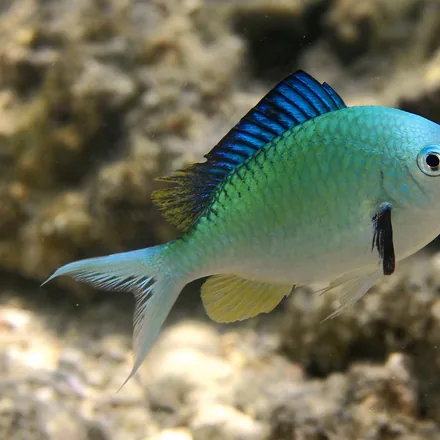
Blue-green Chromis Common
Chromis viridis
A shimmer of living jewels above the coral, hundreds of tiny blue-green fish that vanish into the branches in a blink.
Where: Above coral heads on the fringing reef. Best: November to April.
See all 33 species recorded at Hikkaduwa
Kalpitiya and the Bar Reef
The largest reef system in the country and the one with the most at stake. The Bar Reef has suffered badly from bleaching, and the shallow seagrass behind it holds the last dugong population in Sri Lanka, down to a handful of animals. November to April, with the spinner dolphin superpods offshore in the same window.
12 of 13 recorded species
Green Sea Turtle Regular
Chelonia mydas
The great grazing turtle of the tropics, the only sea turtle that turns vegetarian as an adult.
Where: Bar Reef and the surrounding shallows. Best: November to April.
Hawksbill Turtle Occasional Critically Endangered
Eretmochelys imbricata
The reef's sponge specialist, its beautiful shell also the reason it was hunted to the edge.
Where: Bar Reef Marine Sanctuary. Best: November to April.
Blacktip Reef Shark Occasional Vulnerable
Carcharhinus melanopterus
The neat little reef shark of the shallows, its black-tipped fins often cutting the surface over sun-lit sand flats.
Where: Shallow reef and sand flats around Bar Reef. Best: November to April.
Olive Ridley Turtle Occasional Vulnerable
Lepidochelys olivacea
The smallest and most numerous sea turtle, famous elsewhere for mass nestings of thousands at once.
Where: Nesting beaches around Kandakuliya, and offshore. Best: November to March. Sri Lankan waters feed animals that nest at the Odisha arribadas in India.
Powder Blue Surgeonfish Common
Acanthurus leucosternon
A stunning Andaman signature fish, powder blue with a yellow sail and a scalpel-sharp blade at the base of its tail.
Where: Grazing the coral tops of Bar Reef. Best: November to April.
Staghorn Coral Common
Acropora species
The fast-growing branching coral that builds the living thickets of the reef, nursery and shelter for a whole community.
Where: Bar Reef, the largest reef system in Sri Lanka. Best: November to April. Bar Reef was severely bleached in 1998 and again in 2016. What is there now is regrowth.
Maldives Anemonefish Regular
Amphiprion nigripes
A clownfish found only in Sri Lanka, the Maldives and the Lakshadweep, and nowhere else on earth.
Where: Anemones on the shallow coral of Bar Reef. Best: November to April.
Sebae Anemonefish Regular
Amphiprion sebae
The big dark anemonefish of the northern Indian Ocean, with a yellow tail that gives it away from a distance.
Where: Sandy margins and carpet anemones around Bar Reef. Best: November to April.
Table Coral Regular Near Threatened
Acropora hyacinthus
Grows outward faster than it grows up, spreading a flat platform that shades out every competitor beneath it.
Where: Bar Reef coral flats. Best: November to April.
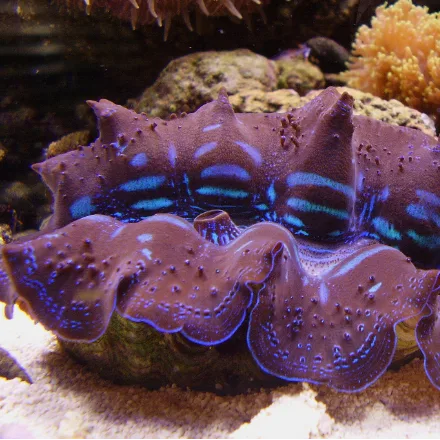
Small Giant Clam Regular
Tridacna maxima
The electric blue and green lips are not pigment for show. They are farming light, and the clam gets most of its food from algae living in its own flesh.
Where: Shallow coral of Bar Reef. Best: November to April.
Black Pyramid Butterflyfish Occasional
Hemitaurichthys zoster
They gather in the current in hundreds, and the white wedge on each flank turns the whole shoal into a drifting cloud of triangles.
Where: Current-swept edges of Bar Reef. Best: November to April.
Indian Sailfin Tang Occasional
Zebrasoma desjardinii
It raises a dorsal fin nearly as tall as its own body, and a startled one seems to double in size in front of you.
Where: Bar Reef coral tops. Best: November to April.
See all 13 species recorded at Kalpitiya and the Bar Reef
The Great Basses
A reef around a lighthouse eight kilometres off the southeast coast, workable for a few weeks in March and April when the sea drops, and closed by swell the rest of the year. The current is serious, the fish are large and unbothered, and this is where the diving on this page stops being gentle. Boats run from Kirinda and the crossing is exposed, so it is a trip that gets rescheduled rather than booked to a date.
10 of 27 recorded species
Hawksbill Turtle Occasional Critically Endangered
Eretmochelys imbricata
The reef's sponge specialist, its beautiful shell also the reason it was hunted to the edge.
Where: The reef structure and its overhangs. Best: March to April.
Green Sea Turtle Occasional
Chelonia mydas
The great grazing turtle of the tropics, the only sea turtle that turns vegetarian as an adult.
Where: Resting on ledges and feeding on the reef. Best: March to April.
Whale Shark Rare Endangered
Rhincodon typus
The biggest fish in the ocean, a spotted, bus sized filter feeder and the undisputed holy grail of tropical diving.
Where: Open water at the reef. Best: March to April. Records cluster around the Basses in the short diving season.
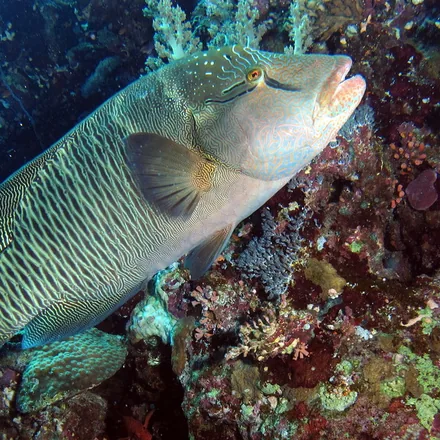
Humphead Wrasse (Napoleon Wrasse) Rare Endangered
Cheilinus undulatus
A giant, curious reef fish with thick lips and a bulging forehead, able to crunch prey that few other animals can eat.
Where: Deeper reef and gullies. Best: March to April.
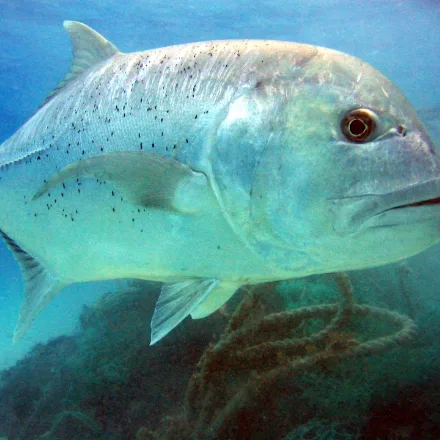
Giant Trevally Regular
Caranx ignobilis
A silver battering ram that hunts by simply outrunning everything, and has been filmed taking birds off the surface.
Where: Hunting in the current over the reef. Best: March to April. Trevally hunt the reef edge here in numbers that do not happen on the sheltered coasts.
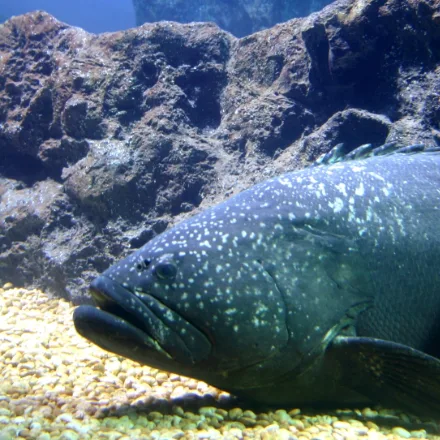
Giant Grouper Occasional
Epinephelus lanceolatus
The giant of the reef, a grouper that can grow larger than a diver and swallow prey the size of a small shark.
Where: Ledges and gullies on the Great Basses reef. Best: March to April. The Basses hold the biggest reef fish in Sri Lankan water, because the conditions keep the fishing pressure off.
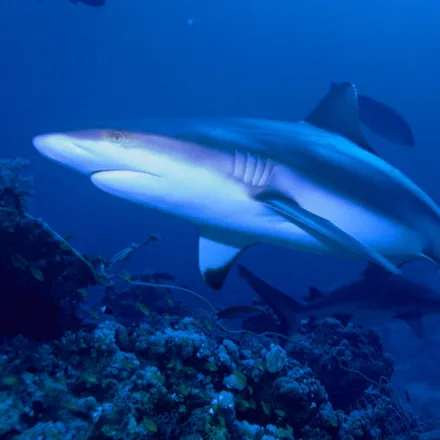
Grey Reef Shark Occasional Endangered
Carcharhinus amblyrhynchos
The classic requiem shark of the drop-off, bold and inquisitive where currents sweep the reef.
Where: The reef edge and drop-offs. Best: March to April.
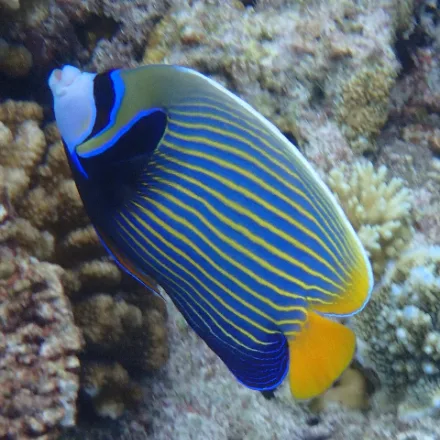
Emperor Angelfish Occasional
Pomacanthus imperator
A living work of art in electric blue and yellow stripes, its young disguised in a maze of blue and white rings.
Where: Ledges and swim-throughs in the reef structure. Best: March to April.
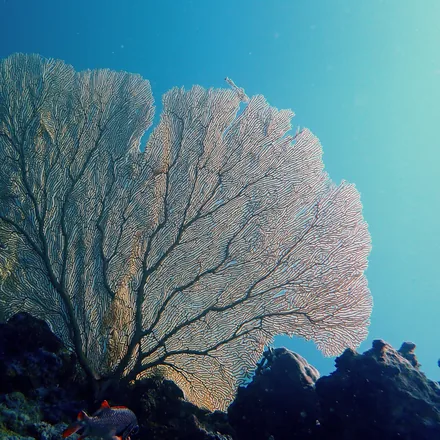
Giant Sea Fan (Gorgonian) Regular
Annella species
A great lattice fan spread across the current, a soft coral that farms the flow for plankton and shelters seahorses and hawkfish.
Where: Current swept reef faces. Best: March to April.
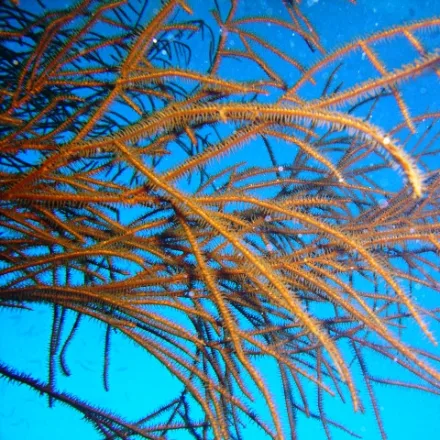
Black Coral Occasional
Antipathes dichotoma
Colonies have been aged at over four thousand years, making them among the oldest living animals on the planet.
Where: Deeper gullies and overhangs. Best: March to April.
See all 27 species recorded at The Great Basses
Planning
Four things decide a Sri Lankan dive trip. Coast and month: November to April for the west and south, May to September for the east, and this is not a preference but a hard switch driven by the monsoons. Depth of ambition: Pigeon Island and Hikkaduwa are snorkelling first and diving second, Kalpitiya is a boat trip, and the Great Basses is a proper offshore dive with current. Timing within the day: the reef sites are better early, before the day boats and before the afternoon wind puts chop on the surface, and the whale boats leave before dawn for the same reason. And expectations about coral: Sri Lanka has been hit hard by bleaching, notably in 1998 and 2016, so the structure at several of these sites is recovering rather than intact, and the fish life is consistently better than the coral.
Find diving, snorkelling and boat trips in Sri Lanka
Some links on this page are affiliate links. If you book through them, Wildseer may earn a small commission at no extra cost to you.
Frequently asked questions
When is the best time to dive in Sri Lanka?
It depends entirely on the coast. November to April for the west and south, including Hikkaduwa, Kalpitiya and the Mirissa whale boats, and May to September for the east at Trincomalee and Pigeon Island. The two seasons are opposites, so there is no bad month for the country, only a wrong coast for the month.
Where is the best snorkelling in Sri Lanka?
Pigeon Island off Nilaveli, from May to September. The reef flat is snorkellable straight from the island, the blacktip reef shark nursery sits in very shallow water, and the coral holds the full Indo-Pacific reef fish cast. Hikkaduwa is the alternative in the opposite season and is the easiest place in the country to meet a green turtle.
Can you see whale sharks in Sri Lanka?
They are recorded on both coasts, November to April in the west and south and May to September in the east, but they are not a reliable sighting anywhere on the island in the way they are at some sites in the Maldives or Thailand. Treat one as a piece of luck on a trip you were taking anyway.
Is the coral in Sri Lanka any good?
Honestly, it is mixed. The island’s reefs were hit hard by the 1998 and 2016 bleaching events and several of the best known sites are in recovery rather than in good health. Pigeon Island holds the best remaining structure. The fish life across all these sites is consistently better than the coral, and the Great Basses is about large fish and current rather than coral at all.
What are the Great Basses like?
A reef around a lighthouse eight kilometres offshore, divable for a few weeks in March and April and closed by swell the rest of the year. Strong current, large fish, and an exposed crossing from Kirinda that gets cancelled regularly. It is the most serious diving in the country and it is not a beginner’s site.
Part of the Wildlife in Sri Lanka guide.
Image credits
Square thumbnails are cropped from the original. Wide banner images are cropped to a band. Other images are resized only. No other changes have been made.
- snorkelling-diving-sri-lanka: AntanO | CC BY-SA 4.0, cropped
- Whale Shark (resized): Jerome Paillet (IFREMER) | CC BY 4.0, cropped
- Reef Manta Ray (cropped): Peter Southwood (Pbsouthwood) | CC BY-SA 3.0
- Green sea turtle: Unsplash | Unsplash License, cropped
- Blacktip reef shark: David Clode | Unsplash License, cropped
- Powder Blue Surgeonfish (cropped to square): Amada44 | CC BY-SA 3.0, cropped
- Hawksbill Turtle (cropped to square): Daniel Sasse | CC BY-SA 4.0, cropped
- Green Sea Turtle: Randall Ruiz | Unsplash License, cropped
- Loggerhead Turtle (cropped to square): Eco cruising | CC BY-SA 4.0, cropped
- Whale Shark (cropped to square): Jerome Paillet (IFREMER) | CC BY 4.0, cropped
- Blacktip Reef Shark: David Clode | Unsplash License, cropped
- Reef Manta Ray (cropped to square): National Marine Sanctuaries | Public domain, cropped
- Staghorn Coral (cropped to square): MDC Seamarc Maldives | CC BY-SA 4.0, cropped
- Black Pyramid Butterflyfish: Jean-Paul Boerekamps | CC0, cropped
- Indian Sailfin Tang: Hectonichus | CC BY-SA 3.0, cropped
- Maldives Anemonefish: Jan Derk | Public domain, cropped
- Sebae Anemonefish: Ranjithsiji | CC BY-SA 3.0, cropped
- Titan Triggerfish (cropped to square): Bernard DUPONT | CC BY-SA 2.0, cropped
- Yellowhead Butterflyfish: Ahmed Abdul Rahman for MDC Seamarc Maldives | CC BY-SA 4.0, cropped
- Olive Ridley Turtle (cropped to square): Bernard Gagnon | CC BY-SA 3.0, cropped
- Bluestreak Cleaner Wrasse (cropped to square): Bernard DUPONT | CC BY-SA 2.0, cropped
- Moorish Idol (cropped to square): Jean-Paul Boerekamps | CC0, cropped
- Bluespotted Ribbontail Ray (resized): Derek Keats from Johannesburg, South Africa | CC BY 2.0, cropped
- Magnificent Sea Anemone (cropped to square): Bernard DUPONT | CC BY-SA 2.0, cropped
- Table Coral (cropped to square): MDC Seamarc Maldives | CC BY-SA 4.0, cropped
- Blue-green Chromis (cropped to square): Philippe Bourjon | CC BY-SA 4.0, cropped
- Small Giant Clam: RevolverOcelot | CC BY-SA 3.0, cropped
- Humphead Wrasse (cropped to square): Derek Keats | CC BY 2.0, cropped
- Giant Trevally (cropped to square): Dr. Dwayne Meadows, NOAA/NMFS/OPR | Public domain, cropped
- Giant Grouper (cropped to square): Manuel Heinrich Emha | CC BY-SA 2.5, cropped
- Grey Reef Shark (cropped to square): Albert kok | CC BY-SA 3.0, cropped
- Emperor Angelfish (cropped to square): Jean-Paul Boerekamps | CC0, cropped
- Giant Sea Fan (cropped to square): Frederic Ducarme | CC BY-SA 4.0, cropped
- Black Coral (cropped to square): Fernándo Herranz Martín | GPL, cropped
Square thumbnails are cropped from the original. Wide banner images are cropped to a band. Other images are resized only. No other changes have been made.
- snorkelling-diving-sri-lanka: AntanO | CC BY-SA 4.0, cropped
- Whale Shark (resized): Jerome Paillet (IFREMER) | CC BY 4.0, cropped
- Reef Manta Ray (cropped): Peter Southwood (Pbsouthwood) | CC BY-SA 3.0
- Green sea turtle: Unsplash | Unsplash License, cropped
- Blacktip reef shark: David Clode | Unsplash License, cropped
- Powder Blue Surgeonfish (cropped to square): Amada44 | CC BY-SA 3.0, cropped
- Hawksbill Turtle (cropped to square): Daniel Sasse | CC BY-SA 4.0, cropped
- Green Sea Turtle: Randall Ruiz | Unsplash License, cropped
- Loggerhead Turtle (cropped to square): Eco cruising | CC BY-SA 4.0, cropped
- Whale Shark (cropped to square): Jerome Paillet (IFREMER) | CC BY 4.0, cropped
- Blacktip Reef Shark: David Clode | Unsplash License, cropped
- Reef Manta Ray (cropped to square): National Marine Sanctuaries | Public domain, cropped
- Staghorn Coral (cropped to square): MDC Seamarc Maldives | CC BY-SA 4.0, cropped
- Black Pyramid Butterflyfish: Jean-Paul Boerekamps | CC0, cropped
- Indian Sailfin Tang: Hectonichus | CC BY-SA 3.0, cropped
- Maldives Anemonefish: Jan Derk | Public domain, cropped
- Sebae Anemonefish: Ranjithsiji | CC BY-SA 3.0, cropped
- Titan Triggerfish (cropped to square): Bernard DUPONT | CC BY-SA 2.0, cropped
- Yellowhead Butterflyfish: Ahmed Abdul Rahman for MDC Seamarc Maldives | CC BY-SA 4.0, cropped
- Olive Ridley Turtle (cropped to square): Bernard Gagnon | CC BY-SA 3.0, cropped
- Bluestreak Cleaner Wrasse (cropped to square): Bernard DUPONT | CC BY-SA 2.0, cropped
- Moorish Idol (cropped to square): Jean-Paul Boerekamps | CC0, cropped
- Bluespotted Ribbontail Ray (resized): Derek Keats from Johannesburg, South Africa | CC BY 2.0, cropped
- Magnificent Sea Anemone (cropped to square): Bernard DUPONT | CC BY-SA 2.0, cropped
- Table Coral (cropped to square): MDC Seamarc Maldives | CC BY-SA 4.0, cropped
- Blue-green Chromis (cropped to square): Philippe Bourjon | CC BY-SA 4.0, cropped
- Small Giant Clam: RevolverOcelot | CC BY-SA 3.0, cropped
- Humphead Wrasse (cropped to square): Derek Keats | CC BY 2.0, cropped
- Giant Trevally (cropped to square): Dr. Dwayne Meadows, NOAA/NMFS/OPR | Public domain, cropped
- Giant Grouper (cropped to square): Manuel Heinrich Emha | CC BY-SA 2.5, cropped
- Grey Reef Shark (cropped to square): Albert kok | CC BY-SA 3.0, cropped
- Emperor Angelfish (cropped to square): Jean-Paul Boerekamps | CC0, cropped
- Giant Sea Fan (cropped to square): Frederic Ducarme | CC BY-SA 4.0, cropped
- Black Coral (cropped to square): Fernándo Herranz Martín | GPL, cropped