
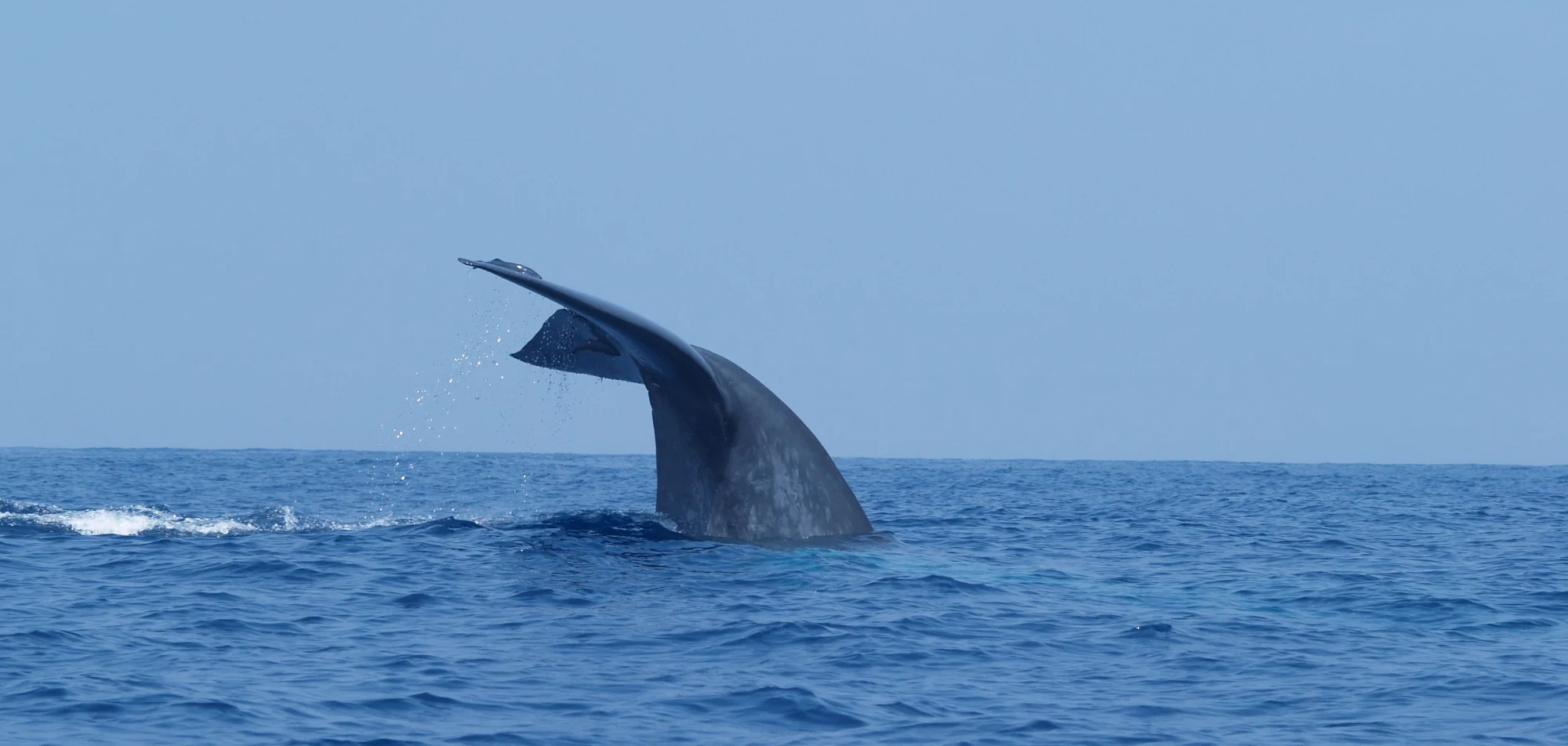
Sri Lanka is the most reliable place on earth to see a blue whale from a small boat, and the reason is geology rather than luck. The continental shelf, which almost everywhere else runs tens of kilometres out to sea, passes within a few kilometres of Dondra Head at the island’s southern tip. Deep water, and the upwelling that comes with it, sits close enough to shore that a boat leaving Mirissa at first light is over blue whale ground inside an hour.
The animals themselves are unusual too. The blue whales of the northern Indian Ocean are a largely resident population that never makes the long polar migration their Atlantic and Pacific relatives do, so they are in these waters all year and simply shift coast with the monsoon. That is the single most useful thing to understand before booking: Sri Lanka does not have a whale season, it has two, on opposite sides of the island, and picking the wrong coast for the month is the commonest way to waste a trip. Every species below is recorded at that site in the Wildseer database, with the months and an honest read on your chances.
Highlights
Blue Whale
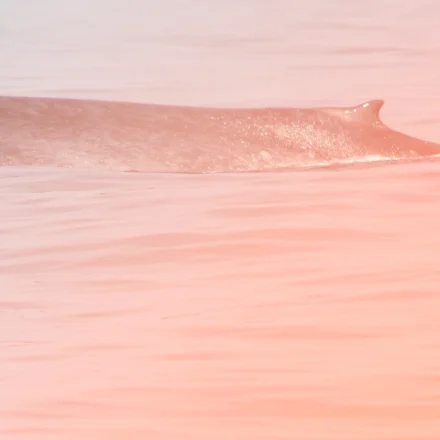
The largest animal that has ever lived, and off Sri Lanka a population that mostly does not migrate, which is why it can be seen almost year round. Where: The shelf edge a few kilometres offshore. Best: Nov-Apr, leaving port at first light.
Sperm Whale
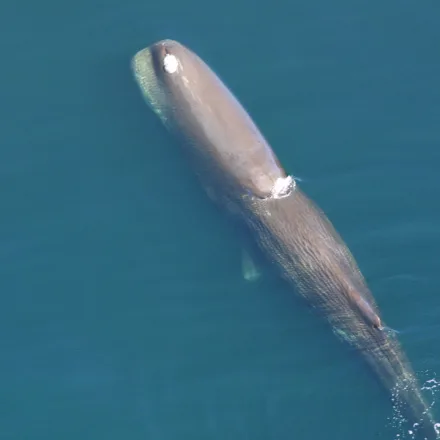
The deepest diving mammal on earth, hunting squid two kilometres down, and occasionally gathering off Sri Lanka in pods of hundreds. Where: Deep water beyond the shelf edge. Best: Nov-Apr.
Bryde's Whale
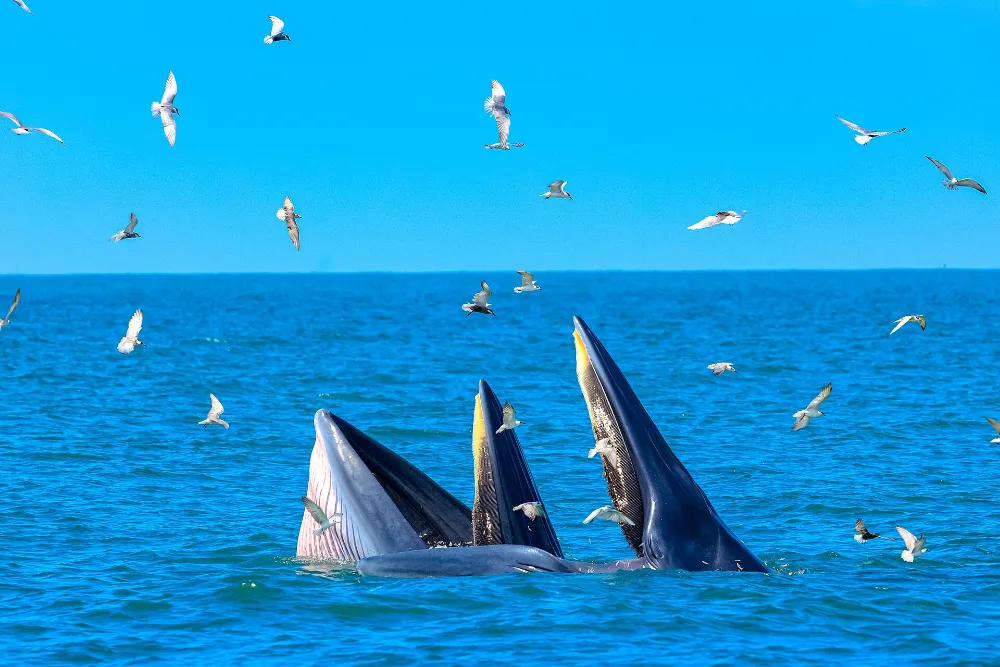
A warm-water baleen whale that lunges up through bait balls with its mouth wide open. Where: Offshore, often in the same water as the blue whales. Best: November to April.
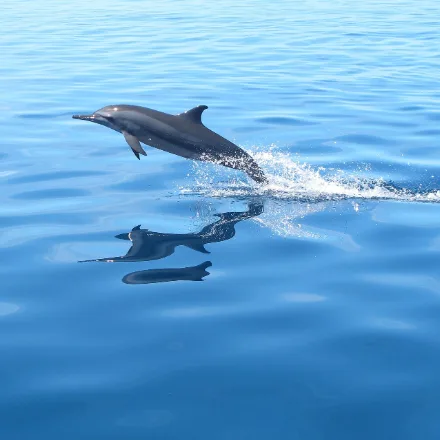
Spinner Dolphin
A small, slender dolphin that leaps clear of the sea and spins like a top in mid-air. Where: Bow riding on the run out to the whale grounds. Best: November to April.
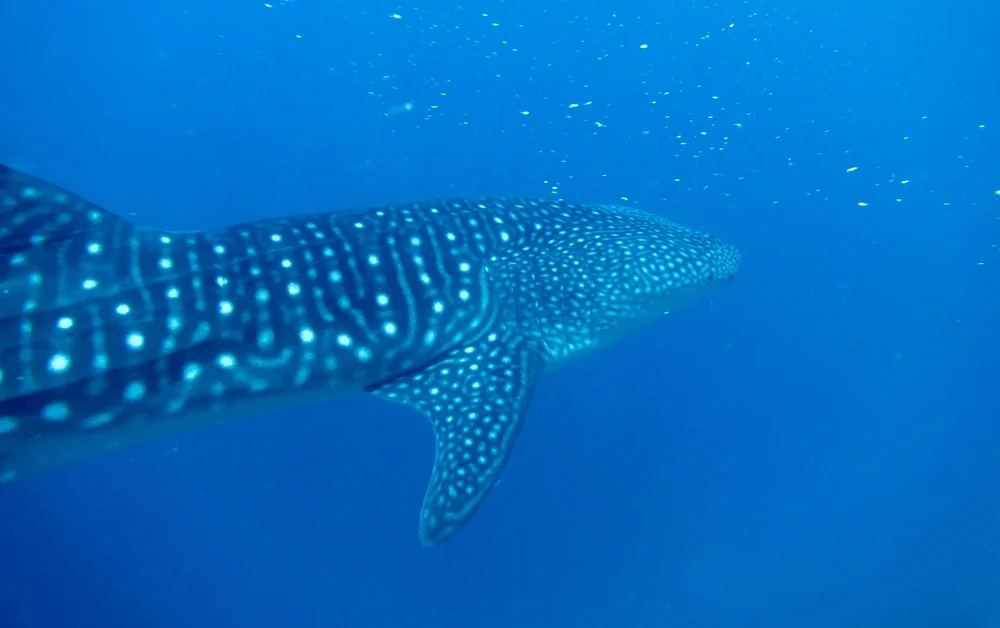
Whale Shark
The biggest fish in the ocean, a spotted, bus sized filter feeder and the undisputed holy grail of tropical diving. Where: Blue water offshore. Best: November to April.
Mirissa and the south coast
The headline destination and the one that earns it. Boats leave before dawn and run out to the shelf edge a few kilometres offshore, which is close enough that the whole trip fits into a morning. November to April, with the peak in the middle of that window. Blue whales are the draw, Bryde’s whales are the animal most people actually see most often, and spinner dolphins bow ride on the way out.
12 of 12 recorded species
Blue Whale Regular Endangered
Balaenoptera musculus
The largest animal that has ever lived, and off Sri Lanka a population that mostly does not migrate, which is why it can be seen almost year round.
Where: The shelf edge a few kilometres offshore. Best: Nov-Apr, leaving port at first light. Deep water is a short boat ride from the beach, and the fleet is large in peak season.
Sperm Whale Rare Vulnerable
Physeter macrocephalus
The deepest diving mammal on earth, hunting squid two kilometres down, and occasionally gathering off Sri Lanka in pods of hundreds.
Where: Deep water beyond the shelf edge. Best: Nov-Apr. Secondary to blue whale here but a genuine possibility.
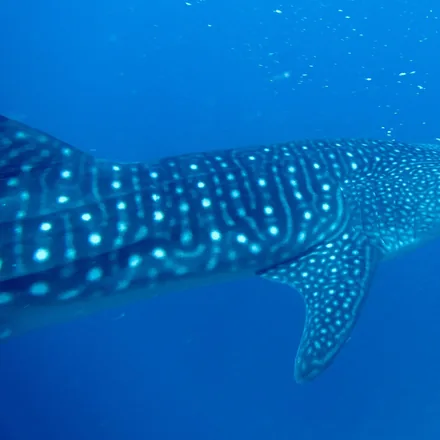
Whale Shark Rare Endangered
Rhincodon typus
The biggest fish in the ocean, a spotted, bus sized filter feeder and the undisputed holy grail of tropical diving.
Where: Blue water offshore. Best: November to April.
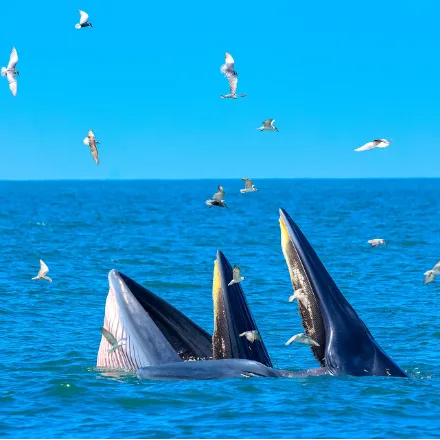
Bryde's Whale Regular
Balaenoptera edeni
A warm-water baleen whale that lunges up through bait balls with its mouth wide open.
Where: Offshore, often in the same water as the blue whales. Best: November to April. The whale most often mistaken for a blue whale here. Three dorsal ridges on the head is the tell.
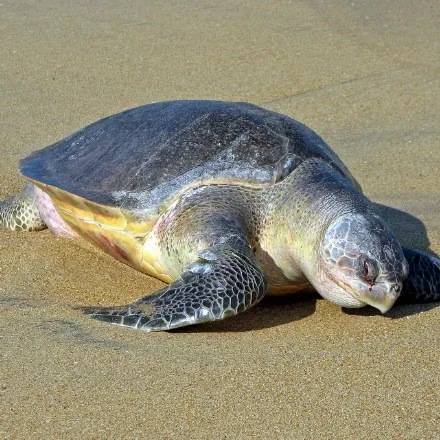
Olive Ridley Turtle Occasional Vulnerable
Lepidochelys olivacea
The smallest and most numerous sea turtle, famous elsewhere for mass nestings of thousands at once.
Where: Offshore water on the whale watching route. Best: November to March. Often seen at the surface between whale sightings.
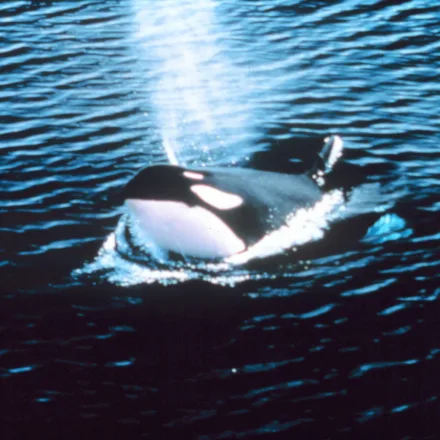
Killer Whale Very rare
Orcinus orca
The ocean's top predator, and off Sri Lanka they are known to hunt other whales, which is a thing very few people ever witness.
Where: Deep water off the shelf edge, occasionally alongside the blue whale boats. Best: December to April. An exceptional sighting even for the skippers who work this water daily.
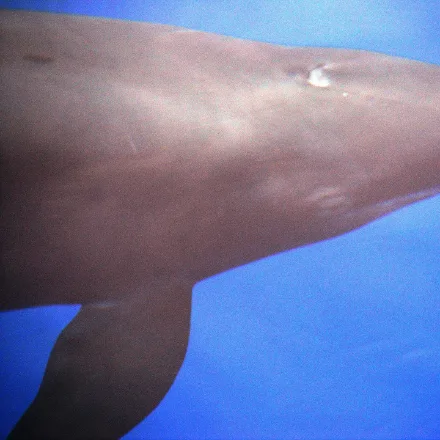
False Killer Whale Rare Near Threatened
Pseudorca crassidens
Has been recorded offering captured fish to divers and to other dolphins, apparently as a gift.
Where: Deep water offshore. Best: November to April.
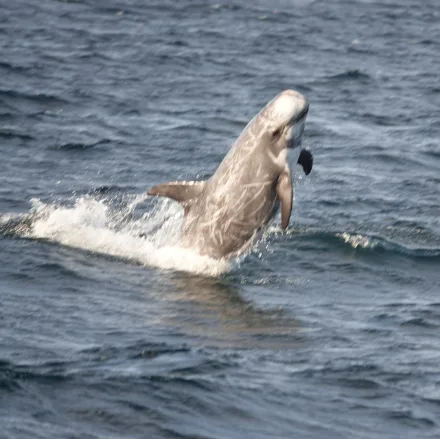
Risso's Dolphin Occasional
Grampus griseus
Old males are almost white, scarred head to tail by the teeth of other Risso's and the beaks of the squid they eat.
Where: Deep water beyond the shelf edge. Best: November to April. Older animals are so heavily scarred they look almost white.
Spinner Dolphin Common
Stenella longirostris
A small, slender dolphin that leaps clear of the sea and spins like a top in mid-air.
Where: Bow riding on the run out to the whale grounds. Best: November to April. Often the first thing you see, and frequently in hundreds.
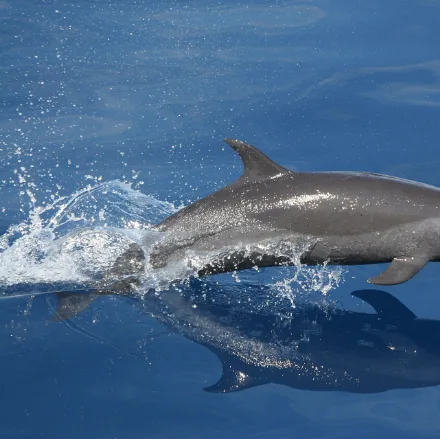
Pantropical Spotted Dolphin Occasional
Stenella attenuata
Calves are born unspotted and acquire their speckling through life, so you can read a dolphin's age off its skin.
Where: Deeper water offshore. Best: November to April.
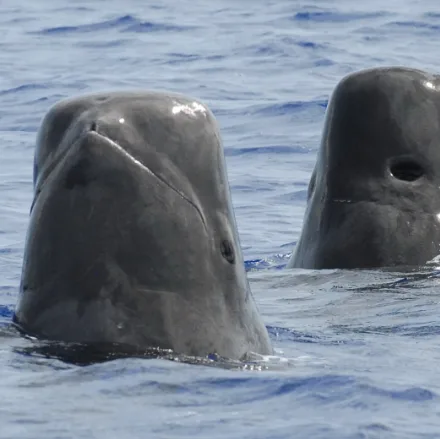
Short-finned Pilot Whale Occasional
Globicephala macrorhynchus
Females go through menopause and live decades beyond breeding, one of only a handful of species on earth that do.
Where: Deep water offshore, usually in tight social groups. Best: November to April.
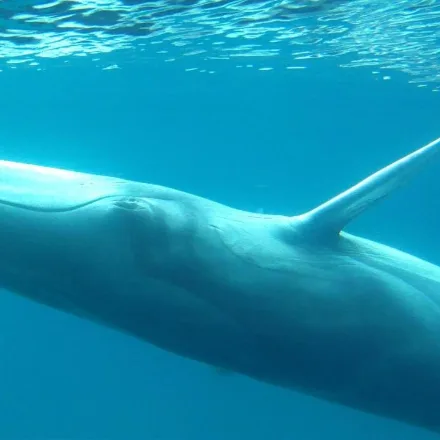
Omura's Whale Very rare
Balaenoptera omurai
Only described as a species in 2003, and not seen alive and confirmed in the wild until 2015.
Where: Offshore water. Best: November to April. Only confirmed as a living species this century.
See all 12 species recorded at Mirissa and the south coast
Trincomalee and the east coast
The other half of the calendar. When the southwest monsoon shuts the south coast down from May, the whales move round to the east and Trincomalee becomes the place to be, roughly May to September. Sperm whales are the difference here: the east coast produces them far more often than the south, sometimes in large loose aggregations, and a sperm whale surfacing beside a small boat is a bigger moment than the numbers suggest.
6 of 6 recorded species
Blue Whale Occasional Endangered
Balaenoptera musculus
The largest animal that has ever lived, and off Sri Lanka a population that mostly does not migrate, which is why it can be seen almost year round.
Where: Deep water off the east coast. Best: May-Sep. The mirror season to Mirissa, and far fewer boats.
Sperm Whale Occasional Vulnerable
Physeter macrocephalus
The deepest diving mammal on earth, hunting squid two kilometres down, and occasionally gathering off Sri Lanka in pods of hundreds.
Where: Deep water off the east coast. Best: May-Sep. The best chance in Sri Lankan water, and the reason the east coast season is worth the journey.
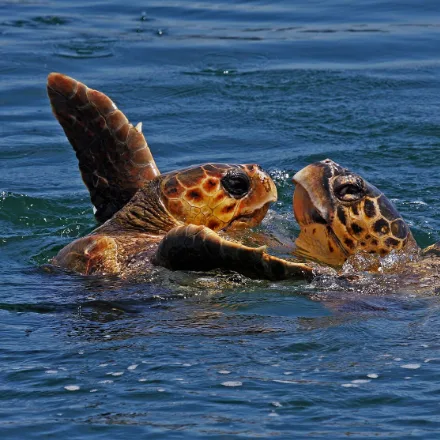
Loggerhead Turtle Rare Vulnerable
Caretta caretta
Jaws powerful enough to crush a queen conch, and it navigates ocean basins by reading the earth's magnetic field.
Where: Coastal water and reef edges, usually juveniles. Best: May to September.
Whale Shark Rare Endangered
Rhincodon typus
The biggest fish in the ocean, a spotted, bus sized filter feeder and the undisputed holy grail of tropical diving.
Where: Blue water beyond the reef. Best: May to September.
Spinner Dolphin Common
Stenella longirostris
A small, slender dolphin that leaps clear of the sea and spins like a top in mid-air.
Where: Offshore on the run out to the whale grounds. Best: May to September.
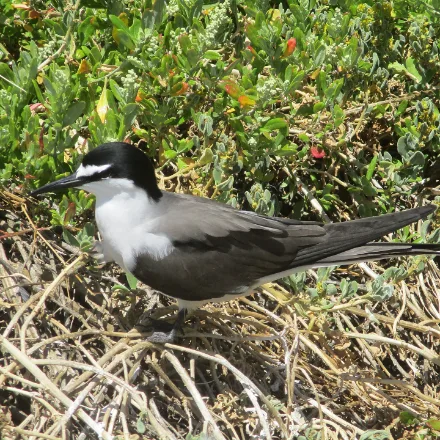
Bridled Tern Occasional
Onychoprion anaethetus
Spends most of the year entirely at sea, feeding on fish driven to the surface by tuna hunting below.
Where: Offshore water and the islet itself. Best: May to September.
See all 6 species recorded at Trincomalee and the east coast
Kalpitiya and the northwest
Dolphins first, whales second, and worth understanding as a different trip rather than a lesser one. Kalpitiya’s spinner dolphin pods run to hundreds and occasionally into the thousands, which is a spectacle nowhere else on the island matches. Blue and sperm whales are out there beyond the Bar Reef in December to April, but they are a full day offshore and a genuine long shot rather than the reason to come.
7 of 7 recorded species
Blue Whale Rare Endangered
Balaenoptera musculus
The largest animal that has ever lived, and off Sri Lanka a population that mostly does not migrate, which is why it can be seen almost year round.
Where: Offshore in the deeper water beyond the Bar Reef. Best: Dec-Apr. Secondary to the dolphins here, but recorded.
Sperm Whale Rare Vulnerable
Physeter macrocephalus
The deepest diving mammal on earth, hunting squid two kilometres down, and occasionally gathering off Sri Lanka in pods of hundreds.
Where: Offshore deep water. Best: Dec-Apr. Recorded alongside the spinner dolphin superpods.
Bryde's Whale Occasional
Balaenoptera edeni
A warm-water baleen whale that lunges up through bait balls with its mouth wide open.
Where: Offshore, often alongside the dolphin pods. Best: November to April.
Olive Ridley Turtle Occasional Vulnerable
Lepidochelys olivacea
The smallest and most numerous sea turtle, famous elsewhere for mass nestings of thousands at once.
Where: Nesting beaches around Kandakuliya, and offshore. Best: November to March. Sri Lankan waters feed animals that nest at the Odisha arribadas in India.
Killer Whale Very rare
Orcinus orca
The ocean's top predator, and off Sri Lanka they are known to hunt other whales, which is a thing very few people ever witness.
Where: Blue water beyond the shelf edge on a full day boat trip. Best: December to April. Predation on other whales has been recorded in these waters.
False Killer Whale Rare Near Threatened
Pseudorca crassidens
Has been recorded offering captured fish to divers and to other dolphins, apparently as a gift.
Where: Deep water offshore. Best: November to April.
Spinner Dolphin Common
Stenella longirostris
A small, slender dolphin that leaps clear of the sea and spins like a top in mid-air.
Where: Open water off the Kalpitiya peninsula, on the early boats. Best: November to April. Super-pods of many hundreds and sometimes over a thousand animals. The largest dolphin spectacle in South Asia and the reason to come here.
See all 7 species recorded at Kalpitiya and the northwest
Planning
Season decides everything. The south and west coasts run roughly November to April, with December to March the most settled water, and Mirissa is the base. The east coast runs the opposite way, roughly May to September, from Trincomalee. Kalpitiya sits with the south on a December to April window. Boats leave in the dark and are usually back by late morning, because the sea builds through the day and flat water is what lets you spot a blow at distance. Sightings are counted in blows and backs rather than breaches: a blue whale announces itself with a vertical column of spray up to nine metres high, visible far further than the animal is, and the fluke as it sounds is the photograph everybody wants and few get. Seasickness is the most common thing that ruins a morning, and the sea is nearly always calmer in the first two hours after sunrise.
Find whale watching and dolphin trips in Sri Lanka
Some links on this page are affiliate links. If you book through them, Wildseer may earn a small commission at no extra cost to you.
Frequently asked questions
When is the best time for whale watching in Sri Lanka?
November to April on the south coast from Mirissa, and May to September on the east coast from Trincomalee. The whales stay in Sri Lankan water year round and move around the island with the monsoon, so there is no closed season nationally, only a wrong coast for the month.
Where is the best place to see blue whales in Sri Lanka?
Mirissa, between November and April. The continental shelf comes within a few kilometres of Dondra Head, so the deep water blue whales feed in is closer to shore there than almost anywhere else in the world. Trincomalee takes over from May to September.
What are the chances of seeing a blue whale?
Good in the right window and on the right coast, but not guaranteed, and it is worth setting the expectation properly. Bryde’s whales and spinner dolphins are the more frequent sightings out of Mirissa, and a morning that produces those and no blue whale is a normal morning rather than a failed one.
Can you see sperm whales in Sri Lanka?
Yes, and the east coast is where. Trincomalee produces them from May to September, sometimes in large loose groups, and they are recorded off the south coast between November and April as well, though far less often.
Do you need to go out for a whole day?
Not on the south coast. Mirissa boats are usually back by late morning because the ground is close inshore. Kalpitiya is the exception: reaching whale water there means a full day offshore, which is why it is better thought of as a dolphin trip that sometimes turns up a whale.
Explore Sri Lanka wildlife by group
Part of the Wildlife in Sri Lanka guide.
Image credits
Square thumbnails are cropped from the original. Wide banner images are cropped to a band. Other images are resized only. No other changes have been made.
- Blue whale fluke off southern Sri Lanka: Dirk | Pexels Licence, cropped
- Blue Whale (cropped to square): Tero Linjama | CC0, cropped
- Sperm Whale: NOAA Photo Library | Public domain, cropped
- brydes-whale (resized): Chainfoto | CC BY 4.0, cropped
- Spinner Dolphin (cropped to square): Alexia Pihier for MDC SeaMarc Maldives | CC BY-SA 4.0, cropped
- Whale Shark (resized): Jerome Paillet (IFREMER) | CC BY 4.0, cropped
- Whale Shark (cropped to square): Jerome Paillet (IFREMER) | CC BY 4.0, cropped
- Bryde’s Whale (cropped to square): Chainfoto | CC BY 4.0, cropped
- Olive Ridley Turtle (cropped to square): Bernard Gagnon | CC BY-SA 3.0, cropped
- Killer Whale: NOAA, United States National Oceanic and Atmospheric Administration | Public domain, cropped
- False Killer Whale (cropped to square): Ricardo Fernandes | CC BY-SA 3.0, cropped
- Risso’s Dolphin (cropped to square): Lucy Keith-Diagne | CC BY 4.0, cropped
- Pantropical Spotted Dolphin (cropped to square): NOAA Photo Library | Public domain, cropped
- Short-finned Pilot Whale (cropped to square): Adam U / NOAA/NMFS/Pacific Islands Fisheries Science Center Blog 2013 07 29 | Public domain, cropped
- Omura’s Whale (cropped to square): Salvatore Cerchio et al. / Royal Society Open Science | CC BY 4.0, cropped
- Loggerhead Turtle (cropped to square): Eco cruising | CC BY-SA 4.0, cropped
- Bridled Tern (cropped to square): Calistemon | CC BY-SA 4.0, cropped
Square thumbnails are cropped from the original. Wide banner images are cropped to a band. Other images are resized only. No other changes have been made.
- Blue whale fluke off southern Sri Lanka: Dirk | Pexels Licence, cropped
- Blue Whale (cropped to square): Tero Linjama | CC0, cropped
- Sperm Whale: NOAA Photo Library | Public domain, cropped
- brydes-whale (resized): Chainfoto | CC BY 4.0, cropped
- Spinner Dolphin (cropped to square): Alexia Pihier for MDC SeaMarc Maldives | CC BY-SA 4.0, cropped
- Whale Shark (resized): Jerome Paillet (IFREMER) | CC BY 4.0, cropped
- Whale Shark (cropped to square): Jerome Paillet (IFREMER) | CC BY 4.0, cropped
- Bryde’s Whale (cropped to square): Chainfoto | CC BY 4.0, cropped
- Olive Ridley Turtle (cropped to square): Bernard Gagnon | CC BY-SA 3.0, cropped
- Killer Whale: NOAA, United States National Oceanic and Atmospheric Administration | Public domain, cropped
- False Killer Whale (cropped to square): Ricardo Fernandes | CC BY-SA 3.0, cropped
- Risso’s Dolphin (cropped to square): Lucy Keith-Diagne | CC BY 4.0, cropped
- Pantropical Spotted Dolphin (cropped to square): NOAA Photo Library | Public domain, cropped
- Short-finned Pilot Whale (cropped to square): Adam U / NOAA/NMFS/Pacific Islands Fisheries Science Center Blog 2013 07 29 | Public domain, cropped
- Omura’s Whale (cropped to square): Salvatore Cerchio et al. / Royal Society Open Science | CC BY 4.0, cropped
- Loggerhead Turtle (cropped to square): Eco cruising | CC BY-SA 4.0, cropped
- Bridled Tern (cropped to square): Calistemon | CC BY-SA 4.0, cropped