
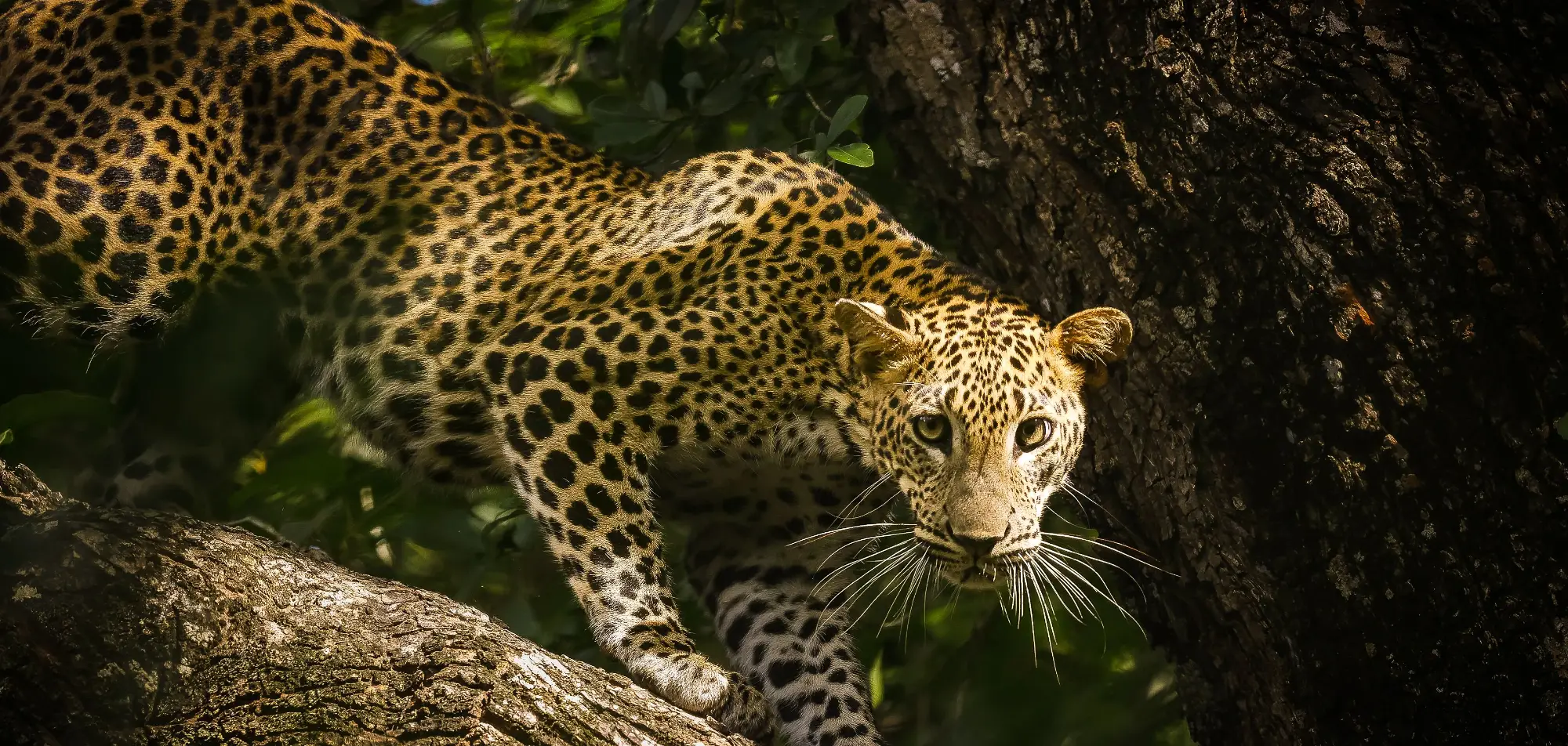
Sri Lanka has somewhere between eight hundred and a thousand wild leopards, and it is almost certainly the easiest country in the world to see one. That is not because there are more of them here than in Africa or India. It is because of what is missing. There is no tiger on this island, no lion, no wolf and no leopard-sized competitor of any kind, so Panthera pardus kotiya sits at the top of the food chain alone. An animal with nothing above it behaves differently: it hunts in daylight, it lies out on open rock in the morning sun, and it walks down the middle of a park track instead of skirting it.
That single fact is the whole reason this page exists. Seven parks below hold leopards and are worth the journey for one, ranked by how likely you actually are to connect rather than by reputation. Every line comes from the Wildseer database, so the months are the ones the animals keep.
The seven parks, ranked by your actual odds
One card, seven places. The likelihood badge is the honest read on each: Regular means most multi-day visitors connect, Very rare means you should go for the habitat and treat a cat as a bonus.
7 places
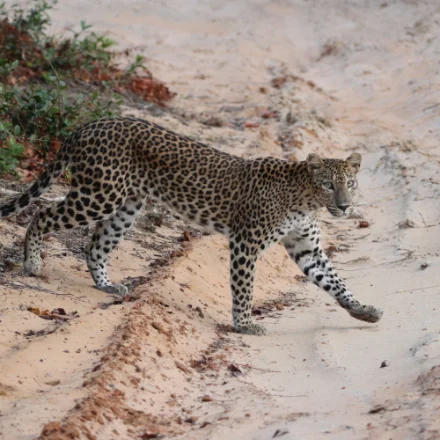
Sri Lankan Leopard Regular Endangered
Panthera pardus kotiya
The largest leopard subspecies in the world, and on this island it is the top predator, which changes how it behaves.
Yala: Rock outcrops, track edges and waterholes in Block 1. Best: Feb-Jul, first and last two hours of light. The highest leopard density recorded anywhere. Listen for chital alarm calls, which is how every guide finds them.
Wilpattu: Track edges and the margins of the villus. Best: Feb-Oct, early morning. Fewer cats and far fewer jeeps than Yala. Better watching when you do connect.
Kumana: Forest edge and lagoon margins. Best: Apr-Jul. Yala's eastern neighbour, quieter, same population.
Arugam Bay: The Panama and Kumana road at dawn and dusk. Best: May to September. Leopards use the beach road here, which is why the east coast has a reputation the guidebooks rarely explain.
Wasgamuwa: Dry evergreen forest and the riverine strips, usually before light. Best: Year round. Present and seldom seen. The forest here is denser than Yala and the animal has cover.
Gal Oya: Rock outcrops and forest above the reservoir. Best: March to July. Gal Oya's leopards are far less habituated to vehicles than Yala's, which cuts both ways.
Horton Plains: Montane forest and grassland edge. Best: Year round, dawn. A genuinely different habitat for the animal, and a genuinely rare sighting.
Yala, and the honest case for and against it
Block 1 of Yala carries the highest density of leopards ever recorded anywhere on earth. That is the reason it is famous and the reason it is crowded, and both halves of that sentence matter. On a good morning you can watch a cat on a rock outcrop for twenty minutes. On a bad one you join a line of vehicles at a sighting somebody else found, see a tail through the scrub, and move on.
The season is February to July, and it is not a soft preference. Water shrinks through those months, the animals concentrate on what is left, and the scrub thins enough to see through. The first and last two hours of light are when leopards move. Block 1 normally closes for several weeks around September and October when the drought is at its worst, so check the current dates before fixing a trip around it.
The thing worth knowing before you go is that almost nobody finds a leopard by looking for a leopard. They are found by sound. Chital give a single sharp bark when they see one, and every driver in the park is listening for it rather than scanning the scrub. Learn that call and you will understand what is happening around you for the whole drive, which changes the experience even on a blank morning.
Wilpattu, Kumana and the case for going quieter
Wilpattu is the trade every returning visitor eventually makes. Fewer cats and far fewer vehicles, so the odds per drive are lower and the quality of the sighting when it comes is much higher. The park is built around villus, natural sand-rimmed lakes in dry forest, and leopards work their margins at first light. February to October, early morning, and a genuine chance of having the animal to yourself.
Kumana is Yala’s eastern neighbour, sharing the same population across an invisible boundary, with a fraction of the traffic and a serious bird list on top. April to July. Arugam Bay is the outlier on this page and the one nobody expects: leopards use the Panama and Kumana road at dawn and dusk, which is why the east coast has a quiet reputation among people who drive it in May to September.
Wasgamuwa and Gal Oya are for the traveller who wants forest more than certainty. Both hold leopards, both are dense enough that the animal has real cover, and Gal Oya’s cats are far less habituated to vehicles than Yala’s, which cuts both ways: a rarer sighting, and a wilder one when it happens. Horton Plains is the strangest entry here. A montane leopard on cloud-forest grassland at dawn is a genuinely different animal in a genuinely different world, and it is a very rare piece of luck.
What a leopard sighting actually looks like
Three drives in Yala in February gives most people a leopard. One drive gives you a coin toss. That is the shape of it, and it is worth planning around rather than hoping through: two nights at a park beats one night at two parks almost every time, because the second and third drives are where the odds compound and where you start reading the alarm calls instead of just hearing them.
The sighting itself is usually shorter and further away than the photographs suggest. A cat crossing a track forty metres ahead, or lying along a branch with only the tail hanging. Binoculars matter more than a long lens for most people. And the animals you will certainly see while looking are the reason the parks are worth it anyway: sloth bear, elephant, mugger crocodile, and in Yala a bird list that runs to hundreds of species.
Find wildlife safaris and park drives in Sri Lanka
Some links on this page are affiliate links. If you book through them, Wildseer may earn a small commission at no extra cost to you. No venue pays to appear here and none ever will.
Frequently asked questions
Where is the best place to see a leopard in Sri Lanka?
Yala National Park, Block 1, which holds the highest recorded leopard density anywhere in the world. February to July, in the first and last two hours of light. Wilpattu is the better choice if you would rather have a quieter sighting and can accept lower odds per drive.
What are the chances of seeing a leopard in Yala?
Good over several drives and a coin toss on any single one. Most visitors who do three drives in the February to July window connect. One morning drive is a gamble, which is the single most common way people leave disappointed.
Why are leopards easier to see in Sri Lanka than anywhere else?
Because nothing competes with them. The island has no tiger, no lion and no other large predator, so the leopard is the apex animal and behaves like one. It hunts in daylight, rests in the open and uses tracks and rock outcrops rather than staying hidden, which is not how the same species behaves in India or Africa.
When is the best time of year for leopards in Sri Lanka?
February to July at Yala and Kumana, February to October at Wilpattu, and May to September on the east coast. The pattern is the same everywhere: as the dry season deepens the water shrinks, the animals concentrate and the scrub thins.
How many leopards are left in Sri Lanka?
Roughly eight hundred to a thousand. The Sri Lankan leopard is an endemic subspecies, Panthera pardus kotiya, and it is listed as Endangered.
More on Sri Lanka wildlife
Part of the Wildlife in Sri Lanka guide.
Image credits
Square thumbnails are cropped from the original. Wide banner images are cropped to a band. Other images are resized only. No other changes have been made.
- Sri Lankan leopard descending a tree: Rajee Kumar | Pexels Licence, cropped
- Sri Lankan Leopard (cropped to square): lasitha kulatileke | Pexels Licence, cropped
Square thumbnails are cropped from the original. Wide banner images are cropped to a band. Other images are resized only. No other changes have been made.
- Sri Lankan leopard descending a tree: Rajee Kumar | Pexels Licence, cropped
- Sri Lankan Leopard (cropped to square): lasitha kulatileke | Pexels Licence, cropped