
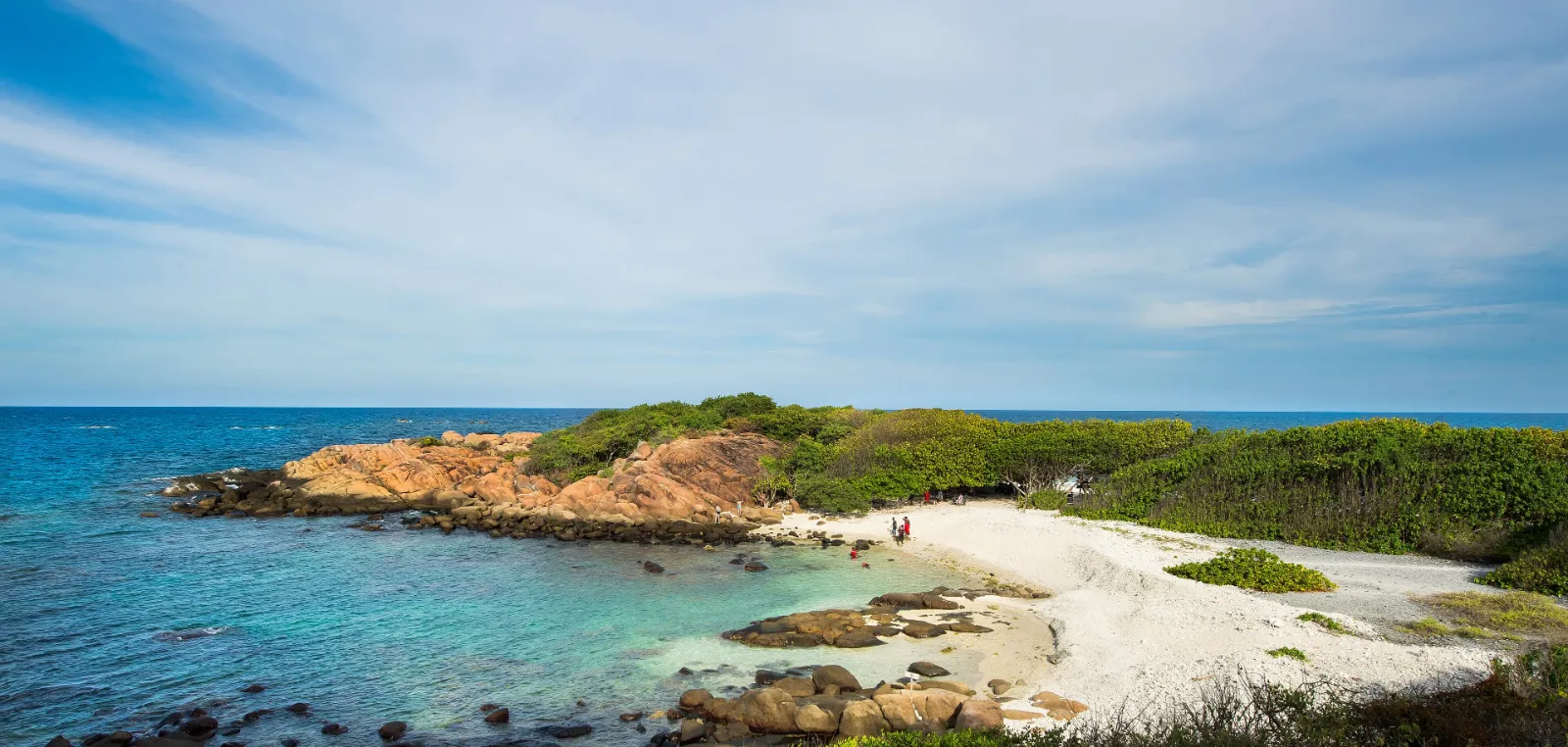
July is Trincomalee’s month, and the reason is the monsoon that ruins everybody else’s. The southwest monsoon is on the far side of the island, which leaves the east coast dry, flat and workable from May to September. Everything on this page is in season now and effectively nothing is, six months from now.
What that buys you is the best shallow reef in the country at Pigeon Island, a blacktip reef shark nursery in water you can stand up in, and blue and sperm whales in the deep water off the harbour, where a submarine canyon runs in towards the coast. It is the cleanest example on the island of the rule that in Sri Lanka the question is never when to come, only which coast.
Highlights
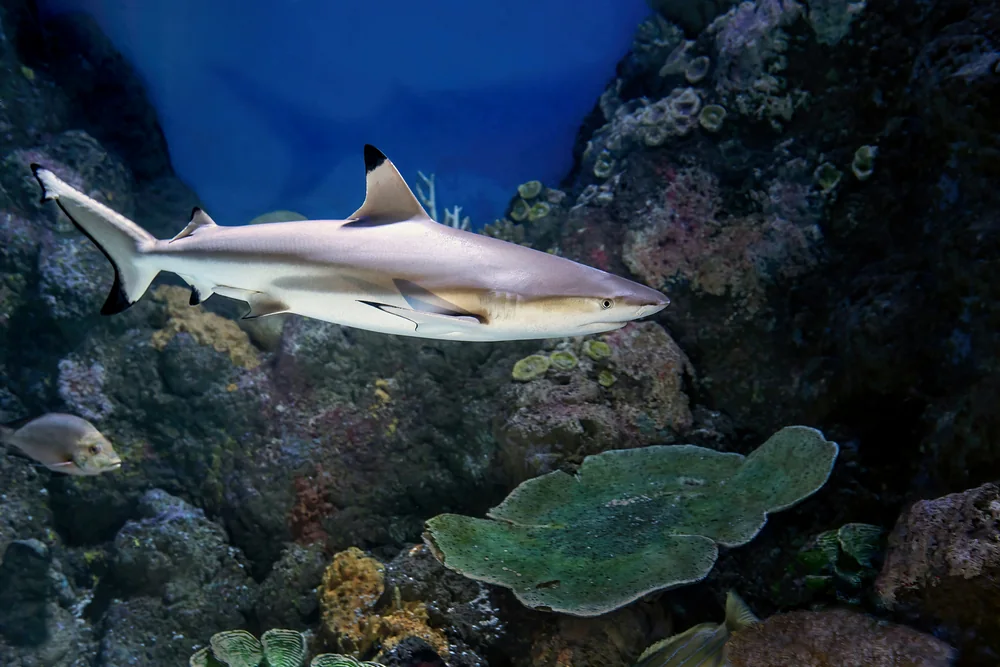
Blacktip Reef Shark
The neat little reef shark of the shallows, its black-tipped fins often cutting the surface over sun-lit sand flats. Where: The shallow inner reef at Pigeon Island, in snorkelling depth. Best: May to September.
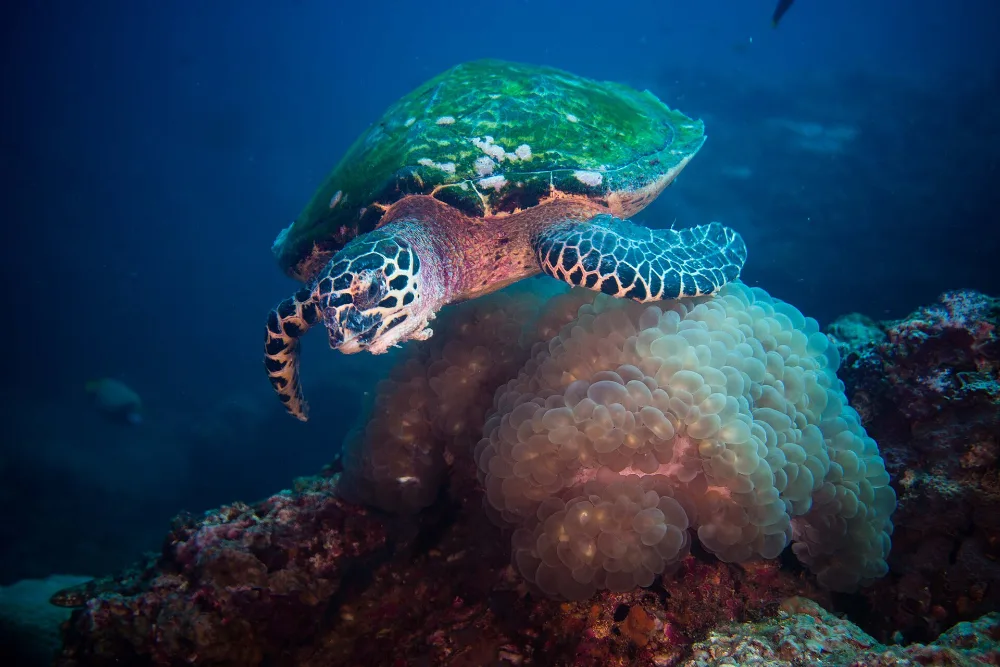
Hawksbill Turtle
The reef's sponge specialist, its beautiful shell also the reason it was hunted to the edge. Where: Reef at Pigeon Island and off Nilaveli. Best: May to September.
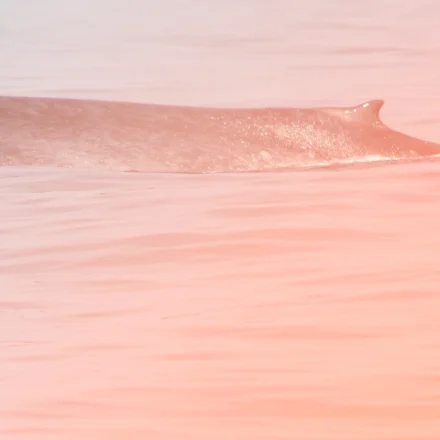
Blue Whale
The largest animal that has ever lived, and off Sri Lanka a population that mostly does not migrate, which is why it can be seen almost year round. Where: Deep water off the east coast. Best: May-Sep.
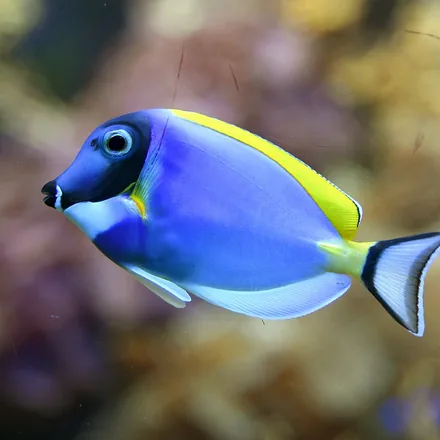
Powder Blue Surgeonfish
A stunning Andaman signature fish, powder blue with a yellow sail and a scalpel-sharp blade at the base of its tail. Where: Shoaling over the reef top at Pigeon Island. Best: May to September.
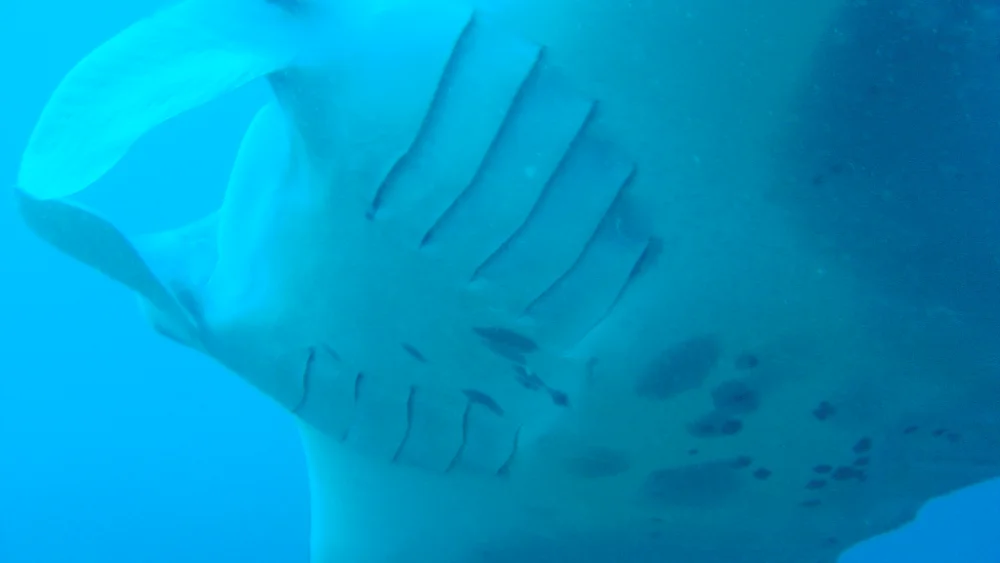
Reef Manta Ray
A four metre wingspan gliding overhead in slow, hypnotic loops that leave divers grinning for days. Where: Deeper reef edges and cleaning stations. Best: May to September.
At its best in July
28 species
In season now, which here means very nearly everything: the reef, the turtles, the sharks and the whales offshore.
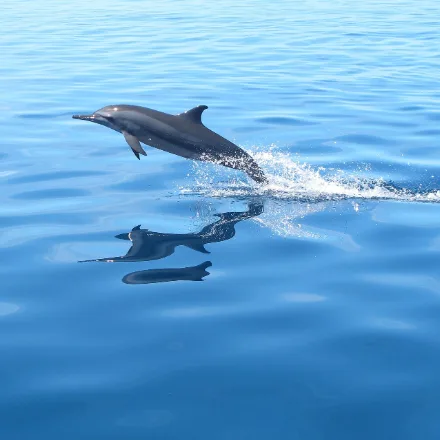
Spinner Dolphin Common
Stenella longirostris
A small, slender dolphin that leaps clear of the sea and spins like a top in mid-air.
Where: Offshore on the run out to the whale grounds. Best: May to September.
Blue Whale Occasional Endangered
Balaenoptera musculus
The largest animal that has ever lived, and off Sri Lanka a population that mostly does not migrate, which is why it can be seen almost year round.
Where: Deep water off the east coast. Best: May-Sep. The mirror season to Mirissa, and far fewer boats.
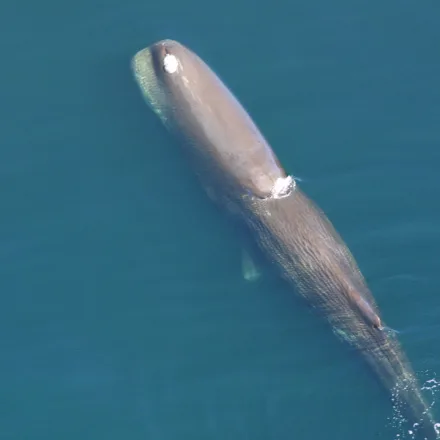
Sperm Whale Occasional Vulnerable
Physeter macrocephalus
The deepest diving mammal on earth, hunting squid two kilometres down, and occasionally gathering off Sri Lanka in pods of hundreds.
Where: Deep water off the east coast. Best: May-Sep. The best chance in Sri Lankan water, and the reason the east coast season is worth the journey.
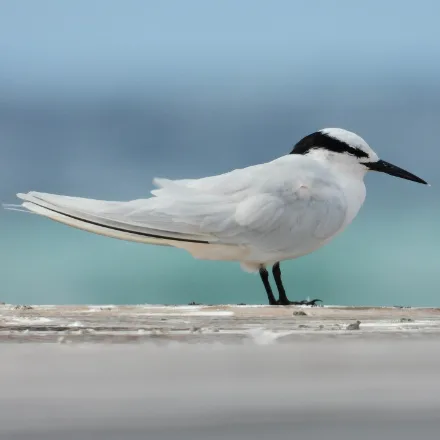
Black-naped Tern Regular
Sterna sumatrana
Almost pure white apart from a narrow black band across the back of the head, like a headphone cable.
Where: Roosting on Pigeon Island itself, which is a seabird sanctuary as well as a reef. Best: May to September. The island is named for the rock pigeons that breed on it.
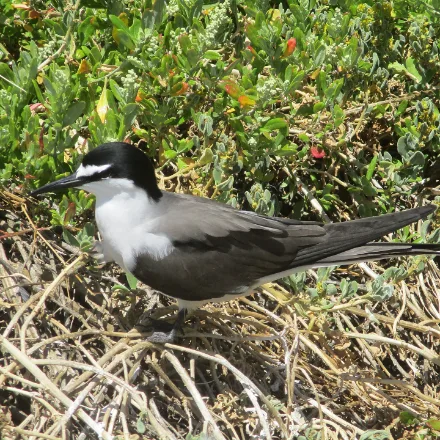
Bridled Tern Occasional
Onychoprion anaethetus
Spends most of the year entirely at sea, feeding on fish driven to the surface by tuna hunting below.
Where: Offshore water and the islet itself. Best: May to September.
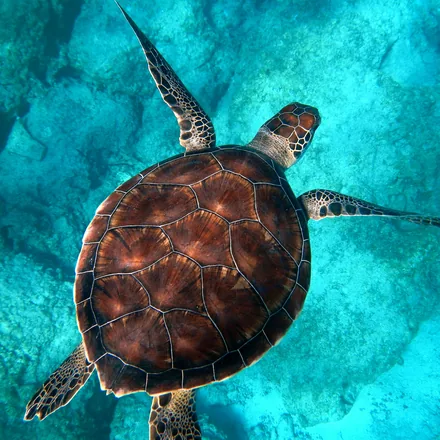
Green Sea Turtle Regular
Chelonia mydas
The great grazing turtle of the tropics, the only sea turtle that turns vegetarian as an adult.
Where: Shallow reef and seagrass at Pigeon Island and Nilaveli. Best: May to September.
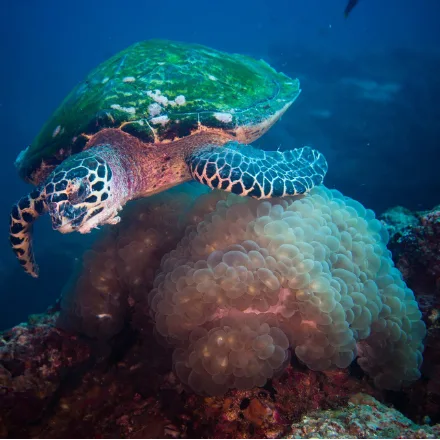
Hawksbill Turtle Regular Critically Endangered
Eretmochelys imbricata
The reef's sponge specialist, its beautiful shell also the reason it was hunted to the edge.
Where: Reef at Pigeon Island and off Nilaveli. Best: May to September. The single best place in Sri Lanka to see one.
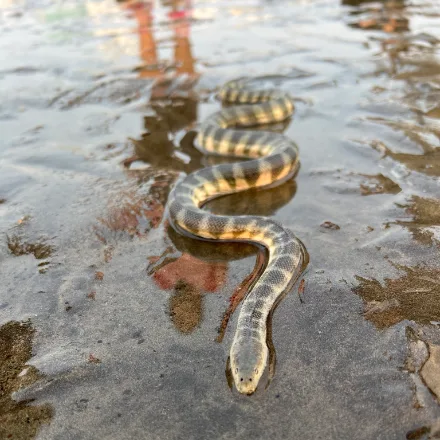
Beaked Sea Snake Rare
Hydrophis schistosus
Drop for drop, one of the most venomous snakes in the sea, and it is responsible for most sea snake bites in Asia.
Where: Shallow coastal water and harbour approaches. Best: May to September.
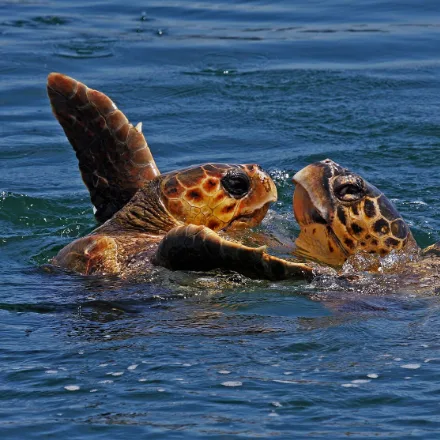
Loggerhead Turtle Rare Vulnerable
Caretta caretta
Jaws powerful enough to crush a queen conch, and it navigates ocean basins by reading the earth's magnetic field.
Where: Coastal water and reef edges, usually juveniles. Best: May to September.
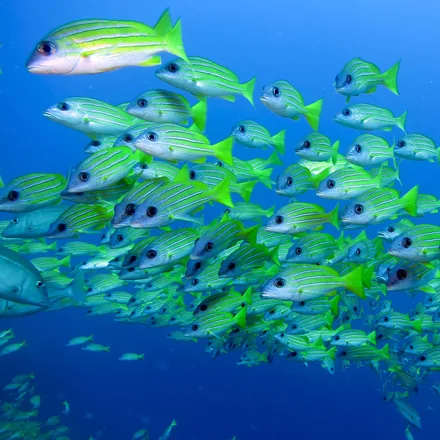
Bluestripe Snapper Common
Lutjanus kasmira
A bright yellow snapper ruled with electric-blue lines, massing in dense, glowing schools around coral heads and wrecks.
Where: Dense yellow shoals holding station over coral heads. Best: May to September.
Powder Blue Surgeonfish Common
Acanthurus leucosternon
A stunning Andaman signature fish, powder blue with a yellow sail and a scalpel-sharp blade at the base of its tail.
Where: Shoaling over the reef top at Pigeon Island. Best: May to September. They graze in loose shoals that pour over the coral like a blue tide.
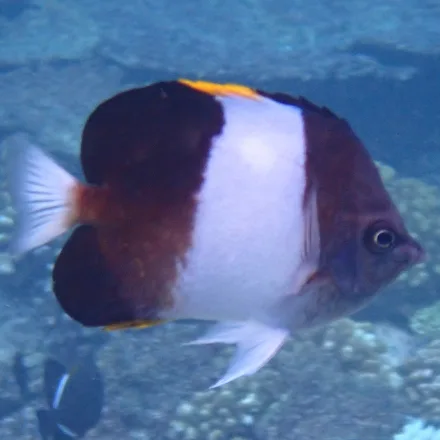
Black Pyramid Butterflyfish Regular
Hemitaurichthys zoster
They gather in the current in hundreds, and the white wedge on each flank turns the whole shoal into a drifting cloud of triangles.
Where: The drop-off edges off Pigeon Island and the Trincomalee canyon rim. Best: May to September.
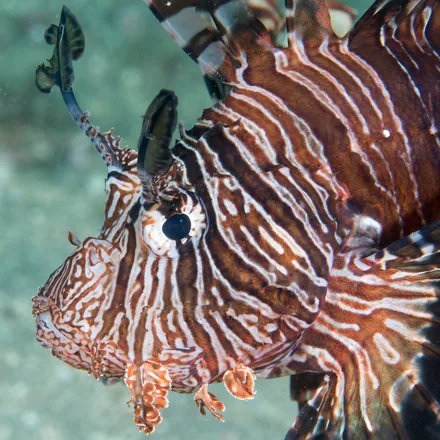
Common Lionfish Regular
Pterois volitans
A flamboyant reef hunter fanned out in maroon and white plumes, every graceful spine tipped with venom.
Where: Hanging under ledges on the reef. Best: May to September. The Indian Ocean species, Pterois miles.
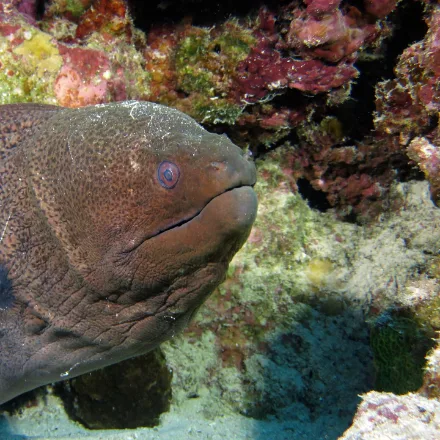
Giant Moray Regular
Gymnothorax javanicus
The largest moray on the reef, its gaping, fanged mouth a fearsome look that is really just how it breathes.
Where: Holes and overhangs on the reef at Pigeon Island. Best: May to September.
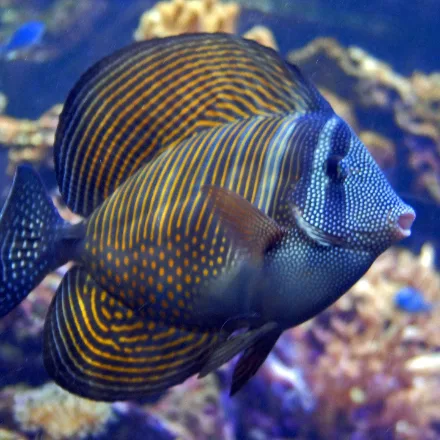
Indian Sailfin Tang Regular
Zebrasoma desjardinii
It raises a dorsal fin nearly as tall as its own body, and a startled one seems to double in size in front of you.
Where: Reef top and boulder slopes at Pigeon Island. Best: May to September.
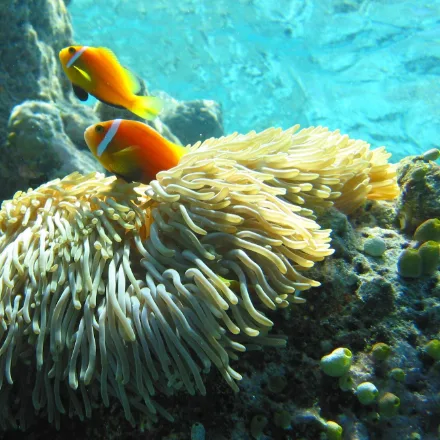
Maldives Anemonefish Regular
Amphiprion nigripes
A clownfish found only in Sri Lanka, the Maldives and the Lakshadweep, and nowhere else on earth.
Where: Anemones on the inner reef at Pigeon Island and off Nilaveli. Best: May to September.
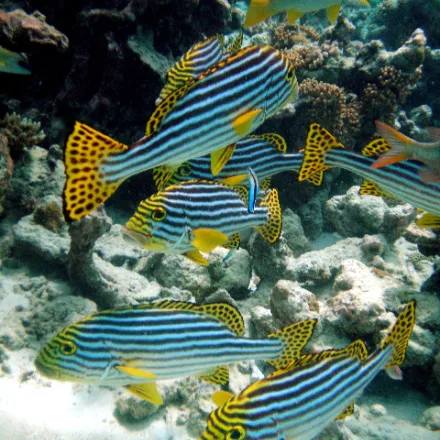
Oriental Sweetlips Regular
Plectorhinchus vittatus
A handsome striped reef fish whose fussy juveniles wobble around in polka dots to mimic toxic flatworms.
Where: Under overhangs on the reef by day. Best: May to September.
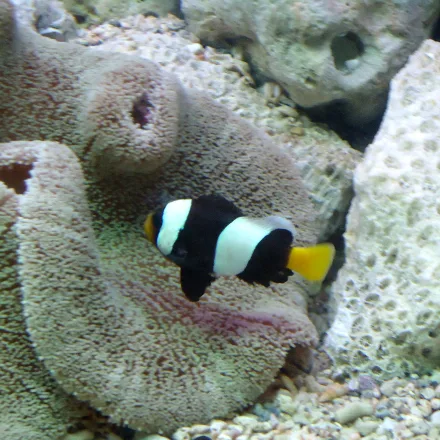
Sebae Anemonefish Regular
Amphiprion sebae
The big dark anemonefish of the northern Indian Ocean, with a yellow tail that gives it away from a distance.
Where: Sand and rubble margins off Nilaveli and Pigeon Island. Best: May to September.
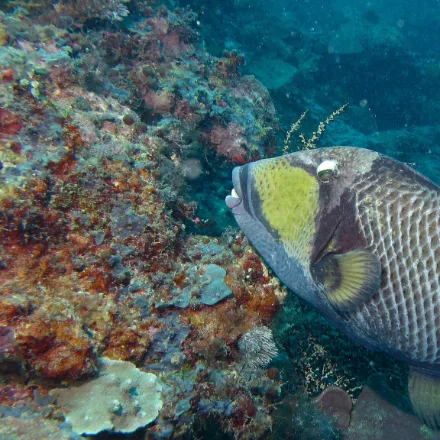
Titan Triggerfish Regular
Balistoides viridescens
The reef's bad tempered bulldozer, a heavy triggerfish that bites chunks out of coral to get at what is living underneath it.
Where: Reef flat and slope, nesting in the sand patches. Best: May to September. Nests on the sand between coral heads on the shallower sites.
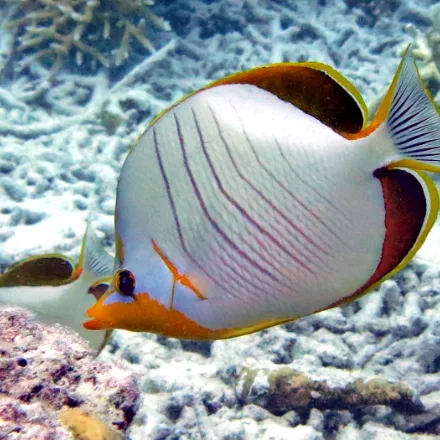
Yellowhead Butterflyfish Regular
Chaetodon xanthocephalus
An Indian Ocean butterflyfish that pairs for life, and you almost never see one without the other close by.
Where: Sheltered coral at Pigeon Island and Nilaveli. Best: May to September.
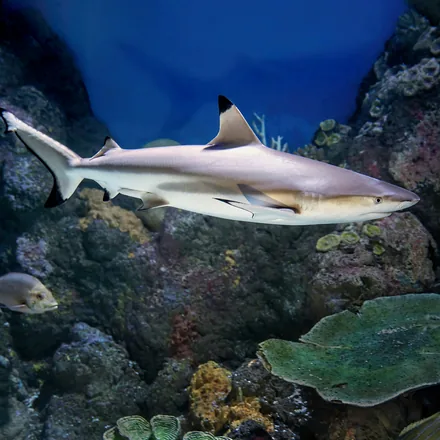
Blacktip Reef Shark Common Vulnerable
Carcharhinus melanopterus
The neat little reef shark of the shallows, its black-tipped fins often cutting the surface over sun-lit sand flats.
Where: The shallow inner reef at Pigeon Island, in snorkelling depth. Best: May to September. The single most reliable place in Sri Lanka to see a shark, and you do not need to dive. Dozens patrol water barely over head height.
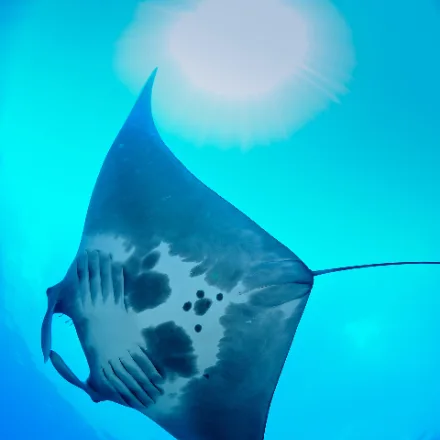
Reef Manta Ray Rare Vulnerable
Mobula alfredi
A four metre wingspan gliding overhead in slow, hypnotic loops that leave divers grinning for days.
Where: Deeper reef edges and cleaning stations. Best: May to September.
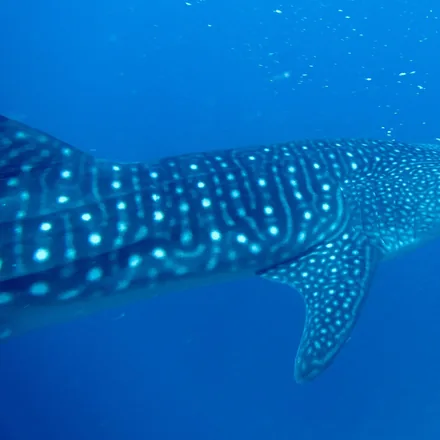
Whale Shark Rare Endangered
Rhincodon typus
The biggest fish in the ocean, a spotted, bus sized filter feeder and the undisputed holy grail of tropical diving.
Where: Blue water beyond the reef. Best: May to September.
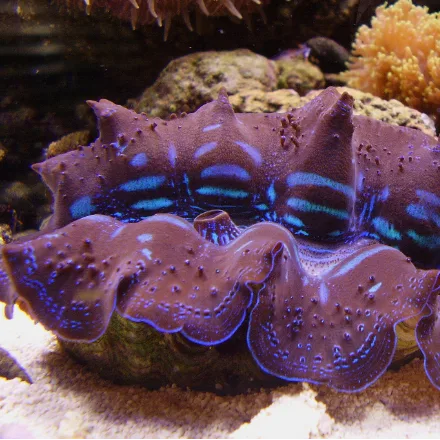
Small Giant Clam Regular
Tridacna maxima
The electric blue and green lips are not pigment for show. They are farming light, and the clam gets most of its food from algae living in its own flesh.
Where: Reef flat at Pigeon Island, in snorkelling depth. Best: May to September. Close enough to snorkel over, and the mantle closes on contact.
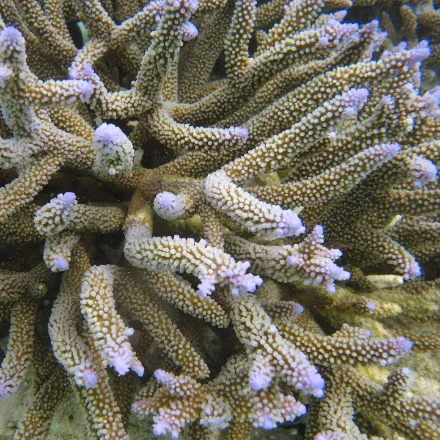
Staghorn Coral Common
Acropora species
The fast-growing branching coral that builds the living thickets of the reef, nursery and shelter for a whole community.
Where: The shallow reef flat inside the island. Best: May to September. Badly hit by bleaching in 2016 and recovering unevenly, and it breaks under a fin or a foot.
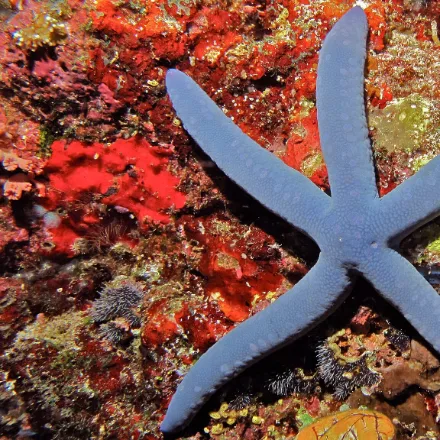
Blue Sea Star Common
Linckia laevigata
An almost unreal cobalt blue starfish scattered across the shallows, able to regrow a whole body from a single lost arm.
Where: Reef flat and rubble in snorkelling depth. Best: May to September.
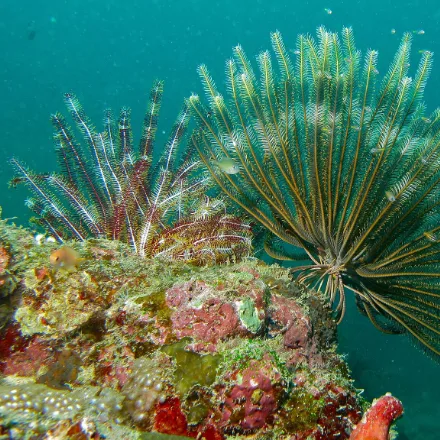
Feather Star (Crinoid) Regular
Comatulida species
A living bouquet of feathery arms that clings to high points on the reef by day and can crawl, or even swim, to a better spot.
Where: Clinging to sea fans and reef edges in the current. Best: May to September.
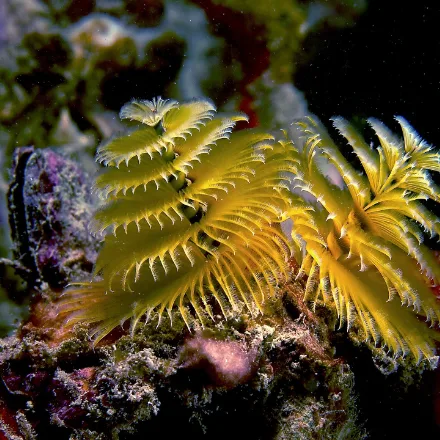
Christmas Tree Worm Common
Spirobranchus giganteus
Pairs of tiny spiral trees in every colour, studding the coral and vanishing in a flash when a shadow passes.
Where: Embedded in boulder corals on the reef flat. Best: May to September. Wave a hand and the whole colony vanishes at once.
Practical notes for July
Pigeon Island is a few hundred metres offshore from Nilaveli and the reef flat is snorkellable straight from the island. Go on the first boat. The site takes day visitors through the middle of the day and the difference between nine in the morning and noon is the difference between a reef and a queue.
The whale boats work the deep water off the harbour mouth, where the canyon comes in close. Blue whale here is Occasional rather than Regular, which means several mornings rather than one, and sperm whale is the other draw and is strongest from March to August. The compensation for the lower odds is that you are rarely sharing the sighting.
The shark nursery in the shallows at Pigeon Island is the thing most people remember, and it is worth understanding what it is: blacktip reef shark pups use water that shallow precisely because larger sharks cannot follow them into it.
Find diving, snorkelling and boat trips on Sri Lanka’s east coast
Some links on this page are affiliate links. If you book through them, Wildseer may earn a small commission at no extra cost to you.
Frequently asked questions
Is July a good time to visit Trincomalee?
Yes, it is the middle of the season. The east coast runs from May to September, when the southwest monsoon is on the other side of the island and this coast is dry and flat. Outside that window the sea here is rough and the reef is not workable.
Can you snorkel at Pigeon Island in July?
Yes, and July is one of the best months for it. The reef flat is shallow enough to snorkel from the island itself, the blacktip reef shark nursery sits in very shallow water, and the coral holds the full Indo-Pacific reef fish cast. Go on the first boat of the day.
Can you see whales at Trincomalee in July?
Yes. Blue whale and sperm whale are both recorded here from May to September, in the deep water off the harbour where a submarine canyon comes close to the coast. Blue whale is Occasional rather than Regular, so treat a single morning as a gamble.
Is Trincomalee better than the south coast?
Neither is better; they are opposite halves of the calendar. Trincomalee works from May to September and the south coast from November to April. The month decides, and booking the wrong coast for the month is the single most common mistake on a Sri Lankan marine trip.
More on Sri Lanka wildlife
- Trincomalee marine life
- Mammals of Sri Lanka
- Birds of Sri Lanka
- Reptiles and amphibians of Sri Lanka
- Fish of Sri Lanka
Part of the Wildlife in Sri Lanka guide.
Image credits
Square thumbnails are cropped from the original. Wide banner images are cropped to a band. Other images are resized only. No other changes have been made.
- trincomalee-in-july: Chiranmayu Medis | CC BY-SA 4.0, cropped
- Blacktip reef shark: David Clode | Unsplash License, cropped
- hawksbill-turtle (resized): Daniel Sasse | CC BY-SA 4.0, cropped
- Blue Whale (cropped to square): Tero Linjama | CC0, cropped
- Powder Blue Surgeonfish (cropped to square): Amada44 | CC BY-SA 3.0, cropped
- Reef Manta Ray (cropped): Peter Southwood (Pbsouthwood) | CC BY-SA 3.0
- Spinner Dolphin (cropped to square): Alexia Pihier for MDC SeaMarc Maldives | CC BY-SA 4.0, cropped
- Sperm Whale: NOAA Photo Library | Public domain, cropped
- Black-naped Tern (cropped to square): panjigusti | CC BY 4.0, cropped
- Bridled Tern (cropped to square): Calistemon | CC BY-SA 4.0, cropped
- Green Sea Turtle: Randall Ruiz | Unsplash License, cropped
- Hawksbill Turtle (cropped to square): Daniel Sasse | CC BY-SA 4.0, cropped
- Beaked Sea Snake (cropped to square): Shaunak Modi | CC BY 4.0, cropped
- Loggerhead Turtle (cropped to square): Eco cruising | CC BY-SA 4.0, cropped
- Bluestripe Snapper (cropped to square): Jerome Paillet (IFREMER) | CC BY 4.0, cropped
- Black Pyramid Butterflyfish: Jean-Paul Boerekamps | CC0, cropped
- Common Lionfish (cropped to square): Rickard Zerpe | CC BY 2.0, cropped
- Giant Moray (cropped to square): Jerome Paillet (IFREMER) | CC BY 4.0, cropped
- Indian Sailfin Tang: Hectonichus | CC BY-SA 3.0, cropped
- Maldives Anemonefish: Jan Derk | Public domain, cropped
- Oriental Sweetlips (cropped to square): Uxbona | CC BY-SA 3.0, cropped
- Sebae Anemonefish: Ranjithsiji | CC BY-SA 3.0, cropped
- Titan Triggerfish (cropped to square): Bernard DUPONT | CC BY-SA 2.0, cropped
- Yellowhead Butterflyfish: Ahmed Abdul Rahman for MDC Seamarc Maldives | CC BY-SA 4.0, cropped
- Blacktip Reef Shark: David Clode | Unsplash License, cropped
- Reef Manta Ray (cropped to square): National Marine Sanctuaries | Public domain, cropped
- Whale Shark (cropped to square): Jerome Paillet (IFREMER) | CC BY 4.0, cropped
- Small Giant Clam: RevolverOcelot | CC BY-SA 3.0, cropped
- Staghorn Coral (cropped to square): MDC Seamarc Maldives | CC BY-SA 4.0, cropped
- Blue Sea Star (cropped to square): Bernard DUPONT | CC BY-SA 2.0, cropped
- Feather Star (cropped to square): Bernard DUPONT | CC BY-SA 2.0, cropped
- Christmas Tree Worm (cropped to square): Nhobgood Nick Hobgood | CC BY-SA 3.0, cropped
Square thumbnails are cropped from the original. Wide banner images are cropped to a band. Other images are resized only. No other changes have been made.
- trincomalee-in-july: Chiranmayu Medis | CC BY-SA 4.0, cropped
- Blacktip reef shark: David Clode | Unsplash License, cropped
- hawksbill-turtle (resized): Daniel Sasse | CC BY-SA 4.0, cropped
- Blue Whale (cropped to square): Tero Linjama | CC0, cropped
- Powder Blue Surgeonfish (cropped to square): Amada44 | CC BY-SA 3.0, cropped
- Reef Manta Ray (cropped): Peter Southwood (Pbsouthwood) | CC BY-SA 3.0
- Spinner Dolphin (cropped to square): Alexia Pihier for MDC SeaMarc Maldives | CC BY-SA 4.0, cropped
- Sperm Whale: NOAA Photo Library | Public domain, cropped
- Black-naped Tern (cropped to square): panjigusti | CC BY 4.0, cropped
- Bridled Tern (cropped to square): Calistemon | CC BY-SA 4.0, cropped
- Green Sea Turtle: Randall Ruiz | Unsplash License, cropped
- Hawksbill Turtle (cropped to square): Daniel Sasse | CC BY-SA 4.0, cropped
- Beaked Sea Snake (cropped to square): Shaunak Modi | CC BY 4.0, cropped
- Loggerhead Turtle (cropped to square): Eco cruising | CC BY-SA 4.0, cropped
- Bluestripe Snapper (cropped to square): Jerome Paillet (IFREMER) | CC BY 4.0, cropped
- Black Pyramid Butterflyfish: Jean-Paul Boerekamps | CC0, cropped
- Common Lionfish (cropped to square): Rickard Zerpe | CC BY 2.0, cropped
- Giant Moray (cropped to square): Jerome Paillet (IFREMER) | CC BY 4.0, cropped
- Indian Sailfin Tang: Hectonichus | CC BY-SA 3.0, cropped
- Maldives Anemonefish: Jan Derk | Public domain, cropped
- Oriental Sweetlips (cropped to square): Uxbona | CC BY-SA 3.0, cropped
- Sebae Anemonefish: Ranjithsiji | CC BY-SA 3.0, cropped
- Titan Triggerfish (cropped to square): Bernard DUPONT | CC BY-SA 2.0, cropped
- Yellowhead Butterflyfish: Ahmed Abdul Rahman for MDC Seamarc Maldives | CC BY-SA 4.0, cropped
- Blacktip Reef Shark: David Clode | Unsplash License, cropped
- Reef Manta Ray (cropped to square): National Marine Sanctuaries | Public domain, cropped
- Whale Shark (cropped to square): Jerome Paillet (IFREMER) | CC BY 4.0, cropped
- Small Giant Clam: RevolverOcelot | CC BY-SA 3.0, cropped
- Staghorn Coral (cropped to square): MDC Seamarc Maldives | CC BY-SA 4.0, cropped
- Blue Sea Star (cropped to square): Bernard DUPONT | CC BY-SA 2.0, cropped
- Feather Star (cropped to square): Bernard DUPONT | CC BY-SA 2.0, cropped
- Christmas Tree Worm (cropped to square): Nhobgood Nick Hobgood | CC BY-SA 3.0, cropped