
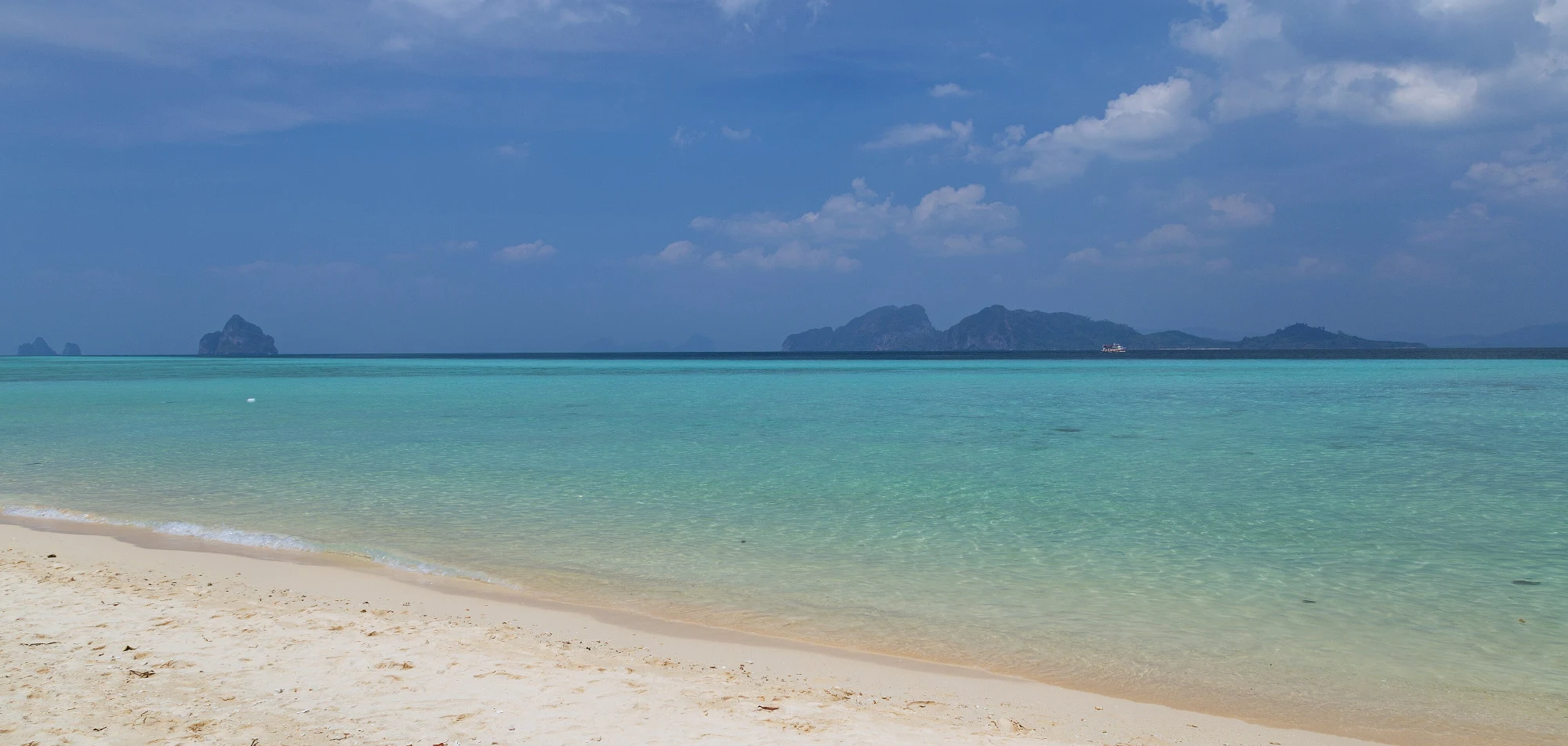
Trang is the quietest stretch of the Thai Andaman coast and the most unusual, because what makes it matter is not coral. It is grass. The shallow water between Koh Libong, Koh Muk and the mainland holds the largest seagrass meadows in Thailand, and a seagrass meadow supports a completely different cast from a reef: grazers rather than pickers, animals that hide by being the colour of a blade rather than by living in a hole.
That is why the coast holds Thailand’s only dugong population worth travelling for, and it is why the green turtles here are feeding rather than passing through. It is also why Trang is a snorkelling coast more than a diving one. The interesting water is shallow, the visibility is variable, and almost everything on this page is within a few metres of the surface.
The islands add the other half. Koh Muk’s Emerald Cave is a swim-through into a hidden beach inside a karst island, Koh Kradan and Koh Ngai carry fringing reef, and the whole group sits far enough south of the Phuket boat traffic to be genuinely quiet in season. Everything below is a record in the Wildseer database, with its place, its months and its likelihood.
Highlights
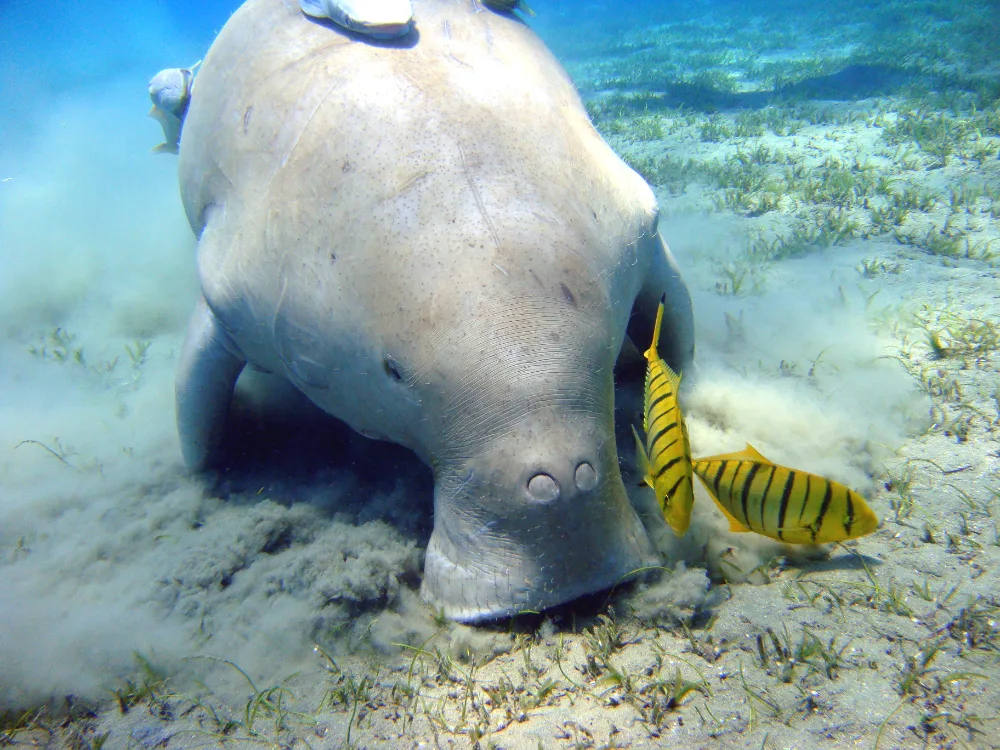
Dugong
The gentle sea cow said to have inspired mermaid legends, grazing seagrass meadows in warm shallow seas. Where: Seagrass meadows off Koh Libong, from a longtail at high tide. Best: Dec-Apr, calm mornings on a spring tide.
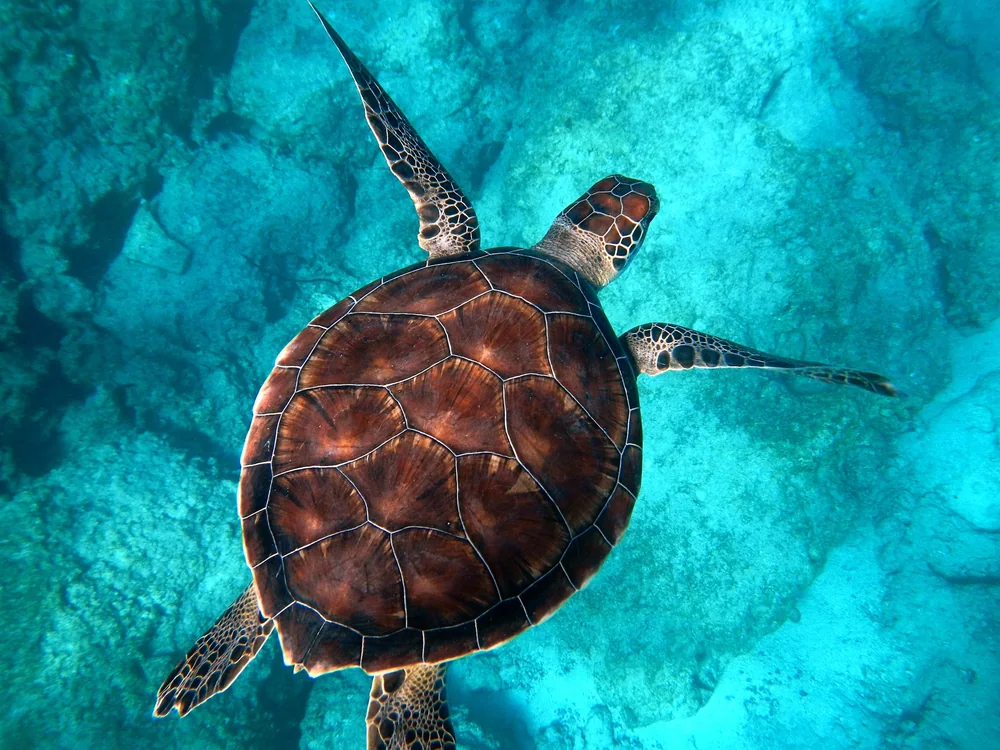
Green Sea Turtle
The great grazing turtle of the tropics, the only sea turtle that turns vegetarian as an adult. Where: Seagrass meadows around Koh Libong and Koh Muk. Best: Nov-Apr, best Dec-Mar on the seagrass.
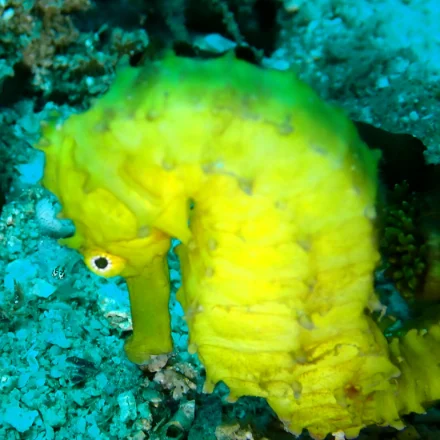
Tiger Tail Seahorse
A slender seahorse banded down the tail like a tiger, the male carrying and giving birth to the young. Where: Seagrass margins and sponge rubble off Koh Libong. Best: Nov-Apr, calm water on the seagrass margins.
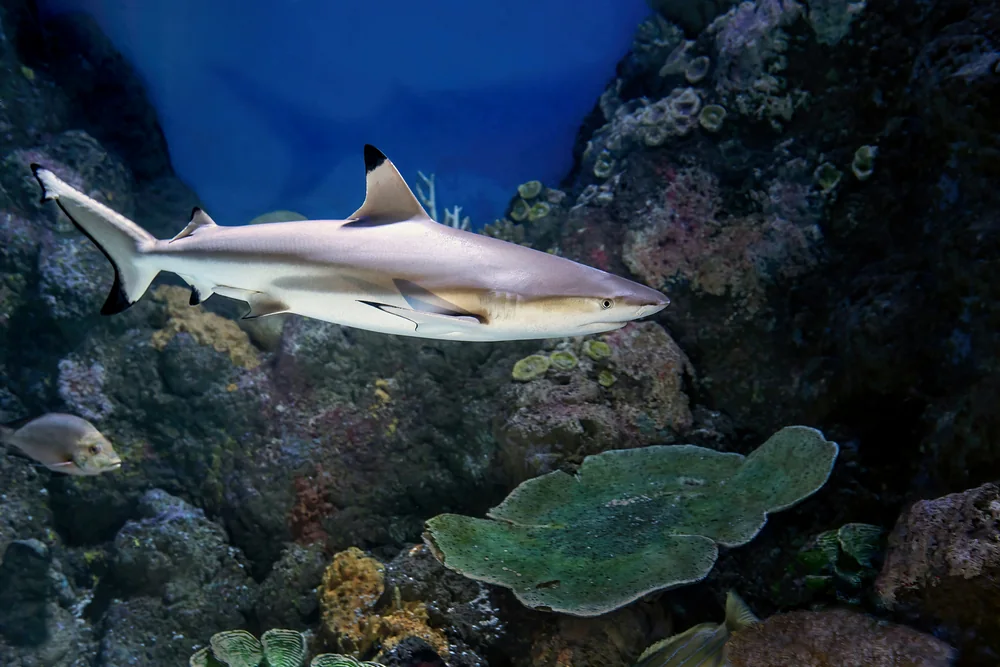
Blacktip Reef Shark
The neat little reef shark of the shallows, its black-tipped fins often cutting the surface over sun-lit sand flats. Where: Shallow reef flats around the islands. Best: Nov-Apr.
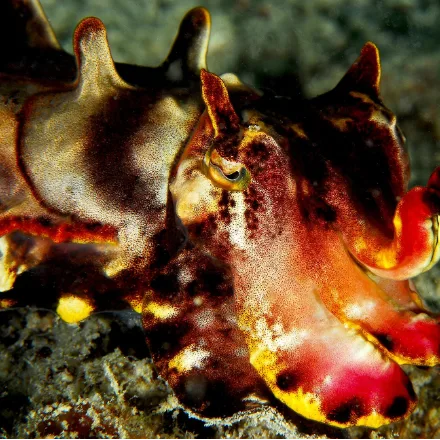
Flamboyant Cuttlefish
The only cuttlefish known to be poisonous to eat, and it advertises the fact in pulsing purple, yellow and red. Where: Silty sand near seagrass. Best: Nov-Apr.
Mammals
2 species
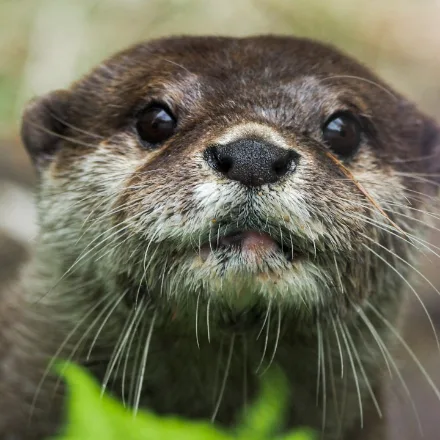
Asian Small-clawed Otter Occasional Vulnerable
Aonyx cinereus
The smallest otter in the world, a sociable, hand-using charmer that feels for prey with nimble fingers.
Where: Mangrove creeks on the mainland side. Best: Year round, early morning.
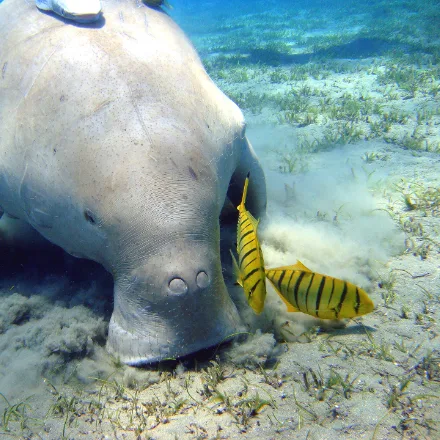
Dugong Occasional Vulnerable
Dugong dugon
The gentle sea cow said to have inspired mermaid legends, grazing seagrass meadows in warm shallow seas.
Where: Seagrass meadows off Koh Libong, from a longtail at high tide. Best: Dec-Apr, calm mornings on a spring tide. Thailand's most important dugong population. Local boatmen at Koh Libong know the feeding trails.
Birds
5 species
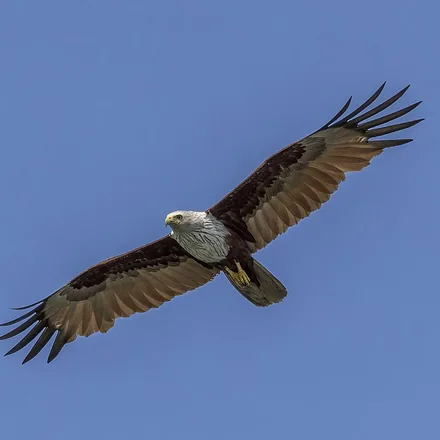
Brahminy Kite Common
Haliastur indus
A handsome chestnut-and-white kite of coasts and harbours, forever quartering the shoreline for scraps and stranded fish.
Where: Coast and mangrove edges. Best: Year round.
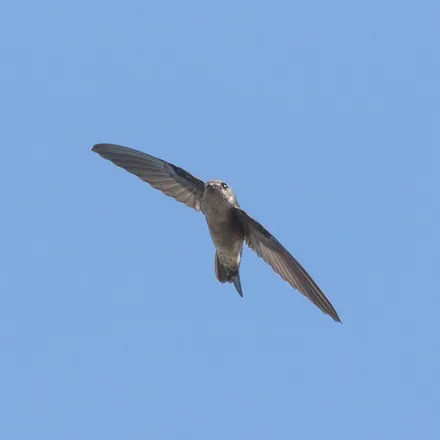
Germain's Swiftlet Common
Aerodramus germani
The little cave swift whose nest of pure saliva is harvested from sheer sea caves for bird's nest soup.
Where: Limestone caves on the islands. Best: Year round.
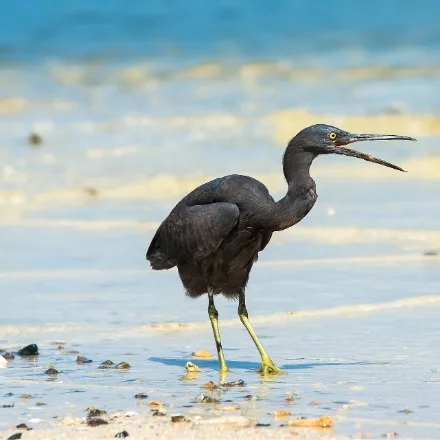
Pacific Reef Heron Regular
Egretta sacra
Comes in two entirely different colours, charcoal grey and pure white, and both can hatch in the same nest.
Where: Rocky shores and reef flats at low tide. Best: Year round.
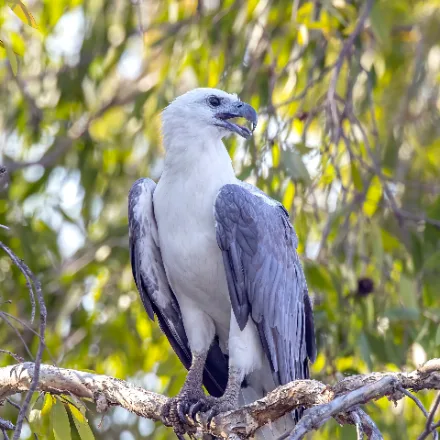
White-bellied Sea Eagle Regular
Haliaeetus leucogaster
A huge coastal eagle in grey and white that snatches sea snakes and fish from the surface in a spectacular swoop.
Where: Over the island cliffs and mangroves. Best: Year round, morning.
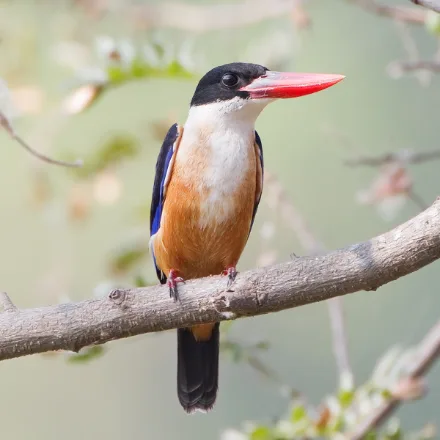
Black-capped Kingfisher Occasional
Halcyon pileata
A striking mangrove kingfisher in black, white and deep purple-blue, a winter visitor to Thailand's coasts.
Where: Mangrove creeks. Best: Nov-Mar.
Reptiles
1 species
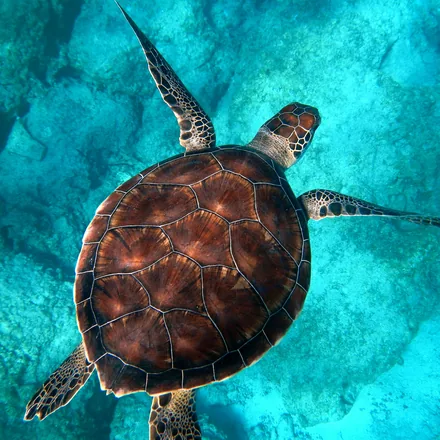
Green Sea Turtle Regular
Chelonia mydas
The great grazing turtle of the tropics, the only sea turtle that turns vegetarian as an adult.
Where: Seagrass meadows around Koh Libong and Koh Muk. Best: Nov-Apr, best Dec-Mar on the seagrass.
Fish
8 species
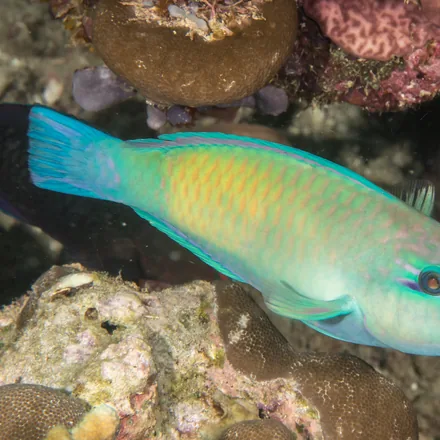
Bullethead Parrotfish Common
Chlorurus sordidus
A blunt-headed reef grazer that scrapes algae from coral with a beak of fused teeth and sleeps in a bubble of its own mucus.
Where: Reef flats. Best: Nov-Apr.
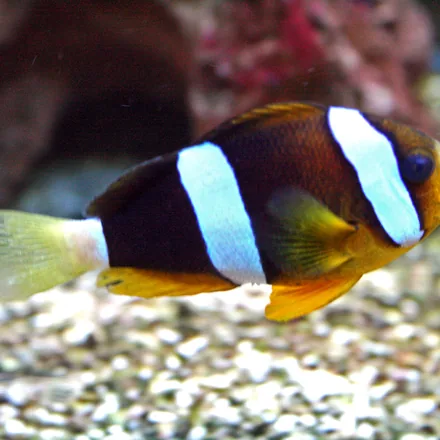
Clark's Anemonefish Common
Amphiprion clarkii
A hardy, boldly banded anemonefish that will share its stinging anemone with a confidence bordering on cheek.
Where: Anemones on reef flats. Best: Nov-Apr.
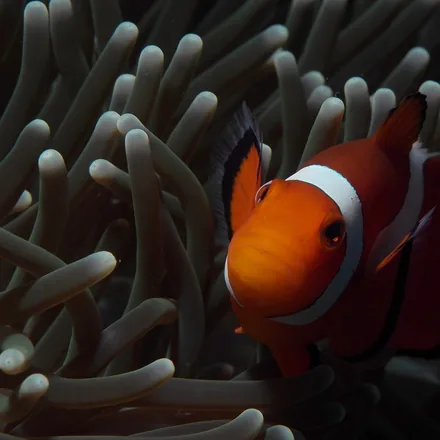
False Clownfish (Clown Anemonefish) Common
Amphiprion ocellaris
The famous orange and white anemonefish, immune to the stinging tentacles that shelter it and every group ruled by a single dominant female.
Where: Anemones on the shallow reefs. Best: Nov-Apr.
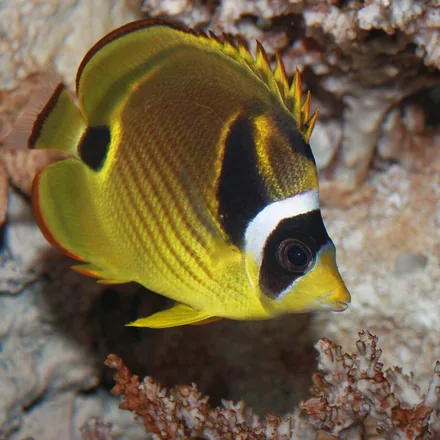
Raccoon Butterflyfish Common
Chaetodon lunula
A golden butterflyfish masked like a raccoon, drifting the reef in pairs by day and roaming at night.
Where: Reef flats. Best: Nov-Apr.
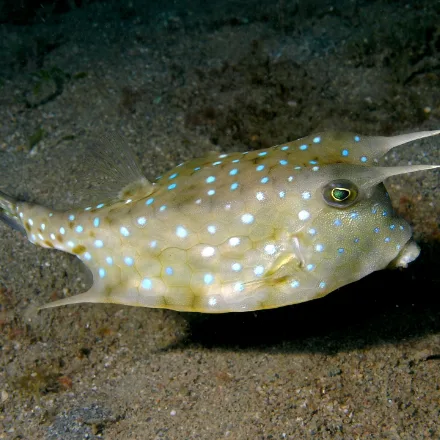
Longhorn Cowfish Occasional
Lactoria cornuta
A box of armour with horns front and back, that hunts by blowing jets of water into the sand.
Where: Seagrass and rubble. Best: Nov-Apr.
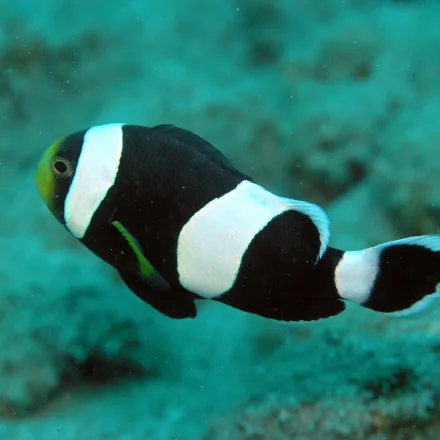
Saddleback Anemonefish Occasional
Amphiprion polymnus
The one anemonefish that lives out on open sand rather than the reef, in a host buried up to its mouth.
Where: Carpet anemones on sandy shallows. Best: Nov-Apr.
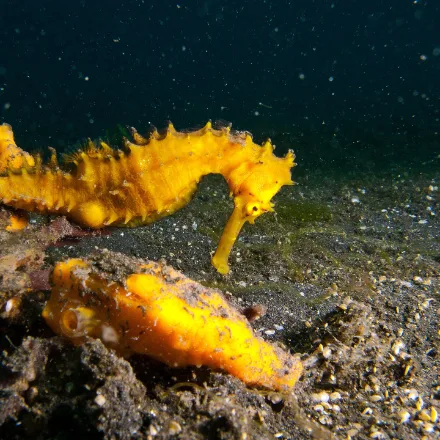
Thorny Seahorse Rare Vulnerable
Hippocampus histrix
Covered in long sharp spines and able to shift colour to match whatever it has wrapped its tail around.
Where: Seagrass and rubble margins. Best: Nov-Apr, calm water.
Tiger Tail Seahorse Rare Endangered
Hippocampus comes
A slender seahorse banded down the tail like a tiger, the male carrying and giving birth to the young.
Where: Seagrass margins and sponge rubble off Koh Libong. Best: Nov-Apr, calm water on the seagrass margins. Ask boatmen rather than searching blind; the beds are large.
Sharks and rays
5 species
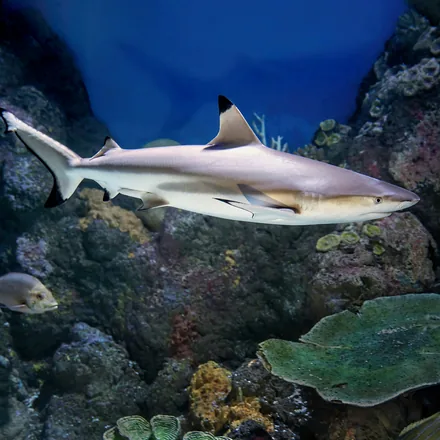
Blacktip Reef Shark Common Vulnerable
Carcharhinus melanopterus
The neat little reef shark of the shallows, its black-tipped fins often cutting the surface over sun-lit sand flats.
Where: Shallow reef flats around the islands. Best: Nov-Apr. Often visible from the surface on a snorkel in knee-deep water.
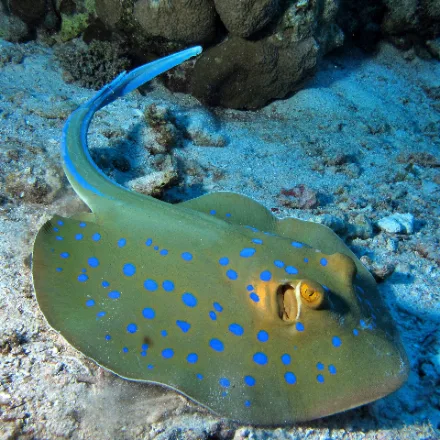
Bluespotted Ribbontail Ray Regular
Taeniura lymma
A small, brilliantly marked ray, olive gold studded with electric blue spots, tucked under coral ledges.
Where: Sand pockets on the reef flats. Best: Nov-Apr.
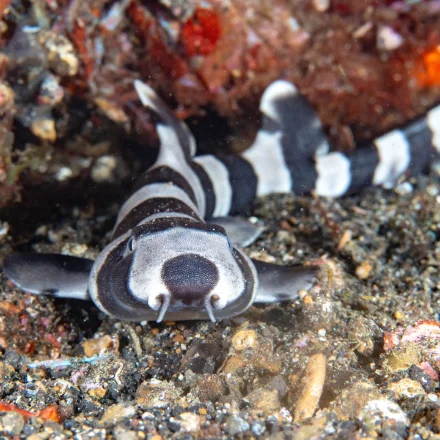
Brownbanded Bamboo Shark Occasional Near Threatened
Chiloscyllium punctatum
A small, slender carpet shark that walks across the reef on its fins and can survive hours out of water in a tide pool.
Where: Under coral ledges at night. Best: Nov-Apr, night.
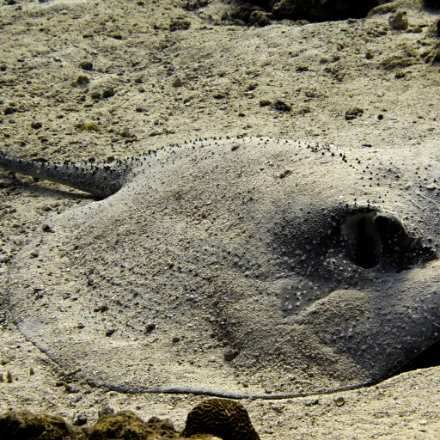
Porcupine Ray Rare Vulnerable
Urogymnus asperrimus
The only large stingray with no sting at all, protected instead by a hide of blunt thorns.
Where: Sand flats near seagrass. Best: Nov-Apr.
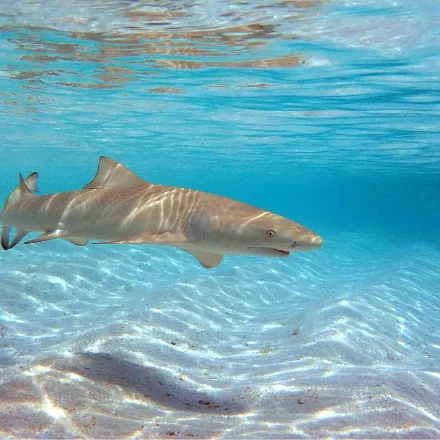
Sicklefin Lemon Shark Rare Endangered
Negaprion acutidens
A heavy, yellow-brown shark that uses mangrove shallows as a nursery and barely moves out of them for the first years of life.
Where: Sandy shallows and mangrove edges. Best: Nov-Apr.
Molluscs
3 species
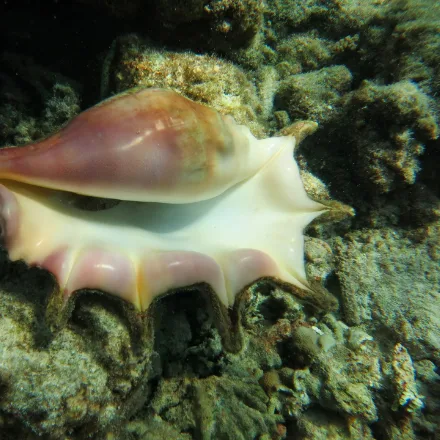
Giant Spider Conch Occasional
Lambis truncata
It does not crawl, it pole-vaults, hooking a claw-shaped foot into the sand and flipping itself forward.
Where: Seagrass beds. Best: Nov-Apr.
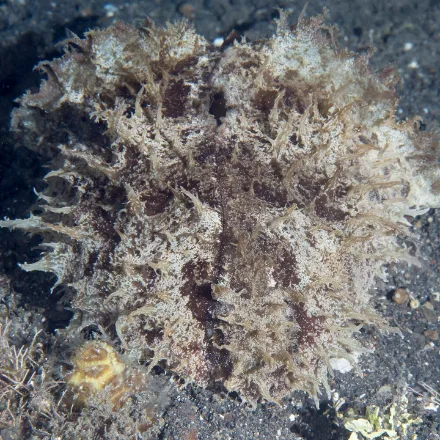
Wedge Sea Hare Occasional
Dolabella auricularia
Ejects a cloud of purple ink that does not hide it but jams the chemical senses of whatever is attacking.
Where: Seagrass at low tide. Best: Nov-Apr.
Flamboyant Cuttlefish Rare
Metasepia pfefferi
The only cuttlefish known to be poisonous to eat, and it advertises the fact in pulsing purple, yellow and red.
Where: Silty sand near seagrass. Best: Nov-Apr. The flesh is toxic, and the walking display is worth waiting for.
Corals and anemones
3 species
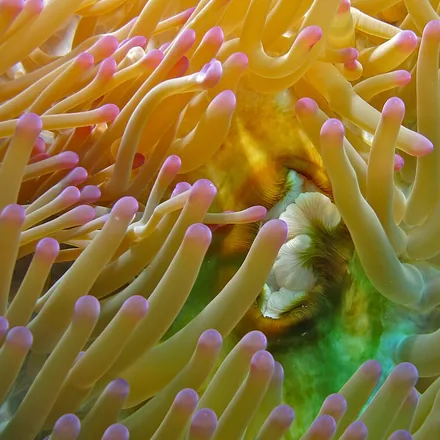
Magnificent Sea Anemone Common
Heteractis magnifica
A great carpet of stinging tentacles that is home and fortress to the anemonefish, a partnership at the heart of the reef.
Where: Shallow reef. Best: Nov-Apr.
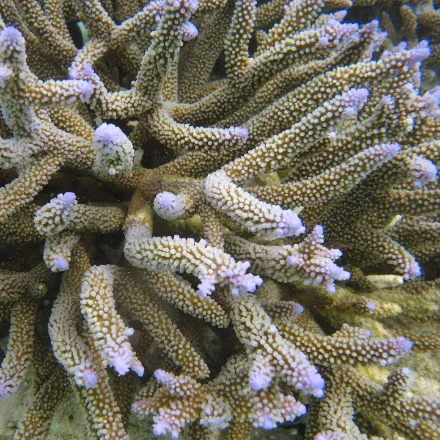
Staghorn Coral Common
Acropora species
The fast-growing branching coral that builds the living thickets of the reef, nursery and shelter for a whole community.
Where: Shallow reef flats. Best: Nov-Apr.
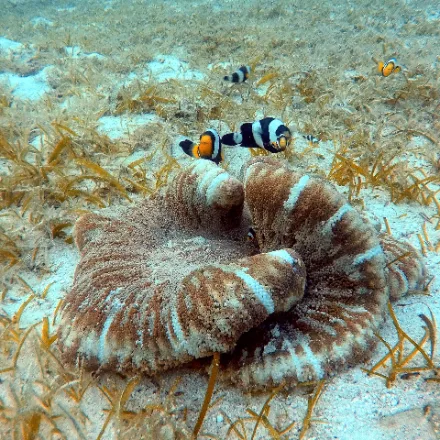
Haddon's Carpet Anemone Occasional
Stichodactyla haddoni
A metre-wide sticky carpet on open sand that will genuinely hold onto a bare hand, and can pull a small fish under.
Where: Sandy shallows and seagrass margins. Best: Nov-Apr.
Echinoderms
2 species
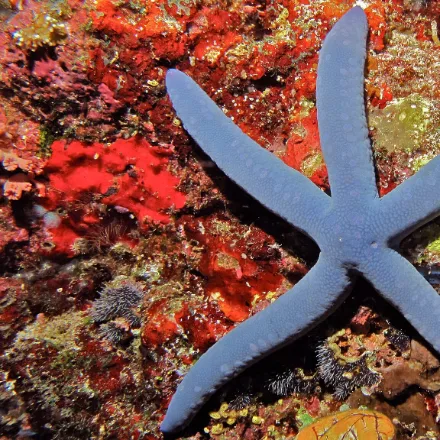
Blue Sea Star Common
Linckia laevigata
An almost unreal cobalt blue starfish scattered across the shallows, able to regrow a whole body from a single lost arm.
Where: Reef flats and seagrass margins. Best: Nov-Apr.
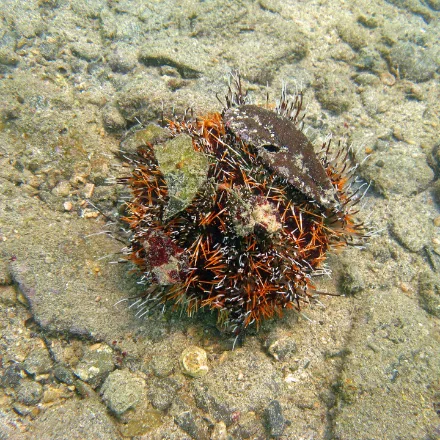
Pincushion Urchin Common
Tripneustes gratilla
Decorates itself with shell, weed and rubbish held on with its tube feet, apparently as a sunshade.
Where: Seagrass and rubble. Best: Nov-Apr.
Crustaceans
1 species
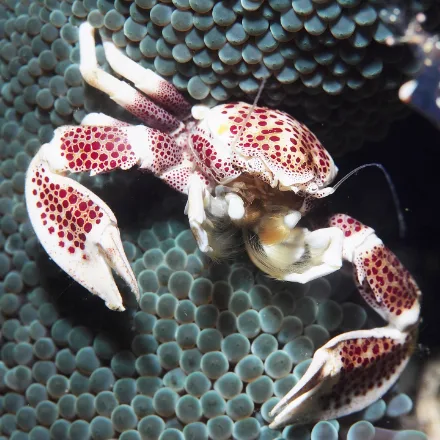
Porcelain Anemone Crab Occasional
Neopetrolisthes maculatus
A tiny spotted crab that shelters in an anemone alongside the clownfish, fishing the current with feathery fans.
Where: In carpet anemones. Best: Nov-Apr.
Other invertebrates
1 species
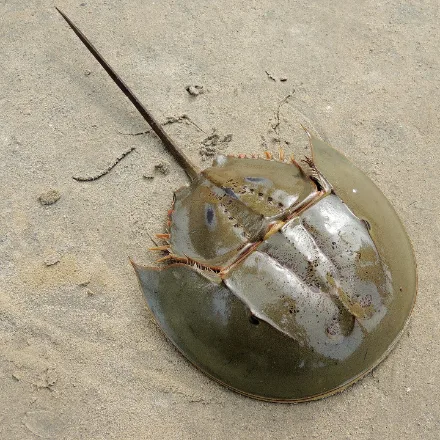
Indo-Pacific Horseshoe Crab Rare Endangered
Tachypleus gigas
Not a crab at all, closer to a spider, and its blue blood is used worldwide to test every injectable drug for contamination.
Where: Muddy shores and estuaries on spring tides. Best: Around the full and new moon.
Planning
Four things decide a Trang trip. The season is November to April, when the Andaman is dry and calm, and calm water matters more here than anywhere else on the coast because the animals are small, grey or well camouflaged and chop hides all three. The tide decides the rest: the seagrass shallows are worth being on at the top of a rising spring tide, which is when the dugongs and turtles move in to feed, and the meadows are close to unreadable at low water. Boats are longtails from Kuantungku and Hat Yao rather than dive boats, so the day is shaped by an early departure and a return before the afternoon wind. And the water is not the Similans: expect three to eight metres of visibility over sand and grass rather than twenty over granite, which is the trade you make for the animals that live here and nowhere else in Thailand.
Find boat trips, snorkelling and island stays around Trang
Some links on this page are affiliate links. If you book through them, Wildseer may earn a small commission at no extra cost to you.
Frequently asked questions
What is Trang known for underwater?
Seagrass, and what grazes it. The meadows between Koh Libong and the mainland are the largest in Thailand and hold the country’s only dugong population worth travelling for, along with green turtles that feed on the same plant, two seahorse species and a porcupine ray that hunts shellfish buried in the sand.
Is Trang better for snorkelling or diving?
Snorkelling, clearly. The animals that make this coast distinctive live in a few metres of water over grass and sand, and the visibility over a meadow is never going to compete with a granite pinnacle. Trang is where you get in the water to look at specific animals rather than at a reef wall.
When is the best time to visit Trang for marine life?
November to April, in the morning, and preferably on a rising spring tide. The season is set by the southwest monsoon, the time of day by wind on the surface, and the tide by where the dugongs and turtles are feeding.
Can you see dugongs at Trang?
This is the only place in Thailand where the question is worth asking, and the honest answer is that they are recorded here as Occasional. Several mornings in the right week give you a real chance. One morning does not. The feeding trails they leave across the meadow are far easier to find than the animals themselves.
What is the Emerald Cave?
A sea cave on Koh Muk that runs about eighty metres through the limestone and opens into a small beach enclosed by cliffs, reachable only by swimming through in the dark. It is a karst feature rather than a wildlife site, and it is the thing most visitors to Trang come for.
Explore Thailand wildlife by group
 Mammals of Thailand
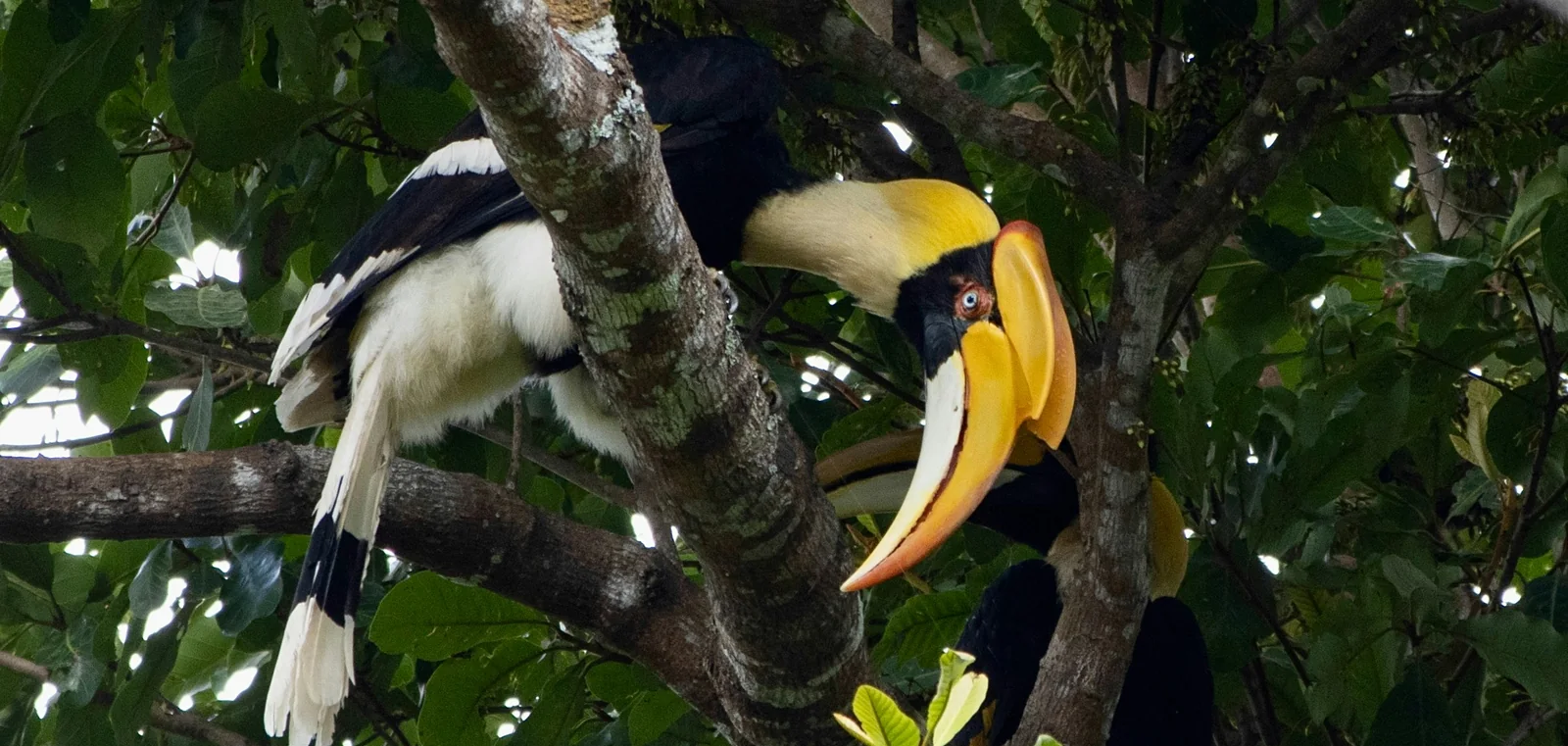 Birds of Thailand
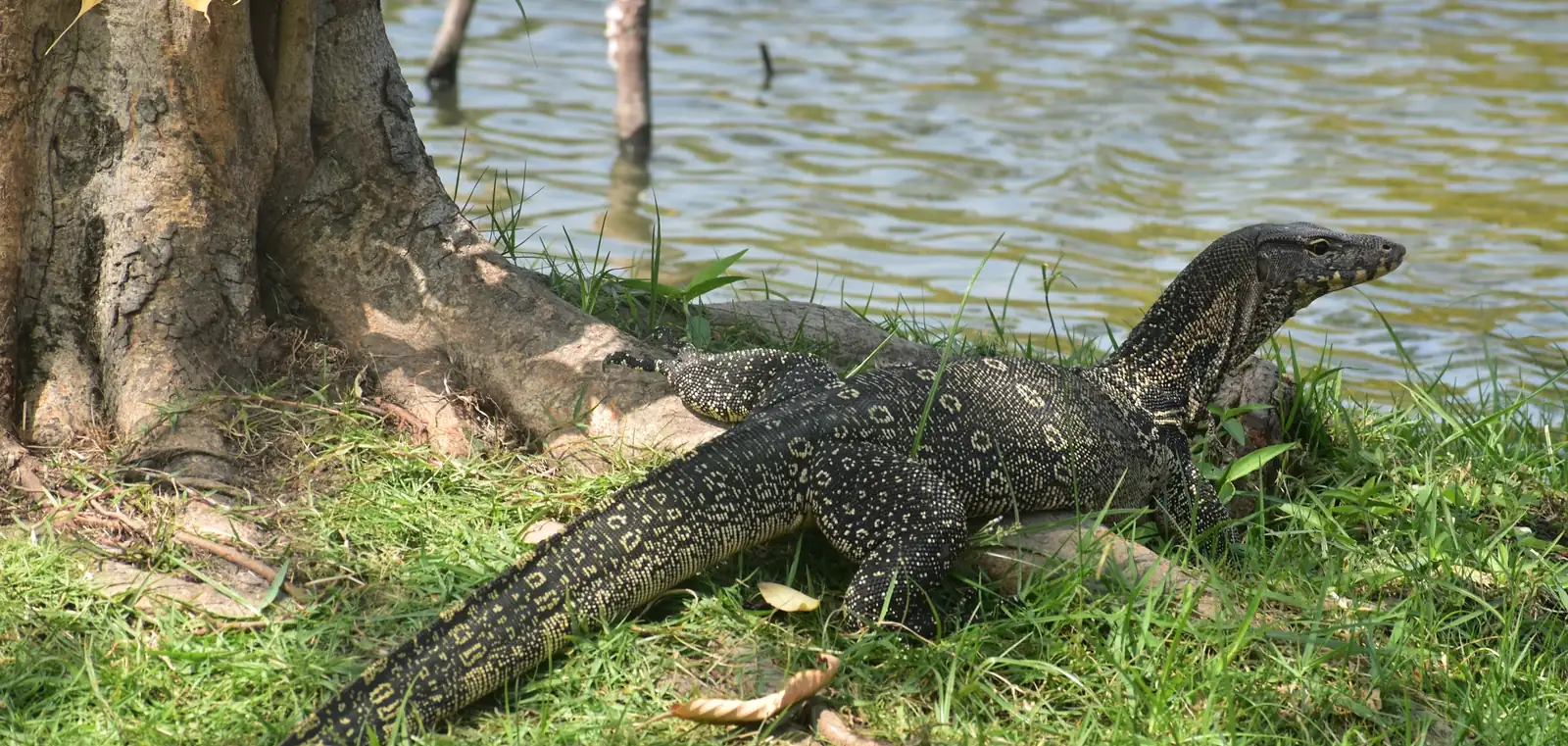 Reptiles and amphibians of Thailand
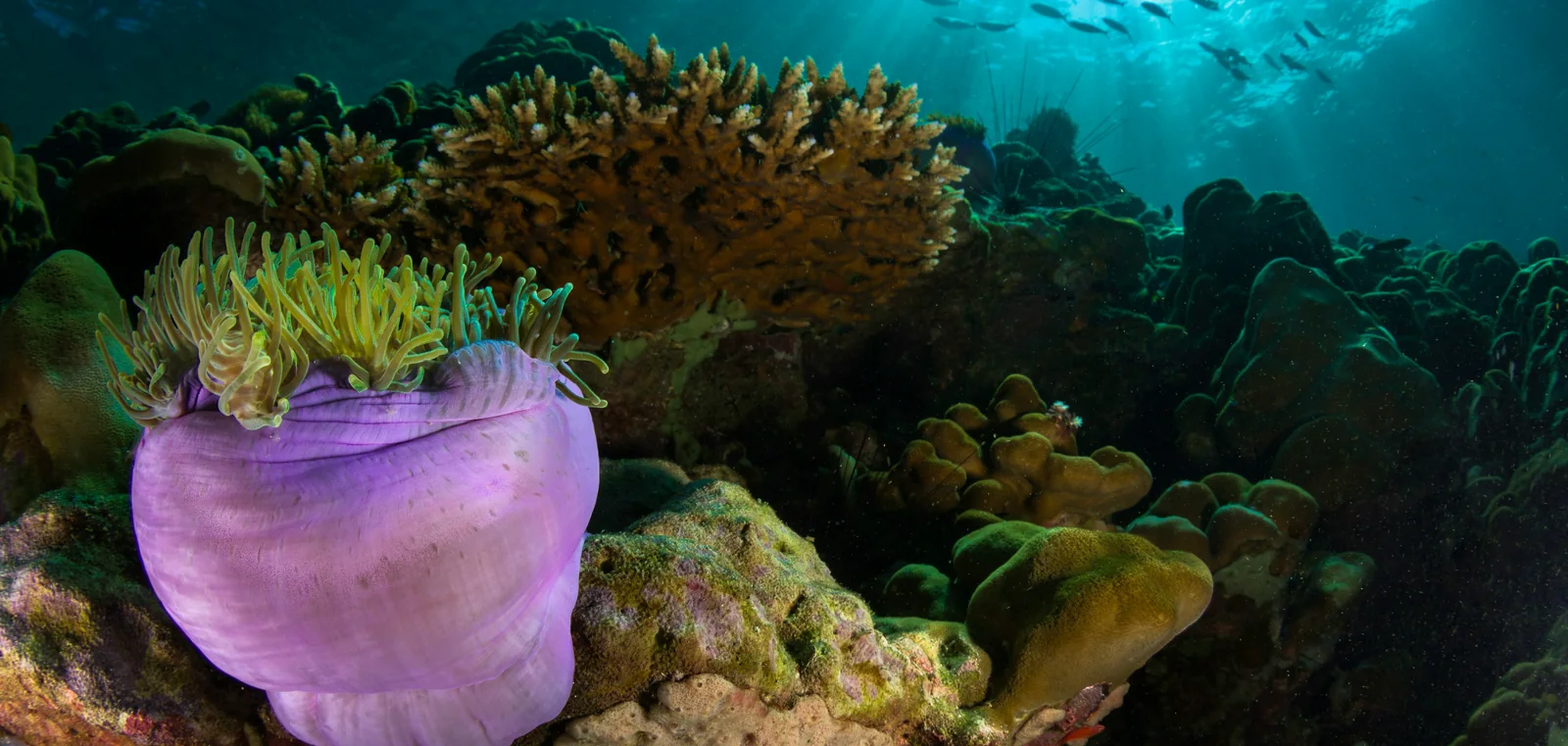 Fish of Thailand
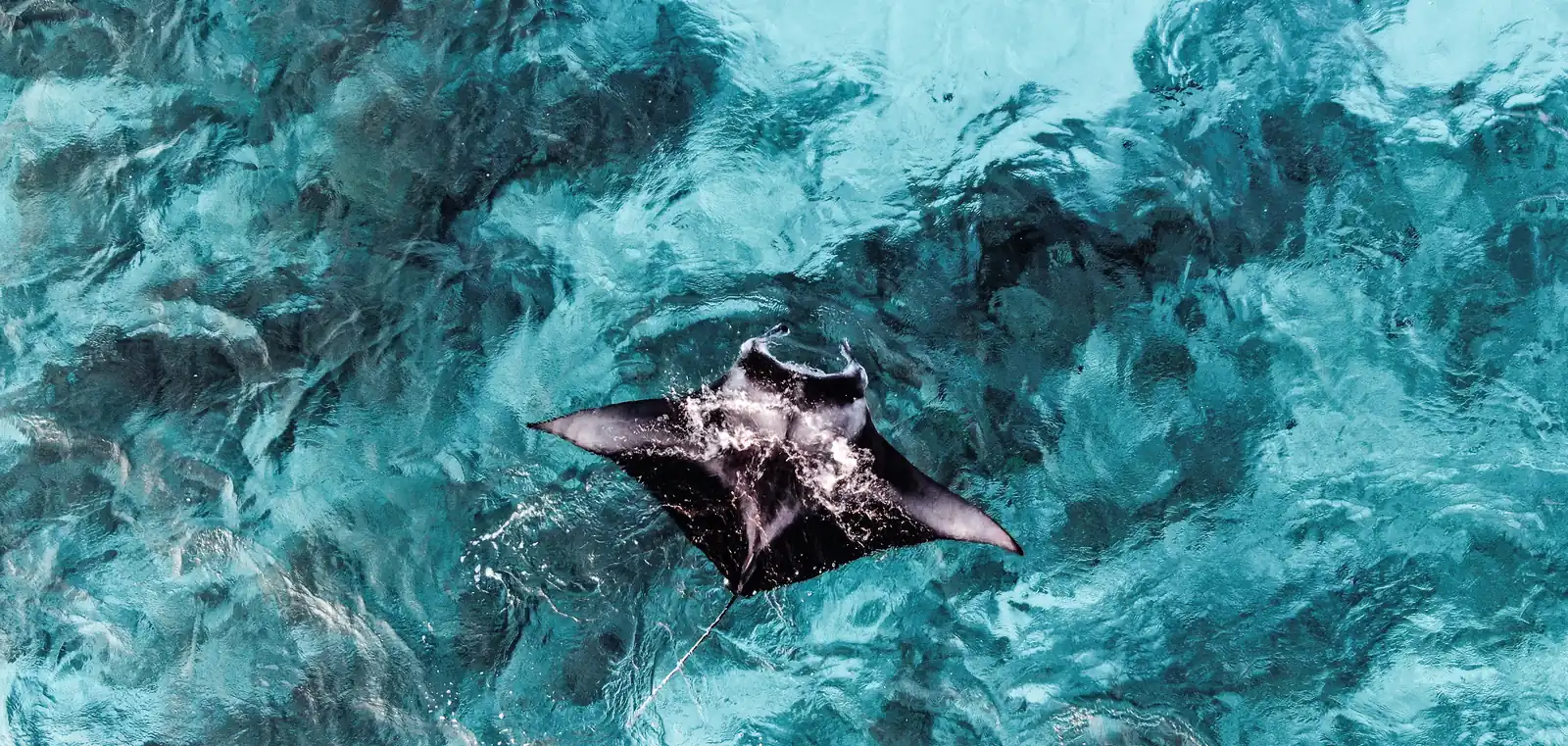 Sharks and rays of Thailand
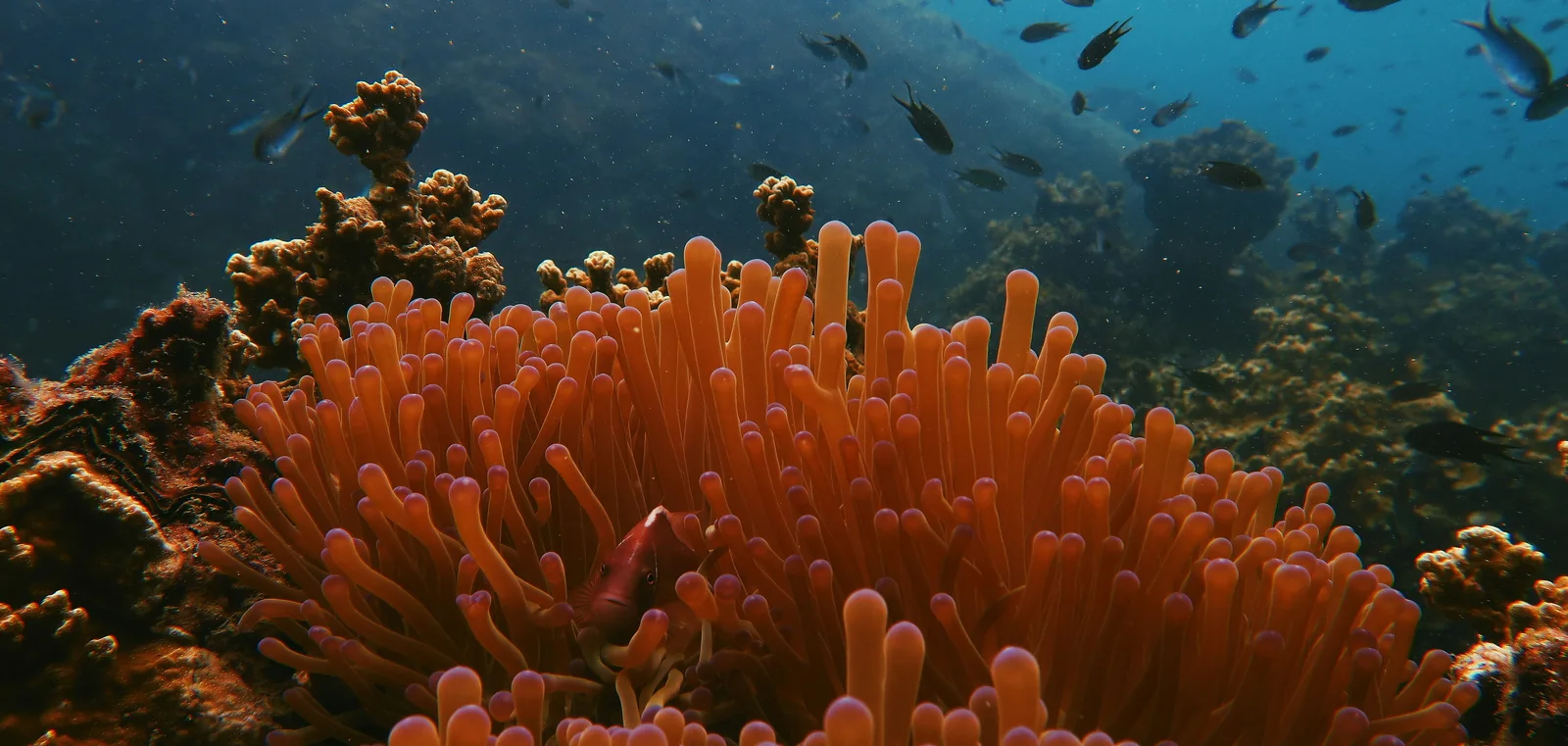 Reef invertebrates of Thailand
 Insects and spiders of Thailand
Part of the Wildlife in Thailand guide.
Explore Thailand wildlife by place
Image credits
Square thumbnails are cropped from the original. Wide banner images are cropped to a band. Other images are resized only. No other changes have been made.
- Trang shallows hero, Trang marine life: Marcin Konsek | CC BY-SA 4.0, cropped
- Dugong (resized): Julien Willem | CC BY-SA 3.0, cropped
- Green sea turtle: Unsplash | Unsplash License, cropped
- Tigertail Seahorse (cropped to square): Jakkarin Burananit | CC BY 4.0, cropped
- Blacktip reef shark: David Clode | Unsplash License, cropped
- Flamboyant Cuttlefish (cropped to square): Jenny (JennyHuang) from Taipei | CC BY 2.0, cropped
- Asian Small-clawed Otter (cropped to square): Mike Prince | CC BY 2.0, cropped
- Dugong (cropped to square): Julien Willem | CC BY-SA 3.0, cropped
- Brahminy Kite (cropped to square): Charles J. Sharp | CC BY-SA 4.0, cropped
- Germain’s Swiftlet (cropped to square): Wich'yanan L | CC BY 4.0, cropped
- Pacific Reef Heron (cropped to square): Rushen | CC BY-SA 2.0, cropped
- White-bellied Sea Eagle (cropped to square): Charles J. Sharp | CC BY-SA 4.0, cropped
- Black-capped Kingfisher (cropped to square): JJ Harrison ( https://www.jjharrison.com.au/ ) | CC BY-SA 3.0, cropped
- Green Sea Turtle: Randall Ruiz | Unsplash License, cropped
- Bullethead Parrotfish (cropped to square): Rickard Zerpe | CC BY 2.0, cropped
- Clark’s Anemonefish (cropped to square): Karelj | Public domain, cropped
- False Clownfish (cropped to square): Rickard Zerpe | CC BY-SA 2.0, cropped
- Raccoon Butterflyfish (cropped to square): Brian Gratwicke | CC BY 2.0, cropped
- Longhorn Cowfish (cropped to square): Nick Hobgood | CC BY-SA 3.0, cropped
- Saddleback Anemonefish (cropped to square): Jens Petersen (Jnpet) | CC BY-SA 3.0, cropped
- Thorny Seahorse (cropped to square): prilfish | CC BY 2.0, cropped
- Blacktip Reef Shark: David Clode | Unsplash License, cropped
- Bluespotted Ribbontail Ray (resized): Derek Keats from Johannesburg, South Africa | CC BY 2.0, cropped
- Brownbanded Bamboo Shark: Rickard Zerpe | CC BY 2.0, cropped
- Porcupine Ray: Rucha Karkarey | CC BY-SA 4.0, cropped
- Sicklefin Lemon Shark (cropped to square): Julien Bidet | CC BY-SA 4.0, cropped
- Giant Spider Conch (cropped to square): Ahmed Abdul Rahman | CC BY-SA 4.0, cropped
- Wedge Sea Hare (cropped to square): Rickard Zerpe | CC BY 2.0, cropped
- Magnificent Sea Anemone (cropped to square): Bernard DUPONT | CC BY-SA 2.0, cropped
- Staghorn Coral (cropped to square): MDC Seamarc Maldives | CC BY-SA 4.0, cropped
- Haddon’s Carpet Anemone (resized): Singgih Afifa Putra | CC BY-SA 4.0, cropped
- Blue Sea Star (cropped to square): Bernard DUPONT | CC BY-SA 2.0, cropped
- Pincushion Urchin (cropped to square): 紫堂 | CC BY-SA 2.0, cropped
- Porcelain Anemone Crab (cropped to square): Rickard Zerpe | CC BY-SA 2.0, cropped
- Indo-Pacific Horseshoe Crab (cropped to square): Shubham Chatterjee | CC BY-SA 3.0, cropped
- Mammals of Thailand: Joshua Steinberg | Unsplash License
- Birds of Thailand: Hongbin | Unsplash License
- Reptiles and Amphibians of Thailand: John Thomas | Unsplash License, cropped
- Fish of Thailand: Milos Prelevic | Unsplash License
- Sharks and Rays of Thailand: Adam Juman | Unsplash License
- Reef Invertebrates of Thailand: James Thornton | Unsplash License, cropped
- Insects and Spiders of Thailand: Joe Green | Unsplash License, cropped
Square thumbnails are cropped from the original. Wide banner images are cropped to a band. Other images are resized only. No other changes have been made.
- Trang shallows hero, Trang marine life: Marcin Konsek | CC BY-SA 4.0, cropped
- Dugong (resized): Julien Willem | CC BY-SA 3.0, cropped
- Green sea turtle: Unsplash | Unsplash License, cropped
- Tigertail Seahorse (cropped to square): Jakkarin Burananit | CC BY 4.0, cropped
- Blacktip reef shark: David Clode | Unsplash License, cropped
- Flamboyant Cuttlefish (cropped to square): Jenny (JennyHuang) from Taipei | CC BY 2.0, cropped
- Asian Small-clawed Otter (cropped to square): Mike Prince | CC BY 2.0, cropped
- Dugong (cropped to square): Julien Willem | CC BY-SA 3.0, cropped
- Brahminy Kite (cropped to square): Charles J. Sharp | CC BY-SA 4.0, cropped
- Germain’s Swiftlet (cropped to square): Wich'yanan L | CC BY 4.0, cropped
- Pacific Reef Heron (cropped to square): Rushen | CC BY-SA 2.0, cropped
- White-bellied Sea Eagle (cropped to square): Charles J. Sharp | CC BY-SA 4.0, cropped
- Black-capped Kingfisher (cropped to square): JJ Harrison ( https://www.jjharrison.com.au/ ) | CC BY-SA 3.0, cropped
- Green Sea Turtle: Randall Ruiz | Unsplash License, cropped
- Bullethead Parrotfish (cropped to square): Rickard Zerpe | CC BY 2.0, cropped
- Clark’s Anemonefish (cropped to square): Karelj | Public domain, cropped
- False Clownfish (cropped to square): Rickard Zerpe | CC BY-SA 2.0, cropped
- Raccoon Butterflyfish (cropped to square): Brian Gratwicke | CC BY 2.0, cropped
- Longhorn Cowfish (cropped to square): Nick Hobgood | CC BY-SA 3.0, cropped
- Saddleback Anemonefish (cropped to square): Jens Petersen (Jnpet) | CC BY-SA 3.0, cropped
- Thorny Seahorse (cropped to square): prilfish | CC BY 2.0, cropped
- Blacktip Reef Shark: David Clode | Unsplash License, cropped
- Bluespotted Ribbontail Ray (resized): Derek Keats from Johannesburg, South Africa | CC BY 2.0, cropped
- Brownbanded Bamboo Shark: Rickard Zerpe | CC BY 2.0, cropped
- Porcupine Ray: Rucha Karkarey | CC BY-SA 4.0, cropped
- Sicklefin Lemon Shark (cropped to square): Julien Bidet | CC BY-SA 4.0, cropped
- Giant Spider Conch (cropped to square): Ahmed Abdul Rahman | CC BY-SA 4.0, cropped
- Wedge Sea Hare (cropped to square): Rickard Zerpe | CC BY 2.0, cropped
- Magnificent Sea Anemone (cropped to square): Bernard DUPONT | CC BY-SA 2.0, cropped
- Staghorn Coral (cropped to square): MDC Seamarc Maldives | CC BY-SA 4.0, cropped
- Haddon’s Carpet Anemone (resized): Singgih Afifa Putra | CC BY-SA 4.0, cropped
- Blue Sea Star (cropped to square): Bernard DUPONT | CC BY-SA 2.0, cropped
- Pincushion Urchin (cropped to square): 紫堂 | CC BY-SA 2.0, cropped
- Porcelain Anemone Crab (cropped to square): Rickard Zerpe | CC BY-SA 2.0, cropped
- Indo-Pacific Horseshoe Crab (cropped to square): Shubham Chatterjee | CC BY-SA 3.0, cropped
- Mammals of Thailand: Joshua Steinberg | Unsplash License
- Birds of Thailand: Hongbin | Unsplash License
- Reptiles and Amphibians of Thailand: John Thomas | Unsplash License, cropped
- Fish of Thailand: Milos Prelevic | Unsplash License
- Sharks and Rays of Thailand: Adam Juman | Unsplash License
- Reef Invertebrates of Thailand: James Thornton | Unsplash License, cropped
- Insects and Spiders of Thailand: Joe Green | Unsplash License, cropped