
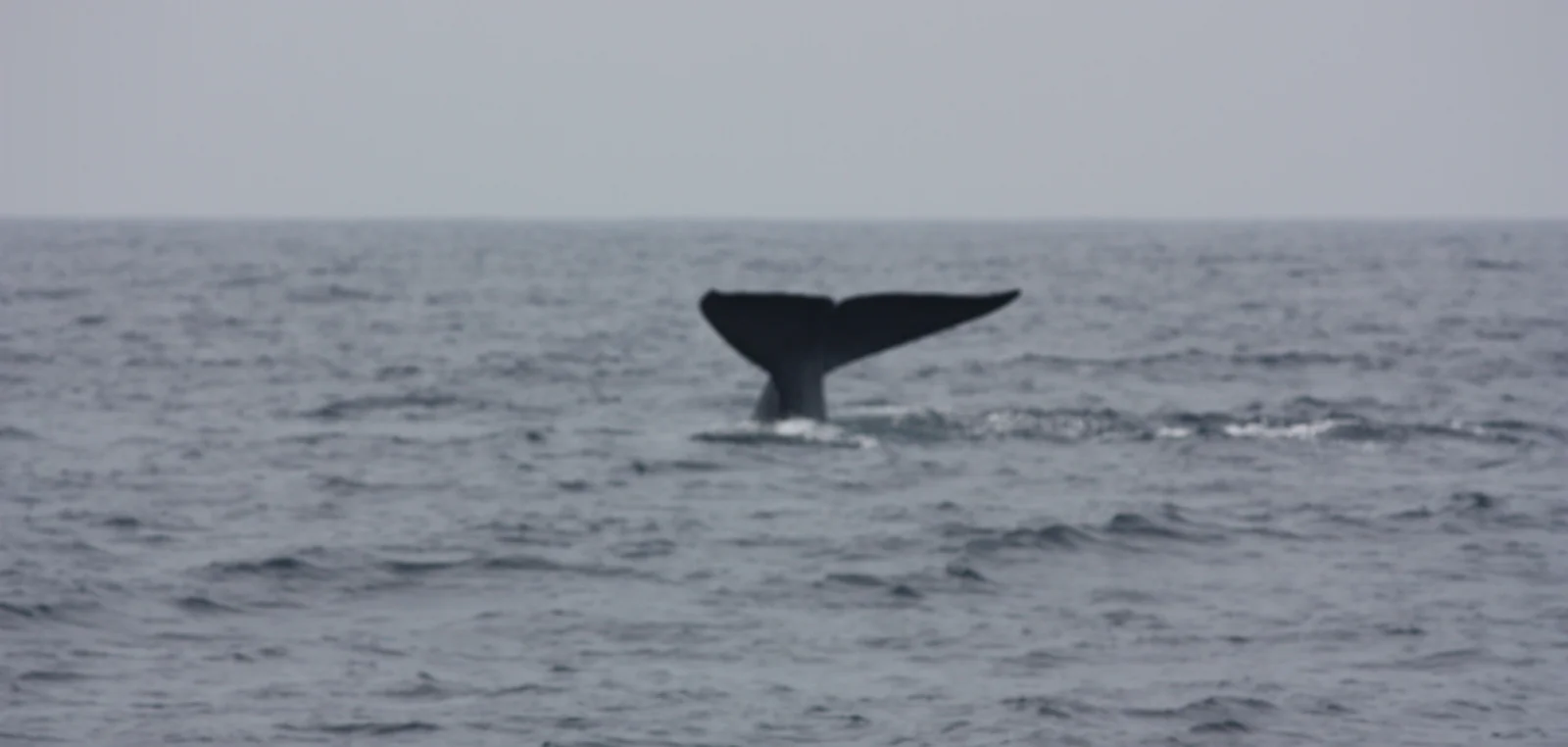
The largest animal that has ever lived is, in most of the world, a serious expedition. Off Sri Lanka it is a morning. The continental shelf drops away unusually close to the coast here, in places within a few kilometres of the beach, and the deep water that blue whales feed in comes almost to the shore with it. That single piece of geology is the whole reason this island has the reputation it does.
There is a second reason, and it is stranger. The blue whales of the northern Indian Ocean appear not to make the long polar migration that the species is famous for. They are a distinct population, they are here in some form year round, and they are smaller than the Antarctic animals. What moves is not the whales so much as the weather: the workable coast swings from south to east and back with the monsoons, which is why the three entries below share a species and share almost nothing else.
The three coasts, and the months each one works
One card, three places. The likelihood badge is the honest read on each: Regular means most people who go out on several mornings connect, Rare means treat it as a bonus on a trip you were taking anyway.
3 places
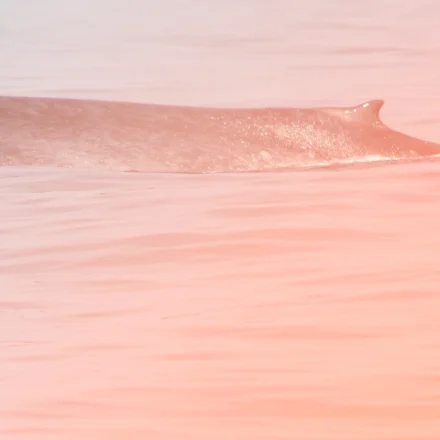
Blue Whale Regular Endangered
Balaenoptera musculus
The largest animal that has ever lived, and off Sri Lanka a population that mostly does not migrate, which is why it can be seen almost year round.
Mirissa: The shelf edge a few kilometres offshore. Best: Nov-Apr, leaving port at first light. Deep water is a short boat ride from the beach, and the fleet is large in peak season.
Trincomalee: Deep water off the east coast. Best: May-Sep. The mirror season to Mirissa, and far fewer boats.
Kalpitiya: Offshore in the deeper water beyond the Bar Reef. Best: Dec-Apr. Secondary to the dolphins here, but recorded.
Mirissa, and why the boats leave in the dark
Mirissa is the one with the reputation and it deserves it. The shelf edge sits a few kilometres offshore, the season runs from November to April, and on a good morning the run out takes under an hour. That is a remarkable thing to be able to say about a blue whale.
Boats leave at or before first light for a reason that has nothing to do with the animals. The sea builds through the morning as the land heats and the breeze comes up, so a flat six o’clock sea is often an uncomfortable ten o’clock one, and the run out to the shelf edge is long and exposed. The whales are no more active at dawn than at noon. The water simply is.
What you are looking for is the blow, which on a blue whale is a vertical column three or four storeys high and visible from a long way off in still air. The animal itself surfaces low and long, and the fluke usually only comes up on a deep dive, which is the shot everyone wants and the one that comes perhaps once in a morning.
Trincomalee, the other half of the year
From May to September the southwest monsoon shuts Mirissa and the east coast opens. Trincomalee has the same geology working for it, with deep water off the coast and a submarine canyon running in towards the harbour, and it takes both blue whales and sperm whales through those months.
The trade is that the odds are lower and the traffic is far lighter. Blue whale here is Occasional rather than Regular, so a single morning is a genuine gamble, and the compensation is that you are unlikely to be sharing the sighting with a line of other boats. Sperm whale is the other draw and is at its best from March to August, which makes the early part of the Trincomalee season the strongest for it.
For anyone building an itinerary, the practical point is simple: the two coasts are not alternatives to be weighed up, they are two different halves of the calendar, and the month decides which one you are visiting.
Kalpitiya, and what it is really for
Kalpitiya records blue whale from December to April, offshore beyond the Bar Reef in the deeper water, and it is Rare. Nobody should build a trip around it. What Kalpitiya does have, and does better than anywhere else on the island, is spinner dolphins in superpods that run into the hundreds and sometimes the thousands, found within about an hour of leaving in the same season.
So the honest framing is that a Kalpitiya morning is a dolphin trip with a small chance of something much larger attached. That is a good trip on its own terms, and it is a poor substitute for Mirissa if the blue whale is the point of the journey.
What you are actually looking at
A blue whale is difficult to take in at sea because so little of it is ever visible at once. What surfaces is a long slate-blue back and a very small dorsal fin set far towards the tail, and the scale only lands when the animal keeps going and going past a fixed point. The mottling on that back is individual, like a fingerprint, and it is what researchers use to tell one animal from another across years.
The blow is the giveaway at distance and the best identification feature at any range: tall, narrow and vertical, where a sperm whale’s is angled forward and to the left because its blowhole sits at the front of the head and points that way. If the column leans, it is not a blue whale.
The northern Indian Ocean population is its own thing, described as a separate subspecies, and it is smaller than the Antarctic animals by several metres. It is also the reason the season here is about weather rather than migration. Elsewhere in the world the question is when the whales arrive. Here the question is which coast is calm.
Find whale watching trips and coastal stays in Sri Lanka
Some links on this page are affiliate links. If you book through them, Wildseer may earn a small commission at no extra cost to you. No venue pays to appear here and none ever will.
Frequently asked questions
Where is the best place to see blue whales in Sri Lanka?
Mirissa on the south coast, between November and April. The continental shelf edge is only a few kilometres offshore and blue whale is a Regular sighting there, which is not true anywhere else on the island. Trincomalee on the east coast is the equivalent from May to September, with lower odds and far fewer boats.
When is blue whale season in Sri Lanka?
It depends which coast. November to April in the south at Mirissa and December to April at Kalpitiya, then May to September in the east at Trincomalee. The whales are present in the region year round; what changes is which sea is calm enough to work.
What are the chances of seeing a blue whale in Sri Lanka?
Good over two or three mornings at Mirissa in season and a coin toss on any single one. Occasional at Trincomalee, which means several mornings rather than one. Rare at Kalpitiya, where the spinner dolphin superpods are the real reason to go out.
Why are blue whales so close to shore in Sri Lanka?
Because the continental shelf is narrow here. The deep water blue whales feed in comes within a few kilometres of the coast off the south and east, where in most of the world it is many hours offshore. There is also good evidence that the northern Indian Ocean population does not undertake the long polar migration the species is known for.
Can you see sperm whales in Sri Lanka too?
Yes, and Trincomalee is the place, from May to September, with March to August the strongest window for the species. Sperm whales are also recorded off Mirissa and Kalpitiya but are Rare at both. The blow tells them apart at distance: a sperm whale’s leans forward and to the left, a blue whale’s goes straight up.
More on Sri Lanka wildlife
- Mirissa marine life
- Trincomalee marine life
- Whale watching in Sri Lanka
- Kalpitiya marine life
- Mammals of Sri Lanka
Part of the Wildlife in Sri Lanka guide.
Image credits
Square thumbnails are cropped from the original. Wide banner images are cropped to a band. Other images are resized only. No other changes have been made.
- where-to-see-blue-whales-sri-lanka: Arian Zwegers | CC BY 2.0, cropped
- Blue Whale (cropped to square): Tero Linjama | CC0, cropped
Square thumbnails are cropped from the original. Wide banner images are cropped to a band. Other images are resized only. No other changes have been made.
- where-to-see-blue-whales-sri-lanka: Arian Zwegers | CC BY 2.0, cropped
- Blue Whale (cropped to square): Tero Linjama | CC0, cropped