
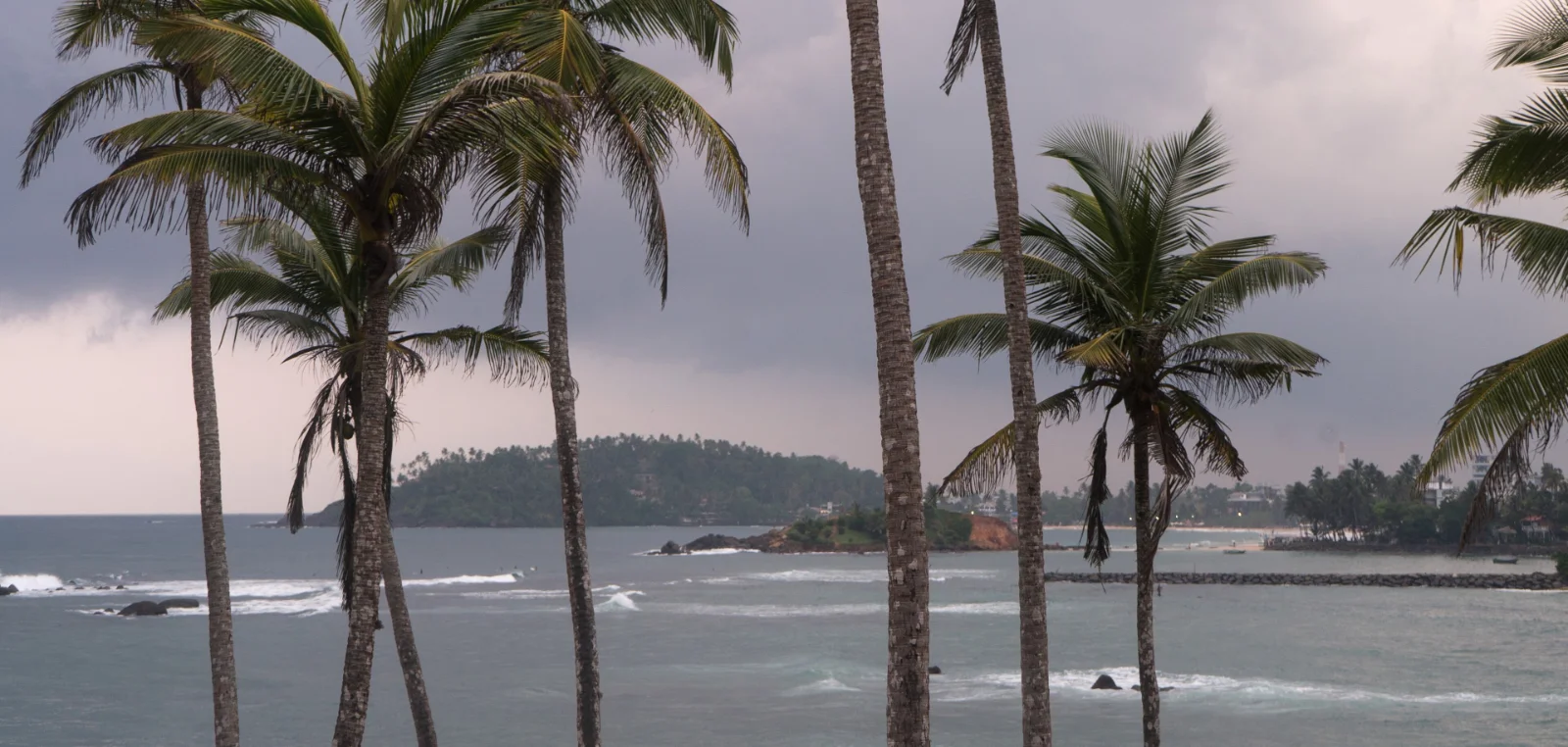
Mirissa exists on the wildlife map for one reason: the continental shelf drops away a few kilometres from the harbour mouth, and the deep water blue whales feed in comes almost to the beach with it. In most of the world the largest animal that has ever lived is an expedition. Here it is a morning, and January sits in the middle of the season that makes it possible.
The season runs from November to April and it is set by the sea rather than by the whales, which appear to be present in the northern Indian Ocean year round. What changes in January is that the northeast monsoon is on the far side of the island and this coast is workable most mornings. Everything on this page is drawn from the Wildseer database.
Highlights
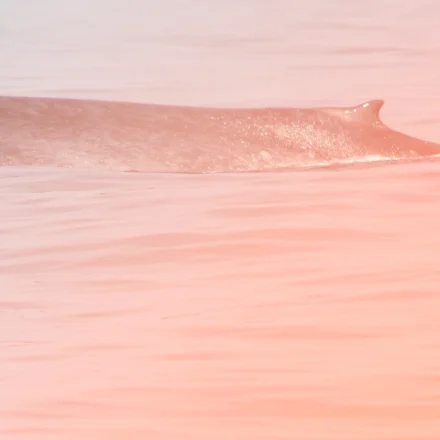
Blue Whale
The largest animal that has ever lived, and off Sri Lanka a population that mostly does not migrate, which is why it can be seen almost year round. Where: The shelf edge a few kilometres offshore. Best: Nov-Apr, leaving port at first light.
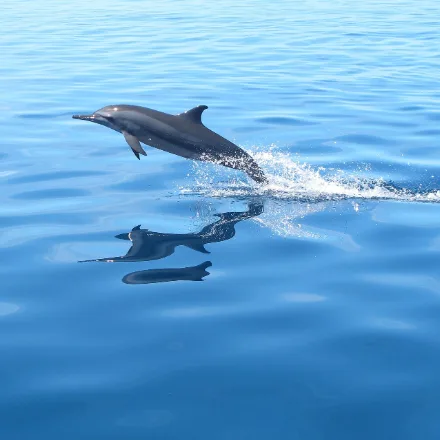
Spinner Dolphin
A small, slender dolphin that leaps clear of the sea and spins like a top in mid-air. Where: Bow riding on the run out to the whale grounds. Best: November to April.
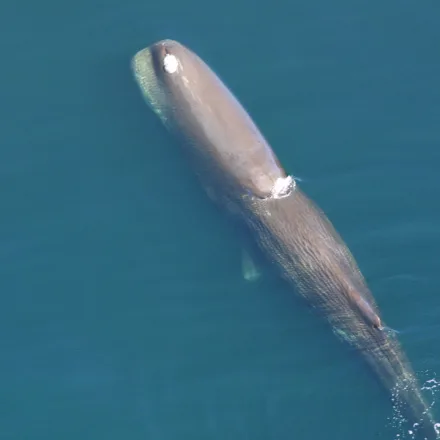
Sperm Whale
The deepest diving mammal on earth, hunting squid two kilometres down, and occasionally gathering off Sri Lanka in pods of hundreds. Where: Deep water beyond the shelf edge. Best: Nov-Apr.
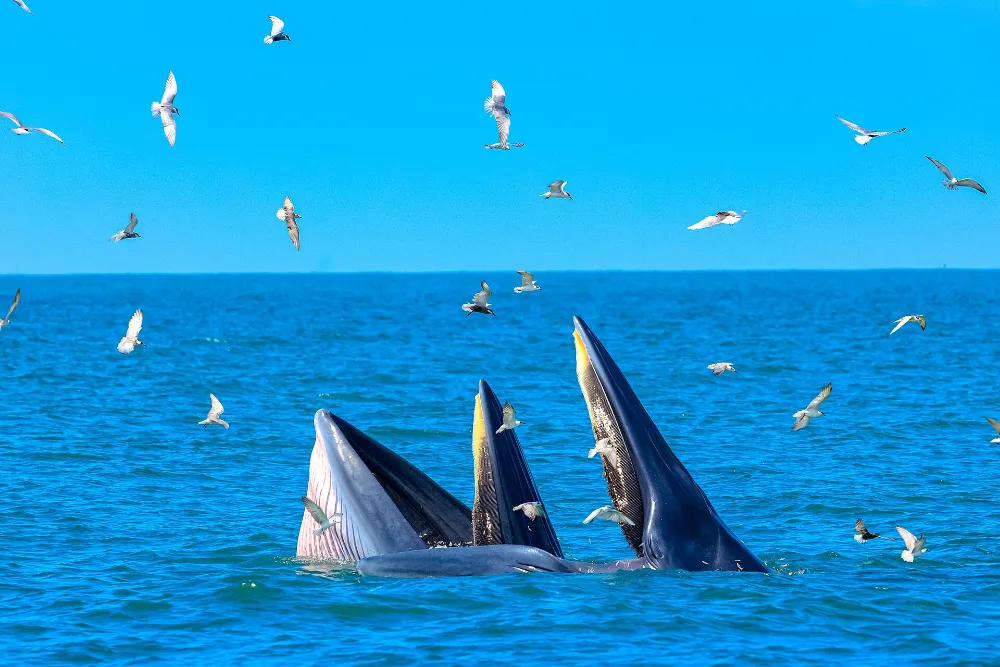
Bryde's Whale
A warm-water baleen whale that lunges up through bait balls with its mouth wide open. Where: Offshore, often in the same water as the blue whales. Best: November to April.
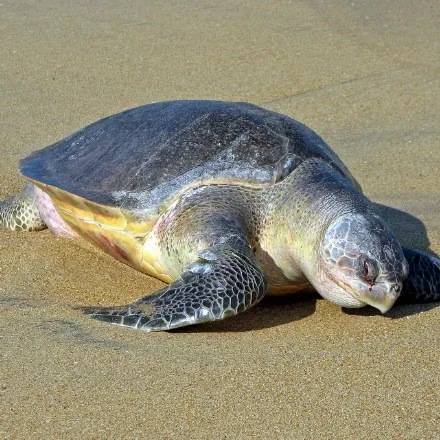
Olive Ridley Turtle
The smallest and most numerous sea turtle, famous elsewhere for mass nestings of thousands at once. Where: Offshore water on the whale watching route. Best: November to March.
At its best in January
14 species
In season now: the whole southern marine cast, which is what Mirissa is and very nearly all of what it is.
Spinner Dolphin Common
Stenella longirostris
A small, slender dolphin that leaps clear of the sea and spins like a top in mid-air.
Where: Bow riding on the run out to the whale grounds. Best: November to April. Often the first thing you see, and frequently in hundreds.
Blue Whale Regular Endangered
Balaenoptera musculus
The largest animal that has ever lived, and off Sri Lanka a population that mostly does not migrate, which is why it can be seen almost year round.
Where: The shelf edge a few kilometres offshore. Best: Nov-Apr, leaving port at first light. Deep water is a short boat ride from the beach, and the fleet is large in peak season.
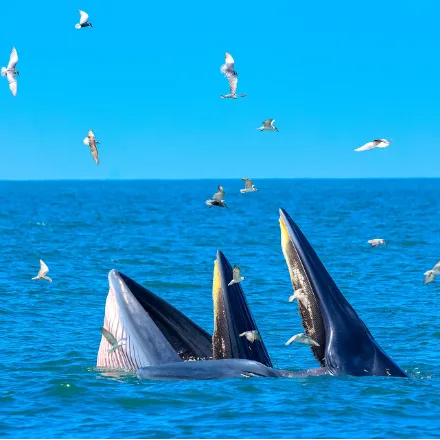
Bryde's Whale Regular
Balaenoptera edeni
A warm-water baleen whale that lunges up through bait balls with its mouth wide open.
Where: Offshore, often in the same water as the blue whales. Best: November to April. The whale most often mistaken for a blue whale here. Three dorsal ridges on the head is the tell.
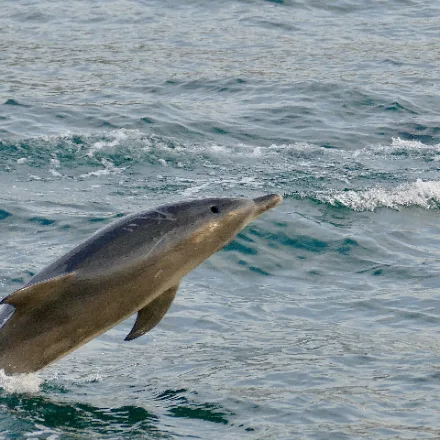
Indo-Pacific Bottlenose Dolphin Regular Near Threatened
Tursiops aduncus
The classic bottlenose of warm coasts, sociable, clever and quick to ride a bow wave.
Where: Offshore water on the whale watching route. Best: November to April.
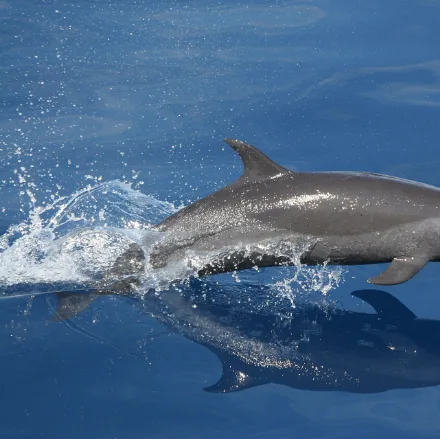
Pantropical Spotted Dolphin Occasional
Stenella attenuata
Calves are born unspotted and acquire their speckling through life, so you can read a dolphin's age off its skin.
Where: Deeper water offshore. Best: November to April.
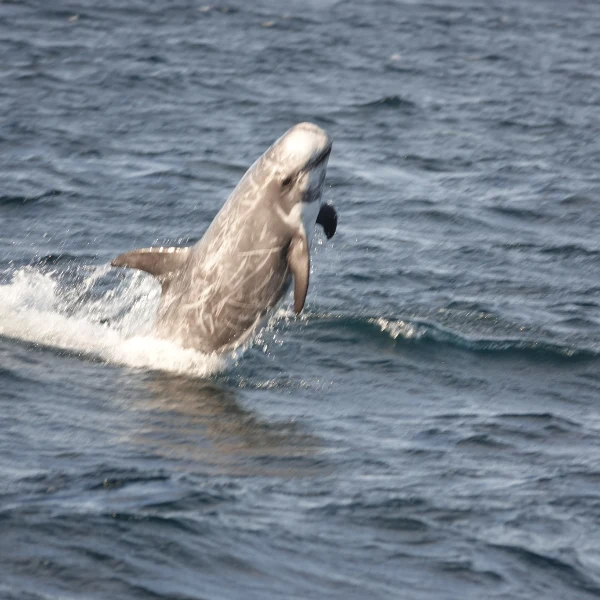
Risso's Dolphin Occasional
Grampus griseus
Old males are almost white, scarred head to tail by the teeth of other Risso's and the beaks of the squid they eat.
Where: Deep water beyond the shelf edge. Best: November to April. Older animals are so heavily scarred they look almost white.
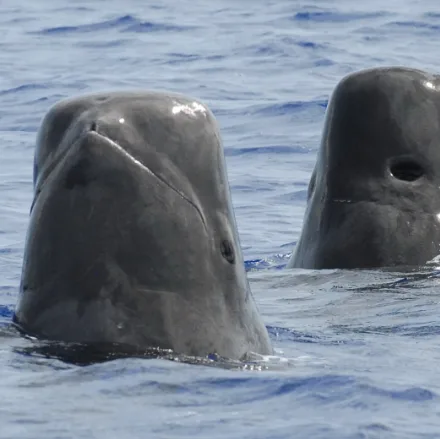
Short-finned Pilot Whale Occasional
Globicephala macrorhynchus
Females go through menopause and live decades beyond breeding, one of only a handful of species on earth that do.
Where: Deep water offshore, usually in tight social groups. Best: November to April.
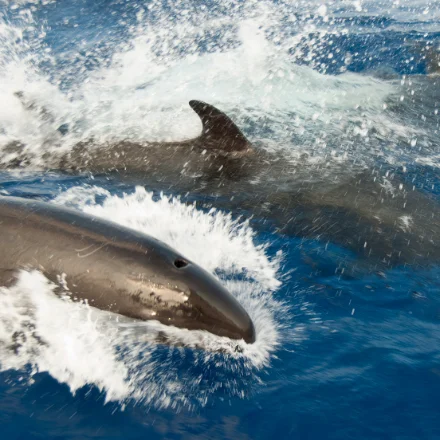
False Killer Whale Rare Near Threatened
Pseudorca crassidens
Has been recorded offering captured fish to divers and to other dolphins, apparently as a gift.
Where: Deep water offshore. Best: November to April.
Sperm Whale Rare Vulnerable
Physeter macrocephalus
The deepest diving mammal on earth, hunting squid two kilometres down, and occasionally gathering off Sri Lanka in pods of hundreds.
Where: Deep water beyond the shelf edge. Best: Nov-Apr. Secondary to blue whale here but a genuine possibility.
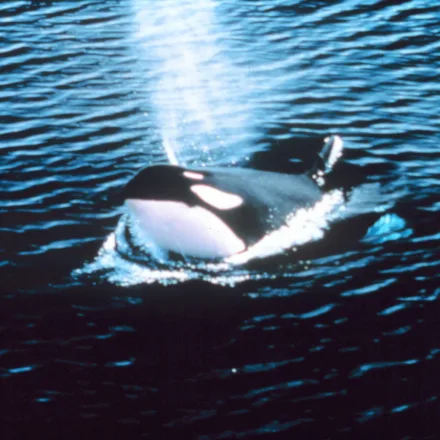
Killer Whale Very rare
Orcinus orca
The ocean's top predator, and off Sri Lanka they are known to hunt other whales, which is a thing very few people ever witness.
Where: Deep water off the shelf edge, occasionally alongside the blue whale boats. Best: December to April. An exceptional sighting even for the skippers who work this water daily.
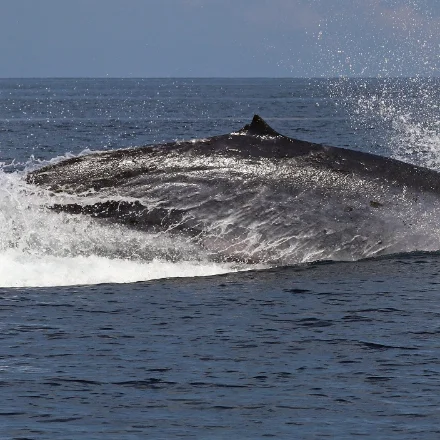
Omura's Whale Very rare
Balaenoptera omurai
Only described as a species in 2003, and not seen alive and confirmed in the wild until 2015.
Where: Offshore water. Best: November to April. Only confirmed as a living species this century.
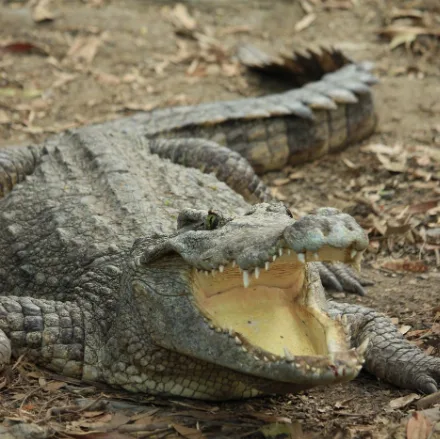
Saltwater Crocodile Regular
Crocodylus porosus
The largest living reptile and the ocean going giant of crocodiles, now virtually gone from Thai waters.
Where: The Nilwala River at Matara, upstream from the mouth, by boat. Best: December to April. Fifty to sixty animals in the surveyed reach, with a full range of age classes, so it is genuinely breeding.
Olive Ridley Turtle Occasional Vulnerable
Lepidochelys olivacea
The smallest and most numerous sea turtle, famous elsewhere for mass nestings of thousands at once.
Where: Offshore water on the whale watching route. Best: November to March. Often seen at the surface between whale sightings.
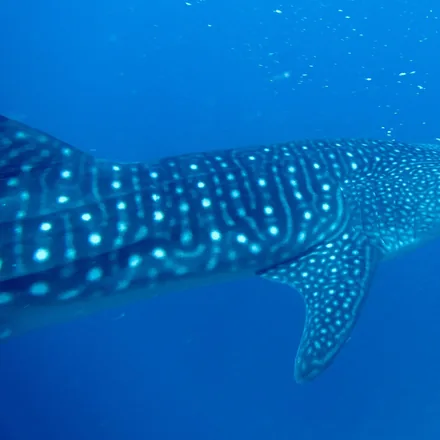
Whale Shark Rare Endangered
Rhincodon typus
The biggest fish in the ocean, a spotted, bus sized filter feeder and the undisputed holy grail of tropical diving.
Where: Blue water offshore. Best: November to April.
Practical notes for January
Boats leave at or before first light, and the reason has nothing to do with the animals. The sea builds through the morning as the land heats and the breeze comes up, so a flat six o’clock sea is often an uncomfortable ten o’clock one, and the run out to the shelf edge is long and exposed. The whales are no more active at dawn than at noon; the water simply is.
Take seasickness tablets before boarding rather than after. The run out is an hour or more in open water and the boats sit still once they find something, which is when the swell is felt most.
What you are watching for is the blow, which on a blue whale is a vertical column three or four storeys high and visible a long way off in still air. A sperm whale’s leans forward and to the left because its blowhole sits at the front of the head. If the column leans, it is not a blue whale.
Find whale watching trips and coastal stays in Sri Lanka
Some links on this page are affiliate links. If you book through them, Wildseer may earn a small commission at no extra cost to you.
Frequently asked questions
Is January a good time for whale watching in Mirissa?
Yes, it is the middle of the season. The southern season runs from November to April, and January reliably has workable mornings. Blue whale is a Regular sighting here, which is not true anywhere else on the island.
What time do the whale boats leave Mirissa?
At or before first light, usually around six. The sea builds through the morning as the breeze comes up, and the run to the shelf edge is long and open, so an early departure is about the water rather than the whales.
What else can you see besides blue whales?
Sperm whale, Bryde’s whale, spinner dolphin, bottlenose and pantropical spotted dolphin, Risso’s dolphin, short-finned pilot whale and false killer whale are all recorded on this coast in the same window, along with olive ridley turtles in the offshore water on the whale watching route.
How far offshore are the whales at Mirissa?
Much closer than almost anywhere else. The continental shelf edge sits a few kilometres from the harbour, and on a good morning the run out takes under an hour. That geology is the entire reason Mirissa has the reputation it does.
More on Sri Lanka wildlife
- Mirissa marine life
- Mammals of Sri Lanka
- Reptiles and amphibians of Sri Lanka
- Sharks and rays of Sri Lanka
Part of the Wildlife in Sri Lanka guide.
Image credits
Square thumbnails are cropped from the original. Wide banner images are cropped to a band. Other images are resized only. No other changes have been made.
- mirissa-in-january: Alexey Komarov | CC BY-SA 4.0, cropped
- Blue Whale (cropped to square): Tero Linjama | CC0, cropped
- Spinner Dolphin (cropped to square): Alexia Pihier for MDC SeaMarc Maldives | CC BY-SA 4.0, cropped
- Sperm Whale: NOAA Photo Library | Public domain, cropped
- brydes-whale (resized): Chainfoto | CC BY 4.0, cropped
- Olive Ridley Turtle (cropped to square): Bernard Gagnon | CC BY-SA 3.0, cropped
- Bryde’s Whale (cropped to square): Chainfoto | CC BY 4.0, cropped
- Indo-Pacific Bottlenose Dolphin (cropped to square): Bernard DUPONT from FRANCE | CC BY-SA 2.0, cropped
- Pantropical Spotted Dolphin (cropped to square): NOAA Photo Library | Public domain, cropped
- rissos dolphin (re-crop): Lucy Keith-Diagne | CC BY 4.0, cropped
- Short-finned Pilot Whale (cropped to square): Adam U / NOAA/NMFS/Pacific Islands Fisheries Science Center Blog 2013 07 29 | Public domain, cropped
- False Killer Whale: Juan Ortega | CC BY 3.0, cropped
- Killer Whale: NOAA, United States National Oceanic and Atmospheric Administration | Public domain, cropped
- Omura’s Whale: Charles J. Sharp | CC BY-SA 4.0, cropped
- Saltwater Crocodile: Rutpratheep Nilpechr | Pexels Licence, cropped
- Whale Shark (cropped to square): Jerome Paillet (IFREMER) | CC BY 4.0, cropped
Square thumbnails are cropped from the original. Wide banner images are cropped to a band. Other images are resized only. No other changes have been made.
- mirissa-in-january: Alexey Komarov | CC BY-SA 4.0, cropped
- Blue Whale (cropped to square): Tero Linjama | CC0, cropped
- Spinner Dolphin (cropped to square): Alexia Pihier for MDC SeaMarc Maldives | CC BY-SA 4.0, cropped
- Sperm Whale: NOAA Photo Library | Public domain, cropped
- brydes-whale (resized): Chainfoto | CC BY 4.0, cropped
- Olive Ridley Turtle (cropped to square): Bernard Gagnon | CC BY-SA 3.0, cropped
- Bryde’s Whale (cropped to square): Chainfoto | CC BY 4.0, cropped
- Indo-Pacific Bottlenose Dolphin (cropped to square): Bernard DUPONT from FRANCE | CC BY-SA 2.0, cropped
- Pantropical Spotted Dolphin (cropped to square): NOAA Photo Library | Public domain, cropped
- rissos dolphin (re-crop): Lucy Keith-Diagne | CC BY 4.0, cropped
- Short-finned Pilot Whale (cropped to square): Adam U / NOAA/NMFS/Pacific Islands Fisheries Science Center Blog 2013 07 29 | Public domain, cropped
- False Killer Whale: Juan Ortega | CC BY 3.0, cropped
- Killer Whale: NOAA, United States National Oceanic and Atmospheric Administration | Public domain, cropped
- Omura’s Whale: Charles J. Sharp | CC BY-SA 4.0, cropped
- Saltwater Crocodile: Rutpratheep Nilpechr | Pexels Licence, cropped
- Whale Shark (cropped to square): Jerome Paillet (IFREMER) | CC BY 4.0, cropped