
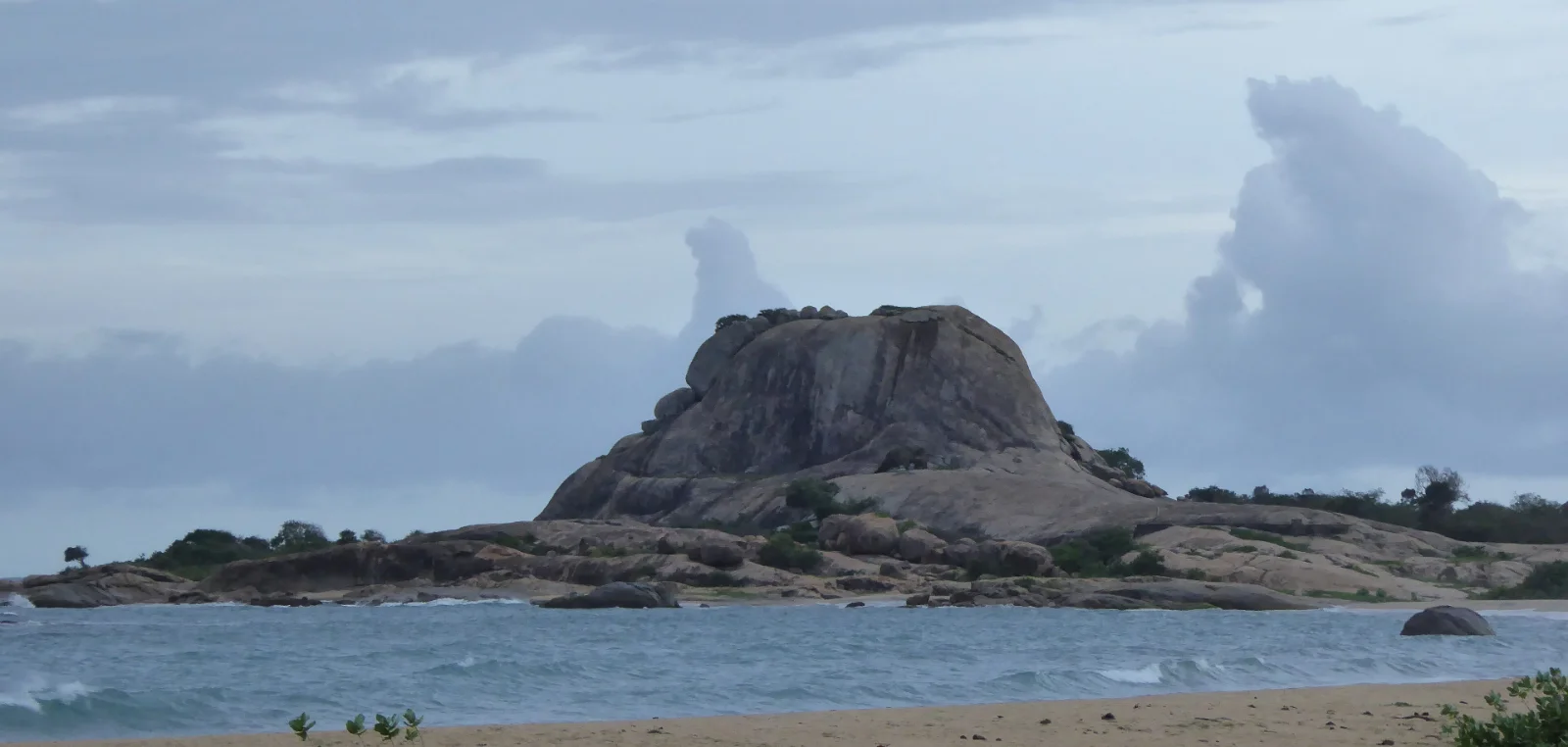
February is where Yala’s best months begin. The northeast monsoon has finished, the water is starting to pull back into the waterholes, and the scrub is thinning enough to see through, which is the combination the whole park runs on. Block 1 holds the highest recorded leopard density anywhere on earth, and February to July is when that density turns into sightings.
It is also the calmest sea of the year on the south coast, which matters more than it sounds: Yala’s southern boundary is beach, and a February trip pairs naturally with the whale season off Mirissa an hour and a half west. This page covers what February specifically produces at Yala, what is here all year, and what the month costs you.
Highlights
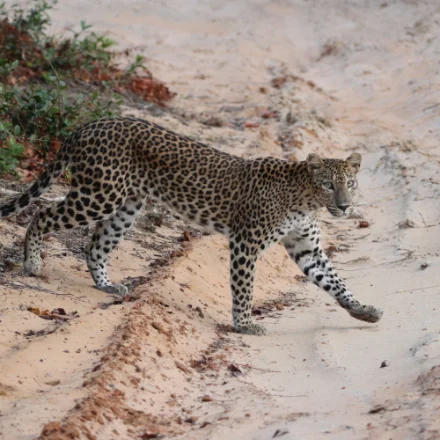
Sri Lankan Leopard
The largest leopard subspecies in the world, and on this island it is the top predator, which changes how it behaves. Where: Rock outcrops, track edges and waterholes in Block 1. Best: Feb-Jul, first and last two hours of light.
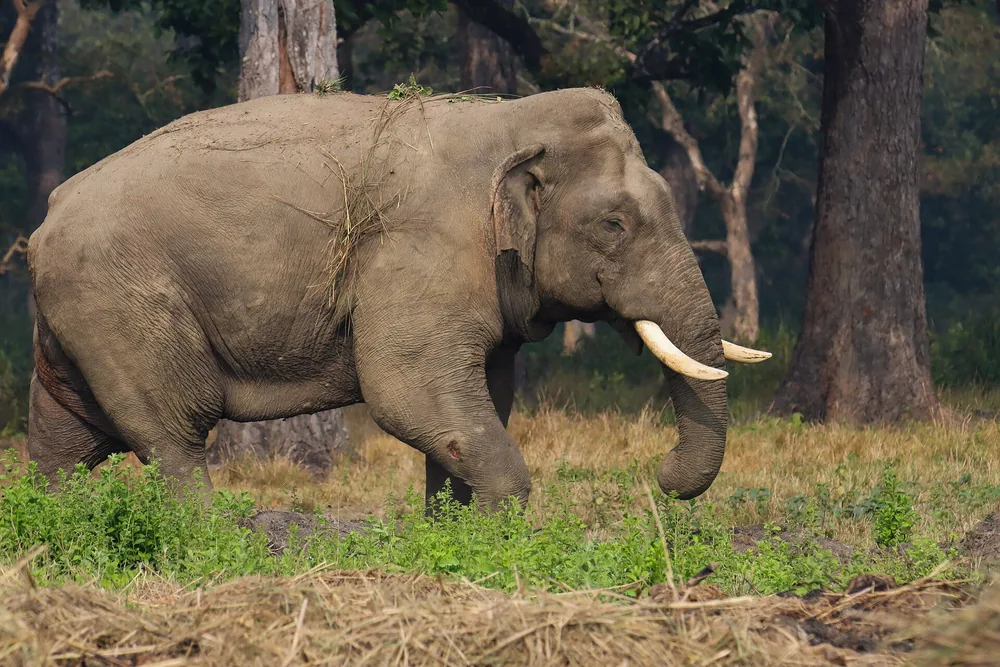
Asian Elephant
The largest land animal in Asia, and a herd crossing open grassland at dusk moves over the ground faster than its size suggests. Where: Waterholes and open scrub in Block 1. Best: February to July.
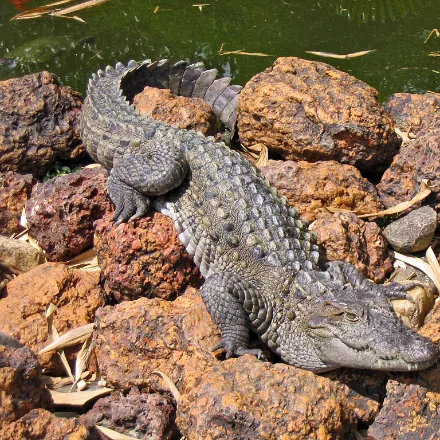
Mugger Crocodile
The broadest snout of any living crocodile, and in one Sri Lankan park block there are more of them per square kilometre than anywhere else on earth. Where: Buthawa Wewa, Heenwewa, Katagamuwa Tank and the waterholes through Block 1. Best: May to September, mid morning basking.
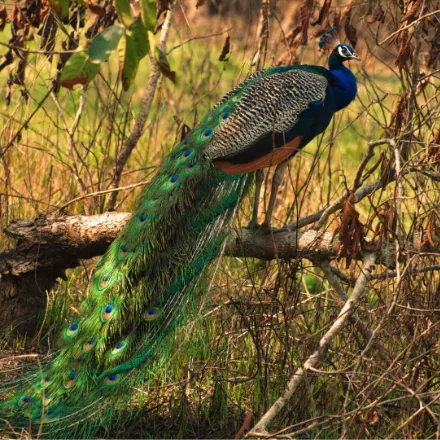
Indian Peafowl
Wild, and behaving like a wild bird: displaying on a termite mound at dawn with leopards in the same scrub. Where: Open scrub, termite mounds and waterhole edges throughout Block 1. Best: Year round, dawn.
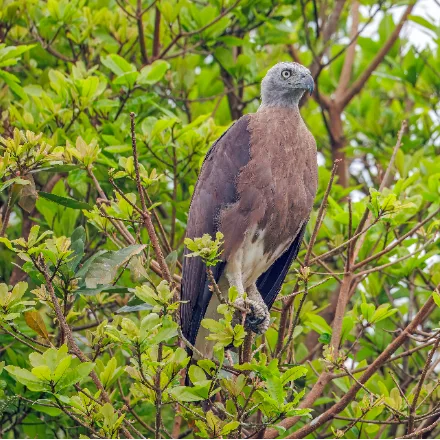
Grey-headed Fish Eagle
Sits low over the water on a dead branch for hours, then drops feet first and comes up with a fish half its own weight. Where: Tank margins and the larger waterholes. Best: Year round.
At its best in February
12 species
At their best this month: the cats, the crocodiles as the water concentrates, and the last of the northern migrants before they leave.
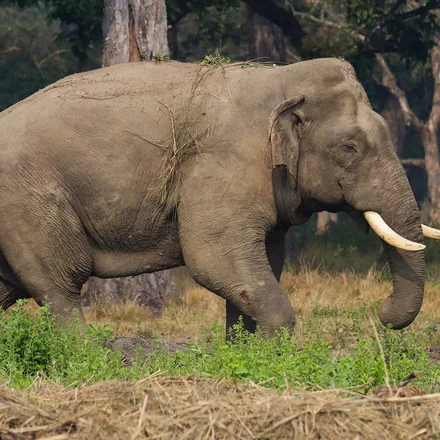
Asian Elephant Regular Endangered
Elephas maximus
The largest land animal in Asia, and a herd crossing open grassland at dusk moves over the ground faster than its size suggests.
Where: Waterholes and open scrub in Block 1. Best: February to July.
Sri Lankan Leopard Regular Endangered
Panthera pardus kotiya
The largest leopard subspecies in the world, and on this island it is the top predator, which changes how it behaves.
Where: Rock outcrops, track edges and waterholes in Block 1. Best: Feb-Jul, first and last two hours of light. The highest leopard density recorded anywhere. Listen for chital alarm calls, which is how every guide finds them.
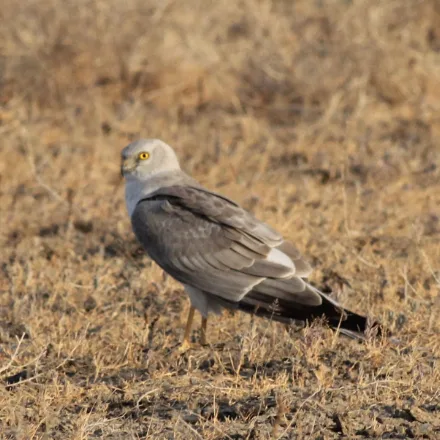
Pallid Harrier Rare Near Threatened
Circus macrourus
Quarters the grassland at head height on raised wings, tilting and rocking, hunting entirely by sound and surprise.
Where: Open scrub and burnt grassland. Best: Dec-Feb.
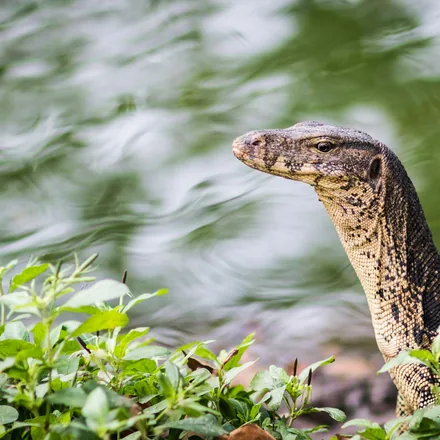
Asian Water Monitor Common
Varanus salvator
A dragon sized lizard that swims canals and city parks, second only to the Komodo dragon in length.
Where: Waterholes and tank edges throughout Block 1. Best: February to September.
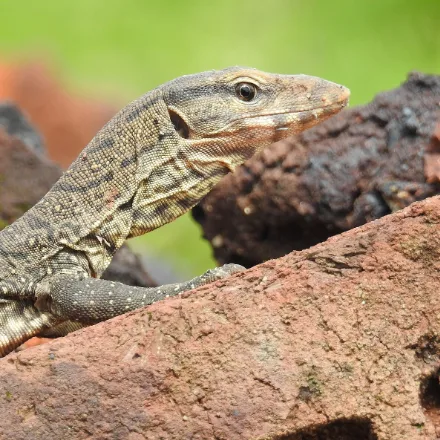
Bengal Monitor Common
Varanus bengalensis
A dry-country monitor that climbs well, digs constantly and eats essentially anything smaller than itself.
Where: Open scrub, rock outcrops and track edges. Best: February to September. Nostrils set midway between eye and snout tip, and a round rather than flattened tail.
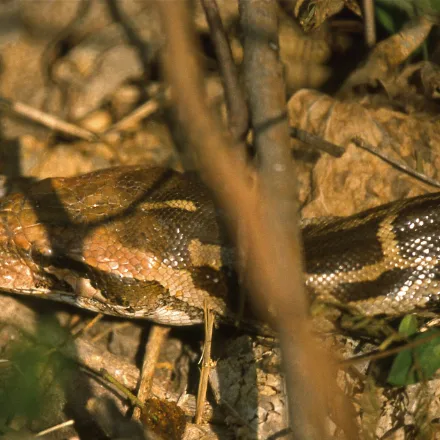
Indian Rock Python Occasional Near Threatened
Python molurus
Sri Lanka's largest snake, and in the dry season it lies out at the edge of a shrinking waterhole where every animal in the park has to come.
Where: Basking at waterhole edges and swimming across tanks. Best: February to July, cool mornings. Often seen from a jeep, stretched out at full length in the open.
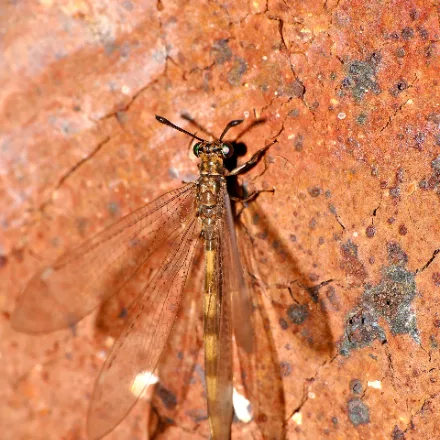
Antlion Common
Myrmeleon sp.
The larva digs a conical pit in dry sand and flicks grains at anything trying to climb out, collapsing the walls under it.
Where: Sandy soil under bushes and around the bungalows. Best: February to July.
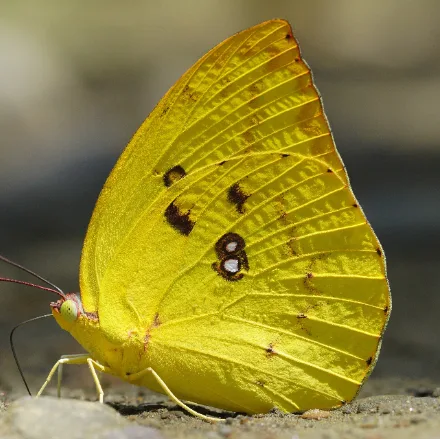
Common Emigrant Common
Catopsilia pomona
The butterfly behind the name Samanala Kanda, Butterfly Mountain, and the mass movement that heads for it every year.
Where: Track edges and open scrub. Best: February to July.
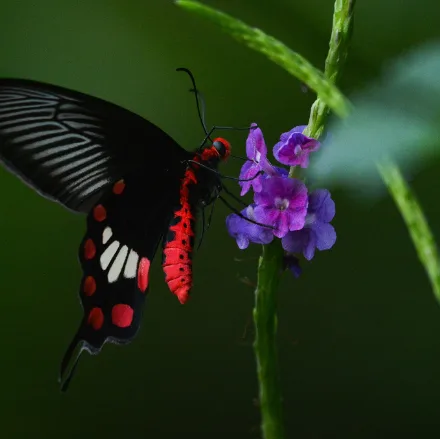
Common Rose Swallowtail Common
Pachliopta aristolochiae
A velvety black swallowtail with a crimson body and rose-pink spots, floating slowly to show it is poisonous.
Where: Track edges and flowering scrub. Best: February to July.
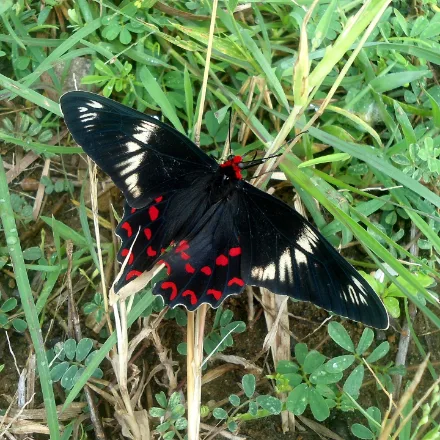
Crimson Rose Common Near Threatened
Pachliopta hector
Flies slowly and in the open because it is poisonous and every predator on the island knows it.
Where: Track edges and flowering scrub through the blocks. Best: February to July.
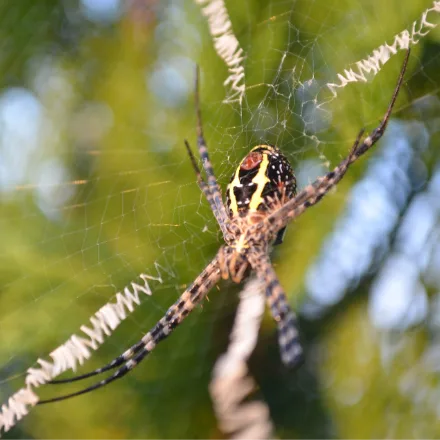
Signature Spider Common
Argiope anasuja
Writes a bold zigzag across the middle of its own web, and nobody is entirely sure why.
Where: Scrub and track-edge vegetation through the blocks. Best: February to July.
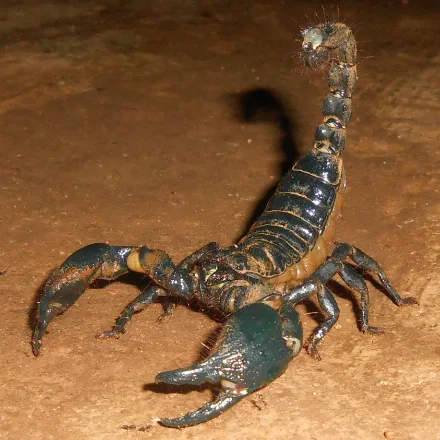
Giant Forest Scorpion Occasional
Heterometrus swammerdami
Among the largest scorpions on earth, and its sting is milder than a bee's.
Where: Under logs and around the bungalows and track edges after dark. Best: February to July, night.
Possible all year, including February
33 species
The resident cast, available in any month at Yala.
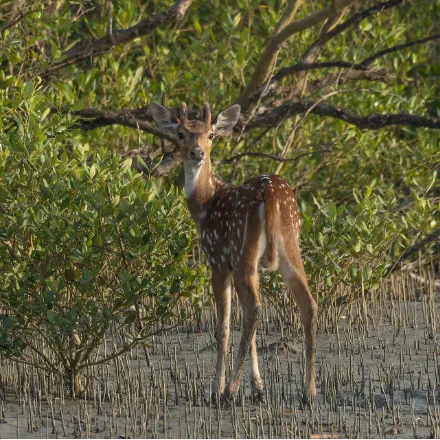
Chital (Spotted Deer) Common
Axis axis
The prey base the whole leopard story rests on, and the animal whose alarm call tells you where the cat is.
Where: Open ground and waterholes throughout Block 1. Best: Year round. Learn the alarm bark. The deer see the leopard long before anyone in a jeep does.
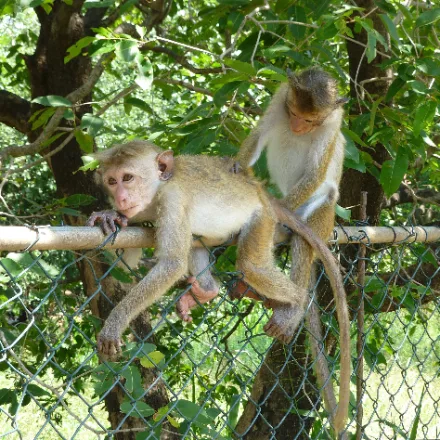
Toque Macaque Common Endangered
Macaca sinica
A small endemic monkey with a swirl of hair on the crown arranged like a cap, and the most studied primate on the island.
Where: Track edges and around the bungalows. Best: Year round. Never hand food to one. The rule is the same here as in Thailand.
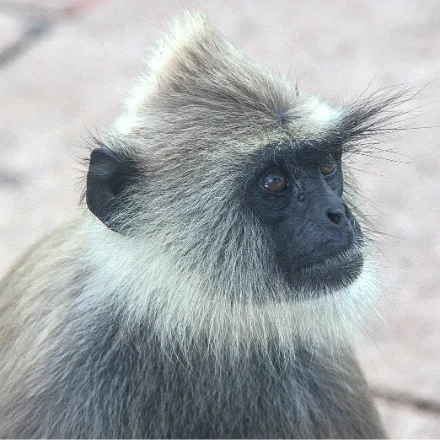
Tufted Grey Langur Common Near Threatened
Semnopithecus priam
Long-limbed, silver-grey and black-faced, sitting in the open on a ruin or a track edge in every dry zone park.
Where: Open ground and track edges throughout. Best: Year round. Long-limbed, silver, black-faced, often on the ground.
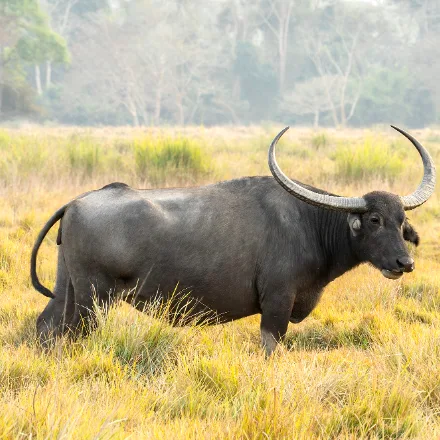
Wild Water Buffalo Common Endangered
Bubalus arnee
Wide-swept horns spanning further than any other bovid, on an animal that is genuinely dangerous and genuinely rare in its true wild form.
Where: Wallowing in tanks and waterholes through the heat of the day. Best: Year round. Buffalo injure more people in Sri Lanka than leopards do.
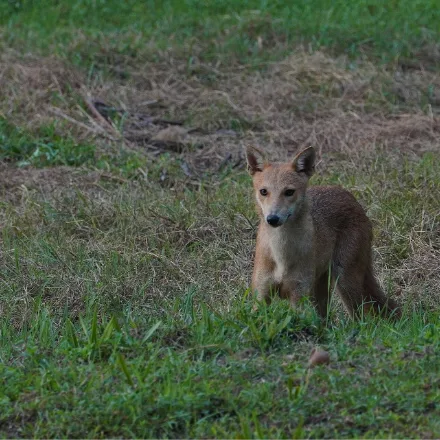
Golden Jackal Regular
Canis aureus
The dry zone's opportunist, trotting along a track at dawn and howling in chorus at dusk so the whole park knows where it is.
Where: Tracks and open ground, and at leopard kills once the cat has left. Best: Year round, dawn and dusk. Watching one work an abandoned kill is a good lesson in how the system fits together.
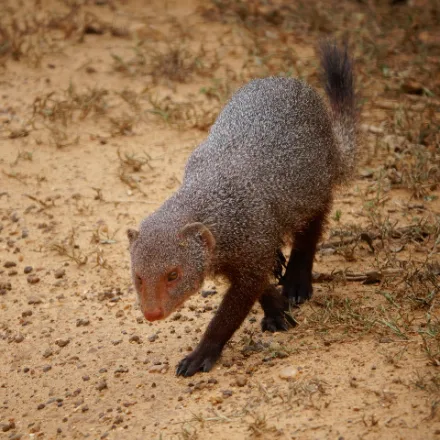
Ruddy Mongoose Regular
Urva smithii
A big reddish mongoose that carries its black-tipped tail curled up over its back as it crosses a track.
Where: Crossing tracks and working the scrub edge. Best: Year round, daytime. Black tail tip carried upcurved is the field mark at a glance.
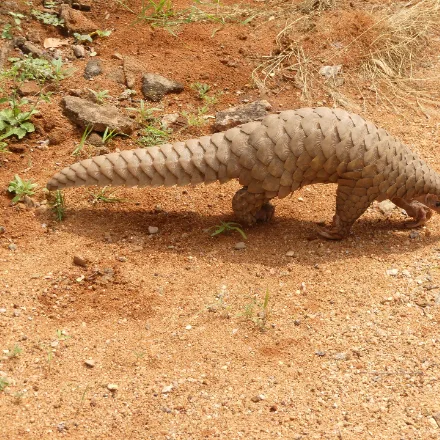
Indian Pangolin Ultra rare Endangered
Manis crassicaudata
A walking pine cone that eats ants, rolls into an impenetrable ball when threatened, and is the most trafficked wild mammal on earth.
Where: Night records and occasional burrows near the tracks. Best: Year round, after dark. Realistic chances on a normal trip are close to zero, and saying otherwise would be dishonest.
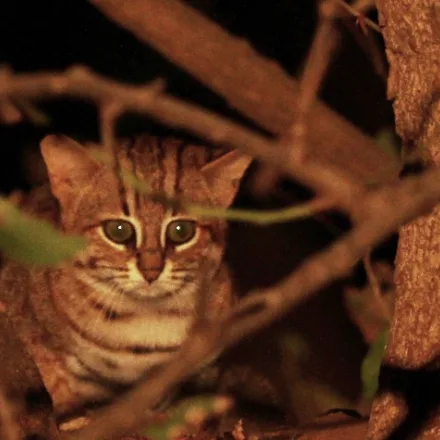
Rusty-spotted Cat Ultra rare Near Threatened
Prionailurus rubiginosus
The smallest wild cat in the world, about half the weight of a house cat, and one of the least seen animals on the island.
Where: Night records and camera traps in Block 1 scrub. Best: Year round, after dark. Listed for honesty. Realistic chances on a normal trip are close to zero.
Indian Peafowl Common
Pavo cristatus
Wild, and behaving like a wild bird: displaying on a termite mound at dawn with leopards in the same scrub.
Where: Open scrub, termite mounds and waterhole edges throughout Block 1. Best: Year round, dawn. Displaying males on open ground at first light are one of the images people come away with.
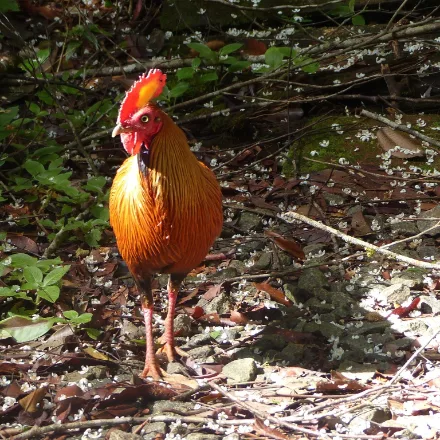
Sri Lanka Junglefowl Common
Gallus lafayettii
The national bird, and the wild ancestor's cousin: a jungle cockerel with a yellow-centred red comb found nowhere else on earth.
Where: Scrub edges and track sides throughout the park. Best: Year round, first and last light. Runs rather than flies. A guaranteed endemic on any Yala drive.
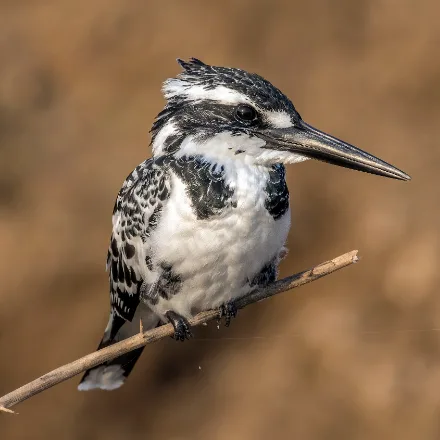
Pied Kingfisher Regular
Ceryle rudis
The largest bird in the world that can hover in still air with no wind to help it, which is how it fishes open water no perch reaches.
Where: Tanks and waterholes. Best: Year round.
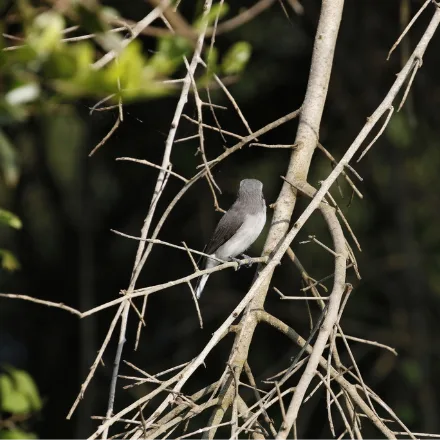
Sri Lanka Woodshrike Regular
Tephrodornis affinis
A plain grey-brown bird of the dry zone scrub that repays anyone willing to look at something that is not a leopard.
Where: Exposed branches beside the tracks. Best: Year round. Perches upright and drops onto insects. Gives a safari page depth.
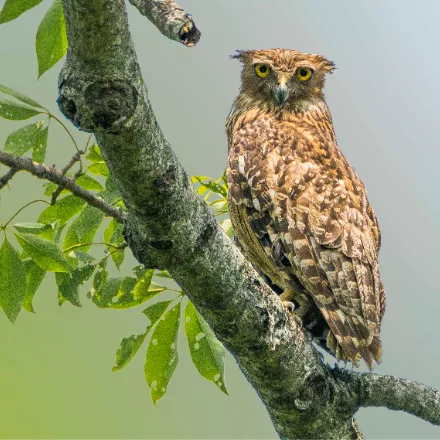
Brown Fish Owl Occasional
Ketupa zeylonensis
A big owl with bare unfeathered legs, because feathers are a liability when you fish with your feet.
Where: Large trees over the tanks and along the watercourses. Best: Year round, dusk. Often found by following the mobbing calls of crows and drongos to the day roost.
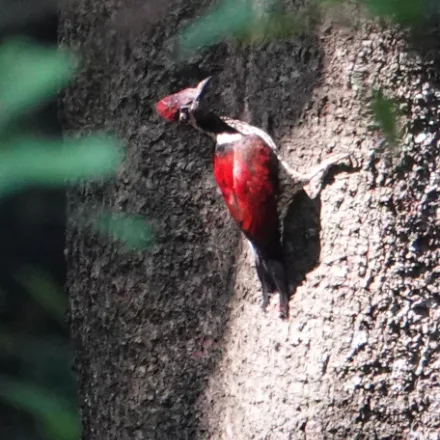
Crimson-backed Flameback Occasional
Chrysocolaptes stricklandi
A big crimson woodpecker that hammers so hard you hear it before you see the tree move.
Where: Dead timber and larger trees along the tracks. Best: Year round. A reminder on a safari drive that the birds repay the same attention as the mammals.
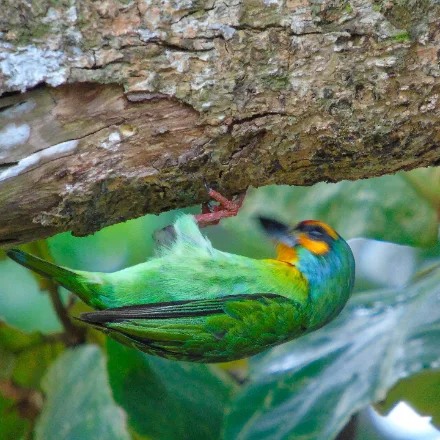
Crimson-fronted Barbet Occasional
Psilopogon rubricapillus
Green with a crimson forehead and a blue face, and a call like a hammer on a distant fencepost.
Where: Fruiting figs and larger trees along the tracks. Best: Year round. Call like a hammer on a distant fencepost.
Grey-headed Fish Eagle Occasional Near Threatened
Icthyophaga ichthyaetus
Sits low over the water on a dead branch for hours, then drops feet first and comes up with a fish half its own weight.
Where: Tank margins and the larger waterholes. Best: Year round.
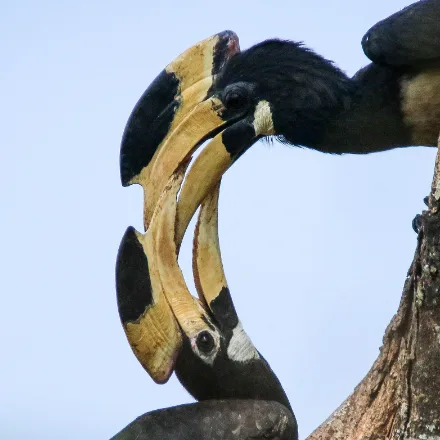
Malabar Pied Hornbill Occasional Near Threatened
Anthracoceros coronatus
The island's big hornbill, sealing the female into a tree hollow behind a wall of mud for the whole nesting period.
Where: Riverine strips and large fruiting figs. Best: Year round.
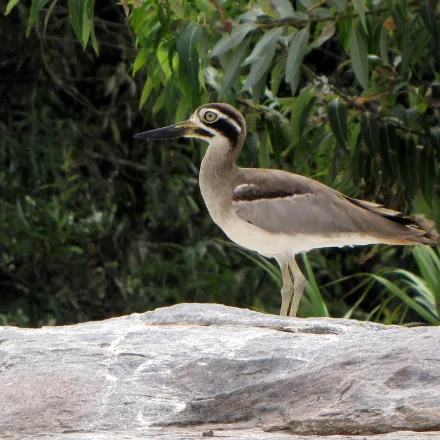
Great Thick-knee Rare Near Threatened
Esacus recurvirostris
A heavy, huge-eyed shorebird that stands motionless on open shingle all day and only comes alive at dusk.
Where: Tank margins and dry riverbed inside the park. Best: Year round.
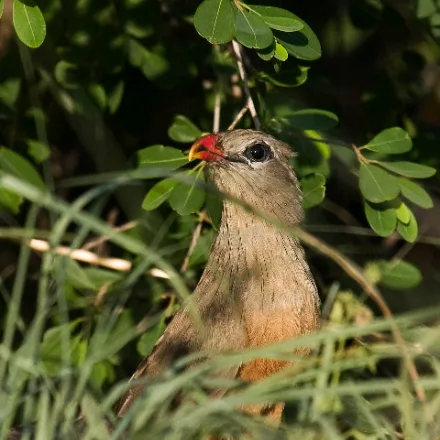
Sirkeer Malkoha Rare
Taccocua leschenaultii
A cuckoo that gave up on being a cuckoo: it builds its own nest, raises its own young and runs along the ground rather than flying.
Where: Low thorn scrub beside the tracks. Best: Year round. More often glimpsed running along the ground than seen in flight.
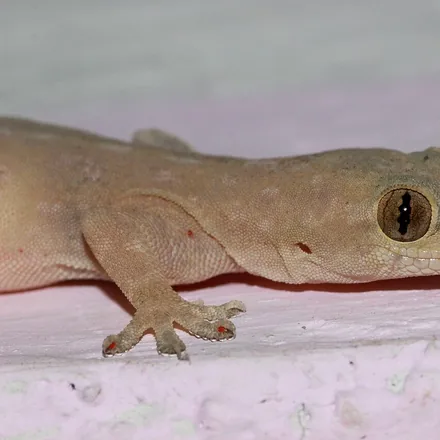
Common House Gecko Common
Hemidactylus frenatus
Sticks to glass using van der Waals forces across billions of microscopic hairs, not glue and not suction.
Where: Bungalow and park building walls. Best: Year round, night.
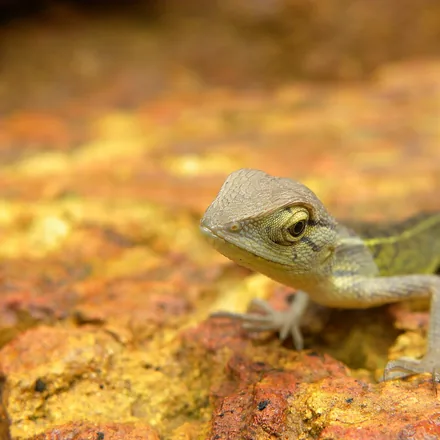
Oriental Garden Lizard Common
Calotes versicolor
The everyday garden lizard whose breeding males flush blood red about the head, earning the name bloodsucker.
Where: Scrub, track verges and bungalow surrounds. Best: Year round.
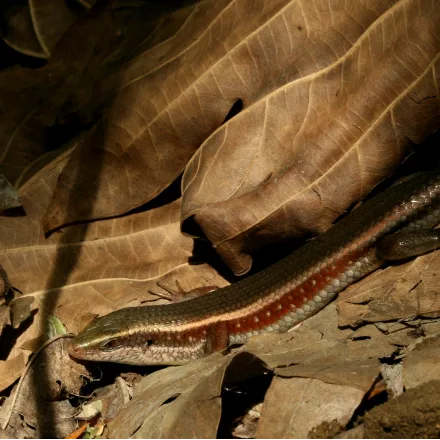
Sri Lankan Common Skink Common
Eutropis lankae
The bronze skink basking on every wall, ruin and hotel lawn in the country turned out in 2020 to be an endemic species, not the Indian one everybody had been calling it.
Where: Rock outcrops, track verges and bungalow surrounds. Best: Year round.
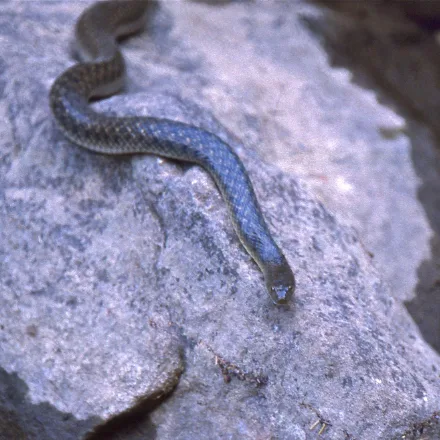
Checkered Keelback Regular
Fowlea piscator
The snake you will actually see in Sri Lanka, hunting fish in a paddy channel in broad daylight.
Where: Tanks and waterholes throughout Block 1. Best: Year round.
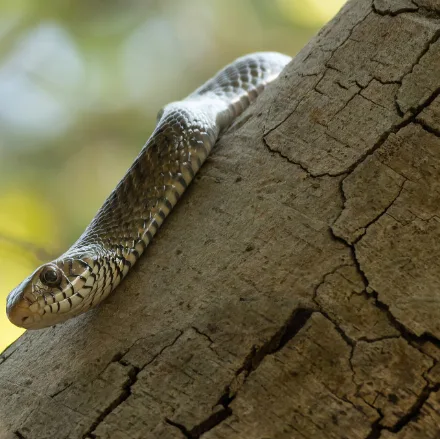
Oriental Rat Snake Regular
Ptyas mucosa
A long, fast, wide eyed snake that races across open ground and is one of the region's great rodent controllers.
Where: Crossing tracks and hunting rodents in open scrub. Best: Year round, daytime.
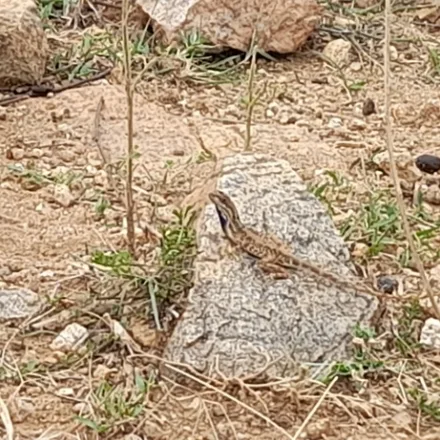
Bahir's Fan-throated Lizard Occasional Endangered
Sitana bahiri
A finger length lizard of the coastal sand that unfurls an orange flag from its throat and does press ups to show it off.
Where: Coastal scrub and sand around Palatupana and the Kirinda approach. Best: Year round, warm mornings.
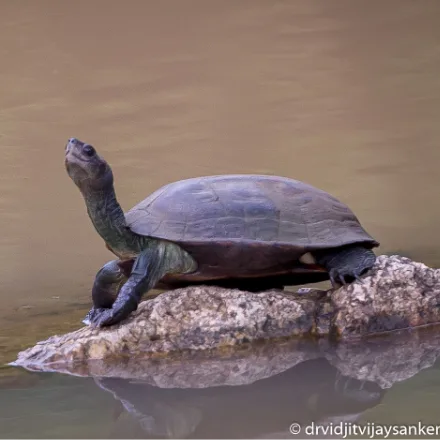
Indian Black Turtle Occasional Near Threatened
Melanochelys trijuga
The dark, three keeled turtle basking on every half sunk log in the dry zone, and the northern race is found nowhere else on earth.
Where: Waterhole margins and half sunk logs. Best: Year round.
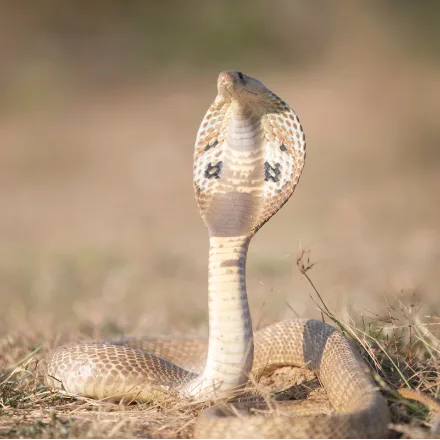
Indian Cobra Occasional
Naja naja
The spectacled cobra of South Asian myth, and one of the very few snakes a visitor to the dry zone parks has a real chance of seeing.
Where: Crossing park tracks and around rock outcrops. Best: Year round, early morning and late afternoon.
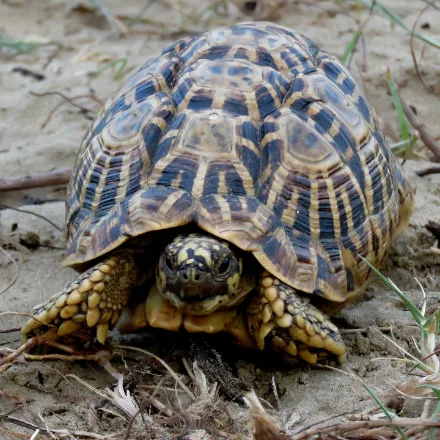
Indian Star Tortoise Occasional Vulnerable
Geochelone elegans
The most trafficked tortoise on earth, and the Sri Lankan animals are the biggest and the most boldly starred of the lot.
Where: Open ground and roadside scrub in Block 1. Best: After rain.
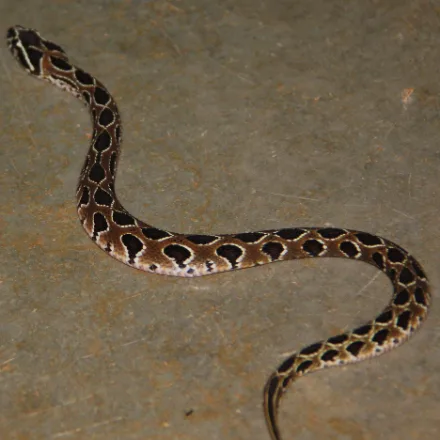
Russell's Viper Occasional
Daboia russelii
The snake that kills more people in Sri Lanka than any other, sitting in plain sight on a paddy bund and hissing like a punctured tyre.
Where: Coiled on warm tracks and open ground at dusk. Best: Year round. Listen for the hiss before you look for the snake.
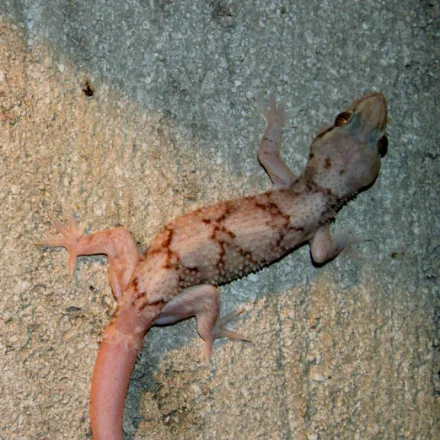
Sri Lankan Termite Hill Gecko Rare
Hemidactylus depressus
An endemic gecko flattened almost to paper, with a serrated tail, living inside termite mounds and cave roofs.
Where: Buildings and rock at Palatupana on the park edge. Best: Year round, night.
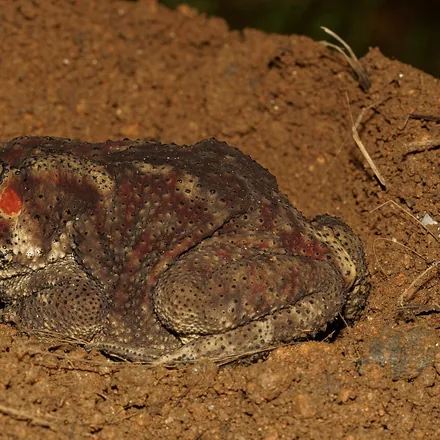
Asian Common Toad Common
Duttaphrynus melanostictus
The ubiquitous warty toad of doorsteps and gardens, hoovering up insects under every night light.
Where: Bungalow surrounds, track verges and waterhole margins. Best: Year round, night.
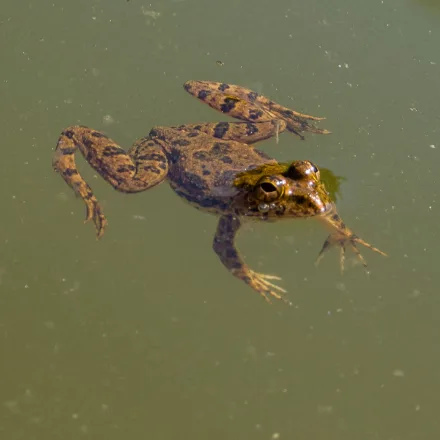
Skittering Frog Common
Euphlyctis cyanophlyctis
Disturbed, it does not dive. It skips across the surface like a flat stone, and it can launch from open water with nothing to push against.
Where: Waterholes and tank margins throughout the park. Best: Year round.
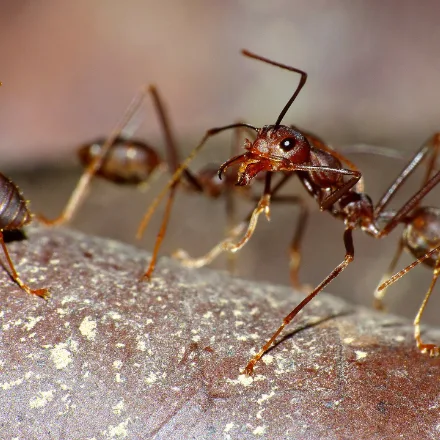
Weaver Ant Common
Oecophylla smaragdina
A rust-red ant that sews living leaves into nests using its own larvae as glue guns.
Where: Leaf nests in scrub and woodland along the tracks. Best: Year round.
Out of season in February
6 species
Species that need the fruiting season or the wetter months. Sloth bear in particular is a June and July animal here.
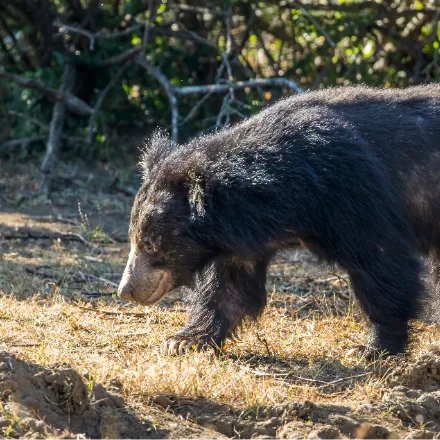
Sloth Bear Rare Vulnerable
Melursus ursinus
A shaggy, long-clawed insect specialist that vacuums termites out of a mound loudly enough to hear from fifty metres.
Where: Block 1 scrub and fruiting trees. Best: Jun-Jul, early morning. Possible but well behind Wilpattu. This animal charges when surprised.
Mugger Crocodile Common Vulnerable
Crocodylus palustris
The broadest snout of any living crocodile, and in one Sri Lankan park block there are more of them per square kilometre than anywhere else on earth.
Where: Buthawa Wewa, Heenwewa, Katagamuwa Tank and the waterholes through Block 1. Best: May to September, mid morning basking. Block 1 alone carries an estimated 500 to 600 animals, close to half the national population.
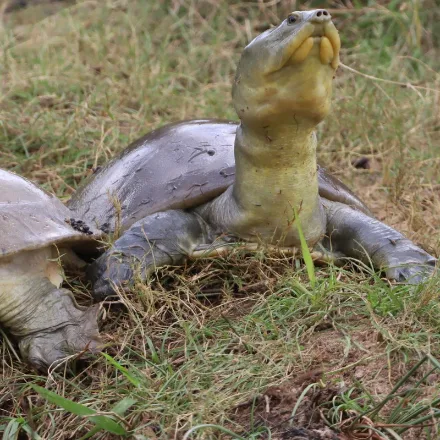
Sri Lankan Flapshell Turtle Occasional Vulnerable
Lissemys ceylonensis
The only chelonian species found solely in Sri Lanka, split off from its mainland cousin eight million years ago, and still without a conservation status of its own.
Where: Muddy waterholes and tank shallows. Best: May to September.
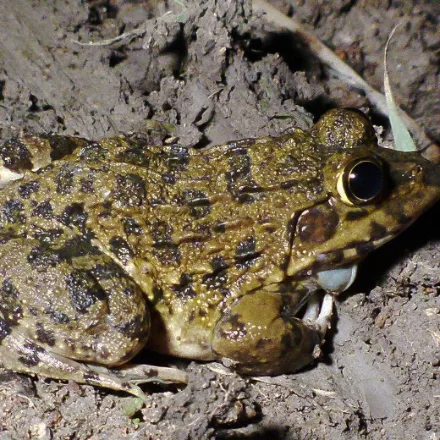
Jerdon's Bullfrog Occasional
Hoplobatrachus crassus
The biggest frog on the island, and its tadpoles hunt and eat other tadpoles, including each other when the pool gets crowded.
Where: Rain pools and flooded grassland. Best: October to January, night.
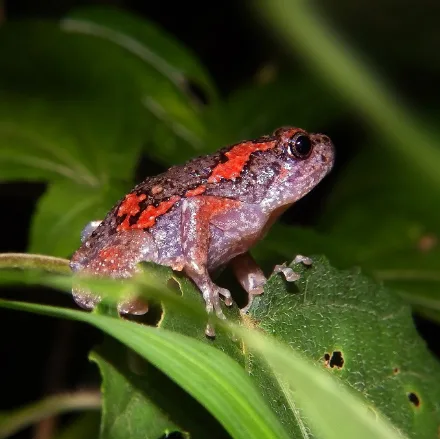
Sri Lankan Painted Frog Occasional
Uperodon taprobanicus
Grabbed by a snake it inflates into a balloon and exudes a glue that gums the snake's mouth shut, and it shares tree holes with ornamental tarantulas.
Where: Rain pools and bungalow surrounds. Best: October to January, night.
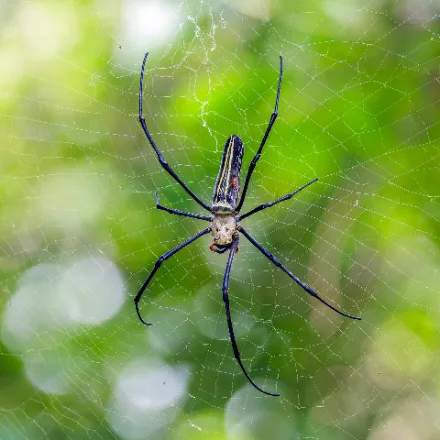
Golden Orb-weaver Common
Nephila pilipes
A giant black-and-yellow spider spinning webs of golden silk strong enough to snare small birds.
Where: Scrub edges, track margins and around the bungalows. Best: August to December.
Practical notes for February
First and last two hours of light, and there is no useful compromise on that. Leopards move at the edges of the day and lie up through the middle of it, and the park’s own drive times are built around the same window. A midday drive in February is hot, bright and mostly empty.
Almost nobody finds a leopard by looking for one. They are found by sound: chital give a single sharp bark when they see a cat, and every driver in the park is listening for it rather than scanning the scrub. Learning that call changes the experience of a whole drive, blank or not.
Block 1 carries most of the vehicles and most of the cats. If the trade of lower odds for a quieter sighting appeals, Wilpattu is four hours north and runs from February to October. February works at both, which is not true of most months.
Find safaris and park drives in Sri Lanka
Some links on this page are affiliate links. If you book through them, Wildseer may earn a small commission at no extra cost to you.
Frequently asked questions
Is February a good time to visit Yala?
It is the start of the best window. Yala’s strongest months are February to July, as the water shrinks, the animals concentrate on what is left and the scrub thins enough to see through. February is also the calmest sea on the south coast, so it pairs well with the whale season off Mirissa.
What are the chances of seeing a leopard at Yala in February?
Good across several drives and a coin toss on any single one. Most visitors who do three drives in the February to July window connect. One morning drive is a gamble, and it is the most common way people leave disappointed.
Can you see sloth bears at Yala in February?
Realistically, no. Sloth bear at Yala is a June and July animal, when the palu fruit ripens and the bears climb into the open to feed. Outside that fortnight or so they are nocturnal and very rarely seen.
Is Yala crowded in February?
Block 1 is busy in any month of the season and February is peak tourist season on the south coast, so expect vehicles at a sighting. Wilpattu is the quieter alternative with the same animals and lower odds per drive, and it is also open from February.
More on Sri Lanka wildlife
- Yala wildlife
- Mammals of Sri Lanka
- Birds of Sri Lanka
- Reptiles and amphibians of Sri Lanka
- Insects and spiders of Sri Lanka
Part of the Wildlife in Sri Lanka guide.
Image credits
Square thumbnails are cropped from the original. Wide banner images are cropped to a band. Other images are resized only. No other changes have been made.
- yala-in-february: psychoslave | CC BY-SA 4.0, cropped
- Sri Lankan Leopard (cropped to square): lasitha kulatileke | Pexels Licence, cropped
- Asian elephant (resized): Shadow Ayush | CC BY-SA 4.0, cropped
- Mugger Crocodile: Karunakar Rayker from India | CC BY-SA 2.0, cropped
- Indian Peafowl: Joshianuj | CC BY-SA 4.0, cropped
- Grey-headed Fish Eagle: Charles J. Sharp | CC BY-SA 4.0, cropped
- Asian Elephant (cropped to square): Shadow Ayush | CC BY-SA 4.0, cropped
- Pallid Harrier: Chinmayisk | CC BY-SA 3.0, cropped
- Asian Water Monitor: John Thomas | Unsplash License, cropped
- Bengal Monitor (cropped to square): Dr. Raju Kasambe | CC BY-SA 4.0, cropped
- Indian Rock Python: Bernard DUPONT from FRANCE | CC BY-SA 2.0, cropped
- Antlion (cropped to square): Bernard DUPONT from FRANCE | CC BY-SA 2.0, cropped
- Common Emigrant: Peellden | CC BY-SA 4.0, cropped
- Common Rose Swallowtail (cropped to square): Vedant Raju Kasambe | CC BY-SA 4.0, cropped
- Crimson Rose: Adityamadhav83 | CC BY-SA 3.0, cropped
- Signature Spider: Abkhanal | CC BY-SA 3.0, cropped
- Giant Forest Scorpion: Nireekshit | CC BY-SA 3.0, cropped
- Chital: Tisha Mukherjee | CC BY-SA 4.0, cropped
- Toque Macaque: Ji-Elle | CC BY-SA 3.0, cropped
- Tufted Grey Langur: Peter van der Sluijs | CC BY-SA 3.0, cropped
- Wild Water Buffalo: Joydeep Chakraborty | CC BY-SA 4.0, cropped
- Golden Jackal: Vengolis | CC BY-SA 4.0, cropped
- Ruddy Mongoose: desertnaturalist | CC BY 4.0, cropped
- Indian Pangolin: A. J. T. Johnsingh, WWF-India and NCF | CC BY-SA 4.0, cropped
- Rusty-spotted Cat: Davidvraju | CC BY-SA 4.0, cropped
- Sri Lanka Junglefowl: eamonccorbett | CC BY 4.0, cropped
- Pied Kingfisher: Charles J. Sharp | CC BY-SA 4.0, cropped
- Sri Lanka Woodshrike: Mickey Wu | CC BY 4.0, cropped
- Brown Fish Owl: Hedayeat Ullah | CC BY-SA 4.0, cropped
- Crimson-backed Flameback: Matthew Blissett | CC BY 4.0, cropped
- Crimson-fronted Barbet: R.M.S. Ratnayake | CC BY-SA 4.0, cropped
- Malabar Pied Hornbill: @Vikas patil photography | CC BY-SA 4.0, cropped
- Great Thick-knee: Cyndy Sims Parr | CC BY-SA 2.0, cropped
- Sirkeer Malkoha: N.A.Nazeer | CC BY-SA 2.5 in, cropped
- Common House Gecko (cropped to square): Firos AK | CC BY-SA 4.0, cropped
- Oriental Garden Lizard (cropped to square): Ajay Kuyiloor | CC BY-SA 3.0, cropped
- Sri Lankan Common Skink: Gihan Jayaweera | CC BY-SA 4.0, cropped
- Checkered Keelback: Bernard DUPONT from FRANCE | CC BY-SA 2.0, cropped
- Oriental Rat Snake (cropped to square): Tisha Mukherjee | CC BY-SA 4.0, cropped
- Bahir’s Fan-throated Lizard: P Jeganathan | CC BY 4.0, cropped
- Indian Black Turtle: Dr Vidjit Vijaysanker | CC BY-SA 4.0, cropped
- Indian Cobra: Pexels contributor | Pexels Licence, cropped
- Indian Star Tortoise: Selvaganesh17 | CC BY-SA 4.0, cropped
- Russell’s Viper: StefanSTS | CC BY-SA 3.0, cropped
- Sri Lankan Termite Hill Gecko: Gihan Jayaweera | CC BY-SA 4.0, cropped
- Asian Common Toad (cropped to square): © 2016 Jee & Rani Nature Photography (License: CC BY-SA 4.0) | CC BY-SA 4.0, cropped
- Skittering Frog: Mike Prince from Bangalore, India | CC BY 2.0, cropped
- Weaver Ant (cropped to square): Bernard DUPONT from FRANCE | CC BY-SA 2.0, cropped
- Sloth Bear: Charles J. Sharp | CC BY-SA 4.0, cropped
- Sri Lankan Flapshell Turtle: spacegecko | CC BY 4.0, cropped
- Jerdon’s Bullfrog: L. Shyamal | CC BY-SA 3.0, cropped
- Sri Lankan Painted Frog: Rison Thumboor from Thrissur, India | CC BY 2.0, cropped
- Golden Orb-weaver (resized): Charles J. Sharp | CC BY-SA 4.0, cropped
Square thumbnails are cropped from the original. Wide banner images are cropped to a band. Other images are resized only. No other changes have been made.
- yala-in-february: psychoslave | CC BY-SA 4.0, cropped
- Sri Lankan Leopard (cropped to square): lasitha kulatileke | Pexels Licence, cropped
- Asian elephant (resized): Shadow Ayush | CC BY-SA 4.0, cropped
- Mugger Crocodile: Karunakar Rayker from India | CC BY-SA 2.0, cropped
- Indian Peafowl: Joshianuj | CC BY-SA 4.0, cropped
- Grey-headed Fish Eagle: Charles J. Sharp | CC BY-SA 4.0, cropped
- Asian Elephant (cropped to square): Shadow Ayush | CC BY-SA 4.0, cropped
- Pallid Harrier: Chinmayisk | CC BY-SA 3.0, cropped
- Asian Water Monitor: John Thomas | Unsplash License, cropped
- Bengal Monitor (cropped to square): Dr. Raju Kasambe | CC BY-SA 4.0, cropped
- Indian Rock Python: Bernard DUPONT from FRANCE | CC BY-SA 2.0, cropped
- Antlion (cropped to square): Bernard DUPONT from FRANCE | CC BY-SA 2.0, cropped
- Common Emigrant: Peellden | CC BY-SA 4.0, cropped
- Common Rose Swallowtail (cropped to square): Vedant Raju Kasambe | CC BY-SA 4.0, cropped
- Crimson Rose: Adityamadhav83 | CC BY-SA 3.0, cropped
- Signature Spider: Abkhanal | CC BY-SA 3.0, cropped
- Giant Forest Scorpion: Nireekshit | CC BY-SA 3.0, cropped
- Chital: Tisha Mukherjee | CC BY-SA 4.0, cropped
- Toque Macaque: Ji-Elle | CC BY-SA 3.0, cropped
- Tufted Grey Langur: Peter van der Sluijs | CC BY-SA 3.0, cropped
- Wild Water Buffalo: Joydeep Chakraborty | CC BY-SA 4.0, cropped
- Golden Jackal: Vengolis | CC BY-SA 4.0, cropped
- Ruddy Mongoose: desertnaturalist | CC BY 4.0, cropped
- Indian Pangolin: A. J. T. Johnsingh, WWF-India and NCF | CC BY-SA 4.0, cropped
- Rusty-spotted Cat: Davidvraju | CC BY-SA 4.0, cropped
- Sri Lanka Junglefowl: eamonccorbett | CC BY 4.0, cropped
- Pied Kingfisher: Charles J. Sharp | CC BY-SA 4.0, cropped
- Sri Lanka Woodshrike: Mickey Wu | CC BY 4.0, cropped
- Brown Fish Owl: Hedayeat Ullah | CC BY-SA 4.0, cropped
- Crimson-backed Flameback: Matthew Blissett | CC BY 4.0, cropped
- Crimson-fronted Barbet: R.M.S. Ratnayake | CC BY-SA 4.0, cropped
- Malabar Pied Hornbill: @Vikas patil photography | CC BY-SA 4.0, cropped
- Great Thick-knee: Cyndy Sims Parr | CC BY-SA 2.0, cropped
- Sirkeer Malkoha: N.A.Nazeer | CC BY-SA 2.5 in, cropped
- Common House Gecko (cropped to square): Firos AK | CC BY-SA 4.0, cropped
- Oriental Garden Lizard (cropped to square): Ajay Kuyiloor | CC BY-SA 3.0, cropped
- Sri Lankan Common Skink: Gihan Jayaweera | CC BY-SA 4.0, cropped
- Checkered Keelback: Bernard DUPONT from FRANCE | CC BY-SA 2.0, cropped
- Oriental Rat Snake (cropped to square): Tisha Mukherjee | CC BY-SA 4.0, cropped
- Bahir’s Fan-throated Lizard: P Jeganathan | CC BY 4.0, cropped
- Indian Black Turtle: Dr Vidjit Vijaysanker | CC BY-SA 4.0, cropped
- Indian Cobra: Pexels contributor | Pexels Licence, cropped
- Indian Star Tortoise: Selvaganesh17 | CC BY-SA 4.0, cropped
- Russell’s Viper: StefanSTS | CC BY-SA 3.0, cropped
- Sri Lankan Termite Hill Gecko: Gihan Jayaweera | CC BY-SA 4.0, cropped
- Asian Common Toad (cropped to square): © 2016 Jee & Rani Nature Photography (License: CC BY-SA 4.0) | CC BY-SA 4.0, cropped
- Skittering Frog: Mike Prince from Bangalore, India | CC BY 2.0, cropped
- Weaver Ant (cropped to square): Bernard DUPONT from FRANCE | CC BY-SA 2.0, cropped
- Sloth Bear: Charles J. Sharp | CC BY-SA 4.0, cropped
- Sri Lankan Flapshell Turtle: spacegecko | CC BY 4.0, cropped
- Jerdon’s Bullfrog: L. Shyamal | CC BY-SA 3.0, cropped
- Sri Lankan Painted Frog: Rison Thumboor from Thrissur, India | CC BY 2.0, cropped
- Golden Orb-weaver (resized): Charles J. Sharp | CC BY-SA 4.0, cropped