
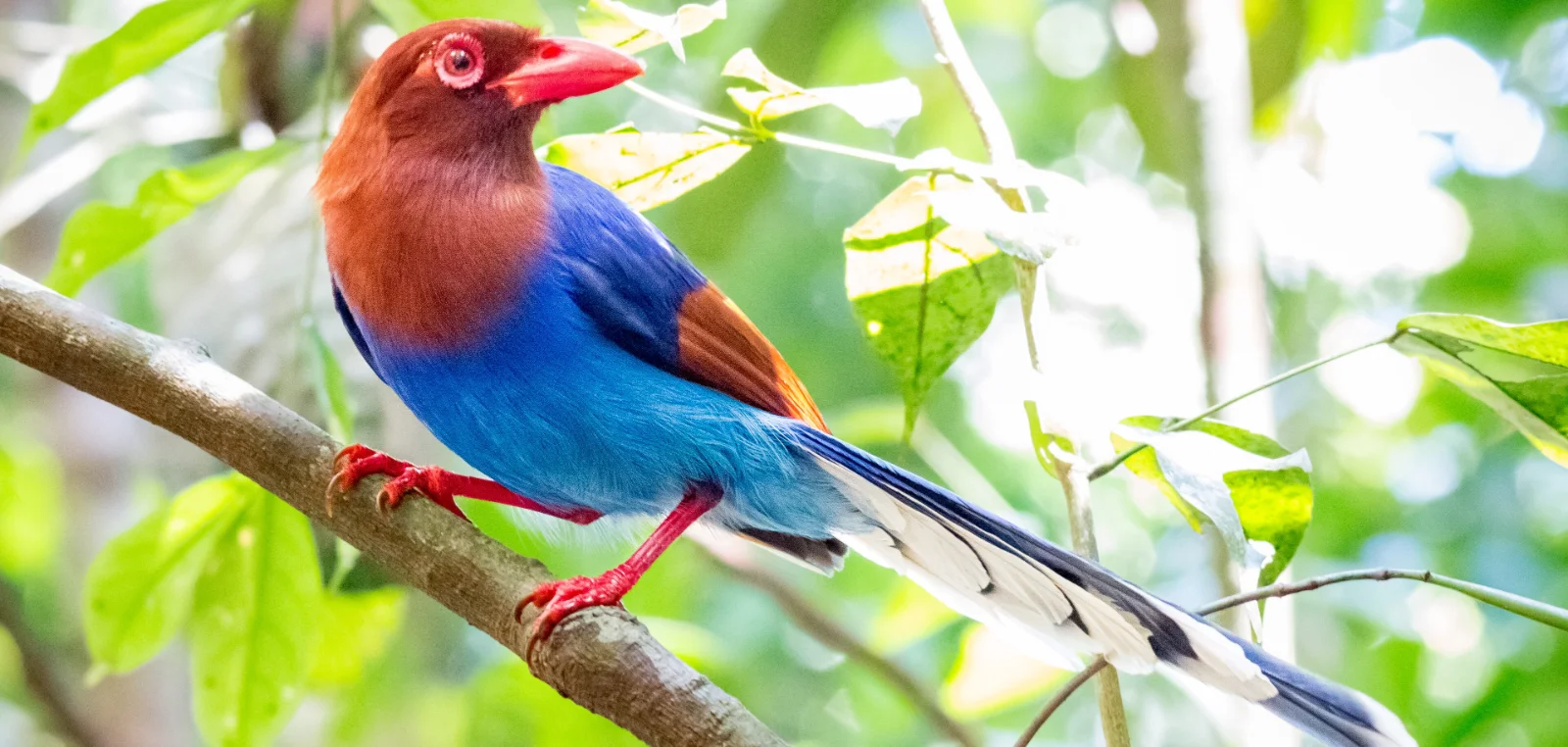
Sri Lanka has thirty four birds that exist nowhere else on earth, and the useful thing about that number is how tightly it is packed. The great majority of the endemics live in wet zone rainforest in the southwest, and one forest, Sinharaja, holds almost all of them. A birder who works Sinharaja properly for three mornings has met most of what the island is famous for, which is not true of any comparable endemic list anywhere in Asia.
That concentration is what makes this a country you can bird seriously in a fortnight. Three habitats do nearly all the work: the wet zone rainforest for the endemics, the montane zone above two thousand metres for the six highland specials that the lowland forest does not hold, and the dry zone coast for wintering waders from the Arctic. The sites below are the ones that deliver each, and every species listed is a bird recorded there in the Wildseer database rather than a plausible one.
Highlights
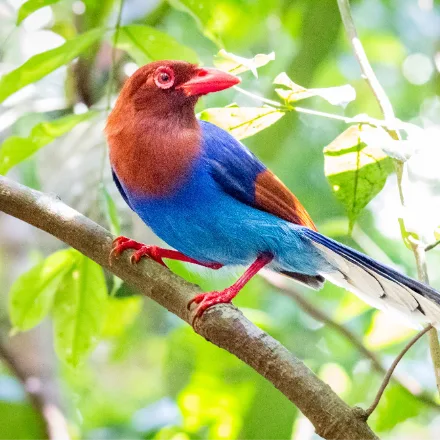
Sri Lanka Blue Magpie
Cobalt and chestnut with a blood-red bill, and it comes to look at you rather than the other way round. Where: The research station trail and the Kudawa entrance road, often with the mixed feeding flock. Best: Year round, first three hours after dawn.
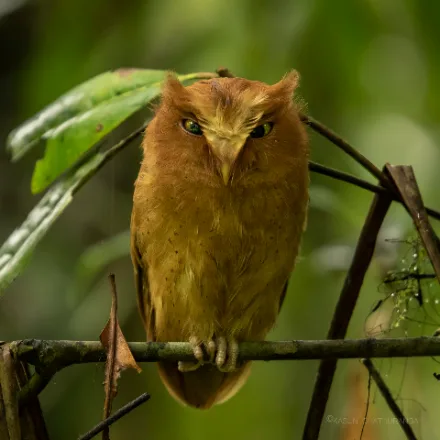
Serendib Scops Owl
Found by its call in 2001 and described in 2004, the first new bird species discovered in Sri Lanka for over a century. Where: Dense understorey thicket near known day roosts. Best: Year round, dusk for the call.
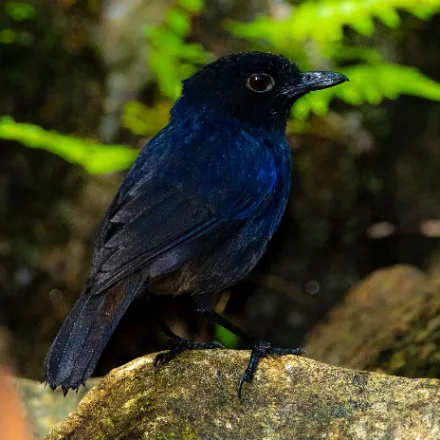
Sri Lanka Whistling Thrush
A dark highland thrush that sings from wet rock at first light and is gone by the time the mist lifts. Where: Stream crossings on the first stretch of the Baker's Falls trail. Best: Year round, the first hour after the gate opens.
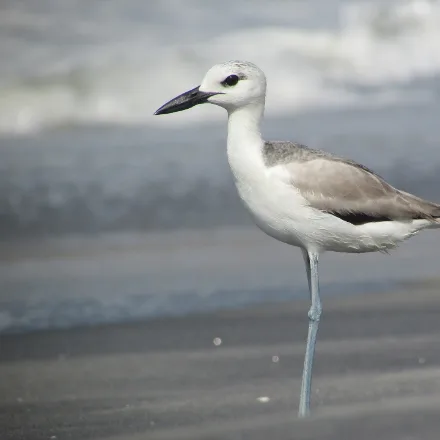
Crab-plover
The only bird in its family anywhere on earth, and the only wader that nests underground. Where: Lagoon shore, occasionally. Best: Dec-Feb.
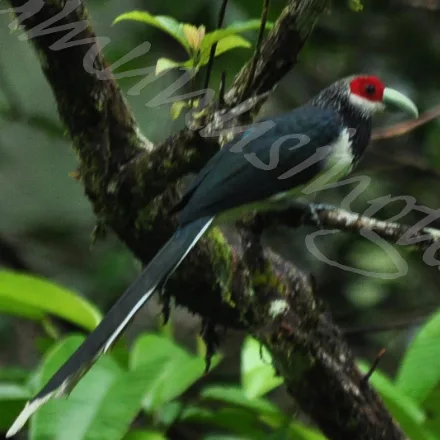
Red-faced Malkoha
A long-tailed cuckoo with a bare crimson face that slips through the canopy in silence, and the bird most Sinharaja trips fail on. Where: High in the canopy with the mixed feeding flock, research station area. Best: Year round, morning.
Sinharaja
The reason people come. A UNESCO listed lowland rainforest holding around twenty of the island’s endemics, most of which are difficult or impossible elsewhere. The birding here runs on mixed species feeding flocks: a wave of thirty or forty birds of a dozen species moves through, everything happens at once for ninety seconds, and then the forest is silent again. Learn to wait for the flock rather than walk after it.
14 of 27 recorded species
Sri Lanka Blue Magpie Regular Vulnerable
Urocissa ornata
Cobalt and chestnut with a blood-red bill, and it comes to look at you rather than the other way round.
Where: The research station trail and the Kudawa entrance road, often with the mixed feeding flock. Best: Year round, first three hours after dawn. Bold enough to work the trail edge a few metres away. Wait for the flock rather than chasing the bird.
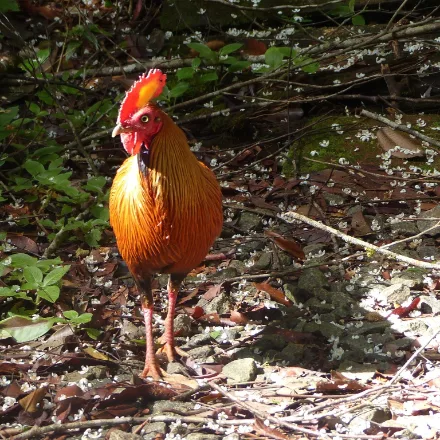
Sri Lanka Junglefowl Common
Gallus lafayettii
The national bird, and the wild ancestor's cousin: a jungle cockerel with a yellow-centred red comb found nowhere else on earth.
Where: Scratching along the entrance road and forest tracks. Best: Year round, early morning. Check the comb: the yellow centre is the field mark, and it is visible at any useful range.
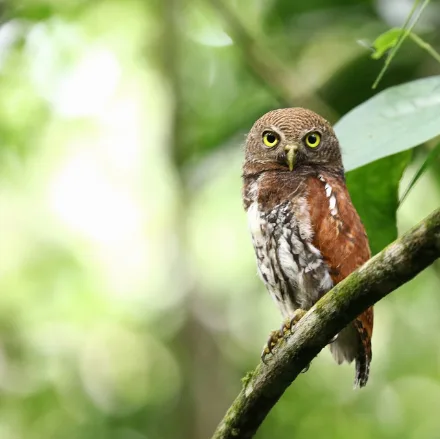
Chestnut-backed Owlet Regular
Glaucidium castanotum
A tiny chestnut owl that hunts in daylight, which makes it the one owl on the island you can reasonably expect to see.
Where: Exposed branches in the mid canopy, often being mobbed. Best: Year round, morning. A sudden commotion of babblers and bulbuls in one tree is worth investigating.
Red-faced Malkoha Occasional Vulnerable
Phaenicophaeus pyrrhocephalus
A long-tailed cuckoo with a bare crimson face that slips through the canopy in silence, and the bird most Sinharaja trips fail on.
Where: High in the canopy with the mixed feeding flock, research station area. Best: Year round, morning. Find the flock, then work upwards. It clambers slowly in the top layer and is missed by anyone scanning at eye level.
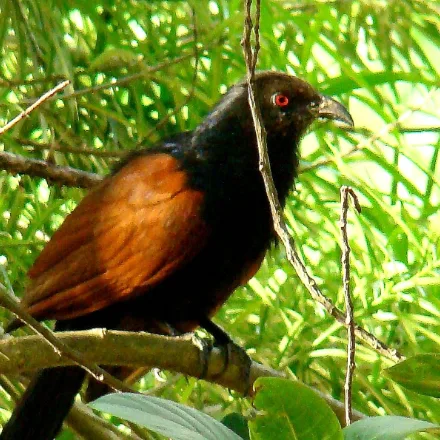
Green-billed Coucal Rare Vulnerable
Centropus chlororhynchos
A heavy, skulking coucal with an apple-green bill, and one of the hardest endemics on the island to actually see.
Where: Thickets beside the research station trail and the Kudawa road. Best: Year round, dawn for the call. Check the bill: apple green, not black. Usually a call rather than a bird.
Serendib Scops Owl Rare Endangered
Otus thilohoffmanni
Found by its call in 2001 and described in 2004, the first new bird species discovered in Sri Lanka for over a century.
Where: Dense understorey thicket near known day roosts. Best: Year round, dusk for the call. Entirely dependent on a guide who knows a current roost. Those roosts move and are closely held.
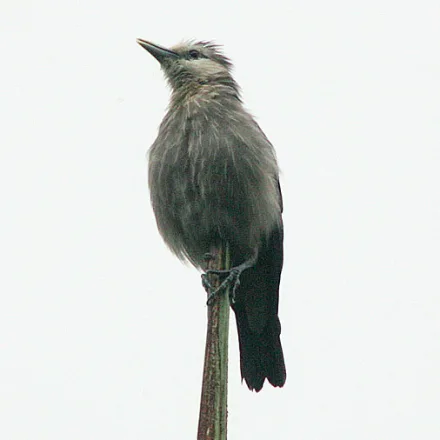
White-faced Starling Rare Endangered
Sturnornis albofrontatus
A canopy starling with a white face, confined to a shrinking scrap of rainforest and genuinely hard to catch up with.
Where: Fruiting canopy trees viewed from a vantage point rather than from beneath. Best: Year round. Most visitors leave without it. Watch into the crown, not up through it.
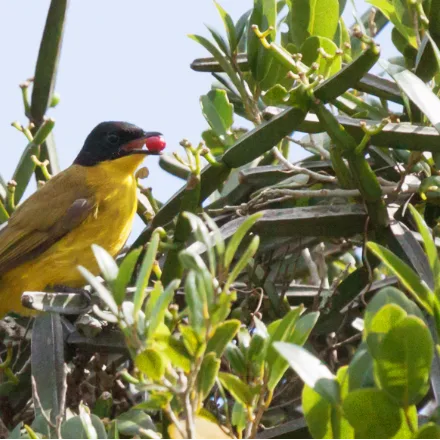
Black-capped Bulbul Common
Rubigula melanicterus
Olive and bright yellow with a neat black hood, and one of the first endemics a Sinharaja morning delivers.
Where: Mid storey and understorey along every trail. Best: Year round, morning. Joins mixed flocks. Black hood and white iris are unmistakable.
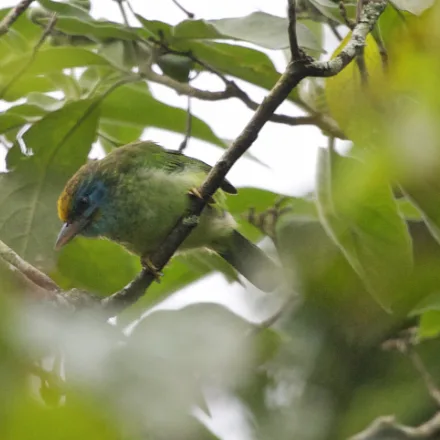
Yellow-fronted Barbet Common
Psilopogon flavifrons
A green barbet with a yellow forehead and blue face that calls all day from somewhere you cannot find it.
Where: Fruiting trees along the trails. Best: Year round. Look at fruit rather than tracking the call, which leads people in circles.
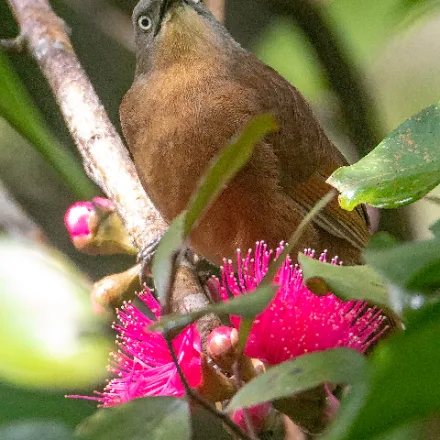
Ashy-headed Laughingthrush Regular Near Threatened
Argya cinereifrons
The other half of the Sinharaja flock's core, and the one that keeps to the ground where you cannot see it.
Where: Ground and low undergrowth with the feeding flock. Best: Year round, morning. Works the lowest layer while the babblers work higher, so it is the harder half of the flock core to see.
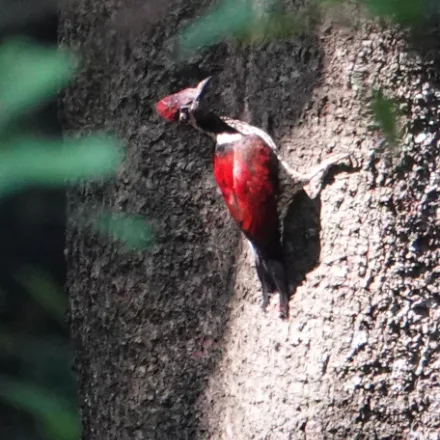
Crimson-backed Flameback Regular
Chrysocolaptes stricklandi
A big crimson woodpecker that hammers so hard you hear it before you see the tree move.
Where: Large trunks along the trails. Best: Year round. You hear the hammering before you see the tree move.
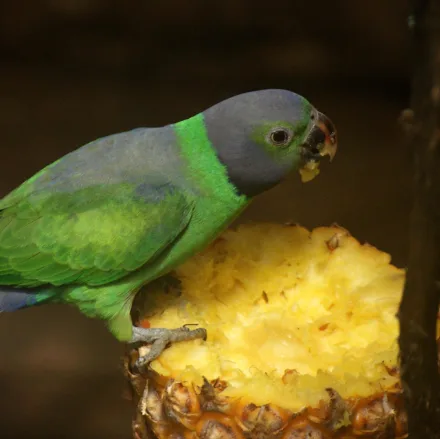
Layard's Parakeet Regular
Psittacula calthrapae
A bluish-grey parakeet with a green collar and a coral bill, and the only parakeet on the island you cannot see anywhere else.
Where: Small flocks between fruiting trees along the entrance road. Best: Year round. Noisy, and usually seen in flight before it is seen perched.
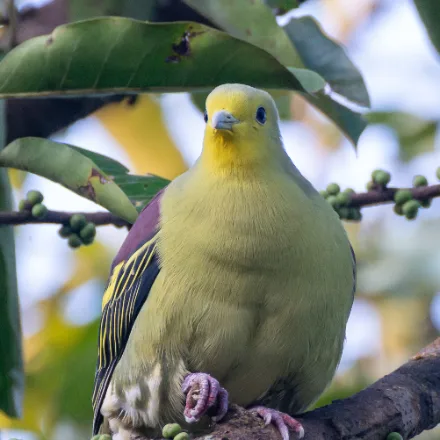
Sri Lanka Green Pigeon Regular
Treron pompadora
A pigeon the colour of a lime leaf, sitting motionless in a fig until it moves and gives itself away.
Where: Figs along the entrance road and the trails. Best: Year round. Look at fig trees for longer than feels reasonable. It is good advice for half this list.
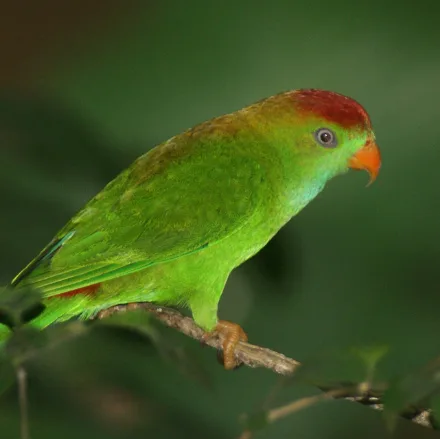
Sri Lanka Hanging Parrot Regular
Loriculus beryllinus
A sparrow-sized green parrot with a crimson crown that sleeps upside down like a bat.
Where: Flowering and fruiting trees, often overhead in fast flocks. Best: Year round. Find a feeding tree and wait. The upside down roosting is real and worth watching for.
See all 27 species recorded at Sinharaja
Horton Plains and the highlands
Above two thousand metres the endemic list changes completely. Cloud forest and open patana grassland hold a handful of highland birds that do not occur in the lowland rainforest at all, and the whistling thrush is the one people set an alarm for: it sings from wet rock in the first hour after the gate opens and is effectively gone once the mist lifts. Cold at dawn, and worth the cold.
5 of 5 recorded species
Sri Lanka Whistling Thrush Rare Endangered
Myophonus blighi
A dark highland thrush that sings from wet rock at first light and is gone by the time the mist lifts.
Where: Stream crossings on the first stretch of the Baker's Falls trail. Best: Year round, the first hour after the gate opens. Arrive for opening or do not bother. Once visitor traffic starts it is finished for the day.
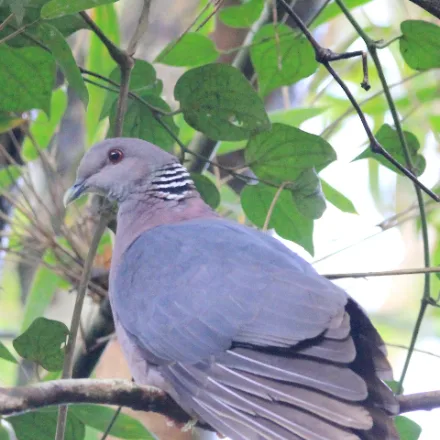
Sri Lanka Wood Pigeon Rare Vulnerable
Columba torringtoniae
A big grey highland pigeon with a chequerboard collar, scarce and shrinking with the forest it needs.
Where: Fast flight views between canopy patches along the circular trail. Best: Year round, morning. Usually a bird crossing a gap. The chequered neck patch needs a clear view to see at all.
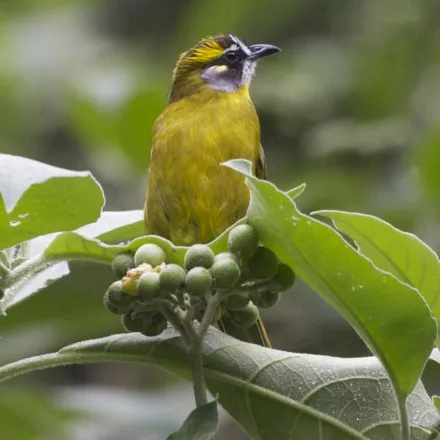
Yellow-eared Bulbul Common
Kelaartia penicillata
The bird of the highland garden, olive and yellow with an absurd yellow ear tuft sticking out sideways.
Where: Scrub and forest edge around the entrance and the plains margin. Best: Year round, morning. Often within a few metres. Unusually cooperative for a highland endemic.
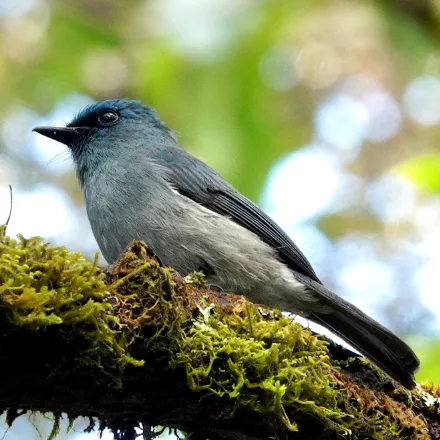
Dull-blue Flycatcher Regular Near Threatened
Eumyias sordidus
Ash-blue and quietly beautiful, sitting motionless on a mossy branch in the highland cloud forest.
Where: Low mossy branches inside the forest along the circular trail. Best: Year round, morning. Perches upright and still, then sallies and returns. Scan slowly; the difficulty is all in the looking.
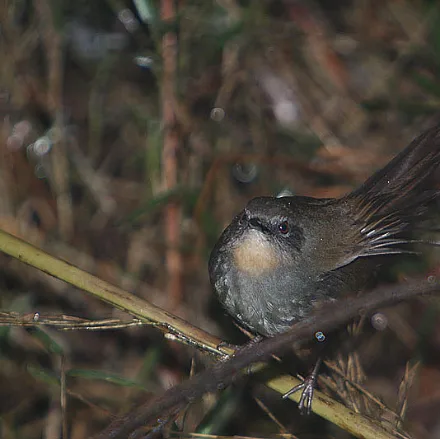
Sri Lanka Bush Warbler Occasional Near Threatened
Elaphrornis palliseri
A dull brown skulker of the highland thickets that most birders hear a dozen times and see once.
Where: Thicket edges along the circular trail and around the entrance. Best: Year round, morning. Wait at the edge of a thicket. The red eye is the confirming mark and needs a decent view.
See all 5 species recorded at Horton Plains and the highlands
Kandy and the mid hills
The easiest endemics on the island, in gardens and roadside forest rather than deep rainforest, and the reason a lot of trips start here. Layard’s parakeet, the grey hornbill and the yellow-fronted barbet are all straightforward within a morning of the town, which makes this the place to get your eye in before Sinharaja rather than an afterthought at the end.
10 of 12 recorded species
Black-capped Bulbul Regular
Rubigula melanicterus
Olive and bright yellow with a neat black hood, and one of the first endemics a Sinharaja morning delivers.
Where: Udawattakele and larger gardens. Best: Year round. A good confidence builder on the way up from Colombo.
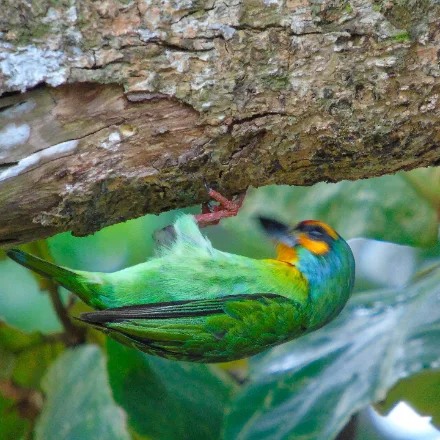
Crimson-fronted Barbet Regular
Psilopogon rubricapillus
Green with a crimson forehead and a blue face, and a call like a hammer on a distant fencepost.
Where: Garden and forest edge trees. Best: Year round. Where both barbets occur, the forehead colour is the only check needed.
Layard's Parakeet Regular
Psittacula calthrapae
A bluish-grey parakeet with a green collar and a coral bill, and the only parakeet on the island you cannot see anywhere else.
Where: Forest edge and larger gardens around the hill capital. Best: Year round. Common enough here to be a reliable tick.
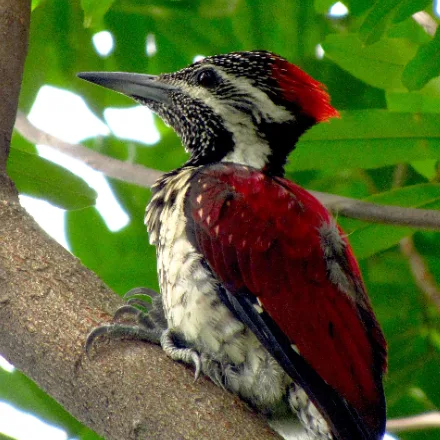
Red-backed Flameback Regular
Dinopium psarodes
The smaller crimson woodpecker, and the one people misidentify because there are two of them on this island and nowhere else.
Where: Garden and plantation trees around the town. Best: Year round. Smaller, shorter-billed and black-throated compared with the crimson-backed.
Yellow-fronted Barbet Regular
Psilopogon flavifrons
A green barbet with a yellow forehead and blue face that calls all day from somewhere you cannot find it.
Where: Garden and forest trees around Udawattakele and Peradeniya. Best: Year round. A good first endemic on the way up from Colombo.
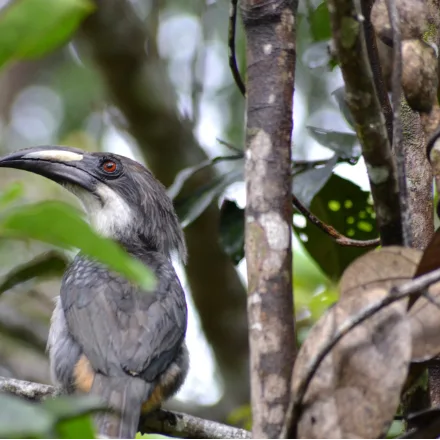
Sri Lanka Grey Hornbill Regular
Ocyceros gingalensis
A slim, quiet hornbill with no casque, common enough to see from a hotel garden and endemic all the same.
Where: Udawattakele forest and the larger garden trees. Best: Year round. Easiest urban endemic in the country.
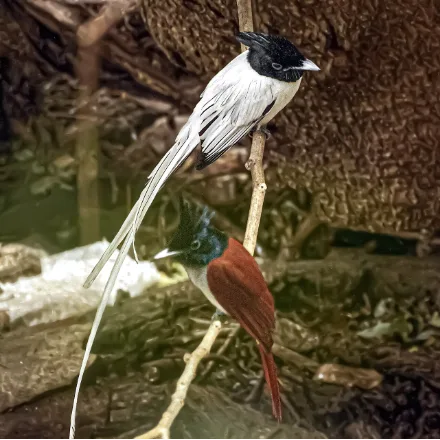
Indian Paradise Flycatcher Occasional
Terpsiphone paradisi
The adult male grows tail streamers three times the length of his own body and trails them through the canopy like ribbon.
Where: Udawattakele and the wooded valleys. Best: Year round.
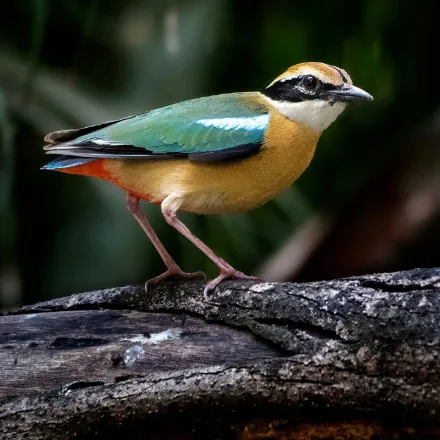
Indian Pitta Occasional
Pitta brachyura
Nine colours on a ground bird the size of a thrush, and it arrives every October to spend the winter hopping about in leaf litter.
Where: Udawattakele forest and shaded garden edges. Best: Nov-Mar. One of the easier places to connect, and walkable without a vehicle.
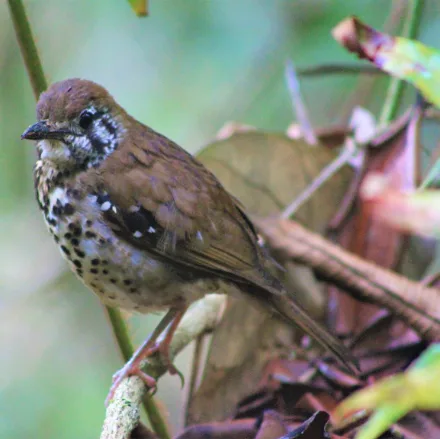
Spot-winged Thrush Occasional Near Threatened
Geokichla spiloptera
The best singer in Sri Lankan forest, and it does it at first light from the understorey.
Where: Udawattakele forest understorey. Best: Year round, dawn. A realistic endemic thrush within walking distance of a hotel.
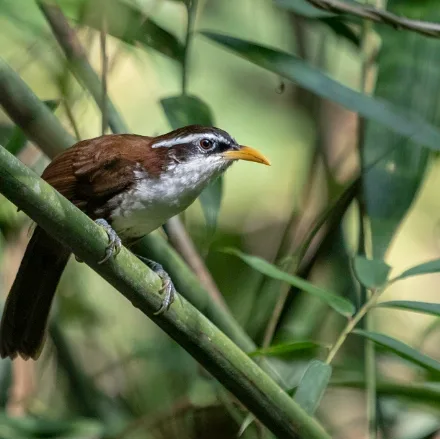
Sri Lanka Scimitar Babbler Occasional
Pomatorhinus melanurus
A long curved yellow bill coming through the undergrowth, usually attached to a bird you only half see.
Where: Undergrowth at Udawattakele. Best: Year round. Easier here than the flock birds because there is less canopy to search.
See all 12 species recorded at Kandy and the mid hills
Kitulgala
A wet zone forest on the road between Colombo and the hills, and the night birding site of the island. The frogmouth is what people come for, a bird that looks like a broken branch and will sit still within arm’s reach once someone has found it. The green-billed coucal and the spurfowl are both here too, both far more often heard than seen.
4 of 4 recorded species
Chestnut-backed Owlet Occasional
Glaucidium castanotum
A tiny chestnut owl that hunts in daylight, which makes it the one owl on the island you can reasonably expect to see.
Where: Canopy edge and clearings, calling at dawn. Best: Year round.
Green-billed Coucal Rare Vulnerable
Centropus chlororhynchos
A heavy, skulking coucal with an apple-green bill, and one of the hardest endemics on the island to actually see.
Where: Dense bamboo and thicket in the wet zone forest. Best: Year round.
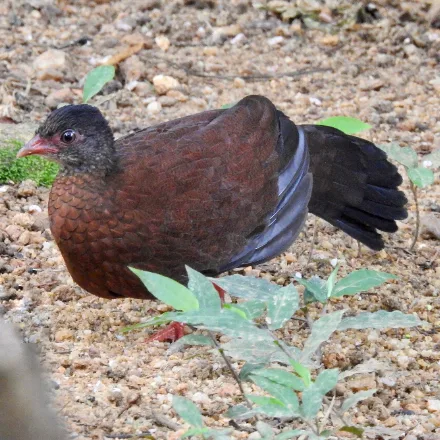
Sri Lanka Spurfowl Rare
Galloperdix bicalcarata
Heard on every Sinharaja morning and seen on almost none: a skulking forest gamebird that calls loudly and shows itself never.
Where: Dense forest floor, heard far more often than seen. Best: Year round, early morning.
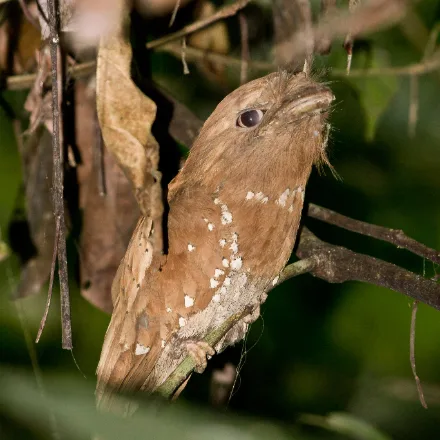
Sri Lanka Frogmouth Rare
Batrachostomus moniliger
A bird that looks like a broken branch, sits still all day within arm's reach, and is invisible until someone points at it.
Where: Dense understorey in the Makandawa forest, on a guided night walk. Best: Year round, night. A guide who knows the roost will find it. Nobody else will.
See all 4 species recorded at Kitulgala
Bundala
Salt pans, lagoons and scrub on the south coast, and the country’s most reliable winter wetland. Several thousand greater flamingo in a good year, spoonbill and pelican through the season, and a wader list that turns over completely between December and March. Late afternoon light across the pans is the picture everyone comes home with.
12 of 13 recorded species
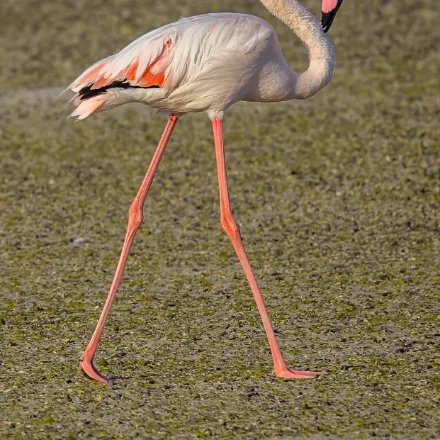
Greater Flamingo Regular
Phoenicopterus roseus
Several thousand birds on the Bundala salt pans in a good winter, filtering brine shrimp upside down.
Where: The salt pans and the shallow margins of Bundala and Embilikala lagoons. Best: Dec-Mar. Several thousand birds in a good winter, and the single best flamingo site on the visitor circuit.
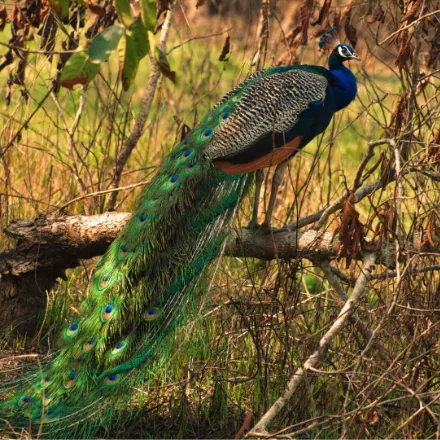
Indian Peafowl Regular
Pavo cristatus
Wild, and behaving like a wild bird: displaying on a termite mound at dawn with leopards in the same scrub.
Where: Thorn scrub behind the lagoons. Best: Year round.
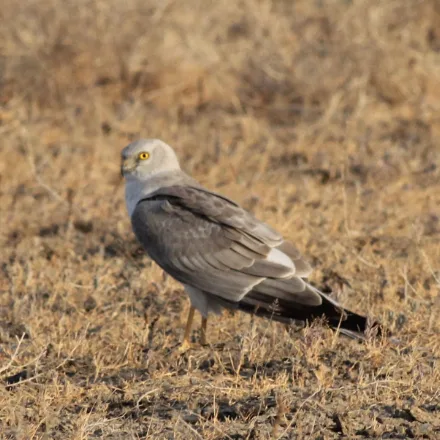
Pallid Harrier Occasional Near Threatened
Circus macrourus
Quarters the grassland at head height on raised wings, tilting and rocking, hunting entirely by sound and surprise.
Where: Quartering the open ground and salt pan margins at head height. Best: Nov-Mar, late afternoon. The most reliable place in the country to watch a harrier hunt, and the low slow flight is the whole spectacle.
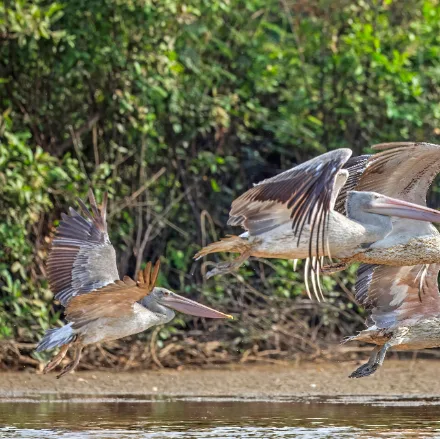
Spot-billed Pelican Regular Near Threatened
Pelecanus philippensis
A pelican that fishes the ancient irrigation tanks, and one of the few large waterbirds doing better now than it was.
Where: Fishing the brackish lagoons and roosting in the fringing trees. Best: Year round. Often in loose company with painted stork and openbill.
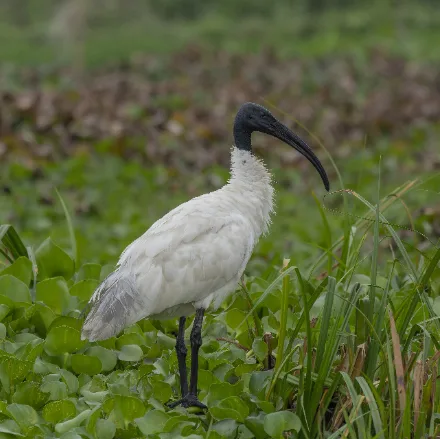
Black-headed Ibis Common Near Threatened
Threskiornis melanocephalus
White body, bare black head and neck, and a bill built for finding what it cannot see.
Where: Lagoon margins and the wet fields behind them. Best: Year round.
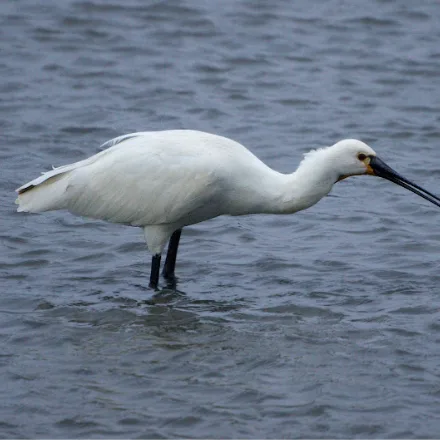
Eurasian Spoonbill Regular
Platalea leucorodia
Feeds by sweeping that absurd bill side to side through the shallows, snapping shut the instant it touches something alive.
Where: The shallow ends of the lagoons and the salt pan margins. Best: Nov-Mar. The most dependable site, often alongside flamingos.
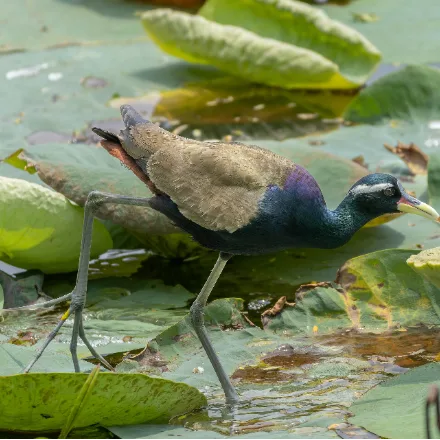
Bronze-winged Jacana Occasional
Metopidius indicus
Toes so long it walks across floating leaves, and a breeding system in which the female holds the territory and the males do all the work.
Where: Freshwater margins behind the lagoons. Best: Year round.
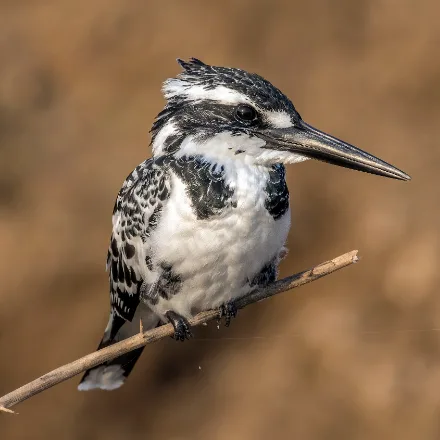
Pied Kingfisher Common
Ceryle rudis
The largest bird in the world that can hover in still air with no wind to help it, which is how it fishes open water no perch reaches.
Where: Hovering over the lagoons and canals. Best: Year round. Easy to watch hovering and diving repeatedly from the track.
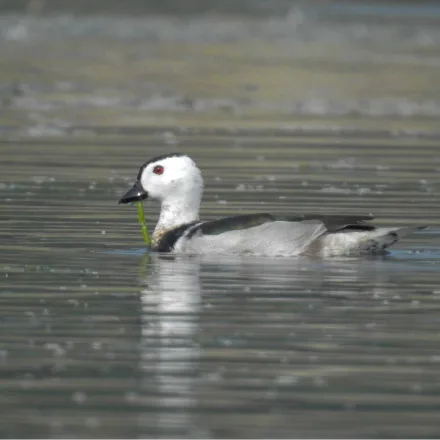
Cotton Pygmy Goose Occasional
Nettapus coromandelianus
One of the smallest waterfowl on earth, nesting in tree holes and sitting out on lily pads.
Where: The freshwater ends of the lagoons. Best: Year round.
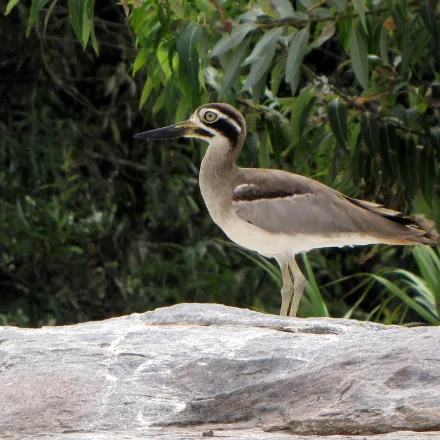
Great Thick-knee Occasional Near Threatened
Esacus recurvirostris
A heavy, huge-eyed shorebird that stands motionless on open shingle all day and only comes alive at dusk.
Where: Bare shingle and sand along the lagoon shores. Best: Year round, late afternoon. Stands motionless in the open all day, which is exactly why it gets missed.
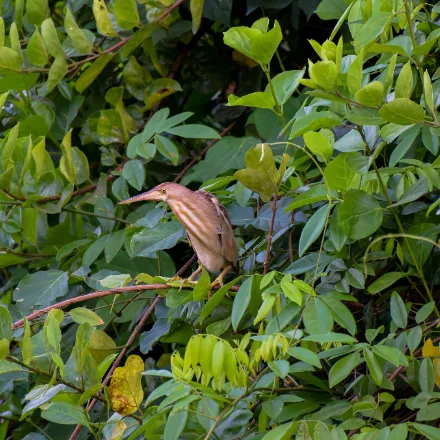
Yellow Bittern Occasional
Ixobrychus sinensis
Freezes with its bill pointed straight up and vanishes into the reeds, which is why almost nobody sees it despite it being everywhere.
Where: Reeds at the freshwater ends of the lagoons. Best: Year round.
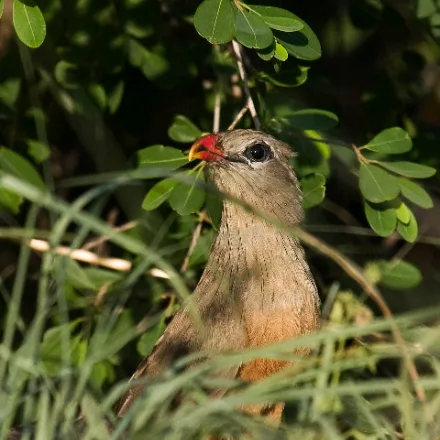
Sirkeer Malkoha Rare
Taccocua leschenaultii
A cuckoo that gave up on being a cuckoo: it builds its own nest, raises its own young and runs along the ground rather than flying.
Where: Thorn scrub behind the lagoons. Best: Year round.
See all 13 species recorded at Bundala
Mannar and the northwest
The serious wader ground, and much the least visited site on this page. Mannar sits on the flyway where birds funnel down from India, and it is the one place in the country where crab plover is a reasonable expectation rather than a lottery ticket. Great knot, thousands of flamingo and a long list of Arctic breeders, all between November and March.
10 of 12 recorded species
Greater Flamingo Common
Phoenicopterus roseus
Several thousand birds on the Bundala salt pans in a good winter, filtering brine shrimp upside down.
Where: The lagoons, salt pans and shallows around Mannar island and Vankalai. Best: November to March. Thousands winter here, and this is the reliable place in Sri Lanka to see them in numbers.
Indian Peafowl Occasional
Pavo cristatus
Wild, and behaving like a wild bird: displaying on a termite mound at dawn with leopards in the same scrub.
Where: Palmyra and thorn scrub on the mainland side. Best: Year round.
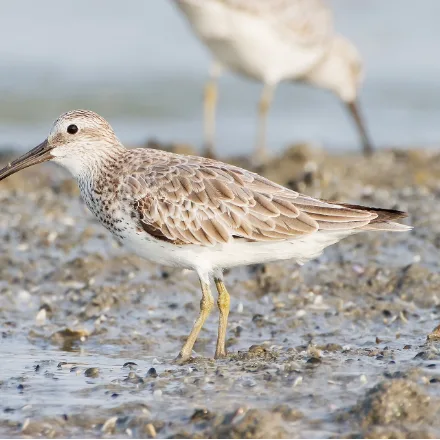
Great Knot Rare Endangered
Calidris tenuirostris
Flies from Siberia to Australia with a single refuelling stop, and losing that one mudflat has nearly finished the species.
Where: Tidal mudflats and salt pans. Best: October to April. Endangered, and a scarce visitor even here.
Crab-plover Regular
Dromas ardeola
The only bird in its family anywhere on earth, and the only wader that nests underground.
Where: Tidal flats and sandbars around the island and Adam's Bridge. Best: November to March. A strange, striking wader that breeds in burrows, and Mannar is the best place in the country for it.
Spot-billed Pelican Regular Near Threatened
Pelecanus philippensis
A pelican that fishes the ancient irrigation tanks, and one of the few large waterbirds doing better now than it was.
Where: Lagoons and tanks around the causeway. Best: Year round.
Black-headed Ibis Regular Near Threatened
Threskiornis melanocephalus
White body, bare black head and neck, and a bill built for finding what it cannot see.
Where: Salt pan margins, paddy and the lagoon shallows. Best: November to March.
Eurasian Spoonbill Regular
Platalea leucorodia
Feeds by sweeping that absurd bill side to side through the shallows, snapping shut the instant it touches something alive.
Where: Shallow lagoon margins. Best: November to March.
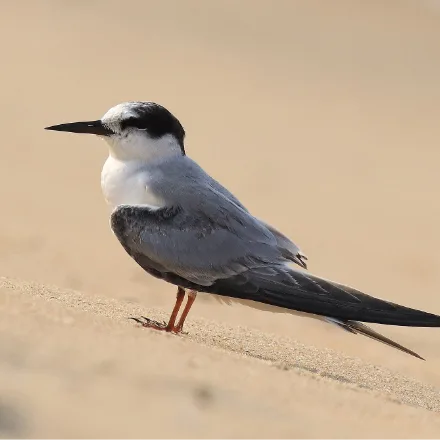
Little Tern Regular
Sternula albifrons
Hovers on fast flickering wings like an oversized hummingbird before dropping onto a fish.
Where: Fishing the shallow flats and the causeway channels. Best: November to March.
Great Thick-knee Occasional Near Threatened
Esacus recurvirostris
A heavy, huge-eyed shorebird that stands motionless on open shingle all day and only comes alive at dusk.
Where: Sandbars, dry lagoon margins and open shell beaches. Best: Year round.
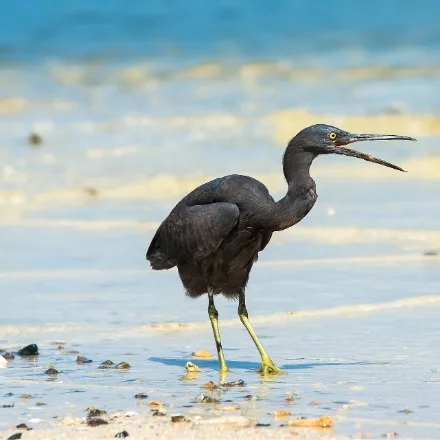
Pacific Reef Heron Occasional
Egretta sacra
Comes in two entirely different colours, charcoal grey and pure white, and both can hatch in the same nest.
Where: Rock and coral rubble along the island shore and the Adam's Bridge sandbanks. Best: Year round.
See all 12 species recorded at Mannar and the northwest
Kumana
The east coast alternative, quieter than anywhere on the south and with a heronry at its centre. Kumana villu floods in the northeast monsoon and fills with breeding waterbirds from April to July, which is the exact opposite of the Bundala calendar and the reason the two sites belong on the same itinerary rather than in competition.
10 of 16 recorded species
Sri Lanka Junglefowl Regular
Gallus lafayettii
The national bird, and the wild ancestor's cousin: a jungle cockerel with a yellow-centred red comb found nowhere else on earth.
Where: Scrub edges and track sides in the dry forest. Best: Year round, easiest at first light.
Indian Peafowl Common
Pavo cristatus
Wild, and behaving like a wild bird: displaying on a termite mound at dawn with leopards in the same scrub.
Where: Open scrub, lagoon margins and the villu edges. Best: Year round.
Greater Flamingo Rare
Phoenicopterus roseus
Several thousand birds on the Bundala salt pans in a good winter, filtering brine shrimp upside down.
Where: Lagoon shallows. Best: Dec-Feb.
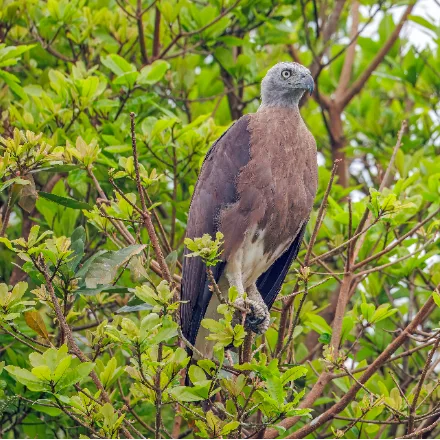
Grey-headed Fish Eagle Regular Near Threatened
Icthyophaga ichthyaetus
Sits low over the water on a dead branch for hours, then drops feet first and comes up with a fish half its own weight.
Where: Dead branches over the villu and the lagoon. Best: Year round.
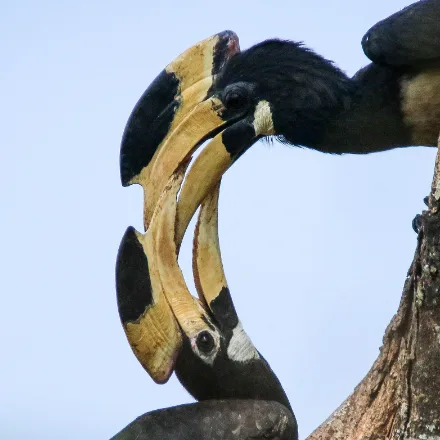
Malabar Pied Hornbill Occasional Near Threatened
Anthracoceros coronatus
The island's big hornbill, sealing the female into a tree hollow behind a wall of mud for the whole nesting period.
Where: Forest along the Kumbukkan Oya. Best: Year round.
Spot-billed Pelican Common Near Threatened
Pelecanus philippensis
A pelican that fishes the ancient irrigation tanks, and one of the few large waterbirds doing better now than it was.
Where: The Kumana villu, where the colony nests in the flooded mangrove. Best: April to July. The villu is a breeding colony site, which is what the park is actually protected for. Pelicans, storks, herons and cormorants nest over the water together.
Bronze-winged Jacana Regular
Metopidius indicus
Toes so long it walks across floating leaves, and a breeding system in which the female holds the territory and the males do all the work.
Where: The villu and lily covered shallows. Best: Year round.
Pallid Harrier Rare Near Threatened
Circus macrourus
Quarters the grassland at head height on raised wings, tilting and rocking, hunting entirely by sound and surprise.
Where: Grassland and lagoon margins. Best: Nov-Mar.
Black-headed Ibis Regular Near Threatened
Threskiornis melanocephalus
White body, bare black head and neck, and a bill built for finding what it cannot see.
Where: The villu and the mangrove edges. Best: Year round.
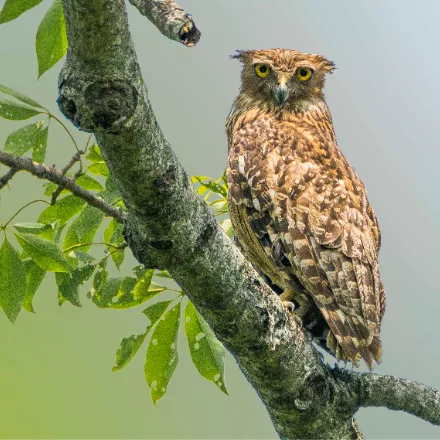
Brown Fish Owl Occasional
Ketupa zeylonensis
A big owl with bare unfeathered legs, because feathers are a liability when you fish with your feet.
Where: Large trees at the villu edge, at dusk. Best: Year round.
See all 16 species recorded at Kumana
Planning
Four things decide a Sri Lankan birding trip. Season: the endemics are resident and available all year, so the calendar is really about migrants and rain, and the broad answer is November to March when the Arctic waders are in and the dry zone coast is at its best. Rain: the southwest wet zone, which is where the endemics are, gets the southwest monsoon from May to September, and Sinharaja is wet in most months regardless, so bring the jacket and accept the leeches rather than trying to dodge them. Timing within the day: this is a first three hours country. Mixed flocks in Sinharaja move early, the highland thrush sings at first light, and by mid morning the forest is quiet. Pace: three mornings at Sinharaja beats one morning at three forests, because the flock is the unit of birding here and you need several passes to catch it well.
Find guided birding trips and forest lodges across Sri Lanka
Some links on this page are affiliate links. If you book through them, Wildseer may earn a small commission at no extra cost to you.
Frequently asked questions
How many endemic birds does Sri Lanka have?
Thirty four, and most of them live in wet zone rainforest in the southwest. Sinharaja alone holds around twenty, which is why almost every serious birding itinerary on the island is built around it. Six more are highland specials found above two thousand metres and not in the lowland forest at all.
Where is the best birdwatching in Sri Lanka?
Sinharaja for the endemics, with no close second. Horton Plains for the highland birds that Sinharaja does not hold. Bundala and Mannar for wintering waders between November and March. Kandy is the easiest introduction and a good first stop rather than a last one.
When is the best time for birdwatching in Sri Lanka?
November to March. The endemics are resident and can be seen in any month, so the season is really set by the northern migrants, which arrive from around October and leave by April, and by the monsoons. The wet zone forests are wet in most months, which is what keeps them productive.
What is the rarest bird in Sri Lanka?
The Serendib scops owl has the best story. It was found by its call in 2001 and formally described in 2004, the first new bird species discovered on the island in well over a century, and it is known from a handful of wet zone forests including Sinharaja. It is listed as Endangered, and it is heard far more often than it is seen.
Do I need a guide for birding in Sri Lanka?
For Sinharaja it makes a large difference, because the birding depends on finding mixed feeding flocks and on knowing the calls of skulking species like the spurfowl and the green-billed coucal that you will otherwise only ever hear. The wetland sites at Bundala and Mannar are much more straightforward on your own.
Can you see the Sri Lanka blue magpie easily?
In Sinharaja, yes, more easily than its status suggests. It is listed as Vulnerable with a small and shrinking range, but within the forest it is bold, noisy and inquisitive, and it tends to come and look at you. Most visitors who spend a full morning on the main track connect with it.
Part of the Wildlife in Sri Lanka guide.
Image credits
Square thumbnails are cropped from the original. Wide banner images are cropped to a band. Other images are resized only. No other changes have been made.
- Birdwatching in Sri Lanka: Gerry Zambonini | CC BY-SA 2.0, cropped
- Sri Lanka Blue Magpie: Gerry Zambonini | CC BY-SA 2.0, cropped
- Serendib Scops Owl: Kasun withanage | CC BY-SA 4.0, cropped
- Sri Lanka Whistling Thrush: Kasun withanage | CC BY-SA 4.0, cropped
- Crab-plover: AL BADUSH | CC BY-SA 4.0, cropped
- Red-faced Malkoha: Dineth Bamunusingha | CC BY-SA 4.0, cropped
- Sri Lanka Junglefowl: eamonccorbett | CC BY 4.0, cropped
- Chestnut-backed Owlet: Rangana Abeyrathne | CC BY-SA 4.0, cropped
- Green-billed Coucal: Amila Tennakoon | CC BY 2.0, cropped
- White-faced Starling: Steve Garvie from Dunfermline, Fife, Scotland | CC BY-SA 2.0, cropped
- Black-capped Bulbul: Thimindu Goonatillake from Denver, USA | CC BY-SA 2.0, cropped
- Yellow-fronted Barbet: Lip Kee Yap from Singapore, Republic of Singapore | CC BY-SA 2.0, cropped
- Ashy-headed Laughingthrush: Punitha Satharasinnghe | CC BY-SA 4.0, cropped
- Crimson-backed Flameback: Matthew Blissett | CC BY 4.0, cropped
- Layard’s Parakeet: Hafiz Issadeen | CC BY 2.0, cropped
- Sri Lanka Green Pigeon: Satdeep Gill | CC BY 4.0, cropped
- Sri Lanka Hanging Parrot: Hafiz Issadeen | CC BY 2.0, cropped
- Sri Lanka Wood Pigeon: Anuradha Amarakoon | CC BY-SA 4.0, cropped
- Yellow-eared Bulbul: Lip Kee from Singapore, Republic of Singapore | CC BY-SA 2.0, cropped
- Dull-blue Flycatcher: desertnaturalist | CC BY 4.0, cropped
- Sri Lanka Bush Warbler: Steve Garvie from Dunfermline, Fife, Scotland | CC BY-SA 2.0, cropped
- Crimson-fronted Barbet: R.M.S. Ratnayake | CC BY-SA 4.0, cropped
- Red-backed Flameback: Rehman Abubakr | CC BY-SA 4.0, cropped
- Sri Lanka Grey Hornbill: Pinkstg | CC BY 3.0, cropped
- Indian Paradise Flycatcher: Drsssuresh1961 | CC0, cropped
- Indian Pitta: Navonil Dutta | CC BY-SA 4.0, cropped
- Spot-winged Thrush: Imasha De Saram | CC BY-SA 4.0, cropped
- Sri Lanka Scimitar Babbler: Punitha Satharasinnghe | CC BY-SA 4.0, cropped
- Sri Lanka Spurfowl: Michael Hurben | CC BY-SA 4.0, cropped
- Sri Lanka Frogmouth: Mike Prince from Bangalore, India | CC BY 2.0, cropped
- Greater Flamingo: Charles J. Sharp | CC BY-SA 4.0, cropped
- Indian Peafowl: Joshianuj | CC BY-SA 4.0, cropped
- Pallid Harrier: Chinmayisk | CC BY-SA 3.0, cropped
- Spot-billed Pelican: Charles J. Sharp | CC BY-SA 4.0, cropped
- Black-headed Ibis: Tisha Mukherjee | CC BY-SA 4.0, cropped
- Eurasian Spoonbill: Ian Kirk from Broadstone, Dorset, UK | CC BY 2.0, cropped
- Bronze-winged Jacana: Tisha Mukherjee | CC BY-SA 4.0, cropped
- Pied Kingfisher: Charles J. Sharp | CC BY-SA 4.0, cropped
- Cotton Pygmy Goose: Tisha Mukherjee | CC BY-SA 4.0, cropped
- Great Thick-knee: Cyndy Sims Parr | CC BY-SA 2.0, cropped
- Yellow Bittern: Vinay bhat | CC BY-SA 4.0, cropped
- Sirkeer Malkoha: N.A.Nazeer | CC BY-SA 2.5 in, cropped
- Great Knot (cropped to square): JJ Harrison ( https://www.jjharrison.com.au/ ) | CC BY-SA 3.0, cropped
- Little Tern (cropped to square): Afsarnayakkan | CC BY-SA 4.0, cropped
- Pacific Reef Heron (cropped to square): Rushen | CC BY-SA 2.0, cropped
- Grey-headed Fish Eagle: Charles J. Sharp | CC BY-SA 4.0, cropped
- Malabar Pied Hornbill: @Vikas patil photography | CC BY-SA 4.0, cropped
- Brown Fish Owl: Hedayeat Ullah | CC BY-SA 4.0, cropped
Square thumbnails are cropped from the original. Wide banner images are cropped to a band. Other images are resized only. No other changes have been made.
- Birdwatching in Sri Lanka: Gerry Zambonini | CC BY-SA 2.0, cropped
- Sri Lanka Blue Magpie: Gerry Zambonini | CC BY-SA 2.0, cropped
- Serendib Scops Owl: Kasun withanage | CC BY-SA 4.0, cropped
- Sri Lanka Whistling Thrush: Kasun withanage | CC BY-SA 4.0, cropped
- Crab-plover: AL BADUSH | CC BY-SA 4.0, cropped
- Red-faced Malkoha: Dineth Bamunusingha | CC BY-SA 4.0, cropped
- Sri Lanka Junglefowl: eamonccorbett | CC BY 4.0, cropped
- Chestnut-backed Owlet: Rangana Abeyrathne | CC BY-SA 4.0, cropped
- Green-billed Coucal: Amila Tennakoon | CC BY 2.0, cropped
- White-faced Starling: Steve Garvie from Dunfermline, Fife, Scotland | CC BY-SA 2.0, cropped
- Black-capped Bulbul: Thimindu Goonatillake from Denver, USA | CC BY-SA 2.0, cropped
- Yellow-fronted Barbet: Lip Kee Yap from Singapore, Republic of Singapore | CC BY-SA 2.0, cropped
- Ashy-headed Laughingthrush: Punitha Satharasinnghe | CC BY-SA 4.0, cropped
- Crimson-backed Flameback: Matthew Blissett | CC BY 4.0, cropped
- Layard’s Parakeet: Hafiz Issadeen | CC BY 2.0, cropped
- Sri Lanka Green Pigeon: Satdeep Gill | CC BY 4.0, cropped
- Sri Lanka Hanging Parrot: Hafiz Issadeen | CC BY 2.0, cropped
- Sri Lanka Wood Pigeon: Anuradha Amarakoon | CC BY-SA 4.0, cropped
- Yellow-eared Bulbul: Lip Kee from Singapore, Republic of Singapore | CC BY-SA 2.0, cropped
- Dull-blue Flycatcher: desertnaturalist | CC BY 4.0, cropped
- Sri Lanka Bush Warbler: Steve Garvie from Dunfermline, Fife, Scotland | CC BY-SA 2.0, cropped
- Crimson-fronted Barbet: R.M.S. Ratnayake | CC BY-SA 4.0, cropped
- Red-backed Flameback: Rehman Abubakr | CC BY-SA 4.0, cropped
- Sri Lanka Grey Hornbill: Pinkstg | CC BY 3.0, cropped
- Indian Paradise Flycatcher: Drsssuresh1961 | CC0, cropped
- Indian Pitta: Navonil Dutta | CC BY-SA 4.0, cropped
- Spot-winged Thrush: Imasha De Saram | CC BY-SA 4.0, cropped
- Sri Lanka Scimitar Babbler: Punitha Satharasinnghe | CC BY-SA 4.0, cropped
- Sri Lanka Spurfowl: Michael Hurben | CC BY-SA 4.0, cropped
- Sri Lanka Frogmouth: Mike Prince from Bangalore, India | CC BY 2.0, cropped
- Greater Flamingo: Charles J. Sharp | CC BY-SA 4.0, cropped
- Indian Peafowl: Joshianuj | CC BY-SA 4.0, cropped
- Pallid Harrier: Chinmayisk | CC BY-SA 3.0, cropped
- Spot-billed Pelican: Charles J. Sharp | CC BY-SA 4.0, cropped
- Black-headed Ibis: Tisha Mukherjee | CC BY-SA 4.0, cropped
- Eurasian Spoonbill: Ian Kirk from Broadstone, Dorset, UK | CC BY 2.0, cropped
- Bronze-winged Jacana: Tisha Mukherjee | CC BY-SA 4.0, cropped
- Pied Kingfisher: Charles J. Sharp | CC BY-SA 4.0, cropped
- Cotton Pygmy Goose: Tisha Mukherjee | CC BY-SA 4.0, cropped
- Great Thick-knee: Cyndy Sims Parr | CC BY-SA 2.0, cropped
- Yellow Bittern: Vinay bhat | CC BY-SA 4.0, cropped
- Sirkeer Malkoha: N.A.Nazeer | CC BY-SA 2.5 in, cropped
- Great Knot (cropped to square): JJ Harrison ( https://www.jjharrison.com.au/ ) | CC BY-SA 3.0, cropped
- Little Tern (cropped to square): Afsarnayakkan | CC BY-SA 4.0, cropped
- Pacific Reef Heron (cropped to square): Rushen | CC BY-SA 2.0, cropped
- Grey-headed Fish Eagle: Charles J. Sharp | CC BY-SA 4.0, cropped
- Malabar Pied Hornbill: @Vikas patil photography | CC BY-SA 4.0, cropped
- Brown Fish Owl: Hedayeat Ullah | CC BY-SA 4.0, cropped