
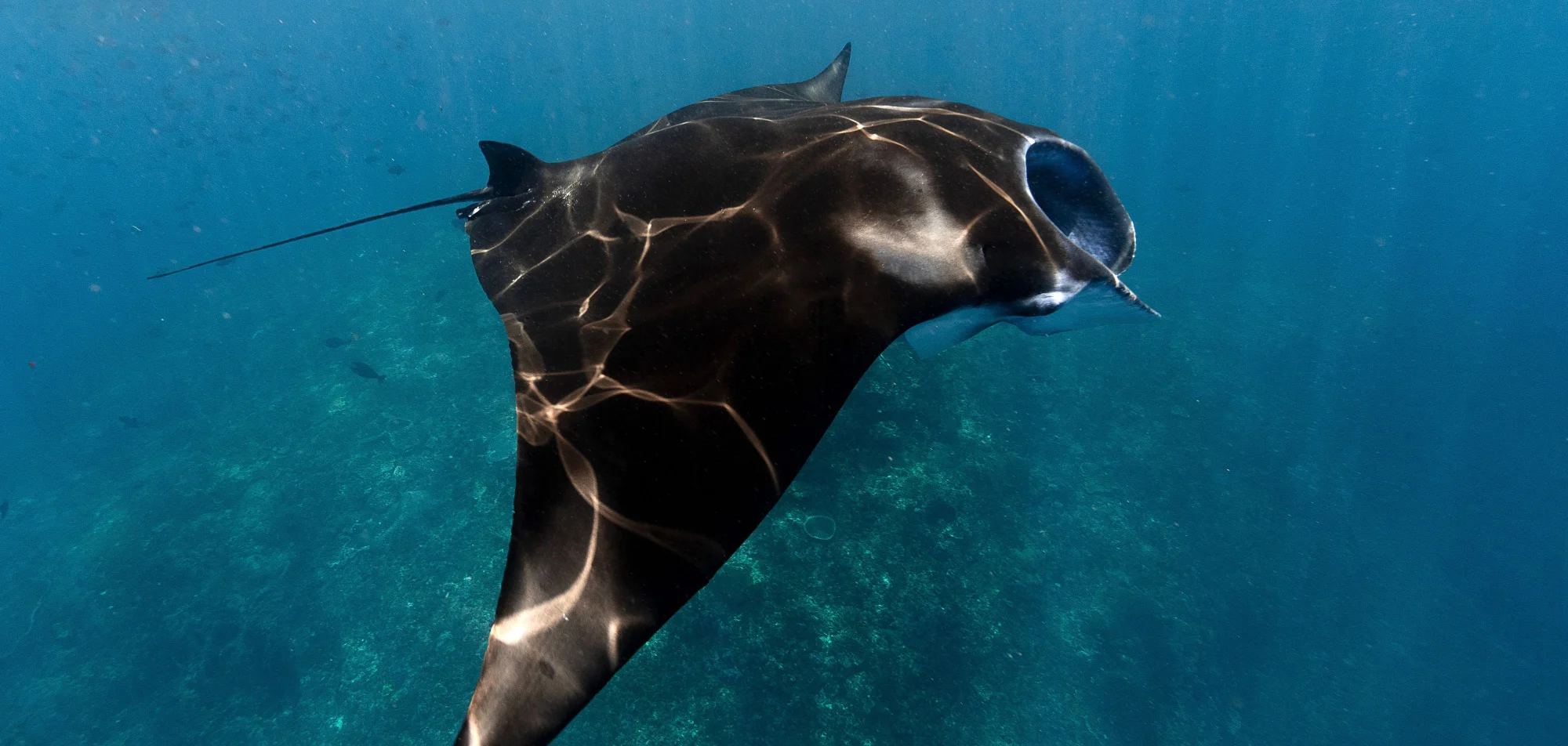
The Similans are nine granite islands sitting in clear Andaman water sixty kilometres off the coast, and they are the closest thing Thailand has to a serious big-animal destination. The geology is the reason. Most Thai reefs grow on limestone; these grew around house-sized granite boulders, so the west sides are a landscape of swim-throughs and caverns while the east sides shelve away in gentle hard coral gardens. Two completely different dives on opposite sides of the same island.
What that buys you is variety in a small area, and a genuine chance at animals that are rare elsewhere in Thai water. Manta rays work the cleaning stations at Koh Bon from February. Whale sharks pass through in the same window, and while nobody should plan a trip around one, this is the water where it happens. Underneath all of that sits a reef list of sixty-five species recorded here, from anemonefish to bumphead parrotfish.
The park closes. Mu Ko Similan is shut to visitors through the southwest monsoon, roughly mid-May to mid-October, which is not a detail to discover after booking. Everything below assumes the open season.
Highlights
Reef Manta Ray
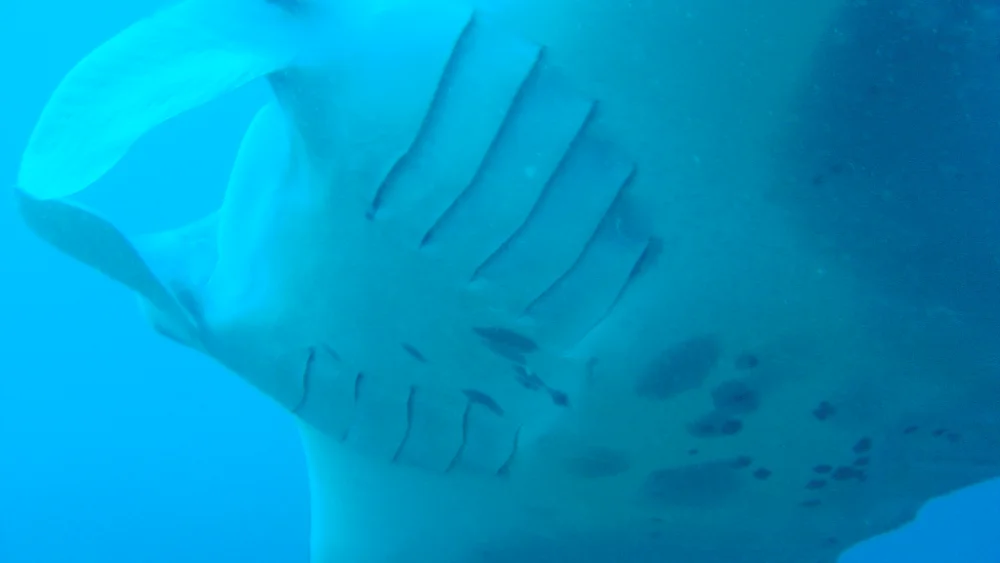
A four metre wingspan gliding overhead in slow, hypnotic loops that leave divers grinning for days. Where: Koh Bon and Koh Tachai. Best: Feb-Apr, occasional from Jan.
Whale Shark
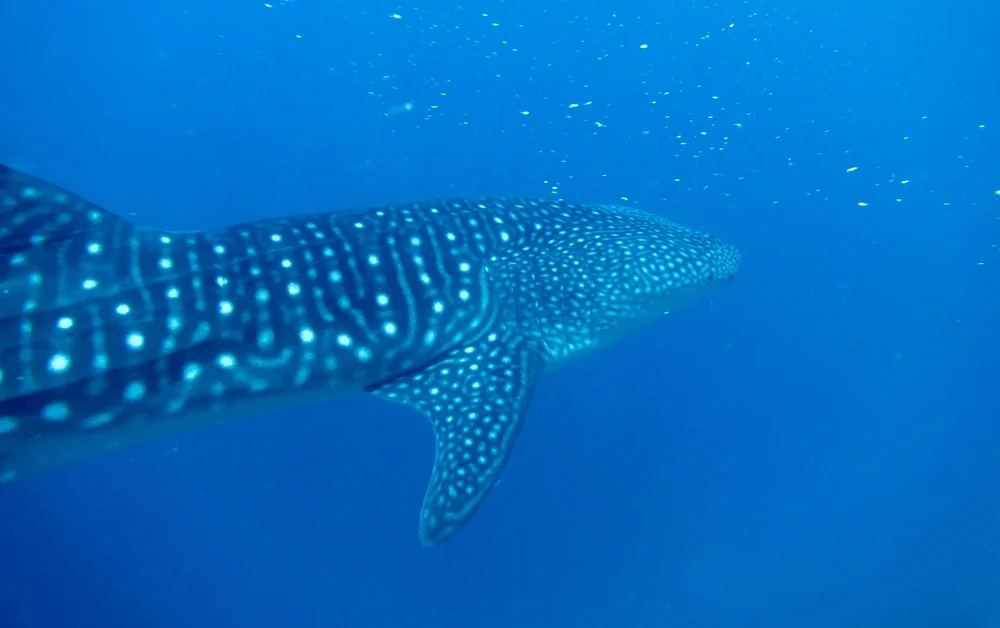
The biggest fish in the ocean, a spotted, bus sized filter feeder and the undisputed holy grail of tropical diving. Where: Koh Bon, Koh Tachai and the outer pinnacles on liveaboard itineraries. Best: Feb-Apr.
Zebra Shark (Leopard Shark)
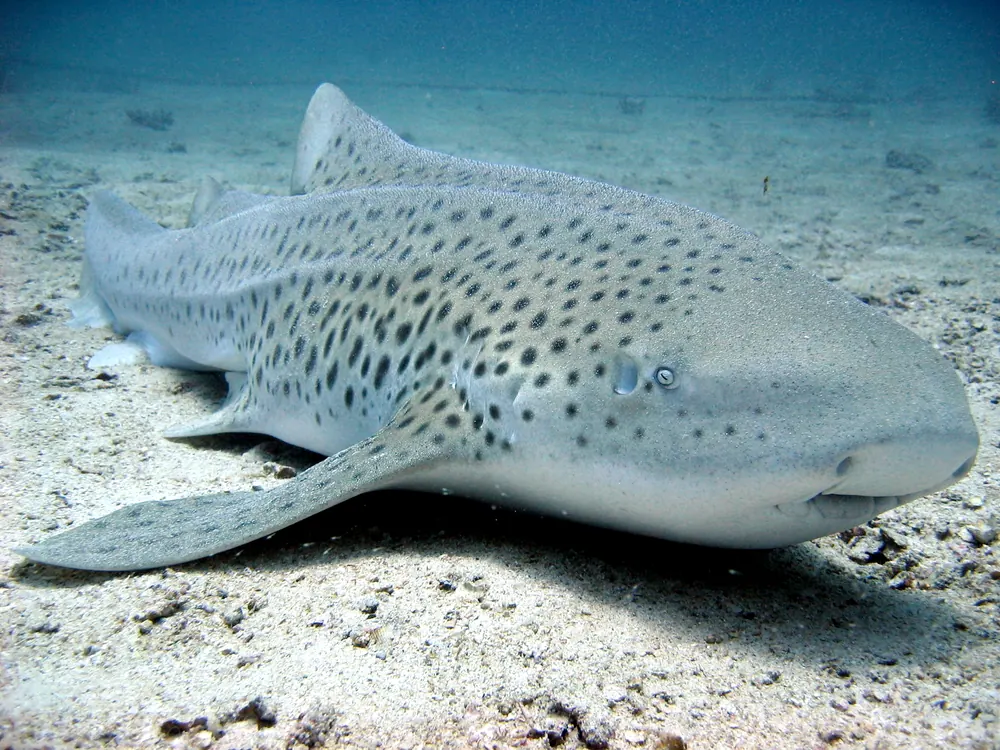
A gentle, spotted shark that lies on the sand like a giant lazy cat, striped as a pup and spotted as an adult. Where: Sandy patches at East of Eden, Anita's Reef and Elephant Head Rock. Best: Nov-Apr, morning dives, best Dec-Mar.
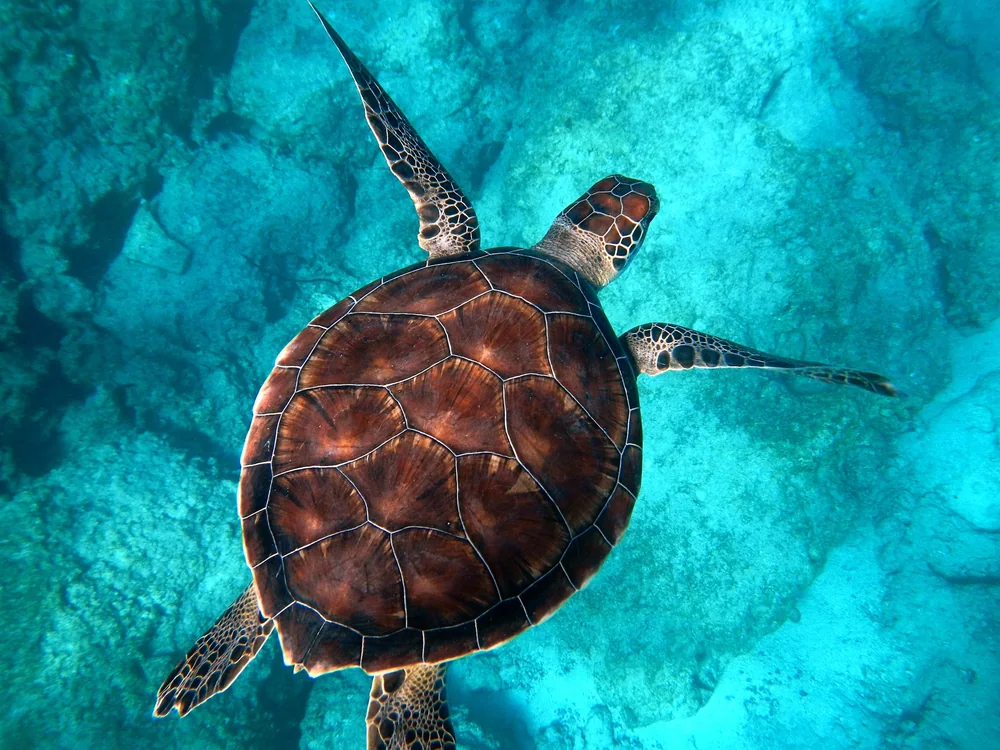
Green Sea Turtle
The great grazing turtle of the tropics, the only sea turtle that turns vegetarian as an adult. Where: Seagrass and shallow reef at Donald Duck Bay and Anita's Reef. Best: Nov-Apr, nesting Nov-Feb.
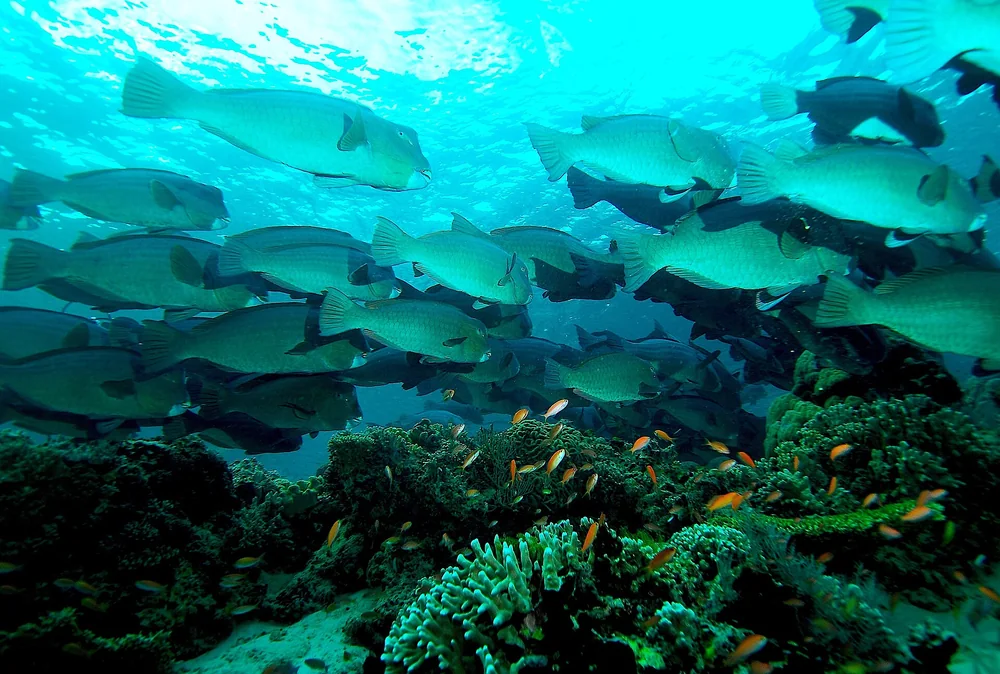
Bumphead Parrotfish
A hulking, bull-headed parrotfish that rams and bites living coral, turning reef rock into the white sand of tropical beaches. Where: Reef tops at dawn on the outer islands. Best: Nov-Apr, first dive of the day.
Mammals
2 species
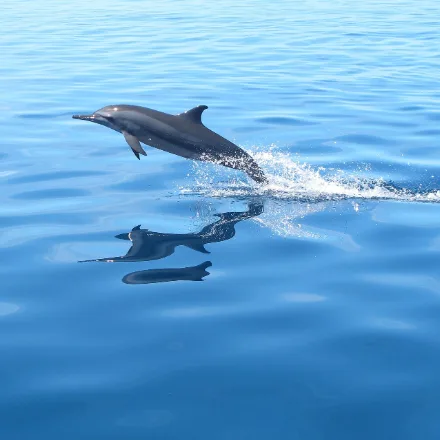
Spinner Dolphin Regular
Stenella longirostris
A small, slender dolphin that leaps clear of the sea and spins like a top in mid-air.
Where: Open water on the crossings between islands. Best: Nov-Apr, morning crossings. Often bow-rides the dive boats on the run out to Koh Bon.
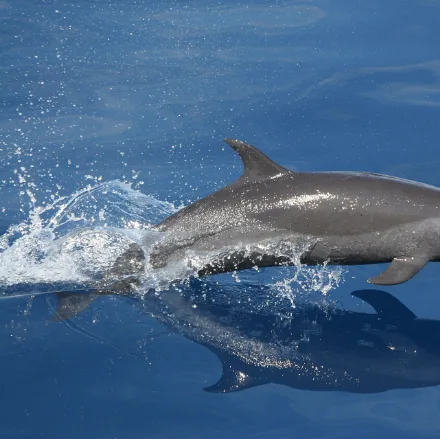
Pantropical Spotted Dolphin Occasional
Stenella attenuata
Calves are born unspotted and acquire their speckling through life, so you can read a dolphin's age off its skin.
Where: Open water on the outer crossings. Best: Nov-Apr, outer crossings.
Birds
2 species
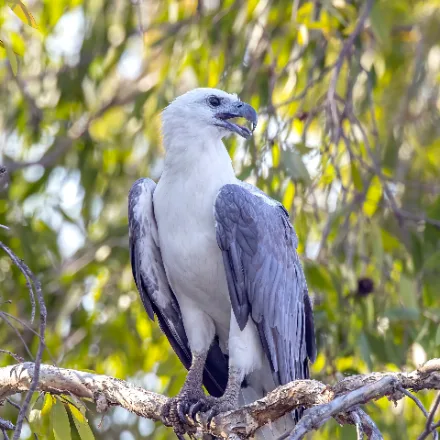
White-bellied Sea Eagle Regular
Haliaeetus leucogaster
A huge coastal eagle in grey and white that snatches sea snakes and fish from the surface in a spectacular swoop.
Where: Over the island cliffs and Donald Duck Bay. Best: Nov-Apr, morning.
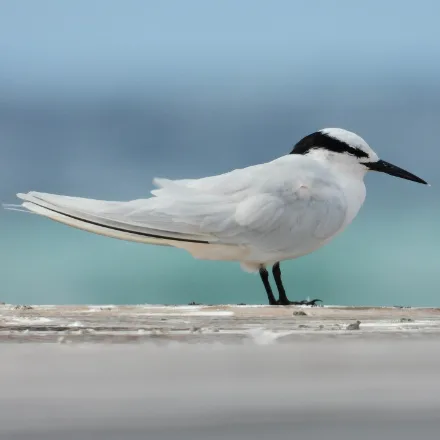
Black-naped Tern Occasional
Sterna sumatrana
Almost pure white apart from a narrow black band across the back of the head, like a headphone cable.
Where: Rocky islets and boat wakes around the islands. Best: Nov-Apr.
Reptiles
3 species
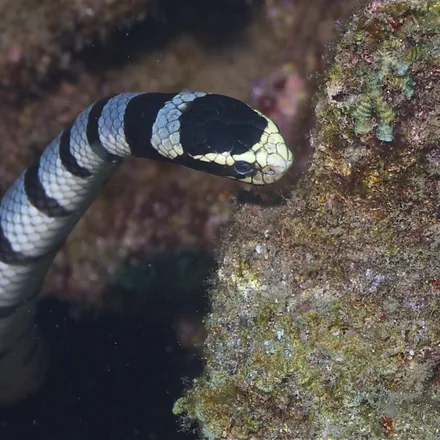
Banded Sea Krait Regular
Laticauda colubrina
A sea snake that hunts eels underwater but must come ashore to rest, drink fresh water and lay its eggs.
Where: Shallow reef and rubble at the island edges. Best: Nov-Apr, day. Highly venomous but placid; it is hunting eels, not you.
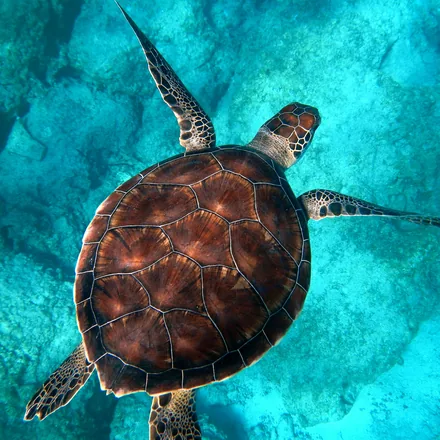
Green Sea Turtle Regular
Chelonia mydas
The great grazing turtle of the tropics, the only sea turtle that turns vegetarian as an adult.
Where: Seagrass and shallow reef at Donald Duck Bay and Anita's Reef. Best: Nov-Apr, nesting Nov-Feb.
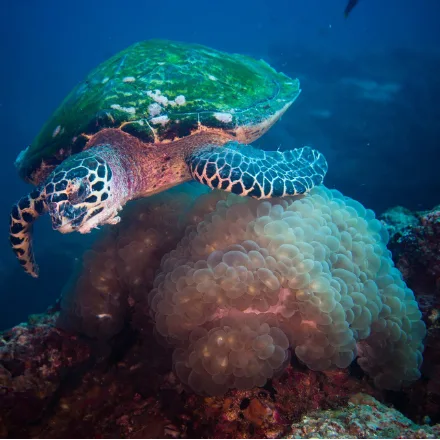
Hawksbill Turtle Occasional Critically Endangered
Eretmochelys imbricata
The reef's sponge specialist, its beautiful shell also the reason it was hunted to the edge.
Where: Coral bommies and sponge-covered walls throughout. Best: Nov-Apr.
Fish
23 species
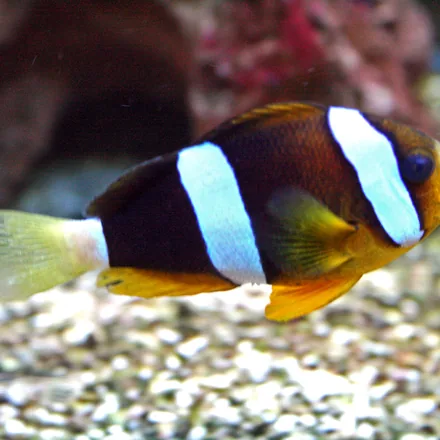
Clark's Anemonefish Common
Amphiprion clarkii
A hardy, boldly banded anemonefish that will share its stinging anemone with a confidence bordering on cheek.
Where: Anemones on the shallow reef throughout. Best: Nov-Apr.
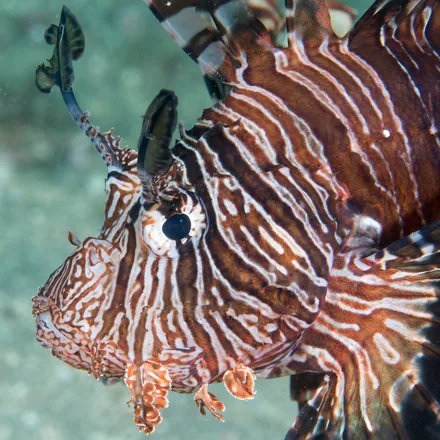
Common Lionfish Common
Pterois volitans
A flamboyant reef hunter fanned out in maroon and white plumes, every graceful spine tipped with venom.
Where: Overhangs and wrecks throughout. Best: Nov-Apr.
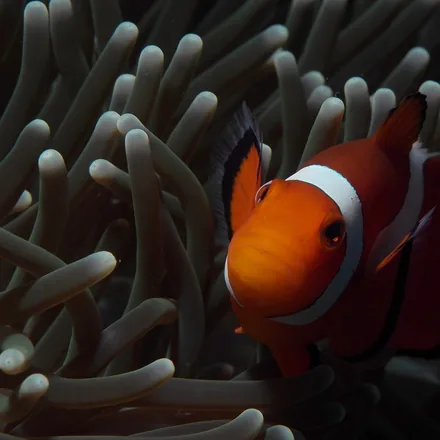
False Clownfish (Clown Anemonefish) Common
Amphiprion ocellaris
The famous orange and white anemonefish, immune to the stinging tentacles that shelter it and every group ruled by a single dominant female.
Where: Anemones on shallow reef at Anita's Reef and East of Eden. Best: Nov-Apr.
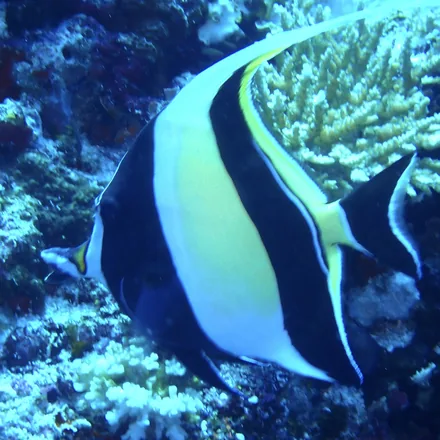
Moorish Idol Common
Zanclus cornutus
An unmistakable disc of black, white and gold trailing a long ribbon fin, one of the most elegant fish on any reef.
Where: Reef tops and bommies throughout. Best: Nov-Apr.
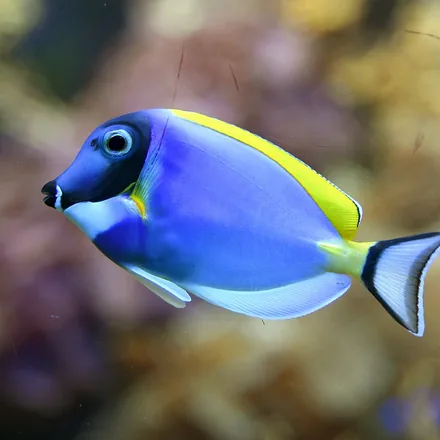
Powder Blue Surgeonfish Common
Acanthurus leucosternon
A stunning Andaman signature fish, powder blue with a yellow sail and a scalpel-sharp blade at the base of its tail.
Where: Surge zones and shallow reef edges. Best: Nov-Apr. A signature Andaman fish, and Similan is the best place in Thailand to see them in numbers.
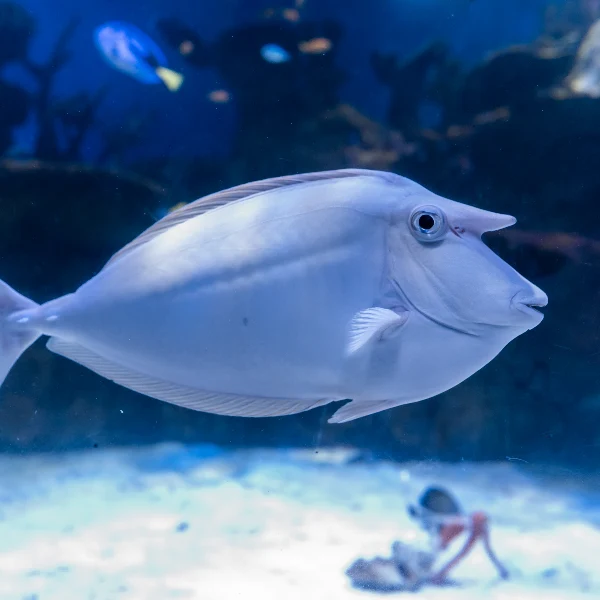
Bluespine Unicornfish Regular
Naso unicornis
A large grey surgeonfish that grows a blunt horn on its forehead and carries bright blue blades at the base of its tail.
Where: Reef edges in current. Best: Nov-Apr.
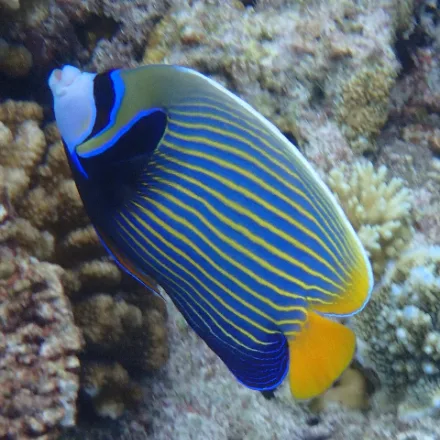
Emperor Angelfish Regular
Pomacanthus imperator
A living work of art in electric blue and yellow stripes, its young disguised in a maze of blue and white rings.
Where: Coral heads and overhangs on the east side reefs. Best: Nov-Apr.
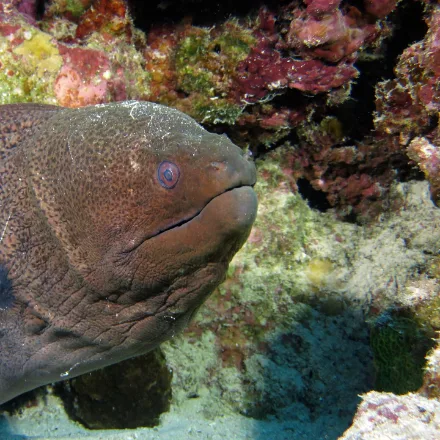
Giant Moray Regular
Gymnothorax javanicus
The largest moray on the reef, its gaping, fanged mouth a fearsome look that is really just how it breathes.
Where: Crevices at Elephant Head Rock and West Ridge. Best: Nov-Apr.
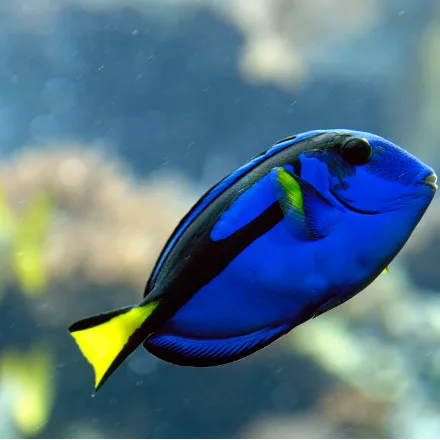
Palette Surgeonfish (Regal Blue Tang) Regular
Paracanthurus hepatus
The famous royal-blue tang of film fame, hovering over coral and diving into the branches when danger looms.
Where: Branching coral on the eastern reefs. Best: Nov-Apr.
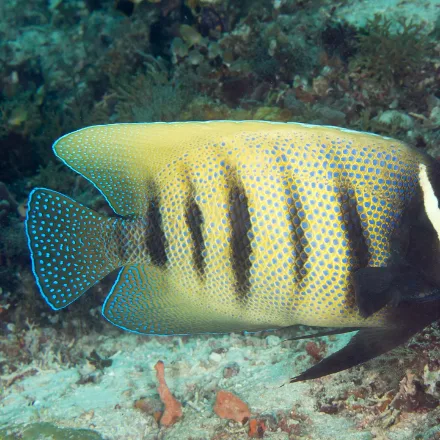
Sixbar Angelfish Regular
Pomacanthus sexstriatus
A big, bold angelfish that grunts audibly when it is annoyed with you.
Where: Bommies and rubble slopes. Best: Nov-Apr.
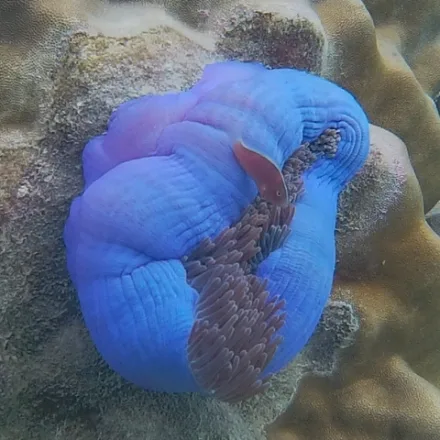
Skunk Anemonefish Regular
Amphiprion akallopisos
A single white stripe down the spine, and a strict queue: when the female dies, the biggest male becomes her.
Where: Anemones on sheltered slopes. Best: Nov-Apr.
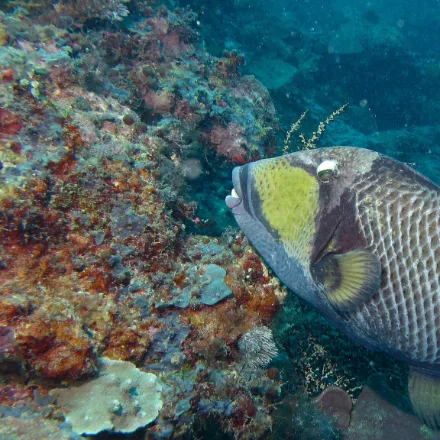
Titan Triggerfish Regular
Balistoides viridescens
The reef's bad tempered bulldozer, a heavy triggerfish that bites chunks out of coral to get at what is living underneath it.
Where: Reef tops throughout, nesting in sandy craters. Best: Nov-Apr. Nesting adults hold a cone of water above the nest and will see off fish far larger than themselves.
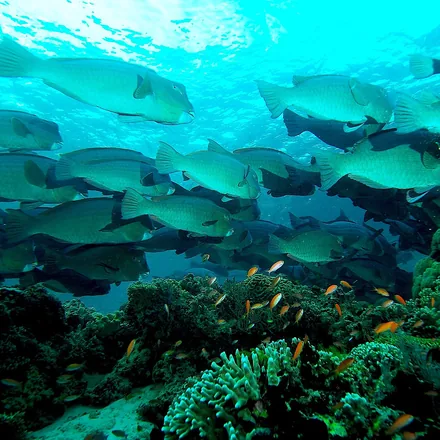
Bumphead Parrotfish Occasional Vulnerable
Bolbometopon muricatum
A hulking, bull-headed parrotfish that rams and bites living coral, turning reef rock into the white sand of tropical beaches.
Where: Reef tops at dawn on the outer islands. Best: Nov-Apr, first dive of the day. Best on the first dive of the day, before the schools break up.
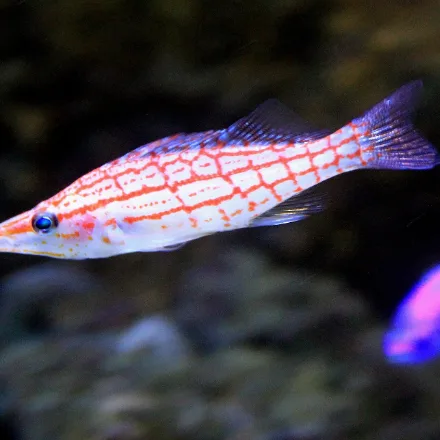
Longnose Hawkfish Occasional
Oxycirrhites typus
A dainty fish gridded in red like graph paper, perched among the branches of a giant sea fan waiting to ambush prey.
Where: Sea fans on current-swept walls. Best: Nov-Apr.
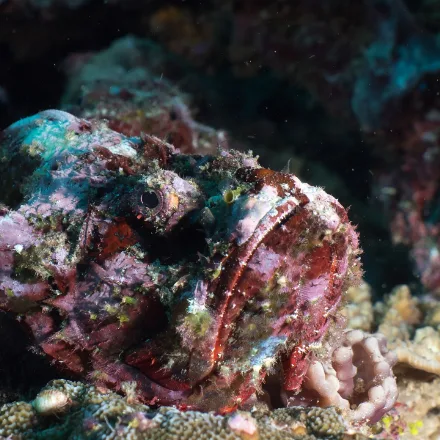
Reef Stonefish Occasional
Synanceia verrucosa
The most venomous fish in the world, a living lump of encrusted rock that is almost impossible to see until it is too late.
Where: Rubble and reef base throughout. Best: Nov-Apr. Genuinely dangerous and near invisible. Never place a hand or knee on the bottom.
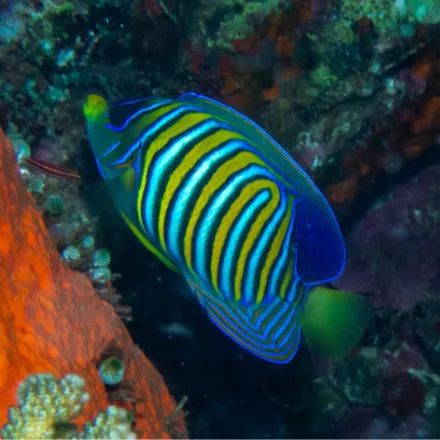
Regal Angelfish Occasional
Pygoplites diacanthus
One of the most beautiful fish on the reef, banded in orange and white with electric-blue edging like a living flag.
Where: Sheltered coral gardens. Best: Nov-Apr.
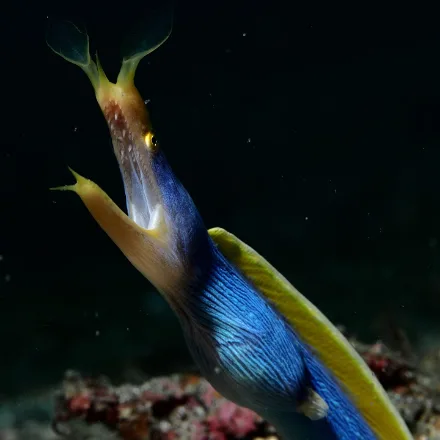
Ribbon Eel Occasional
Rhinomuraena quaesita
A ribbon of electric blue and yellow that sways from a hole in the sand, and remarkably changes sex and colour as it grows.
Where: Sand and rubble margins at Anita's Reef. Best: Nov-Apr. Blue adults and black juveniles occupy the same burrows for months.
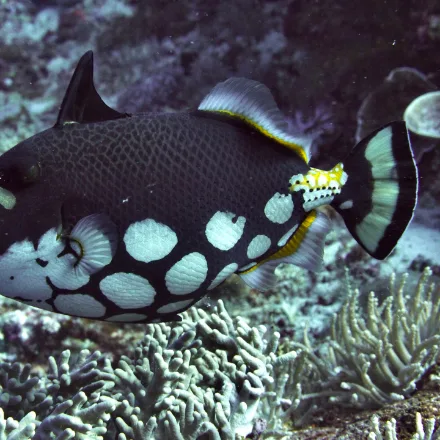
Clown Triggerfish Rare
Balistoides conspicillum
Perhaps the most flamboyant fish on the reef, a black triggerfish spotted with huge white polka-dots and a saddle of gold.
Where: Deeper walls on the west side. Best: Nov-Apr. A prize for photographers; usually deep and moving.
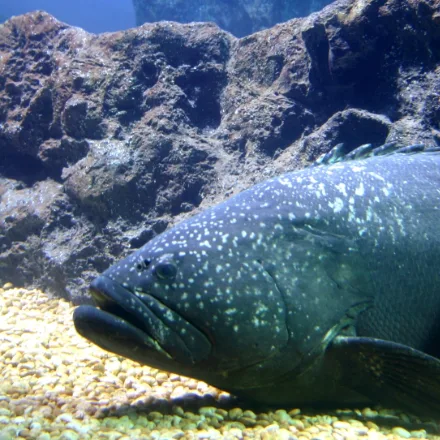
Giant Grouper Rare
Epinephelus lanceolatus
The giant of the reef, a grouper that can grow larger than a diver and swallow prey the size of a small shark.
Where: Caves and deep ledges at Elephant Head Rock. Best: Nov-Apr.
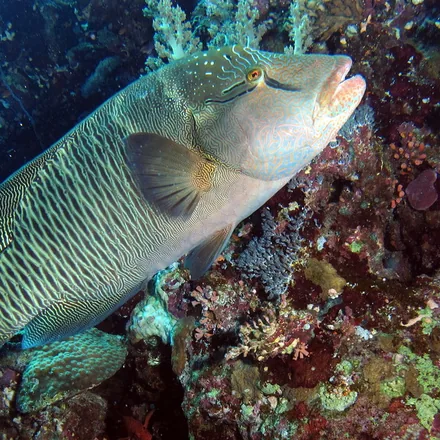
Humphead Wrasse (Napoleon Wrasse) Rare Endangered
Cheilinus undulatus
A giant, curious reef fish with thick lips and a bulging forehead, able to crunch prey that few other animals can eat.
Where: Outer reef slopes at Koh Bon and Christmas Point. Best: Nov-Apr, best in calm Feb-Apr water. Large individuals are curious and will follow a diver.
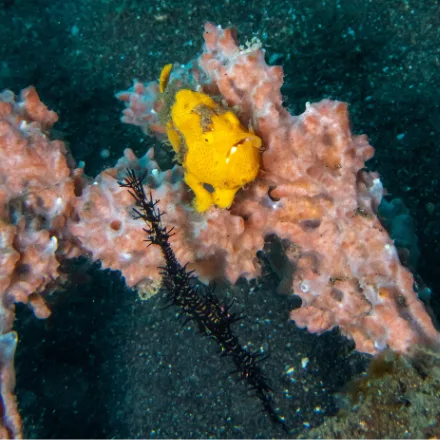
Ornate Ghost Pipefish Rare
Solenostomus paradoxus
A dazzling relative of the seahorse that hangs head-down among crinoids, its frilled body vanishing into the feathery arms.
Where: Crinoids and sea fans on sheltered slopes. Best: Nov-Apr.
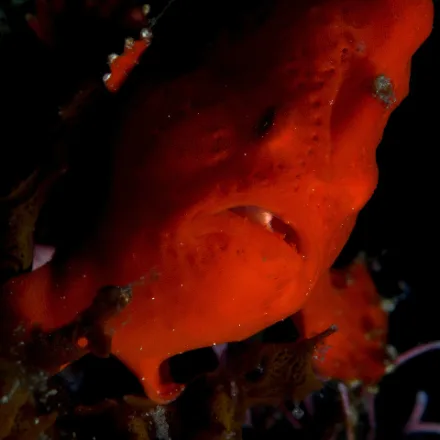
Painted Frogfish Rare
Antennarius pictus
A lumpy anglerfish that walks on hand-like fins and fishes for prey with a built-in rod and lure on its forehead.
Where: Sponges on the west-side walls. Best: Nov-Apr.
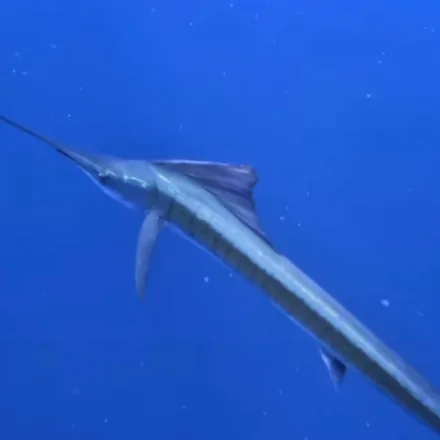
Indo-Pacific Sailfish Ultra rare
Istiophorus platypterus
The fastest fish in the sea, and it lights up electric blue across the sail when it is herding a bait ball.
Where: Blue water on the Koh Tachai and Richelieu crossings. Best: Feb-Apr.
Sharks and rays
13 species
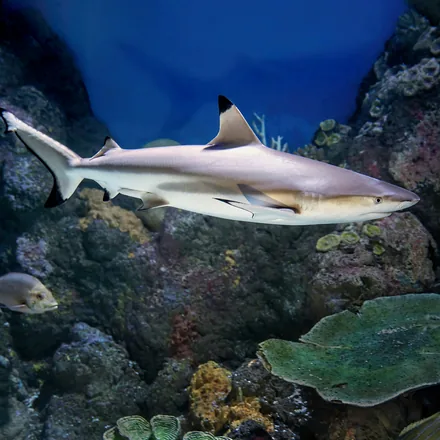
Blacktip Reef Shark Common Vulnerable
Carcharhinus melanopterus
The neat little reef shark of the shallows, its black-tipped fins often cutting the surface over sun-lit sand flats.
Where: Shallow reef flats and Donald Duck Bay. Best: Nov-Apr, all day.
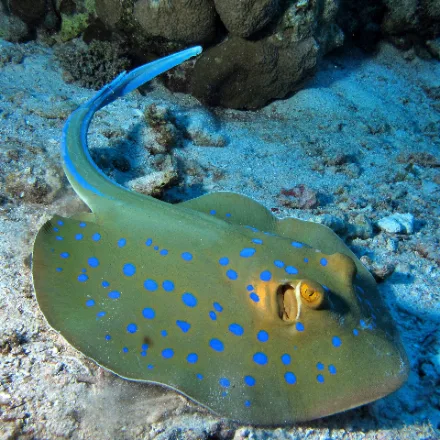
Bluespotted Ribbontail Ray Regular
Taeniura lymma
A small, brilliantly marked ray, olive gold studded with electric blue spots, tucked under coral ledges.
Where: Sand pockets and under table corals throughout. Best: Nov-Apr.
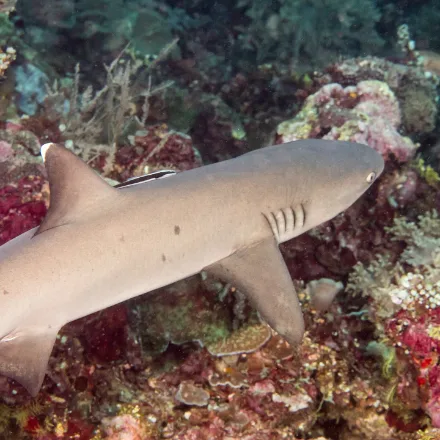
Whitetip Reef Shark Regular Vulnerable
Triaenodon obesus
A slender reef shark that rests motionless in caves by day and hunts the reef in packs by night.
Where: Under table corals and ledges at Christmas Point and Sharkfin Reef. Best: Nov-Apr, day. Sleeping under overhangs by day; look into the shade rather than the blue.
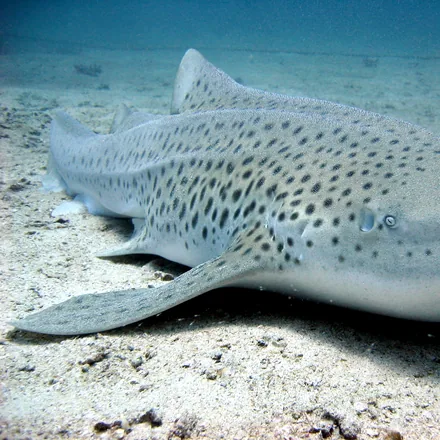
Zebra Shark (Leopard Shark) Regular Endangered
Stegostoma tigrinum
A gentle, spotted shark that lies on the sand like a giant lazy cat, striped as a pup and spotted as an adult.
Where: Sandy patches at East of Eden, Anita's Reef and Elephant Head Rock. Best: Nov-Apr, morning dives, best Dec-Mar. Rests on sand in the open; approach slowly from the side and it will usually stay.
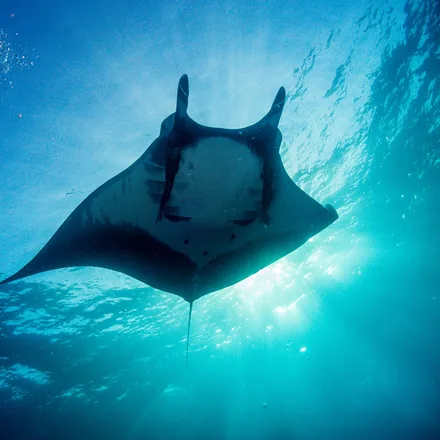
Giant Manta Ray Occasional Endangered
Mobula birostris
The largest ray on the planet, an ocean wanderer that can span seven metres and loops through plankton clouds in slow somersaults.
Where: Koh Bon ridge and Koh Tachai pinnacle. Best: Feb-Apr, peak at Koh Bon. Koh Bon is the classic manta station; hang off the ridge and wait rather than chase.
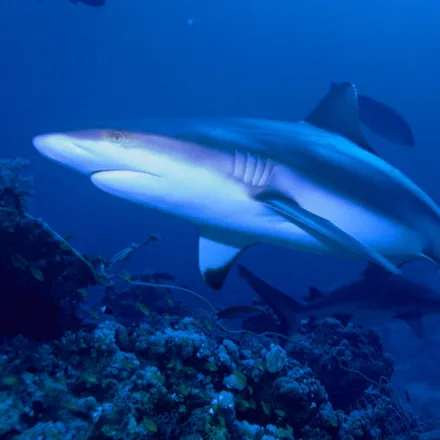
Grey Reef Shark Occasional Endangered
Carcharhinus amblyrhynchos
The classic requiem shark of the drop-off, bold and inquisitive where currents sweep the reef.
Where: Deeper walls and current-swept corners of the outer islands. Best: Nov-Apr.
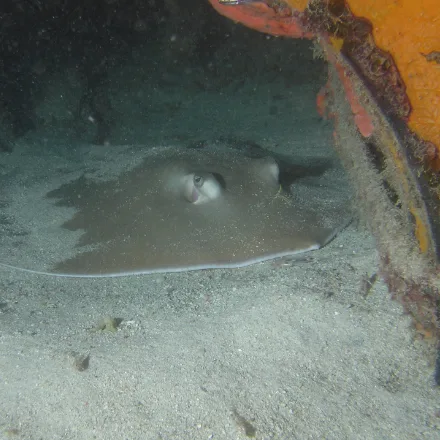
Jenkins Whipray Occasional Vulnerable
Pateobatis jenkinsii
A big sand-flat ray with a ridge of enlarged thorns down its spine and a tail twice the length of its body.
Where: Sand flats at Anita's Reef and Donald Duck Bay. Best: Nov-Apr.
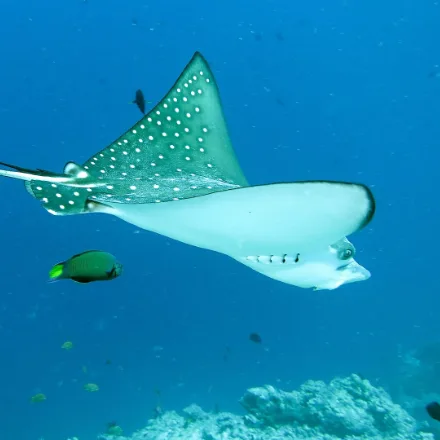
Ocellated Eagle Ray Occasional Endangered
Aetobatus ocellatus
A dramatic ray that flies through open water on wings spangled with white spots, trailing a whip-like venomous tail.
Where: Drop-offs at Koh Bon and Christmas Point. Best: Nov-Apr, more frequent Feb-Apr. Usually passing in open water; look out into the blue on every safety stop.
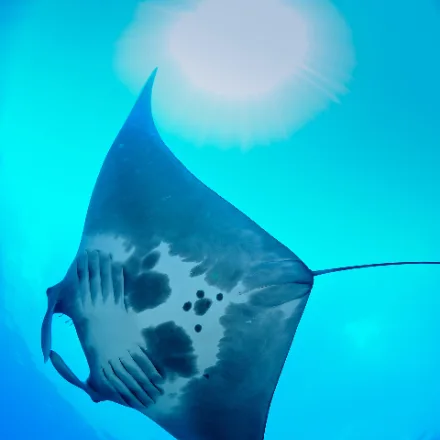
Reef Manta Ray Occasional Vulnerable
Mobula alfredi
A four metre wingspan gliding overhead in slow, hypnotic loops that leave divers grinning for days.
Where: Koh Bon and Koh Tachai. Best: Feb-Apr, occasional from Jan.
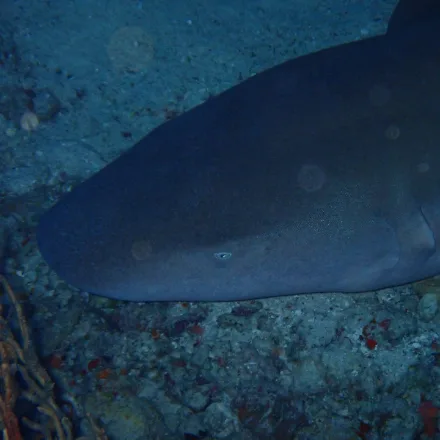
Tawny Nurse Shark Occasional Vulnerable
Nebrius ferrugineus
A big, docile bottom shark that vacuums prey out of crevices with a powerful suck.
Where: Caves and overhangs at Elephant Head Rock. Best: Nov-Apr, day.
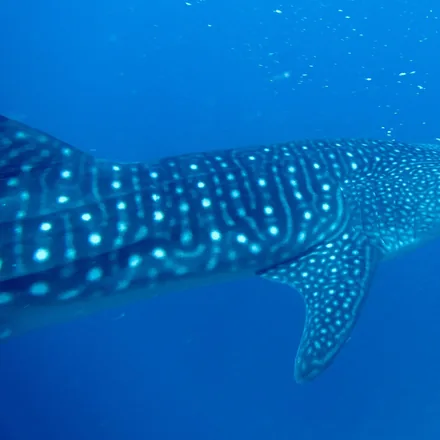
Whale Shark Rare Endangered
Rhincodon typus
The biggest fish in the ocean, a spotted, bus sized filter feeder and the undisputed holy grail of tropical diving.
Where: Koh Bon, Koh Tachai and the outer pinnacles on liveaboard itineraries. Best: Feb-Apr. The single most sought sighting on any Similan trip, and worth the liveaboard over a day boat.
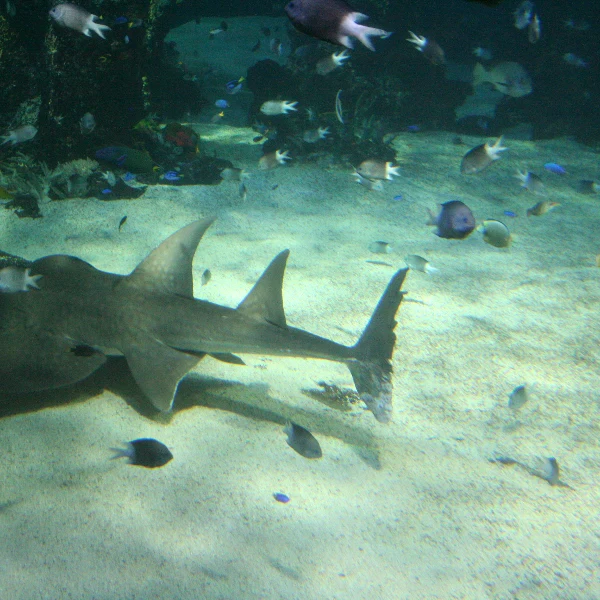
Bowmouth Guitarfish Ultra rare Critically Endangered
Rhina ancylostomus
Half shark, half ray, with ridges of thorns above the eyes that look like a set of eyebrows.
Where: Sand beside reef on the outer islands and the Burma Banks crossings. Best: Feb-Apr. A once-in-a-career sighting for most divers in Thai waters.
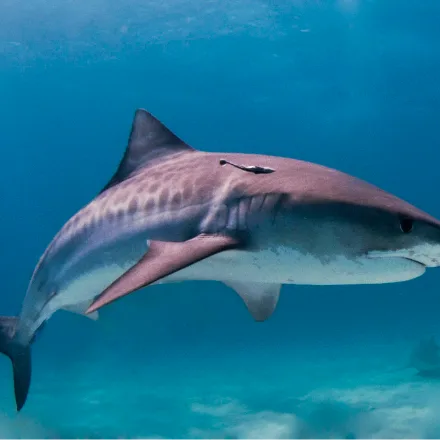
Tiger Shark Ultra rare Near Threatened
Galeocerdo cuvier
The only shark with teeth built to shear turtle shell, and the least fussy eater in the ocean.
Where: Deep water off the outer pinnacles. Best: Feb-Apr.
Molluscs
7 species
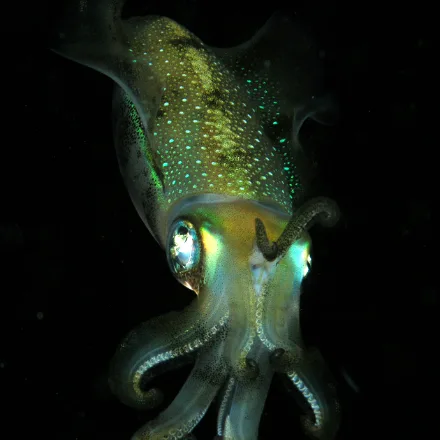
Bigfin Reef Squid Regular
Sepioteuthis lessoniana
Talks in colour: it can run one message down its left side and a different one down its right at the same time.
Where: Midwater on safety stops and night dives. Best: Nov-Apr.
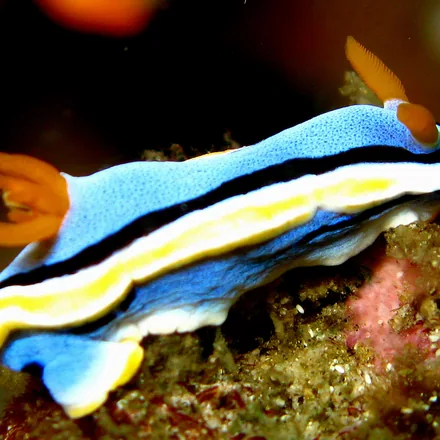
Chromodoris Nudibranch Regular
Chromodoris species
A tiny sea slug in outrageous colours that borrows toxins from the sponges it eats and flaunts them as a warning.
Where: Sponges on the west-side walls. Best: Nov-Apr.
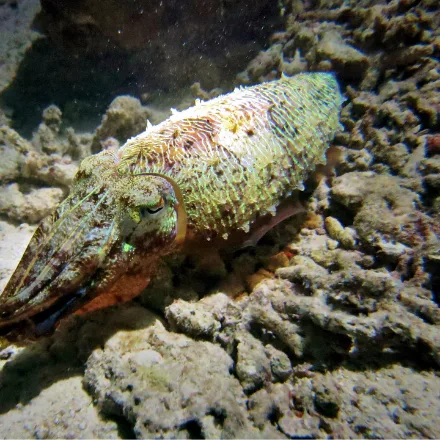
Broadclub Cuttlefish Occasional
Ascarosepion latimanus
A big reef cuttlefish that hypnotises prey with bands of colour pulsing down its arms.
Where: Reef edges and sand margins. Best: Nov-Apr.
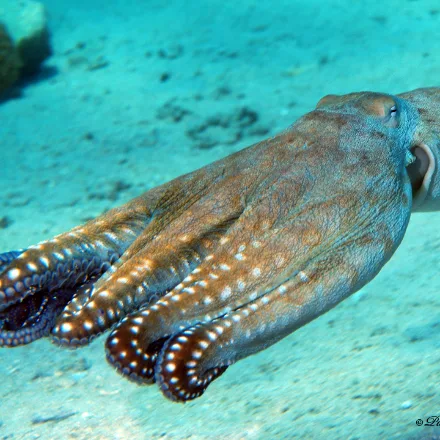
Day Octopus Occasional
Octopus cyanea
A shape-shifting reef genius that can change colour and texture in a blink and pour its boneless body through a coin-sized gap.
Where: Reef and rubble by day on the eastern sites. Best: Nov-Apr.
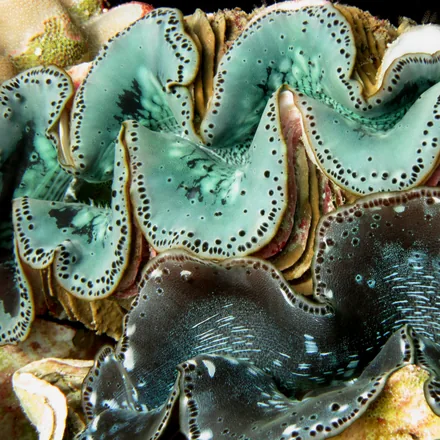
Giant Clam Occasional Critically Endangered
Tridacna gigas
The largest shellfish on Earth, a metre-wide clam that farms algae in its own rippling, jewel-coloured flesh.
Where: Shallow reef tops at Anita's Reef and Donald Duck Bay. Best: Nov-Apr.
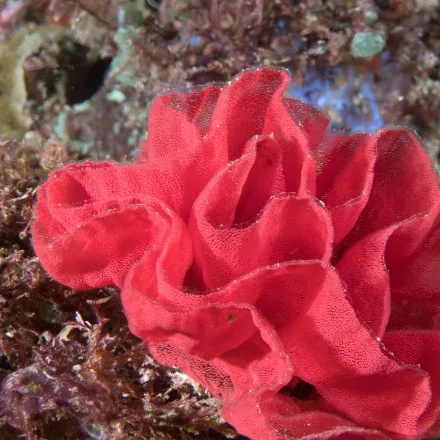
Spanish Dancer Occasional
Hexabranchus sanguineus
A giant crimson sea slug that unfurls its frilled body and swims through open water like a flamenco dancer's skirt.
Where: Night dives on rubble and reef base. Best: Nov-Apr, night.
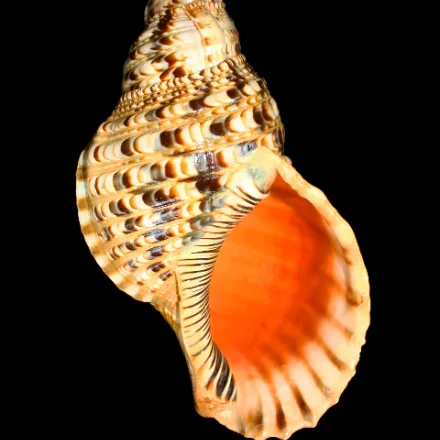
Triton's Trumpet Rare
Charonia tritonis
A giant sea snail with a beautiful spiral shell that is one of the very few animals to hunt and eat the coral-killing crown-of-thorns.
Where: Reef base and rubble. Best: Nov-Apr.
Corals and anemones
7 species
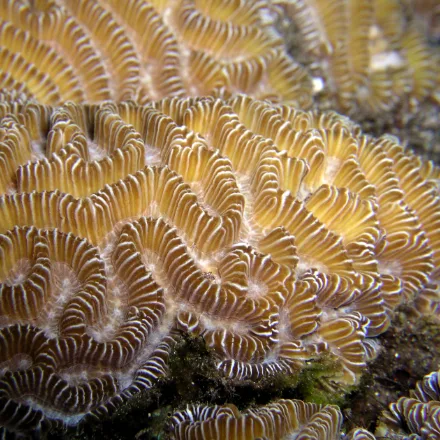
Brain Coral Common
Platygyra species
A boulder of living stone grooved in winding ridges and valleys, so like a brain that the name writes itself.
Where: Reef tops throughout. Best: Nov-Apr.
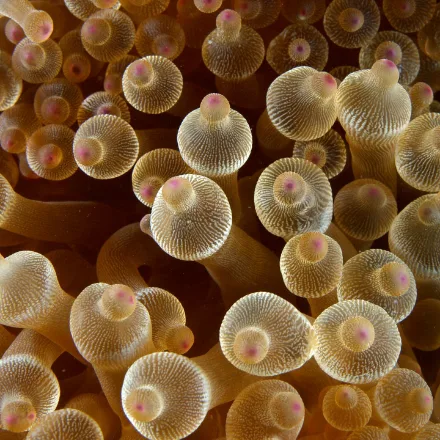
Bulb-tentacle Anemone Common
Entacmaea quadricolor
The tentacles only swell into bulbs when an anemonefish is living in it, and nobody is quite sure why.
Where: Reef flats and rubble margins. Best: Nov-Apr.
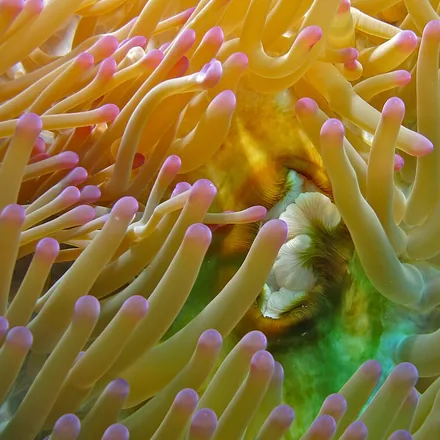
Magnificent Sea Anemone Common
Heteractis magnifica
A great carpet of stinging tentacles that is home and fortress to the anemonefish, a partnership at the heart of the reef.
Where: Shallow reef tops throughout. Best: Nov-Apr.
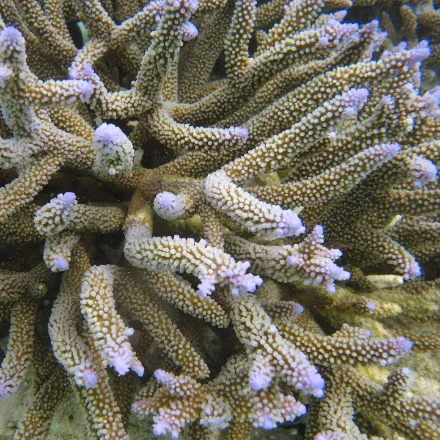
Staghorn Coral Common
Acropora species
The fast-growing branching coral that builds the living thickets of the reef, nursery and shelter for a whole community.
Where: Shallow eastern reef flats. Best: Nov-Apr.
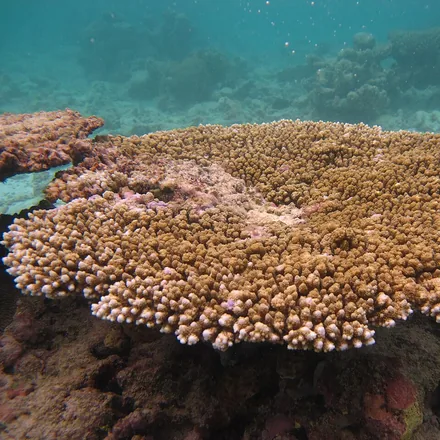
Table Coral Common Near Threatened
Acropora hyacinthus
Grows outward faster than it grows up, spreading a flat platform that shades out every competitor beneath it.
Where: Eastern slopes at East of Eden. Best: Nov-Apr.
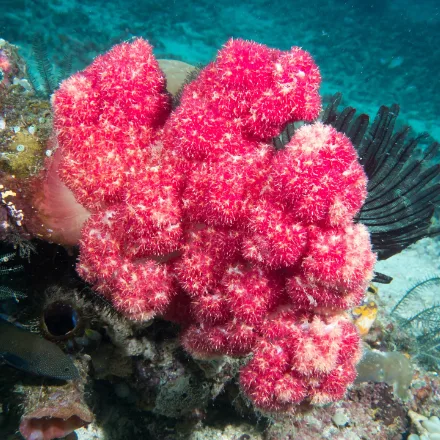
Carnation Soft Coral Regular
Dendronephthya species
An explosion of pink, red and orange bloom that inflates with water to feed, turning shaded walls into hanging gardens.
Where: Shaded overhangs and swim-throughs at Elephant Head Rock. Best: Nov-Apr.
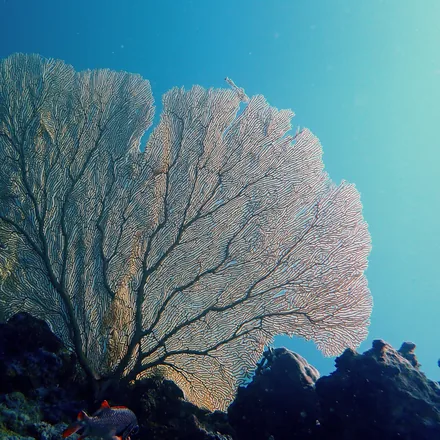
Giant Sea Fan (Gorgonian) Regular
Annella species
A great lattice fan spread across the current, a soft coral that farms the flow for plankton and shelters seahorses and hawkfish.
Where: Current-swept walls at Koh Bon and Elephant Head Rock. Best: Nov-Apr.
Echinoderms
2 species
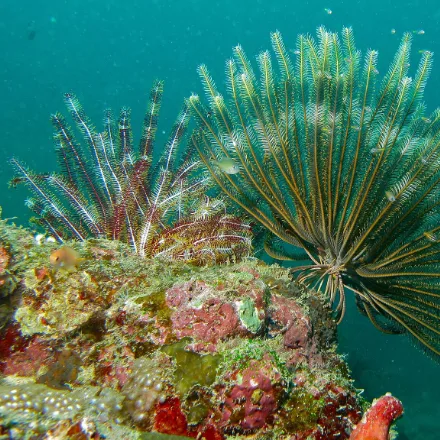
Feather Star (Crinoid) Common
Comatulida species
A living bouquet of feathery arms that clings to high points on the reef by day and can crawl, or even swim, to a better spot.
Where: Sea fans and coral heads in current. Best: Nov-Apr.
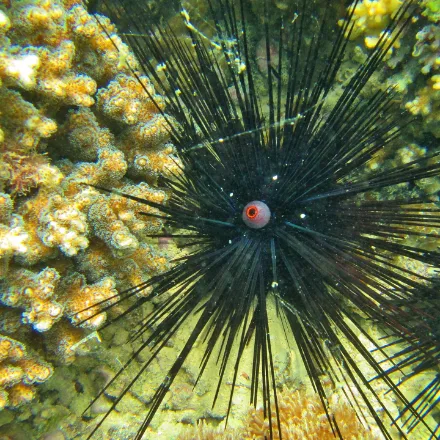
Long-spined Sea Urchin Common
Diadema setosum
A pincushion of needle-sharp black spines with a glowing orange ring, grazing algae and quietly shaping the reef.
Where: Rubble and reef base, especially at night. Best: Nov-Apr.
Crustaceans
4 species
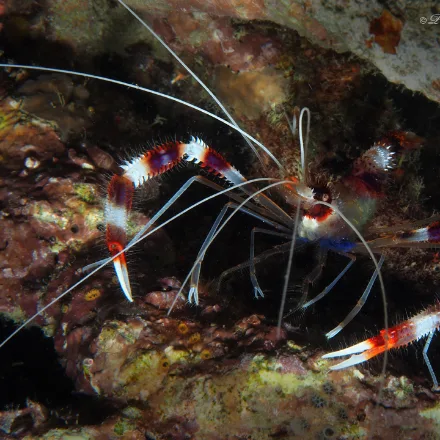
Banded Coral Shrimp Regular
Stenopus hispidus
A candy-striped shrimp with impossibly long white antennae that it waves to advertise its parasite-cleaning service.
Where: Cleaning stations under overhangs. Best: Nov-Apr.
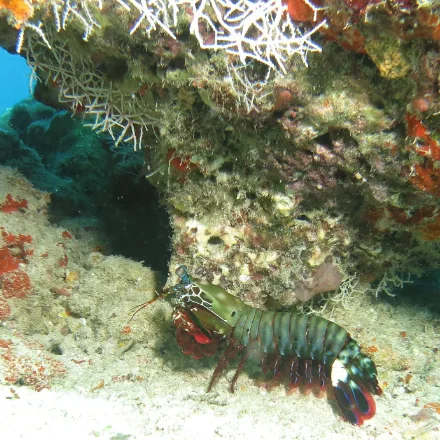
Peacock Mantis Shrimp Occasional
Odontodactylus scyllarus
A jewel-coloured reef brawler that punches with the speed of a bullet and sees the world in colours we cannot imagine.
Where: Sand and rubble burrows at Anita's Reef. Best: Nov-Apr.
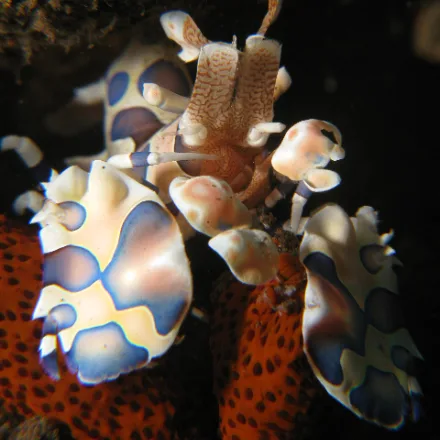
Harlequin Shrimp Rare
Hymenocera picta
A shrimp painted like fine porcelain that hunts as a devoted pair and eats nothing but living starfish.
Where: Under ledges on rubble slopes. Best: Nov-Apr. Found by guides who know the site; almost never spotted alone.
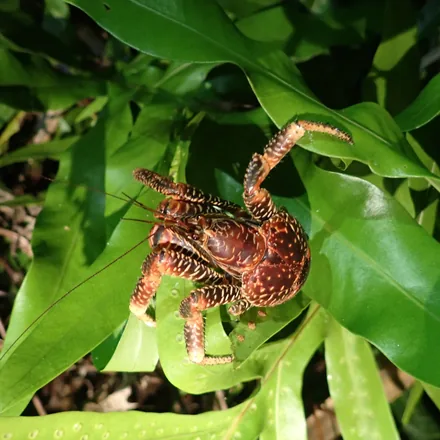
Coconut Crab Ultra rare Vulnerable
Birgus latro
The largest land invertebrate on earth, with a grip strong enough to crack a coconut and hold ninety times its own body weight.
Where: Forested interiors of the outer uninhabited islands. Best: Nov-Apr, at night. Access is restricted; this is a park ranger sighting rather than a visitor one.
Other invertebrates
2 species
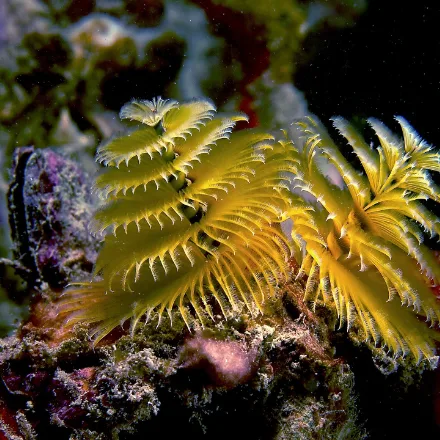
Christmas Tree Worm Common
Spirobranchus giganteus
Pairs of tiny spiral trees in every colour, studding the coral and vanishing in a flash when a shadow passes.
Where: Embedded in massive corals on the reef tops. Best: Nov-Apr.
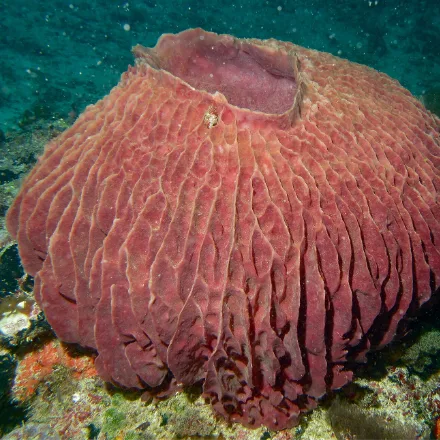
Giant Barrel Sponge Common
Xestospongia testudinaria
Filters tens of thousands of litres a day and can live for well over a century, which is why divers call them the redwoods of the reef.
Where: Deeper slopes on the west side. Best: Nov-Apr.
Planning
The season runs from roughly November to April and the park is closed for the rest of the year, so the calendar makes most of the decisions for you. February to April is the window that matters for the big animals: manta rays at Koh Bon and Koh Tachai, and whale sharks in the same months, with visibility usually at its best late in the season. December and January are calmer and quieter underwater but the pelagics are less likely. The islands are far enough offshore that day trips are a long run in a fast boat, and the northern sites at Koh Bon, Koh Tachai and Richelieu Rock are effectively liveaboard territory. Richelieu Rock sits north of the park proper and is the single most productive site in the region for large animals, which is why almost every northern itinerary ends there.
Compare Similan liveaboards and day trips
Some links on this page are affiliate links. If you book through them, Wildseer may earn a small commission at no extra cost to you.
Frequently asked questions
When are the Similan Islands open?
Roughly mid-October to mid-May. Mu Ko Similan National Park closes through the southwest monsoon and the dates shift a little each year, so they are worth checking before booking anything.
What are the chances of seeing a manta ray in the Similans?
Reasonable in February to April at the northern sites, and slim outside that window. Koh Bon is the cleaning station that makes it possible, and mantas are recorded here as occasional rather than reliable. Anyone promising one is promising weather.
Can you see whale sharks in the Similans?
Yes, and rarely. February to April is the window, and Richelieu Rock produces more encounters than the Similans themselves. It is the best chance in Thailand and still a piece of luck rather than an itinerary.
Do you have to dive, or is snorkelling worth it?
Plenty is visible from the surface. Blacktip reef sharks, green turtles, the anemonefish and most of the hard coral sit in snorkelling depth on the eastern sides. The animals that need depth are the zebra sharks on the sand, the boulder swim-throughs and the cleaning stations where the mantas come in.
How many species are recorded in the Similans?
Sixty-five in this guide, across reef fish, sharks and rays, turtles, corals, molluscs, crustaceans and echinoderms. That is the recorded list rather than the complete one, and it is weighted towards what a diver or snorkeller actually meets.
Explore Thailand wildlife by group
 Mammals of Thailand
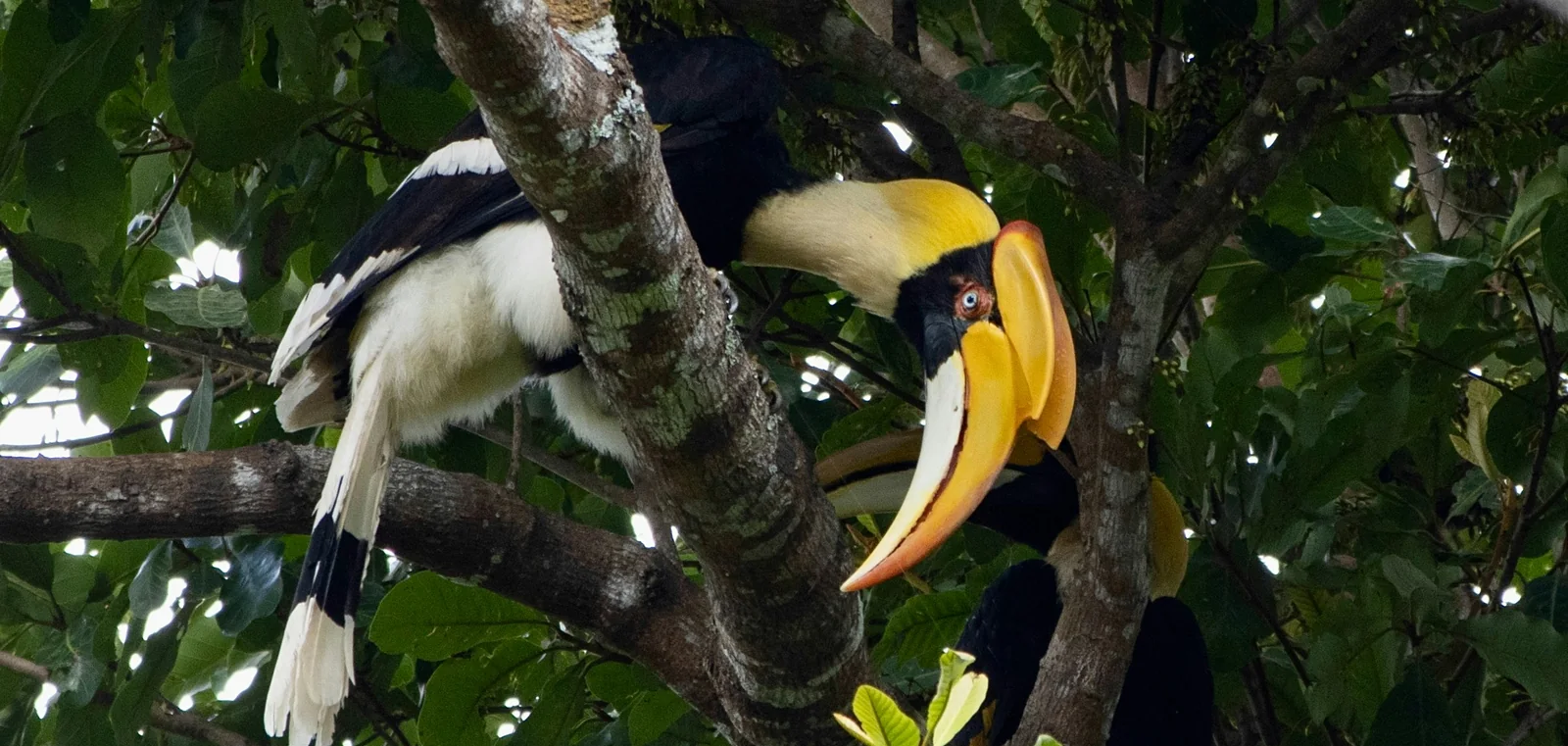 Birds of Thailand
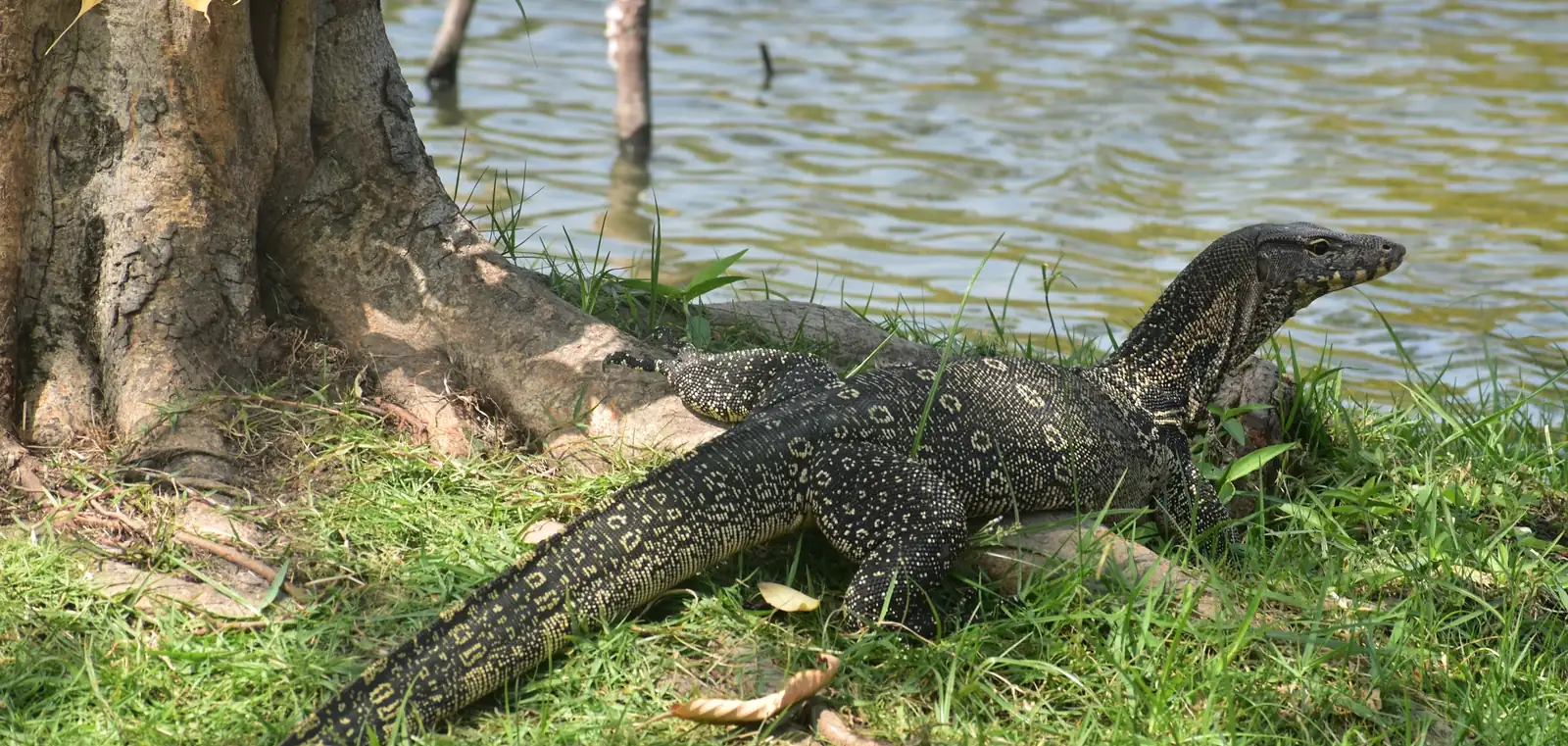 Reptiles and amphibians of Thailand
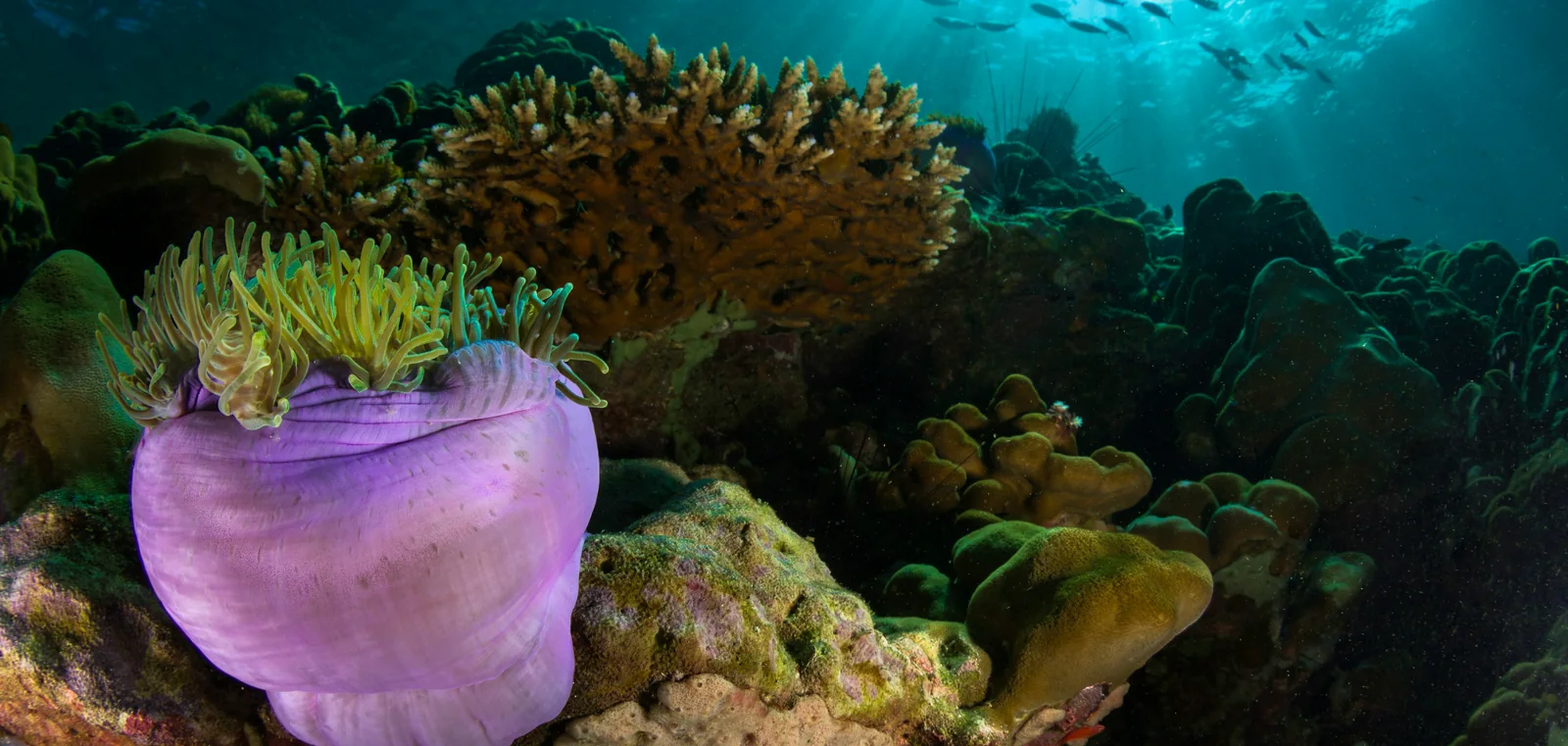 Fish of Thailand
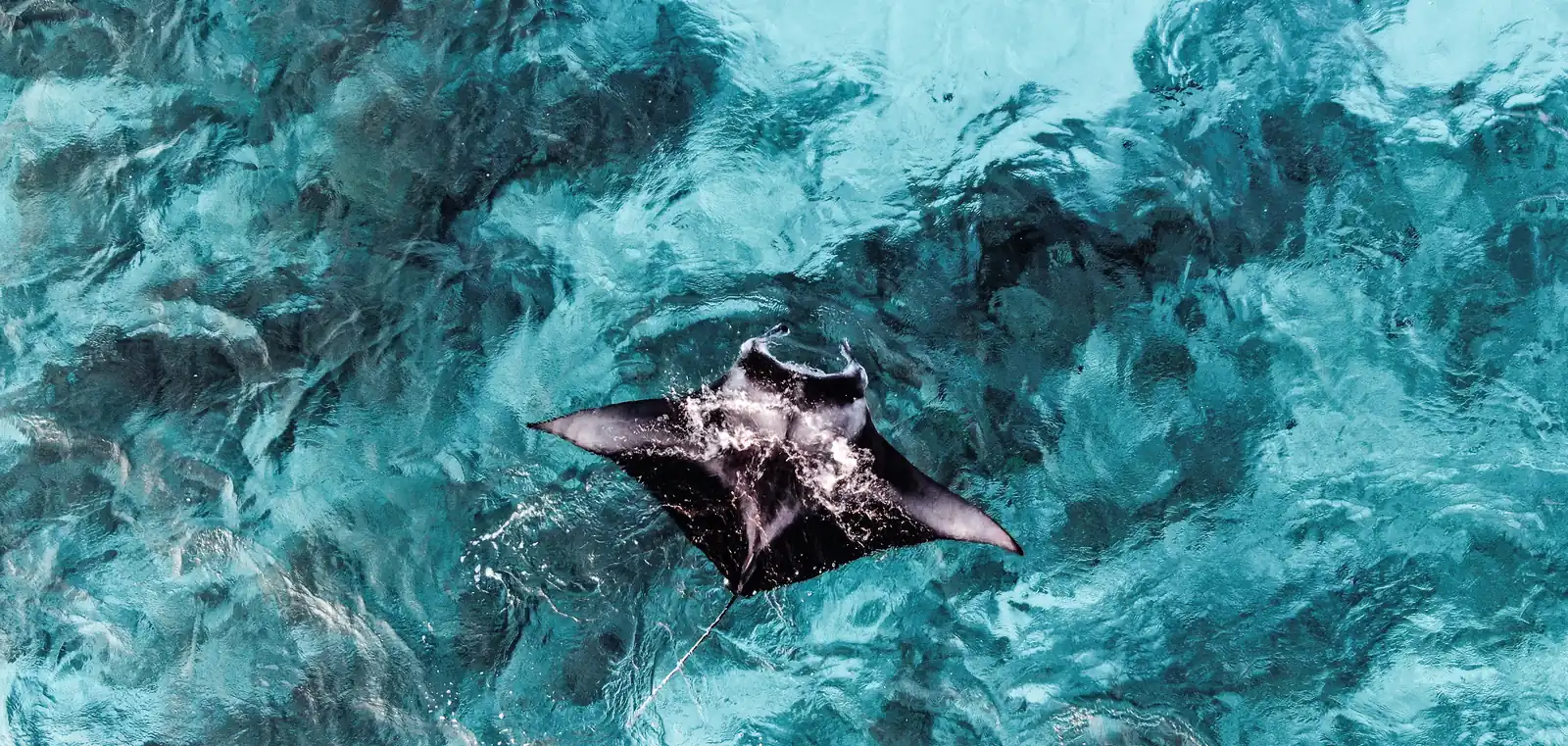 Sharks and rays of Thailand
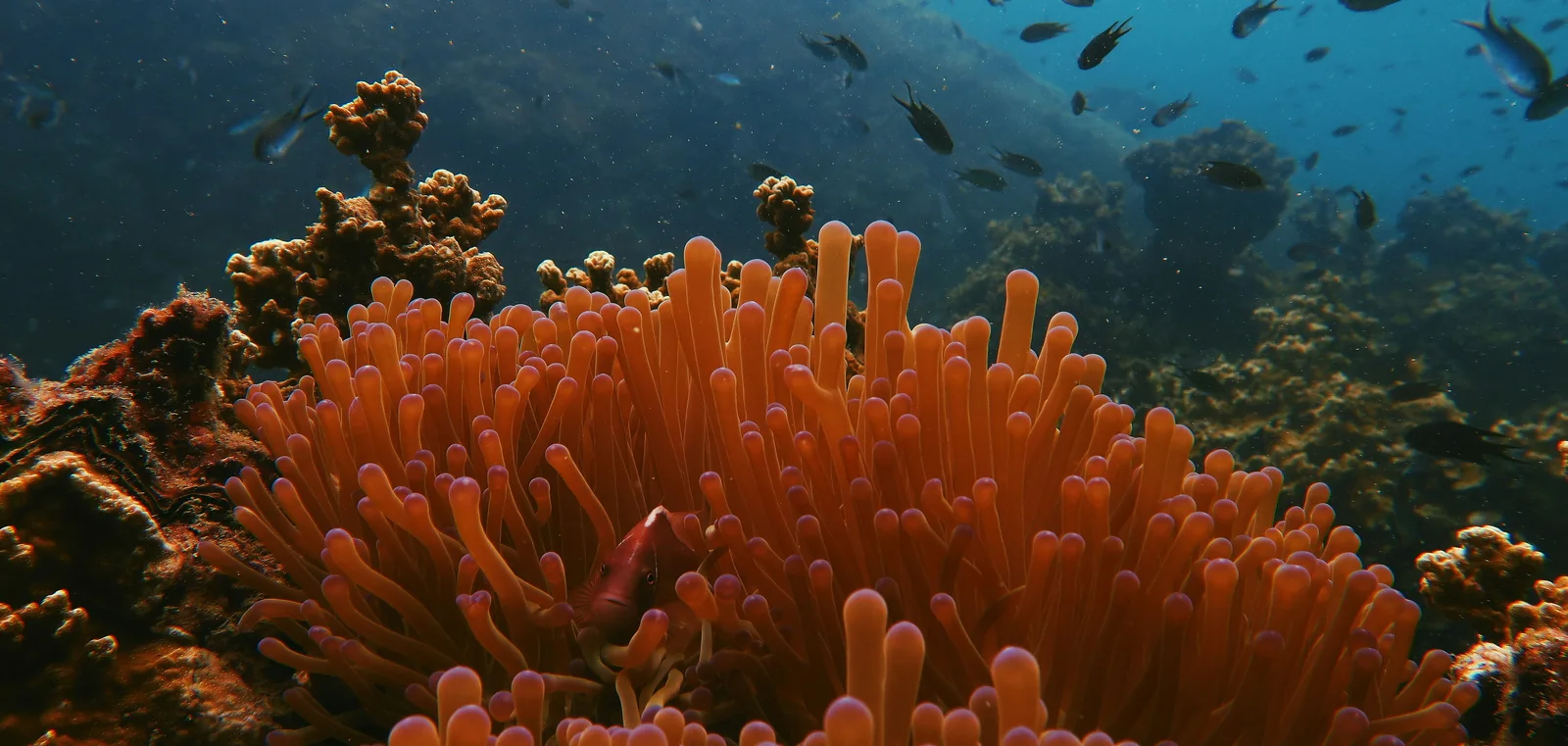 Reef invertebrates of Thailand
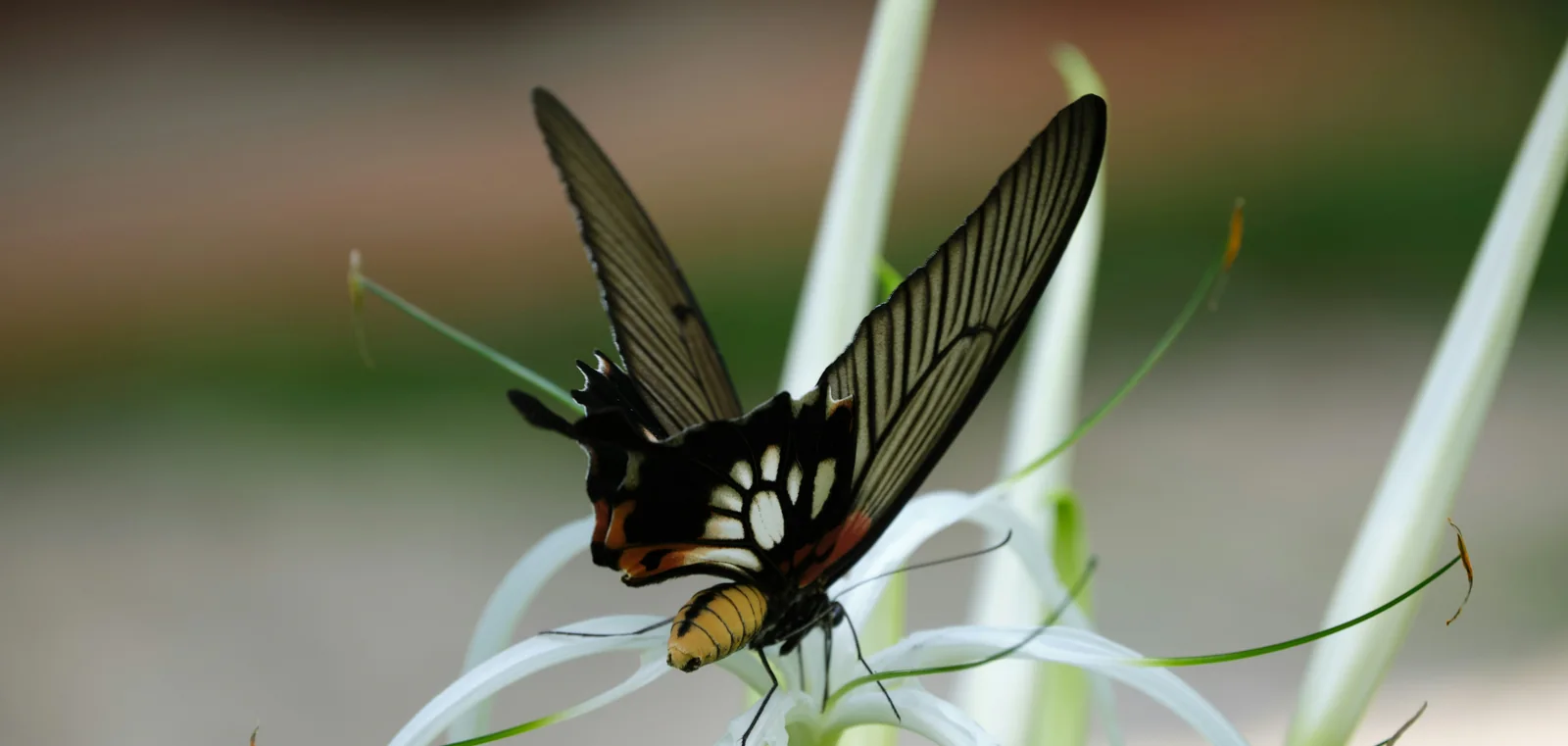 Insects and spiders of Thailand
Part of the Wildlife in Thailand guide.
Explore Thailand wildlife by place
Image credits
Square thumbnails are cropped from the original. Wide banner images are cropped to a band. Other images are resized only. No other changes have been made.
- Reef manta ray over a coral reef: Emma Li | Pexels Licence, cropped
- Reef Manta Ray (cropped): Peter Southwood (Pbsouthwood) | CC BY-SA 3.0
- Whale Shark (resized): Jerome Paillet (IFREMER) | CC BY 4.0, cropped
- Zebra shark (resized): Sigmund | CC BY 2.0, cropped
- Green sea turtle: Unsplash | Unsplash License, cropped
- Bumphead parrotfish (resized): Jenny from Taipei | CC BY 2.0, cropped
- Spinner Dolphin (cropped to square): Alexia Pihier for MDC SeaMarc Maldives | CC BY-SA 4.0, cropped
- Pantropical Spotted Dolphin (cropped to square): NOAA Photo Library | Public domain, cropped
- White-bellied Sea Eagle (cropped to square): Charles J. Sharp | CC BY-SA 4.0, cropped
- Black-naped Tern (cropped to square): panjigusti | CC BY 4.0, cropped
- Banded Sea Krait (cropped to square): Elias Levy | CC BY 2.0, cropped
- Green Sea Turtle: Randall Ruiz | Unsplash License, cropped
- Hawksbill Turtle (cropped to square): Daniel Sasse | CC BY-SA 4.0, cropped
- Clark’s Anemonefish (cropped to square): Karelj | Public domain, cropped
- Common Lionfish (cropped to square): Rickard Zerpe | CC BY 2.0, cropped
- False Clownfish (cropped to square): Rickard Zerpe | CC BY-SA 2.0, cropped
- Moorish Idol (cropped to square): Jean-Paul Boerekamps | CC0, cropped
- Powder Blue Surgeonfish (cropped to square): Amada44 | CC BY-SA 3.0, cropped
- bluespine unicornfish (re-crop): Rjcastillo | CC BY 4.0, cropped
- Emperor Angelfish (cropped to square): Jean-Paul Boerekamps | CC0, cropped
- Giant Moray (cropped to square): Jerome Paillet (IFREMER) | CC BY 4.0, cropped
- Palette Surgeonfish (cropped to square): Norbert Potensky | CC BY-SA 3.0, cropped
- Sixbar Angelfish (cropped to square): Rickard Zerpe | CC BY 2.0, cropped
- Skunk Anemonefish (resized): nbasargin | CC BY 4.0, cropped
- Titan Triggerfish (cropped to square): Bernard DUPONT | CC BY-SA 2.0, cropped
- Bumphead Parrotfish (cropped to square): Jenny from Taipei | CC BY 2.0, cropped
- Longnose Hawkfish (cropped to square): Karelj | CC BY-SA 3.0, cropped
- Reef Stonefish (cropped to square): Rickard Zerpe | CC BY 2.0, cropped
- Regal Angelfish (resized): portioid | CC BY-SA 4.0, cropped
- Ribbon Eel (cropped to square): Rickard Zerpe | CC BY-SA 2.0, cropped
- Clown Triggerfish (cropped to square): Alexander Fordyce | CC BY 4.0, cropped
- Giant Grouper (cropped to square): Manuel Heinrich Emha | CC BY-SA 2.5, cropped
- Humphead Wrasse (cropped to square): Derek Keats | CC BY 2.0, cropped
- Ornate Ghost Pipefish (cropped to square): portioid | CC BY-SA 4.0, cropped
- Painted Frogfish (cropped to square): Rickard Zerpe | CC BY-SA 2.0, cropped
- Indo-Pacific Sailfish (cropped to square): Vsevolod | CC BY 4.0, cropped
- Blacktip Reef Shark: David Clode | Unsplash License, cropped
- Bluespotted Ribbontail Ray (resized): Derek Keats from Johannesburg, South Africa | CC BY 2.0, cropped
- Whitetip Reef Shark (cropped to square): Rickard Zerpe | CC BY 2.0, cropped
- Zebra Shark (cropped to square): Sigmund | CC BY 2.0, cropped
- Giant Manta Ray (cropped to square): Stevelaycock21 | CC BY-SA 4.0, cropped
- Grey Reef Shark (cropped to square): Albert kok | CC BY-SA 3.0, cropped
- Jenkins Whipray (cropped to square): (c) Ditch Townsend, some rights reserved (CC BY-SA) | CC BY-SA 4.0, cropped
- Ocellated Eagle Ray (cropped to square): Jerome Paillet (IFREMER) | CC BY 4.0, cropped
- Reef Manta Ray (cropped to square): National Marine Sanctuaries | Public domain, cropped
- Tawny Nurse Shark (cropped to square): Jean-Paul Boerekamps | CC0, cropped
- Whale Shark (cropped to square): Jerome Paillet (IFREMER) | CC BY 4.0, cropped
- bowmouth guitarfish (re-crop): Kim Navarre from Brooklyn, NY | CC BY-SA 2.0, cropped
- Tiger Shark (cropped to square): Albert kok | CC BY-SA 3.0, cropped
- Bigfin Reef Squid (cropped to square): Nhobgood | CC BY-SA 3.0, cropped
- Chromodoris Nudibranch (cropped to square): Steve Childs | CC BY 2.0, cropped
- Broadclub Cuttlefish (cropped to square): MDC Seamarc Maldives | CC BY-SA 4.0, cropped
- Day Octopus (cropped to square): Pauline Walsh Jacobson | CC BY 4.0, cropped
- Giant Clam: NOAA | Unsplash License, cropped
- Spanish Dancer (cropped to square): Rickard Zerpe | CC BY 2.0, cropped
- Triton’s Trumpet (cropped to square): AntanO | CC BY-SA 4.0, cropped
- Brain Coral (cropped to square): Nhobgood Nick Hobgood | CC BY-SA 3.0, cropped
- Bulb-tentacle Anemone (cropped to square): Nhobgood Nick Hobgood | CC BY-SA 3.0, cropped
- Magnificent Sea Anemone (cropped to square): Bernard DUPONT | CC BY-SA 2.0, cropped
- Staghorn Coral (cropped to square): MDC Seamarc Maldives | CC BY-SA 4.0, cropped
- Table Coral (cropped to square): MDC Seamarc Maldives | CC BY-SA 4.0, cropped
- Carnation Soft Coral (cropped to square): Rickard Zerpe | CC BY 2.0, cropped
- Giant Sea Fan (cropped to square): Frederic Ducarme | CC BY-SA 4.0, cropped
- Feather Star (cropped to square): Bernard DUPONT | CC BY-SA 2.0, cropped
- Long-spined Sea Urchin (cropped to square): Frédéric Ducarme | CC BY-SA 4.0, cropped
- Banded Coral Shrimp (cropped to square): Pauline Walsh Jacobson | CC BY 4.0, cropped
- Peacock Mantis Shrimp (cropped to square): Jerome Paillet (IFREMER, Laboratoire d'Océanographie Physique et Spatiale, Centre Bretagne - ZI de la Pointe du Diable - CS 10070 - 29280 Plouzané) | CC BY 4.0, cropped
- Harlequin Shrimp (cropped to square): prilfish | CC BY 2.0, cropped
- Coconut Crab (cropped to square): Mike Burnett | CC BY 4.0, cropped
- Christmas Tree Worm (cropped to square): Nhobgood Nick Hobgood | CC BY-SA 3.0, cropped
- Giant Barrel Sponge (cropped to square): Bernard DUPONT from FRANCE | CC BY-SA 2.0, cropped
- Mammals of Thailand: Joshua Steinberg | Unsplash License
- Birds of Thailand: Hongbin | Unsplash License
- Reptiles and Amphibians of Thailand: John Thomas | Unsplash License, cropped
- Fish of Thailand: Milos Prelevic | Unsplash License
- Sharks and Rays of Thailand: Adam Juman | Unsplash License
- Reef Invertebrates of Thailand: James Thornton | Unsplash License, cropped
- Insects and Spiders of Thailand: Joe Green | Unsplash License, cropped
Square thumbnails are cropped from the original. Wide banner images are cropped to a band. Other images are resized only. No other changes have been made.
- Reef manta ray over a coral reef: Emma Li | Pexels Licence, cropped
- Reef Manta Ray (cropped): Peter Southwood (Pbsouthwood) | CC BY-SA 3.0
- Whale Shark (resized): Jerome Paillet (IFREMER) | CC BY 4.0, cropped
- Zebra shark (resized): Sigmund | CC BY 2.0, cropped
- Green sea turtle: Unsplash | Unsplash License, cropped
- Bumphead parrotfish (resized): Jenny from Taipei | CC BY 2.0, cropped
- Spinner Dolphin (cropped to square): Alexia Pihier for MDC SeaMarc Maldives | CC BY-SA 4.0, cropped
- Pantropical Spotted Dolphin (cropped to square): NOAA Photo Library | Public domain, cropped
- White-bellied Sea Eagle (cropped to square): Charles J. Sharp | CC BY-SA 4.0, cropped
- Black-naped Tern (cropped to square): panjigusti | CC BY 4.0, cropped
- Banded Sea Krait (cropped to square): Elias Levy | CC BY 2.0, cropped
- Green Sea Turtle: Randall Ruiz | Unsplash License, cropped
- Hawksbill Turtle (cropped to square): Daniel Sasse | CC BY-SA 4.0, cropped
- Clark’s Anemonefish (cropped to square): Karelj | Public domain, cropped
- Common Lionfish (cropped to square): Rickard Zerpe | CC BY 2.0, cropped
- False Clownfish (cropped to square): Rickard Zerpe | CC BY-SA 2.0, cropped
- Moorish Idol (cropped to square): Jean-Paul Boerekamps | CC0, cropped
- Powder Blue Surgeonfish (cropped to square): Amada44 | CC BY-SA 3.0, cropped
- bluespine unicornfish (re-crop): Rjcastillo | CC BY 4.0, cropped
- Emperor Angelfish (cropped to square): Jean-Paul Boerekamps | CC0, cropped
- Giant Moray (cropped to square): Jerome Paillet (IFREMER) | CC BY 4.0, cropped
- Palette Surgeonfish (cropped to square): Norbert Potensky | CC BY-SA 3.0, cropped
- Sixbar Angelfish (cropped to square): Rickard Zerpe | CC BY 2.0, cropped
- Skunk Anemonefish (resized): nbasargin | CC BY 4.0, cropped
- Titan Triggerfish (cropped to square): Bernard DUPONT | CC BY-SA 2.0, cropped
- Bumphead Parrotfish (cropped to square): Jenny from Taipei | CC BY 2.0, cropped
- Longnose Hawkfish (cropped to square): Karelj | CC BY-SA 3.0, cropped
- Reef Stonefish (cropped to square): Rickard Zerpe | CC BY 2.0, cropped
- Regal Angelfish (resized): portioid | CC BY-SA 4.0, cropped
- Ribbon Eel (cropped to square): Rickard Zerpe | CC BY-SA 2.0, cropped
- Clown Triggerfish (cropped to square): Alexander Fordyce | CC BY 4.0, cropped
- Giant Grouper (cropped to square): Manuel Heinrich Emha | CC BY-SA 2.5, cropped
- Humphead Wrasse (cropped to square): Derek Keats | CC BY 2.0, cropped
- Ornate Ghost Pipefish (cropped to square): portioid | CC BY-SA 4.0, cropped
- Painted Frogfish (cropped to square): Rickard Zerpe | CC BY-SA 2.0, cropped
- Indo-Pacific Sailfish (cropped to square): Vsevolod | CC BY 4.0, cropped
- Blacktip Reef Shark: David Clode | Unsplash License, cropped
- Bluespotted Ribbontail Ray (resized): Derek Keats from Johannesburg, South Africa | CC BY 2.0, cropped
- Whitetip Reef Shark (cropped to square): Rickard Zerpe | CC BY 2.0, cropped
- Zebra Shark (cropped to square): Sigmund | CC BY 2.0, cropped
- Giant Manta Ray (cropped to square): Stevelaycock21 | CC BY-SA 4.0, cropped
- Grey Reef Shark (cropped to square): Albert kok | CC BY-SA 3.0, cropped
- Jenkins Whipray (cropped to square): (c) Ditch Townsend, some rights reserved (CC BY-SA) | CC BY-SA 4.0, cropped
- Ocellated Eagle Ray (cropped to square): Jerome Paillet (IFREMER) | CC BY 4.0, cropped
- Reef Manta Ray (cropped to square): National Marine Sanctuaries | Public domain, cropped
- Tawny Nurse Shark (cropped to square): Jean-Paul Boerekamps | CC0, cropped
- Whale Shark (cropped to square): Jerome Paillet (IFREMER) | CC BY 4.0, cropped
- bowmouth guitarfish (re-crop): Kim Navarre from Brooklyn, NY | CC BY-SA 2.0, cropped
- Tiger Shark (cropped to square): Albert kok | CC BY-SA 3.0, cropped
- Bigfin Reef Squid (cropped to square): Nhobgood | CC BY-SA 3.0, cropped
- Chromodoris Nudibranch (cropped to square): Steve Childs | CC BY 2.0, cropped
- Broadclub Cuttlefish (cropped to square): MDC Seamarc Maldives | CC BY-SA 4.0, cropped
- Day Octopus (cropped to square): Pauline Walsh Jacobson | CC BY 4.0, cropped
- Giant Clam: NOAA | Unsplash License, cropped
- Spanish Dancer (cropped to square): Rickard Zerpe | CC BY 2.0, cropped
- Triton’s Trumpet (cropped to square): AntanO | CC BY-SA 4.0, cropped
- Brain Coral (cropped to square): Nhobgood Nick Hobgood | CC BY-SA 3.0, cropped
- Bulb-tentacle Anemone (cropped to square): Nhobgood Nick Hobgood | CC BY-SA 3.0, cropped
- Magnificent Sea Anemone (cropped to square): Bernard DUPONT | CC BY-SA 2.0, cropped
- Staghorn Coral (cropped to square): MDC Seamarc Maldives | CC BY-SA 4.0, cropped
- Table Coral (cropped to square): MDC Seamarc Maldives | CC BY-SA 4.0, cropped
- Carnation Soft Coral (cropped to square): Rickard Zerpe | CC BY 2.0, cropped
- Giant Sea Fan (cropped to square): Frederic Ducarme | CC BY-SA 4.0, cropped
- Feather Star (cropped to square): Bernard DUPONT | CC BY-SA 2.0, cropped
- Long-spined Sea Urchin (cropped to square): Frédéric Ducarme | CC BY-SA 4.0, cropped
- Banded Coral Shrimp (cropped to square): Pauline Walsh Jacobson | CC BY 4.0, cropped
- Peacock Mantis Shrimp (cropped to square): Jerome Paillet (IFREMER, Laboratoire d'Océanographie Physique et Spatiale, Centre Bretagne - ZI de la Pointe du Diable - CS 10070 - 29280 Plouzané) | CC BY 4.0, cropped
- Harlequin Shrimp (cropped to square): prilfish | CC BY 2.0, cropped
- Coconut Crab (cropped to square): Mike Burnett | CC BY 4.0, cropped
- Christmas Tree Worm (cropped to square): Nhobgood Nick Hobgood | CC BY-SA 3.0, cropped
- Giant Barrel Sponge (cropped to square): Bernard DUPONT from FRANCE | CC BY-SA 2.0, cropped
- Mammals of Thailand: Joshua Steinberg | Unsplash License
- Birds of Thailand: Hongbin | Unsplash License
- Reptiles and Amphibians of Thailand: John Thomas | Unsplash License, cropped
- Fish of Thailand: Milos Prelevic | Unsplash License
- Sharks and Rays of Thailand: Adam Juman | Unsplash License
- Reef Invertebrates of Thailand: James Thornton | Unsplash License, cropped
- Insects and Spiders of Thailand: Joe Green | Unsplash License, cropped