
Mannar is a sandy island at the end of a causeway, looking across a shallow sea towards India along the chain of sandbanks called Adam’s Bridge. It is the most important coastal wetland in Sri Lanka and the least visited, and between November and March it holds the greatest concentration of migratory waders on the island.
Greater flamingos are common on the salt pans and the shallow flats, and the wader list runs through crab-plover, great thick-knee, spoonbill and the great knot. Little terns fish the channels and Pacific reef herons work the coral rubble. If you are going to see a serious wader flock in Sri Lanka, this is where.
The Gulf itself holds the last dugong in Sri Lankan waters, along with Indo-Pacific humpback dolphins and finless porpoises in the shallow turbid water. All three are rare, all three are killed as bycatch, and none should be sold as a sighting. What you will see is birds, in numbers, and a landscape of palmyra, salt and sand that looks like nowhere else in the country.
Highlights
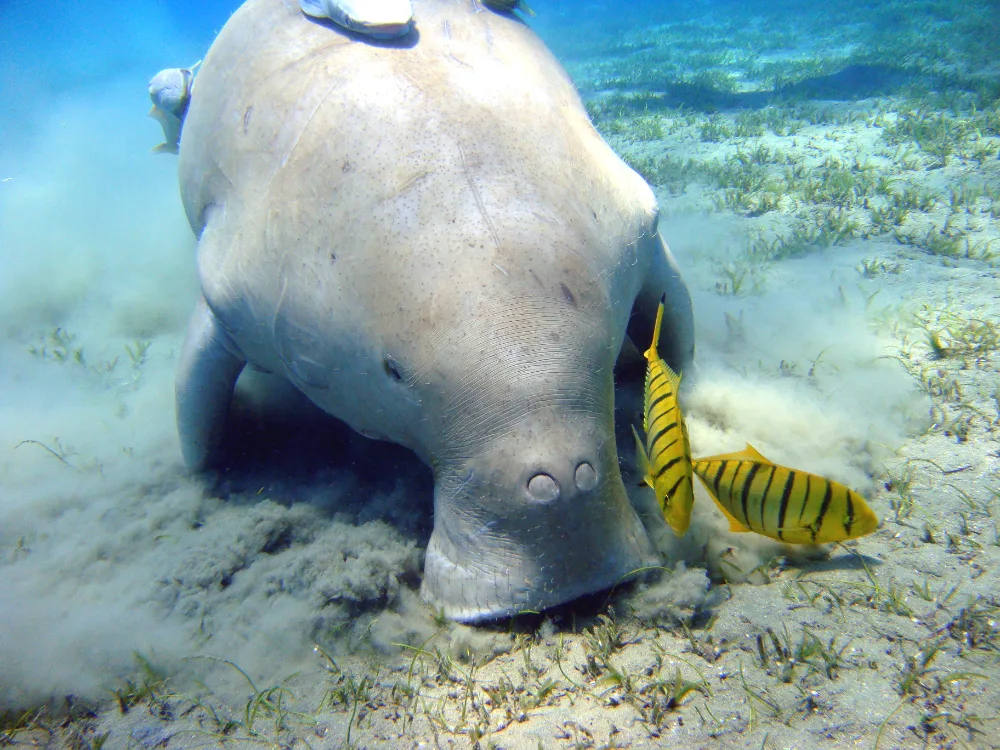
Dugong
The gentle sea cow said to have inspired mermaid legends, grazing seagrass meadows in warm shallow seas. Where: Seagrass beds in the shallow Gulf of Mannar. Best: December to April.
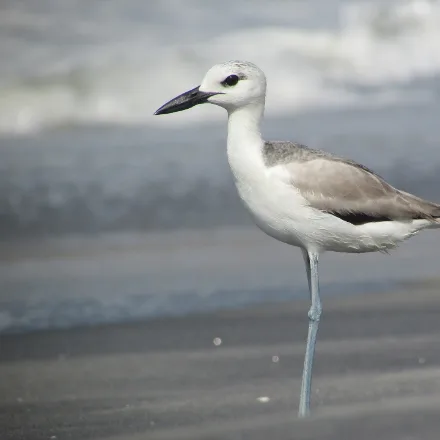
Crab-plover
The only bird in its family anywhere on earth, and the only wader that nests underground. Where: Tidal flats and sandbars around the island and Adam's Bridge. Best: November to March.
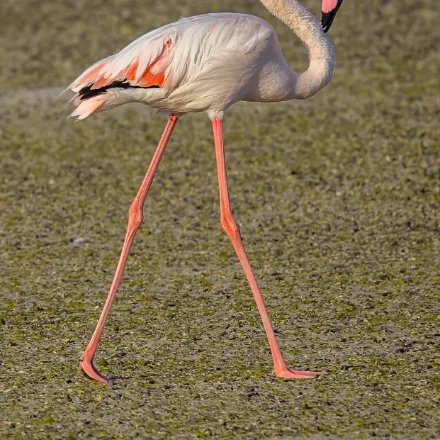
Greater Flamingo
Several thousand birds on the Bundala salt pans in a good winter, filtering brine shrimp upside down. Where: The lagoons, salt pans and shallows around Mannar island and Vankalai. Best: November to March.
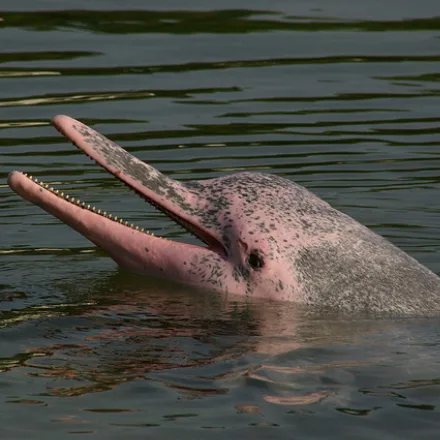
Indo-Pacific Humpback Dolphin
Born dark grey and turning pink with age, the colour coming from blood vessels under unpigmented skin. Where: Shallow coastal water and the channel. Best: November to April.
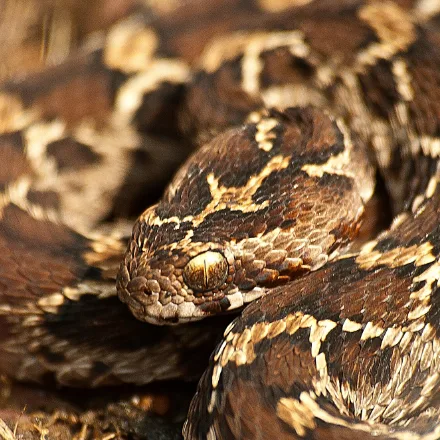
Saw-scaled Viper
A small viper that saws its own flanks together to make a sizzling warning, and in Sri Lanka it lives only in the arid north. Where: Dry sandy ground and scrub, almost entirely after dark. Best: Year round.
Mammals
5 species
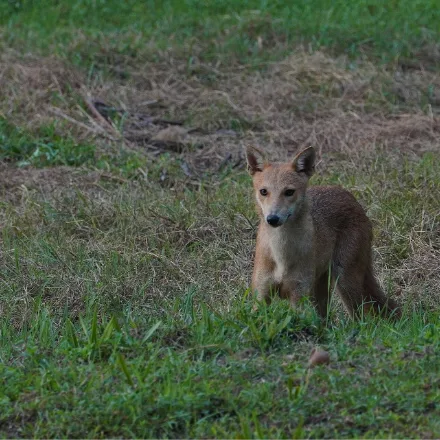
Golden Jackal Regular
Canis aureus
The dry zone's opportunist, trotting along a track at dawn and howling in chorus at dusk so the whole park knows where it is.
Where: Scrub and open ground on the island, often on the road at dusk. Best: Year round.
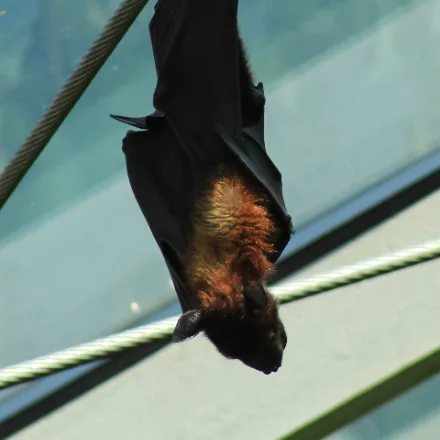
Indian Flying Fox Occasional
Pteropus giganteus
A fruit bat with a metre and a half of wingspan, hanging in noisy thousands from a tree in the middle of town.
Where: Roost trees near the causeway and the town, streaming out at dusk. Best: Year round.
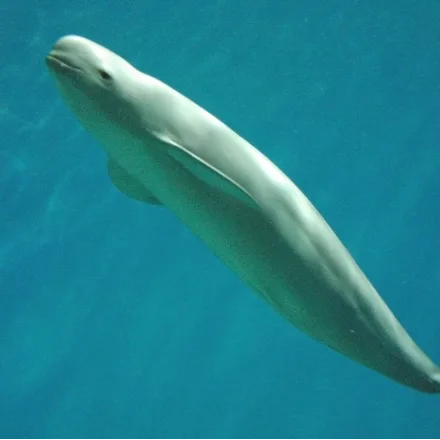
Indo-Pacific Finless Porpoise Rare Vulnerable
Neophocaena phocaenoides
A shy, finless little porpoise with a smiling face that surfaces without a splash.
Where: Shallow inshore water. Best: November to April. Small, shy and finless, so it is missed far more often than it is absent.
Indo-Pacific Humpback Dolphin Rare Vulnerable
Sousa chinensis
Born dark grey and turning pink with age, the colour coming from blood vessels under unpigmented skin.
Where: Shallow coastal water and the channel. Best: November to April. Sri Lanka's animal is Sousa plumbea, the Indian Ocean humpback dolphin.
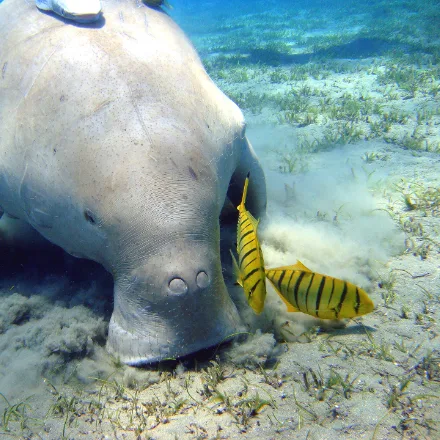
Dugong Ultra rare Vulnerable
Dugong dugon
The gentle sea cow said to have inspired mermaid legends, grazing seagrass meadows in warm shallow seas.
Where: Seagrass beds in the shallow Gulf of Mannar. Best: December to April. The last Sri Lankan stronghold, and the population is now very small. Netting and boat strike have done the damage.
Birds
12 species
Greater Flamingo Common
Phoenicopterus roseus
Several thousand birds on the Bundala salt pans in a good winter, filtering brine shrimp upside down.
Where: The lagoons, salt pans and shallows around Mannar island and Vankalai. Best: November to March. Thousands winter here, and this is the reliable place in Sri Lanka to see them in numbers.
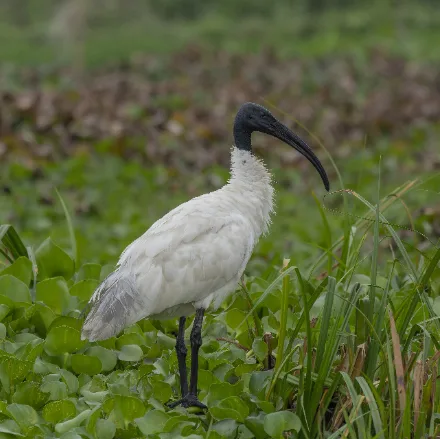
Black-headed Ibis Regular Near Threatened
Threskiornis melanocephalus
White body, bare black head and neck, and a bill built for finding what it cannot see.
Where: Salt pan margins, paddy and the lagoon shallows. Best: November to March.
Crab-plover Regular
Dromas ardeola
The only bird in its family anywhere on earth, and the only wader that nests underground.
Where: Tidal flats and sandbars around the island and Adam's Bridge. Best: November to March. A strange, striking wader that breeds in burrows, and Mannar is the best place in the country for it.
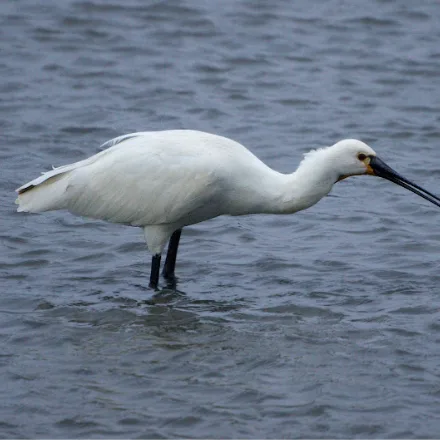
Eurasian Spoonbill Regular
Platalea leucorodia
Feeds by sweeping that absurd bill side to side through the shallows, snapping shut the instant it touches something alive.
Where: Shallow lagoon margins. Best: November to March.
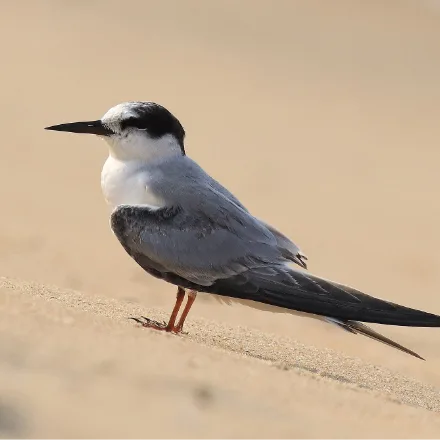
Little Tern Regular
Sternula albifrons
Hovers on fast flickering wings like an oversized hummingbird before dropping onto a fish.
Where: Fishing the shallow flats and the causeway channels. Best: November to March.
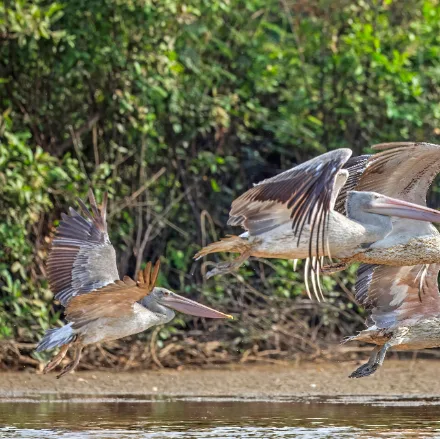
Spot-billed Pelican Regular Near Threatened
Pelecanus philippensis
A pelican that fishes the ancient irrigation tanks, and one of the few large waterbirds doing better now than it was.
Where: Lagoons and tanks around the causeway. Best: Year round.
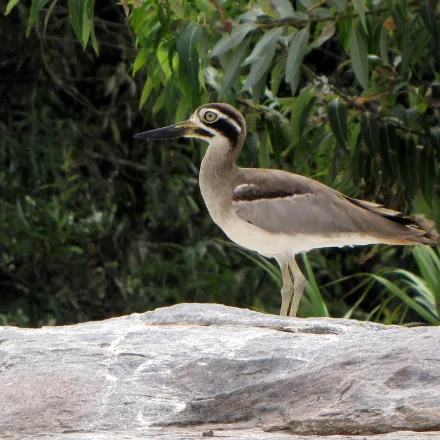
Great Thick-knee Occasional Near Threatened
Esacus recurvirostris
A heavy, huge-eyed shorebird that stands motionless on open shingle all day and only comes alive at dusk.
Where: Sandbars, dry lagoon margins and open shell beaches. Best: Year round.
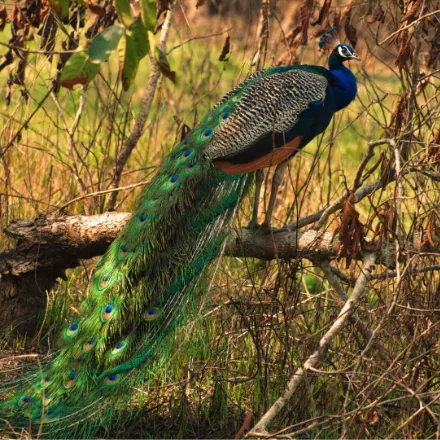
Indian Peafowl Occasional
Pavo cristatus
Wild, and behaving like a wild bird: displaying on a termite mound at dawn with leopards in the same scrub.
Where: Palmyra and thorn scrub on the mainland side. Best: Year round.
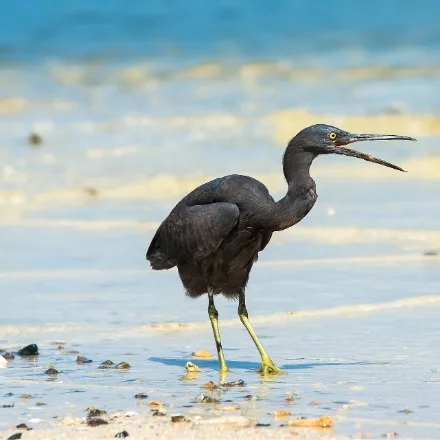
Pacific Reef Heron Occasional
Egretta sacra
Comes in two entirely different colours, charcoal grey and pure white, and both can hatch in the same nest.
Where: Rock and coral rubble along the island shore and the Adam's Bridge sandbanks. Best: Year round.
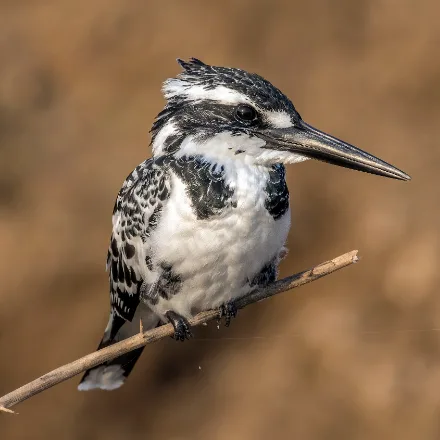
Pied Kingfisher Occasional
Ceryle rudis
The largest bird in the world that can hover in still air with no wind to help it, which is how it fishes open water no perch reaches.
Where: The causeway channels and the tank margins. Best: Year round.
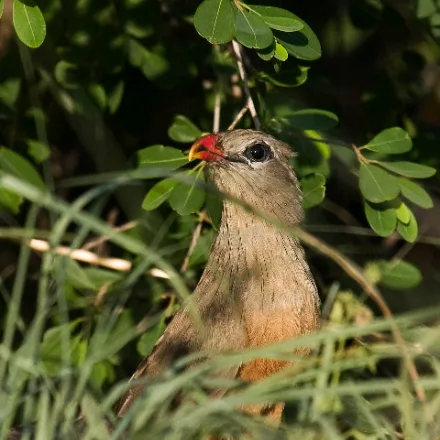
Sirkeer Malkoha Occasional
Taccocua leschenaultii
A cuckoo that gave up on being a cuckoo: it builds its own nest, raises its own young and runs along the ground rather than flying.
Where: Low thorn scrub on the mainland approaches. Best: Year round.
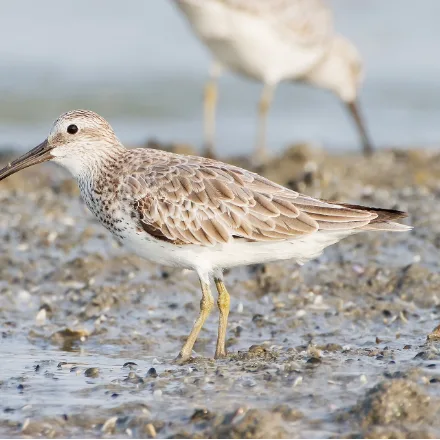
Great Knot Rare Endangered
Calidris tenuirostris
Flies from Siberia to Australia with a single refuelling stop, and losing that one mudflat has nearly finished the species.
Where: Tidal mudflats and salt pans. Best: October to April. Endangered, and a scarce visitor even here.
Reptiles
13 species
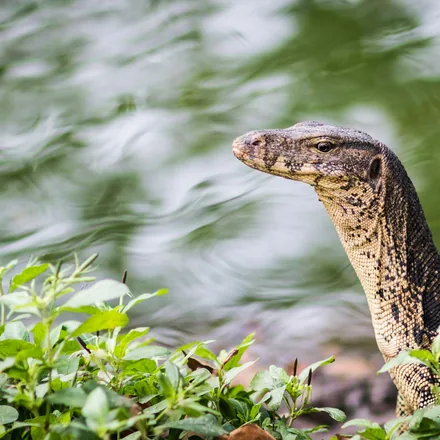
Asian Water Monitor Common
Varanus salvator
A dragon sized lizard that swims canals and city parks, second only to the Komodo dragon in length.
Where: Lagoon margins, salt pan drains and the causeway edges. Best: Year round.
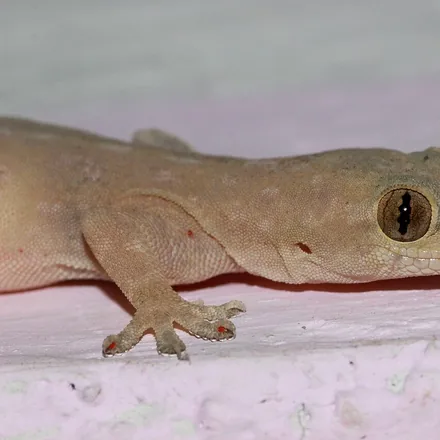
Common House Gecko Common
Hemidactylus frenatus
Sticks to glass using van der Waals forces across billions of microscopic hairs, not glue and not suction.
Where: Building walls throughout. Best: Year round.
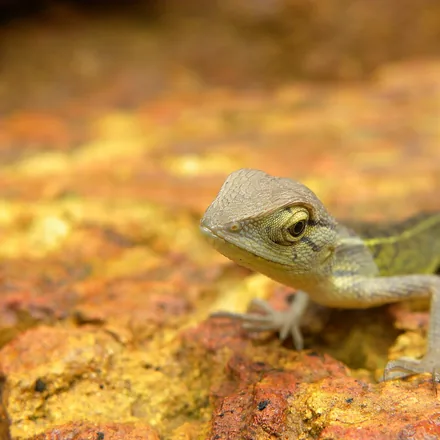
Oriental Garden Lizard Common
Calotes versicolor
The everyday garden lizard whose breeding males flush blood red about the head, earning the name bloodsucker.
Where: Scrub and roadside vegetation. Best: Year round.
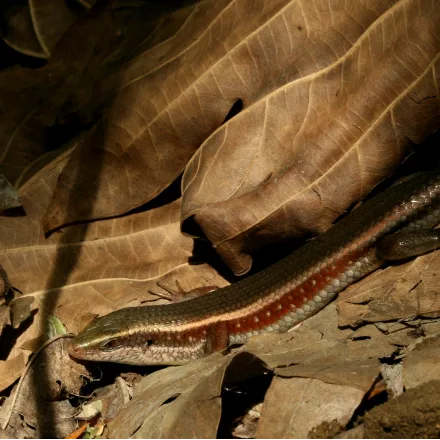
Sri Lankan Common Skink Common
Eutropis lankae
The bronze skink basking on every wall, ruin and hotel lawn in the country turned out in 2020 to be an endemic species, not the Indian one everybody had been calling it.
Where: Sand, shell banks and open ground. Best: Year round.
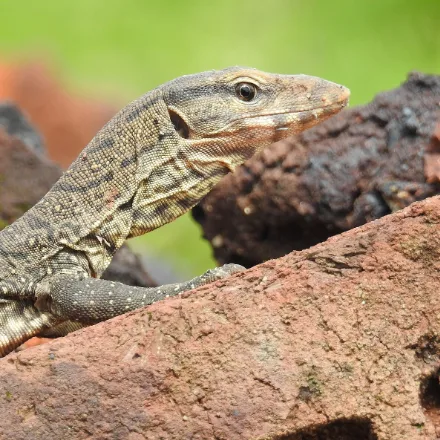
Bengal Monitor Occasional
Varanus bengalensis
A dry-country monitor that climbs well, digs constantly and eats essentially anything smaller than itself.
Where: Dry sandy scrub across the island. Best: Year round.
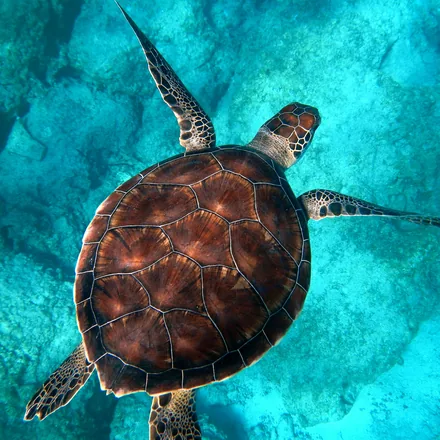
Green Sea Turtle Occasional
Chelonia mydas
The great grazing turtle of the tropics, the only sea turtle that turns vegetarian as an adult.
Where: Seagrass beds in the gulf. Best: December to April. The seagrass that feeds the dugongs feeds the green turtles too.
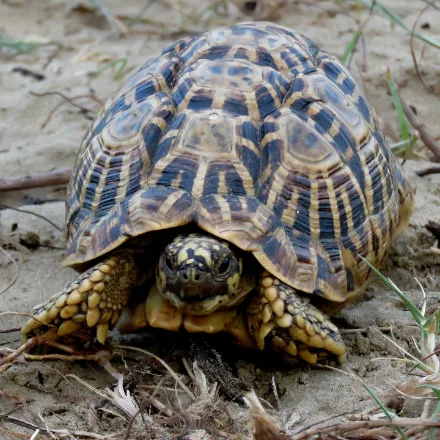
Indian Star Tortoise Occasional Vulnerable
Geochelone elegans
The most trafficked tortoise on earth, and the Sri Lankan animals are the biggest and the most boldly starred of the lot.
Where: Open sandy scrub and the palmyra edges. Best: Year round, most active after rain.
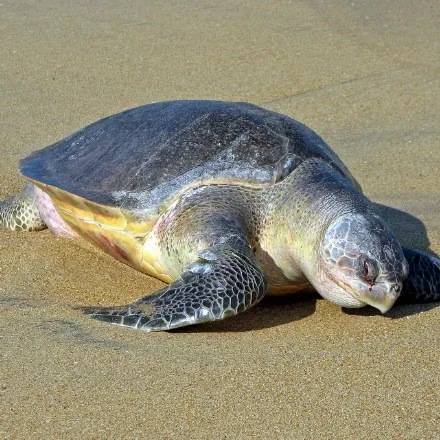
Olive Ridley Turtle Occasional Vulnerable
Lepidochelys olivacea
The smallest and most numerous sea turtle, famous elsewhere for mass nestings of thousands at once.
Where: Shallow coastal water on both sides of the island. Best: Year round.
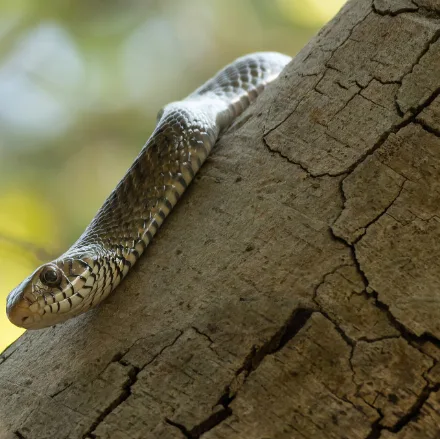
Oriental Rat Snake Occasional
Ptyas mucosa
A long, fast, wide eyed snake that races across open ground and is one of the region's great rodent controllers.
Where: Open scrub and around the salt pans. Best: Year round.
Saw-scaled Viper Occasional
Echis carinatus
A small viper that saws its own flanks together to make a sizzling warning, and in Sri Lanka it lives only in the arid north.
Where: Dry sandy ground and scrub, almost entirely after dark. Best: Year round. One of only two areas on the island where this snake occurs. Small, bad tempered and medically serious: watch where you put your feet at night.
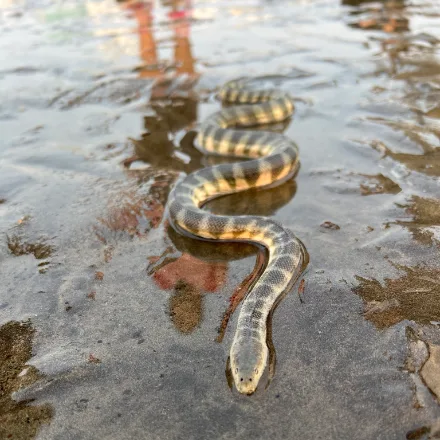
Beaked Sea Snake Rare
Hydrophis schistosus
Drop for drop, one of the most venomous snakes in the sea, and it is responsible for most sea snake bites in Asia.
Where: Shallow turbid water and the lagoon channels, often taken in fishing nets. Best: Year round.
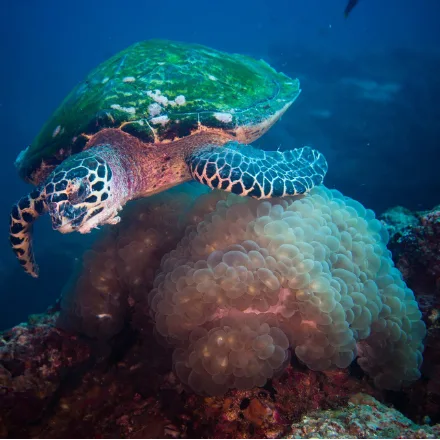
Hawksbill Turtle Rare Critically Endangered
Eretmochelys imbricata
The reef's sponge specialist, its beautiful shell also the reason it was hunted to the edge.
Where: Reef and rubble in the Gulf, and around the Adam's Bridge shallows. Best: Year round.
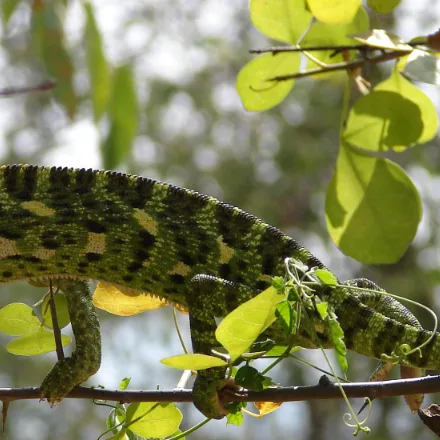
Indian Chameleon Rare
Chamaeleo zeylanicus
Sri Lanka's only chameleon, and it is genuinely scarce here, so finding one in a thorn bush in the northwest is a proper piece of luck.
Where: Thorn scrub and palmyra country on the island and the mainland approach. Best: Year round.
Insects
2 species
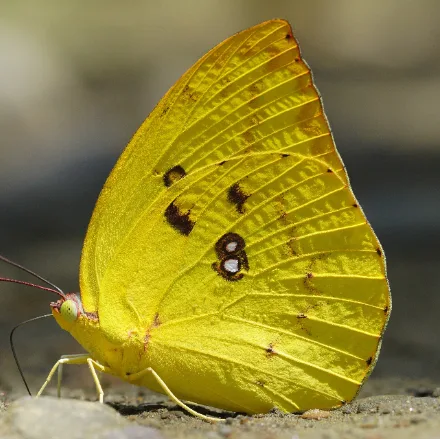
Common Emigrant Common
Catopsilia pomona
The butterfly behind the name Samanala Kanda, Butterfly Mountain, and the mass movement that heads for it every year.
Where: Open scrub and the palmyra edges. Best: Year round.
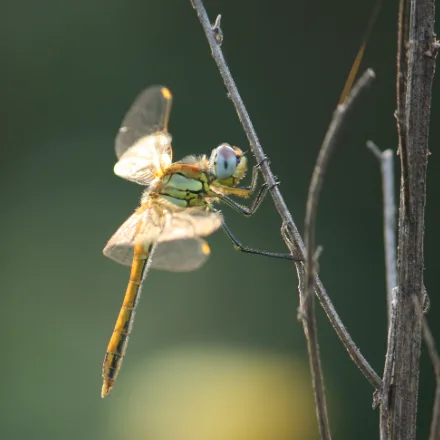
Wandering Glider Common
Pantala flavescens
Makes the longest migration of any insect on earth, crossing open ocean between India and Africa.
Where: Over the salt pans and the seasonal pools. Best: Year round.
Spiders and scorpions
1 species
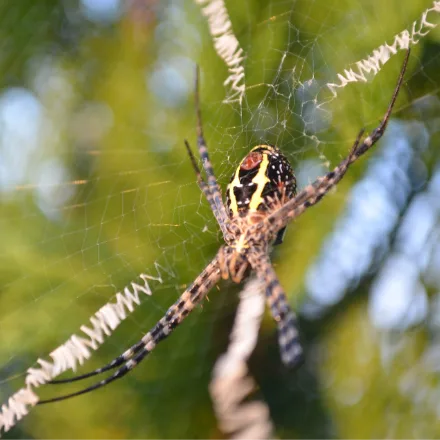
Signature Spider Common
Argiope anasuja
Writes a bold zigzag across the middle of its own web, and nobody is entirely sure why.
Where: Scrub and roadside vegetation. Best: Year round.
Planning
November to March. This is roadside and shoreline birding rather than a park visit, so a car, a scope and the causeway is most of it, and the salt pans on the mainland side are as productive as the island. There is very little shade and the heat is serious outside the winter window. The saw-scaled viper occurs here and in the north generally and effectively nowhere else on the island. The Gulf is a working fishing ground, and the dugong and dolphin declines here are a bycatch problem, which is why neither is a realistic sighting.
Compare guided birding days and transfers for Mannar and the northwest
Some links on this page are affiliate links. If you book through them, Wildseer may earn a small commission at no extra cost to you.
Frequently asked questions
What birds can you see at Mannar?
The best wader concentration in Sri Lanka between November and March: greater flamingo, crab-plover, great thick-knee, great knot, Eurasian spoonbill, black-headed ibis, little tern and Pacific reef heron.
Are there dugongs at Mannar?
A remnant population survives in the Gulf of Mannar and it is very small and very rarely seen. It is the last in Sri Lankan waters and the main threat is fishing bycatch. Nobody should book a trip on the promise of one.
When is the best time to visit Mannar?
November to March, for the migrant waders and for weather that makes standing on open salt pans possible. Outside that window it is very hot and much quieter.
What is Adam’s Bridge?
A chain of shoals and sandbanks running from Mannar towards India, walkable in places at low water. It carries terns and waders, and the shallow sea around it is the dugong and dolphin ground.
Explore Sri Lanka wildlife by group
 Mammals of Sri Lanka
 Birds of Sri Lanka
 Reptiles and amphibians of Sri Lanka
 Fish of Sri Lanka
 Sharks and rays of Sri Lanka
 Reef invertebrates of Sri Lanka
 Insects and spiders of Sri Lanka
Part of the Wildlife in Sri Lanka guide.
Explore Sri Lanka wildlife by place
- Adams Peak wildlife
- Arugam Bay marine life
- Bundala wildlife
- Colombo wildlife
- Ella wildlife
- Gal Oya wildlife
- Great Basses marine life
- Hikkaduwa marine life
- Horton Plains wildlife
- Jaffna wildlife
- Kalpitiya marine life
- Kandy wildlife
- Kanneliya wildlife
- Kitulgala wildlife
- Knuckles wildlife
- Kumana wildlife
- Minneriya wildlife
- Mirissa marine life
- Rekawa marine life
- Sigiriya wildlife
- Sinharaja wildlife
- Tangalle marine life
- Trincomalee marine life
- Udawalawe wildlife
- Wasgamuwa wildlife
- Wilpattu wildlife
- Yala wildlife
Image credits
Square thumbnails are cropped from the original. Wide banner images are cropped to a band. Other images are resized only. No other changes have been made.
- Dugong (resized): Julien Willem | CC BY-SA 3.0, cropped
- Crab-plover: AL BADUSH | CC BY-SA 4.0, cropped
- Greater Flamingo: Charles J. Sharp | CC BY-SA 4.0, cropped
- Indo-Pacific Humpback Dolphin (cropped to square): Chem7 | CC BY 2.0, cropped
- Saw-scaled Viper: Uajith | CC BY-SA 3.0, cropped
- Golden Jackal: Vengolis | CC BY-SA 4.0, cropped
- Indian Flying Fox: Alois Staudacher | CC BY 2.0, cropped
- Indo-Pacific Finless Porpoise (cropped to square): Cipher01 | CC BY-SA 3.0, cropped
- Dugong (cropped to square): Julien Willem | CC BY-SA 3.0, cropped
- Black-headed Ibis: Tisha Mukherjee | CC BY-SA 4.0, cropped
- Eurasian Spoonbill: Ian Kirk from Broadstone, Dorset, UK | CC BY 2.0, cropped
- Little Tern (cropped to square): Afsarnayakkan | CC BY-SA 4.0, cropped
- Spot-billed Pelican: Charles J. Sharp | CC BY-SA 4.0, cropped
- Great Thick-knee: Cyndy Sims Parr | CC BY-SA 2.0, cropped
- Indian Peafowl: Joshianuj | CC BY-SA 4.0, cropped
- Pacific Reef Heron (cropped to square): Rushen | CC BY-SA 2.0, cropped
- Pied Kingfisher: Charles J. Sharp | CC BY-SA 4.0, cropped
- Sirkeer Malkoha: N.A.Nazeer | CC BY-SA 2.5 in, cropped
- Great Knot (cropped to square): JJ Harrison ( https://www.jjharrison.com.au/ ) | CC BY-SA 3.0, cropped
- Asian Water Monitor: John Thomas | Unsplash License, cropped
- Common House Gecko (cropped to square): Firos AK | CC BY-SA 4.0, cropped
- Oriental Garden Lizard (cropped to square): Ajay Kuyiloor | CC BY-SA 3.0, cropped
- Sri Lankan Common Skink: Gihan Jayaweera | CC BY-SA 4.0, cropped
- Bengal Monitor (cropped to square): Dr. Raju Kasambe | CC BY-SA 4.0, cropped
- Green Sea Turtle: Randall Ruiz | Unsplash License, cropped
- Indian Star Tortoise: Selvaganesh17 | CC BY-SA 4.0, cropped
- Olive Ridley Turtle (cropped to square): Bernard Gagnon | CC BY-SA 3.0, cropped
- Oriental Rat Snake (cropped to square): Tisha Mukherjee | CC BY-SA 4.0, cropped
- Beaked Sea Snake (cropped to square): Shaunak Modi | CC BY 4.0, cropped
- Hawksbill Turtle (cropped to square): Daniel Sasse | CC BY-SA 4.0, cropped
- Indian Chameleon: No machine-readable author provided. M.arunprasad assumed (based on copyright claims). | CC BY 2.5, cropped
- Common Emigrant: Peellden | CC BY-SA 4.0, cropped
- Wandering Glider: Vivekpuliyeri | CC BY-SA 3.0, cropped
- Signature Spider: Abkhanal | CC BY-SA 3.0, cropped
- Purple-faced langur in the canopy: kanchana Amilani | Unsplash License, cropped
- White-throated kingfisher on a branch: kanchana Amilani | Unsplash License, cropped
- Green forest lizard in breeding colour: Anas Mohamed Nuski | Pexels Licence, cropped
- Bluestripe snapper over a reef: Jeffry Surianto | Pexels Licence, cropped
- Reef manta rays near the surface: Emma Li | Pexels Licence, cropped
- Nudibranch crossing the sea floor: Chris Spain | Pexels Licence, cropped
- Clipper butterfly on a leaf: Pixabay | Pexels Licence, cropped
Square thumbnails are cropped from the original. Wide banner images are cropped to a band. Other images are resized only. No other changes have been made.
- Dugong (resized): Julien Willem | CC BY-SA 3.0, cropped
- Crab-plover: AL BADUSH | CC BY-SA 4.0, cropped
- Greater Flamingo: Charles J. Sharp | CC BY-SA 4.0, cropped
- Indo-Pacific Humpback Dolphin (cropped to square): Chem7 | CC BY 2.0, cropped
- Saw-scaled Viper: Uajith | CC BY-SA 3.0, cropped
- Golden Jackal: Vengolis | CC BY-SA 4.0, cropped
- Indian Flying Fox: Alois Staudacher | CC BY 2.0, cropped
- Indo-Pacific Finless Porpoise (cropped to square): Cipher01 | CC BY-SA 3.0, cropped
- Dugong (cropped to square): Julien Willem | CC BY-SA 3.0, cropped
- Black-headed Ibis: Tisha Mukherjee | CC BY-SA 4.0, cropped
- Eurasian Spoonbill: Ian Kirk from Broadstone, Dorset, UK | CC BY 2.0, cropped
- Little Tern (cropped to square): Afsarnayakkan | CC BY-SA 4.0, cropped
- Spot-billed Pelican: Charles J. Sharp | CC BY-SA 4.0, cropped
- Great Thick-knee: Cyndy Sims Parr | CC BY-SA 2.0, cropped
- Indian Peafowl: Joshianuj | CC BY-SA 4.0, cropped
- Pacific Reef Heron (cropped to square): Rushen | CC BY-SA 2.0, cropped
- Pied Kingfisher: Charles J. Sharp | CC BY-SA 4.0, cropped
- Sirkeer Malkoha: N.A.Nazeer | CC BY-SA 2.5 in, cropped
- Great Knot (cropped to square): JJ Harrison ( https://www.jjharrison.com.au/ ) | CC BY-SA 3.0, cropped
- Asian Water Monitor: John Thomas | Unsplash License, cropped
- Common House Gecko (cropped to square): Firos AK | CC BY-SA 4.0, cropped
- Oriental Garden Lizard (cropped to square): Ajay Kuyiloor | CC BY-SA 3.0, cropped
- Sri Lankan Common Skink: Gihan Jayaweera | CC BY-SA 4.0, cropped
- Bengal Monitor (cropped to square): Dr. Raju Kasambe | CC BY-SA 4.0, cropped
- Green Sea Turtle: Randall Ruiz | Unsplash License, cropped
- Indian Star Tortoise: Selvaganesh17 | CC BY-SA 4.0, cropped
- Olive Ridley Turtle (cropped to square): Bernard Gagnon | CC BY-SA 3.0, cropped
- Oriental Rat Snake (cropped to square): Tisha Mukherjee | CC BY-SA 4.0, cropped
- Beaked Sea Snake (cropped to square): Shaunak Modi | CC BY 4.0, cropped
- Hawksbill Turtle (cropped to square): Daniel Sasse | CC BY-SA 4.0, cropped
- Indian Chameleon: No machine-readable author provided. M.arunprasad assumed (based on copyright claims). | CC BY 2.5, cropped
- Common Emigrant: Peellden | CC BY-SA 4.0, cropped
- Wandering Glider: Vivekpuliyeri | CC BY-SA 3.0, cropped
- Signature Spider: Abkhanal | CC BY-SA 3.0, cropped
- Purple-faced langur in the canopy: kanchana Amilani | Unsplash License, cropped
- White-throated kingfisher on a branch: kanchana Amilani | Unsplash License, cropped
- Green forest lizard in breeding colour: Anas Mohamed Nuski | Pexels Licence, cropped
- Bluestripe snapper over a reef: Jeffry Surianto | Pexels Licence, cropped
- Reef manta rays near the surface: Emma Li | Pexels Licence, cropped
- Nudibranch crossing the sea floor: Chris Spain | Pexels Licence, cropped
- Clipper butterfly on a leaf: Pixabay | Pexels Licence, cropped