
Hikkaduwa is the most accessible coral in Sri Lanka. The reef is a few strokes from the sand, the water is shallow enough to stand in, and it is where a great many people see a wild sea turtle for the first time. Green turtles come into the shallows here and are close to dependable.
Two honest things about the reef. It has been hit repeatedly by bleaching and by decades of heavy use, so what you are snorkelling is a recovering reef rather than a pristine one. And it is small and crowded, which means the damage done by people standing on it is the single biggest ongoing problem.
What is there is worth the swim. Anemonefish in their anemones, powder blue surgeonfish and sergeant majors in numbers, parrotfish audible as they graze, bluestripe snapper holding station over the coral heads, giant moray in the crevices and the occasional day octopus. Christmas tree worms stud the boulder coral, and blue sea stars sit on the flat in a metre of water.
Highlights
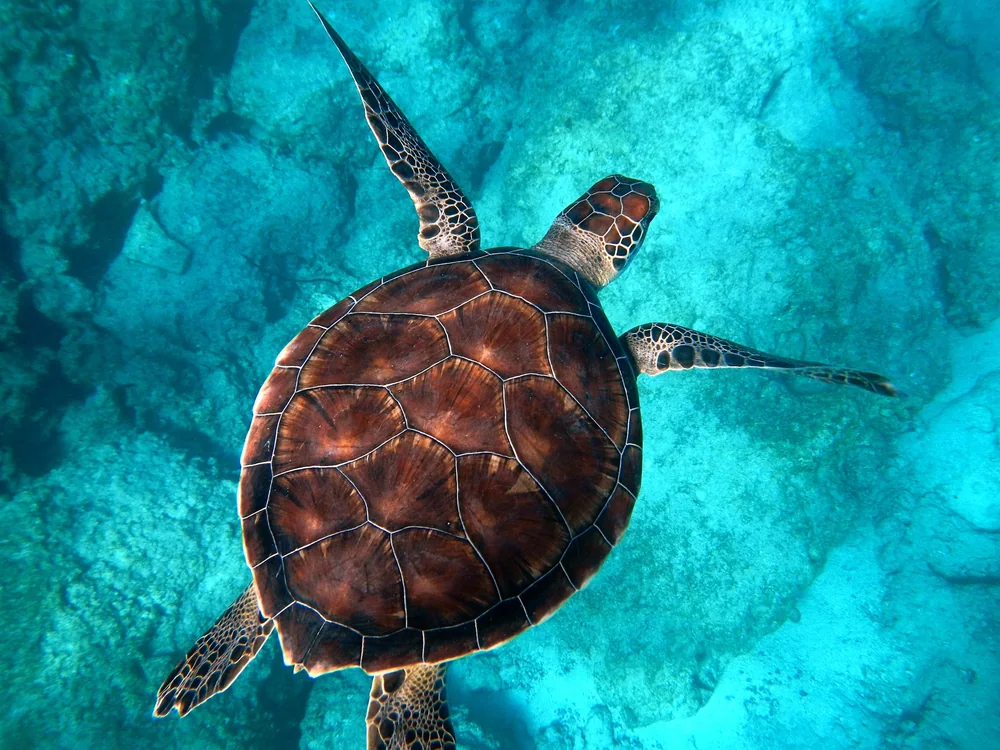
Green Sea Turtle
The great grazing turtle of the tropics, the only sea turtle that turns vegetarian as an adult. Where: The shallow reef and the beach shallows, where turtles come in to be fed by hotels. Best: November to April.
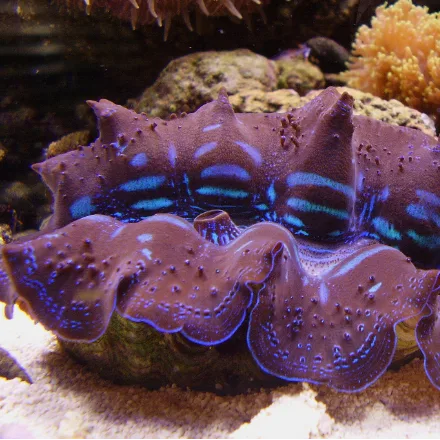
Small Giant Clam
The electric blue and green lips are not pigment for show. They are farming light, and the clam gets most of its food from algae living in its own flesh. Where: Wedged into shallow coral within snorkelling reach. Best: November to April.
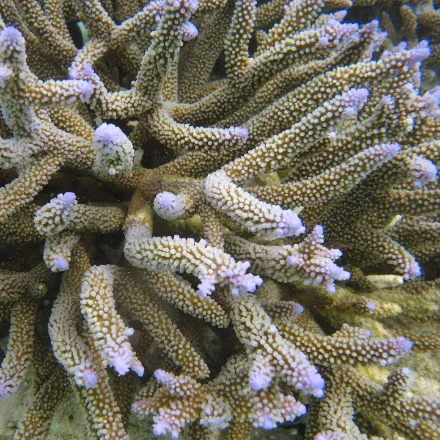
Staghorn Coral
The fast-growing branching coral that builds the living thickets of the reef, nursery and shelter for a whole community. Where: The shallow fringing reef inside the reef crest. Best: November to April.
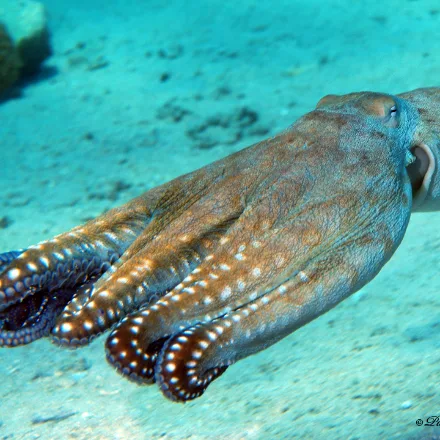
Day Octopus
A shape-shifting reef genius that can change colour and texture in a blink and pour its boneless body through a coin-sized gap. Where: Holes and rubble on the reef flat, usually found by its midden of shells. Best: November to April.
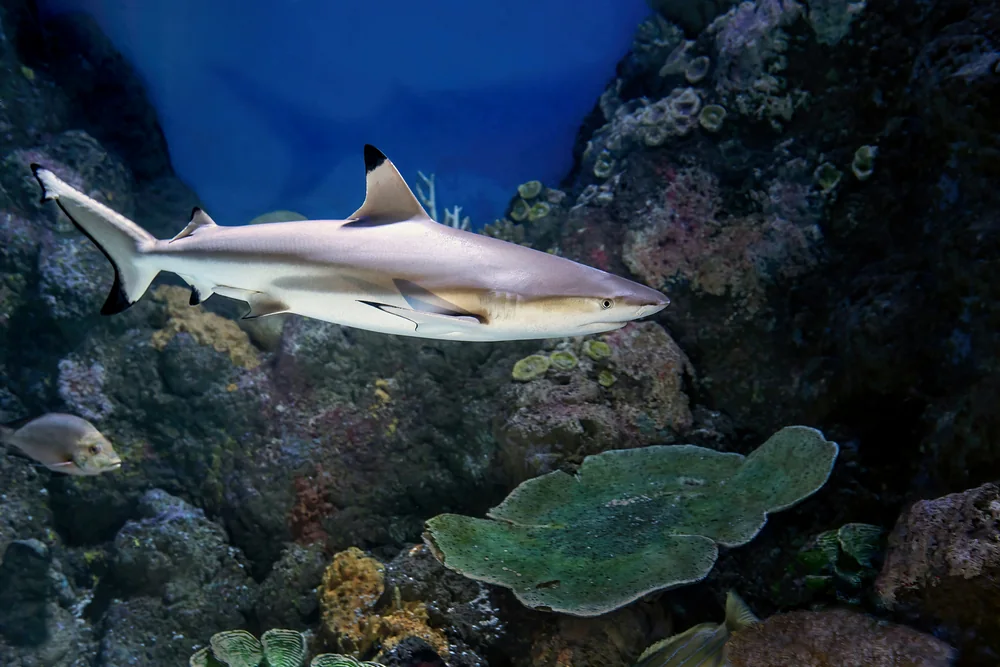
Blacktip Reef Shark
The neat little reef shark of the shallows, its black-tipped fins often cutting the surface over sun-lit sand flats. Where: The outer reef edge rather than the shallow flat. Best: November to April.
Reptiles
3 species
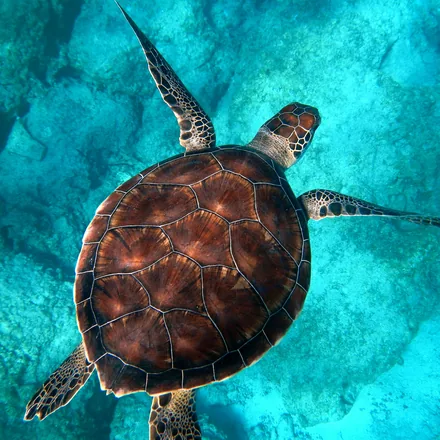
Green Sea Turtle Common
Chelonia mydas
The great grazing turtle of the tropics, the only sea turtle that turns vegetarian as an adult.
Where: The shallow reef and the beach shallows, where turtles come in to be fed by hotels. Best: November to April. Turtles here are habituated and hand fed, which is why they are so easy to see. That is a fed animal, not a wild encounter, and it is worth knowing the difference.
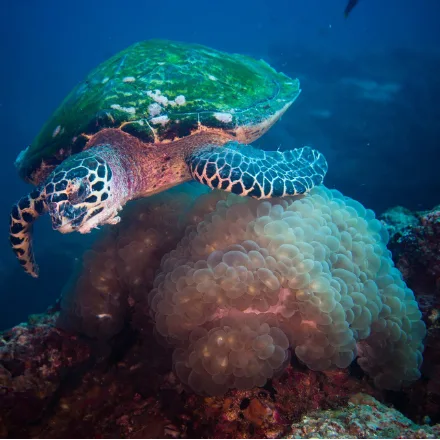
Hawksbill Turtle Occasional Critically Endangered
Eretmochelys imbricata
The reef's sponge specialist, its beautiful shell also the reason it was hunted to the edge.
Where: Coral on the fringing reef. Best: November to April.
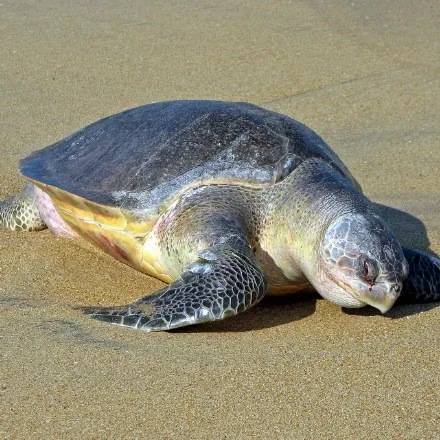
Olive Ridley Turtle Occasional Vulnerable
Lepidochelys olivacea
The smallest and most numerous sea turtle, famous elsewhere for mass nestings of thousands at once.
Where: Offshore water and occasionally over the reef. Best: Year round.
Fish
18 species
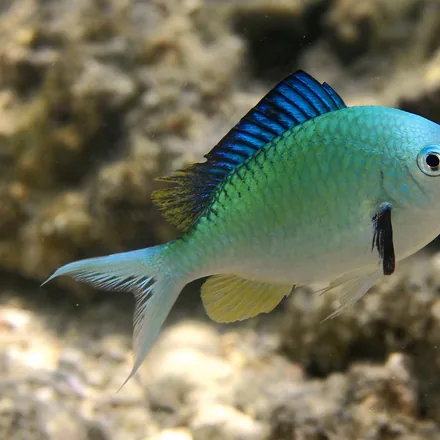
Blue-green Chromis Common
Chromis viridis
A shimmer of living jewels above the coral, hundreds of tiny blue-green fish that vanish into the branches in a blink.
Where: Above coral heads on the fringing reef. Best: November to April.
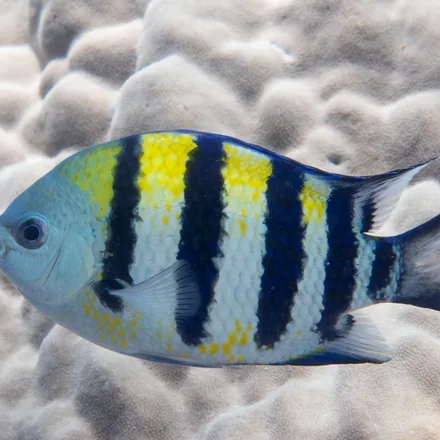
Sergeant Major Common
Abudefduf vaigiensis
The busy, black-striped damselfish that snorkellers meet everywhere, mobbing the shallows in restless silver shoals.
Where: Reef flat in snorkelling depth. Best: November to April.
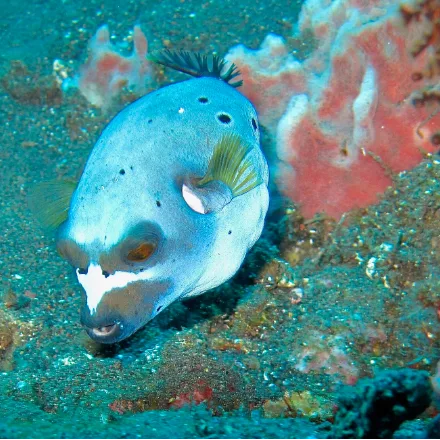
Blackspotted Puffer Regular
Arothron nigropunctatus
A comically dog-faced puffer, its colour ranging from grey to sunny yellow, carrying a potent toxin in its flesh.
Where: Reef flat and rubble. Best: November to April.
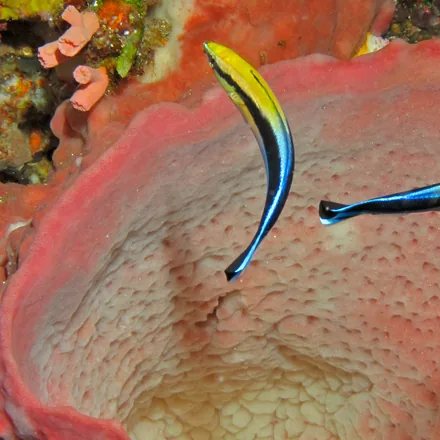
Bluestreak Cleaner Wrasse Regular
Labroides dimidiatus
A tiny striped wrasse that runs the reef's health clinic, picking parasites from fish that queue up and even open their mouths for it.
Where: Cleaning stations on the larger coral heads. Best: November to April.
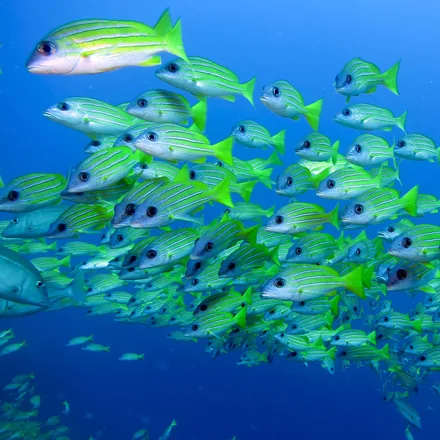
Bluestripe Snapper Regular
Lutjanus kasmira
A bright yellow snapper ruled with electric-blue lines, massing in dense, glowing schools around coral heads and wrecks.
Where: Shoals over the coral. Best: November to April.
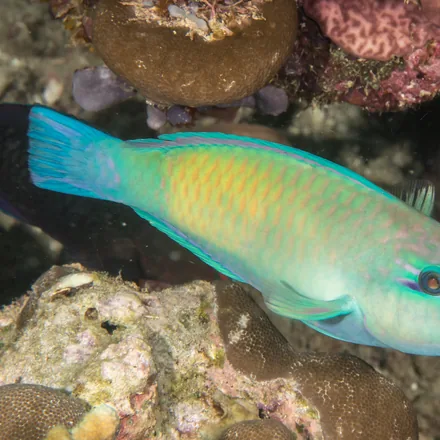
Bullethead Parrotfish Regular
Chlorurus sordidus
A blunt-headed reef grazer that scrapes algae from coral with a beak of fused teeth and sleeps in a bubble of its own mucus.
Where: Grazing the reef flat, audible before it is visible. Best: November to April.
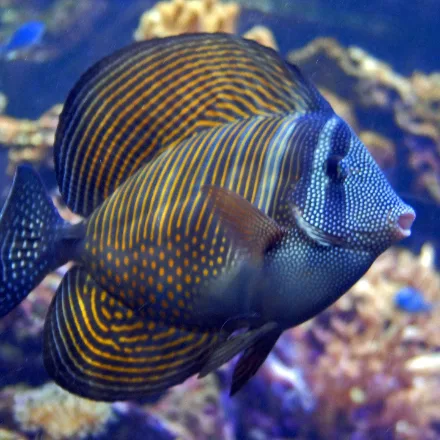
Indian Sailfin Tang Regular
Zebrasoma desjardinii
It raises a dorsal fin nearly as tall as its own body, and a startled one seems to double in size in front of you.
Where: Reef top and the boulder slopes. Best: November to April.
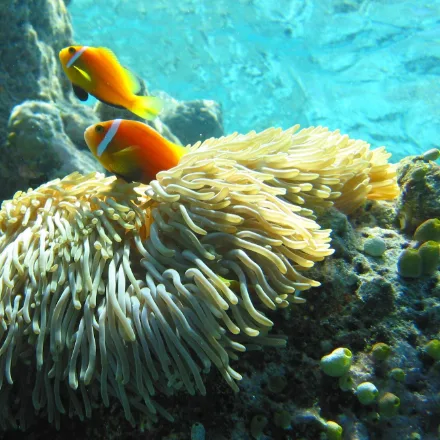
Maldives Anemonefish Regular
Amphiprion nigripes
A clownfish found only in Sri Lanka, the Maldives and the Lakshadweep, and nowhere else on earth.
Where: Anemones on the shallow reef inside the marine park. Best: November to April.
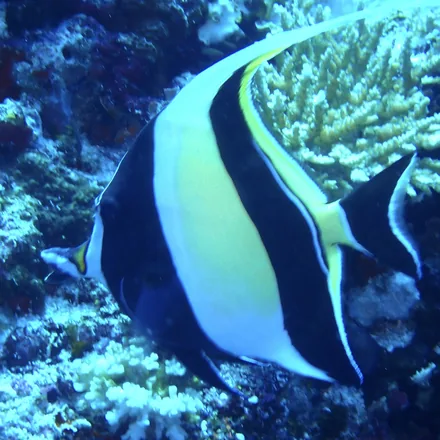
Moorish Idol Regular
Zanclus cornutus
An unmistakable disc of black, white and gold trailing a long ribbon fin, one of the most elegant fish on any reef.
Where: Fringing reef and rocky patches. Best: November to April.
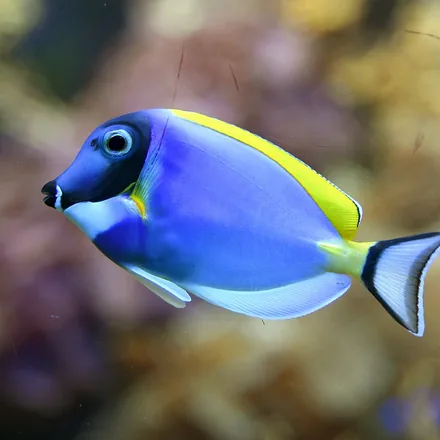
Powder Blue Surgeonfish Regular
Acanthurus leucosternon
A stunning Andaman signature fish, powder blue with a yellow sail and a scalpel-sharp blade at the base of its tail.
Where: Grazing the shallow reef. Best: November to April.
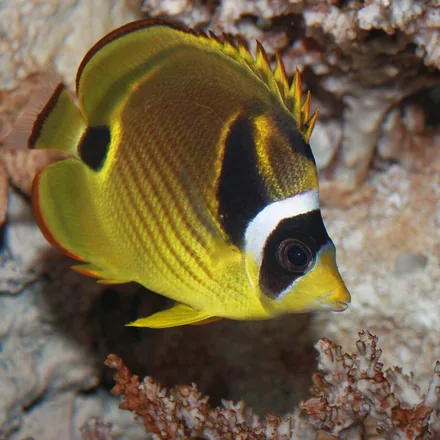
Raccoon Butterflyfish Regular
Chaetodon lunula
A golden butterflyfish masked like a raccoon, drifting the reef in pairs by day and roaming at night.
Where: Coral heads and rubble on the reef flat. Best: November to April.
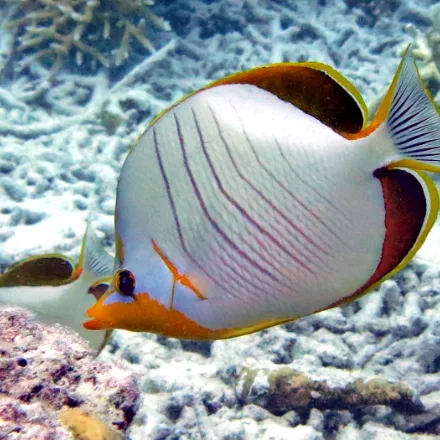
Yellowhead Butterflyfish Regular
Chaetodon xanthocephalus
An Indian Ocean butterflyfish that pairs for life, and you almost never see one without the other close by.
Where: Sheltered coral heads on the reef flat. Best: November to April.
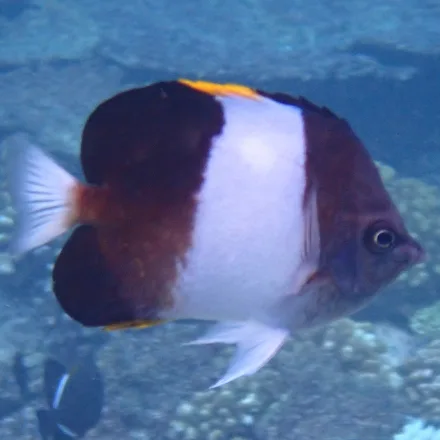
Black Pyramid Butterflyfish Occasional
Hemitaurichthys zoster
They gather in the current in hundreds, and the white wedge on each flank turns the whole shoal into a drifting cloud of triangles.
Where: The outer edge of the reef where it drops away. Best: November to April.
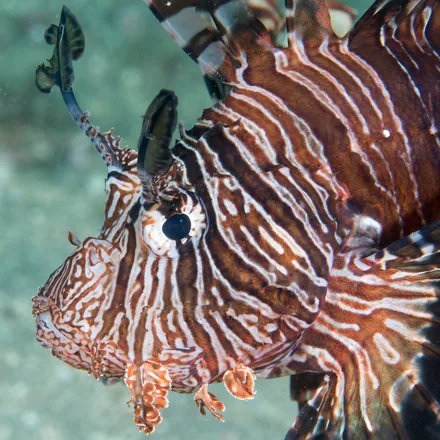
Common Lionfish Occasional
Pterois volitans
A flamboyant reef hunter fanned out in maroon and white plumes, every graceful spine tipped with venom.
Where: Hanging under ledges and beside the rocks. Best: November to April.
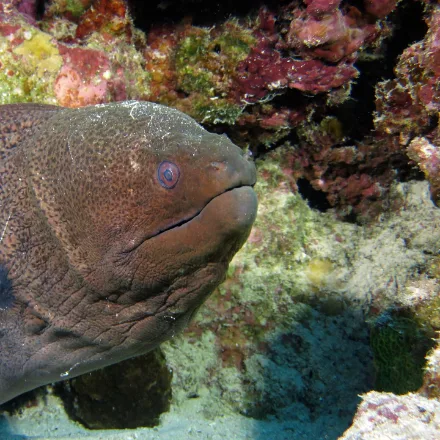
Giant Moray Occasional
Gymnothorax javanicus
The largest moray on the reef, its gaping, fanged mouth a fearsome look that is really just how it breathes.
Where: Holes and crevices in the boulder sections. Best: November to April.
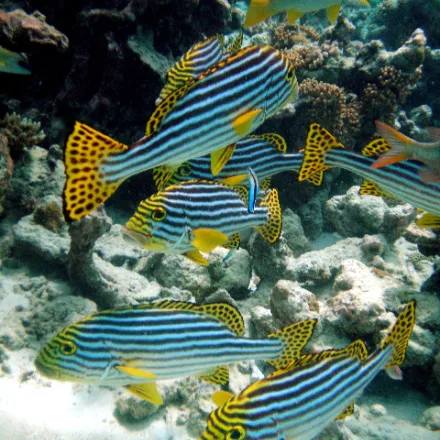
Oriental Sweetlips Occasional
Plectorhinchus vittatus
A handsome striped reef fish whose fussy juveniles wobble around in polka dots to mimic toxic flatworms.
Where: Under overhangs and ledges by day. Best: November to April.
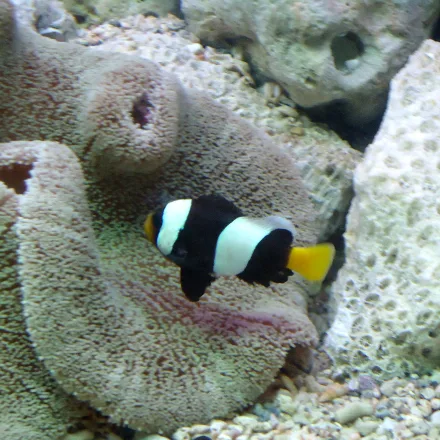
Sebae Anemonefish Occasional
Amphiprion sebae
The big dark anemonefish of the northern Indian Ocean, with a yellow tail that gives it away from a distance.
Where: Sand and rubble margins at the reef edge. Best: November to April.
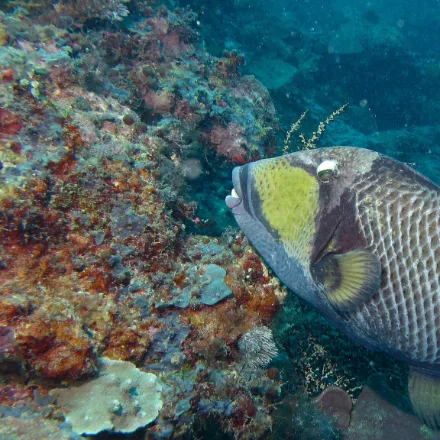
Titan Triggerfish Occasional
Balistoides viridescens
The reef's bad tempered bulldozer, a big triggerfish that will charge divers who stray over its nest.
Where: Sand patches at the reef edge, and aggressive when nesting. Best: November to April. Nesting triggerfish defend a cone of water above the nest and will charge. Swim sideways out of it rather than up.
Sharks and rays
2 species
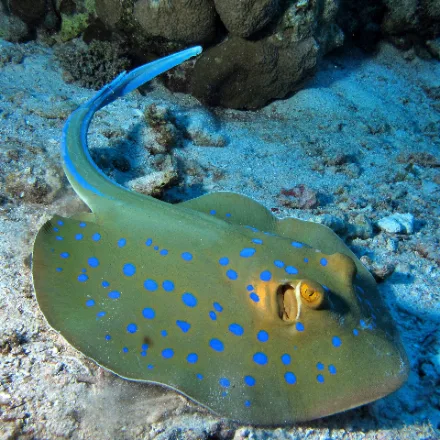
Bluespotted Ribbontail Ray Occasional
Taeniura lymma
A small, brilliantly marked ray, olive gold studded with electric blue spots, tucked under coral ledges.
Where: Sand patches and under ledges at the reef edge. Best: November to April.
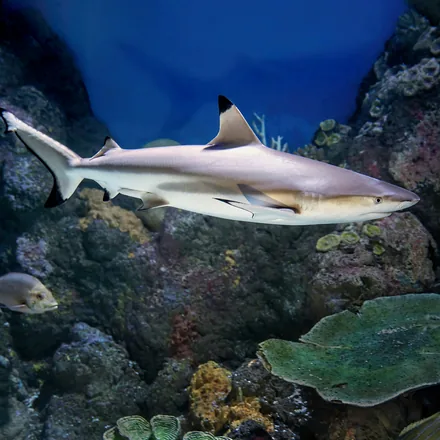
Blacktip Reef Shark Rare Vulnerable
Carcharhinus melanopterus
The neat little reef shark of the shallows, its black-tipped fins often cutting the surface over sun-lit sand flats.
Where: The outer reef edge rather than the shallow flat. Best: November to April.
Molluscs
2 species
Day Octopus Occasional
Octopus cyanea
A shape-shifting reef genius that can change colour and texture in a blink and pour its boneless body through a coin-sized gap.
Where: Holes and rubble on the reef flat, usually found by its midden of shells. Best: November to April.
Small Giant Clam Occasional
Tridacna maxima
The electric blue and green lips are not pigment for show. They are farming light, and the clam gets most of its food from algae living in its own flesh.
Where: Wedged into shallow coral within snorkelling reach. Best: November to April.
Corals and anemones
3 species
Staghorn Coral Regular
Acropora species
The fast-growing branching coral that builds the living thickets of the reef, nursery and shelter for a whole community.
Where: The shallow fringing reef inside the reef crest. Best: November to April. Hikkaduwa's coral has been heavily damaged by bleaching and by trampling.
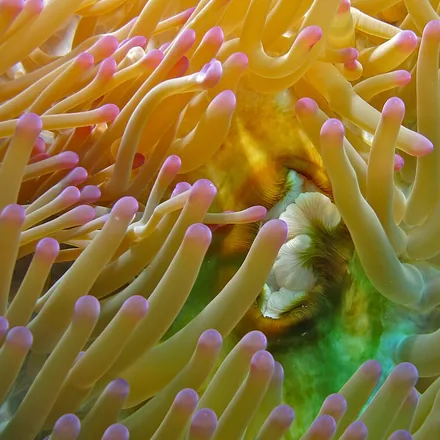
Magnificent Sea Anemone Occasional
Heteractis magnifica
A great carpet of stinging tentacles that is home and fortress to the anemonefish, a partnership at the heart of the reef.
Where: Coral heads on the reef flat, hosting the anemonefish. Best: Year round.
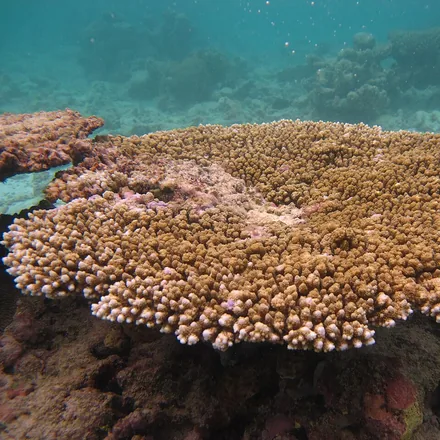
Table Coral Occasional Near Threatened
Acropora hyacinthus
Grows outward faster than it grows up, spreading a flat platform that shades out every competitor beneath it.
Where: The shallow reef flat inside the marine park. Best: Year round.
Echinoderms
3 species
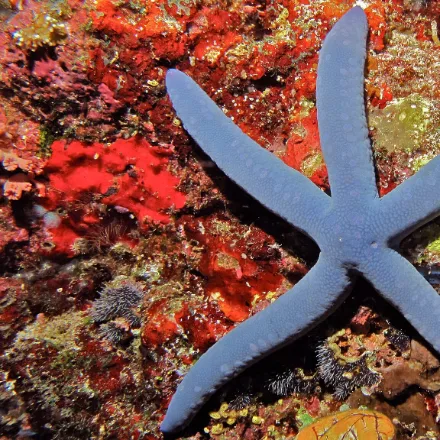
Blue Sea Star Common
Linckia laevigata
An almost unreal cobalt blue starfish scattered across the shallows, able to regrow a whole body from a single lost arm.
Where: Reef flat and rubble in snorkelling depth. Best: Year round.
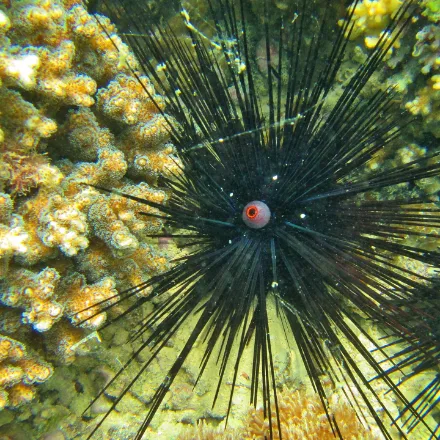
Long-spined Sea Urchin Common
Diadema setosum
A pincushion of needle-sharp black spines with a glowing orange ring, grazing algae and quietly shaping the reef.
Where: Crevices and rubble on the reef flat, in numbers. Best: Year round. Long black spines in shallow water that people stand on. Wear fins and stay horizontal.
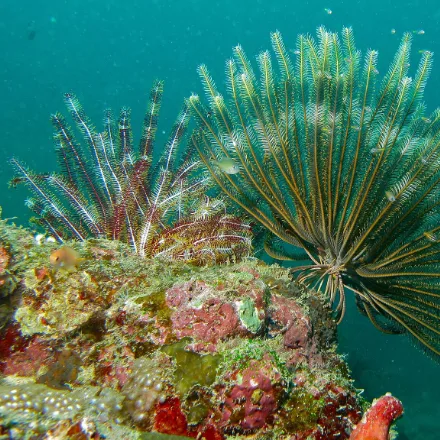
Feather Star (Crinoid) Occasional
Comatulida species
A living bouquet of feathery arms that clings to high points on the reef by day and can crawl, or even swim, to a better spot.
Where: Clinging to coral heads and the reef edge in current. Best: November to April.
Crustaceans
1 species
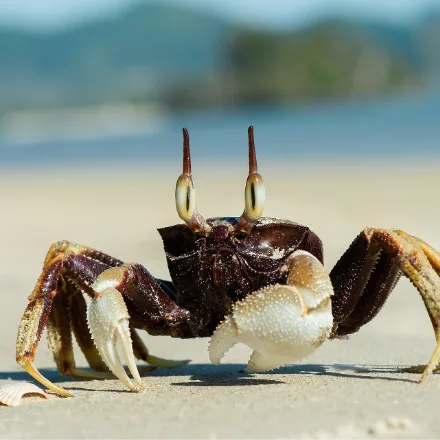
Horn-eyed Ghost Crab Common
Ocypode ceratophthalmus
The fastest crab on earth, clocked at over two metres a second, and it growls at intruders from inside its burrow.
Where: The beach itself after dark, running at the tideline. Best: Year round.
Other invertebrates
1 species
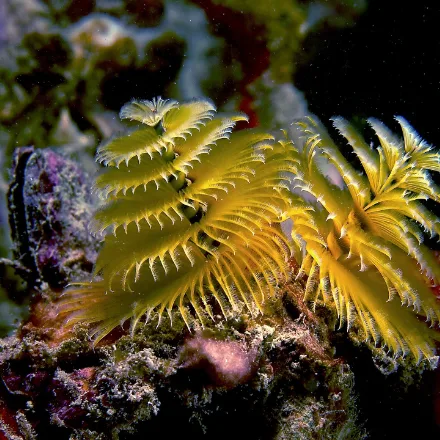
Christmas Tree Worm Common
Spirobranchus giganteus
Pairs of tiny spiral trees in every colour, studding the coral and vanishing in a flash when a shadow passes.
Where: Boulder coral on the reef flat. Best: November to April.
Planning
November to April, when the southwest monsoon is off and the water is clear. Go early, before the boats and the crowds. The reef flat is shallow and the coral sits close to the surface. The turtles here are habituated and come close to boats. Pigeon Island in the east has the better reef if coral is what you are after.
Compare snorkelling trips, dives and turtle watching on the southwest coast
Some links on this page are affiliate links. If you book through them, Wildseer may earn a small commission at no extra cost to you.
Frequently asked questions
Can you see turtles at Hikkaduwa?
Yes. Green turtles come into the shallows off the beach and are seen most days in season, with hawksbills on the reef less often. They are wild animals and should not be touched, fed or followed.
When is the best time to snorkel at Hikkaduwa?
November to April, when the southwest monsoon is off the coast and visibility is good. Early morning before the boats and the crowds.
What is the coral like at Hikkaduwa?
Recovering rather than pristine. The reef has been bleached repeatedly and takes heavy visitor pressure, so expect patchy live coral with good fish life over it. It is the most accessible reef in the country, which is its real value.
Is Hikkaduwa or Unawatuna better?
Hikkaduwa has the protected reef and the turtles; Unawatuna is a sheltered bay with easier swimming and less coral. For marine life, Hikkaduwa. For a swim, Unawatuna.
Explore Sri Lanka wildlife by group
 Mammals of Sri Lanka
 Birds of Sri Lanka
 Reptiles and amphibians of Sri Lanka
 Fish of Sri Lanka
 Sharks and rays of Sri Lanka
 Reef invertebrates of Sri Lanka
 Insects and spiders of Sri Lanka
Part of the Wildlife in Sri Lanka guide.
Explore Sri Lanka wildlife by place
- Adams Peak wildlife
- Arugam Bay marine life
- Bundala wildlife
- Colombo wildlife
- Ella wildlife
- Gal Oya wildlife
- Great Basses marine life
- Horton Plains wildlife
- Jaffna wildlife
- Kalpitiya marine life
- Kandy wildlife
- Kanneliya wildlife
- Kitulgala wildlife
- Knuckles wildlife
- Kumana wildlife
- Mannar marine life
- Minneriya wildlife
- Mirissa marine life
- Rekawa marine life
- Sigiriya wildlife
- Sinharaja wildlife
- Tangalle marine life
- Trincomalee marine life
- Udawalawe wildlife
- Wasgamuwa wildlife
- Wilpattu wildlife
- Yala wildlife
Image credits
Square thumbnails are cropped from the original. Wide banner images are cropped to a band. Other images are resized only. No other changes have been made.
- Green sea turtle: Unsplash | Unsplash License, cropped
- Small Giant Clam: RevolverOcelot | CC BY-SA 3.0, cropped
- Staghorn Coral (cropped to square): MDC Seamarc Maldives | CC BY-SA 4.0, cropped
- Day Octopus (cropped to square): Pauline Walsh Jacobson | CC BY 4.0, cropped
- Blacktip reef shark: David Clode | Unsplash License, cropped
- Green Sea Turtle: Randall Ruiz | Unsplash License, cropped
- Hawksbill Turtle (cropped to square): Daniel Sasse | CC BY-SA 4.0, cropped
- Olive Ridley Turtle (cropped to square): Bernard Gagnon | CC BY-SA 3.0, cropped
- Blue-green Chromis (cropped to square): Philippe Bourjon | CC BY-SA 4.0, cropped
- Sergeant Major (cropped to square): Rickard Zerpe | CC BY 2.0, cropped
- Blackspotted Puffer (cropped to square): Bernard DUPONT | CC BY-SA 4.0, cropped
- Bluestreak Cleaner Wrasse (cropped to square): Bernard DUPONT | CC BY-SA 2.0, cropped
- Bluestripe Snapper (cropped to square): Jerome Paillet (IFREMER) | CC BY 4.0, cropped
- Bullethead Parrotfish (cropped to square): Rickard Zerpe | CC BY 2.0, cropped
- Indian Sailfin Tang: Hectonichus | CC BY-SA 3.0, cropped
- Maldives Anemonefish: Jan Derk | Public domain, cropped
- Moorish Idol (cropped to square): Jean-Paul Boerekamps | CC0, cropped
- Powder Blue Surgeonfish (cropped to square): Amada44 | CC BY-SA 3.0, cropped
- Raccoon Butterflyfish (cropped to square): Brian Gratwicke | CC BY 2.0, cropped
- Yellowhead Butterflyfish: Ahmed Abdul Rahman for MDC Seamarc Maldives | CC BY-SA 4.0, cropped
- Black Pyramid Butterflyfish: Jean-Paul Boerekamps | CC0, cropped
- Common Lionfish (cropped to square): Rickard Zerpe | CC BY 2.0, cropped
- Giant Moray (cropped to square): Jerome Paillet (IFREMER) | CC BY 4.0, cropped
- Oriental Sweetlips (cropped to square): Uxbona | CC BY-SA 3.0, cropped
- Sebae Anemonefish: Ranjithsiji | CC BY-SA 3.0, cropped
- Titan Triggerfish (cropped to square): Bernard DUPONT | CC BY-SA 2.0, cropped
- Bluespotted Ribbontail Ray (resized): Derek Keats from Johannesburg, South Africa | CC BY 2.0, cropped
- Blacktip Reef Shark: David Clode | Unsplash License, cropped
- Magnificent Sea Anemone (cropped to square): Bernard DUPONT | CC BY-SA 2.0, cropped
- Table Coral (cropped to square): MDC Seamarc Maldives | CC BY-SA 4.0, cropped
- Blue Sea Star (cropped to square): Bernard DUPONT | CC BY-SA 2.0, cropped
- Long-spined Sea Urchin (cropped to square): Frédéric Ducarme | CC BY-SA 4.0, cropped
- Feather Star (cropped to square): Bernard DUPONT | CC BY-SA 2.0, cropped
- Horn-eyed Ghost Crab (cropped to square): Rushenb | CC BY-SA 3.0, cropped
- Christmas Tree Worm (cropped to square): Nhobgood Nick Hobgood | CC BY-SA 3.0, cropped
- Purple-faced langur in the canopy: kanchana Amilani | Unsplash License, cropped
- White-throated kingfisher on a branch: kanchana Amilani | Unsplash License, cropped
- Green forest lizard in breeding colour: Anas Mohamed Nuski | Pexels Licence, cropped
- Bluestripe snapper over a reef: Jeffry Surianto | Pexels Licence, cropped
- Reef manta rays near the surface: Emma Li | Pexels Licence, cropped
- Nudibranch crossing the sea floor: Chris Spain | Pexels Licence, cropped
- Clipper butterfly on a leaf: Pixabay | Pexels Licence, cropped
Square thumbnails are cropped from the original. Wide banner images are cropped to a band. Other images are resized only. No other changes have been made.
- Green sea turtle: Unsplash | Unsplash License, cropped
- Small Giant Clam: RevolverOcelot | CC BY-SA 3.0, cropped
- Staghorn Coral (cropped to square): MDC Seamarc Maldives | CC BY-SA 4.0, cropped
- Day Octopus (cropped to square): Pauline Walsh Jacobson | CC BY 4.0, cropped
- Blacktip reef shark: David Clode | Unsplash License, cropped
- Green Sea Turtle: Randall Ruiz | Unsplash License, cropped
- Hawksbill Turtle (cropped to square): Daniel Sasse | CC BY-SA 4.0, cropped
- Olive Ridley Turtle (cropped to square): Bernard Gagnon | CC BY-SA 3.0, cropped
- Blue-green Chromis (cropped to square): Philippe Bourjon | CC BY-SA 4.0, cropped
- Sergeant Major (cropped to square): Rickard Zerpe | CC BY 2.0, cropped
- Blackspotted Puffer (cropped to square): Bernard DUPONT | CC BY-SA 4.0, cropped
- Bluestreak Cleaner Wrasse (cropped to square): Bernard DUPONT | CC BY-SA 2.0, cropped
- Bluestripe Snapper (cropped to square): Jerome Paillet (IFREMER) | CC BY 4.0, cropped
- Bullethead Parrotfish (cropped to square): Rickard Zerpe | CC BY 2.0, cropped
- Indian Sailfin Tang: Hectonichus | CC BY-SA 3.0, cropped
- Maldives Anemonefish: Jan Derk | Public domain, cropped
- Moorish Idol (cropped to square): Jean-Paul Boerekamps | CC0, cropped
- Powder Blue Surgeonfish (cropped to square): Amada44 | CC BY-SA 3.0, cropped
- Raccoon Butterflyfish (cropped to square): Brian Gratwicke | CC BY 2.0, cropped
- Yellowhead Butterflyfish: Ahmed Abdul Rahman for MDC Seamarc Maldives | CC BY-SA 4.0, cropped
- Black Pyramid Butterflyfish: Jean-Paul Boerekamps | CC0, cropped
- Common Lionfish (cropped to square): Rickard Zerpe | CC BY 2.0, cropped
- Giant Moray (cropped to square): Jerome Paillet (IFREMER) | CC BY 4.0, cropped
- Oriental Sweetlips (cropped to square): Uxbona | CC BY-SA 3.0, cropped
- Sebae Anemonefish: Ranjithsiji | CC BY-SA 3.0, cropped
- Titan Triggerfish (cropped to square): Bernard DUPONT | CC BY-SA 2.0, cropped
- Bluespotted Ribbontail Ray (resized): Derek Keats from Johannesburg, South Africa | CC BY 2.0, cropped
- Blacktip Reef Shark: David Clode | Unsplash License, cropped
- Magnificent Sea Anemone (cropped to square): Bernard DUPONT | CC BY-SA 2.0, cropped
- Table Coral (cropped to square): MDC Seamarc Maldives | CC BY-SA 4.0, cropped
- Blue Sea Star (cropped to square): Bernard DUPONT | CC BY-SA 2.0, cropped
- Long-spined Sea Urchin (cropped to square): Frédéric Ducarme | CC BY-SA 4.0, cropped
- Feather Star (cropped to square): Bernard DUPONT | CC BY-SA 2.0, cropped
- Horn-eyed Ghost Crab (cropped to square): Rushenb | CC BY-SA 3.0, cropped
- Christmas Tree Worm (cropped to square): Nhobgood Nick Hobgood | CC BY-SA 3.0, cropped
- Purple-faced langur in the canopy: kanchana Amilani | Unsplash License, cropped
- White-throated kingfisher on a branch: kanchana Amilani | Unsplash License, cropped
- Green forest lizard in breeding colour: Anas Mohamed Nuski | Pexels Licence, cropped
- Bluestripe snapper over a reef: Jeffry Surianto | Pexels Licence, cropped
- Reef manta rays near the surface: Emma Li | Pexels Licence, cropped
- Nudibranch crossing the sea floor: Chris Spain | Pexels Licence, cropped
- Clipper butterfly on a leaf: Pixabay | Pexels Licence, cropped