
Kalpitiya is where the dolphins stop being individuals and become weather. Spinner dolphin pods here run into the thousands, spread across a kilometre of water, leaping continuously, and there is nothing else like it in Sri Lankan waters. On a good December morning the sea is simply full of them.
Behind the peninsula lies the Bar Reef, the largest reef system in the country and a marine sanctuary. It carries the standard Indo-Pacific cast, powder blue surgeonfish, anemonefish, butterflyfish, staghorn and table coral, and it has suffered badly from bleaching, which is a fact worth knowing before you go rather than a disappointment on the day.
Two rarer animals put this coast on the map. Dugong survive in the shallow seagrass here and in the Gulf of Mannar to the north, and they are the last population in Sri Lanka: down to a handful of animals, almost never seen, and killed mainly as bycatch. Blue whale, sperm whale and killer whale are all recorded offshore. This page lists what is here and what your actual chances are.
Highlights
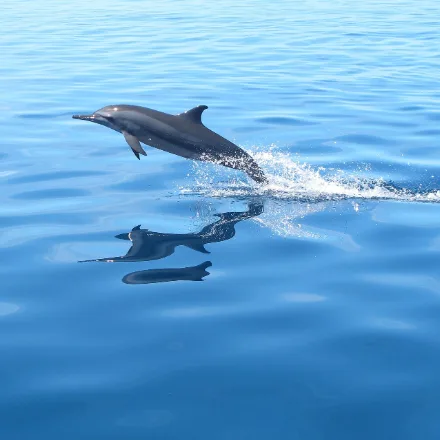
Spinner Dolphin
A small, slender dolphin that leaps clear of the sea and spins like a top in mid-air. Where: Open water off the Kalpitiya peninsula, on the early boats. Best: November to April.
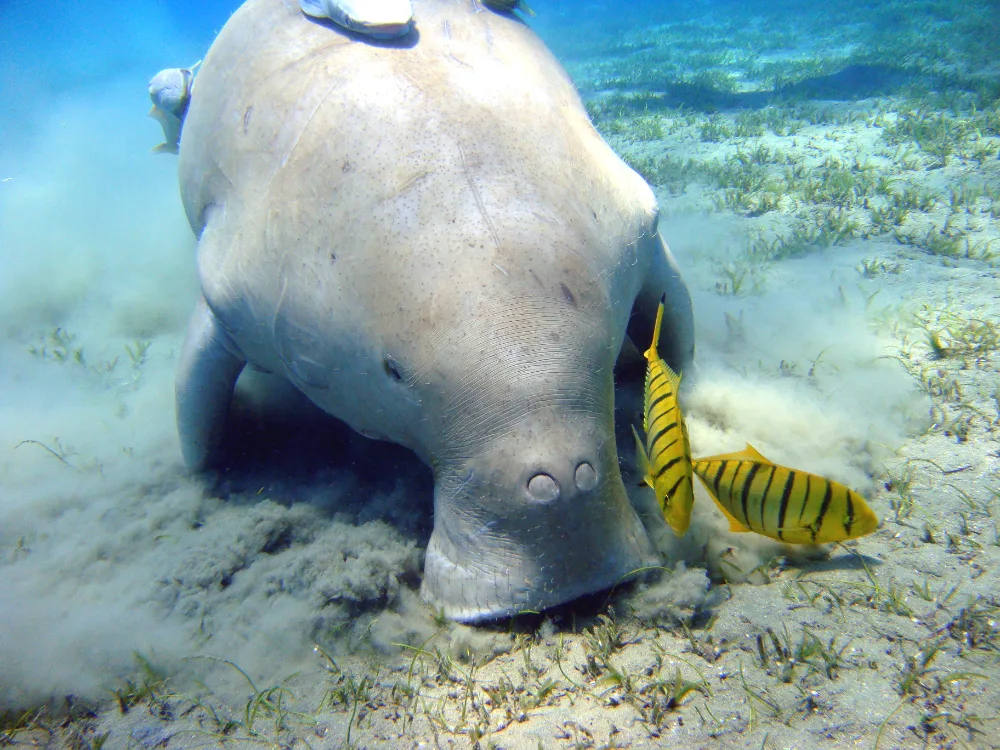
Dugong
The gentle sea cow said to have inspired mermaid legends, grazing seagrass meadows in warm shallow seas. Where: Seagrass in the shallow water towards the Gulf of Mannar. Best: November to April.
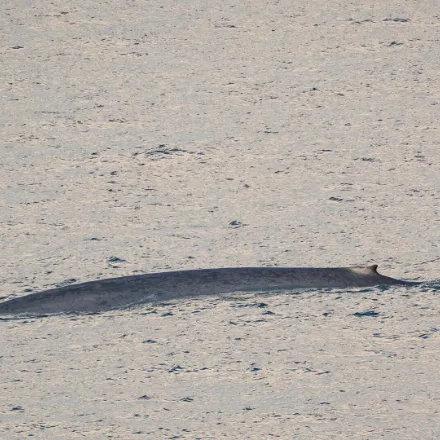
Blue Whale
The largest animal that has ever lived, and off Sri Lanka a population that mostly does not migrate, which is why it can be seen almost year round. Where: Offshore in the deeper water beyond the Bar Reef. Best: Dec-Apr.
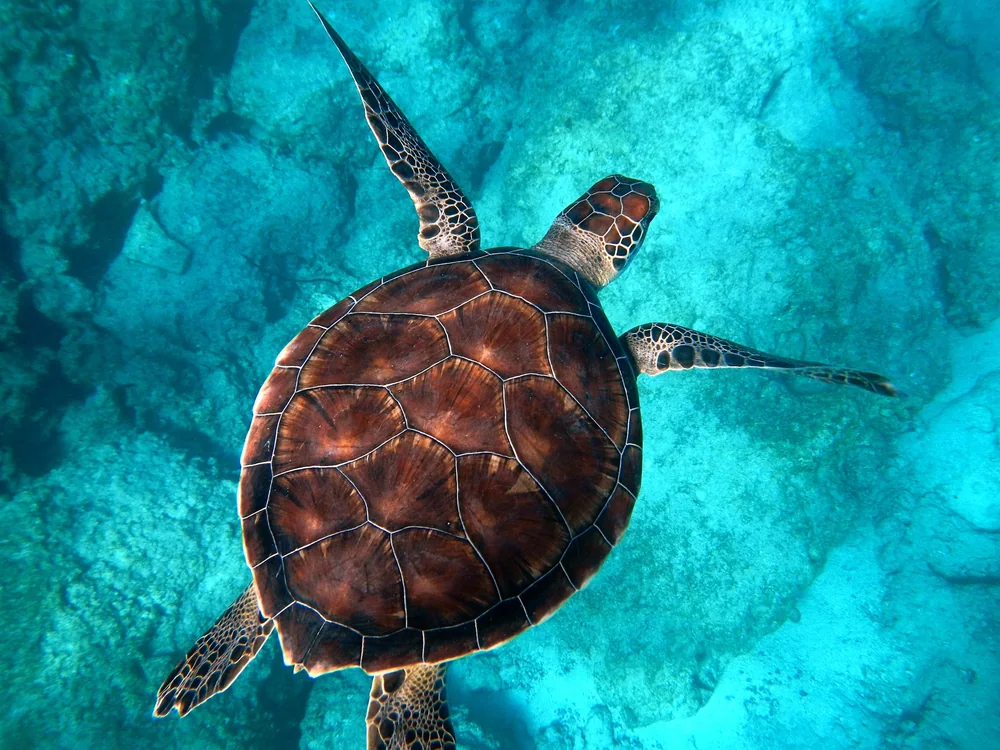
Green Sea Turtle
The great grazing turtle of the tropics, the only sea turtle that turns vegetarian as an adult. Where: Bar Reef and the surrounding shallows. Best: November to April.
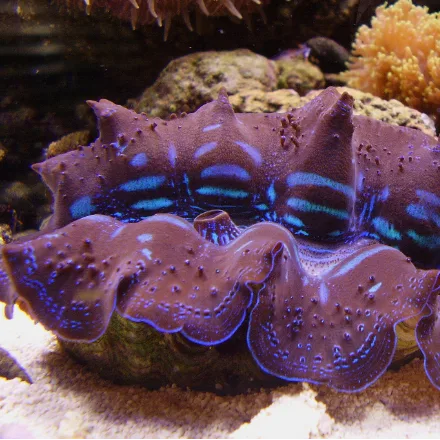
Small Giant Clam
The electric blue and green lips are not pigment for show. They are farming light, and the clam gets most of its food from algae living in its own flesh. Where: Shallow coral of Bar Reef. Best: November to April.
Mammals
7 species
Spinner Dolphin Common
Stenella longirostris
A small, slender dolphin that leaps clear of the sea and spins like a top in mid-air.
Where: Open water off the Kalpitiya peninsula, on the early boats. Best: November to April. Super-pods of many hundreds and sometimes over a thousand animals. The largest dolphin spectacle in South Asia and the reason to come here.
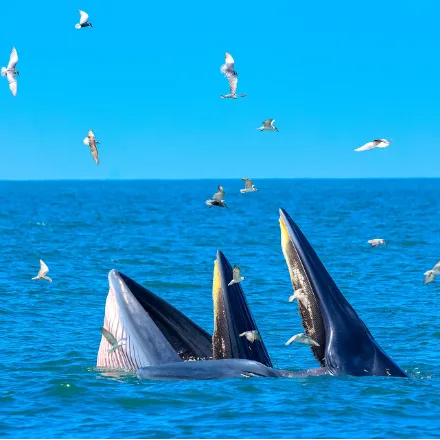
Bryde's Whale Occasional
Balaenoptera edeni
A warm-water baleen whale that lunges up through bait balls with its mouth wide open.
Where: Offshore, often alongside the dolphin pods. Best: November to April.
Blue Whale Rare Endangered
Balaenoptera musculus
The largest animal that has ever lived, and off Sri Lanka a population that mostly does not migrate, which is why it can be seen almost year round.
Where: Offshore in the deeper water beyond the Bar Reef. Best: Dec-Apr. Secondary to the dolphins here, but recorded.
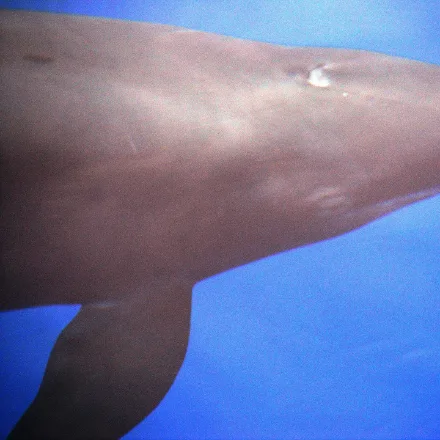
False Killer Whale Rare Near Threatened
Pseudorca crassidens
Has been recorded offering captured fish to divers and to other dolphins, apparently as a gift.
Where: Deep water offshore. Best: November to April.
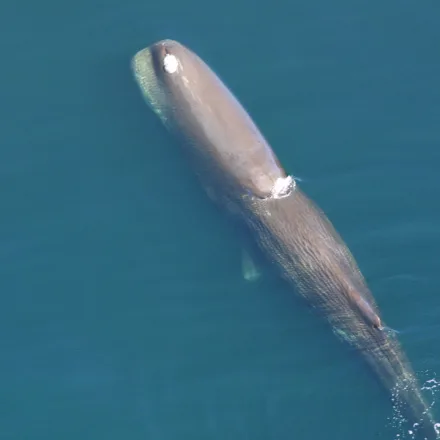
Sperm Whale Rare Vulnerable
Physeter macrocephalus
The deepest diving mammal on earth, hunting squid two kilometres down, and occasionally gathering off Sri Lanka in pods of hundreds.
Where: Offshore deep water. Best: Dec-Apr. Recorded alongside the spinner dolphin superpods.
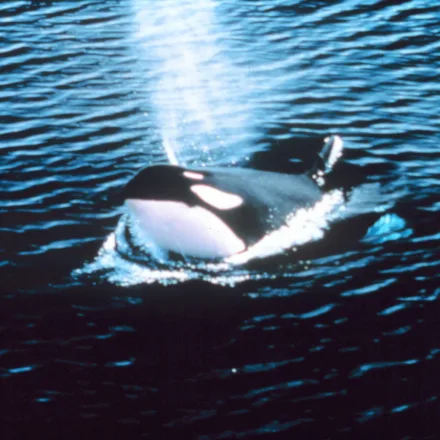
Killer Whale Very rare
Orcinus orca
The ocean's top predator, and off Sri Lanka they are known to hunt other whales, which is a thing very few people ever witness.
Where: Blue water beyond the shelf edge on a full day boat trip. Best: December to April. Predation on other whales has been recorded in these waters.
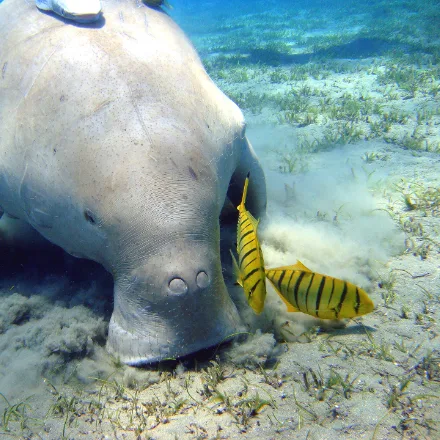
Dugong Ultra rare Vulnerable
Dugong dugon
The gentle sea cow said to have inspired mermaid legends, grazing seagrass meadows in warm shallow seas.
Where: Seagrass in the shallow water towards the Gulf of Mannar. Best: November to April. Most reported dugongs here turn out to be dolphins. Genuine records are now very few.
Birds
5 species
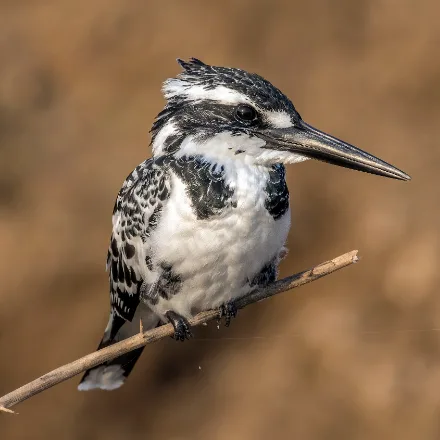
Pied Kingfisher Regular
Ceryle rudis
The largest bird in the world that can hover in still air with no wind to help it, which is how it fishes open water no perch reaches.
Where: Lagoon and salt pan channels. Best: Year round.
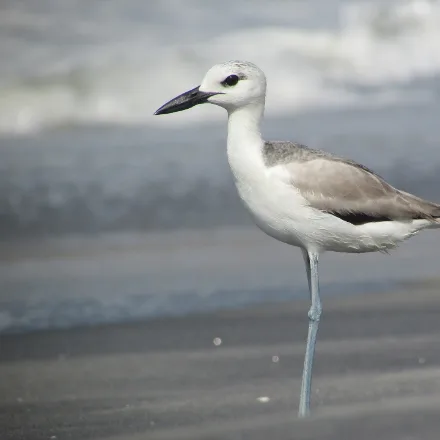
Crab-plover Occasional
Dromas ardeola
The only bird in its family anywhere on earth, and the only wader that nests underground.
Where: Puttalam lagoon mudflats and the sand spits at low tide. Best: Nov-Mar. The most accessible site in the country. Flocks stand together on open sand at the tide edge.
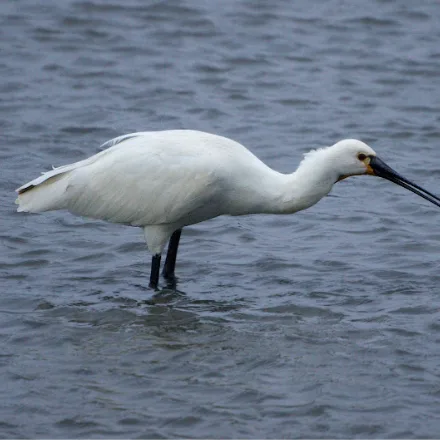
Eurasian Spoonbill Occasional
Platalea leucorodia
Feeds by sweeping that absurd bill side to side through the shallows, snapping shut the instant it touches something alive.
Where: Puttalam lagoon and the salt pans. Best: Nov-Mar.
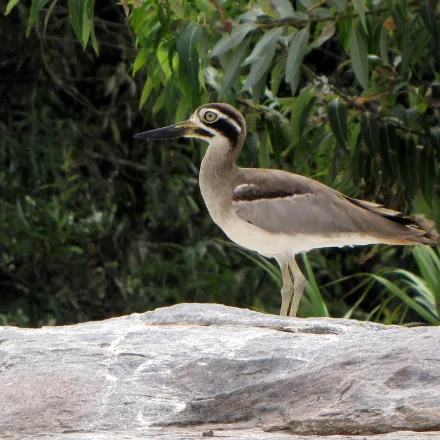
Great Thick-knee Occasional Near Threatened
Esacus recurvirostris
A heavy, huge-eyed shorebird that stands motionless on open shingle all day and only comes alive at dusk.
Where: Sand spits and the lagoon shoreline. Best: Year round.
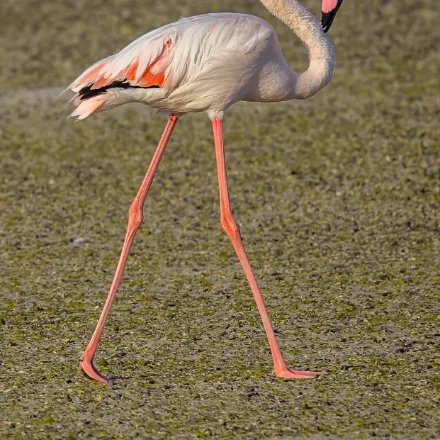
Greater Flamingo Occasional
Phoenicopterus roseus
Several thousand birds on the Bundala salt pans in a good winter, filtering brine shrimp upside down.
Where: Puttalam lagoon salt pans. Best: Dec-Mar. Secondary to Bundala but genuinely reliable in a wet year.
Reptiles
7 species
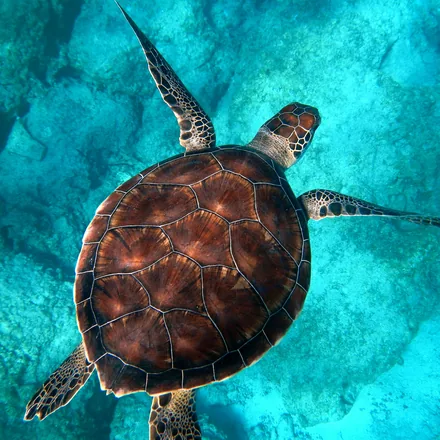
Green Sea Turtle Regular
Chelonia mydas
The great grazing turtle of the tropics, the only sea turtle that turns vegetarian as an adult.
Where: Bar Reef and the surrounding shallows. Best: November to April.
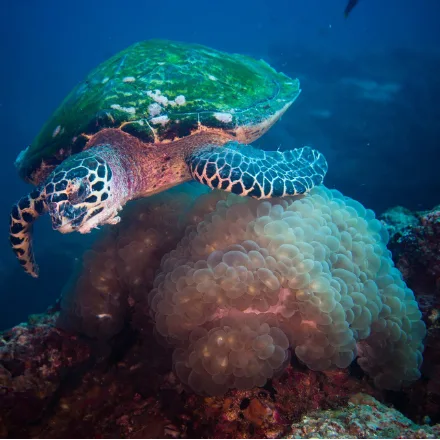
Hawksbill Turtle Occasional Critically Endangered
Eretmochelys imbricata
The reef's sponge specialist, its beautiful shell also the reason it was hunted to the edge.
Where: Bar Reef Marine Sanctuary. Best: November to April.
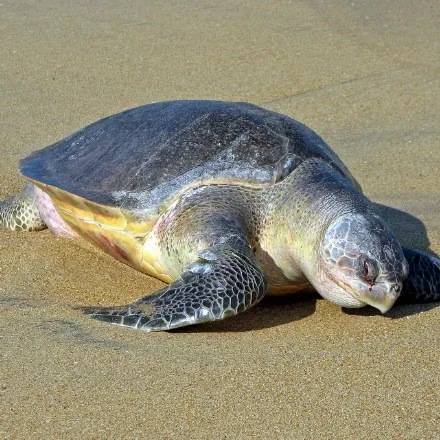
Olive Ridley Turtle Occasional Vulnerable
Lepidochelys olivacea
The smallest and most numerous sea turtle, famous elsewhere for mass nestings of thousands at once.
Where: Nesting beaches around Kandakuliya, and offshore. Best: November to March. Sri Lankan waters feed animals that nest at the Odisha arribadas in India.
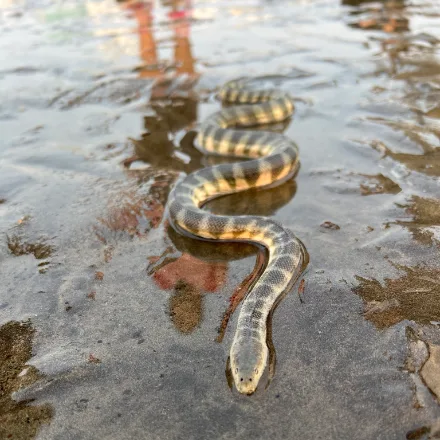
Beaked Sea Snake Rare
Hydrophis schistosus
Drop for drop, one of the most venomous snakes in the sea, and it is responsible for most sea snake bites in Asia.
Where: Shallow water and the Puttalam lagoon approaches. Best: November to April.
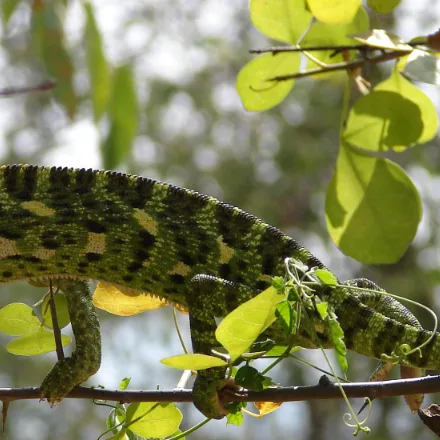
Indian Chameleon Rare
Chamaeleo zeylanicus
Sri Lanka's only chameleon, and it is genuinely scarce here, so finding one in a thorn bush in the northwest is a proper piece of luck.
Where: Coastal thorn scrub and the Puttalam approach. Best: Year round.
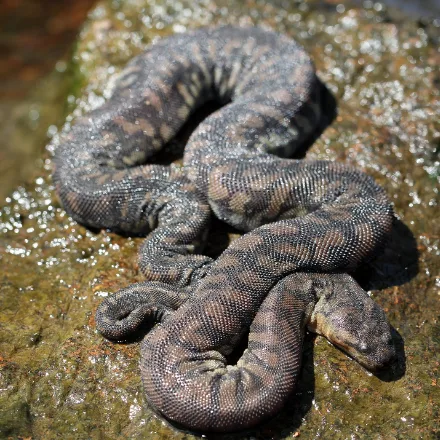
Little File Snake Rare
Acrochordus granulatus
Loose baggy skin covered in rasping granular scales, used to grip slippery fish that no smooth snake could hold.
Where: Puttalam lagoon shallows and seagrass. Best: November to April.
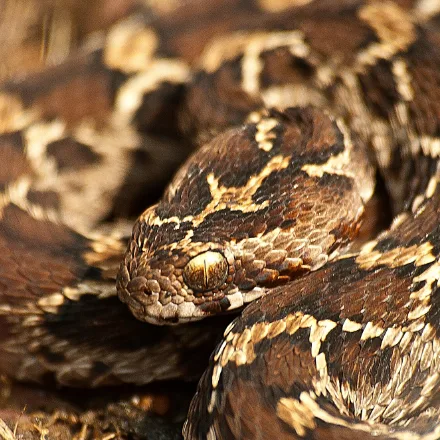
Saw-scaled Viper Rare
Echis carinatus
A small viper that saws its own flanks together to make a sizzling warning, and in Sri Lanka it lives only in the arid north.
Where: Arid coastal scrub and sandy ground. Best: Year round, night. The nearest this species comes to a normal itinerary.
Fish
6 species
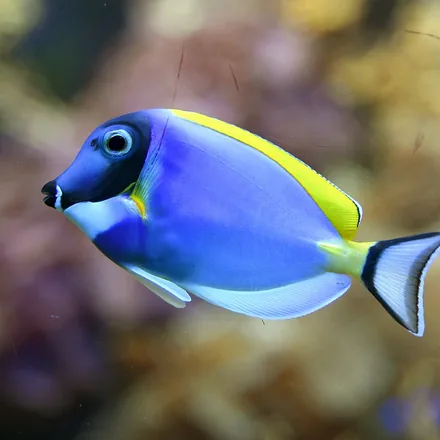
Powder Blue Surgeonfish Common
Acanthurus leucosternon
A stunning Andaman signature fish, powder blue with a yellow sail and a scalpel-sharp blade at the base of its tail.
Where: Grazing the coral tops of Bar Reef. Best: November to April.
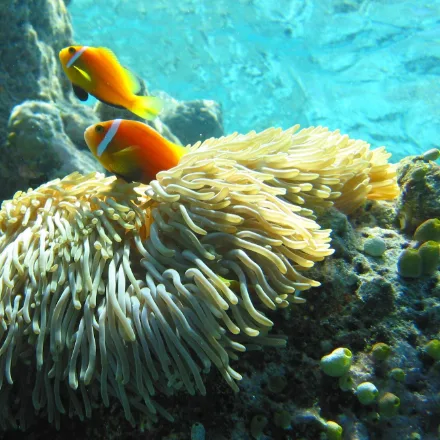
Maldives Anemonefish Regular
Amphiprion nigripes
A clownfish found only in Sri Lanka, the Maldives and the Lakshadweep, and nowhere else on earth.
Where: Anemones on the shallow coral of Bar Reef. Best: November to April.
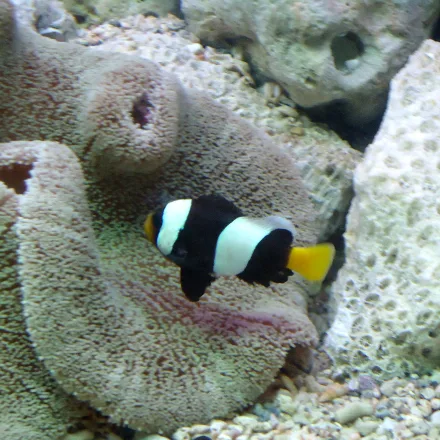
Sebae Anemonefish Regular
Amphiprion sebae
The big dark anemonefish of the northern Indian Ocean, with a yellow tail that gives it away from a distance.
Where: Sandy margins and carpet anemones around Bar Reef. Best: November to April.
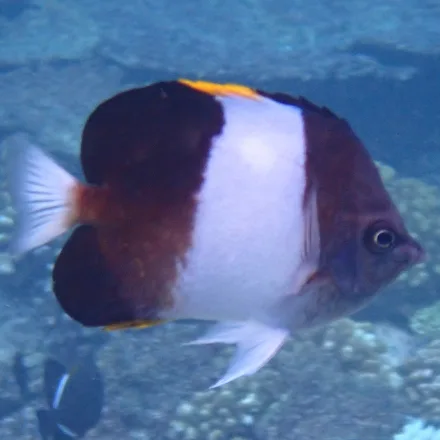
Black Pyramid Butterflyfish Occasional
Hemitaurichthys zoster
They gather in the current in hundreds, and the white wedge on each flank turns the whole shoal into a drifting cloud of triangles.
Where: Current-swept edges of Bar Reef. Best: November to April.
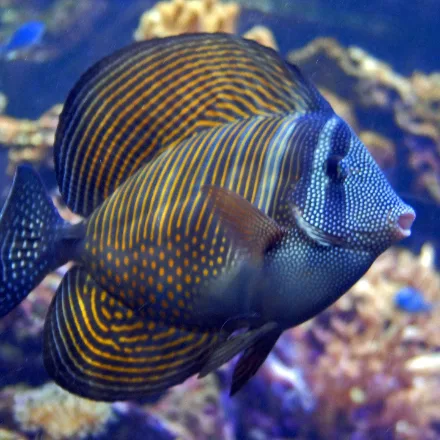
Indian Sailfin Tang Occasional
Zebrasoma desjardinii
It raises a dorsal fin nearly as tall as its own body, and a startled one seems to double in size in front of you.
Where: Bar Reef coral tops. Best: November to April.
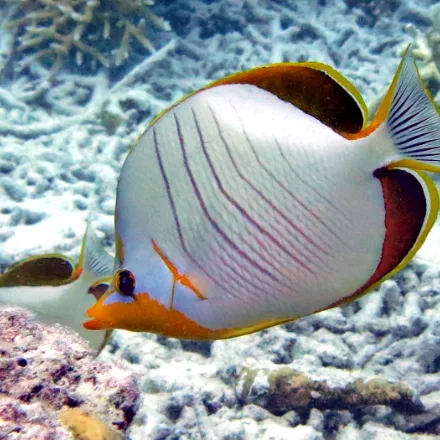
Yellowhead Butterflyfish Occasional
Chaetodon xanthocephalus
An Indian Ocean butterflyfish that pairs for life, and you almost never see one without the other close by.
Where: Bar Reef coral and rubble. Best: November to April.
Sharks and rays
1 species
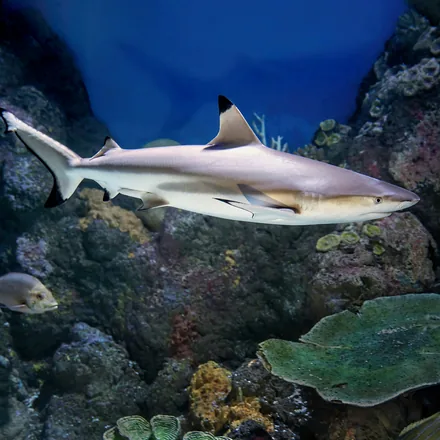
Blacktip Reef Shark Occasional Vulnerable
Carcharhinus melanopterus
The neat little reef shark of the shallows, its black-tipped fins often cutting the surface over sun-lit sand flats.
Where: Shallow reef and sand flats around Bar Reef. Best: November to April.
Molluscs
1 species
Small Giant Clam Regular
Tridacna maxima
The electric blue and green lips are not pigment for show. They are farming light, and the clam gets most of its food from algae living in its own flesh.
Where: Shallow coral of Bar Reef. Best: November to April.
Corals and anemones
2 species
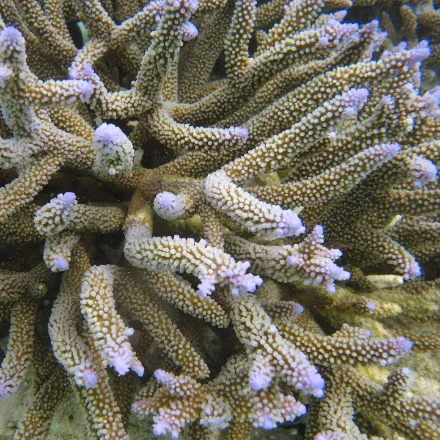
Staghorn Coral Common
Acropora species
The fast-growing branching coral that builds the living thickets of the reef, nursery and shelter for a whole community.
Where: Bar Reef, the largest reef system in Sri Lanka. Best: November to April. Bar Reef was severely bleached in 1998 and again in 2016. What is there now is regrowth.
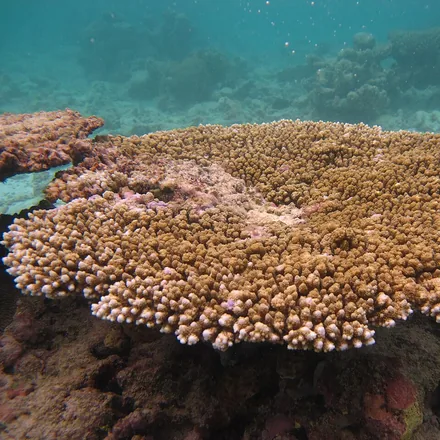
Table Coral Regular Near Threatened
Acropora hyacinthus
Grows outward faster than it grows up, spreading a flat platform that shades out every competitor beneath it.
Where: Bar Reef coral flats. Best: November to April.
Planning
November to April, when the northeast monsoon leaves the northwest coast workable. Boats leave at dawn and the dolphins are usually found within an hour. Superpods attract fleets, and a pod that is driven into splits and goes down, so the quiet end of the season is worth more than the peak of it. On the reef, the coral is recovering from bleaching and is fragile. The dugong population here is too small and too scattered to be a realistic sighting, whatever a listing says.
Compare dolphin watching, snorkelling and diving trips on the northwest coast
Some links on this page are affiliate links. If you book through them, Wildseer may earn a small commission at no extra cost to you.
Frequently asked questions
When can you see dolphins at Kalpitiya?
November to April, when the northwest coast is calm. Spinner dolphins are present through the season and the largest pods, running into the thousands, are usually seen from December to March.
What is the Bar Reef?
The largest reef system in Sri Lanka and a protected marine sanctuary off the Kalpitiya peninsula. It carries Indo-Pacific reef fauna and has been hit hard by bleaching, so expect a recovering reef rather than a pristine one.
Can you see dugongs in Sri Lanka?
Almost certainly not. A remnant population survives in the shallow seagrass off Kalpitiya and in the Gulf of Mannar, and it is very small and very rarely seen. Treat any trip sold on a dugong sighting as a bad sign.
Can you see whales at Kalpitiya?
Blue whale, sperm whale, Bryde’s whale, false killer whale and killer whale are all recorded offshore, and all are uncommon here compared with Mirissa in the south or Trincomalee in the east.
Explore Sri Lanka wildlife by group
 Mammals of Sri Lanka
 Birds of Sri Lanka
 Reptiles and amphibians of Sri Lanka
 Fish of Sri Lanka
 Sharks and rays of Sri Lanka
 Reef invertebrates of Sri Lanka
 Insects and spiders of Sri Lanka
Part of the Wildlife in Sri Lanka guide.
Explore Sri Lanka wildlife by place
- Adams Peak wildlife
- Arugam Bay marine life
- Bundala wildlife
- Colombo wildlife
- Ella wildlife
- Gal Oya wildlife
- Great Basses marine life
- Hikkaduwa marine life
- Horton Plains wildlife
- Jaffna wildlife
- Kandy wildlife
- Kanneliya wildlife
- Kitulgala wildlife
- Knuckles wildlife
- Kumana wildlife
- Mannar marine life
- Minneriya wildlife
- Mirissa marine life
- Rekawa marine life
- Sigiriya wildlife
- Sinharaja wildlife
- Tangalle marine life
- Trincomalee marine life
- Udawalawe wildlife
- Wasgamuwa wildlife
- Wilpattu wildlife
- Yala wildlife
Image credits
Square thumbnails are cropped from the original. Wide banner images are cropped to a band. Other images are resized only. No other changes have been made.
- Spinner Dolphin (cropped to square): Alexia Pihier for MDC SeaMarc Maldives | CC BY-SA 4.0, cropped
- Dugong (resized): Julien Willem | CC BY-SA 3.0, cropped
- Blue Whale: Carina Gsottbauer | CC BY-SA 4.0, cropped
- Green sea turtle: Unsplash | Unsplash License, cropped
- Small Giant Clam: RevolverOcelot | CC BY-SA 3.0, cropped
- Bryde’s Whale (cropped to square): Chainfoto | CC BY 4.0, cropped
- False Killer Whale (cropped to square): Ricardo Fernandes | CC BY-SA 3.0, cropped
- Sperm Whale: NOAA Photo Library | Public domain, cropped
- Killer Whale: NOAA, United States National Oceanic and Atmospheric Administration | Public domain, cropped
- Dugong (cropped to square): Julien Willem | CC BY-SA 3.0, cropped
- Pied Kingfisher: Charles J. Sharp | CC BY-SA 4.0, cropped
- Crab-plover: AL BADUSH | CC BY-SA 4.0, cropped
- Eurasian Spoonbill: Ian Kirk from Broadstone, Dorset, UK | CC BY 2.0, cropped
- Great Thick-knee: Cyndy Sims Parr | CC BY-SA 2.0, cropped
- Greater Flamingo: Charles J. Sharp | CC BY-SA 4.0, cropped
- Green Sea Turtle: Randall Ruiz | Unsplash License, cropped
- Hawksbill Turtle (cropped to square): Daniel Sasse | CC BY-SA 4.0, cropped
- Olive Ridley Turtle (cropped to square): Bernard Gagnon | CC BY-SA 3.0, cropped
- Beaked Sea Snake (cropped to square): Shaunak Modi | CC BY 4.0, cropped
- Indian Chameleon: No machine-readable author provided. M.arunprasad assumed (based on copyright claims). | CC BY 2.5, cropped
- Little File Snake (cropped to square): Matt from Melbourne, Australia | CC BY 2.0, cropped
- Saw-scaled Viper: Uajith | CC BY-SA 3.0, cropped
- Powder Blue Surgeonfish (cropped to square): Amada44 | CC BY-SA 3.0, cropped
- Maldives Anemonefish: Jan Derk | Public domain, cropped
- Sebae Anemonefish: Ranjithsiji | CC BY-SA 3.0, cropped
- Black Pyramid Butterflyfish: Jean-Paul Boerekamps | CC0, cropped
- Indian Sailfin Tang: Hectonichus | CC BY-SA 3.0, cropped
- Yellowhead Butterflyfish: Ahmed Abdul Rahman for MDC Seamarc Maldives | CC BY-SA 4.0, cropped
- Blacktip Reef Shark: David Clode | Unsplash License, cropped
- Staghorn Coral (cropped to square): MDC Seamarc Maldives | CC BY-SA 4.0, cropped
- Table Coral (cropped to square): MDC Seamarc Maldives | CC BY-SA 4.0, cropped
- Purple-faced langur in the canopy: kanchana Amilani | Unsplash License, cropped
- White-throated kingfisher on a branch: kanchana Amilani | Unsplash License, cropped
- Green forest lizard in breeding colour: Anas Mohamed Nuski | Pexels Licence, cropped
- Bluestripe snapper over a reef: Jeffry Surianto | Pexels Licence, cropped
- Reef manta rays near the surface: Emma Li | Pexels Licence, cropped
- Nudibranch crossing the sea floor: Chris Spain | Pexels Licence, cropped
- Clipper butterfly on a leaf: Pixabay | Pexels Licence, cropped
Square thumbnails are cropped from the original. Wide banner images are cropped to a band. Other images are resized only. No other changes have been made.
- Spinner Dolphin (cropped to square): Alexia Pihier for MDC SeaMarc Maldives | CC BY-SA 4.0, cropped
- Dugong (resized): Julien Willem | CC BY-SA 3.0, cropped
- Blue Whale: Carina Gsottbauer | CC BY-SA 4.0, cropped
- Green sea turtle: Unsplash | Unsplash License, cropped
- Small Giant Clam: RevolverOcelot | CC BY-SA 3.0, cropped
- Bryde’s Whale (cropped to square): Chainfoto | CC BY 4.0, cropped
- False Killer Whale (cropped to square): Ricardo Fernandes | CC BY-SA 3.0, cropped
- Sperm Whale: NOAA Photo Library | Public domain, cropped
- Killer Whale: NOAA, United States National Oceanic and Atmospheric Administration | Public domain, cropped
- Dugong (cropped to square): Julien Willem | CC BY-SA 3.0, cropped
- Pied Kingfisher: Charles J. Sharp | CC BY-SA 4.0, cropped
- Crab-plover: AL BADUSH | CC BY-SA 4.0, cropped
- Eurasian Spoonbill: Ian Kirk from Broadstone, Dorset, UK | CC BY 2.0, cropped
- Great Thick-knee: Cyndy Sims Parr | CC BY-SA 2.0, cropped
- Greater Flamingo: Charles J. Sharp | CC BY-SA 4.0, cropped
- Green Sea Turtle: Randall Ruiz | Unsplash License, cropped
- Hawksbill Turtle (cropped to square): Daniel Sasse | CC BY-SA 4.0, cropped
- Olive Ridley Turtle (cropped to square): Bernard Gagnon | CC BY-SA 3.0, cropped
- Beaked Sea Snake (cropped to square): Shaunak Modi | CC BY 4.0, cropped
- Indian Chameleon: No machine-readable author provided. M.arunprasad assumed (based on copyright claims). | CC BY 2.5, cropped
- Little File Snake (cropped to square): Matt from Melbourne, Australia | CC BY 2.0, cropped
- Saw-scaled Viper: Uajith | CC BY-SA 3.0, cropped
- Powder Blue Surgeonfish (cropped to square): Amada44 | CC BY-SA 3.0, cropped
- Maldives Anemonefish: Jan Derk | Public domain, cropped
- Sebae Anemonefish: Ranjithsiji | CC BY-SA 3.0, cropped
- Black Pyramid Butterflyfish: Jean-Paul Boerekamps | CC0, cropped
- Indian Sailfin Tang: Hectonichus | CC BY-SA 3.0, cropped
- Yellowhead Butterflyfish: Ahmed Abdul Rahman for MDC Seamarc Maldives | CC BY-SA 4.0, cropped
- Blacktip Reef Shark: David Clode | Unsplash License, cropped
- Staghorn Coral (cropped to square): MDC Seamarc Maldives | CC BY-SA 4.0, cropped
- Table Coral (cropped to square): MDC Seamarc Maldives | CC BY-SA 4.0, cropped
- Purple-faced langur in the canopy: kanchana Amilani | Unsplash License, cropped
- White-throated kingfisher on a branch: kanchana Amilani | Unsplash License, cropped
- Green forest lizard in breeding colour: Anas Mohamed Nuski | Pexels Licence, cropped
- Bluestripe snapper over a reef: Jeffry Surianto | Pexels Licence, cropped
- Reef manta rays near the surface: Emma Li | Pexels Licence, cropped
- Nudibranch crossing the sea floor: Chris Spain | Pexels Licence, cropped
- Clipper butterfly on a leaf: Pixabay | Pexels Licence, cropped