
The Knuckles is the second montane block, and for reptiles it is the best ground in Sri Lanka. A rugged massif of cloud forest, rock streams and patana grassland east of Kandy, isolated for long enough that several animals here exist on this one range and nowhere else on earth.
The lizards are the reason to come. The Knuckles pygmy lizard is confined to this massif, the leaf-nosed lizard is one of the strangest animals on the island and one of the least often seen, and the rhino-horned lizard, black-lipped lizard and hump-nosed lizard are all here. Sixteen reptiles are recorded for the range on this page and most of them are endemic.
The rest follows from the altitude. Yellow-eared bulbul and dull-blue flycatcher work the forest edge, the bush warbler and the scaly thrush are in the thickets, and the golden palm civet is in the canopy at night. The streams carry the stone sucker and the banded mountain loach, and the amphibian list belongs to a wet night rather than a dry morning.
Highlights
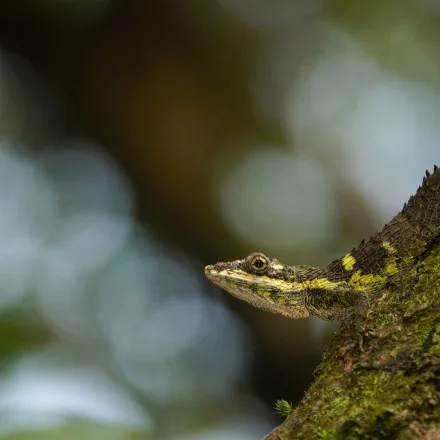
Knuckles Pygmy Lizard
Described in 2006, Critically Endangered within a year, and confined to one mountain range where it sits motionless on wet moss. Where: Montane cloud forest above Riverston and Corbet's Gap. Best: Year round.
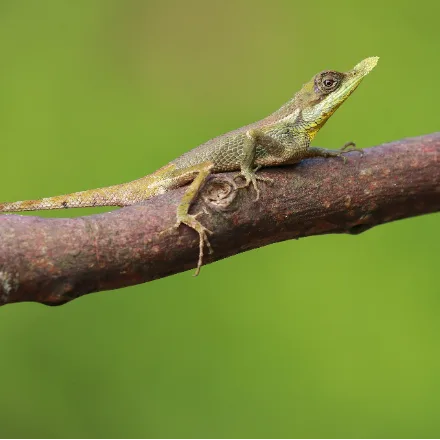
Leaf-nosed Lizard
An Endangered horned lizard that exists on one mountain range and nowhere else in the world. Where: Forest patches around Riverston, Pitawala Pathana, the Thelgamu Oya and Corbet's Gap. Best: February to April and August to September.
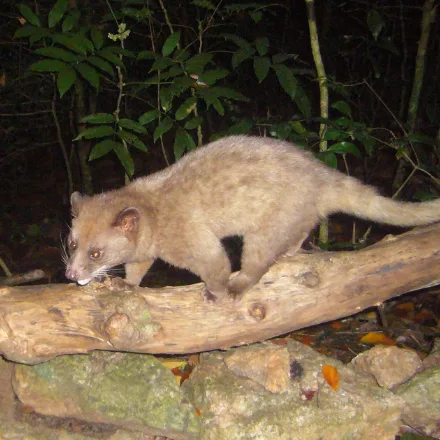
Golden Palm Civet
An endemic civet the colour of wet honey, moving through the canopy at night and almost unknown to visitors. Where: Hill forest canopy. Best: Year round, after dark.
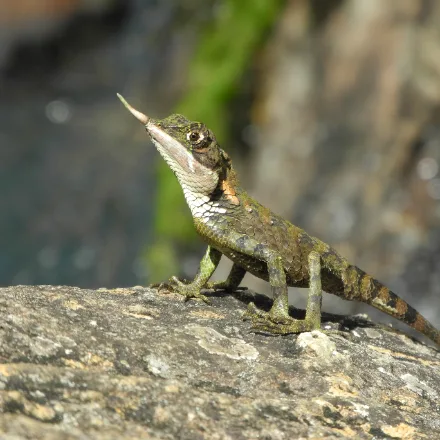
Rhino-horned Lizard
A cloud forest lizard with a curved horn on its nose, and when it is cornered it opens a bright orange mouth at you. Where: Upper montane forest. Best: February to April.
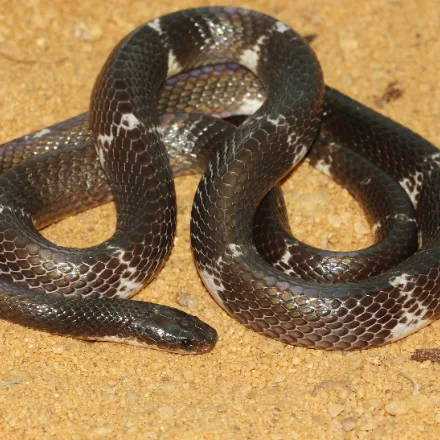
Sri Lankan Krait
An endemic krait of the wet zone hills that has bitten perhaps six people in recorded history. Where: Shaded plantation and forest edge around Riverston. Best: Year round, night.
Mammals
2 species
Golden Palm Civet Rare Vulnerable
Paradoxurus zeylonensis
An endemic civet the colour of wet honey, moving through the canopy at night and almost unknown to visitors.
Where: Hill forest canopy. Best: Year round, after dark.
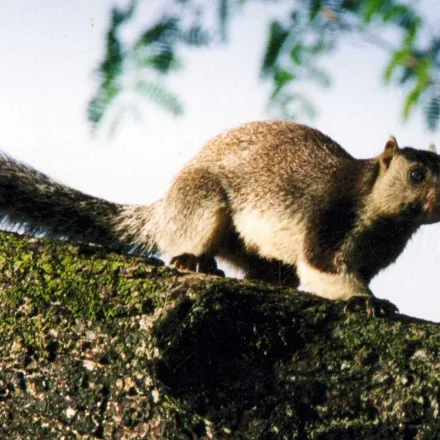
Grizzled Giant Squirrel Rare Near Threatened
Ratufa macroura
A cat-sized squirrel with a tail longer than its body, flowing along a branch and then freezing flat against the bark.
Where: Tall forest on the lower slopes. Best: Year round.
Birds
7 species
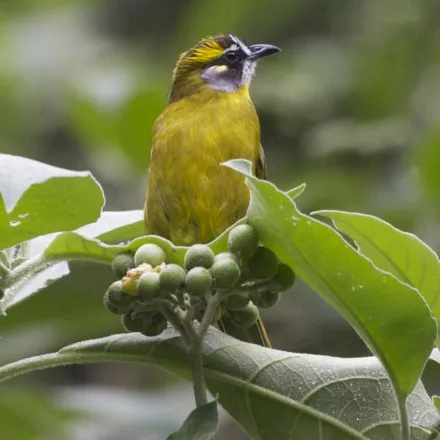
Yellow-eared Bulbul Regular
Kelaartia penicillata
The bird of the highland garden, olive and yellow with an absurd yellow ear tuft sticking out sideways.
Where: Montane forest edge and village gardens. Best: Year round. Berry-eating, in pairs and small parties.
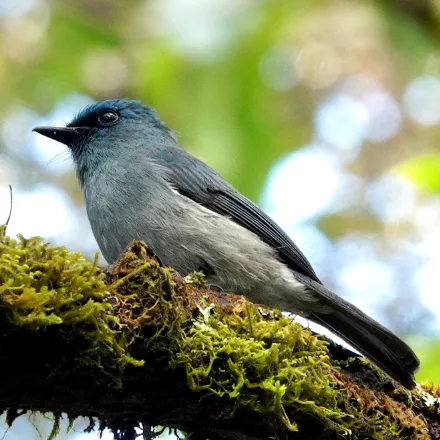
Dull-blue Flycatcher Occasional Near Threatened
Eumyias sordidus
Ash-blue and quietly beautiful, sitting motionless on a mossy branch in the highland cloud forest.
Where: Interior of the cloud forest on the higher trails. Best: Year round. Same still perching habit, fewer people.
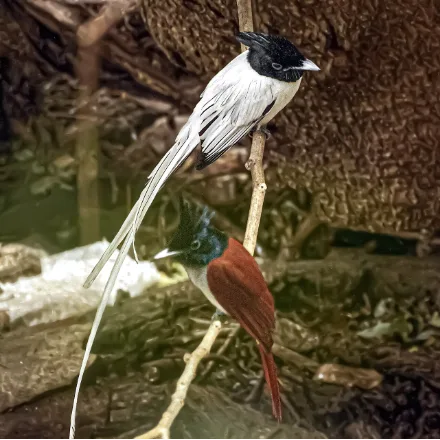
Indian Paradise Flycatcher Occasional
Terpsiphone paradisi
The adult male grows tail streamers three times the length of his own body and trails them through the canopy like ribbon.
Where: Mid elevation forest and forest edge. Best: Nov-Mar.
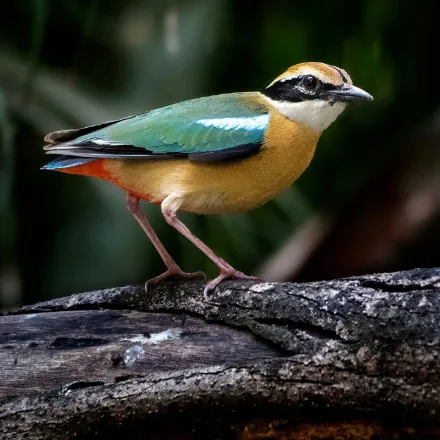
Indian Pitta Rare
Pitta brachyura
Nine colours on a ground bird the size of a thrush, and it arrives every October to spend the winter hopping about in leaf litter.
Where: Forest floor at lower elevations. Best: Nov-Mar.
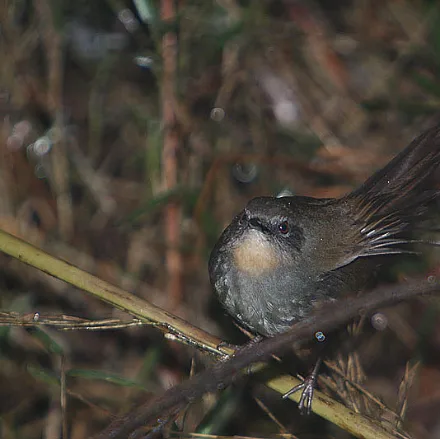
Sri Lanka Bush Warbler Rare Near Threatened
Elaphrornis palliseri
A dull brown skulker of the highland thickets that most birders hear a dozen times and see once.
Where: Scrub and bamboo on the higher slopes. Best: Year round. Same bird, fewer people, harder access.
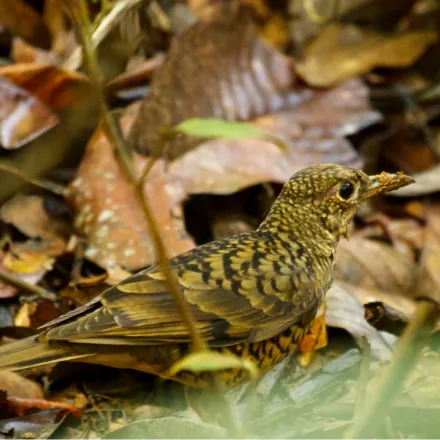
Sri Lanka Scaly Thrush Rare Near Threatened
Zoothera imbricata
A big scaly-patterned thrush that works the forest floor in deep shade and vanishes the moment it knows you are there.
Where: Forest interior with deep litter. Best: Year round, early. Same conditions apply.
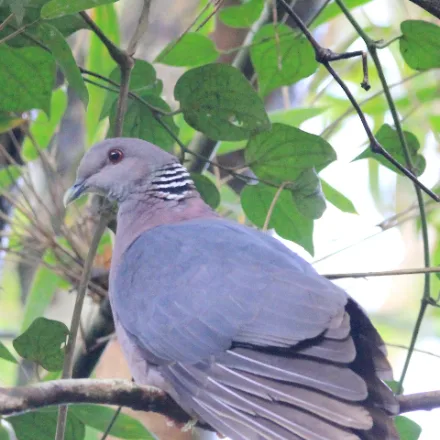
Sri Lanka Wood Pigeon Rare Vulnerable
Columba torringtoniae
A big grey highland pigeon with a chequerboard collar, scarce and shrinking with the forest it needs.
Where: Forest patches on the higher slopes. Best: Year round. Fewer visitors, same difficulty.
Reptiles
16 species
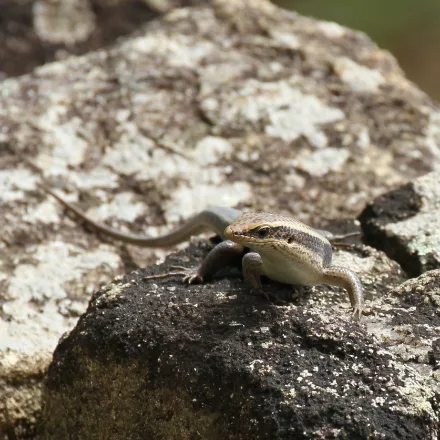
Common Lanka Skink Common
Lankascincus fallax
The little bronze skink that shoots out from under every leaf you turn at Sinharaja belongs to a genus found nowhere but this island.
Where: Forest floor litter and log piles. Best: Year round.
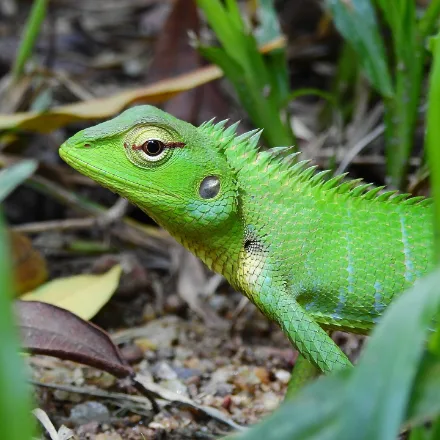
Green Forest Lizard Regular
Calotes calotes
The biggest lizard in the trees here, and in the breeding season the male's head and throat turn crimson.
Where: Forest edge and plantation in the foothills. Best: Year round.
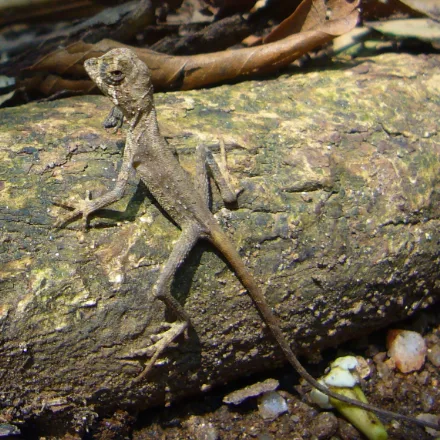
Kangaroo Lizard Regular
Otocryptis wiegmanni
An endemic lizard that runs away on its back legs like a tiny dinosaur, then freezes halfway up a sapling and dares you to find it again.
Where: Shaded forest floor in the wetter foothills. Best: Year round.
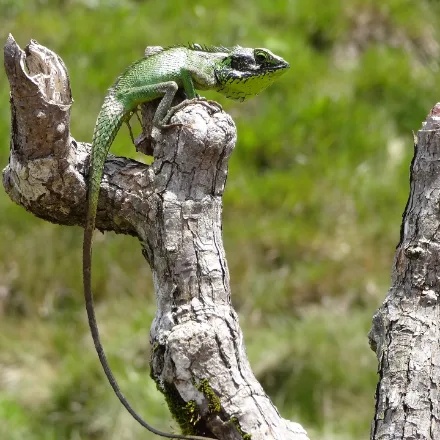
Black-lipped Lizard Occasional Endangered
Calotes nigrilabris
An Endangered endemic that you will see without trying, because it basks on the hedges at Horton Plains.
Where: Montane scrub on the higher ground. Best: Year round.
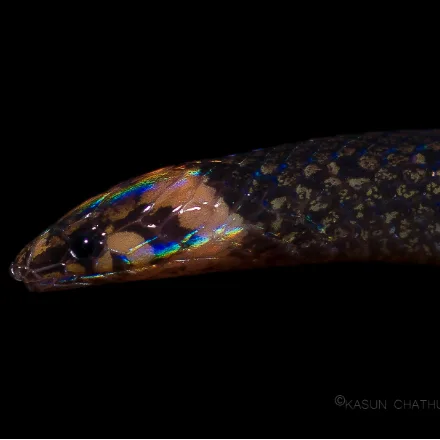
Common Rough-sided Snake Occasional Endangered
Aspidura trachyprocta
A small earthworm hunter from an entire snake genus found nowhere but Sri Lanka, and it lives under the logs at Horton Plains.
Where: Humus and log piles in montane forest. Best: Year round.
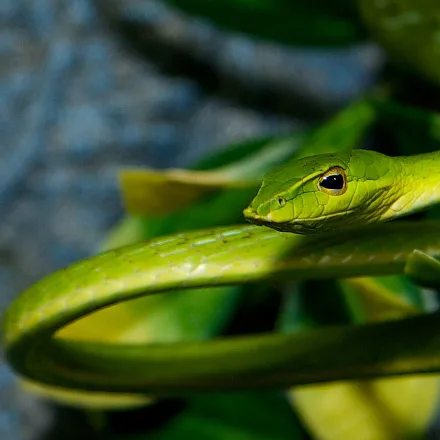
Green Vine Snake Occasional
Ahaetulla nasuta
A snake shaped like a hanging creeper, with a horizontal keyhole pupil that lets it judge distance like a bird of prey.
Where: Scrub and forest edge in the foothills. Best: Year round, daytime.
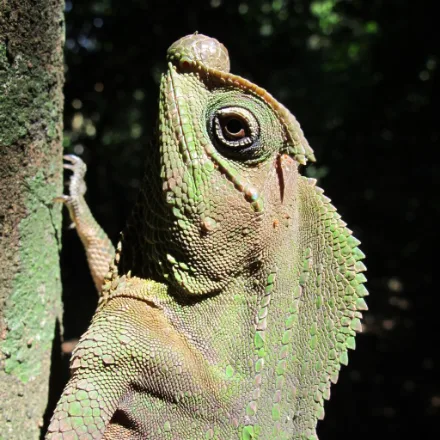
Hump-nosed Lizard Occasional Vulnerable
Lyriocephalus scutatus
The only member of its genus anywhere on earth, with a bulbous knob on its nose and a bony lyre across its skull, and it is slow enough to photograph properly.
Where: Forest and shade tree plantation in the foothills. Best: February to April and August to September.
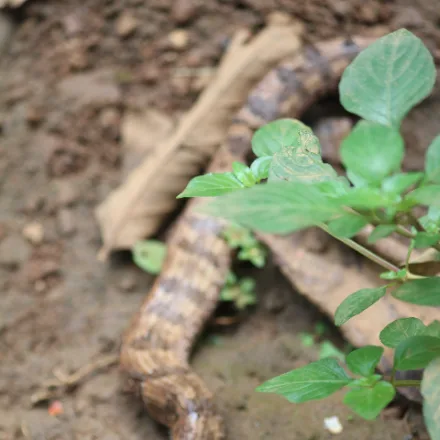
Hump-nosed Pit Viper Occasional
Hypnale hypnale
The commonest cause of snakebite in Sri Lanka, and small enough to sit unnoticed in leaf litter.
Where: Plantation floor and forest edge in the foothills. Best: Year round, night.
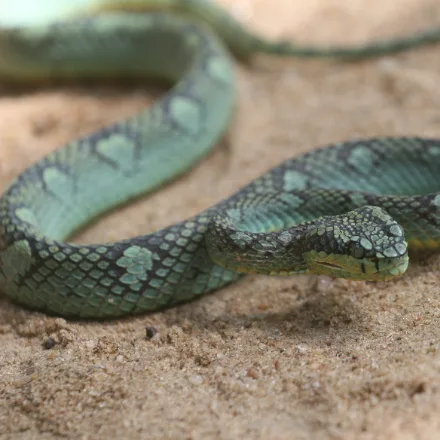
Sri Lankan Green Pit Viper Occasional
Trimeresurus trigonocephalus
An endemic green viper that hangs at eye level in the rainforest at night, and the one snake most visiting naturalists actually come away with.
Where: Forest and cardamom around Riverston and Corbet's Gap. Best: Year round, night.
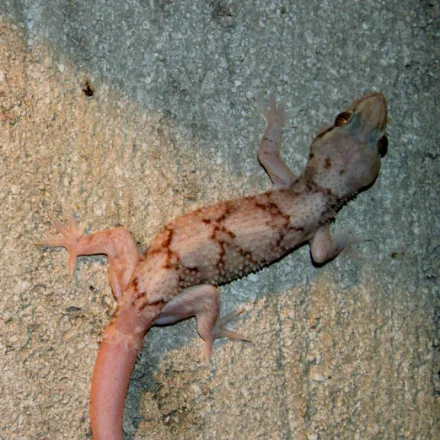
Sri Lankan Termite Hill Gecko Occasional
Hemidactylus depressus
An endemic gecko flattened almost to paper, with a serrated tail, living inside termite mounds and cave roofs.
Where: Rock, tree trunks and buildings in the foothills around Elkaduwa and Rattota. Best: Year round, night.
Leaf-nosed Lizard Rare Endangered
Ceratophora tennentii
An Endangered horned lizard that exists on one mountain range and nowhere else in the world.
Where: Forest patches around Riverston, Pitawala Pathana, the Thelgamu Oya and Corbet's Gap. Best: February to April and August to September. Realistically two days based in the Knuckles with a guide who works the area.
Rhino-horned Lizard Rare Endangered
Ceratophora stoddartii
A cloud forest lizard with a curved horn on its nose, and when it is cornered it opens a bright orange mouth at you.
Where: Upper montane forest. Best: February to April.
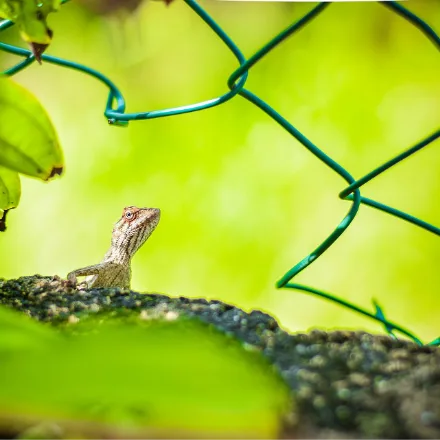
Whistling Lizard Rare
Calotes liolepis
The only lizard in Sri Lanka that whistles at you, which is just as well, because otherwise you would never find it.
Where: Northern face around Riverston, where the animal is the separate endemic Calotes manamendrai. Best: February to April. Split off as its own species in 2014, so a Knuckles whistling lizard is not the same animal as a Sinharaja one.
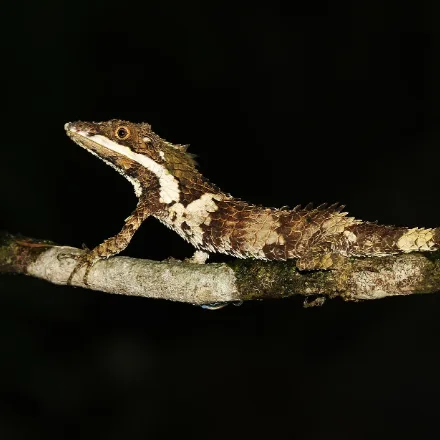
Pygmy Lizard Very rare Endangered
Cophotis ceylanica
A moss mimic with a prehensile tail that grips like a chameleon's, and it gives birth to live young, which agamids are not supposed to do.
Where: Upper montane cloud forest. Best: February to April.
Sri Lankan Krait Very rare Near Threatened
Bungarus ceylonicus
An endemic krait of the wet zone hills that has bitten perhaps six people in recorded history.
Where: Shaded plantation and forest edge around Riverston. Best: Year round, night.
Knuckles Pygmy Lizard Ultra rare Critically Endangered
Cophotis dumbara
Described in 2006, Critically Endangered within a year, and confined to one mountain range where it sits motionless on wet moss.
Where: Montane cloud forest above Riverston and Corbet's Gap. Best: Year round. Researchers describe it as one of the hardest reptiles in the country to study.
Amphibians
5 species
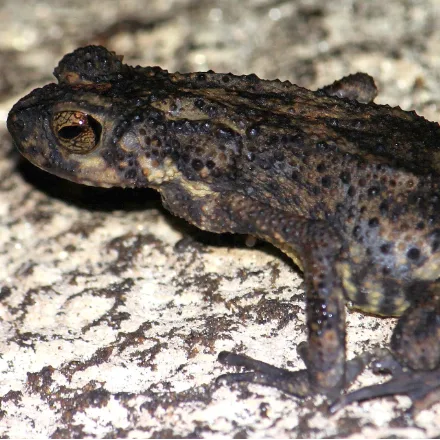
Kelaart's Dwarf Toad Occasional Vulnerable
Adenomus kelaartii
An endemic toad in an endemic genus that is active by day, which makes it the one you can find on an afternoon walk rather than a night one.
Where: Forest stream margins in the foothills. Best: February to April and August to September.
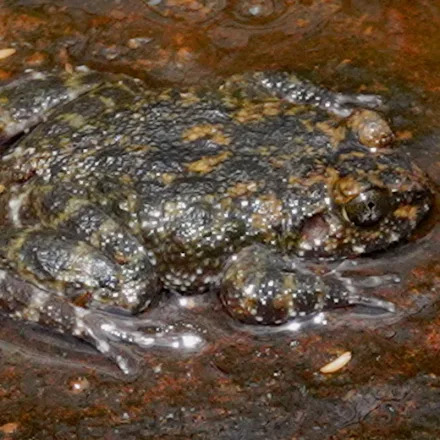
Marbled Rock Frog Occasional Endangered
Nannophrys marmorata
The entire world population lives on the wet rocks of one mountain range, and it is being trampled by people who came to look at the waterfalls.
Where: Wet boulders in the fast streams around Riverston and Corbet's Gap. Best: February to April and August to September, night. Tread carefully. Tourist footfall on these streams is one of the threats to the species.
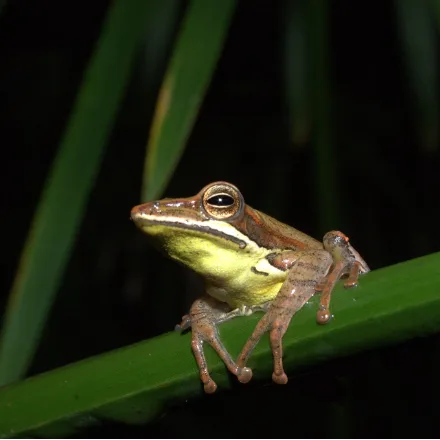
Montane Hourglass Tree Frog Occasional Endangered
Taruga eques
The female kicks her own foam nest into shape with her hind legs while hanging over a highland pond, and she is nearly twice the length of the male clinging to her.
Where: Highland ponds and marsh around Riverston. Best: February to April and August to September, night.
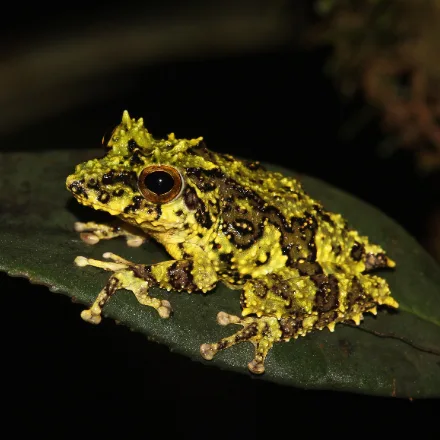
Schmarda's Shrub Frog Occasional Endangered
Pseudophilautus schmarda
Horned brows and lichen-mottled skin, so perfectly matched to a mossy branch that guides find it by call and only then by eye.
Where: Montane forest and cardamom around Riverston. Best: February to April and August to September, night.
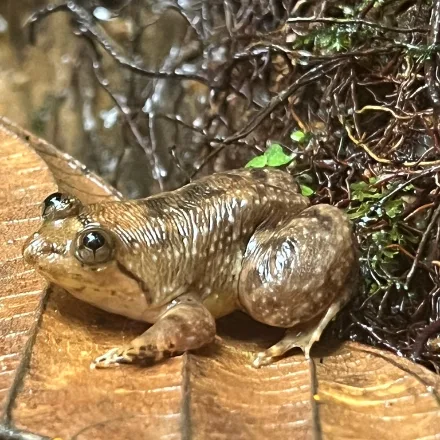
Corrugated Water Frog Rare Near Threatened
Lankanectes corrugatus
An ancient relict in a lineage found nowhere else on earth, and it was the only member of its genus until a second one turned up in 2018.
Where: Slow marshy water in the foothills. Best: February to April, night.
Fish
3 species
Stone Sucker Common
Garra ceylonensis
A fish built to hold station in white water, using a disc on its underside to grip bare rock.
Where: Rapids and rock slabs in the streams around Riverston and Corbet's Gap. Best: January to April and July to September.
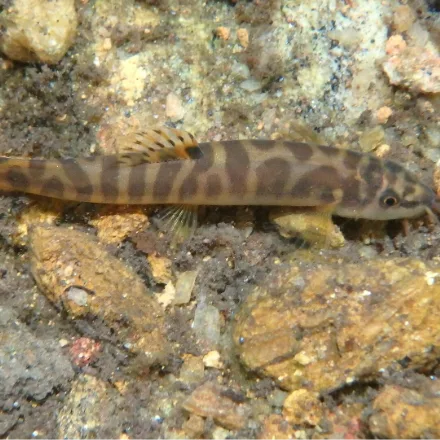
Banded Mountain Loach Regular
Schistura notostigma
A hill stream loach that spends its life under stones in current fast enough to sound like rain.
Where: Stony fast runs in the Riverston and Corbet's Gap streams. Best: January to April.
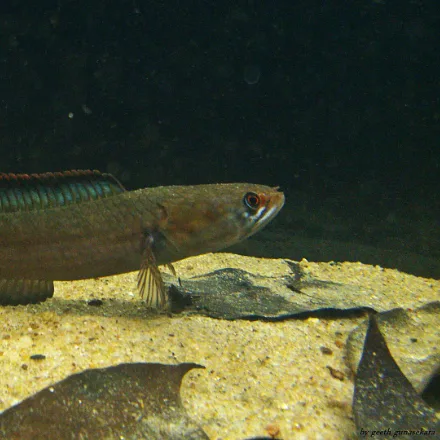
Ceylon Snakehead Rare Vulnerable
Channa orientalis
A snakehead with no pelvic fins at all, found only in Sri Lanka's wet zone streams.
Where: Slow shaded pools in the lower forest streams. Best: February to April.
Insects
2 species
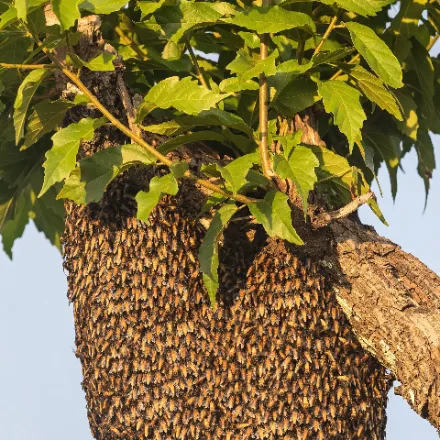
Giant Honey Bee Regular
Apis dorsata
A big, fierce wild bee that hangs single-comb nests the size of a door from high branches and cliffs.
Where: Combs on cliff faces and in tall emergent trees. Best: February to April.
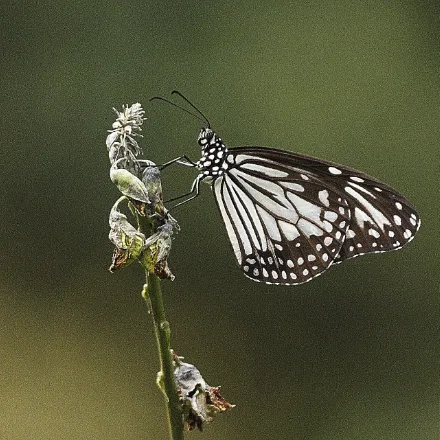
Ceylon Tiger Occasional
Parantica taprobana
A high country butterfly found only on this island, and only above about a thousand metres.
Where: Grassland and forest edge on the higher ridges. Best: February to April.
No free photograph of the Ceylon tiger exists. The image shows the glassy tiger, Parantica aglea, a close relative photographed in southern India.
Spiders and scorpions
1 species
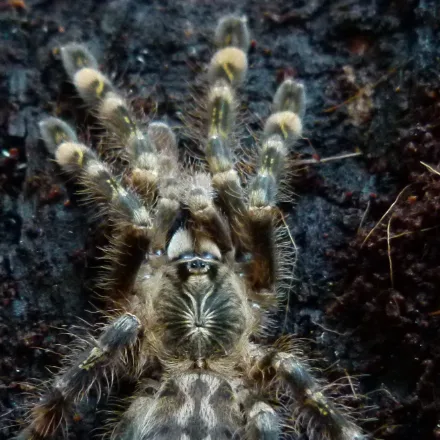
Ivory Ornamental Tarantula Rare
Poecilotheria subfusca
The high country ornamental, living in tree cavities in cool hill forest where no other tarantula of its size can.
Where: Mature trees in the forest around Riverston and Corbet's Gap. Best: February to April, night.
Planning
January to April and July to September. This is the wettest and least predictable weather in the country outside the monsoon coasts, and the range makes its own cloud most afternoons, so plan to be out early. A guide is required for most of the trails and is the difference between walking through the reptiles and seeing them, because these animals are small, cryptic and sit still. Leeches everywhere in any wet spell. The Knuckles is a conservation forest with real access restrictions and a permit requirement. The endemic lizards here are the population that supplies an illegal collection trade.
Compare guided treks, night walks and birding in the Knuckles range
Some links on this page are affiliate links. If you book through them, Wildseer may earn a small commission at no extra cost to you.
Frequently asked questions
What wildlife can you see in the Knuckles?
An exceptional endemic reptile list, including the Knuckles pygmy lizard which lives on this massif alone, the leaf-nosed lizard, rhino-horned lizard and black-lipped lizard. Add highland endemic birds, the golden palm civet at night, endemic stream fish, and montane frogs.
Do you need a permit for the Knuckles?
Access to most of the conservation forest is controlled and a permit and a guide are normally required. It is not a formality: the range is a protected watershed with serious erosion and collection pressure.
When is the best time to visit the Knuckles?
January to April and July to September. Even then the massif builds cloud through the day, so early starts matter more here than almost anywhere else on the island.
Is the Knuckles good for birding?
Good rather than exceptional, and the draw is the highland set: yellow-eared bulbul, dull-blue flycatcher, Sri Lanka bush warbler, wood pigeon and scaly thrush. If birds are the whole trip, Sinharaja and Horton Plains give more. The Knuckles is where you go for the lizards.
Explore Sri Lanka wildlife by group
 Mammals of Sri Lanka
 Birds of Sri Lanka
 Reptiles and amphibians of Sri Lanka
 Fish of Sri Lanka
 Sharks and rays of Sri Lanka
 Reef invertebrates of Sri Lanka
 Insects and spiders of Sri Lanka
Part of the Wildlife in Sri Lanka guide.
Explore Sri Lanka wildlife by place
- Adams Peak wildlife
- Arugam Bay marine life
- Bundala wildlife
- Colombo wildlife
- Ella wildlife
- Gal Oya wildlife
- Great Basses marine life
- Hikkaduwa marine life
- Horton Plains wildlife
- Jaffna wildlife
- Kalpitiya marine life
- Kandy wildlife
- Kanneliya wildlife
- Kitulgala wildlife
- Kumana wildlife
- Mannar marine life
- Minneriya wildlife
- Mirissa marine life
- Rekawa marine life
- Sigiriya wildlife
- Sinharaja wildlife
- Tangalle marine life
- Trincomalee marine life
- Udawalawe wildlife
- Wasgamuwa wildlife
- Wilpattu wildlife
- Yala wildlife
Image credits
Square thumbnails are cropped from the original. Wide banner images are cropped to a band. Other images are resized only. No other changes have been made.
- Knuckles Pygmy Lizard: desertnaturalist | CC BY 4.0, cropped
- Leaf-nosed Lizard: Rangana Abeyrathne | CC BY-SA 4.0, cropped
- Golden Palm Civet: Pieter Prins | CC BY-SA 4.0, cropped
- Rhino-horned Lizard: Calynn | CC BY-SA 4.0, cropped
- Sri Lankan Krait: Buddhika.jm(Buddhika Mawella) | CC BY-SA 4.0, cropped
- Grizzled Giant Squirrel: Cyrillic at English Wikipedia | Public domain, cropped
- Yellow-eared Bulbul: Lip Kee from Singapore, Republic of Singapore | CC BY-SA 2.0, cropped
- Dull-blue Flycatcher: desertnaturalist | CC BY 4.0, cropped
- Indian Paradise Flycatcher: Drsssuresh1961 | CC0, cropped
- Indian Pitta: Navonil Dutta | CC BY-SA 4.0, cropped
- Sri Lanka Bush Warbler: Steve Garvie from Dunfermline, Fife, Scotland | CC BY-SA 2.0, cropped
- Sri Lanka Scaly Thrush: Thimindu Goonatillake from Denver, USA | CC BY-SA 2.0, cropped
- Sri Lanka Wood Pigeon: Anuradha Amarakoon | CC BY-SA 4.0, cropped
- Common Lanka Skink: Peyman Zehtab Fard | CC BY 2.0, cropped
- Green Forest Lizard: Rehman Abubakr | CC BY-SA 4.0, cropped
- Kangaroo Lizard: Nyanatusita | CC BY-SA 3.0, cropped
- Black-lipped Lizard: Cherubino | CC BY-SA 3.0, cropped
- Common Rough-sided Snake: Kasun withanage | CC BY-SA 4.0, cropped
- Green Vine Snake: Stephane Lemieux - STEFBYSTEF | CC BY-SA 3.0, cropped
- Hump-nosed Lizard: Nyanatusita | CC BY-SA 3.0, cropped
- Hump-nosed Pit Viper: Praveenp | CC BY-SA 4.0, cropped
- Sri Lankan Green Pit Viper: Gihan Jayaweera | CC BY-SA 3.0, cropped
- Sri Lankan Termite Hill Gecko: Gihan Jayaweera | CC BY-SA 4.0, cropped
- Whistling Lizard: Dilma Jayatissa | CC BY-SA 4.0, cropped
- Pygmy Lizard: Buddhika.jm(Buddhika Mawella) | CC BY-SA 4.0, cropped
- Kelaart’s Dwarf Toad: Buddhika Mawella ( Buddhika.jm at English Wikipedia ) | CC BY 3.0, cropped
- Marbled Rock Frog: desertnaturalist | CC BY 4.0, cropped
- Montane Hourglass Tree Frog: Gihan Jayaweera | CC BY-SA 3.0, cropped
- Schmarda’s Shrub Frog: Buddhika.jm(Buddhika Mawella) | CC BY-SA 4.0, cropped
- Corrugated Water Frog: Sharon Reid | CC BY 4.0, cropped
- Stone Sucker: iNaturalist contributor, no rights reserved | CC0, cropped
- Banded Mountain Loach: (c) Pieter Prins, some rights reserved (CC BY-SA) | CC BY-SA 4.0, cropped
- Ceylon Snakehead: Seriousgeeth | CC BY-SA 4.0, cropped
- Giant Honey Bee (cropped to square): Basile Morin | CC BY-SA 4.0, cropped
- Ceylon Tiger: Girish Mohan | CC BY-SA 4.0, cropped
- Ivory Ornamental Tarantula: Pawel W. | CC BY-SA 3.0, cropped
- Purple-faced langur in the canopy: kanchana Amilani | Unsplash License, cropped
- White-throated kingfisher on a branch: kanchana Amilani | Unsplash License, cropped
- Green forest lizard in breeding colour: Anas Mohamed Nuski | Pexels Licence, cropped
- Bluestripe snapper over a reef: Jeffry Surianto | Pexels Licence, cropped
- Reef manta rays near the surface: Emma Li | Pexels Licence, cropped
- Nudibranch crossing the sea floor: Chris Spain | Pexels Licence, cropped
- Clipper butterfly on a leaf: Pixabay | Pexels Licence, cropped
Square thumbnails are cropped from the original. Wide banner images are cropped to a band. Other images are resized only. No other changes have been made.
- Knuckles Pygmy Lizard: desertnaturalist | CC BY 4.0, cropped
- Leaf-nosed Lizard: Rangana Abeyrathne | CC BY-SA 4.0, cropped
- Golden Palm Civet: Pieter Prins | CC BY-SA 4.0, cropped
- Rhino-horned Lizard: Calynn | CC BY-SA 4.0, cropped
- Sri Lankan Krait: Buddhika.jm(Buddhika Mawella) | CC BY-SA 4.0, cropped
- Grizzled Giant Squirrel: Cyrillic at English Wikipedia | Public domain, cropped
- Yellow-eared Bulbul: Lip Kee from Singapore, Republic of Singapore | CC BY-SA 2.0, cropped
- Dull-blue Flycatcher: desertnaturalist | CC BY 4.0, cropped
- Indian Paradise Flycatcher: Drsssuresh1961 | CC0, cropped
- Indian Pitta: Navonil Dutta | CC BY-SA 4.0, cropped
- Sri Lanka Bush Warbler: Steve Garvie from Dunfermline, Fife, Scotland | CC BY-SA 2.0, cropped
- Sri Lanka Scaly Thrush: Thimindu Goonatillake from Denver, USA | CC BY-SA 2.0, cropped
- Sri Lanka Wood Pigeon: Anuradha Amarakoon | CC BY-SA 4.0, cropped
- Common Lanka Skink: Peyman Zehtab Fard | CC BY 2.0, cropped
- Green Forest Lizard: Rehman Abubakr | CC BY-SA 4.0, cropped
- Kangaroo Lizard: Nyanatusita | CC BY-SA 3.0, cropped
- Black-lipped Lizard: Cherubino | CC BY-SA 3.0, cropped
- Common Rough-sided Snake: Kasun withanage | CC BY-SA 4.0, cropped
- Green Vine Snake: Stephane Lemieux - STEFBYSTEF | CC BY-SA 3.0, cropped
- Hump-nosed Lizard: Nyanatusita | CC BY-SA 3.0, cropped
- Hump-nosed Pit Viper: Praveenp | CC BY-SA 4.0, cropped
- Sri Lankan Green Pit Viper: Gihan Jayaweera | CC BY-SA 3.0, cropped
- Sri Lankan Termite Hill Gecko: Gihan Jayaweera | CC BY-SA 4.0, cropped
- Whistling Lizard: Dilma Jayatissa | CC BY-SA 4.0, cropped
- Pygmy Lizard: Buddhika.jm(Buddhika Mawella) | CC BY-SA 4.0, cropped
- Kelaart’s Dwarf Toad: Buddhika Mawella ( Buddhika.jm at English Wikipedia ) | CC BY 3.0, cropped
- Marbled Rock Frog: desertnaturalist | CC BY 4.0, cropped
- Montane Hourglass Tree Frog: Gihan Jayaweera | CC BY-SA 3.0, cropped
- Schmarda’s Shrub Frog: Buddhika.jm(Buddhika Mawella) | CC BY-SA 4.0, cropped
- Corrugated Water Frog: Sharon Reid | CC BY 4.0, cropped
- Stone Sucker: iNaturalist contributor, no rights reserved | CC0, cropped
- Banded Mountain Loach: (c) Pieter Prins, some rights reserved (CC BY-SA) | CC BY-SA 4.0, cropped
- Ceylon Snakehead: Seriousgeeth | CC BY-SA 4.0, cropped
- Giant Honey Bee (cropped to square): Basile Morin | CC BY-SA 4.0, cropped
- Ceylon Tiger: Girish Mohan | CC BY-SA 4.0, cropped
- Ivory Ornamental Tarantula: Pawel W. | CC BY-SA 3.0, cropped
- Purple-faced langur in the canopy: kanchana Amilani | Unsplash License, cropped
- White-throated kingfisher on a branch: kanchana Amilani | Unsplash License, cropped
- Green forest lizard in breeding colour: Anas Mohamed Nuski | Pexels Licence, cropped
- Bluestripe snapper over a reef: Jeffry Surianto | Pexels Licence, cropped
- Reef manta rays near the surface: Emma Li | Pexels Licence, cropped
- Nudibranch crossing the sea floor: Chris Spain | Pexels Licence, cropped
- Clipper butterfly on a leaf: Pixabay | Pexels Licence, cropped