
Bundala is the shorebird park, and it is the reason serious birders come to the south coast at all. A Ramsar wetland of brackish lagoons, salt pans and thorn scrub, it takes the migrant waders that have crossed most of Asia to get here, and between September and March the lagoon margins carry numbers you will not see anywhere else on the island.
Greater flamingos are the birds people photograph, standing in the shallow pans in loose pink lines. Behind them sit the ones worth knowing about: the crab-plover, a strange black and white wader with a bill built for the job its name describes, and the great thick-knee on the dry margins with an eye like a headlamp.
Bundala is also a reptile park that nobody markets as one. Mugger crocodiles hold the lagoon channels, star tortoises walk the scrub after rain, and the coastal sand at Palatupana carries Bahir’s fan-throated lizard, an endangered endemic that lives on a thin strip of shore and almost nowhere else. Five sea turtle species use this coast, and the leatherback is on the list because it does come ashore here, not because you will meet one.
Highlights
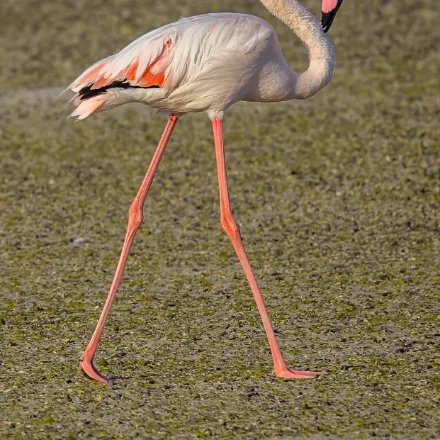
Greater Flamingo
Several thousand birds on the Bundala salt pans in a good winter, filtering brine shrimp upside down. Where: The salt pans and the shallow margins of Bundala and Embilikala lagoons. Best: Dec-Mar.
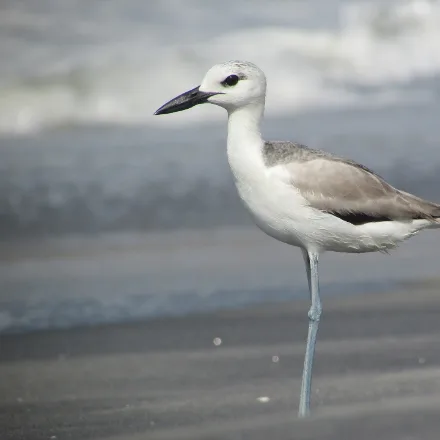
Crab-plover
The only bird in its family anywhere on earth, and the only wader that nests underground. Where: Lagoon shore, occasionally. Best: Dec-Feb.
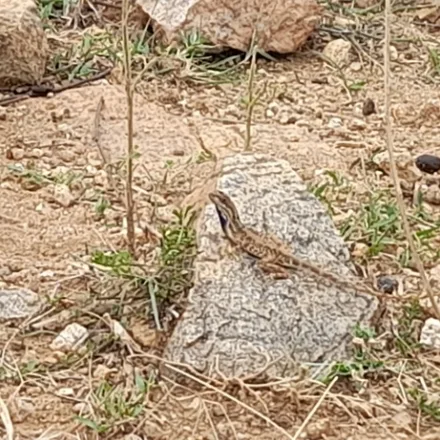
Bahir's Fan-throated Lizard
A finger length lizard of the coastal sand that unfurls an orange flag from its throat and does press ups to show it off. Where: Open sandy ground and dune scrub between the lagoons. Best: Year round, warm mornings.
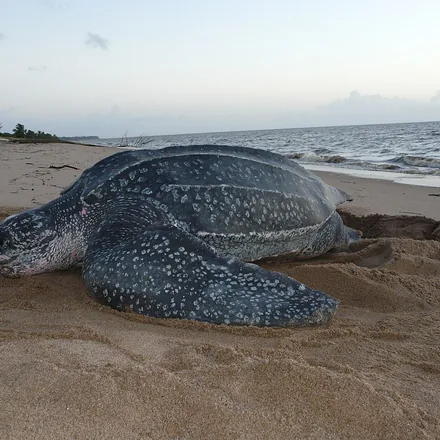
Leatherback Turtle
The largest turtle on Earth, a jellyfish hunter that dives deeper than most whales and crosses whole oceans. Where: The park's beach frontage and the Kalametiya stretch. Best: January to June.
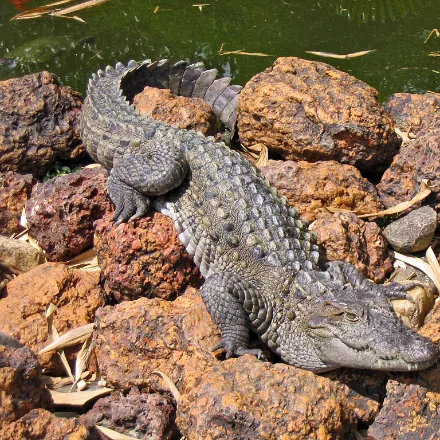
Mugger Crocodile
The broadest snout of any living crocodile, and in one Sri Lankan park block there are more of them per square kilometre than anywhere else on earth. Where: Lagoon margins and the Kirindi Oya. Best: May to September.
Mammals
1 species
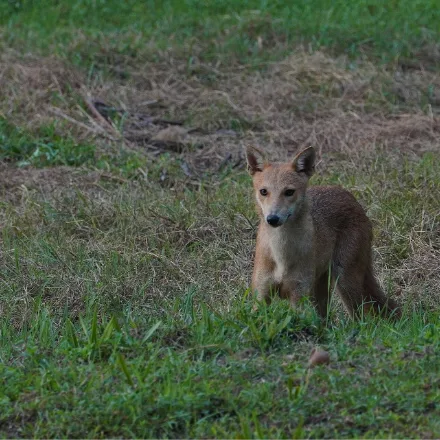
Golden Jackal Occasional
Canis aureus
The dry zone's opportunist, trotting along a track at dawn and howling in chorus at dusk so the whole park knows where it is.
Where: Open scrub and lagoon edges. Best: Year round.
Birds
13 species
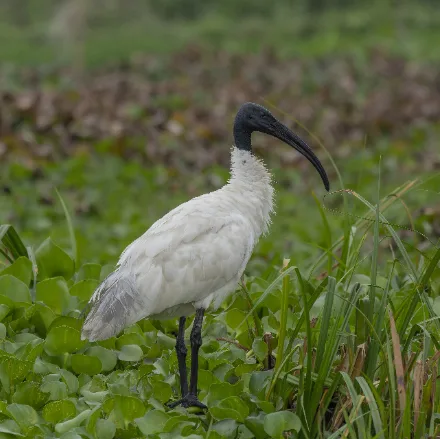
Black-headed Ibis Common Near Threatened
Threskiornis melanocephalus
White body, bare black head and neck, and a bill built for finding what it cannot see.
Where: Lagoon margins and the wet fields behind them. Best: Year round.
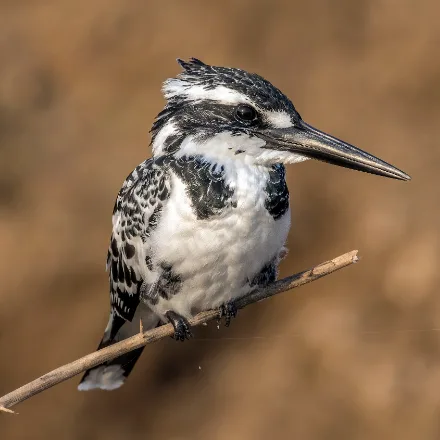
Pied Kingfisher Common
Ceryle rudis
The largest bird in the world that can hover in still air with no wind to help it, which is how it fishes open water no perch reaches.
Where: Hovering over the lagoons and canals. Best: Year round. Easy to watch hovering and diving repeatedly from the track.
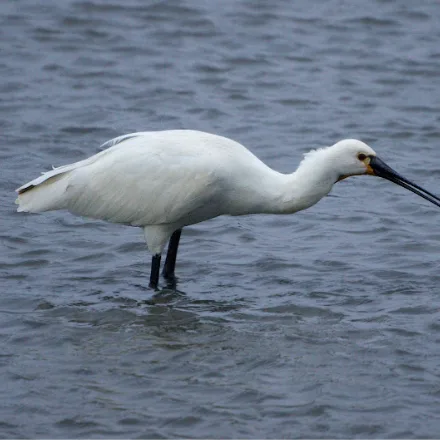
Eurasian Spoonbill Regular
Platalea leucorodia
Feeds by sweeping that absurd bill side to side through the shallows, snapping shut the instant it touches something alive.
Where: The shallow ends of the lagoons and the salt pan margins. Best: Nov-Mar. The most dependable site, often alongside flamingos.
Greater Flamingo Regular
Phoenicopterus roseus
Several thousand birds on the Bundala salt pans in a good winter, filtering brine shrimp upside down.
Where: The salt pans and the shallow margins of Bundala and Embilikala lagoons. Best: Dec-Mar. Several thousand birds in a good winter, and the single best flamingo site on the visitor circuit.
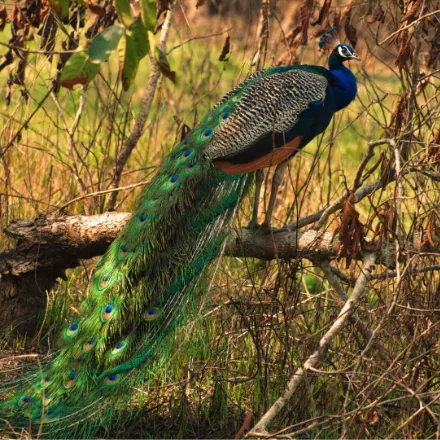
Indian Peafowl Regular
Pavo cristatus
Wild, and behaving like a wild bird: displaying on a termite mound at dawn with leopards in the same scrub.
Where: Thorn scrub behind the lagoons. Best: Year round.
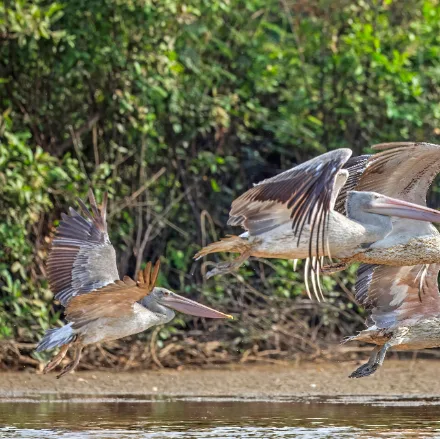
Spot-billed Pelican Regular Near Threatened
Pelecanus philippensis
A pelican that fishes the ancient irrigation tanks, and one of the few large waterbirds doing better now than it was.
Where: Fishing the brackish lagoons and roosting in the fringing trees. Best: Year round. Often in loose company with painted stork and openbill.
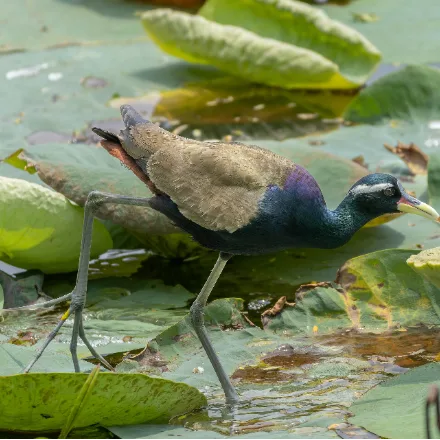
Bronze-winged Jacana Occasional
Metopidius indicus
Toes so long it walks across floating leaves, and a breeding system in which the female holds the territory and the males do all the work.
Where: Freshwater margins behind the lagoons. Best: Year round.
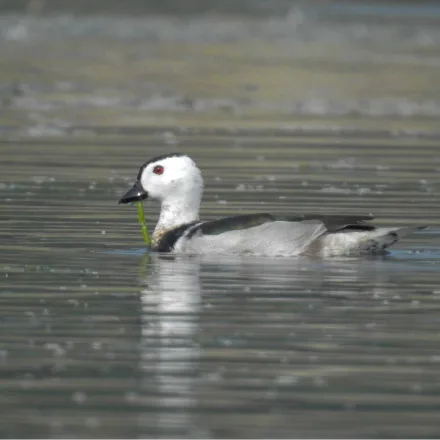
Cotton Pygmy Goose Occasional
Nettapus coromandelianus
One of the smallest waterfowl on earth, nesting in tree holes and sitting out on lily pads.
Where: The freshwater ends of the lagoons. Best: Year round.
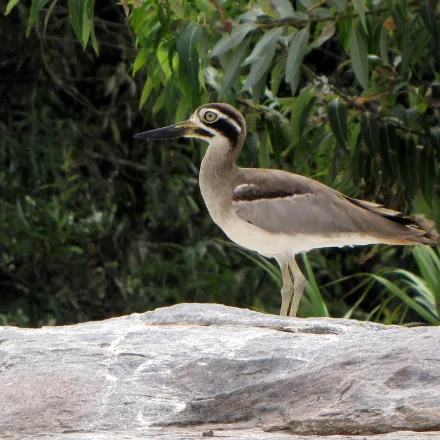
Great Thick-knee Occasional Near Threatened
Esacus recurvirostris
A heavy, huge-eyed shorebird that stands motionless on open shingle all day and only comes alive at dusk.
Where: Bare shingle and sand along the lagoon shores. Best: Year round, late afternoon. Stands motionless in the open all day, which is exactly why it gets missed.
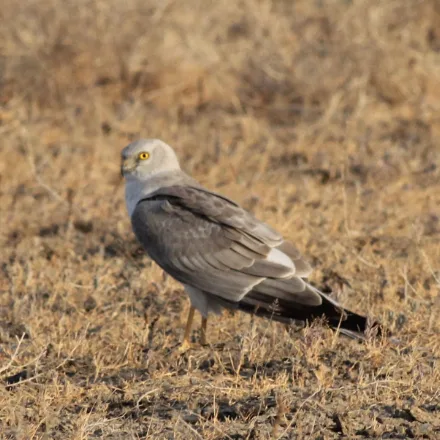
Pallid Harrier Occasional Near Threatened
Circus macrourus
Quarters the grassland at head height on raised wings, tilting and rocking, hunting entirely by sound and surprise.
Where: Quartering the open ground and salt pan margins at head height. Best: Nov-Mar, late afternoon. The most reliable place in the country to watch a harrier hunt, and the low slow flight is the whole spectacle.
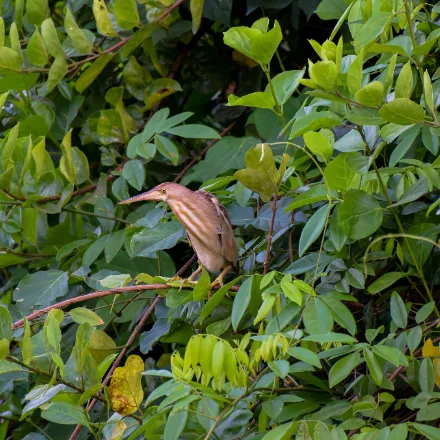
Yellow Bittern Occasional
Ixobrychus sinensis
Freezes with its bill pointed straight up and vanishes into the reeds, which is why almost nobody sees it despite it being everywhere.
Where: Reeds at the freshwater ends of the lagoons. Best: Year round.
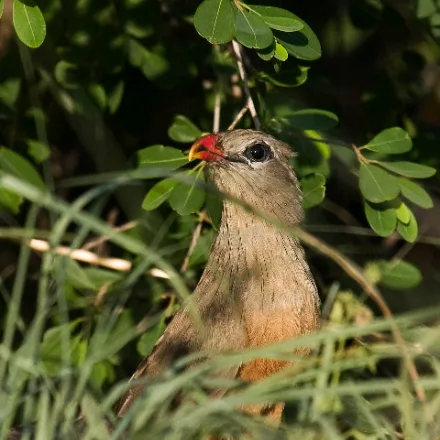
Sirkeer Malkoha Rare
Taccocua leschenaultii
A cuckoo that gave up on being a cuckoo: it builds its own nest, raises its own young and runs along the ground rather than flying.
Where: Thorn scrub behind the lagoons. Best: Year round.
Crab-plover Very rare
Dromas ardeola
The only bird in its family anywhere on earth, and the only wader that nests underground.
Where: Lagoon shore, occasionally. Best: Dec-Feb. Well outside its main range here and a genuine surprise.
Reptiles
14 species
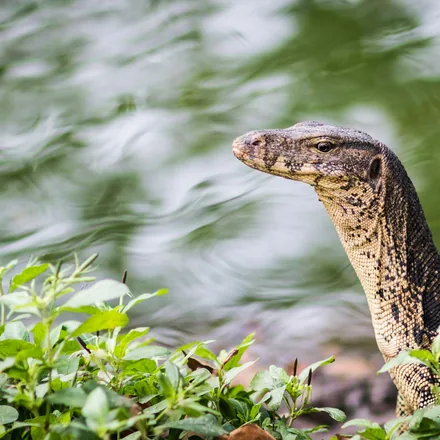
Asian Water Monitor Common
Varanus salvator
A dragon sized lizard that swims canals and city parks, second only to the Komodo dragon in length.
Where: Lagoon margins and the Kirindi Oya. Best: Year round.
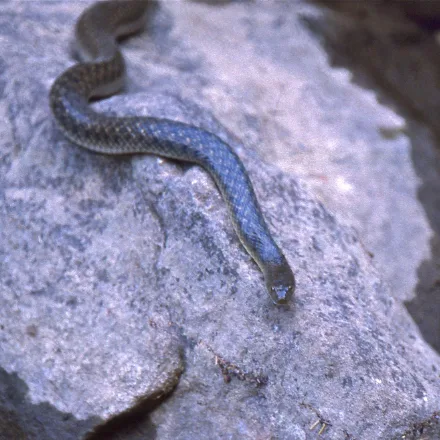
Checkered Keelback Common
Fowlea piscator
The snake you will actually see in Sri Lanka, hunting fish in a paddy channel in broad daylight.
Where: Lagoon margins and the brackish channels. Best: Year round.
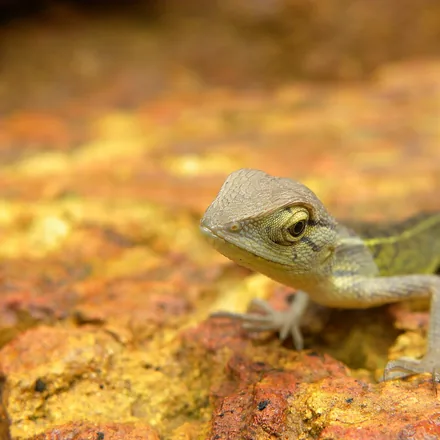
Oriental Garden Lizard Common
Calotes versicolor
The everyday garden lizard whose breeding males flush blood red about the head, earning the name bloodsucker.
Where: Dune scrub and open ground. Best: Year round.
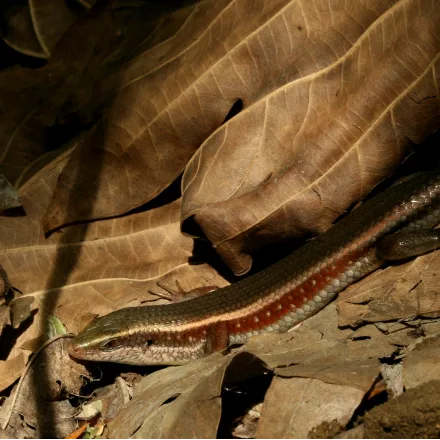
Sri Lankan Common Skink Common
Eutropis lankae
The bronze skink basking on every wall, ruin and hotel lawn in the country turned out in 2020 to be an endemic species, not the Indian one everybody had been calling it.
Where: Open ground and dune scrub. Best: Year round.
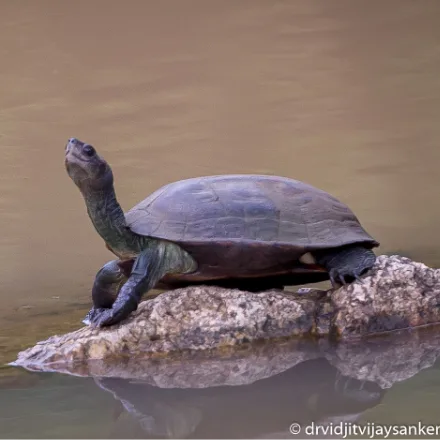
Indian Black Turtle Regular Near Threatened
Melanochelys trijuga
The dark, three keeled turtle basking on every half sunk log in the dry zone, and the northern race is found nowhere else on earth.
Where: Tank and lagoon edges. Best: Year round.
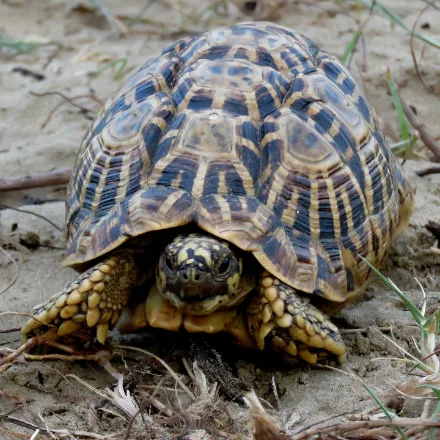
Indian Star Tortoise Regular Vulnerable
Geochelone elegans
The most trafficked tortoise on earth, and the Sri Lankan animals are the biggest and the most boldly starred of the lot.
Where: Grassy verges and open scrub between the lagoons. Best: After showers, October to December and March to April. The most reliable place in the country to find one from a vehicle.
Mugger Crocodile Regular Vulnerable
Crocodylus palustris
The broadest snout of any living crocodile, and in one Sri Lankan park block there are more of them per square kilometre than anywhere else on earth.
Where: Lagoon margins and the Kirindi Oya. Best: May to September. Often lying among the waterbirds rather than apart from them.
Bahir's Fan-throated Lizard Occasional Endangered
Sitana bahiri
A finger length lizard of the coastal sand that unfurls an orange flag from its throat and does press ups to show it off.
Where: Open sandy ground and dune scrub between the lagoons. Best: Year round, warm mornings. Look for a small lizard doing press ups on bare sand.
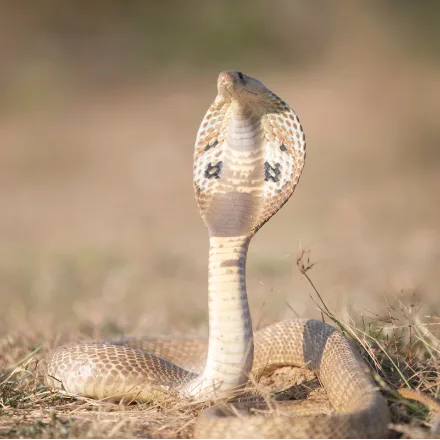
Indian Cobra Occasional
Naja naja
The spectacled cobra of South Asian myth, and one of the very few snakes a visitor to the dry zone parks has a real chance of seeing.
Where: Scrub between the lagoons. Best: Year round.
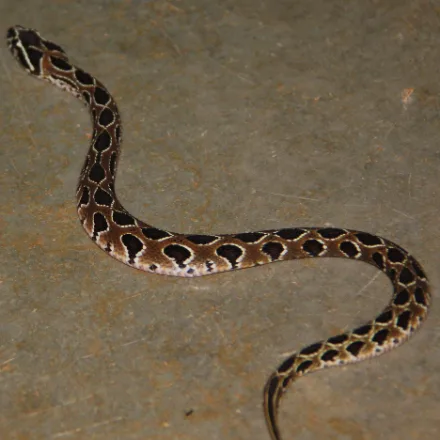
Russell's Viper Occasional
Daboia russelii
The snake that kills more people in Sri Lanka than any other, sitting in plain sight on a paddy bund and hissing like a punctured tyre.
Where: Scrub and grassland between the lagoons. Best: Year round.
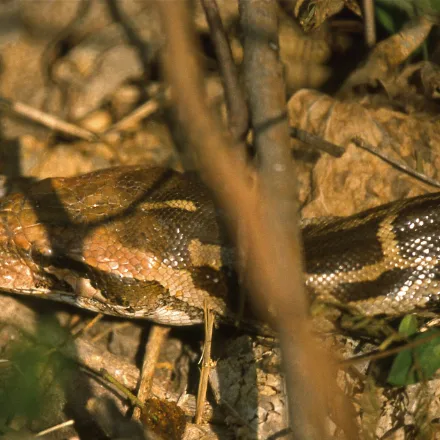
Indian Rock Python Rare Near Threatened
Python molurus
Sri Lanka's largest snake, and in the dry season it lies out at the edge of a shrinking waterhole where every animal in the park has to come.
Where: Lagoon edges and scrub. Best: Year round.
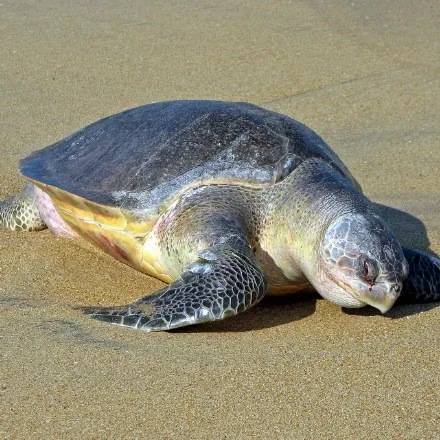
Olive Ridley Turtle Rare Vulnerable
Lepidochelys olivacea
The smallest and most numerous sea turtle, famous elsewhere for mass nestings of thousands at once.
Where: The park's beach frontage. Best: November to March.
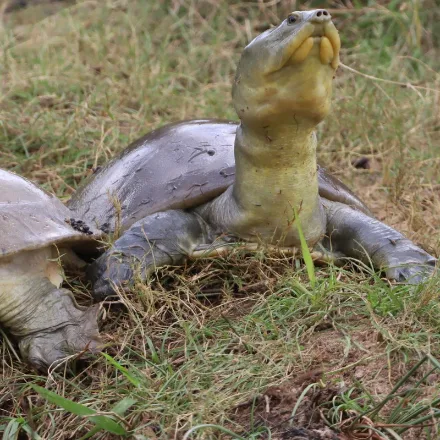
Sri Lankan Flapshell Turtle Rare Vulnerable
Lissemys ceylonensis
The only chelonian species found solely in Sri Lanka, split off from its mainland cousin eight million years ago, and still without a conservation status of its own.
Where: Freshwater channels behind the lagoons. Best: Year round.
Leatherback Turtle Very rare Vulnerable
Dermochelys coriacea
The largest turtle on Earth, a jellyfish hunter that dives deeper than most whales and crosses whole oceans.
Where: The park's beach frontage and the Kalametiya stretch. Best: January to June.
Amphibians
2 species
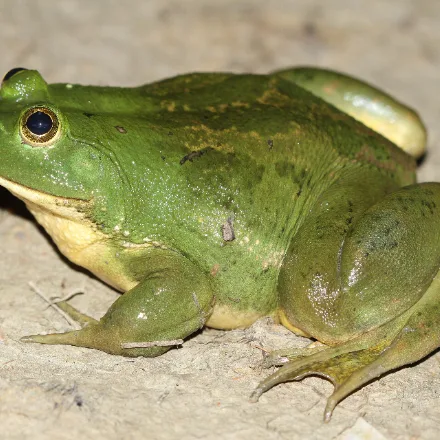
Indian Green Pond Frog Common
Euphlyctis hexadactylus
One of the very few frogs anywhere that deliberately eats plants, which for an order of committed carnivores is close to heresy.
Where: Lagoon margins and freshwater channels. Best: Year round.
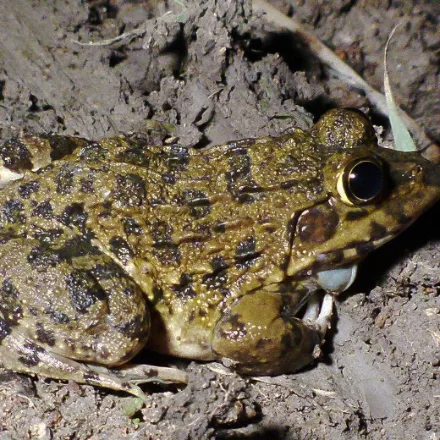
Jerdon's Bullfrog Regular
Hoplobatrachus crassus
The biggest frog on the island, and its tadpoles hunt and eat other tadpoles, including each other when the pool gets crowded.
Where: Flooded grassland and pools between the lagoons. Best: October to January, night.
Fish
1 species
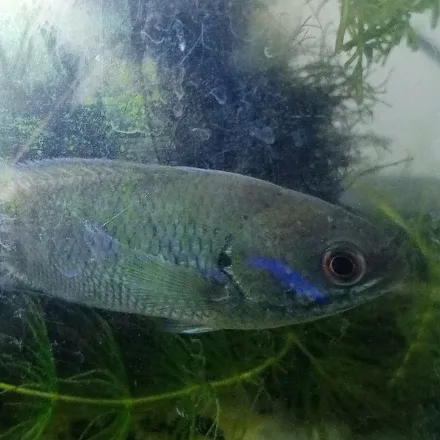
Climbing Perch Regular
Anabas testudineus
A fish that walks out of the water and hauls itself overland on its gill covers, sometimes for hours.
Where: Brackish and freshwater ditches, lagoon margins and paddy behind the dunes. Best: Year round, most obvious after rain.
Insects
4 species
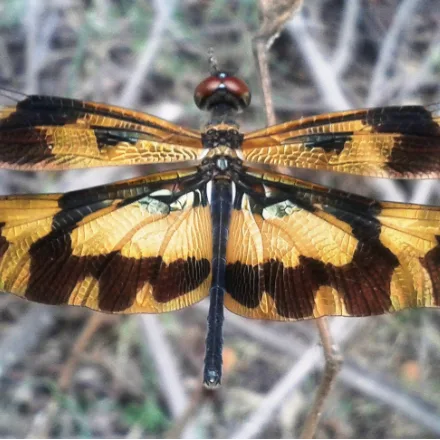
Common Picture Wing Common
Rhyothemis variegata
Flies like a butterfly, not a dragonfly, on wings washed gold and black.
Where: Lagoon margins and marsh vegetation. Best: Year round.
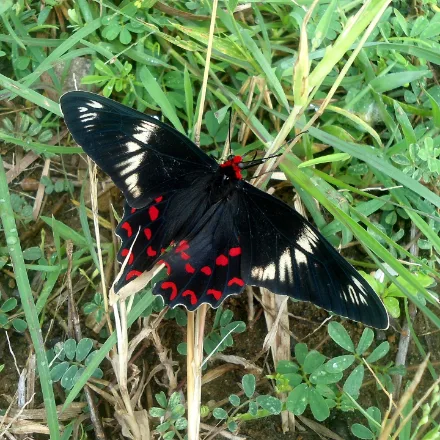
Crimson Rose Common Near Threatened
Pachliopta hector
Flies slowly and in the open because it is poisonous and every predator on the island knows it.
Where: Scrub and lagoon-edge vegetation. Best: Year round.
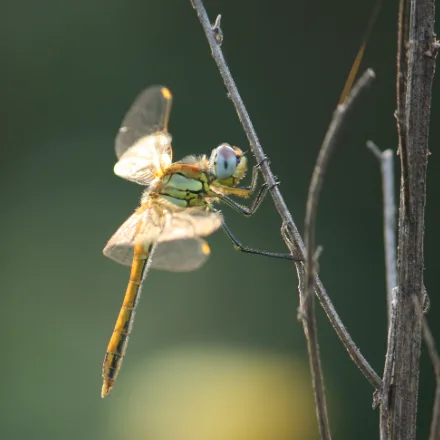
Wandering Glider Common
Pantala flavescens
Makes the longest migration of any insect on earth, crossing open ocean between India and Africa.
Where: Over the lagoon margins, scrub and paddy behind the dunes. Best: October to December.
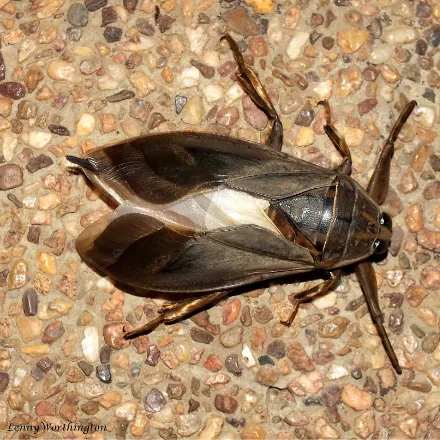
Giant Water Bug Occasional
Lethocerus indicus
Big enough to kill a frog or a small snake, and its bite is rated among the most painful an insect can inflict.
Where: Freshwater ditches and marsh behind the lagoons. Best: Year round.
Spiders and scorpions
1 species
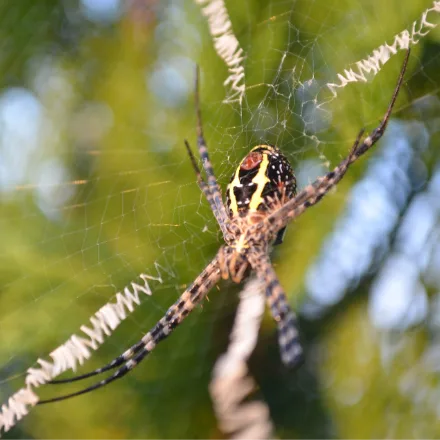
Signature Spider Common
Argiope anasuja
Writes a bold zigzag across the middle of its own web, and nobody is entirely sure why.
Where: Scrub and lagoon-edge vegetation. Best: Year round.
Planning
September to March is the window, because that is when the migrants are in. Early morning for the light on the pans and for the waders before the heat moves them. Bring a scope or accept that a lot of this is distant: these are open lagoons and the birds are out on them. The scrub between the lagoons is where the reptiles are, and it is worth walking the track edges rather than driving past them. Bundala sits immediately west of the busiest stretch of the south coast and its water levels are managed rather than natural, so numbers swing between years. Take the salt pans seriously in the heat, because there is no shade at all.
Compare guided birding mornings and safaris for Bundala and the south coast
Some links on this page are affiliate links. If you book through them, Wildseer may earn a small commission at no extra cost to you.
Frequently asked questions
What birds can you see at Bundala?
Greater flamingo, spot-billed pelican, Eurasian spoonbill, black-headed ibis, crab-plover and great thick-knee are the headline waterbirds, with cotton pygmy goose and bronze-winged jacana on the fresher lagoons and pallid harrier over the scrub.
When is the best time to visit Bundala?
September to March, when the migrant waders are in. Outside that window the resident waterbirds and the reptiles carry the park, which is a quieter and much less crowded trip.
Can you see flamingos in Sri Lanka?
Yes. Bundala is the most reliable southern site, with birds on the salt pans through the northern winter. Mannar and the Jaffna lagoons in the north hold larger numbers.
Is Bundala worth visiting if you are not a birder?
It is a thinner trip than Yala if you want big mammals, and a better one if you want reptiles and landscape. Mugger crocodile, star tortoise, monitor lizards and the coastal fan-throated lizard are all here, and the park is far quieter.
Explore Sri Lanka wildlife by group
 Mammals of Sri Lanka
 Birds of Sri Lanka
 Reptiles and amphibians of Sri Lanka
 Fish of Sri Lanka
 Sharks and rays of Sri Lanka
 Reef invertebrates of Sri Lanka
 Insects and spiders of Sri Lanka
Part of the Wildlife in Sri Lanka guide.
Explore Sri Lanka wildlife by place
- Adams Peak wildlife
- Arugam Bay marine life
- Colombo wildlife
- Ella wildlife
- Gal Oya wildlife
- Great Basses marine life
- Hikkaduwa marine life
- Horton Plains wildlife
- Jaffna wildlife
- Kalpitiya marine life
- Kandy wildlife
- Kanneliya wildlife
- Kitulgala wildlife
- Knuckles wildlife
- Kumana wildlife
- Mannar marine life
- Minneriya wildlife
- Mirissa marine life
- Rekawa marine life
- Sigiriya wildlife
- Sinharaja wildlife
- Tangalle marine life
- Trincomalee marine life
- Udawalawe wildlife
- Wasgamuwa wildlife
- Wilpattu wildlife
- Yala wildlife
Image credits
Square thumbnails are cropped from the original. Wide banner images are cropped to a band. Other images are resized only. No other changes have been made.
- Greater Flamingo: Charles J. Sharp | CC BY-SA 4.0, cropped
- Crab-plover: AL BADUSH | CC BY-SA 4.0, cropped
- Bahir’s Fan-throated Lizard: P Jeganathan | CC BY 4.0, cropped
- Leatherback Turtle (cropped to square): Julien Renoult | CC BY 4.0, cropped
- Mugger Crocodile: Karunakar Rayker from India | CC BY-SA 2.0, cropped
- Golden Jackal: Vengolis | CC BY-SA 4.0, cropped
- Black-headed Ibis: Tisha Mukherjee | CC BY-SA 4.0, cropped
- Pied Kingfisher: Charles J. Sharp | CC BY-SA 4.0, cropped
- Eurasian Spoonbill: Ian Kirk from Broadstone, Dorset, UK | CC BY 2.0, cropped
- Indian Peafowl: Joshianuj | CC BY-SA 4.0, cropped
- Spot-billed Pelican: Charles J. Sharp | CC BY-SA 4.0, cropped
- Bronze-winged Jacana: Tisha Mukherjee | CC BY-SA 4.0, cropped
- Cotton Pygmy Goose: Tisha Mukherjee | CC BY-SA 4.0, cropped
- Great Thick-knee: Cyndy Sims Parr | CC BY-SA 2.0, cropped
- Pallid Harrier: Chinmayisk | CC BY-SA 3.0, cropped
- Yellow Bittern: Vinay bhat | CC BY-SA 4.0, cropped
- Sirkeer Malkoha: N.A.Nazeer | CC BY-SA 2.5 in, cropped
- Asian Water Monitor: John Thomas | Unsplash License, cropped
- Checkered Keelback: Bernard DUPONT from FRANCE | CC BY-SA 2.0, cropped
- Oriental Garden Lizard (cropped to square): Ajay Kuyiloor | CC BY-SA 3.0, cropped
- Sri Lankan Common Skink: Gihan Jayaweera | CC BY-SA 4.0, cropped
- Indian Black Turtle: Dr Vidjit Vijaysanker | CC BY-SA 4.0, cropped
- Indian Star Tortoise: Selvaganesh17 | CC BY-SA 4.0, cropped
- Indian Cobra: Pexels contributor | Pexels Licence, cropped
- Russell’s Viper: StefanSTS | CC BY-SA 3.0, cropped
- Indian Rock Python: Bernard DUPONT from FRANCE | CC BY-SA 2.0, cropped
- Olive Ridley Turtle (cropped to square): Bernard Gagnon | CC BY-SA 3.0, cropped
- Sri Lankan Flapshell Turtle: spacegecko | CC BY 4.0, cropped
- Indian Green Pond Frog: David V. Raju | CC BY-SA 4.0, cropped
- Jerdon’s Bullfrog: L. Shyamal | CC BY-SA 3.0, cropped
- Climbing Perch (cropped to square): Renno Sumarsono | CC0, cropped
- Common Picture Wing: 42sneha | CC BY-SA 3.0, cropped
- Crimson Rose: Adityamadhav83 | CC BY-SA 3.0, cropped
- Wandering Glider: Vivekpuliyeri | CC BY-SA 3.0, cropped
- Giant Water Bug (cropped to square): Len Worthington | CC BY-SA 2.0, cropped
- Signature Spider: Abkhanal | CC BY-SA 3.0, cropped
- Purple-faced langur in the canopy: kanchana Amilani | Unsplash License, cropped
- White-throated kingfisher on a branch: kanchana Amilani | Unsplash License, cropped
- Green forest lizard in breeding colour: Anas Mohamed Nuski | Pexels Licence, cropped
- Bluestripe snapper over a reef: Jeffry Surianto | Pexels Licence, cropped
- Reef manta rays near the surface: Emma Li | Pexels Licence, cropped
- Nudibranch crossing the sea floor: Chris Spain | Pexels Licence, cropped
- Clipper butterfly on a leaf: Pixabay | Pexels Licence, cropped
Square thumbnails are cropped from the original. Wide banner images are cropped to a band. Other images are resized only. No other changes have been made.
- Greater Flamingo: Charles J. Sharp | CC BY-SA 4.0, cropped
- Crab-plover: AL BADUSH | CC BY-SA 4.0, cropped
- Bahir’s Fan-throated Lizard: P Jeganathan | CC BY 4.0, cropped
- Leatherback Turtle (cropped to square): Julien Renoult | CC BY 4.0, cropped
- Mugger Crocodile: Karunakar Rayker from India | CC BY-SA 2.0, cropped
- Golden Jackal: Vengolis | CC BY-SA 4.0, cropped
- Black-headed Ibis: Tisha Mukherjee | CC BY-SA 4.0, cropped
- Pied Kingfisher: Charles J. Sharp | CC BY-SA 4.0, cropped
- Eurasian Spoonbill: Ian Kirk from Broadstone, Dorset, UK | CC BY 2.0, cropped
- Indian Peafowl: Joshianuj | CC BY-SA 4.0, cropped
- Spot-billed Pelican: Charles J. Sharp | CC BY-SA 4.0, cropped
- Bronze-winged Jacana: Tisha Mukherjee | CC BY-SA 4.0, cropped
- Cotton Pygmy Goose: Tisha Mukherjee | CC BY-SA 4.0, cropped
- Great Thick-knee: Cyndy Sims Parr | CC BY-SA 2.0, cropped
- Pallid Harrier: Chinmayisk | CC BY-SA 3.0, cropped
- Yellow Bittern: Vinay bhat | CC BY-SA 4.0, cropped
- Sirkeer Malkoha: N.A.Nazeer | CC BY-SA 2.5 in, cropped
- Asian Water Monitor: John Thomas | Unsplash License, cropped
- Checkered Keelback: Bernard DUPONT from FRANCE | CC BY-SA 2.0, cropped
- Oriental Garden Lizard (cropped to square): Ajay Kuyiloor | CC BY-SA 3.0, cropped
- Sri Lankan Common Skink: Gihan Jayaweera | CC BY-SA 4.0, cropped
- Indian Black Turtle: Dr Vidjit Vijaysanker | CC BY-SA 4.0, cropped
- Indian Star Tortoise: Selvaganesh17 | CC BY-SA 4.0, cropped
- Indian Cobra: Pexels contributor | Pexels Licence, cropped
- Russell’s Viper: StefanSTS | CC BY-SA 3.0, cropped
- Indian Rock Python: Bernard DUPONT from FRANCE | CC BY-SA 2.0, cropped
- Olive Ridley Turtle (cropped to square): Bernard Gagnon | CC BY-SA 3.0, cropped
- Sri Lankan Flapshell Turtle: spacegecko | CC BY 4.0, cropped
- Indian Green Pond Frog: David V. Raju | CC BY-SA 4.0, cropped
- Jerdon’s Bullfrog: L. Shyamal | CC BY-SA 3.0, cropped
- Climbing Perch (cropped to square): Renno Sumarsono | CC0, cropped
- Common Picture Wing: 42sneha | CC BY-SA 3.0, cropped
- Crimson Rose: Adityamadhav83 | CC BY-SA 3.0, cropped
- Wandering Glider: Vivekpuliyeri | CC BY-SA 3.0, cropped
- Giant Water Bug (cropped to square): Len Worthington | CC BY-SA 2.0, cropped
- Signature Spider: Abkhanal | CC BY-SA 3.0, cropped
- Purple-faced langur in the canopy: kanchana Amilani | Unsplash License, cropped
- White-throated kingfisher on a branch: kanchana Amilani | Unsplash License, cropped
- Green forest lizard in breeding colour: Anas Mohamed Nuski | Pexels Licence, cropped
- Bluestripe snapper over a reef: Jeffry Surianto | Pexels Licence, cropped
- Reef manta rays near the surface: Emma Li | Pexels Licence, cropped
- Nudibranch crossing the sea floor: Chris Spain | Pexels Licence, cropped
- Clipper butterfly on a leaf: Pixabay | Pexels Licence, cropped