
Almost everyone comes to Sigiriya for the rock and leaves without noticing that the rock is an ecosystem. The granite faces, the water gardens, the moat and the dry forest around them hold a specific and quite unusual set of animals, and most of them are visible from the stairway you are already climbing.
The one to look for is the Kandyan day gecko, an endangered endemic that lives on the rock faces and boulder gardens here and on the cave temple walls at Dambulla. Painted-lip lizards work the wooded ground around the moat, toque macaques and tufted grey langurs are unavoidable, and the giant honey bee combs slung under the overhangs beside the stairway are the reason for the wire mesh cages: this is a real hazard rather than a curiosity, and the animal deserves the respect.
After dark the forest around the rock and the tanks holds the Sri Lankan ornamental tarantula in old trees and stonework, the Sri Lankan flying snake in the canopy, and the giant forest scorpion under stones. Dawn on the tank margins brings Indian peafowl, Sri Lanka grey hornbill and, in the surrounding dry forest, the Malabar pied hornbill.
Highlights
Kandyan Day Gecko
One of more than forty day geckos on this island, every single one of them found nowhere else, and they work rock faces in daylight instead of hunting at night. Where: Rock faces, boulder gardens and the cave temple walls at Dambulla. Best: Year round, morning on shaded rock.
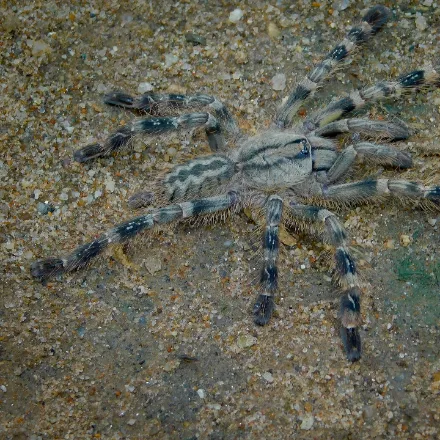
Sri Lankan Ornamental Tarantula
The spider that gave the ornamental tarantulas their name, described in 1804 and found only here. Where: Old trees and stonework around the rock and the surrounding forest, at night. Best: Year round, night.
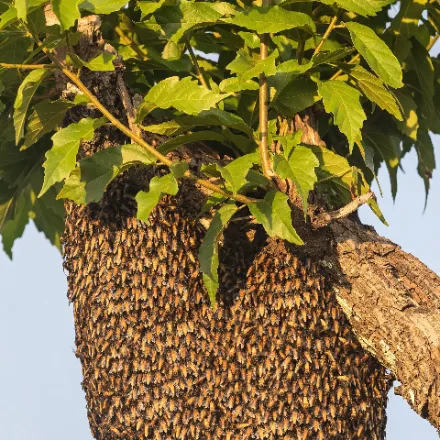
Giant Honey Bee
A big, fierce wild bee that hangs single-comb nests the size of a door from high branches and cliffs. Where: Combs under the rock overhangs beside the stairway, marked by the wire mesh cages built as refuges. Best: Year round.
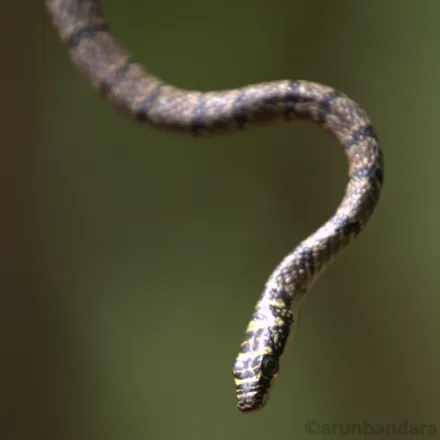
Sri Lankan Flying Snake
A gliding snake of the dry zone that flattens its belly into a wing and launches itself off a temple wall. Where: Old trees, temple walls and the rock itself. Best: Year round, daytime.
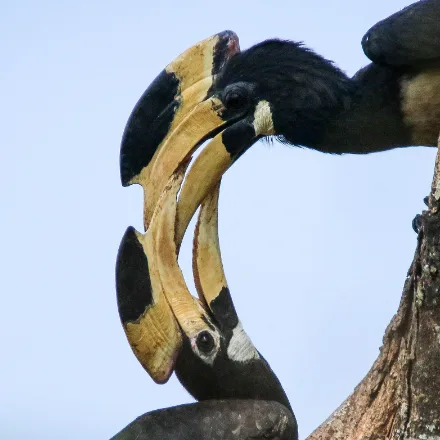
Malabar Pied Hornbill
The island's big hornbill, sealing the female into a tree hollow behind a wall of mud for the whole nesting period. Where: Fruiting trees in the surrounding dry forest. Best: Year round.
Mammals
2 species
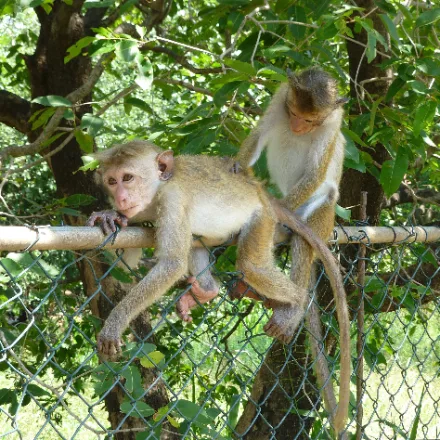
Toque Macaque Common Endangered
Macaca sinica
A small endemic monkey with a swirl of hair on the crown arranged like a cap, and the most studied primate on the island.
Where: The rock, the water gardens and the temple surrounds. Best: Year round. Never hand food to one. A fed troop becomes food conditioned and bites more.
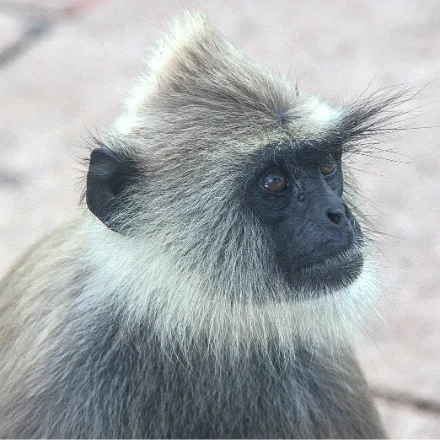
Tufted Grey Langur Common Near Threatened
Semnopithecus priam
Long-limbed, silver-grey and black-faced, sitting in the open on a ruin or a track edge in every dry zone park.
Where: Tall trees around the rock and along the approach. Best: Year round.
Birds
4 species
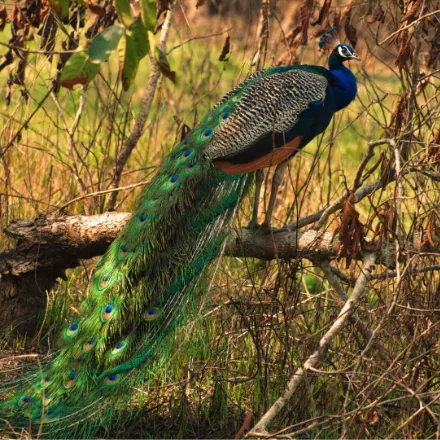
Indian Peafowl Common
Pavo cristatus
Wild, and behaving like a wild bird: displaying on a termite mound at dawn with leopards in the same scrub.
Where: Open woodland and the tank margins at dawn. Best: Year round.
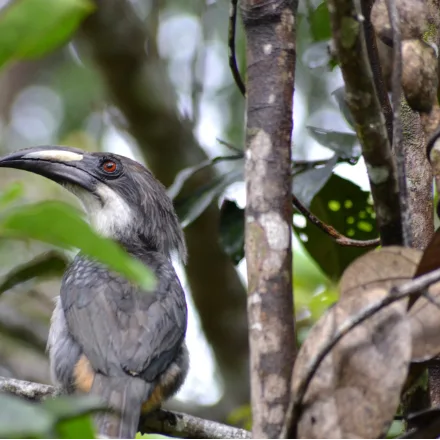
Sri Lanka Grey Hornbill Regular
Ocyceros gingalensis
A slim, quiet hornbill with no casque, common enough to see from a hotel garden and endemic all the same.
Where: Tall trees around the rock and in the surrounding forest. Best: Year round.
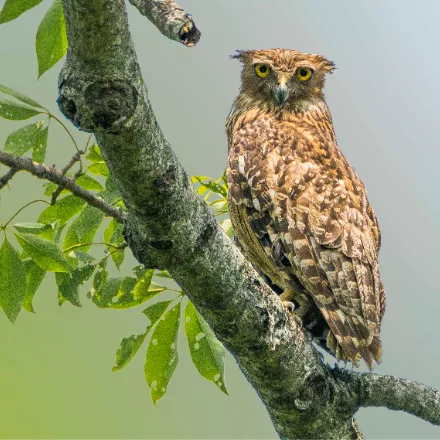
Brown Fish Owl Occasional
Ketupa zeylonensis
A big owl with bare unfeathered legs, because feathers are a liability when you fish with your feet.
Where: Large trees near the moat and the tanks, at dusk. Best: Year round.
Malabar Pied Hornbill Occasional Near Threatened
Anthracoceros coronatus
The island's big hornbill, sealing the female into a tree hollow behind a wall of mud for the whole nesting period.
Where: Fruiting trees in the surrounding dry forest. Best: Year round.
Reptiles
7 species
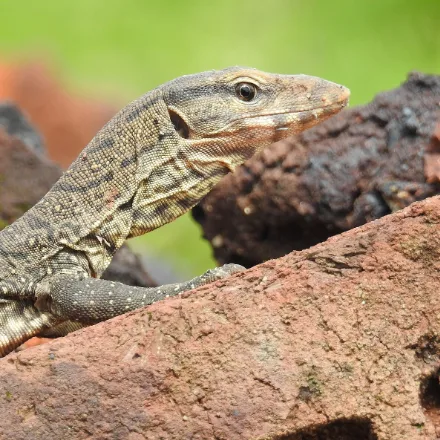
Bengal Monitor Common
Varanus bengalensis
A dry-country monitor that climbs well, digs constantly and eats essentially anything smaller than itself.
Where: Open scrub, ruins and the stonework of the ancient cities. Best: February to September.
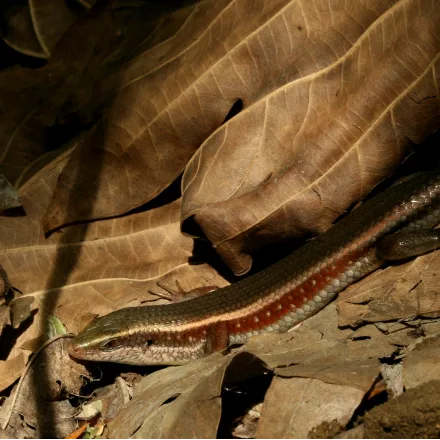
Sri Lankan Common Skink Common
Eutropis lankae
The bronze skink basking on every wall, ruin and hotel lawn in the country turned out in 2020 to be an endemic species, not the Indian one everybody had been calling it.
Where: Stonework, walls and open ground throughout the ruins. Best: Year round.
Kandyan Day Gecko Regular Endangered
Cnemaspis kandiana
One of more than forty day geckos on this island, every single one of them found nowhere else, and they work rock faces in daylight instead of hunting at night.
Where: Rock faces, boulder gardens and the cave temple walls at Dambulla. Best: Year round, morning on shaded rock. Diurnal, unlike almost every other gecko, so you can actually watch it work the rock.
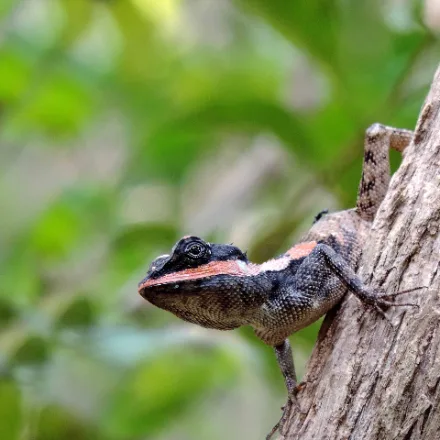
Painted-lip Lizard Regular
Calotes ceylonensis
A dry zone endemic with a red stripe painted along its upper lip, and when it is alarmed the stripe flashes white.
Where: Wooded ground around the rock and the moat, and the Dambulla temple surrounds. Best: Year round. One of the easiest endemic lizards to find on a standard cultural triangle itinerary. Watch the red lip stripe flash white when it is alarmed.
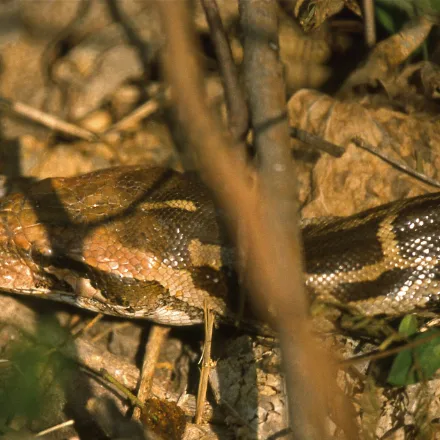
Indian Rock Python Occasional Near Threatened
Python molurus
Sri Lanka's largest snake, and in the dry season it lies out at the edge of a shrinking waterhole where every animal in the park has to come.
Where: Scrub and tank margins around Sigiriya and Kandalama. Best: Year round, cool mornings.
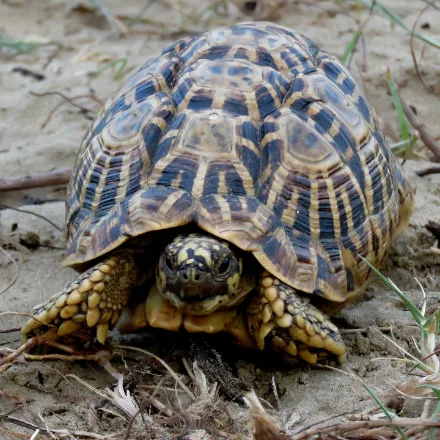
Indian Star Tortoise Occasional Vulnerable
Geochelone elegans
The most trafficked tortoise on earth, and the Sri Lankan animals are the biggest and the most boldly starred of the lot.
Where: Scrub and grassy verges around the base of the rock. Best: After rain.
Sri Lankan Flying Snake Rare
Chrysopelea taprobanica
A gliding snake of the dry zone that flattens its belly into a wing and launches itself off a temple wall.
Where: Old trees, temple walls and the rock itself. Best: Year round, daytime. It really does glide, flattening its belly into a channel and launching from height.
Insects
6 species
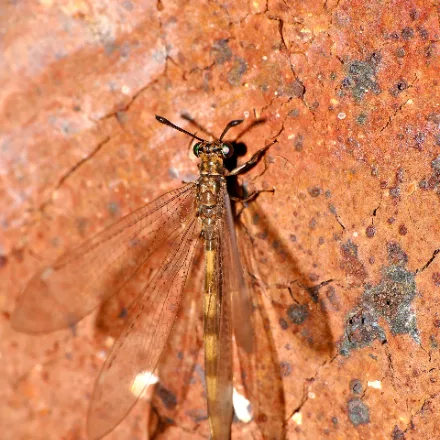
Antlion Common
Myrmeleon sp.
The larva digs a conical pit in dry sand and flicks grains at anything trying to climb out, collapsing the walls under it.
Where: Dry sheltered dust beneath the rock overhangs and along the stairways. Best: Year round.
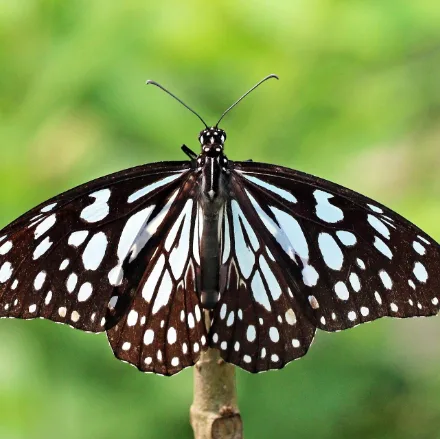
Blue Tiger Common
Tirumala limniace
Migrates in drifting rivers of thousands, and roosts at night in trees hung solid with butterflies.
Where: Scrub and woodland edge around the rock and the tanks. Best: February to April.
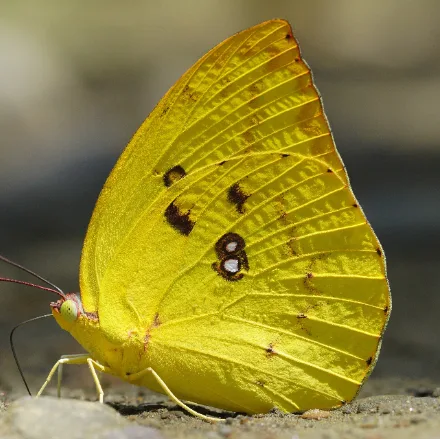
Common Emigrant Common
Catopsilia pomona
The butterfly behind the name Samanala Kanda, Butterfly Mountain, and the mass movement that heads for it every year.
Where: Open scrub and tank margins. Best: Year round.
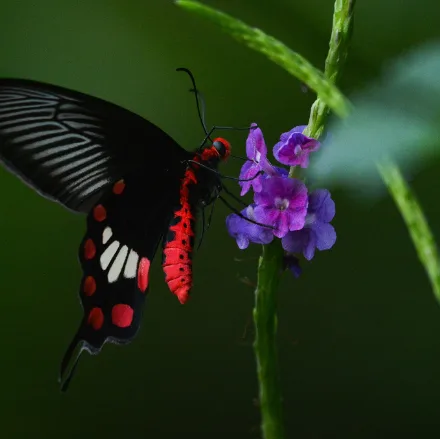
Common Rose Swallowtail Common
Pachliopta aristolochiae
A velvety black swallowtail with a crimson body and rose-pink spots, floating slowly to show it is poisonous.
Where: Gardens and scrub around the rock and the tanks. Best: Year round.
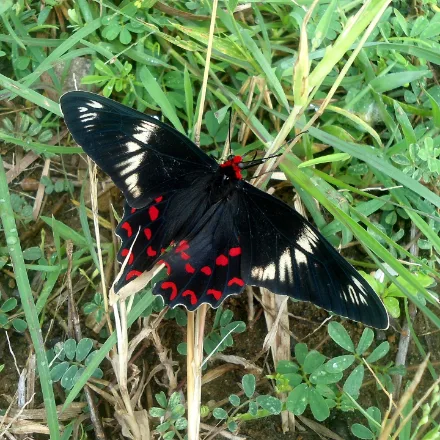
Crimson Rose Common Near Threatened
Pachliopta hector
Flies slowly and in the open because it is poisonous and every predator on the island knows it.
Where: Garden and scrub edges around the rock and the tanks. Best: Year round.
Giant Honey Bee Common
Apis dorsata
A big, fierce wild bee that hangs single-comb nests the size of a door from high branches and cliffs.
Where: Combs under the rock overhangs beside the stairway, marked by the wire mesh cages built as refuges. Best: Year round. The mesh cages on the stairway are the refuge if a colony erupts, and people have died here.
Spiders and scorpions
3 species
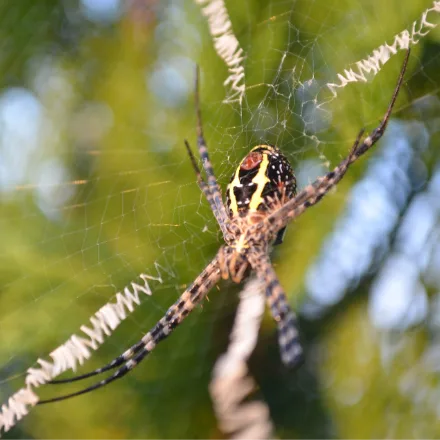
Signature Spider Common
Argiope anasuja
Writes a bold zigzag across the middle of its own web, and nobody is entirely sure why.
Where: Garden and scrub edges around the rock and the tanks. Best: Year round.
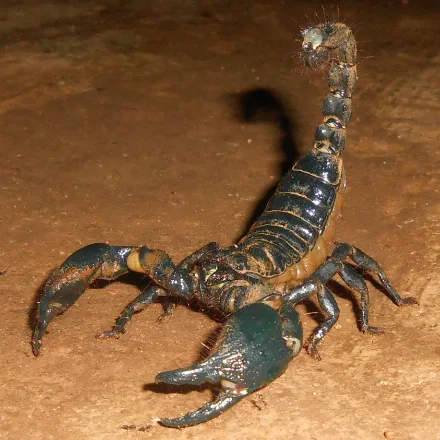
Giant Forest Scorpion Occasional
Heterometrus swammerdami
Among the largest scorpions on earth, and its sting is milder than a bee's.
Where: Under stones and logs in the scrub around the rock, at night. Best: Year round, night.
Sri Lankan Ornamental Tarantula Rare
Poecilotheria fasciata
The spider that gave the ornamental tarantulas their name, described in 1804 and found only here.
Where: Old trees and stonework around the rock and the surrounding forest, at night. Best: Year round, night.
Planning
Climb at opening, both for the heat and because the macaques get busier as the day and the crowds build. The wildlife is better on the ground than on the summit: the water gardens, the moat and the wooded approach hold more than the rock top does, and the Dambulla cave temple surrounds are the more reliable place for the day gecko. The giant honey bee combs under the overhangs are why the mesh cages are there. The macaques here are practised at taking food.
Compare guided walks, dawn climbs and transfers for Sigiriya and Dambulla
Some links on this page are affiliate links. If you book through them, Wildseer may earn a small commission at no extra cost to you.
Frequently asked questions
What wildlife can you see at Sigiriya?
Kandyan day gecko on the rock faces, painted-lip lizard and Indian star tortoise around the base, toque macaque and tufted grey langur throughout, Sri Lanka grey hornbill in the tall trees, and giant honey bee colonies under the overhangs. At night the forest holds ornamental tarantulas and the Sri Lankan flying snake.
Are the bees at Sigiriya dangerous?
The colonies are giant honey bees and they are a real hazard rather than a photo opportunity. The wire mesh cages on the stairway are there because swarms have caused injuries. Keep noise down beneath the overhangs and move through calmly.
What time should you climb Sigiriya?
At opening. It is cooler, the light on the water gardens is better, the macaques are calmer, and the birds around the moat and tanks are active in the first hour.
Is there wildlife at Dambulla too?
Yes, and the cave temple surrounds are the better bet for the Kandyan day gecko, which lives on the rock faces and temple walls. The surrounding dry forest holds Malabar pied hornbill and Indian rock python.
Explore Sri Lanka wildlife by group
 Mammals of Sri Lanka
 Birds of Sri Lanka
 Reptiles and amphibians of Sri Lanka
 Fish of Sri Lanka
 Sharks and rays of Sri Lanka
 Reef invertebrates of Sri Lanka
 Insects and spiders of Sri Lanka
Part of the Wildlife in Sri Lanka guide.
Explore Sri Lanka wildlife by place
- Adams Peak wildlife
- Arugam Bay marine life
- Bundala wildlife
- Colombo wildlife
- Ella wildlife
- Gal Oya wildlife
- Great Basses marine life
- Hikkaduwa marine life
- Horton Plains wildlife
- Jaffna wildlife
- Kalpitiya marine life
- Kandy wildlife
- Kanneliya wildlife
- Kitulgala wildlife
- Knuckles wildlife
- Kumana wildlife
- Mannar marine life
- Minneriya wildlife
- Mirissa marine life
- Rekawa marine life
- Sinharaja wildlife
- Tangalle marine life
- Trincomalee marine life
- Udawalawe wildlife
- Wasgamuwa wildlife
- Wilpattu wildlife
- Yala wildlife
Image credits
Square thumbnails are cropped from the original. Wide banner images are cropped to a band. Other images are resized only. No other changes have been made.
- Sri Lankan Ornamental Tarantula: Gerard Mendis | CC BY-SA 4.0, cropped
- Giant Honey Bee (cropped to square): Basile Morin | CC BY-SA 4.0, cropped
- Sri Lankan Flying Snake: Gihan Jayaweera | CC BY-SA 3.0, cropped
- Malabar Pied Hornbill: @Vikas patil photography | CC BY-SA 4.0, cropped
- Toque Macaque: Ji-Elle | CC BY-SA 3.0, cropped
- Tufted Grey Langur: Peter van der Sluijs | CC BY-SA 3.0, cropped
- Indian Peafowl: Joshianuj | CC BY-SA 4.0, cropped
- Sri Lanka Grey Hornbill: Pinkstg | CC BY 3.0, cropped
- Brown Fish Owl: Hedayeat Ullah | CC BY-SA 4.0, cropped
- Bengal Monitor (cropped to square): Dr. Raju Kasambe | CC BY-SA 4.0, cropped
- Sri Lankan Common Skink: Gihan Jayaweera | CC BY-SA 4.0, cropped
- Painted-lip Lizard: Sumudusoyza007 | CC BY-SA 4.0, cropped
- Indian Rock Python: Bernard DUPONT from FRANCE | CC BY-SA 2.0, cropped
- Indian Star Tortoise: Selvaganesh17 | CC BY-SA 4.0, cropped
- Antlion (cropped to square): Bernard DUPONT from FRANCE | CC BY-SA 2.0, cropped
- Blue Tiger (cropped to square): Charles J. Sharp | CC BY-SA 4.0, cropped
- Common Emigrant: Peellden | CC BY-SA 4.0, cropped
- Common Rose Swallowtail (cropped to square): Vedant Raju Kasambe | CC BY-SA 4.0, cropped
- Crimson Rose: Adityamadhav83 | CC BY-SA 3.0, cropped
- Signature Spider: Abkhanal | CC BY-SA 3.0, cropped
- Giant Forest Scorpion: Nireekshit | CC BY-SA 3.0, cropped
- Purple-faced langur in the canopy: kanchana Amilani | Unsplash License, cropped
- White-throated kingfisher on a branch: kanchana Amilani | Unsplash License, cropped
- Green forest lizard in breeding colour: Anas Mohamed Nuski | Pexels Licence, cropped
- Bluestripe snapper over a reef: Jeffry Surianto | Pexels Licence, cropped
- Reef manta rays near the surface: Emma Li | Pexels Licence, cropped
- Nudibranch crossing the sea floor: Chris Spain | Pexels Licence, cropped
- Clipper butterfly on a leaf: Pixabay | Pexels Licence, cropped
Square thumbnails are cropped from the original. Wide banner images are cropped to a band. Other images are resized only. No other changes have been made.
- Sri Lankan Ornamental Tarantula: Gerard Mendis | CC BY-SA 4.0, cropped
- Giant Honey Bee (cropped to square): Basile Morin | CC BY-SA 4.0, cropped
- Sri Lankan Flying Snake: Gihan Jayaweera | CC BY-SA 3.0, cropped
- Malabar Pied Hornbill: @Vikas patil photography | CC BY-SA 4.0, cropped
- Toque Macaque: Ji-Elle | CC BY-SA 3.0, cropped
- Tufted Grey Langur: Peter van der Sluijs | CC BY-SA 3.0, cropped
- Indian Peafowl: Joshianuj | CC BY-SA 4.0, cropped
- Sri Lanka Grey Hornbill: Pinkstg | CC BY 3.0, cropped
- Brown Fish Owl: Hedayeat Ullah | CC BY-SA 4.0, cropped
- Bengal Monitor (cropped to square): Dr. Raju Kasambe | CC BY-SA 4.0, cropped
- Sri Lankan Common Skink: Gihan Jayaweera | CC BY-SA 4.0, cropped
- Painted-lip Lizard: Sumudusoyza007 | CC BY-SA 4.0, cropped
- Indian Rock Python: Bernard DUPONT from FRANCE | CC BY-SA 2.0, cropped
- Indian Star Tortoise: Selvaganesh17 | CC BY-SA 4.0, cropped
- Antlion (cropped to square): Bernard DUPONT from FRANCE | CC BY-SA 2.0, cropped
- Blue Tiger (cropped to square): Charles J. Sharp | CC BY-SA 4.0, cropped
- Common Emigrant: Peellden | CC BY-SA 4.0, cropped
- Common Rose Swallowtail (cropped to square): Vedant Raju Kasambe | CC BY-SA 4.0, cropped
- Crimson Rose: Adityamadhav83 | CC BY-SA 3.0, cropped
- Signature Spider: Abkhanal | CC BY-SA 3.0, cropped
- Giant Forest Scorpion: Nireekshit | CC BY-SA 3.0, cropped
- Purple-faced langur in the canopy: kanchana Amilani | Unsplash License, cropped
- White-throated kingfisher on a branch: kanchana Amilani | Unsplash License, cropped
- Green forest lizard in breeding colour: Anas Mohamed Nuski | Pexels Licence, cropped
- Bluestripe snapper over a reef: Jeffry Surianto | Pexels Licence, cropped
- Reef manta rays near the surface: Emma Li | Pexels Licence, cropped
- Nudibranch crossing the sea floor: Chris Spain | Pexels Licence, cropped
- Clipper butterfly on a leaf: Pixabay | Pexels Licence, cropped