
Minneriya exists on the wildlife map for one reason and it is a good one. As the dry season pulls the water back off an ancient irrigation tank, fresh grass comes up on the exposed bed and elephants walk in from the surrounding forest to eat it. Hundreds of animals can be on the same grassland at the same time, which is the largest gathering of wild Asian elephants anywhere, and it is called The Gathering.
Two honest caveats. It is a seasonal event, roughly July to October with the peak in August and September, and outside that window Minneriya is an ordinary dry zone park. And the elephants follow the water rather than the park boundary, so in some years the herds sit on the neighbouring Kaudulla tank instead. Which of the two holds them is not knowable more than a week ahead.
What The Gathering hides is that this is a working dry zone tank, and the tank is the other half of the trip. Spot-billed pelicans fish the open water and line the bund, cotton pygmy geese sit in the lotus, bronze-winged jacanas walk on the floating leaves and a grey-headed fish eagle usually has one of the drowned trees. Chital come out onto the same fresh grass as the elephants and are generally there first, and muggers work the shoreline as it drops. Leopard and sloth bear are in the surrounding forest and are genuinely rare, which is worth saying rather than implying.
Highlights
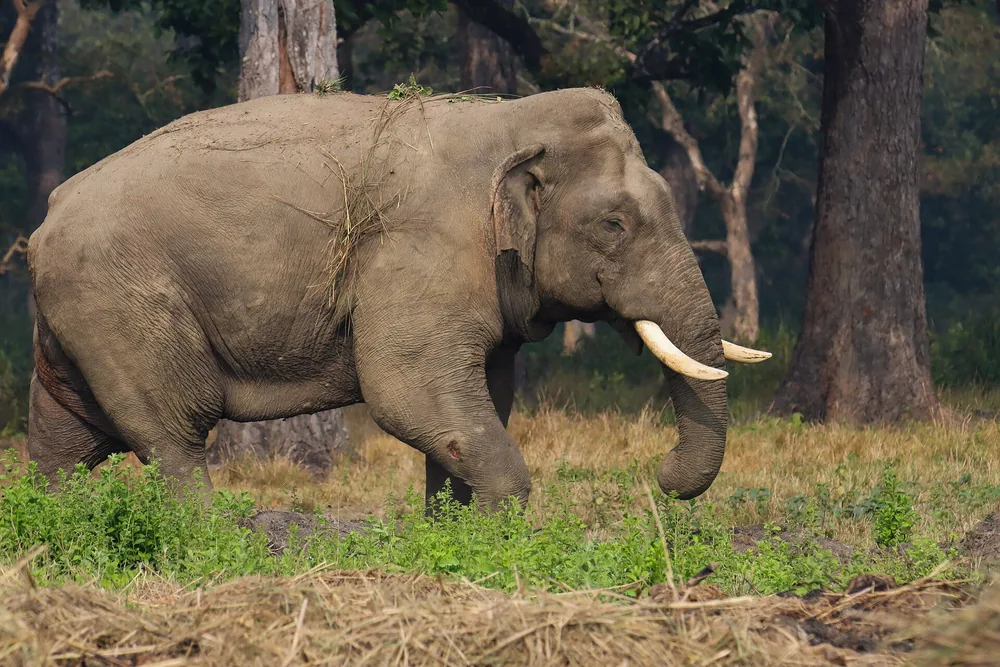
Asian Elephant
The largest land animal in Asia, and a genuinely wild one is worth seeking out over the camp elephants most tourists meet. Where: The receding tank bed as the water drops, in the late afternoon. Best: July to October for the Gathering.
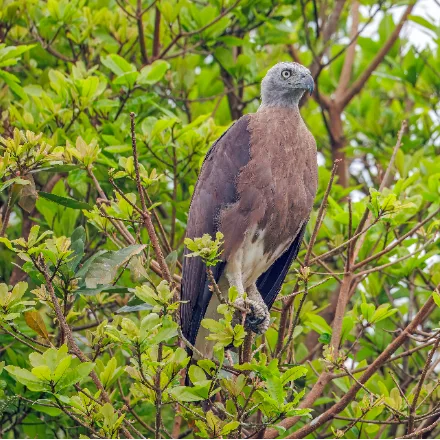
Grey-headed Fish Eagle
Sits low over the water on a dead branch for hours, then drops feet first and comes up with a fish half its own weight. Where: Dead branches and drowned timber standing out of the tank. Best: Year round.
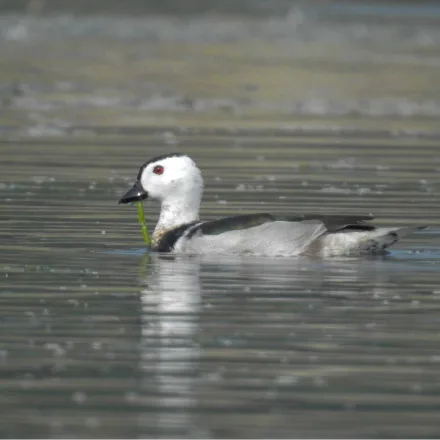
Cotton Pygmy Goose
One of the smallest waterfowl on earth, nesting in tree holes and sitting out on lily pads. Where: Lotus and floating vegetation on the quieter arms of the tank. Best: Year round, best after the northeast rains from December to March.
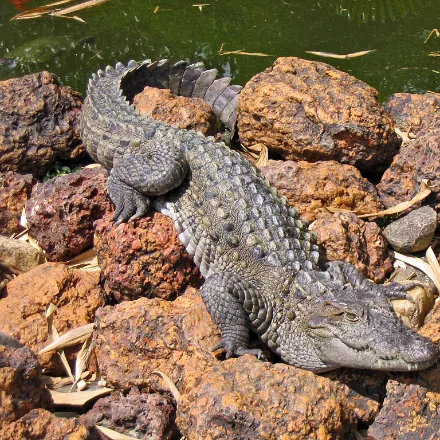
Mugger Crocodile
The broadest snout of any living crocodile, and in one Sri Lankan park block there are more of them per square kilometre than anywhere else on earth. Where: The tank itself and the feeder channels, hauled out on the mud as the water drops. Best: Year round.
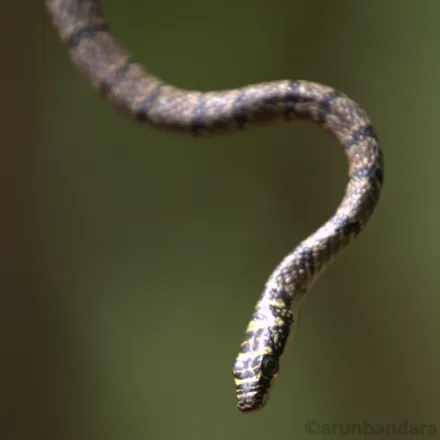
Sri Lankan Flying Snake
A gliding snake of the dry zone that flattens its belly into a wing and launches itself off a temple wall. Where: Tall trees around the tank and in the surrounding scrub. Best: Year round, daytime.
Mammals
9 species
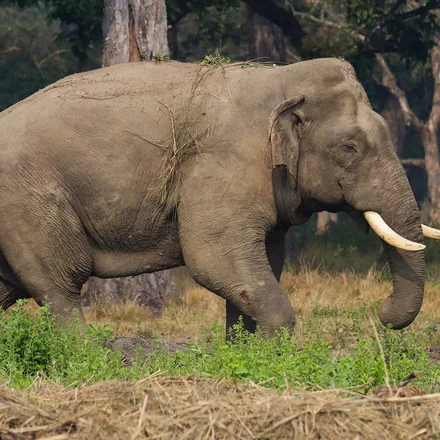
Asian Elephant Common Endangered
Elephas maximus
The largest land animal in Asia, and a genuinely wild one is worth seeking out over the camp elephants most tourists meet.
Where: The receding tank bed as the water drops, in the late afternoon. Best: July to October for the Gathering. The Gathering is the largest assembly of wild Asian elephants anywhere on earth, with hundreds on the tank bed at once. Which tank they use shifts between Minneriya and Kaudulla year to year, so ask on the day.
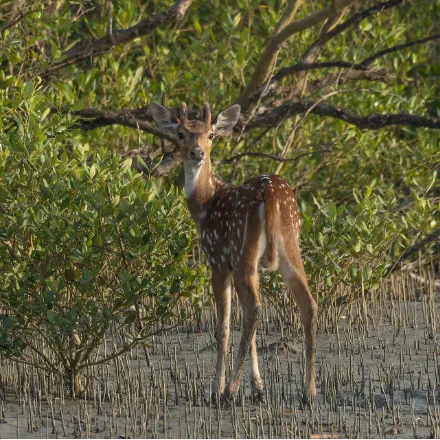
Chital (Spotted Deer) Common
Axis axis
The prey base the whole leopard story rests on, and the animal whose alarm call tells you where the cat is.
Where: Out on the tank bed grass with the elephants through the late afternoon. Best: Year round, largest numbers July to October. The deer arrive on the fresh tank bed grass for the same reason the elephants do, and are usually there first.
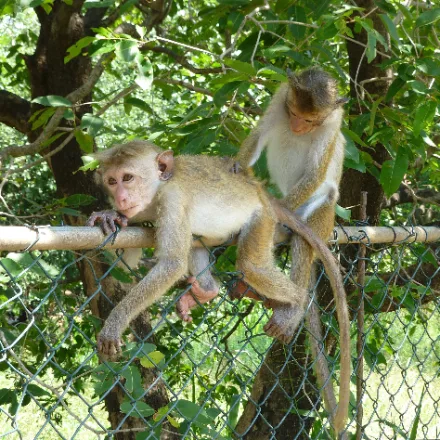
Toque Macaque Common Endangered
Macaca sinica
A small endemic monkey with a swirl of hair on the crown arranged like a cap, and the most studied primate on the island.
Where: Forest edge, the approach road and the ancient city sites nearby. Best: Year round. Endemic and endangered, despite being the monkey everyone photographs. Keep food out of sight.
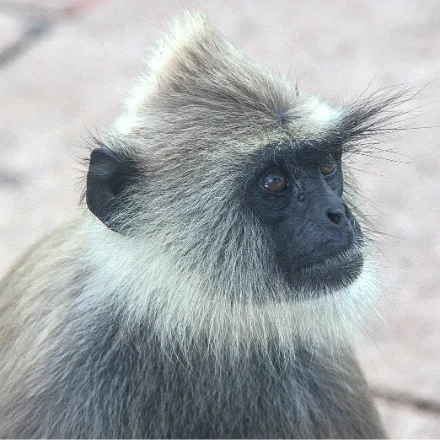
Tufted Grey Langur Common Near Threatened
Semnopithecus priam
Long-limbed, silver-grey and black-faced, sitting in the open on a ruin or a track edge in every dry zone park.
Where: Tall trees along the approach road and at the forest edge around the tank. Best: Year round.
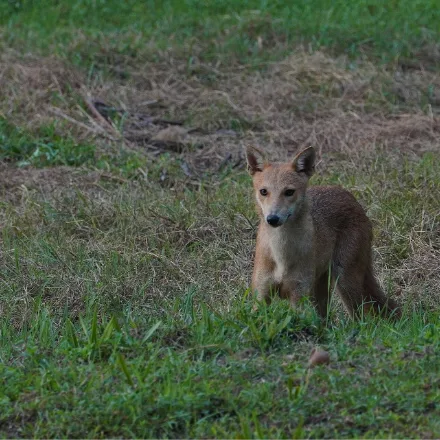
Golden Jackal Regular
Canis aureus
The dry zone's opportunist, trotting along a track at dawn and howling in chorus at dusk so the whole park knows where it is.
Where: Working the tank bed edge and the track margins at either end of the day. Best: Year round.
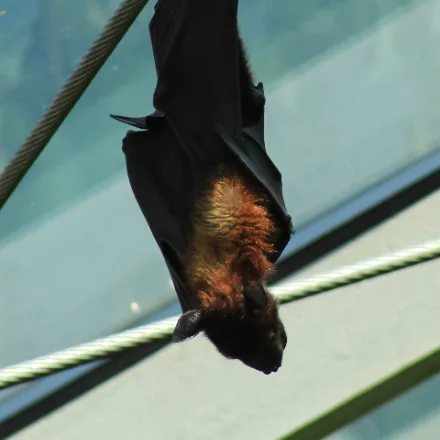
Indian Flying Fox Occasional
Pteropus giganteus
A fruit bat with a metre and a half of wingspan, hanging in noisy thousands from a tree in the middle of town.
Where: Daytime roosts in tall trees near the tanks and the nearby towns, streaming out at dusk. Best: Year round. A roost is easier to find than the animal: listen for it before you see it.
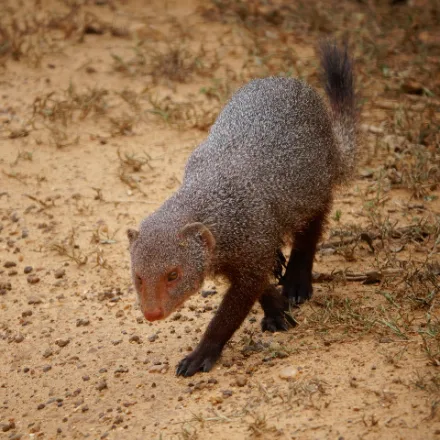
Ruddy Mongoose Occasional
Urva smithii
A big reddish mongoose that carries its black-tipped tail curled up over its back as it crosses a track.
Where: Crossing tracks and hunting the scrub edge around the tank. Best: Year round.
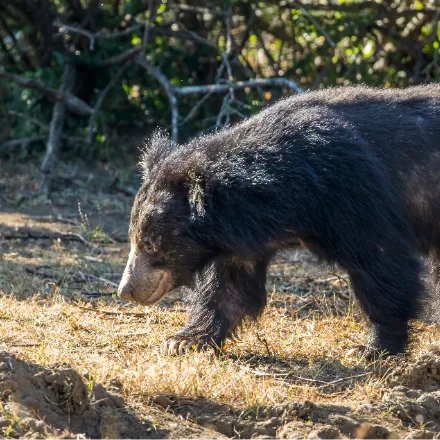
Sloth Bear Rare Vulnerable
Melursus ursinus
A shaggy, long-clawed insect specialist that vacuums termites out of a mound loudly enough to hear from fifty metres.
Where: Dry forest and old termite mounds away from the open tank bed. Best: Year round, best June to July when fruit is on.
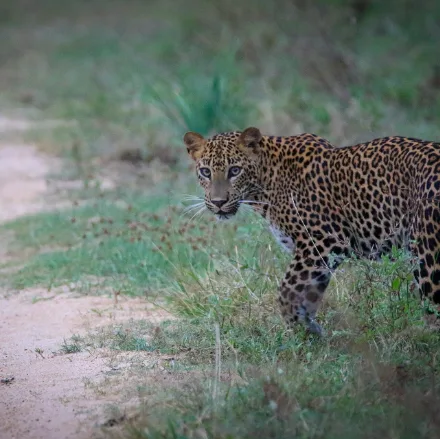
Sri Lankan Leopard Rare Endangered
Panthera pardus kotiya
The largest leopard subspecies in the world, and on this island it is the top predator, which changes how it behaves.
Where: Dry monsoon forest away from the tank bed, and on the tracks before light. Best: Year round. Present in the surrounding forest and very seldom seen. Nobody should come to Minneriya for a leopard.
Birds
13 species
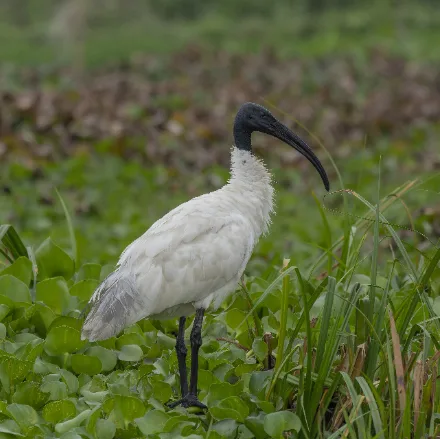
Black-headed Ibis Common Near Threatened
Threskiornis melanocephalus
White body, bare black head and neck, and a bill built for finding what it cannot see.
Where: Tank shallows and the wet grass at the edge of the receding water. Best: Year round, best July to October as the tank drops.
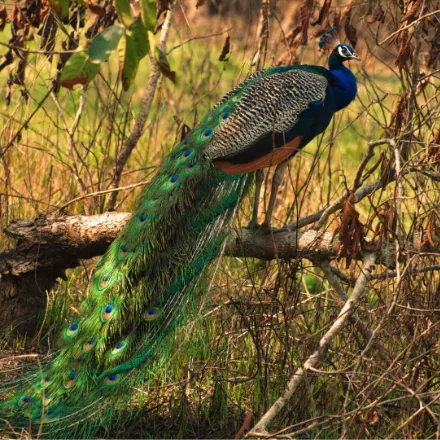
Indian Peafowl Common
Pavo cristatus
Wild, and behaving like a wild bird: displaying on a termite mound at dawn with leopards in the same scrub.
Where: Open scrub, the tank bed and the surrounding paddy at first light. Best: Year round.
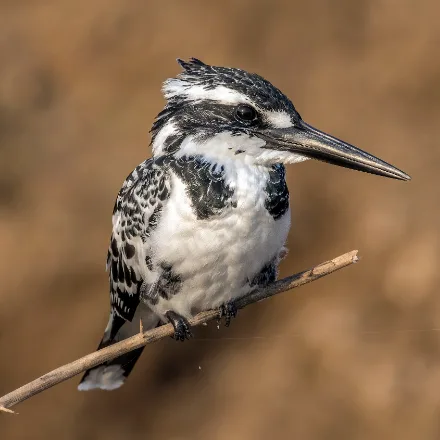
Pied Kingfisher Common
Ceryle rudis
The largest bird in the world that can hover in still air with no wind to help it, which is how it fishes open water no perch reaches.
Where: Hovering over the tank shallows and the feeder channels. Best: Year round.
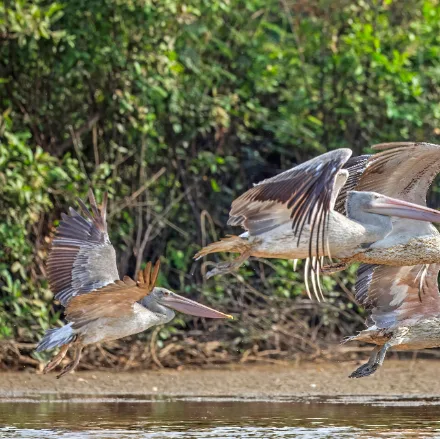
Spot-billed Pelican Common Near Threatened
Pelecanus philippensis
A pelican that fishes the ancient irrigation tanks, and one of the few large waterbirds doing better now than it was.
Where: Fishing the open tank and loafing in lines along the bund. Best: Year round. The tank system holds pelicans all year, and they are easiest to watch from the bund in the same late afternoon light the elephants come out in.
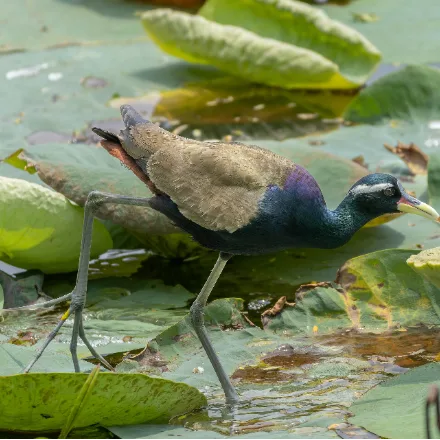
Bronze-winged Jacana Regular
Metopidius indicus
Toes so long it walks across floating leaves, and a breeding system in which the female holds the territory and the males do all the work.
Where: Walking on floating vegetation at the tank margins. Best: Year round.
Cotton Pygmy Goose Regular
Nettapus coromandelianus
One of the smallest waterfowl on earth, nesting in tree holes and sitting out on lily pads.
Where: Lotus and floating vegetation on the quieter arms of the tank. Best: Year round, best after the northeast rains from December to March. The smallest waterfowl in the world, and easy to overlook among the lotus leaves until a pair flies.
Grey-headed Fish Eagle Regular Near Threatened
Icthyophaga ichthyaetus
Sits low over the water on a dead branch for hours, then drops feet first and comes up with a fish half its own weight.
Where: Dead branches and drowned timber standing out of the tank. Best: Year round. Look at the standing dead trees rather than the sky. The bird hunts from a perch and will sit for an hour.
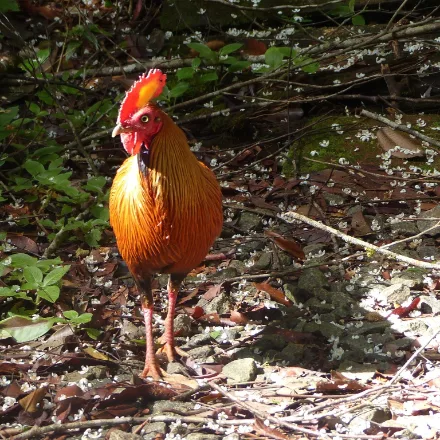
Sri Lanka Junglefowl Regular
Gallus lafayettii
The national bird, and the wild ancestor's cousin: a jungle cockerel with a yellow-centred red comb found nowhere else on earth.
Where: Forest edge and track sides in the dry monsoon forest around the tank. Best: Year round, easiest at first light. The national bird, and endemic. Dry zone birds are duller than the Sinharaja ones and just as findable.
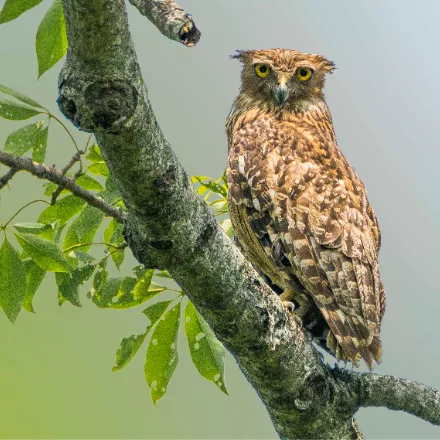
Brown Fish Owl Occasional
Ketupa zeylonensis
A big owl with bare unfeathered legs, because feathers are a liability when you fish with your feet.
Where: Large trees at the tank margin and along the approach road, at dusk. Best: Year round.
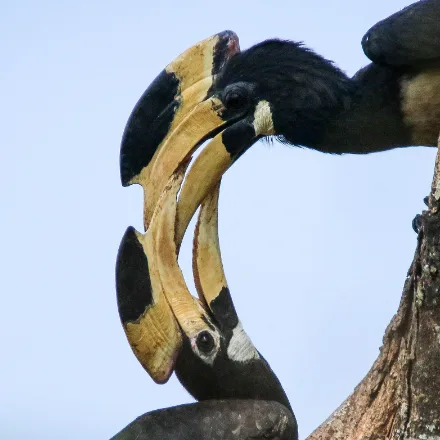
Malabar Pied Hornbill Occasional Near Threatened
Anthracoceros coronatus
The island's big hornbill, sealing the female into a tree hollow behind a wall of mud for the whole nesting period.
Where: Large fruiting trees in the dry forest around the tank and towards the ancient cities. Best: Year round.
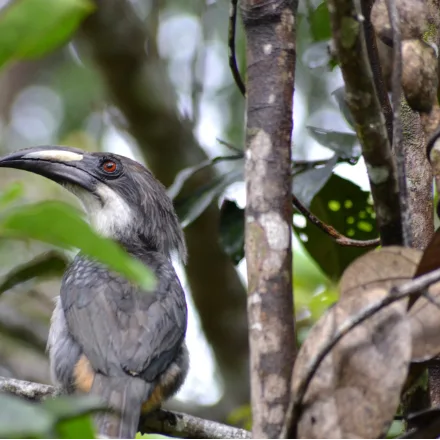
Sri Lanka Grey Hornbill Occasional
Ocyceros gingalensis
A slim, quiet hornbill with no casque, common enough to see from a hotel garden and endemic all the same.
Where: Tall trees along the park approach and in the surrounding dry forest. Best: Year round.
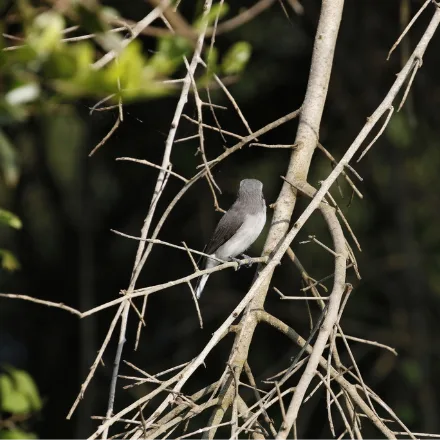
Sri Lanka Woodshrike Occasional
Tephrodornis affinis
A plain grey-brown bird of the dry zone scrub that repays anyone willing to look at something that is not a leopard.
Where: Exposed branches at the woodland edge around the tank. Best: Year round.
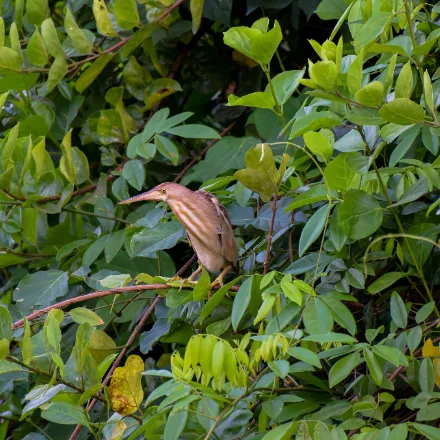
Yellow Bittern Occasional
Ixobrychus sinensis
Freezes with its bill pointed straight up and vanishes into the reeds, which is why almost nobody sees it despite it being everywhere.
Where: Reed and sedge margins of the tank and the paddy channels around it. Best: Year round. Skulks until it flies, which is usually the only view you get.
Reptiles
9 species
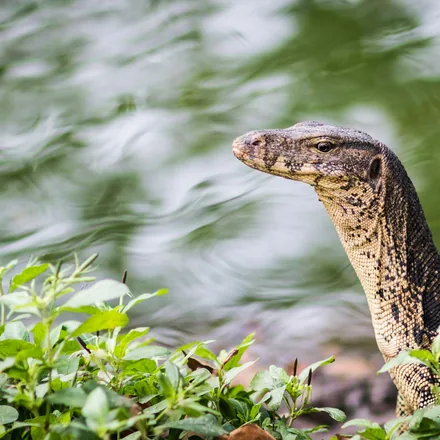
Asian Water Monitor Common
Varanus salvator
A dragon sized lizard that swims canals and city parks, second only to the Komodo dragon in length.
Where: Tank margins, the bund and the feeder channels. Best: Year round.
Mugger Crocodile Common Vulnerable
Crocodylus palustris
The broadest snout of any living crocodile, and in one Sri Lankan park block there are more of them per square kilometre than anywhere else on earth.
Where: The tank itself and the feeder channels, hauled out on the mud as the water drops. Best: Year round. Muggers hold every dry zone tank on the island, and the receding shoreline that brings the elephants out brings them out too.
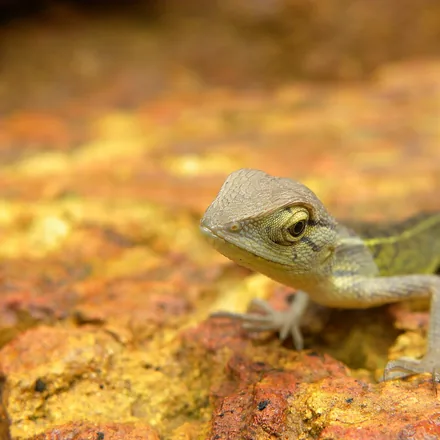
Oriental Garden Lizard Common
Calotes versicolor
The everyday garden lizard whose breeding males flush blood red about the head, earning the name bloodsucker.
Where: Scrub and open woodland around the tank. Best: Year round.
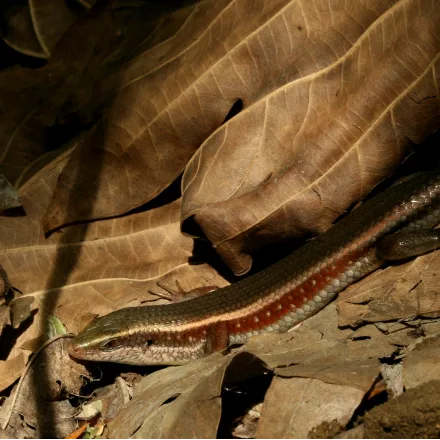
Sri Lankan Common Skink Common
Eutropis lankae
The bronze skink basking on every wall, ruin and hotel lawn in the country turned out in 2020 to be an endemic species, not the Indian one everybody had been calling it.
Where: Stonework and open ground around the tank and the nearby ancient cities. Best: Year round.
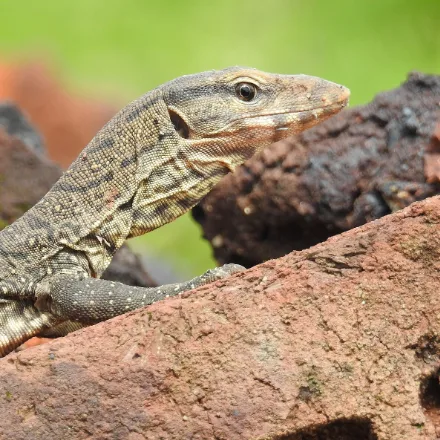
Bengal Monitor Regular
Varanus bengalensis
A dry-country monitor that climbs well, digs constantly and eats essentially anything smaller than itself.
Where: Scrub and the surrounding ancient city stonework. Best: Year round.
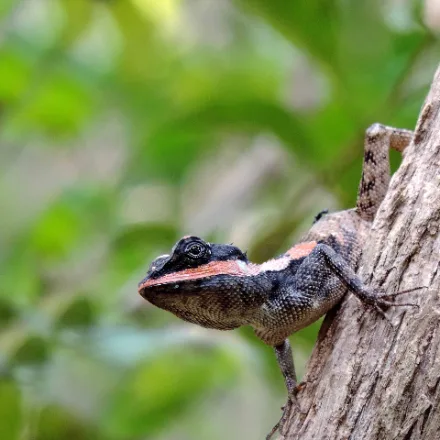
Painted-lip Lizard Regular
Calotes ceylonensis
A dry zone endemic with a red stripe painted along its upper lip, and when it is alarmed the stripe flashes white.
Where: Wooded ground and forest edge around the tank. Best: Year round. The Sigiriya rock woodland and moat nearby are the classic spot.
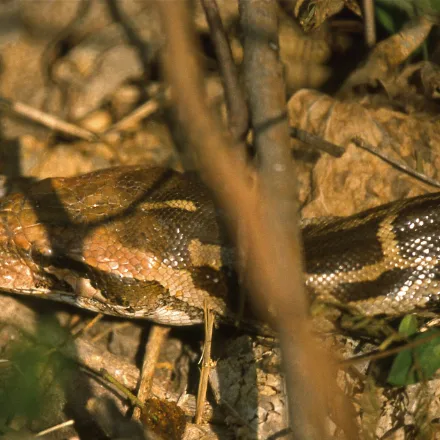
Indian Rock Python Occasional Near Threatened
Python molurus
Sri Lanka's largest snake, and in the dry season it lies out at the edge of a shrinking waterhole where every animal in the park has to come.
Where: Basking at the tank edge and in the scrub around the ancient city stonework. Best: Year round.
Kandyan Day Gecko Occasional Endangered
Cnemaspis kandiana
One of more than forty day geckos on this island, every single one of them found nowhere else, and they work rock faces in daylight instead of hunting at night.
Where: Rock faces and cave temple walls in the surrounding dry zone outcrops. Best: Year round.
Sri Lankan Flying Snake Rare
Chrysopelea taprobanica
A gliding snake of the dry zone that flattens its belly into a wing and launches itself off a temple wall.
Where: Tall trees around the tank and in the surrounding scrub. Best: Year round, daytime. The Sigiriya and Polonnaruwa heritage gardens nearby are the classic ground for it.
Amphibians
4 species
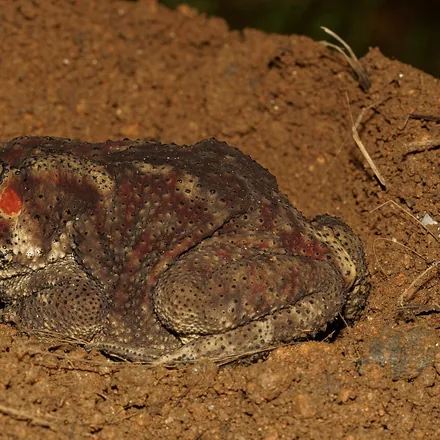
Asian Common Toad Common
Duttaphrynus melanostictus
The ubiquitous warty toad of doorsteps and gardens, hoovering up insects under every night light.
Where: Tank margins, scrub and building surrounds. Best: Year round, night.
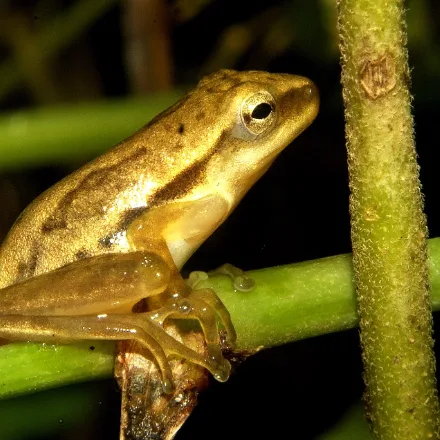
Chunam Tree Frog Regular
Polypedates maculatus
The one that is not endemic, sharing the same walls and water tanks, and the hourglass is the whole test.
Where: Buildings, scrub and tank margins. Best: Year round, night.
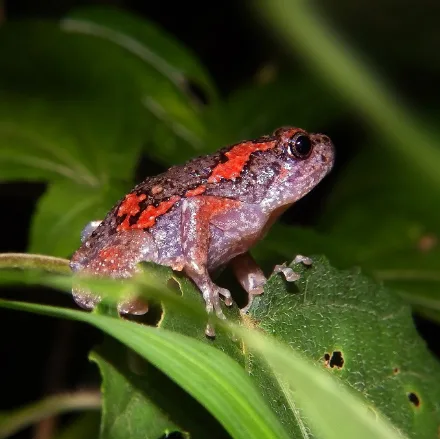
Sri Lankan Painted Frog Regular
Uperodon taprobanicus
Grabbed by a snake it inflates into a balloon and exudes a glue that gums the snake's mouth shut, and it shares tree holes with ornamental tarantulas.
Where: Temporary pools, tank margins and building surrounds after rain. Best: October to January, night.
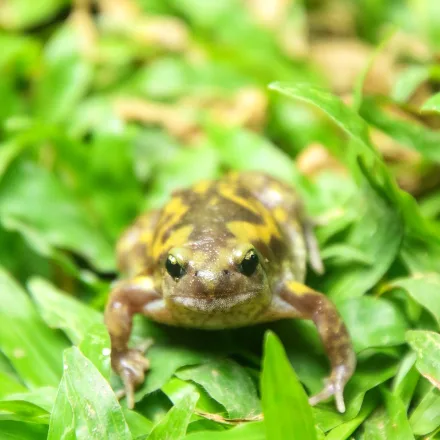
Marbled Balloon Frog Occasional
Uperodon systoma
It lives underground eating termites and surfaces for a few nights a year when the rains flood the plains, so you either hit it or miss it entirely.
Where: Temporary pools on the flat ground around the tank. Best: October to January, night, during rain.
Fish
2 species
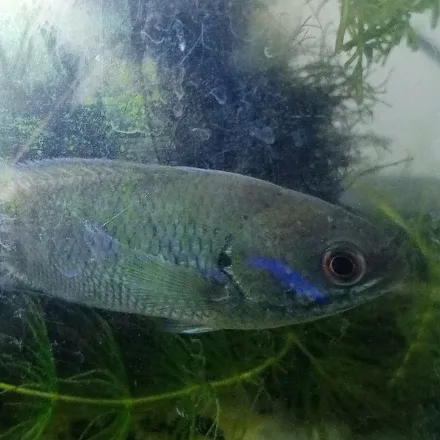
Climbing Perch Regular
Anabas testudineus
A fish that walks out of the water and hauls itself overland on its gill covers, sometimes for hours.
Where: Shallow margins of the tanks and the paddy channels around them. Best: May to September as the water drops.
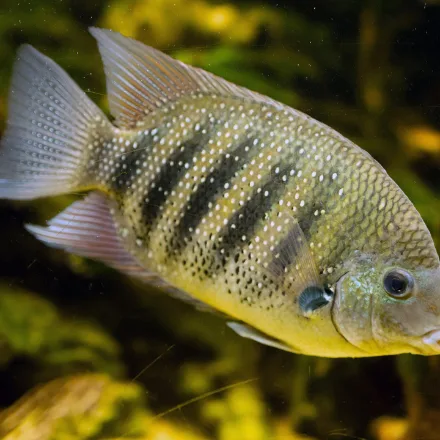
Green Chromide Occasional
Etroplus suratensis
One of only three cichlids in all of Asia, and the other two are its close relatives.
Where: Shallow tank margins. Best: May to September, as the water drops.
Insects
3 species
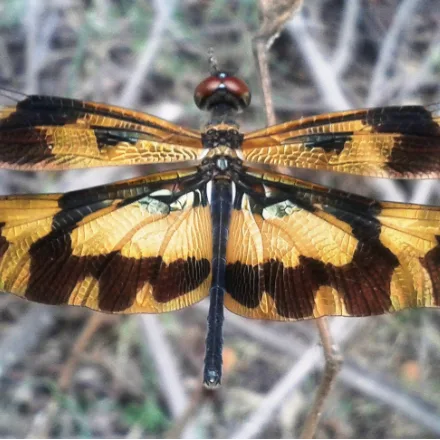
Common Picture Wing Common
Rhyothemis variegata
Flies like a butterfly, not a dragonfly, on wings washed gold and black.
Where: Over the tank margins and paddy. Best: May to September.
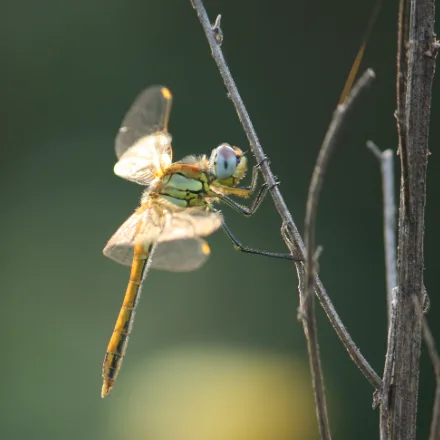
Wandering Glider Common
Pantala flavescens
Makes the longest migration of any insect on earth, crossing open ocean between India and Africa.
Where: Over the tank margins and the surrounding paddy. Best: May to September.
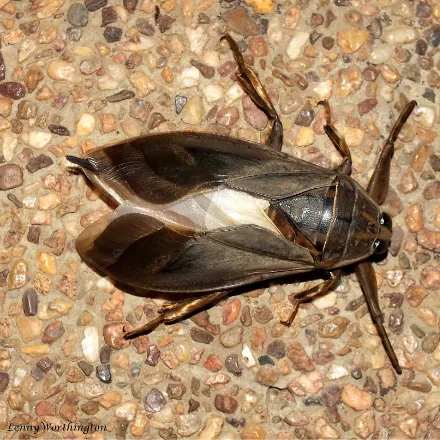
Giant Water Bug Occasional
Lethocerus indicus
Big enough to kill a frog or a small snake, and its bite is rated among the most painful an insect can inflict.
Where: Tank margins and the surrounding paddy. Best: May to September.
Planning
Late afternoon, from about four o’clock, is the time: the herds come out onto the tank bed as the heat drops and the light is behind you. July to October, peak August and September. Ask which tank is holding the elephants that week rather than booking a park by name, because the animals move between Minneriya and Kaudulla with the water. This is a small open grassland carrying a lot of vehicles at the peak, so the shoulder weeks are quieter ground for the same animals.
Compare guided safaris and transfers for Minneriya and Kaudulla
Some links on this page are affiliate links. If you book through them, Wildseer may earn a small commission at no extra cost to you.
Frequently asked questions
When is The Gathering at Minneriya?
Roughly July to October, peaking in August and September, as the tank dries back and grass comes up on the exposed bed. Outside those months the elephants disperse into the surrounding forest.
How many elephants gather at Minneriya?
Several hundred in a good year on a good afternoon, which makes it the largest known gathering of wild Asian elephants. Numbers vary year to year with the rain, and some years the herds use Kaudulla instead.
Should I book Minneriya or Kaudulla?
Ask on the day. The two tanks are close together and the elephants move between them following the water, so the right answer changes within a season and sometimes within a week.
Is Minneriya worth visiting outside the season?
As an elephant spectacle, no. It becomes a quiet dry zone park with scrub reptiles, tank birds and a chance of elephants in ordinary numbers, which is a different trip from the one people book.
Explore Sri Lanka wildlife by group
 Mammals of Sri Lanka
 Birds of Sri Lanka
 Reptiles and amphibians of Sri Lanka
 Fish of Sri Lanka
 Sharks and rays of Sri Lanka
 Reef invertebrates of Sri Lanka
 Insects and spiders of Sri Lanka
Part of the Wildlife in Sri Lanka guide.
Explore Sri Lanka wildlife by place
- Adams Peak wildlife
- Arugam Bay marine life
- Bundala wildlife
- Colombo wildlife
- Ella wildlife
- Gal Oya wildlife
- Great Basses marine life
- Hikkaduwa marine life
- Horton Plains wildlife
- Jaffna wildlife
- Kalpitiya marine life
- Kandy wildlife
- Kanneliya wildlife
- Kitulgala wildlife
- Knuckles wildlife
- Kumana wildlife
- Mannar marine life
- Mirissa marine life
- Rekawa marine life
- Sigiriya wildlife
- Sinharaja wildlife
- Tangalle marine life
- Trincomalee marine life
- Udawalawe wildlife
- Wasgamuwa wildlife
- Wilpattu wildlife
- Yala wildlife
Image credits
Square thumbnails are cropped from the original. Wide banner images are cropped to a band. Other images are resized only. No other changes have been made.
- Asian elephant (resized): Shadow Ayush | CC BY-SA 4.0, cropped
- Grey-headed Fish Eagle: Charles J. Sharp | CC BY-SA 4.0, cropped
- Cotton Pygmy Goose: Tisha Mukherjee | CC BY-SA 4.0, cropped
- Mugger Crocodile: Karunakar Rayker from India | CC BY-SA 2.0, cropped
- Sri Lankan Flying Snake: Gihan Jayaweera | CC BY-SA 3.0, cropped
- Asian Elephant (cropped to square): Shadow Ayush | CC BY-SA 4.0, cropped
- Chital: Tisha Mukherjee | CC BY-SA 4.0, cropped
- Toque Macaque: Ji-Elle | CC BY-SA 3.0, cropped
- Tufted Grey Langur: Peter van der Sluijs | CC BY-SA 3.0, cropped
- Golden Jackal: Vengolis | CC BY-SA 4.0, cropped
- Indian Flying Fox: Alois Staudacher | CC BY 2.0, cropped
- Ruddy Mongoose: desertnaturalist | CC BY 4.0, cropped
- Sloth Bear: Charles J. Sharp | CC BY-SA 4.0, cropped
- Sri Lankan Leopard: Vasuki Jayaweera | CC BY-SA 4.0, cropped
- Black-headed Ibis: Tisha Mukherjee | CC BY-SA 4.0, cropped
- Indian Peafowl: Joshianuj | CC BY-SA 4.0, cropped
- Pied Kingfisher: Charles J. Sharp | CC BY-SA 4.0, cropped
- Spot-billed Pelican: Charles J. Sharp | CC BY-SA 4.0, cropped
- Bronze-winged Jacana: Tisha Mukherjee | CC BY-SA 4.0, cropped
- Sri Lanka Junglefowl: eamonccorbett | CC BY 4.0, cropped
- Brown Fish Owl: Hedayeat Ullah | CC BY-SA 4.0, cropped
- Malabar Pied Hornbill: @Vikas patil photography | CC BY-SA 4.0, cropped
- Sri Lanka Grey Hornbill: Pinkstg | CC BY 3.0, cropped
- Sri Lanka Woodshrike: Mickey Wu | CC BY 4.0, cropped
- Yellow Bittern: Vinay bhat | CC BY-SA 4.0, cropped
- Asian Water Monitor: John Thomas | Unsplash License, cropped
- Oriental Garden Lizard (cropped to square): Ajay Kuyiloor | CC BY-SA 3.0, cropped
- Sri Lankan Common Skink: Gihan Jayaweera | CC BY-SA 4.0, cropped
- Bengal Monitor (cropped to square): Dr. Raju Kasambe | CC BY-SA 4.0, cropped
- Painted-lip Lizard: Sumudusoyza007 | CC BY-SA 4.0, cropped
- Indian Rock Python: Bernard DUPONT from FRANCE | CC BY-SA 2.0, cropped
- Asian Common Toad (cropped to square): © 2016 Jee & Rani Nature Photography (License: CC BY-SA 4.0) | CC BY-SA 4.0, cropped
- Chunam Tree Frog: Dr. Raju Kasambe | CC BY-SA 4.0, cropped
- Sri Lankan Painted Frog: Rison Thumboor from Thrissur, India | CC BY 2.0, cropped
- Marbled Balloon Frog: Dineshmee | CC BY-SA 4.0, cropped
- Climbing Perch (cropped to square): Renno Sumarsono | CC0, cropped
- Green Chromide: Peter Corbett | CC BY 2.0, cropped
- Common Picture Wing: 42sneha | CC BY-SA 3.0, cropped
- Wandering Glider: Vivekpuliyeri | CC BY-SA 3.0, cropped
- Giant Water Bug (cropped to square): Len Worthington | CC BY-SA 2.0, cropped
- Purple-faced langur in the canopy: kanchana Amilani | Unsplash License, cropped
- White-throated kingfisher on a branch: kanchana Amilani | Unsplash License, cropped
- Green forest lizard in breeding colour: Anas Mohamed Nuski | Pexels Licence, cropped
- Bluestripe snapper over a reef: Jeffry Surianto | Pexels Licence, cropped
- Reef manta rays near the surface: Emma Li | Pexels Licence, cropped
- Nudibranch crossing the sea floor: Chris Spain | Pexels Licence, cropped
- Clipper butterfly on a leaf: Pixabay | Pexels Licence, cropped
Square thumbnails are cropped from the original. Wide banner images are cropped to a band. Other images are resized only. No other changes have been made.
- Asian elephant (resized): Shadow Ayush | CC BY-SA 4.0, cropped
- Grey-headed Fish Eagle: Charles J. Sharp | CC BY-SA 4.0, cropped
- Cotton Pygmy Goose: Tisha Mukherjee | CC BY-SA 4.0, cropped
- Mugger Crocodile: Karunakar Rayker from India | CC BY-SA 2.0, cropped
- Sri Lankan Flying Snake: Gihan Jayaweera | CC BY-SA 3.0, cropped
- Asian Elephant (cropped to square): Shadow Ayush | CC BY-SA 4.0, cropped
- Chital: Tisha Mukherjee | CC BY-SA 4.0, cropped
- Toque Macaque: Ji-Elle | CC BY-SA 3.0, cropped
- Tufted Grey Langur: Peter van der Sluijs | CC BY-SA 3.0, cropped
- Golden Jackal: Vengolis | CC BY-SA 4.0, cropped
- Indian Flying Fox: Alois Staudacher | CC BY 2.0, cropped
- Ruddy Mongoose: desertnaturalist | CC BY 4.0, cropped
- Sloth Bear: Charles J. Sharp | CC BY-SA 4.0, cropped
- Sri Lankan Leopard: Vasuki Jayaweera | CC BY-SA 4.0, cropped
- Black-headed Ibis: Tisha Mukherjee | CC BY-SA 4.0, cropped
- Indian Peafowl: Joshianuj | CC BY-SA 4.0, cropped
- Pied Kingfisher: Charles J. Sharp | CC BY-SA 4.0, cropped
- Spot-billed Pelican: Charles J. Sharp | CC BY-SA 4.0, cropped
- Bronze-winged Jacana: Tisha Mukherjee | CC BY-SA 4.0, cropped
- Sri Lanka Junglefowl: eamonccorbett | CC BY 4.0, cropped
- Brown Fish Owl: Hedayeat Ullah | CC BY-SA 4.0, cropped
- Malabar Pied Hornbill: @Vikas patil photography | CC BY-SA 4.0, cropped
- Sri Lanka Grey Hornbill: Pinkstg | CC BY 3.0, cropped
- Sri Lanka Woodshrike: Mickey Wu | CC BY 4.0, cropped
- Yellow Bittern: Vinay bhat | CC BY-SA 4.0, cropped
- Asian Water Monitor: John Thomas | Unsplash License, cropped
- Oriental Garden Lizard (cropped to square): Ajay Kuyiloor | CC BY-SA 3.0, cropped
- Sri Lankan Common Skink: Gihan Jayaweera | CC BY-SA 4.0, cropped
- Bengal Monitor (cropped to square): Dr. Raju Kasambe | CC BY-SA 4.0, cropped
- Painted-lip Lizard: Sumudusoyza007 | CC BY-SA 4.0, cropped
- Indian Rock Python: Bernard DUPONT from FRANCE | CC BY-SA 2.0, cropped
- Asian Common Toad (cropped to square): © 2016 Jee & Rani Nature Photography (License: CC BY-SA 4.0) | CC BY-SA 4.0, cropped
- Chunam Tree Frog: Dr. Raju Kasambe | CC BY-SA 4.0, cropped
- Sri Lankan Painted Frog: Rison Thumboor from Thrissur, India | CC BY 2.0, cropped
- Marbled Balloon Frog: Dineshmee | CC BY-SA 4.0, cropped
- Climbing Perch (cropped to square): Renno Sumarsono | CC0, cropped
- Green Chromide: Peter Corbett | CC BY 2.0, cropped
- Common Picture Wing: 42sneha | CC BY-SA 3.0, cropped
- Wandering Glider: Vivekpuliyeri | CC BY-SA 3.0, cropped
- Giant Water Bug (cropped to square): Len Worthington | CC BY-SA 2.0, cropped
- Purple-faced langur in the canopy: kanchana Amilani | Unsplash License, cropped
- White-throated kingfisher on a branch: kanchana Amilani | Unsplash License, cropped
- Green forest lizard in breeding colour: Anas Mohamed Nuski | Pexels Licence, cropped
- Bluestripe snapper over a reef: Jeffry Surianto | Pexels Licence, cropped
- Reef manta rays near the surface: Emma Li | Pexels Licence, cropped
- Nudibranch crossing the sea floor: Chris Spain | Pexels Licence, cropped
- Clipper butterfly on a leaf: Pixabay | Pexels Licence, cropped