
Wilpattu is the largest national park in Sri Lanka and the quietest of the big ones. Its character comes from the villus, natural sand-rimmed lakes scattered through dry lowland forest, which draw everything to a handful of predictable edges. You will wait longer here than at Yala and you will usually wait alone, which for a lot of people is the whole point.
This is the better sloth bear park, and the reason is fruit. When the palu trees ripen in June and July the bears climb into them in daylight, which is the one time of year a sloth bear stops being a rumour. Leopard is here too and is genuinely harder than at Yala, because the forest is taller and the animal has cover.
The villus carry mugger crocodiles, wild water buffalo standing with only heads and horns showing, spot-billed pelicans and grey-headed fish eagles on the dead branches. In the forest behind them sit the grizzled giant squirrel, the Indian chameleon in the thorn scrub, and two animals that are almost pure statistics, the rusty-spotted cat and the Indian pangolin.
Highlights
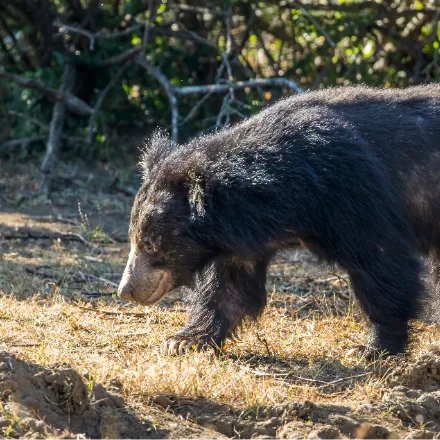
Sloth Bear
A shaggy, long-clawed insect specialist that vacuums termites out of a mound loudly enough to hear from fifty metres. Where: Palu trees along the tracks and around the villus. Best: Jun-Jul, morning.
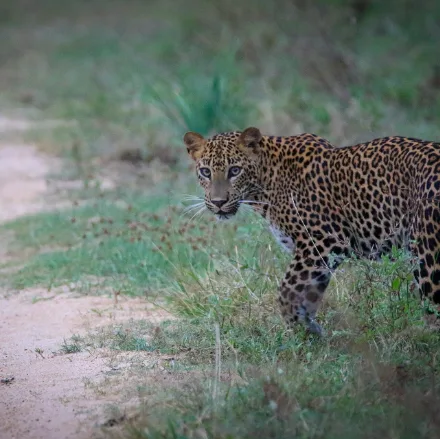
Sri Lankan Leopard
The largest leopard subspecies in the world, and on this island it is the top predator, which changes how it behaves. Where: Track edges and the margins of the villus. Best: Feb-Oct, early morning.
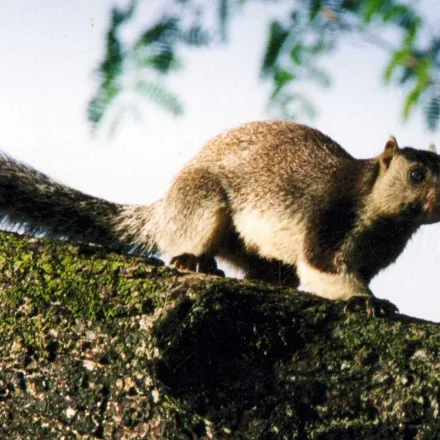
Grizzled Giant Squirrel
A cat-sized squirrel with a tail longer than its body, flowing along a branch and then freezing flat against the bark. Where: Taller woodland near water. Best: Year round.
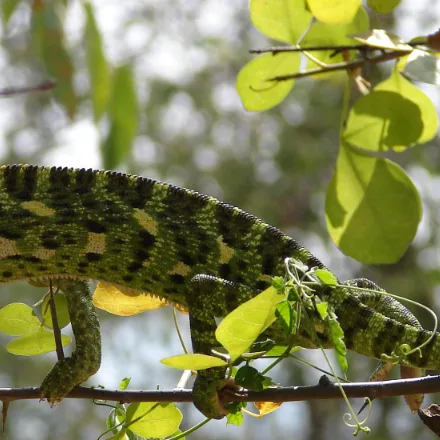
Indian Chameleon
Sri Lanka's only chameleon, and it is genuinely scarce here, so finding one in a thorn bush in the northwest is a proper piece of luck. Where: Thorn scrub and low trees along the tracks, and on the Mannar road beyond the park. Best: Year round.
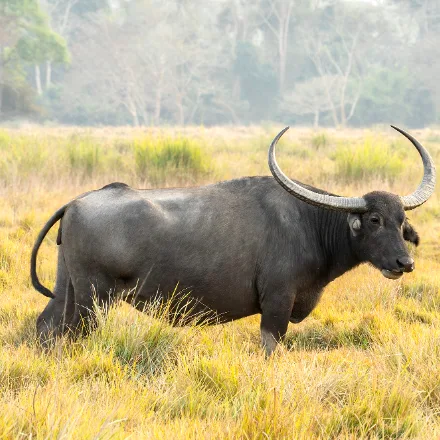
Wild Water Buffalo
Wide-swept horns spanning further than any other bovid, on an animal that is genuinely dangerous and genuinely rare in its true wild form. Where: The villus, often with only heads and horns showing. Best: Year round.
Mammals
11 species
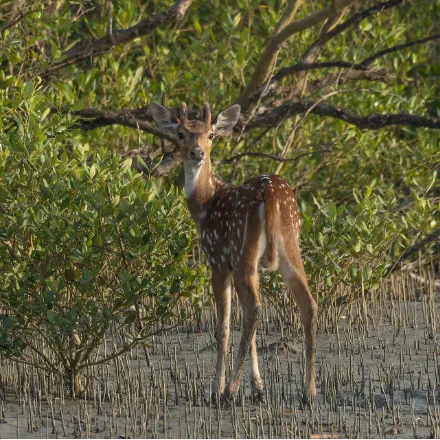
Chital (Spotted Deer) Common
Axis axis
The prey base the whole leopard story rests on, and the animal whose alarm call tells you where the cat is.
Where: Villu margins and open woodland. Best: Year round.
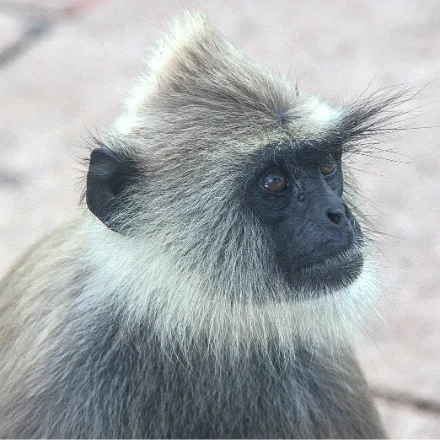
Tufted Grey Langur Common Near Threatened
Semnopithecus priam
Long-limbed, silver-grey and black-faced, sitting in the open on a ruin or a track edge in every dry zone park.
Where: Woodland around the villus. Best: Year round.
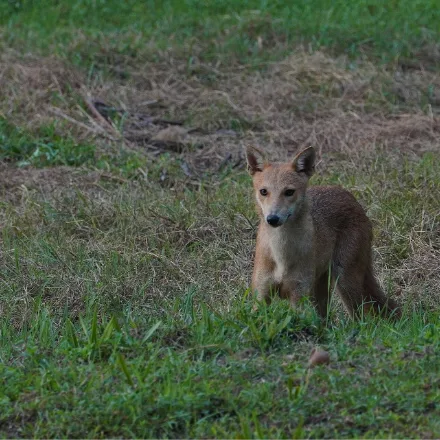
Golden Jackal Regular
Canis aureus
The dry zone's opportunist, trotting along a track at dawn and howling in chorus at dusk so the whole park knows where it is.
Where: Track edges and villu margins. Best: Year round, dawn and dusk. The dusk chorus is one of the defining sounds of a night in the dry zone.
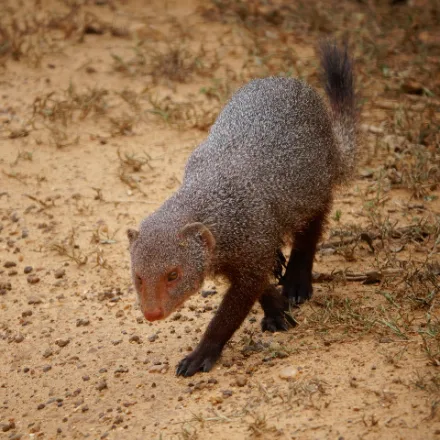
Ruddy Mongoose Regular
Urva smithii
A big reddish mongoose that carries its black-tipped tail curled up over its back as it crosses a track.
Where: Track edges and open woodland. Best: Year round.
Wild Water Buffalo Regular Endangered
Bubalus arnee
Wide-swept horns spanning further than any other bovid, on an animal that is genuinely dangerous and genuinely rare in its true wild form.
Where: The villus, often with only heads and horns showing. Best: Year round. Telling genuinely wild animals from feral ones is not straightforward in the field.
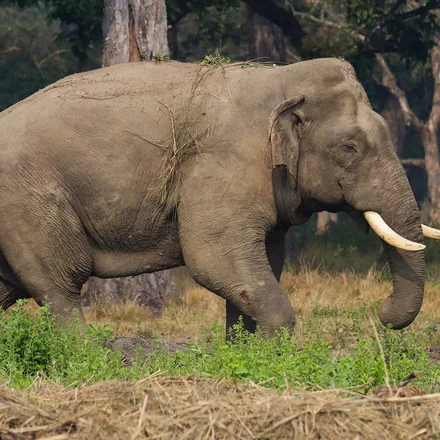
Asian Elephant Occasional Endangered
Elephas maximus
The largest land animal in Asia, and a genuinely wild one is worth seeking out over the camp elephants most tourists meet.
Where: Villu margins and open woodland. Best: February to October.
Sloth Bear Occasional Vulnerable
Melursus ursinus
A shaggy, long-clawed insect specialist that vacuums termites out of a mound loudly enough to hear from fifty metres.
Where: Palu trees along the tracks and around the villus. Best: Jun-Jul, morning. The best sloth bear park in the country, and the palu season is the whole reason to time a trip for it.
Sri Lankan Leopard Occasional Endangered
Panthera pardus kotiya
The largest leopard subspecies in the world, and on this island it is the top predator, which changes how it behaves.
Where: Track edges and the margins of the villus. Best: Feb-Oct, early morning. Fewer cats and far fewer jeeps than Yala. Better watching when you do connect.
Grizzled Giant Squirrel Rare Near Threatened
Ratufa macroura
A cat-sized squirrel with a tail longer than its body, flowing along a branch and then freezing flat against the bark.
Where: Taller woodland near water. Best: Year round. Often mistaken for a monkey at first glance.
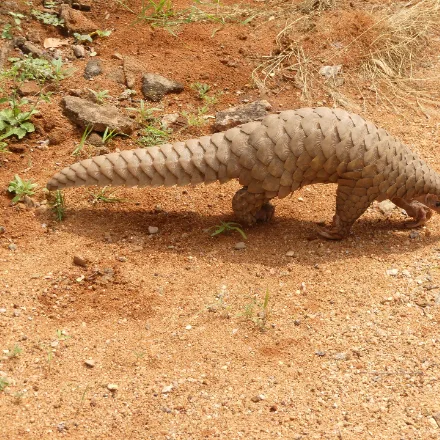
Indian Pangolin Ultra rare Endangered
Manis crassicaudata
A walking pine cone that eats ants, rolls into an impenetrable ball when threatened, and is the most trafficked wild mammal on earth.
Where: Dry forest away from the tracks. Best: Year round, after dark.
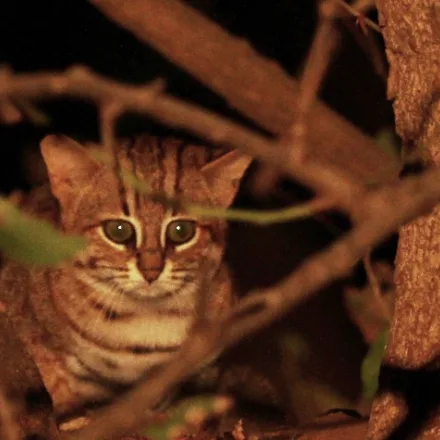
Rusty-spotted Cat Ultra rare Near Threatened
Prionailurus rubiginosus
The smallest wild cat in the world, about half the weight of a house cat, and one of the least seen animals on the island.
Where: Scrub and forest away from the tracks. Best: Year round, after dark.
Birds
10 species
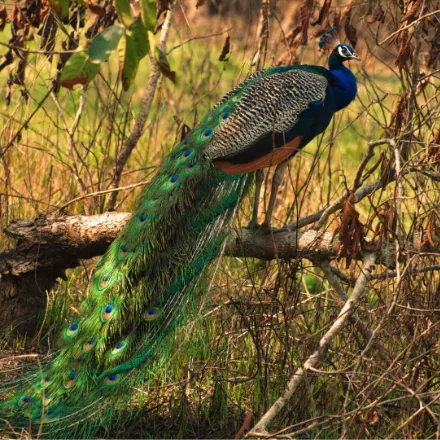
Indian Peafowl Common
Pavo cristatus
Wild, and behaving like a wild bird: displaying on a termite mound at dawn with leopards in the same scrub.
Where: Villu margins and the palu forest tracks. Best: Year round. Quieter setting, and often the first bird you hear at dawn.
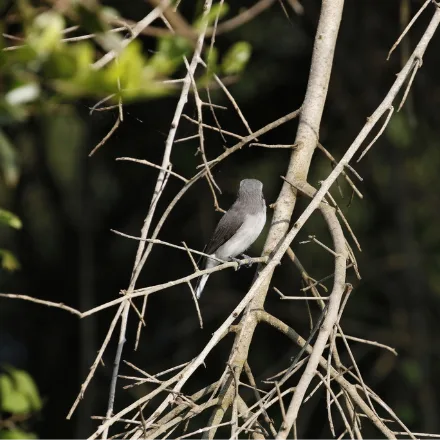
Sri Lanka Woodshrike Regular
Tephrodornis affinis
A plain grey-brown bird of the dry zone scrub that repays anyone willing to look at something that is not a leopard.
Where: Scrub and woodland edge along the tracks. Best: Year round. Same habit, quieter park.
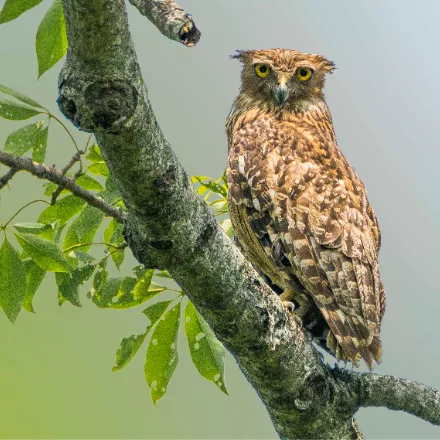
Brown Fish Owl Occasional
Ketupa zeylonensis
A big owl with bare unfeathered legs, because feathers are a liability when you fish with your feet.
Where: Tall trees at the villu edges. Best: Year round, dusk.
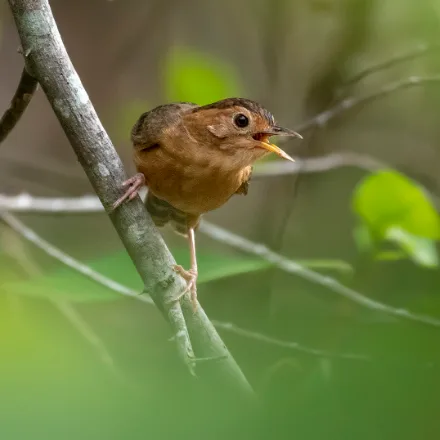
Brown-capped Babbler Occasional
Pellorneum fuscocapillus
A ground babbler that sings a clear rising three-note whistle from inside a thicket and refuses to come out.
Where: Scrub and thicket along the tracks. Best: Year round. Gives a safari day something to listen for between the mammals.
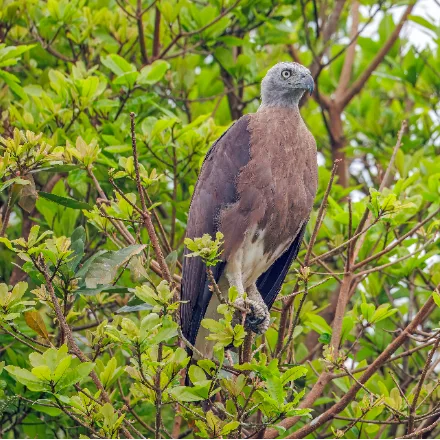
Grey-headed Fish Eagle Occasional Near Threatened
Icthyophaga ichthyaetus
Sits low over the water on a dead branch for hours, then drops feet first and comes up with a fish half its own weight.
Where: Dead branches overhanging the villus. Best: Year round. Pairs hold the same villus year after year, which makes it unusually findable for a big raptor.
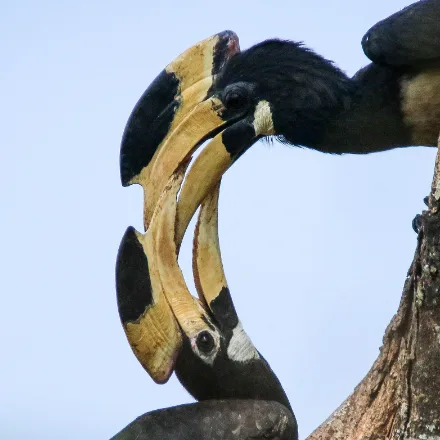
Malabar Pied Hornbill Occasional Near Threatened
Anthracoceros coronatus
The island's big hornbill, sealing the female into a tree hollow behind a wall of mud for the whole nesting period.
Where: Tall trees along the tracks and around the villus. Best: Year round. Heard well before it is seen. The wingbeats carry.
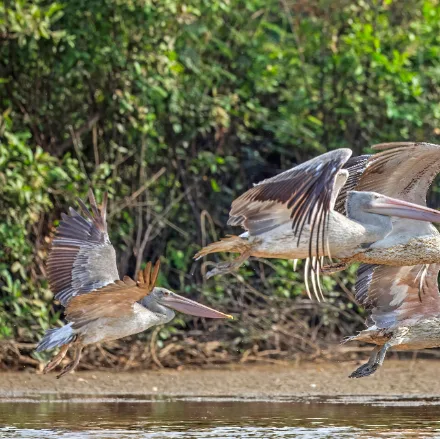
Spot-billed Pelican Occasional Near Threatened
Pelecanus philippensis
A pelican that fishes the ancient irrigation tanks, and one of the few large waterbirds doing better now than it was.
Where: The larger villus. Best: Year round.
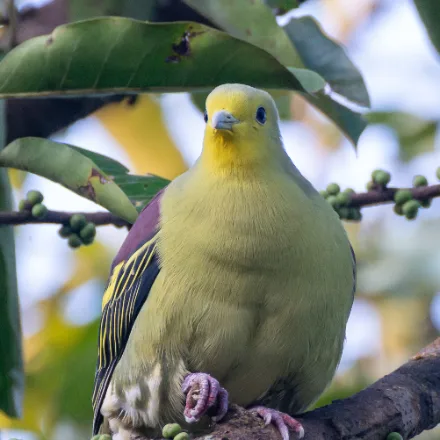
Sri Lanka Green Pigeon Occasional
Treron pompadora
A pigeon the colour of a lime leaf, sitting motionless in a fig until it moves and gives itself away.
Where: Fruiting trees around the villus. Best: Year round. Flocks sit motionless until one shifts.
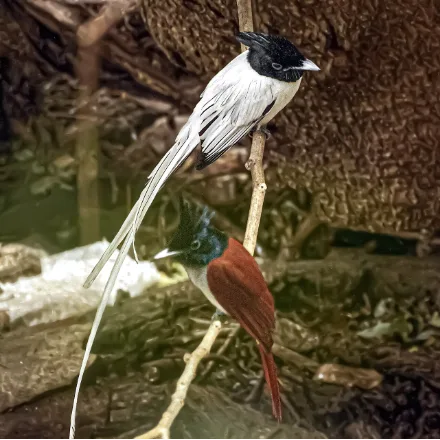
Indian Paradise Flycatcher Rare
Terpsiphone paradisi
The adult male grows tail streamers three times the length of his own body and trails them through the canopy like ribbon.
Where: Riverine strips and shaded thickets. Best: Nov-Mar.
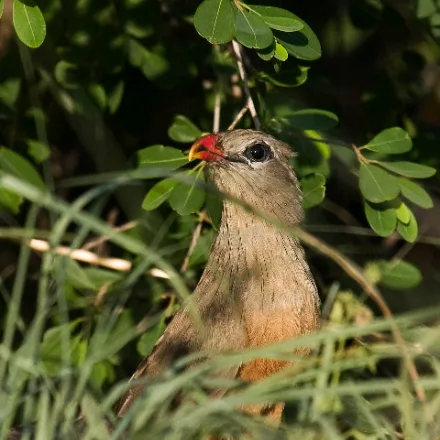
Sirkeer Malkoha Rare
Taccocua leschenaultii
A cuckoo that gave up on being a cuckoo: it builds its own nest, raises its own young and runs along the ground rather than flying.
Where: Scrub margins away from the villus. Best: Year round.
Reptiles
16 species
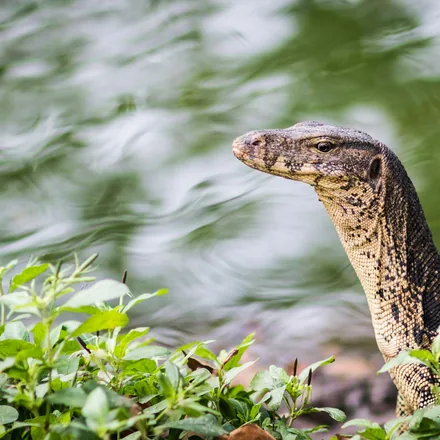
Asian Water Monitor Common
Varanus salvator
A dragon sized lizard that swims canals and city parks, second only to the Komodo dragon in length.
Where: Villu margins. Best: Year round.
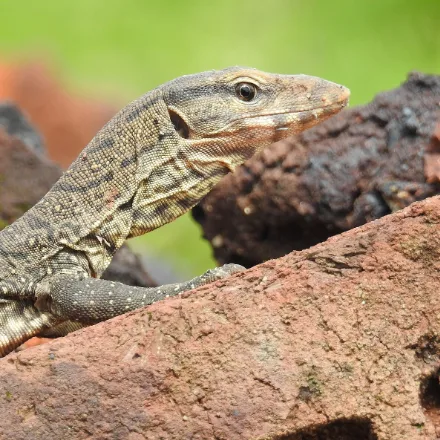
Bengal Monitor Common
Varanus bengalensis
A dry-country monitor that climbs well, digs constantly and eats essentially anything smaller than itself.
Where: Dry forest and open scrub. Best: February to October.
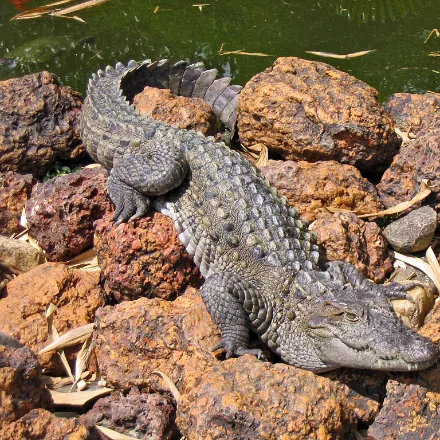
Mugger Crocodile Common Vulnerable
Crocodylus palustris
The broadest snout of any living crocodile, and in one Sri Lankan park block there are more of them per square kilometre than anywhere else on earth.
Where: The villus, particularly Kumbukvillu and Panikkarvillu. Best: February to October. Dry season concentrations as the villus shrink.
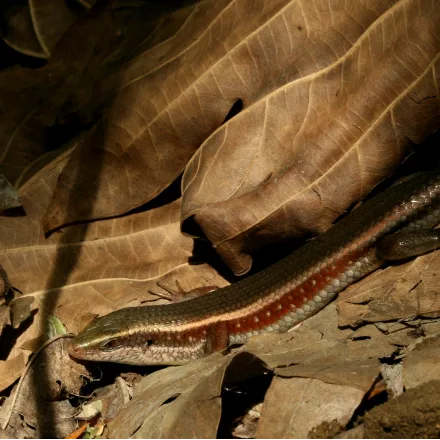
Sri Lankan Common Skink Common
Eutropis lankae
The bronze skink basking on every wall, ruin and hotel lawn in the country turned out in 2020 to be an endemic species, not the Indian one everybody had been calling it.
Where: Sandy open ground and track edges. Best: Year round.
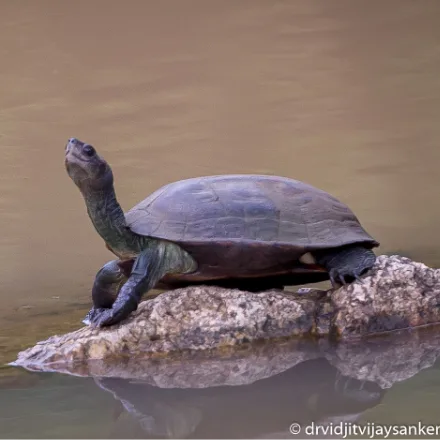
Indian Black Turtle Regular Near Threatened
Melanochelys trijuga
The dark, three keeled turtle basking on every half sunk log in the dry zone, and the northern race is found nowhere else on earth.
Where: Basking on logs and floating vegetation at the villu margins. Best: Sunny mornings, year round.
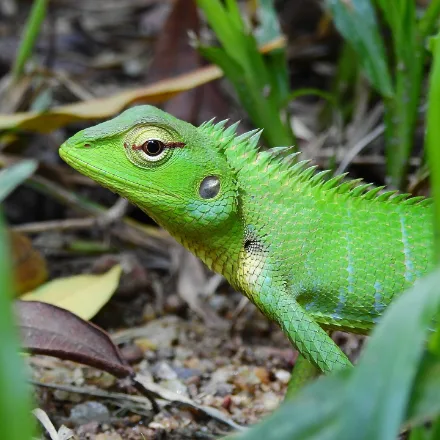
Green Forest Lizard Occasional
Calotes calotes
The biggest lizard in the trees here, and in the breeding season the male's head and throat turn crimson.
Where: Wooded areas and forest edge. Best: Year round.
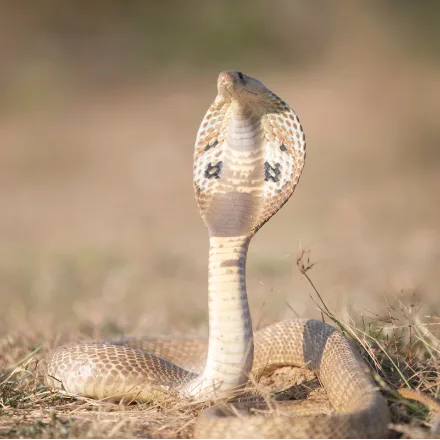
Indian Cobra Occasional
Naja naja
The spectacled cobra of South Asian myth, and one of the very few snakes a visitor to the dry zone parks has a real chance of seeing.
Where: Open scrub and track edges. Best: Year round.
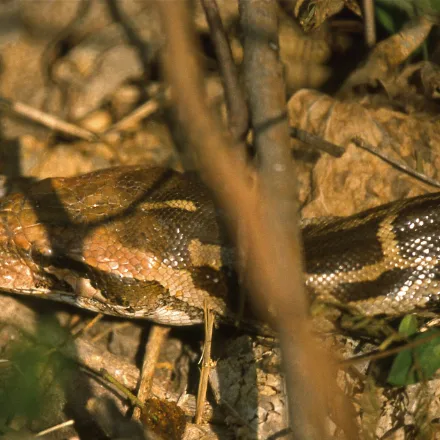
Indian Rock Python Occasional Near Threatened
Python molurus
Sri Lanka's largest snake, and in the dry season it lies out at the edge of a shrinking waterhole where every animal in the park has to come.
Where: Villu margins and around rock outcrops. Best: February to October.
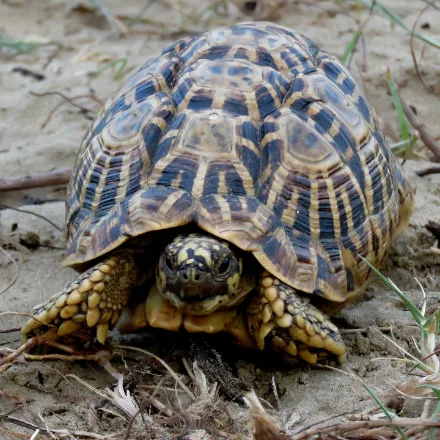
Indian Star Tortoise Occasional Vulnerable
Geochelone elegans
The most trafficked tortoise on earth, and the Sri Lankan animals are the biggest and the most boldly starred of the lot.
Where: Sandy open scrub and track verges. Best: After rain.
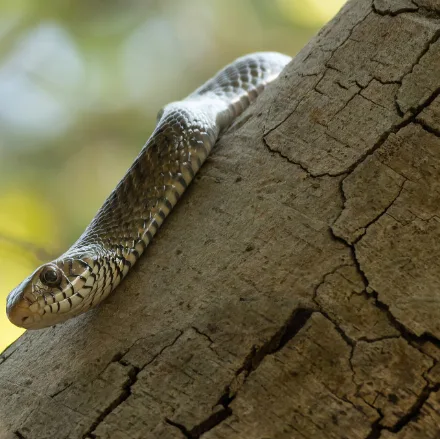
Oriental Rat Snake Occasional
Ptyas mucosa
A long, fast, wide eyed snake that races across open ground and is one of the region's great rodent controllers.
Where: Track edges and open woodland. Best: Year round, daytime.
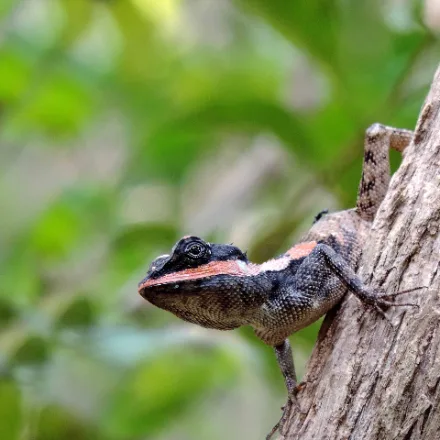
Painted-lip Lizard Occasional
Calotes ceylonensis
A dry zone endemic with a red stripe painted along its upper lip, and when it is alarmed the stripe flashes white.
Where: Monsoon forest and wooded track edges. Best: Year round.
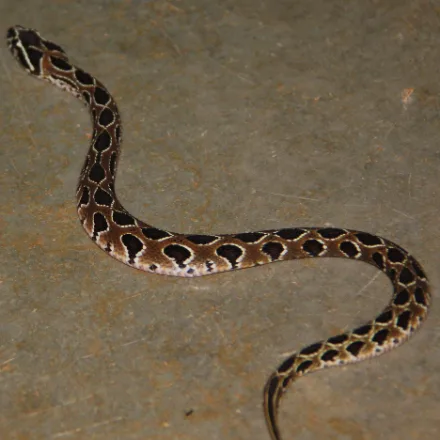
Russell's Viper Occasional
Daboia russelii
The snake that kills more people in Sri Lanka than any other, sitting in plain sight on a paddy bund and hissing like a punctured tyre.
Where: Open ground and track margins. Best: Year round.
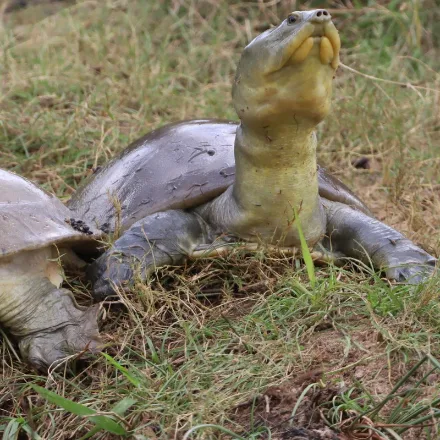
Sri Lankan Flapshell Turtle Occasional Vulnerable
Lissemys ceylonensis
The only chelonian species found solely in Sri Lanka, split off from its mainland cousin eight million years ago, and still without a conservation status of its own.
Where: Villu shallows and mud banks. Best: February to October.
Indian Chameleon Rare
Chamaeleo zeylanicus
Sri Lanka's only chameleon, and it is genuinely scarce here, so finding one in a thorn bush in the northwest is a proper piece of luck.
Where: Thorn scrub and low trees along the tracks, and on the Mannar road beyond the park. Best: Year round. Usually found because someone spotted a slow rocking shape against the sky.
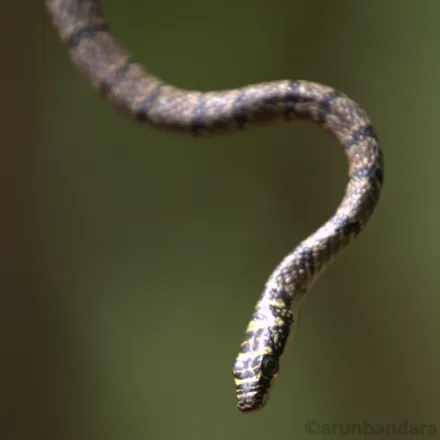
Sri Lankan Flying Snake Rare
Chrysopelea taprobanica
A gliding snake of the dry zone that flattens its belly into a wing and launches itself off a temple wall.
Where: Old growth trees and forest edge. Best: Year round, daytime.
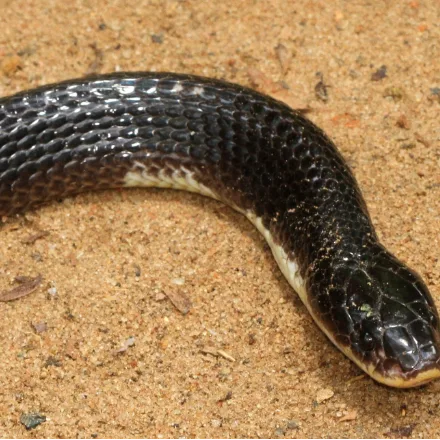
Common Krait Very rare
Bungarus caeruleus
Sri Lanka's deadliest snake bites people while they sleep, and the bite is often painless enough that they do not wake.
Where: Dry zone scrub, on night road transects only. Best: Year round, night. Effectively a specialist herping find rather than a safari one.
Amphibians
4 species
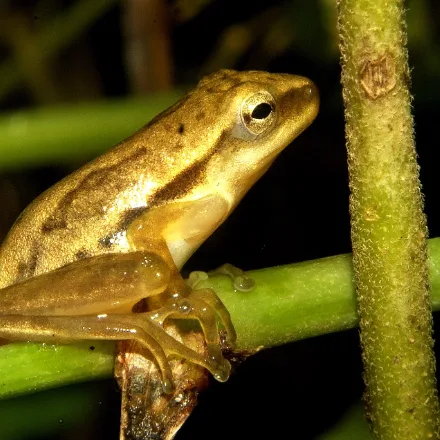
Chunam Tree Frog Occasional
Polypedates maculatus
The one that is not endemic, sharing the same walls and water tanks, and the hourglass is the whole test.
Where: Bungalow walls and dry zone scrub. Best: Year round, night.
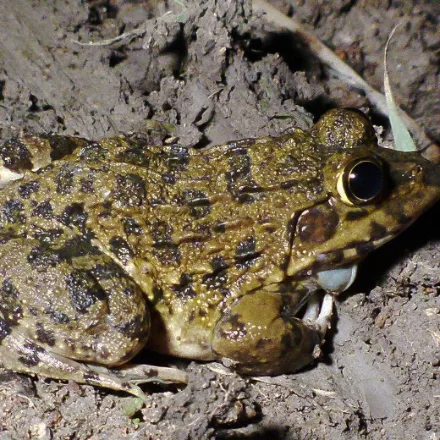
Jerdon's Bullfrog Occasional
Hoplobatrachus crassus
The biggest frog on the island, and its tadpoles hunt and eat other tadpoles, including each other when the pool gets crowded.
Where: Seasonally flooded open ground. Best: October to January, night.
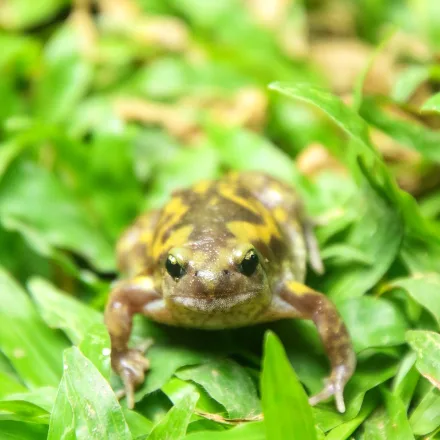
Marbled Balloon Frog Occasional
Uperodon systoma
It lives underground eating termites and surfaces for a few nights a year when the rains flood the plains, so you either hit it or miss it entirely.
Where: Flooded ground and rain pools after heavy rain. Best: October to January, night, during rain.
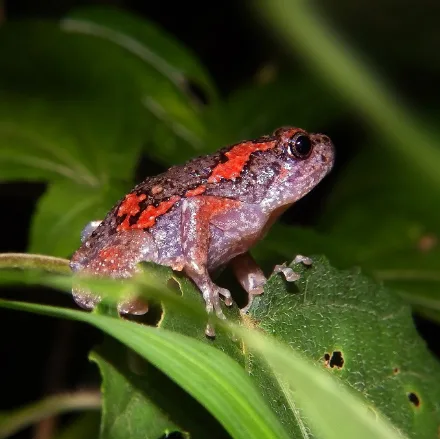
Sri Lankan Painted Frog Occasional
Uperodon taprobanicus
Grabbed by a snake it inflates into a balloon and exudes a glue that gums the snake's mouth shut, and it shares tree holes with ornamental tarantulas.
Where: Dry zone scrub and rain pools. Best: October to January, night.
Insects
1 species
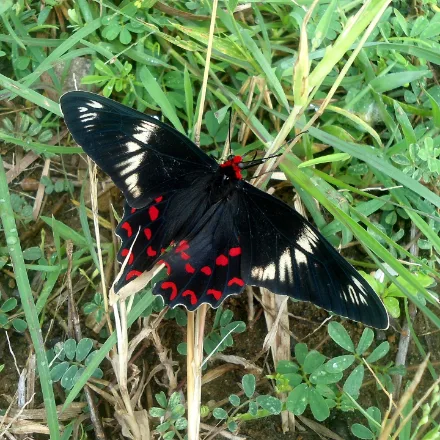
Crimson Rose Common Near Threatened
Pachliopta hector
Flies slowly and in the open because it is poisonous and every predator on the island knows it.
Where: Roadsides and villu margins. Best: February to July.
Spiders and scorpions
2 species
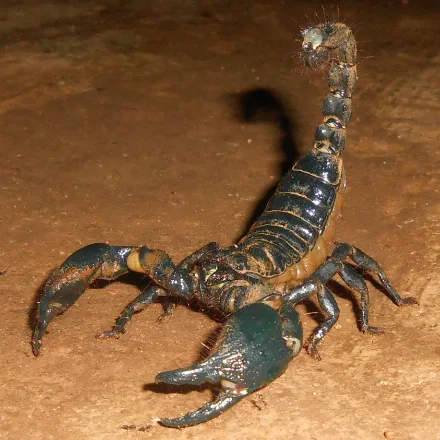
Giant Forest Scorpion Occasional
Heterometrus swammerdami
Among the largest scorpions on earth, and its sting is milder than a bee's.
Where: Forest floor and track margins at night. Best: February to July, night.
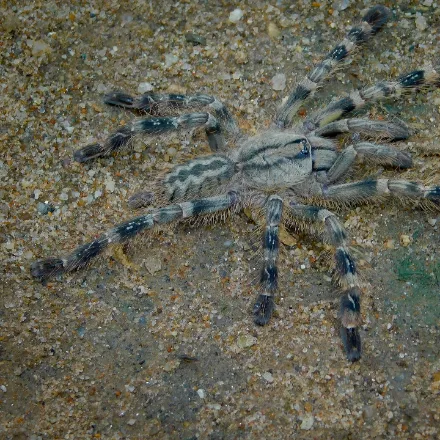
Sri Lankan Ornamental Tarantula Rare
Poecilotheria fasciata
The spider that gave the ornamental tarantulas their name, described in 1804 and found only here.
Where: Mature trees in the forest blocks, at night. Best: February to July, night.
Planning
February to October, with June and July the window that matters if the sloth bear is the reason you are going. Distances inside the park are long and the tracks are sand, so a full day is a better unit here than a short drive, and the villu circuit rewards patience at one good edge over covering ground. Take water and food in, because there is nothing inside. Sloth bears are short sighted and easily startled, and they are the one large mammal here that reacts rather than leaves.
Compare guided safaris and transfers for Wilpattu
Some links on this page are affiliate links. If you book through them, Wildseer may earn a small commission at no extra cost to you.
Frequently asked questions
Is Wilpattu good for sloth bears?
It is the best park in the country for them. The bears are recorded around the palu trees along the tracks and villus, and the June to July fruiting season is when they feed in daylight and become realistically findable.
Can you see leopards in Wilpattu?
Yes, and less often than at Yala. The forest is taller and the cats have more cover, so sightings take longer. The compensation is that when it happens there is rarely another vehicle in sight.
When is the best time to visit Wilpattu?
February to October. June and July for sloth bear, which is the strongest single reason to time a trip here rather than anywhere else.
How is Wilpattu different from Yala?
Larger, wooded, much quieter and slower. Yala is thorn scrub with the leopards and the traffic; Wilpattu is dry forest around lakes, with bears, and long stretches where you see nobody.
Explore Sri Lanka wildlife by group
 Mammals of Sri Lanka
 Birds of Sri Lanka
 Reptiles and amphibians of Sri Lanka
 Fish of Sri Lanka
 Sharks and rays of Sri Lanka
 Reef invertebrates of Sri Lanka
 Insects and spiders of Sri Lanka
Part of the Wildlife in Sri Lanka guide.
Explore Sri Lanka wildlife by place
- Adams Peak wildlife
- Arugam Bay marine life
- Bundala wildlife
- Colombo wildlife
- Ella wildlife
- Gal Oya wildlife
- Great Basses marine life
- Hikkaduwa marine life
- Horton Plains wildlife
- Jaffna wildlife
- Kalpitiya marine life
- Kandy wildlife
- Kanneliya wildlife
- Kitulgala wildlife
- Knuckles wildlife
- Kumana wildlife
- Mannar marine life
- Minneriya wildlife
- Mirissa marine life
- Rekawa marine life
- Sigiriya wildlife
- Sinharaja wildlife
- Tangalle marine life
- Trincomalee marine life
- Udawalawe wildlife
- Wasgamuwa wildlife
- Yala wildlife
Image credits
Square thumbnails are cropped from the original. Wide banner images are cropped to a band. Other images are resized only. No other changes have been made.
- Sloth Bear: Charles J. Sharp | CC BY-SA 4.0, cropped
- Sri Lankan Leopard: Vasuki Jayaweera | CC BY-SA 4.0, cropped
- Grizzled Giant Squirrel: Cyrillic at English Wikipedia | Public domain, cropped
- Indian Chameleon: No machine-readable author provided. M.arunprasad assumed (based on copyright claims). | CC BY 2.5, cropped
- Wild Water Buffalo: Joydeep Chakraborty | CC BY-SA 4.0, cropped
- Chital: Tisha Mukherjee | CC BY-SA 4.0, cropped
- Tufted Grey Langur: Peter van der Sluijs | CC BY-SA 3.0, cropped
- Golden Jackal: Vengolis | CC BY-SA 4.0, cropped
- Ruddy Mongoose: desertnaturalist | CC BY 4.0, cropped
- Asian Elephant (cropped to square): Shadow Ayush | CC BY-SA 4.0, cropped
- Indian Pangolin: A. J. T. Johnsingh, WWF-India and NCF | CC BY-SA 4.0, cropped
- Rusty-spotted Cat: Davidvraju | CC BY-SA 4.0, cropped
- Indian Peafowl: Joshianuj | CC BY-SA 4.0, cropped
- Sri Lanka Woodshrike: Mickey Wu | CC BY 4.0, cropped
- Brown Fish Owl: Hedayeat Ullah | CC BY-SA 4.0, cropped
- Brown-capped Babbler: Griha Hasanov | CC BY 4.0, cropped
- Grey-headed Fish Eagle: Charles J. Sharp | CC BY-SA 4.0, cropped
- Malabar Pied Hornbill: @Vikas patil photography | CC BY-SA 4.0, cropped
- Spot-billed Pelican: Charles J. Sharp | CC BY-SA 4.0, cropped
- Sri Lanka Green Pigeon: Satdeep Gill | CC BY 4.0, cropped
- Indian Paradise Flycatcher: Drsssuresh1961 | CC0, cropped
- Sirkeer Malkoha: N.A.Nazeer | CC BY-SA 2.5 in, cropped
- Asian Water Monitor: John Thomas | Unsplash License, cropped
- Bengal Monitor (cropped to square): Dr. Raju Kasambe | CC BY-SA 4.0, cropped
- Mugger Crocodile: Karunakar Rayker from India | CC BY-SA 2.0, cropped
- Sri Lankan Common Skink: Gihan Jayaweera | CC BY-SA 4.0, cropped
- Indian Black Turtle: Dr Vidjit Vijaysanker | CC BY-SA 4.0, cropped
- Green Forest Lizard: Rehman Abubakr | CC BY-SA 4.0, cropped
- Indian Cobra: Pexels contributor | Pexels Licence, cropped
- Indian Rock Python: Bernard DUPONT from FRANCE | CC BY-SA 2.0, cropped
- Indian Star Tortoise: Selvaganesh17 | CC BY-SA 4.0, cropped
- Oriental Rat Snake (cropped to square): Tisha Mukherjee | CC BY-SA 4.0, cropped
- Painted-lip Lizard: Sumudusoyza007 | CC BY-SA 4.0, cropped
- Russell’s Viper: StefanSTS | CC BY-SA 3.0, cropped
- Sri Lankan Flapshell Turtle: spacegecko | CC BY 4.0, cropped
- Sri Lankan Flying Snake: Gihan Jayaweera | CC BY-SA 3.0, cropped
- Common Krait: Davidvraju | CC BY-SA 4.0, cropped
- Chunam Tree Frog: Dr. Raju Kasambe | CC BY-SA 4.0, cropped
- Jerdon’s Bullfrog: L. Shyamal | CC BY-SA 3.0, cropped
- Marbled Balloon Frog: Dineshmee | CC BY-SA 4.0, cropped
- Sri Lankan Painted Frog: Rison Thumboor from Thrissur, India | CC BY 2.0, cropped
- Crimson Rose: Adityamadhav83 | CC BY-SA 3.0, cropped
- Giant Forest Scorpion: Nireekshit | CC BY-SA 3.0, cropped
- Sri Lankan Ornamental Tarantula: Gerard Mendis | CC BY-SA 4.0, cropped
- Purple-faced langur in the canopy: kanchana Amilani | Unsplash License, cropped
- White-throated kingfisher on a branch: kanchana Amilani | Unsplash License, cropped
- Green forest lizard in breeding colour: Anas Mohamed Nuski | Pexels Licence, cropped
- Bluestripe snapper over a reef: Jeffry Surianto | Pexels Licence, cropped
- Reef manta rays near the surface: Emma Li | Pexels Licence, cropped
- Nudibranch crossing the sea floor: Chris Spain | Pexels Licence, cropped
- Clipper butterfly on a leaf: Pixabay | Pexels Licence, cropped
Square thumbnails are cropped from the original. Wide banner images are cropped to a band. Other images are resized only. No other changes have been made.
- Sloth Bear: Charles J. Sharp | CC BY-SA 4.0, cropped
- Sri Lankan Leopard: Vasuki Jayaweera | CC BY-SA 4.0, cropped
- Grizzled Giant Squirrel: Cyrillic at English Wikipedia | Public domain, cropped
- Indian Chameleon: No machine-readable author provided. M.arunprasad assumed (based on copyright claims). | CC BY 2.5, cropped
- Wild Water Buffalo: Joydeep Chakraborty | CC BY-SA 4.0, cropped
- Chital: Tisha Mukherjee | CC BY-SA 4.0, cropped
- Tufted Grey Langur: Peter van der Sluijs | CC BY-SA 3.0, cropped
- Golden Jackal: Vengolis | CC BY-SA 4.0, cropped
- Ruddy Mongoose: desertnaturalist | CC BY 4.0, cropped
- Asian Elephant (cropped to square): Shadow Ayush | CC BY-SA 4.0, cropped
- Indian Pangolin: A. J. T. Johnsingh, WWF-India and NCF | CC BY-SA 4.0, cropped
- Rusty-spotted Cat: Davidvraju | CC BY-SA 4.0, cropped
- Indian Peafowl: Joshianuj | CC BY-SA 4.0, cropped
- Sri Lanka Woodshrike: Mickey Wu | CC BY 4.0, cropped
- Brown Fish Owl: Hedayeat Ullah | CC BY-SA 4.0, cropped
- Brown-capped Babbler: Griha Hasanov | CC BY 4.0, cropped
- Grey-headed Fish Eagle: Charles J. Sharp | CC BY-SA 4.0, cropped
- Malabar Pied Hornbill: @Vikas patil photography | CC BY-SA 4.0, cropped
- Spot-billed Pelican: Charles J. Sharp | CC BY-SA 4.0, cropped
- Sri Lanka Green Pigeon: Satdeep Gill | CC BY 4.0, cropped
- Indian Paradise Flycatcher: Drsssuresh1961 | CC0, cropped
- Sirkeer Malkoha: N.A.Nazeer | CC BY-SA 2.5 in, cropped
- Asian Water Monitor: John Thomas | Unsplash License, cropped
- Bengal Monitor (cropped to square): Dr. Raju Kasambe | CC BY-SA 4.0, cropped
- Mugger Crocodile: Karunakar Rayker from India | CC BY-SA 2.0, cropped
- Sri Lankan Common Skink: Gihan Jayaweera | CC BY-SA 4.0, cropped
- Indian Black Turtle: Dr Vidjit Vijaysanker | CC BY-SA 4.0, cropped
- Green Forest Lizard: Rehman Abubakr | CC BY-SA 4.0, cropped
- Indian Cobra: Pexels contributor | Pexels Licence, cropped
- Indian Rock Python: Bernard DUPONT from FRANCE | CC BY-SA 2.0, cropped
- Indian Star Tortoise: Selvaganesh17 | CC BY-SA 4.0, cropped
- Oriental Rat Snake (cropped to square): Tisha Mukherjee | CC BY-SA 4.0, cropped
- Painted-lip Lizard: Sumudusoyza007 | CC BY-SA 4.0, cropped
- Russell’s Viper: StefanSTS | CC BY-SA 3.0, cropped
- Sri Lankan Flapshell Turtle: spacegecko | CC BY 4.0, cropped
- Sri Lankan Flying Snake: Gihan Jayaweera | CC BY-SA 3.0, cropped
- Common Krait: Davidvraju | CC BY-SA 4.0, cropped
- Chunam Tree Frog: Dr. Raju Kasambe | CC BY-SA 4.0, cropped
- Jerdon’s Bullfrog: L. Shyamal | CC BY-SA 3.0, cropped
- Marbled Balloon Frog: Dineshmee | CC BY-SA 4.0, cropped
- Sri Lankan Painted Frog: Rison Thumboor from Thrissur, India | CC BY 2.0, cropped
- Crimson Rose: Adityamadhav83 | CC BY-SA 3.0, cropped
- Giant Forest Scorpion: Nireekshit | CC BY-SA 3.0, cropped
- Sri Lankan Ornamental Tarantula: Gerard Mendis | CC BY-SA 4.0, cropped
- Purple-faced langur in the canopy: kanchana Amilani | Unsplash License, cropped
- White-throated kingfisher on a branch: kanchana Amilani | Unsplash License, cropped
- Green forest lizard in breeding colour: Anas Mohamed Nuski | Pexels Licence, cropped
- Bluestripe snapper over a reef: Jeffry Surianto | Pexels Licence, cropped
- Reef manta rays near the surface: Emma Li | Pexels Licence, cropped
- Nudibranch crossing the sea floor: Chris Spain | Pexels Licence, cropped
- Clipper butterfly on a leaf: Pixabay | Pexels Licence, cropped