
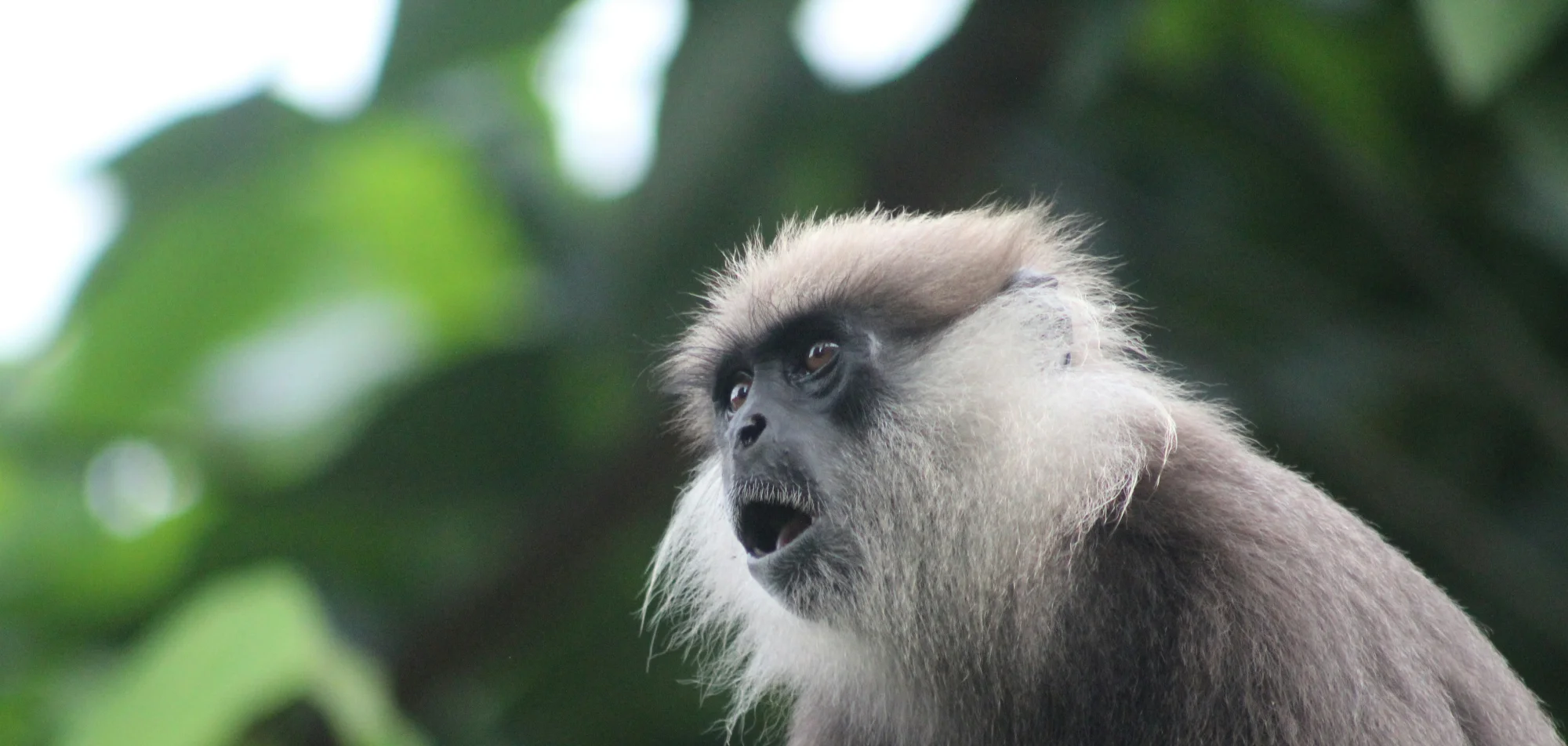
The mammals of Sri Lanka punch far above the island’s size. It holds the densest leopard population measured anywhere, the largest seasonal gathering of wild Asian elephants on earth, and a stretch of coast where blue whales and sperm whales feed within sight of land. Behind those three sit the animals that make the island distinctive rather than famous: the purple-faced langur of the cloud forest, the golden palm civet, the sloth bear working a fruiting palu tree.
This page lists every mammal the Wildseer database records for Sri Lanka, with where to look, when, and how likely each really is. The cetacean list is longer than most visitors expect, because the continental shelf runs unusually close inshore and puts deep water species within a morning of the beach.
This page lists all 30 mammals recorded for Sri Lanka in the Wildseer database. Use the contents to jump to a group.
Highlights
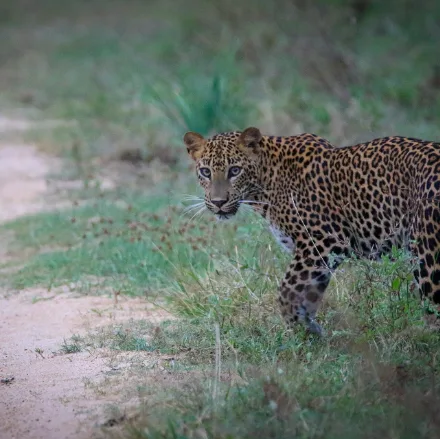
Sri Lankan Leopard
The largest leopard subspecies in the world, and on this island it is the top predator, which changes how it behaves. Where: Dry zone scrub forest, and at lower density in the hills and wet zone. Best: Year round.
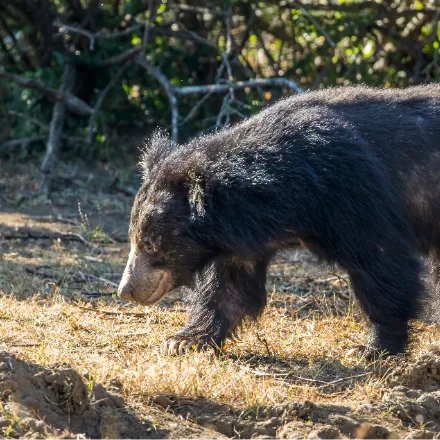
Sloth Bear
A shaggy, long-clawed insect specialist that vacuums termites out of a mound loudly enough to hear from fifty metres. Where: Dry zone forest and scrub. Best: Jun-Jul when palu fruit ripens.
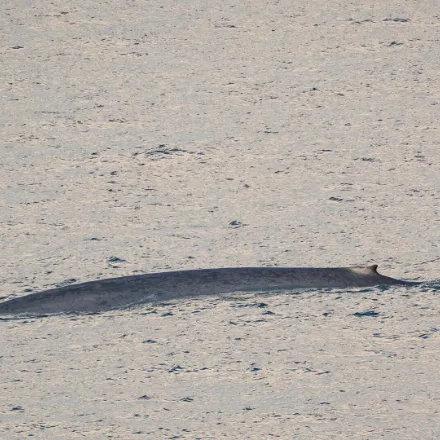
Blue Whale
The largest animal that has ever lived, and off Sri Lanka a population that mostly does not migrate, which is why it can be seen almost year round. Where: Deep water off the south and east coasts, close inshore where the shelf drops away. Best: Nov-Apr south, May-Sep east.
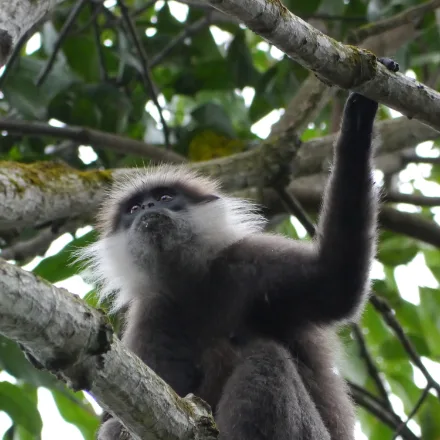
Purple-faced Langur
A shaggy black leaf monkey with white side whiskers, and the highland form is so hairy it is known as the bear monkey. Where: Wet zone and montane forest canopy. Best: Year round.
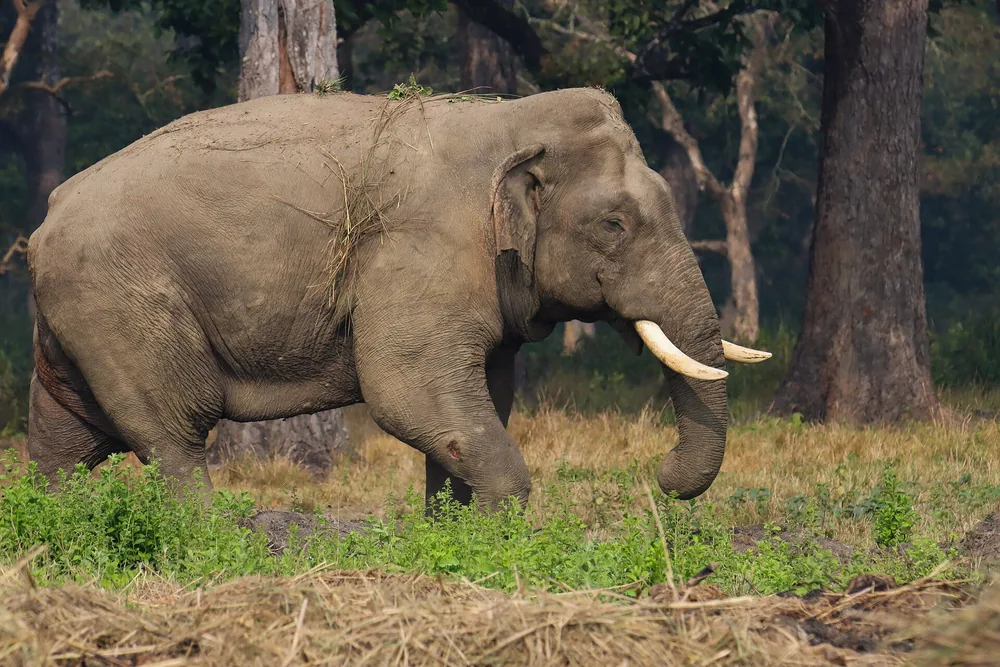
Asian Elephant
The largest land animal in Asia, and a genuinely wild one is worth seeking out over the camp elephants most tourists meet. Where: Dry zone parks, tank margins and the corridors between them. Best: Year round, best at the Gathering from July to October.
Mammals
30 species
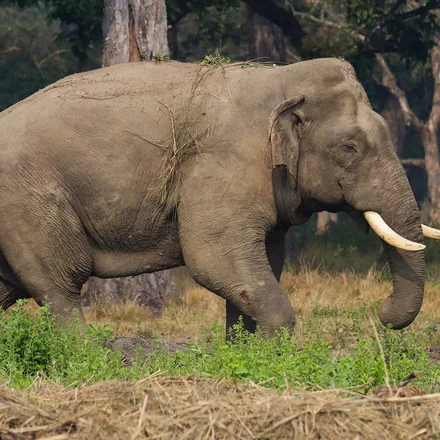
Asian Elephant Common Endangered
Elephas maximus
Asian elephants are smaller eared and more forest adapted than their African cousins, moving through jungle in tight family herds led by a matriarch. They gather at salt licks and grassy clearings, most active around dawn and dusk.
Where: Dry zone parks, tank margins and the corridors between them. Best: Year round, best at the Gathering from July to October. Sri Lankan bulls are mostly tuskless, so a tusker here is a genuine rarity rather than the norm. The island holds around six thousand wild elephants, one of the largest Asian populations. Also on: Minneriya and Kaudulla National Parks, Udawalawe National Park, Yala National Park, Wasgamuwa National Park, Gal Oya National Park, Kumana National Park.
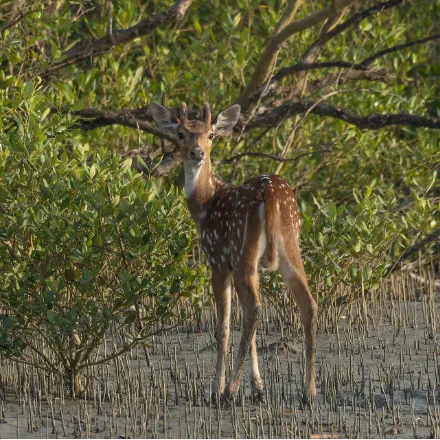
Chital (Spotted Deer) Common
Axis axis
Bright rufous with white spots kept into adulthood, a dark dorsal stripe and lyre-shaped antlers on the stags. Herds graze in the open and stay close to water.
Where: Dry zone grassland, scrub and woodland near water. Best: Year round. The prey base the whole leopard story rests on. Also on: Yala National Park, Wilpattu National Park, Udawalawe National Park, Kumana National Park, Gal Oya National Park, Minneriya and Kaudulla National Parks.
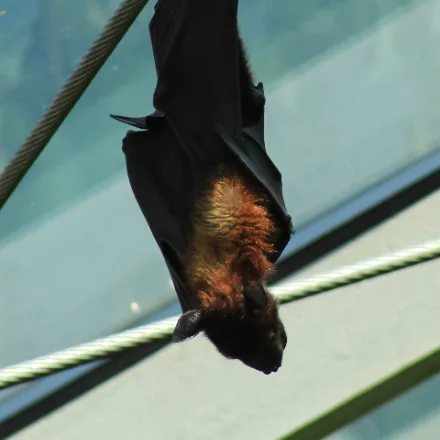
Indian Flying Fox Common
Pteropus giganteus
Large, with a chestnut mantle, a dark back and a fox-like face. Colonies roost communally in tall trees, squabbling and fanning through the day, and stream out at dusk to feed on fruit and blossom.
Where: Tall trees near water and settlement, often in the middle of towns. Best: Year round. Roosts are in the most public places imaginable, and the dusk flight costs nothing to see. Also on: Kandy, Colombo and the wetlands, Minneriya and Kaudulla National Parks, Udawalawe National Park, Wasgamuwa National Park, Gal Oya National Park.
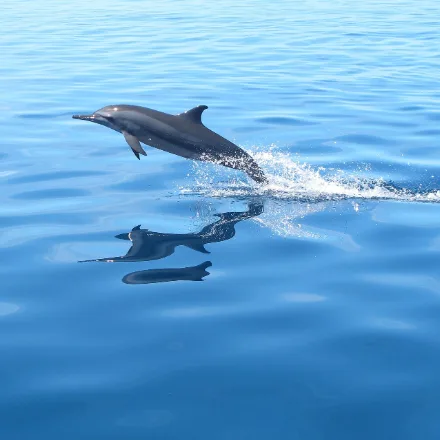
Spinner Dolphin Common
Stenella longirostris
A slim, long-beaked dolphin famous for spinning several times on its long axis during high leaps. It rests in bays by day and hunts small fish and squid at night in big schools.
Where: Surface water offshore, on whale and dolphin boat trips. Best: November to April on the west and south coasts. Kalpitiya produces super-pods of many hundreds and sometimes over a thousand animals, which is the largest dolphin spectacle in South Asia. Also on: Trincomalee and Pigeon Island, Kalpitiya, Mirissa.
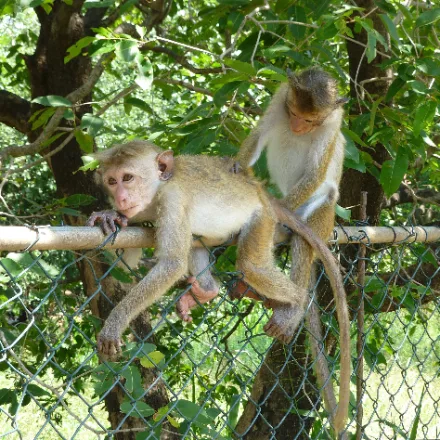
Toque Macaque Common Endangered
Macaca sinica
Golden-brown and slight, with a distinctive whorl of hair radiating from the top of the head. Troops are large and noisy, with a strict dominance order that is obvious to watch even briefly.
Where: Forest and forest edge from the dry zone to the highlands. Best: Year round. Endangered and endemic, and like macaques everywhere it becomes a problem where it is fed. Also on: Sinharaja Forest Reserve, Yala National Park, Kandy, Sigiriya, Dambulla and the Cultural Triangle, Arugam Bay and the East Coast Lagoons, Minneriya and Kaudulla National Parks.
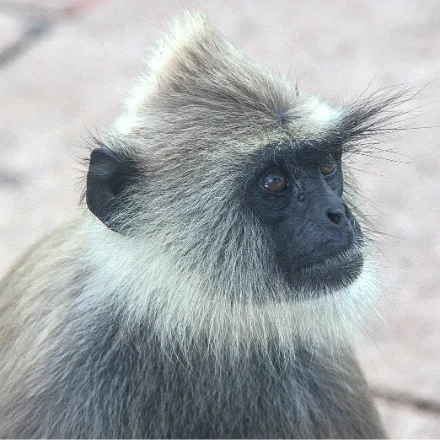
Tufted Grey Langur Common Near Threatened
Semnopithecus priam
Pale silvery-grey with a black face and hands and a crest of hair on the crown, with a tail longer than the body. Troops feed on leaves and fruit and spend a good deal of time on the ground in open country.
Where: Dry zone forest, scrub and archaeological sites. Best: Year round. The monkey most visitors photograph, and not a nuisance species. Also on: Yala National Park, Wilpattu National Park, Udawalawe National Park, Sigiriya, Dambulla and the Cultural Triangle, Gal Oya National Park, Minneriya and Kaudulla National Parks.
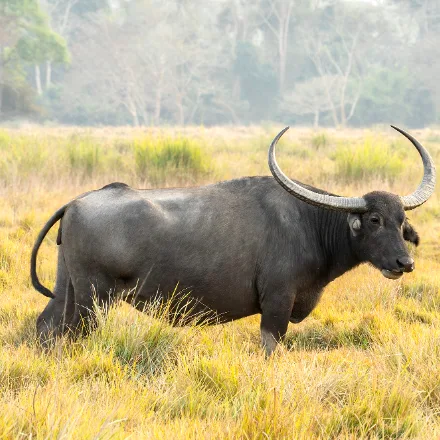
Wild Water Buffalo Common Endangered
Bubalus arnee
Massive and grey-black with enormous crescent horns sweeping outward and back. Herds wallow in tanks and marsh through the heat of the day with only heads and horns showing.
Where: Tanks, marsh and wet grassland in the dry zone. Best: Year round. Endangered as true wild stock. Most animals seen in the parks are feral domestic buffalo. Also on: Yala National Park, Wilpattu National Park, Wasgamuwa National Park, Gal Oya National Park, Kumana National Park, Arugam Bay and the East Coast Lagoons.
Blue Whale Regular Endangered
Balaenoptera musculus
Mottled blue-grey, immensely long and slender, with a tiny dorsal fin set far back and a blow that goes up nine metres or more. The northern Indian Ocean population is a distinct subspecies, and the animals are smaller than Antarctic blues while still reaching over twenty metres.
Where: Deep water off the south and east coasts, close inshore where the shelf drops away. Best: Nov-Apr south, May-Sep east. Largely resident rather than migratory here, which is what makes it seeable almost year round. Also on: Mirissa, Trincomalee and Pigeon Island, Kalpitiya.
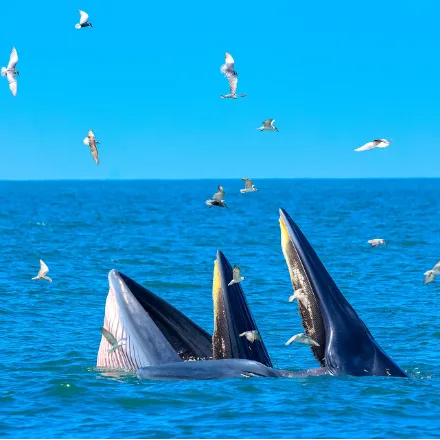
Bryde's Whale Regular
Balaenoptera edeni
A sleek rorqual whale of tropical seas that feeds by rushing up through shoals of small fish, jaws agape. Unlike most great whales it does not migrate to cold water.
Where: Blue water beyond the continental shelf edge. Best: December to April off the south and west, May to September off the east. The whale most often seen alongside blue whales off Mirissa, and often mistaken for one. Also on: Kalpitiya, Mirissa.
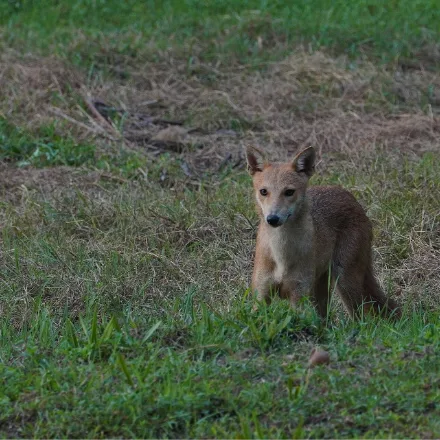
Golden Jackal Regular
Canis aureus
Slender and sandy-gold with a dark saddle and a bushy black-tipped tail. Pairs and family groups hunt small prey, scavenge kills and take fruit, and they are vocal in a rising chorus that other groups answer.
Where: Dry zone forest, scrub and open country. Best: Year round. One of the more reliable carnivores in the dry zone parks. Also on: Yala National Park, Wilpattu National Park, Bundala National Park, Jaffna and the Northern Peninsula, Arugam Bay and the East Coast Lagoons, Minneriya and Kaudulla National Parks.
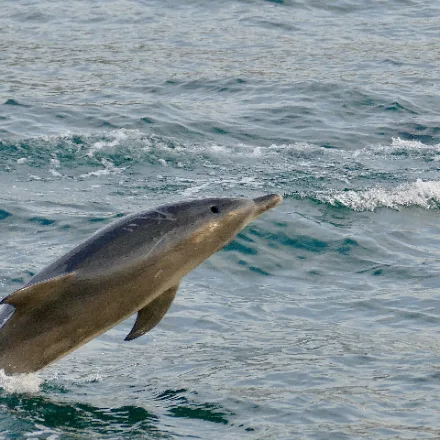
Indo-Pacific Bottlenose Dolphin Regular Near Threatened
Tursiops aduncus
A coastal dolphin, slimmer than its ocean cousin and often spotted on the belly with age. It lives in fluid social groups and uses sponges and tools to forage in some regions.
Where: Surface water offshore, on whale and dolphin boat trips. Best: December to April off the south and west, May to September off the east. Also on: Mirissa.
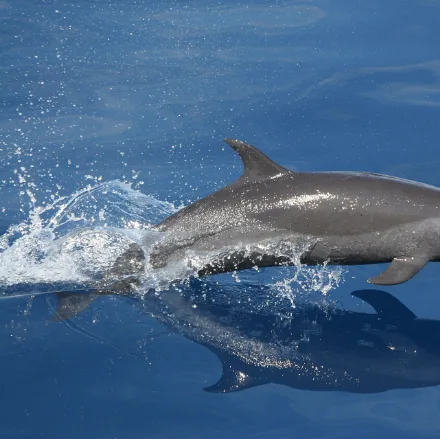
Pantropical Spotted Dolphin Regular
Stenella attenuata
Pantropical spotted dolphins travel in fast, acrobatic schools of tens to hundreds in deep offshore water. Spotting increases with age, from a plain grey calf to a heavily freckled adult.
Where: Surface water offshore, on whale and dolphin boat trips. Best: December to April off the south and west, May to September off the east. Also on: Mirissa.
Purple-faced Langur Regular Endangered
Semnopithecus vetulus
Dark brown to black with pale side whiskers and a long tail, moving through the canopy in small groups and feeding almost entirely on leaves. The montane subspecies has a notably thick shaggy coat against the cold.
Where: Wet zone and montane forest canopy. Best: Year round. Endangered and endemic, and the lowland form has lost most of its forest. Also on: Horton Plains and Nuwara Eliya, Sinharaja Forest Reserve, Kandy, Kanneliya Forest Reserve, Adam's Peak and Peak Wilderness, Ella and the Uva Highlands.
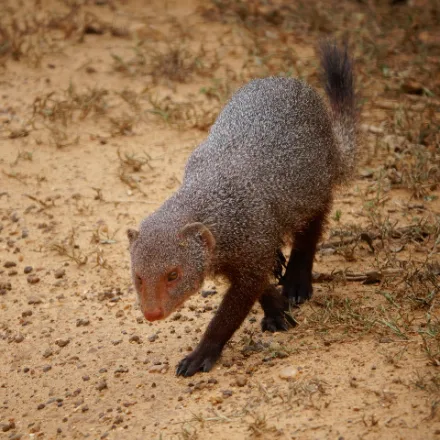
Ruddy Mongoose Regular
Urva smithii
Grizzled reddish-brown and noticeably larger than the common grey mongoose, with a distinctly black-tipped tail held upcurved when moving. Usually seen alone, hunting reptiles, rodents and eggs.
Where: Dry zone forest and scrub. Best: Year round. The mongoose most often seen in Sri Lankan parks, and rarely named by guides. Also on: Yala National Park, Wilpattu National Park, Udawalawe National Park, Minneriya and Kaudulla National Parks, Kumana National Park, Wasgamuwa National Park.
Sri Lankan Leopard Regular Endangered
Panthera pardus kotiya
A heavy, thickset leopard with a broad head and dense rosettes. Males can exceed 70 kg, well above the size of leopards elsewhere in Asia. Sri Lankan leopards are seen in the open far more readily than African or Indian ones, and they hunt by day as well as at night.
Where: Dry zone scrub forest, and at lower density in the hills and wet zone. Best: Year round. Endangered, perhaps eight hundred to a thousand animals. Top predator here, which is why it behaves so differently. Also on: Yala National Park, Wilpattu National Park, Kumana National Park, Horton Plains and Nuwara Eliya, Arugam Bay and the East Coast Lagoons, Gal Oya National Park.
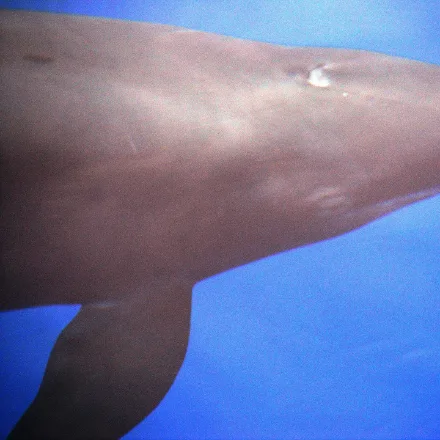
False Killer Whale Occasional Near Threatened
Pseudorca crassidens
False killer whales are large, slender black dolphins that hunt cooperatively for large fish including tuna and mahi-mahi. They routinely share prey within the pod and have been filmed passing fish to humans in the water.
Where: Blue water beyond the continental shelf edge. Best: December to April off the south and west, May to September off the east. Also on: Kalpitiya, Mirissa.
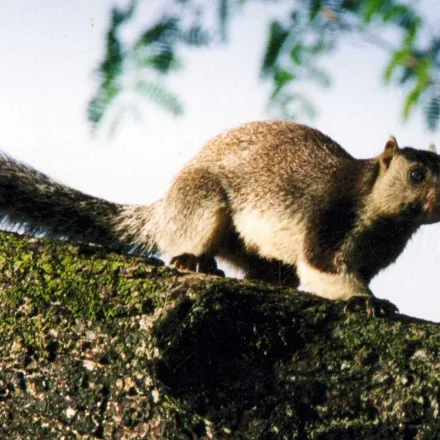
Grizzled Giant Squirrel Occasional Near Threatened
Ratufa macroura
Grey-brown grizzled with white, with pale underparts and a very long bushy tail. It moves through the canopy in long fluid bounds and flattens itself against a branch when alarmed rather than running.
Where: Tall riverine and hill forest. Best: Year round. Needs tall forest, so it is absent from open scrub. Also on: Wasgamuwa National Park, Knuckles Range, Wilpattu National Park.
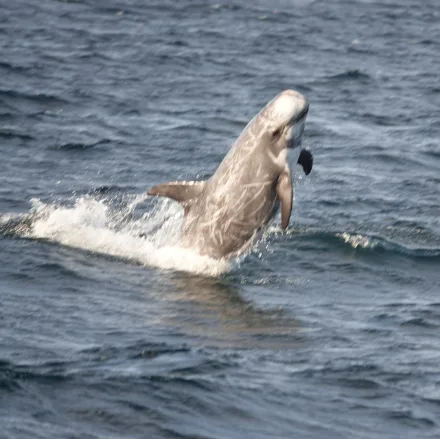
Risso's Dolphin Occasional
Grampus griseus
Risso's dolphins have a blunt, vertically creased head and no beak, and darken to pale grey then near white as scars accumulate. They dive deep for squid, mostly at night, and travel in pods of a dozen or so.
Where: Blue water beyond the continental shelf edge. Best: December to April off the south and west, May to September off the east. Also on: Mirissa.
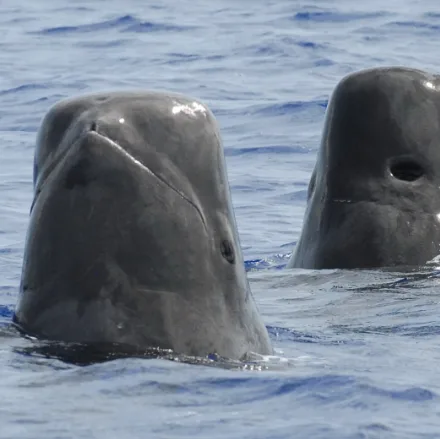
Short-finned Pilot Whale Occasional
Globicephala macrorhynchus
Pilot whales are large black dolphins with a bulbous head, travelling in tight matrilineal pods that stay together for life. They dive to 600 m or more, mostly for squid, in fast sprints that researchers call cheetah dives.
Where: Blue water beyond the continental shelf edge. Best: December to April off the south and west, May to September off the east. Also on: Mirissa.
Sloth Bear Occasional Vulnerable
Melursus ursinus
Black and shaggy with a pale muzzle, a white chest mark and enormous curved claws. It has no upper front incisors, which leaves a gap it uses to suck termites and ants out of their nests with a noise like a blocked pipe.
Where: Dry zone forest and scrub. Best: Jun-Jul when palu fruit ripens. Vulnerable, unpredictable, and mostly nocturnal outside the fruiting season. Also on: Wilpattu National Park, Yala National Park, Wasgamuwa National Park, Gal Oya National Park, Minneriya and Kaudulla National Parks, Kumana National Park.
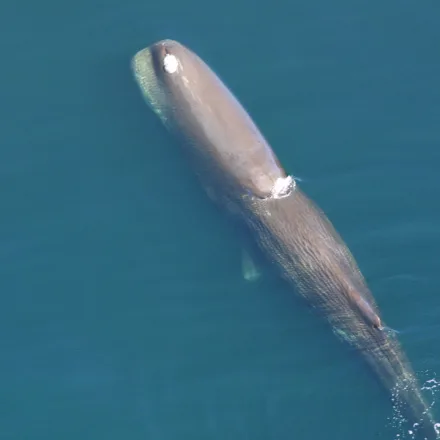
Sperm Whale Occasional Vulnerable
Physeter macrocephalus
Unmistakable: a vast square head making up a third of the body, a wrinkled grey skin like a prune, and a blow angled forward and to the left rather than straight up. It logs at the surface between dives, then lifts its flukes clear and goes down for the best part of an hour.
Where: Deep water off the east and northeast coasts. Best: Mar-Aug. Unusually large aggregations have been recorded here, occasionally running into the hundreds. Also on: Trincomalee and Pigeon Island, Kalpitiya, Mirissa.
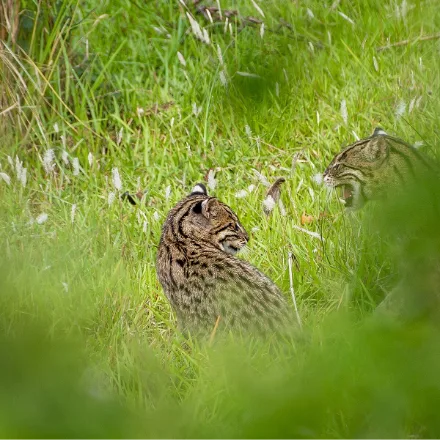
Fishing Cat Rare Vulnerable
Prionailurus viverrinus
About twice the size of a house cat, spotted and stocky, the fishing cat haunts mangroves and marshes. It is rare and shrinking as its wetland habitat disappears.
Where: Lagoons, estuaries and mangrove creeks at Puttalam, Negombo and Kalametiya. Best: Year round. A cat that dives for fish, and Colombo's wetlands hold one of the few urban populations anywhere in its range.
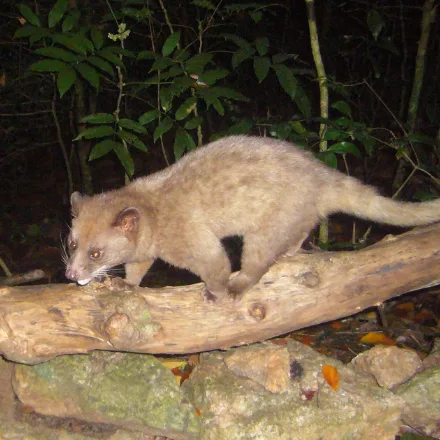
Golden Palm Civet Rare Vulnerable
Paradoxurus zeylonensis
Uniform golden to rich brown with no spots or stripes, a long tail and a short pointed face. It is arboreal and nocturnal, feeding mainly on fruit and moving through connected canopy rather than on the ground.
Where: Wet zone and hill forest canopy. Best: Year round, after dark. Vulnerable, endemic, and almost unknown to visitors. Also on: Sinharaja Forest Reserve, Knuckles Range, Adam's Peak and Peak Wilderness.
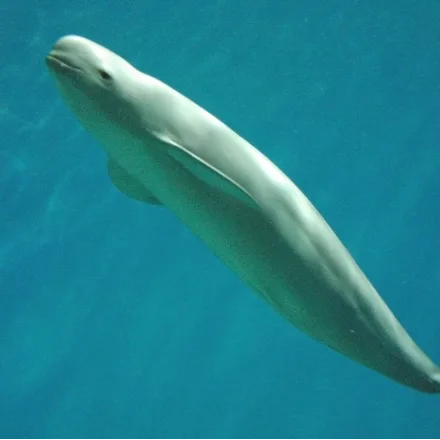
Indo-Pacific Finless Porpoise Rare Vulnerable
Neophocaena phocaenoides
A small, rounded porpoise with no dorsal fin, only a ridge of bumps, that slips through shallow coastal water almost unseen. It is easily overlooked and increasingly scarce.
Where: Lagoons, estuaries and mangrove creeks at Puttalam, Negombo and Kalametiya. Best: Year round. Shy, small and finless, so it is missed far more often than it is absent. Also on: Mannar and the Gulf of Mannar.
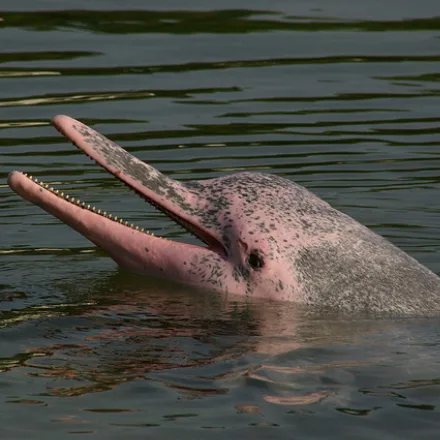
Indo-Pacific Humpback Dolphin Rare Vulnerable
Sousa chinensis
Humpback dolphins live in shallow estuaries and coastal waters rarely more than a few kilometres offshore, hunting fish over soft bottoms. Adults lose pigment progressively, so the oldest animals are a startling mottled pink.
Where: Lagoons, estuaries and mangrove creeks at Puttalam, Negombo and Kalametiya. Best: Year round. Sri Lanka's animal is Sousa plumbea, the Indian Ocean humpback dolphin, not the Sousa chinensis of Southeast Asia. Also on: Mannar and the Gulf of Mannar.
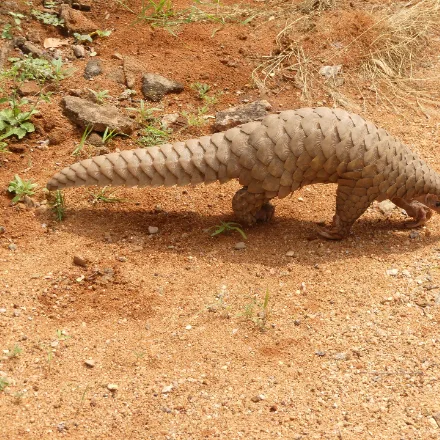
Indian Pangolin Very rare Endangered
Manis crassicaudata
Covered in large overlapping keratin scales, with a small head, a long sticky tongue and powerful digging claws. It walks partly on its hind legs with the tail counterbalancing, and rolls into a tight ball when alarmed.
Where: Dry zone forest and scrub, in burrows by day. Best: Year round, strictly nocturnal. Endangered, and the most trafficked wild mammal on earth. Also on: Yala National Park, Wilpattu National Park.
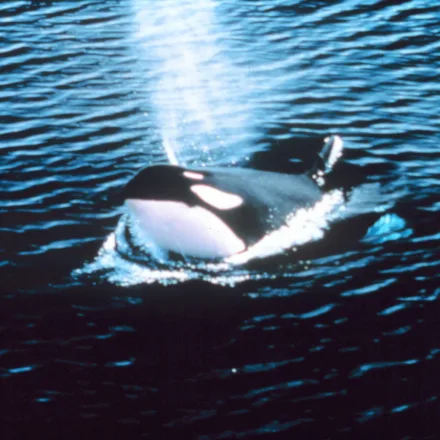
Killer Whale Very rare
Orcinus orca
Unmistakable: glossy black above and white below, with a white eye patch, a grey saddle behind the fin and a dorsal fin that on a mature male stands nearly two metres tall.
Where: Deep water off the continental shelf edge, usually in small pods. Best: December to April off the south and west, and around Kalpitiya. Sri Lanka is one of very few places in the northern Indian Ocean where orca are seen with any regularity. Also on: Kalpitiya, Mirissa.
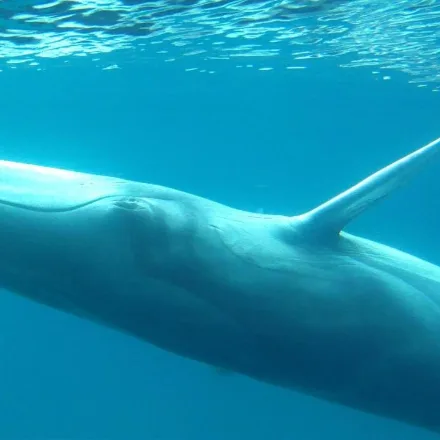
Omura's Whale Very rare
Balaenoptera omurai
Omura's whale is a small rorqual with strikingly asymmetric jaw colouration, white on the right and dark on the left. It feeds by lunging through plankton and small fish in warm shallow shelf waters, unusual for a baleen whale.
Where: Blue water beyond the continental shelf edge. Best: December to April off the south and west, May to September off the east. Only confirmed as a living species in this century. Also on: Mirissa.
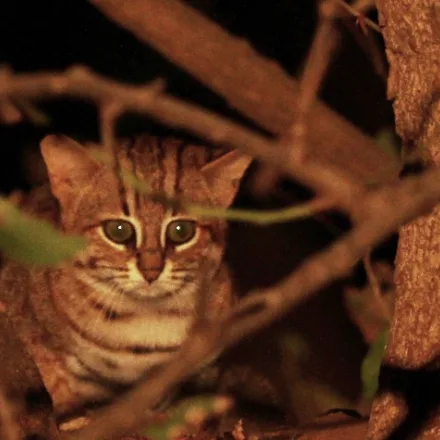
Rusty-spotted Cat Very rare Near Threatened
Prionailurus rubiginosus
Tiny and grey-brown with lines of rusty blotches along the back and flanks, and dark streaks on the face. It hunts rodents and birds at night and is an accomplished climber.
Where: Dry zone scrub and forest. Best: Year round, strictly nocturnal. The smallest wild cat in the world, and almost never seen deliberately. Also on: Yala National Park, Wilpattu National Park.
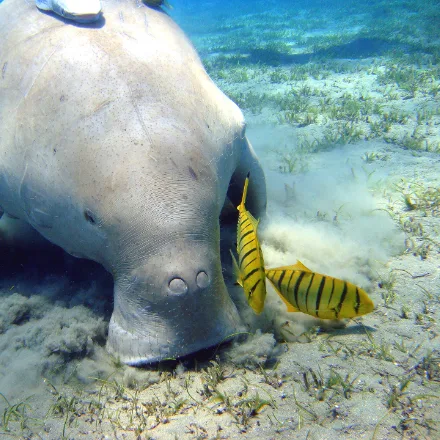
Dugong Ultra rare Vulnerable
Dugong dugon
Dugongs are placid, slow breeding marine mammals that graze seagrass beds in coastal shallows. Shy and increasingly rare, a sighting is one of the ocean's quiet marvels.
Where: Seagrass beds in the Gulf of Mannar and Puttalam lagoon. Best: November to April on the west and south coasts. The Gulf of Mannar is the last Sri Lankan stronghold and the population is now very small. Most reports turn out to be dolphins. Also on: Kalpitiya, Mannar and the Gulf of Mannar.
Planning
The dry zone parks are at their best from February to July, when standing water shrinks and the animals come to it. For leopard, the first and last two hours of light are worth more than the rest of the day combined. For whales, check the coast against the month before you book anything: south and west from November to April, east from May to September. Yala draws heavy vehicle numbers to a leopard sighting and the south coast draws heavy boat numbers to a blue whale, so the quieter blocks and the shoulder months are worth the trade.
Find guided safaris and whale watching trips in Sri Lanka
Some links on this page are affiliate links. If you book through them, Wildseer may earn a small commission at no extra cost to you.
Frequently asked questions
What mammals live in Sri Lanka?
Around 30 are recorded here so far, headed by leopard, Asian elephant, sloth bear and a substantial cetacean list including blue whale and sperm whale. Several, including the purple-faced langur, the toque macaque and the golden palm civet, are found on this island and nowhere else.
Where can you see sloth bears in Sri Lanka?
Wilpattu and Yala, and the timing is unusually specific: bears concentrate on fruiting palu trees roughly from June to August and are far easier to find then than at any other time of year.
Are there tigers in Sri Lanka?
No. Sri Lanka has never had tigers in recorded history. The island’s big cat is the Sri Lankan leopard, a distinct subspecies and the largest of the leopards, which occupies the top predator role that tigers hold on the Indian mainland.
How many elephants are there in Sri Lanka?
The wild population is usually put in the region of six thousand animals, one of the largest in Asia. Most Sri Lankan bulls are tuskless, which is a genetic quirk of the island’s population and the reason elephants here look different from those in Thailand or India.
Explore Sri Lanka wildlife by group
 Birds of Sri Lanka
 Reptiles and amphibians of Sri Lanka
 Fish of Sri Lanka
 Sharks and rays of Sri Lanka
 Reef invertebrates of Sri Lanka
 Insects and spiders of Sri Lanka
Part of the Wildlife in Sri Lanka guide.
Explore Sri Lanka wildlife by place
- Adams Peak wildlife
- Arugam Bay marine life
- Bundala wildlife
- Colombo wildlife
- Ella wildlife
- Gal Oya wildlife
- Great Basses marine life
- Hikkaduwa marine life
- Horton Plains wildlife
- Jaffna wildlife
- Kalpitiya marine life
- Kandy wildlife
- Kanneliya wildlife
- Kitulgala wildlife
- Knuckles wildlife
- Kumana wildlife
- Mannar marine life
- Minneriya wildlife
- Mirissa marine life
- Rekawa marine life
- Sigiriya wildlife
- Sinharaja wildlife
- Tangalle marine life
- Trincomalee marine life
- Udawalawe wildlife
- Wasgamuwa wildlife
- Wilpattu wildlife
- Yala wildlife
Image credits
Square thumbnails are cropped from the original. Wide banner images are cropped to a band. Other images are resized only. No other changes have been made.
- Purple-faced langur in the canopy: kanchana Amilani | Unsplash License, cropped
- Sri Lankan Leopard: Vasuki Jayaweera | CC BY-SA 4.0, cropped
- Sloth Bear: Charles J. Sharp | CC BY-SA 4.0, cropped
- Blue Whale: Carina Gsottbauer | CC BY-SA 4.0, cropped
- Purple-faced Langur: Jeroen84 | CC BY-SA 3.0, cropped
- Asian elephant (resized): Shadow Ayush | CC BY-SA 4.0, cropped
- Asian Elephant (cropped to square): Shadow Ayush | CC BY-SA 4.0, cropped
- Chital: Tisha Mukherjee | CC BY-SA 4.0, cropped
- Indian Flying Fox: Alois Staudacher | CC BY 2.0, cropped
- Spinner Dolphin (cropped to square): Alexia Pihier for MDC SeaMarc Maldives | CC BY-SA 4.0, cropped
- Toque Macaque: Ji-Elle | CC BY-SA 3.0, cropped
- Tufted Grey Langur: Peter van der Sluijs | CC BY-SA 3.0, cropped
- Wild Water Buffalo: Joydeep Chakraborty | CC BY-SA 4.0, cropped
- Bryde’s Whale (cropped to square): Chainfoto | CC BY 4.0, cropped
- Golden Jackal: Vengolis | CC BY-SA 4.0, cropped
- Indo-Pacific Bottlenose Dolphin (cropped to square): Bernard DUPONT from FRANCE | CC BY-SA 2.0, cropped
- Pantropical Spotted Dolphin (cropped to square): NOAA Photo Library | Public domain, cropped
- Ruddy Mongoose: desertnaturalist | CC BY 4.0, cropped
- False Killer Whale (cropped to square): Ricardo Fernandes | CC BY-SA 3.0, cropped
- Grizzled Giant Squirrel: Cyrillic at English Wikipedia | Public domain, cropped
- Risso’s Dolphin (cropped to square): Lucy Keith-Diagne | CC BY 4.0, cropped
- Short-finned Pilot Whale (cropped to square): Adam U / NOAA/NMFS/Pacific Islands Fisheries Science Center Blog 2013 07 29 | Public domain, cropped
- Sperm Whale: NOAA Photo Library | Public domain, cropped
- Fishing Cat (cropped to square): Sanjay Tha Shrestha | CC BY-SA 4.0, cropped
- Golden Palm Civet: Pieter Prins | CC BY-SA 4.0, cropped
- Indo-Pacific Finless Porpoise (cropped to square): Cipher01 | CC BY-SA 3.0, cropped
- Indo-Pacific Humpback Dolphin (cropped to square): Chem7 | CC BY 2.0, cropped
- Indian Pangolin: A. J. T. Johnsingh, WWF-India and NCF | CC BY-SA 4.0, cropped
- Killer Whale: NOAA, United States National Oceanic and Atmospheric Administration | Public domain, cropped
- Omura’s Whale (cropped to square): Salvatore Cerchio et al. / Royal Society Open Science | CC BY 4.0, cropped
- Rusty-spotted Cat: Davidvraju | CC BY-SA 4.0, cropped
- Dugong (cropped to square): Julien Willem | CC BY-SA 3.0, cropped
- White-throated kingfisher on a branch: kanchana Amilani | Unsplash License, cropped
- Green forest lizard in breeding colour: Anas Mohamed Nuski | Pexels Licence, cropped
- Bluestripe snapper over a reef: Jeffry Surianto | Pexels Licence, cropped
- Reef manta rays near the surface: Emma Li | Pexels Licence, cropped
- Nudibranch crossing the sea floor: Chris Spain | Pexels Licence, cropped
- Clipper butterfly on a leaf: Pixabay | Pexels Licence, cropped
Square thumbnails are cropped from the original. Wide banner images are cropped to a band. Other images are resized only. No other changes have been made.
- Purple-faced langur in the canopy: kanchana Amilani | Unsplash License, cropped
- Sri Lankan Leopard: Vasuki Jayaweera | CC BY-SA 4.0, cropped
- Sloth Bear: Charles J. Sharp | CC BY-SA 4.0, cropped
- Blue Whale: Carina Gsottbauer | CC BY-SA 4.0, cropped
- Purple-faced Langur: Jeroen84 | CC BY-SA 3.0, cropped
- Asian elephant (resized): Shadow Ayush | CC BY-SA 4.0, cropped
- Asian Elephant (cropped to square): Shadow Ayush | CC BY-SA 4.0, cropped
- Chital: Tisha Mukherjee | CC BY-SA 4.0, cropped
- Indian Flying Fox: Alois Staudacher | CC BY 2.0, cropped
- Spinner Dolphin (cropped to square): Alexia Pihier for MDC SeaMarc Maldives | CC BY-SA 4.0, cropped
- Toque Macaque: Ji-Elle | CC BY-SA 3.0, cropped
- Tufted Grey Langur: Peter van der Sluijs | CC BY-SA 3.0, cropped
- Wild Water Buffalo: Joydeep Chakraborty | CC BY-SA 4.0, cropped
- Bryde’s Whale (cropped to square): Chainfoto | CC BY 4.0, cropped
- Golden Jackal: Vengolis | CC BY-SA 4.0, cropped
- Indo-Pacific Bottlenose Dolphin (cropped to square): Bernard DUPONT from FRANCE | CC BY-SA 2.0, cropped
- Pantropical Spotted Dolphin (cropped to square): NOAA Photo Library | Public domain, cropped
- Ruddy Mongoose: desertnaturalist | CC BY 4.0, cropped
- False Killer Whale (cropped to square): Ricardo Fernandes | CC BY-SA 3.0, cropped
- Grizzled Giant Squirrel: Cyrillic at English Wikipedia | Public domain, cropped
- Risso’s Dolphin (cropped to square): Lucy Keith-Diagne | CC BY 4.0, cropped
- Short-finned Pilot Whale (cropped to square): Adam U / NOAA/NMFS/Pacific Islands Fisheries Science Center Blog 2013 07 29 | Public domain, cropped
- Sperm Whale: NOAA Photo Library | Public domain, cropped
- Fishing Cat (cropped to square): Sanjay Tha Shrestha | CC BY-SA 4.0, cropped
- Golden Palm Civet: Pieter Prins | CC BY-SA 4.0, cropped
- Indo-Pacific Finless Porpoise (cropped to square): Cipher01 | CC BY-SA 3.0, cropped
- Indo-Pacific Humpback Dolphin (cropped to square): Chem7 | CC BY 2.0, cropped
- Indian Pangolin: A. J. T. Johnsingh, WWF-India and NCF | CC BY-SA 4.0, cropped
- Killer Whale: NOAA, United States National Oceanic and Atmospheric Administration | Public domain, cropped
- Omura’s Whale (cropped to square): Salvatore Cerchio et al. / Royal Society Open Science | CC BY 4.0, cropped
- Rusty-spotted Cat: Davidvraju | CC BY-SA 4.0, cropped
- Dugong (cropped to square): Julien Willem | CC BY-SA 3.0, cropped
- White-throated kingfisher on a branch: kanchana Amilani | Unsplash License, cropped
- Green forest lizard in breeding colour: Anas Mohamed Nuski | Pexels Licence, cropped
- Bluestripe snapper over a reef: Jeffry Surianto | Pexels Licence, cropped
- Reef manta rays near the surface: Emma Li | Pexels Licence, cropped
- Nudibranch crossing the sea floor: Chris Spain | Pexels Licence, cropped
- Clipper butterfly on a leaf: Pixabay | Pexels Licence, cropped