
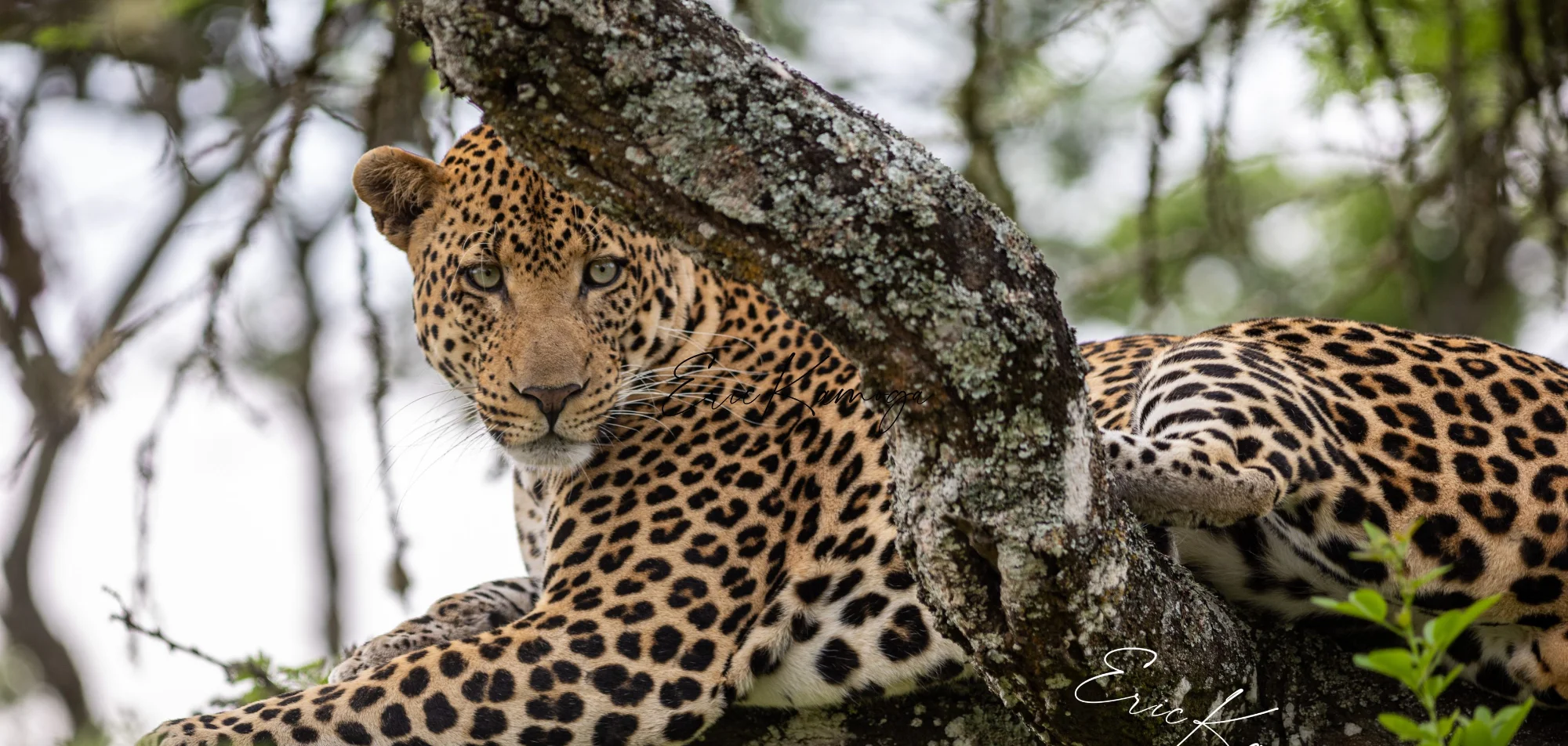
Wildlife in Sri Lanka is unreasonably concentrated. An island the size of Ireland holds leopards at the highest density recorded anywhere, the largest gathering of wild Asian elephants on earth, blue whales within sight of the beach, and a rainforest so full of species found nowhere else that biologists treat it as a separate world. You can be watching a leopard at dawn and a sperm whale the same afternoon, because nothing here is more than a few hours from anything else.
This guide records what actually lives here, where to look for it, the month that matters, and how likely you really are to see it. Where a species is effectively unseeable we say so. Where the season flips, and in Sri Lanka it flips twice a year and takes the whales with it, we tell you which coast to be on.
The two monsoons are the single most useful fact on this page. The southwest monsoon runs roughly May to September and opens the east coast while closing the south. The northeast monsoon runs roughly November to April and does the exact reverse. Book the wrong coast for the month and you will see nothing at all, which is why most whale watching disappointment in Sri Lanka is a calendar problem rather than a luck problem.
Highlights: five to build a trip around
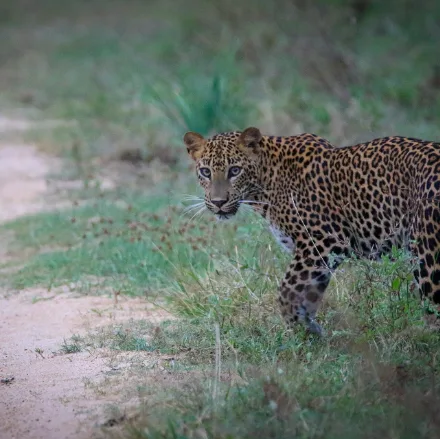
Sri Lankan Leopard
The largest leopard subspecies in the world, and on this island it is the top predator, which changes how it behaves. Where: Dry zone scrub forest, and at lower density in the hills and wet zone. Best: Year round.
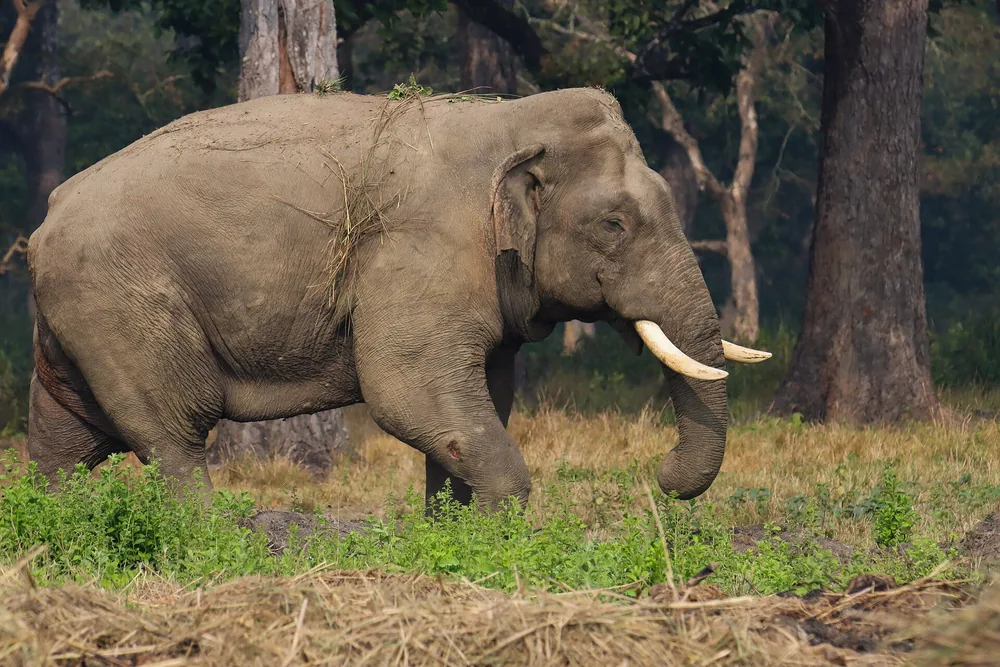
Asian Elephant
The largest land animal in Asia, and a genuinely wild one is worth seeking out over the camp elephants most tourists meet. Where: Dry zone parks, tank margins and the corridors between them. Best: Year round, best at the Gathering from July to October.
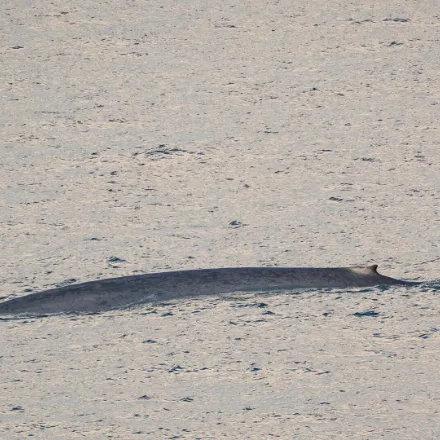
Blue Whale
The largest animal that has ever lived, and off Sri Lanka a population that mostly does not migrate, which is why it can be seen almost year round. Where: Deep water off the south and east coasts, close inshore where the shelf drops away. Best: Nov-Apr south, May-Sep east.
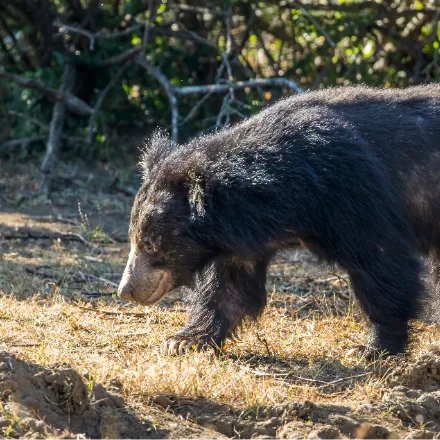
Sloth Bear
A shaggy, long-clawed insect specialist that vacuums termites out of a mound loudly enough to hear from fifty metres. Where: Dry zone forest and scrub. Best: Jun-Jul when palu fruit ripens.
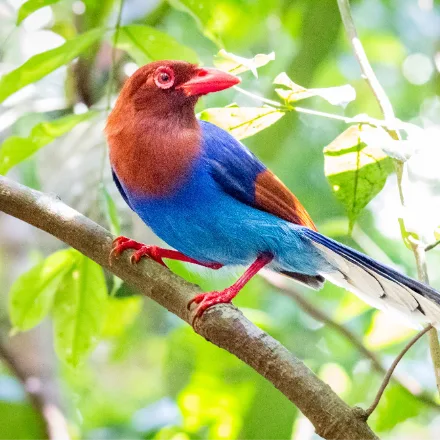
Sri Lanka Blue Magpie
Cobalt and chestnut with a blood-red bill, and it comes to look at you rather than the other way round. Where: Wet zone rainforest of the southwest; Sinharaja and Kitulgala. Best: Year round, best Jan-Apr.
Compare guided safaris, whale trips and rainforest walks in Sri Lanka
Explore by group
Mammals
Three of these are the reason people come: the leopard, the elephant and the blue whale. What surprises visitors is the middle tier, the sloth bear on the palu fruit, the purple-faced langur in the cloud forest, the golden palm civet that exists only here, and a cetacean list off the south and east coasts that would carry a whole trip on its own.
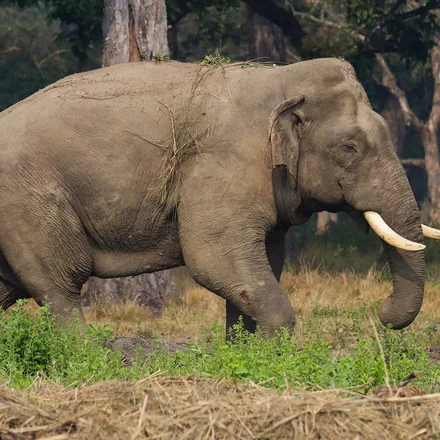
Asian Elephant Common Endangered
Elephas maximus
The largest land animal in Asia, and a genuinely wild one is worth seeking out over the camp elephants most tourists meet.
Where: Dry zone parks, tank margins and the corridors between them. Best: Year round, best at the Gathering from July to October.
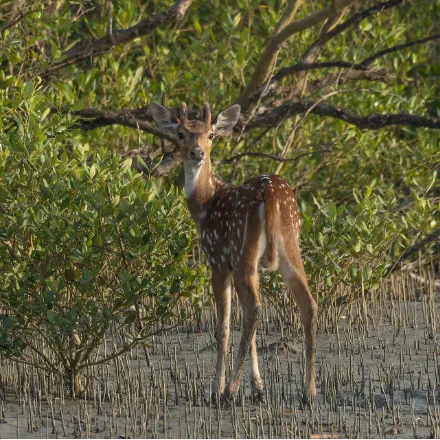
Chital (Spotted Deer) Common
Axis axis
The prey base the whole leopard story rests on, and the animal whose alarm call tells you where the cat is.
Where: Dry zone grassland, scrub and woodland near water. Best: Year round.
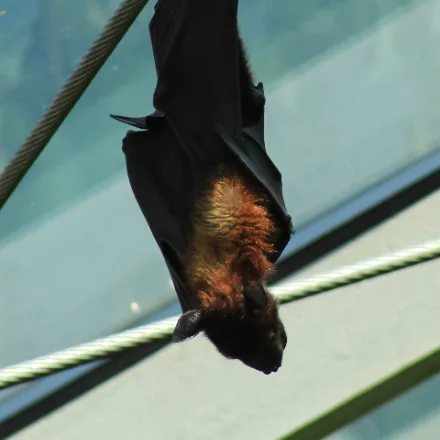
Indian Flying Fox Common
Pteropus giganteus
A fruit bat with a metre and a half of wingspan, hanging in noisy thousands from a tree in the middle of town.
Where: Tall trees near water and settlement, often in the middle of towns. Best: Year round.
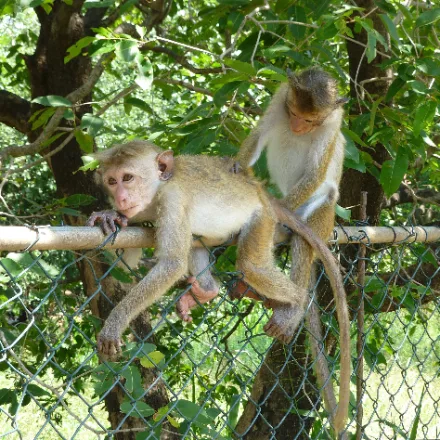
Toque Macaque Common Endangered
Macaca sinica
A small endemic monkey with a swirl of hair on the crown arranged like a cap, and the most studied primate on the island.
Where: Forest and forest edge from the dry zone to the highlands. Best: Year round.
Blue Whale Occasional Endangered
Balaenoptera musculus
The largest animal that has ever lived, and off Sri Lanka a population that mostly does not migrate, which is why it can be seen almost year round.
Where: Deep water off the south and east coasts, close inshore where the shelf drops away. Best: Nov-Apr south, May-Sep east.
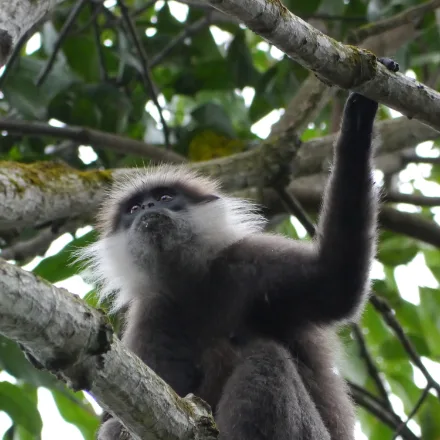
Purple-faced Langur Occasional Endangered
Semnopithecus vetulus
A shaggy black leaf monkey with white side whiskers, and the highland form is so hairy it is known as the bear monkey.
Where: Wet zone and montane forest canopy. Best: Year round.
Sri Lankan Leopard Occasional Endangered
Panthera pardus kotiya
The largest leopard subspecies in the world, and on this island it is the top predator, which changes how it behaves.
Where: Dry zone scrub forest, and at lower density in the hills and wet zone. Best: Year round.
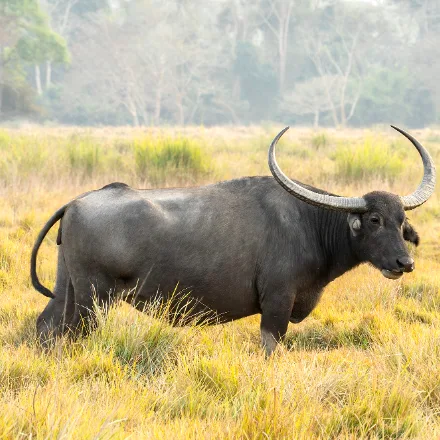
Wild Water Buffalo Occasional Endangered
Bubalus arnee
Wide-swept horns spanning further than any other bovid, on an animal that is genuinely dangerous and genuinely rare in its true wild form.
Where: Tanks, marsh and wet grassland in the dry zone. Best: Year round.
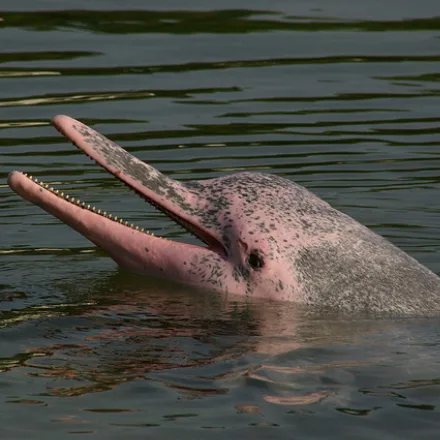
Indo-Pacific Humpback Dolphin Rare Vulnerable
Sousa chinensis
Born dark grey and turning pink with age, the colour coming from blood vessels under unpigmented skin.
Where: Lagoons, estuaries and mangrove creeks at Puttalam, Negombo and Kalametiya. Best: Year round.
Sloth Bear Rare Vulnerable
Melursus ursinus
A shaggy, long-clawed insect specialist that vacuums termites out of a mound loudly enough to hear from fifty metres.
Where: Dry zone forest and scrub. Best: Jun-Jul when palu fruit ripens.
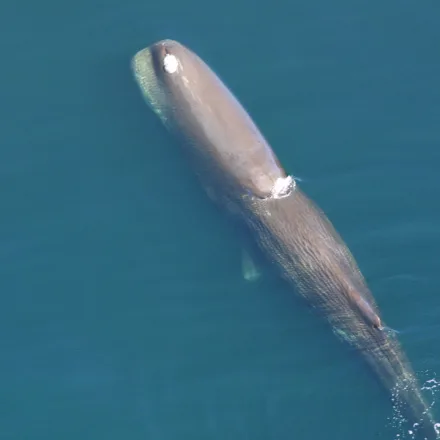
Sperm Whale Rare Vulnerable
Physeter macrocephalus
The deepest diving mammal on earth, hunting squid two kilometres down, and occasionally gathering off Sri Lanka in pods of hundreds.
Where: Deep water off the east and northeast coasts. Best: Mar-Aug.
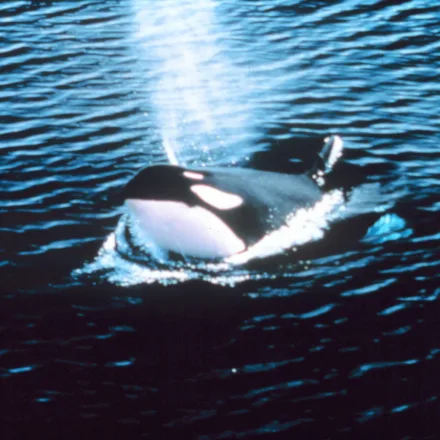
Killer Whale Very rare
Orcinus orca
The ocean's top predator, and off Sri Lanka they are known to hunt other whales, which is a thing very few people ever witness.
Where: Deep water off the continental shelf edge, usually in small pods. Best: December to April off the south and west, and around Kalpitiya.
See all 30 mammals of Sri Lanka
Birds
Thirty-four species live in Sri Lanka and nowhere else, and almost all of them are findable in a week if you get to the right forest. The endemics concentrate in the wet zone rainforest and the hill country, so a birding route here is genuinely different from a safari route, and the mixed feeding flock at Sinharaja is one of the great ornithological spectacles in Asia.
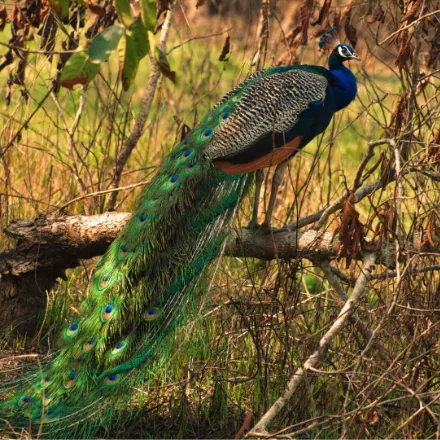
Indian Peafowl Common
Pavo cristatus
Wild, and behaving like a wild bird: displaying on a termite mound at dawn with leopards in the same scrub.
Where: Dry zone scrub, forest edge, tank bunds and village margins. Best: Year round, display from Mar-May.
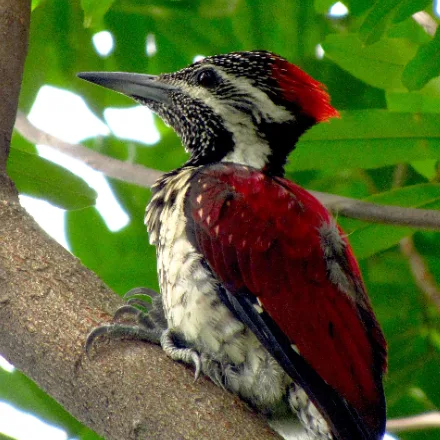
Red-backed Flameback Common
Dinopium psarodes
The smaller crimson woodpecker, and the one people misidentify because there are two of them on this island and nowhere else.
Where: Gardens, plantations and forest edge across the island. Best: Year round.
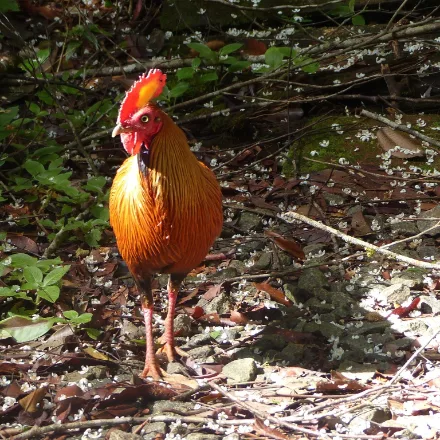
Sri Lanka Junglefowl Common
Gallus lafayettii
The national bird, and the wild ancestor's cousin: a jungle cockerel with a yellow-centred red comb found nowhere else on earth.
Where: Forest tracks and edges across the island, wet zone to dry zone. Best: Year round, dawn and dusk.
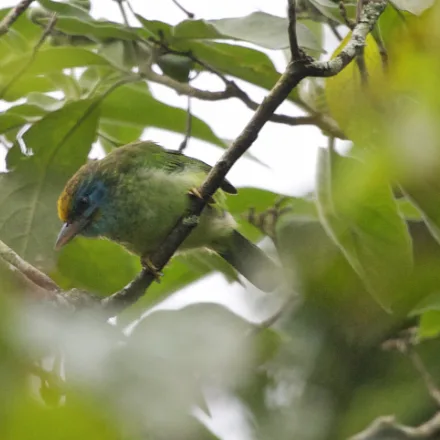
Yellow-fronted Barbet Common
Psilopogon flavifrons
A green barbet with a yellow forehead and blue face that calls all day from somewhere you cannot find it.
Where: Wet zone and hill forest. Best: Year round.
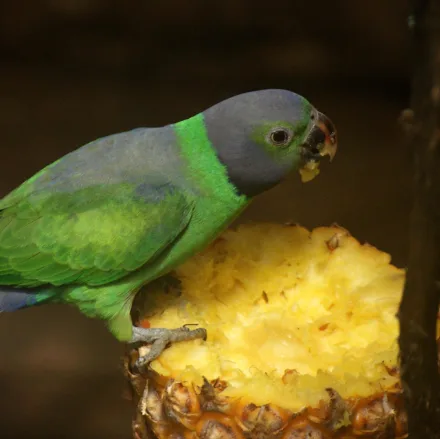
Layard's Parakeet Regular
Psittacula calthrapae
A bluish-grey parakeet with a green collar and a coral bill, and the only parakeet on the island you cannot see anywhere else.
Where: Wet zone and hill forest, thinning into the dry zone. Best: Year round.
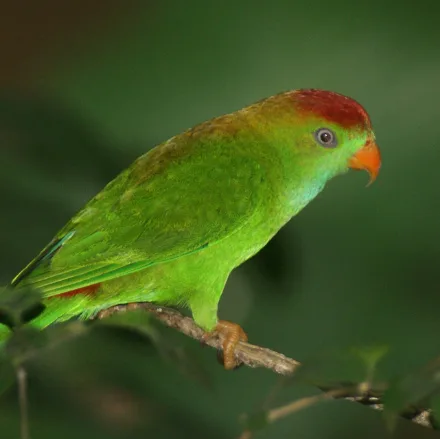
Sri Lanka Hanging Parrot Regular
Loriculus beryllinus
A sparrow-sized green parrot with a crimson crown that sleeps upside down like a bat.
Where: Wet zone and hill forest and plantation. Best: Year round.
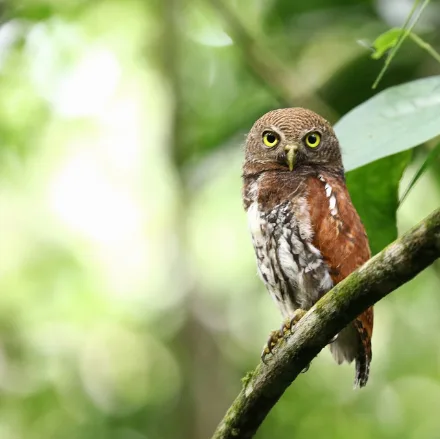
Chestnut-backed Owlet Occasional
Glaucidium castanotum
A tiny chestnut owl that hunts in daylight, which makes it the one owl on the island you can reasonably expect to see.
Where: Wet zone and hill forest. Best: Year round, often active by day.
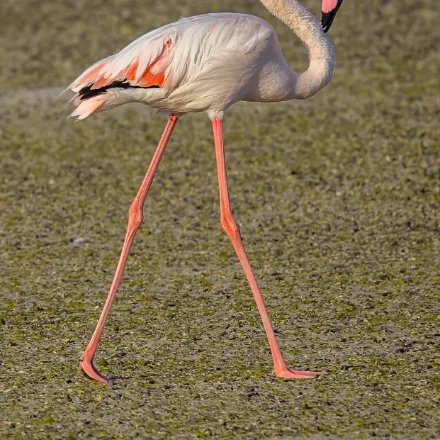
Greater Flamingo Occasional
Phoenicopterus roseus
Several thousand birds on the Bundala salt pans in a good winter, filtering brine shrimp upside down.
Where: Coastal salt pans and shallow saline lagoons. Best: Aug-Apr.
Sri Lanka Blue Magpie Occasional Vulnerable
Urocissa ornata
Cobalt and chestnut with a blood-red bill, and it comes to look at you rather than the other way round.
Where: Wet zone rainforest of the southwest; Sinharaja and Kitulgala. Best: Year round, best Jan-Apr.
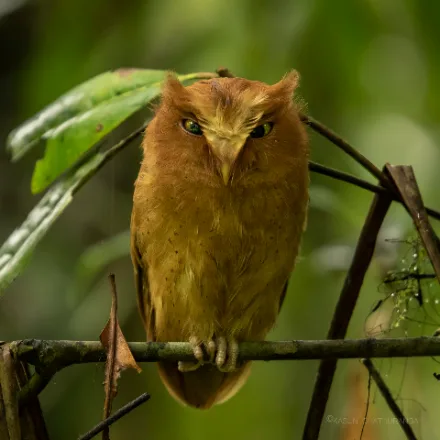
Serendib Scops Owl Very rare Endangered
Otus thilohoffmanni
Found by its call in 2001 and described in 2004, the first new bird species discovered in Sri Lanka for over a century.
Where: A handful of wet zone forest fragments. Best: Year round, calls at dusk.
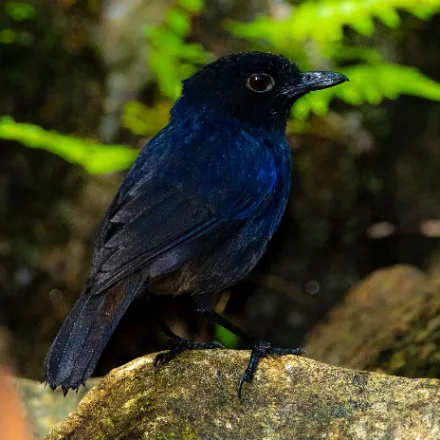
Sri Lanka Whistling Thrush Very rare Endangered
Myophonus blighi
A dark highland thrush that sings from wet rock at first light and is gone by the time the mist lifts.
Where: Shaded fast-running streams in montane forest above 900 m. Best: Year round, first light.
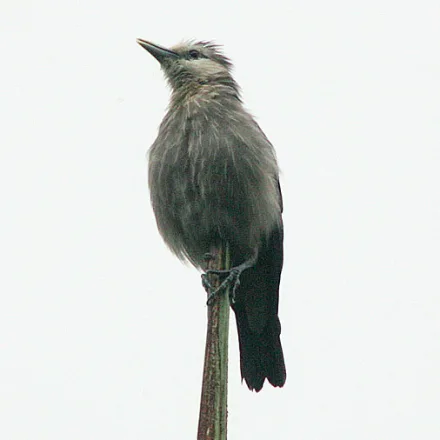
White-faced Starling Very rare Endangered
Sturnornis albofrontatus
A canopy starling with a white face, confined to a shrinking scrap of rainforest and genuinely hard to catch up with.
Where: Canopy of undisturbed wet zone rainforest. Best: Year round.
Reptiles and amphibians
This is where Sri Lanka stops being merely good and becomes world class. The island holds an endemic radiation of shrub frogs found on no other landmass, a set of horned and rough-scaled agamid lizards that look assembled from spare parts, and five species of sea turtle nesting on its beaches, which is rare anywhere on earth.
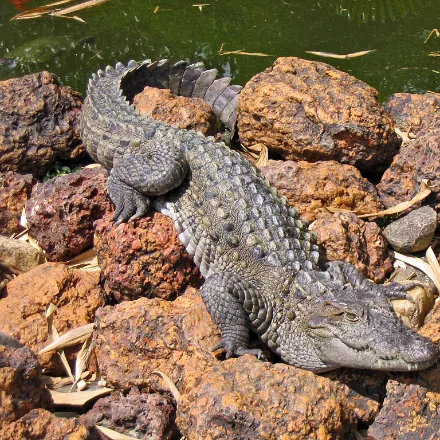
Mugger Crocodile Common Vulnerable
Crocodylus palustris
The broadest snout of any living crocodile, and in one Sri Lankan park block there are more of them per square kilometre than anywhere else on earth.
Where: Dry zone tanks, villus and reservoir margins below about 100 m. Best: Year round, best February to September.
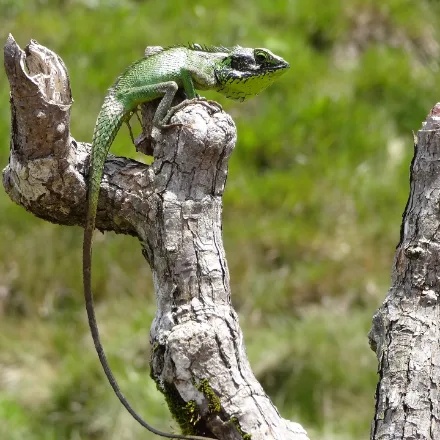
Black-lipped Lizard Regular Endangered
Calotes nigrilabris
An Endangered endemic that you will see without trying, because it basks on the hedges at Horton Plains.
Where: Montane shrub, hedge and tree trunks above about 1,000 m. Best: Year round, sunny mornings.
Kandyan Day Gecko Regular Endangered
Cnemaspis kandiana
One of more than forty day geckos on this island, every single one of them found nowhere else, and they work rock faces in daylight instead of hunting at night.
Where: Shaded vertical rock, boulders, buttress roots and cave mouths, sea level to 2,000 m. Best: Year round, morning on shaded rock.
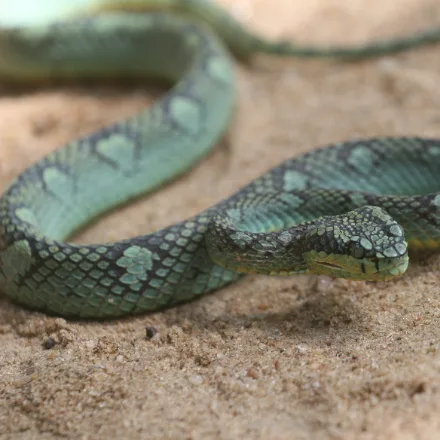
Sri Lankan Green Pit Viper Regular
Trimeresurus trigonocephalus
An endemic green viper that hangs at eye level in the rainforest at night, and the one snake most visiting naturalists actually come away with.
Where: Low branches at head height in rainforest, cardamom and tea from 150 m to 1,800 m. Best: Year round, night walks.
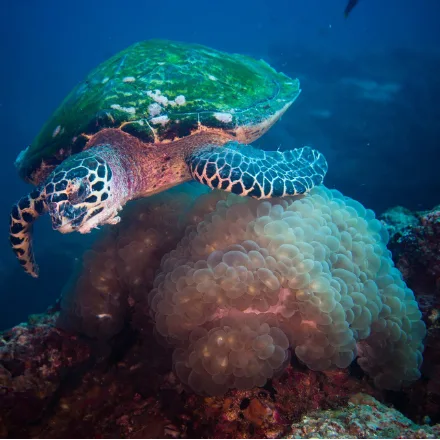
Hawksbill Turtle Occasional Critically Endangered
Eretmochelys imbricata
The reef's sponge specialist, its beautiful shell also the reason it was hunted to the edge.
Where: Coral reef, feeding on sponges; nesting on coarse sand pocket beaches and now very rare. Best: Reef season by coast; nesting almost nonexistent.
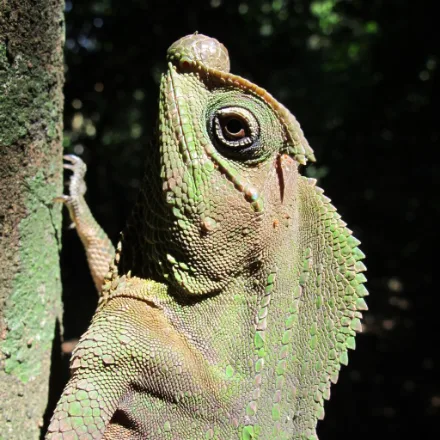
Hump-nosed Lizard Occasional Vulnerable
Lyriocephalus scutatus
The only member of its genus anywhere on earth, with a bulbous knob on its nose and a bony lyre across its skull, and it is slow enough to photograph properly.
Where: Wet zone forest with dense understorey, from near sea level to 1,650 m. Best: Year round, best January to March and July to August.
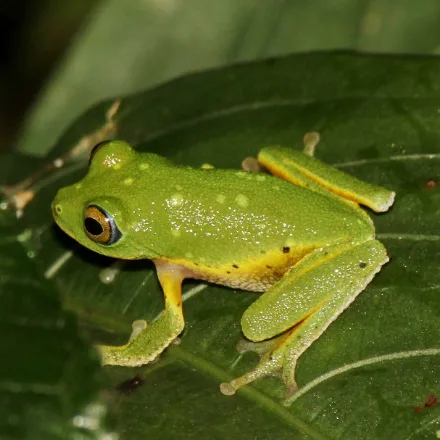
Leaf-nesting Shrub Frog Occasional Endangered
Pseudophilautus femoralis
Every other shrub frog on the island buries its eggs in soil. This one glues them to the underside of a leaf, and finding that green clutch is easier than finding the frog.
Where: Montane forest of the central highlands. Best: Year round, night.
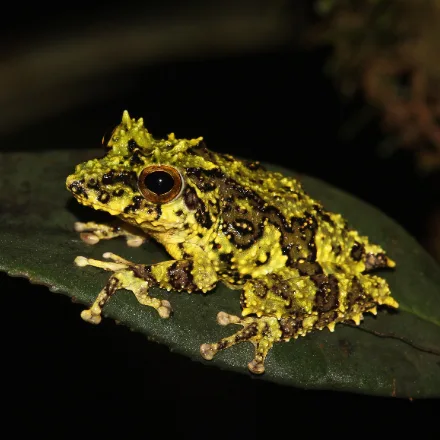
Schmarda's Shrub Frog Occasional Endangered
Pseudophilautus schmarda
Horned brows and lichen-mottled skin, so perfectly matched to a mossy branch that guides find it by call and only then by eye.
Where: Montane cloud forest, pine plantation and abandoned tea, 810 m to 2,300 m. Best: Year round, night.
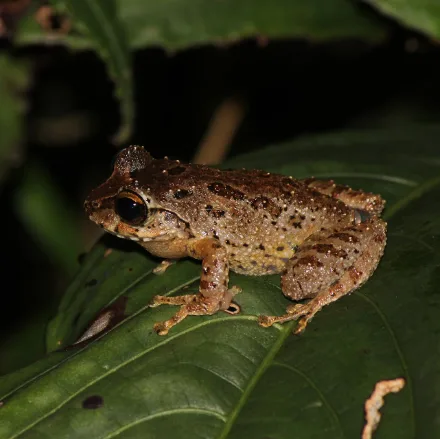
Small-eared Shrub Frog Occasional Endangered
Pseudophilautus microtympanum
The small ones in the tea and the grassland are not a different species. They are teenagers, and they move into the forest when they grow up.
Where: Montane grassland as juveniles, closed canopy forest as adults. Best: Year round, night.
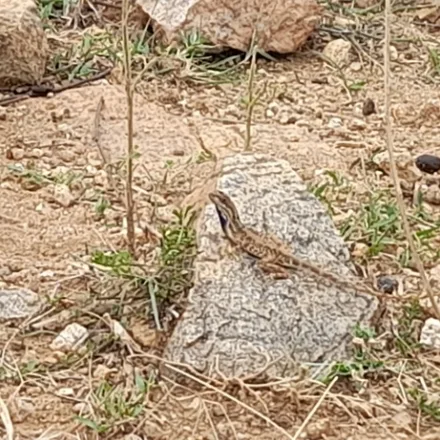
Bahir's Fan-throated Lizard Rare Endangered
Sitana bahiri
A finger length lizard of the coastal sand that unfurls an orange flag from its throat and does press ups to show it off.
Where: Coastal scrub, sand and open dry ground in the southeast. Best: Year round, display strongest in the breeding season.
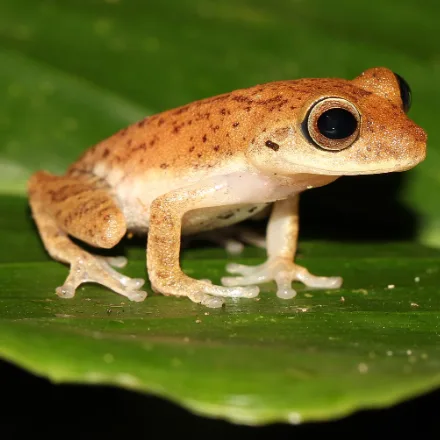
Golden Shrub Frog Rare Endangered
Pseudophilautus auratus
Genuinely gold in torchlight, which in a genus of browns and greys is the whole point.
Where: Foliage inside closed canopy rain and cloud forest, 513 m to 1,270 m. Best: Year round, night, best in the wetter months.
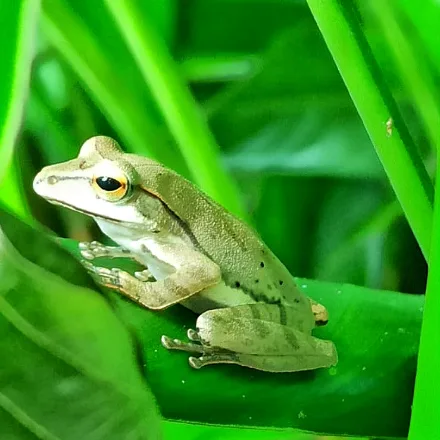
Starry Shrub Frog Ultra rare Critically Endangered
Pseudophilautus stellatus
Described in 1853, declared extinct, then found alive after a hundred and fifty six years, in the canopy where nobody had thought to look.
Where: Cloud forest canopy in the Peak Wilderness Sanctuary, 1,540 m to 1,679 m. Best: Year round, and effectively unfindable.
See all 82 reptiles and amphibians of Sri Lanka
Fish
Two entirely separate faunas. The reefs carry the Indo-Pacific set, which is the same cast a diver knows from Thailand or the Maldives. The rivers carry something else: roughly half of Sri Lanka’s freshwater fish live nowhere else, including several that are standard aquarium shop stock abroad and quietly threatened at home.
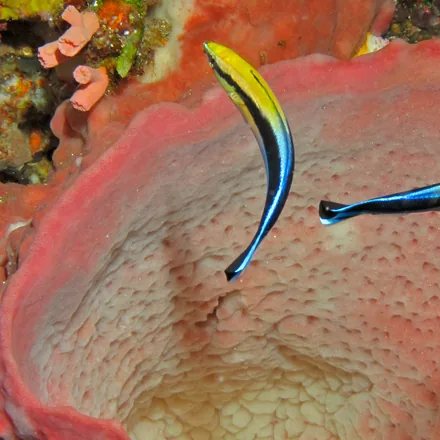
Bluestreak Cleaner Wrasse Common
Labroides dimidiatus
A tiny striped wrasse that runs the reef's health clinic, picking parasites from fish that queue up and even open their mouths for it.
Where: Coral reef and boulder slopes on both coasts. Best: November to April on the west and south, May to September on the east.
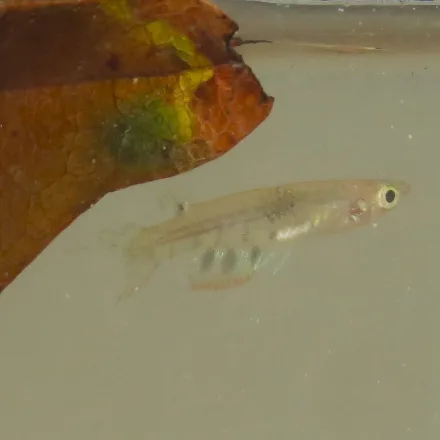
Ceylon Killifish Common
Aplocheilus dayi
Hangs motionless at the surface with an iridescent green spot between its eyes, which is how you find it.
Where: The top two centimetres of still ditches, marshes, paddy margins and stream backwaters. Best: Year round.
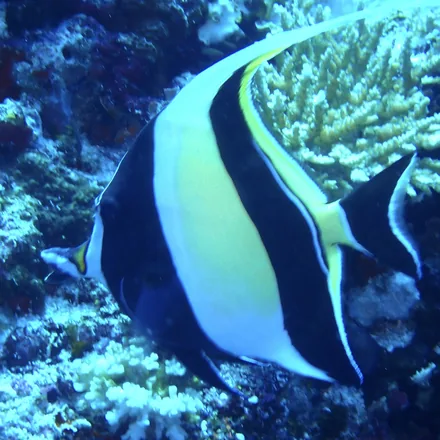
Moorish Idol Common
Zanclus cornutus
An unmistakable disc of black, white and gold trailing a long ribbon fin, one of the most elegant fish on any reef.
Where: Coral reef and boulder slopes on both coasts. Best: November to April on the west and south, May to September on the east.
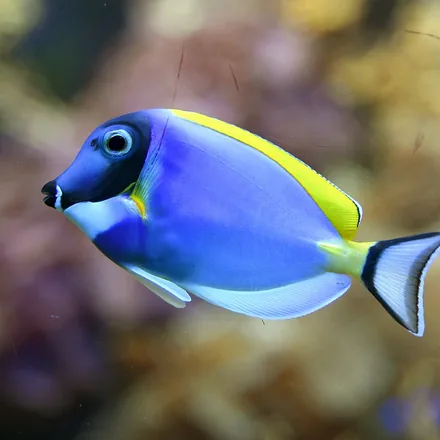
Powder Blue Surgeonfish Common
Acanthurus leucosternon
A stunning Andaman signature fish, powder blue with a yellow sail and a scalpel-sharp blade at the base of its tail.
Where: Shallow reef flats and coral heads at Bar Reef and around Pigeon Island. Best: November to April on the west and south, May to September on the east.
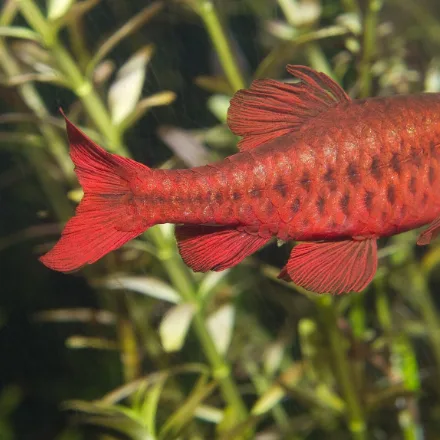
Cherry Barb Occasional Vulnerable
Rohanella titteya
One of the most widely kept aquarium fish on earth, and it lives wild in about a dozen shaded streams on one island.
Where: Shaded, slow, leaf-littered pools in wet zone lowland streams. Best: Year round, clearest December to March.
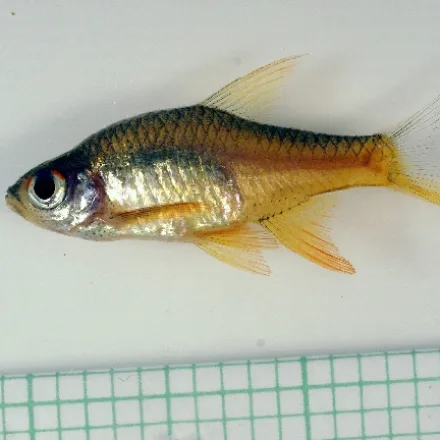
Fire Rasbora Occasional Endangered
Rasboroides vaterifloris
A shoal of these in a shaft of forest light is the reason the Victorians called it the pearly rasbora.
Where: Small, shaded, tea-coloured forest streams in the lowland wet zone. Best: Year round.
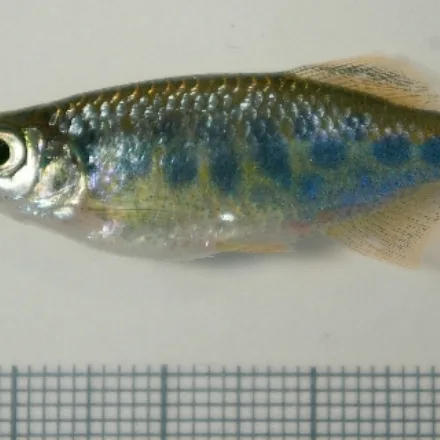
Barred Danio Rare Endangered
Devario pathirana
Described only in 1990, and known from a handful of streams in one river basin.
Where: Clear, fast, shaded runs in the upper Nilwala basin only. Best: Year round.
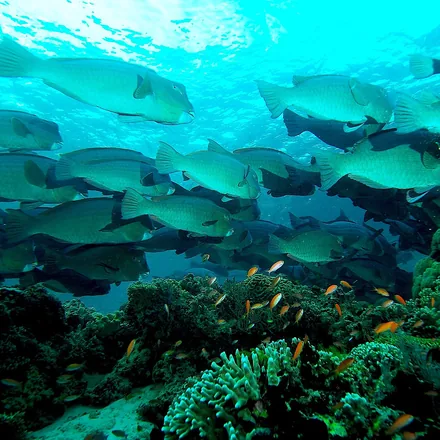
Bumphead Parrotfish Rare Vulnerable
Bolbometopon muricatum
A hulking, bull-headed parrotfish that rams and bites living coral, turning reef rock into the white sand of tropical beaches.
Where: Reef edges and drop-offs, including the Trincomalee canyon rim. Best: May to September on the east coast.
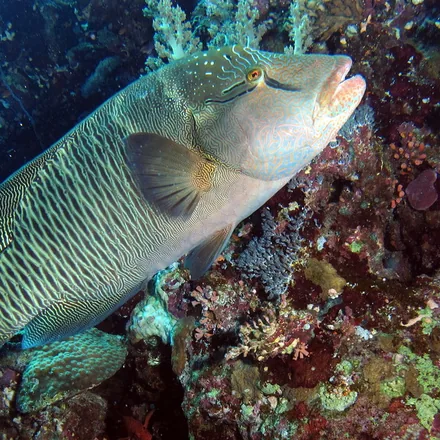
Humphead Wrasse (Napoleon Wrasse) Rare Endangered
Cheilinus undulatus
A giant, curious reef fish with thick lips and a bulging forehead, able to crunch prey that few other animals can eat.
Where: Reef edges and drop-offs, including the Trincomalee canyon rim. Best: November to April on the west and south, May to September on the east.
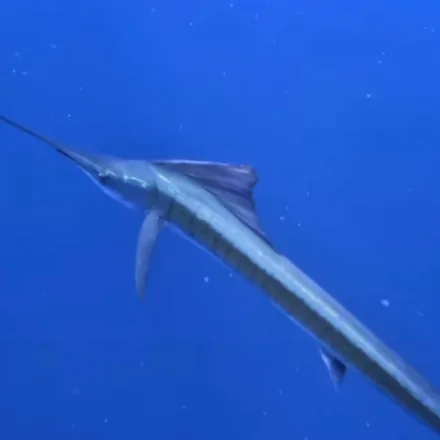
Indo-Pacific Sailfish Rare
Istiophorus platypterus
The fastest fish in the sea, and it lights up electric blue across the sail when it is herding a bait ball.
Where: Blue water beyond the continental shelf edge. Best: November to April on the west and south coasts.
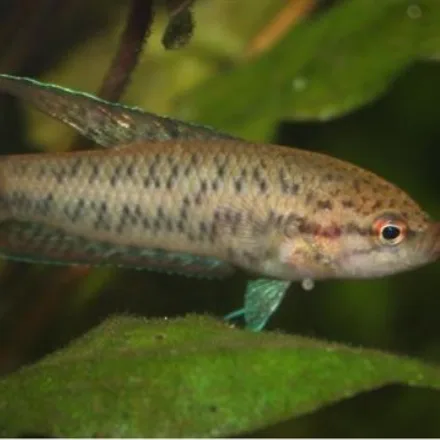
Ornate Paradisefish Rare Endangered
Malpulutta kretseri
The only species in its genus, anywhere, and it lives in shaded puddles of a stream in one corner of one island.
Where: Very shallow, very slow, leaf-choked water in lowland wet zone forest. Best: Year round.
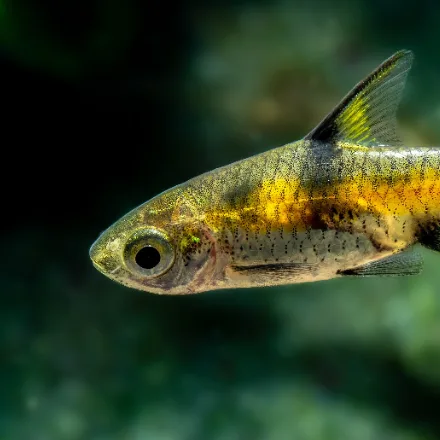
Bandula Barb Ultra rare Critically Endangered
Pethia bandula
The entire world population of this fish lives in one stream, and you could walk its whole range in ten minutes.
Where: One short stretch of a single stream in the Kegalle district and nowhere else on earth. Best: Not applicable.
No free photograph of the Bandula barb exists. The image shows Pethia aurea, a close relative in the same genus.
Sharks and rays
The Indian Ocean shelf off Sri Lanka is deep, close inshore, and productive, which is why the shark and ray list is longer and heavier than the reef alone would suggest. Most of it is genuinely hard to see. The reef sharks and the rays are the realistic targets.
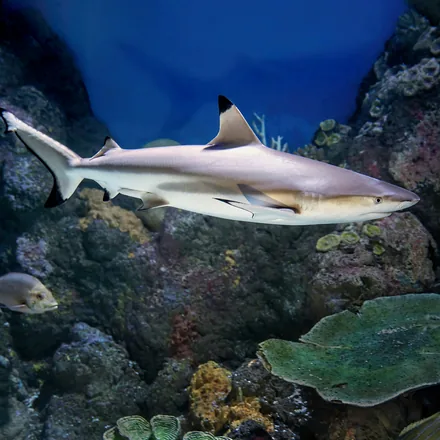
Blacktip Reef Shark Common Vulnerable
Carcharhinus melanopterus
The neat little reef shark of the shallows, its black-tipped fins often cutting the surface over sun-lit sand flats.
Where: Shallow reef flats and coral heads at Bar Reef and around Pigeon Island. Best: May to September on the east coast.
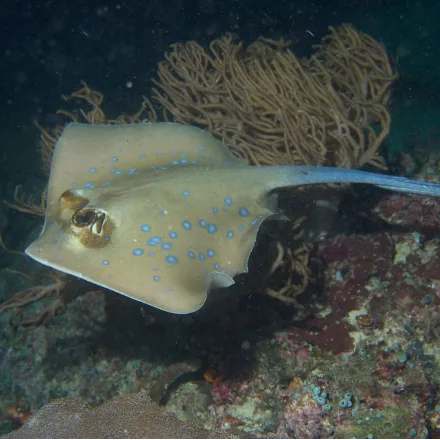
Bluespotted Maskray Regular
Neotrygon kuhlii
Constantly confused with the bluespotted ribbontail ray, and quite a different animal once you know the mask.
Where: Sand and rubble patches between coral heads. Best: November to April on the west and south, May to September on the east.
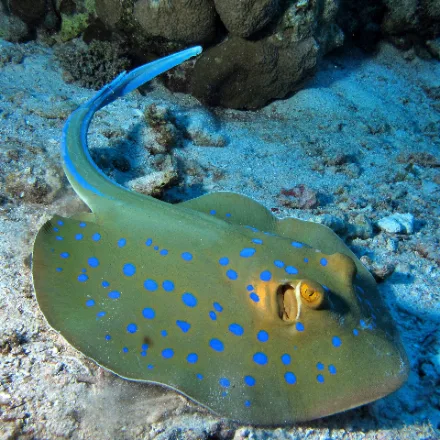
Bluespotted Ribbontail Ray Regular
Taeniura lymma
A small, brilliantly marked ray, olive gold studded with electric blue spots, tucked under coral ledges.
Where: Sand and rubble patches between coral heads. Best: November to April on the west and south, May to September on the east.
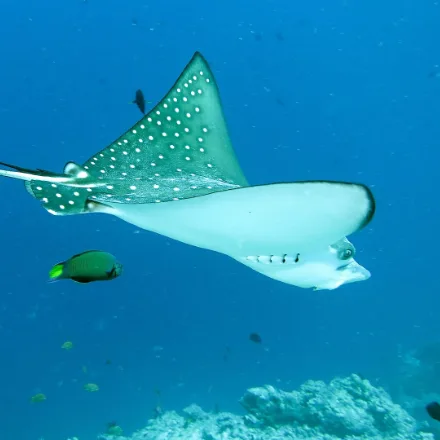
Ocellated Eagle Ray Occasional Endangered
Aetobatus ocellatus
A dramatic ray that flies through open water on wings spangled with white spots, trailing a whip-like venomous tail.
Where: Reef edges and drop-offs, including the Trincomalee canyon rim. Best: November to April on the west and south, May to September on the east.
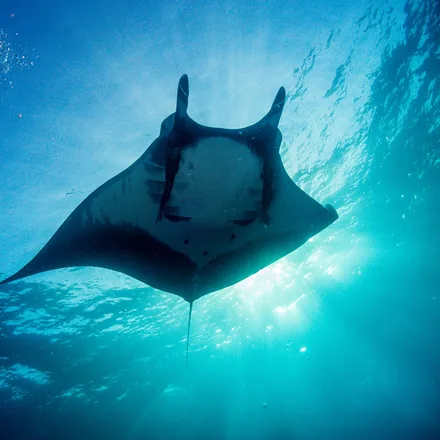
Giant Manta Ray Rare Endangered
Mobula birostris
The largest ray on the planet, an ocean wanderer that can span seven metres and loops through plankton clouds in slow somersaults.
Where: Reef edges and drop-offs, including the Trincomalee canyon rim. Best: November to April on the west and south, May to September on the east.
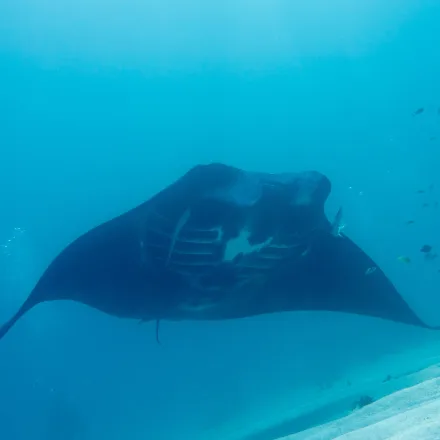
Reef Manta Ray Rare Vulnerable
Mobula alfredi
A four metre wingspan gliding overhead in slow, hypnotic loops that leave divers grinning for days.
Where: Reef edges and drop-offs, including the Trincomalee canyon rim. Best: November to April on the west and south, May to September on the east.
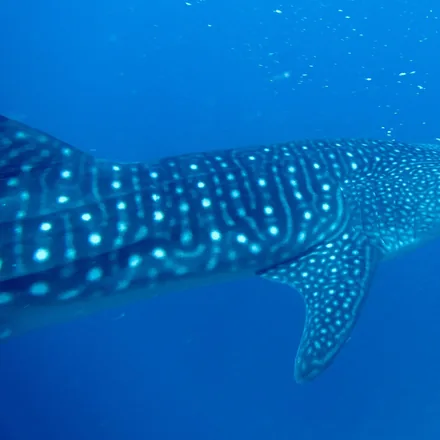
Whale Shark Rare Endangered
Rhincodon typus
The biggest fish in the ocean, a spotted, bus sized filter feeder and the undisputed holy grail of tropical diving.
Where: Blue water beyond the continental shelf edge. Best: November to April on the west and south, May to September on the east.
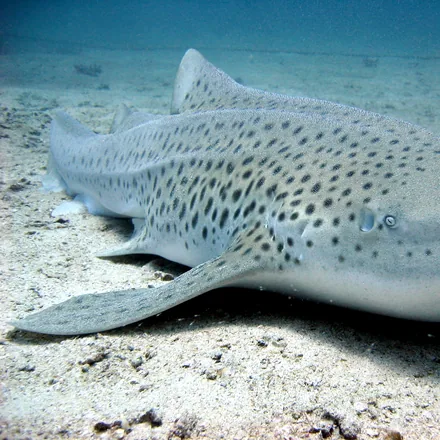
Zebra Shark (Leopard Shark) Rare Endangered
Stegostoma tigrinum
A gentle, spotted shark that lies on the sand like a giant lazy cat, striped as a pup and spotted as an adult.
Where: Sand and rubble patches between coral heads. Best: November to April on the west and south, May to September on the east.
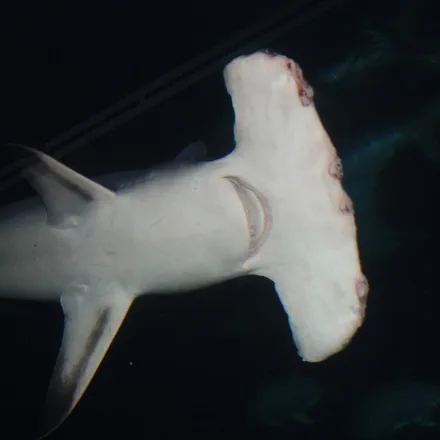
Great Hammerhead Very rare Critically Endangered
Sphyrna mokarran
Uses the flat of its head to pin a stingray to the seabed, then bites chunks out of the wing.
Where: Deeper reef, wrecks and the Great and Little Basses reefs. Best: May to September on the east coast.
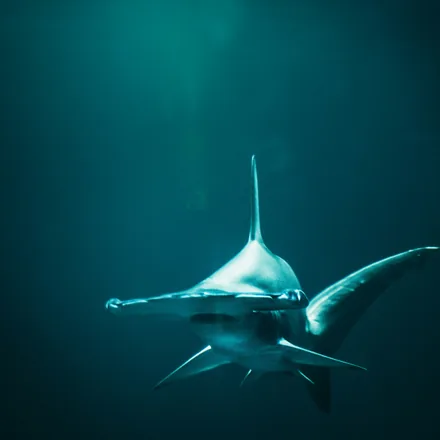
Scalloped Hammerhead Very rare Critically Endangered
Sphyrna lewini
The head is a sensory antenna, packed with electroreceptors that can find a ray buried under sand.
Where: Deeper reef, wrecks and the Great and Little Basses reefs. Best: May to September on the east coast.
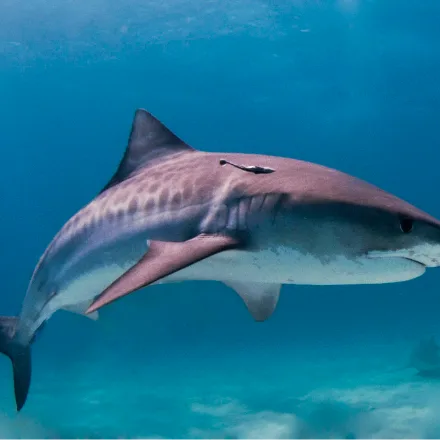
Tiger Shark Very rare Near Threatened
Galeocerdo cuvier
The only shark with teeth built to shear turtle shell, and the least fussy eater in the ocean.
Where: Deeper reef, wrecks and the Great and Little Basses reefs. Best: November to April on the west and south, May to September on the east.
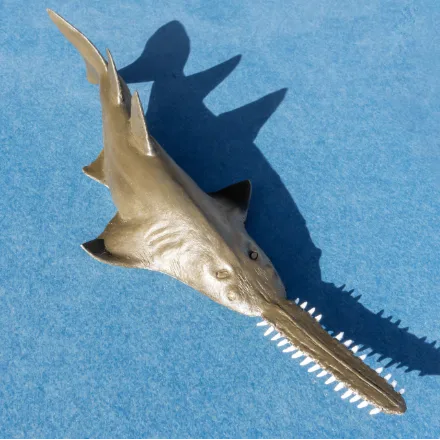
Largetooth Sawfish Ultra rare Critically Endangered
Pristis pristis
A seven metre ray with a chainsaw for a nose, and almost certainly gone from Thai waters.
Where: Lagoons, estuaries and mangrove creeks at Puttalam, Negombo and Kalametiya. Best: Year round.
See all 30 sharks and rays of Sri Lanka
Reef invertebrates
The reefs at Pigeon Island and the Bar Reef carry the full Indo-Pacific invertebrate cast, and the forest adds two animals almost nobody writes about: a freshwater crab that lives up a tree, and a banded tree snail from a family that has been on this island since it broke away from Gondwana.
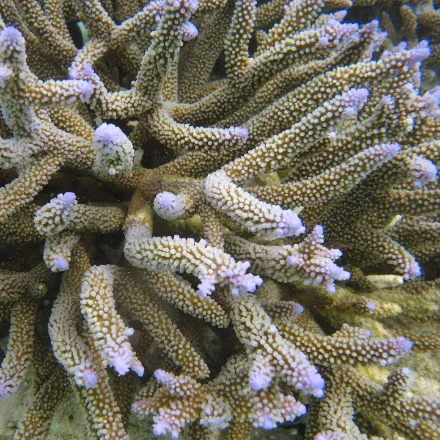
Staghorn Coral Common
Acropora species
The fast-growing branching coral that builds the living thickets of the reef, nursery and shelter for a whole community.
Where: Shallow reef flats and coral heads at Bar Reef and around Pigeon Island. Best: November to April on the west and south, May to September on the east.
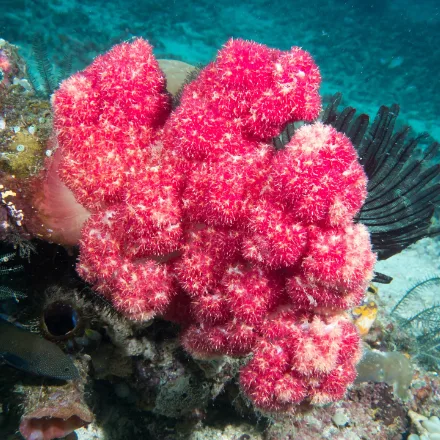
Carnation Soft Coral Regular
Dendronephthya species
An explosion of pink, red and orange bloom that inflates with water to feed, turning shaded walls into hanging gardens.
Where: Deeper reef, wrecks and the Great and Little Basses reefs. Best: November to April on the west and south, May to September on the east.
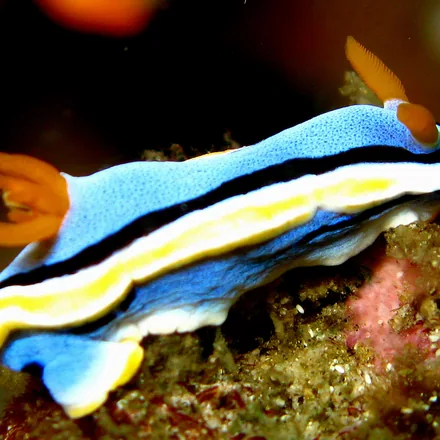
Chromodoris Nudibranch Regular
Chromodoris species
A tiny sea slug in outrageous colours that borrows toxins from the sponges it eats and flaunts them as a warning.
Where: Coral reef and boulder slopes on both coasts. Best: November to April on the west and south, May to September on the east.
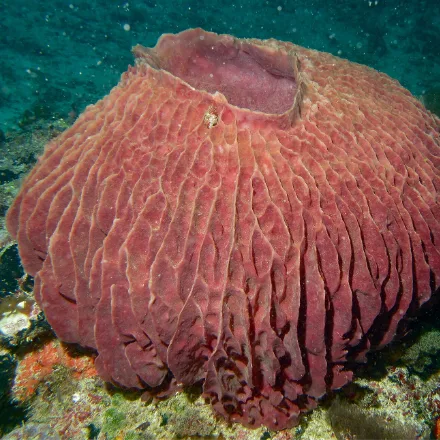
Giant Barrel Sponge Regular
Xestospongia testudinaria
Filters tens of thousands of litres a day and can live for well over a century, which is why divers call them the redwoods of the reef.
Where: Deeper reef, wrecks and the Great and Little Basses reefs. Best: November to April on the west and south, May to September on the east.
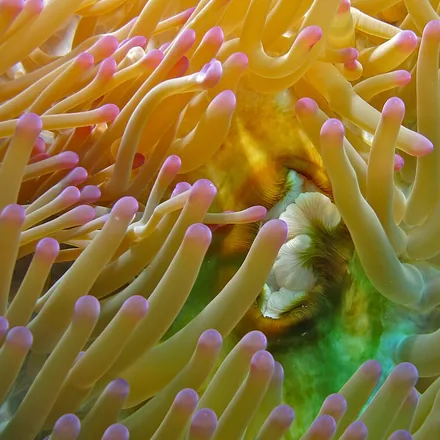
Magnificent Sea Anemone Regular
Heteractis magnifica
A great carpet of stinging tentacles that is home and fortress to the anemonefish, a partnership at the heart of the reef.
Where: Shallow reef flats and coral heads at Bar Reef and around Pigeon Island. Best: November to April on the west and south, May to September on the east.
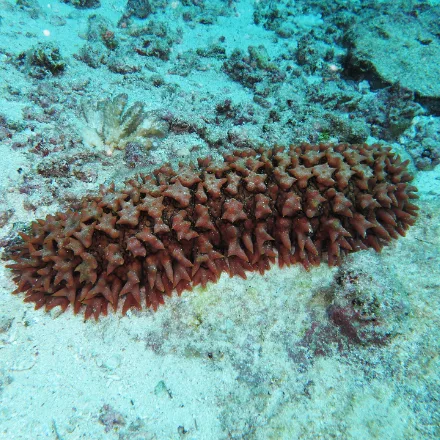
Pineapple Sea Cucumber Regular Endangered
Thelenota ananas
A metre-long sea cucumber covered in star-shaped spikes, and one of the most valuable animals per kilo in Asian seafood.
Where: Sand and rubble patches between coral heads. Best: November to April on the west and south, May to September on the east.
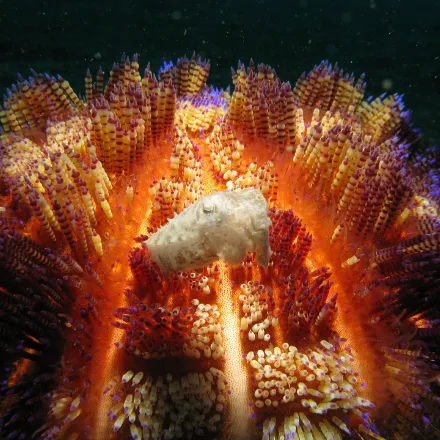
Fire Urchin Occasional
Asthenosoma varium
Its spines glow orange-red at the tips and deliver a burning sting, and a pair of tiny shrimp live on it in perfect safety.
Where: Sand and rubble patches between coral heads. Best: November to April on the west and south, May to September on the east.
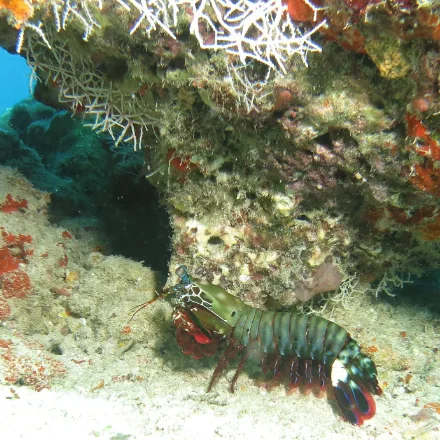
Peacock Mantis Shrimp Occasional
Odontodactylus scyllarus
A jewel-coloured reef brawler that punches with the speed of a bullet and sees the world in colours we cannot imagine.
Where: Sand and rubble patches between coral heads. Best: November to April on the west and south, May to September on the east.
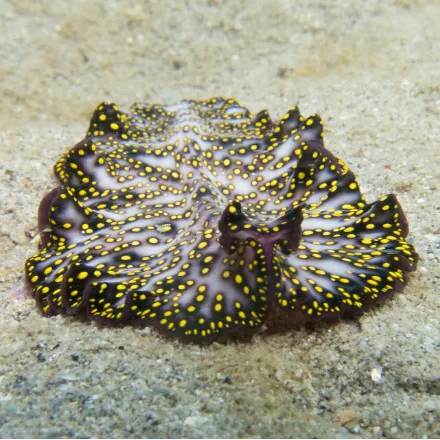
Persian Carpet Flatworm Occasional
Pseudobiceros bedfordi
Two hermaphrodites fight by fencing with their reproductive organs, and the loser has to carry the eggs.
Where: Coral reef and boulder slopes on both coasts. Best: November to April on the west and south, May to September on the east.
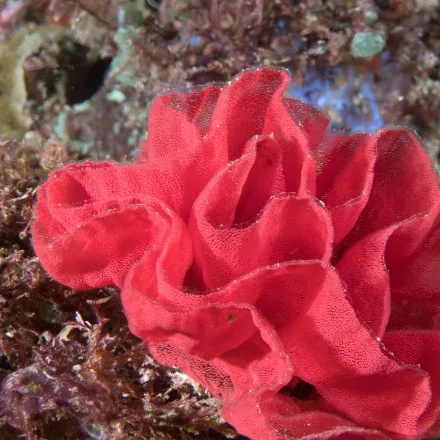
Spanish Dancer Occasional
Hexabranchus sanguineus
A giant crimson sea slug that unfurls its frilled body and swims through open water like a flamenco dancer's skirt.
Where: Reef and rubble after dark, on a night dive. Best: November to April on the west and south, May to September on the east.
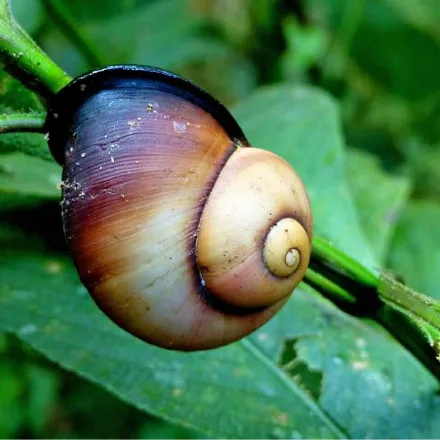
Sri Lanka Tree Snail Occasional
Acavus phoenix
A snail the size of a plum, banded like a boiled sweet, that lives its whole life in the canopy.
Where: On trunks and branches in wet zone forest, moving at night and after rain. Best: Year round, best just after heavy rain.
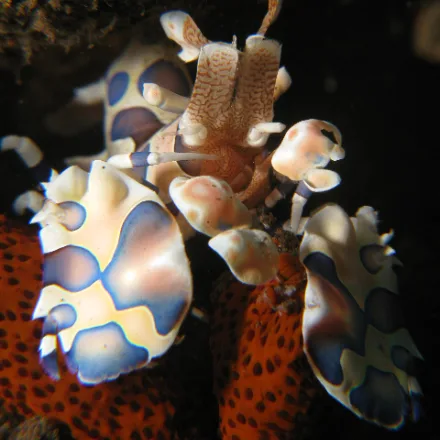
Harlequin Shrimp Rare
Hymenocera picta
A shrimp painted like fine porcelain that hunts as a devoted pair and eats nothing but living starfish.
Where: Coral reef and boulder slopes on both coasts. Best: November to April on the west and south, May to September on the east.
See all 79 reef invertebrates of Sri Lanka
Insects and spiders
Thin on this page and honestly so. Sri Lanka has around 130 dragonflies and damselflies with roughly half endemic, and a butterfly fauna to match, and we have only begun to record it. What is here is worth knowing: two endemic ornamental tarantulas that live in tree cavities, and a damselfly whose wings flash metallic blue over forest streams.
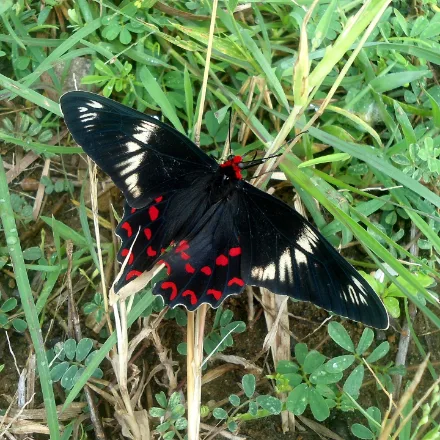
Crimson Rose Common Near Threatened
Pachliopta hector
Flies slowly and in the open because it is poisonous and every predator on the island knows it.
Where: Dry zone scrub, garden edges, roadsides and park tracks countrywide. Best: Year round.
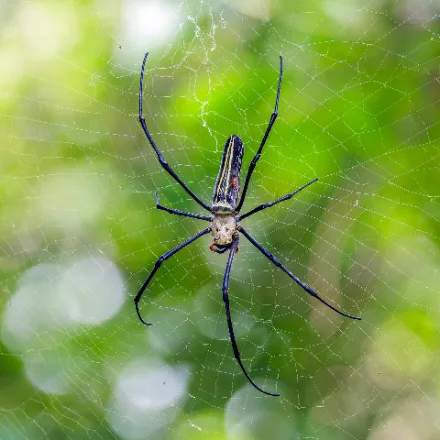
Golden Orb-weaver Common
Nephila pilipes
A giant black-and-yellow spider spinning webs of golden silk strong enough to snare small birds.
Where: Huge golden webs slung across forest tracks and clearings countrywide. Best: Year round, largest females August to December.
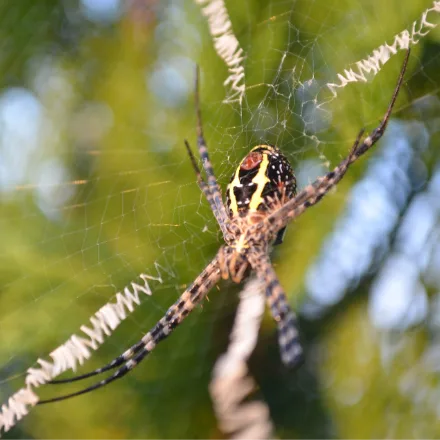
Signature Spider Common
Argiope anasuja
Writes a bold zigzag across the middle of its own web, and nobody is entirely sure why.
Where: Webs slung in scrub, gardens and dry zone forest edge countrywide. Best: Year round.
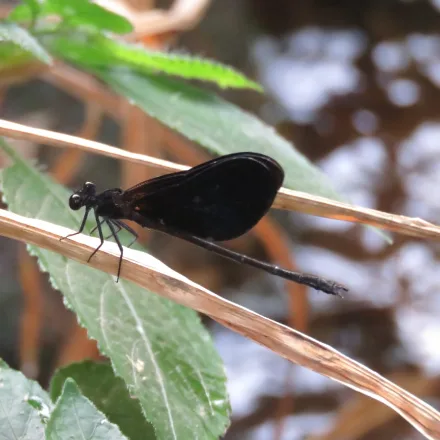
Shining Gossamerwing Regular
Euphaea splendens
Black wings that flash metallic blue-green as the male turns in a shaft of light over a forest stream.
Where: Perched on rocks and twigs over shaded, fast, rocky wet zone streams. Best: Year round, sunniest hours.
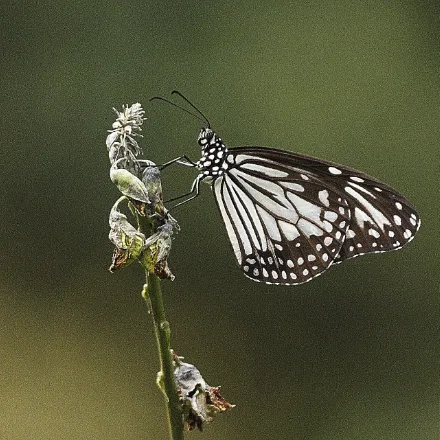
Ceylon Tiger Occasional
Parantica taprobana
A high country butterfly found only on this island, and only above about a thousand metres.
Where: Montane grassland, forest edge and hill roadsides above about 1,000 m. Best: Year round, sunniest hours.
No free photograph of the Ceylon tiger exists. The image shows the glassy tiger, Parantica aglea, a close relative photographed in southern India.
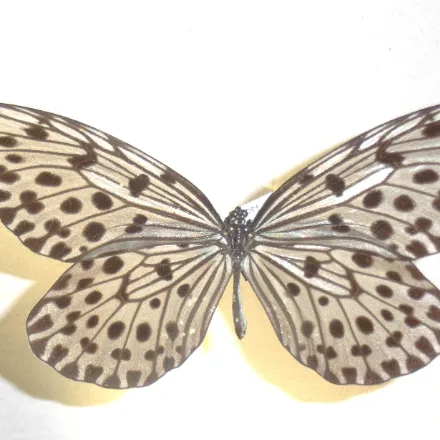
Ceylon Tree Nymph Occasional
Idea iasonia
Drifts through the forest like a sheet of paper caught in a current, and barely seems to fly at all.
Where: Canopy gaps and clearings in lowland wet zone forest. Best: Year round.
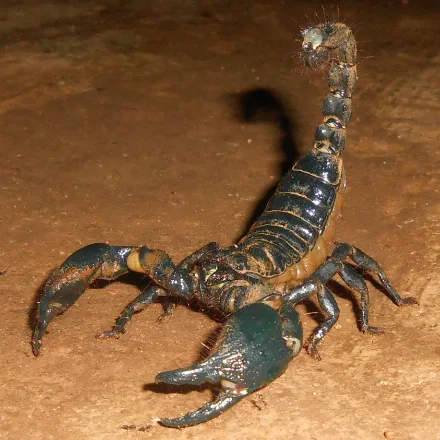
Giant Forest Scorpion Occasional
Heterometrus swammerdami
Among the largest scorpions on earth, and its sting is milder than a bee's.
Where: Under logs and stones by day, out hunting on the ground after dark. Best: Year round, after dark.
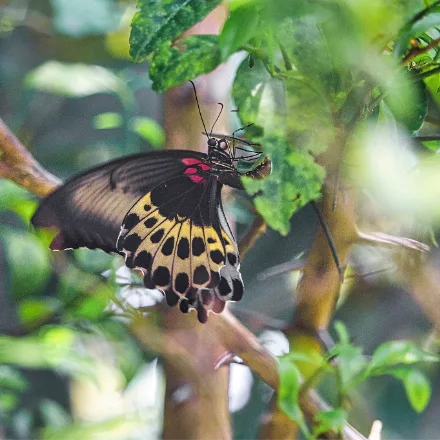
Sri Lanka Birdwing Occasional
Troides darsius
The largest butterfly on the island, the size of a small bird, and it lives nowhere else.
Where: Forest edge, gardens and flowering trees across the wet and intermediate zones. Best: Year round, strongest after the rains.
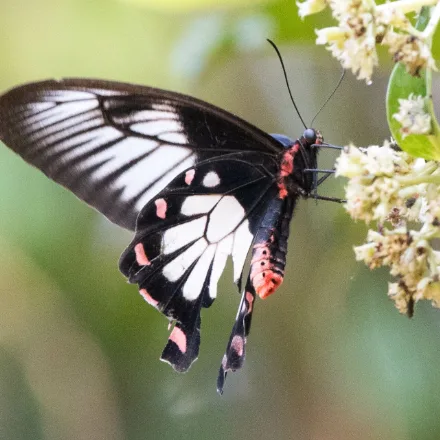
Ceylon Rose Rare Critically Endangered
Pachliopta jophon
Critically Endangered, endemic, and confined to the shrinking rainforest of one corner of the island.
Where: Wet zone rainforest interior and its immediate edge, nowhere else. Best: Year round.
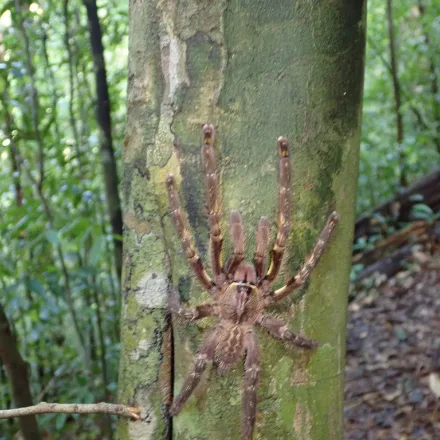
Fringed Ornamental Tarantula Rare
Poecilotheria ornata
A tarantula the size of a dinner plate that lives in tree holes and sometimes shares them with a frog.
Where: Cavities in mature trees in lowland wet zone forest, at the web entrance after dark. Best: Year round, after dark.
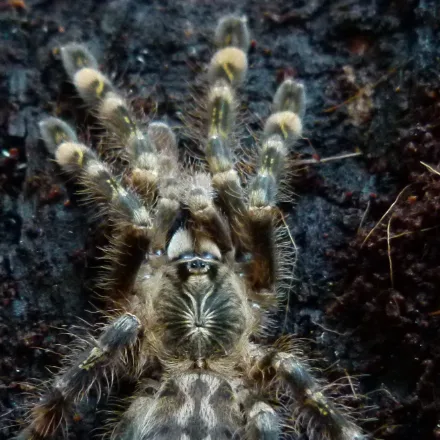
Ivory Ornamental Tarantula Rare
Poecilotheria subfusca
The high country ornamental, living in tree cavities in cool hill forest where no other tarantula of its size can.
Where: Cavities, bark fissures and old woodpecker holes in mature hill forest trees. Best: Year round, after dark.
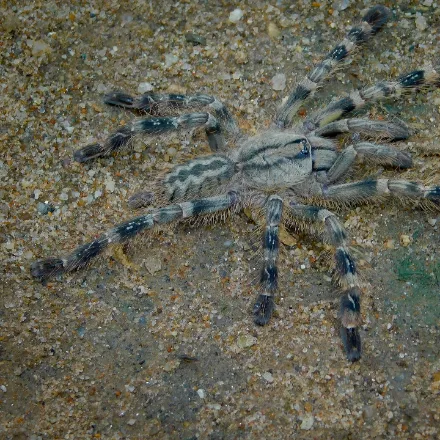
Sri Lankan Ornamental Tarantula Rare
Poecilotheria fasciata
The spider that gave the ornamental tarantulas their name, described in 1804 and found only here.
Where: Cavities and loose bark on mature trees in the drier zones, and occasionally old buildings. Best: Year round, after dark.
See all 30 insects and spiders of Sri Lanka
Where to go
Adam's Peak and Peak Wilderness
A pilgrimage mountain wrapped in one of the least explored cloud forests in South Asia. The starry shrub frog and the Kandyan dwarf toad were both rediscovered here after more than a century presumed extinct.
Arugam Bay and the East Coast Lagoons
A surf town with elephants in the scrub behind it and a chain of lagoons north and south that carry crocodiles, waterbirds and, on the right evening, leopards on the beach road.
Coastal lagoons, salt pans and thorn scrub on the southeast coast. A Ramsar wetland and the country's most important shorebird site.
A Ramsar accredited Wetland City. Talangama, Bellanwila and the Diyasaru marshes hold serious waterbirds inside the capital.
Tea country on the southern edge of the hill zone, with cloud forest patches, waterfalls and gorges holding montane endemics within reach of a very well travelled town.
The only place in Asia where elephants are regularly watched swimming between islands, seen from a boat on a reservoir rather than from a jeep on a track.
The Great and Little Basses Reefs
Offshore sandstone reefs off the southeast coast, exposed, current swept and only diveable in a narrow window. The best big fish diving in Sri Lanka and the hardest to reach.
Shallow fringing reef close enough to the beach to swim to, and the most accessible coral in Sri Lanka for anyone who does not dive.
Horton Plains and Nuwara Eliya
Montane cloud forest and wet grassland above 2,000 metres, cold at dawn, holding highland endemics found nowhere lower.
Jaffna and the Northern Peninsula
Limestone, palmyra and arid scrub, with a fauna that belongs to southern India as much as to the rest of Sri Lanka. The saw-scaled viper occurs here and effectively nowhere else on the island.
A northwest peninsula and lagoon system beside the Bar Reef, known for spinner dolphin superpods running into the thousands.
The hill capital, with Udawattakele forest reserve behind the temple and the Peradeniya gardens, both good for a first look at the wet zone birds.
The second great lowland rainforest of the wet zone, quieter than Sinharaja and holding several endemics found almost nowhere else, including the type locality of Nagao's pug-snout frog.
Kitulgala and the Makandawa Rainforest
Wet zone rainforest on the Kelani river, and the most accessible serious herping and birding ground in the country outside Sinharaja. Rafting brings the crowds; the forest behind the town is why naturalists come.
A rugged massif of cloud forest and rocky streams, the second montane block, and the stronghold of the endemic amphibians and agamid lizards.
Mangrove swamp and lagoon on the east coast, adjoining Yala's eastern block. A breeding colony site and a quieter alternative for leopard.
A sandy island and a shallow sea that together hold the island's last dugong stronghold, its greatest concentration of migratory waders and the chain of sandbanks known as Adam's Bridge.
Minneriya and Kaudulla National Parks
Tank-bed grassland in the dry zone where hundreds of elephants gather on the receding shoreline, an event known as The Gathering.
A south coast fishing town beside the continental shelf edge, where blue whales and sperm whales pass close inshore.
South coast nesting beaches where five sea turtle species come ashore, watched on community-run night walks.
Sigiriya, Dambulla and the Cultural Triangle
Rock outcrops, monsoon forest and ancient tanks in the heart of the dry zone. The wildlife rides along with the archaeology, which is why most visitors see it without planning to.
The last substantial primary lowland rainforest on the island and a UNESCO World Heritage site. The endemic bird engine, and the place to see a mixed species feeding flock.
A stretch of south coast where lagoon, scrub and beach meet, with brackish wetlands that hold waterbirds in numbers and a coastline that turtles still nest on.
Deep water close to the east coast plus the best fringing reef in the country at Pigeon Island. The east coast whale season is the mirror of the south.
Open grassland and scrub around a reservoir, the most reliable elephant viewing in the country and good year round.
Dry evergreen forest between two rivers, holding large elephant herds with a fraction of the vehicles found elsewhere.
Dry lowland forest around natural sand-rimmed lakes, the villus. Larger and far quieter than Yala, and the better sloth bear park.
Scrub jungle, brackish lagoons and granite outcrops on the southeast coast, holding the highest density of leopards recorded anywhere.
Planning
Sri Lanka is small enough to combine habitats and big enough that the season decides everything. Broadly: the dry zone parks in the south and east are best from February to July when water is scarce and animals concentrate at what is left, though Yala’s main block usually closes in September and October. The wet zone rainforest is workable year round, with January to March and July to September the driest windows. The whales follow the monsoon, south and west from November to April and east from May to September. Two places carry the crowds: Yala for leopards and the Mirissa shelf for blue whales, both at the peak of their seasons, and both quieter a few weeks either side.
Find guided safaris, whale watching and rainforest walks in Sri Lanka
Some links on this page are affiliate links. If you book through them, Wildseer may earn a small commission at no extra cost to you.
Frequently asked questions
What wildlife can you see in Sri Lanka?
Leopard, Asian elephant, sloth bear, blue whale and sperm whale are the marquee animals, and all five are realistically seeable on a two week trip. Behind them sit 34 endemic birds, an endemic radiation of shrub frogs, five nesting sea turtle species, and a full Indo-Pacific reef fauna on both coasts.
When is the best time to see wildlife in Sri Lanka?
February to April is the strongest all round window: the dry zone parks are concentrating animals around water, the south coast whale season is still running, and the rainforest is in one of its drier spells. July to September is the other good window, and it moves the whale watching to the east coast.
Where is the best place to see leopards in Sri Lanka?
Yala has the highest recorded density of leopards anywhere in the world and is the reliable choice. Wilpattu is larger, quieter and holds leopard and sloth bear, and many people prefer the experience even though the sightings take longer.
Can you see blue whales in Sri Lanka?
Yes, and it is one of the few places on earth where you can do it as a half day trip from shore. The continental shelf runs close inshore, so the whales are within a couple of hours of the beach. The season flips coast with the monsoon, so check the month against the coast before booking.
Is Sri Lanka better than India or Thailand for wildlife?
It is different rather than better. Sri Lanka’s advantage is compactness and density: leopard, elephant and blue whale in one small country, plus an endemic list out of proportion to its size. India offers tigers and far greater scale, Thailand offers a bigger reef and forest system with lower endemism.
Explore Sri Lanka wildlife by group
 Mammals of Sri Lanka
 Birds of Sri Lanka
 Reptiles and amphibians of Sri Lanka
 Fish of Sri Lanka
 Sharks and rays of Sri Lanka
 Reef invertebrates of Sri Lanka
 Insects and spiders of Sri Lanka
Part of the Wildlife in Sri Lanka guide.
Image credits
Square thumbnails are cropped from the original. Wide banner images are cropped to a band. Other images are resized only. No other changes have been made.
- Sri Lankan leopard resting on a branch: Eric Kamoga | Pexels Licence, cropped
- Sri Lankan Leopard: Vasuki Jayaweera | CC BY-SA 4.0, cropped
- Asian elephant (resized): Shadow Ayush | CC BY-SA 4.0, cropped
- Blue Whale: Carina Gsottbauer | CC BY-SA 4.0, cropped
- Sloth Bear: Charles J. Sharp | CC BY-SA 4.0, cropped
- Sri Lanka Blue Magpie: Gerry Zambonini | CC BY-SA 2.0, cropped
- Asian Elephant (cropped to square): Shadow Ayush | CC BY-SA 4.0, cropped
- Chital: Tisha Mukherjee | CC BY-SA 4.0, cropped
- Indian Flying Fox: Alois Staudacher | CC BY 2.0, cropped
- Toque Macaque: Ji-Elle | CC BY-SA 3.0, cropped
- Purple-faced Langur: Jeroen84 | CC BY-SA 3.0, cropped
- Wild Water Buffalo: Joydeep Chakraborty | CC BY-SA 4.0, cropped
- Indo-Pacific Humpback Dolphin (cropped to square): Chem7 | CC BY 2.0, cropped
- Sperm Whale: NOAA Photo Library | Public domain, cropped
- Killer Whale: NOAA, United States National Oceanic and Atmospheric Administration | Public domain, cropped
- Indian Peafowl: Joshianuj | CC BY-SA 4.0, cropped
- Red-backed Flameback: Rehman Abubakr | CC BY-SA 4.0, cropped
- Sri Lanka Junglefowl: eamonccorbett | CC BY 4.0, cropped
- Yellow-fronted Barbet: Lip Kee Yap from Singapore, Republic of Singapore | CC BY-SA 2.0, cropped
- Layard’s Parakeet: Hafiz Issadeen | CC BY 2.0, cropped
- Sri Lanka Hanging Parrot: Hafiz Issadeen | CC BY 2.0, cropped
- Chestnut-backed Owlet: Rangana Abeyrathne | CC BY-SA 4.0, cropped
- Greater Flamingo: Charles J. Sharp | CC BY-SA 4.0, cropped
- Serendib Scops Owl: Kasun withanage | CC BY-SA 4.0, cropped
- Sri Lanka Whistling Thrush: Kasun withanage | CC BY-SA 4.0, cropped
- White-faced Starling: Steve Garvie from Dunfermline, Fife, Scotland | CC BY-SA 2.0, cropped
- Mugger Crocodile: Karunakar Rayker from India | CC BY-SA 2.0, cropped
- Black-lipped Lizard: Cherubino | CC BY-SA 3.0, cropped
- Sri Lankan Green Pit Viper: Gihan Jayaweera | CC BY-SA 3.0, cropped
- Hawksbill Turtle (cropped to square): Daniel Sasse | CC BY-SA 4.0, cropped
- Hump-nosed Lizard: Nyanatusita | CC BY-SA 3.0, cropped
- Leaf-nesting Shrub Frog: Buddhika.jm | CC BY 3.0, cropped
- Schmarda’s Shrub Frog: Buddhika.jm(Buddhika Mawella) | CC BY-SA 4.0, cropped
- Small-eared Shrub Frog: Buddhika.jm | CC BY 3.0, cropped
- Bahir’s Fan-throated Lizard: P Jeganathan | CC BY 4.0, cropped
- Golden Shrub Frog: Buddhika.jm(Buddhika Mawella) | CC BY-SA 4.0, cropped
- Starry Shrub Frog: Rekhakottoor | CC BY-SA 4.0, cropped
- Bluestreak Cleaner Wrasse (cropped to square): Bernard DUPONT | CC BY-SA 2.0, cropped
- Ceylon Killifish: Thuhiru S. Yapa | CC BY 4.0, cropped
- Moorish Idol (cropped to square): Jean-Paul Boerekamps | CC0, cropped
- Powder Blue Surgeonfish (cropped to square): Amada44 | CC BY-SA 3.0, cropped
- Cherry Barb: Brian Gratwicke | CC BY 2.0, cropped
- Fire Rasbora: Rupert A. Collins | CC BY 3.0, cropped
- Barred Danio: Rupert A. Collins | CC BY 3.0, cropped
- Bumphead Parrotfish (cropped to square): Jenny from Taipei | CC BY 2.0, cropped
- Humphead Wrasse (cropped to square): Derek Keats | CC BY 2.0, cropped
- Indo-Pacific Sailfish (cropped to square): Vsevolod | CC BY 4.0, cropped
- Ornate Paradisefish: Klaus de Leuw | CC BY-SA 3.0, cropped
- Bandula Barb: Beta Mahatvaraj | CC BY-SA 4.0, cropped
- Blacktip Reef Shark: David Clode | Unsplash License, cropped
- Bluespotted Maskray (cropped to square): Elias Levy | CC BY 2.0, cropped
- Bluespotted Ribbontail Ray (resized): Derek Keats from Johannesburg, South Africa | CC BY 2.0, cropped
- Ocellated Eagle Ray (cropped to square): Jerome Paillet (IFREMER) | CC BY 4.0, cropped
- Giant Manta Ray (cropped to square): Stevelaycock21 | CC BY-SA 4.0, cropped
- Reef Manta Ray (cropped to square): Rickard Zerpe | CC BY 2.0, cropped
- Whale Shark (cropped to square): Jerome Paillet (IFREMER) | CC BY 4.0, cropped
- Zebra Shark (cropped to square): Sigmund | CC BY 2.0, cropped
- Great Hammerhead (cropped to square): Jim Capaldi from Springfield, USA | CC BY 2.0, cropped
- Scalloped Hammerhead: Jonas Allert | Unsplash License, cropped
- Tiger Shark (cropped to square): Albert kok | CC BY-SA 3.0, cropped
- Largetooth Sawfish (cropped to square): Hiroya02 | CC0, cropped
- Staghorn Coral (cropped to square): MDC Seamarc Maldives | CC BY-SA 4.0, cropped
- Carnation Soft Coral (cropped to square): Rickard Zerpe | CC BY 2.0, cropped
- Chromodoris Nudibranch (cropped to square): Steve Childs | CC BY 2.0, cropped
- Giant Barrel Sponge (cropped to square): Bernard DUPONT from FRANCE | CC BY-SA 2.0, cropped
- Magnificent Sea Anemone (cropped to square): Bernard DUPONT | CC BY-SA 2.0, cropped
- Pineapple Sea Cucumber (cropped to square): Aexander Vasenin | CC BY-SA 3.0, cropped
- Fire Urchin (cropped to square): prilfish | CC BY 2.0, cropped
- Peacock Mantis Shrimp (cropped to square): Jerome Paillet (IFREMER, Laboratoire d'Océanographie Physique et Spatiale, Centre Bretagne - ZI de la Pointe du Diable - CS 10070 - 29280 Plouzané) | CC BY 4.0, cropped
- Persian Carpet Flatworm (cropped to square): Matthias Liffers | CC BY 2.0, cropped
- Spanish Dancer (cropped to square): Rickard Zerpe | CC BY 2.0, cropped
- Sri Lanka Tree Snail: Moni Ostermaier | CC BY-SA 4.0, cropped
- Harlequin Shrimp (cropped to square): prilfish | CC BY 2.0, cropped
- Crimson Rose: Adityamadhav83 | CC BY-SA 3.0, cropped
- Golden Orb-weaver (resized): Charles J. Sharp | CC BY-SA 4.0, cropped
- Signature Spider: Abkhanal | CC BY-SA 3.0, cropped
- Shining Gossamerwing: Gihan Jayaweera | CC BY-SA 4.0, cropped
- Ceylon Tiger: Girish Mohan | CC BY-SA 4.0, cropped
- Ceylon Tree Nymph: Notafly | CC BY-SA 3.0, cropped
- Giant Forest Scorpion: Nireekshit | CC BY-SA 3.0, cropped
- Sri Lanka Birdwing: Janith Pramuditha | CC BY-SA 4.0, cropped
- Ceylon Rose: 松井 淳 | CC0, cropped
- Fringed Ornamental Tarantula: Théalie Dhellemmes | CC BY-SA 4.0, cropped
- Ivory Ornamental Tarantula: Pawel W. | CC BY-SA 3.0, cropped
- Sri Lankan Ornamental Tarantula: Gerard Mendis | CC BY-SA 4.0, cropped
- Purple-faced langur in the canopy: kanchana Amilani | Unsplash License, cropped
- White-throated kingfisher on a branch: kanchana Amilani | Unsplash License, cropped
- Green forest lizard in breeding colour: Anas Mohamed Nuski | Pexels Licence, cropped
- Bluestripe snapper over a reef: Jeffry Surianto | Pexels Licence, cropped
- Reef manta rays near the surface: Emma Li | Pexels Licence, cropped
- Nudibranch crossing the sea floor: Chris Spain | Pexels Licence, cropped
- Clipper butterfly on a leaf: Pixabay | Pexels Licence, cropped
Square thumbnails are cropped from the original. Wide banner images are cropped to a band. Other images are resized only. No other changes have been made.
- Sri Lankan leopard resting on a branch: Eric Kamoga | Pexels Licence, cropped
- Sri Lankan Leopard: Vasuki Jayaweera | CC BY-SA 4.0, cropped
- Asian elephant (resized): Shadow Ayush | CC BY-SA 4.0, cropped
- Blue Whale: Carina Gsottbauer | CC BY-SA 4.0, cropped
- Sloth Bear: Charles J. Sharp | CC BY-SA 4.0, cropped
- Sri Lanka Blue Magpie: Gerry Zambonini | CC BY-SA 2.0, cropped
- Asian Elephant (cropped to square): Shadow Ayush | CC BY-SA 4.0, cropped
- Chital: Tisha Mukherjee | CC BY-SA 4.0, cropped
- Indian Flying Fox: Alois Staudacher | CC BY 2.0, cropped
- Toque Macaque: Ji-Elle | CC BY-SA 3.0, cropped
- Purple-faced Langur: Jeroen84 | CC BY-SA 3.0, cropped
- Wild Water Buffalo: Joydeep Chakraborty | CC BY-SA 4.0, cropped
- Indo-Pacific Humpback Dolphin (cropped to square): Chem7 | CC BY 2.0, cropped
- Sperm Whale: NOAA Photo Library | Public domain, cropped
- Killer Whale: NOAA, United States National Oceanic and Atmospheric Administration | Public domain, cropped
- Indian Peafowl: Joshianuj | CC BY-SA 4.0, cropped
- Red-backed Flameback: Rehman Abubakr | CC BY-SA 4.0, cropped
- Sri Lanka Junglefowl: eamonccorbett | CC BY 4.0, cropped
- Yellow-fronted Barbet: Lip Kee Yap from Singapore, Republic of Singapore | CC BY-SA 2.0, cropped
- Layard’s Parakeet: Hafiz Issadeen | CC BY 2.0, cropped
- Sri Lanka Hanging Parrot: Hafiz Issadeen | CC BY 2.0, cropped
- Chestnut-backed Owlet: Rangana Abeyrathne | CC BY-SA 4.0, cropped
- Greater Flamingo: Charles J. Sharp | CC BY-SA 4.0, cropped
- Serendib Scops Owl: Kasun withanage | CC BY-SA 4.0, cropped
- Sri Lanka Whistling Thrush: Kasun withanage | CC BY-SA 4.0, cropped
- White-faced Starling: Steve Garvie from Dunfermline, Fife, Scotland | CC BY-SA 2.0, cropped
- Mugger Crocodile: Karunakar Rayker from India | CC BY-SA 2.0, cropped
- Black-lipped Lizard: Cherubino | CC BY-SA 3.0, cropped
- Sri Lankan Green Pit Viper: Gihan Jayaweera | CC BY-SA 3.0, cropped
- Hawksbill Turtle (cropped to square): Daniel Sasse | CC BY-SA 4.0, cropped
- Hump-nosed Lizard: Nyanatusita | CC BY-SA 3.0, cropped
- Leaf-nesting Shrub Frog: Buddhika.jm | CC BY 3.0, cropped
- Schmarda’s Shrub Frog: Buddhika.jm(Buddhika Mawella) | CC BY-SA 4.0, cropped
- Small-eared Shrub Frog: Buddhika.jm | CC BY 3.0, cropped
- Bahir’s Fan-throated Lizard: P Jeganathan | CC BY 4.0, cropped
- Golden Shrub Frog: Buddhika.jm(Buddhika Mawella) | CC BY-SA 4.0, cropped
- Starry Shrub Frog: Rekhakottoor | CC BY-SA 4.0, cropped
- Bluestreak Cleaner Wrasse (cropped to square): Bernard DUPONT | CC BY-SA 2.0, cropped
- Ceylon Killifish: Thuhiru S. Yapa | CC BY 4.0, cropped
- Moorish Idol (cropped to square): Jean-Paul Boerekamps | CC0, cropped
- Powder Blue Surgeonfish (cropped to square): Amada44 | CC BY-SA 3.0, cropped
- Cherry Barb: Brian Gratwicke | CC BY 2.0, cropped
- Fire Rasbora: Rupert A. Collins | CC BY 3.0, cropped
- Barred Danio: Rupert A. Collins | CC BY 3.0, cropped
- Bumphead Parrotfish (cropped to square): Jenny from Taipei | CC BY 2.0, cropped
- Humphead Wrasse (cropped to square): Derek Keats | CC BY 2.0, cropped
- Indo-Pacific Sailfish (cropped to square): Vsevolod | CC BY 4.0, cropped
- Ornate Paradisefish: Klaus de Leuw | CC BY-SA 3.0, cropped
- Bandula Barb: Beta Mahatvaraj | CC BY-SA 4.0, cropped
- Blacktip Reef Shark: David Clode | Unsplash License, cropped
- Bluespotted Maskray (cropped to square): Elias Levy | CC BY 2.0, cropped
- Bluespotted Ribbontail Ray (resized): Derek Keats from Johannesburg, South Africa | CC BY 2.0, cropped
- Ocellated Eagle Ray (cropped to square): Jerome Paillet (IFREMER) | CC BY 4.0, cropped
- Giant Manta Ray (cropped to square): Stevelaycock21 | CC BY-SA 4.0, cropped
- Reef Manta Ray (cropped to square): Rickard Zerpe | CC BY 2.0, cropped
- Whale Shark (cropped to square): Jerome Paillet (IFREMER) | CC BY 4.0, cropped
- Zebra Shark (cropped to square): Sigmund | CC BY 2.0, cropped
- Great Hammerhead (cropped to square): Jim Capaldi from Springfield, USA | CC BY 2.0, cropped
- Scalloped Hammerhead: Jonas Allert | Unsplash License, cropped
- Tiger Shark (cropped to square): Albert kok | CC BY-SA 3.0, cropped
- Largetooth Sawfish (cropped to square): Hiroya02 | CC0, cropped
- Staghorn Coral (cropped to square): MDC Seamarc Maldives | CC BY-SA 4.0, cropped
- Carnation Soft Coral (cropped to square): Rickard Zerpe | CC BY 2.0, cropped
- Chromodoris Nudibranch (cropped to square): Steve Childs | CC BY 2.0, cropped
- Giant Barrel Sponge (cropped to square): Bernard DUPONT from FRANCE | CC BY-SA 2.0, cropped
- Magnificent Sea Anemone (cropped to square): Bernard DUPONT | CC BY-SA 2.0, cropped
- Pineapple Sea Cucumber (cropped to square): Aexander Vasenin | CC BY-SA 3.0, cropped
- Fire Urchin (cropped to square): prilfish | CC BY 2.0, cropped
- Peacock Mantis Shrimp (cropped to square): Jerome Paillet (IFREMER, Laboratoire d'Océanographie Physique et Spatiale, Centre Bretagne - ZI de la Pointe du Diable - CS 10070 - 29280 Plouzané) | CC BY 4.0, cropped
- Persian Carpet Flatworm (cropped to square): Matthias Liffers | CC BY 2.0, cropped
- Spanish Dancer (cropped to square): Rickard Zerpe | CC BY 2.0, cropped
- Sri Lanka Tree Snail: Moni Ostermaier | CC BY-SA 4.0, cropped
- Harlequin Shrimp (cropped to square): prilfish | CC BY 2.0, cropped
- Crimson Rose: Adityamadhav83 | CC BY-SA 3.0, cropped
- Golden Orb-weaver (resized): Charles J. Sharp | CC BY-SA 4.0, cropped
- Signature Spider: Abkhanal | CC BY-SA 3.0, cropped
- Shining Gossamerwing: Gihan Jayaweera | CC BY-SA 4.0, cropped
- Ceylon Tiger: Girish Mohan | CC BY-SA 4.0, cropped
- Ceylon Tree Nymph: Notafly | CC BY-SA 3.0, cropped
- Giant Forest Scorpion: Nireekshit | CC BY-SA 3.0, cropped
- Sri Lanka Birdwing: Janith Pramuditha | CC BY-SA 4.0, cropped
- Ceylon Rose: 松井 淳 | CC0, cropped
- Fringed Ornamental Tarantula: Théalie Dhellemmes | CC BY-SA 4.0, cropped
- Ivory Ornamental Tarantula: Pawel W. | CC BY-SA 3.0, cropped
- Sri Lankan Ornamental Tarantula: Gerard Mendis | CC BY-SA 4.0, cropped
- Purple-faced langur in the canopy: kanchana Amilani | Unsplash License, cropped
- White-throated kingfisher on a branch: kanchana Amilani | Unsplash License, cropped
- Green forest lizard in breeding colour: Anas Mohamed Nuski | Pexels Licence, cropped
- Bluestripe snapper over a reef: Jeffry Surianto | Pexels Licence, cropped
- Reef manta rays near the surface: Emma Li | Pexels Licence, cropped
- Nudibranch crossing the sea floor: Chris Spain | Pexels Licence, cropped
- Clipper butterfly on a leaf: Pixabay | Pexels Licence, cropped