
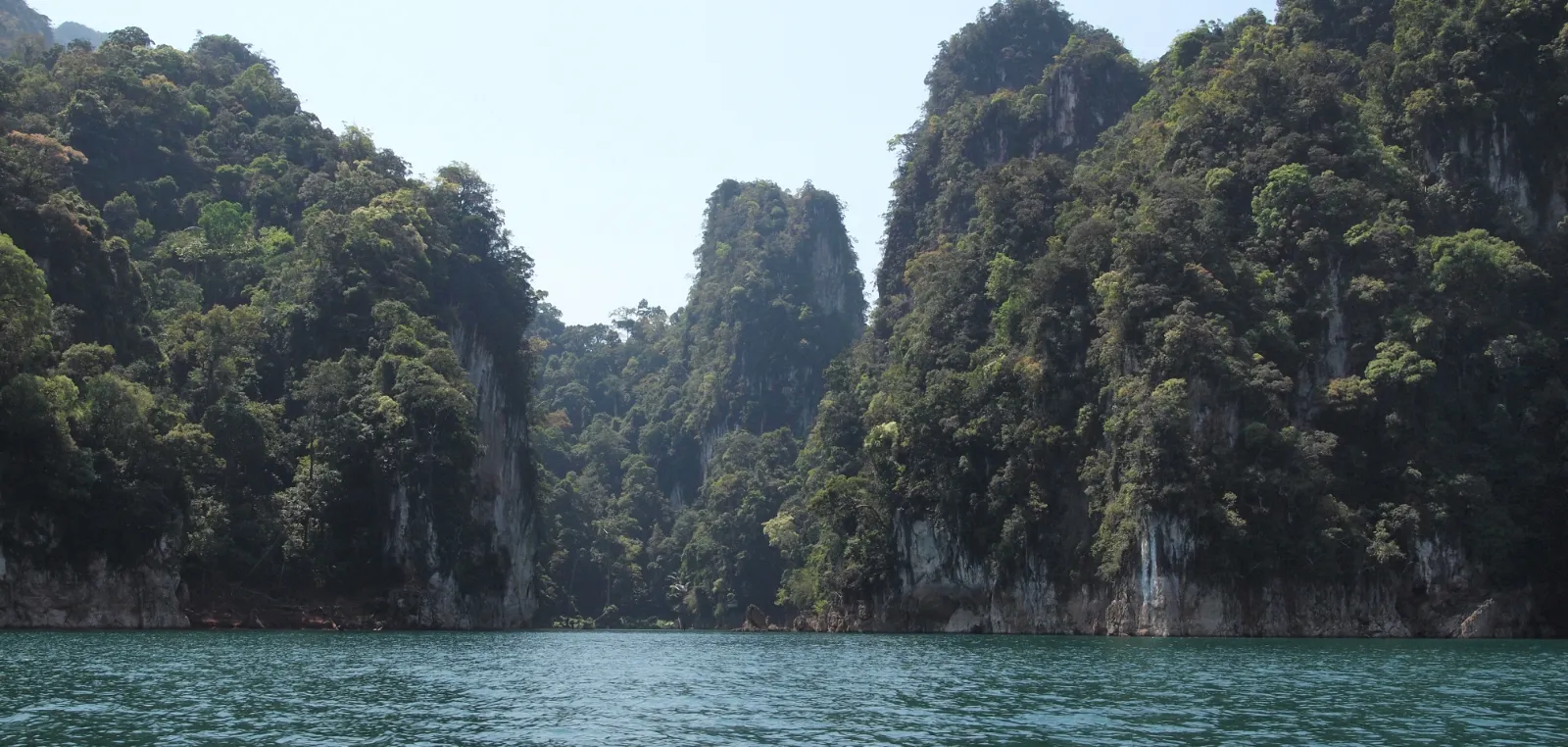
Almost every jungle trek sold in Thailand is sold on scenery, waterfalls and a night in a hill village. Those are good things, and none of them is why you would walk into a rainforest at six in the morning. This page is about the animals, which forest holds which, and what the realistic odds are of meeting them on foot.
The honest headline first: walking is a worse way to see large mammals than sitting still or driving slowly, because you make noise and you cover ground the animals have already left. What walking gives you is everything else. Gibbons calling overhead, hornbills crossing a valley, pit vipers coiled at eye height beside the path, and the enormous invertebrate and amphibian life that a vehicle passes at forty kilometres an hour. Set your expectations there and Thai forest is extraordinarily rewarding.
Highlights
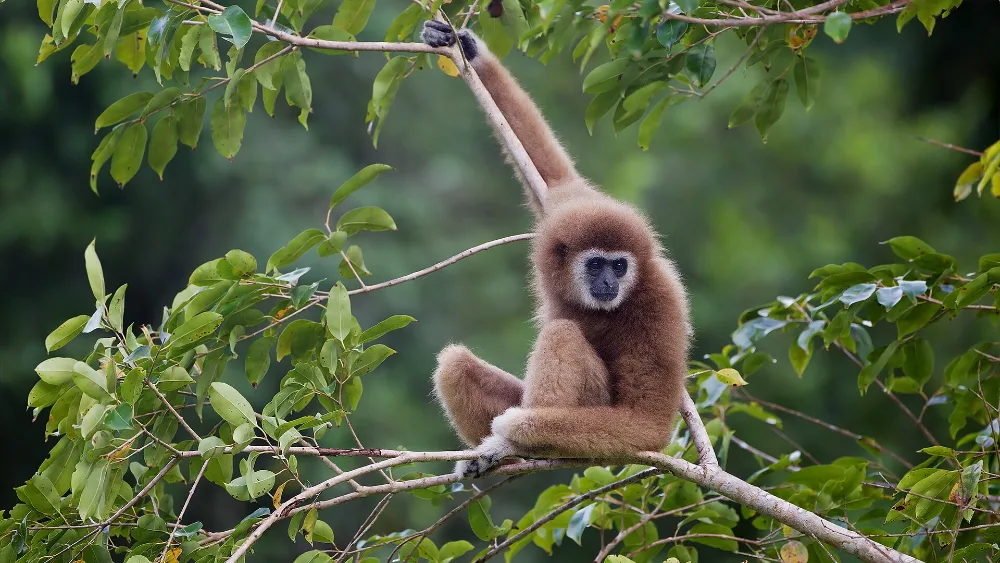
White-handed (Lar) Gibbon
You hear them before dawn even breaks, the whooping duet of gibbons that is the definitive soundtrack of Asian rainforest. Where: Trail 6 and the forest around Haew Suwat. Best: Year round, 06:00-08:30.
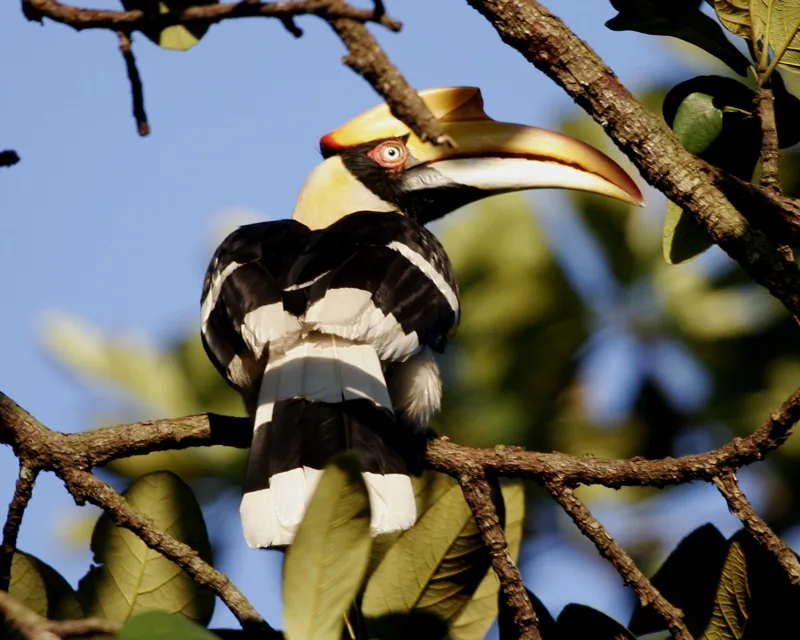
Great Hornbill
A three metre wingbeat you hear before you see, the flagship bird of Asian rainforest canopy. Where: Fruiting figs along Trail 6 and over the Haew Suwat valley. Best: Year round, 06:30-09:00.
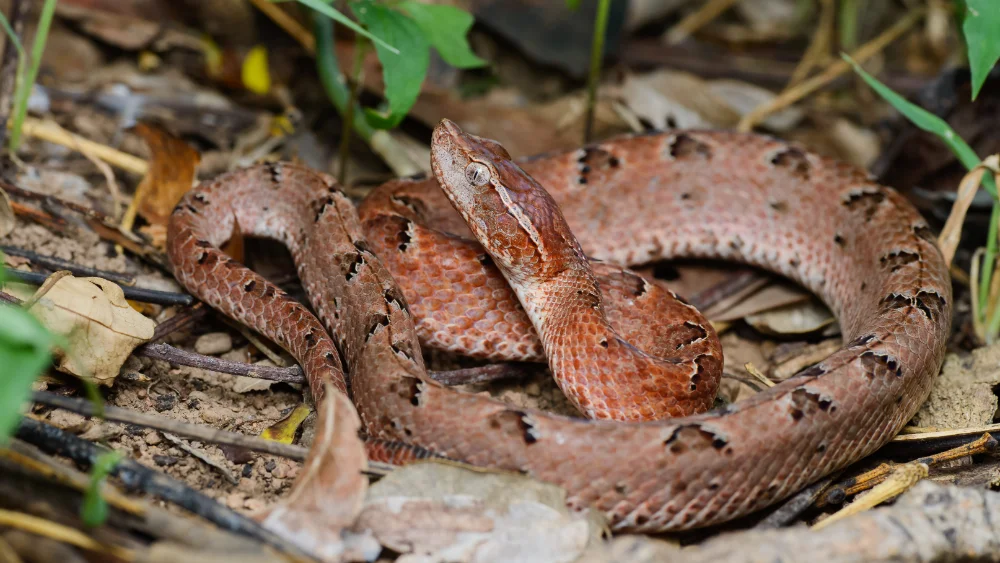
Malayan Pit Viper
A short, bad tempered viper that lies still on the forest floor and bites more people in the region than almost any other snake. Where: Leaf litter on forest floors. Best: May-Oct, night.
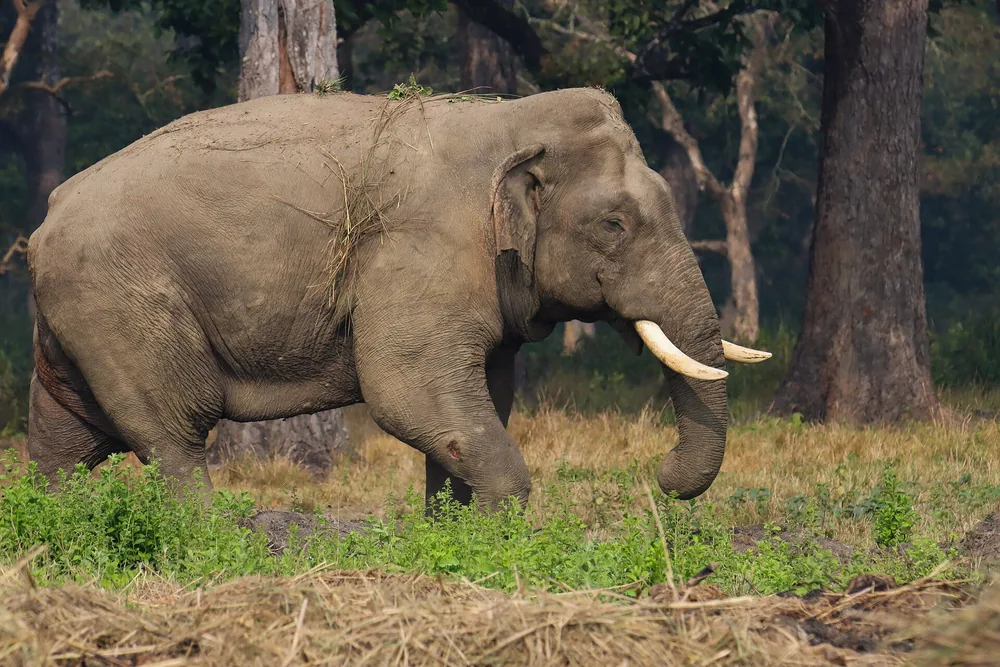
Asian Elephant
The largest land animal in Asia, and a genuinely wild one is worth seeking out over the camp elephants most tourists meet. Where: Km 30 grasslands, the Nong Pak Chi salt lick and roadside verges at dusk. Best: Nov-Feb, last hour of light, then Mar-Apr at the salt licks.
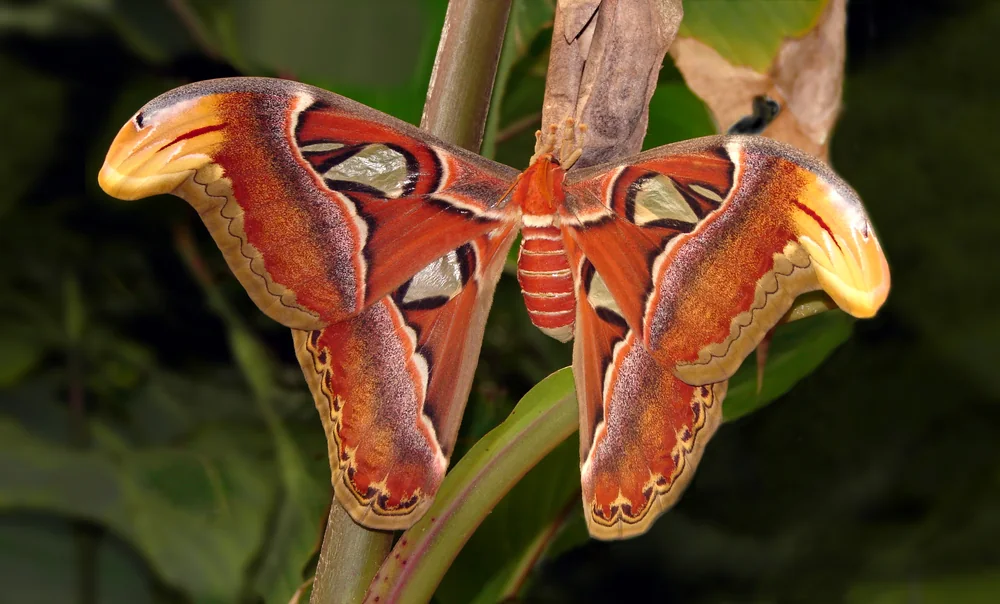
Atlas Moth
One of the largest moths on Earth, its wingtips shaped and coloured like a cobra's head. Where: Lit walls and toilet blocks at park headquarters on Doi Inthanon and Doi Suthep. Best: May-Oct, after warm wet nights.
Khao Yai
The best introduction to Thai forest walking and the closest to Bangkok. Marked trails through evergreen forest, salt licks with watchtowers, gibbons that call within earshot of the campsite, and enough infrastructure that you can walk safely without a guide on the shorter routes.
12 of 79 recorded species
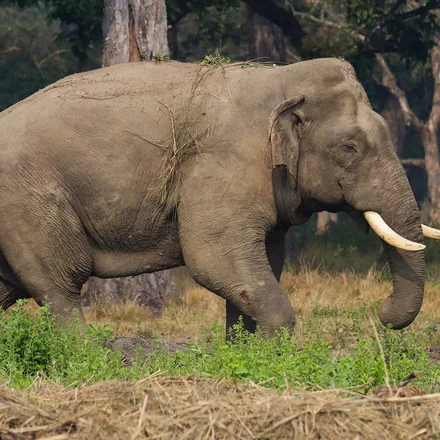
Asian Elephant Regular Endangered
Elephas maximus
The largest land animal in Asia, and a genuinely wild one is worth seeking out over the camp elephants most tourists meet.
Where: Km 30 grasslands, the Nong Pak Chi salt lick and roadside verges at dusk. Best: Nov-Feb, last hour of light, then Mar-Apr at the salt licks. Khao Yai's herds cross the park road at night; drive slowly and never get between animals.
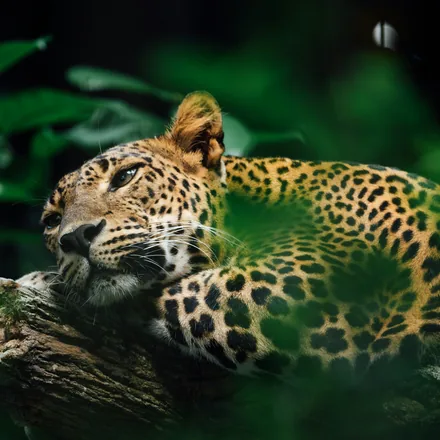
Leopard (incl. Black Panther) Rare Vulnerable
Panthera pardus
A big cat that is unusually often born jet black, prowling as the fabled black panther.
Where: Forest roads at night and the Khao Khiao road. Best: Nov-Apr, night, best Feb-Apr when the undergrowth is thin. Khao Yai holds one of the last Thai populations; camera-trap country rather than roadside viewing.
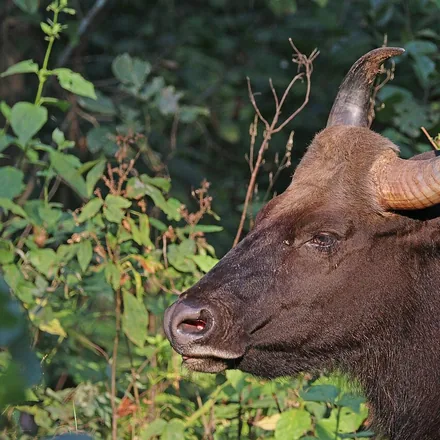
Gaur Regular Vulnerable
Bos gaurus
The largest wild cattle on Earth, a muscle bound giant that dwarfs any farm cow.
Where: Nong Pak Chi watchtower and the grassland edges. Best: Nov-Apr, dawn and dusk, best Feb-Apr when the grass is short. The watchtower is the reliable spot; go at first light and wait.
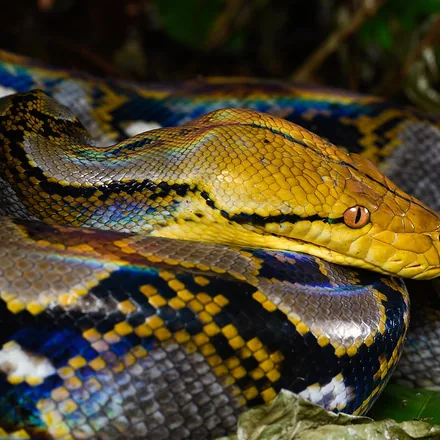
Reticulated Python Occasional
Malayopython reticulatus
The longest snake in the world, a jewelled, net patterned constrictor that turns up from rainforest to city canals.
Where: Near water and on roads at night. Best: Year round, night.
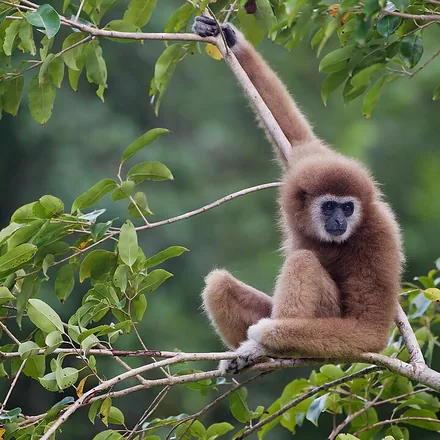
White-handed (Lar) Gibbon Common Endangered
Hylobates lar
You hear them before dawn even breaks, the whooping duet of gibbons that is the definitive soundtrack of Asian rainforest.
Where: Trail 6 and the forest around Haew Suwat. Best: Year round, 06:00-08:30. The dawn chorus carries across the whole valley; Khao Yai is the easiest place in Thailand to hear it.
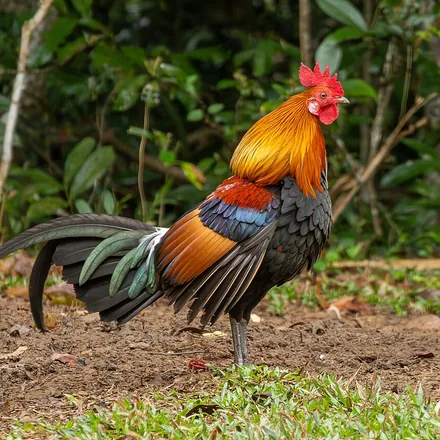
Red Junglefowl Common
Gallus gallus
The wild ancestor of every chicken on Earth, a wary, glossy rooster of the forest edge.
Where: Forest edges and campsite margins. Best: Year round, day.
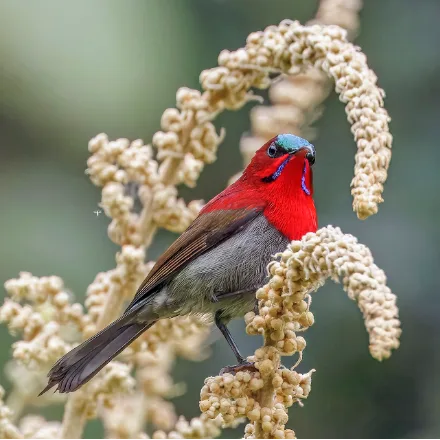
Crimson Sunbird Regular
Aethopyga siparaja
A living ember of a bird, the male ablaze in scarlet and metallic green as it hovers at forest blossoms.
Where: Flowering shrubs at the visitor centre. Best: Year round, morning.
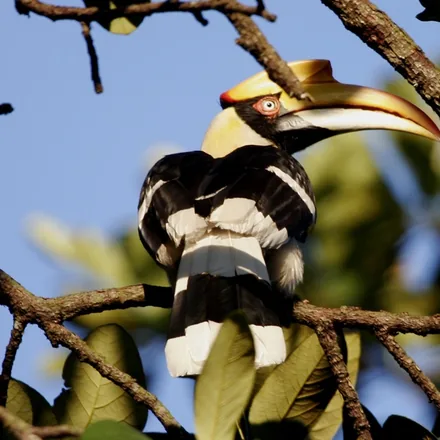
Great Hornbill Regular Vulnerable
Buceros bicornis
A three metre wingbeat you hear before you see, the flagship bird of Asian rainforest canopy.
Where: Fruiting figs along Trail 6 and over the Haew Suwat valley. Best: Year round, 06:30-09:00.
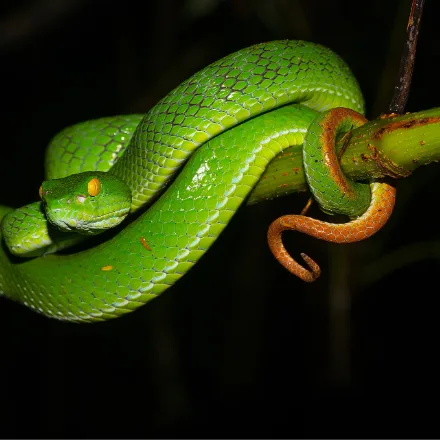
Large-eyed Pit Viper Regular
Trimeresurus macrops
Vivid green with enormous copper eyes, and it hunts entirely by heat, so darkness makes no difference to it.
Where: Low branches beside trails. Best: May-Oct, night.
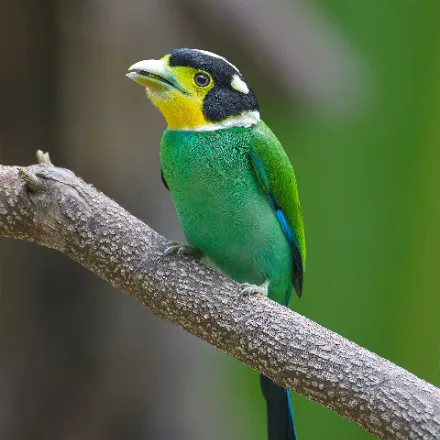
Long-tailed Broadbill Regular
Psarisomus dalhousiae
A cartoonish beauty in parrot green with a black cap, blue crown patch and a long blue tail.
Where: Mid-storey along the main road and Trail 6. Best: Year round, morning.
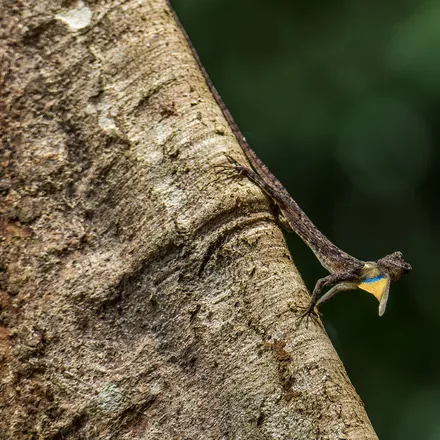
Common Flying Dragon Occasional
Draco maculatus
A tiny lizard that unfurls bright wings from its ribs and glides between tree trunks like a paper dart.
Where: Trunks in sunlit clearings. Best: Year round, mid-morning.
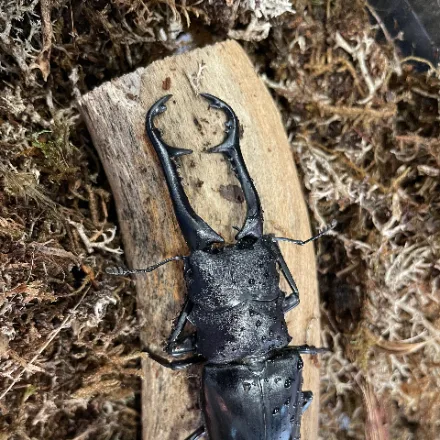
Giraffe Stag Beetle Occasional
Prosopocoilus giraffa
The longest stag beetle in the world, with jaws nearly as long as the rest of it, used to lever rivals off a tree.
Where: Lights at the campsites and visitor centre. Best: Apr-Aug, night.
See all 79 species recorded at Khao Yai
Khao Sok
The oldest rainforest in the country on limestone karst, wetter and more tropical than anywhere further north. Trails from the park headquarters follow the river into proper closed canopy, and the lake trips reach forest almost nobody walks.
12 of 54 recorded species
Asian Elephant Rare Endangered
Elephas maximus
The largest land animal in Asia, and a genuinely wild one is worth seeking out over the camp elephants most tourists meet.
Where: The Klong Saeng arm of Cheow Lan Lake and remote valleys. Best: Dry season (Dec-Apr), dawn on the water. Wild herds use the lake shore; the elephants most visitors meet in Khao Sok town are captive.
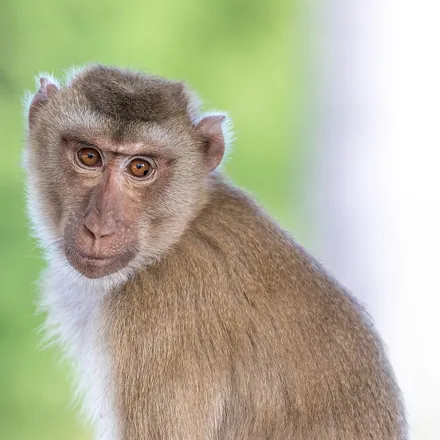
Long-tailed Macaque Regular Endangered
Macaca fascicularis
The bold, water-loving monkey of temples and mangroves, and despite its ubiquity now one of the most heavily exploited primates on Earth.
Where: Lake shores and the boat landings on Cheow Lan. Best: Year round, day. Common around the raft houses, where they are a nuisance rather than a highlight.
Reticulated Python Occasional
Malayopython reticulatus
The longest snake in the world, a jewelled, net patterned constrictor that turns up from rainforest to city canals.
Where: Near water, on trails and around the raft houses at night. Best: Year round, night. Large individuals swim the lake and are sometimes seen from boats.
White-handed (Lar) Gibbon Common Endangered
Hylobates lar
You hear them before dawn even breaks, the whooping duet of gibbons that is the definitive soundtrack of Asian rainforest.
Where: Heard from the raft houses on Cheow Lan Lake and along the Sok River trails at first light. Best: Year round, 05:30-08:00. The dawn duet is close to guaranteed on the lake; seeing one takes patience and a canopy scan.
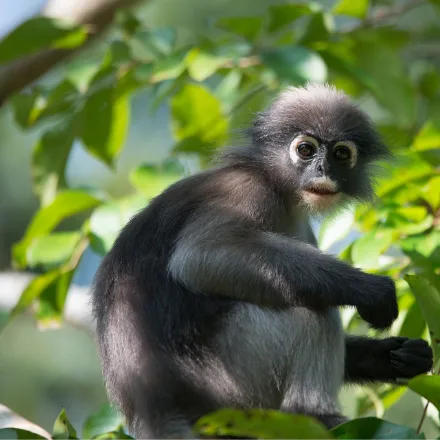
Dusky Langur (Spectacled Leaf Monkey) Regular Endangered
Trachypithecus obscurus
White spectacles make the adults look permanently startled, and the bright orange babies are pure crowd pleasers.
Where: Limestone edges near headquarters and the trail to Bang Hua Raet. Best: Year round, morning. Look for the white eye rings in mid-canopy; troops are used to walkers here.
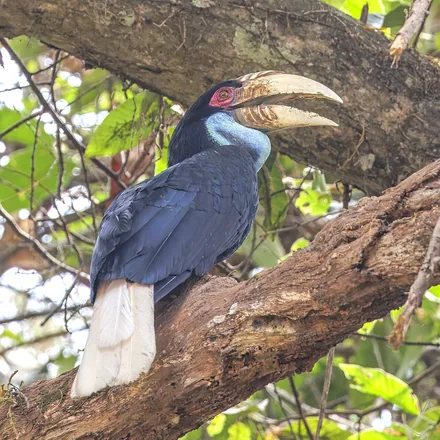
Wreathed Hornbill Regular Vulnerable
Rhyticeros undulatus
A big forest hornbill that travels in noisy flocks, its throat pouch pleated like folded cloth.
Where: Fruiting trees on the valley sides and over the lake. Best: Year round, morning. Travels in noisy flocks, often crossing the lake in the first hour of light.
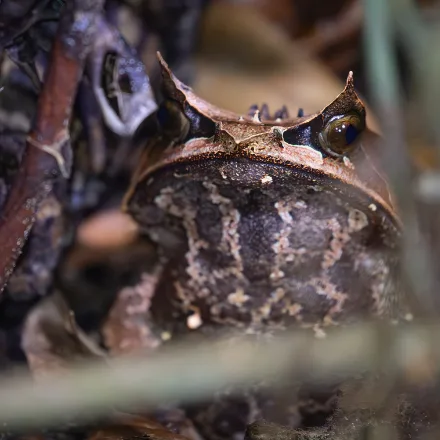
Malayan Horned Frog Occasional
Pelobatrachus nasutus
A frog that looks exactly like a dead leaf, complete with horned eyelids and a pointed snout for a leaf tip.
Where: Leaf litter beside streams. Best: May-Oct, night. Perfectly leaf-shaped; found by call, then by torch.
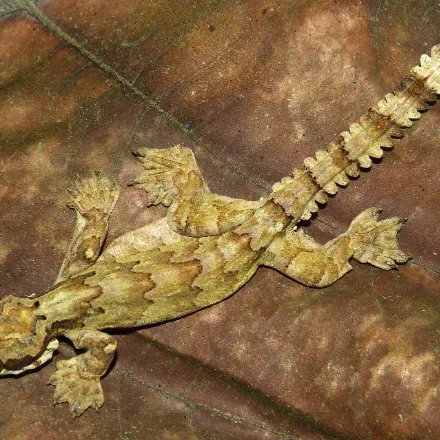
Kuhl's Flying Gecko Rare
Gekko kuhli
A gecko fringed with skin flaps that let it parachute between trees and vanish against bark.
Where: Trunks near headquarters and along the river trail. Best: Year round, night. Flattened against bark and near invisible until it moves.
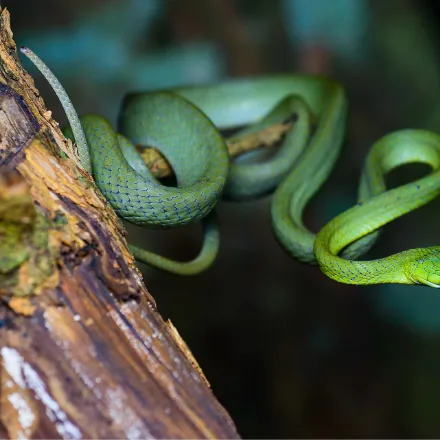
Green Cat Snake Occasional
Boiga cyanea
Hatches out brick red, turns olive as a juvenile and ends up emerald green, three colours in one lifetime.
Where: Low branches over trails and streams. Best: Year round, night. Slender and mildly venomous; harmless if left alone.
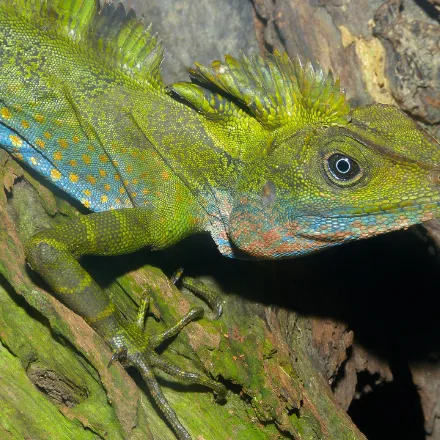
Giant Angle-headed Lizard Rare
Gonocephalus grandis
Males are electric blue and green with a sail of a crest, and they drop straight into the stream below when disturbed.
Where: Understorey saplings deep along the Ton Kloi trail. Best: Year round, day and night. Sits vertically on a thin stem and relies on stillness.
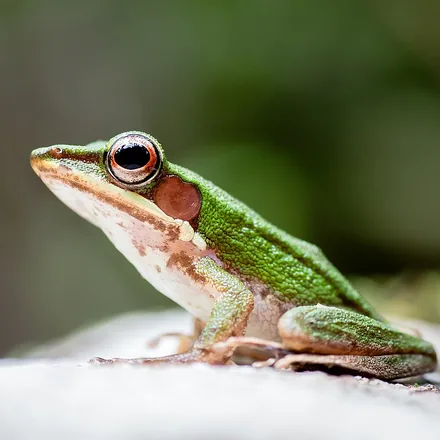
Copper-cheeked Frog Common
Chalcorana eschatia
Its eyes throw back a brilliant copper shine in torchlight, which is usually how you find it before you see the frog.
Where: Rocks and banks along the Sok River. Best: May-Oct, night. Sits on wet rock in the spray zone below waterfalls.
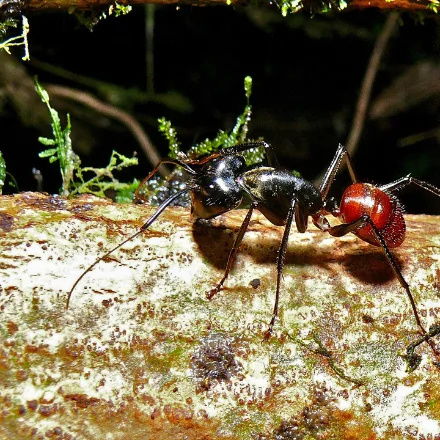
Giant Forest Ant Common
Camponotus gigas
One of the largest ants on earth, and colonies keep a standing army of soldiers whose only job is to fight border wars with the neighbours.
Where: Trunks and buttresses along all trails. Best: Year round, night. The largest ant you will ever see, and strictly nocturnal.
See all 54 species recorded at Khao Sok
Kaeng Krachan
The biggest park in Thailand and the most serious walking. The track climbs to the Panoen Thung ridge through several forest types, the stream hides produce more in two still hours than a day of covering ground, and this is leopard country.
12 of 81 recorded species
Leopard (incl. Black Panther) Occasional Vulnerable
Panthera pardus
A big cat that is unusually often born jet black, prowling as the fabled black panther.
Where: The Ban Krang to Panoen Thung road, especially the first and last light hours. Best: Dec-Apr, dawn, best Feb-Apr. Kaeng Krachan is the best place in Thailand to see a leopard, and black individuals are regular here.
Asian Elephant Regular Endangered
Elephas maximus
The largest land animal in Asia, and a genuinely wild one is worth seeking out over the camp elephants most tourists meet.
Where: The Ban Krang road, stream crossings and mineral seeps. Best: Dec-Apr, dusk and night, best Feb-Apr at the stream crossings. Herds use the road itself. If you meet one in a vehicle, reverse; never drive past.
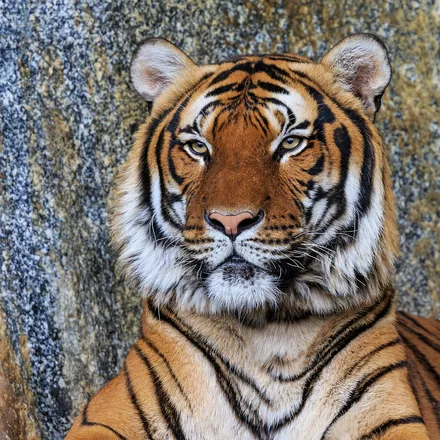
Indochinese Tiger Very rare Endangered
Panthera tigris
The largest cat in Asia and its top predator, a striped ghost most people only ever know from a paw print.
Where: The deep forest west of Panoen Thung, well beyond visitor access. Best: Nov-Apr, night and first light. Present but effectively unseeable. Camera traps confirm it; visitors do not.
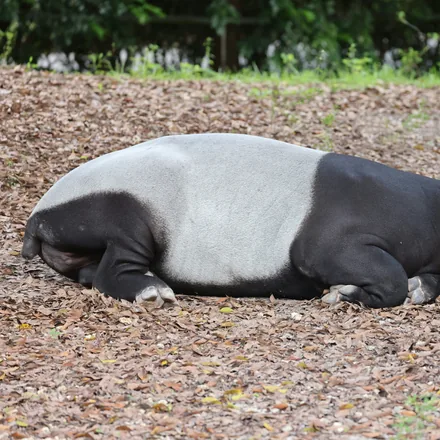
Malayan Tapir Rare Endangered
Tapirus indicus
A living oddity, half jet black and half stark white, that looks assembled from spare parts.
Where: Stream beds and mineral seeps near Ban Krang. Best: Dec-Apr, night, best Feb-Apr at the mineral seeps. Kaeng Krachan is the most realistic place in Thailand to see one, which still means a long night.
Great Hornbill Regular Vulnerable
Buceros bicornis
A three metre wingbeat you hear before you see, the flagship bird of Asian rainforest canopy.
Where: Fruiting figs along the Ban Krang road and over the valley from Panoen Thung. Best: Year round, 06:30-09:00. The view from Panoen Thung at dawn puts hornbills below eye level, above a sea of mist.
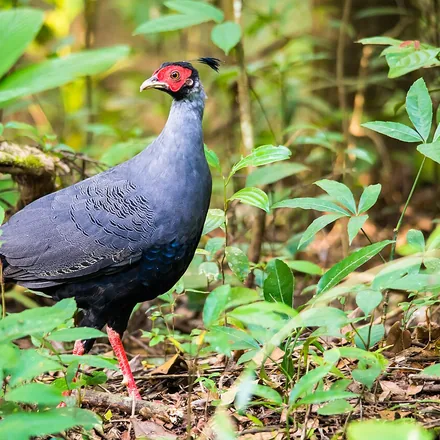
Siamese Fireback Regular
Lophura diardi
Thailand's national bird, a stately grey pheasant with a golden back patch and a bare crimson face.
Where: Roadside and trail edges at first light. Best: Year round, 06:00-08:00.
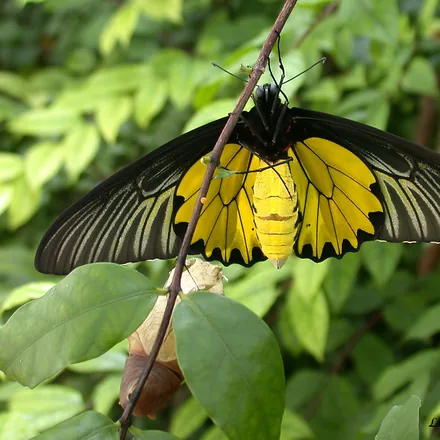
Golden Birdwing Regular
Troides aeacus
A huge butterfly with black forewings and blazing golden hindwings, sailing high along the forest edge.
Where: Damp ground and flowering edges along the road. Best: Feb-May, sunny mornings. Males gather at damp patches on the road in numbers.
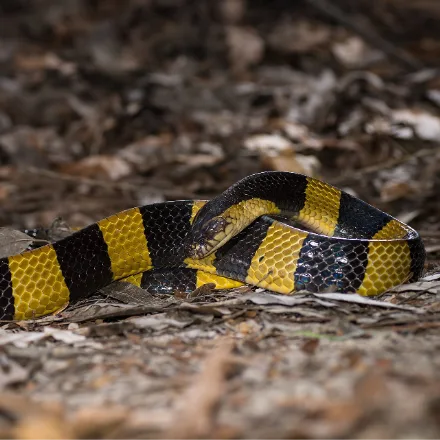
Banded Krait Occasional
Bungarus fasciatus
Unmistakable in bold black and yellow bands, a powerfully venomous snake that is oddly timid after dark.
Where: The road after rain. Best: May-Oct, night.
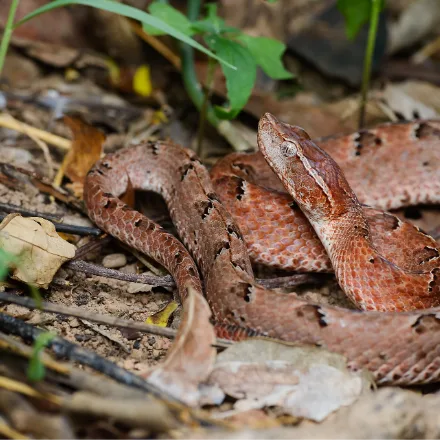
Malayan Pit Viper Occasional
Calloselasma rhodostoma
A short, bad tempered viper that lies still on the forest floor and bites more people in the region than almost any other snake.
Where: Leaf litter on the lower trails. Best: May-Oct, night.
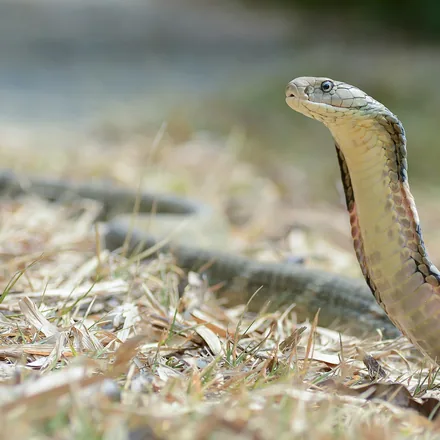
King Cobra Rare Vulnerable
Ophiophagus hannah
The world's longest venomous snake, and one of the shyest, so a sighting is a genuine holy grail.
Where: Stream valleys and the road in the warm months. Best: Mar-Jun, day.
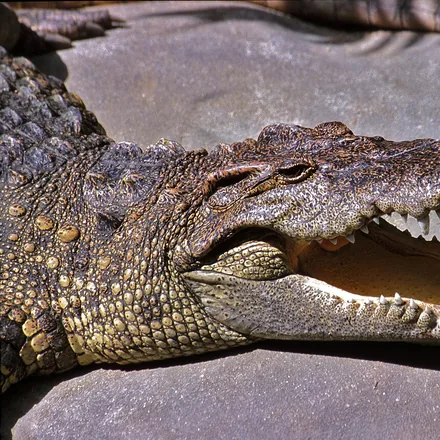
Siamese Crocodile Very rare Critically Endangered
Crocodylus siamensis
A freshwater crocodile once thought nearly extinct in the wild, now clinging on in a few remote Thai wetlands.
Where: Remote stretches of the Phetchaburi River. Best: Year round, mid-morning while basking. One of the last Thai populations, in water visitors do not reach.
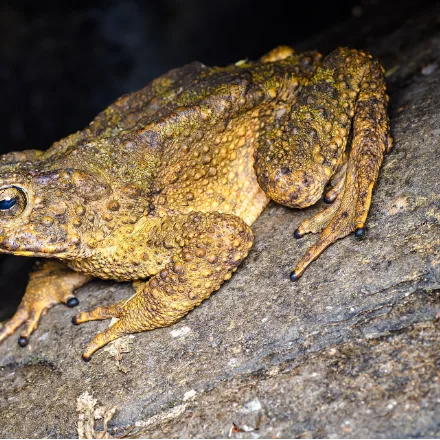
Malayan Giant Toad Occasional
Phrynoidis asper
The biggest toad in Southeast Asia, and it sits in the spray zone of waterfalls where nothing can hear it call.
Where: Stream margins near Ban Krang. Best: May-Oct, night.
See all 81 species recorded at Kaeng Krachan
The northern hills and Doi Inthanon
Cooler, drier, and completely different. Hill evergreen forest and a summit cloud forest with tree ferns and moss, walked comfortably in the cool season, with a montane species list that exists nowhere else in Thailand.
11 of 141 recorded species
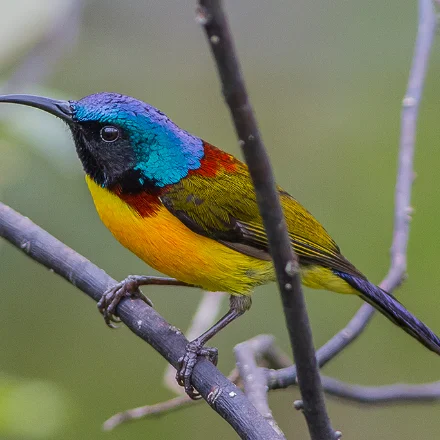
Green-tailed Sunbird Common
Aethopyga nipalensis
The bird of the summit, a metallic green and scarlet sunbird that feeds at rhododendrons in freezing mist at 2,500 m.
Where: Flowering shrubs along the Ang Ka summit boardwalk on Doi Inthanon. Best: Nov-Feb, first three hours after dawn. The bird of the summit. Habituated enough to feed a few metres away, and worth the cold start.
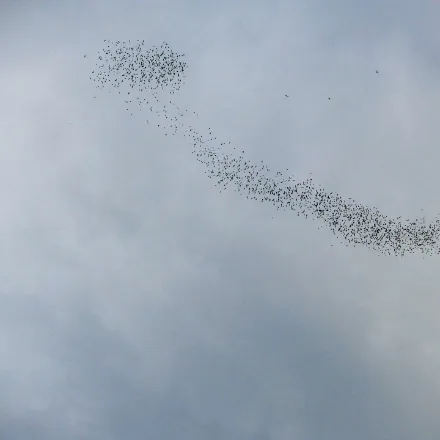
Wrinkle-lipped Free-tailed Bat Common
Chaerephon plicatus
The bat behind Thailand's great cave exodus, when millions stream out at dusk in a river of wings.
Where: Chiang Dao cave and the limestone caverns beneath the massif. Best: Year round, dusk. The evening exodus from Chiang Dao cave is worth planning an afternoon around.
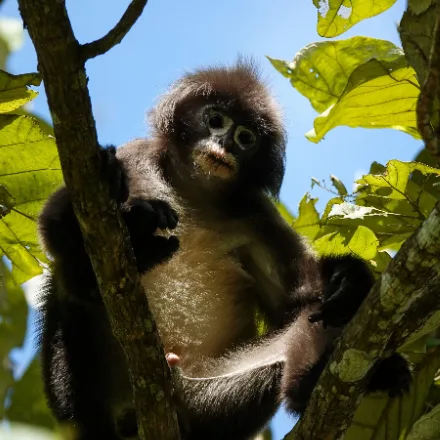
Phayre's Leaf Monkey Occasional Endangered
Trachypithecus phayrei
A grey langur with bold white spectacles around its eyes, a leaf specialist of the northern and western forests.
Where: Hill evergreen forest on Doi Chiang Dao and the upper Doi Inthanon slopes. Best: Year round, early morning. The northern langur. Look for the pale rings around the eyes and mouth in the canopy.
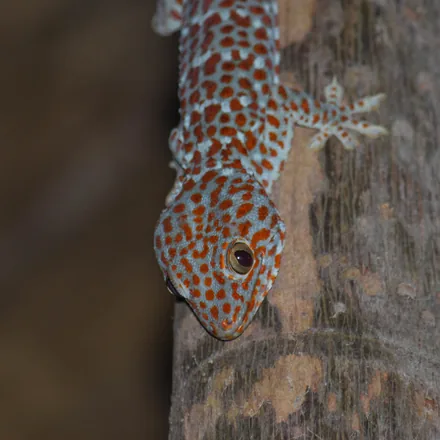
Tokay Gecko Common
Gekko gecko
A big, boldly spotted gecko whose loud TOH-kay call echoes through Thai nights and, by legend, brings luck if it calls seven times.
Where: Temple walls, guesthouses and forest edge across the province. Best: Year round, after dark. Heard before seen. The call is unmistakable once you know it.
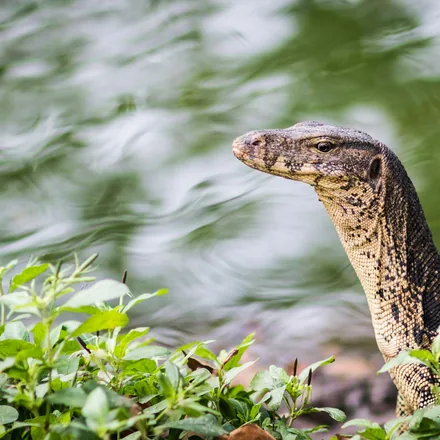
Asian Water Monitor Regular
Varanus salvator
A dragon sized lizard that swims canals and city parks, second only to the Komodo dragon in length.
Where: The Ping river, the city moat and the Mae Ngat shoreline. Best: Year round, day.
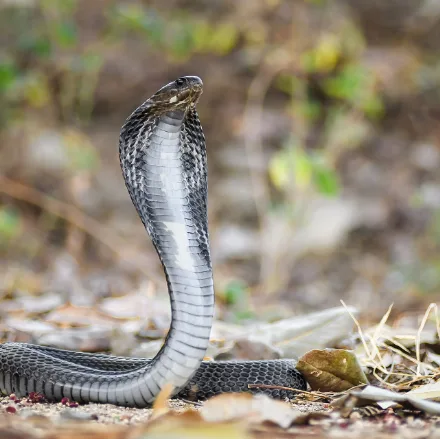
Indochinese Spitting Cobra Occasional Vulnerable
Naja siamensis
Sprays venom at the eyes from up to three metres, aiming with enough accuracy to hit a moving face.
Where: Farmland, plantations and village edges throughout the valley. Best: Year round, dusk. If sprayed, flush the eyes with clean fluid for fifteen minutes and get to hospital.
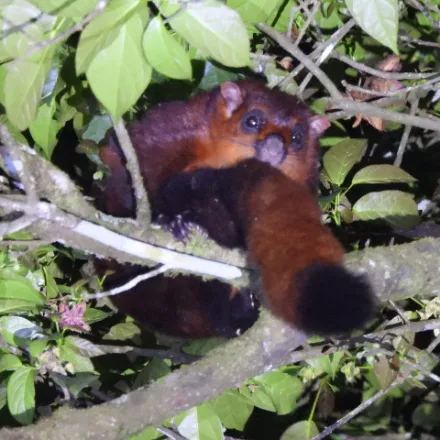
Red Giant Flying Squirrel Occasional
Petaurista petaurista
A cat-sized, deep-red squirrel that glides between trees on a membrane, sailing over a hundred metres in a single launch.
Where: Tall trees on the Doi Suthep summit road and around Doi Inthanon headquarters. Best: Year round, the first hour after dusk. Wait by a known emergence tree at dusk. The glide is the sight, not the animal.
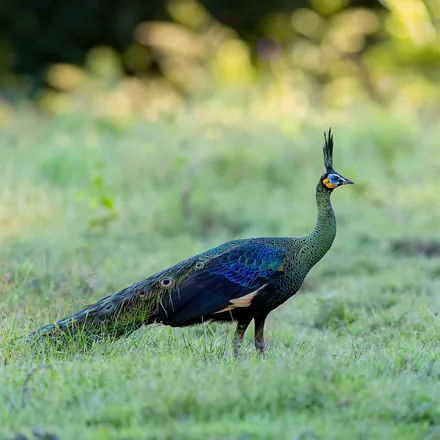
Green Peafowl Rare Endangered
Pavo muticus
The wild, and far rarer, cousin of the familiar peacock, with metallic green plumage and a towering train.
Where: Dry dipterocarp forest and river flats at Mae Ping National Park. Best: Nov-Apr, dawn, calling from roost trees. Mae Ping holds one of the few remaining wild Thai populations. The dawn call carries for miles.
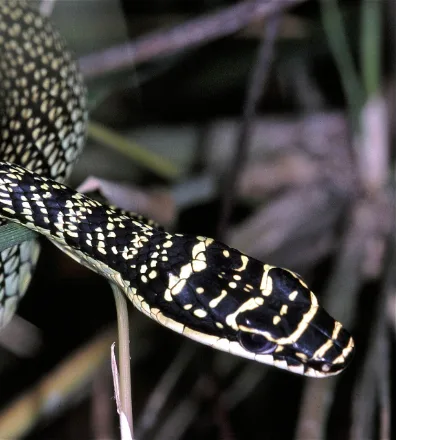
Golden Tree Snake Occasional
Chrysopelea ornata
A fast, elegant climber that can also glide, and one of the most common snakes seen in Thai gardens and temples.
Where: Walls, roofs and garden trees in the Mae Sa valley and the city fringe. Best: Year round, day. Often the first snake a visitor sees, racing up a wall in full sun.
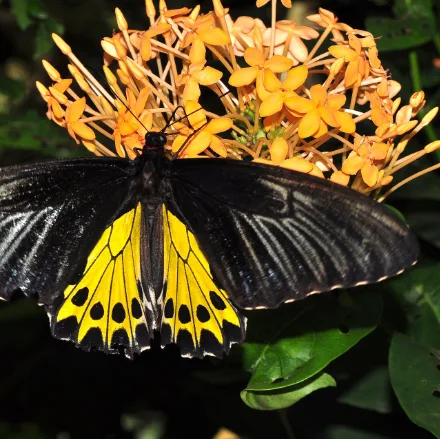
Common Birdwing Regular
Troides helena
A hand-sized black and gold butterfly that cruises the canopy like a small bird.
Where: Gardens and forest edge in the Mae Sa valley. Best: May-Oct, midday.
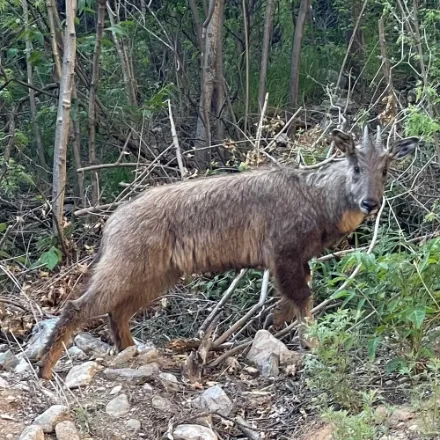
Chinese Goral Rare Vulnerable
Naemorhedus griseus
A small, nimble goat-antelope of northern mountain crags, blending grey against the rock it lives on.
Where: The limestone cliffs and ridges of Doi Chiang Dao, scoped from the Den Ya Khat trail. Best: Nov-Feb, first and last light. Doi Chiang Dao is the classic Thai site for this goat-antelope. Scan the crags rather than the forest.
See all 141 species recorded at The northern hills and Doi Inthanon
Huai Kha Khaeng
A UNESCO World Heritage sanctuary and the most important protected forest in the country, with the core zone closed. What is open is quiet dry forest with large prey animals and almost no other visitors, which is a rare combination.
9 of 27 recorded species
Indochinese Tiger Very rare Endangered
Panthera tigris
The largest cat in Asia and its top predator, a striped ghost most people only ever know from a paw print.
Where: The core zone, closed to general visitors. Best: Nov-Apr, dawn and dusk. The most important tiger population in Southeast Asia, and deliberately unreachable. Access is by permit and research programme only.
Gaur Occasional Vulnerable
Bos gaurus
The largest wild cattle on Earth, a muscle bound giant that dwarfs any farm cow.
Where: Grassland edges and salt licks. Best: Nov-Apr, dawn, best Feb-Apr.
Green Peafowl Occasional Endangered
Pavo muticus
The wild, and far rarer, cousin of the familiar peacock, with metallic green plumage and a towering train.
Where: Riverine grassland and dry forest clearings. Best: Dec-Apr, dawn, listen for the call. One of the last strongholds in Thailand.
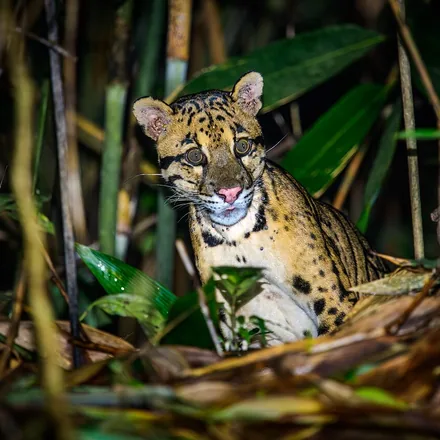
Clouded Leopard Rare Vulnerable
Neofelis nebulosa
Perhaps the most beautiful cat you will almost certainly never see, cloud blotched, tree climbing and maddeningly elusive.
Where: Deep forest in the core zone. Best: Nov-Apr, night, best Feb-Apr.
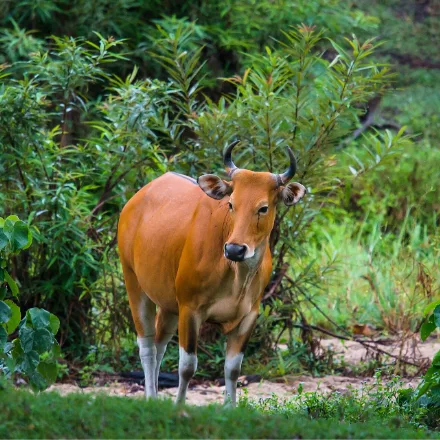
Banteng Rare Endangered
Bos javanicus
A sleek wild ox with a white rump patch and white stockings, far rarer and more elegant than the domestic cattle it resembles.
Where: Grassland and dry dipterocarp forest. Best: Nov-Apr, dusk, best Feb-Apr at the salt licks. Huai Kha Khaeng holds Thailand's most significant banteng population.
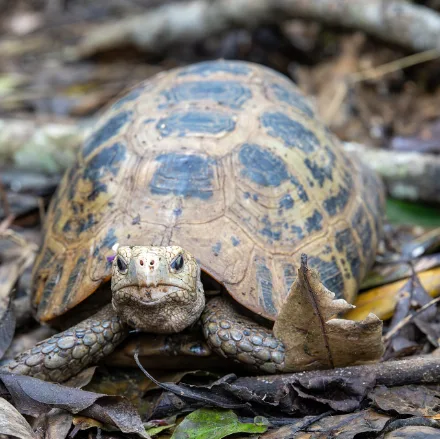
Elongated Tortoise Rare Critically Endangered
Indotestudo elongata
A forest tortoise whose pale head flushes pink around the eyes and nose in the breeding season.
Where: Dry forest floor after rain. Best: May-Oct.
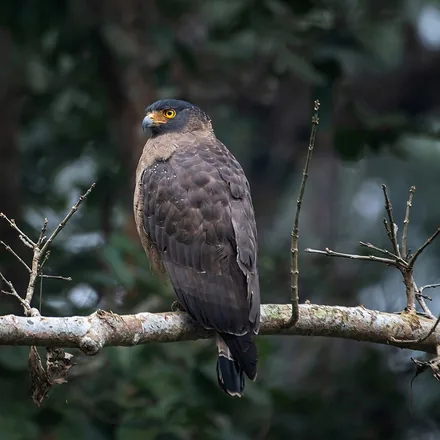
Crested Serpent Eagle Common
Spilornis cheela
A snake-hunting eagle that circles the forest on broad wings, calling with a far-carrying, wailing whistle.
Where: Perched over open forest. Best: Year round, day.
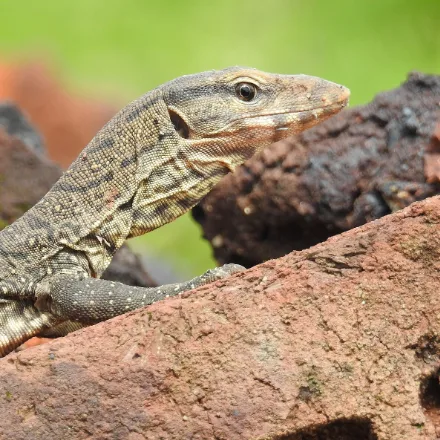
Bengal Monitor Occasional
Varanus bengalensis
A dry-country monitor that climbs well, digs constantly and eats essentially anything smaller than itself.
Where: Dry forest floor and termite mounds. Best: Year round, warm hours.
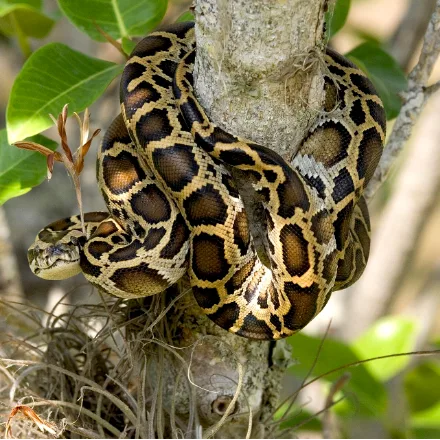
Burmese Python Occasional Vulnerable
Python bivittatus
One of the largest snakes on Earth, a giant constrictor that can swallow prey the size of a deer.
Where: Grassland margins and waterholes. Best: Nov-Apr, day.
See all 27 species recorded at Huai Kha Khaeng
Krabi and the southern limestone
Short walks rather than expeditions, on boardwalks through mangrove and up onto limestone. Low effort and high return: langurs on the cliffs, mudskippers and fiddler crabs under the boards, and pittas for anyone who comes in the right months.
9 of 25 recorded species
Long-tailed Macaque Common Endangered
Macaca fascicularis
The bold, water-loving monkey of temples and mangroves, and despite its ubiquity now one of the most heavily exploited primates on Earth.
Where: Railay, the cave temples and the Ao Nang headlands. Best: Year round, day. Bold around visitors. Keep bags closed and never feed them.
Wrinkle-lipped Free-tailed Bat Regular
Chaerephon plicatus
The bat behind Thailand's great cave exodus, when millions stream out at dusk in a river of wings.
Where: Limestone caves at Khao Kanab Nam and Than Bok Khorani. Best: Year round, dusk.
Asian Water Monitor Common
Varanus salvator
A dragon sized lizard that swims canals and city parks, second only to the Komodo dragon in length.
Where: Mangrove creeks, town canals and the riverside walkway. Best: Year round, day.
Dusky Langur (Spectacled Leaf Monkey) Common Endangered
Trachypithecus obscurus
White spectacles make the adults look permanently startled, and the bright orange babies are pure crowd pleasers.
Where: The limestone cliffs and forest edge at Railay and around Ao Nang. Best: Year round, early morning and late afternoon. Railay is the easiest place in Thailand to watch this monkey, often at eye level from the beach path.
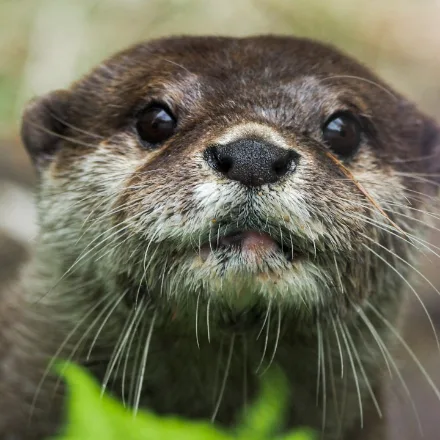
Asian Small-clawed Otter Rare Vulnerable
Aonyx cinereus
The smallest otter in the world, a sociable, hand-using charmer that feels for prey with nimble fingers.
Where: Quiet freshwater and mangrove creeks inland of Ao Luek. Best: Year round, early morning.
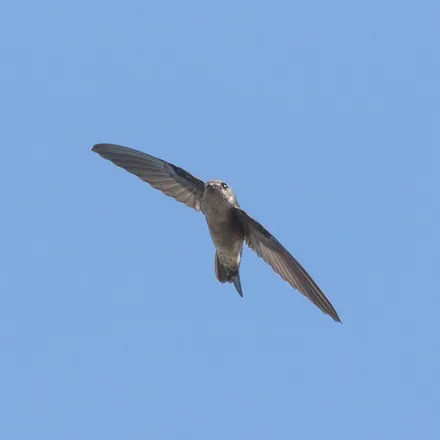
Germain's Swiftlet Common
Aerodramus germani
The little cave swift whose nest of pure saliva is harvested from sheer sea caves for bird's nest soup.
Where: Sea caves and the karst towers at the river mouth. Best: Year round, day.
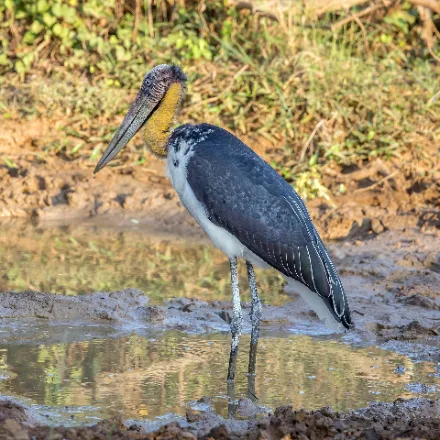
Lesser Adjutant Rare Vulnerable
Leptoptilos javanicus
A towering, bare-headed stork that stalks the wetlands with a soldier's stiff gait, part hunter and part undertaker.
Where: Mangrove edges and open flats near the estuary. Best: Nov-Mar.
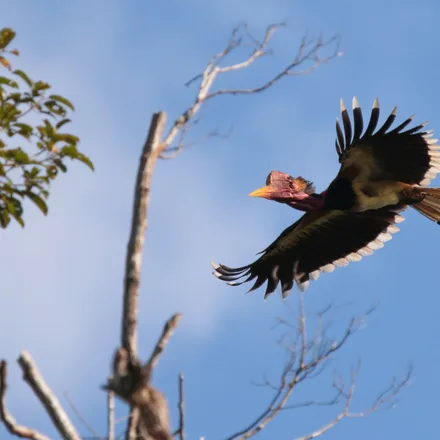
Helmeted Hornbill Very rare Critically Endangered
Rhinoplax vigil
A hornbill with a solid ivory casque, hunted to the brink for carving, whose call sounds like maniacal laughter.
Where: Tall lowland forest at Khao Nor Chuchi. Best: Year round, listen for the accelerating call. Poached almost to nothing for its solid casque. Hearing one is more likely than seeing one.
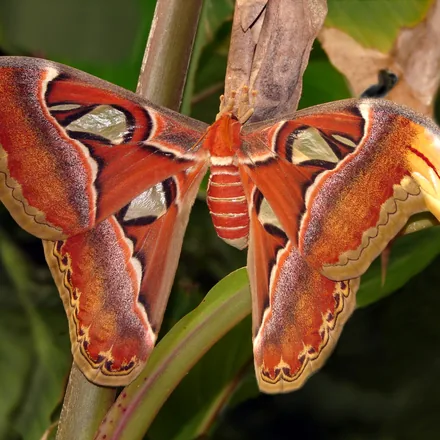
Atlas Moth Occasional
Attacus atlas
One of the largest moths on Earth, its wingtips shaped and coloured like a cobra's head.
Where: Lights at forest-edge accommodation. Best: Mar-Jun and Sep-Nov, night.
See all 25 species recorded at Krabi and the southern limestone
Planning and responsible watching
Start at first light and accept that the forest goes quiet by mid morning; a 06:00 start and a 10:00 finish will beat a full day begun at nine. Wear leech socks between June and October in the southern and western forests, because Khao Sok and Kaeng Krachan both have them in numbers and they are harmless but relentless. Take more water than seems reasonable and a head torch even on a day walk, since dusk in closed canopy arrives faster than you expect. Walk slowly and stop often: standing still for five minutes beside a fruiting tree produces more than another kilometre of trail, and almost every good sighting on a Thai trek comes to someone who was not moving. Use a park guide where one is required and consider one where it is not, because a guide who works a trail daily knows which stretch the gibbons have been using this week. And keep a proper distance from elephants: they are common on the Khao Yai roads and in Kui Buri, they are wild, and a vehicle between you and the animal is not optional.
Find guided treks and park lodges at Khao Yai, Khao Sok and Kaeng Krachan
Some links on this page are affiliate links. If you book through them, Wildseer may earn a small commission at no extra cost to you.
Frequently asked questions
Where is the best jungle trekking in Thailand for wildlife?
Khao Yai for the easiest introduction and reliable gibbons and hornbills within three hours of Bangkok, Khao Sok for the oldest and wettest rainforest, and Kaeng Krachan for the most serious walking and the widest species list. Chiang Mai and Doi Inthanon for a completely different montane forest.
Will I see big animals on a jungle trek in Thailand?
Rarely, and it is worth knowing before you book. Walking is a poor way to see large mammals because you make noise and cover ground they have already left. What treks deliver is gibbons, hornbills, snakes, frogs and invertebrates, which a vehicle passes without seeing.
When is the best time for jungle trekking in Thailand?
November to February is the most comfortable across the country: drier trails, lower humidity and fewer leeches. June to October is wetter and harder walking but far better for amphibians, insects and reptiles, and the forest is at its most alive.
Are there leeches in Thai jungles?
Yes, particularly in Khao Sok and Kaeng Krachan between June and October. They are harmless and they are persistent. Leech socks solve the problem entirely and cost very little.
Do I need a guide for trekking in Thai national parks?
Some trails require one and most do not. It is still usually worth it: a guide working the same trail daily knows what has been where this week, which is the whole difference between a walk and a wildlife walk.
Is it safe to trek in Thailand with wild elephants around?
Elephants are present at Khao Yai, Kui Buri, Kaeng Krachan and Khao Sok and they are genuinely dangerous at close range. Keep a large distance, never approach or block a route, follow ranger instruction, and treat a vehicle as your safe position rather than an inconvenience.
Explore Thailand wildlife by group
Explore Thailand wildlife by place
Part of the Wildlife in Thailand guide.
Image credits
image credits
- Limestone karst rising over rainforest at Khao Sok: Vyacheslav Argenberg | CC BY 4.0
- white-handed-gibbon: JJ Harrison ( jjharrison89@facebook.com ) | CC BY 3.0
- Great hornbill: Lip Kee | CC BY-SA 2.0
- Malayan Pit Viper: Rushen | CC BY-SA 2.0
- Asian elephant: Shadow Ayush | CC BY-SA 4.0
- Atlas moth: © Nevit Dilmen | CC BY-SA 3.0
- Asian Elephant: Shadow Ayush | CC BY-SA 4.0
- Leopard: chuttersnap | Unsplash License
- Gaur: Charles J. Sharp | CC BY-SA 4.0
- Reticulated Python: Rushenb | CC BY-SA 2.0
- White-handed Gibbon: JJ Harrison | CC BY 3.0
- Red Junglefowl: dhfischer | CC BY 4.0
- Crimson Sunbird: Charles J. Sharp | CC BY-SA 4.0
- Great Hornbill: Lip Kee | CC BY-SA 2.0
- Large-eyed Pit Viper: Rushenb | CC BY-SA 4.0
- Long-tailed Broadbill: JJ Harrison ( ) | CC BY-SA 3.0
- Common Flying Dragon: Wich'yanan L | CC BY 4.0
- Giraffe Stag Beetle: Fungus Guy | CC BY-SA 4.0
- Long-tailed Macaque: Basile Morin | CC BY-SA 4.0
- Dusky Langur: Rushenb | CC BY-SA 3.0
- Wreathed Hornbill: Charles J. Sharp | CC BY-SA 4.0
- Malayan Horned Frog: Caroline Jones | CC BY 2.0
- Kuhl’s Flying Gecko: Bernard DUPONT from FRANCE | CC BY-SA 2.0
- Green Cat Snake: Rushen | CC BY-SA 2.0
- Giant Angle-headed Lizard: Bernard DUPONT from FRANCE | CC BY-SA 2.0
- Copper-cheeked Frog: Rushen | CC BY-SA 2.0
- Giant Forest Ant: Bernard DUPONT | CC BY-SA 2.0
- Indochinese Tiger: A.Savin | Free Art License 1.3
- Malayan Tapir: David Valentine | Unsplash License
- Siamese Fireback: Rushenb | CC BY-SA 4.0
- Golden Birdwing: Len Worthington | CC BY-SA 2.0
- Banded Krait: Rushen | CC BY-SA 2.0
- Malayan Pit Viper: Rushen | CC BY-SA 2.0
- King Cobra: Rushenb | CC BY-SA 4.0
- Siamese Crocodile: Bernard DUPONT | CC BY-SA 2.0
- Malayan Giant Toad: Rushen | CC BY-SA 2.0
- Green-tailed Sunbird: Dibyendu Ash | CC BY-SA 3.0
- Wrinkle-lipped Free-tailed Bat: Bernard DUPONT from FRANCE | CC BY-SA 2.0
- Phayre’s Leaf Monkey: Rejoice Gassah | CC BY 4.0
- Tokay Gecko: Gerard Chartier | CC BY 4.0
- Asian Water Monitor: John Thomas | Unsplash License
- Indochinese Spitting Cobra: Rushen | CC BY-SA 2.0
- Red Giant Flying Squirrel: Muhammad Al Fatih | CC BY 4.0
- Green Peafowl: JJ Harrison | CC BY-SA 3.0
- Golden Tree Snake: Bernard DUPONT from FRANCE | CC BY-SA 2.0
- Common Birdwing: Pavel Kirillov from St.Petersburg, Russia | CC BY-SA 2.0
- Chinese Goral: Jane Charlen | CC BY 4.0
- Clouded Leopard: Rushenb | CC BY-SA 4.0
- Banteng: Rushen | CC BY-SA 2.0
- Elongated Tortoise: Superbass | CC BY-SA 4.0
- Crested Serpent Eagle: Mildeep | CC BY-SA 4.0
- Bengal Monitor: Dr. Raju Kasambe | CC BY-SA 4.0
- Burmese Python: Everglades National Park, R. Cammauf | Public domain
- Asian Small-clawed Otter: Mike Prince | CC BY 2.0
- Germain’s Swiftlet: Wich'yanan L | CC BY 4.0
- Lesser Adjutant: Charles J. Sharp | CC BY-SA 4.0
- Helmeted Hornbill: Ian Dugdale | CC BY 4.0
- Atlas Moth: Nevit Dilmen | CC BY-SA 3.0