
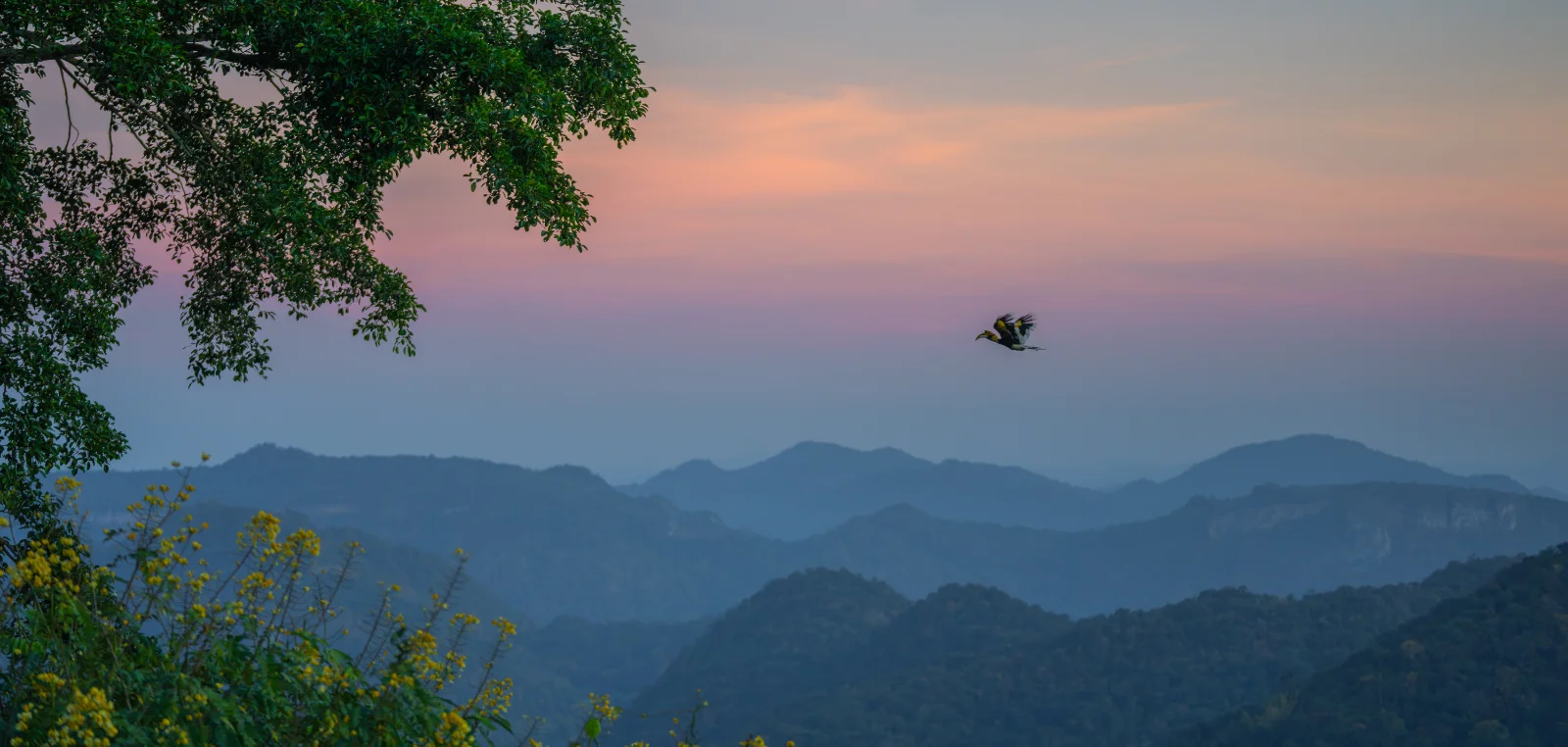
Thailand records over a thousand bird species in a country roughly the size of France, and the reason is vertical as much as horizontal. The far north reaches Himalayan cloud forest at 2,565 metres, the far south is Sundaic rainforest that belongs to Malaysia, and between them sit the Gulf mudflats where a large share of the world’s spoon-billed sandpipers spend the winter. Very few countries let you work through that much habitat on that little driving.
This page is organised by site rather than by family, and every bird listed under a site is recorded there in the guide with the month it is most likely and an honest read on your chances. What it will not do is give you a trip list of everything possible. It tells you what each place actually produces, which is the more useful thing when you are choosing between them.
Highlights
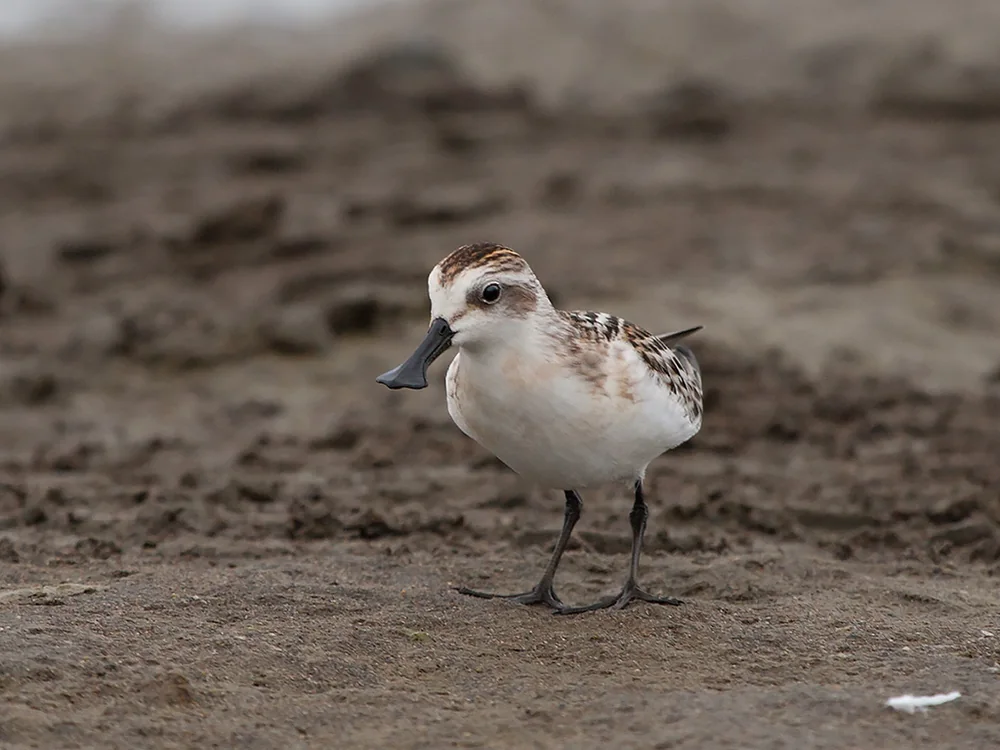
Spoon-billed Sandpiper
One of the world's rarest and most charismatic shorebirds, tiny and armed with an unmistakable spatula bill. Where: The saltpans and mudflats at Pak Thale and Laem Phak Bia. Best: Nov-Mar, on a rising tide as the flats shrink.
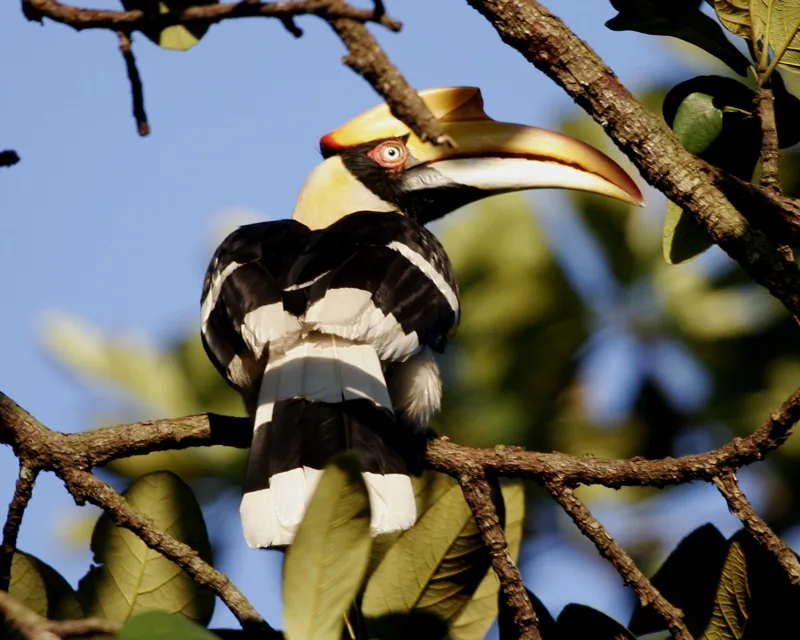
Great Hornbill
A three metre wingbeat you hear before you see, the flagship bird of Asian rainforest canopy. Where: Fruiting figs along the Ban Krang road and over the valley from Panoen Thung. Best: Year round, 06:30-09:00.
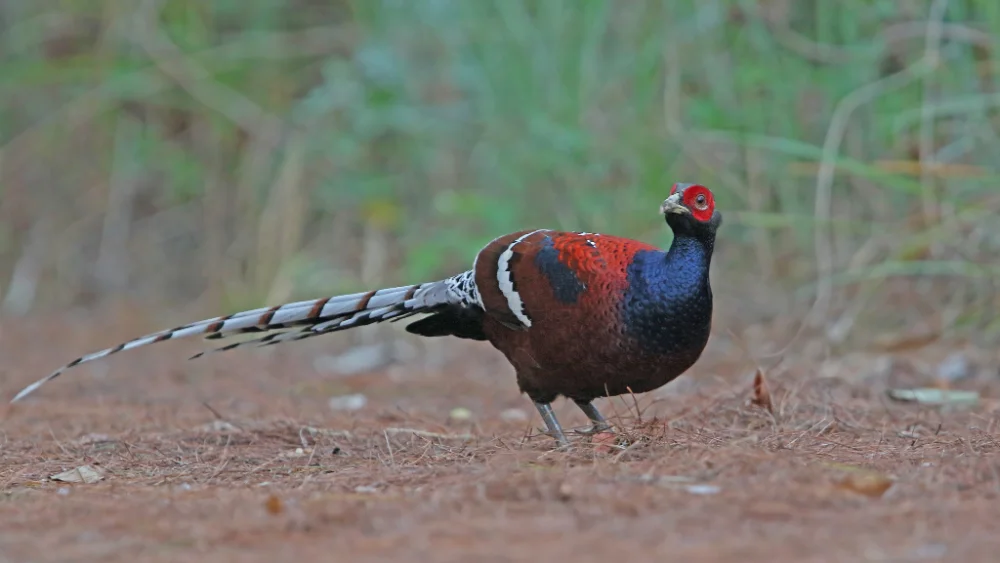
Mrs Hume's Pheasant
A long-tailed mountain pheasant so scarce in Thailand that most birders who look for it go home without one. Where: Quiet forest tracks on the higher Chiang Dao and Doi Inthanon slopes. Best: Nov-Mar, dawn.
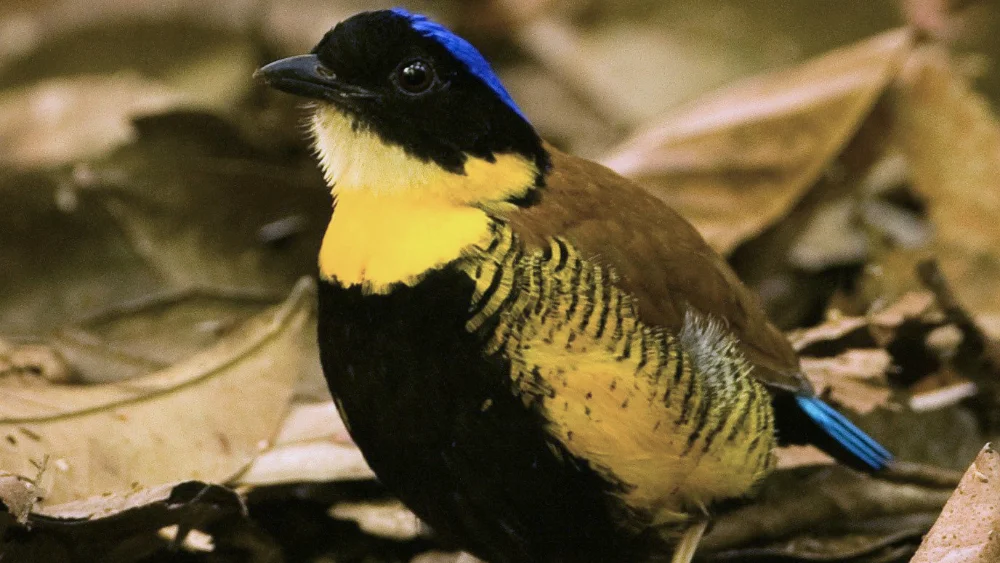
Gurney's Pitta
A gorgeous blue-crowned pitta once thought extinct, rediscovered in Thailand and now teetering on the very edge. Where: Lowland forest at Khao Nor Chuchi. Best: Historically Mar-Jun, at dawn.
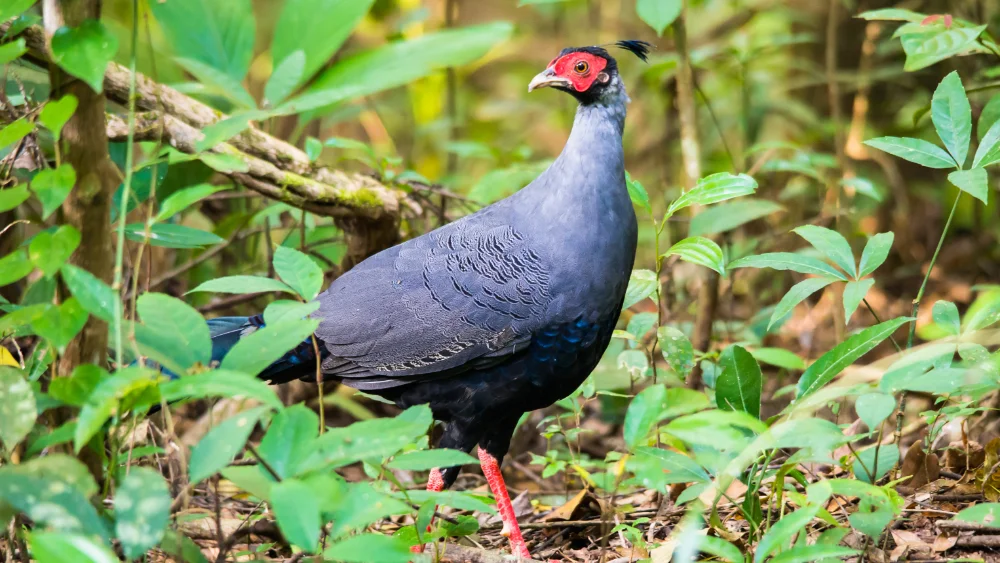
Siamese Fireback
Thailand's national bird, a stately grey pheasant with a golden back patch and a bare crimson face. Where: Roadside and trail edges at first light. Best: Year round, 06:00-08:00.
Kaeng Krachan
The biggest national park in the country and the best all round birding site in it. The road climbs from lowland forest to the Panoen Thung ridge, which means hornbills and broadbills low down and montane species at the top, all on one track. Famous for its stream hides.
12 of 30 recorded species
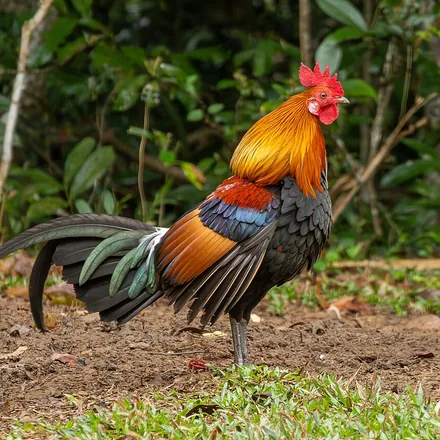
Red Junglefowl Common
Gallus gallus
The wild ancestor of every chicken on Earth, a wary, glossy rooster of the forest edge.
Where: Forest edges and campsite margins. Best: Year round, day.
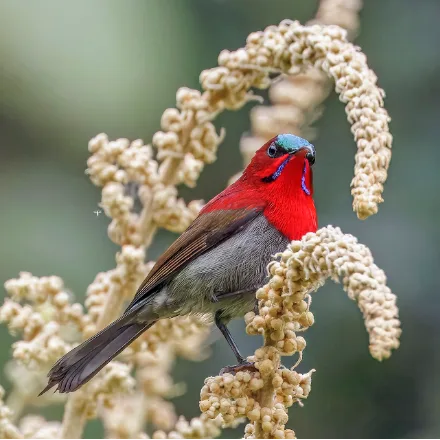
Crimson Sunbird Regular
Aethopyga siparaja
A living ember of a bird, the male ablaze in scarlet and metallic green as it hovers at forest blossoms.
Where: Flowering trees at the campsite. Best: Year round, morning.
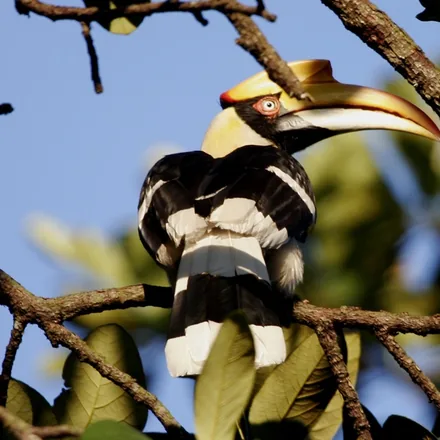
Great Hornbill Regular Vulnerable
Buceros bicornis
A three metre wingbeat you hear before you see, the flagship bird of Asian rainforest canopy.
Where: Fruiting figs along the Ban Krang road and over the valley from Panoen Thung. Best: Year round, 06:30-09:00. The view from Panoen Thung at dawn puts hornbills below eye level, above a sea of mist.
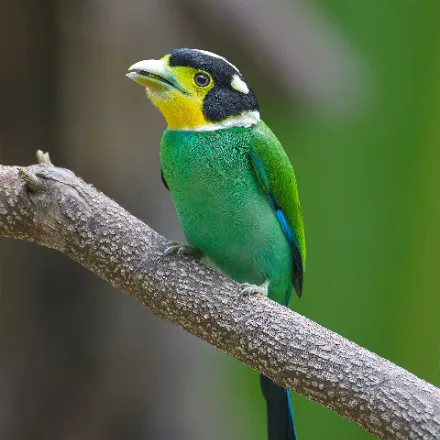
Long-tailed Broadbill Regular
Psarisomus dalhousiae
A cartoonish beauty in parrot green with a black cap, blue crown patch and a long blue tail.
Where: Mid-storey along the road. Best: Year round, morning.
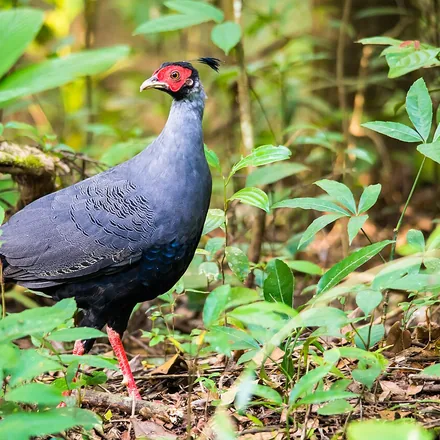
Siamese Fireback Regular
Lophura diardi
Thailand's national bird, a stately grey pheasant with a golden back patch and a bare crimson face.
Where: Roadside and trail edges at first light. Best: Year round, 06:00-08:00.
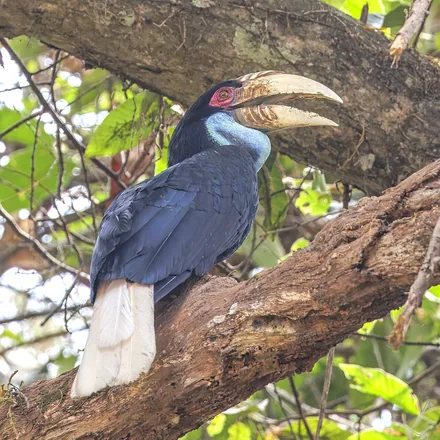
Wreathed Hornbill Regular Vulnerable
Rhyticeros undulatus
A big forest hornbill that travels in noisy flocks, its throat pouch pleated like folded cloth.
Where: Fruiting trees along the road. Best: Year round, morning.
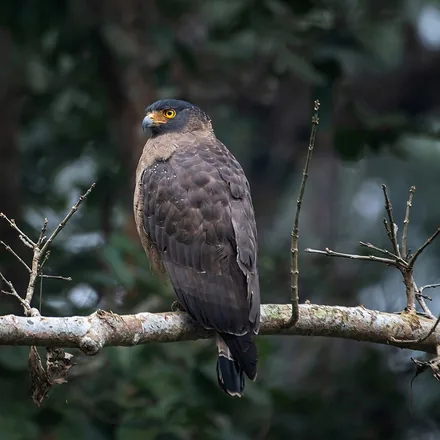
Crested Serpent Eagle Common
Spilornis cheela
A snake-hunting eagle that circles the forest on broad wings, calling with a far-carrying, wailing whistle.
Where: Perched over the road. Best: Year round, day.
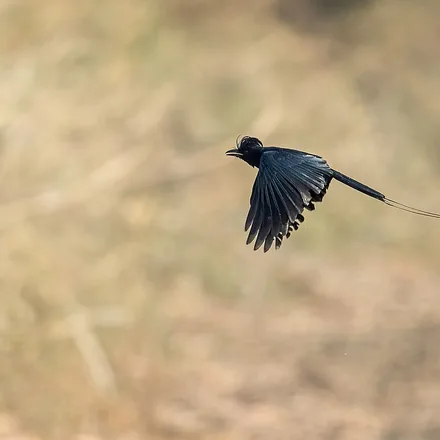
Greater Racket-tailed Drongo Common
Dicrurus paradiseus
A glossy black forest bird trailing two long wire tails tipped with twirling rackets, and a gifted mimic.
Where: Everywhere along the road. Best: Year round, day.
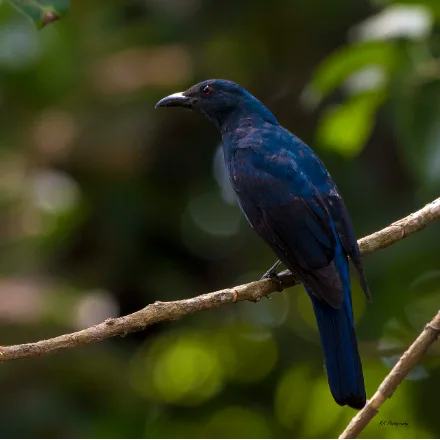
Asian Fairy-bluebird Regular
Irena puella
A fig-loving forest bird where the male glows brilliant ultramarine and jet black in the canopy shade.
Where: Fruiting trees at Ban Krang. Best: Year round, morning.
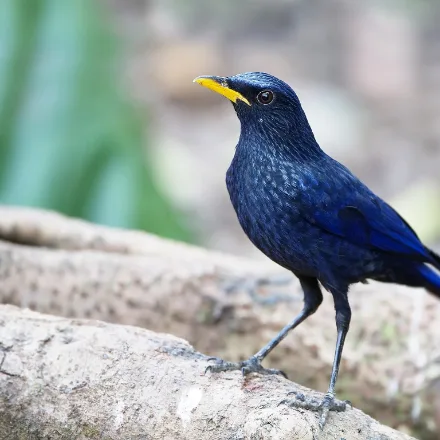
Blue Whistling Thrush Regular
Myophonus caeruleus
A big, spangled blue-black thrush of shady streams whose loud human-like whistle rings through the ravines at dawn.
Where: Wet rocks along the streams. Best: Year round, morning.
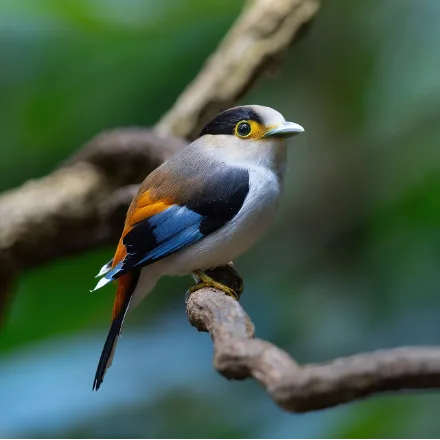
Silver-breasted Broadbill Occasional
Serilophus lunatus
A soft grey and rufous broadbill with a powder blue wing flash and a delicate silver breast.
Where: Streamside forest near Ban Krang. Best: Year round, morning.
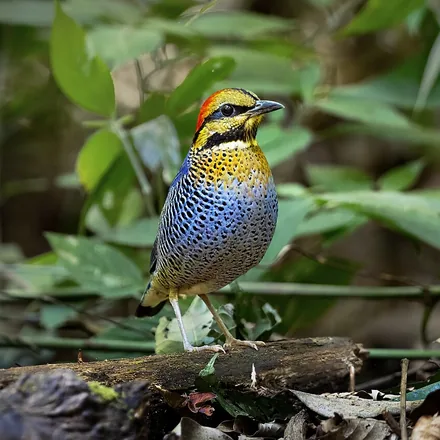
Blue Pitta Rare
Hydrornis cyaneus
A jewel of the forest floor, blue and buff and maddeningly hard to see, the holy grail of many a birding trip.
Where: Damp forest floor near Ban Krang. Best: Apr-Jul, dawn.
See all 30 species recorded at Kaeng Krachan
Khao Yai
The closest serious birding to Bangkok, under three hours, and the easiest place in Thailand to get hornbills at close range. Evergreen forest with good trails and a road system the birds use as much as the visitors do.
11 of 25 recorded species
Red Junglefowl Common
Gallus gallus
The wild ancestor of every chicken on Earth, a wary, glossy rooster of the forest edge.
Where: Forest edges and campsite margins. Best: Year round, day.
Crimson Sunbird Regular
Aethopyga siparaja
A living ember of a bird, the male ablaze in scarlet and metallic green as it hovers at forest blossoms.
Where: Flowering shrubs at the visitor centre. Best: Year round, morning.
Great Hornbill Regular Vulnerable
Buceros bicornis
A three metre wingbeat you hear before you see, the flagship bird of Asian rainforest canopy.
Where: Fruiting figs along Trail 6 and over the Haew Suwat valley. Best: Year round, 06:30-09:00.
Siamese Fireback Regular
Lophura diardi
Thailand's national bird, a stately grey pheasant with a golden back patch and a bare crimson face.
Where: Trail edges and forest tracks in the early morning. Best: Year round, 06:00-08:00. Khao Yai is the most reliable park in Thailand for this pheasant.
Wreathed Hornbill Regular Vulnerable
Rhyticeros undulatus
A big forest hornbill that travels in noisy flocks, its throat pouch pleated like folded cloth.
Where: Fruiting trees along the main road. Best: Year round, morning.
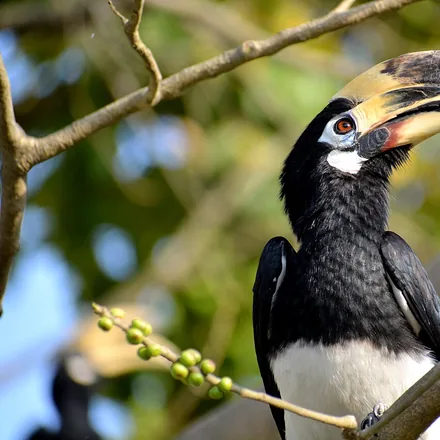
Oriental Pied Hornbill Common
Anthracoceros albirostris
The most approachable hornbill in Asia, a black and white charmer that even visits gardens and forest edges.
Where: Visitor centre trees and roadsides. Best: Year round, all day. The easiest hornbill in Thailand and often the first anyone sees.
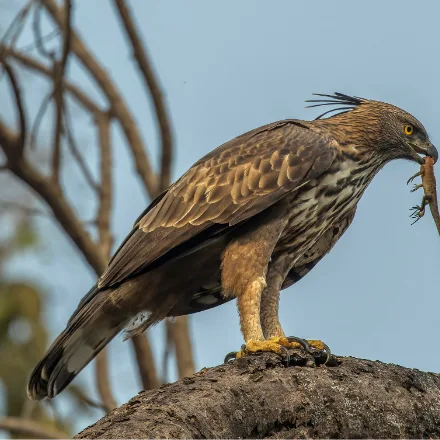
Changeable Hawk-eagle Regular
Nisaetus cirrhatus
A powerful forest eagle that comes in pale and dark forms, ambushing prey with a fast strike from the canopy.
Where: Emergent trees along the road. Best: Year round, mid-morning.
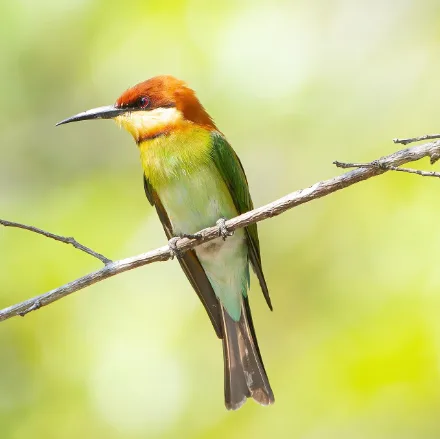
Chestnut-headed Bee-eater Regular
Merops leschenaulti
A compact green bee-eater crowned in warm chestnut, sallying for bees along forest edges and clearings.
Where: Open edges and clearings. Best: Year round, day.
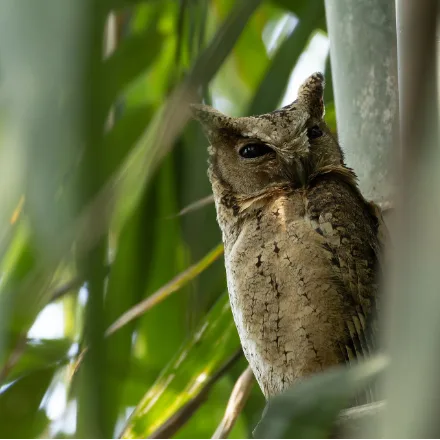
Collared Scops Owl Regular
Otus lettia
A small, ear-tufted owl whose soft, questioning hoot is one of the commonest voices of the Thai night.
Where: Campsite trees at night. Best: Year round, night.
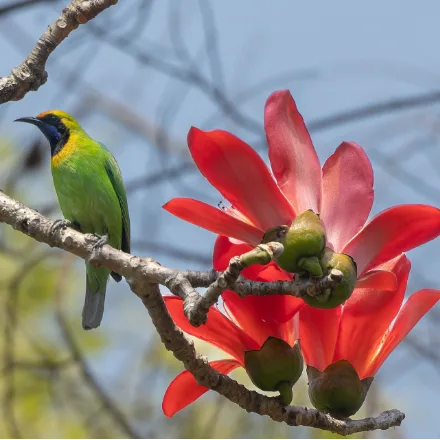
Golden-fronted Leafbird Regular
Chloropsis aurifrons
A leaf-green bird that all but vanishes in the canopy until it turns to reveal a golden forehead and blue-black mask.
Where: Fruiting and flowering trees. Best: Year round, day.
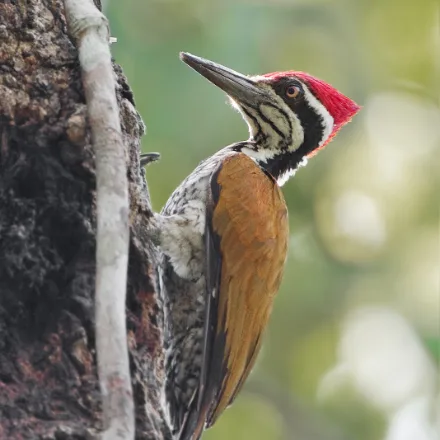
Greater Flameback Regular
Chrysocolaptes guttacristatus
A big, golden-backed woodpecker that blazes across the trunk, the males topped with a flaming scarlet crest.
Where: Large trunks along the trails. Best: Year round, day.
See all 25 species recorded at Khao Yai
Doi Inthanon and the north
The montane list, and it exists nowhere else in Thailand. The summit boardwalk sits in mossy cloud forest at 2,565 metres holding Himalayan species at the southern edge of their range, and the cool months are the time.
12 of 46 recorded species
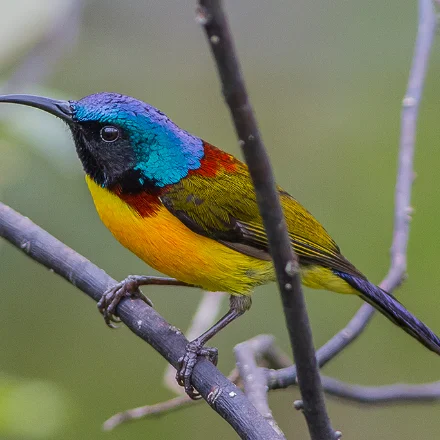
Green-tailed Sunbird Common
Aethopyga nipalensis
The bird of the summit, a metallic green and scarlet sunbird that feeds at rhododendrons in freezing mist at 2,500 m.
Where: Flowering shrubs along the Ang Ka summit boardwalk on Doi Inthanon. Best: Nov-Feb, first three hours after dawn. The bird of the summit. Habituated enough to feed a few metres away, and worth the cold start.
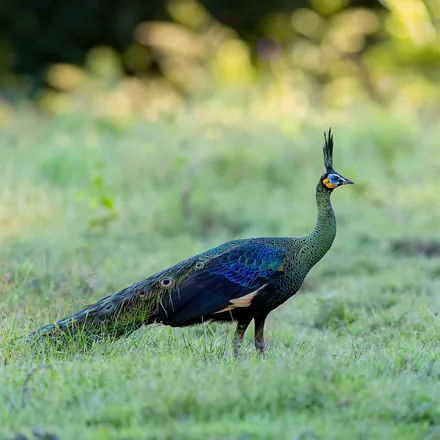
Green Peafowl Rare Endangered
Pavo muticus
The wild, and far rarer, cousin of the familiar peacock, with metallic green plumage and a towering train.
Where: Dry dipterocarp forest and river flats at Mae Ping National Park. Best: Nov-Apr, dawn, calling from roost trees. Mae Ping holds one of the few remaining wild Thai populations. The dawn call carries for miles.
Crimson Sunbird Regular
Aethopyga siparaja
A living ember of a bird, the male ablaze in scarlet and metallic green as it hovers at forest blossoms.
Where: Flowering trees and forest edge on Doi Suthep and around Doi Inthanon headquarters. Best: Year round, morning.
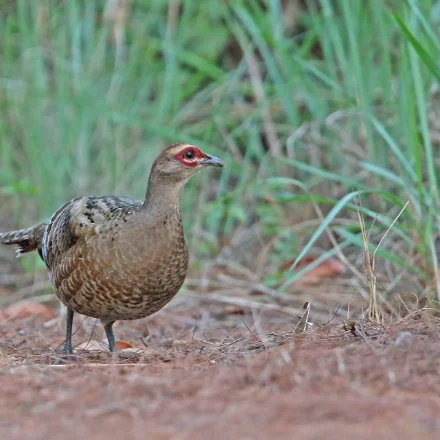
Mrs Hume's Pheasant Very rare Near Threatened
Syrmaticus humiae
A long-tailed mountain pheasant so scarce in Thailand that most birders who look for it go home without one.
Where: Quiet forest tracks on the higher Chiang Dao and Doi Inthanon slopes. Best: Nov-Mar, dawn. A dawn walk on a quiet track is the only realistic approach, and most encounters are a bird walking away.
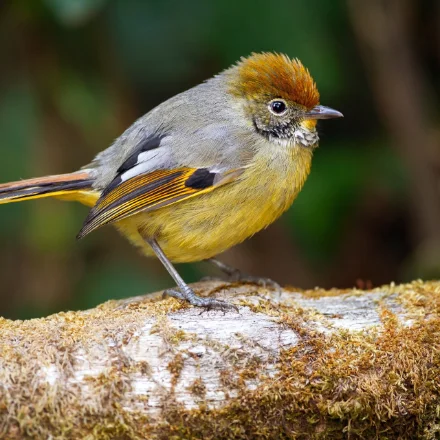
Chestnut-tailed Minla Common
Actinodura strigula
The bird that gives a Doi Inthanon mixed flock its colour, orange-winged and constantly on the move through the moss.
Where: Mixed flocks along the Doi Inthanon summit boardwalk and the Km 37 track. Best: Nov-Feb, morning. Find a minla flock and everything else on the mountain becomes more likely.
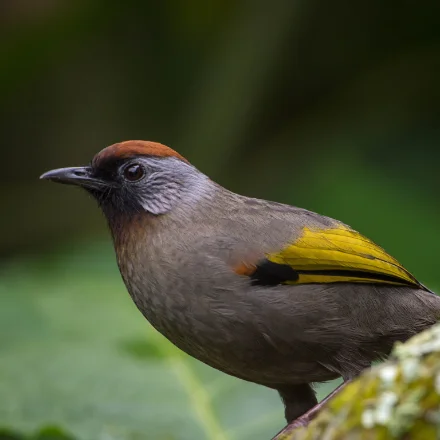
Silver-eared Laughingthrush Regular
Trochalopteron melanostigma
A gaudy orange and silver bird of the summit undergrowth, heard as a shrieking chorus long before anything is seen.
Where: Undergrowth beside the Ang Ka boardwalk and around the summit checkpoint. Best: Year round, morning. Heard as a shrieking chorus long before anything steps into the open.
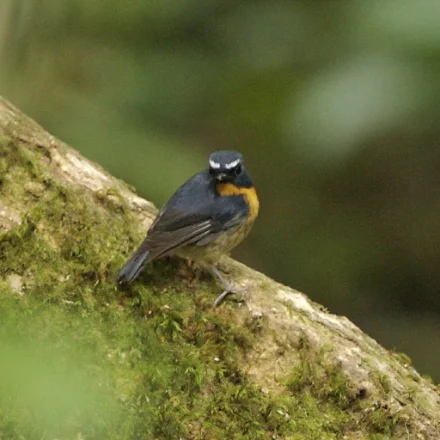
Snowy-browed Flycatcher Regular
Ficedula hyperythra
A thumb-sized flycatcher that sits still on a low mossy perch, which after an hour of hyperactive flocks is a considerable relief.
Where: Low perches in shade beside the Doi Inthanon summit trails. Best: Nov-Feb, morning. Look low, at knee to chest height, in shade rather than sun. It sits still, which most of the mountain does not.
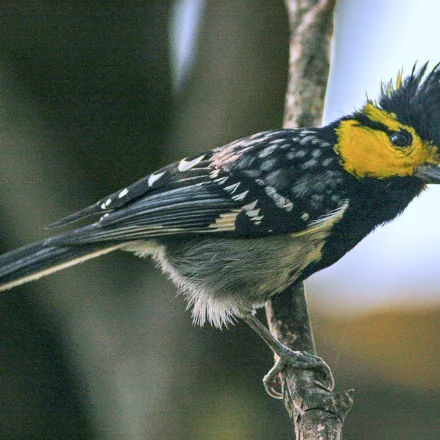
Yellow-cheeked Tit Regular
Machlolophus spilonotus
A crested tit in black and brilliant yellow, working the high canopy of the northern mountains.
Where: Canopy from the mid-elevations to the summit on Doi Inthanon. Best: Nov-Feb, morning. One of the more cooperative montane birds, and often low enough for a clear view.
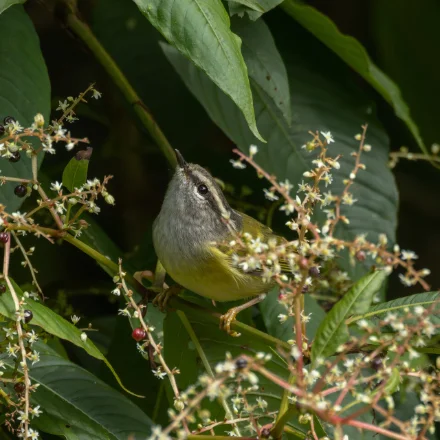
Ashy-throated Warbler Regular
Phylloscopus maculipennis
A leaf warbler the weight of two sheets of paper, working the summit moss in flocks that move through faster than you can focus.
Where: Mixed flocks in the summit canopy on Doi Inthanon. Best: Nov-Mar, morning. Stand still at a gap and let the flock come through rather than chasing it.
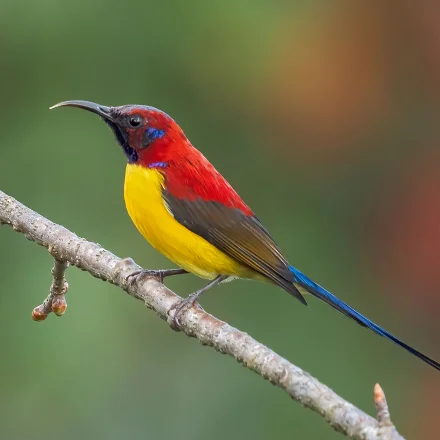
Mrs Gould's Sunbird Occasional
Aethopyga gouldiae
Scarlet, violet and yellow, with a long blue tail streamer, and it feeds at eye level on the summit boardwalk.
Where: Flowering shrubs on the Doi Inthanon summit boardwalk. Best: Nov-Feb, cold clear mornings. Overlaps with the green-tailed sunbird, and the two are worth learning together.
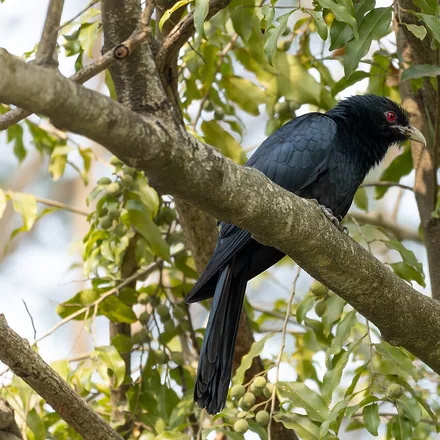
Asian Koel Common
Eudynamys scolopaceus
A glossy black cuckoo with blood-red eyes whose rising ko-el call is one of the defining sounds of tropical mornings.
Where: Gardens and open woodland across the city and the Mae Sa valley. Best: Mar-Jul, morning.
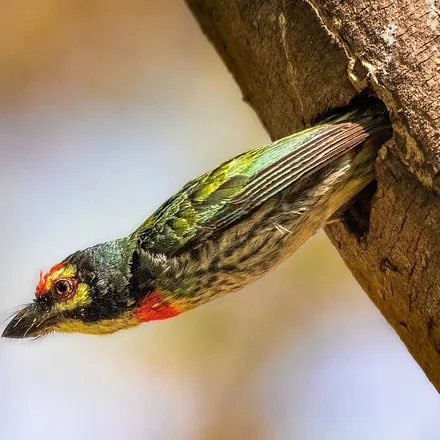
Coppersmith Barbet Common
Psilopogon haemacephalus
A tiny green barbet with a red-and-yellow face whose metronomic tuk tuk tuk call rings like a coppersmith at work.
Where: Bare treetops in the old city, the university campus and Huay Tueng Tao. Best: Year round, day. The metronomic tuk call is the background noise of a Chiang Mai afternoon.
See all 46 species recorded at Doi Inthanon and the north
The inner Gulf and Bangkok
Not a scenic site and one of the most important shorebird coastlines in Asia. The salt pans and mudflats at Pak Thale and Bang Pu hold spoon-billed sandpiper and Nordmann’s greenshank through the northern winter, and both are birds people cross continents for.
11 of 23 recorded species
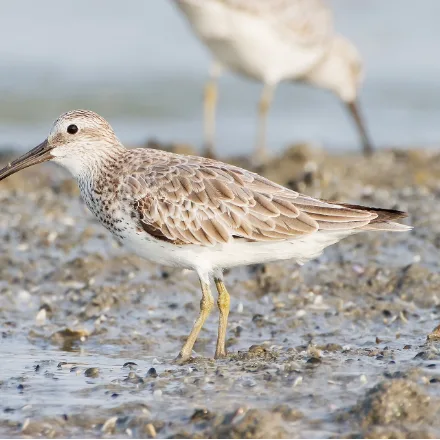
Great Knot Regular Endangered
Calidris tenuirostris
Flies from Siberia to Australia with a single refuelling stop, and losing that one mudflat has nearly finished the species.
Where: Mudflats at Pak Thale, Laem Phak Bia and Bang Pu. Best: Nov-Mar, falling tide. Scan the flocks carefully. This is where the two rarities hide.
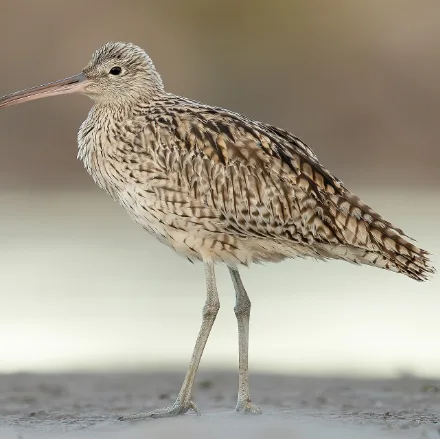
Far Eastern Curlew Occasional Endangered
Numenius madagascariensis
The longest bill of any wader in the world, curved like a sickle and used to reach crabs deep in the mud.
Where: Open mudflats at Pak Thale and Khok Kham. Best: Nov-Mar, falling tide. Check for the very long bill and no white rump.
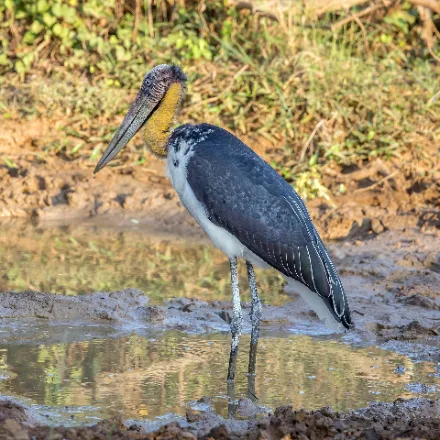
Lesser Adjutant Occasional Vulnerable
Leptoptilos javanicus
A towering, bare-headed stork that stalks the wetlands with a soldier's stiff gait, part hunter and part undertaker.
Where: Shrimp ponds and mangrove edges along the inner Gulf coast. Best: Nov-Mar.
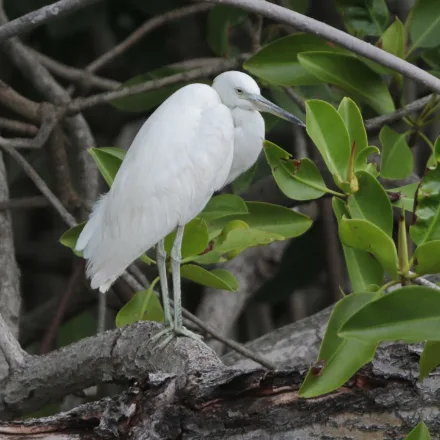
Chinese Egret Rare Vulnerable
Egretta eulophotes
Hunts by sprinting across the mudflat with wings half open, a running dash that no other egret uses.
Where: Shrimp ponds and tidal flats around Khok Kham and Pak Thale. Best: Nov-Mar. Watch the feeding action. The open-winged run is the giveaway.
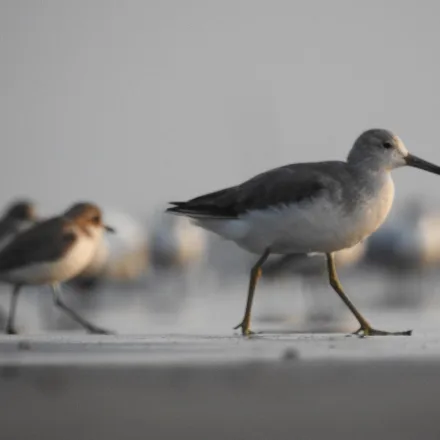
Nordmann's Greenshank Rare Endangered
Tringa guttifer
One of the world's rarest waders, a stocky greenshank that winters on Thai mudflats among thousands of commoner shorebirds.
Where: Tidal mudflats at Pak Thale and Laem Phak Bia. Best: Nov-Mar, falling tide. One of the rarest waders in the world, on the same flats as the spoon-billed sandpiper.
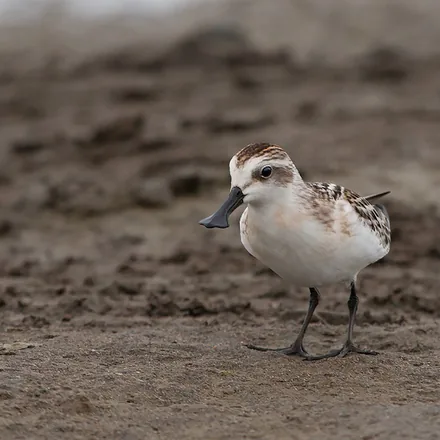
Spoon-billed Sandpiper Rare Critically Endangered
Calidris pygmaea
One of the world's rarest and most charismatic shorebirds, tiny and armed with an unmistakable spatula bill.
Where: The saltpans and mudflats at Pak Thale and Laem Phak Bia. Best: Nov-Mar, on a rising tide as the flats shrink. Pak Thale is arguably the best place on earth to see one, and there are only a few hundred left in the world. Scan the small waders methodically; the bill only shows head-on.
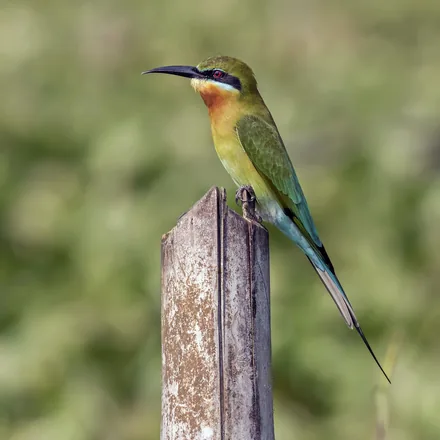
Blue-tailed Bee-eater Regular
Merops philippinus
A streamlined jewel of green, chestnut and blue that hawks bees and dragonflies in graceful, swooping sallies.
Where: Open ground and canal banks at Bang Krachao and on the coastal drive. Best: Nov-Apr, day.
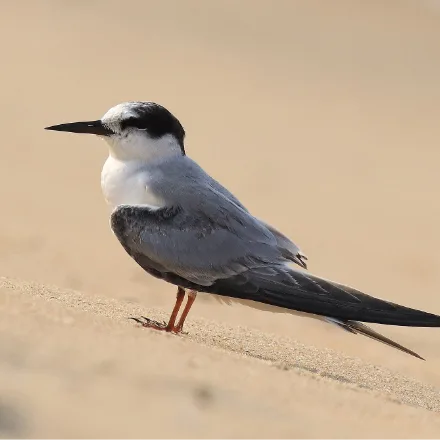
Little Tern Regular
Sternula albifrons
Hovers on fast flickering wings like an oversized hummingbird before dropping onto a fish.
Where: Saltpans and river mouths at Khok Kham, Bang Pu and Laem Phak Bia. Best: Year round, breeding Mar-Jun.
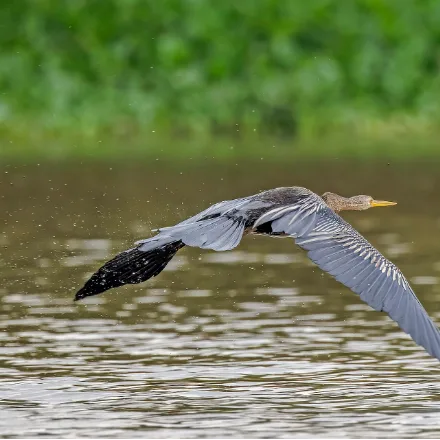
Oriental Darter Occasional Near Threatened
Anhinga melanogaster
The snakebird, swimming with only its slim neck above water before it spears a fish on a dagger bill.
Where: Benjakitti lake, Bang Krachao ponds and the larger central wetlands. Best: Year round, day. Swims low with only the neck showing, then perches with wings spread to dry.
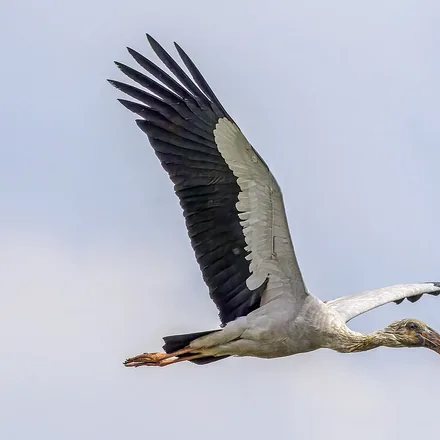
Asian Openbill Common
Anastomus oscitans
A stork with a permanent gap in its bill, a purpose-built tool for prising snails from their shells.
Where: Rice fields and marshes anywhere on the drive out to the coast. Best: Year round, day. Now abundant in the central plains. Huge soaring flocks and noisy colonial nests.
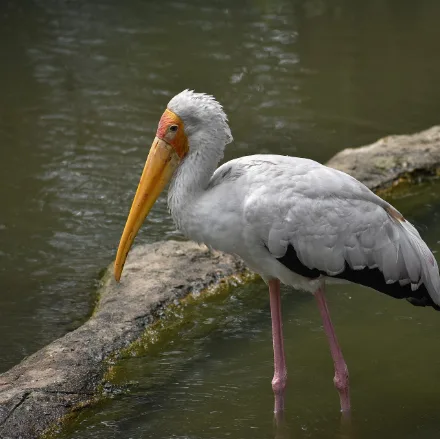
Milky Stork Very rare Endangered
Mycteria cinerea
A rare, ghostly white stork of the mangroves, its bare face flushing from yellow to red in the breeding season.
Where: Coastal mangroves and abandoned ponds of the upper Gulf. Best: Nov-Mar. Separate it carefully from painted stork, which is common on the same ground.
See all 23 species recorded at The inner Gulf and Bangkok
Krabi and the Andaman mangroves
Mangrove specialists on the estuary boardwalks, and the reason serious birders come south. Great knot and Nordmann’s greenshank winter on the mudflats, and the pittas are here for anyone who can time it.
9 of 17 recorded species
Great Knot Occasional Endangered
Calidris tenuirostris
Flies from Siberia to Australia with a single refuelling stop, and losing that one mudflat has nearly finished the species.
Where: Tidal mudflats at the river mouth. Best: Nov-Mar, falling tide.
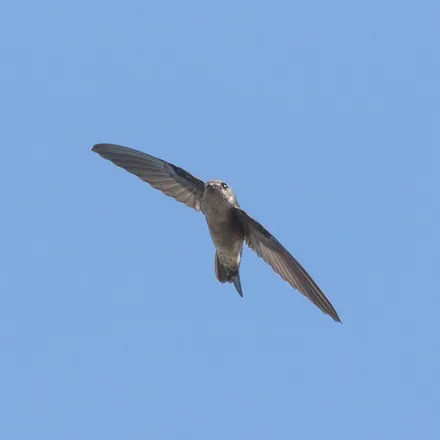
Germain's Swiftlet Common
Aerodramus germani
The little cave swift whose nest of pure saliva is harvested from sheer sea caves for bird's nest soup.
Where: Sea caves and the karst towers at the river mouth. Best: Year round, day.
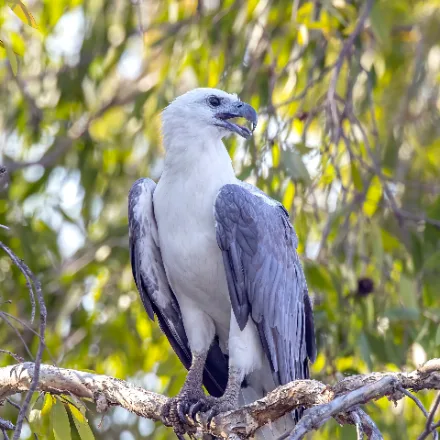
White-bellied Sea Eagle Regular
Haliaeetus leucogaster
A huge coastal eagle in grey and white that snatches sea snakes and fish from the surface in a spectacular swoop.
Where: Karst islands off Ao Nang and the Hong group. Best: Year round, day.
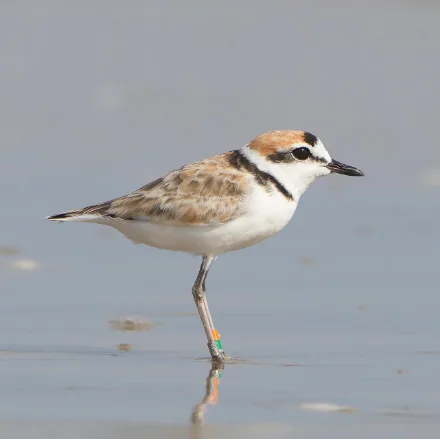
Malaysian Plover Occasional Near Threatened
Anarhynchus peronii
Nests in a scrape on open beach so well camouflaged that the greatest danger is being stepped on.
Where: Quiet sand spits and the outer island beaches. Best: Year round, low tide.
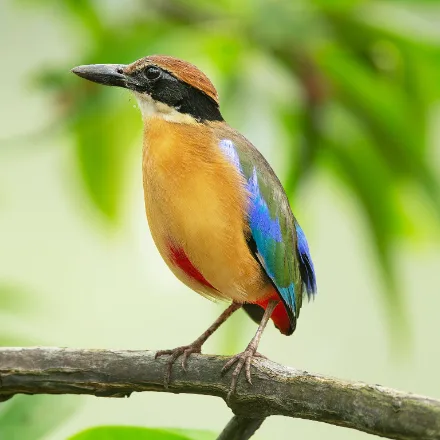
Mangrove Pitta Rare Near Threatened
Pitta megarhyncha
A jewel of a bird restricted almost entirely to mangrove, hopping across bare mud to hammer crabs against a root.
Where: Mangrove boardwalks along the Krabi River estuary. Best: Feb-Jun, at dawn while they are calling. Krabi is the most reliable site in Thailand for this bird, and the calling season is short.
Nordmann's Greenshank Rare Endangered
Tringa guttifer
One of the world's rarest waders, a stocky greenshank that winters on Thai mudflats among thousands of commoner shorebirds.
Where: Tidal mudflats of the Krabi River estuary. Best: Nov-Mar, on a falling tide. The estuary is one of only a handful of Thai sites where this wader winters.
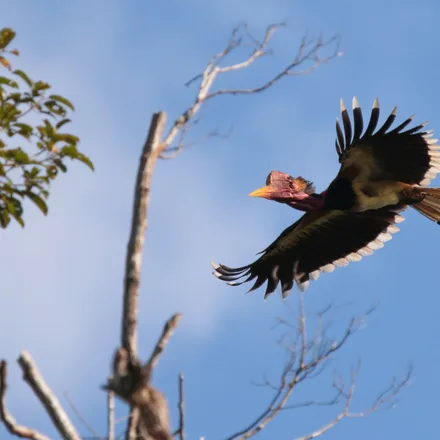
Helmeted Hornbill Very rare Critically Endangered
Rhinoplax vigil
A hornbill with a solid ivory casque, hunted to the brink for carving, whose call sounds like maniacal laughter.
Where: Tall lowland forest at Khao Nor Chuchi. Best: Year round, listen for the accelerating call. Poached almost to nothing for its solid casque. Hearing one is more likely than seeing one.
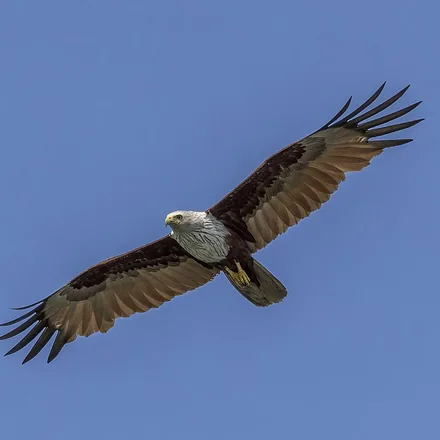
Brahminy Kite Common
Haliastur indus
A handsome chestnut-and-white kite of coasts and harbours, forever quartering the shoreline for scraps and stranded fish.
Where: Over the estuary, the harbour and the Ao Nang headlands. Best: Year round, day.
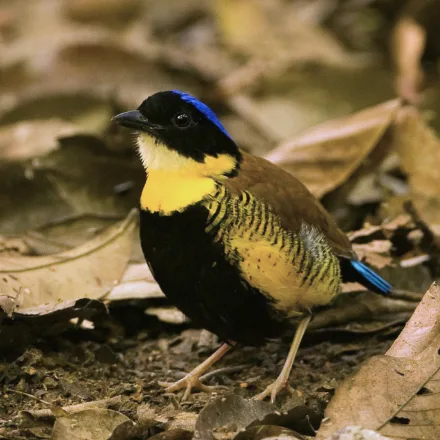
Gurney's Pitta Ultra rare Critically Endangered
Hydrornis gurneyi
A gorgeous blue-crowned pitta once thought extinct, rediscovered in Thailand and now teetering on the very edge.
Where: Lowland forest at Khao Nor Chuchi. Best: Historically Mar-Jun, at dawn. Khao Nor Chuchi was the last place in Thailand this bird was reliably found. There are no confirmed recent records and it is very likely gone from the country.
See all 17 species recorded at Krabi and the Andaman mangroves
Khao Sok and the southern forest
Sundaic rainforest on limestone, wetter and more tropical than anything further north, with a bird list that starts to look Malaysian. Hornbills over the lake at dawn are the set piece.
9 of 9 recorded species
Great Hornbill Common Vulnerable
Buceros bicornis
A three metre wingbeat you hear before you see, the flagship bird of Asian rainforest canopy.
Where: Over the Sok River valley and across Cheow Lan Lake at dawn. Best: Year round, 06:00-09:00. The whoosh of the wingbeat carries hundreds of metres; the lake gives the best flight views in Thailand.
Wreathed Hornbill Regular Vulnerable
Rhyticeros undulatus
A big forest hornbill that travels in noisy flocks, its throat pouch pleated like folded cloth.
Where: Fruiting trees on the valley sides and over the lake. Best: Year round, morning. Travels in noisy flocks, often crossing the lake in the first hour of light.
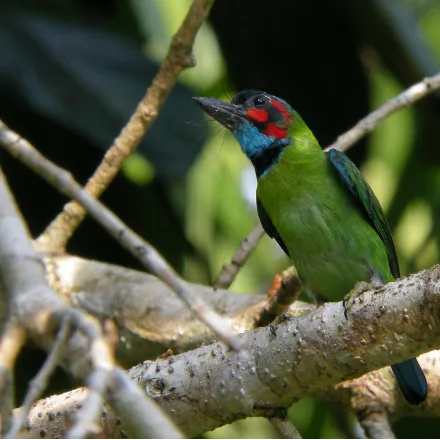
Blue-eared Barbet Common
Psilopogon duvaucelii
A jewel-faced little barbet of the forest canopy, green-bodied with a patchwork of blue, black and red on the head.
Where: Fruiting trees near headquarters. Best: Year round, all day. Heard constantly, seen rarely; a monotonous two-note call from the canopy.
Changeable Hawk-eagle Regular
Nisaetus cirrhatus
A powerful forest eagle that comes in pale and dark forms, ambushing prey with a fast strike from the canopy.
Where: Perched on emergent trees along the river and lake. Best: Year round, mid-morning. The crested form is the one you will see here.
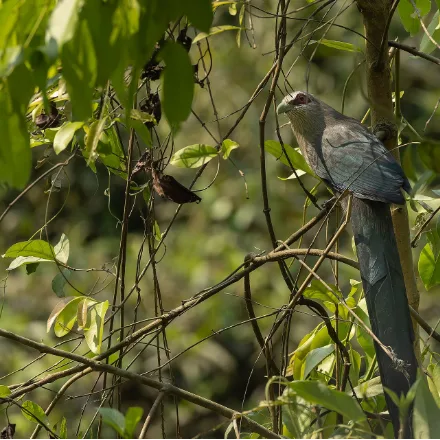
Green-billed Malkoha Regular
Phaenicophaeus tristis
A long, slinking grey cuckoo with a bright green bill and a crimson eye-patch, creeping through thickets like a feathered lizard.
Where: Thick roadside scrub and trail edges. Best: Year round, day. Skulks through tangles rather than flying across gaps.
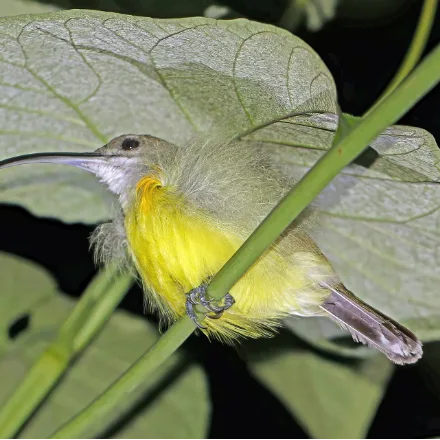
Little Spiderhunter Regular
Arachnothera longirostra
A drab bird with an outrageously long, curved bill, built for plundering nectar deep inside wild banana flowers.
Where: Wild banana and ginger stands along the trails. Best: Year round, morning. Follow the flowering bananas and it will appear.
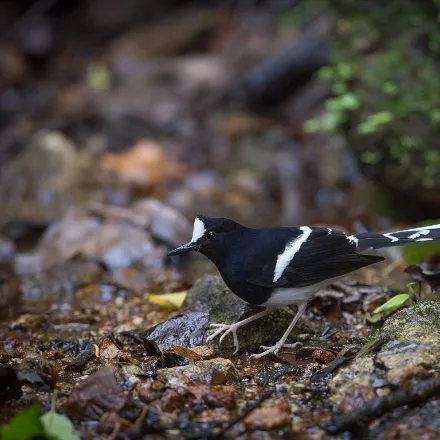
White-crowned Forktail Regular
Enicurus leschenaulti
A dapper black-and-white bird of rushing forest streams, forever flicking a long, deeply forked tail.
Where: Rocky sections of the Sok River and side streams. Best: Year round, morning. Works the wet boulders below the waterfalls.
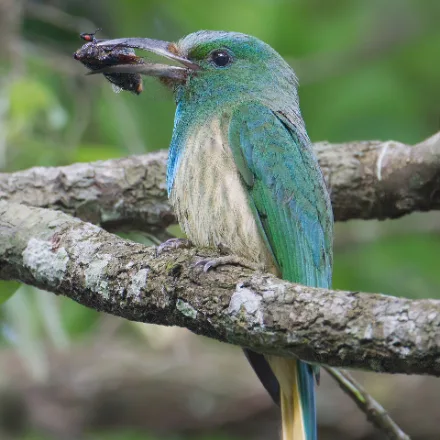
Blue-bearded Bee-eater Occasional
Nyctyornis athertoni
A big, shaggy bee-eater with a dangling blue throat-beard, more skulking and forest-loving than its dashing cousins.
Where: Forest edge and clearings on the lower trails. Best: Year round, morning. Perches low and still, unlike the flashier open-country bee-eaters.
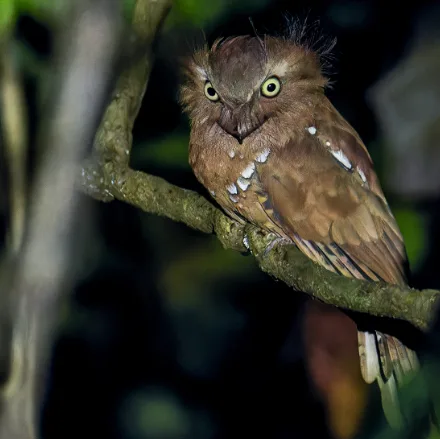
Blyth's Frogmouth Rare
Batrachostomus affinis
A bizarre nocturnal bird with a huge frog-like gape, so like a broken branch by day that it is almost impossible to find.
Where: Understorey on night walks from headquarters. Best: Year round, after dark. Found by call rather than sight; guides know the territories.
See all 9 species recorded at Khao Sok and the southern forest
Planning and responsible watching
Four things decide a Thai birding trip. Season: November to February is the broad answer, with wintering migrants in, comfortable temperatures and the montane sites at their best, though the pittas call from February to June and the far south is worth the humidity for them. Time of day: be on site at first light and accept that by nine you are mostly finished, which makes accommodation inside or beside the park worth more than a better hotel an hour away. Guides: the montane specialities and the pittas are a different proposition with someone who knows which stretch of trail a bird has been using this week, and the good ones book out months ahead in high season. And hides: the stream hides at Kaeng Krachan are the highest yield hours in Thai birding and cost very little, but they need booking and they need you to sit still for a long time.
Find guided birding trips and park lodges across Thailand
Some links on this page are affiliate links. If you book through them, Wildseer may earn a small commission at no extra cost to you.
Frequently asked questions
Where is the best birdwatching in Thailand?
Kaeng Krachan for all round variety and its stream hides, Khao Yai for hornbills at close range within three hours of Bangkok, Doi Inthanon for the montane list that exists nowhere else in the country, and the inner Gulf salt pans at Pak Thale for wintering shorebirds including spoon-billed sandpiper.
When is the best time for birdwatching in Thailand?
November to February for most purposes: wintering migrants are in, temperatures are manageable and the northern montane sites are clear before the burning season. February to June is better for the pittas, which do not start calling until then.
How many bird species are there in Thailand?
Over a thousand, in a country about the size of France. The range comes from altitude and latitude together: Himalayan cloud forest in the north, Sundaic rainforest in the south, and internationally important shorebird mudflats on the inner Gulf.
Can you see spoon-billed sandpiper in Thailand?
Yes, on the inner Gulf at Pak Thale and the surrounding salt pans, through the northern winter. It is Critically Endangered with a very small world population, and Thailand is one of the more reliable places to look for it.
Do I need a guide for birdwatching in Thailand?
Not for the hornbills and the general lists, which you can work yourself. For the Doi Inthanon montane specialities, the pittas and anything skulking, a local guide changes the trip completely, because the value is in knowing which stretch of trail has been productive this week.
Which Thai national park has the most birds?
Kaeng Krachan, the largest park in the country, with a species list boosted by the altitude range from lowland forest up to the Panoen Thung ridge and by its position on the Tenasserim range.
Explore Thailand wildlife by group
Explore Thailand wildlife by place
Part of the Wildlife in Thailand guide.
Image credits
image credits
- Great hornbills in Thai forest canopy: PonlawatThai | CC BY-SA 4.0
- Spoon-billed sandpiper: Gin tonic | CC BY-SA 3.0
- Great hornbill: Lip Kee | CC BY-SA 2.0
- Mrs Hume’s Pheasant: Christoph Moning | CC BY 4.0
- Gurney’s Pitta: Michael Gillam from Phuket, Thailand | CC BY 2.0
- Siamese Fireback: Rushenb | CC BY-SA 4.0
- Red Junglefowl: dhfischer | CC BY 4.0
- Crimson Sunbird: Charles J. Sharp | CC BY-SA 4.0
- Great Hornbill: Lip Kee | CC BY-SA 2.0
- Long-tailed Broadbill: JJ Harrison ( ) | CC BY-SA 3.0
- Siamese Fireback: Rushenb | CC BY-SA 4.0
- Wreathed Hornbill: Charles J. Sharp | CC BY-SA 4.0
- Crested Serpent Eagle: Mildeep | CC BY-SA 4.0
- Greater Racket-tailed Drongo: Mildeep | CC BY-SA 4.0
- Asian Fairy-bluebird: Manoj Kunnambath | CC BY-SA 4.0
- Blue Whistling Thrush: JJ Harrison ( jjharrison89@facebook.com ) | CC BY-SA 3.0
- Silver-breasted Broadbill: JJ Harrison | CC BY-SA 4.0
- Blue Pitta: JJ Harrison | CC BY-SA 4.0
- Oriental Pied Hornbill: Sipuwildlife | CC BY-SA 4.0
- Changeable Hawk-eagle: Charles J. Sharp | CC BY-SA 4.0
- Chestnut-headed Bee-eater: JJ Harrison ( ) | CC BY-SA 3.0
- Collared Scops Owl: Tisha Mukherjee | CC BY-SA 4.0
- Golden-fronted Leafbird: Tisha Mukherjee | CC BY-SA 4.0
- Greater Flameback: JJ Harrison ( ) | CC BY-SA 3.0
- Green-tailed Sunbird: Dibyendu Ash | CC BY-SA 3.0
- Green Peafowl: JJ Harrison | CC BY-SA 3.0
- Mrs Hume’s Pheasant: Christoph Moning | CC BY 4.0
- Chestnut-tailed Minla: JJ Harrison (https://www.jjharrison.com.au/) | CC BY-SA 3.0
- Silver-eared Laughingthrush: Jason Thompson | CC BY 2.0
- Snowy-browed Flycatcher: Lip Kee Yap from Singapore, Republic of Singapore | CC BY-SA 2.0
- Yellow-cheeked Tit: Ron Knight | CC BY 2.0
- Ashy-throated Warbler: Tisha Mukherjee | CC BY-SA 4.0
- Mrs Gould’s Sunbird: Mildeep | CC BY-SA 4.0
- Asian Koel: Tisha Mukherjee | CC BY-SA 4.0
- Coppersmith Barbet: Parth Kansara | CC BY 4.0
- Great Knot: JJ Harrison | CC BY-SA 3.0
- Far Eastern Curlew: Donald Hobern from Copenhagen, Denmark | CC BY 2.0
- Lesser Adjutant: Charles J. Sharp | CC BY-SA 4.0
- Chinese Egret: Ian Dugdale | CC BY 4.0
- Nordmann’s Greenshank: Dr. Raju Kasambe | CC BY-SA 4.0
- Spoon-billed Sandpiper: Gin tonic | CC BY-SA 3.0
- Blue-tailed Bee-eater: Charles J. Sharp | CC BY-SA 4.0
- Little Tern: Afsarnayakkan | CC BY-SA 4.0
- Oriental Darter: Charles J. Sharp | CC BY-SA 4.0
- Asian Openbill: Charles J. Sharp | CC BY-SA 4.0
- Milky Stork: GerifalteDelSabana | CC BY-SA 4.0
- Germain’s Swiftlet: Wich'yanan L | CC BY 4.0
- White-bellied Sea Eagle: Charles J. Sharp | CC BY-SA 4.0
- Malaysian Plover: JJ Harrison ( ) | CC BY 3.0
- Mangrove Pitta: JJ Harrison ( ) | CC BY-SA 4.0
- Helmeted Hornbill: Ian Dugdale | CC BY 4.0
- Brahminy Kite: Charles J. Sharp | CC BY-SA 4.0
- Gurney’s Pitta: Michael Gillam from Phuket, Thailand | CC BY 2.0
- Blue-eared Barbet: Ian Dugdale | CC BY 4.0
- Green-billed Malkoha: Tisha Mukherjee | CC BY-SA 4.0
- Little Spiderhunter: Charles J. Sharp | CC BY-SA 4.0
- White-crowned Forktail: Wikimedia Commons contributor, see file page | CC BY 2.0
- Blue-bearded Bee-eater: JJ Harrison ( ) | CC BY-SA 3.0
- Blyth’s Frogmouth: Wich’yanan (Jay) Limparungpatthanakij | CC BY 4.0