
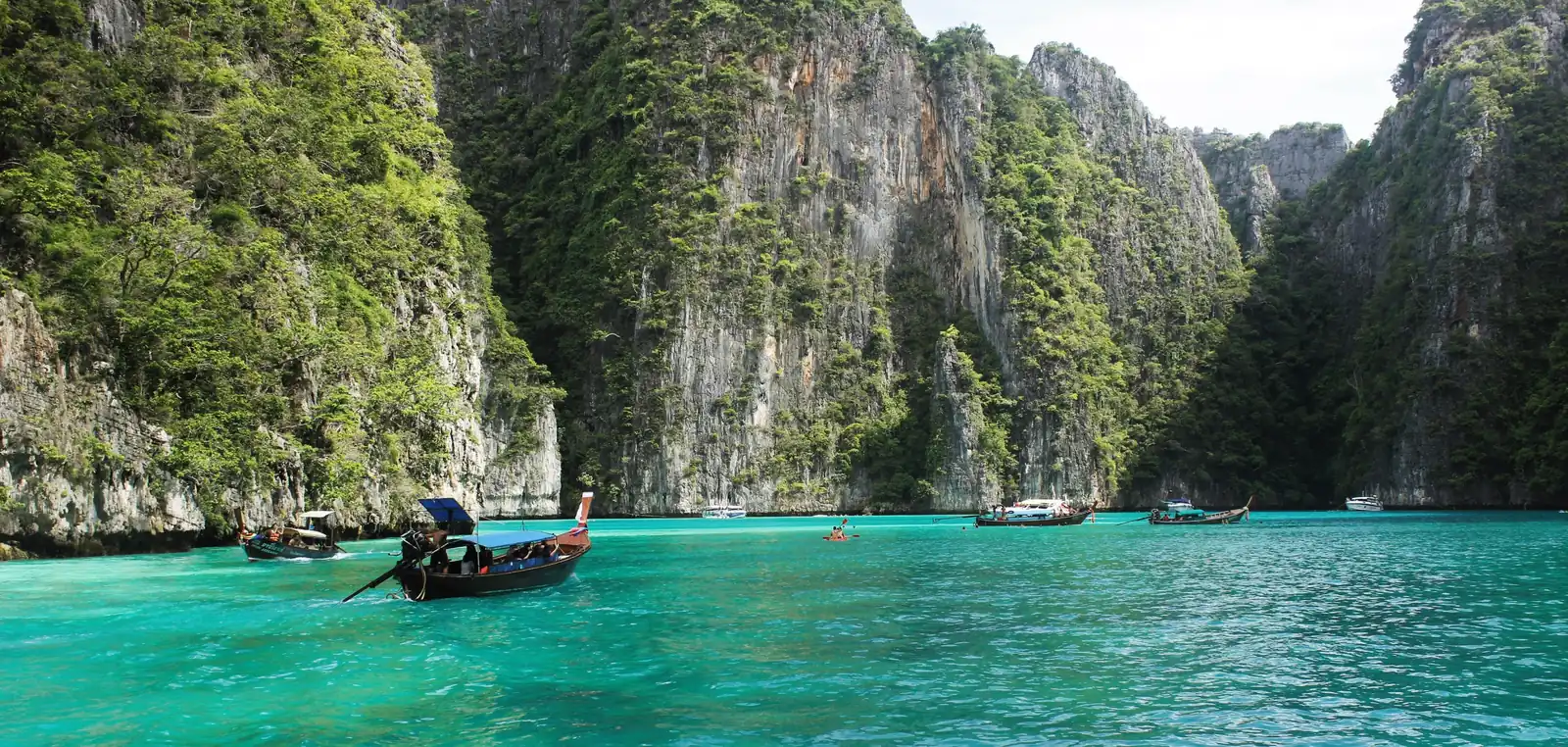
Phi Phi is the most visited water in Thailand, which makes the wildlife easy to underrate. The limestone islands are ringed with shallow reef, the Bida pinnacles hold proper reef fish and the occasional whale shark, and Maya Bay has become the most reliable place in the country to snorkel with blacktip reef sharks.
This page records what is actually here, with the site and the season, and is honest about the crowding. Almost everything improves if you are in the water before the day boats arrive.
Highlights
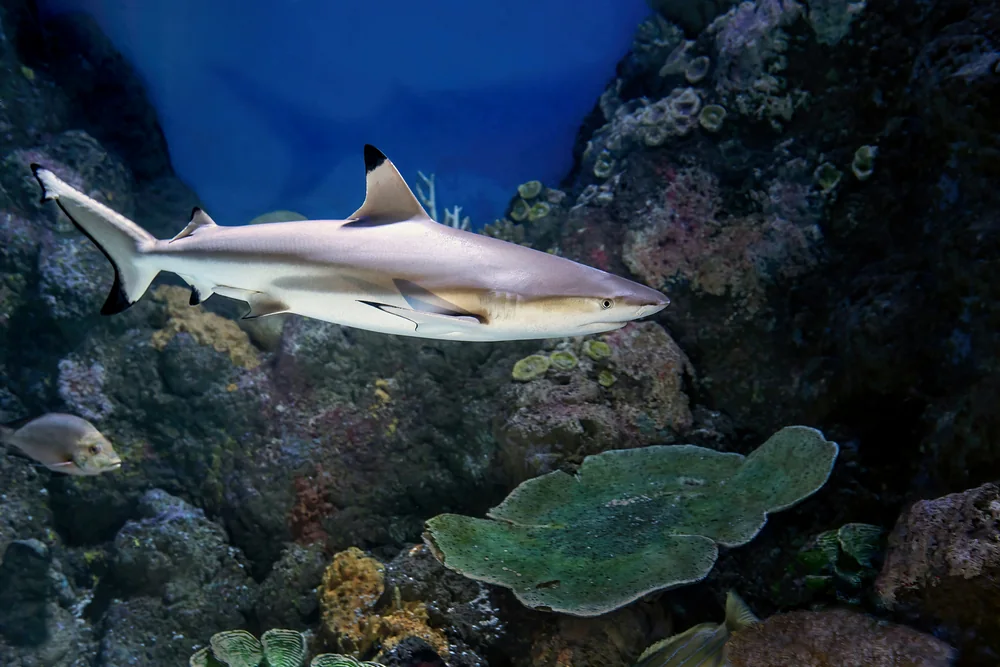
Blacktip Reef Shark
The neat little reef shark of the shallows, its black-tipped fins often cutting the surface over sun-lit sand flats. Where: Shallow reef flats at Maya Bay and around Koh Phi Phi Ley. Best: Nov-Apr, early morning.
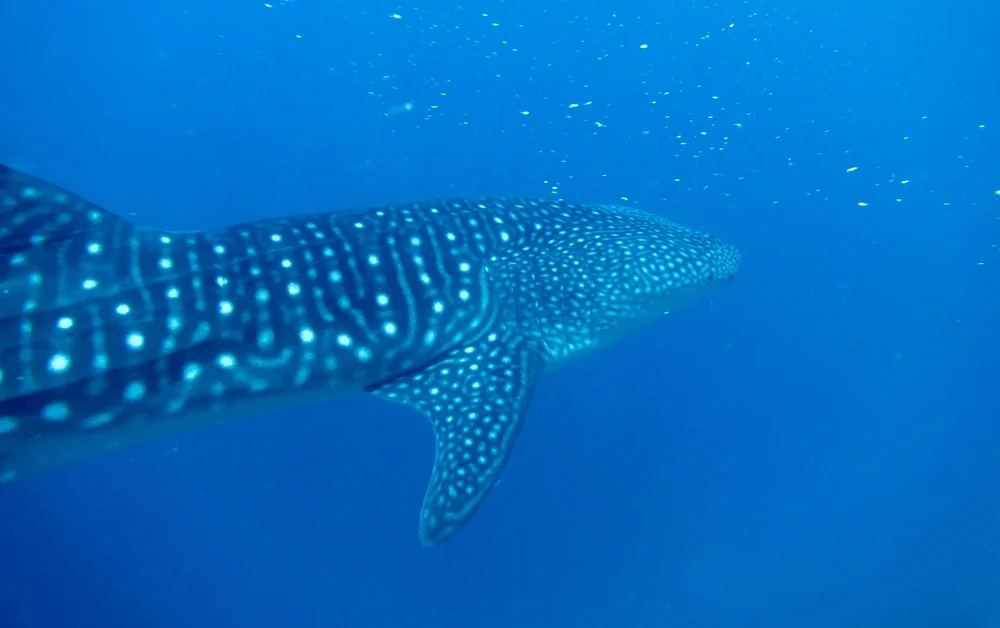
Whale Shark
The biggest fish in the ocean, a spotted, bus sized filter feeder and the undisputed holy grail of tropical diving. Where: Bida Nok and Bida Nai, and the outer walls. Best: Feb-Apr.
Hawksbill Turtle
The reef's sponge specialist, its beautiful shell also the reason it was hunted to the edge. Where: Coral bommies at Bida Nok. Best: Nov-Apr.
Harlequin Sweetlips
The juvenile is a brown and white blob that tumbles around the reef pretending to be a toxic flatworm. Where: Under overhangs at Bida Nai. Best: Nov-Apr.
Germain's Swiftlet
The little cave swift whose nest of pure saliva is harvested from sheer sea caves for bird's nest soup. Where: The limestone caves of Phi Phi Ley. Best: Year round.
Birds
3 species
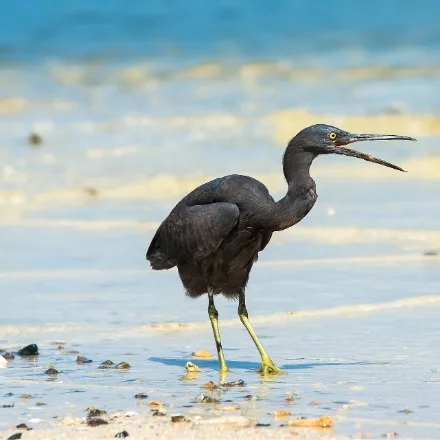
Pacific Reef Heron Regular
Egretta sacra
Comes in two entirely different colours, charcoal grey and pure white, and both can hatch in the same nest.
Where: Rocky shores at low tide. Best: Year round.
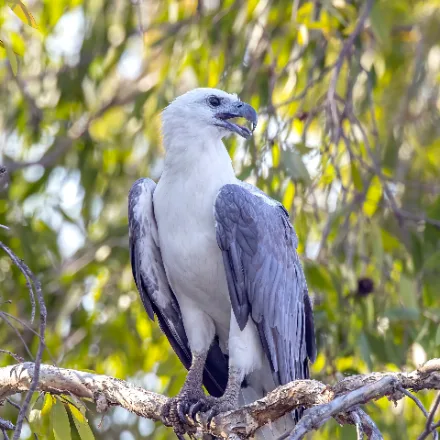
White-bellied Sea Eagle Regular
Haliaeetus leucogaster
A huge coastal eagle in grey and white that snatches sea snakes and fish from the surface in a spectacular swoop.
Where: Over the limestone cliffs. Best: Year round, morning.
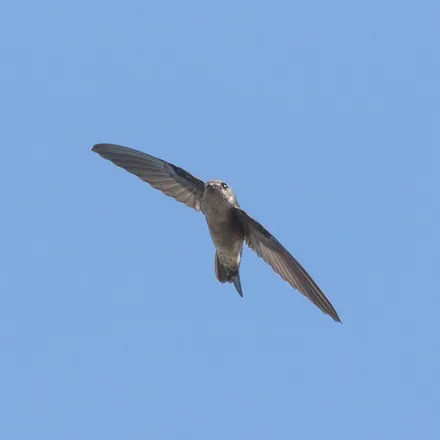
Germain's Swiftlet Common
Aerodramus germani
The little cave swift whose nest of pure saliva is harvested from sheer sea caves for bird's nest soup.
Where: The limestone caves of Phi Phi Ley. Best: Year round. The Viking Cave nests are harvested commercially; the birds are visible from the water.
Reptiles and amphibians
3 species
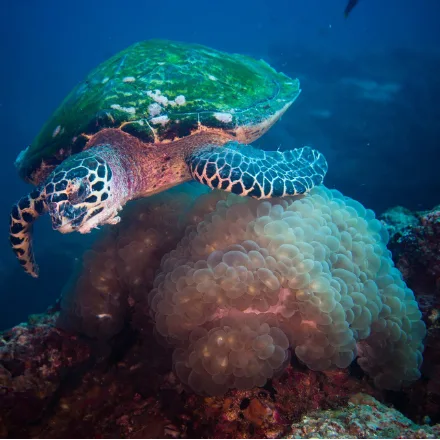
Hawksbill Turtle Occasional Critically Endangered
Eretmochelys imbricata
The reef's sponge specialist, its beautiful shell also the reason it was hunted to the edge.
Where: Coral bommies at Bida Nok. Best: Nov-Apr.
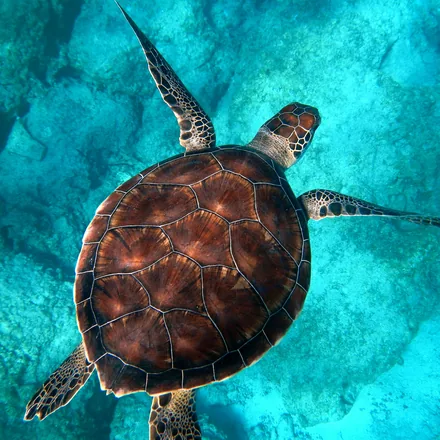
Green Sea Turtle Regular Endangered
Chelonia mydas
The great grazing turtle of the tropics, the only sea turtle that turns vegetarian as an adult.
Where: Shallow reef and seagrass around Phi Phi Don. Best: Nov-Apr.
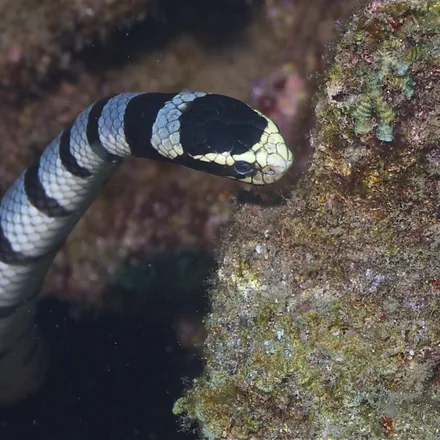
Banded Sea Krait Regular
Laticauda colubrina
A sea snake that hunts eels underwater but must come ashore to rest, drink fresh water and lay its eggs.
Where: Shallow reef and rubble. Best: Nov-Apr.
Fish
21 species
Leopard Coralgrouper Regular
Plectropomus leopardus
A blue-spotted red grouper that hunts in partnership with moray eels and octopus.
Where: Reef ledges at the Bidas. Best: Nov-Apr.
Mandarinfish Rare
Synchiropus splendidus
Its colours are not pigment but structural blue, a pigment cell type known from only one other genus of fish on earth.
Where: Rubble shallows at dusk. Best: Nov-Apr, dusk.
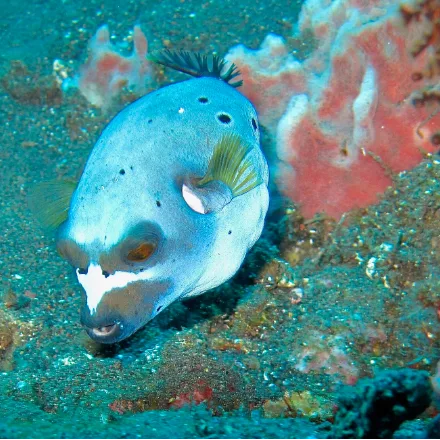
Blackspotted Puffer Occasional
Arothron nigropunctatus
A comically dog-faced puffer, its colour ranging from grey to sunny yellow, carrying a potent toxin in its flesh.
Where: Reef ledges. Best: Nov-Apr.
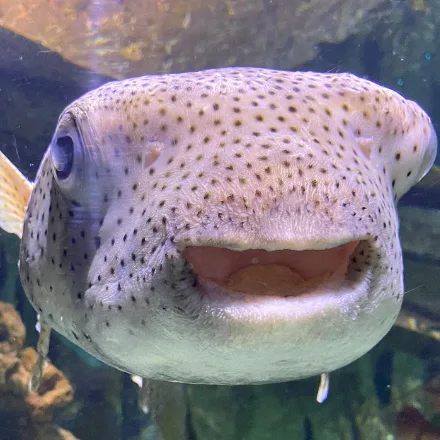
Porcupinefish Occasional
Diodon hystrix
A comical big-eyed fish that gulps water to swell into a spiny ball far too large and prickly to swallow.
Where: Under ledges by day. Best: Nov-Apr.
Zebra Lionfish Occasional
Dendrochirus zebra
A pocket lionfish that herds shrimp into a corner with fanned pectoral fins before swallowing them whole.
Where: Overhangs and swim-throughs. Best: Nov-Apr.
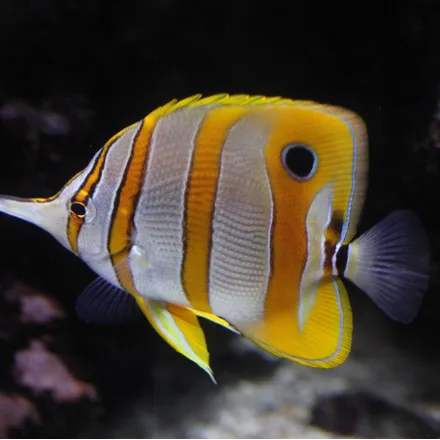
Copperband Butterflyfish Regular
Chelmon rostratus
A white fish banded in copper with a long tweezer snout and a false eyespot to fool predators into striking the wrong end.
Where: Crevices and ledges. Best: Nov-Apr.
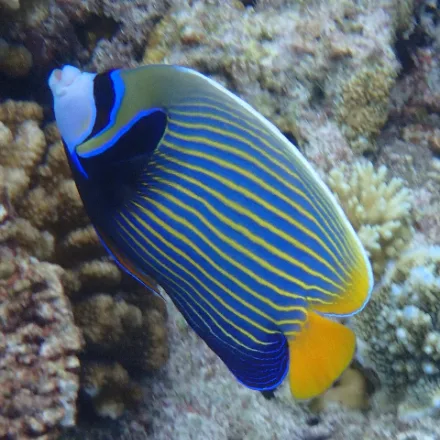
Emperor Angelfish Regular
Pomacanthus imperator
A living work of art in electric blue and yellow stripes, its young disguised in a maze of blue and white rings.
Where: Coral heads at the Bidas. Best: Nov-Apr.
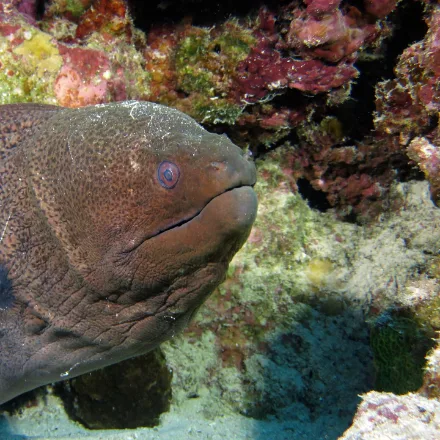
Giant Moray Regular
Gymnothorax javanicus
The largest moray on the reef, its gaping, fanged mouth a fearsome look that is really just how it breathes.
Where: Crevices at the Bidas. Best: Nov-Apr.
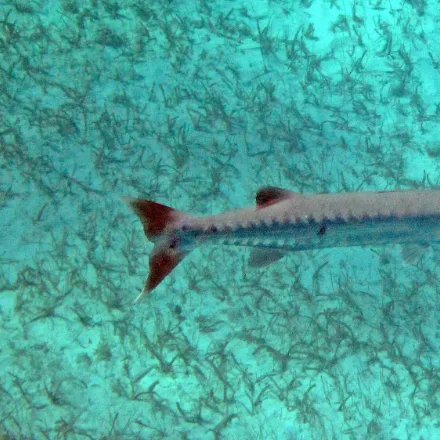
Great Barracuda Regular
Sphyraena barracuda
A silver torpedo with a fearsome underbite, sometimes gathering in slow, glittering spiral schools over the reef.
Where: Midwater off the walls. Best: Nov-Apr.
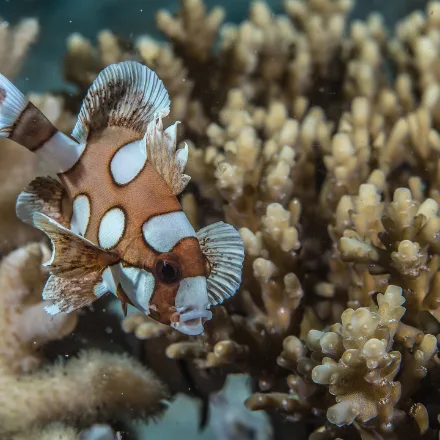
Harlequin Sweetlips Regular
Plectorhinchus chaetodonoides
The juvenile is a brown and white blob that tumbles around the reef pretending to be a toxic flatworm.
Where: Under overhangs at Bida Nai. Best: Nov-Apr. Juveniles do the rolling swim that everyone photographs.
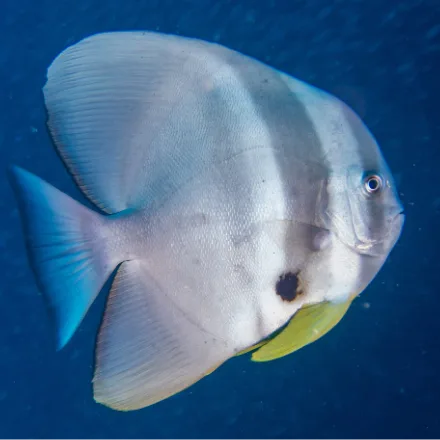
Longfin Batfish Regular
Platax teira
A tall, disc shaped silver fish that drifts around wrecks and reefs with the calm curiosity of a friendly ghost.
Where: Around mooring lines and walls. Best: Nov-Apr.
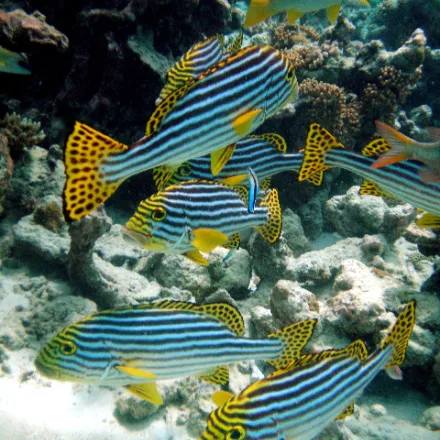
Oriental Sweetlips Regular
Plectorhinchus vittatus
A handsome striped reef fish whose fussy juveniles wobble around in polka dots to mimic toxic flatworms.
Where: Under ledges at cleaning stations. Best: Nov-Apr.
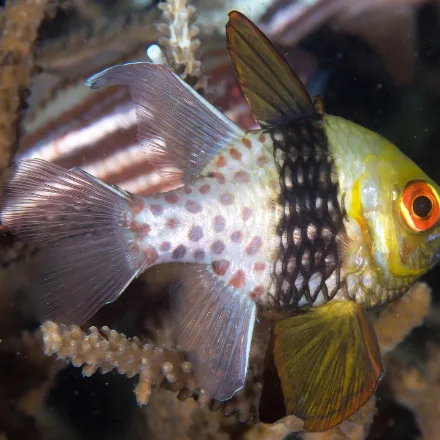
Pyjama Cardinalfish Regular
Sphaeramia nematoptera
Looks like three different fish stitched together, and the male holds the whole clutch of eggs in his mouth for a week.
Where: Branching coral in the shallows. Best: Nov-Apr.
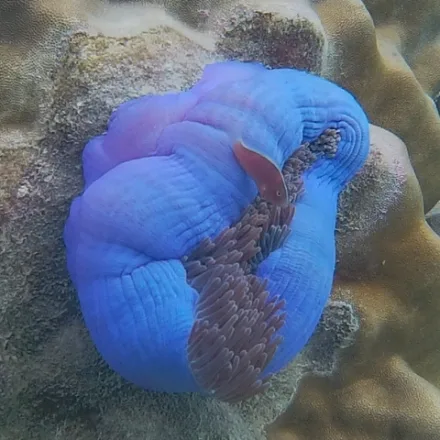
Skunk Anemonefish Regular
Amphiprion akallopisos
A single white stripe down the spine, and a strict queue: when the female dies, the biggest male becomes her.
Where: Anemones on sheltered reef. Best: Nov-Apr.
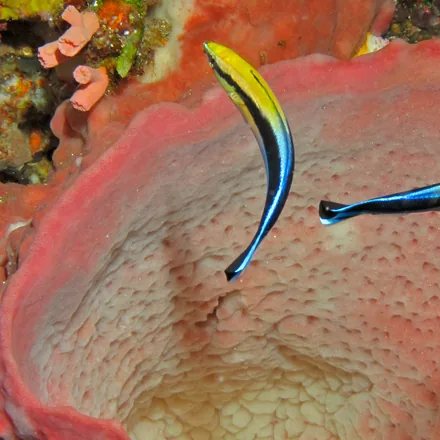
Bluestreak Cleaner Wrasse Common
Labroides dimidiatus
A tiny striped wrasse that runs the reef's health clinic, picking parasites from fish that queue up and even open their mouths for it.
Where: Cleaning stations throughout. Best: Nov-Apr.
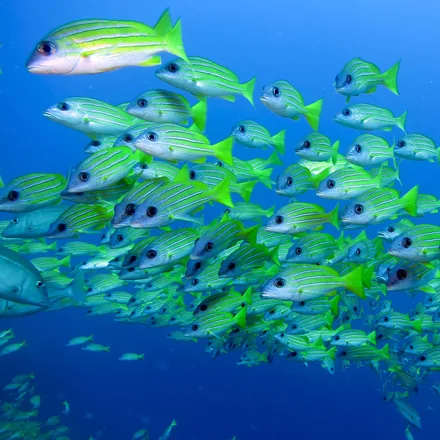
Bluestripe Snapper Common
Lutjanus kasmira
A bright yellow snapper ruled with electric-blue lines, massing in dense, glowing schools around coral heads and wrecks.
Where: Schooling on the reef slopes. Best: Nov-Apr.
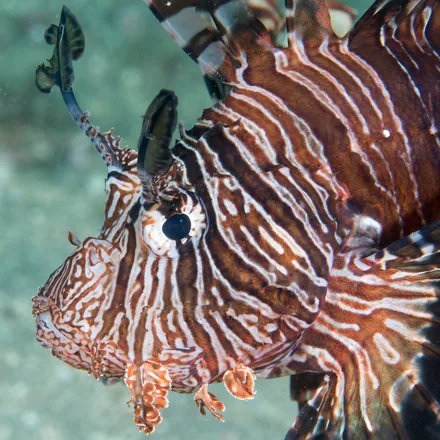
Common Lionfish Common
Pterois volitans
A flamboyant reef hunter fanned out in maroon and white plumes, every graceful spine tipped with venom.
Where: Overhangs throughout. Best: Nov-Apr.
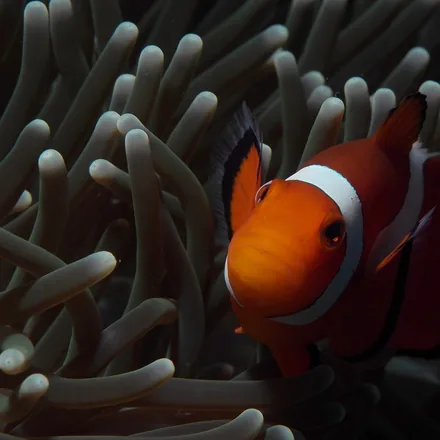
False Clownfish (Clown Anemonefish) Common
Amphiprion ocellaris
The famous orange and white anemonefish, immune to the stinging tentacles that shelter it and every group ruled by a single dominant female.
Where: Anemones on the shallow reef. Best: Nov-Apr.
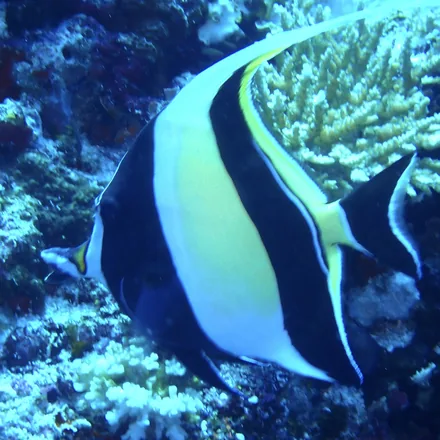
Moorish Idol Common
Zanclus cornutus
An unmistakable disc of black, white and gold trailing a long ribbon fin, one of the most elegant fish on any reef.
Where: Reef throughout. Best: Nov-Apr.
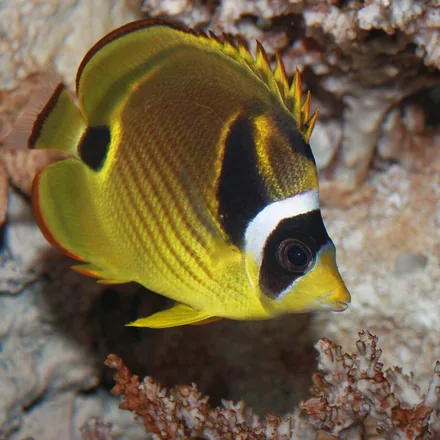
Raccoon Butterflyfish Common
Chaetodon lunula
A golden butterflyfish masked like a raccoon, drifting the reef in pairs by day and roaming at night.
Where: Reef flats. Best: Nov-Apr.
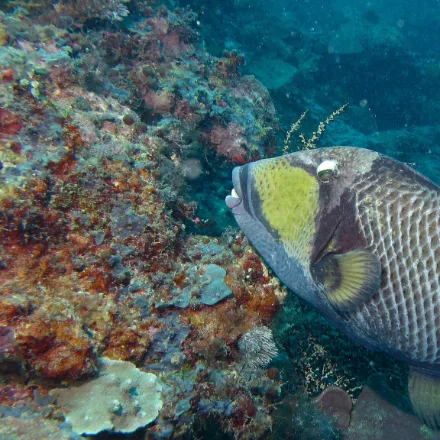
Titan Triggerfish Regular
Balistoides viridescens
The reef's bad tempered bulldozer, a big triggerfish that will charge divers who stray over its nest.
Where: Reef tops, nesting in sandy craters. Best: Nov-Apr. Nesting fish will charge. Swim horizontally away, never up.
Sharks and rays
4 species
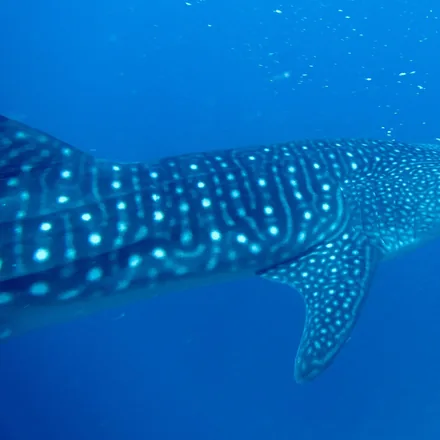
Whale Shark Rare Endangered
Rhincodon typus
The biggest fish in the ocean, a spotted, bus sized filter feeder and the undisputed holy grail of tropical diving.
Where: Bida Nok and Bida Nai, and the outer walls. Best: Feb-Apr.
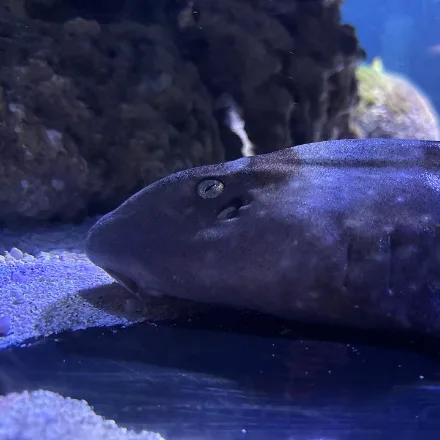
Whitespotted Bamboo Shark Occasional Endangered
Chiloscyllium plagiosum
A small, slow shark that walks along the bottom on its fins and can survive hours in a tide pool with almost no oxygen.
Where: Under ledges at night. Best: Nov-Apr, night.
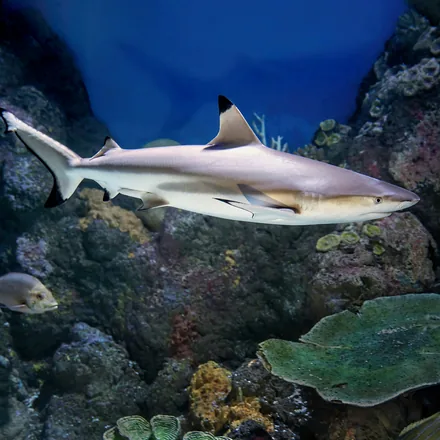
Blacktip Reef Shark Common Vulnerable
Carcharhinus melanopterus
The neat little reef shark of the shallows, its black-tipped fins often cutting the surface over sun-lit sand flats.
Where: Shallow reef flats at Maya Bay and around Koh Phi Phi Ley. Best: Nov-Apr, early morning. Maya Bay's shark nursery is the most reliable shark snorkel in Thailand. Go at opening time.
Bluespotted Ribbontail Ray Regular
Taeniura lymma
A small, brilliantly marked ray, olive gold studded with electric blue spots, tucked under coral ledges.
Where: Sand pockets between coral heads. Best: Nov-Apr.
Reef invertebrates
15 species
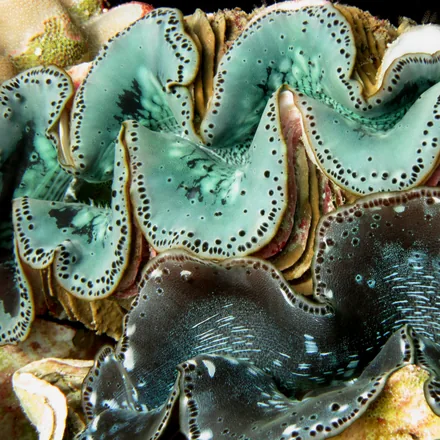
Giant Clam Occasional Critically Endangered
Tridacna gigas
The largest shellfish on Earth, a metre-wide clam that farms algae in its own rippling, jewel-coloured flesh.
Where: Shallow reef tops. Best: Nov-Apr.
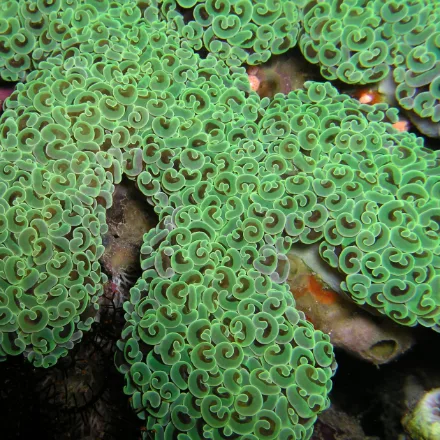
Anchor Coral Occasional Vulnerable
Euphyllia ancora
Every tentacle ends in a fat hammer-shaped tip, so the whole colony looks like a field of tiny anchors.
Where: Sheltered slopes. Best: Nov-Apr.
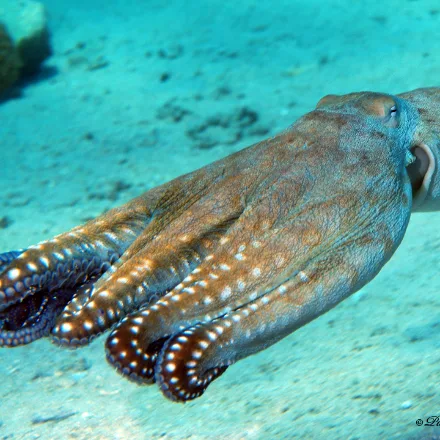
Day Octopus Occasional
Octopus cyanea
A shape-shifting reef genius that can change colour and texture in a blink and pour its boneless body through a coin-sized gap.
Where: Reef and rubble by day. Best: Nov-Apr.
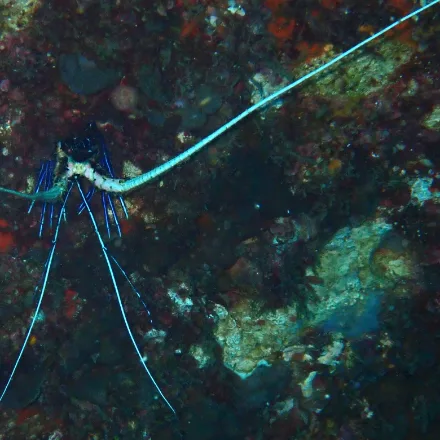
Painted Spiny Lobster Occasional
Panulirus versicolor
Has no crushing claws at all, and defends itself instead by rasping out a screech you can hear underwater.
Where: Crevices under ledges. Best: Nov-Apr, night.
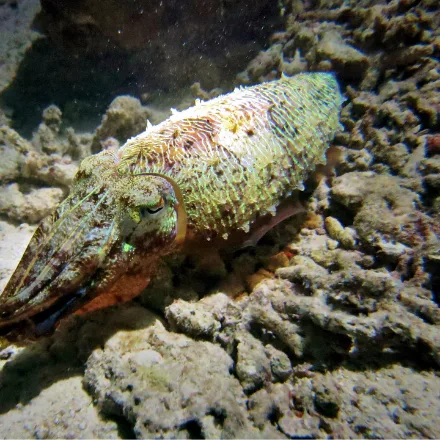
Broadclub Cuttlefish Occasional
Sepia latimanus
A big reef cuttlefish that hypnotises prey with bands of colour pulsing down its arms.
Where: Reef edges and sand. Best: Nov-Apr.
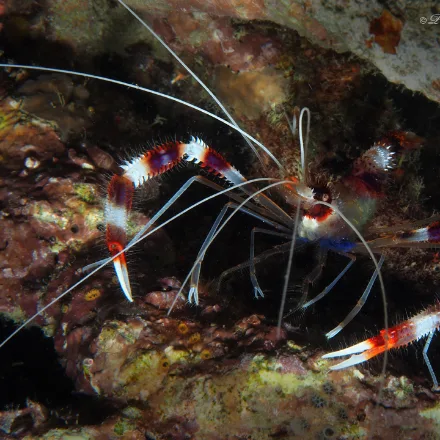
Banded Coral Shrimp Regular
Stenopus hispidus
A candy-striped shrimp with impossibly long white antennae that it waves to advertise its parasite-cleaning service.
Where: Cleaning stations. Best: Nov-Apr.
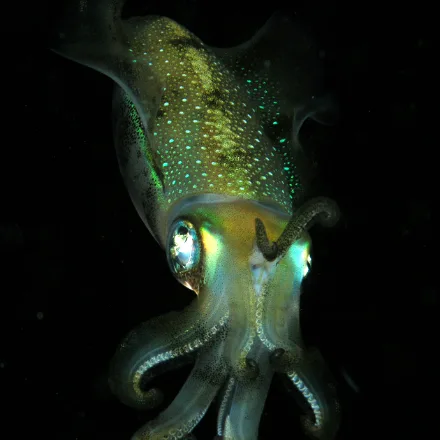
Bigfin Reef Squid Regular
Sepioteuthis lessoniana
Talks in colour: it can run one message down its left side and a different one down its right at the same time.
Where: Midwater on night dives. Best: Nov-Apr.
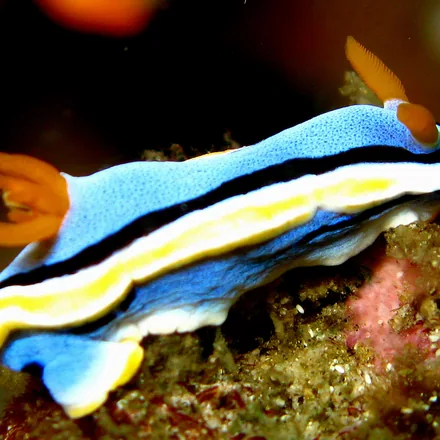
Chromodoris Nudibranch Regular
Chromodoris species
A tiny sea slug in outrageous colours that borrows toxins from the sponges it eats and flaunts them as a warning.
Where: Sponges on the walls. Best: Nov-Apr.
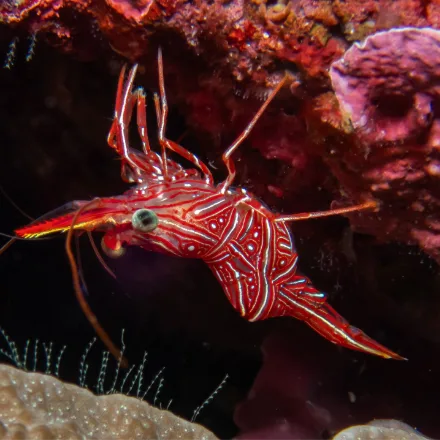
Durban Dancing Shrimp Regular
Rhynchocinetes durbanensis
Packs into caves in the hundreds, and the whole mass sways together when a torch beam crosses them.
Where: Overhangs and crevices. Best: Nov-Apr.
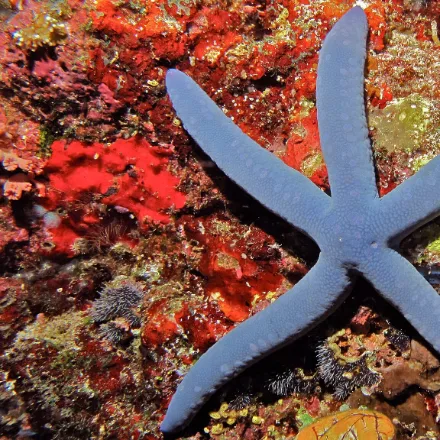
Blue Sea Star Common
Linckia laevigata
An almost unreal cobalt blue starfish scattered across the shallows, able to regrow a whole body from a single lost arm.
Where: Reef flats. Best: Nov-Apr.
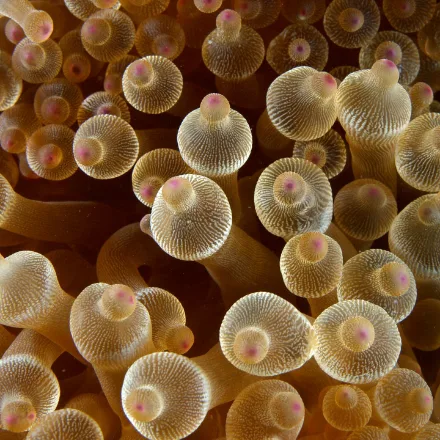
Bulb-tentacle Anemone Common
Entacmaea quadricolor
The tentacles only swell into bulbs when an anemonefish is living in it, and nobody is quite sure why.
Where: Reef flats. Best: Nov-Apr.
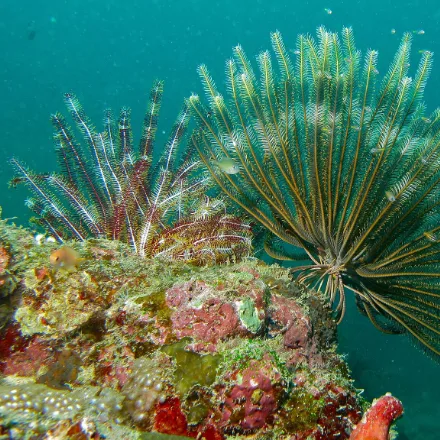
Feather Star (Crinoid) Common
Comatulida species
A living bouquet of feathery arms that clings to high points on the reef by day and can crawl, or even swim, to a better spot.
Where: Sea fans and coral in current. Best: Nov-Apr.
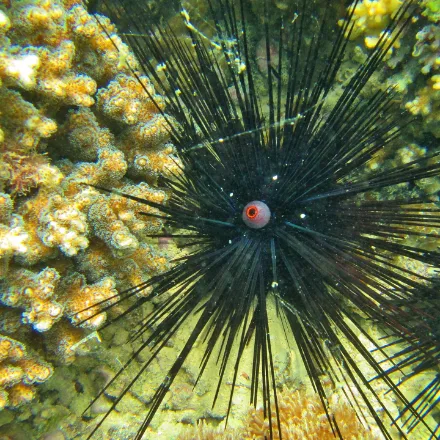
Long-spined Sea Urchin Common
Diadema setosum
A pincushion of needle-sharp black spines with a glowing orange ring, grazing algae and quietly shaping the reef.
Where: Rubble and reef base at night. Best: Nov-Apr.
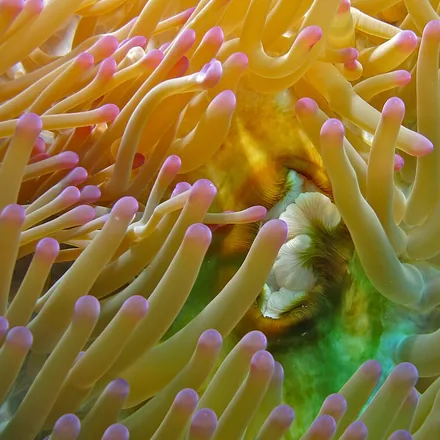
Magnificent Sea Anemone Common
Heteractis magnifica
A great carpet of stinging tentacles that is home and fortress to the anemonefish, a partnership at the heart of the reef.
Where: Shallow reef tops. Best: Nov-Apr.
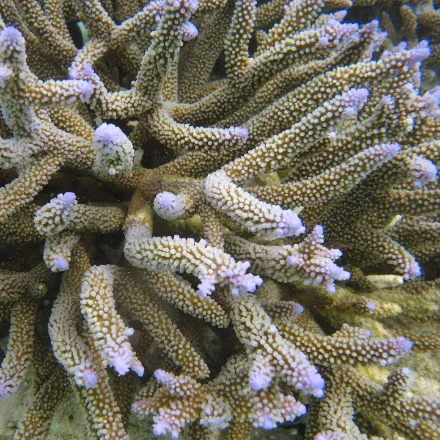
Staghorn Coral Common
Acropora species
The fast-growing branching coral that builds the living thickets of the reef, nursery and shelter for a whole community.
Where: Shallow reef flats. Best: Nov-Apr.
Planning and responsible watching
Go early. The blacktip sharks in Maya Bay are most reliable in the first hour, and the Bidas are quiet before the day boats. Maya Bay has entry rules and closed periods, so check the current position before booking. Nothing on this page should be touched, and titan triggerfish will make that point during nesting season. Choose operators using mooring buoys rather than anchors. If you are getting in the water, the Green Fins code of conduct, run by the Reef-World Foundation with UNEP and first trialled in Thailand, is the fifteen-point standard for snorkelling and diving without damaging the reef.
Find Phi Phi snorkelling and Bida dive trips
Some links on this page are affiliate links. If you book through them, Wildseer may earn a small commission at no extra cost to you.
Frequently asked questions
Can you swim with sharks at Phi Phi?
Yes. Maya Bay holds a blacktip reef shark nursery and they are visible from the surface most mornings. They are harmless to swimmers; keep your distance and do not chase them.
What is the best dive site at Phi Phi?
Bida Nok and Bida Nai, the two limestone pinnacles south of Phi Phi Ley, for reef fish, leopard coralgrouper, turtles and the occasional whale shark between February and April.
When is the best time to visit Phi Phi for marine life?
November to April, when the Andaman is calm and visibility is at its best. May to October brings rough water and reduced boat access.
Explore Thailand wildlife by group
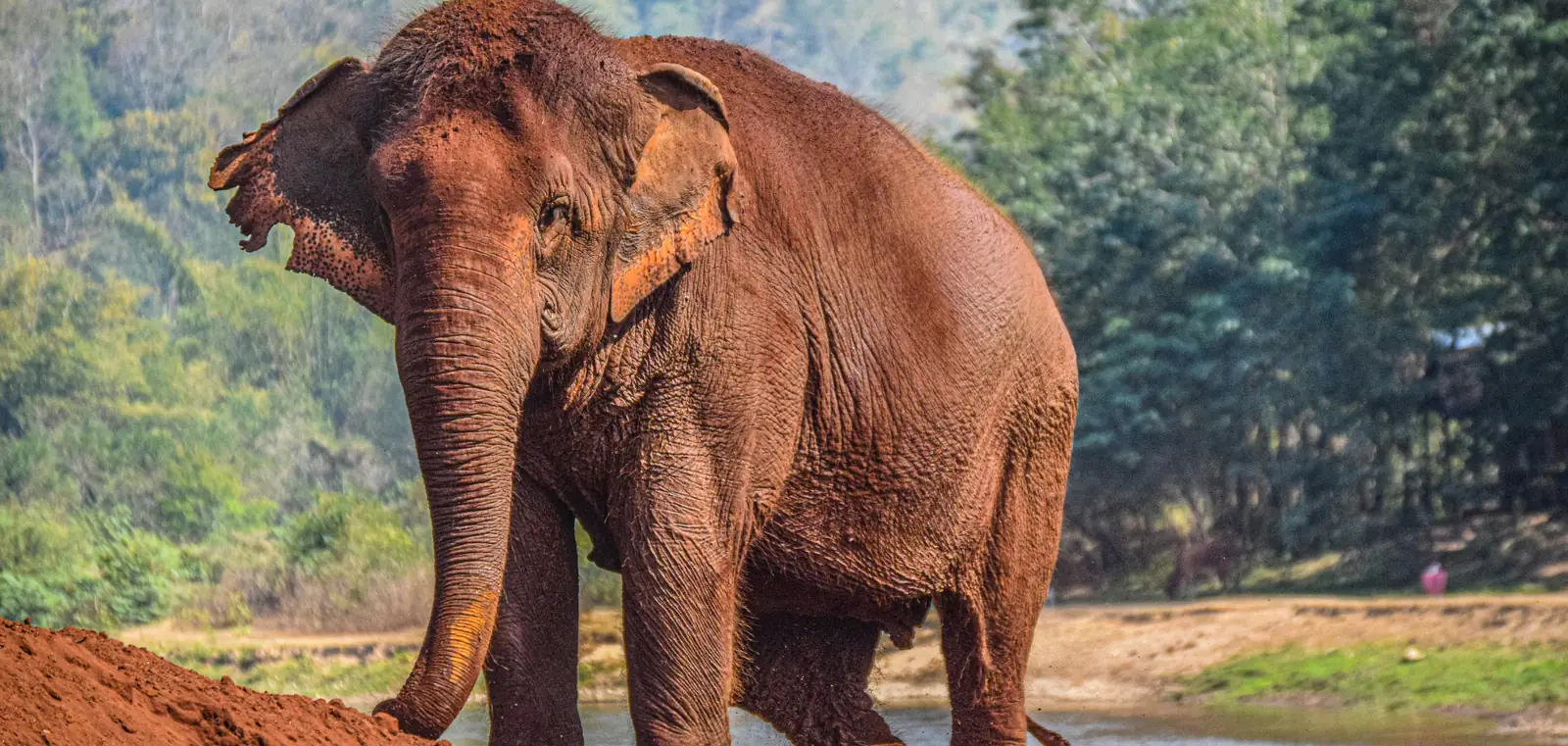 Mammals of Thailand
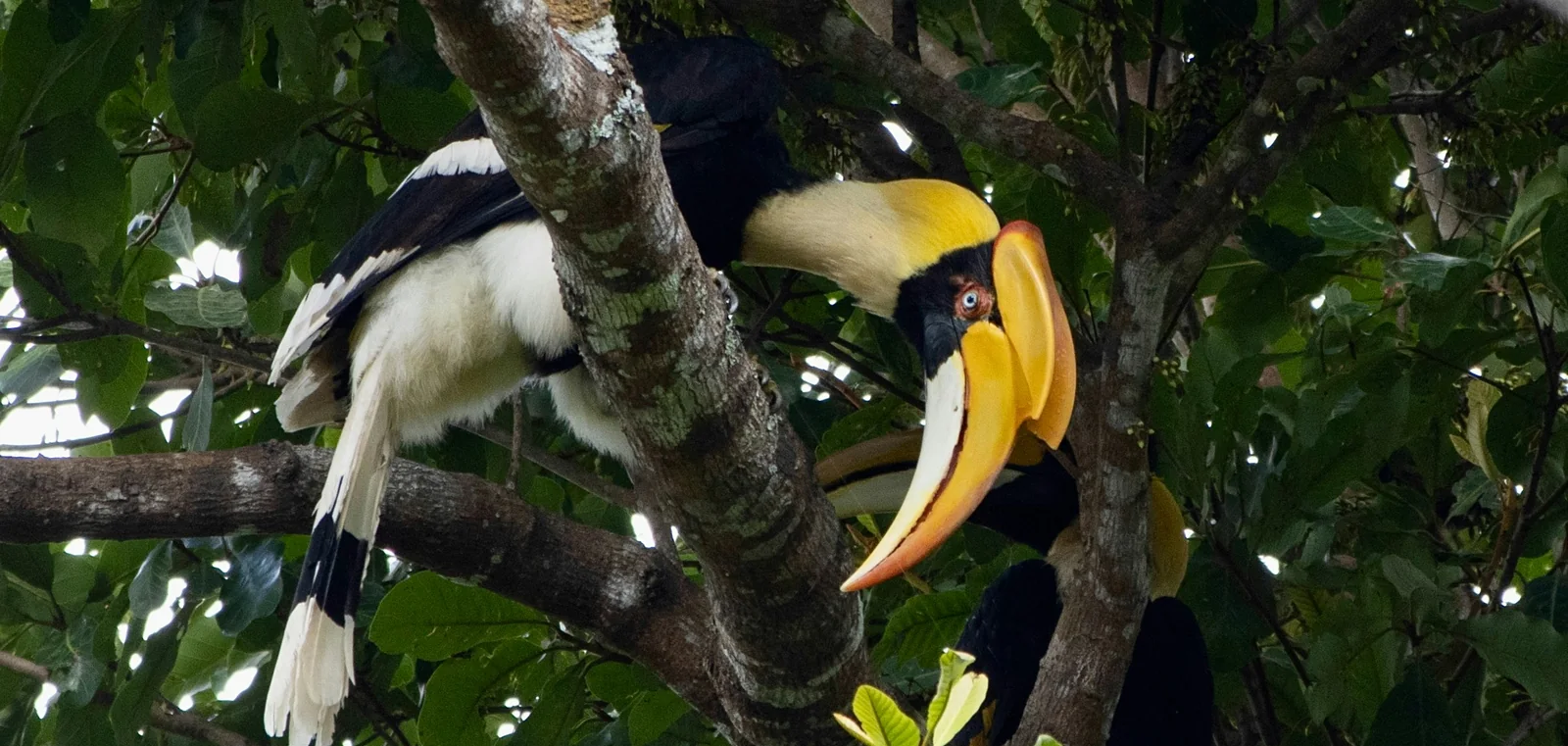 Birds of Thailand
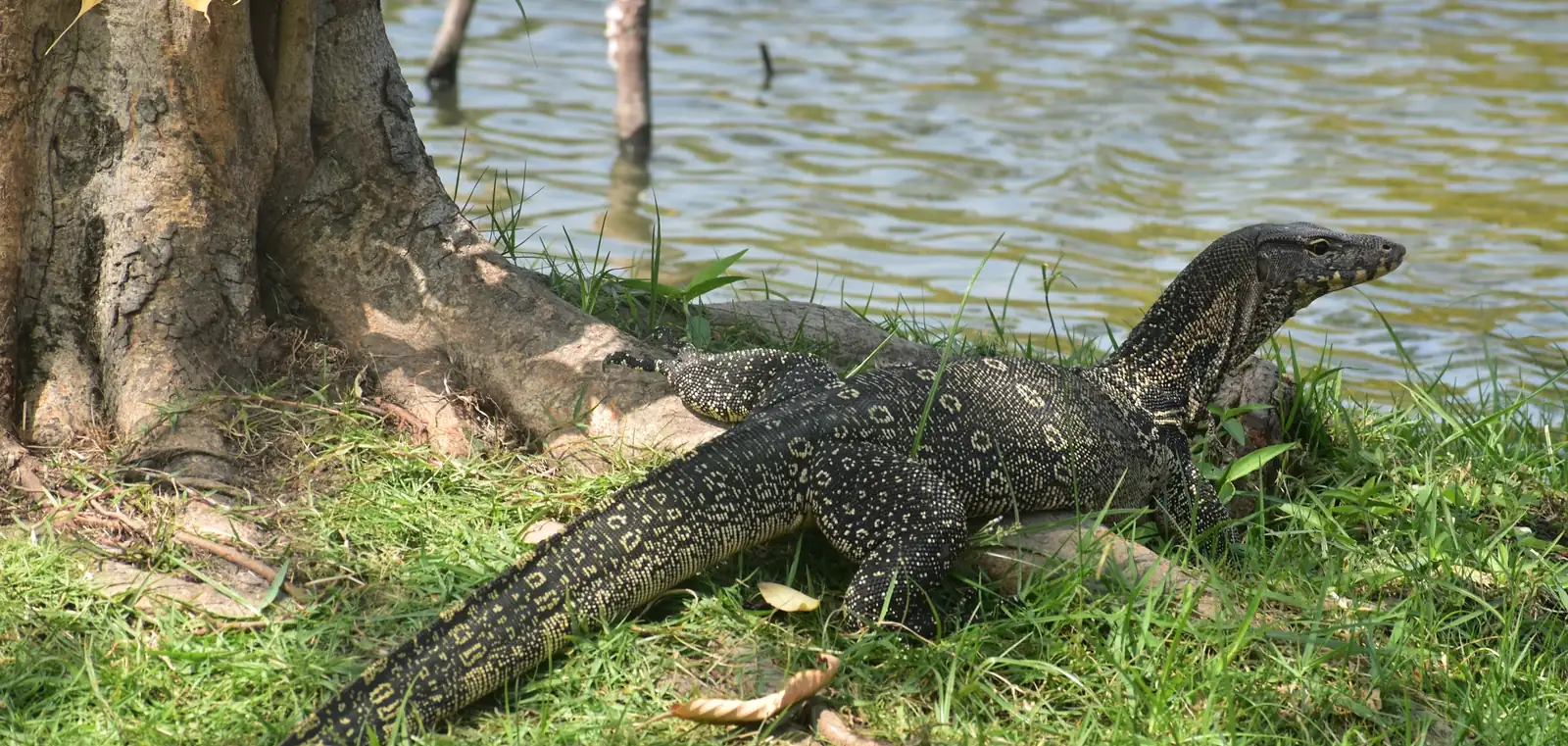 Reptiles and Amphibians of Thailand
 Fish of Thailand
 Sharks and Rays of Thailand
 Reef Invertebrates of Thailand
 Insects and Spiders of Thailand
Part of the Wildlife in Thailand guide.