
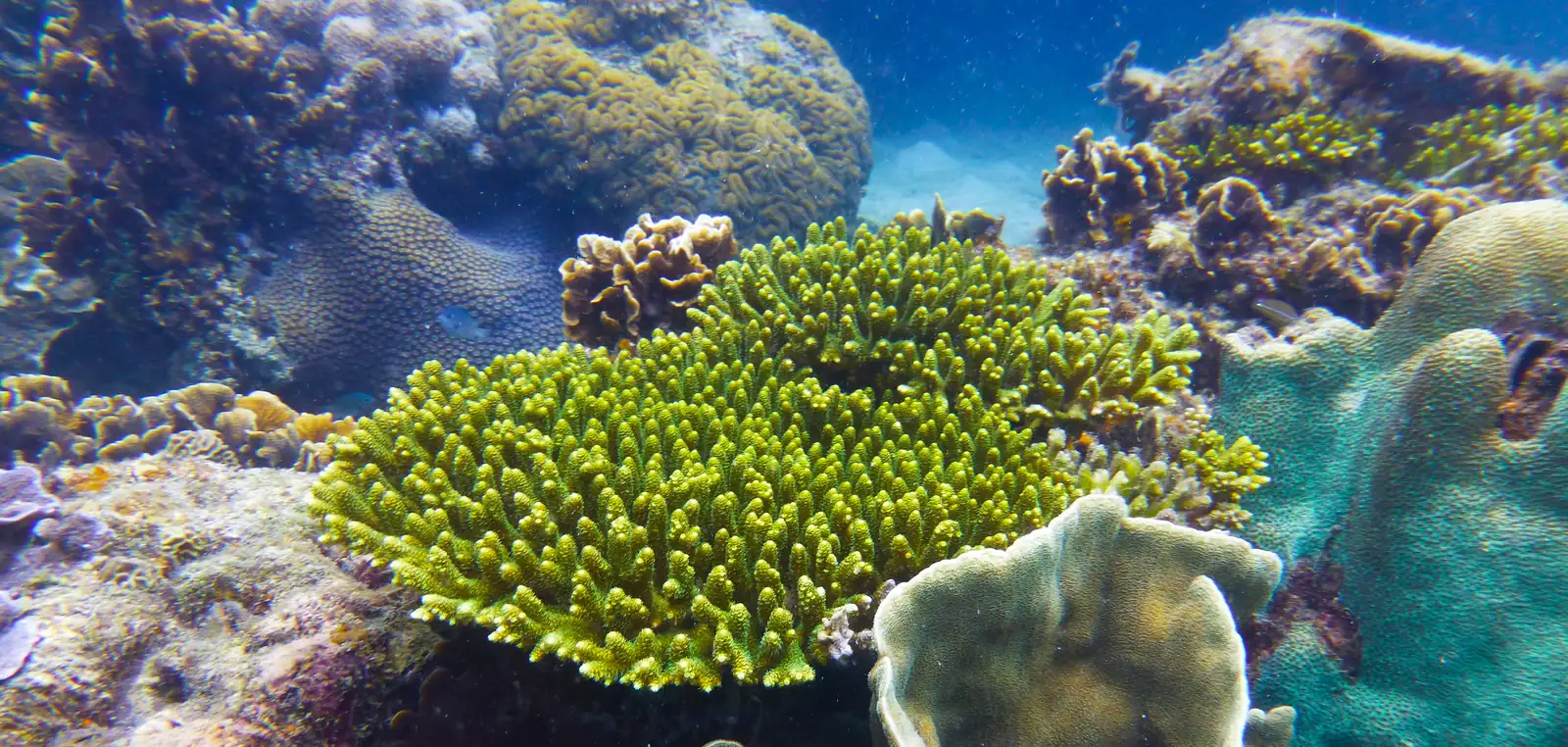
The Gulf is not the Andaman, and that is the point. Visibility is lower, the coral is patchier, and the cast is different: granite boulder reefs instead of walls, whale sharks at a single famous pinnacle, and some of the best muck diving in Thailand for anyone who likes small strange animals more than big blue ones.
This page covers what is actually recorded around Koh Samui, Koh Tao, Koh Phangan and the Ang Thong islands, with the site, the season and honest odds. It also flags the two things that can hurt you here, box jellyfish and the blue-ringed octopus, because most guides do not.
Highlights
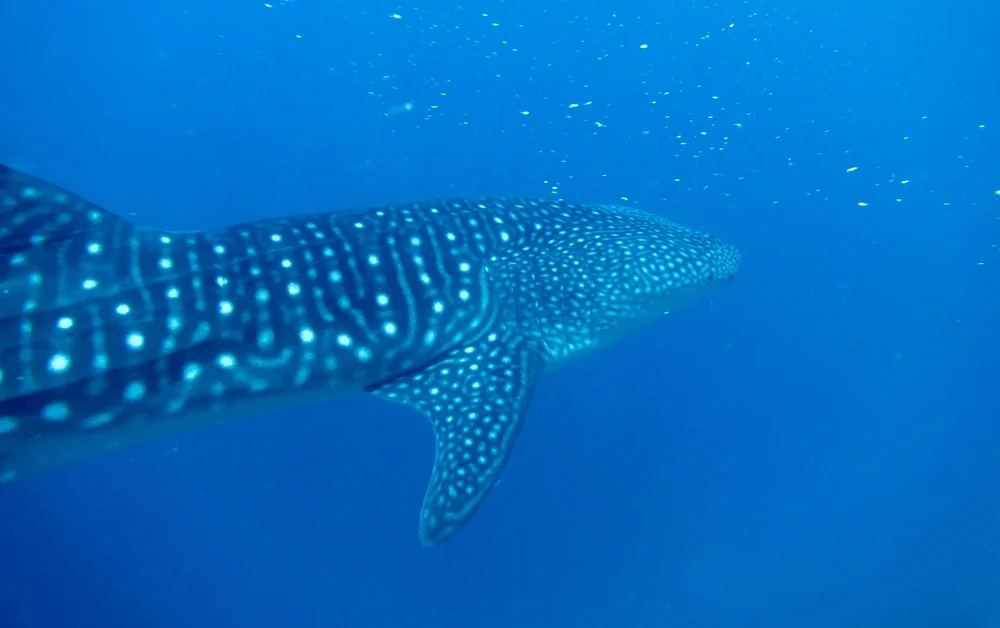
Whale Shark
The biggest fish in the ocean, a spotted, bus sized filter feeder and the undisputed holy grail of tropical diving. Where: Sail Rock and the pinnacles between Samui and Koh Tao. Best: Year round, best Feb-Sep, peak Mar-May.
Bryde's Whale
A warm-water baleen whale that lunges up through bait balls with its mouth wide open. Where: Open Gulf water on the crossings, and the upper Gulf feeding grounds. Best: Sep-Nov.
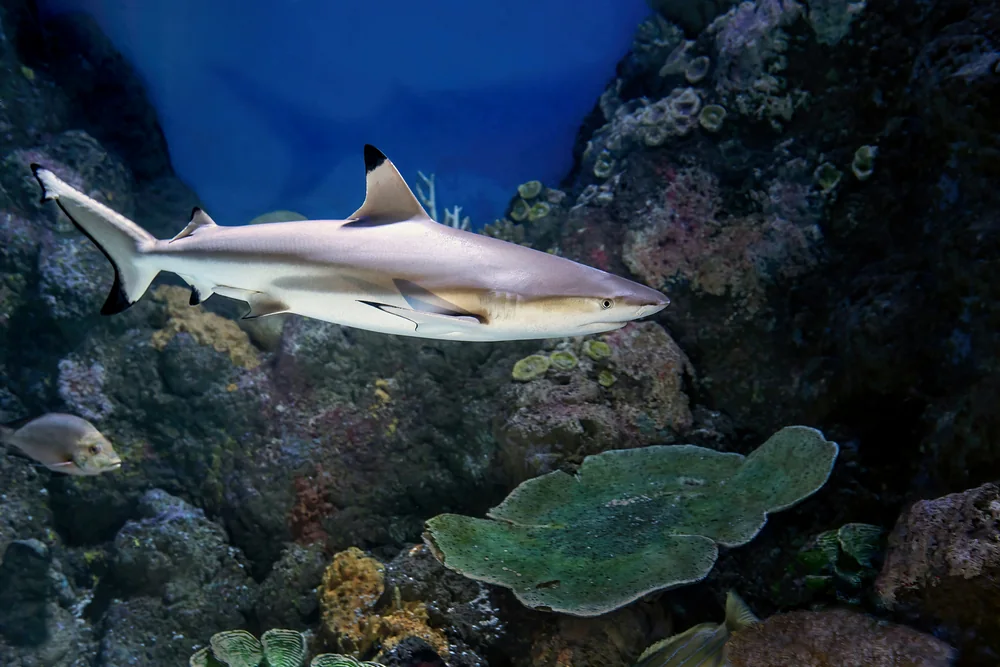
Blacktip Reef Shark
The neat little reef shark of the shallows, its black-tipped fins often cutting the surface over sun-lit sand flats. Where: Shark Bay on Koh Tao and shallow reef flats. Best: Year round, best Feb-Sep.
Mandarinfish
Its colours are not pigment but structural blue, a pigment cell type known from only one other genus of fish on earth. Where: Rubble shallows at dusk, Koh Tao. Best: Year round, best Feb-Sep, dusk.
Blue-ringed Octopus
A thumb-sized octopus whose glowing blue rings warn of venom with no antidote. Where: Rubble and shell debris in the shallows. Best: Year round, best Feb-Sep.
Mammals
5 species
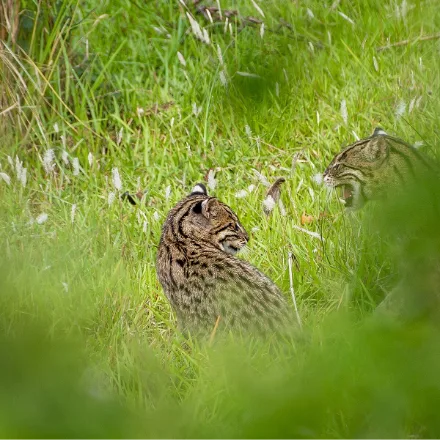
Fishing Cat Rare Vulnerable
Prionailurus viverrinus
A wild cat that dives for fish, with partially webbed toes and a genuine love of swimming.
Where: Mangrove and marsh on the mainland coast opposite. Best: Year round, night.
Indo-Pacific Finless Porpoise Rare Vulnerable
Neophocaena phocaenoides
A shy, finless little porpoise with a smiling face that surfaces without a splash.
Where: Calm shallow coastal water. Best: Year round, best Feb-Sep.
Indo-Pacific Humpback Dolphin Occasional Vulnerable
Sousa chinensis
Born dark grey and turning pink with age, the colour coming from blood vessels under unpigmented skin.
Where: Shallow coastal water and river mouths. Best: Year round, best Feb-Sep.
Indo-Pacific Bottlenose Dolphin Regular
Tursiops aduncus
The classic bottlenose of warm coasts, sociable, clever and quick to ride a bow wave.
Where: Open water between the islands. Best: Year round, best Feb-Sep.
Bryde's Whale Occasional
Balaenoptera edeni
A warm-water baleen whale that lunges up through bait balls with its mouth wide open.
Where: Open Gulf water on the crossings, and the upper Gulf feeding grounds. Best: Sep-Nov. Lunge-feeding at the surface in the upper Gulf is one of the great Thai wildlife sights.
Birds
11 species
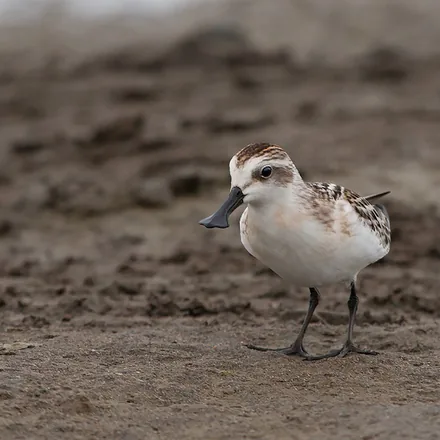
Spoon-billed Sandpiper Rare Critically Endangered
Calidris pygmaea
One of the world's rarest and most charismatic shorebirds, tiny and armed with an unmistakable spatula bill.
Where: Inner Gulf salt pans north of here. Best: Nov-Mar.
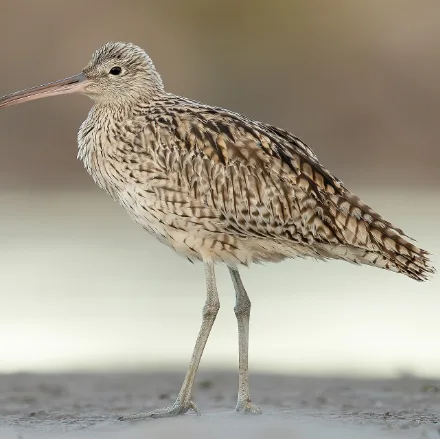
Far Eastern Curlew Rare Endangered
Numenius madagascariensis
The longest bill of any wader in the world, curved like a sickle and used to reach crabs deep in the mud.
Where: Mainland mudflats. Best: Nov-Mar.
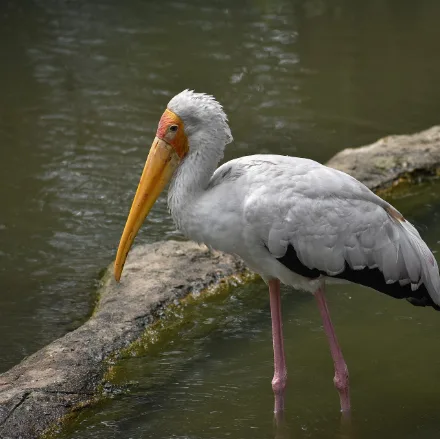
Milky Stork Rare Endangered
Mycteria cinerea
A rare, ghostly white stork of the mangroves, its bare face flushing from yellow to red in the breeding season.
Where: Coastal mangrove on the mainland. Best: Year round.
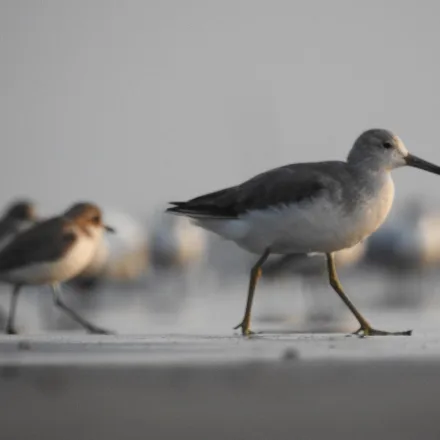
Nordmann's Greenshank Rare Endangered
Tringa guttifer
One of the world's rarest waders, a stocky greenshank that winters on Thai mudflats among thousands of commoner shorebirds.
Where: Inner Gulf mudflats. Best: Nov-Mar.
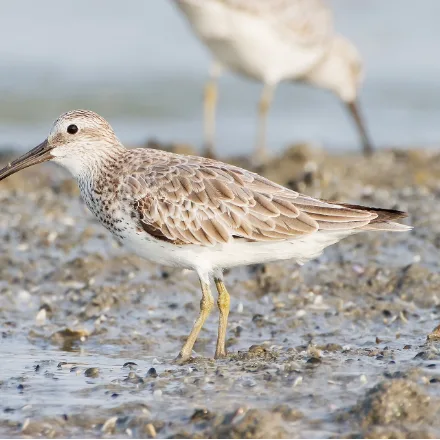
Great Knot Occasional Endangered
Calidris tenuirostris
Flies from Siberia to Australia with a single refuelling stop, and losing that one mudflat has nearly finished the species.
Where: Mainland mudflats. Best: Nov-Mar.
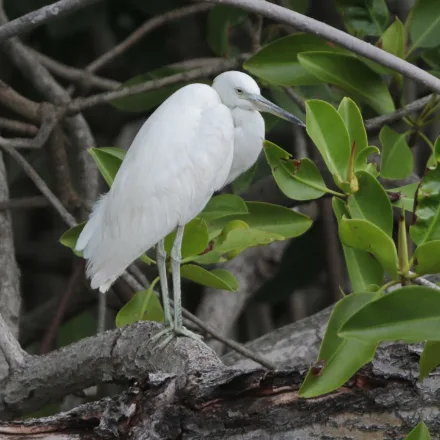
Chinese Egret Rare Vulnerable
Egretta eulophotes
Hunts by sprinting across the mudflat with wings half open, a running dash that no other egret uses.
Where: Tidal flats on the mainland shore. Best: Nov-Mar.
Malaysian Plover Rare
Anarhynchus peronii
Nests in a scrape on open beach so well camouflaged that the greatest danger is being stepped on.
Where: Quiet sandy beaches. Best: Year round.
Brown Booby Rare
Sula leucogaster
Dives from twenty metres and hits the water at over sixty kilometres an hour, with air sacs in the skull absorbing the shock.
Where: Offshore rocks and open water. Best: Year round.
Bridled Tern Occasional
Onychoprion anaethetus
Spends most of the year entirely at sea, feeding on fish driven to the surface by tuna hunting below.
Where: Rocky islets and boat wakes. Best: Year round.
Lesser Frigatebird Occasional
Fregata ariel
Cannot land on water despite living over it, and stays airborne for weeks at a time by riding thermals in its sleep.
Where: Offshore on the crossings. Best: Year round.
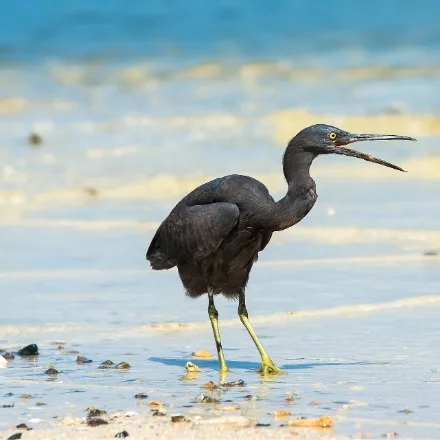
Pacific Reef Heron Regular
Egretta sacra
Comes in two entirely different colours, charcoal grey and pure white, and both can hatch in the same nest.
Where: Rocky shores at low tide. Best: Year round.
Reptiles and amphibians
2 species
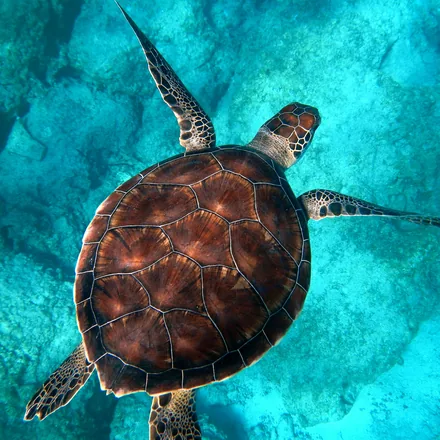
Green Sea Turtle Regular Endangered
Chelonia mydas
The great grazing turtle of the tropics, the only sea turtle that turns vegetarian as an adult.
Where: Seagrass and shallow reef around Koh Tao and the Ang Thong islands. Best: Year round, best Feb-Sep.
Loggerhead Turtle Ultra rare Vulnerable
Caretta caretta
Jaws powerful enough to crush a queen conch, and it navigates ocean basins by reading the earth's magnetic field.
Where: Offshore water. Best: Year round, best Feb-Sep.
Fish
11 species
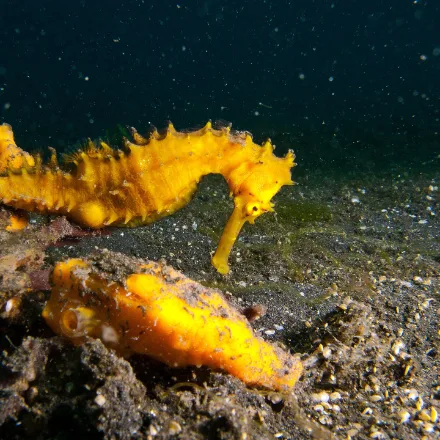
Thorny Seahorse Rare Vulnerable
Hippocampus histrix
Covered in long sharp spines and able to shift colour to match whatever it has wrapped its tail around.
Where: Sponge rubble and seagrass margins. Best: Year round, best Feb-Sep.
Mandarinfish Rare
Synchiropus splendidus
Its colours are not pigment but structural blue, a pigment cell type known from only one other genus of fish on earth.
Where: Rubble shallows at dusk, Koh Tao. Best: Year round, best Feb-Sep, dusk. A dusk dive at a known rubble patch is the only realistic way to see the mating display.
Blue-ringed Angelfish Occasional
Pomacanthus annularis
Named for a single electric blue ring above the gill, painted on a fish that is otherwise swept with gold.
Where: Granite boulder reef. Best: Year round, best Feb-Sep.
Golden Trevally Occasional
Gnathanodon speciosus
The bright yellow juveniles ride shotgun with sharks and rays, sheltering inches from the mouth of the thing that could eat them.
Where: Around pinnacles, often shadowing larger fish. Best: Year round, best Feb-Sep.
Longhorn Cowfish Occasional
Lactoria cornuta
A box of armour with horns front and back, that hunts by blowing jets of water into the sand.
Where: Seagrass and rubble. Best: Year round, best Feb-Sep.
Saddleback Anemonefish Occasional
Amphiprion polymnus
The one anemonefish that lives out on open sand rather than the reef, in a host buried up to its mouth.
Where: Carpet anemones on sandy shallows. Best: Year round, best Feb-Sep.
Zebra Lionfish Occasional
Dendrochirus zebra
A pocket lionfish that herds shrimp into a corner with fanned pectoral fins before swallowing them whole.
Where: Overhangs and wrecks. Best: Year round, best Feb-Sep.
Orbicular Batfish Regular
Platax orbicularis
A tall silver disc of a fish that drifts up curiously to inspect its own reflection in your mask.
Where: Around pinnacles and mooring lines. Best: Year round, best Feb-Sep.
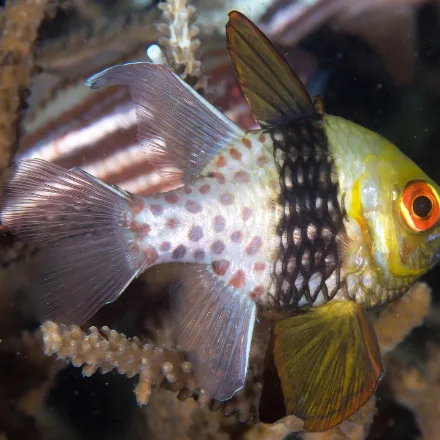
Pyjama Cardinalfish Regular
Sphaeramia nematoptera
Looks like three different fish stitched together, and the male holds the whole clutch of eggs in his mouth for a week.
Where: Branching coral in the shallows. Best: Year round, best Feb-Sep.
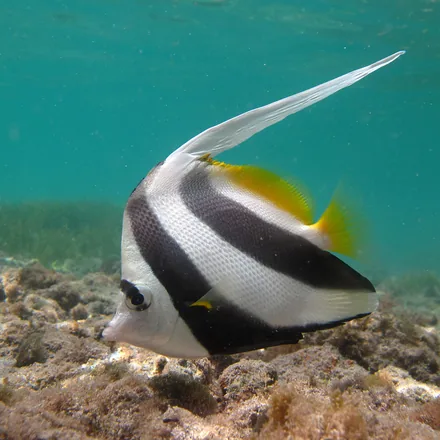
Longfin Bannerfish Common
Heniochus acuminatus
A black-and-white pennant fish trailing a long white banner over the reef.
Where: Coral heads and boulders. Best: Year round, best Feb-Sep.
Crocodile Flathead Occasional
Cymbacephalus beauforti
Flattened into the sand with only two lacework eyes showing, waiting for something to swim within a body length.
Where: Sand and rubble. Best: Year round, best Feb-Sep.
Sharks and rays
7 species
Largetooth Sawfish Ultra rare Critically Endangered
Pristis pristis
A seven metre ray with a chainsaw for a nose, and almost certainly gone from Thai waters.
Where: Historically the shallow Gulf and river mouths. Best: No current season. Almost certainly extirpated from Thai waters.
Whitespotted Wedgefish Ultra rare Critically Endangered
Rhynchobatus australiae
Its fins are the single most valuable in the global shark fin trade, which is why it has all but disappeared.
Where: Sand beside reef, historically. Best: Year round, best Feb-Sep. Effectively gone from the Gulf. Recorded here for honesty rather than expectation.
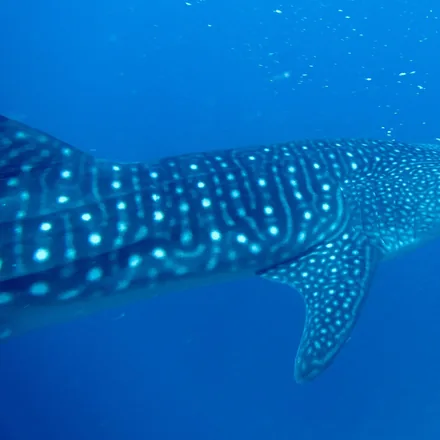
Whale Shark Rare Endangered
Rhincodon typus
The biggest fish in the ocean, a spotted, bus sized filter feeder and the undisputed holy grail of tropical diving.
Where: Sail Rock and the pinnacles between Samui and Koh Tao. Best: Year round, best Feb-Sep, peak Mar-May. Sail Rock is the Gulf's whale shark site. Day boats run from Samui, Phangan and Koh Tao.
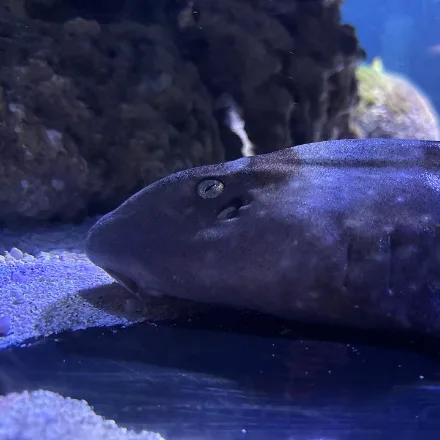
Whitespotted Bamboo Shark Occasional Endangered
Chiloscyllium plagiosum
A small, slow shark that walks along the bottom on its fins and can survive hours in a tide pool with almost no oxygen.
Where: Under coral ledges at night around Koh Tao. Best: Year round, best Feb-Sep, night.
Cowtail Stingray Occasional Vulnerable
Pastinachus sephen
Named for the broad flap of skin hanging under its tail like a cow's tail, unique among rays.
Where: Sandy shallows and seagrass. Best: Year round, best Feb-Sep.
Jenkins Whipray Occasional Vulnerable
Pateobatis jenkinsii
A big sand-flat ray with a ridge of enlarged thorns down its spine and a tail twice the length of its body.
Where: Sand flats between coral heads. Best: Year round, best Feb-Sep.
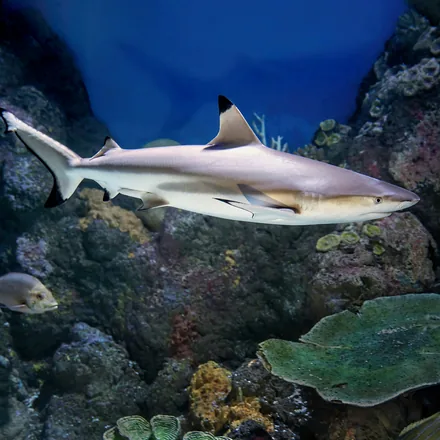
Blacktip Reef Shark Common Vulnerable
Carcharhinus melanopterus
The neat little reef shark of the shallows, its black-tipped fins often cutting the surface over sun-lit sand flats.
Where: Shark Bay on Koh Tao and shallow reef flats. Best: Year round, best Feb-Sep. Shark Bay is a snorkel, not a dive, and the sharks are there most mornings.
Reef invertebrates
28 species
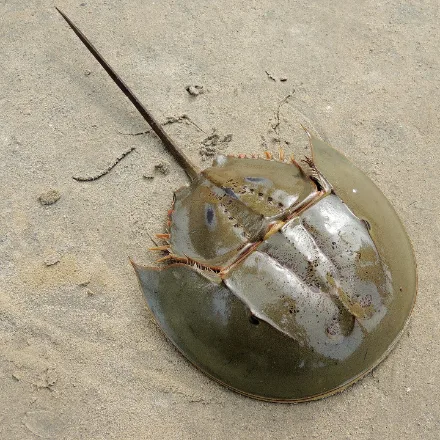
Indo-Pacific Horseshoe Crab Rare Endangered
Tachypleus gigas
Not a crab at all, closer to a spider, and its blue blood is used worldwide to test every injectable drug for contamination.
Where: Muddy shores on spring tides. Best: Around the full and new moon.
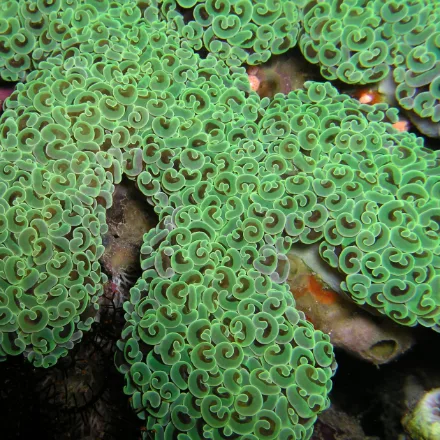
Anchor Coral Occasional Vulnerable
Euphyllia ancora
Every tentacle ends in a fat hammer-shaped tip, so the whole colony looks like a field of tiny anchors.
Where: Sheltered bays. Best: Year round, best Feb-Sep.
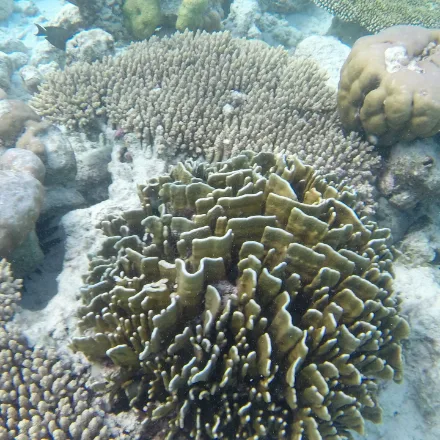
Blue Coral Occasional Vulnerable
Heliopora coerulea
The only coral on earth with a blue skeleton, hidden under brown tissue until the animal dies.
Where: Shallow high-energy reef. Best: Year round, best Feb-Sep.
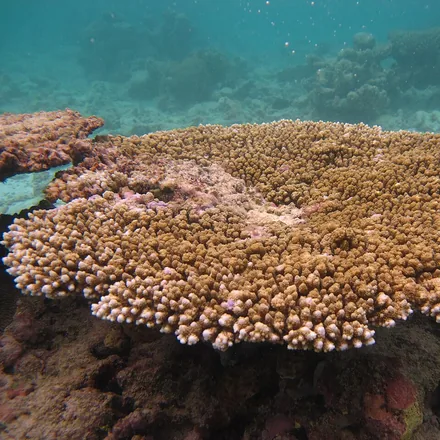
Table Coral Common
Acropora hyacinthus
Grows outward faster than it grows up, spreading a flat platform that shades out every competitor beneath it.
Where: Shallow reef around Koh Tao. Best: Year round, best Feb-Sep.
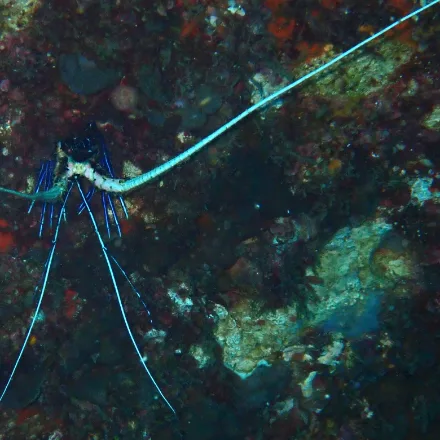
Painted Spiny Lobster Occasional
Panulirus versicolor
Has no crushing claws at all, and defends itself instead by rasping out a screech you can hear underwater.
Where: Crevices under boulders. Best: Year round, best Feb-Sep, night.
Mimic Octopus Ultra rare
Thaumoctopus mimicus
Impersonates lionfish, flatfish and sea snakes, choosing the right disguise for whichever predator is bothering it.
Where: Silty sand near river mouths. Best: Year round, best Feb-Sep.
Berry's Bobtail Squid Rare
Euprymna berryi
Farms glowing bacteria in a light organ and uses them to erase its own shadow from the moonlit sand below.
Where: Sand at night. Best: Year round, best Feb-Sep, night.
Blue-ringed Octopus Rare
Hapalochlaena
A thumb-sized octopus whose glowing blue rings warn of venom with no antidote.
Where: Rubble and shell debris in the shallows. Best: Year round, best Feb-Sep. Small, beautiful and capable of killing an adult. Never handle anything in rubble here.
Bobbit Worm Rare
Eunice aphroditois
A three metre worm buried in the sand that strikes so fast it can cut a fish in half.
Where: Silty sand at night. Best: Year round, best Feb-Sep, night.
Boxer Crab Rare
Lybia tessellata
Carries a live sea anemone in each claw and waves them at threats, and if it loses one it tears the other in half to clone a replacement.
Where: Rubble at night. Best: Year round, best Feb-Sep, night.
Coconut Octopus Rare
Amphioctopus marginatus
Carries a coconut shell around under its body and reassembles it into a shelter, one of the few clear cases of tool use in an invertebrate.
Where: Silty sand and shell debris. Best: Year round, best Feb-Sep.
Flamboyant Cuttlefish Rare
Metasepia pfefferi
The only cuttlefish known to be poisonous to eat, and it advertises the fact in pulsing purple, yellow and red.
Where: Silty sand on muck dives. Best: Year round, best Feb-Sep.
Zebra Mantis Shrimp Rare
Lysiosquillina maculata
The largest mantis shrimp in the world, and it pairs for life in a burrow it may hold for twenty years.
Where: Burrows in silty sand. Best: Year round, best Feb-Sep.
Box Jellyfish Occasional
Chironex indrasaksajiae
Has twenty four eyes, including four that form proper images, and it is the only animal in Thai waters that has killed swimmers.
Where: Inshore water, especially after rain. Best: Jun-Oct. Genuinely dangerous in the Gulf. Heed local warnings and swim where there is vinegar on the beach.
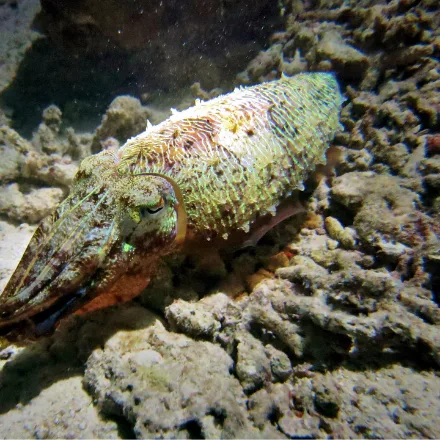
Broadclub Cuttlefish Occasional
Sepia latimanus
A big reef cuttlefish that hypnotises prey with bands of colour pulsing down its arms.
Where: Reef edges and sand. Best: Year round, best Feb-Sep.
Fire Urchin Occasional
Asthenosoma varium
Its spines glow orange-red at the tips and deliver a burning sting, and a pair of tiny shrimp live on it in perfect safety.
Where: Silty sand and rubble. Best: Year round, best Feb-Sep. Venomous spines, and often carries commensal shrimp worth looking for.
Haddon's Carpet Anemone Occasional
Stichodactyla haddoni
A metre-wide sticky carpet on open sand that will genuinely hold onto a bare hand, and can pull a small fish under.
Where: Sandy shallows. Best: Year round, best Feb-Sep.
Hairy Squat Lobster Occasional
Lauriea siagiani
Lives only on giant barrel sponges, and is so small and so pink that most divers swim past a dozen without noticing.
Where: Inside barrel sponges. Best: Year round, best Feb-Sep.
Sea Pen Occasional
Pteroeides sp.
Plants itself in the sand like a quill pen, glows blue-green when touched, and can pull itself completely underground.
Where: Sand flats at night. Best: Year round, best Feb-Sep, night.
Slate Pencil Urchin Occasional
Heterocentrotus mamillatus
Its spines are thick blunt cylinders, and they were once used as writing implements on slate, hence the name.
Where: Reef crevices. Best: Year round, best Feb-Sep.
Variable Neon Slug Occasional
Nembrotha kubaryana
Eats toxic sea squirts, keeps their poison for itself, and then advertises it in green and orange.
Where: Sponges on the granite boulders. Best: Year round, best Feb-Sep.
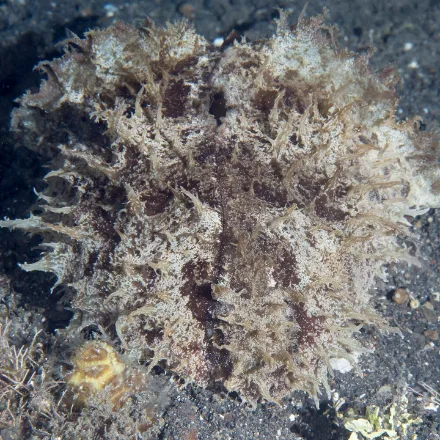
Wedge Sea Hare Occasional
Dolabella auricularia
Ejects a cloud of purple ink that does not hide it but jams the chemical senses of whatever is attacking.
Where: Seagrass at low tide. Best: Year round, best Feb-Sep.
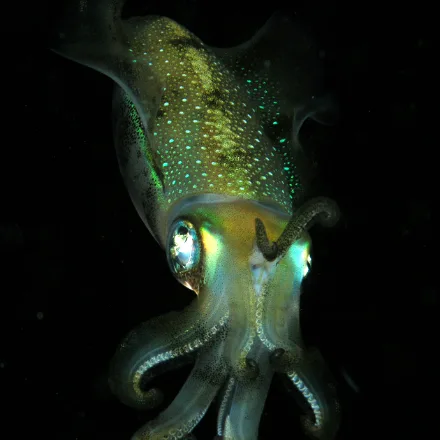
Bigfin Reef Squid Regular
Sepioteuthis lessoniana
Talks in colour: it can run one message down its left side and a different one down its right at the same time.
Where: Midwater on night dives and under boats. Best: Year round, best Feb-Sep.
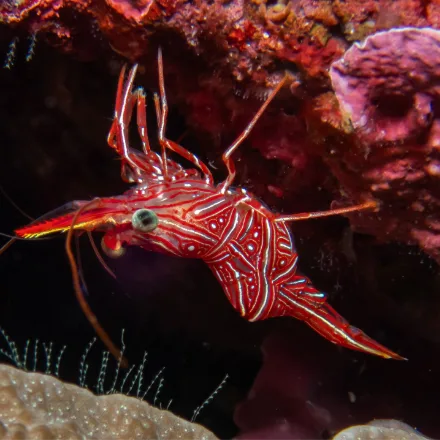
Durban Dancing Shrimp Regular
Rhynchocinetes durbanensis
Packs into caves in the hundreds, and the whole mass sways together when a torch beam crosses them.
Where: Overhangs and crevices. Best: Year round, best Feb-Sep.
Upside-down Jellyfish Regular
Cassiopea andromeda
Lies on the seabed with its tentacles pointing at the sky, farming algae inside its own tissue like a coral.
Where: Shallow sandy lagoons and mangrove edges. Best: Year round, best Feb-Sep.
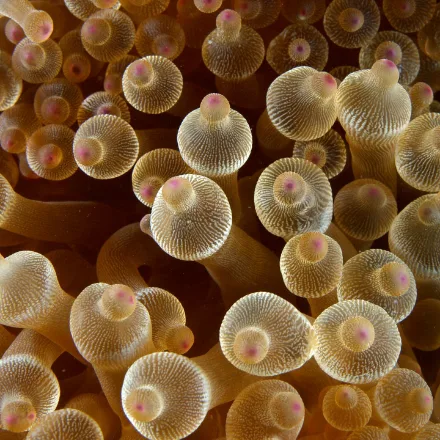
Bulb-tentacle Anemone Common
Entacmaea quadricolor
The tentacles only swell into bulbs when an anemonefish is living in it, and nobody is quite sure why.
Where: Reef flats. Best: Year round, best Feb-Sep.
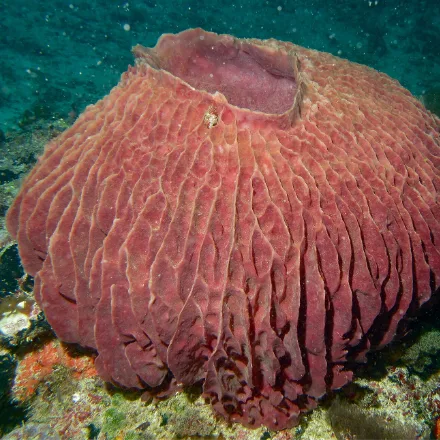
Giant Barrel Sponge Common
Xestospongia testudinaria
Filters tens of thousands of litres a day and can live for well over a century, which is why divers call them the redwoods of the reef.
Where: Deeper boulder slopes. Best: Year round, best Feb-Sep.
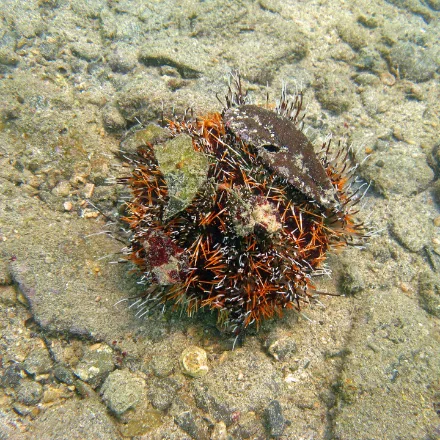
Pincushion Urchin Common
Tripneustes gratilla
Decorates itself with shell, weed and rubbish held on with its tube feet, apparently as a sunshade.
Where: Seagrass and rubble. Best: Year round, best Feb-Sep.
Insects and spiders
1 species
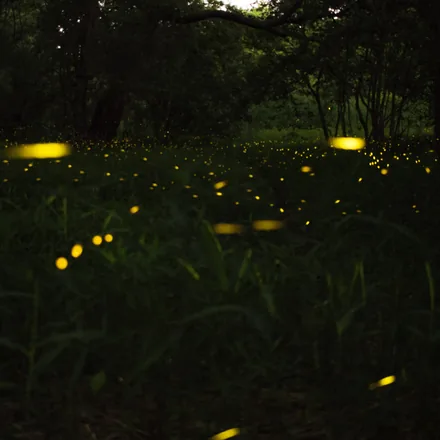
Synchronous Firefly Regular
Pteroptyx malaccae
Mangrove trees hung with thousands of fireflies, all flashing in perfect unison like living fairy lights.
Where: Riverside mangroves on the mainland coast. Best: Year round, best in the rains, after dark. Evening boat trips run from the mainland rather than the island itself.
Planning and responsible watching
Sail Rock is the region’s one great pinnacle and is reached by day boat from Samui, Phangan and Koh Tao. Koh Tao is the shallow-water base for everything else, including the dusk dives that mandarinfish require. The Gulf season is broadly the reverse of the Andaman, with February to September the better window. Box jellyfish are a genuine risk after rain from June to October: swim where vinegar is provided and take local warnings seriously. Never pick anything up off a rubble bottom. If you are getting in the water, the Green Fins code of conduct, run by the Reef-World Foundation with UNEP and first trialled in Thailand, is the fifteen-point standard for snorkelling and diving without damaging the reef.
Find Sail Rock trips and Gulf snorkelling day boats
Some links on this page are affiliate links. If you book through them, Wildseer may earn a small commission at no extra cost to you.
Frequently asked questions
Where can you see whale sharks near Koh Samui?
Sail Rock, the pinnacle between Koh Tao and Koh Phangan, with day boats from all three main islands. March to May is the peak, and it remains a lucky sighting rather than a likely one.
Is snorkelling around Koh Samui any good?
Around Samui itself it is modest. The good water is at Koh Tao, the Ang Thong marine park and Sail Rock, all reachable as day trips.
Are there dangerous animals in the water?
Box jellyfish are present in the Gulf and are dangerous, particularly after rain between June and October. The blue-ringed octopus lives in rubble shallows. Neither is a reason to stay out of the water, both are a reason not to touch anything.
Explore Thailand wildlife by group
 Mammals of Thailand
 Birds of Thailand
 Reptiles and Amphibians of Thailand
 Fish of Thailand
 Sharks and Rays of Thailand
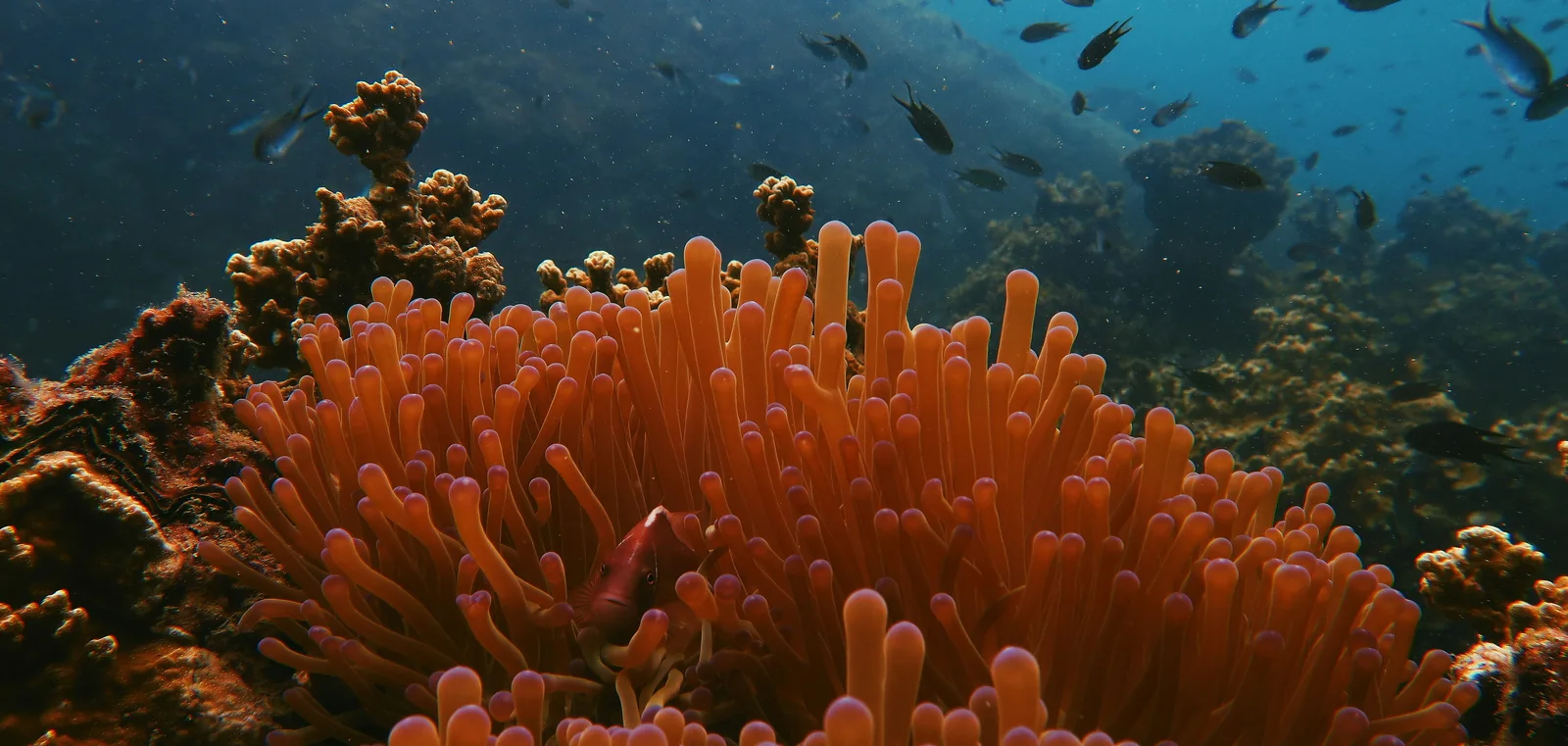 Reef Invertebrates of Thailand
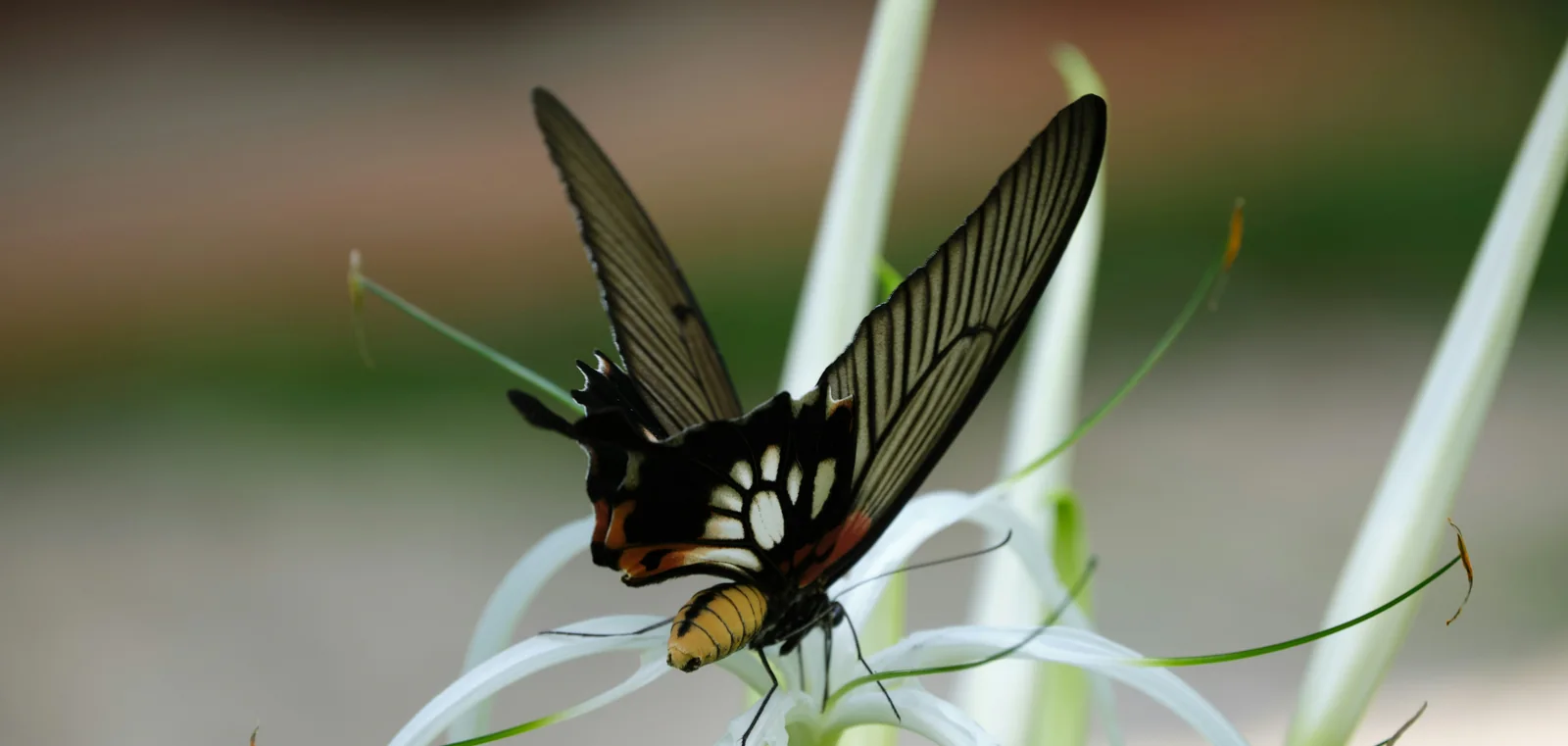 Insects and Spiders of Thailand
Part of the Wildlife in Thailand guide.