
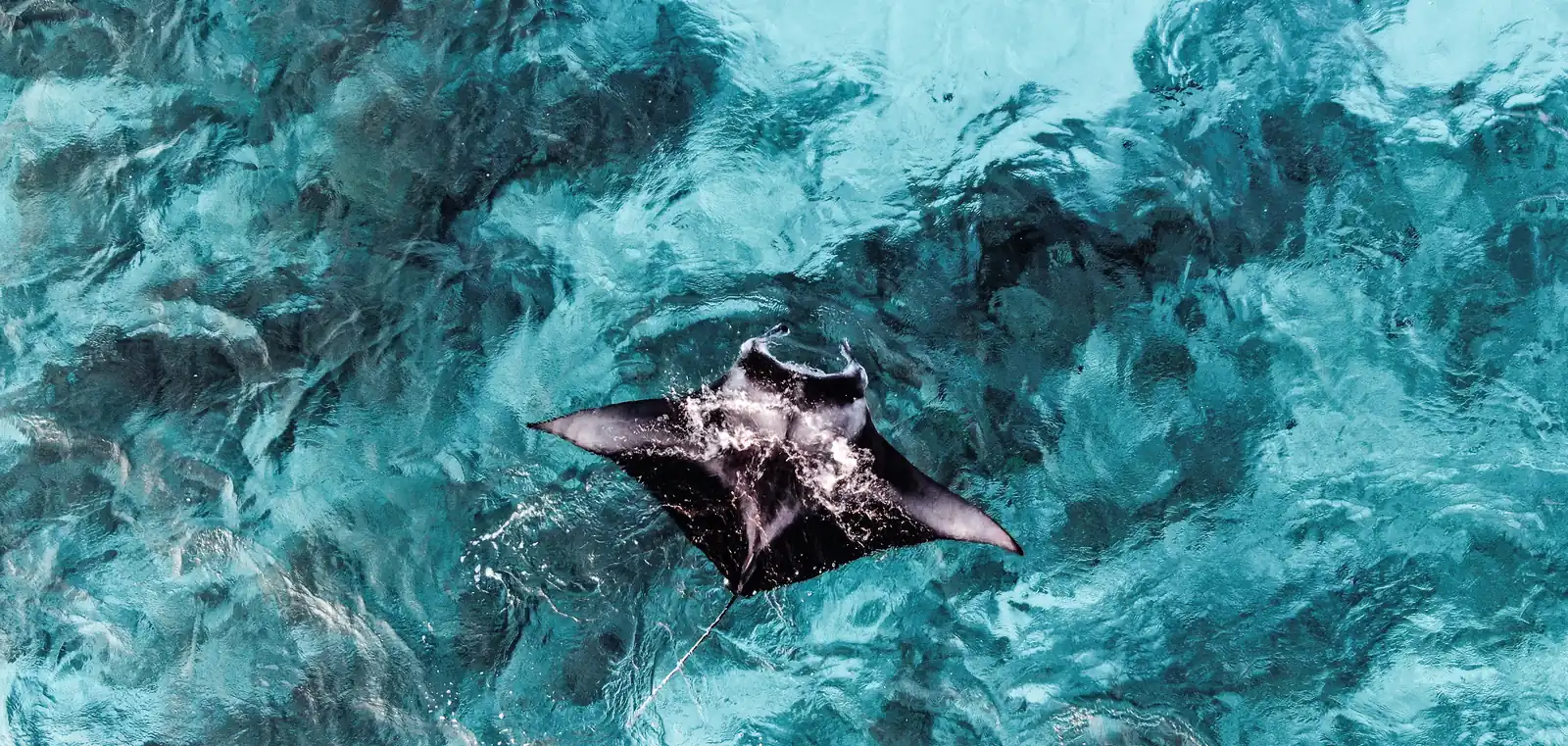
The sharks and rays of Thailand are concentrated on the Andaman coast, one of the better places in Southeast Asia to dive with them, from reliable blacktip reef sharks in the shallows to seasonal whale sharks and manta rays at the famous pinnacles. This guide covers all 32 species recorded in our database, grouped by where they live, with the best sites and season for each.
Some are everyday reef companions; others, like the giant guitarfish and the sawfishes, are now critically endangered and recorded here honestly, including the largetooth sawfish, which is very likely gone from Thai waters. Knowing which is which is half the value of a guide.
Highlights
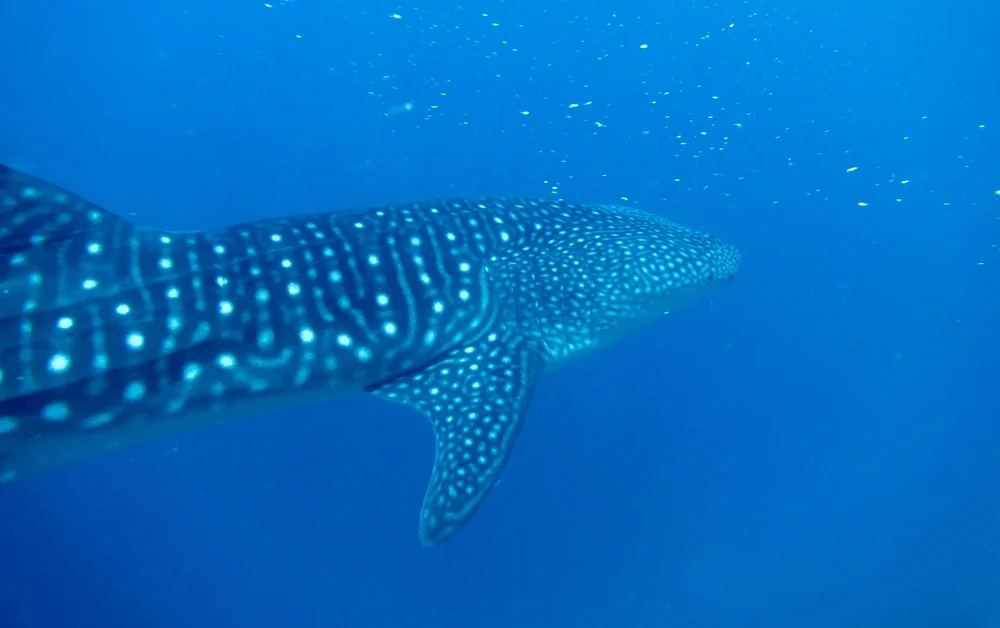
Whale Shark
The biggest fish in the ocean, a spotted, bus sized filter feeder and the undisputed holy grail of tropical diving. Where: Richelieu Rock, Koh Tachai, Hin Daeng, Phi Phi. Best: Feb-Apr, Andaman dive sites.
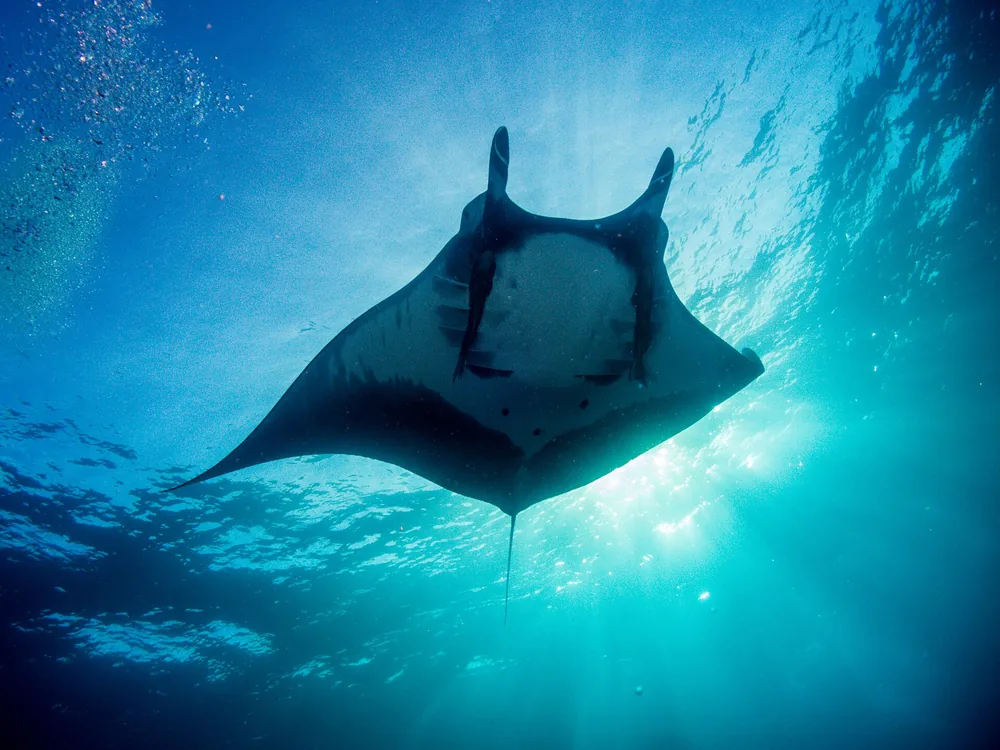
Giant Manta Ray
The largest ray on the planet, an ocean wanderer that can span seven metres and loops through plankton clouds in slow somersaults. Where: Hin Daeng and Hin Muang, Koh Bon and Koh Tachai area. Best: Peak Feb-Apr.
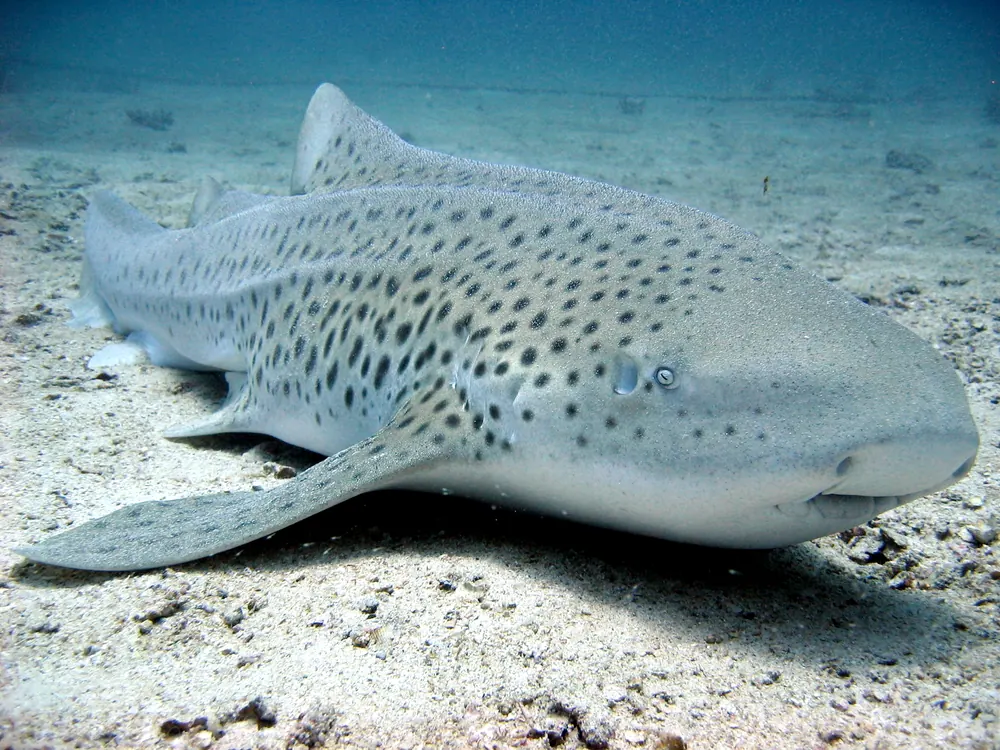
Zebra Shark (Leopard Shark)
A gentle, spotted shark that lies on the sand like a giant lazy cat, striped as a pup and spotted as an adult. Where: Similan, Hin Daeng and Hin Muang, sandy patches. Best: Dive season, Nov-Apr.
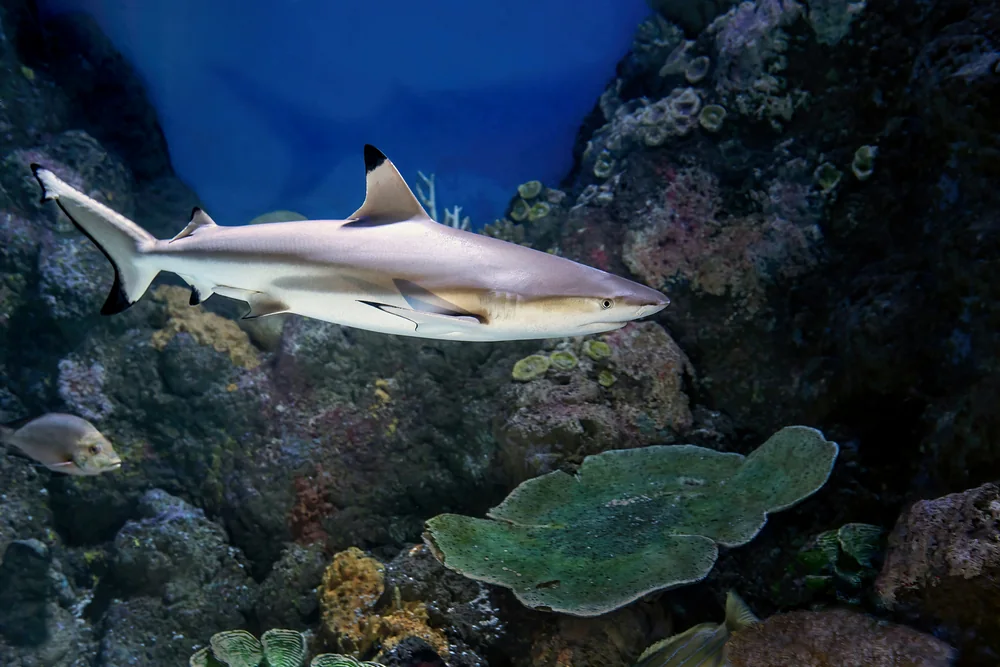
Blacktip Reef Shark
The neat little reef shark of the shallows, its black-tipped fins often cutting the surface over sun-lit sand flats. Where: Similar shallow reefs, Similan, Trang and Koh Libong. Best: Dive and snorkel season, Nov-Apr.
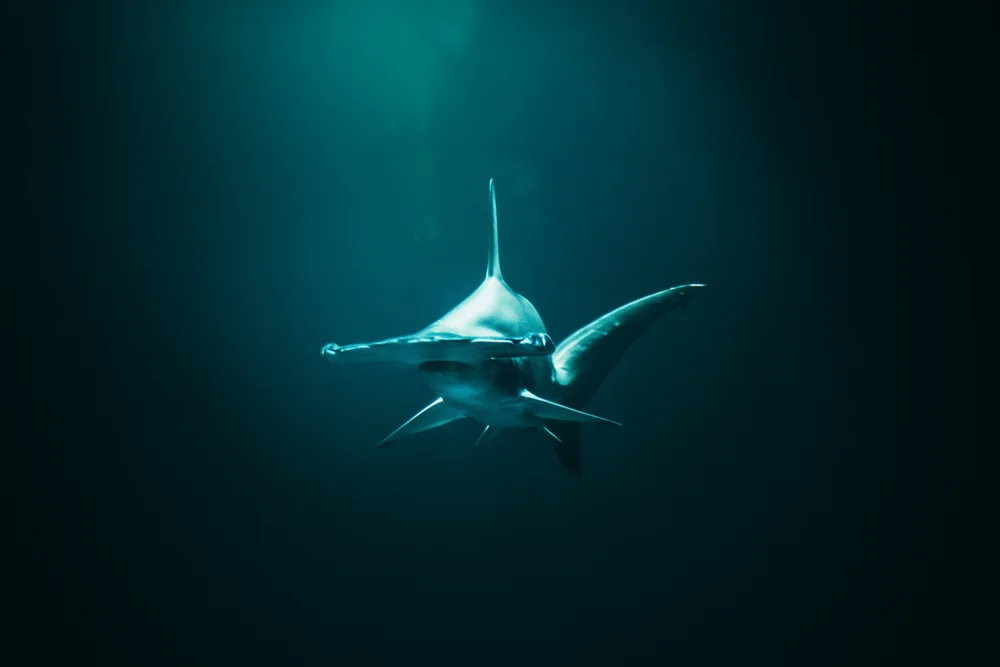
Scalloped Hammerhead
The head is a sensory antenna, packed with electroreceptors that can find a ray buried under sand. Where: Deep Andaman pinnacles and the Burma Banks; occasionally Hin Daeng and Richelieu Rock. Best: Feb-Apr.
Reef sharks and rays
18 species
Bowmouth Guitarfish Ultra rare Critically Endangered
Rhina ancylostomus
Half shark, half ray, with ridges of thorns above the eyes that look like a set of eyebrows.
Where: Sand adjacent to reef in the outer Andaman; Similans and the Burma Banks. Best: Nov-Apr.
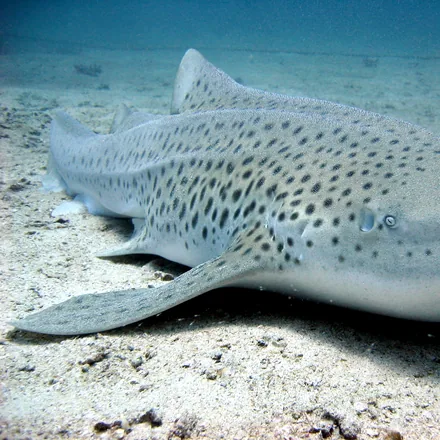
Zebra Shark (Leopard Shark) Occasional Endangered
Stegostoma tigrinum
A gentle, spotted shark that lies on the sand like a giant lazy cat, striped as a pup and spotted as an adult.
Where: Similan, Hin Daeng and Hin Muang, sandy patches. Best: Dive season, Nov-Apr.
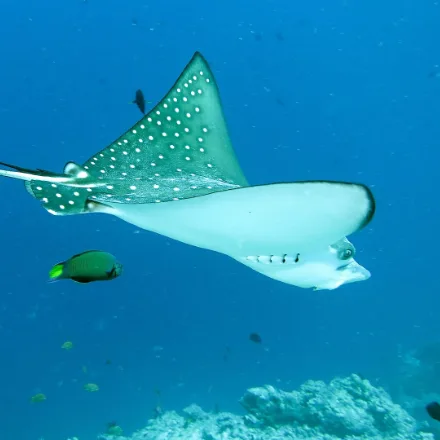
Ocellated Eagle Ray Occasional Endangered
Aetobatus ocellatus
A dramatic ray that flies through open water on wings spangled with white spots, trailing a whip-like venomous tail.
Where: Hin Daeng and Hin Muang, Similan drop-offs. Best: Dive season, Nov-Apr.
Whitespotted Wedgefish Ultra rare Critically Endangered
Rhynchobatus australiae
Its fins are the single most valuable in the global shark fin trade, which is why it has all but disappeared.
Where: Sand beside reef on both coasts; historically the Gulf and Andaman shelf. Best: Year round.
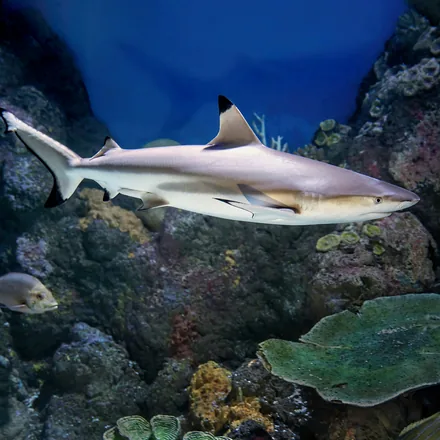
Blacktip Reef Shark Common Vulnerable
Carcharhinus melanopterus
The neat little reef shark of the shallows, its black-tipped fins often cutting the surface over sun-lit sand flats.
Where: Similar shallow reefs, Similan, Trang and Koh Libong. Best: Dive and snorkel season, Nov-Apr.
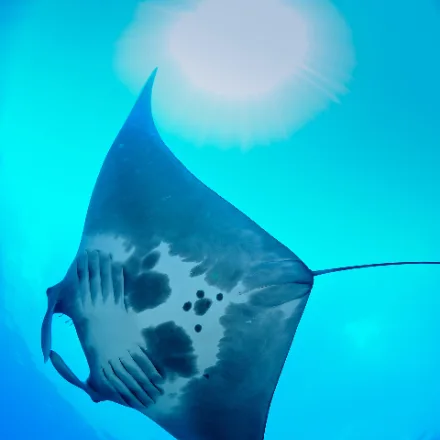
Reef Manta Ray Occasional Vulnerable
Mobula alfredi
A four metre wingspan gliding overhead in slow, hypnotic loops that leave divers grinning for days.
Where: Koh Bon, Koh Tachai, Richelieu Rock, Hin Daeng. Best: Nov-Apr, Similan and Hin Daeng pinnacles.
Giant Guitarfish Rare Critically Endangered
Glaucostegus typus
A strange shark-ray hybrid in shape, part flattened ray at the front and part shark behind, and one of the most threatened fish in the sea.
Where: Andaman sandy flats near reefs. Best: Dive season, Nov-Apr.
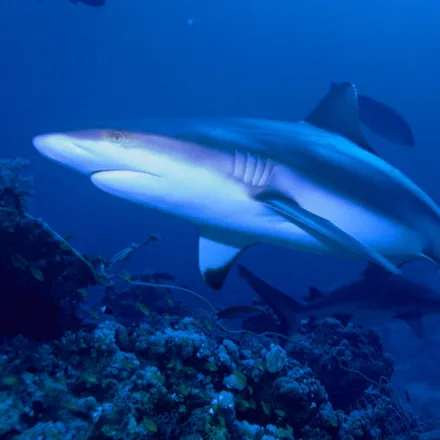
Grey Reef Shark Occasional Endangered
Carcharhinus amblyrhynchos
The classic requiem shark of the drop-off, bold and inquisitive where currents sweep the reef.
Where: Hin Daeng and Hin Muang, Similan outer reefs and channels. Best: Dive season, Nov-Apr.
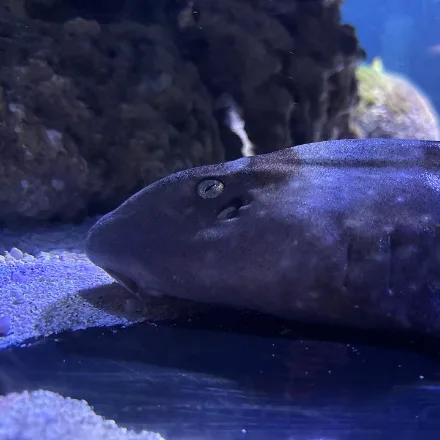
Whitespotted Bamboo Shark Occasional Endangered
Chiloscyllium plagiosum
A small, slow shark that walks along the bottom on its fins and can survive hours in a tide pool with almost no oxygen.
Where: Crevices and rubble on shallow reef both coasts; Koh Tao, Koh Chang and Phi Phi. Best: Year round, at night.
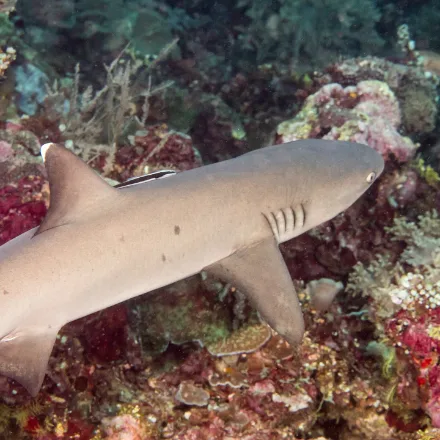
Whitetip Reef Shark Regular Vulnerable
Triaenodon obesus
A slender reef shark that rests motionless in caves by day and hunts the reef in packs by night.
Where: Similan, Hin Daeng and Hin Muang, reef caves and ledges. Best: Dive season, Nov-Apr.
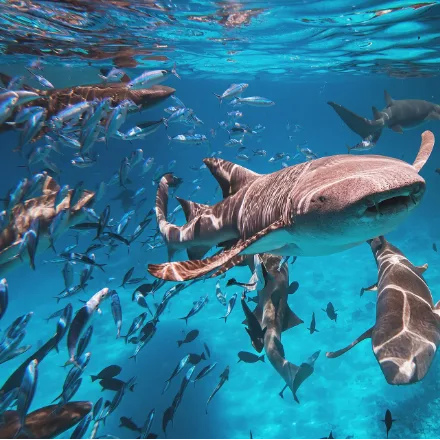
Tawny Nurse Shark Occasional Vulnerable
Nebrius ferrugineus
A big, docile bottom shark that vacuums prey out of crevices with a powerful suck.
Where: Similan, Hin Daeng and Hin Muang, reef caves. Best: Dive season, night.
Jenkins Whipray Occasional Vulnerable
Pateobatis jenkinsii
A big sand-flat ray with a ridge of enlarged thorns down its spine and a tail twice the length of its body.
Where: Sand flats beside reef on both coasts; Similans, Koh Tao and Koh Lipe. Best: Year round.
Pink Whipray Occasional Vulnerable
Pateobatis fai
Often travels in loose groups across the sand, several large rays moving in slow formation.
Where: Sand flats and lagoons in the Andaman; Similans and Koh Lipe. Best: Nov-Apr.
Brownbanded Bamboo Shark Occasional Near Threatened
Chiloscyllium punctatum
A small, slender carpet shark that walks across the reef on its fins and can survive hours out of water in a tide pool.
Where: Shallow Andaman reefs and tide pools, Trang. Best: Night dives, Nov-Apr.
Coral Catshark Rare Near Threatened
Atelomycterus marmoratus
A slender, leopard-spotted little shark that threads coral crevices at night on a body barely longer than an arm.
Where: Similan and Andaman reefs, night dives. Best: Dive season, night.
Spottail Shark Occasional Near Threatened
Carcharhinus sorrah
A fast, slender inshore shark marked as if someone dipped the tips of its fins in ink.
Where: Sandy margins and shallow reef edges on both coasts. Best: Year round.
Bluespotted Ribbontail Ray Regular
Taeniura lymma
A small, brilliantly marked ray, olive gold studded with electric blue spots, tucked under coral ledges.
Where: Similan, Trang and Koh Libong, shallow reefs. Best: Dive and snorkel season, Nov-Apr.
Bluespotted Maskray Regular
Neotrygon kuhlii
Constantly confused with the bluespotted ribbontail ray, and quite a different animal once you know the mask.
Where: Open sand and rubble beside reef on both coasts. Best: Year round.
Open-water sharks and rays
8 species
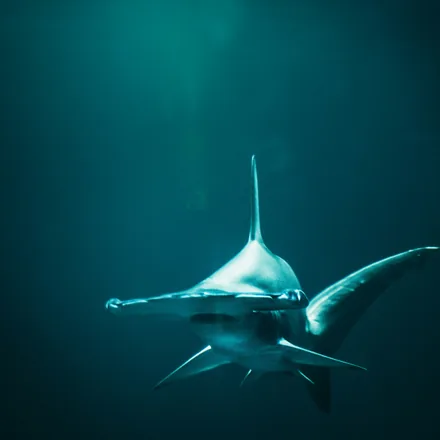
Scalloped Hammerhead Ultra rare Critically Endangered
Sphyrna lewini
The head is a sensory antenna, packed with electroreceptors that can find a ray buried under sand.
Where: Deep Andaman pinnacles and the Burma Banks; occasionally Hin Daeng and Richelieu Rock. Best: Feb-Apr.
Great Hammerhead Ultra rare Critically Endangered
Sphyrna mokarran
Uses the flat of its head to pin a stingray to the seabed, then bites chunks out of the wing.
Where: Deep outer Andaman pinnacles; Hin Daeng, Hin Muang and the Burma Banks. Best: Feb-Apr.
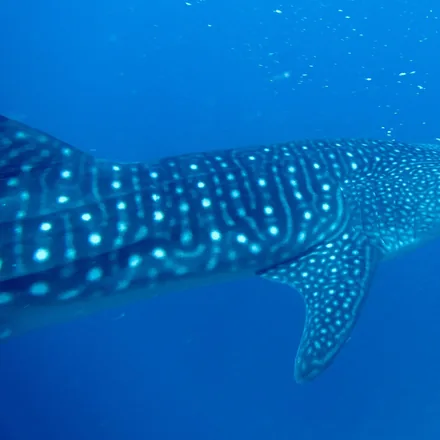
Whale Shark Rare Endangered
Rhincodon typus
The biggest fish in the ocean, a spotted, bus sized filter feeder and the undisputed holy grail of tropical diving.
Where: Richelieu Rock, Koh Tachai, Hin Daeng, Phi Phi. Best: Feb-Apr, Andaman dive sites.
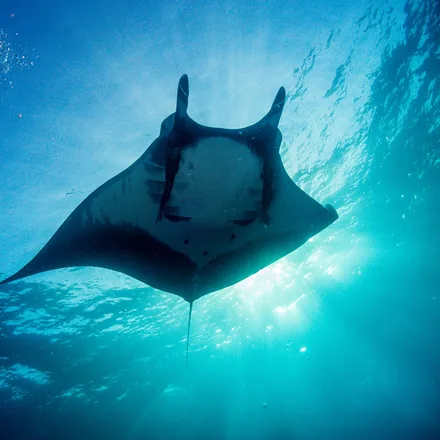
Giant Manta Ray Occasional Endangered
Mobula birostris
The largest ray on the planet, an ocean wanderer that can span seven metres and loops through plankton clouds in slow somersaults.
Where: Hin Daeng and Hin Muang, Koh Bon and Koh Tachai area. Best: Peak Feb-Apr.
Tiger Shark Ultra rare Near Threatened
Galeocerdo cuvier
The only shark with teeth built to shear turtle shell, and the least fussy eater in the ocean.
Where: Outer Andaman islands and open water; Surin, Similan and the Burma Banks. Best: Nov-Apr.
Pelagic Thresher Ultra rare Endangered
Alopias pelagicus
Hunts by cracking its tail like a whip over its own head, stunning several fish at once with the shockwave.
Where: Deep Andaman pinnacles at dawn; Hin Daeng and Hin Muang cleaning stations. Best: Feb-Apr, first dive of the day.
Shortfin Devil Ray Rare Endangered
Mobula kuhlii
A manta in miniature that leaps clear of the water and lands flat, sometimes dozens at a time.
Where: Open water off the Andaman coast; liveaboard crossings and Hin Daeng. Best: Nov-Apr.
Silvertip Shark Rare Vulnerable
Carcharhinus albimarginatus
Bold, curious and dominant over every other reef shark it meets, with brilliant white trim on every fin.
Where: Outer Andaman drop-offs; Hin Daeng, Hin Muang and the Burma Banks. Best: Nov-Apr.
Mangrove and estuary species
4 species
Largetooth Sawfish Ultra rare Critically Endangered
Pristis pristis
A seven metre ray with a chainsaw for a nose, and almost certainly gone from Thai waters.
Where: Historically the Gulf, the Andaman coast and the lower Chao Phraya. Best: No current season; no reliable records for decades.
Sicklefin Lemon Shark Rare Endangered
Negaprion acutidens
A heavy, yellow-brown shark that uses mangrove shallows as a nursery and barely moves out of them for the first years of life.
Where: Mangrove-fringed shallow bays; Ao Phang Nga, Ranong and parts of Trang. Best: Year round.
Bull Shark Rare Vulnerable
Carcharhinus leucas
A thickset, powerful shark that tolerates fresh water and can swim far up rivers, making it one of the ocean's most adaptable predators.
Where: Andaman coastal shallows and estuaries. Best: Year round.
Cowtail Stingray Occasional Vulnerable
Pastinachus sephen
Named for the broad flap of skin hanging under its tail like a cow's tail, unique among rays.
Where: Shallow silty bays, estuaries and mangrove margins; Ao Phang Nga, Krabi and the inner Gulf. Best: Year round.
Seagrass species
1 species
Porcupine Ray Rare Vulnerable
Urogymnus asperrimus
The only large stingray with no sting at all, protected instead by a hide of blunt thorns.
Where: Undisturbed seagrass and sand in the Andaman; Trang, Koh Lipe and the Surin islands. Best: Nov-Apr.
Freshwater rays
1 species
Giant Freshwater Stingray Ultra rare Endangered
Urogymnus polylepis
The largest freshwater fish on earth by some measures, a two metre disc carrying a 38 cm barb.
Where: Deep channels of the Maeklong, Bang Pakong and Mekong rivers. Best: Nov-Feb, clearer low water.
Planning and responsible watching
Every entry above gives the best sites and season from our database. Keep your distance, never feed or bait wildlife, and choose operators who follow no-touch rules; the rarer the species, the more your behaviour matters. The Manta Trust keeps the global manta identification database, so a clear photograph of the underside is worth submitting.
Find Andaman dive trips and liveaboards
Some links on this page are affiliate links. If you book through them, Wildseer may earn a small commission at no extra cost to you.
Frequently asked questions
Where can you dive with whale sharks in Thailand?
Richelieu Rock and the Similan Islands on the Andaman coast are the classic spots, with sightings most likely from February to May. They remain a lucky encounter rather than a guarantee.
Are there dangerous sharks in Thailand?
Thailand’s reef sharks (blacktip, whitetip, leopard) are harmless to divers who keep their distance. Large open-water species are rare. Incidents are extremely uncommon.
When is the best time to see manta rays in Thailand?
The Andaman dive season runs roughly October to May, with manta and whale shark encounters peaking February to April at the outer pinnacles.
Explore more Thailand wildlife
 Mammals of Thailand
 Birds of Thailand
 Reptiles and Amphibians of Thailand
 Fish of Thailand
 Reef Invertebrates of Thailand
 Insects and Spiders of Thailand
Part of the Wildlife in Thailand guide.