
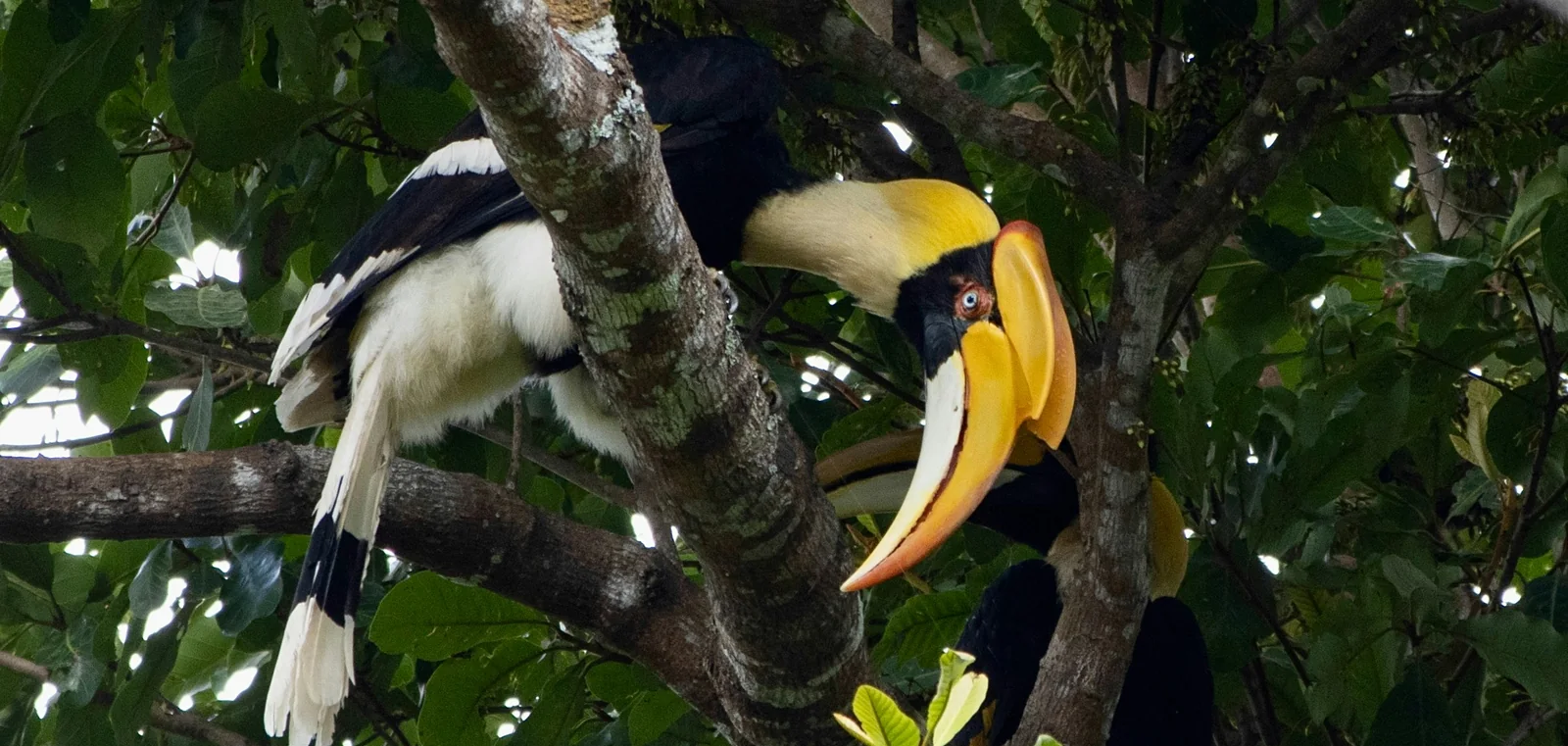
Thailand is one of Asia’s great birding countries, with more than a thousand recorded species and a spread of habitats that put hornbills, pittas, broadbills and some of the world’s rarest waders within a single trip. This guide covers 75 of the birds worth planning around, grouped by the habitat you will find them in, with the best sites and season for each.
The southern rainforests hold the hornbills and the Gurney’s pitta; the central and coastal wetlands are globally important for migratory shorebirds, including the spoon-billed sandpiper and Nordmann’s greenshank; and the northern hills add a different cast again. We flag the genuinely rare honestly, and note where a species is now a long shot.
Highlights
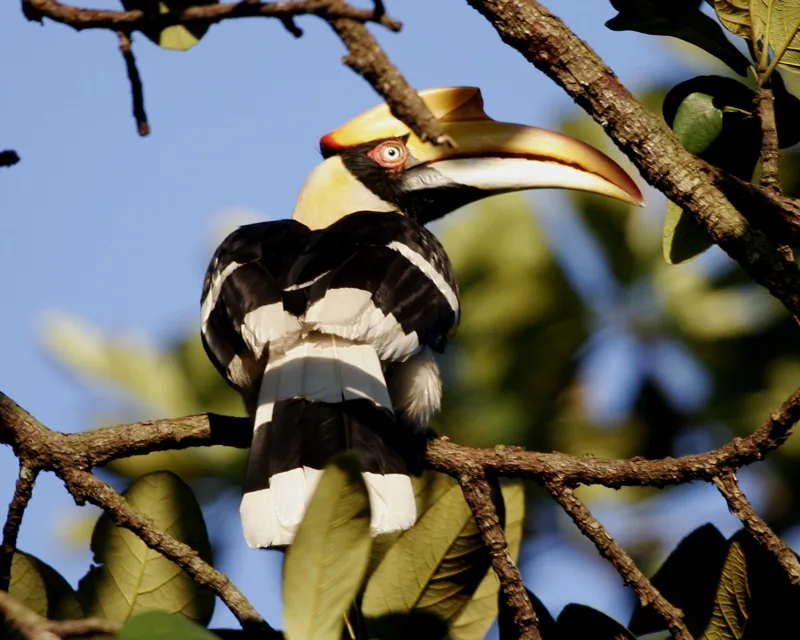
Great Hornbill
A three metre wingbeat you hear before you see, the flagship bird of Asian rainforest canopy. Where: Khao Yai, Khao Sok, Kaeng Krachan. Best: Year round, early morning at fruiting figs.
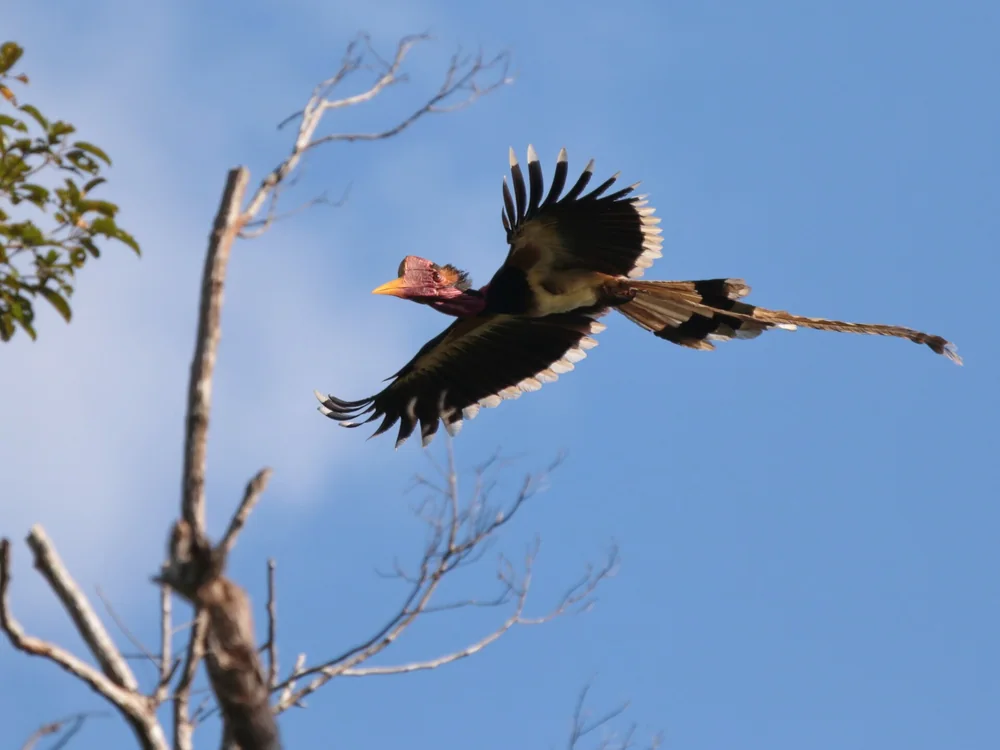
Helmeted Hornbill
A hornbill with a solid ivory casque, hunted to the brink for carving, whose call sounds like maniacal laughter. Where: Hala Bala, Budo-Sungai Padi (deep south). Best: Year round, tall rainforest.
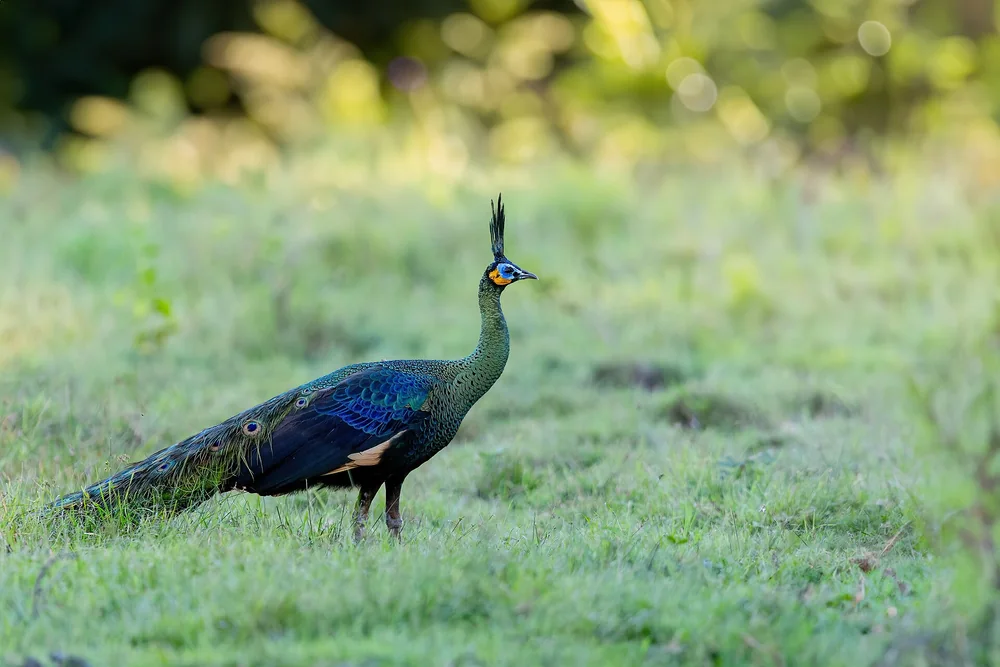
Green Peafowl
The wild, and far rarer, cousin of the familiar peacock, with metallic green plumage and a towering train. Where: Huai Kha Khaeng, Mae Wong, Mae Ping. Best: Dry season, dawn (listen for calls).
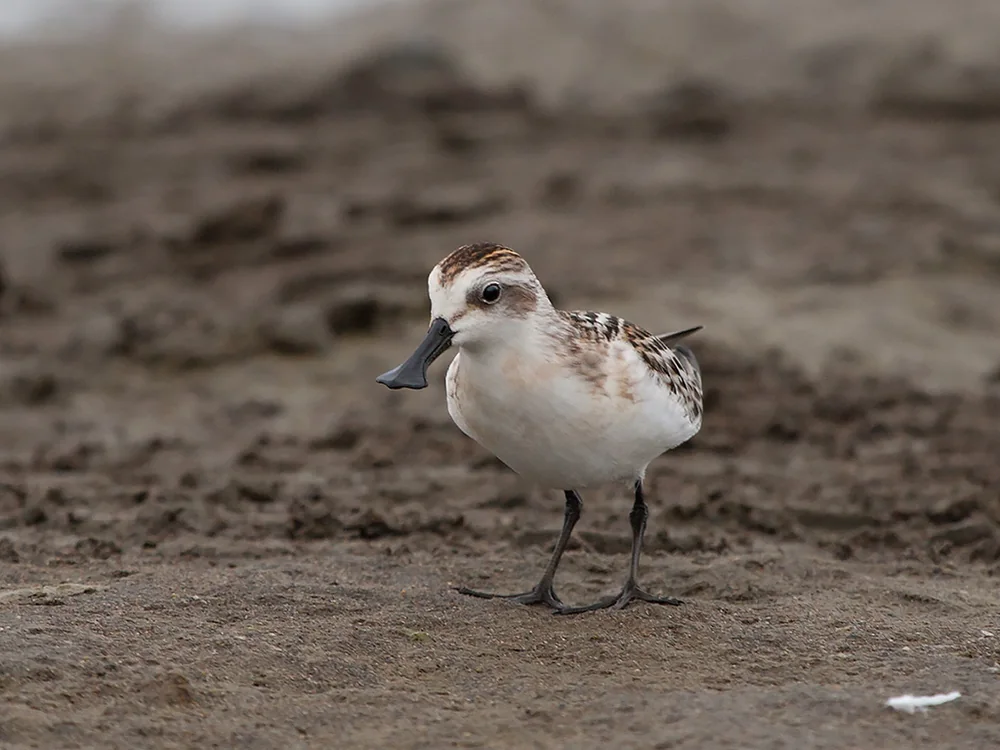
Spoon-billed Sandpiper
One of the world's rarest and most charismatic shorebirds, tiny and armed with an unmistakable spatula bill. Where: Pak Thale, Laem Pak Bia (Inner Gulf). Best: Nov-Mar (winter).
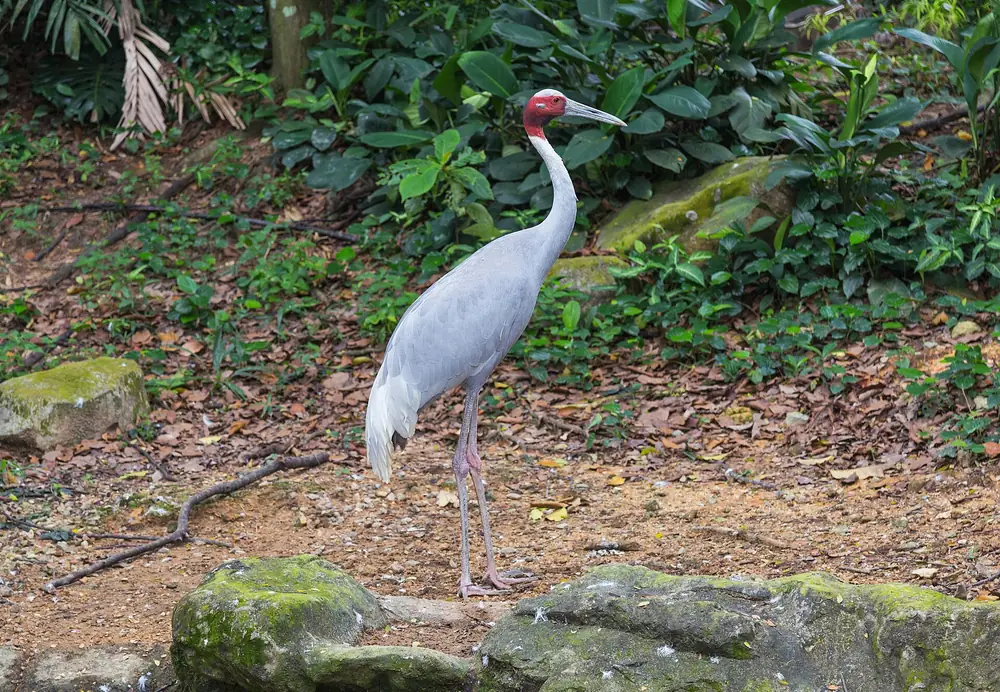
Sarus Crane
The tallest flying bird in the world, a grey giant with a bare red head, recently brought back to Thai wetlands. Where: Buriram province wetlands. Best: Year round, rice fields and marshes.
Rainforest birds
39 species
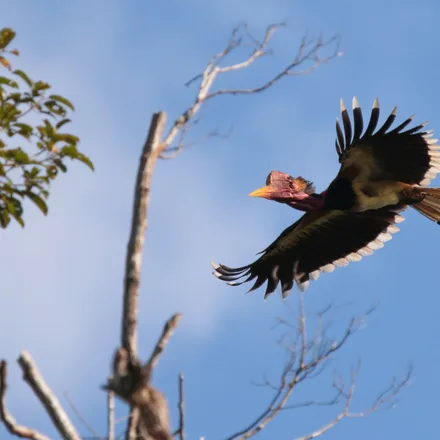
Helmeted Hornbill Rare Critically Endangered
Rhinoplax vigil
A hornbill with a solid ivory casque, hunted to the brink for carving, whose call sounds like maniacal laughter.
Where: Hala Bala, Budo-Sungai Padi (deep south). Best: Year round, tall rainforest.
Gurney's Pitta Very rare Critically Endangered
Hydrornis gurneyi
A gorgeous blue-crowned pitta once thought extinct, rediscovered in Thailand and now teetering on the very edge.
Where: Khao Nor Chuchi (Krabi), historically. Best: Rains, at dawn.
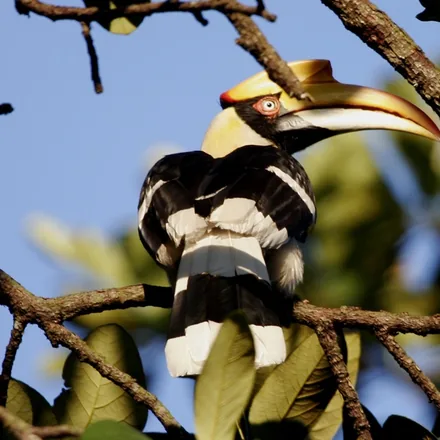
Great Hornbill Regular Vulnerable
Buceros bicornis
A three metre wingbeat you hear before you see, the flagship bird of Asian rainforest canopy.
Where: Khao Yai, Khao Sok, Kaeng Krachan. Best: Year round, early morning at fruiting figs.
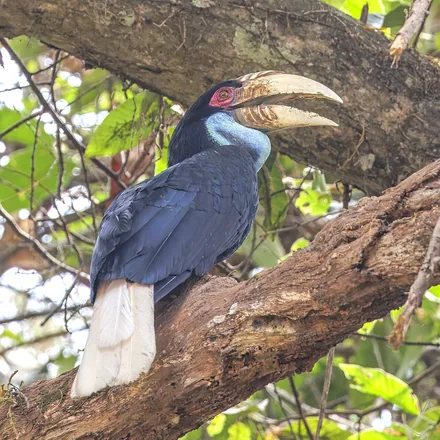
Wreathed Hornbill Regular Vulnerable
Rhyticeros undulatus
A big forest hornbill that travels in noisy flocks, its throat pouch pleated like folded cloth.
Where: Khao Yai, Kaeng Krachan, Khao Sok. Best: Year round, at fruiting trees.
Rhinoceros Hornbill Rare Vulnerable
Buceros rhinoceros
A southern giant crowned with a spectacular upturned orange casque like a rhino horn.
Where: Hala Bala and the Bala forest (deep south). Best: Year round.
Straw-headed Bulbul Rare Critically Endangered
Pycnonotus zeylanicus
A large riverside bulbul with a glorious bubbling song that has, tragically, made it one of the most trapped birds in Asia.
Where: Dense riverside thickets of the south, protected wetlands. Best: Year round.
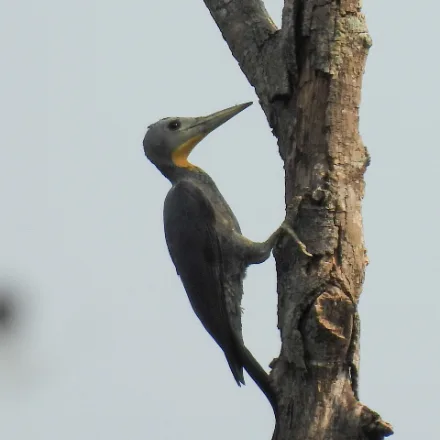
Great Slaty Woodpecker Rare Vulnerable
Mulleripicus pulverulentus
The largest woodpecker in Asia, a long-necked grey giant that travels the tall forest in noisy family bands.
Where: Tall mature forest, Huai Kha Khaeng, Kaeng Krachan. Best: Year round, day.
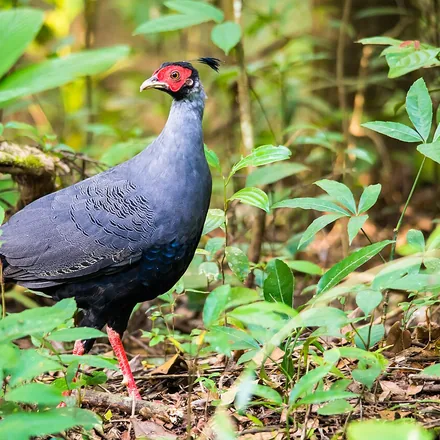
Siamese Fireback Regular
Lophura diardi
Thailand's national bird, a stately grey pheasant with a golden back patch and a bare crimson face.
Where: Khao Yai, Khao Ang Rue Nai, Kaeng Krachan. Best: Early morning, forest trails and roads.
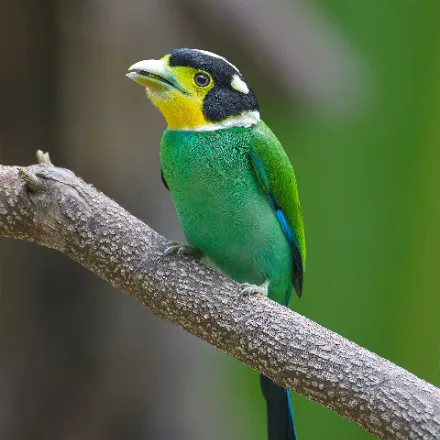
Long-tailed Broadbill Regular
Psarisomus dalhousiae
A cartoonish beauty in parrot green with a black cap, blue crown patch and a long blue tail.
Where: Khao Yai, Kaeng Krachan, northern hills. Best: Morning, mid canopy.
Crimson Sunbird Regular
Aethopyga siparaja
A living ember of a bird, the male ablaze in scarlet and metallic green as it hovers at forest blossoms.
Where: Forest edges and flowering trees, Kaeng Krachan, Khao Yai. Best: Year round.
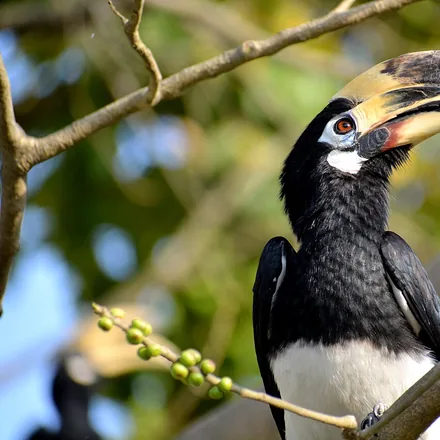
Oriental Pied Hornbill Common
Anthracoceros albirostris
The most approachable hornbill in Asia, a black and white charmer that even visits gardens and forest edges.
Where: Khao Yai, forest edges nationwide. Best: Year round, mornings.
Red-headed Trogon Regular
Harpactes erythrocephalus
A quietly stunning forest bird, the male crimson headed and rose breasted, that sits motionless and is easy to miss.
Where: Kaeng Krachan, Khao Yai. Best: Morning, mid storey.
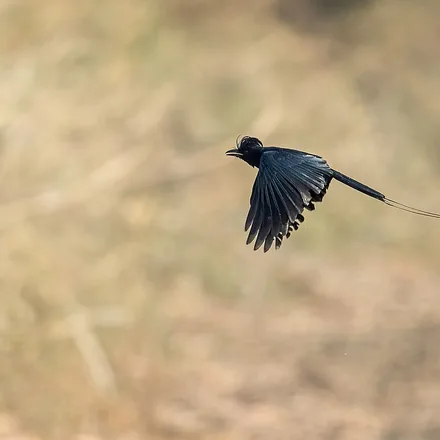
Greater Racket-tailed Drongo Common
Dicrurus paradiseus
A glossy black forest bird trailing two long wire tails tipped with twirling rackets, and a gifted mimic.
Where: Khao Yai, Kaeng Krachan and widely. Best: Year round.
Asian Fairy-bluebird Regular
Irena puella
A fig-loving forest bird where the male glows brilliant ultramarine and jet black in the canopy shade.
Where: Khao Yai, Kaeng Krachan, southern forests. Best: Year round, at fruiting figs.
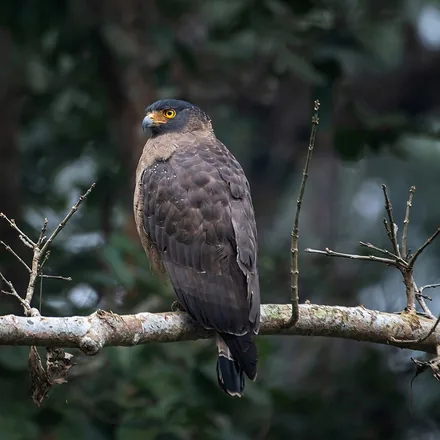
Crested Serpent Eagle Common
Spilornis cheela
A snake-hunting eagle that circles the forest on broad wings, calling with a far-carrying, wailing whistle.
Where: Forest and edges nationwide, Khao Yai, Kaeng Krachan. Best: Year round, day.
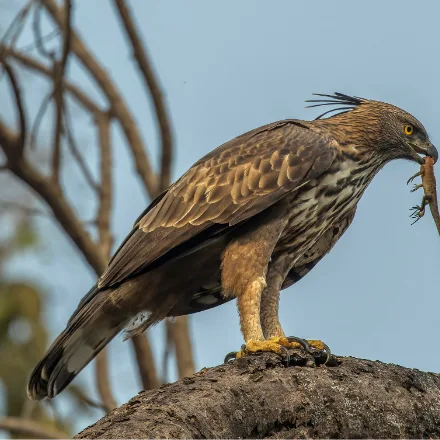
Changeable Hawk-eagle Regular
Nisaetus cirrhatus
A powerful forest eagle that comes in pale and dark forms, ambushing prey with a fast strike from the canopy.
Where: Forest and edges, Khao Yai, Kaeng Krachan, Khao Sok. Best: Year round, day.
Oriental Honey-buzzard Regular
Pernis ptilorhynchus
A raptor with a taste for wasps, raiding bee and hornet nests for their grubs with a specially armoured face.
Where: Forest and open country nationwide. Best: Resident, big passage Sep-Nov.
Collared Scops Owl Regular
Otus lettia
A small, ear-tufted owl whose soft, questioning hoot is one of the commonest voices of the Thai night.
Where: Forest, gardens and villages nationwide, Khao Yai. Best: Night.
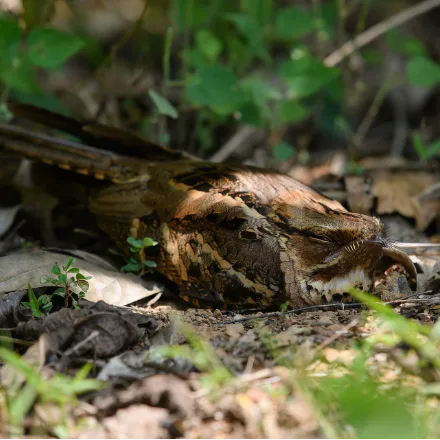
Large-tailed Nightjar Regular
Caprimulgus macrurus
A cryptic dusk-hunter whose loud, repeated chonk chonk call sounds like an axe striking wood across the clearing.
Where: Forest edges and clearings nationwide, Khao Yai, Kaeng Krachan. Best: Dusk and night.
White-throated Kingfisher Common
Halcyon smyrnensis
A big turquoise-and-chocolate kingfisher that hunts far from water, taking lizards and insects across open country.
Where: Fields, gardens and wetlands nationwide. Best: Year round.
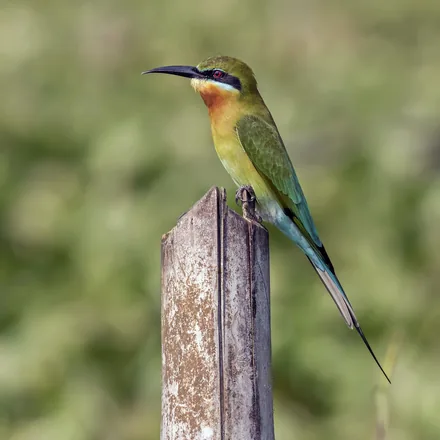
Blue-tailed Bee-eater Common
Merops philippinus
A streamlined jewel of green, chestnut and blue that hawks bees and dragonflies in graceful, swooping sallies.
Where: Open country, canals and coasts nationwide. Best: Common on passage, breeds locally.
Chestnut-headed Bee-eater Regular
Merops leschenaulti
A compact green bee-eater crowned in warm chestnut, sallying for bees along forest edges and clearings.
Where: Forest edges and riversides, Kaeng Krachan, Khao Yai. Best: Year round.
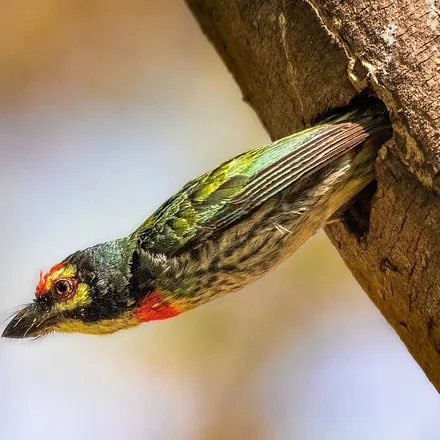
Coppersmith Barbet Common
Psilopogon haemacephalus
A tiny green barbet with a red-and-yellow face whose metronomic tuk tuk tuk call rings like a coppersmith at work.
Where: Gardens, parks and open woodland nationwide. Best: Year round.
Blue-eared Barbet Regular
Psilopogon duvaucelii
A jewel-faced little barbet of the forest canopy, green-bodied with a patchwork of blue, black and red on the head.
Where: Evergreen forest canopy, Kaeng Krachan, Khao Sok. Best: Year round.
Greater Flameback Regular
Chrysocolaptes guttacristatus
A big, golden-backed woodpecker that blazes across the trunk, the males topped with a flaming scarlet crest.
Where: Forest and edges, Khao Yai, Kaeng Krachan. Best: Year round, day.
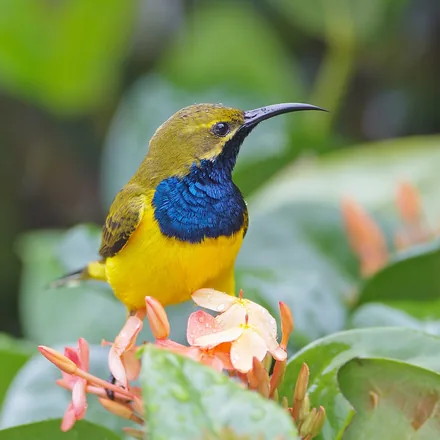
Olive-backed Sunbird Common
Cinnyris jugularis
The cheerful garden sunbird of Thailand, the male flashing an iridescent blue-black throat as he sings from a wire.
Where: Gardens, parks and mangroves nationwide. Best: Year round.
Little Spiderhunter Regular
Arachnothera longirostra
A drab bird with an outrageously long, curved bill, built for plundering nectar deep inside wild banana flowers.
Where: Forest understorey with wild bananas, Khao Sok, Kaeng Krachan. Best: Year round.
Golden-fronted Leafbird Regular
Chloropsis aurifrons
A leaf-green bird that all but vanishes in the canopy until it turns to reveal a golden forehead and blue-black mask.
Where: Forest and edges, Khao Yai, Kaeng Krachan. Best: Year round.
Scarlet Minivet Regular
Pericrocotus speciosus
A drift of flame through the treetops, the males scarlet and black, the females gold and grey, moving in restless flocks.
Where: Forest canopy nationwide, Khao Yai, Kaeng Krachan. Best: Year round.
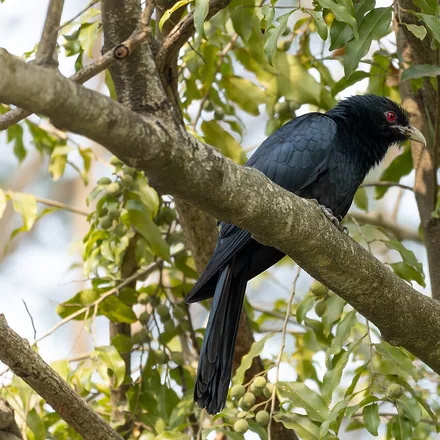
Asian Koel Common
Eudynamys scolopaceus
A glossy black cuckoo with blood-red eyes whose rising ko-el call is one of the defining sounds of tropical mornings.
Where: Gardens, parks and open woodland nationwide. Best: Year round.
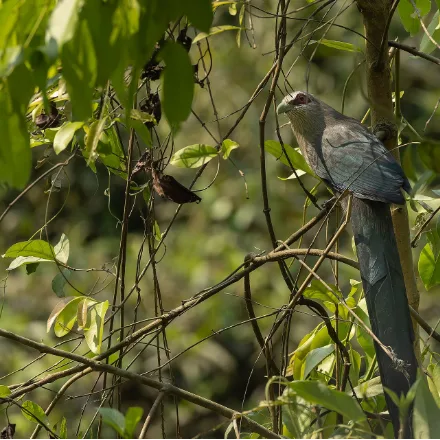
Green-billed Malkoha Regular
Phaenicophaeus tristis
A long, slinking grey cuckoo with a bright green bill and a crimson eye-patch, creeping through thickets like a feathered lizard.
Where: Forest and edges, Kaeng Krachan, Khao Yai, Khao Sok. Best: Year round.
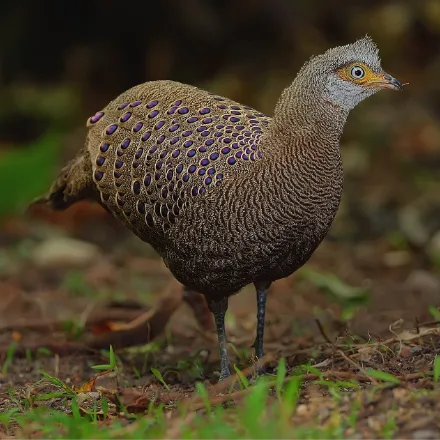
Grey Peacock-Pheasant Occasional
Polyplectron bicalcaratum
A shy forest pheasant spangled with iridescent eyespots that flash blue-green when it displays.
Where: Kaeng Krachan, Khao Yai. Best: Dawn, dense forest.
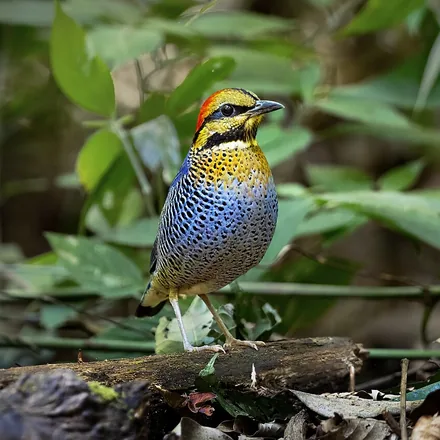
Blue Pitta Rare
Hydrornis cyaneus
A jewel of the forest floor, blue and buff and maddeningly hard to see, the holy grail of many a birding trip.
Where: Khao Yai, Kaeng Krachan. Best: Morning, dense understorey.
Silver-breasted Broadbill Occasional
Serilophus lunatus
A soft grey and rufous broadbill with a powder blue wing flash and a delicate silver breast.
Where: Kaeng Krachan, northern foothills. Best: Morning, mid storey.
Banded Kingfisher Occasional
Lacedo pulchella
A forest kingfisher that shuns water, the male banded blue and black, the female in rich rufous bars.
Where: Kaeng Krachan, southern forests. Best: Morning, dry forest canopy.
Black-thighed Falconet Occasional
Microhierax fringillarius
One of the smallest birds of prey on Earth, a sparrow-sized falcon that hunts dragonflies and small birds from a bare twig.
Where: Forest edges and clearings, Kaeng Krachan, Khao Yai. Best: Year round, day.
Spotted Wood Owl Occasional
Strix seloputo
A large, orange-faced owl of open woodland and plantations, its deep hooting a signature of the tropical night.
Where: Open woodland, groves and plantations, Khao Yai fringes. Best: Night.
Blyth's Frogmouth Rare
Batrachostomus affinis
A bizarre nocturnal bird with a huge frog-like gape, so like a broken branch by day that it is almost impossible to find.
Where: Evergreen forest, Kaeng Krachan, Khao Sok. Best: Night.
Blue-bearded Bee-eater Occasional
Nyctyornis athertoni
A big, shaggy bee-eater with a dangling blue throat-beard, more skulking and forest-loving than its dashing cousins.
Where: Forest interior, Kaeng Krachan, Khao Yai, Khao Sok. Best: Year round.
Wetland and marsh birds
9 species
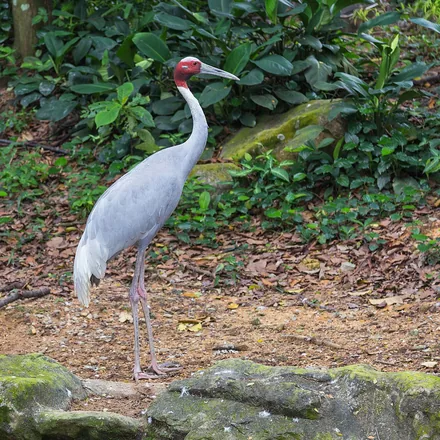
Sarus Crane Occasional Vulnerable
Antigone antigone
The tallest flying bird in the world, a grey giant with a bare red head, recently brought back to Thai wetlands.
Where: Buriram province wetlands. Best: Year round, rice fields and marshes.
Lesser Adjutant Occasional Vulnerable
Leptoptilos javanicus
A towering, bare-headed stork that stalks the wetlands with a soldier's stiff gait, part hunter and part undertaker.
Where: Marshes, mudflats and paddies, central wetlands and the south. Best: Year round.
Painted Stork Regular Near Threatened
Mycteria leucocephala
A large, handsome stork washed with pink, that feeds by touch with its long yellow bill half open in the shallows.
Where: Bueng Boraphet and wetland reserves. Best: Year round, shallow wetlands.
Oriental Darter Occasional Near Threatened
Anhinga melanogaster
The snakebird, swimming with only its slim neck above water before it spears a fish on a dagger bill.
Where: Lakes and large wetlands, central plains, Khao Sam Roi Yot. Best: Year round.
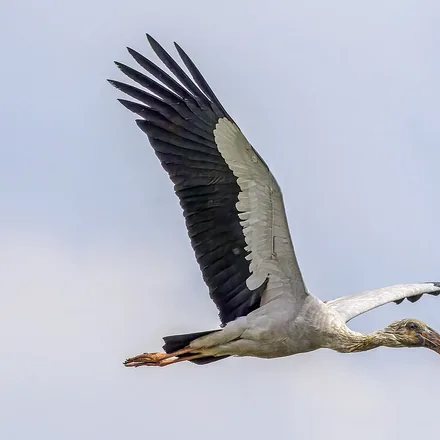
Asian Openbill Common
Anastomus oscitans
A stork with a permanent gap in its bill, a purpose-built tool for prising snails from their shells.
Where: Marshes, lakes and rice fields, central plains. Best: Year round.
Purple Heron Regular
Ardea purpurea
A slender, snake-necked heron in rich chestnut and slate that melts into the reeds it hunts among.
Where: Reedbeds and marshes nationwide, Khao Sam Roi Yot. Best: Year round.
Pheasant-tailed Jacana Regular
Hydrophasianus chirurgus
A lily-trotting waterbird that walks on floating leaves on enormous toes, growing a long curved tail when it breeds.
Where: Lotus ponds and marshes, central wetlands, Khao Sam Roi Yot. Best: Year round, breeds in rains.
White-breasted Waterhen Common
Amaurornis phoenicurus
A bold, clean-cut marsh bird in slate and white that trots along ditch edges flicking a rusty-bottomed tail.
Where: Ditches, marshes and paddies nationwide. Best: Year round.
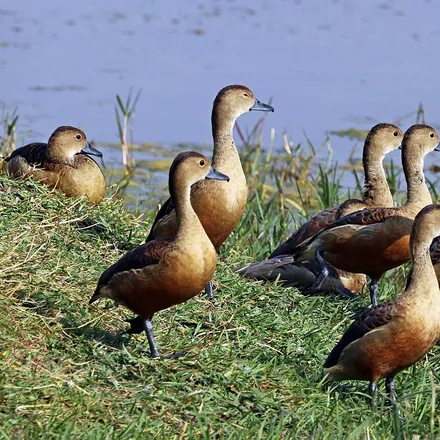
Lesser Whistling Duck Common
Dendrocygna javanica
A warm-brown, long-necked duck that whistles rather than quacks and wheels over the marshes in twittering flocks.
Where: Lakes, marshes and flooded fields nationwide. Best: Year round.
Mangrove and estuary birds
8 species
Masked Finfoot Ultra rare Critically Endangered
Heliopais personatus
One of the rarest birds in Asia, perhaps a hundred left, and Thailand may already have lost it.
Where: Historically quiet forested waterways and mangrove creeks; no reliable recent records. Best: No current season.
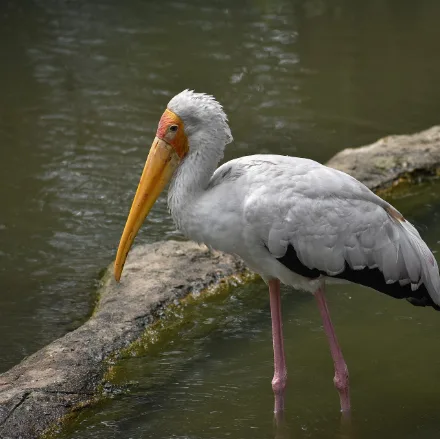
Milky Stork Rare Endangered
Mycteria cinerea
A rare, ghostly white stork of the mangroves, its bare face flushing from yellow to red in the breeding season.
Where: Coastal mangroves and estuaries of the Gulf and south. Best: Year round.
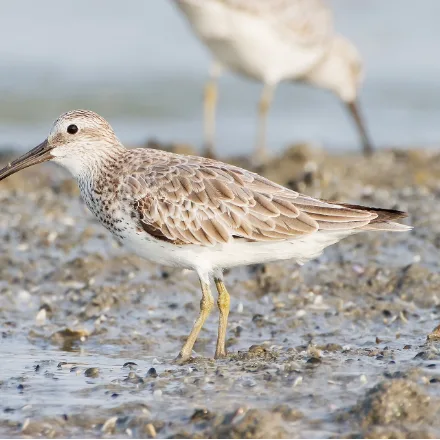
Great Knot Occasional Endangered
Calidris tenuirostris
Flies from Siberia to Australia with a single refuelling stop, and losing that one mudflat has nearly finished the species.
Where: Inner Gulf mudflats; Pak Thale, Laem Phak Bia and Bang Pu. Best: Sep-Apr, peaks on passage.
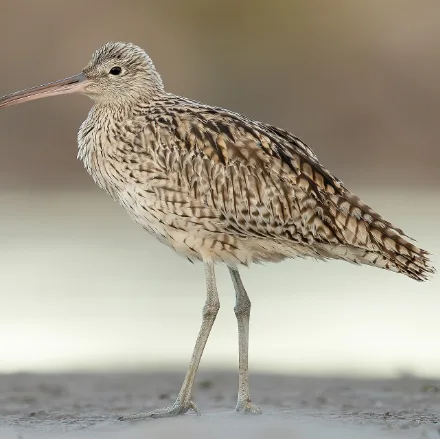
Far Eastern Curlew Rare Endangered
Numenius madagascariensis
The longest bill of any wader in the world, curved like a sickle and used to reach crabs deep in the mud.
Where: Inner Gulf and Andaman mudflats; Pak Thale and Ranong. Best: Sep-Apr.
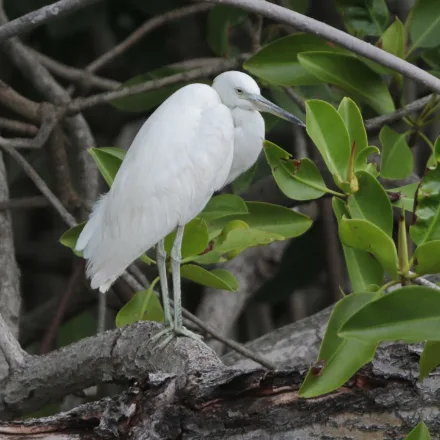
Chinese Egret Rare Vulnerable
Egretta eulophotes
Hunts by sprinting across the mudflat with wings half open, a running dash that no other egret uses.
Where: Tidal flats and shrimp ponds; Pak Thale, Laem Phak Bia and the inner Gulf. Best: Sep-Apr.
Mangrove Pitta Rare Near Threatened
Pitta megarhyncha
A jewel of a bird restricted almost entirely to mangrove, hopping across bare mud to hammer crabs against a root.
Where: Mangrove on the Andaman coast; Krabi, Ranong and Ao Phang Nga. Best: Year round, calling Mar-Jul.
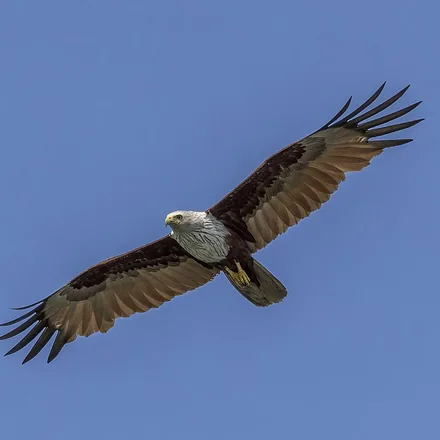
Brahminy Kite Common
Haliastur indus
A handsome chestnut-and-white kite of coasts and harbours, forever quartering the shoreline for scraps and stranded fish.
Where: Coasts, estuaries and harbours nationwide, Trang. Best: Year round.
Black-capped Kingfisher Occasional
Halcyon pileata
A striking mangrove kingfisher in black, white and deep purple-blue, a winter visitor to Thailand's coasts.
Where: Mangroves and estuaries, Trang and Koh Libong, Khao Sam Roi Yot. Best: Winter visitor, Oct-Apr.
Coastal and shorebirds
7 species
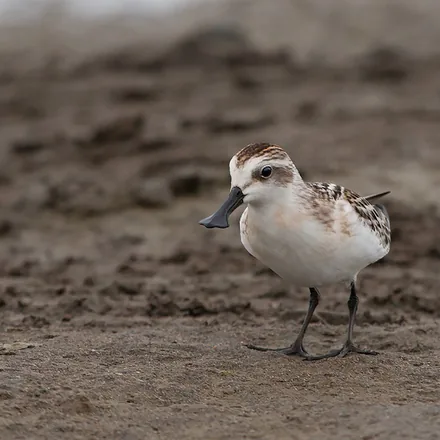
Spoon-billed Sandpiper Rare Critically Endangered
Calidris pygmaea
One of the world's rarest and most charismatic shorebirds, tiny and armed with an unmistakable spatula bill.
Where: Pak Thale, Laem Pak Bia (Inner Gulf). Best: Nov-Mar (winter).
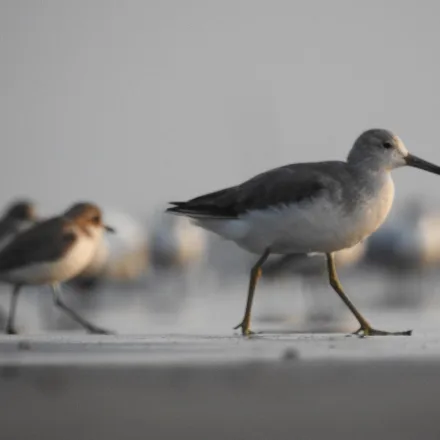
Nordmann's Greenshank Rare Endangered
Tringa guttifer
One of the world's rarest waders, a stocky greenshank that winters on Thai mudflats among thousands of commoner shorebirds.
Where: Inner Gulf mudflats and southern coasts. Best: Winter visitor, Nov-Mar.
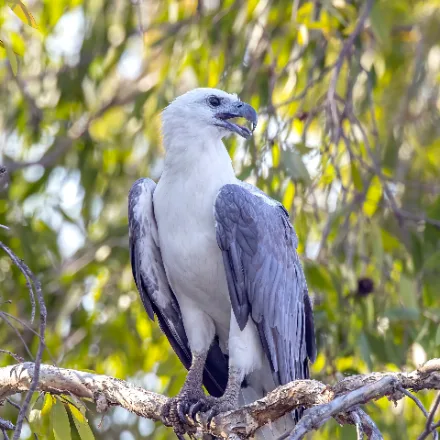
White-bellied Sea Eagle Regular
Haliaeetus leucogaster
A huge coastal eagle in grey and white that snatches sea snakes and fish from the surface in a spectacular swoop.
Where: Coasts and islands, Similan, Trang and Koh Libong. Best: Year round.
Malaysian Plover Rare Near Threatened
Anarhynchus peronii
Nests in a scrape on open beach so well camouflaged that the greatest danger is being stepped on.
Where: Quiet sandy beaches and spits; the southern peninsula and the western Gulf coast. Best: Year round, breeding Feb-Jun.
Little Tern Regular
Sternula albifrons
Hovers on fast flickering wings like an oversized hummingbird before dropping onto a fish.
Where: Saltpans, river mouths and open beaches; Pak Thale, Laem Phak Bia and both coasts. Best: Year round, breeding Mar-Jun.
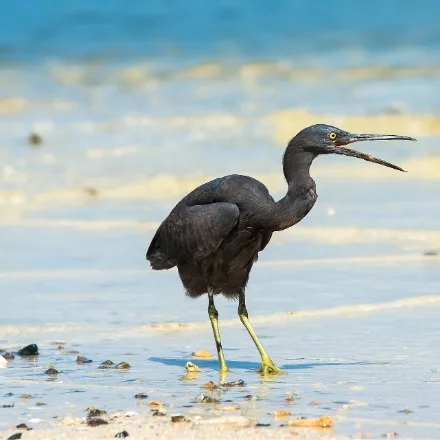
Pacific Reef Heron Regular
Egretta sacra
Comes in two entirely different colours, charcoal grey and pure white, and both can hatch in the same nest.
Where: Rocky shores and reef flats on both coasts; Andaman islands and the Gulf. Best: Year round, at low tide.
Black-naped Tern Occasional
Sterna sumatrana
Almost pure white apart from a narrow black band across the back of the head, like a headphone cable.
Where: Coral rubble islets and inshore water in the Andaman; Similans, Surin and Koh Lipe. Best: Year round, breeding Apr-Aug.
River and lake birds
5 species
Stork-billed Kingfisher Regular
Pelargopsis capensis
A hefty waterside kingfisher with a huge blood-red bill and a loud, ringing laugh.
Where: Rivers, lakes and mangroves nationwide. Best: Year round, waterside perches.
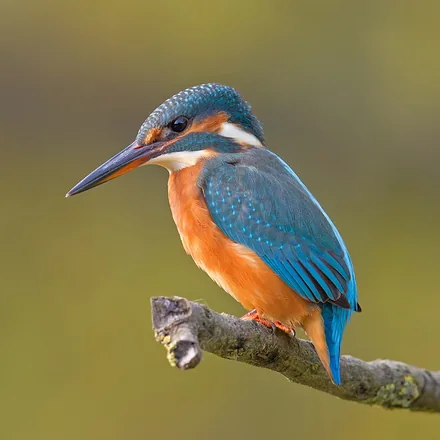
Common Kingfisher Common
Alcedo atthis
A dazzling blue dart along the stream, small enough to sit in a palm yet impossible to miss when it flies.
Where: Streams, canals and ponds nationwide, Khao Sam Roi Yot. Best: Year round.
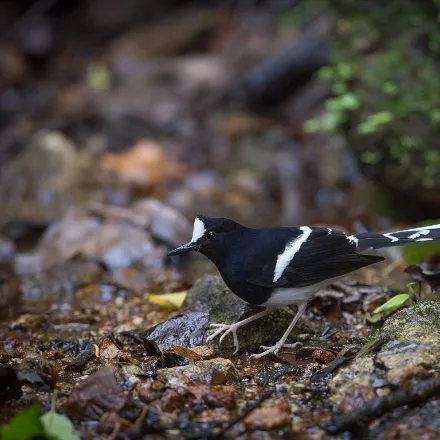
White-crowned Forktail Regular
Enicurus leschenaulti
A dapper black-and-white bird of rushing forest streams, forever flicking a long, deeply forked tail.
Where: Clear forest streams, Kaeng Krachan, Khao Yai, Khao Sok. Best: Year round.
Blue Whistling Thrush Regular
Myophonus caeruleus
A big, spangled blue-black thrush of shady streams whose loud human-like whistle rings through the ravines at dawn.
Where: Forest streams and ravines, Khao Yai, Kaeng Krachan. Best: Year round, dawn.
Black-and-red Broadbill Occasional
Cymbirhynchus macrorhynchos
A striking riverside broadbill in black and crimson with a two-tone turquoise and yellow bill.
Where: Kaeng Krachan, lowland rivers and mangroves. Best: Year round, over water.
Dry forest and grassland birds
3 species
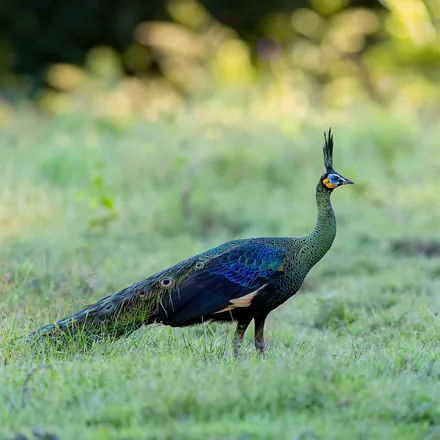
Green Peafowl Occasional Endangered
Pavo muticus
The wild, and far rarer, cousin of the familiar peacock, with metallic green plumage and a towering train.
Where: Huai Kha Khaeng, Mae Wong, Mae Ping. Best: Dry season, dawn (listen for calls).
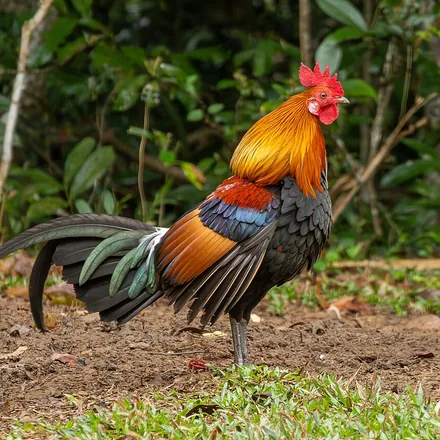
Red Junglefowl Common
Gallus gallus
The wild ancestor of every chicken on Earth, a wary, glossy rooster of the forest edge.
Where: Khao Yai, Kaeng Krachan and widely. Best: Early morning, forest edges.
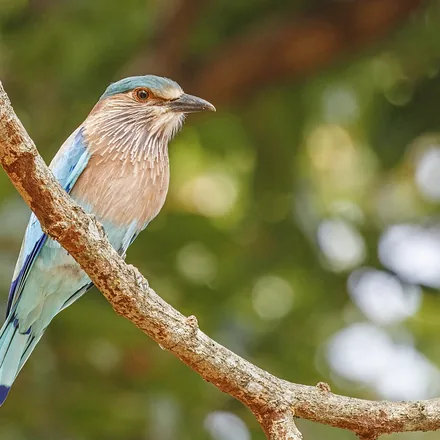
Indian Roller Common
Coracias benghalensis
A dull-looking perched bird that explodes into brilliant bands of blue when it flies, tumbling through spectacular courtship rolls.
Where: Open farmland and scrub nationwide. Best: Year round, day.
Seabirds
3 species
Lesser Frigatebird Occasional
Fregata ariel
Cannot land on water despite living over it, and stays airborne for weeks at a time by riding thermals in its sleep.
Where: Offshore waters and outer islands on both coasts; Similans, Surin and the Gulf islands. Best: Year round, often inshore ahead of storms.
Brown Booby Rare
Sula leucogaster
Dives from twenty metres and hits the water at over sixty kilometres an hour, with air sacs in the skull absorbing the shock.
Where: Outer Andaman and Gulf islands; seen from boats and liveaboards. Best: Nov-Apr.
Bridled Tern Occasional
Onychoprion anaethetus
Spends most of the year entirely at sea, feeding on fish driven to the surface by tuna hunting below.
Where: Rocky islets and offshore waters on both coasts; Similans, Surin and Koh Tao. Best: Apr-Sep breeding season.
Cave and karst birds
1 species
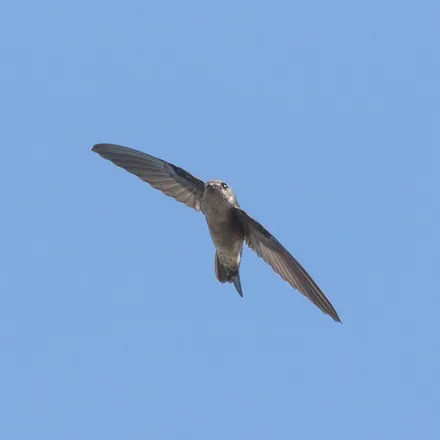
Germain's Swiftlet Common
Aerodramus germani
The little cave swift whose nest of pure saliva is harvested from sheer sea caves for bird's nest soup.
Where: Limestone sea caves and coasts of the south, Trang. Best: Year round.
Planning and responsible watching
Every entry above gives the best sites and season from our database. Keep your distance, never feed or bait wildlife, and choose operators who follow no-touch rules; the rarer the species, the more your behaviour matters. For current status, trip reports and local guides, the Bird Conservation Society of Thailand, BirdLife International’s partner here, is the standing authority.
Find guided birding trips in Thailand
Some links on this page are affiliate links. If you book through them, Wildseer may earn a small commission at no extra cost to you.
Frequently asked questions
What is the best place for birdwatching in Thailand?
Kaeng Krachan and Khao Yai for rainforest species and hornbills, and the Inner Gulf coast (Pak Thale and Laem Phak Bia) for rare migratory shorebirds in winter.
When is the best time for birding in Thailand?
November to March, the cool dry season, is best: resident birds are active and huge numbers of migratory waders and wildfowl are present. The green season is quieter but good for breeding plumage and endemics.
Can you still see Gurney’s pitta in Thailand?
It is now extremely rare and possibly gone from Thailand, surviving mainly in Myanmar. The guide lists it honestly as a very rare sighting rather than overselling it.
Explore more Thailand wildlife
 Mammals of Thailand
 Reptiles and Amphibians of Thailand
 Fish of Thailand
 Sharks and Rays of Thailand
 Reef Invertebrates of Thailand
 Insects and Spiders of Thailand
Part of the Wildlife in Thailand guide.